“writes Peter Morgan.”1)
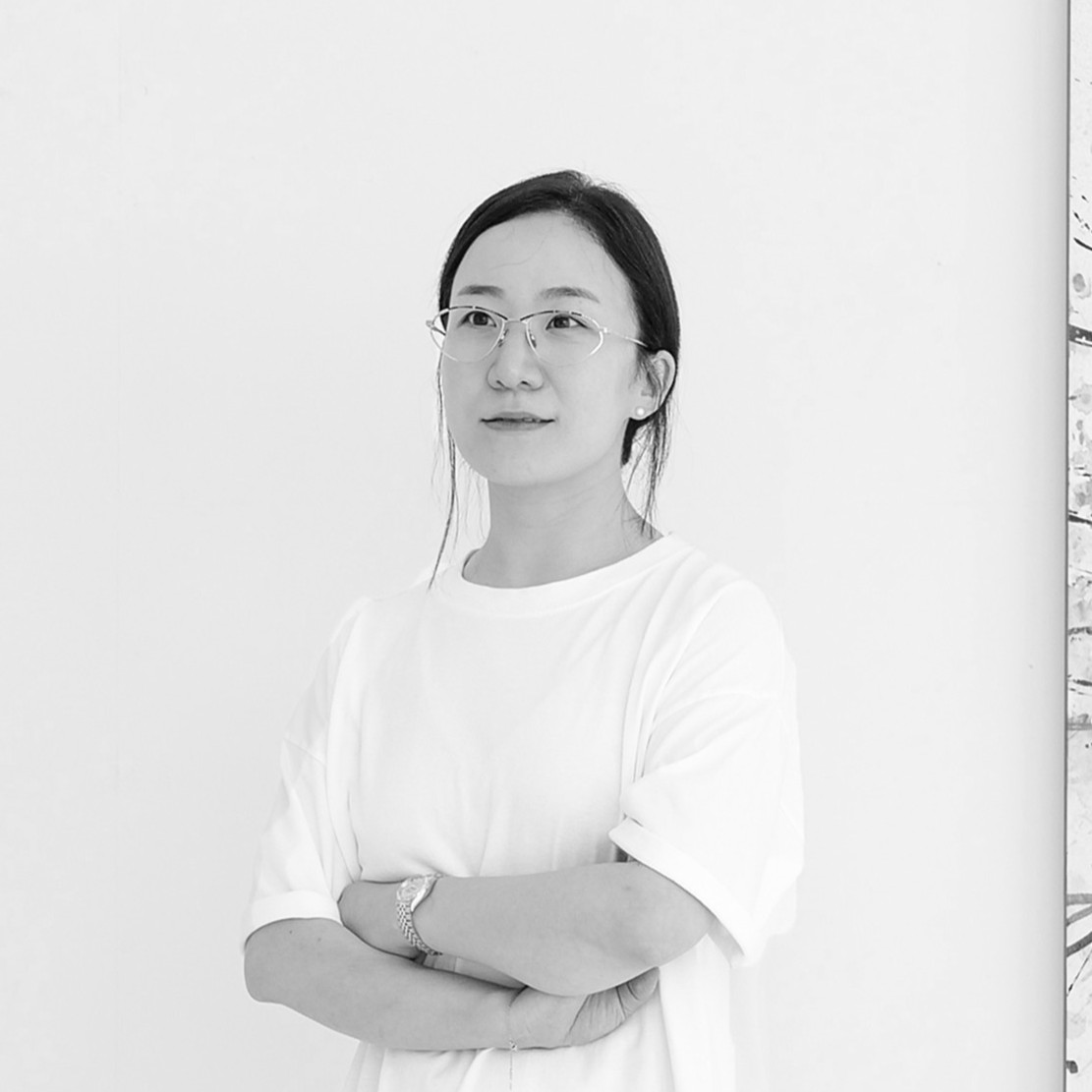
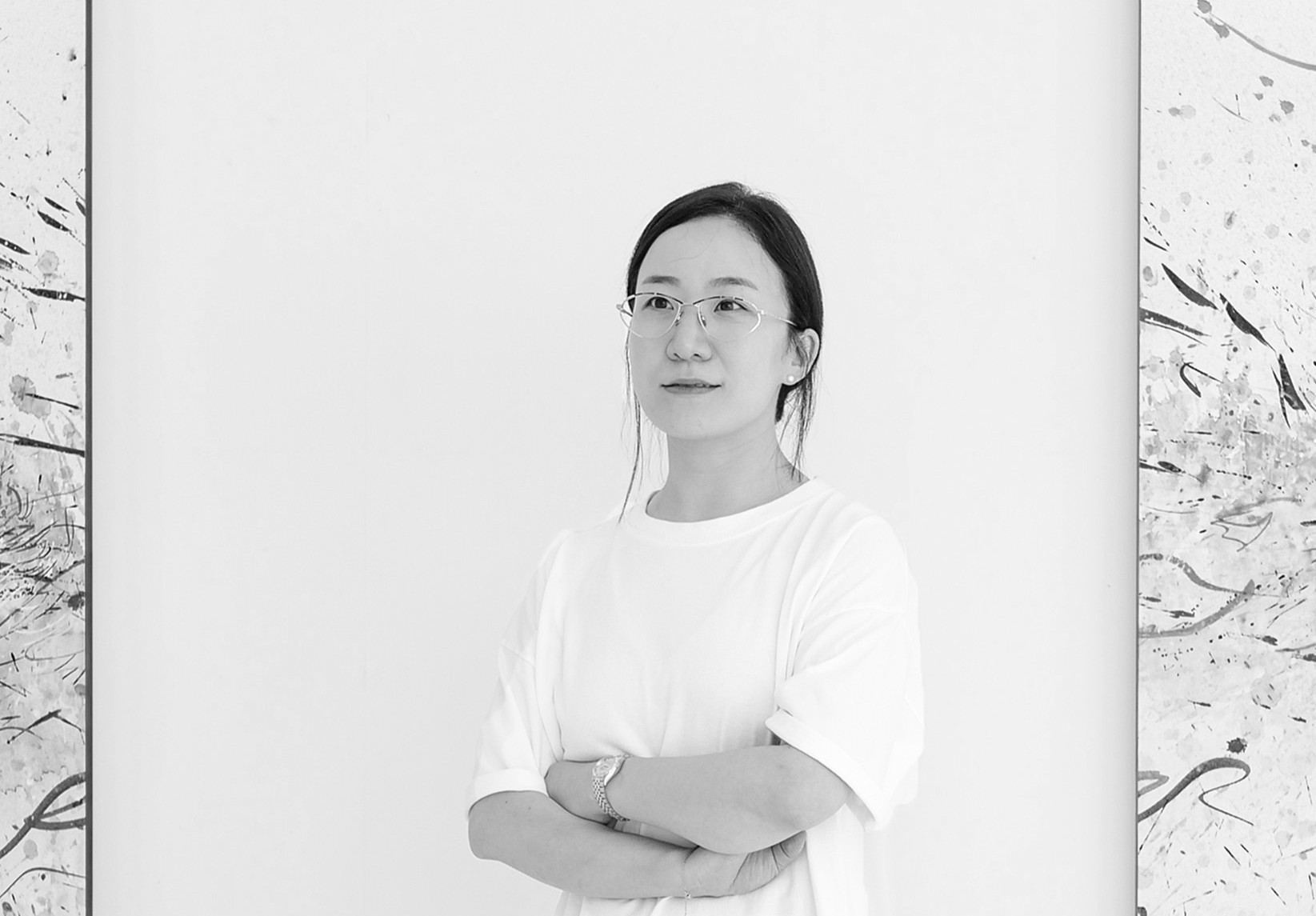
One imagines a story. And paints a picture. This text begins with these first two sentences. In her studio on an alley in Seoul, where the noise had more or less quieted down beyond a single block, Minjung Key showed me a YouTube video of a figure who had transformed from a painter living in Boston into a hot-air balloon pilot in Africa, and said, “If he had felt compelled to paint something after seeing something beautiful, what kind of painting would he have made?”
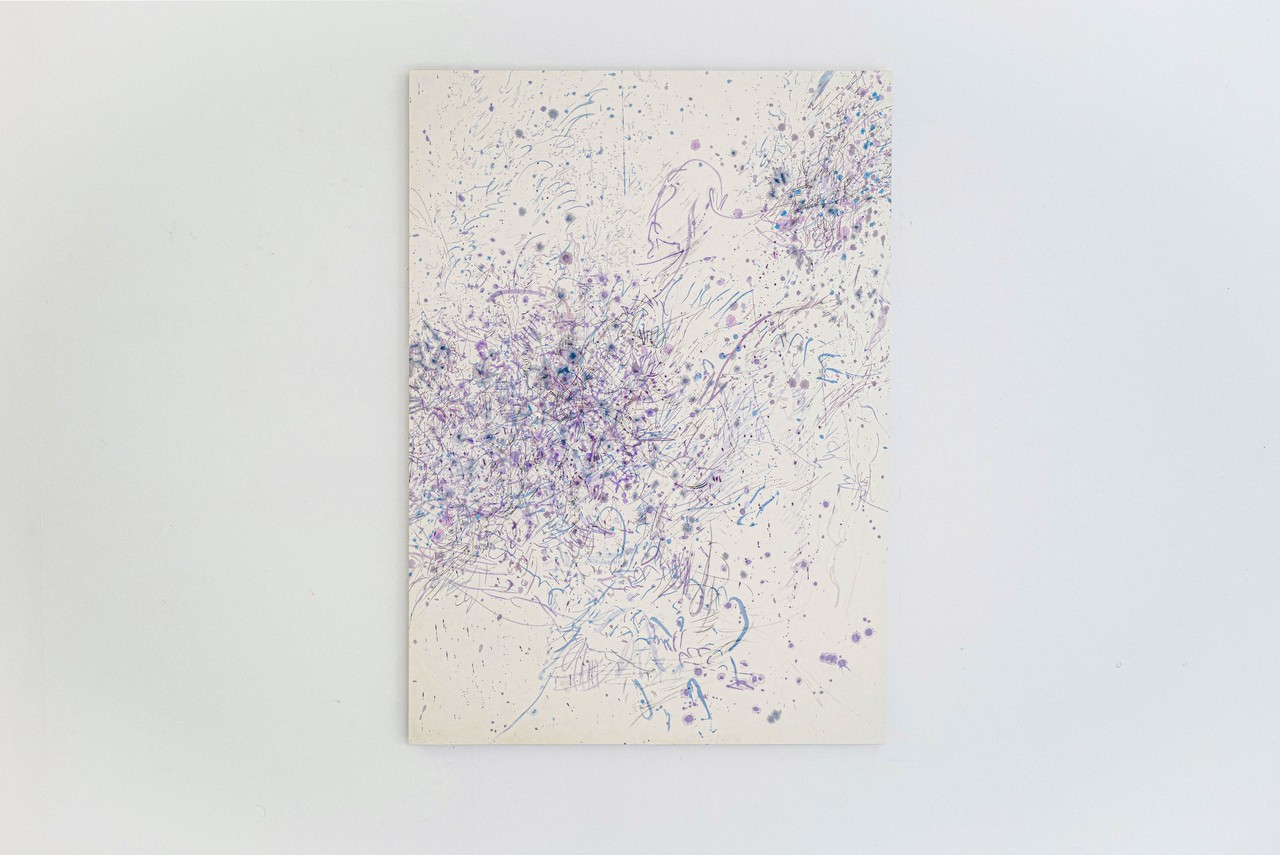
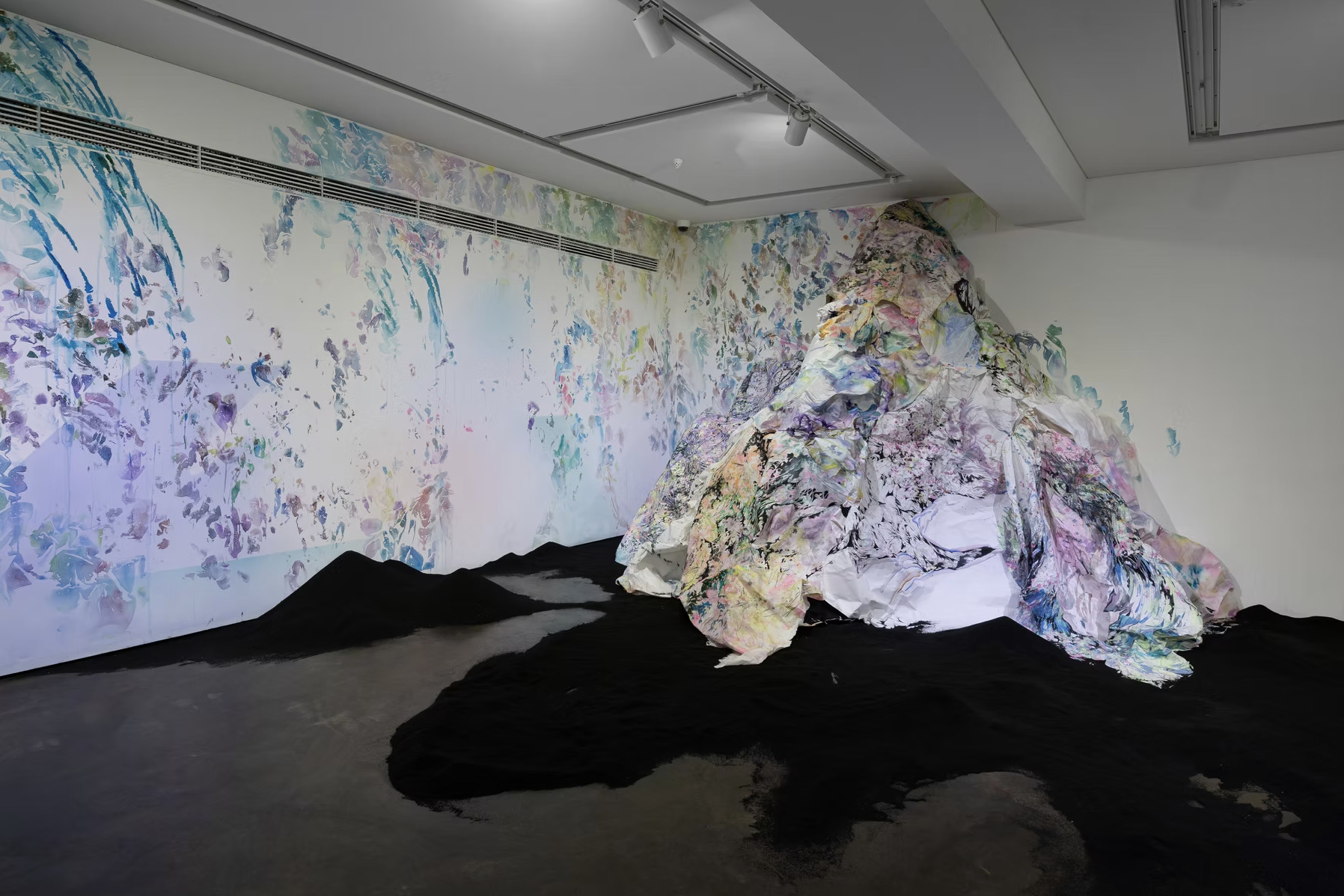
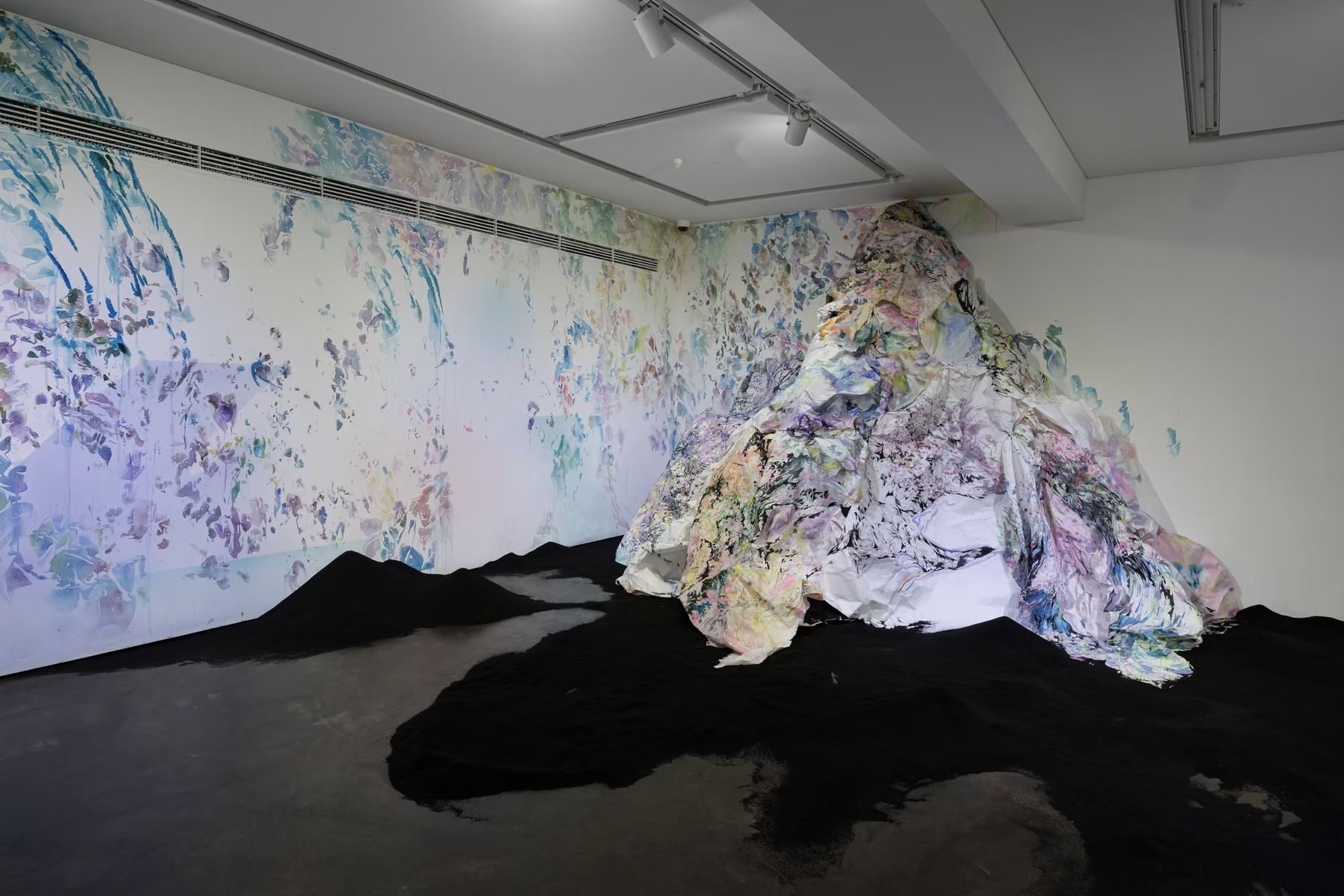
At that moment, before the conversation had ripened, I recalled the titles and stories of several books that had caught my eye as I looked around the room. And over the artist’s shoulder, I saw a heap where pink and blue lines and dots were intertwined, and several sheets of hanji were crumpled and tangled like blankets, rustling. Was it a pile of ruined paintings?
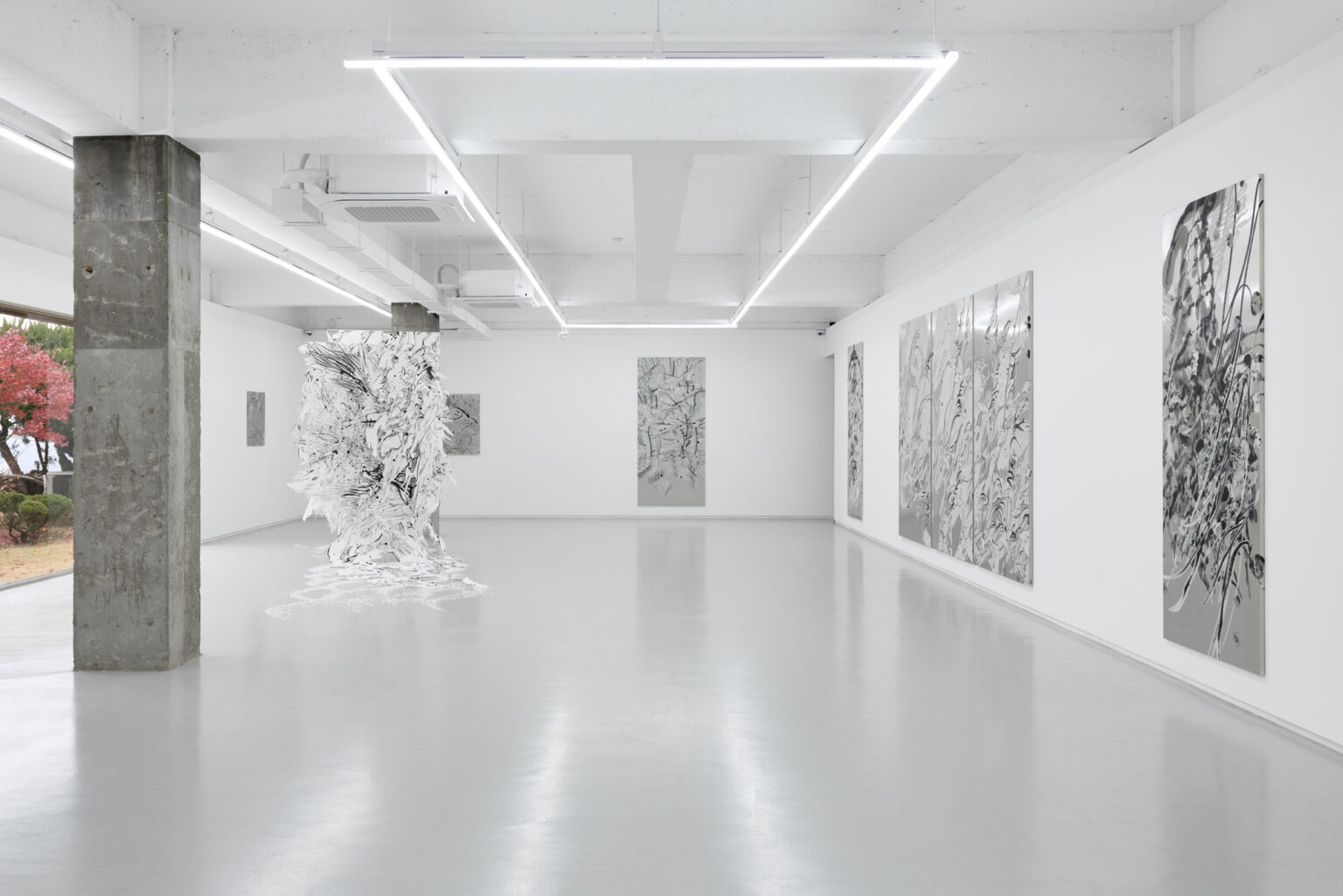
As if still in progress, the sound of hanji placed on the wall or table, of paper corners full of fine creases and wrinkles fluttering in the outside wind that cooled the early-summer heat, did not distinguish the condition of the pile of paintings from that of individual sheets of paper, but rather showed the many expressions of paper.
Paper is weak. In Minjung Key’s studio, the hanji that is not neatly attached to the wall but hung from beams or fixed at intervals in front of the window has worn corners on the left and right that dangle loosely. Something that easily crumbles, easily disappears, that provokes a protective instinct, whether material or immaterial.
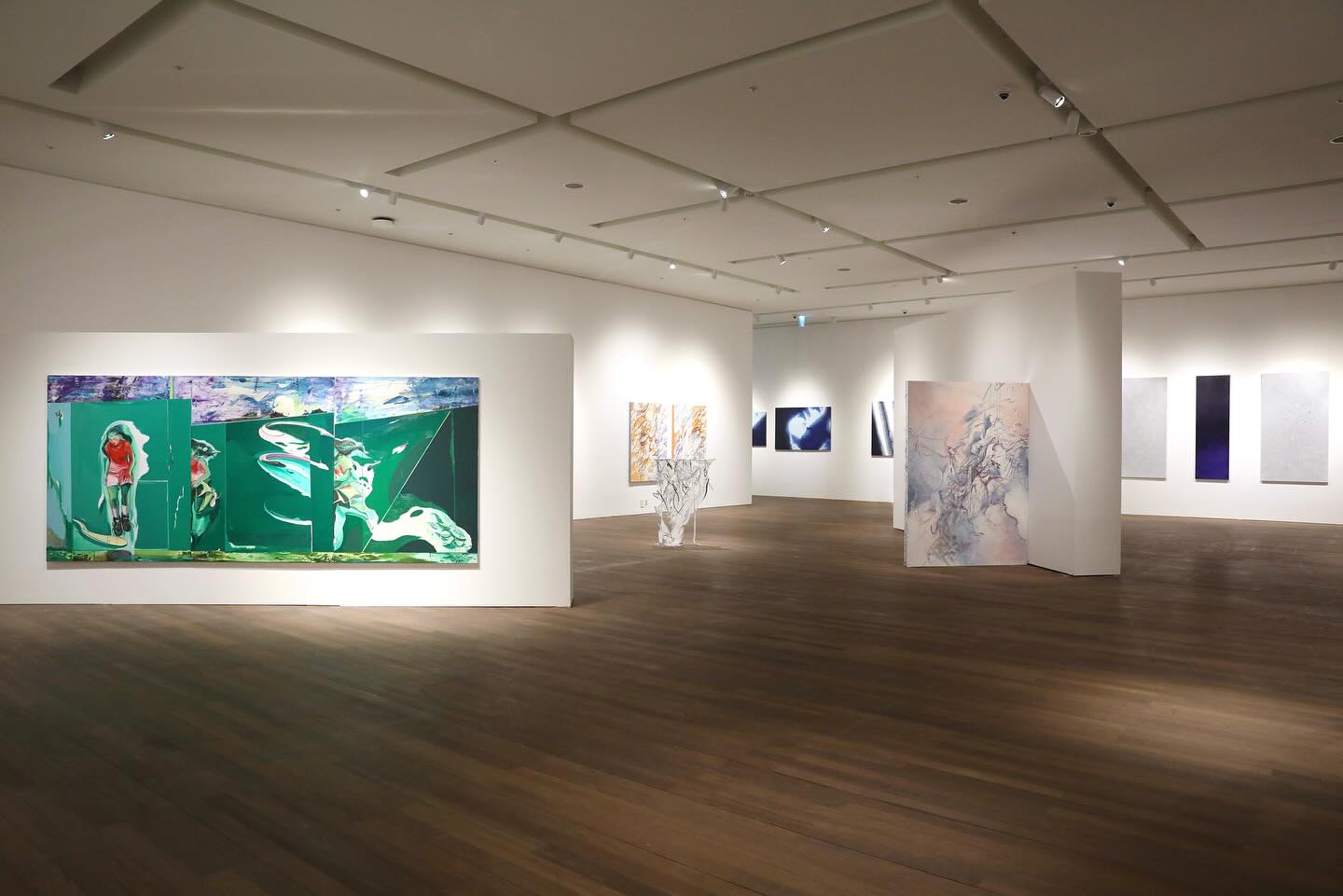
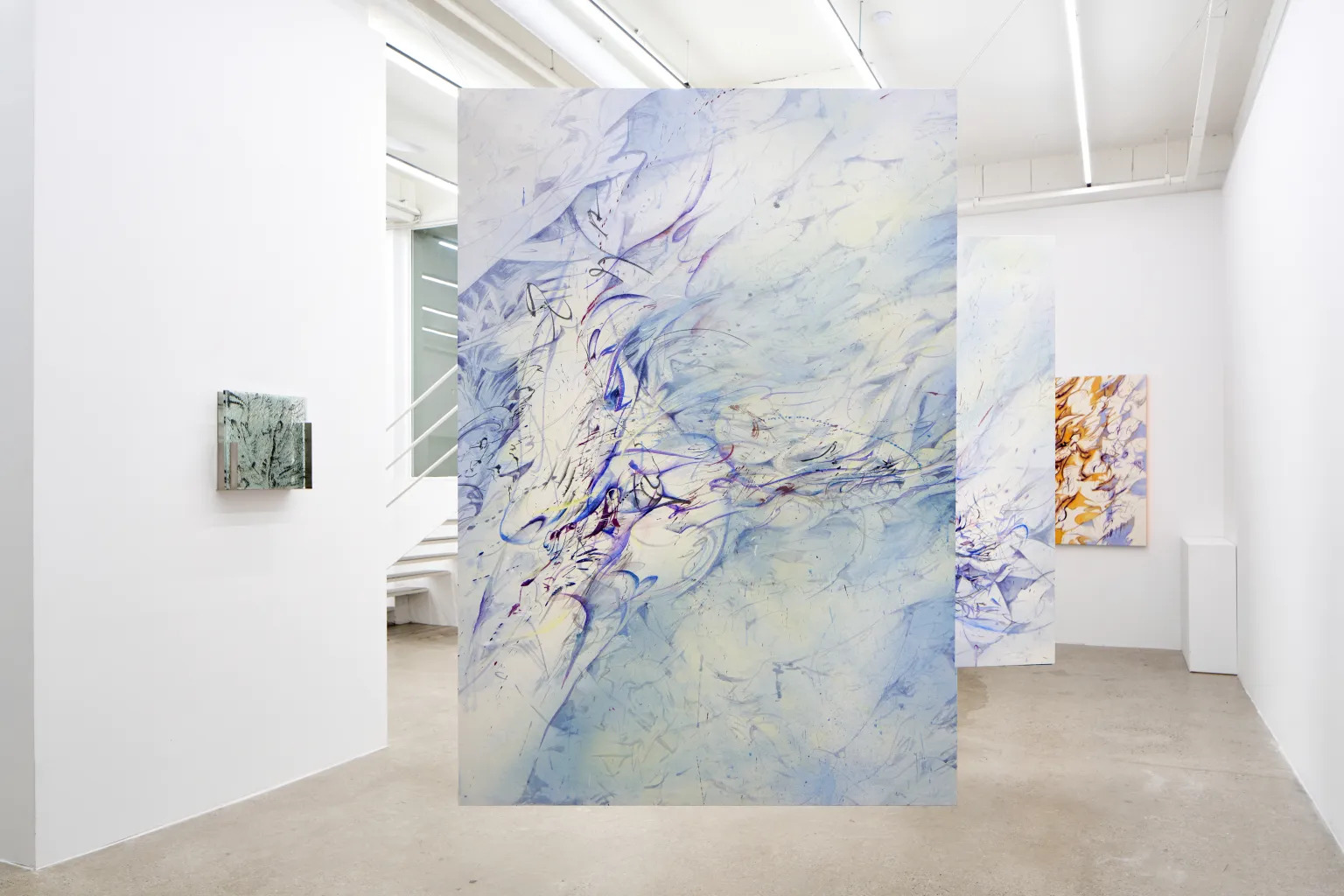
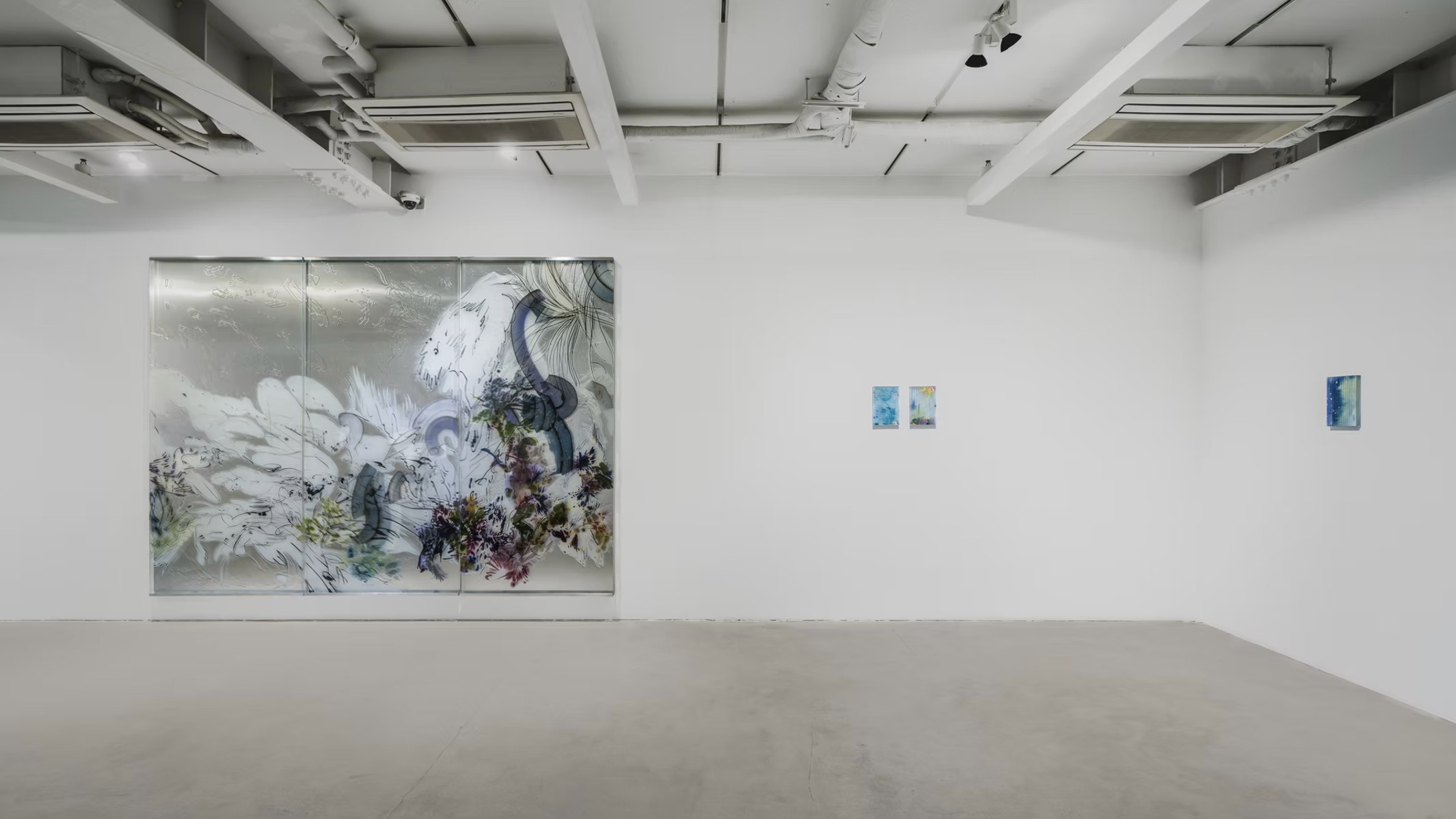
The flat surface and frame that serve as the physical support of painting are translated into the fragile material of hanji, and fail to be translated, making us look again at the physical conditions of painting. Is she pursuing the infinite possibility of transformation and expansion of the painting frame by making curved surfaces or overlapping several rectangles?
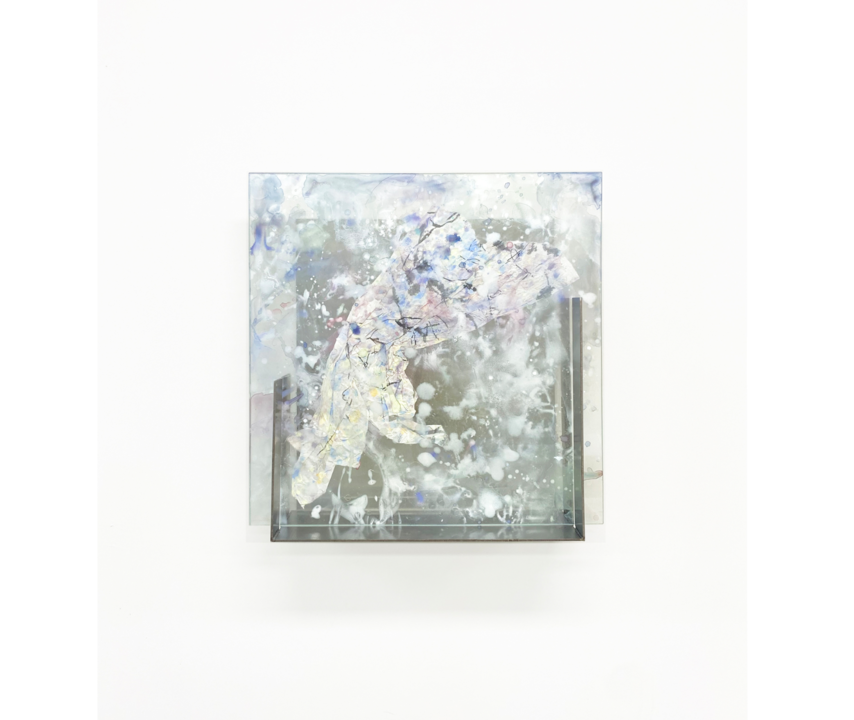
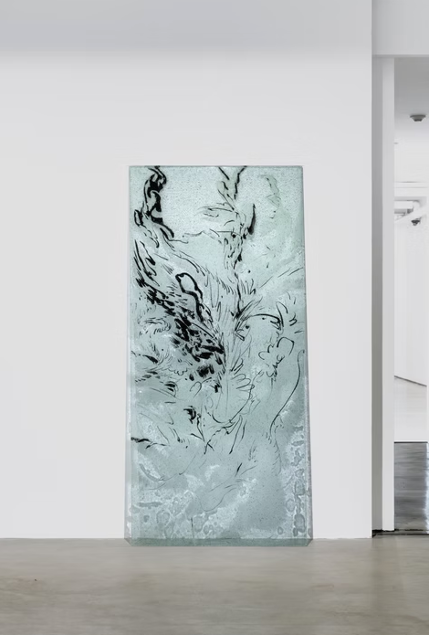
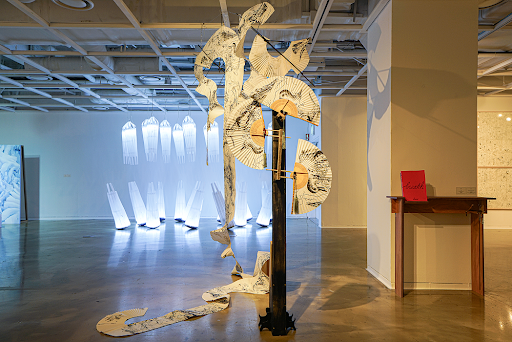
No, instead of designing a frame to show a painting, the artist is working to dismantle it. Painting liberated from the frame is a single sheet of paper. Paper is lighter(than painting). Just as the heavy cover of a book wraps and presses down on the inner pages, the artist weighed down the lower edge of the paper with the weight of broken glass pieces.
Even though paper is still before us, what she wants to show is not a painting as a flat image. What will be seen cannot be controlled. She only shows an attitude of treating painting as something other than painting.
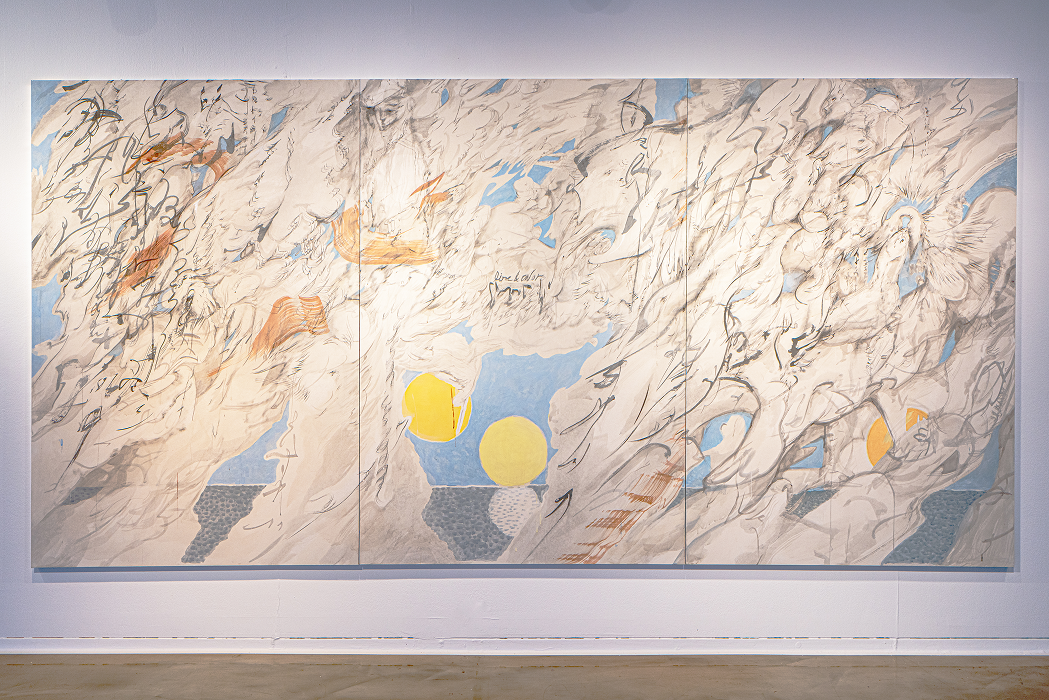
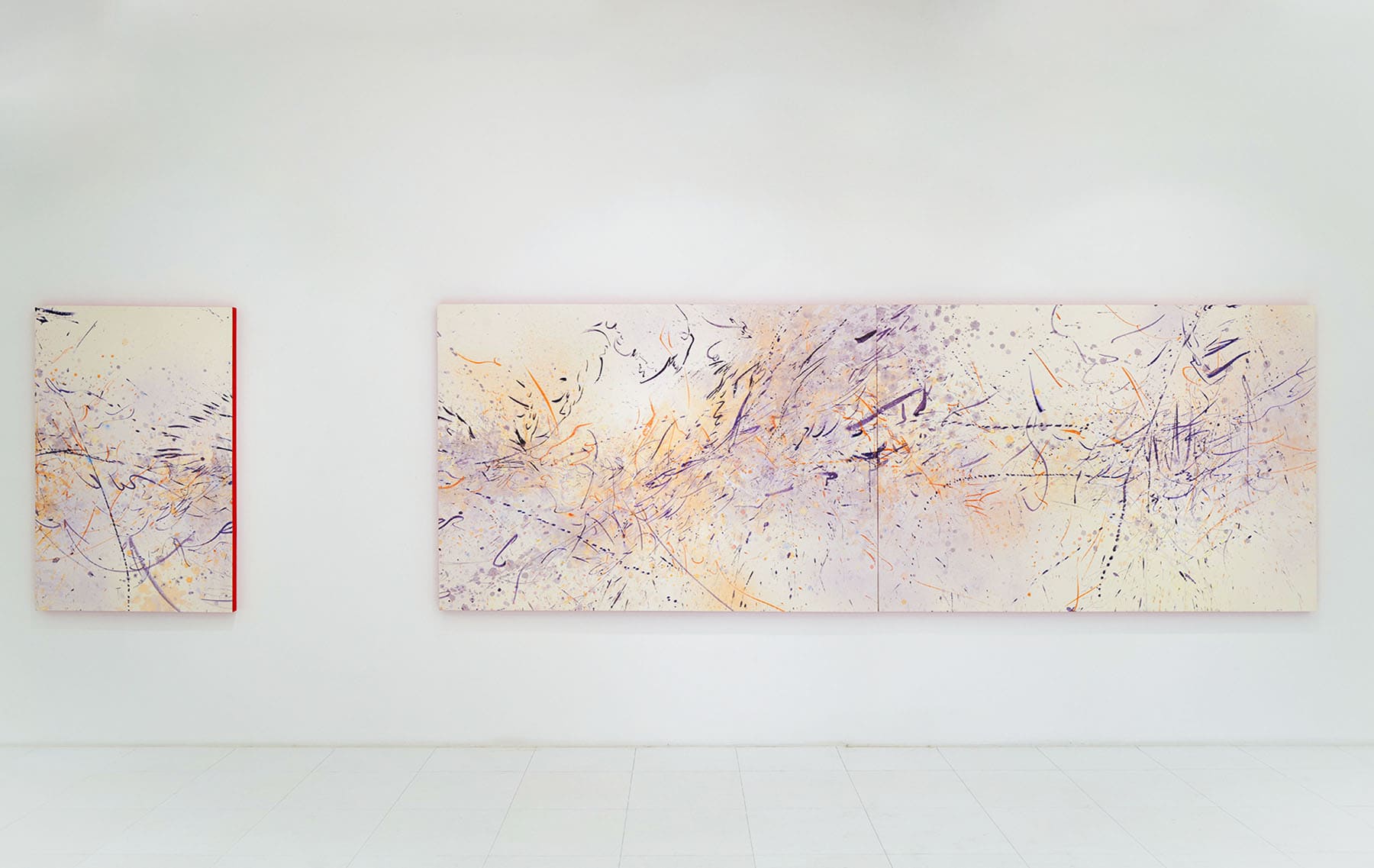
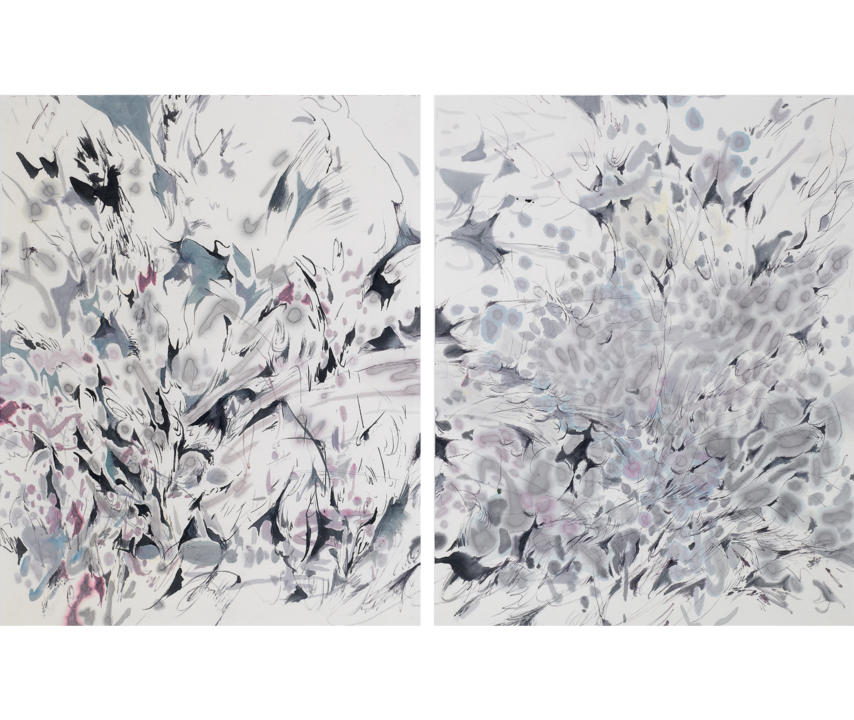
Asian painting or Korean painting, which has constructed its identity negatively as the other of Western painting, developed conventions of jangji material comparable to the density and strength of oil on canvas, and of paintings that stably fill the picture plane. By contrast, the artist chose white, thin hanji that shines transparently in sunlight.
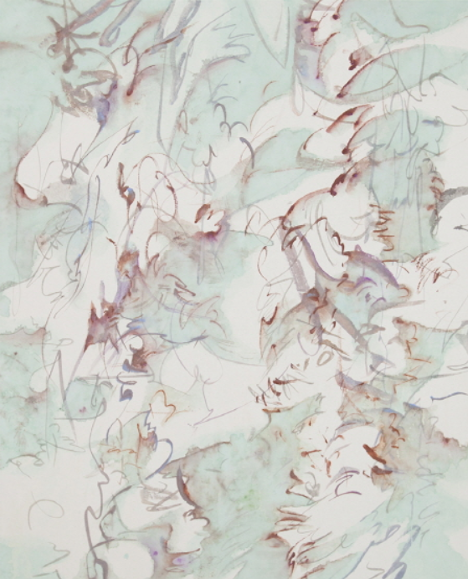
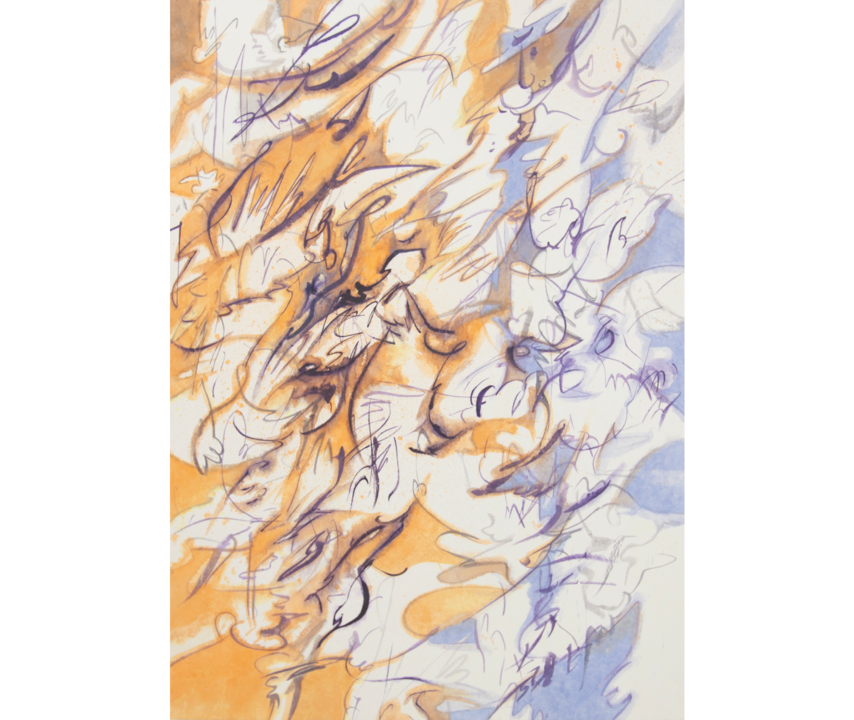
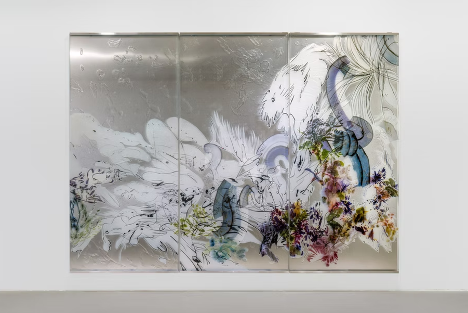
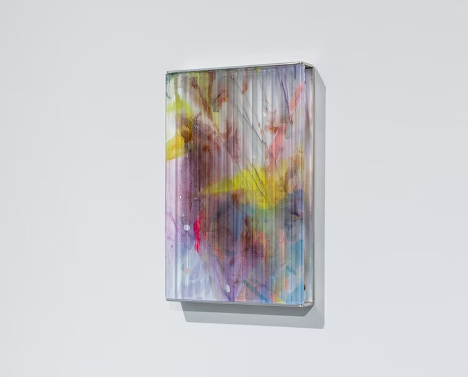
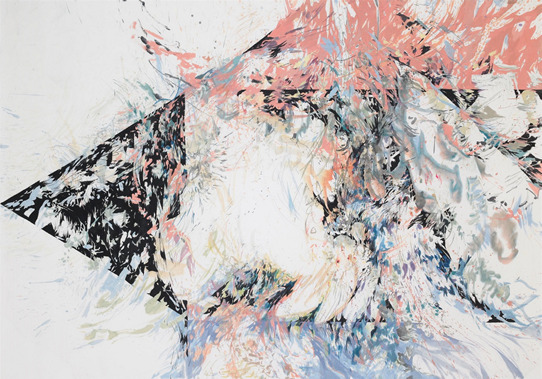
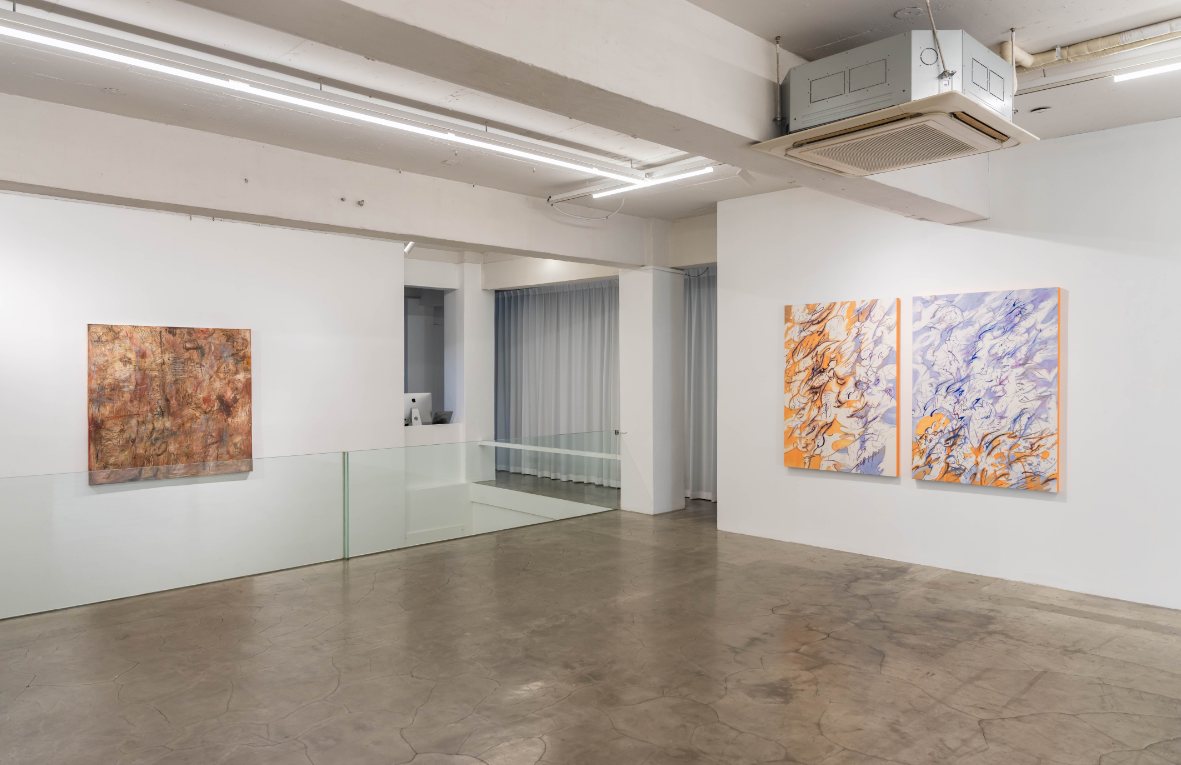
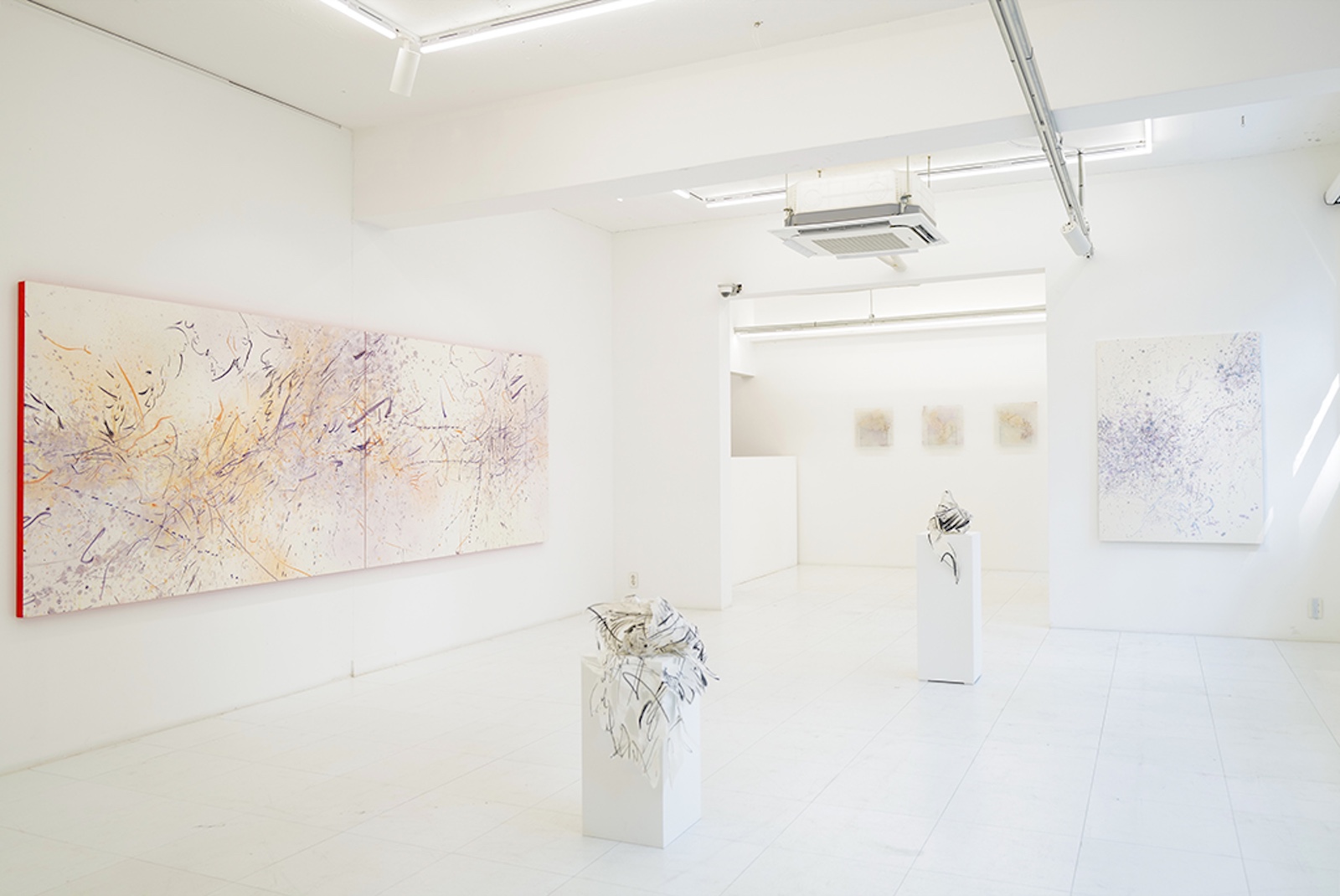
In her work, colorful diluted paint quickly brushes across the surface and is scattered, while heavy and dry ink presses down on the paper as if filling empty places. Ink moves with a different speed and rhythm from color, and at times bursts like fireworks in front of color. On a surface where thin lines full of speed are sparsely drawn, color often appears light, as if it might fly outward.
Compared to this, ink is a pigment that contains weight, and acts like a paperweight attaching the paper to the wall or floor. The force of scattering and the force of pressing. With paper in between, the force that flies upward and the force that fixes it to the support behind it.
Could the crumpled and scattered bundles of paper tangled carelessly with other objects in Minjung Key’s studio perhaps be the state produced by such opposing tensions? Yet does a three-dimensional object that moves beyond the horizontal movement of the painting plane and enters three-dimensional space declare the liberation of painting?
Installation art, which has occupied an increasingly significant place in museum exhibitions over the past several decades, asks us to examine the medium of painting within the context of spatial installation as well. Does the fluid body of painting freed from the frame show its ever-changing possibilities as installation material?
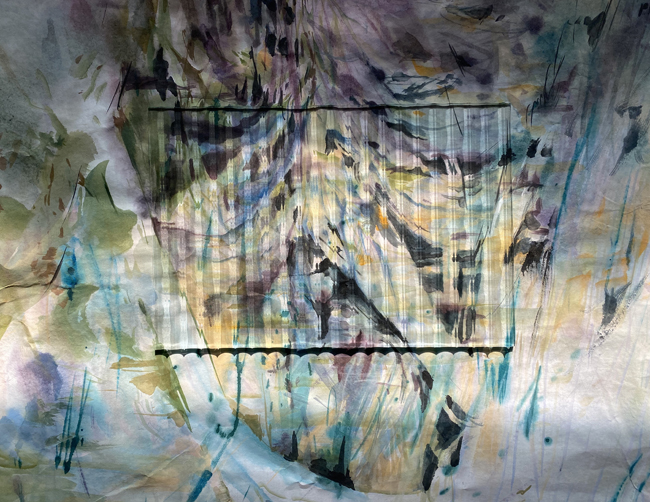
Minjung Key’s paper no longer seems to limit its interest to the internal structure of the picture plane, but appears to transform into material for sculpture or installation that will be newly constructed in response to the architectural elements of the space in which it is placed.
Yet what distinguishes it from other architectural painting installations is the fact that the artist is importantly conscious not of spatial installation itself for the effective display of the work, but of the temporality in which she paints almost every day, the painting unexpectedly goes awry, and the works accumulate endlessly.
In particular, the landscape the artist realizes in this exhibition is not completely separated from the studio. Her installation is noteworthy in that it is a transformed representation of the sense of use of space derived from an attitude toward handling painting, rather than from the architectural elements of the exhibition space.
“While the trumpeters cried Truth! Truth! Truth! we have no choice but to confess — he was a woman.”2)
When and how did the compulsion to paint after encountering a beautiful landscape or a love story come about? Could it be related to the highly generalized yet still awkward reality of receiving education in art as a major at university? One can only guess; it is unknowable. I am merely conscious of the compulsion at the moment of writing this text after seeing the paintings.
In the end, what can be known is not a rational motive or historical origin. Let us only say that the artist’s play and compulsion form a pair. Looking back on her work over the past few years, Minjung Key discovered a tendency to alternate between color and monotone, and understands the two as “ambivalence.”
This is her self-analysis: as if two people of different temperaments appeared alternately, revealing entirely different aspects of the work. Last year(2018), she explained that two different selves seemed to have merged within the painting. In this way, the artist brings to consciousness the heterogeneous and hybrid tendencies of the self of the person who paints.
What makes us become aware of the heterogeneity and hybridity of the self? From where does the recognition arise that these are not simply two among various natural inner qualities, but contradictory and opposed to each other? Clearly, when one object is firmly defined, its difference from others is emphasized.
At this point, unlike the autonomous subject that becomes the standard, the othered subject cannot help but be heterogeneous and hybrid. The other, who takes on all that lies outside, experiences constant inner conflict and division along with the unavoidable desire to imitate the norm. Just as the powerful definition of modernist art regarding modern Western painting gave birth to the ghost of Asian painting or Korean painting as its opposite term.
Yet while the acceptance of the heterogeneous has the meaning of reconciliation or expansion for the autonomous subject, might it not become a rupturing acceptance containing contradiction and conflict for the othered subject?
Two books pulled from the artist’s bookshelf provide more concrete examples. Minjung Key says she empathizes with literature, especially stories about divided selves, and gains momentum for her artistic experiments while thinking about the relationship between the work, or herself, and stories.
Marguerite Duras’s novel The Vice-Consul, which begins with a frame narrative, and Virginia Woolf’s fictional biography Orlando both have narratives in which two people of opposing tendencies coexist. In the former, the story of the beggar girl written by a figure named Peter Morgan and the separate world of the embassy to which he belongs make rupturing contact over the othered object called Indochina.
In the latter, the protagonist Orlando changes from male to female in the middle of the story. In the allegorical narration describing Orlando’s sex change, the scene in which the traditional feminine virtues of chastity, purity, and modesty are driven out and awakened by the trumpet of truth makes “woman” not non-male, but an embodiment of androgyny.
In the two novels, heterogeneity is sensed not only in the sexual and political settings of the characters, but also in the setting of the “writing subject.” There is the novelist Peter Morgan and the poet Orlando, who relate to the world to which they belong through writing, and novels about them. In other words, there exists a double structure of writing about life and writing about writing.
Minjung Key said that in her previous work she imagined, “What would it be like to paint as Orlando?” But since she began attempting writing herself some time ago, perhaps she has come to take the point at which Virginia Woolf, or the fictional figure Orlando, encounters Virginia Woolf. Saying this, I stop writing.
1) Marguerite Duras, The Vice-Consul, 1966(translated into Korean by Jang Somi, Geu Chaek, 2013)
2) Virginia Woolf, Orlando, 1928(translated into Korean by Park Heejin, Sol, 2019)