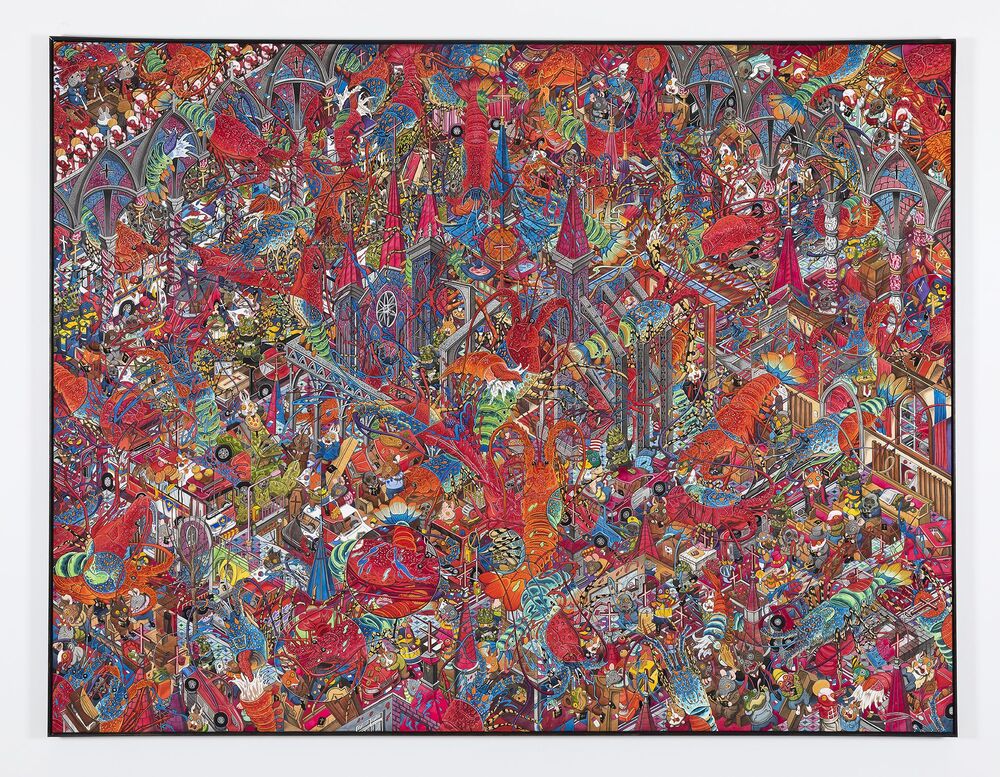
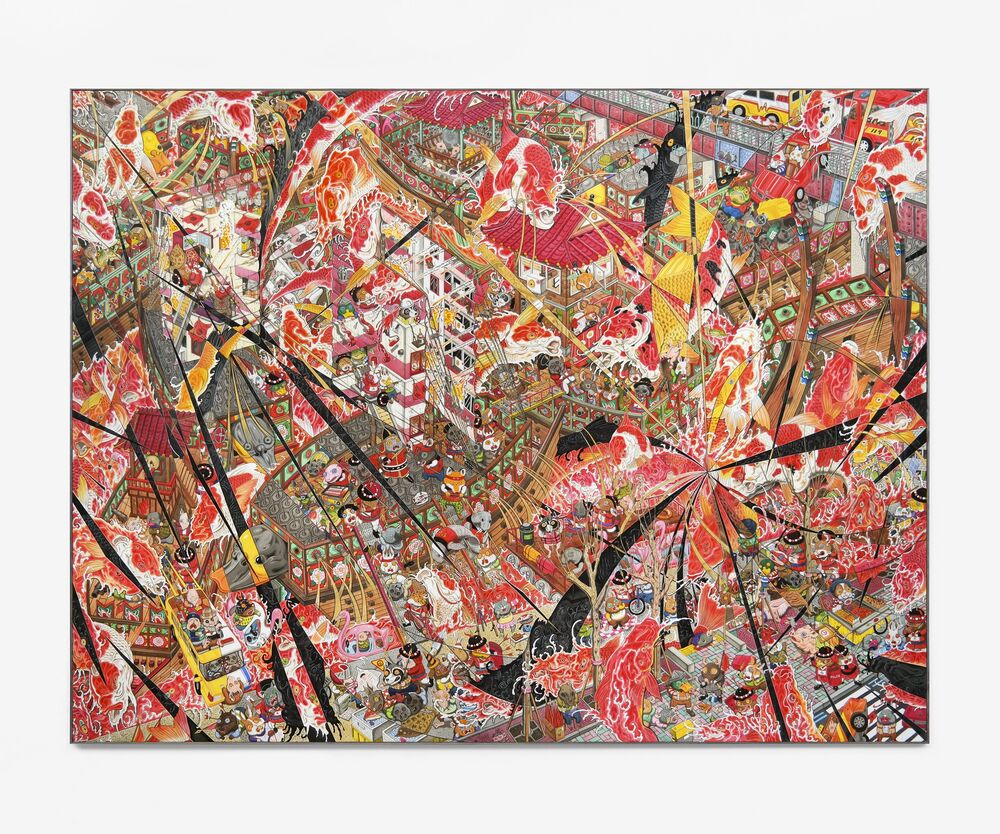
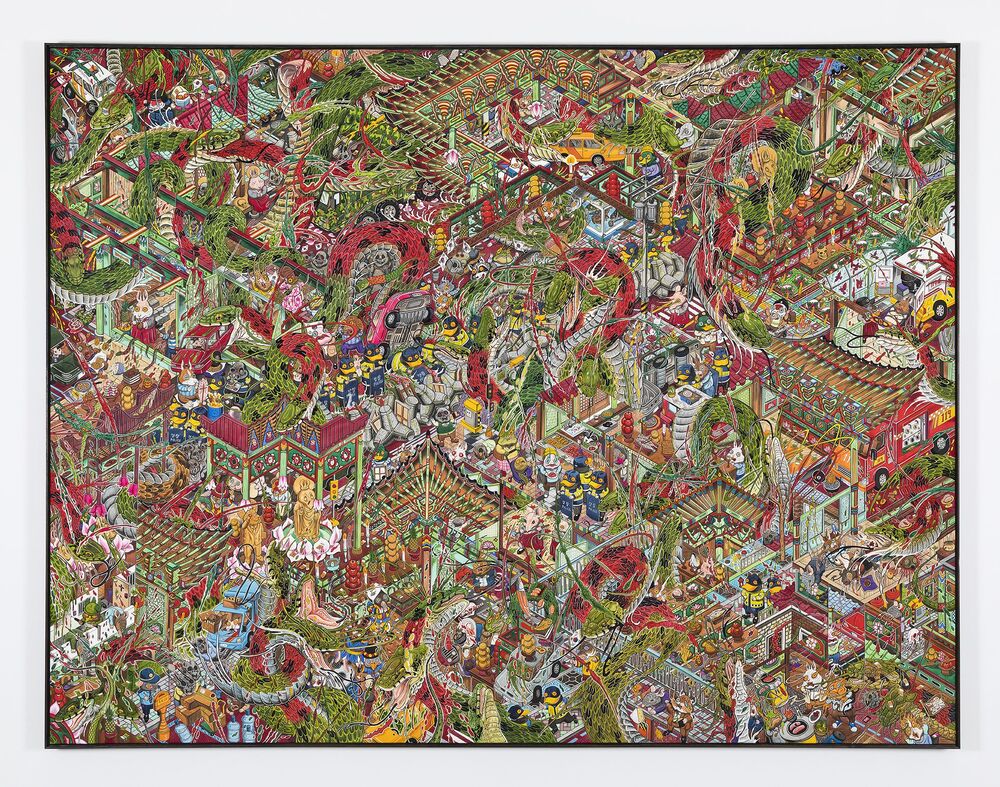
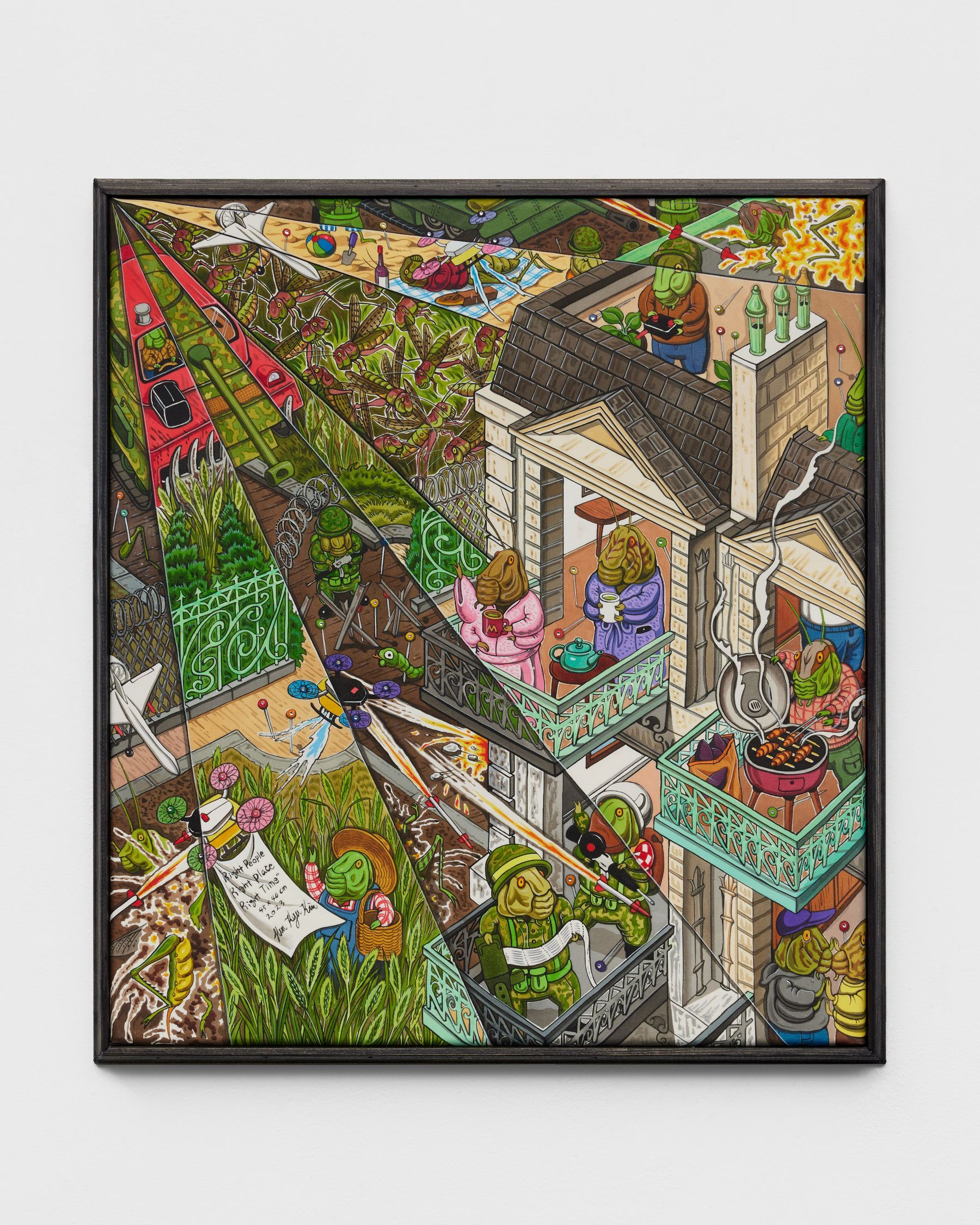
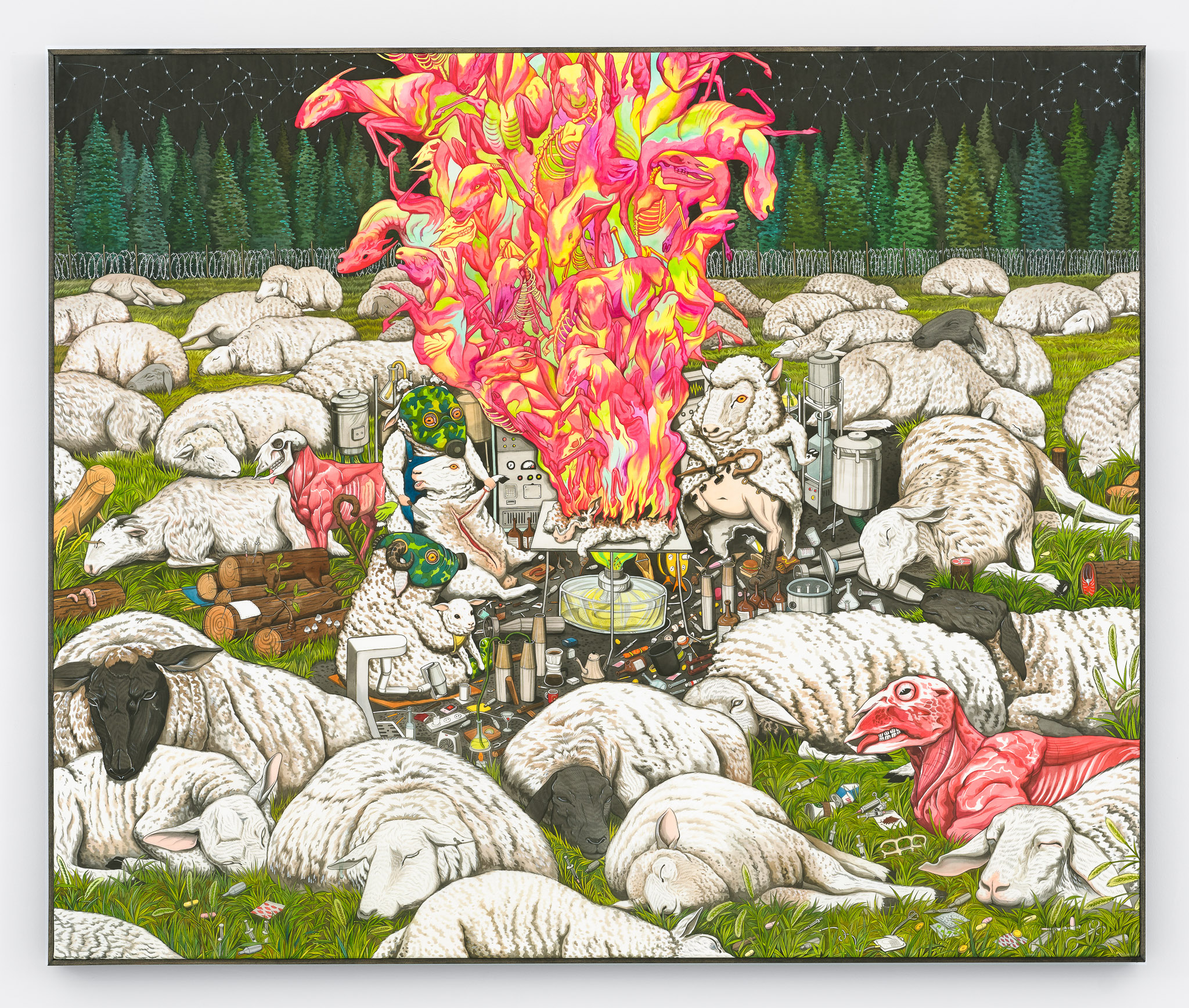
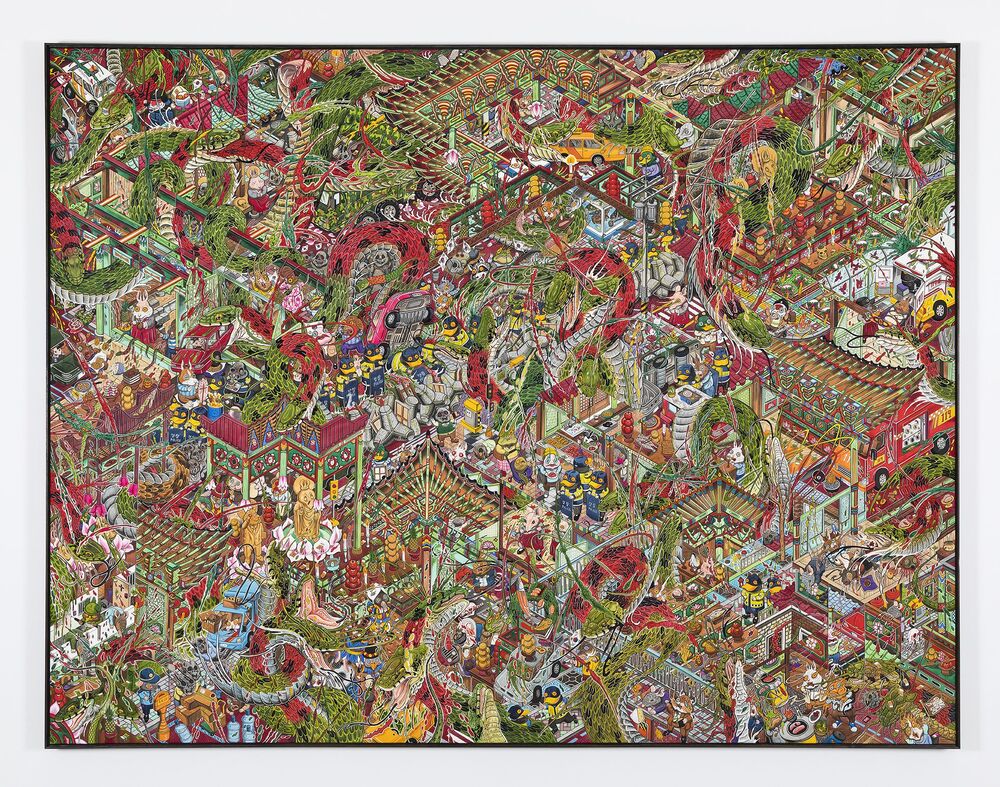
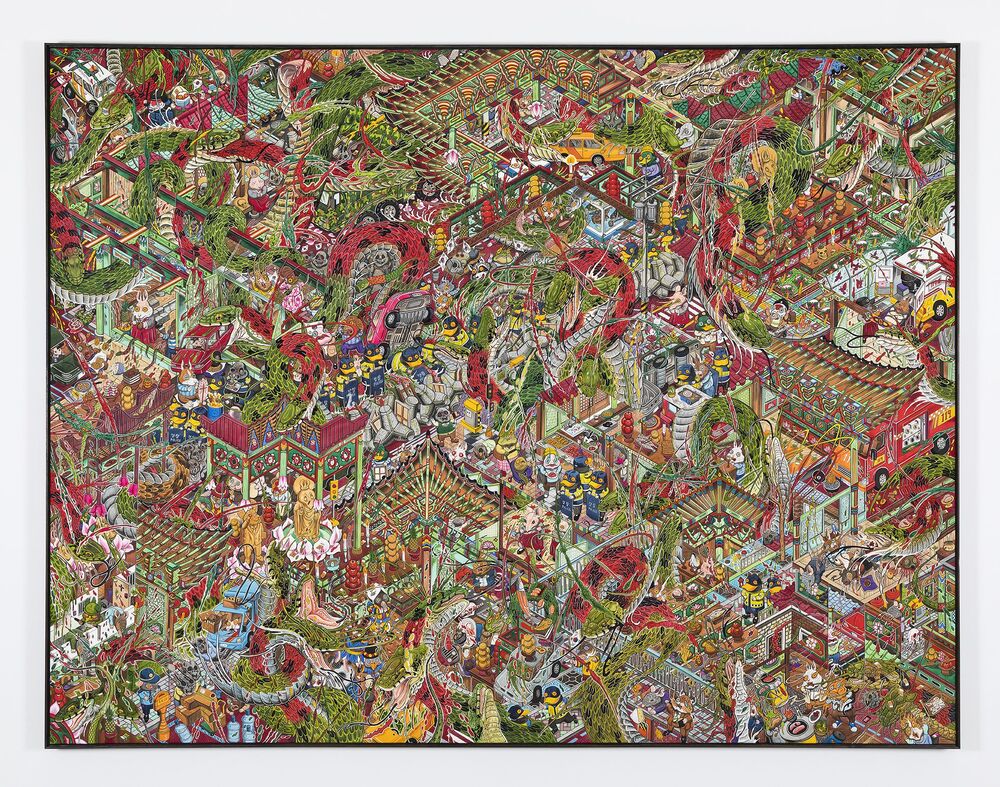
Hun Kyu Kim, Reddish Green, 2024, Hand painted pigment on silk, 165x215cm © Perrotin

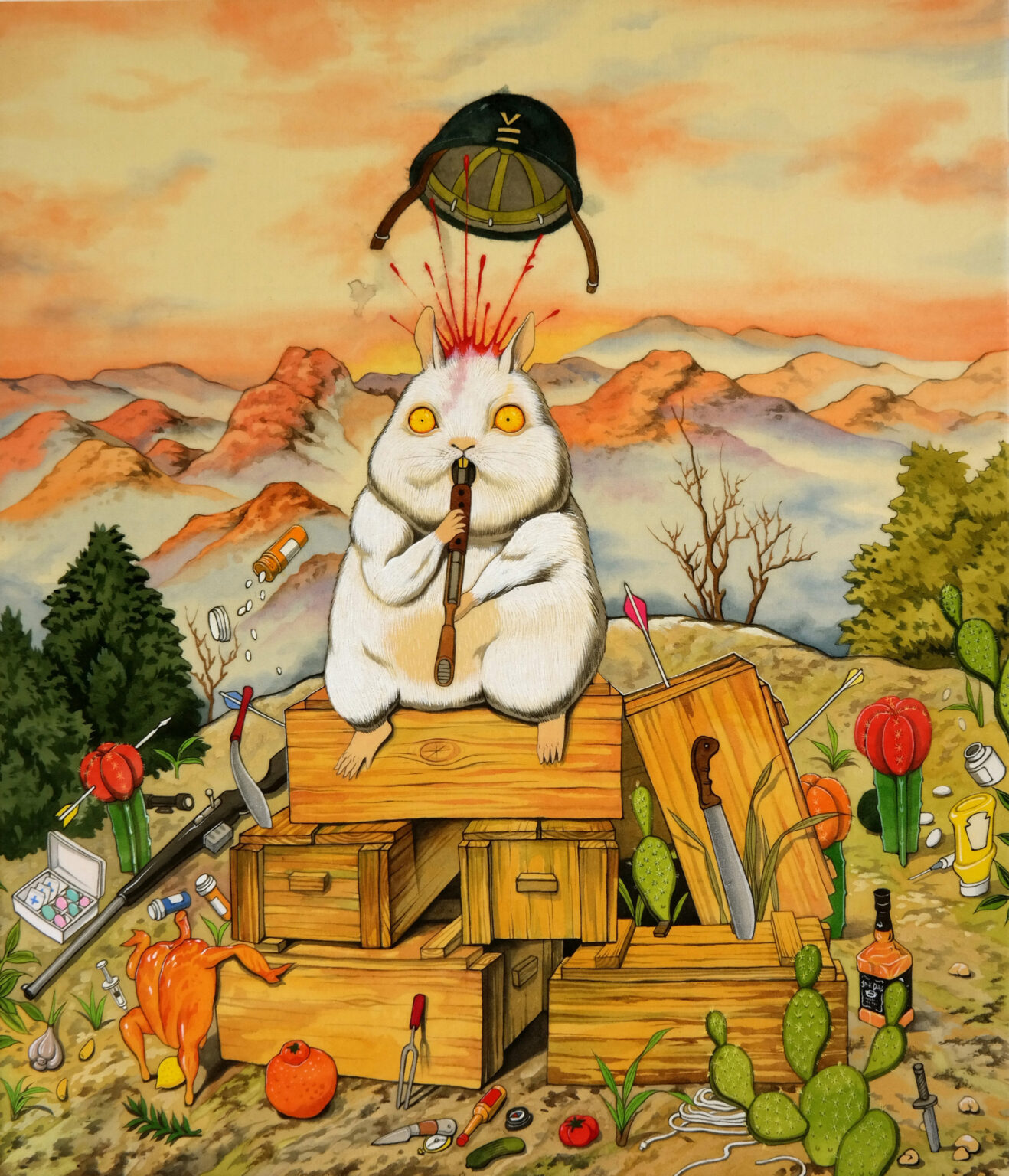
Usually paintings are appreciated with the eyes, but some paintings can also be heard with the ears. The stories created by the images before one’s eyes, each in its own voice, draw viewers deeper into the work. The animals painted by London-based artist Hun Kyu Kim speak constantly.

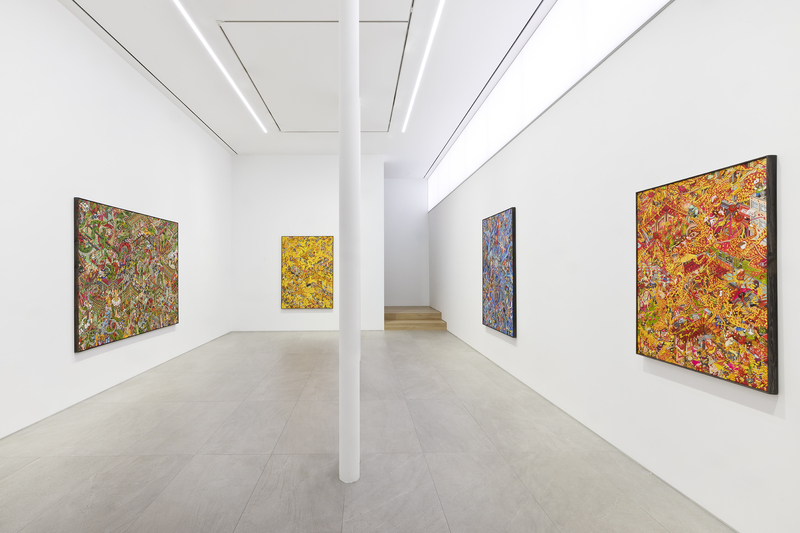
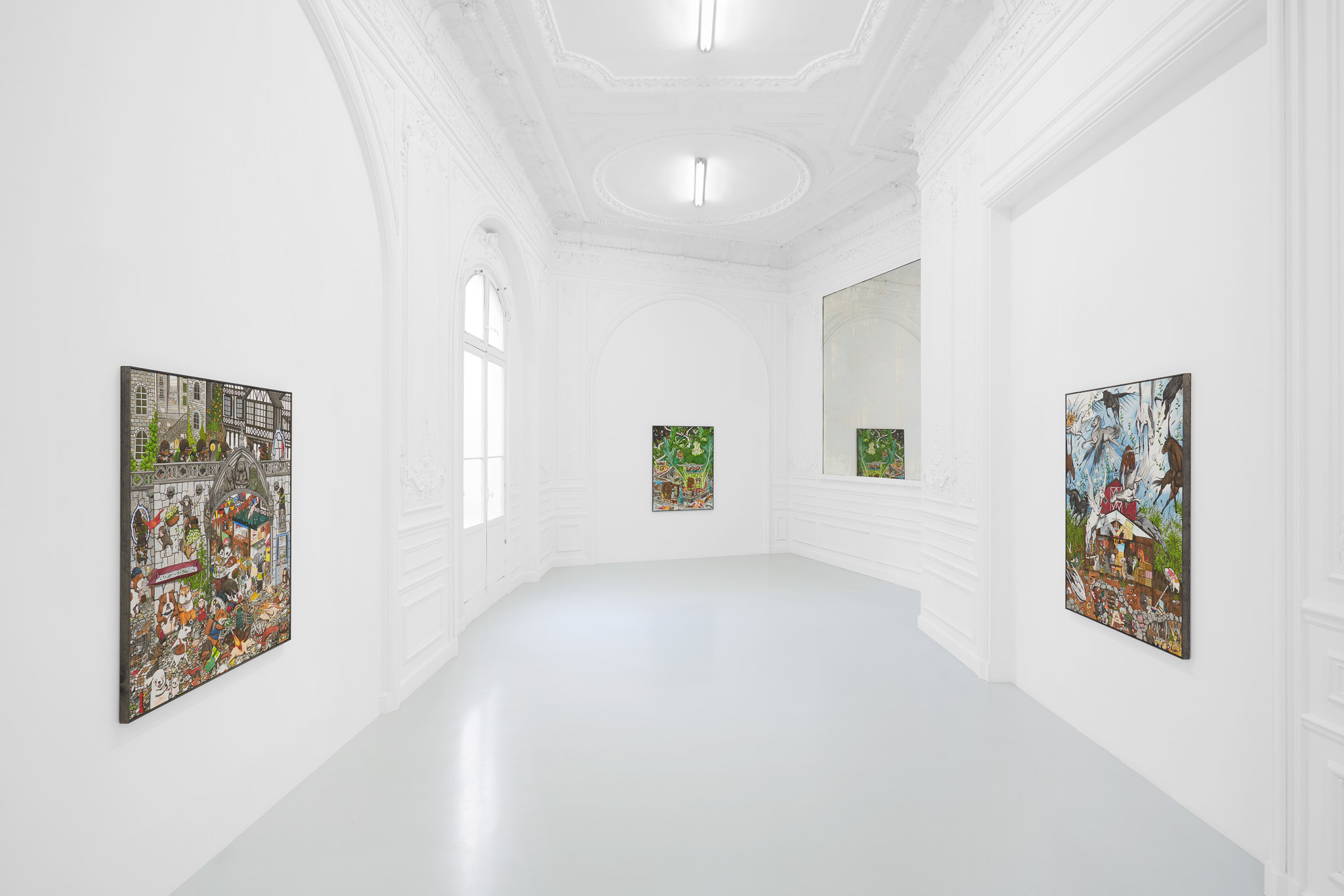
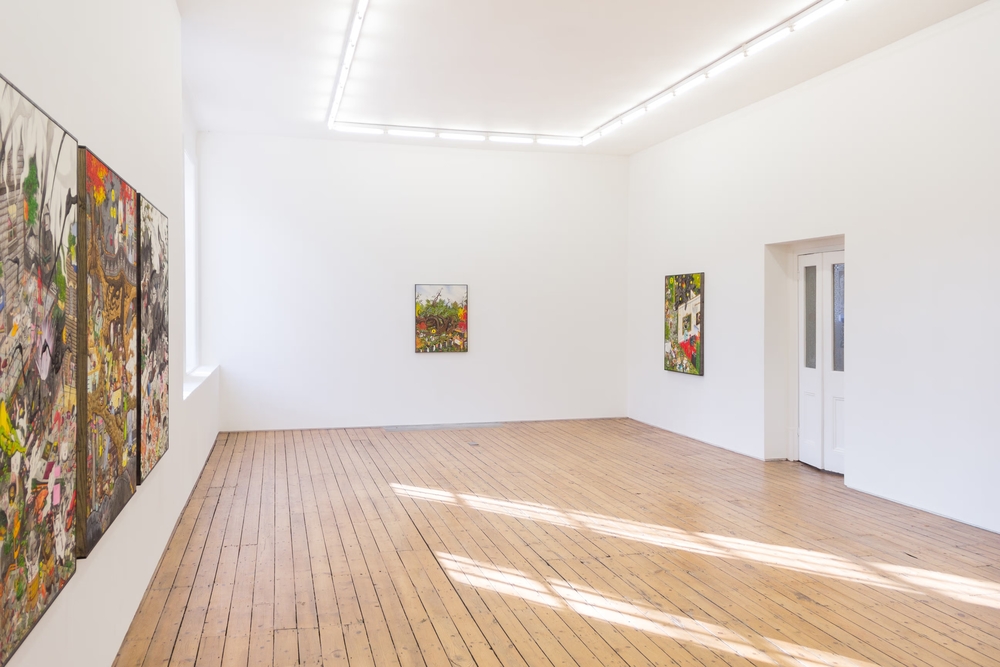
Hun Kyu Kim’s solo exhibition 《The Prayers》 at Perrotin Seoul in Gangnam-gu, Seoul, is a place where one can see, to one’s heart’s content, the animals that convey his stories. He has long featured groups of animals in his works. In the color painting series presented this time, he sets two dominant colors for each work and expresses images using various animals.

For example, if green and red are chosen as the dominant colors, he inputs these two colors into his mind and then works by arranging animals such as mice, pigs, turtles, rabbits, foxes, chickens, ducks, and dragons around the question of how to express the image.


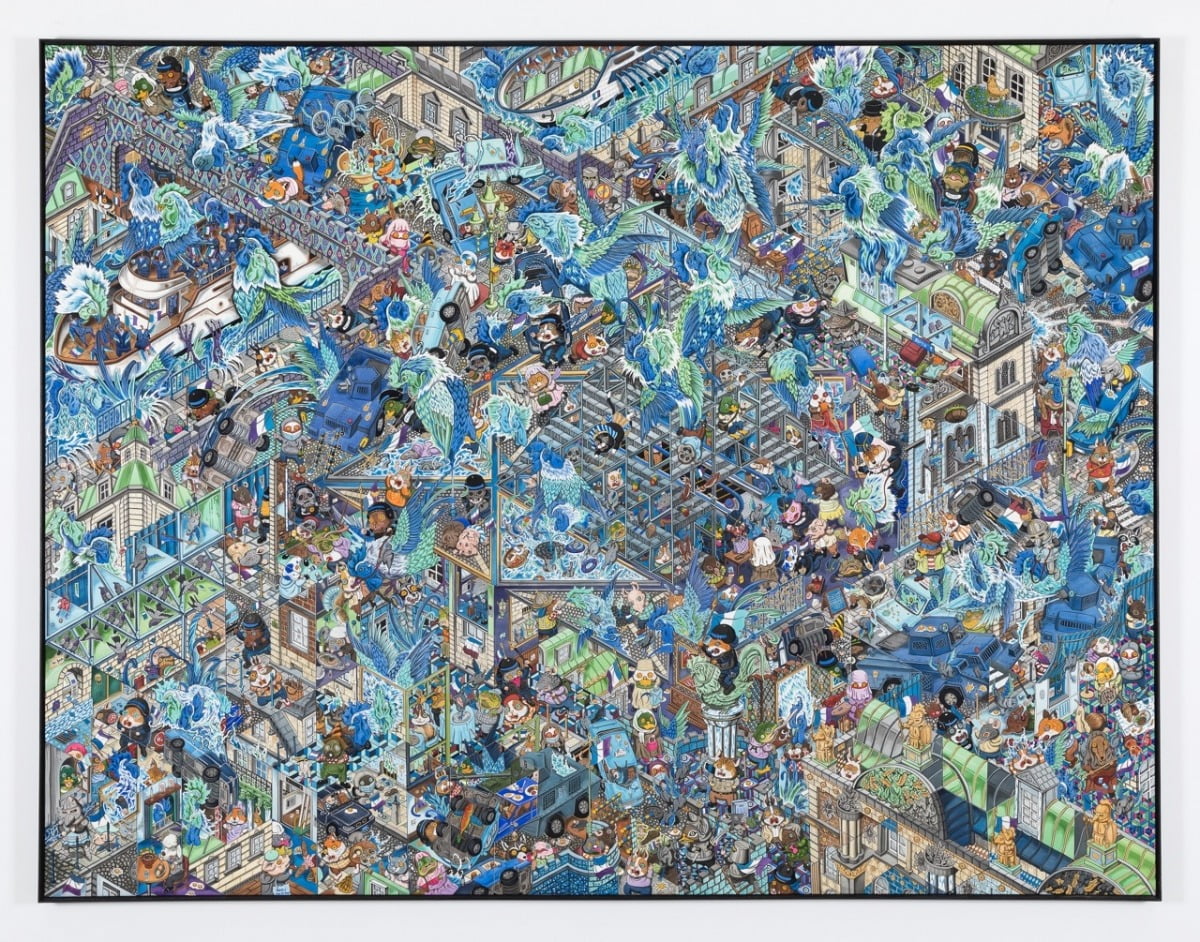
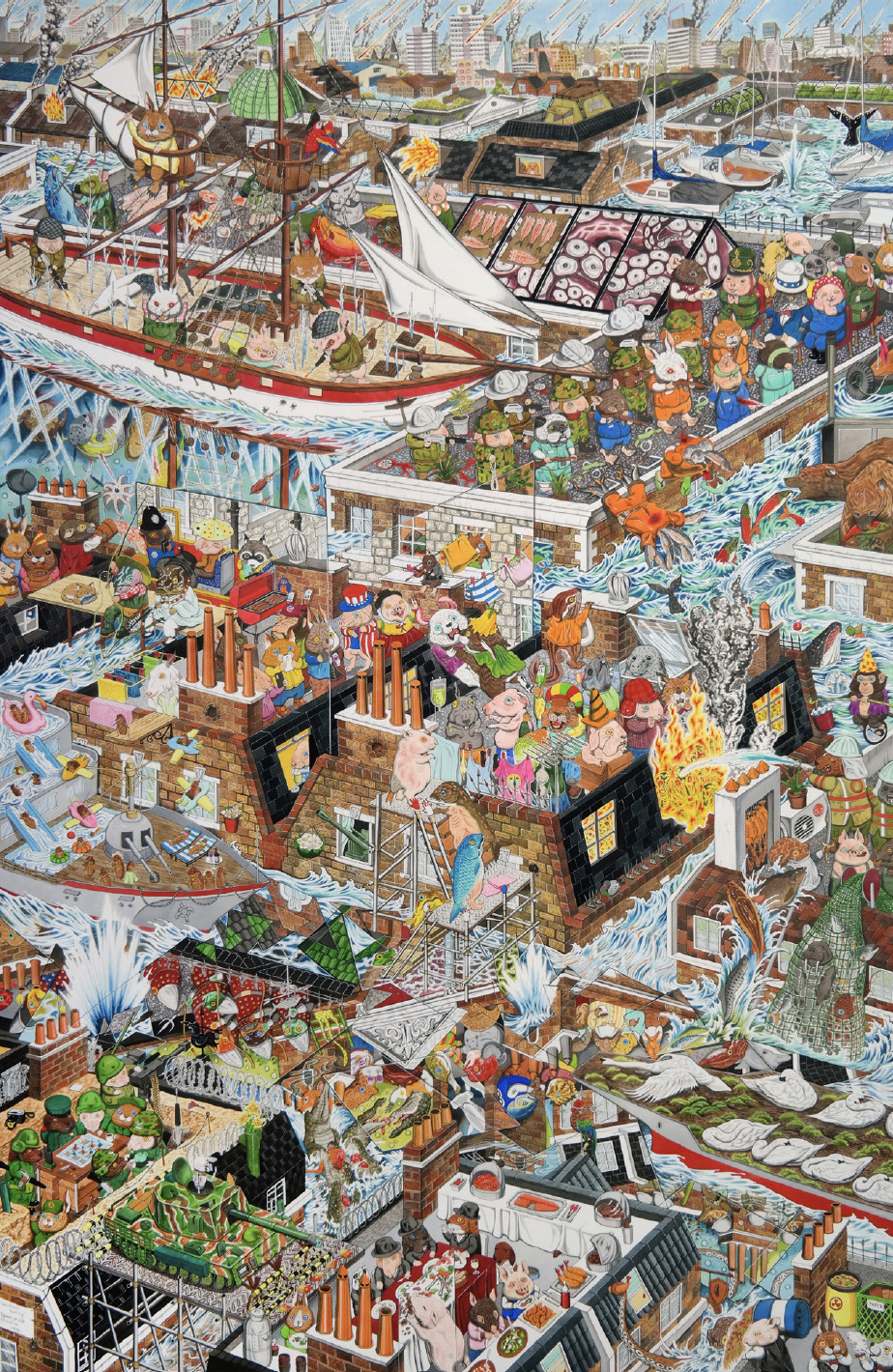
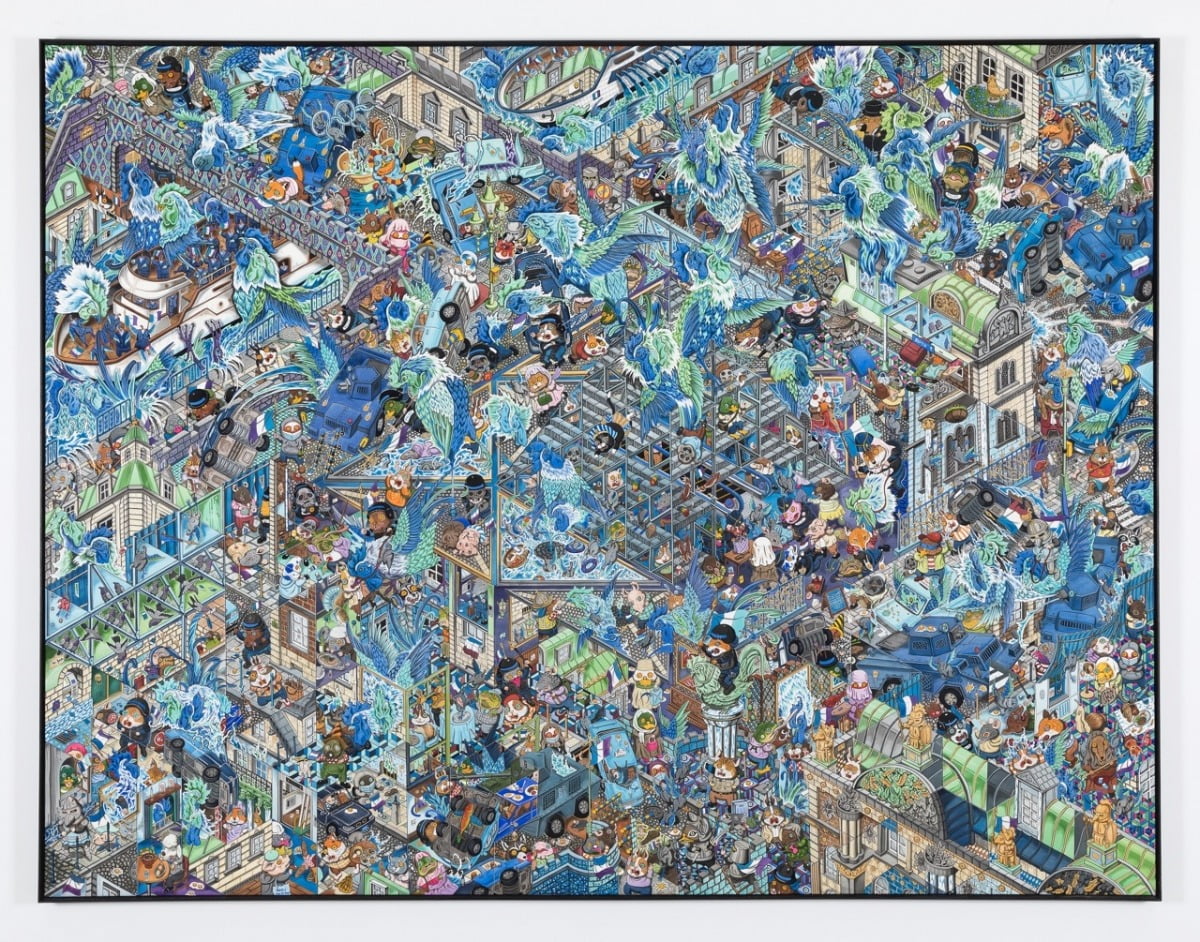
Hun Kyu Kim, The Blue, 2024, Hand painted pigment on silk, 165x215cm © Perrotin

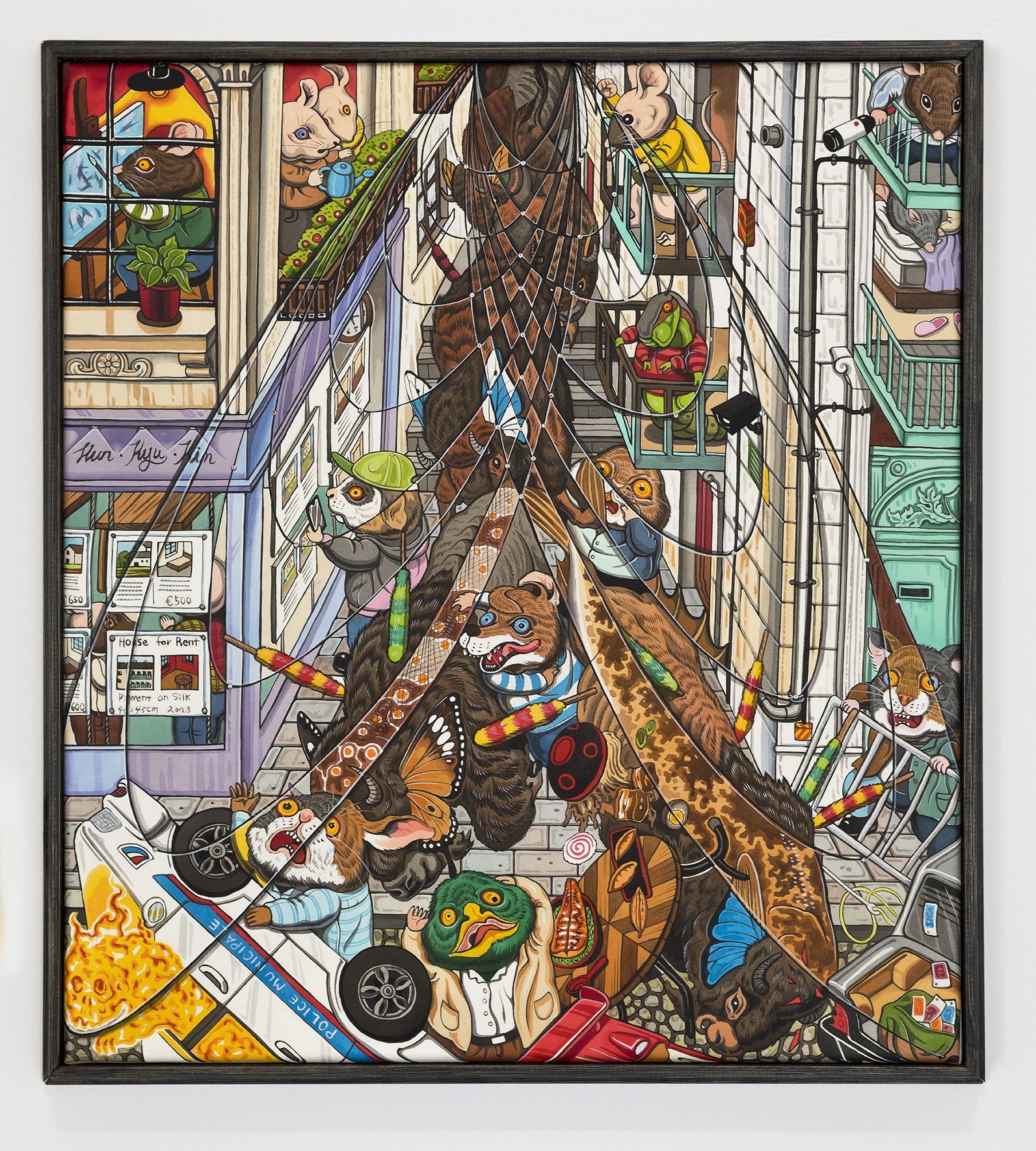
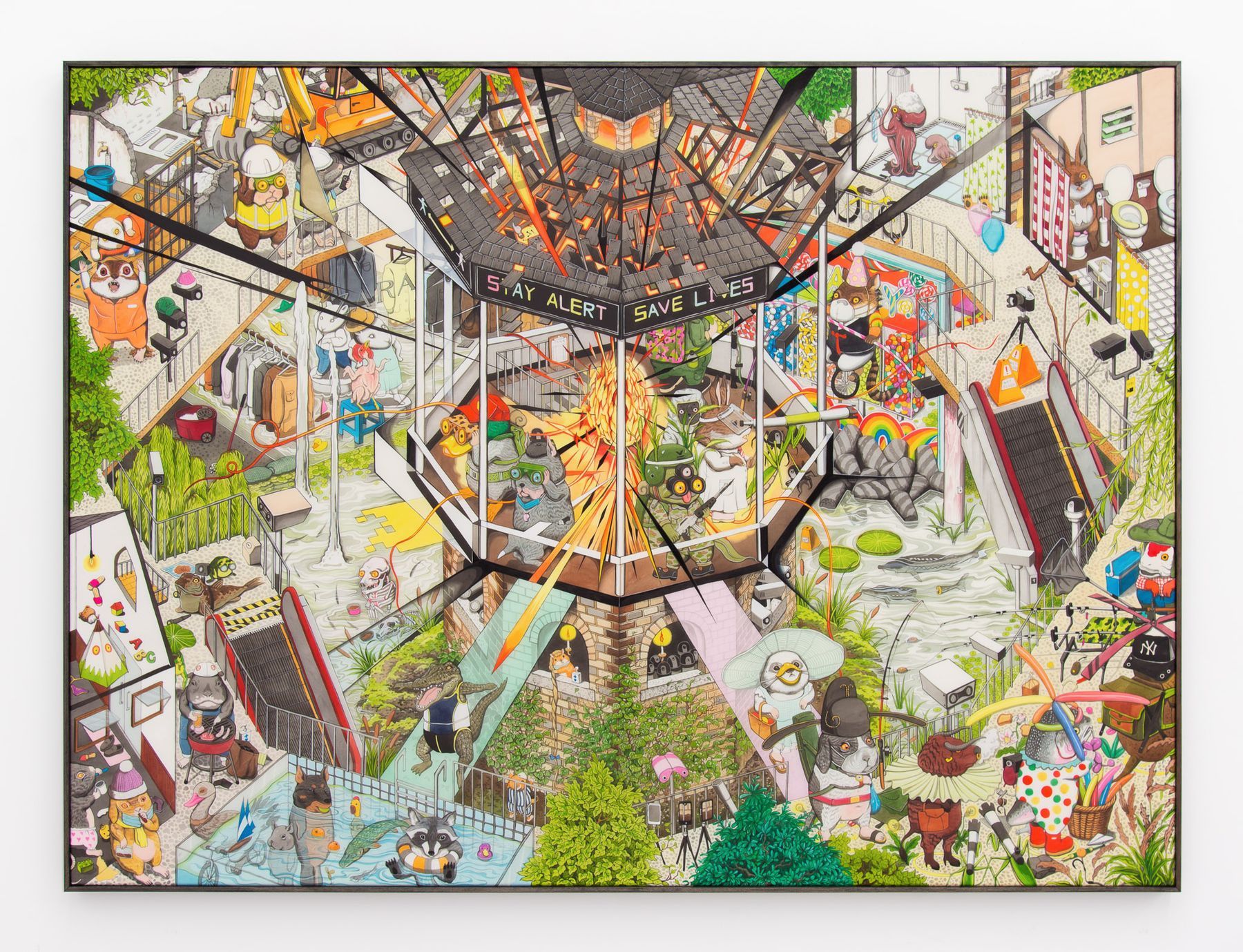
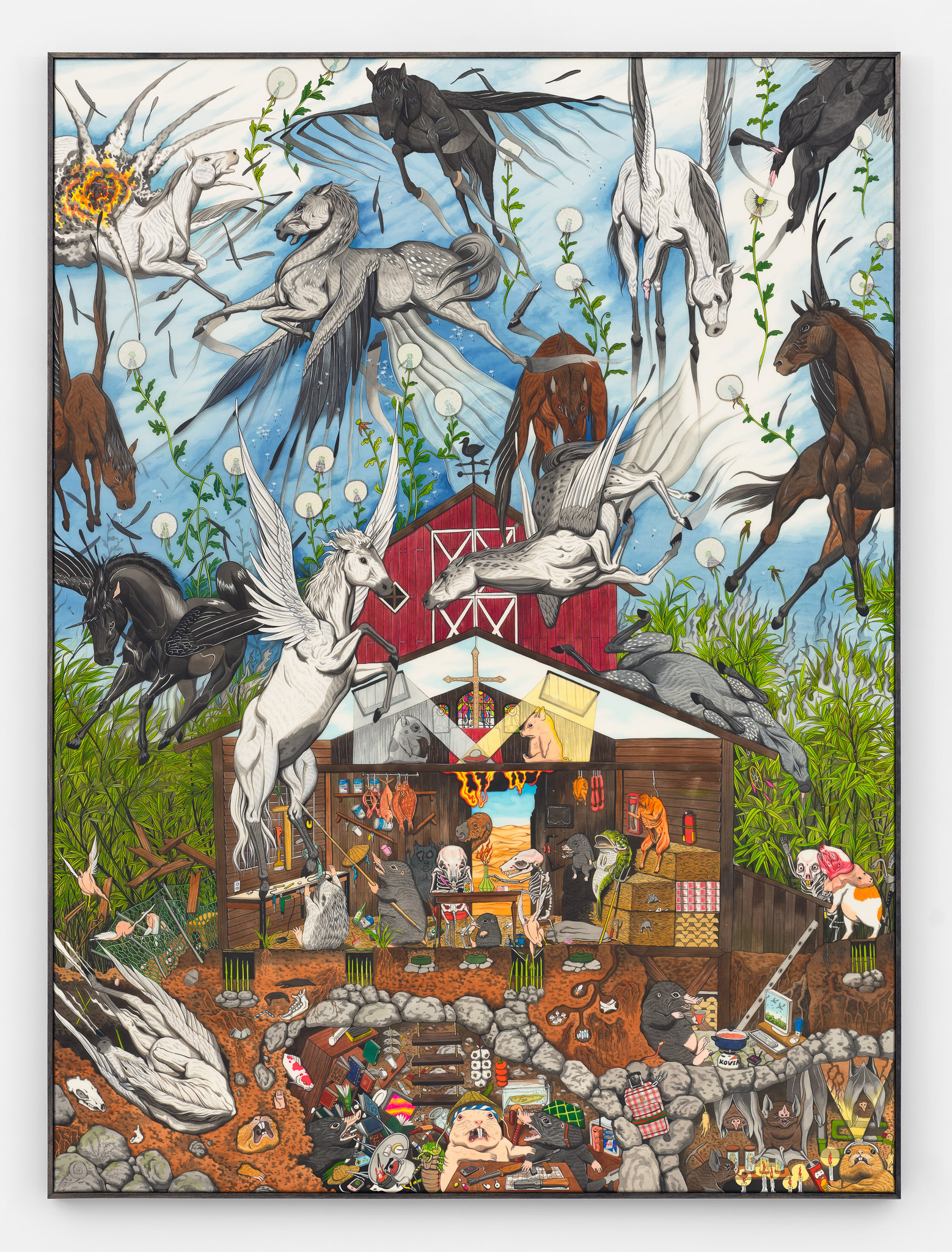
They appear here and there across screens that stretch more than two meters wide at their longest. The works, densely filled with groups of animals in splendid colors, recall Goryeo Buddhist paintings. They also seem like scenes from Studio Ghibli films such as Hayao Miyazaki’s Spirited Away, or bring to mind George Orwell’s novel Animal Farm. In some works, each animal represents a particular religion.

Red crayfish metaphorize Christianity, dragons and snakes Buddhism, crawfish Catholicism, and frogs Korean folk beliefs. Yet not all animals carry religious colors. Looking more closely at the paintings, one also finds ordinary animal figures familiar from everyday life, such as the Taegeukgi, Shin Ramyun boxes, animals bowing before a ritual table set in front of a folding screen, and delivery workers riding motorcycles, all mixed together to represent a complex and multifaceted world.

The artist, whom I met at the exhibition space, explained that rather than focusing on the symbolism of each animal, viewers would find pleasure in seeing various animals as in human society: clothed animals, naked animals, hairless animals, skinned animals, decapitated animals, and so on.

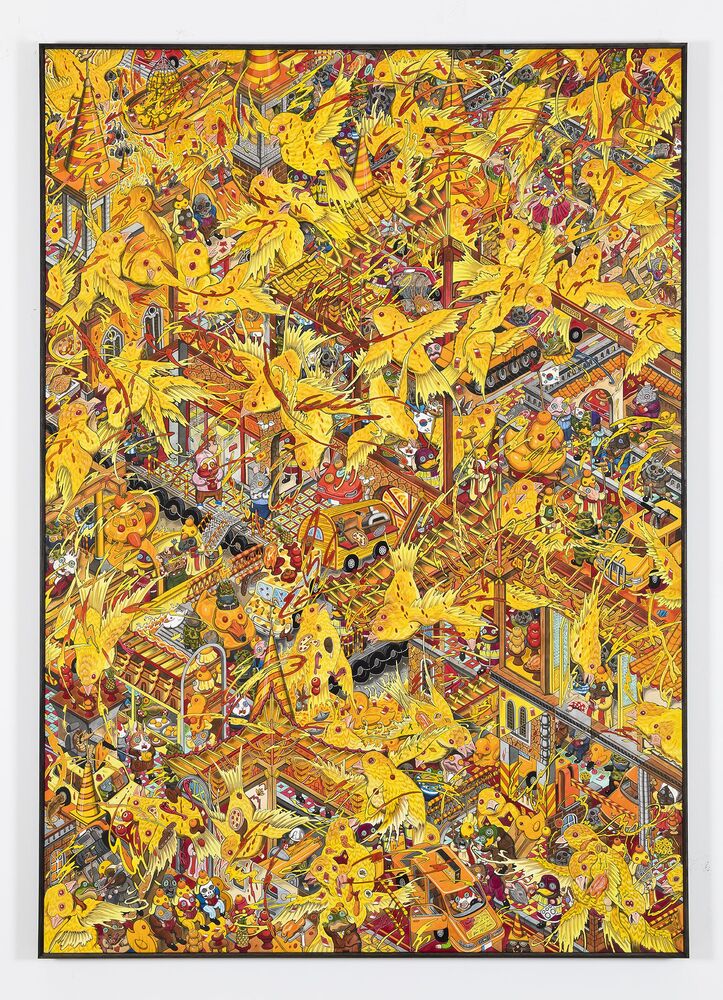
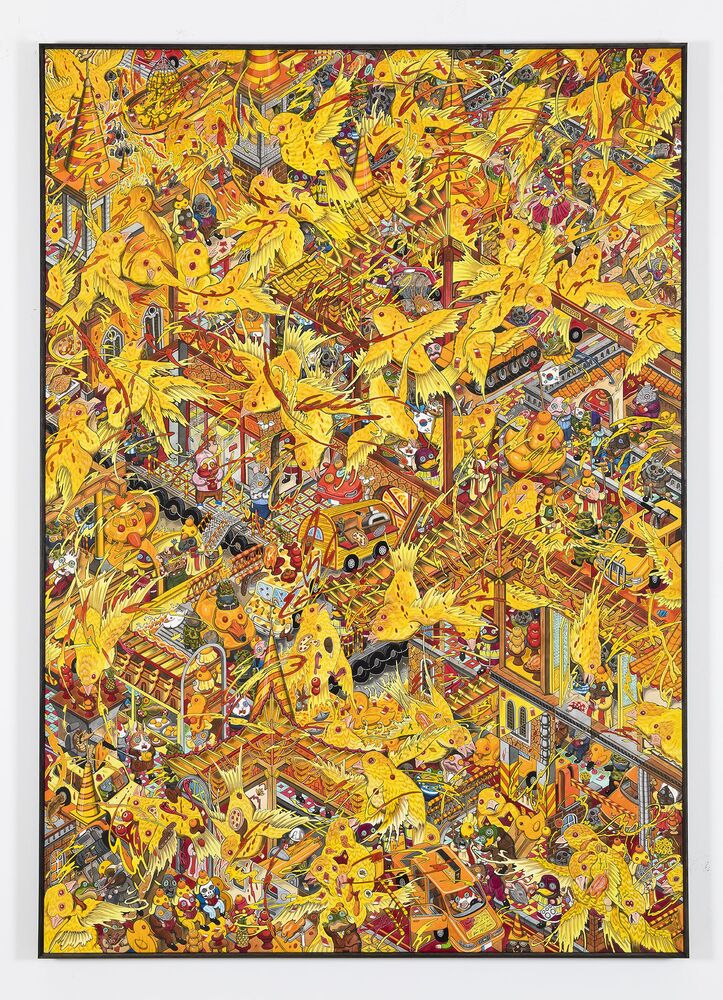
The color painting series is characterized by intense colors and the contrast between dominant colors. Religious iconography is contained not only in the animals but also in the colors. Although this is not the case for every work, Christianity and Catholicism are represented by red and blue, Islam by green, and the Church of the Rubber Duck by yellow.

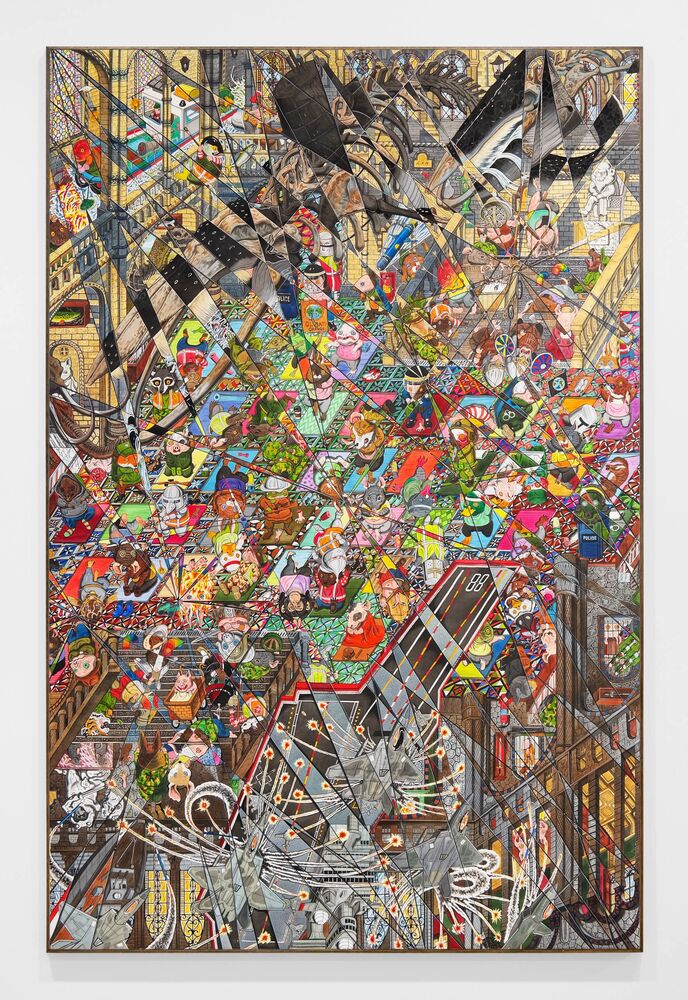
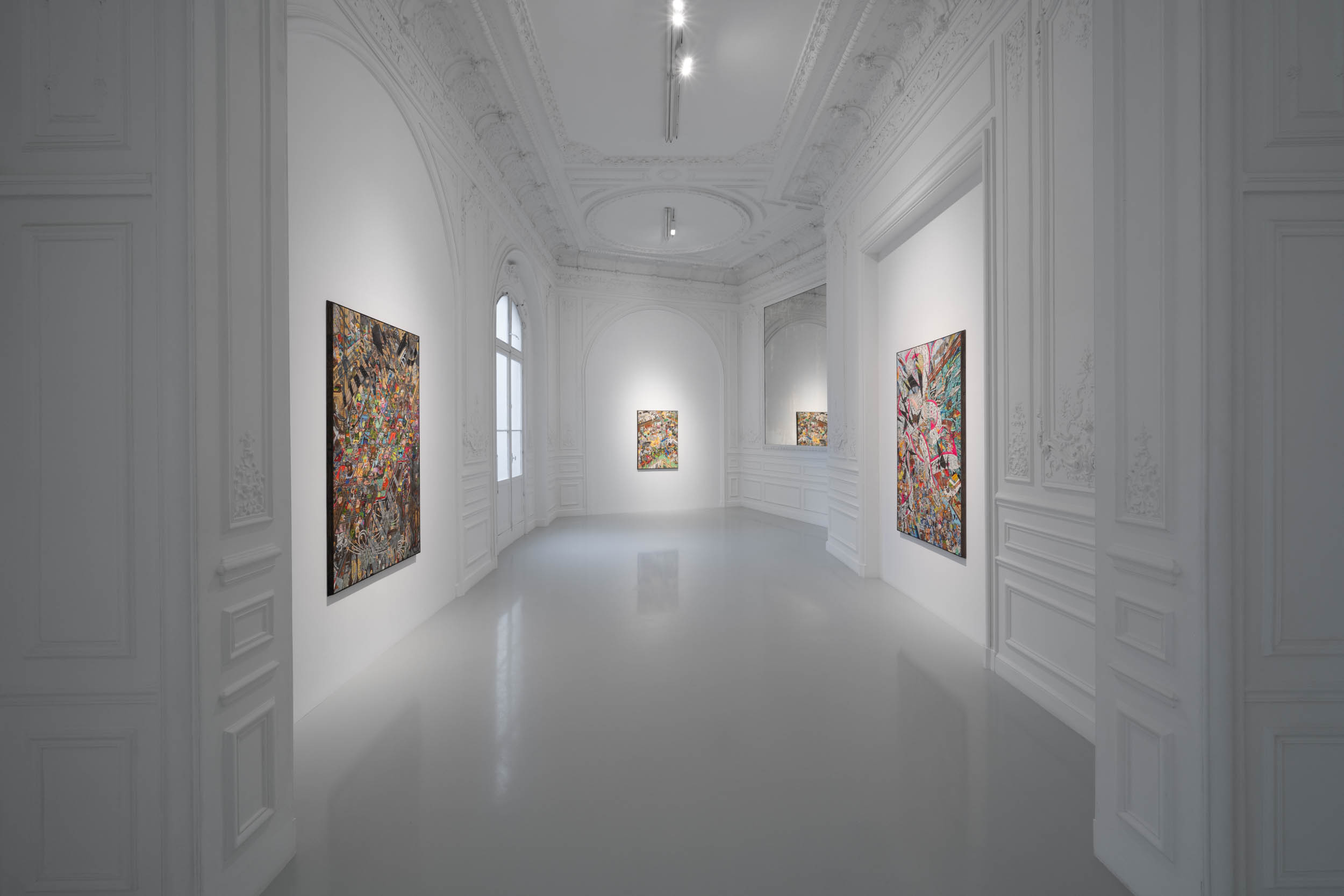
At the same time, there are also works that address lighter subjects, such as the fantasies many people have about Europe, with the Louvre Museum as a backdrop.

“This series began from a single sentence: ‘Color is ideology.’ I thought that the way light strikes a material, enters the human sensory organs, and is perceived as color is similar to realizing one’s will in the world. I tried to harmoniously contain on one screen the process by which the world collides and struggles like one enormous palette.”

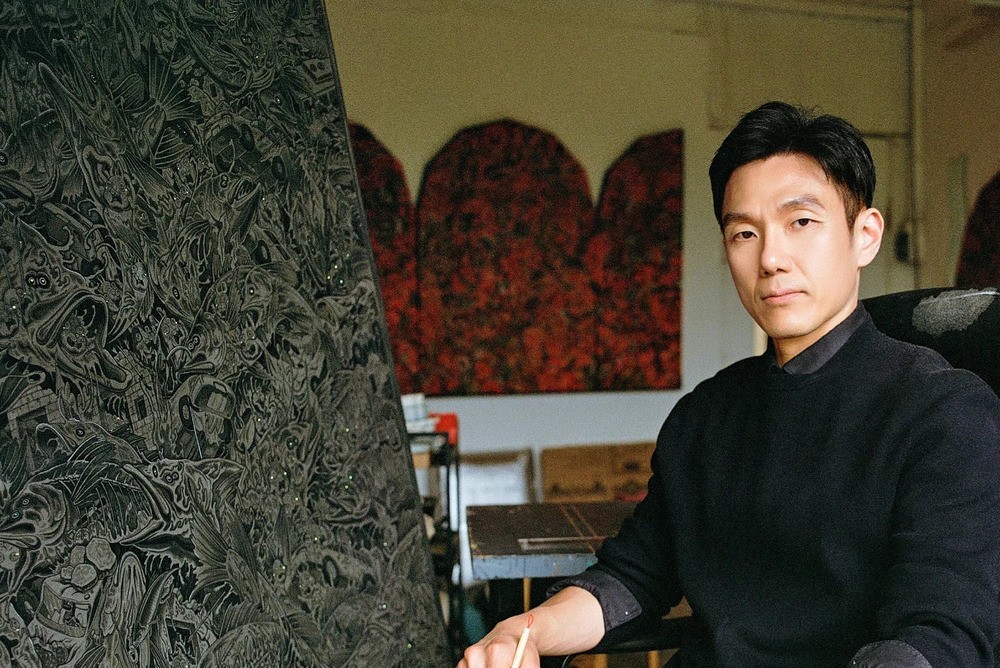
The artist’s canvas is silk. He works mainly with seokchae, a coloring technique used in Goryeo Buddhist paintings, dyeing the silk as he works, then completing the work by applying plant-based pigments on top. Because he is dyeing the fabric itself, if he makes a mistake, it cannot be undone. It is an extremely burdensome and sensitive process, but it does not greatly affect the artist’s working speed.

The number of works presented in this exhibition alone is around twenty. It took him a year and a half to complete all of these works. Although it varies depending on size, one work usually takes five to seven weeks. Considering the animals and elements drawn in such detail within them, this is very fast.

“When I was young, my nickname was civil servant. Whatever I did, I would calculate the time thoroughly and complete it precisely. As if a machine were printing, I work by gradually building up the painting from the very bottom to the top. Fortunately, now that I have reached this point in my career, I don’t make many mistakes anymore.”


Hun Kyu Kim, Reddish Yellow, 2025, Hand painted pigment on silk, 170x120cm © Perrotin

This series is also the result of the artist continuously tempering himself. He broke away from his existing working method and threw himself into a new working environment to experiment. Unlike his previous method of momentarily capturing floating images or keywords and working spontaneously, he has recently changed his working process by first establishing logical thoughts and structures before beginning the work.

“Since I have been working for over ten years, I always think that I should present something better than my previous work. I also encounter limits, and it feels like I am constantly struggling with myself. So I decided that I should try changing my working method.”

The artist says that a good work should contain the spirit of the times. “Our society today is losing political character and becoming divided. Conflicts between generations and between political forces are also deepening. In this process, I think politics is becoming almost religious.

As if supporting a particular political party would bring about utopia. Then, when it comes to the question of how one should live, it returns again to the secular. I tried to contain these two extremes on one screen.” The exhibition runs until December 20.

References