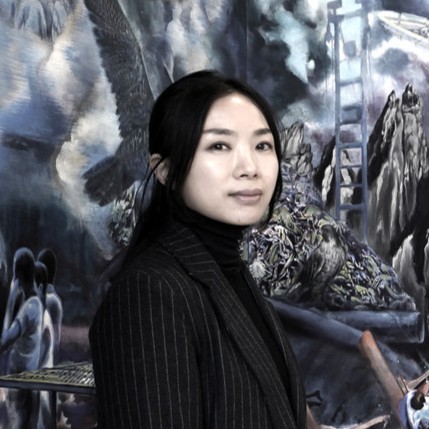
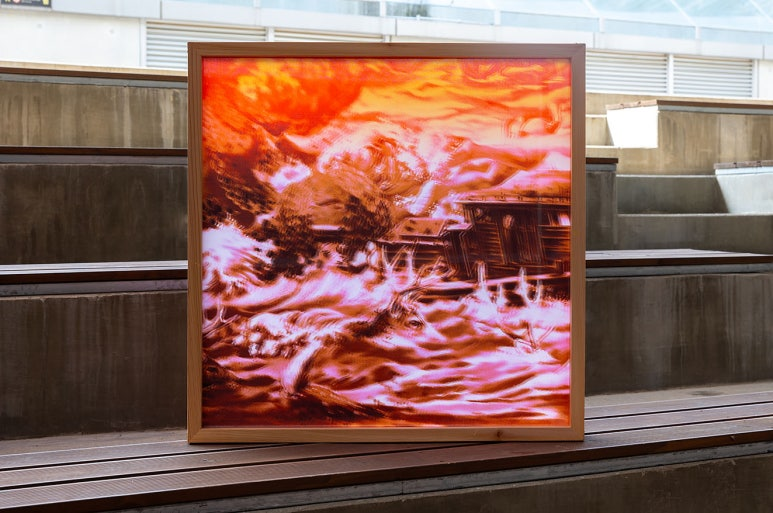
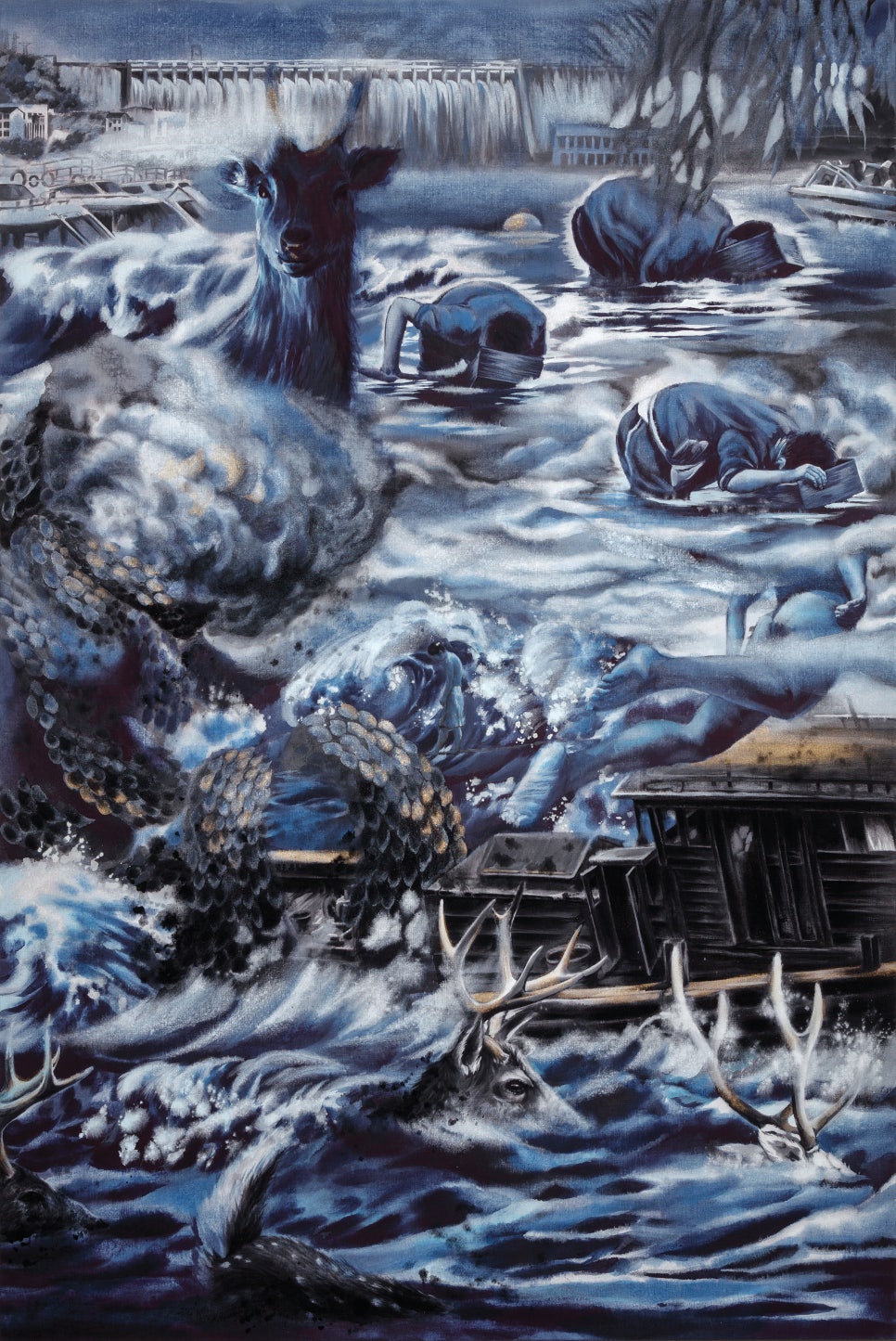
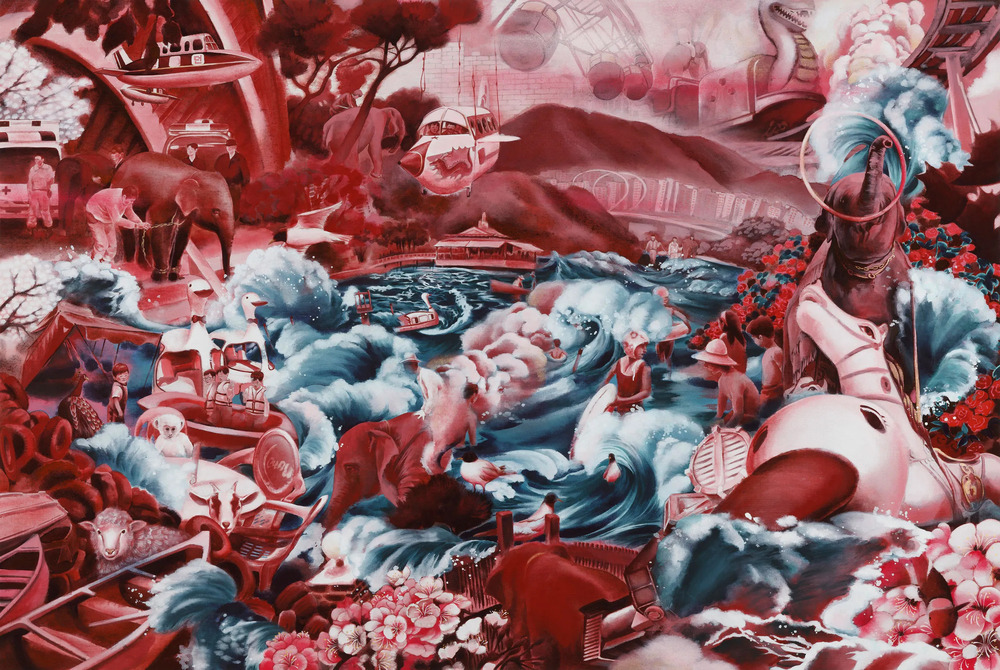
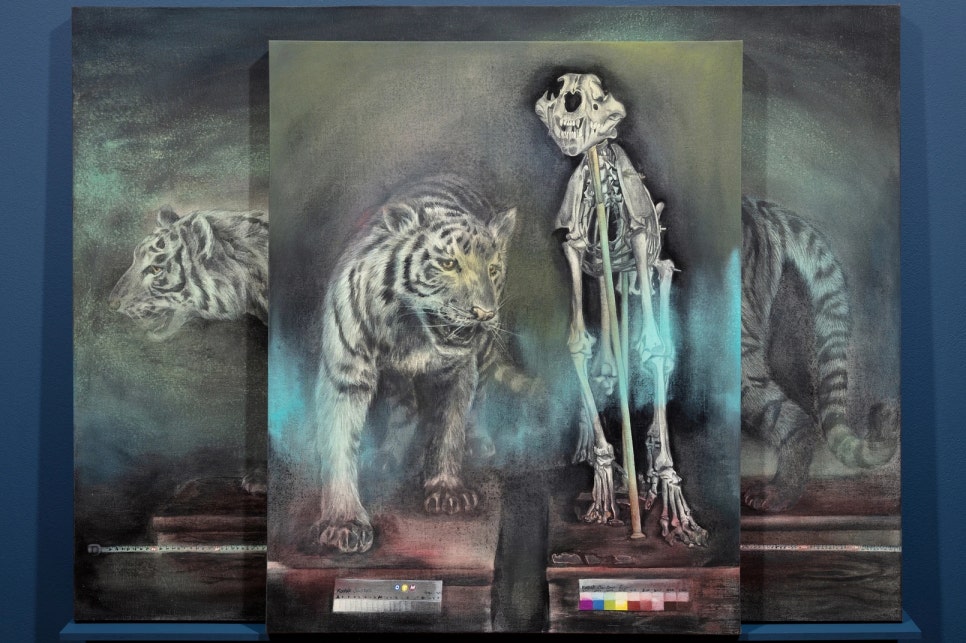
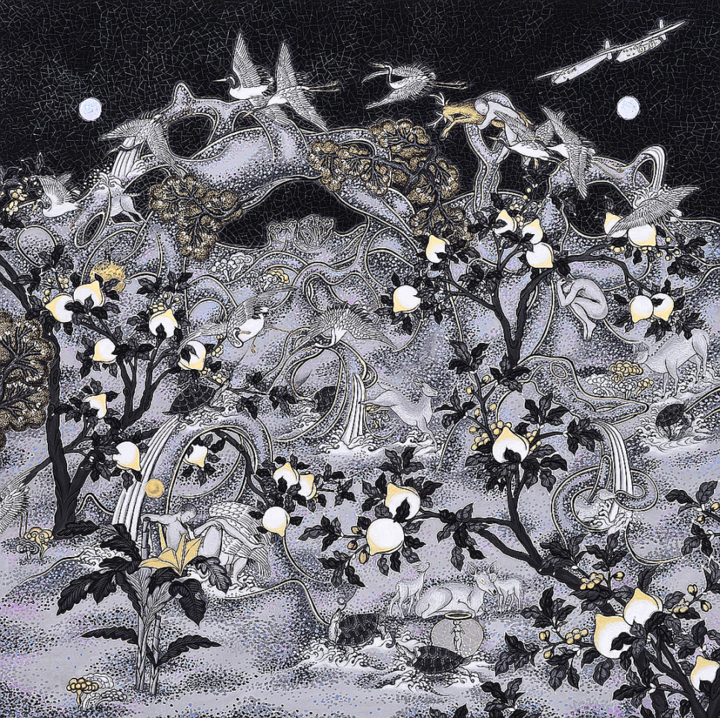
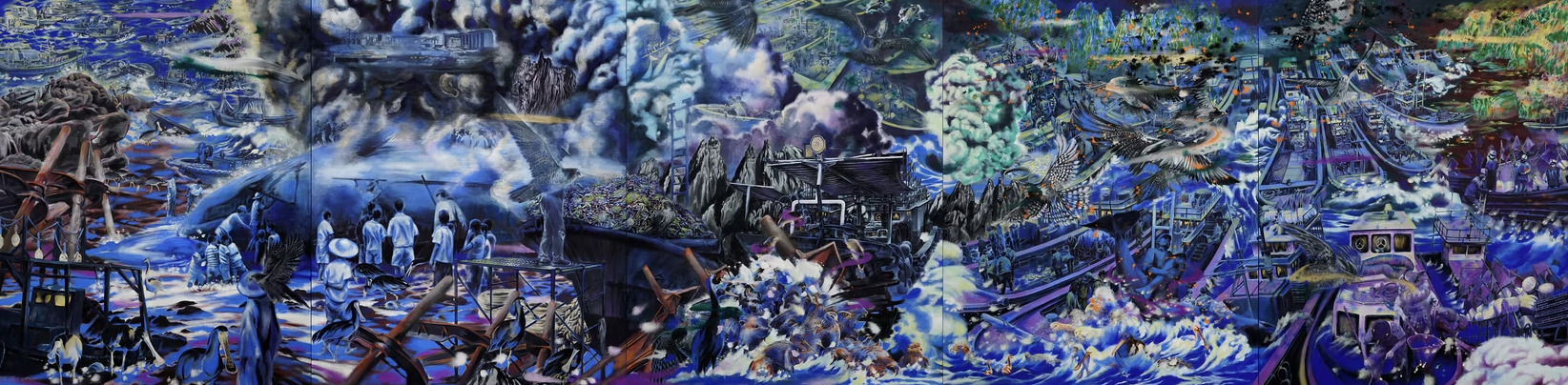
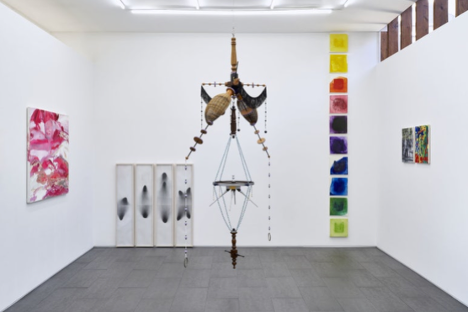
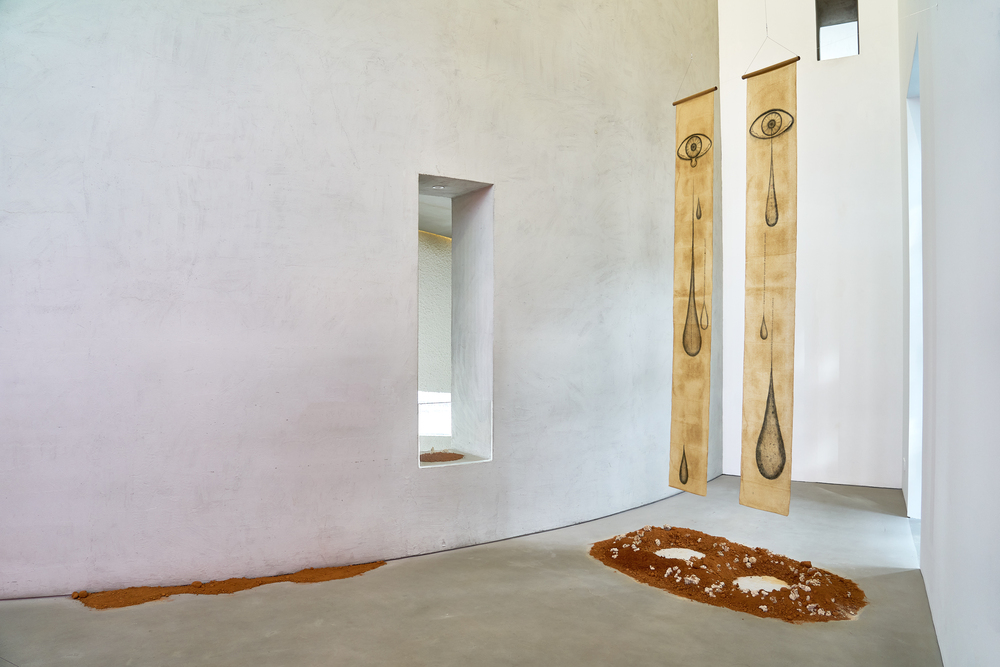
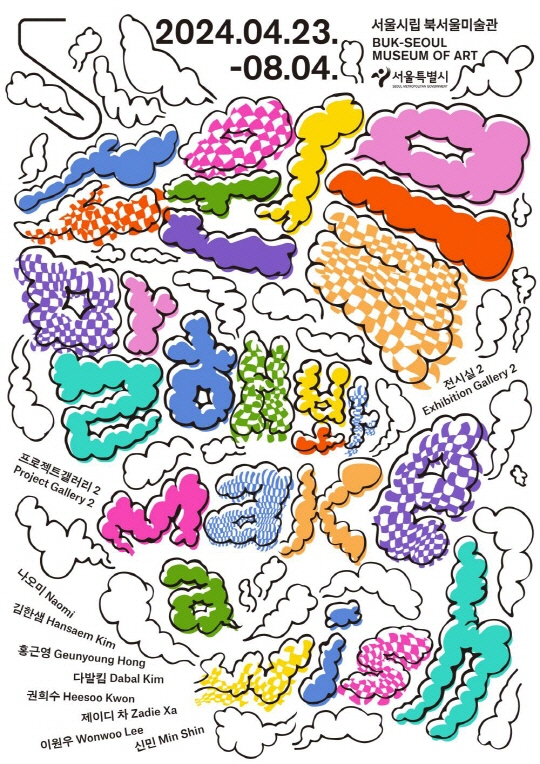
Composed of personal and individual materials, Naomi's ongoing project 'Liberation of Coastline'(2019–present) functions as an archive of memory for domains excluded from the mainstream. This is made possible by the artist's active intervention in constructing a new narrative, so that the images in her paintings do not remain a mere collection of documentary records.
Archival work of this kind — alternative historiography focused on microhistory — has long operated with a counter-hegemonic character, and the theoretical foundation that has made such a movement possible is, without question, the discourse of Michel Foucault.
Moving away from a materialist, positivist historiography, Foucault argues for the necessity of 'counter memory' and anti-historical practice, redefining the archive as something newly constructed within another time and space beyond mere administrative record.1 His redefinition of the archive suggests the possibility that an archive different from historical record — that is, from the tense of the past, from memory — can emerge.
He theorized the conditions under which not a single history but multiple histories could be explored and expressed. According to Foucault, legitimate 'official' history exists side by side with the 'marginalized' history of those without the power to regulate the formation of knowledge.
The curator Douglas Fogle has described this term as 'a new kind of history-writing in which the periphery and the everyday take precedence over the great men of world history.'2 In other words, he revealed that existing historicist discourse could interact with his counter-hegemonic practice to become a cornerstone opening a field of diverse discourses.
As the meaning of the archive shifted through the historical and political upheavals of the 1980s, Foucault's concept of the archive could be presented as a counterpoint to what had been accepted and conventionally recognized within existing archival science — and in the same way, Foucault's argument revealed that structures of power could be overturned through more minute and microscopic modes of practice.
An interest in obscured, individual historical narratives is also an important theme in Naomi's work. In particular, the artist constructs her paintings through stages of historical verification and research into the ports of Incheon and Dandong, Geumgangsan, and the border areas near the Amnok (Yalu) River.
This can be described as work that historicizes regional experience within the process, or the record, of a region's transformation and rise and fall — restoring and transmitting a regional history buried beneath the grand discourse of capitalism and industrial development — and that examines the meaning of a region from a microscopic perspective, thereby making individual subjectivity and agency visible.
As Terry Cook has said, this allows the work to acquire the role of an active archive that forms collective memory or social memory.3 If the countless records of the coastal region melt into the paintings, mixing images of the real and the imagined to create a new landscape, is this not, too, an archival practice that creates an individual, multilayered memory?
The Archive Manifested as Painting
Since 2019, Naomi has researched the coastal landscapes of maritime cities that are deeply marked by traces of modern history, and has been creating paintings based on this material. This is achieved by exploring not only Incheon but also the past and present of Dandong and Yokohama, and the history of those places. The various elements included in her works are grounded in thorough research.
For example, modern and contemporary photographs, oral material gathered through interviews, and elements that have been emphasized in existing research are arranged together; what matters is that these materials do not appear as raw matter but are born in the form of an archive processed through the work of painting.
Naomi's paintings, constructed in this way, are themselves both a condensation of the coastline and an archive. Moreover, the countless records that become the material of her paintings appear as a mixture of private and public material.
This can be seen as arriving at a recognition of personal history and grand historical discourse not necessarily as opposites, but as mutually complementary.4 If so, is this painting, grounded in thorough research, merely a simple collection of records about a single place?
Narrative as Counter Memory
As mentioned above, the Liberation of Coastline project, in which past and present, the personal and public history are intermingled, could never, from the outset, remain a mere collection of material. In other words, the attempt to newly weave together a coastal history on the basis of the multilayered, expansive historical material of Naomi's work clearly shows that a multilayered context is being realized, beyond the mere totality of the material.
The artist is no longer interested in simply reproducing memories of the past as they were, or in restoring orthodoxy. Instead, she juxtaposes everyday landscapes that appear to have no connection whatsoever, on the surface, with facts and folktales related to the coastline. This is meant to experiment with ways of viewing and interpreting specific events, figures, and objects from an entirely different point of view.
In this connection, Jacques Derrida argues that the desire that requires an archive, whether in a practical or symbolic sense, is impossible without a truly radical closure, or without eliminating the possibility of forgetting — and that, thanks to this, it has never been suppressed. He also argues that the archive is at once conservative and innovative, even producing unexpected results that create new memories and new frameworks of memory.5
In a similar vein, the artist's attempt to draw out the microhistory of the coastline is likewise, at bottom, inevitably creative. This is because the question of the proper scope of a useful archive can be understood not simply as an attempt to excavate and enumerate the past, but as a process necessary for reinterpreting, from the vantage point of the present, the meaning that the past holds.
In other words, Naomi does not gather material in order to make it, as mere documentary record, into a work in itself; rather, she seeks to realize, on that basis, a new narrative within her paintings. As stated at the outset, this can be understood in the context of a deconstruction of the linear meaning and value of the archive — a deconstruction that derives from questions about the certainty of preserved memory and about its history, and that begins with Foucault.
That is, the individual history that appears intermingled with existing grand narratives leads each viewer to weave a different narrative, and thereby comes to appear as what might be called the excavation of counter memory. This attempt to break away from linear history by combining documentary factuality with aesthetic fictionality goes on to realize a new narrative even more actively through the manner of its installation within the exhibition space.
An Expanding Narrative
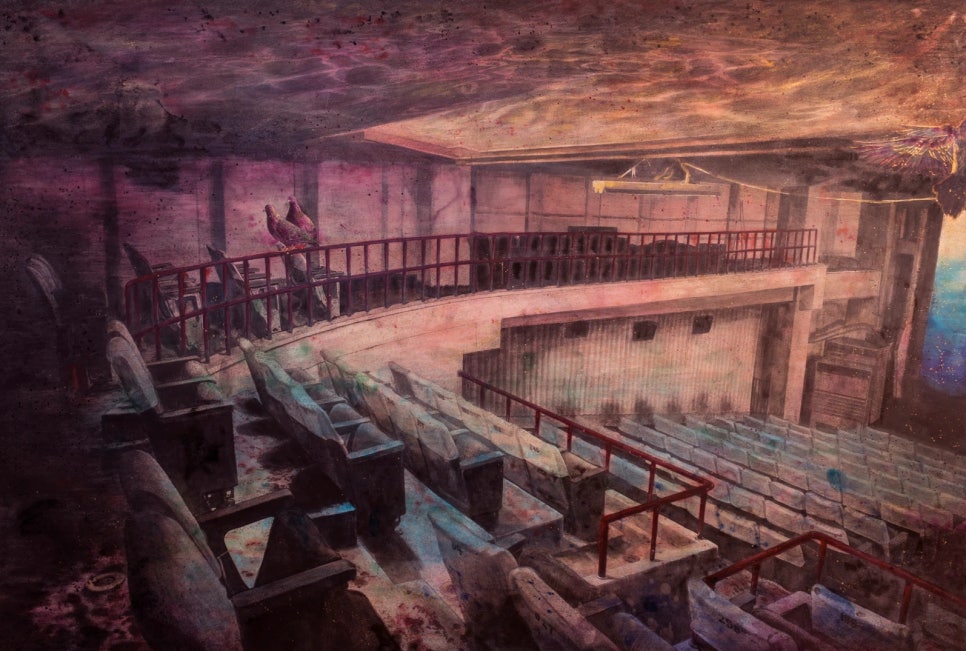
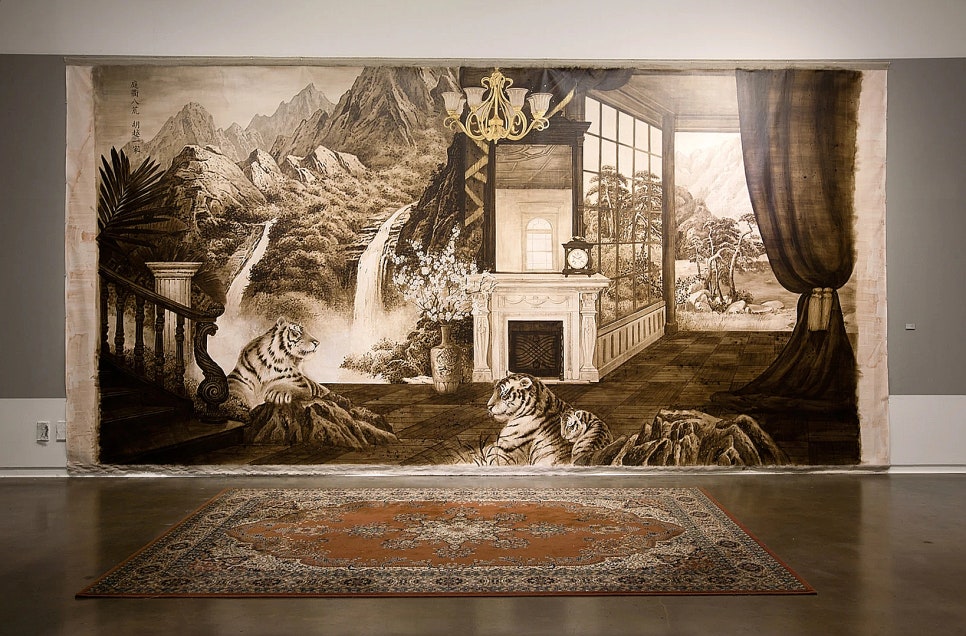
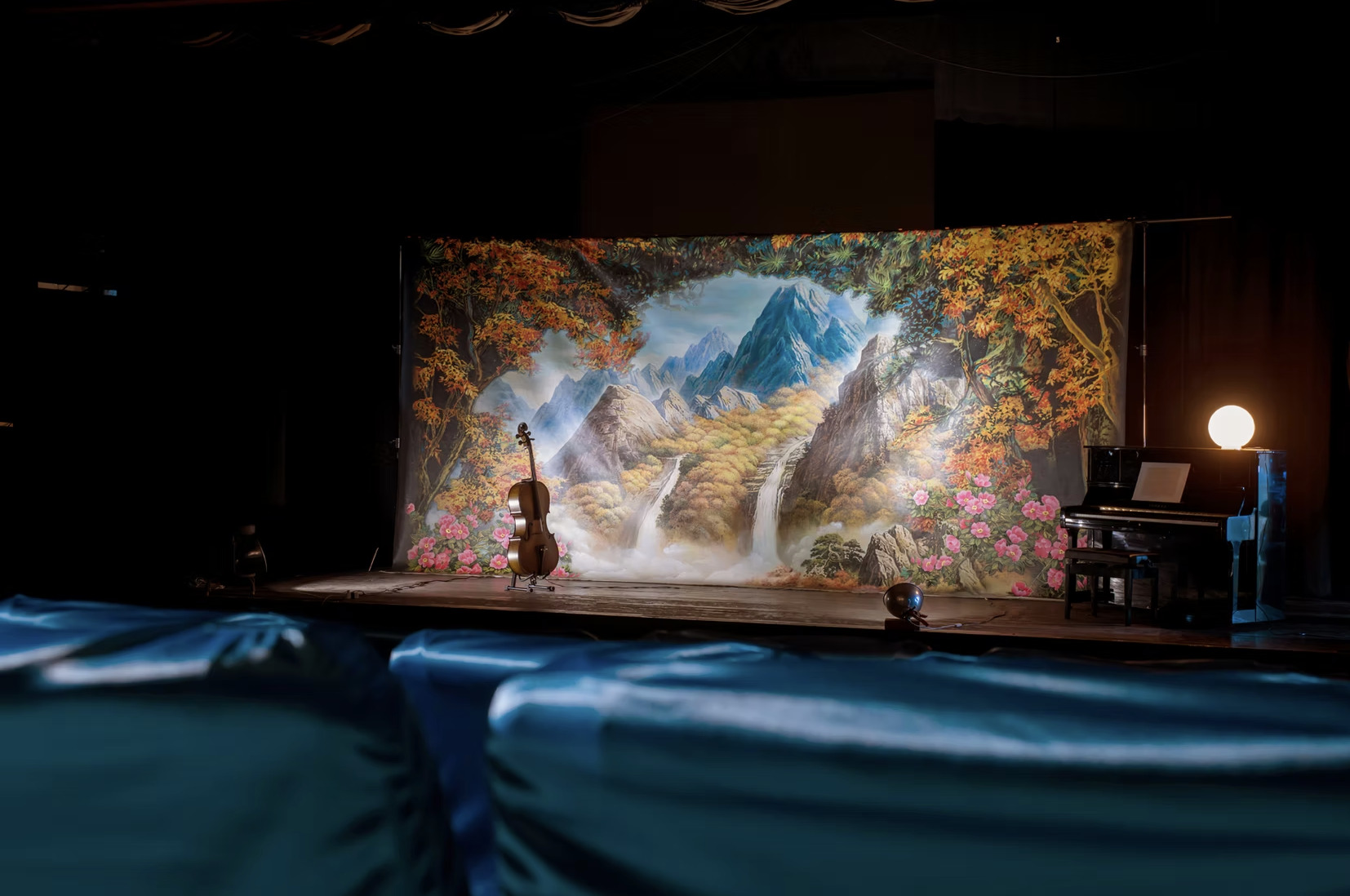
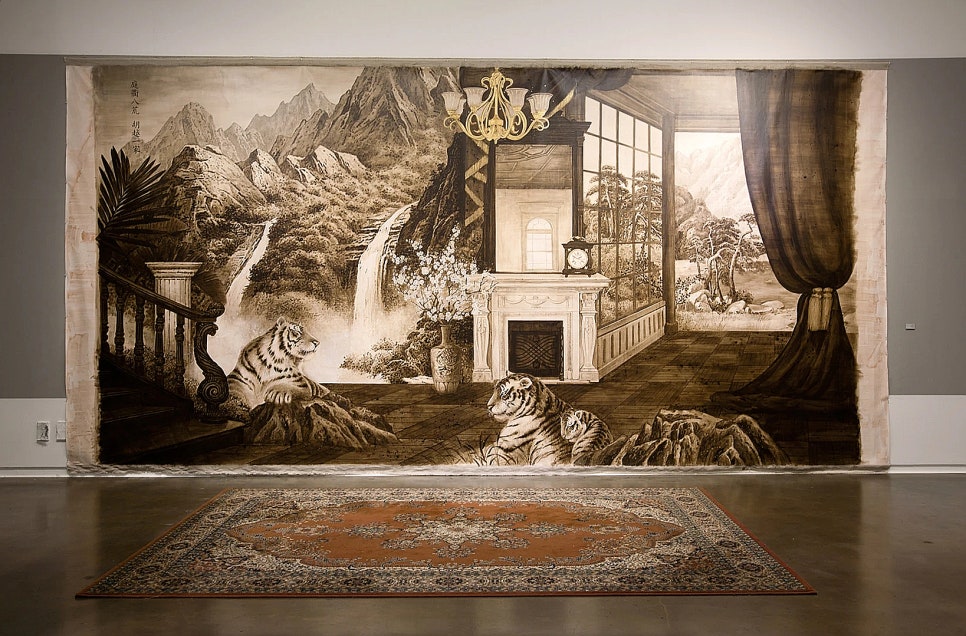
If the artist has carried out archival practice through painting, she has also worked to strengthen its function directly within the exhibition space itself. The artist has participated in stage arts, and secured the use of the shuttered Bada Theater in Cheonggyecheon to hold an exhibition titled 《Simultaneous Screening》(2018).
At the time, she actively made use of the space of the closed theater — setting up paintings as a backdrop on the stage, laying down carpet, and installing old chairs — to create a theatrical situation. In other words, we can see that the artist finely reflects the characteristics of a space and shrewdly grasps what effects a particular place and a particular method of installation will produce.
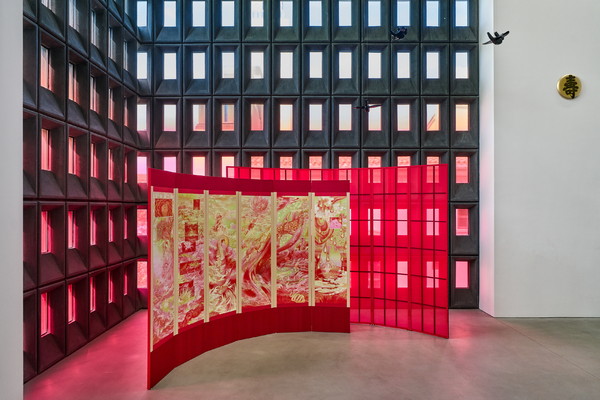
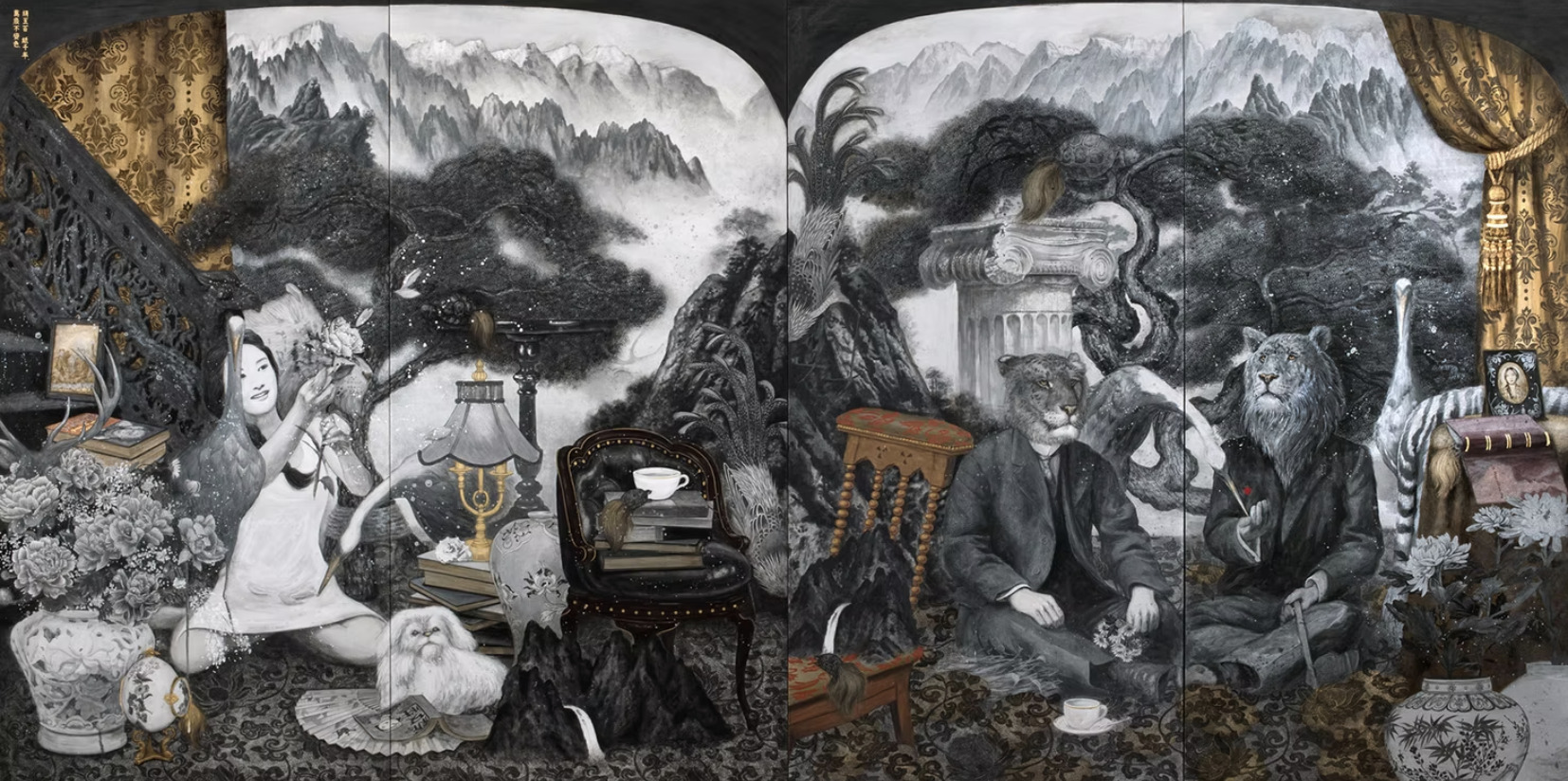
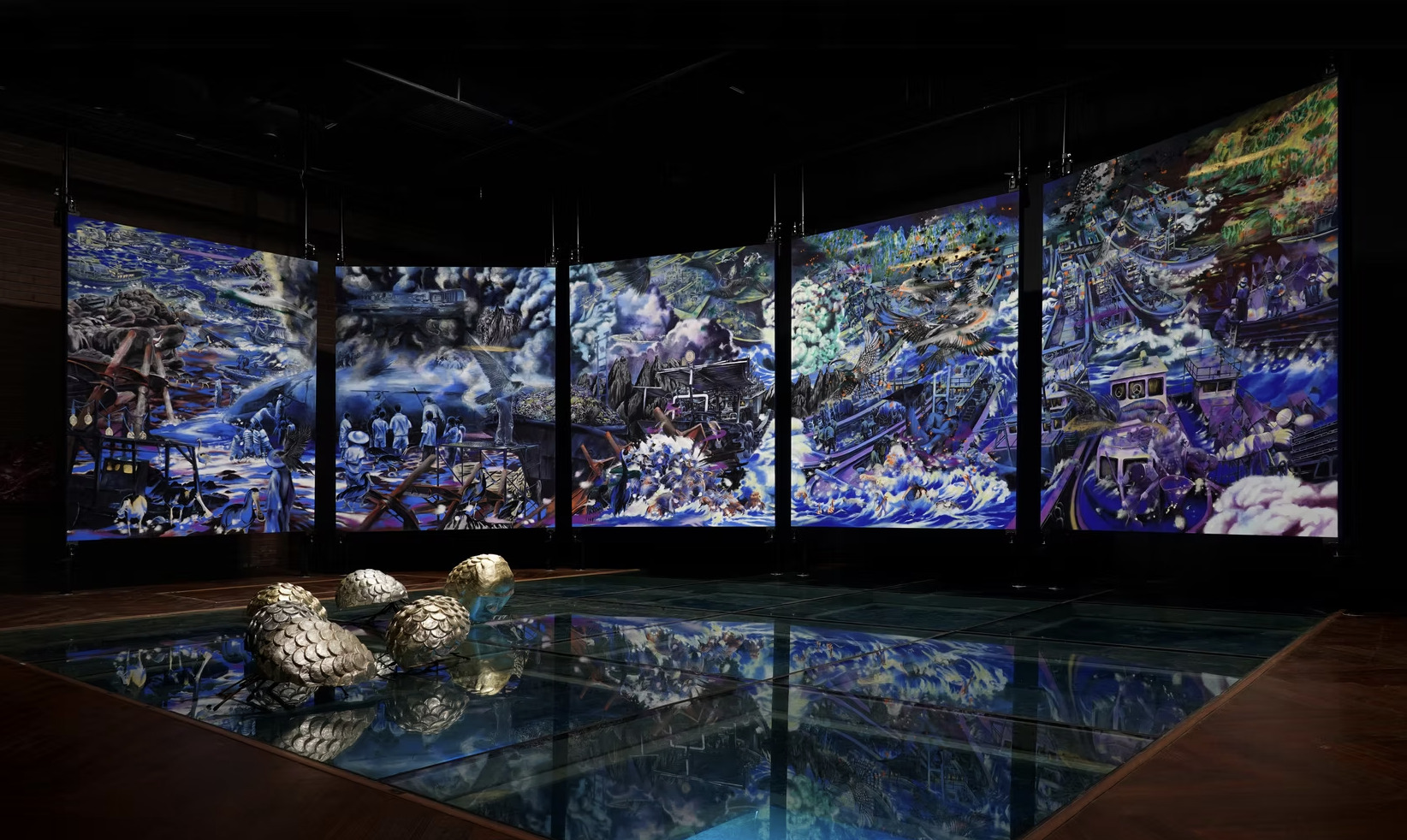
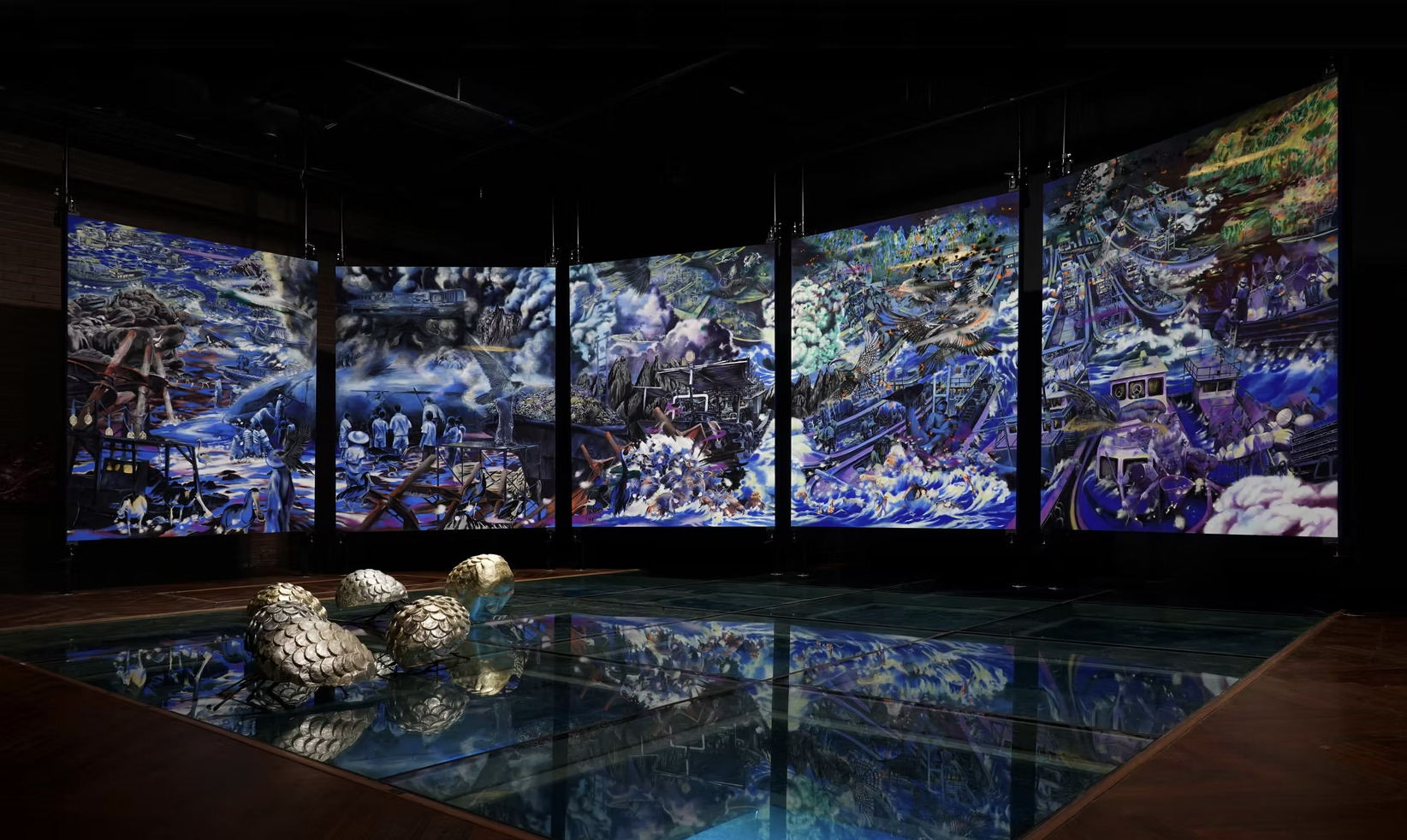
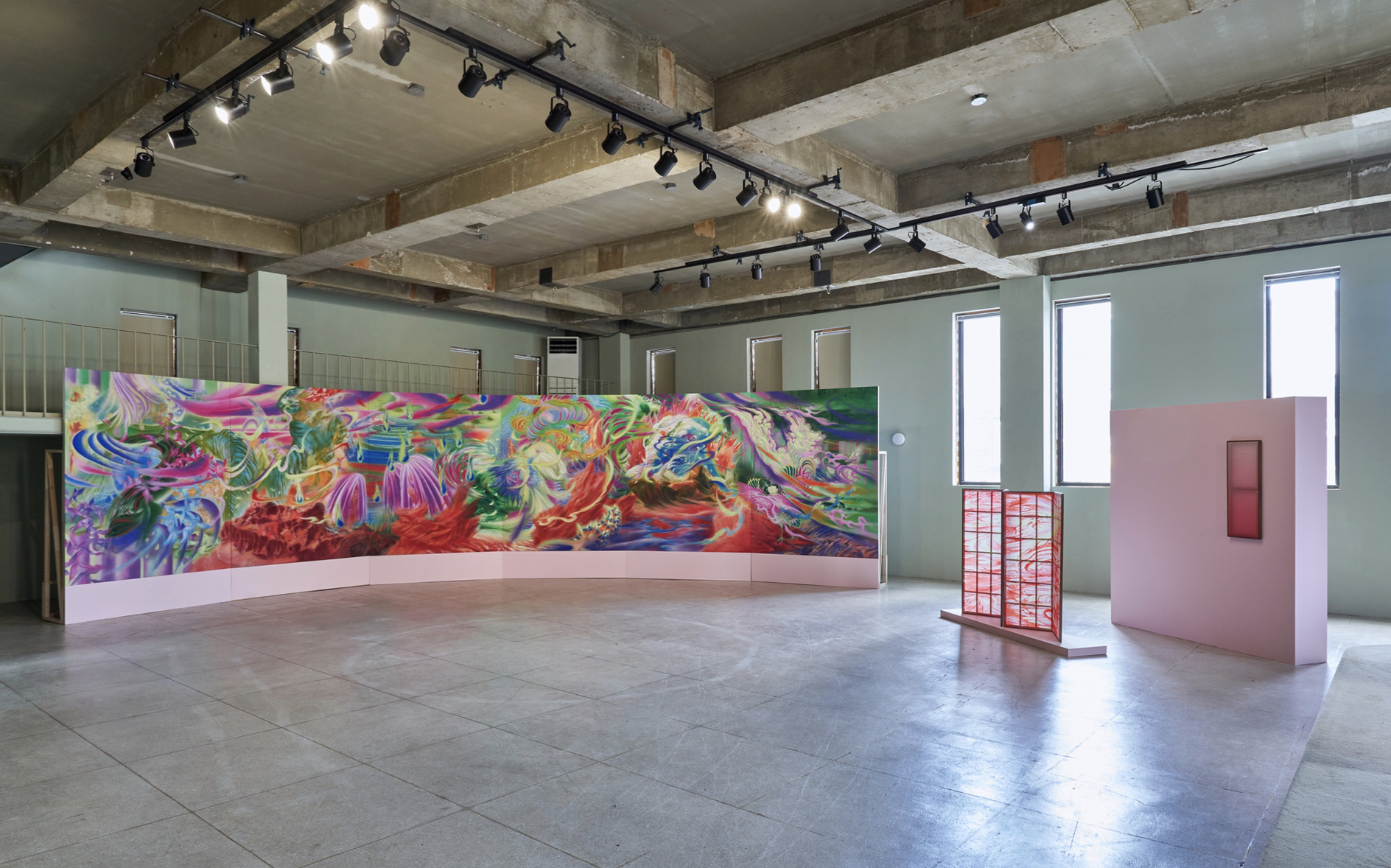
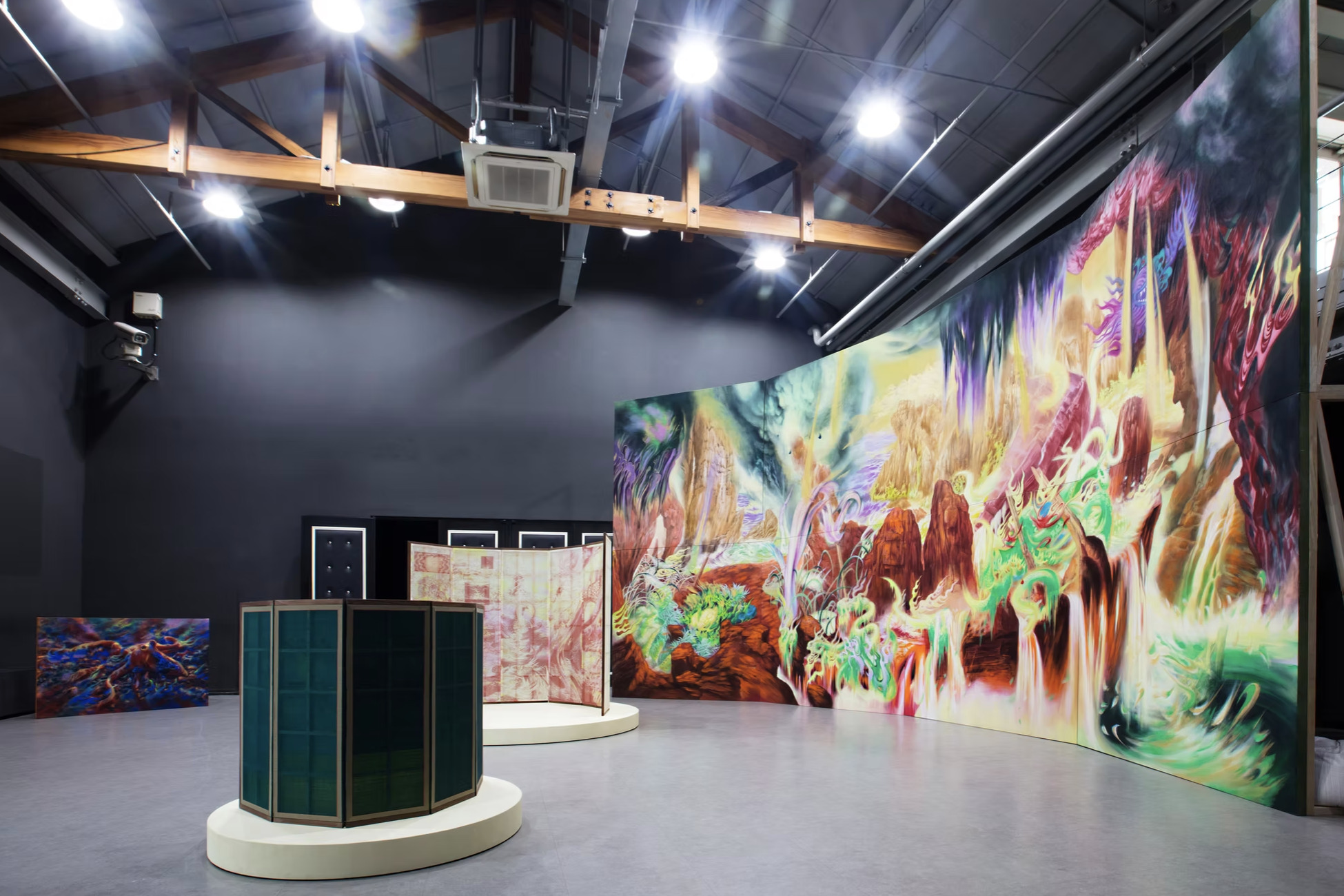
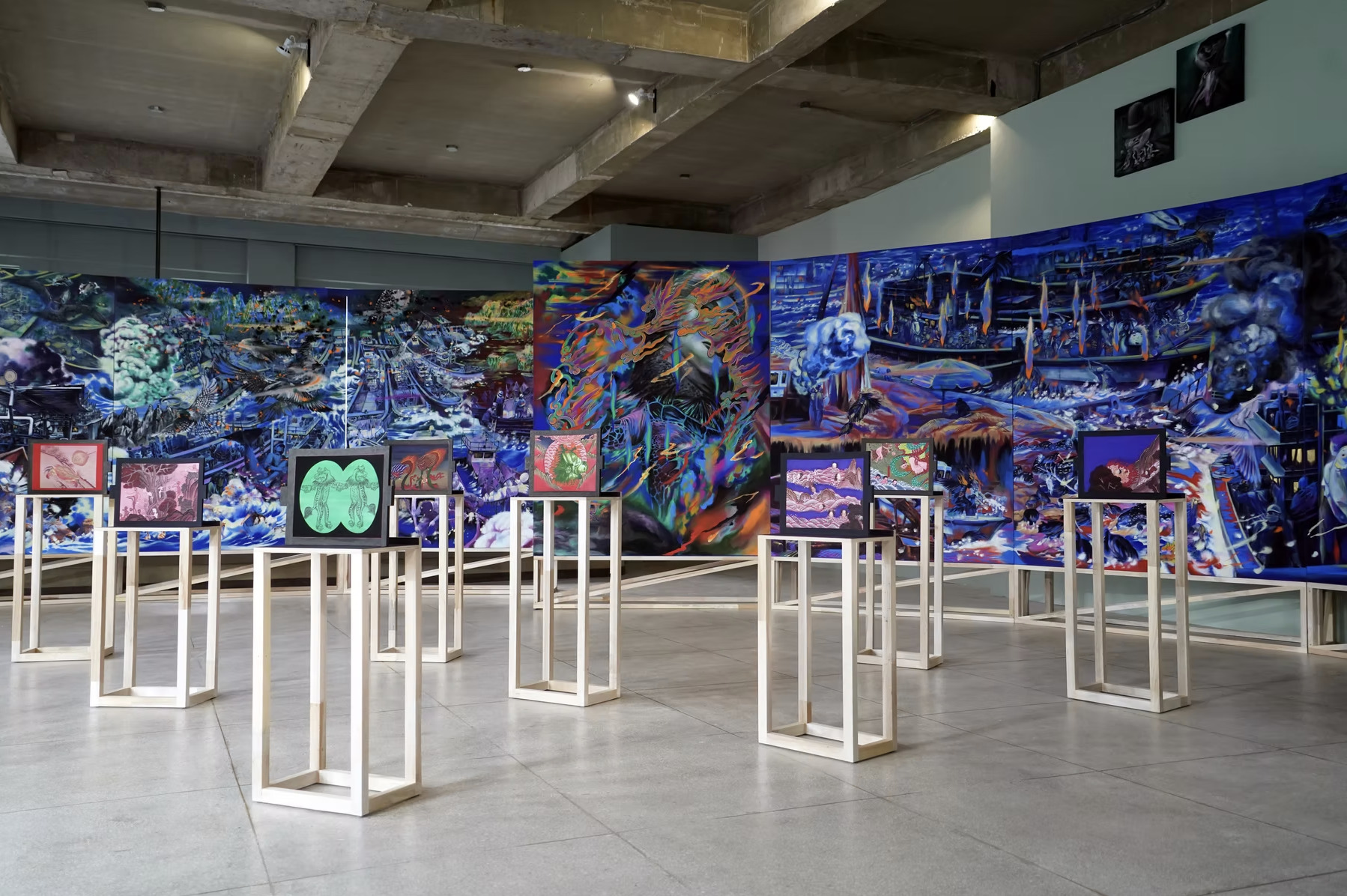
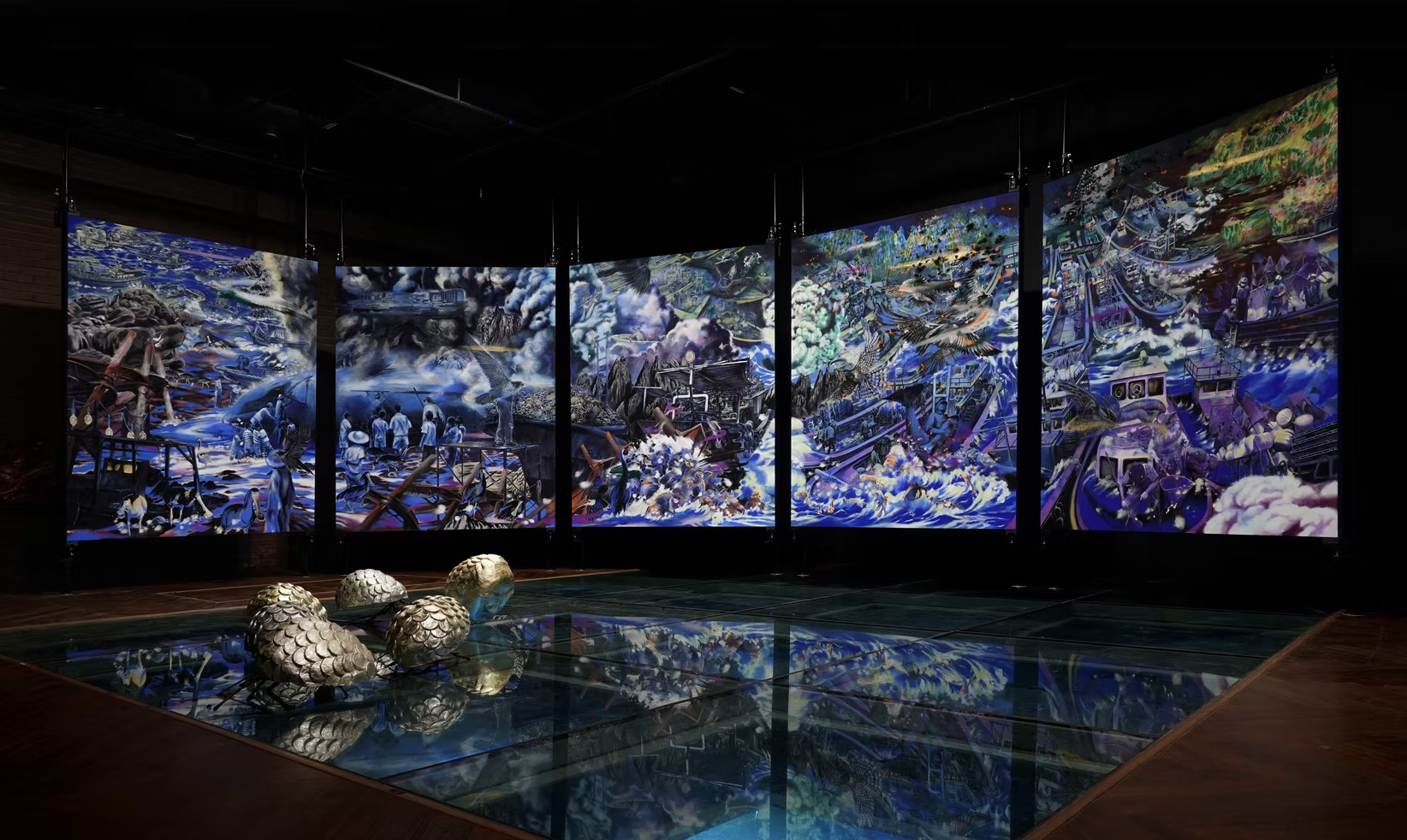
First, notable is the way in which the artist installs enormous paintings so that they appear like murals or barriers. In the exhibition 《Borderless Site》(2021), Endless Bliss, to You was installed in the form of a huge diorama. Installed on an arched wall that towers well above human height, it gave viewers standing before it the overwhelming sensation of a mural.
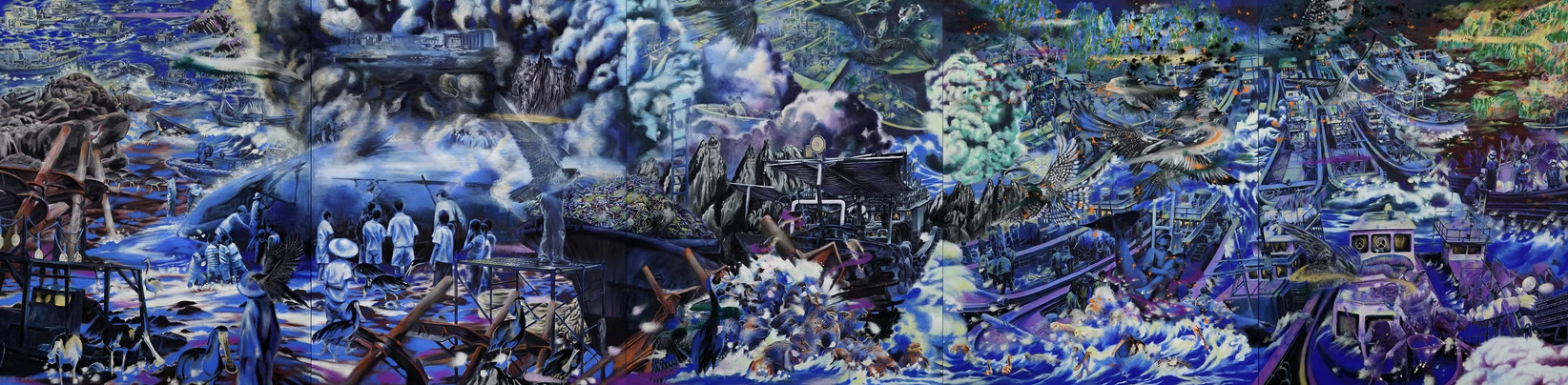
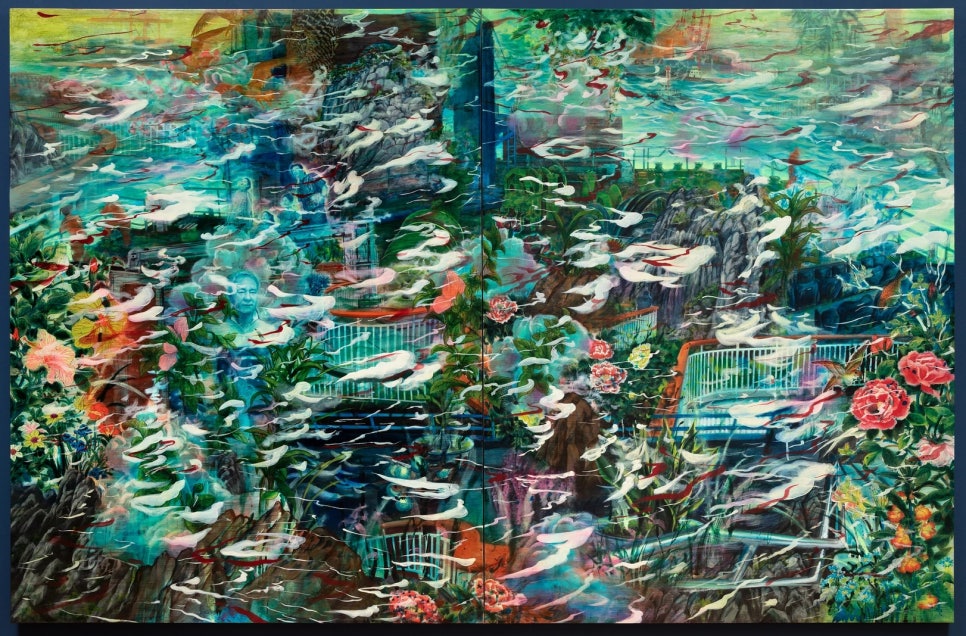
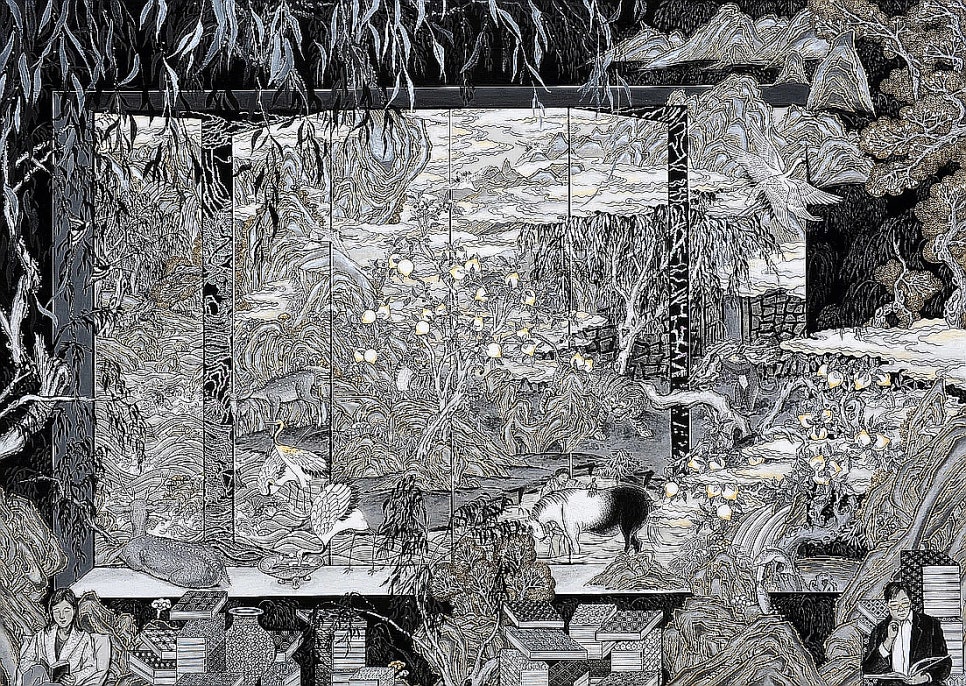
The enormous painting generates a multilayered, individual narrative commensurate with its enlarged scale. Furthermore, Naomi paints most of the landscapes in the Liberation of Coastline project across multiple canvases, installing them so that the empty space between the canvases can be perceived.
Seen from a distance, the painting appears to be a single, seamless image, but on approach, one finds that the picture plane is made up of two or more canvases. It is precisely this small gap between the canvases that reinforces a new story about the place.
Just as, when one views the coastline in fragments through an opening like a window, each person imagines the scene in between differently, so too does the gap between the canvases hold the possibility of being filled with narratives of an entirely different context.
Taking Naomi's paintings as a lens, we can no longer view the landscape of the coastal boundary — being reclaimed and transformed by rapid development and industrialization — as a single, standardized landscape. The artist's research not only presents an alternative historical narrative, but also shows that a particular place and the memories surrounding it can be interpreted differently according to different viewpoints and historical contexts.
Naomi's work and exhibitions make it possible, from the vantage point of the present, to intervene more creatively in the story of the place that is the coastline, and to reinterpret it. In every painting and every installation, the question of why a given image or object has been preserved and why another has been excluded should not be dismissed as a simple matter of past history.
The place, the memories of the people surrounding that place, and the dynamic between the two, become increasingly complex — and this point can be said to be an important characteristic of Naomi's work as archival practice.
1 Michel Foucault, The Archaeology of Knowledge, trans. Lee Jeong-woo, Minumsa, 2000, pp. 25–26.
2 Douglas Fogle, 'Volatile Memories' in No Place (Like Home) (exh. cat.), Minneapolis: Walker Art Center, 1997, p. 117.
3 Terry Cook, 'Archival science and postmodernism: new formulations for old concepts', Archival Science, vol. 1 (March 2001), p. 4.
4 Susannah Radstone and Katharine Hodgkin, 'Regimes of memory: an introduvtion' in Memory Cultures: Memory, Subjectivity, and Recognition, New York: Routledge, 2003, p. 12.
5 Jacques Derrida, Archive Fever: A Freudian Impression, Chicago: University of Chicago Press, 1996, p. 7.