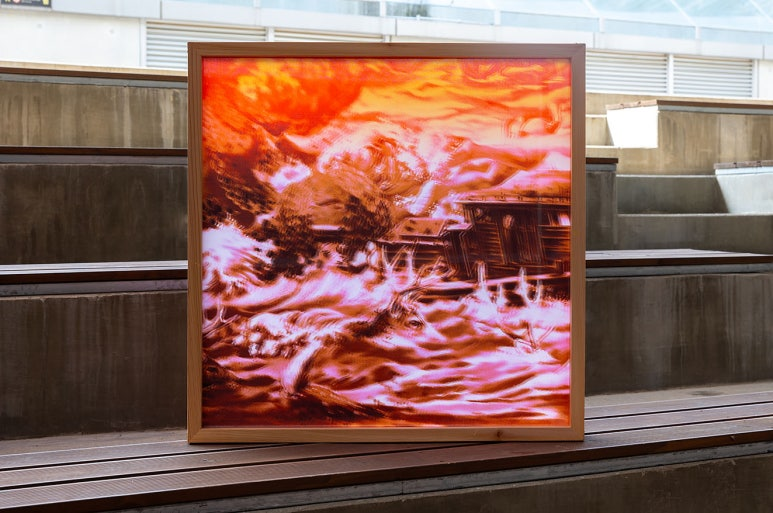
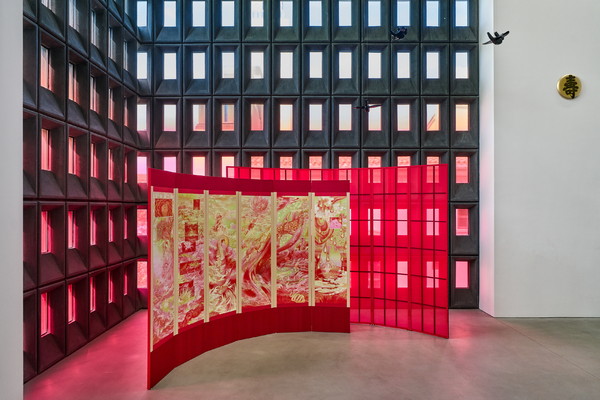
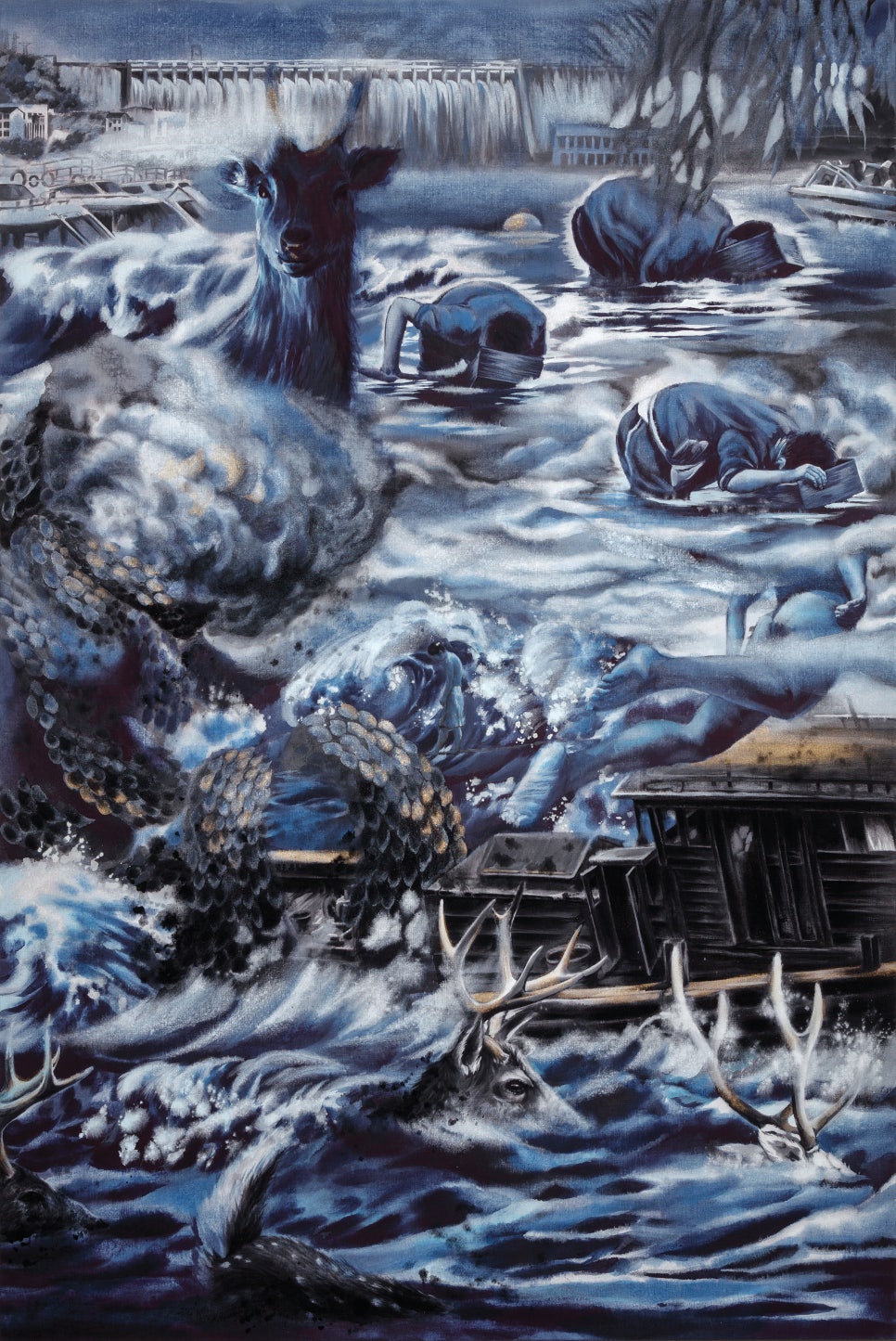
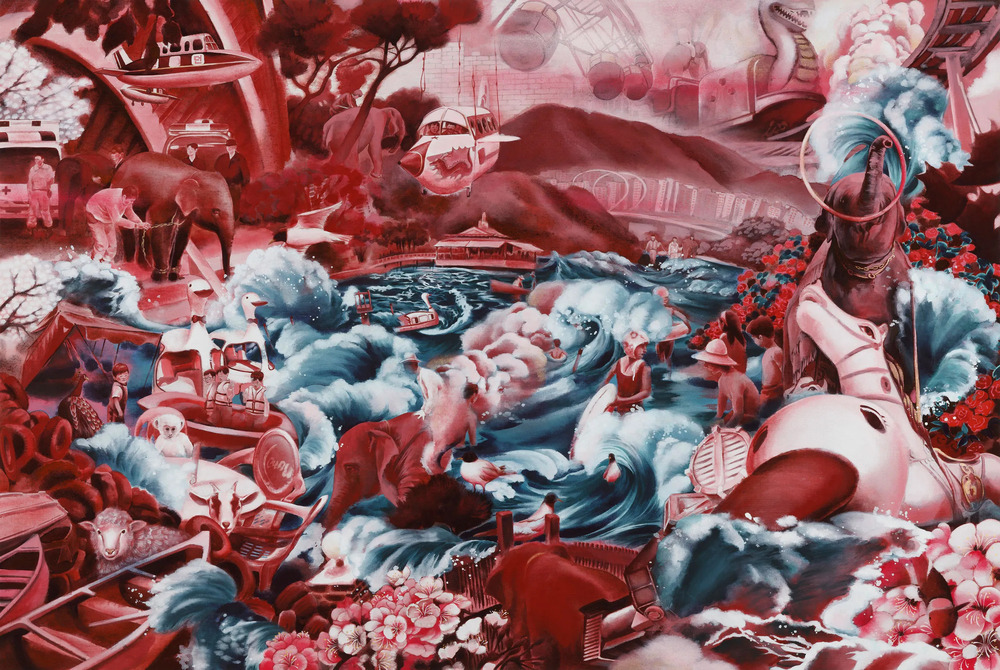
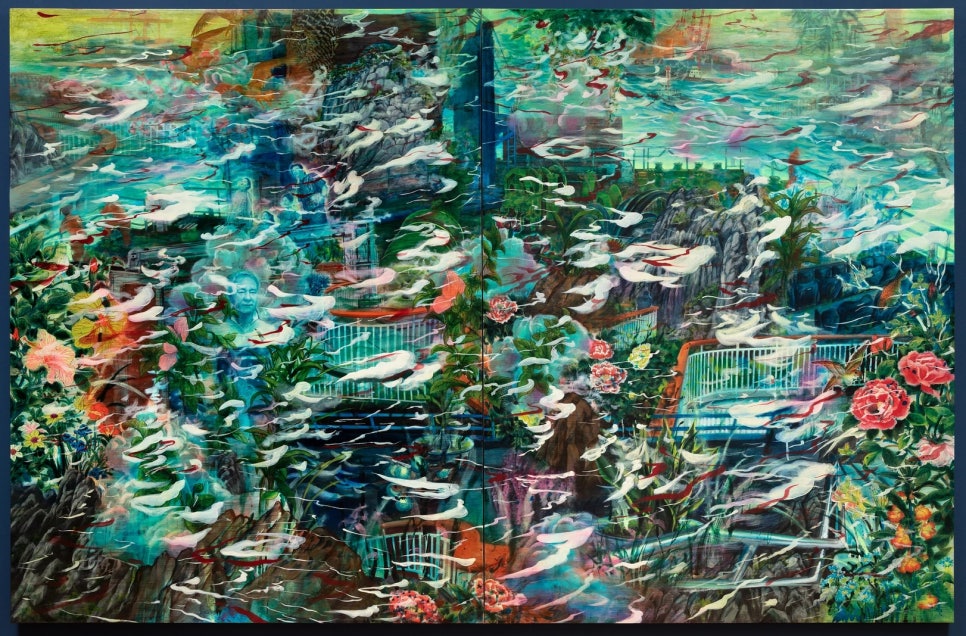
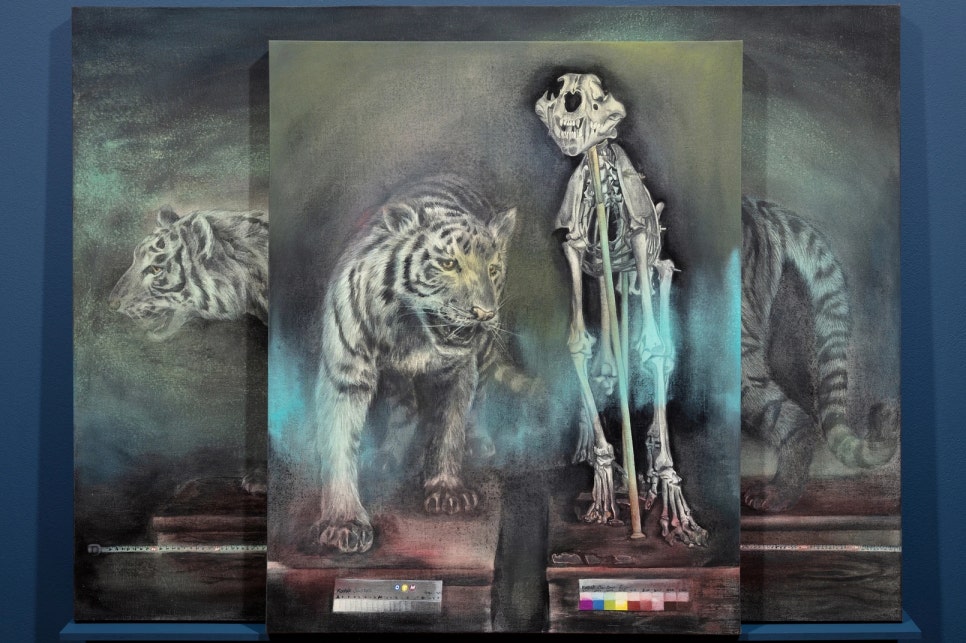
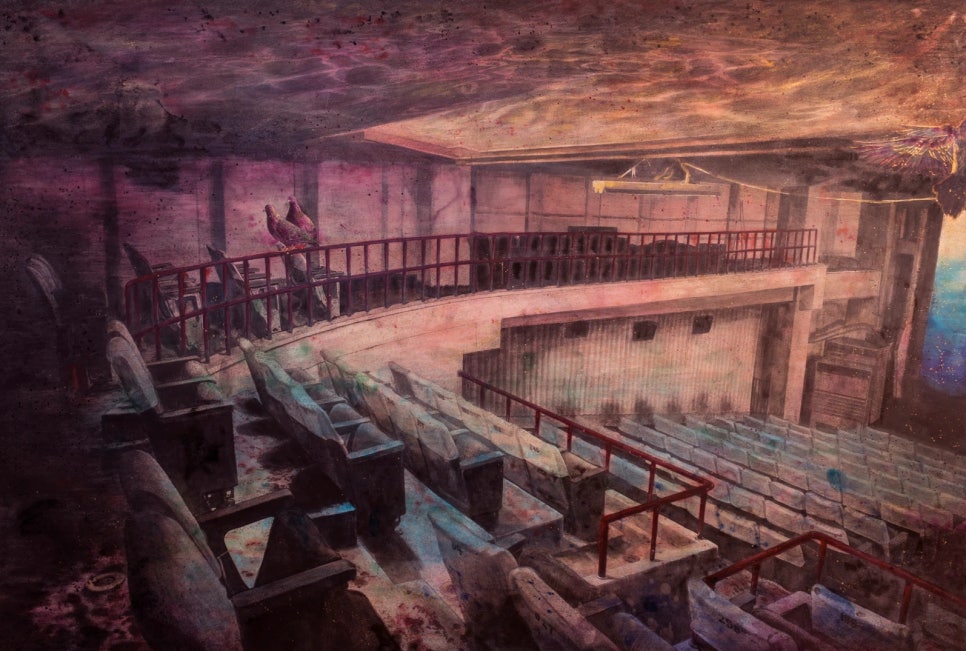
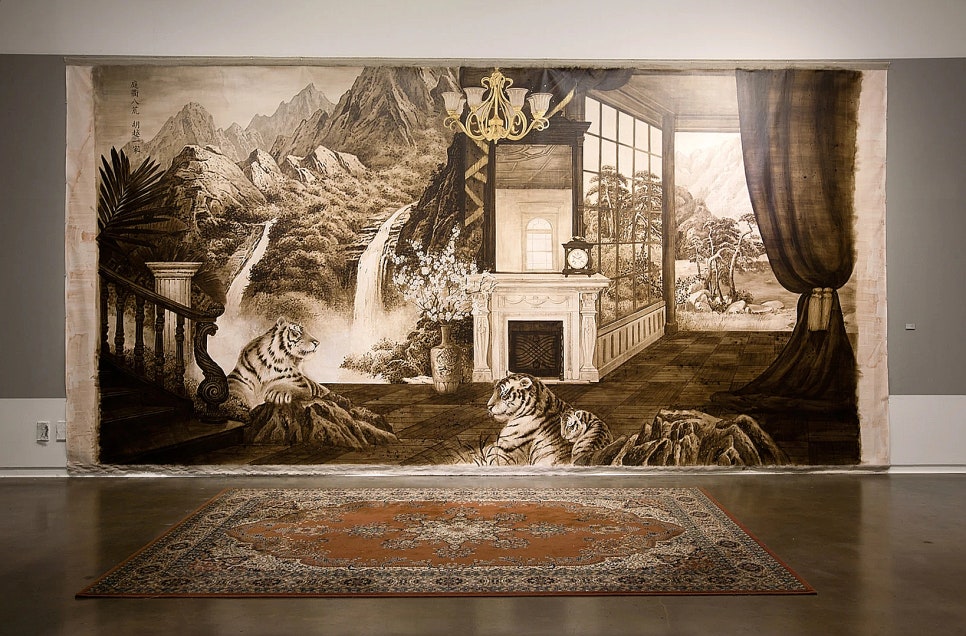
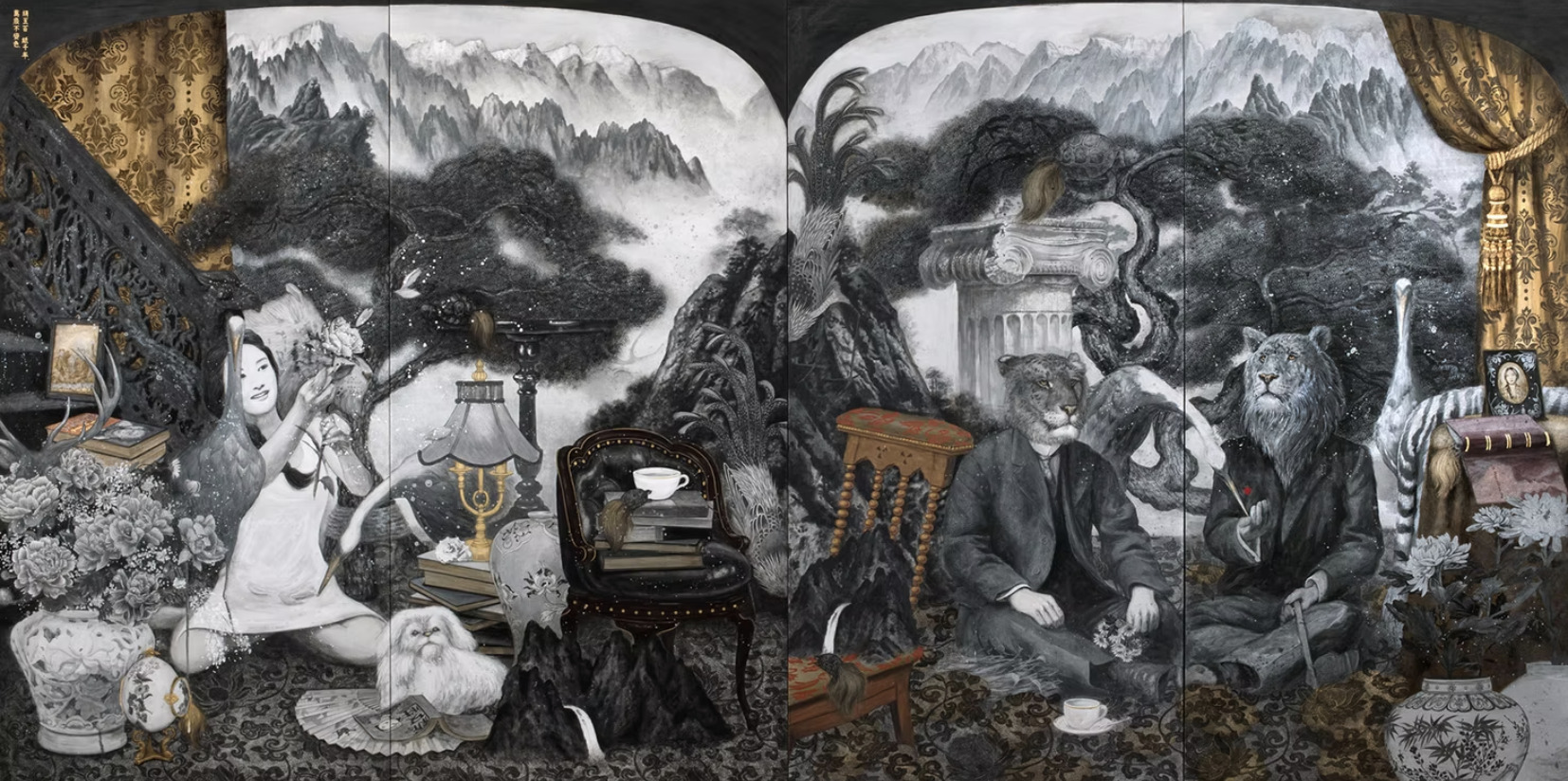
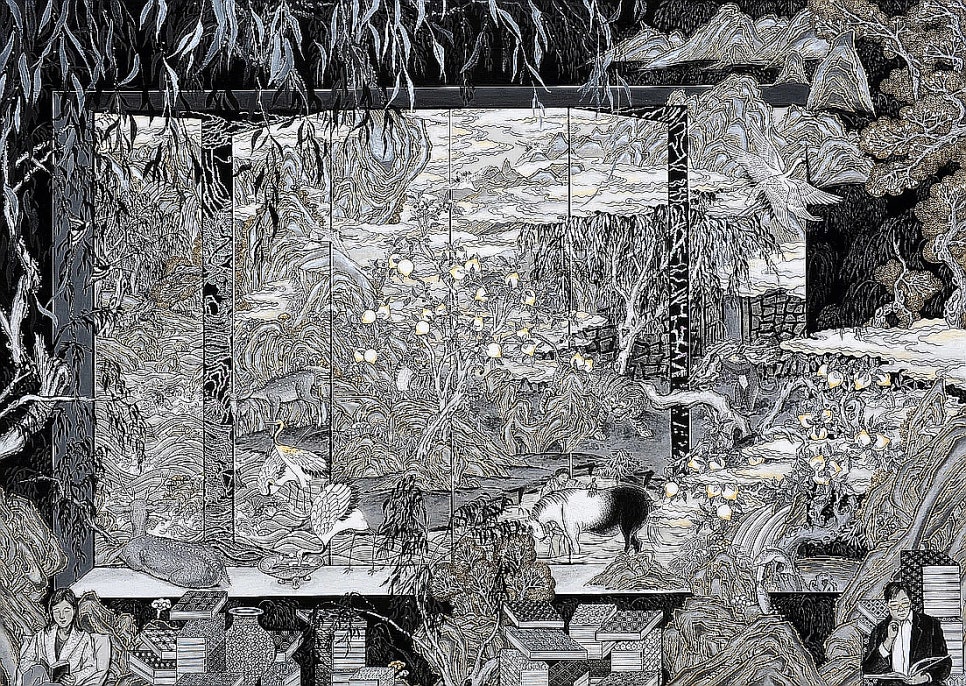
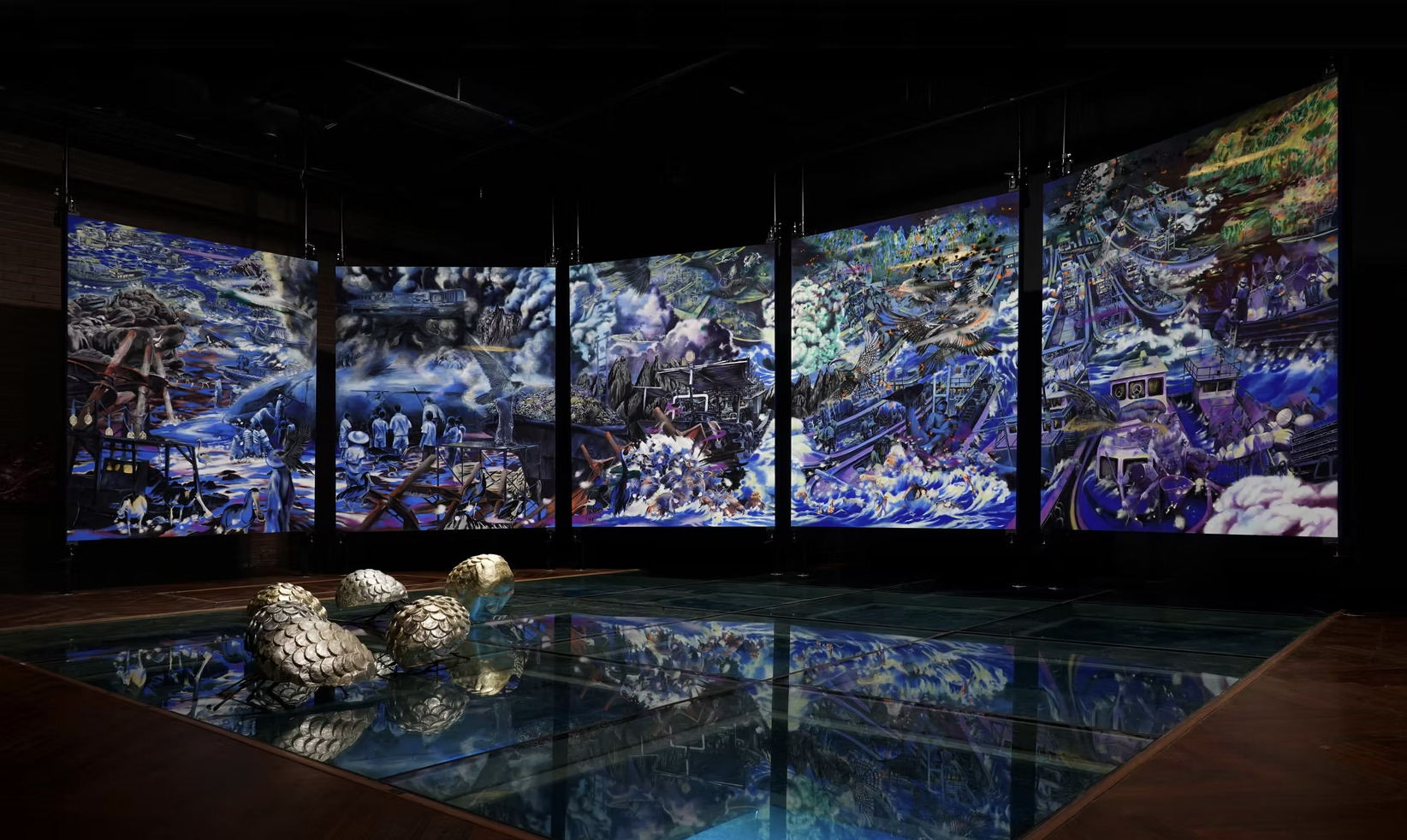
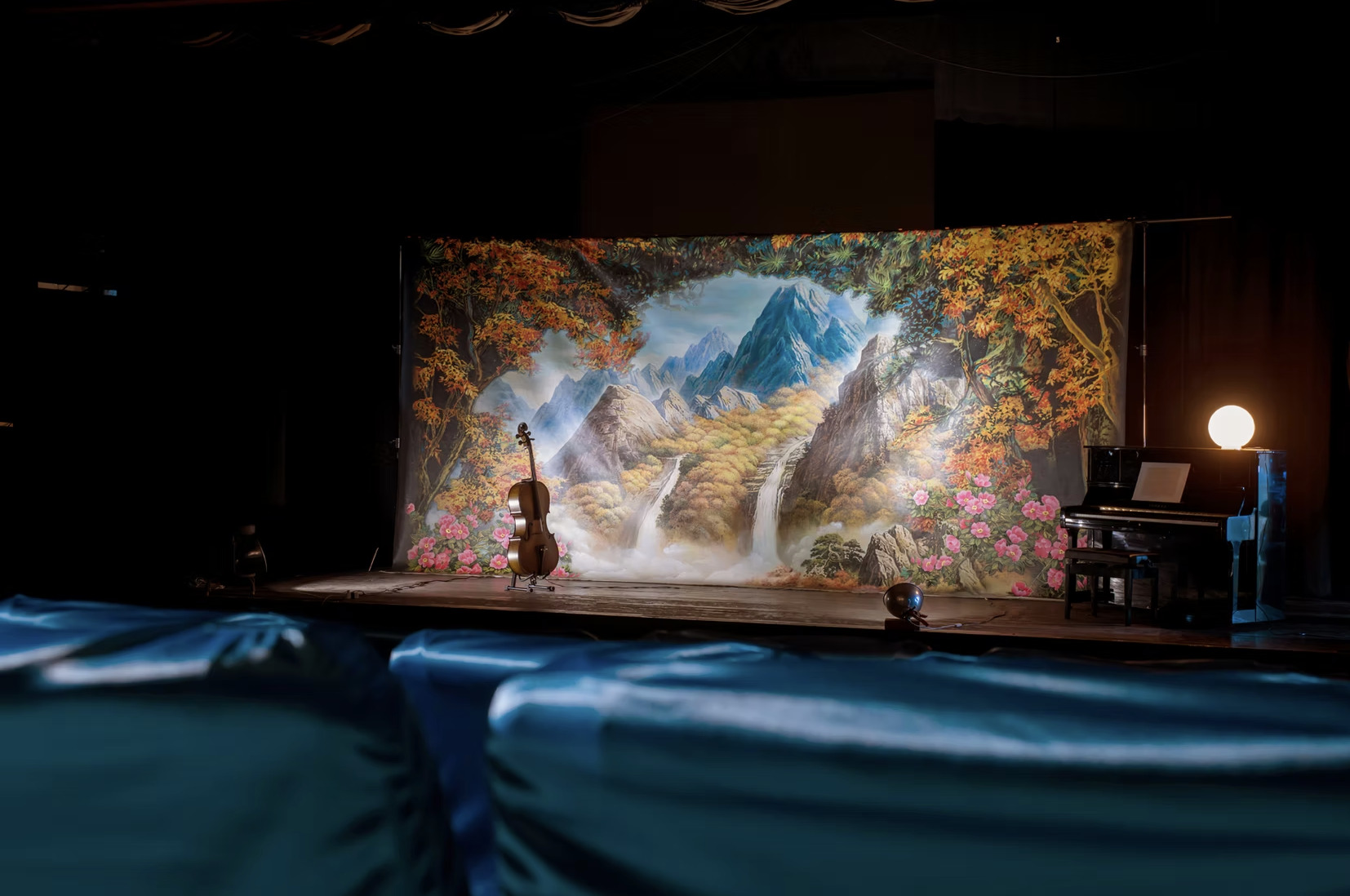
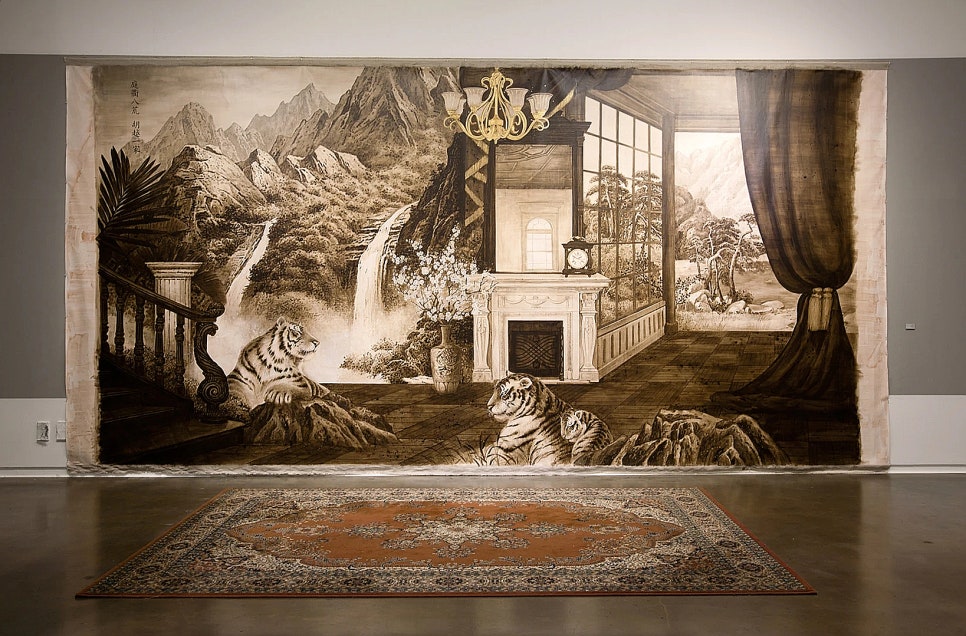
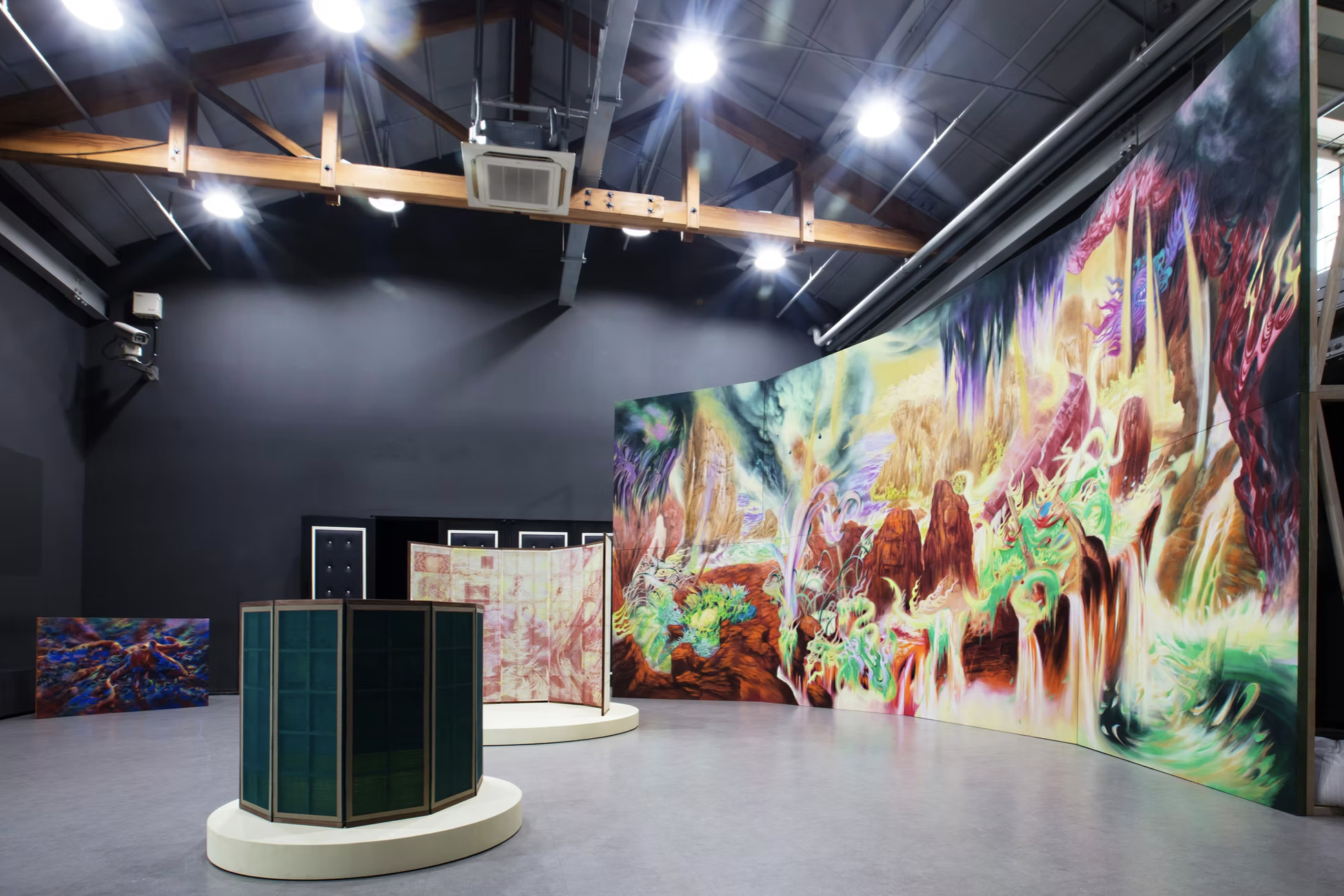
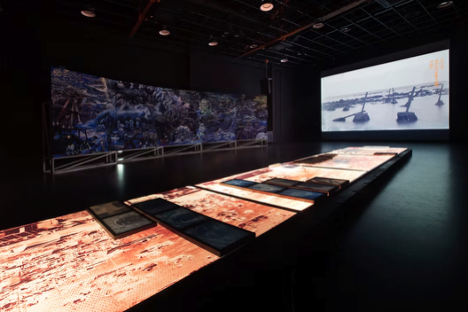
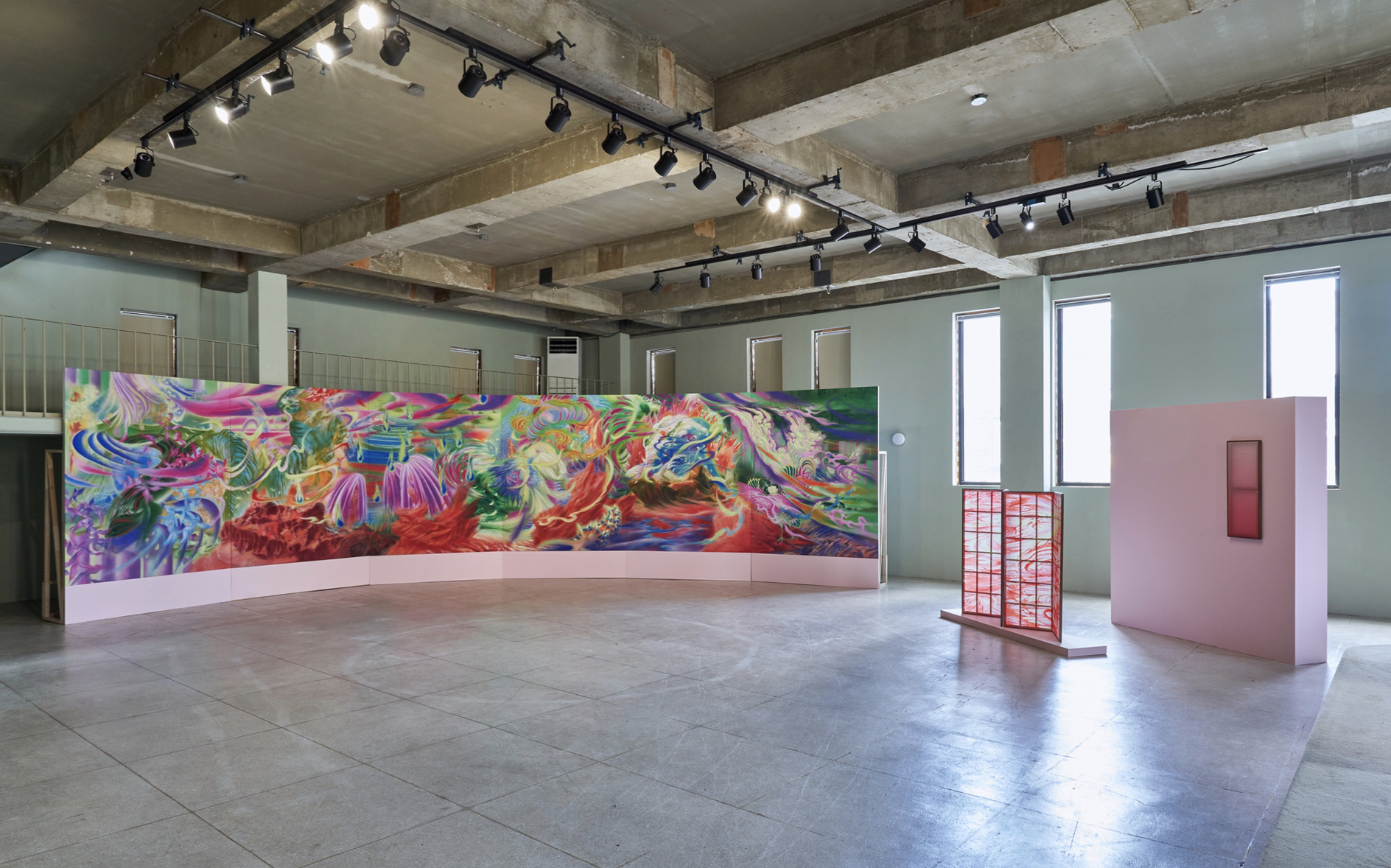
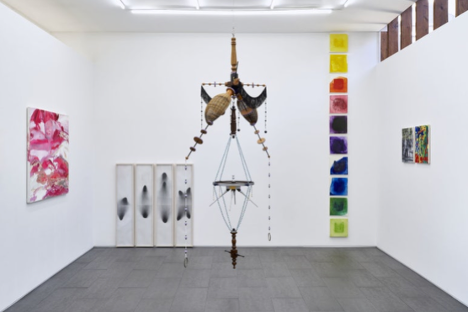
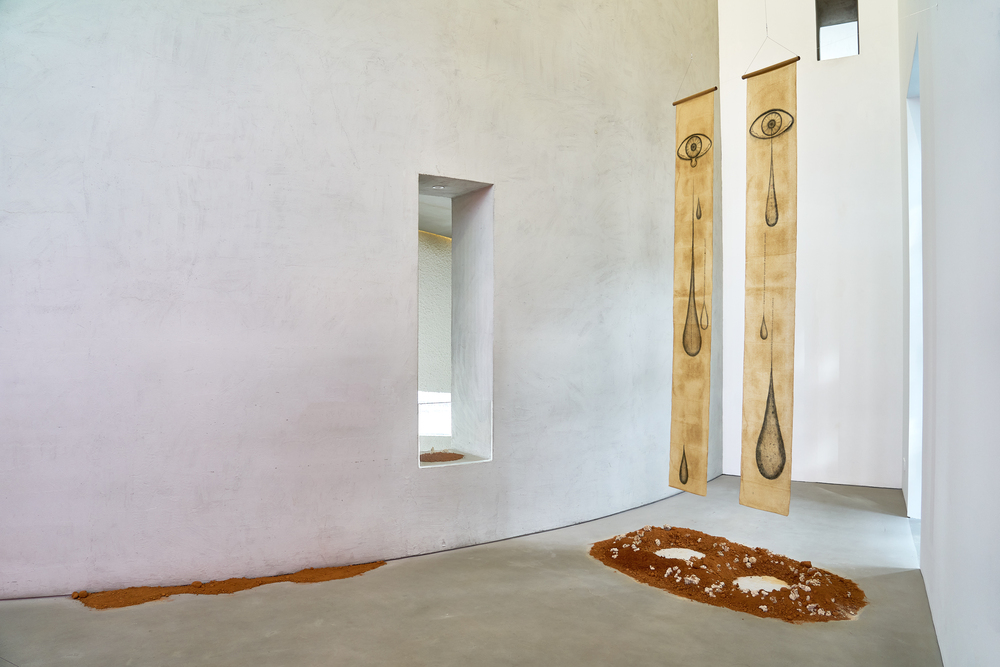
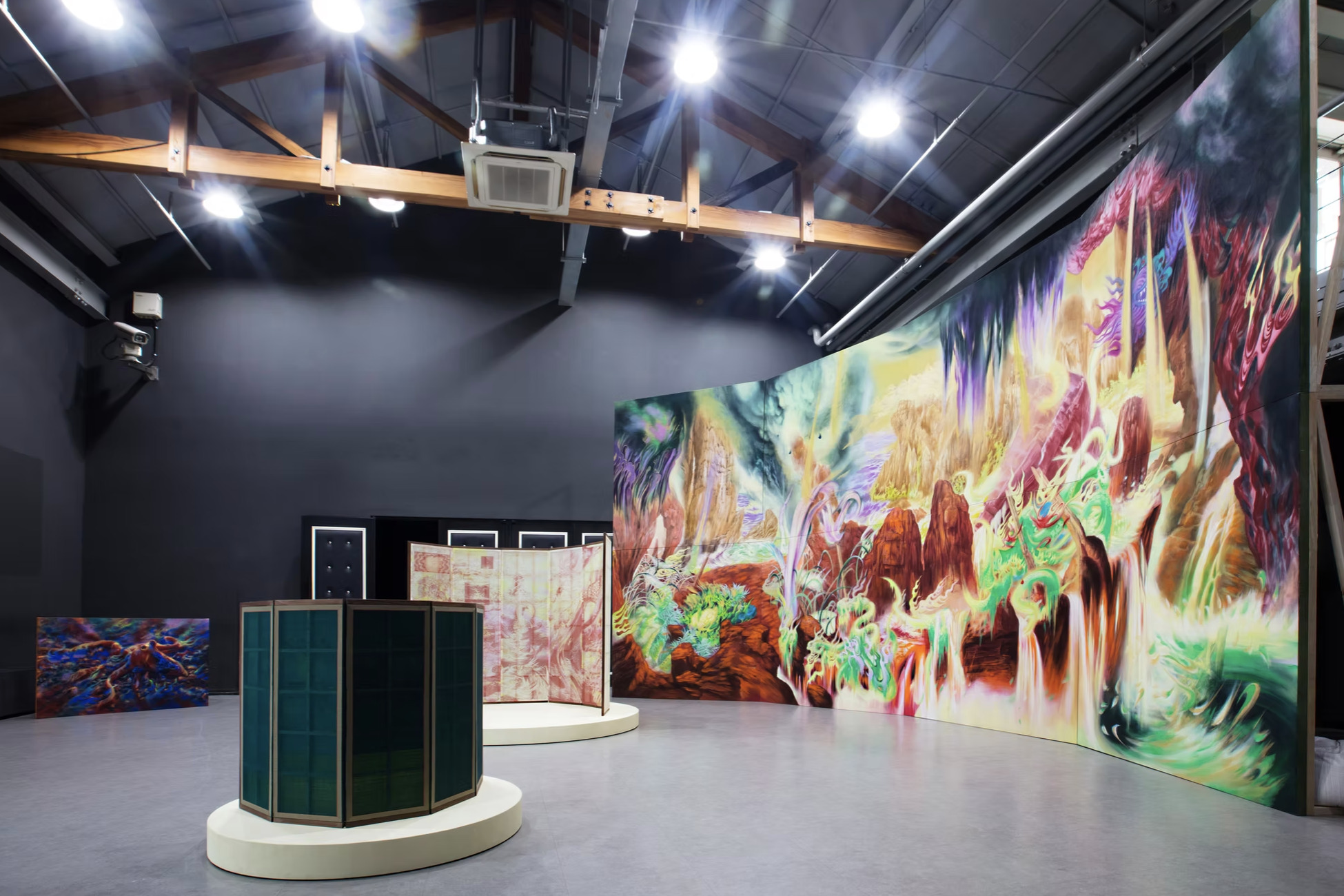
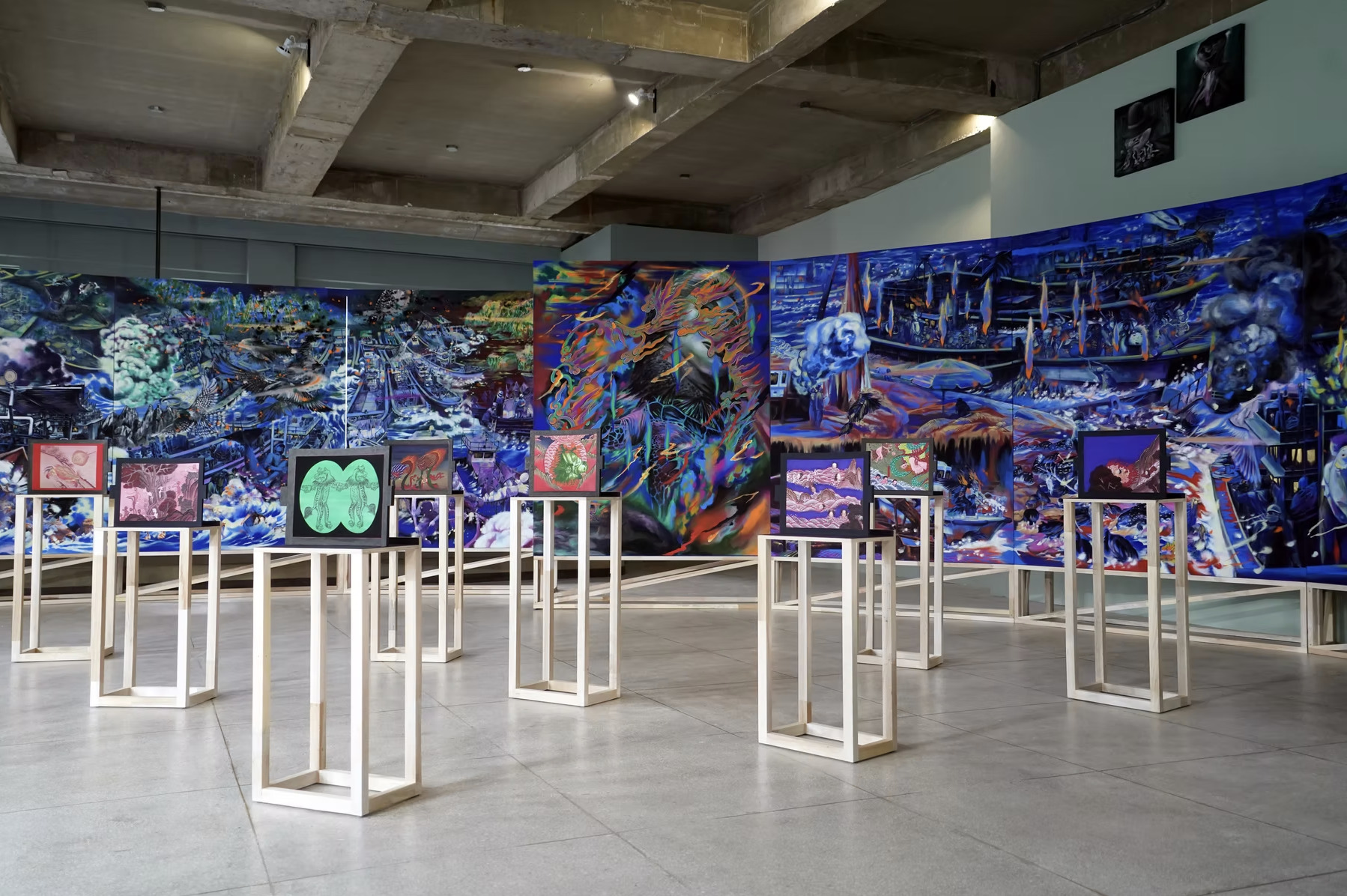
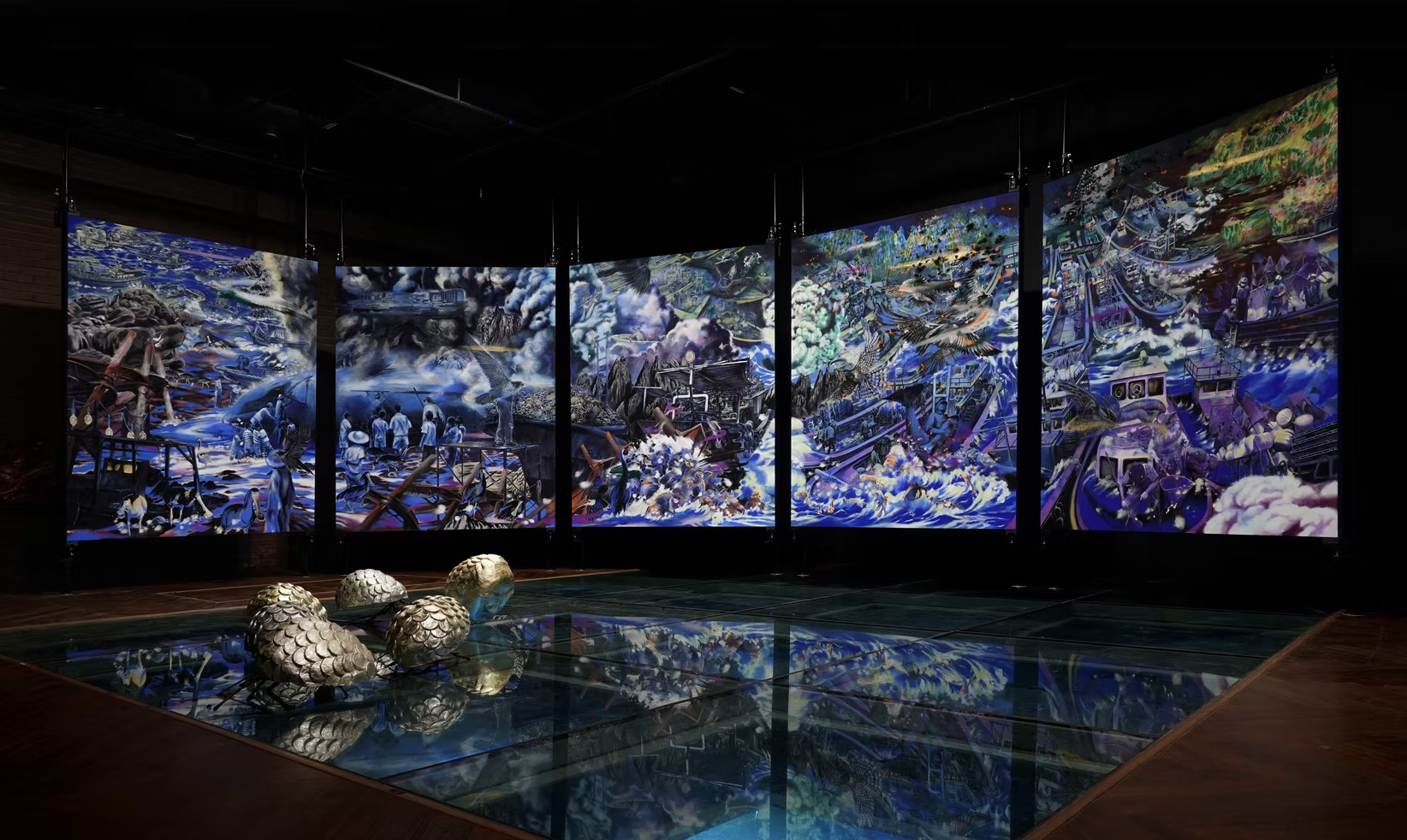
Installation view of 《From the Edge of the Yellow Sea》 (Incheon Art Platform, Buyeon, 2025) © Naomi

A Short Essay on Naomi's Solo Exhibition 《From the Edge of the Yellow Sea》

Im Jong-eun

Naomi has long created landscapes in which history and story overlap. The sites of historical events and the origins of mysterious tales — whether factual or fictional — have mostly been constructed along seas and coastlines. The seas and coastlines that Naomi creates unfold as spectacles, mixing images of present-day natural ecology with historical events, or with folk tales and myths.

In particular, the artist has recently focused on stories of women and goddesses passed down through the sea, such as Mazu and Shim Cheong, staging vivid and grand scenes in which multiple times and spaces intersect.

In this solo exhibition, 《From the Edge of the Yellow Sea》, the place that is the sea deserves as much attention as the sheer scale of the works themselves. This is because the women the artist has long traced and researched appear, disappear, and return by way of this sea. The sea in the works becomes the wellspring of narrative, breathing vitality into stories that are ceaselessly generated.

This sea was the Yellow Sea where the Imjin, Han, and Yesong Rivers meet, and it also stretched across the river borders of Dandong, Sinuiju, Hunchun, and Rason. It was the strait between Meizhou Island in Fujian Province and Taiwan, the passage through which Yeongdeung comes and goes, and somewhere on Jeju Island as well.

These places are both source material for specific regions within the stories and places the artist personally visited. Based on this fieldwork, the artist has captured a deeply layered narrative stage on an enormous canvas, and we come to stand before the sea.

While preparing for this exhibition, the artist came to Jeju in March 2024 to research the farewell rite of the Chilmeoridang Yeongdeung-gut, and the writer of this essay met her there for the same reason. We were both interested in images of women and goddesses within myth, and sought, on site, the point where aesthetic imagination and research on Yeongdeung intersect.

During this season, Jeju fishermen offer a gut (shamanic ritual) to the Yeongdeung deity, praying for safety at sea and a bountiful catch. The fickleness of the wind (nature) during the transition from winter to spring seems deeply connected to this ritual, and when Yeongdeung is personified, it is often depicted as a woman. At a nearby tourist site there is a statue of Yeongdeung Halmang, that is, an image of a woman.

Afterward, the artist continued her research into Mazu and Shim Cheong, traveling not only within Korea but also to China and elsewhere, while I continued my own research — meeting artists in Korea, seeking out Mazu in Indonesia, Taiwan, and Hong Kong, and Maria and indigenous goddesses in the Philippines. When I visited the artist's studio and heard her travel stories, it felt as though she had met these women directly and returned having heard their vivid stories firsthand.

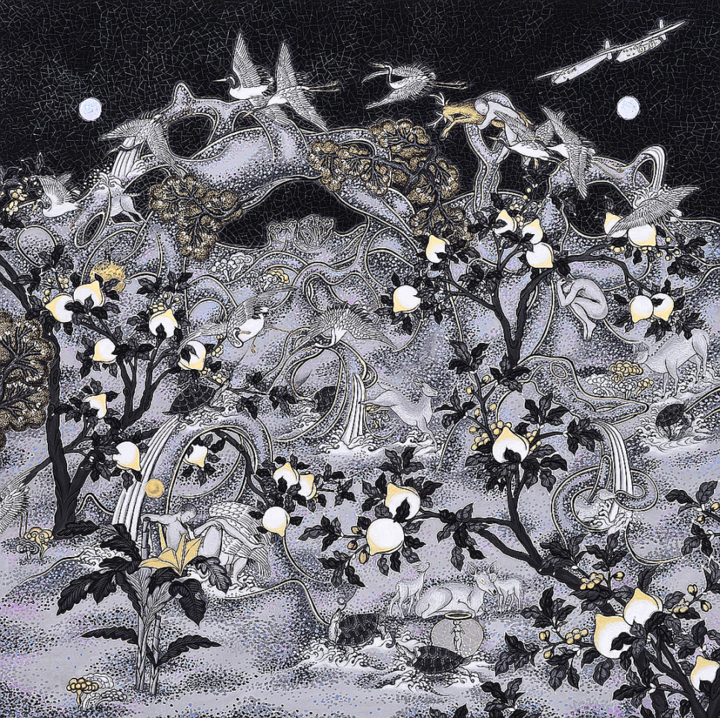
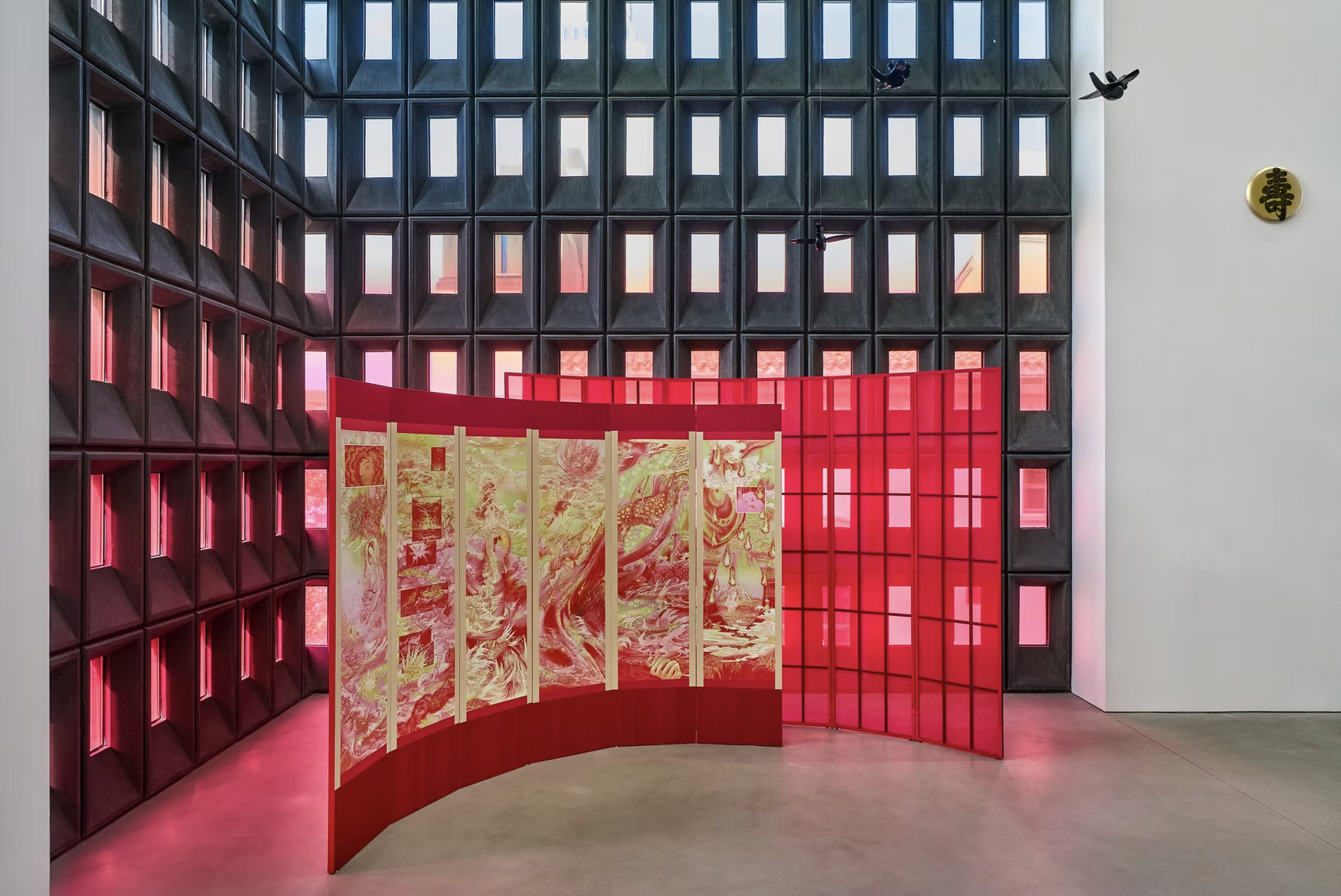
Naomi, Graceful Ghost, to My Mothers, 2025, Pigment and ink on silk, folding screen, 150x360cm (6 panels, each 150x45cm) © Naomi

We too can meet these women: upon entering the exhibition hall, the first work we encounter is Graceful Ghost, to My Mothers, in which six women appear like graceful dancers against a backdrop of wind, waves, and turbulent seas. The artist explains that each of them, though existing in different places, is at once a single woman who has lived six lives and, simultaneously, six different individuals.

As we know, most such women have been depicted as swept up by the constraints of their era, living passive lives, or as sacrificed and vanished. But through the vast sea, Naomi summons them again to face us. They are not women who have disappeared within concluded stories, but beings who carry an endless narrative forward within the sea. And this was made possible through the artist's diligent process of research and her artistic imagination.

To introduce just a few examples: the artist collected and photographed portraits of Mazu enshrined in shrines across China, comparing them by era and region, and traveling in person to closely observe the materials and forms in which Mazu is reproduced in each locality. She traveled to China to visit Mr. Huang Yaji, a bearer of intangible cultural heritage related to Mazu worship, and investigated in detail the forms of the offerings and rites he made in dedication to Mazu.

She also sought out and documented, in person, the travel routes of these women as they appear in oral traditions and creative works, in an effort to research their meaning.

In the tale of Shim Cheong, set against the backdrop of Hwanghae Province, Indangsu is said to be the sea in front of Dumujin on Baengnyeong Island, and the dragon palace within Indangsu is said to be Shenjiamen in Zhejiang Province, China; Naomi personally visited both Simcheonggak on Baengnyeong Island and Simwon, a shrine built in Shenjiamen, Zhejiang Province, to honor Shim Cheong.

She also reflected on the meaning of the journey in Hwang Sok-yong's novel Shim Cheong, the Path of the Lotus Flower — a route that begins in Jemulpo, passes through Nanjing and Okinawa, and returns again to Jemulpo. This process reflects an important attitude in which the artist connects mythic imagination to us in the present and roots it in reality.

Installation view of 《From the Edge of the Yellow Sea》 (Incheon Art Platform, Buyeon, 2025) © Naomi

This is a process in which myth and story are visualized and reconstructed as images, and at the same time it forms the foundation of the artist's painterly achievement. Yet for the artist, the stories of sea goddesses are not merely a stimulus for curiosity about myth and archetype, nor merely a driving force for exploring mythic representation.

Because the very process of a story's transmission is one in which the lives and desires of the people who live by the sea become layered onto it, the traces of our own lives are ultimately revealed as well.

If we may venture a guess: a woman like Shim Cheong, who met an unhappy life and death, is imagined, through the wish that she might live a safe and happy life somewhere, as having settled in an actual place across the sea (rather than in a dragon palace); or the fickle and harsh wind is imagined, through the wish for a bountiful catch, as Yeongdeung given the personality of a halmang (grandmother).

Mazu, known to be based on the historical figure Lin Mo (林默, 960–987), died at the age of 28, yet is depicted with the generous image of a woman around 40 — one might guess this reflects a human psychology that wishes to feel both dignity and awe before the figure of an all-powerful goddess who rules the sea.

Stories and images reflect people's social conditions and inner lives, but changes in the world along the coast have also caused these women's stories and forms to disappear for a time and then reappear. Since modernization, figures such as Yeongdeung and Mazu have at times disappeared, only to reemerge later as officially designated cultural heritage through processes of state recognition.

This research shows the artist's reflection on contemporary life alongside her painterly achievement. The artist states that her reason for delving deeply into stories entangled with the sea is that, as both subject and method, she has sought to embrace the sea, or the god of the sea, as a medium connecting the individual and the community, the human and nature. Furthermore, her focus on women who crossed the sea to and from China or Japan is also an attempt to expand into a wider discourse on Asian women.

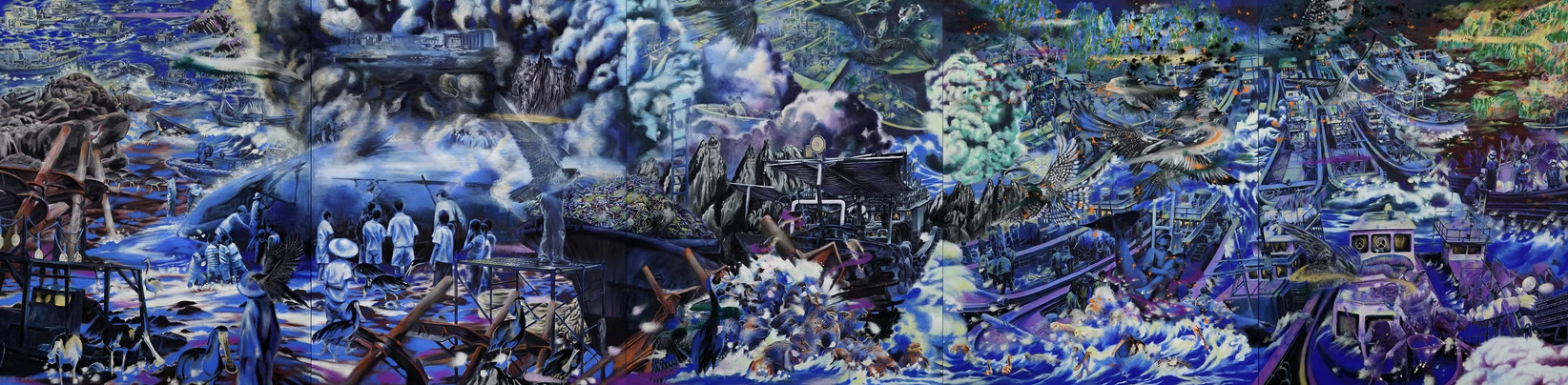
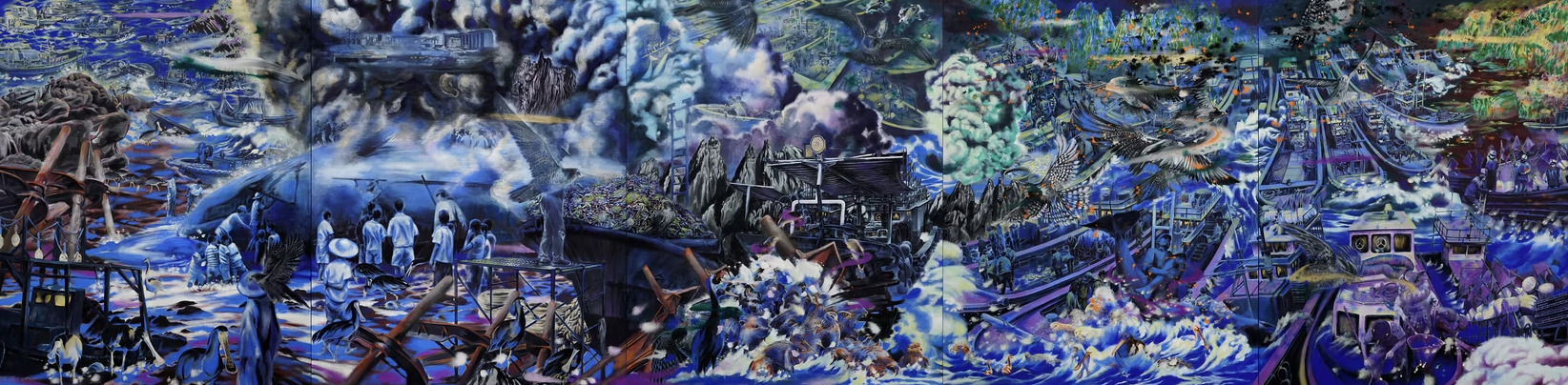
Returning again to the works in the exhibition hall: Pasi 波市_Lost Village on the Sea(2022) recreates an offshore market lost to reckless development, crossing back and forth over the boundary between this world and the next. The new work We Cannot Fall Out of the World(2025) gives form to purgatory, the intermediate zone between this world and the next.

To blend elements of reality and imagination onto a single picture plane in this way, the artist borrows the format of the folding screen once used in traditional houses. A canvas divided into multiple panels that stands on its own allows the meanings and symbols of this side and that side to be spatially divided and imagined. Yet Naomi's paintings are too vast and grand to be seen merely as folding screens.

Like a theater stage or a scene from a film, they place us right in their midst. The painting becomes one enormous stage, and the story continues. Viewers come to participate, through artistic imagination, in a story still unfolding within the sea, the wellspring of the narrative. The sea, surging with story, is not a backdrop but a connecting point and passage to contemporary life. And so the stories of these women, which never ceased, are revealed to us, connected and flowing upon the waves of the sea.

Naomi's world of work goes beyond landscape painting to create a vast narrative stage mediated by the sea. Her work revives the sacrificed women of myth and connects them to contemporary life, illuminating the sea as a 'portal' that dissolves the boundaries of time and space. The artist's artistic attitude, grounded in extensive research, shows a will to fuse myth and reality.

Through the sea, she attempts to encompass the lives of Asian women, reinterpreting distinctive sentiments and stories in a contemporary way and demonstrating a power to draw out universal empathy. It is hoped that, going forward, her diligent research will continue to harmonize with the energy of creation, and that Naomi will continue to unfold her own singular artistic world — one that goes beyond the mere recording and representation of grand narratives.


References