The expression that "technology is an extension of will" carries two meanings. The first refers to the proposition, as Marshall McLuhan argued, that the history of technology is the history of human will, and that tools are extensions of the body brought about by that will. The second suggests that technology—or the machine—is an extension of the will not only to occupy physical objects or space, but also to occupy time.
What conditions must be fulfilled for the realization of the same will to be repeated? Together, these two propositions summarize the technological and machinic qualities that all beings continually strive to acquire in their engagement with the world. More specifically, they may be understood as follows.
First, the extension of will does not simply refer to the physical stage of evolution in which arms or hands emerged from the body. Eyes, the brain, and even hair, for example, are all said to be the result of the evolution of skin. Here, will refers to the process through which a subject realizes its own desires by responding to the environment that surrounds it.
The fact that the subject's desire toward its environment—or the world—has been fulfilled through evolution over a long period also implies that it has fashioned for itself a body suited to the conditions presented by the world.
While arms, legs, and hands signify the desire to respond to the world's physical presence—hardness and softness, lightness and weight, above and below, the resistance of water and air, and the size and shape of individual objects—eyes evolved in response to the existence of light, the brain and nervous system to the world's complexity, movement, and aggression, and hair to differences in temperature and subtle currents of air.
What was once merely an outline or a surface became transformed into an apparatus. Tools emerge where the force and speed of this self-transformation exceed their limits. The tool replaces the extension of the body. Actions such as striking, cutting, throwing, or binding transcend the "threshold of desire" that the body alone is capable of sustaining.
The second notion of technology as an extension of will recalls Heidegger's concept of techne as well as Deleuze's notion of the machine. Language is an exceptional "technology" for calling forth what is absent, while the machine is what joins repetition to the tool. Language is machinic insofar as it enables desire to repeat itself identically across time. Repetition makes possible a "world of sameness."
Only through repetition does the world become something that truly exists, something visible, predictable, comprehensible, expressible in language, and ultimately possessable. The machine produces repetition while simultaneously producing the will to possess the world. A machine is constituted not only by physical assemblages but also by assemblages of relations.
In this sense, language, along with customs and institutions—including family, community, ritual, ceremony, and religion—are all machines because they generate repetition. Accordingly, just as we can identify machines concealed within speech, gestures, or modes of dress, we can also discern them within familial hierarchies, political rhetoric, and capitalist systems of value.
Here, the threshold of desire arises not from the relationship between the body and the world, but from the relationship between the subject and the image of the world. What is the world to me? What does it signify?
Such questions emerge because our image of the world is generally formed within the limits of what we already know. To move beyond that threshold, therefore, is to engage with a de-signified world while simultaneously revealing a will to manipulate abstract and immaterial objects.
Since 2001, Leehaiminsun has presented various iterations of what she calls “plan-drawings.” By “plan-drawings,” she refers to images composed through the appropriation and recombination of architectural plans, blueprints, and graphic symbols. Floor plans of apartment buildings, commercial spaces, and galleries consist of characteristic combinations of thick and thin interrupted lines, empty spaces, and symbols denoting windows and entrances.
When reduced in scale, they resemble the circuitry of a circuit board or the irregular joints of mechanical devices. Through similarity and association, Leehaiminsun treats these drawings as though they were aerial views of urban landscapes. They resemble the exposed internal tissues of an organism whose skin or shell has been peeled away.
In the series 'Half Dead Things', the city transforms into monstrous bodies resembling piranhas baring their teeth as they fly through the sky, or into assemblages of simplified signs suggesting the skeletons and movements of animals such as donkeys or dogs. These planar compositions recall ASCII art, which gained widespread popularity in the early days of computer-mediated communication.
If ASCII drawings leapt from text to image by employing numerous strings of characters instead of a single linear sequence, Leehaiminsun's early drawings likewise transform individual architectural plans—originally symbols of technical exchange—into units of deeper psychological deviation.
According to the artist, the somewhat cynical title "Half Dead Things" refers to beings that are alive like laboratory mice, yet exist only within the process of dying. The lives of these beings, for whom the binary distinction between life and death no longer holds, depend entirely upon the apparatuses and machines that sustain them. What "Half Dead Things" signifies, therefore, is a form of life characterized by dependence.
Just as ecosystems in a state of nature constitute vast structures of interdependence through food chains, capitalism represents an enormously accelerated system of artificial interdependence. Invisible yet immense, this structure of interdependence is itself a gigantic machine, composed of innumerable units of repetition.
The machine subsequently assumes the form of a robot—that is, a portrait. City Mutants is composed of the floor plans of countless apartment units and rental housing cells. These innumerable small cells gather together to form gigantic robots reminiscent of those found in Gundam or Neon Genesis Evangelion.
Although these robots are nothing more than arrangements connecting spaces with different functions, they also become products that continue to evolve into newer and more intriguing forms through reconfiguration and reconnection. These house-robots bear the faces of ordinary people, repeatedly drawn, erased, and redrawn by hand. Their blurred faces seem uncertain about how to inhabit or control their own bodies.
These figures, too, are presented as beings incapable of adopting any mode of existence other than dependence upon their robotized bodies. As the artist has remarked, “Identity depends on what is connected to what, and how those connections function.” Many of Leehaiminsun's works may be categorized as portraits. Even when depicting objects, her intention is to reveal the identity of an isolated existence.
The subjects she portrays occupy an intermediate condition: they both possess and do not possess identity. They exist between almost every conceivable binary relationship—life and death, organism and machine, individual and anonymity, usefulness and uselessness, strength and powerlessness, aggression and passivity, beauty and ugliness, reality and virtuality, attraction and disgust, two-dimensionality and three-dimensionality, authenticity and imitation.
These binaries are not simply oppositional pairs but conditions of ambiguous interdependence: "half dead," "somewhat more alive," "less forgotten," "slightly more useless," "less well known," "a little aggressive," "not entirely ugly," "not completely real," "somewhat repulsive," "less authentic," and so forth.
The spaces in which such beings exist are interchangeable zones, where parts or wholes may at any moment be replaced by something else, while simultaneously remaining empty spaces that refuse to guarantee the integrity of the individual.
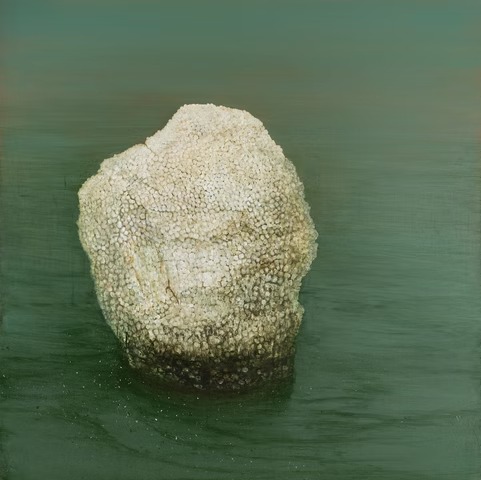
The 2008 series 'A Scene Package' bears the subtitle Landscape. This series of acrylic paintings depicts the tools required to set up an aquarium: an automatic feeder, water hoses, check valves, air distributors, filters, oxygen generators, artificial rocks, and other aquarium accessories. These paintings resemble both traditional East Asian landscape paintings and the illustrated plates of product catalogues.
Yet no water or fish appears in these "landscapes." Everything depicted here consists of a kind of technical information or a set of conditions. Conditions for what? For the image of something that is absent.
An aquarium is a living environment for fish, yet its function is ultimately that of a decorative apparatus. Components intended to create a better environment are, in fact, only the conditions necessary to produce a more engaging image. Arranged throughout these paintings are devices designed for something that is neither less lively nor less beautiful, yet never entirely natural or autonomous.
What is missing is the being that will eventually occupy this space—a being whose life has already been determined within a future environment that has yet to be assembled and arranged. For this reason, these landscapes come to resemble portraits of a being that has not yet arrived, a being that exists solely as an image.
The reason the artist refers to these paintings, which are closer to still lifes, as landscapes is that the being destined to inhabit them may not only be a fish, but ourselves. The artificial rocks resemble towering mountains, while plastic plants and trees are arranged among them. They overlap with the conditions of contemporary life that surround us. We, too, live within packages composed of standardized modular components.
Who, then, is looking at us? The subtitle Landscape suggests a space large enough for us to enter. Just as fish sustain their existence through the gaze of someone who is usually absent, viewers likewise live in dependence upon the will of someone who is absent. That absent will may be capital, power, ideology, or God; or it may refer to technology itself—a technology of signification that encompasses all of these.
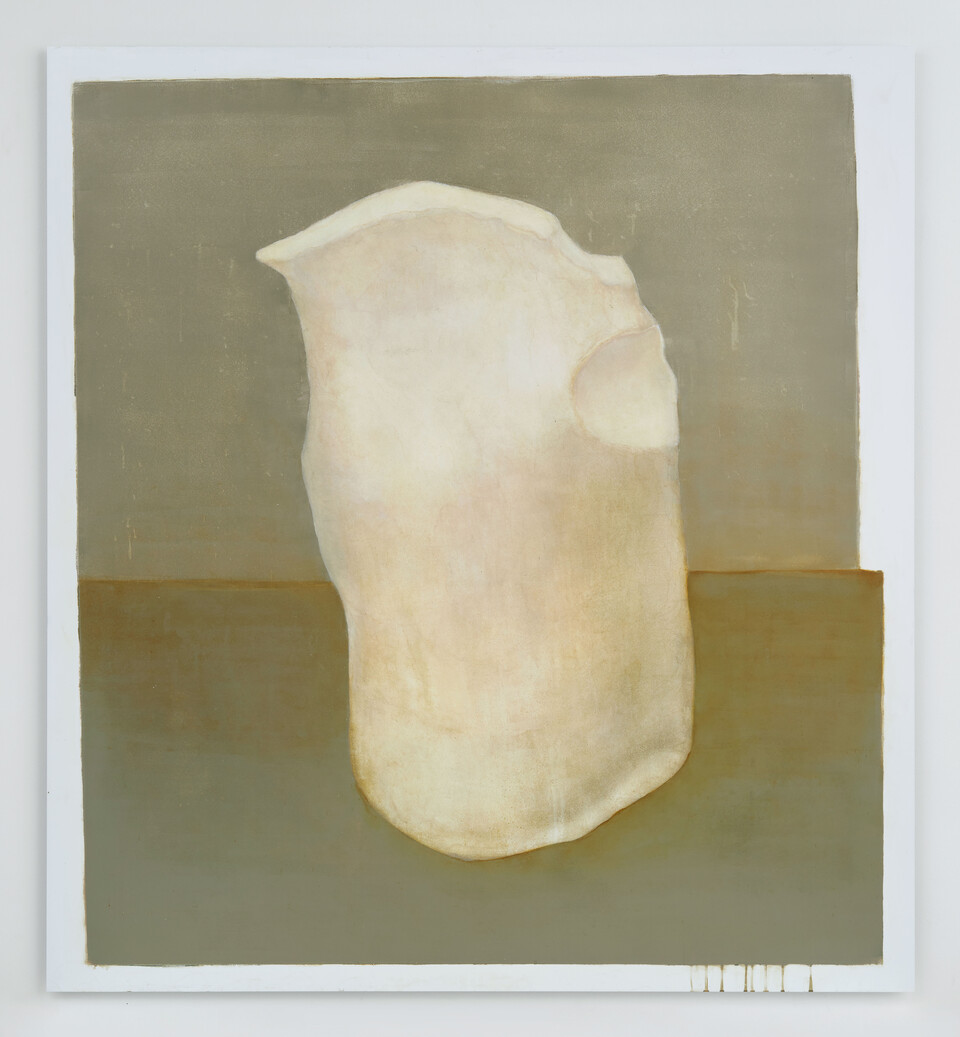
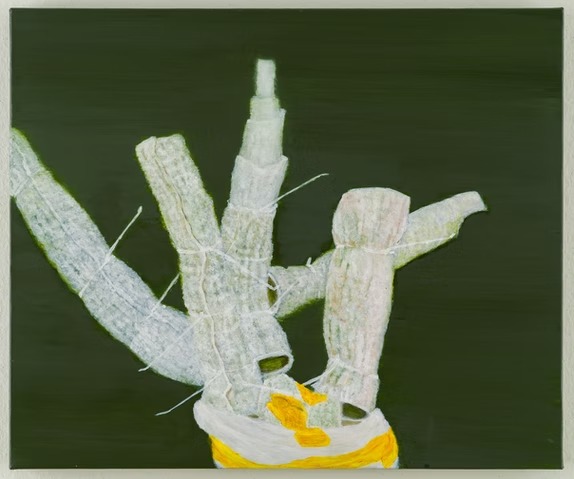
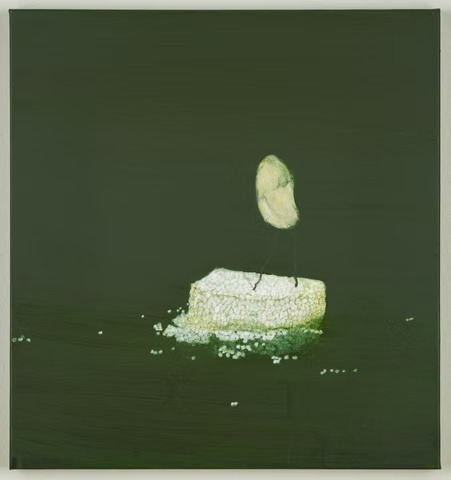
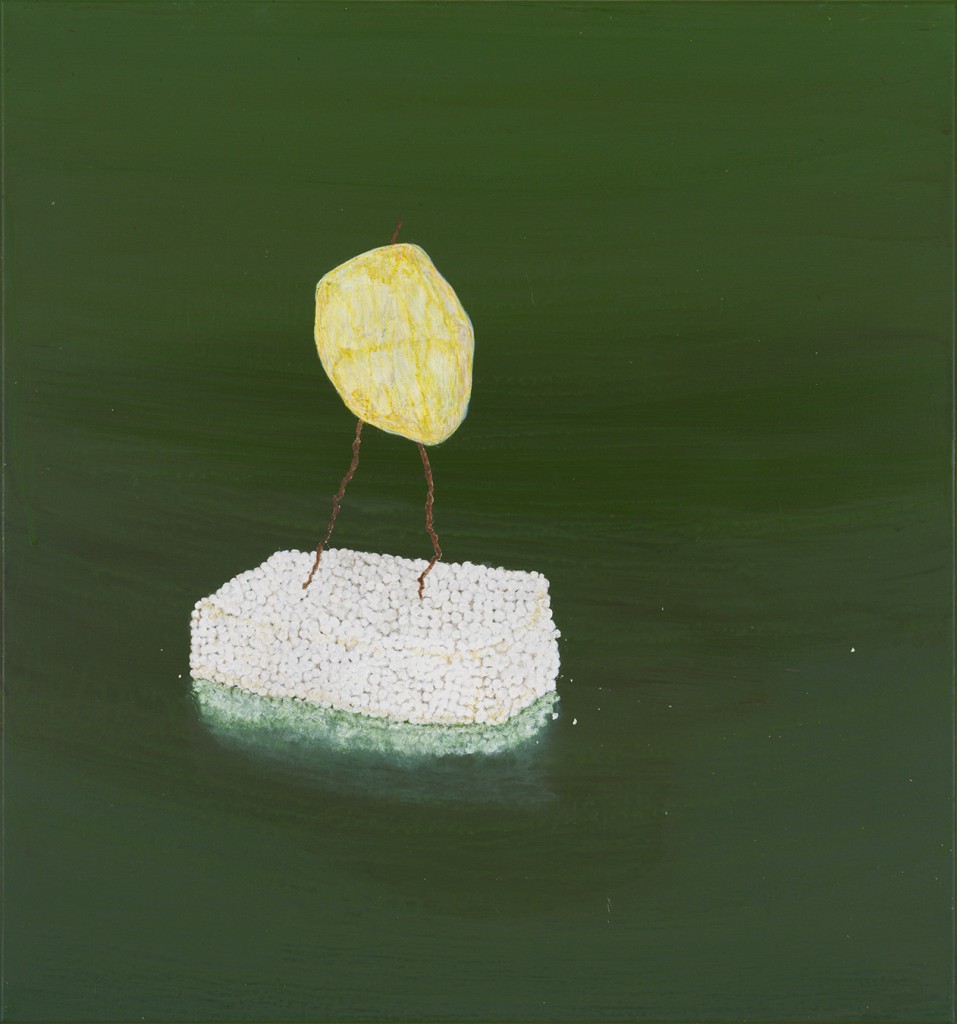
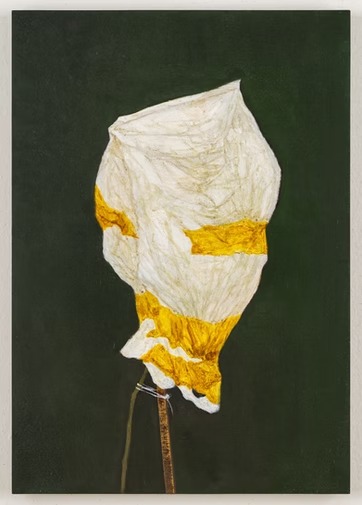
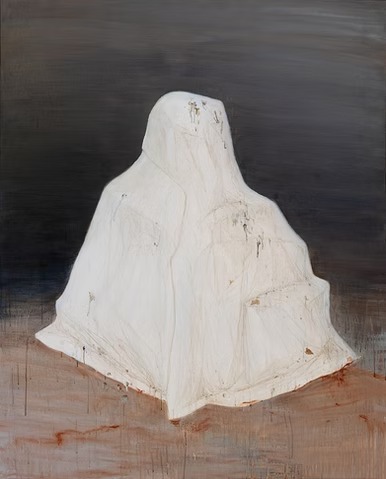
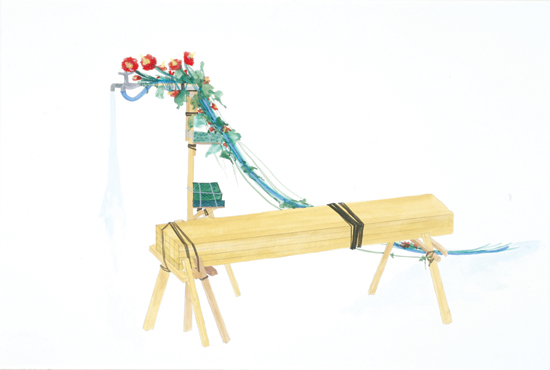
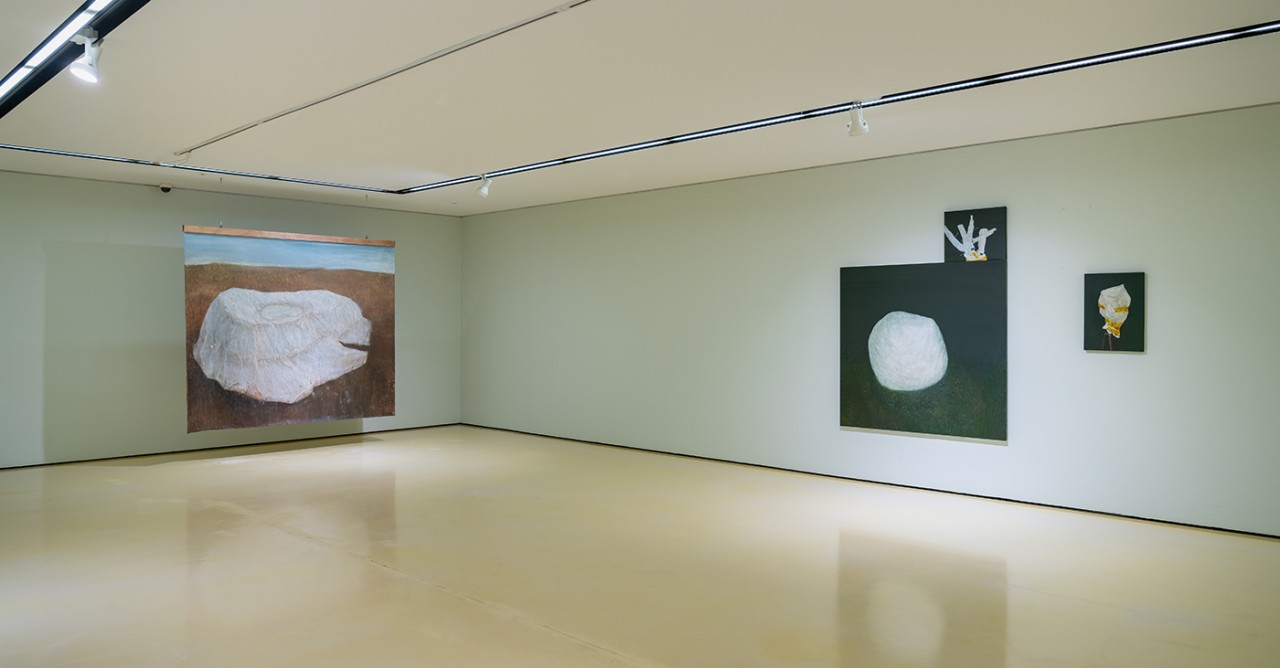
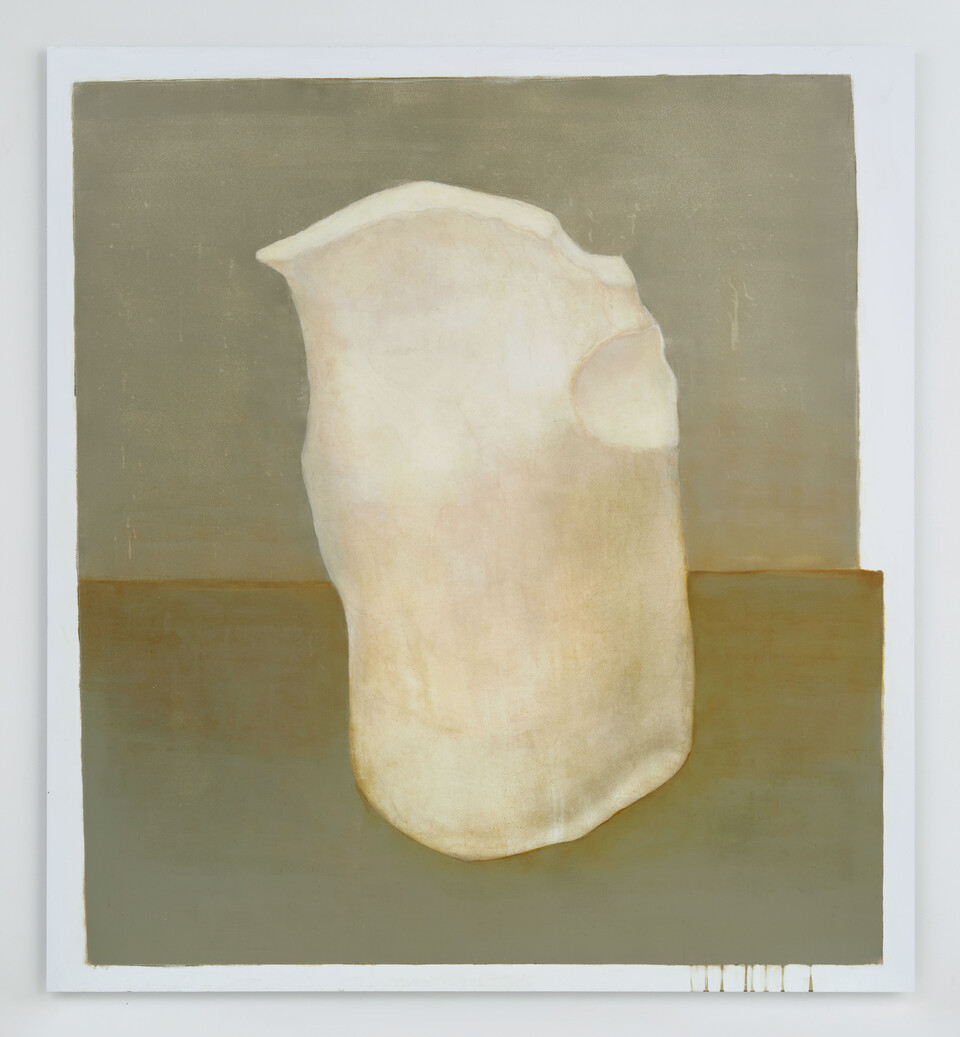
Leehaiminsun's most recent series, 'Planta erectus', deals with objects "crouching" within barren, desolate landscapes. These objects—wooden beams, ropes, pipes, fragments of black and white plastic, weeds, and branches—are connected to one another in unpredictable ways.
"Unpredictable" here does not simply mean that they are randomly assembled, but that they appear to have been joined together by some external force rather than by any conventional method. Most of these objects are bound together by rope. As the artist points out, they are connected in a manner that causes as little damage as possible, rather than through chemical adhesion such as glue or physical penetration by nails or bolts.
Even so, the fact that they are "bound" reveals that their mode of existence depends, to some degree, upon external forces. Where do these ropes come from? In the 'A Scene Package' series, blue ropes—or hoses—appear repeatedly. These hoses carry air and water between different components of the aquarium system.
At the same time, they lie coiled or scattered across the ground like ropes, suggesting that the objects are fundamentally separate from one another. Their blue color, recalling water itself, seems to indicate not only that these objects are destined to exist underwater, but also that water is the very medium through which they become connected. Bundles formed through connection, association, and enchainment transform static beings such as objects or plants into animals.
Unlike plants, animals experience fear, they look, and they hunger. A motionless animal signifies isolation; a plant does not. Animals render visible, as dramatic scenes, accelerated systems of interdependence. Likewise, when objects become animals, they reveal that they too have entered into such structures of interdependence. 'Planta erectus' exposes the animal latent within plants and objects. It is born into isolation.
The technology employed here is one that makes beings capable of fear, of looking, and of hunger. 'Planta erectus' demonstrates how existence and technology become joined at their very beginning.
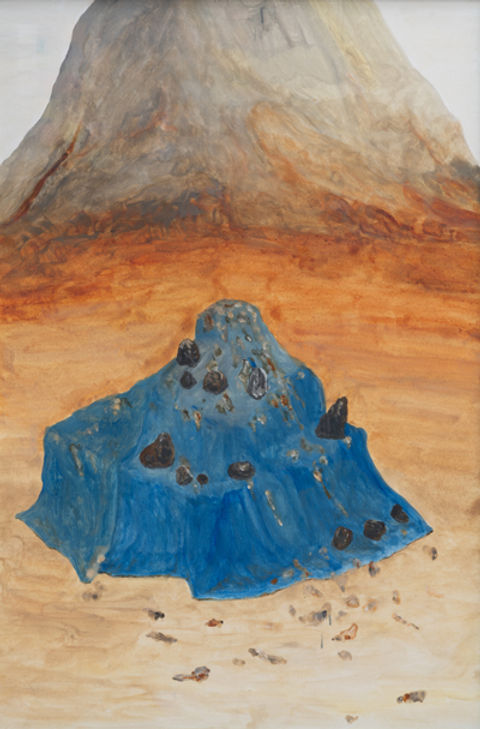
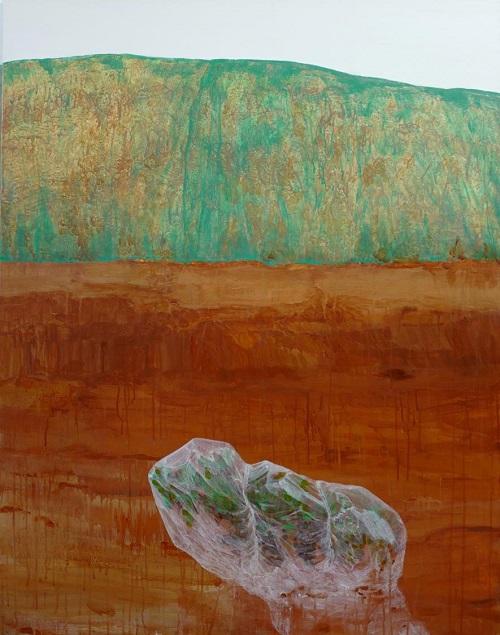
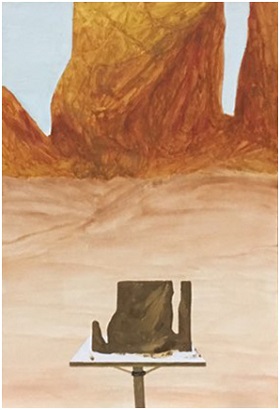
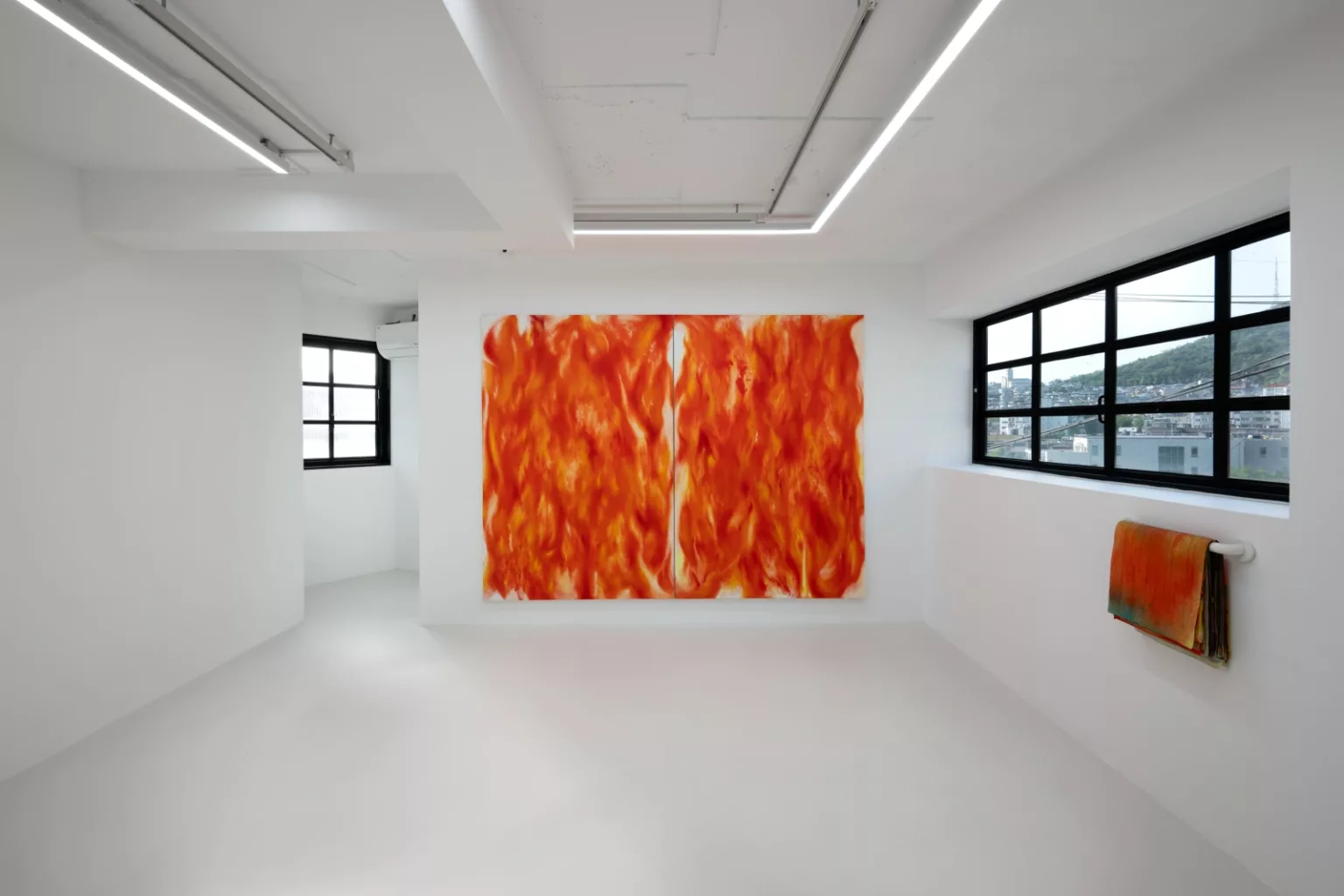
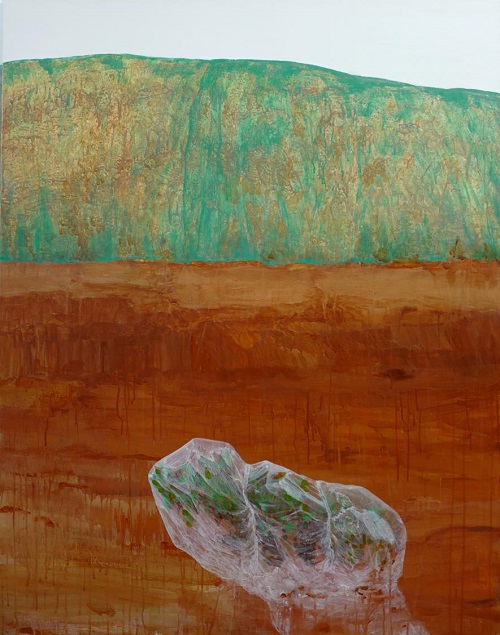
Atmospheric Pressure and OO and Tap Water and OO are large-scale acrylic paintings on paper. The postposition and in the titles is intentionally left standing alone, implying the omission of whatever should follow. These works depict backgrounds consisting of unknown places covered with piles of excavated red earth. Their surfaces resemble either the terrain of Mars or housing developments cleared for urban construction.
Across these vast no man's lands, forms composed of wooden beams bound together with rope crawl across the ground as though surveying the terrain. Atmospheric Pressure and OO is a diptych composed of two large adjoining panels, while Tap Water and OO depicts water flowing from hoses wrapped around similarly constructed bodies and collecting on the ground.
Whereas the phrase "atmospheric pressure" evokes the atmosphere of an unknown planet, "tap water" recalls discarded objects abandoned at the fringes of urban development sites. Aside from these titles, which suggest different settings, there is little difference between the two paintings. Ropes still trail from the forms and lie scattered across the landscape, while an animal assembled from wooden beams remains isolated beneath a black plastic sheet.
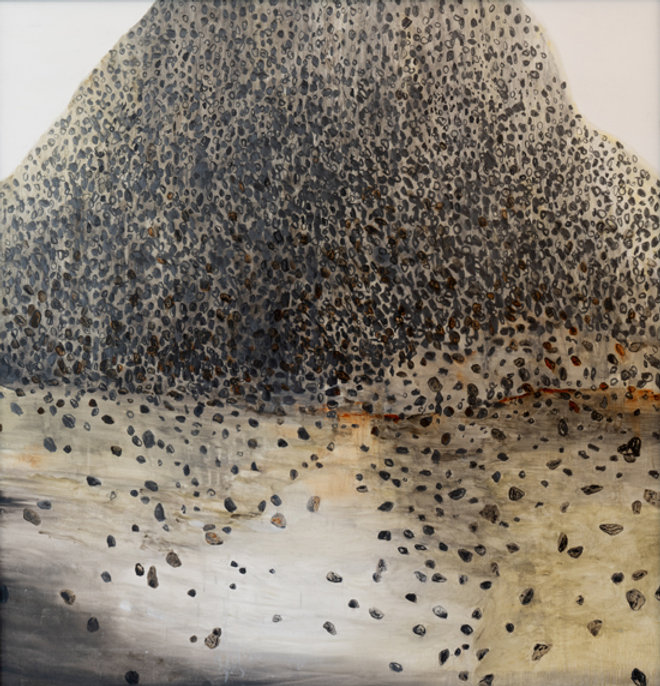
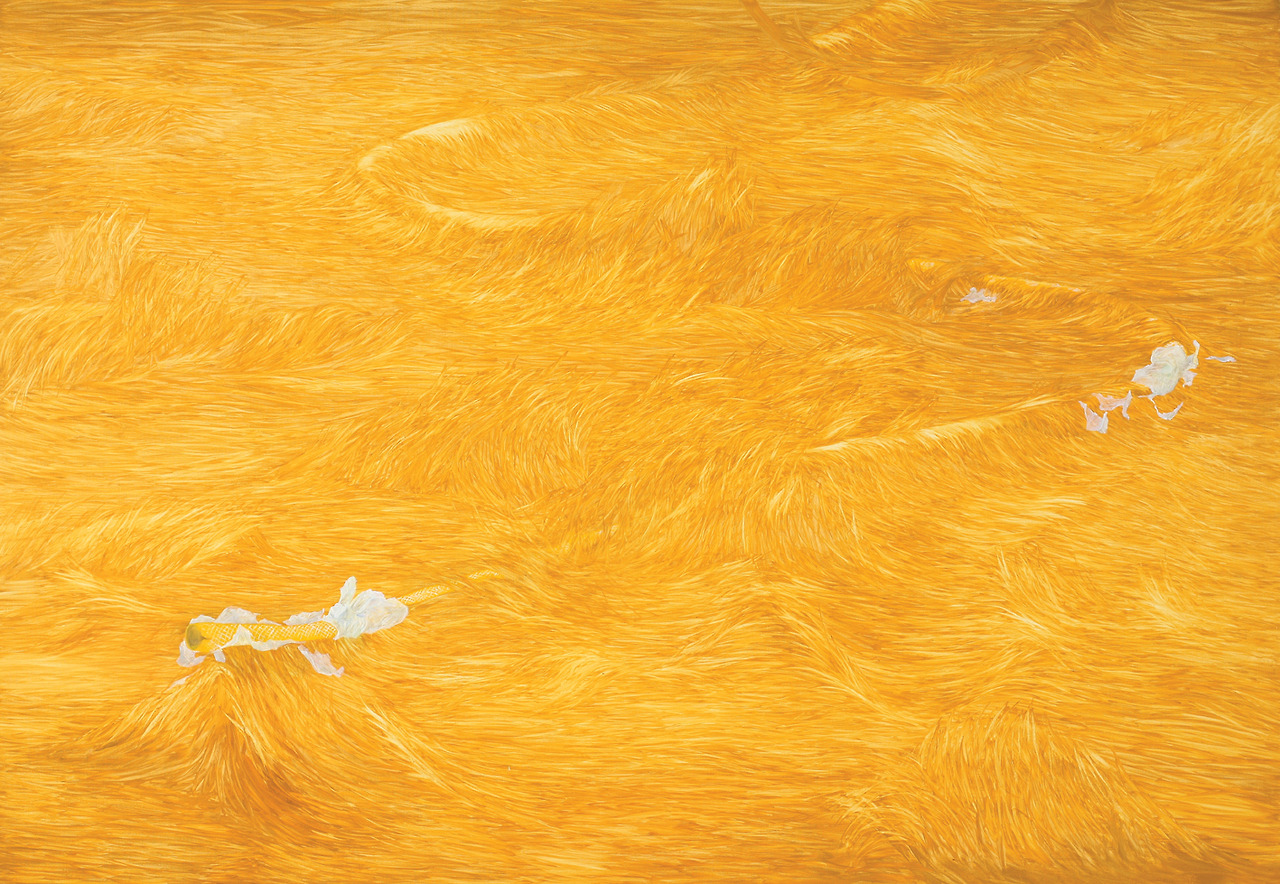
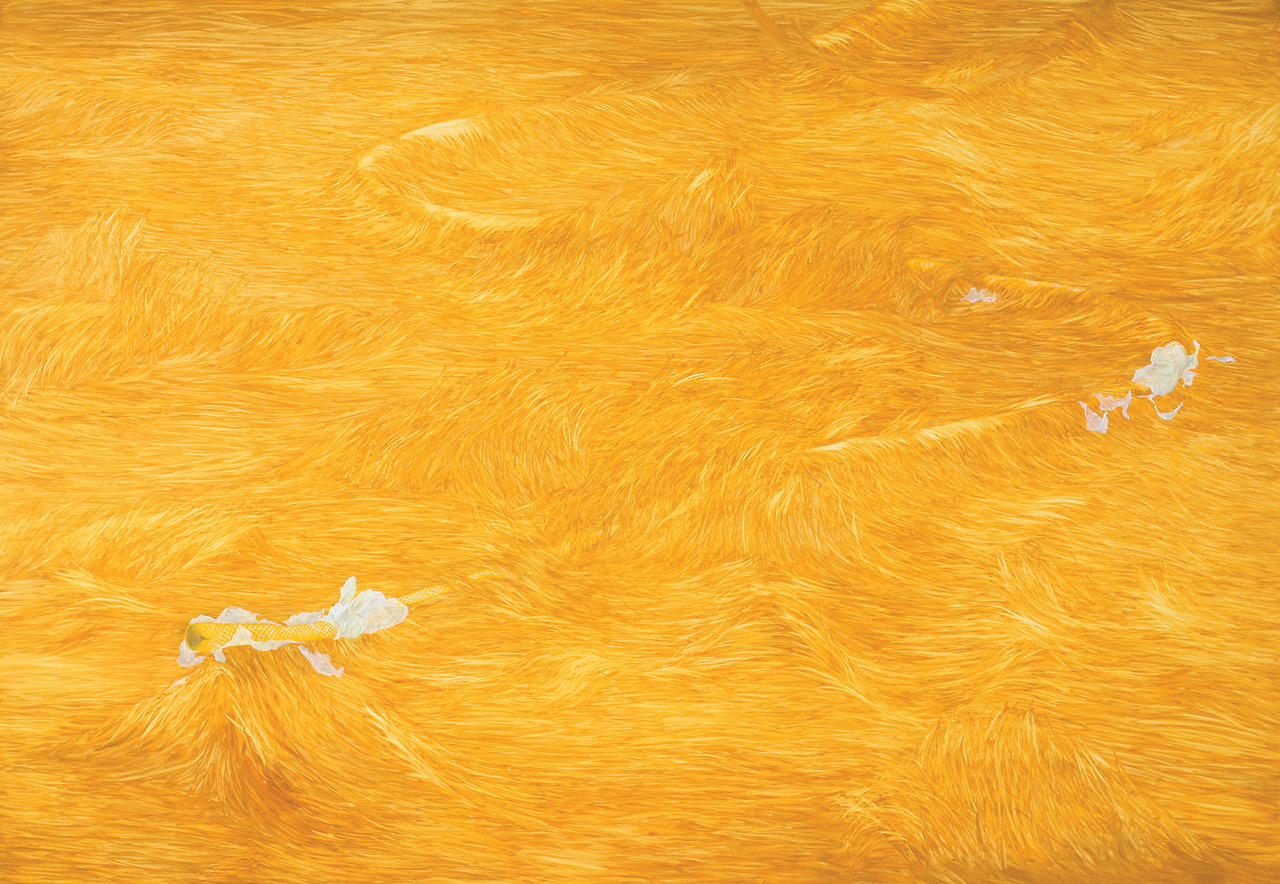
Objects do not become animals solely through the connections among the objects that compose them. They are also connected to space. Other works feature landscapes densely covered with yellowed grass or straw, either flattened or standing upright.
In works such as Closer Relationship than Expected, Sitting, and Aging Gracefully, hoses, plastic sheets, wooden beams, and ropes—resembling discarded debris—lie scattered among tall, dry grasses, as though something massive had passed through and crushed the ground.
These elements are likewise ambiguously entangled and bound together. What draws particular attention here is the way the backgrounds are painted. The artist renders the decaying landscape with extraordinary precision, as though it were profoundly important that the places in which these objects assert their presence are abandoned places—places left behind.
The series 'Machine and Kung fu and Art' consists of drawings that "bind together" two seemingly unrelated subjects: Shaolin martial arts and motorized sprayers. One is a martial art that employs the body's internal qi for self-defense, while the other is a machine that compresses and expels air through mechanical power.
Although both are technologies for harnessing immense energy, they belong to fundamentally different domains—one cultural (technique), the other industrial (machine). In these drawings, the machines forcefully discharge massive reddish substances, while figures surrounding them demonstrate the power embodied in their respective martial arts. These works juxtapose two distinct systems of meaning.
The liquid being expelled signifies the intensity of the force exercised by the figures, while their postures and auras suggest the technical forms through which the latent power of the apparatus is controlled. Within these drawings, the two systems of meaning suddenly become bound together in a relationship of interdependence. Here, rather than wooden beams or hoses, advertisements and fragments discovered in gardens are tied together.
Leehaiminsun's gaze toward these "thrown" objects is governed by two important principles of mise-en-scène. First, the "characters" or "actors" emerge from the background. The background is an empty, abandoned space from which an unknown consciousness begins to take shape. This means that the objects gradually become aware of themselves. The artist summons these objects and compels them to "depend" upon one another.
It is here that tragedy begins, for they become conscious that their uselessness and their beauty both originate in an empty, decaying world. The second principle is that, in reality, they are nothing at all. These characters are merely images. At any moment, they may once again be dismantled and returned to the unconscious. Their assemblage depends upon two things: the gaze and the "rope."
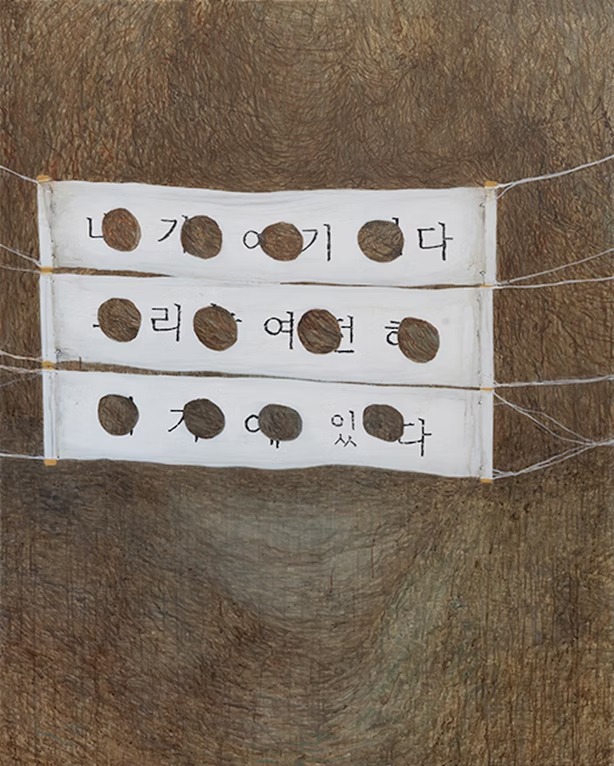
The objects are discovered by chance through the artist's gaze and are only temporarily bound together. The rope provides the concrete clue that lends this condition a sense of reality. Whatever exists requires a rope. It lies scattered throughout the world. Yet what the rope binds together is only a temporary concreteness.
Based upon these two principles, the objects compose an image. Like Oedipus, they are summoned by fate and will soon disappear, yet for the moment they stand upon the stage as subjects awakened to their own existence. The objects appearing in Leehaiminsun's paintings seem as though they are about to deliver fateful lines concerning their newfound self-awareness. They emerge from the background only to be cast back into it.
Yet at the only summit of evolution available to them, these objects become wholly absorbed in their own awakening. They depend upon a kind of primordial technology, but they never become machines. Within a world governed by repetition, they remain as beings that do not repeat.
Neither the excitement generated by capital, nor the utopia imposed by ideology, nor even God ever arrives there. What we encounter in these paintings is a summit: the quiet, seemingly meaningless summit of beings that stand upon their own legs.