“People tell us to marry and have children so we won’t be lonely in old age.
They say that land prices rise the most when rumors spread that a subway line will be built, rather than when it is actually completed.
We live the present in the conditional tense. Anxiety casts the body onto a high peak to be left to the wind, while the ground we inhabit has no heels on which to stand.
I scoop up a handful of earth from the mountainside—at about the height one can reach on foot—and knead it into clay to build my own peak.
Though I evaporate a little every day, I remain a heavy mass.” (Leehaiminsun)


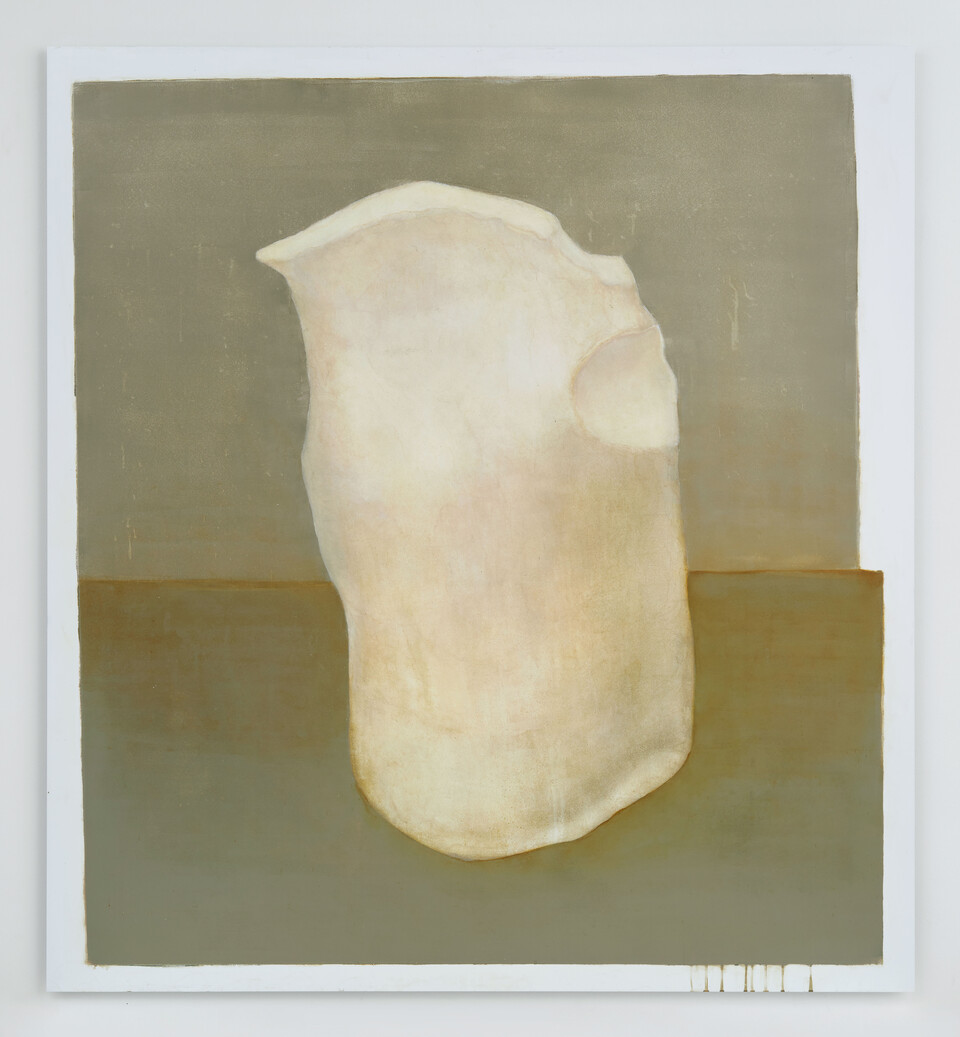
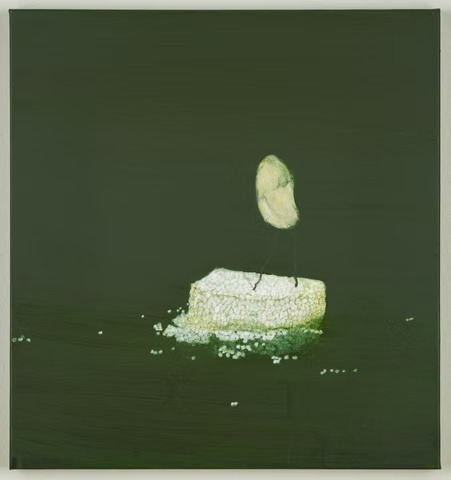
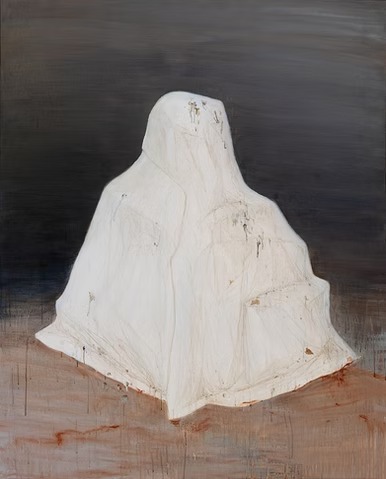
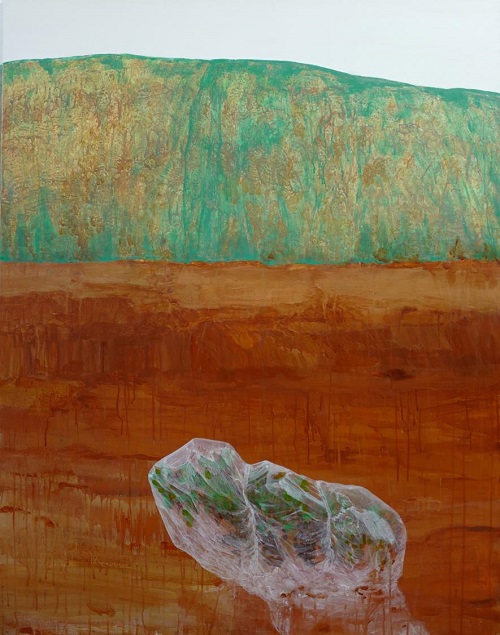
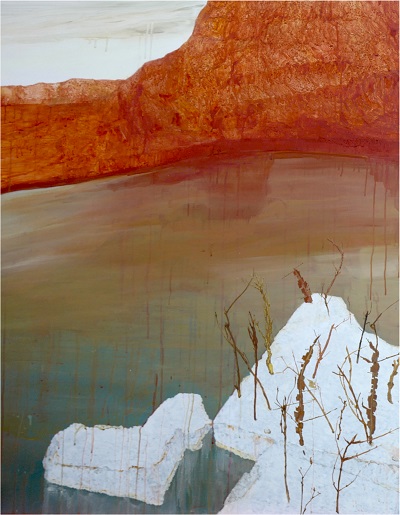
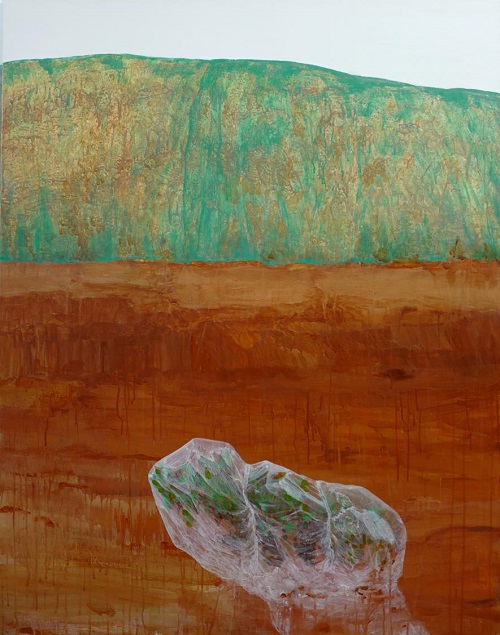
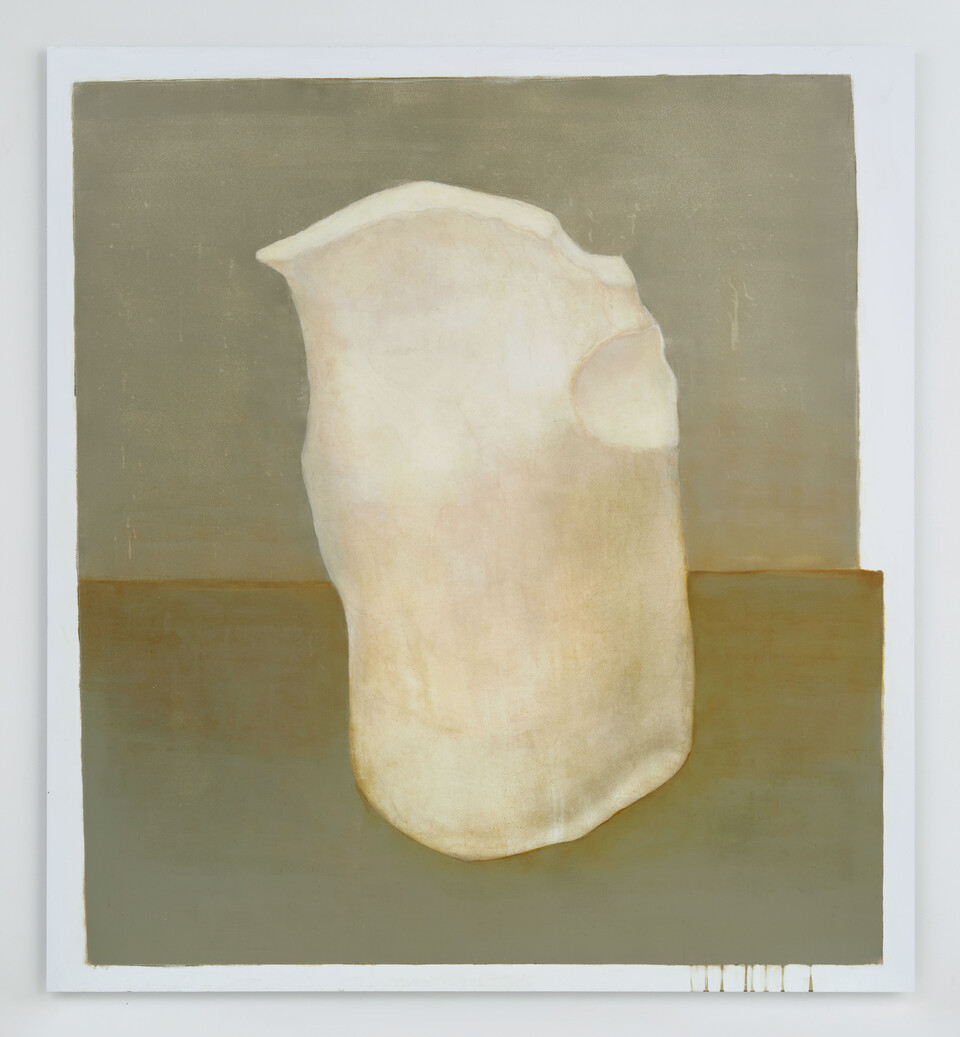
Leehaiminsun, A Place Without Climax: The Pose, 2017, Acrylic on canvas, 116.6 x 90.7 cm © Leehaiminsun

Leehaiminsun lives and works in close proximity to nature. She observes it, draws from it, and incorporates it into her practice. Reading this opening statement, each of us is likely to conjure our own image of nature and landscape. Yet the works presented in 《The Mass》 depart from those expectations.

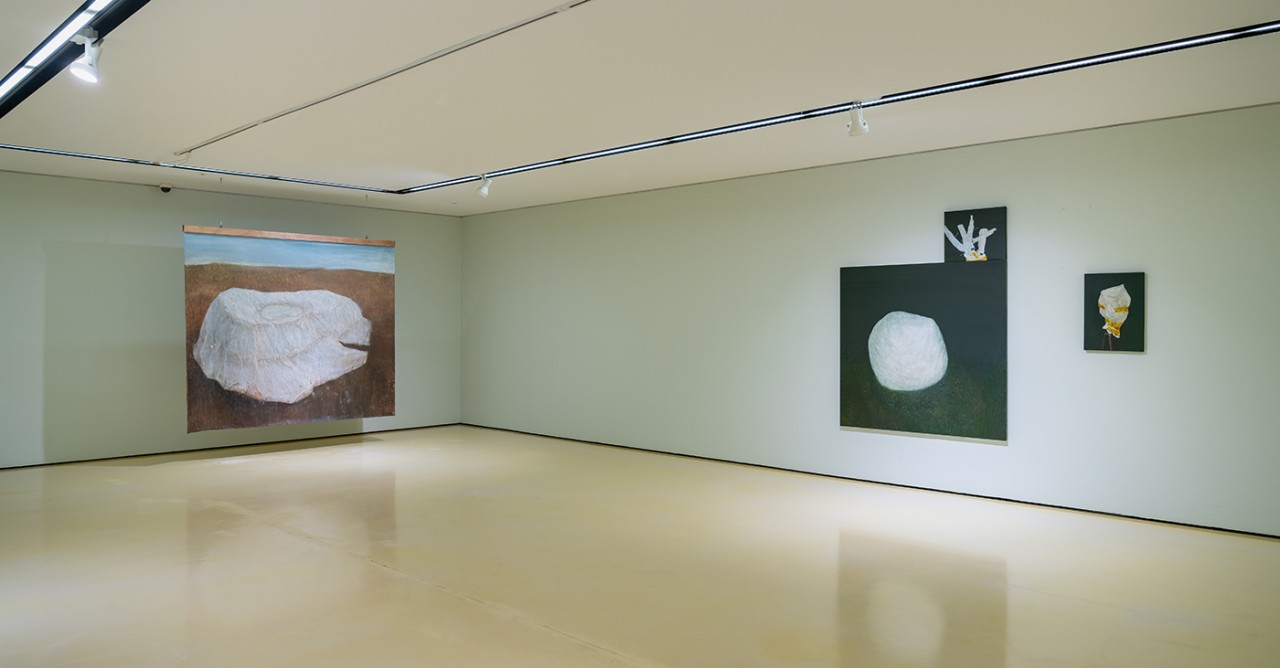
Across the eleven paintings on view, materiality—particularly the transformed or vanished remnants of artificial objects—appears repeatedly as a central motif. As one spends time with these landscapes, where nature and the artificial coexist, they begin to evoke not the present but a future in which we already seem to live, while quietly confronting us with a gaze that observes humanity from a distance.

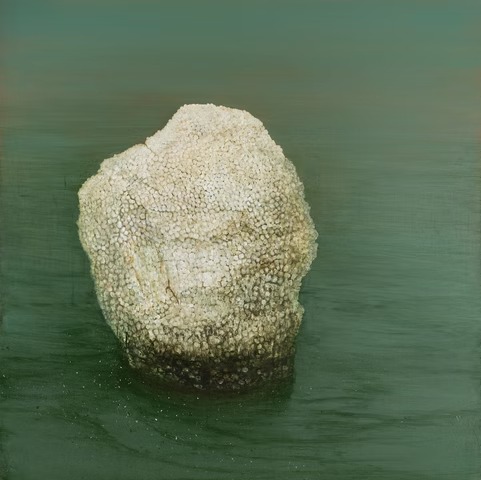
Although the exhibition initially appears to be dominated by shades of gray, the space is in fact filled with colors charged with vitality, all embodied within these "masses." Looking at the earthen form depicted in On Soft Ground, one is reminded of Leehaiminsun's works from 2012.

At that time, she was less concerned with color than with the material qualities of matter itself, often working in a single hue while experimenting with a wide range of materials. For this body of work, however, the artist describes the process as "a struggle with paint." The colors she envisioned often differed from those that ultimately emerged.

Acrylic paint changes in color and texture as it dries; the same paint behaves differently depending on the canvas, the manufacturer, and even the individual tube. Leehaiminsun demonstrates an acute sensitivity to these subtle variations, carefully negotiating hue, the amount of water, and the character of each brushstroke. Color evokes countless emotions.

Looking once again at these mounds of earth, one feels compelled to keep looking. They quietly draw the viewer in. Perhaps this is due to the undeniable allure of painting itself. Or perhaps it is because one senses the artist's long and sustained dialogue with color. Indeed, it may be that cultivating a relationship with color and wrestling with materials constitutes the greater part of her artistic practice.


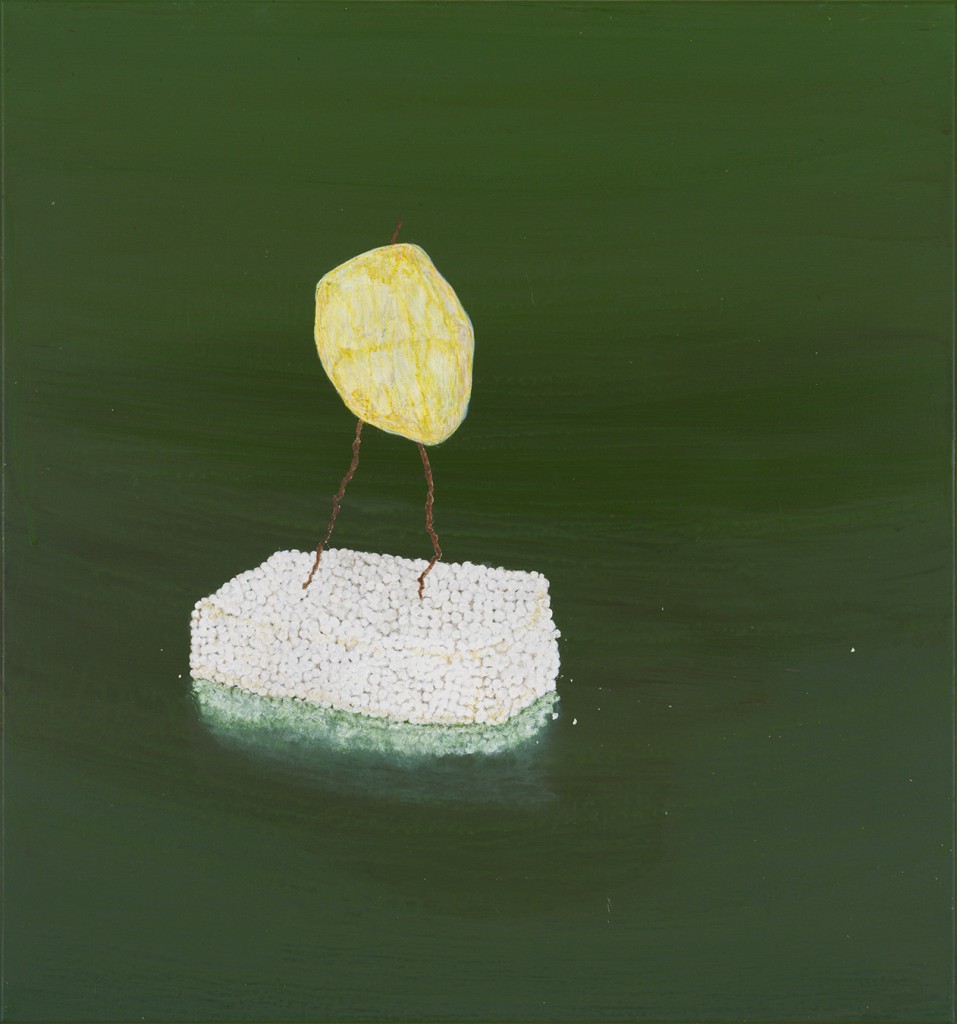
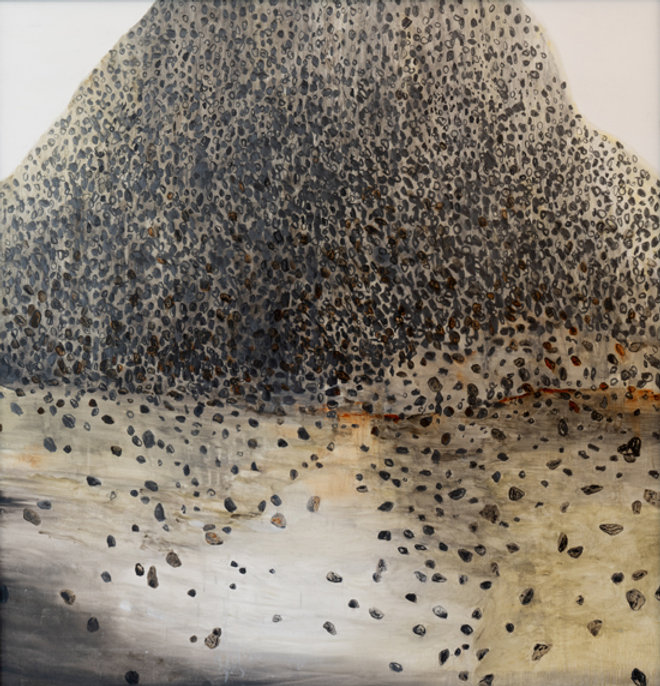
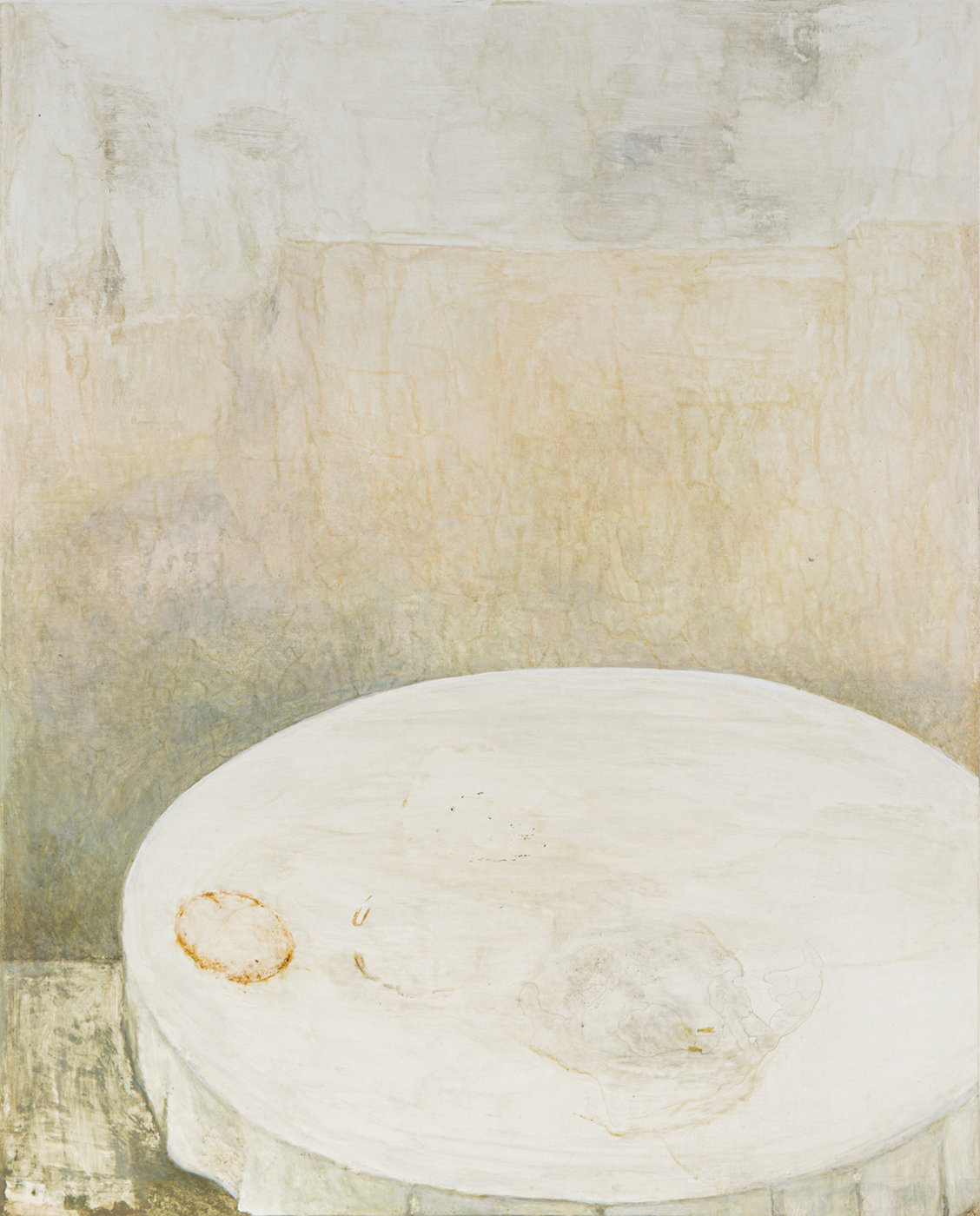
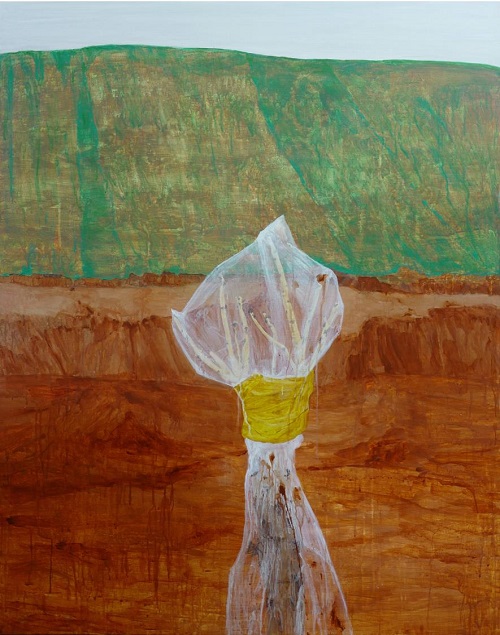
Leehaiminsun, A Place Without Climax: The Pose, 2017, Acrylic on canvas, 181.8 x 227 cm © Leehaiminsun

As with the work of so many artists, each of Leehaiminsun's paintings reveals the depth of thought and perseverance invested in its making. In dance, improvised duet performance is a form that demands extraordinary concentration. Beyond a broad framework, nothing is predetermined or rehearsed. The slightest lapse in communication causes movement to dissolve into empty space.

Each dancer must receive a gesture, decide in an instant how to respond, and offer that response back, never knowing where the exchange will lead. It is precisely this unpredictability that makes the form both difficult and irresistibly compelling. Leehaiminsun's paintings seem to emerge through a similarly intense dialogue—between canvas, color, the movement of the hand, and the impulses of the mind.

One cannot help but imagine that the artist approaches the act of painting not as something rehearsed, but with the concentration and presence of a live performance unfolding on stage. The long and demanding process behind these works only reinforces this impression, its accumulated energy remaining vividly present within each painting.

Leehaiminsun's hands are strikingly small and delicate. Yet the stories she inscribes upon the canvas with those hands—and with her entire body—are remarkably clear. Perhaps because they are rooted so closely in nature, they also possess an undeniable sense of scale. Their clarity and expansiveness continue to hold my gaze long after I have looked away.


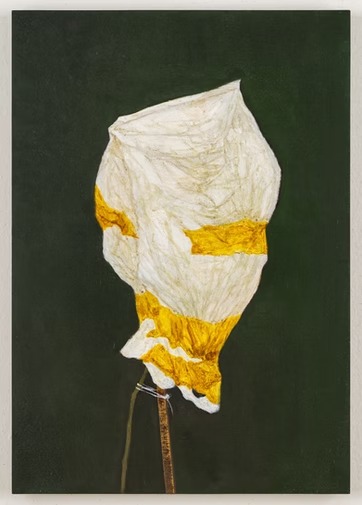
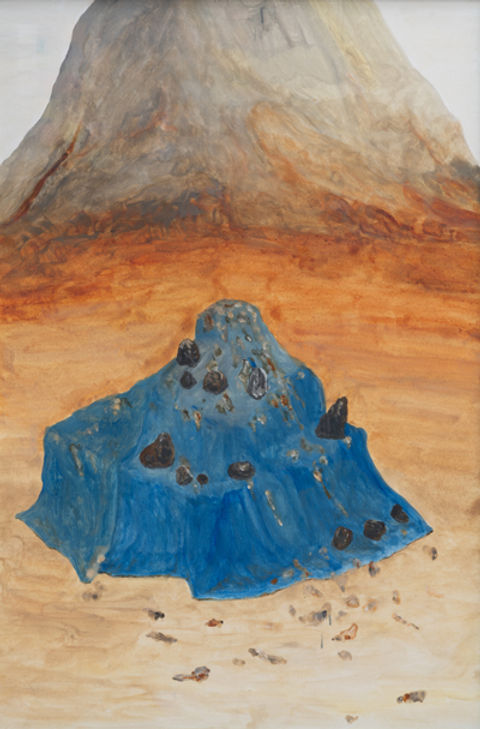
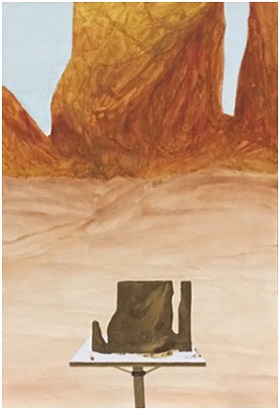
Leehaiminsun, The Peak, 2017, Oil on paper, 30.5 x 45.5 cm © Leehaiminsun

The name Seongmi, which appears throughout Leehaiminsun's work, is both a common Korean woman's name and the name of Seongmi Mountain with the word "mountain" omitted. Climbing Seongmi Mountain every day, Leehaiminsun sought to capture her gaze with honesty, concentrating on what was directly before her and recording it with persistence.

As the mountain gradually began to resemble a human body, Seongmi Mountain slowly transformed into simply Seongmi. Although absent from the picture plane, the portions of the image cut away beyond its edges are easily imagined by the viewer.

In doing so, the works suggest that the images we have already fixed in our minds do not, in fact, truly exist. The artist proposes that we live not in the present, but among events that have not yet occurred—and may never occur at all.

My gaze inevitably lingers before the paintings of mountain peaks. In each of these works, the summit has been cut off. Yet when we look at them, we instinctively imagine the missing peak—or the one sealed within an invisible space beyond the canvas. Such predetermined summits exist in our own lives as well.

They occupy our imagination with remarkable clarity, yet each person's summit exists independently, capable of taking on infinitely different forms. The pinnacle of one's life is never identical to another's. Like individual mountain peaks, our moments of culmination can assume countless different shapes.

In these paintings, Leehaiminsun invites the viewer to complete the summit through transformation or through the imagination of one's own inner landscape. For some, it may be a sharp, pointed peak; for others, a gentle, rounded summit, soft like the curve of a breast. What image does your summit take?


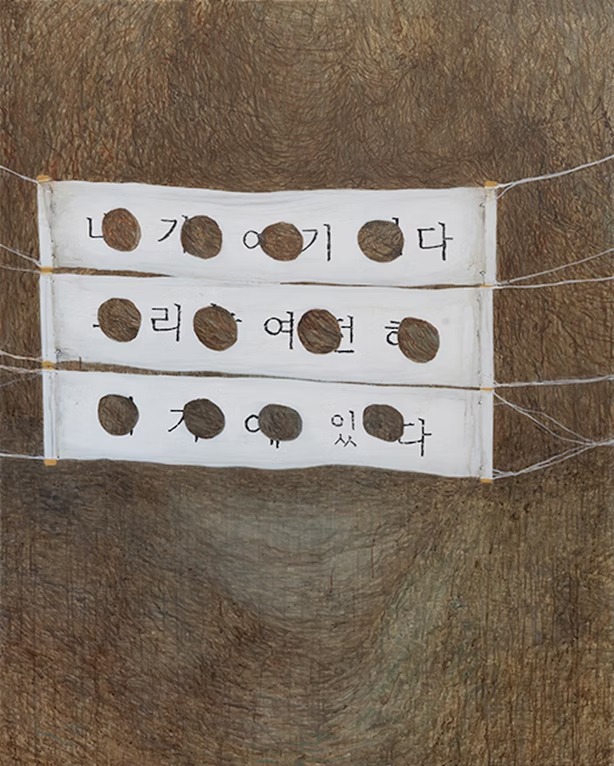
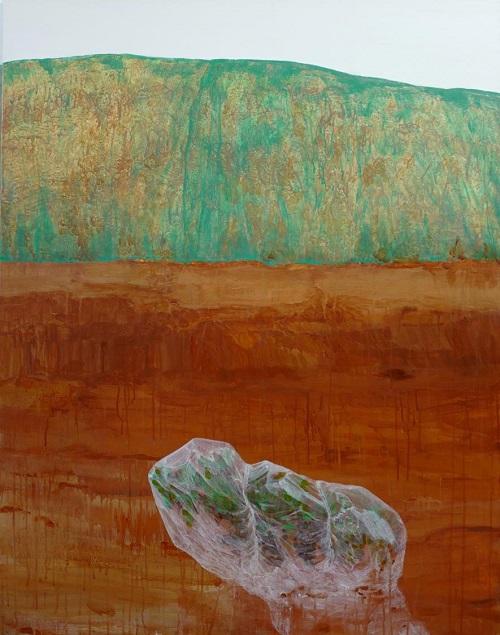
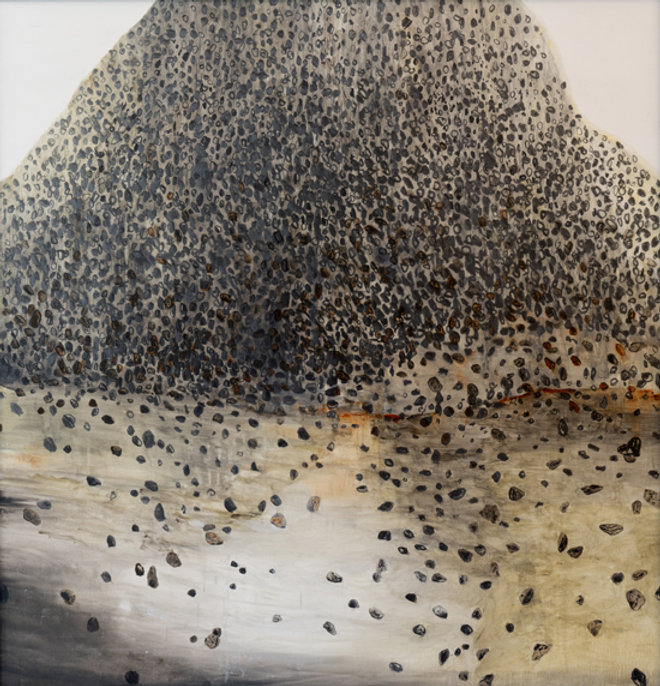
Leehaiminsun, River of Analogy, 2017, Acrylic on canvas, 116.6 x 90.7 cm © Leehaiminsun

Our lives are shaped by endless cycles of assumptions and projections. These recurring images reappear in Leehaiminsun's work, transformed into new forms of energy. By dissolving these repetitions, assumptions, and projections, her paintings offer a renewed visual language that marks a subtle departure from her earlier practice.

One cannot help but wonder how much deeper the artist's gaze will become through her continuing relationship with nature. It would be tempting to conclude with a cathartic affirmation, carried by the strength of her contemplative vision. Yet, like the unseen summit that recurs throughout her paintings, I, too, will leave that culminating peak to the imagination.

What follows is a selection of five excerpts from Leehaiminsun's working notes. Together, they may offer a sufficiently rich reflection on the absent summit. Standing before these works in May, perhaps we, too, might become—as long as we remain with them—a weighty mass ourselves.

“1. A Landscape Without a Summit
There are edges, but not a peak.
It stands, yet seems to have no top.

It exists precariously, yet it does not disappear.
There is no summit, but there is a pose.

2. Peaks and the Analog
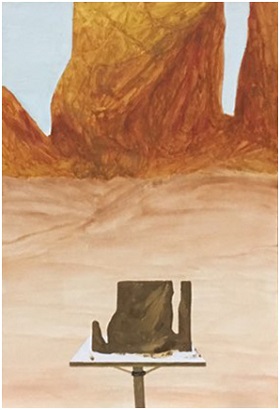
Within the painting are a mountain and a lump of clay placed on a table, sculpted in imitation of that mountain.
Yet this sculpted mass is itself a mountain with its summit cut away.
The sculpted form resembles the mountain as it appears within the rectangular frame visible to the viewer.

Whether the mountain in the painting is complete or only a fragment remains unknown, but the sculpted mass is not incomplete—it is a whole, complete form.

That mass possesses a summit.
An individual's creative world becomes an autonomous subject in itself, one that allows us to infer the archetypal world.

3. The backgrounds of my paintings are primarily landscapes in Yongin, Gyeonggi Province, seen from the expressway connecting Seoul and Yongin. They are places marked by public-scale activity, like large construction sites.
The structures that appear before these landscapes, however, are plants tended by individuals in Seongsan-dong.

This juxtaposition was not intentional from the outset. As I began to read social narratives within these landscapes and returned to them in order to express those narratives, the backgrounds naturally became landscapes shaped by public forces.
Yongin is where I work as a temporary employee, while Seongsan-dong in Seoul is the neighborhood where I live.

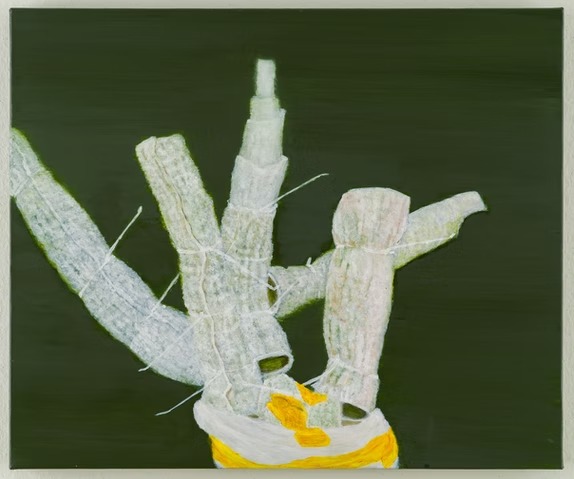
In Seongsan-dong, there is a tree behind a commercial building wrapped in fruit-packaging foam and sealed with packing tape.
Beside a red brick house stands another tree, wrapped in white insulating foam that follows the contours of its branches, sealed with packing tape, tied with white string, and fastened to a nail driven into the wall.

On the roadside next to the same red brick house, a tree wrapped in black plastic is loosely tied to a folding chair with yellow rope.
At the end of that street, black awning fabric, faded sky-blue tarpaulin, bright blue tarpaulin that has not yet faded, transparent plastic sheeting, and wood-patterned vinyl flooring all tightly envelop trees, while bricks of various kinds rest at their bases as though reassuring them.
Outside Yeonnam Laundry, a tree is tied at a distance to an awning pole with blue plastic rope and an orange clothesline.

In front of Dr. Lim's butcher shop stands a tropical tree wrapped in translucent plastic and tightly wound with yellow packing tape.
All of these scenes remain unchanged, even as large commercial buildings in the neighborhood are demolished and replaced by new ones.

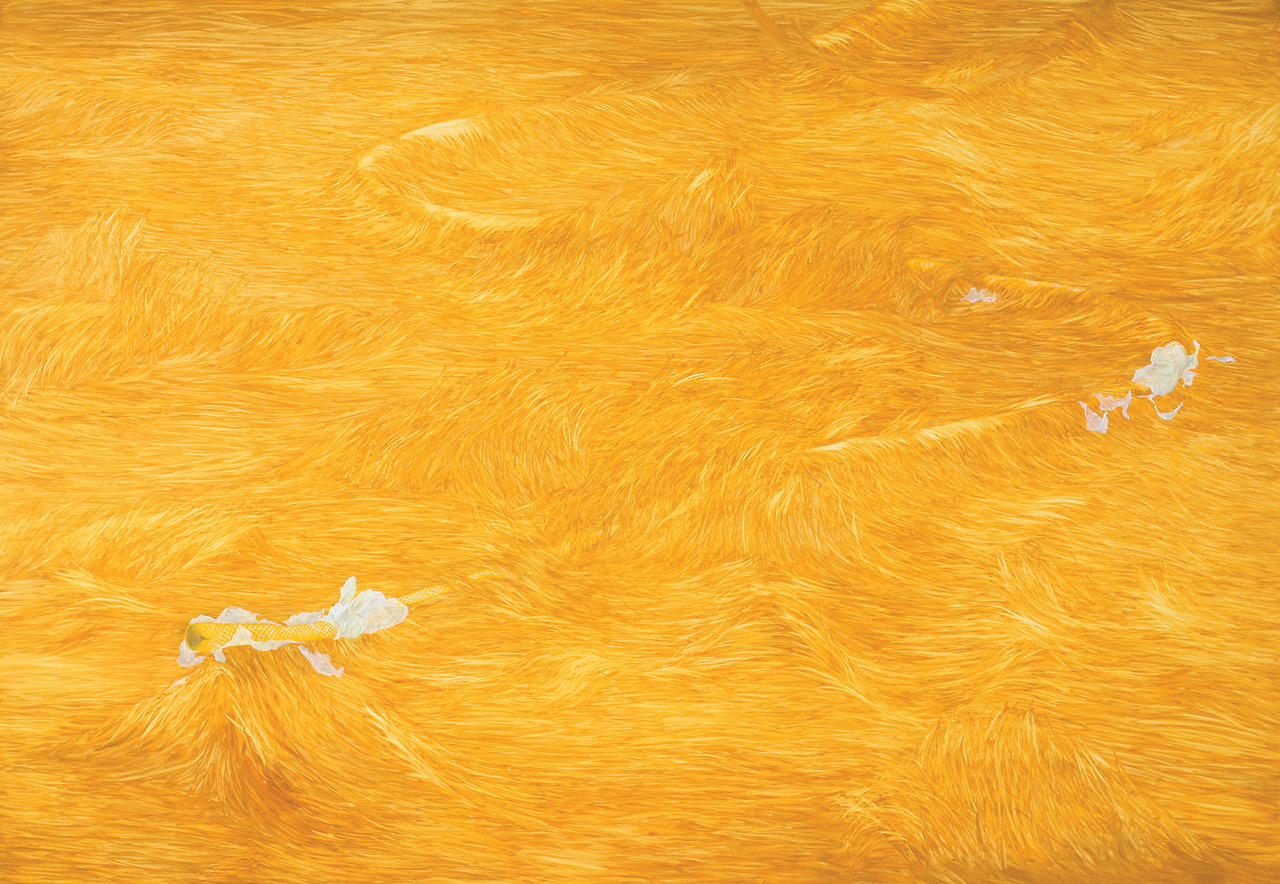
4. Yellow Vinyl Flooring
I often see wood-patterned vinyl flooring or yellow vinyl flooring, originally intended for domestic interiors, being used outdoors.
It is laid down, wrapped around things, or used as a cover, appearing to be only a temporary solution until something more permanent arrives.
Yet despite continual changes in the surrounding environment, it remains there for a surprisingly long time.

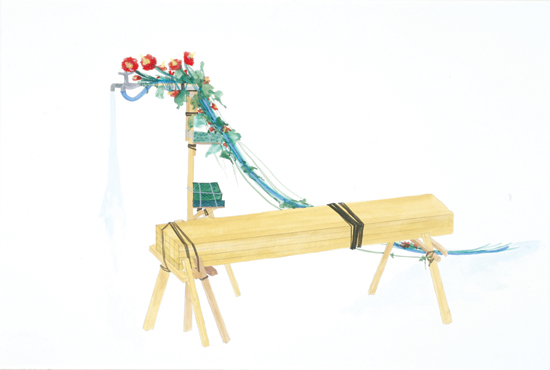
I painted a scene in which a sheet of yellow vinyl precariously covers a pool of unknown depth.
What was once flooring in someone's home now lies in the corner of a public space, coated with dust, faded by sunlight, weathered by wind, and aged to its fullest extent.

If the pool represents an unavoidable—or perhaps man-made—defect in the external world, then the vinyl flooring symbolizes an individual's internal resources.
It is through these personal resources that we temporarily compensate for the failures of the public world.

5. When I look at sand, I want to dilute the paint and apply it with tapping gestures. When I look at mud, I want to knead the paint and spread it across the surface.
Negotiating between these two impulses within a single painting—struggling with the paint itself—has constituted half of this body of work.
At the beginning of the process, works such as Yellow Vinyl Flooring placed greater emphasis on social narratives.

As the work progressed, however, the center of gravity gradually shifted toward what has always been the destination of my practice: materiality and archetypal form, and ultimately, existence itself.
After much deliberation, I decided to title this exhibition 《The Mass》.

(Five Excerpts from Leehaiminsun’s Working Notes)

References