To what extent can painting become our work? It is a curious question. Every painting has an artist who made it. Whether there is one painter or two, unless one has personally drawn the lines and applied the colors, painting is not our work. Even the pronoun we is suspicious. By abruptly introducing this "we," the text quietly draws readers—those beyond the artist and the author—into its orbit.
Yet perhaps some readers, as viewers of Leeje's work, have already accepted the question without resistance and begun extending their own thoughts. For Leeje has consistently painted works that cultivate shared feeling through the everydayness of friendship, rather than through the solitary, mythologized life of the painter. People close to the artist often appear in her paintings.
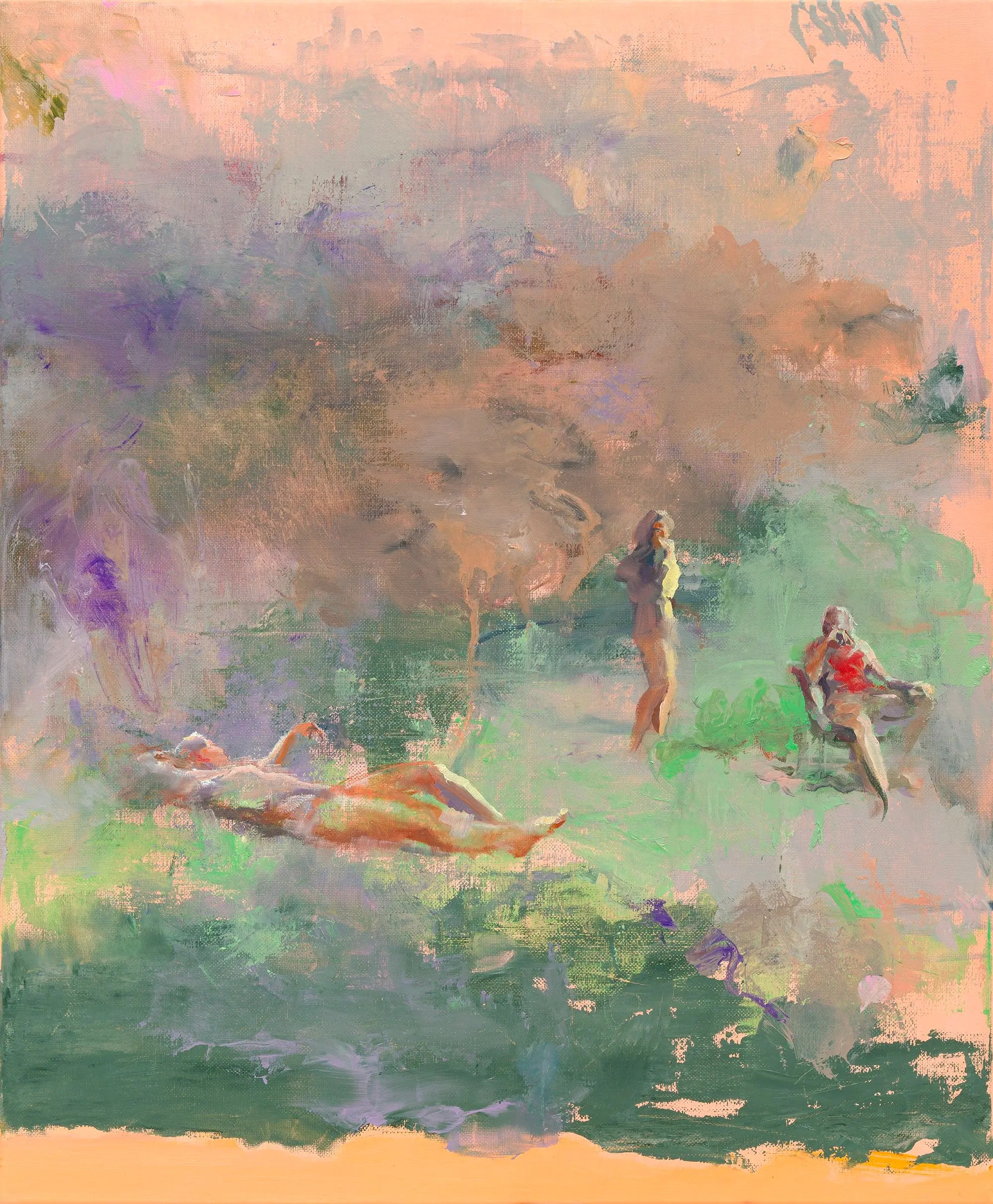
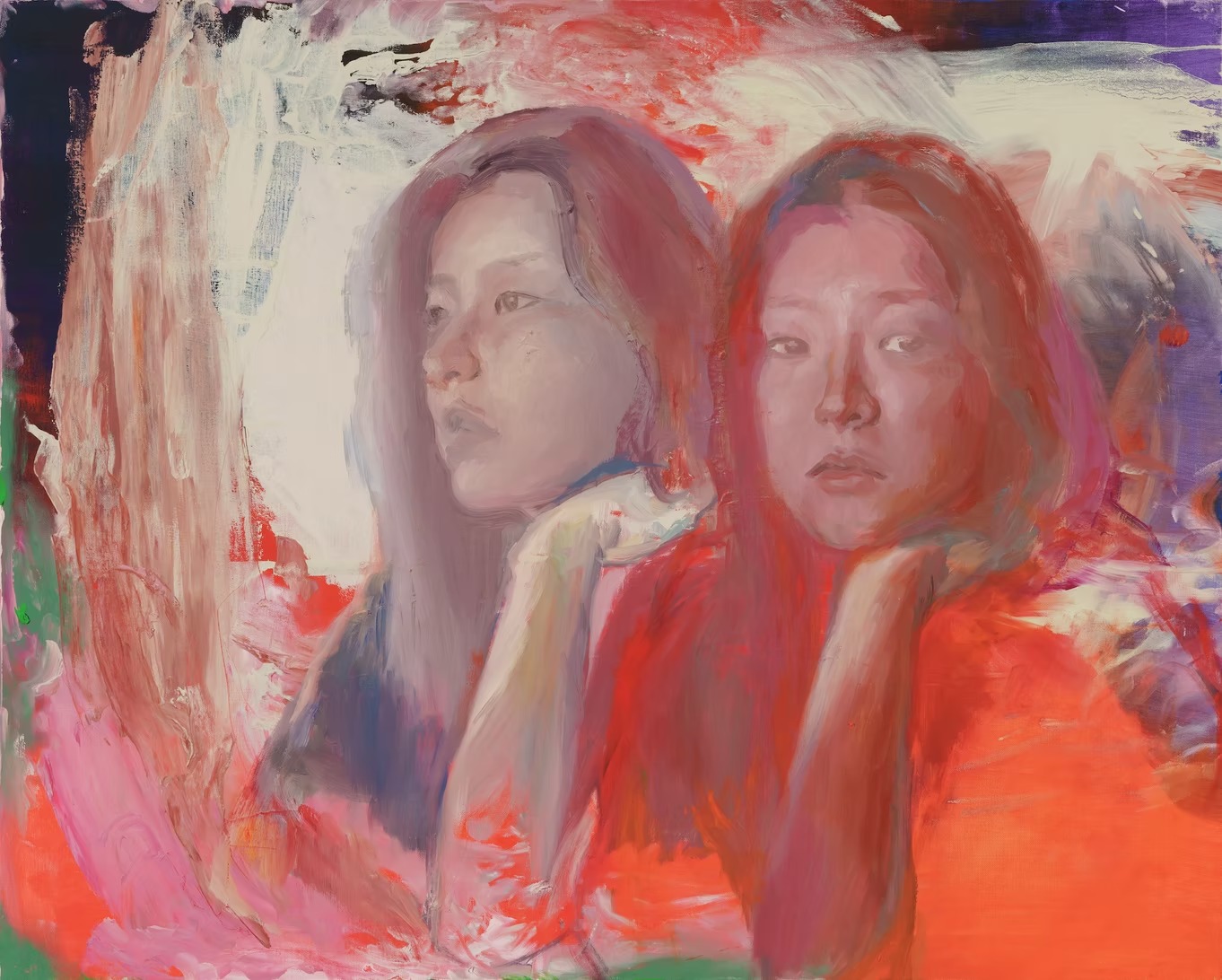
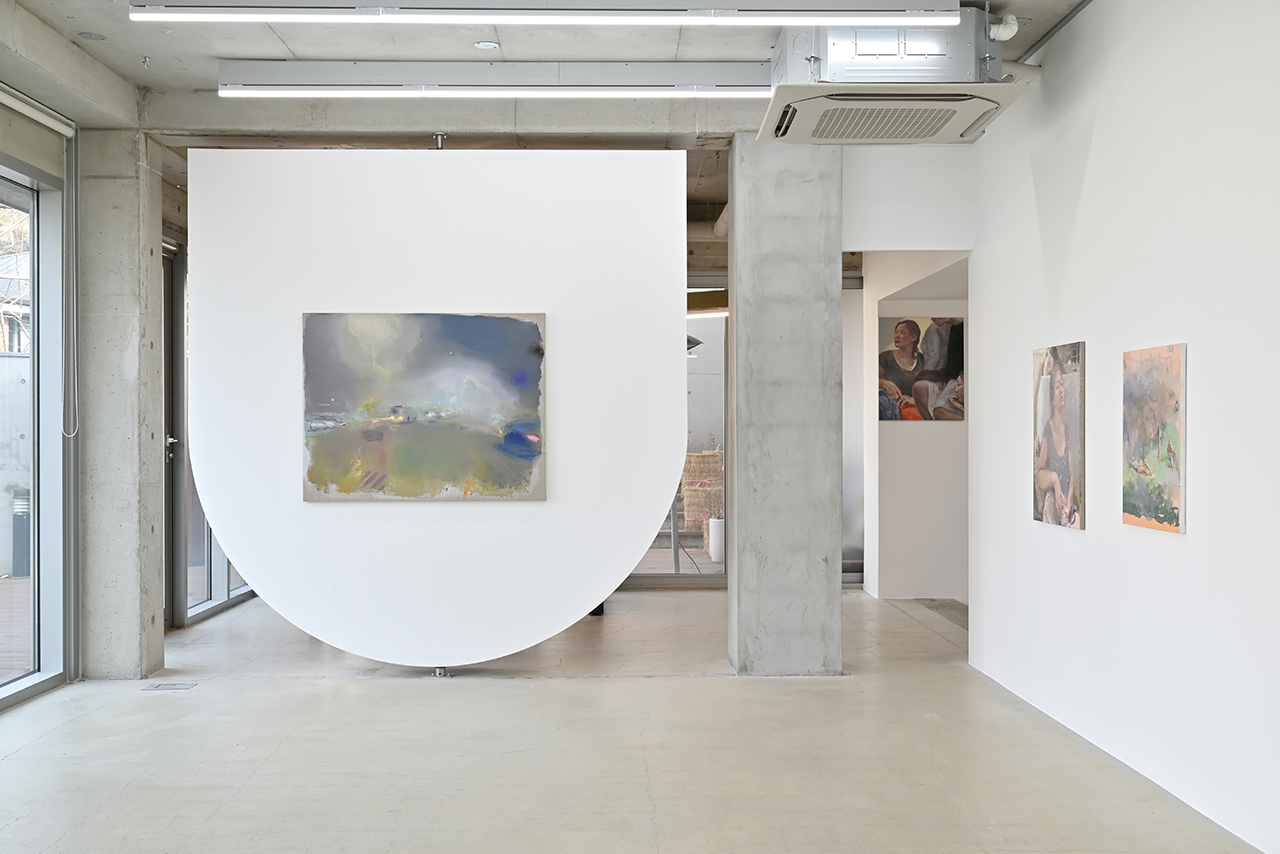
In Nayeon and Seoyeon (2021), her two nieces, whose eyes resemble one another, embrace each other alongside two cats, all gazing toward us in the most relaxed of poses. In Walk (2021), we encounter the face of a friend with whom the artist must have shared conversations that remained warm despite the blazing summer heat.
In For the Time Being (2021), someone lazily stretches while exhaling cigarette smoke. Whether the sitters posed for long periods or were captured from fleeting photographic moments is impossible to know. Yet portraiture inevitably binds itself to its subject precisely because the image belongs to a particular person.
Even when the portrait is not commissioned but freely chosen by the artist as her subject, it nevertheless asks the sitter to become a co-owner of the image. Unlike works in which becoming a model directly involves someone in the making of the painting, works such as To My Friends (2019–2021), dedicated through both title and tense, implicate someone in the work much as a letter implicates its recipient.
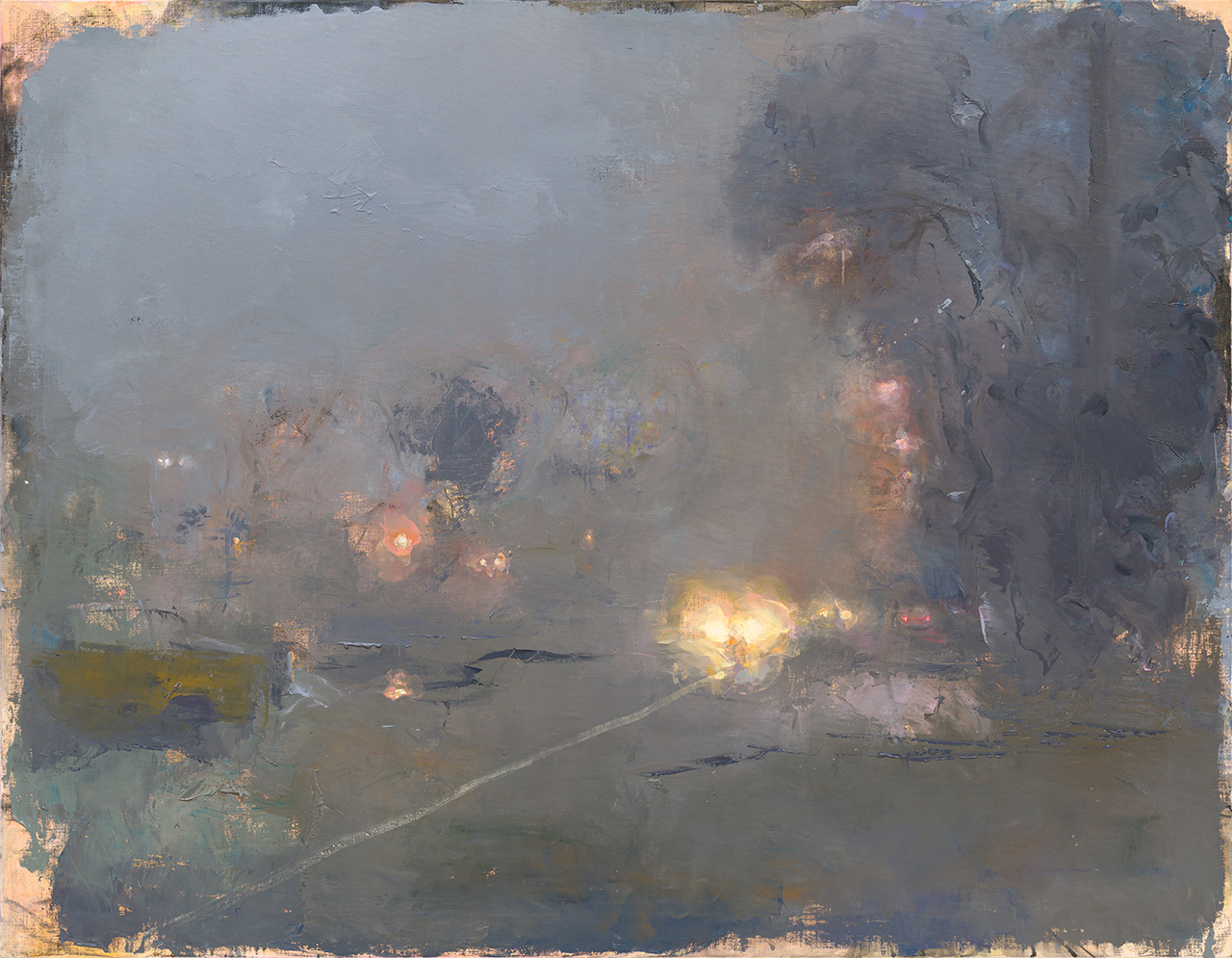
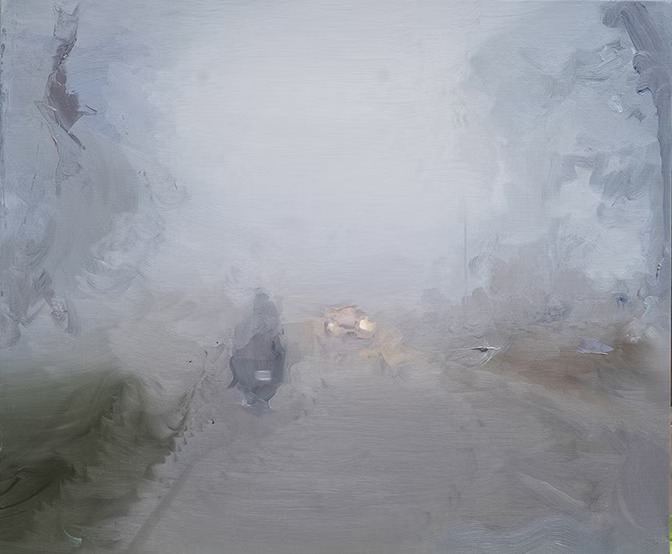
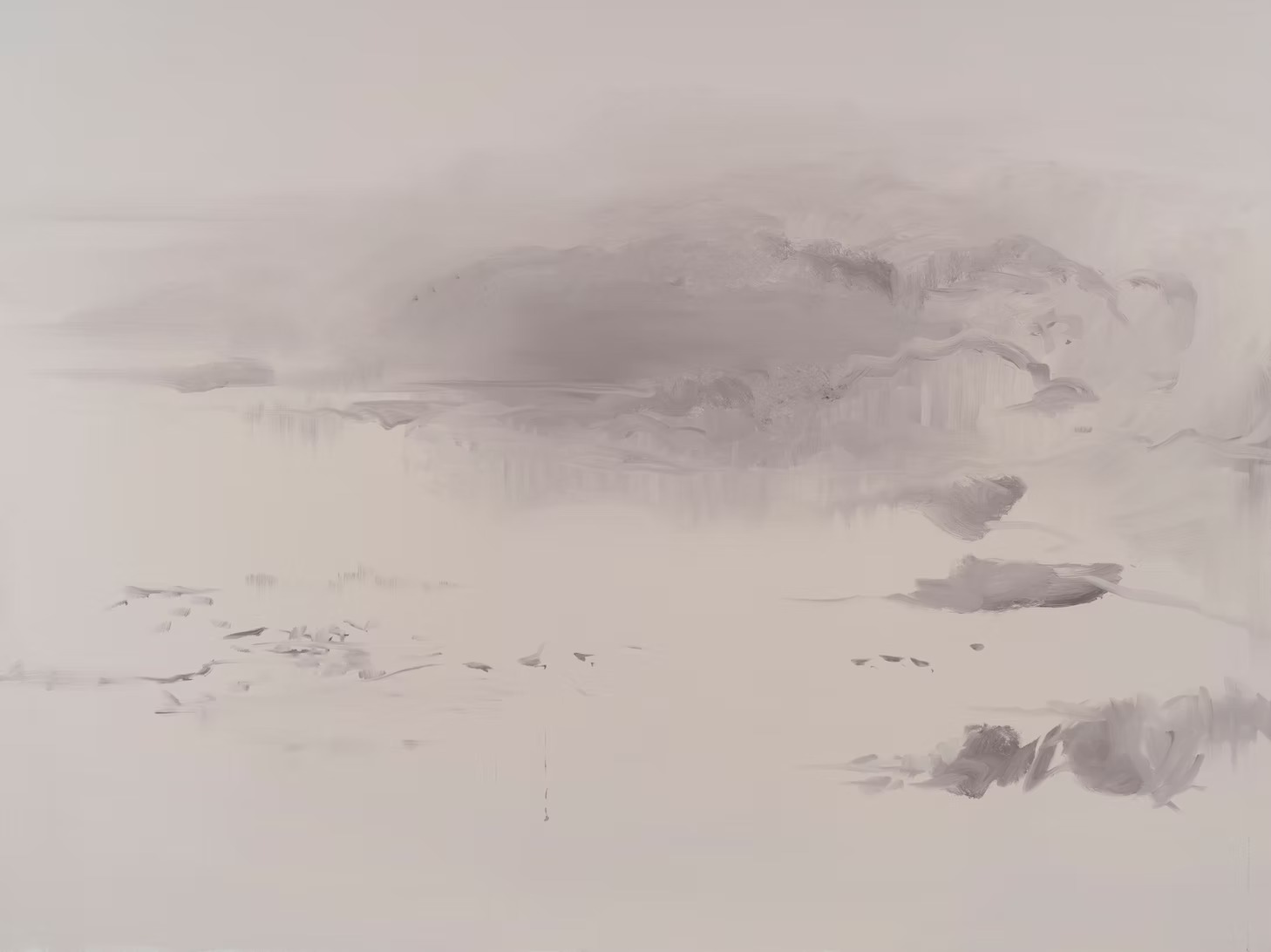
A painting created as a letter addressed to me remains a message delivered to my inbox, even if I cannot possess it like a postcard or an actual letter. In Leeje's paintings—which are neither portraits in the conventional sense nor straightforward dedications—the vanishing point of the gaze becomes strangely blurred. The Han River, highways, murmuring nights, fields, wetlands, Inwang Mountain, airports.
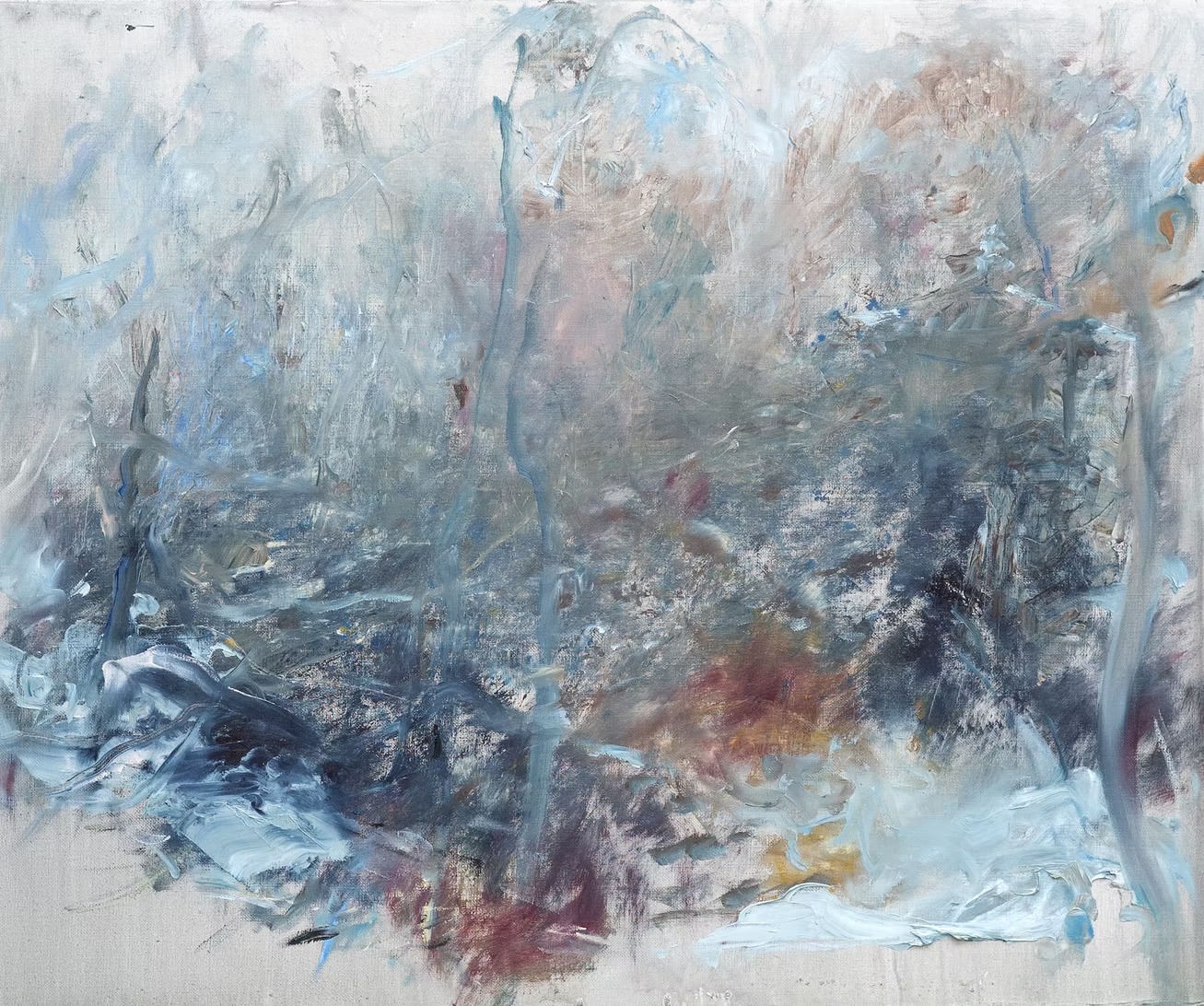
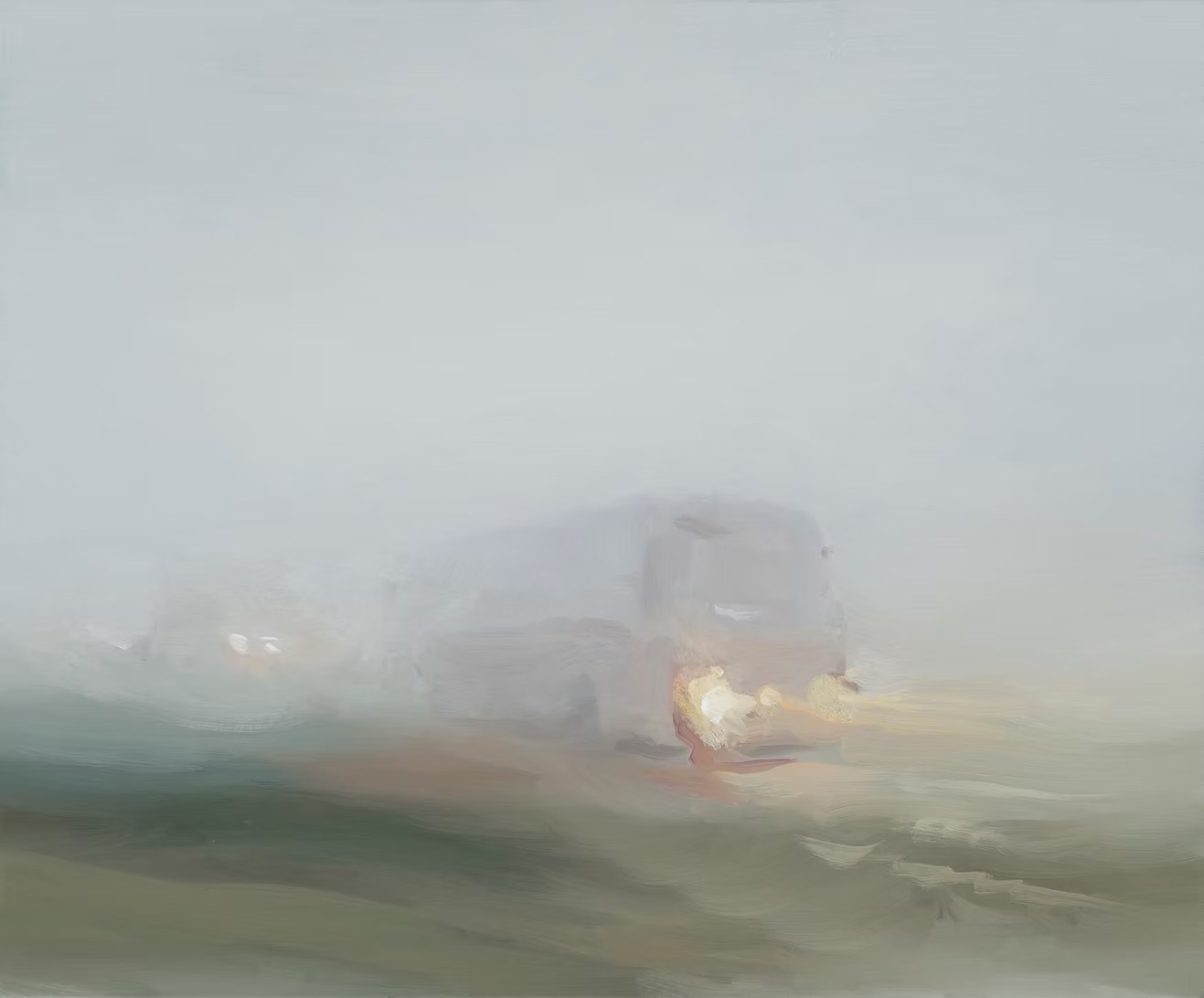
Expansive and open spaces recur, while the specificity of place is boldly omitted or nearly erased. Sky and earth scatter together without clear distinction in color or density, expressed through scratched brushstrokes and rough layers of overlapping paint. As a result, the comfortably separated bodily spaces of the two subjects positioned outside the painting—the artist, who reconstructs the scene retrospectively, and the viewer, who contemplates it—collapse into one another.
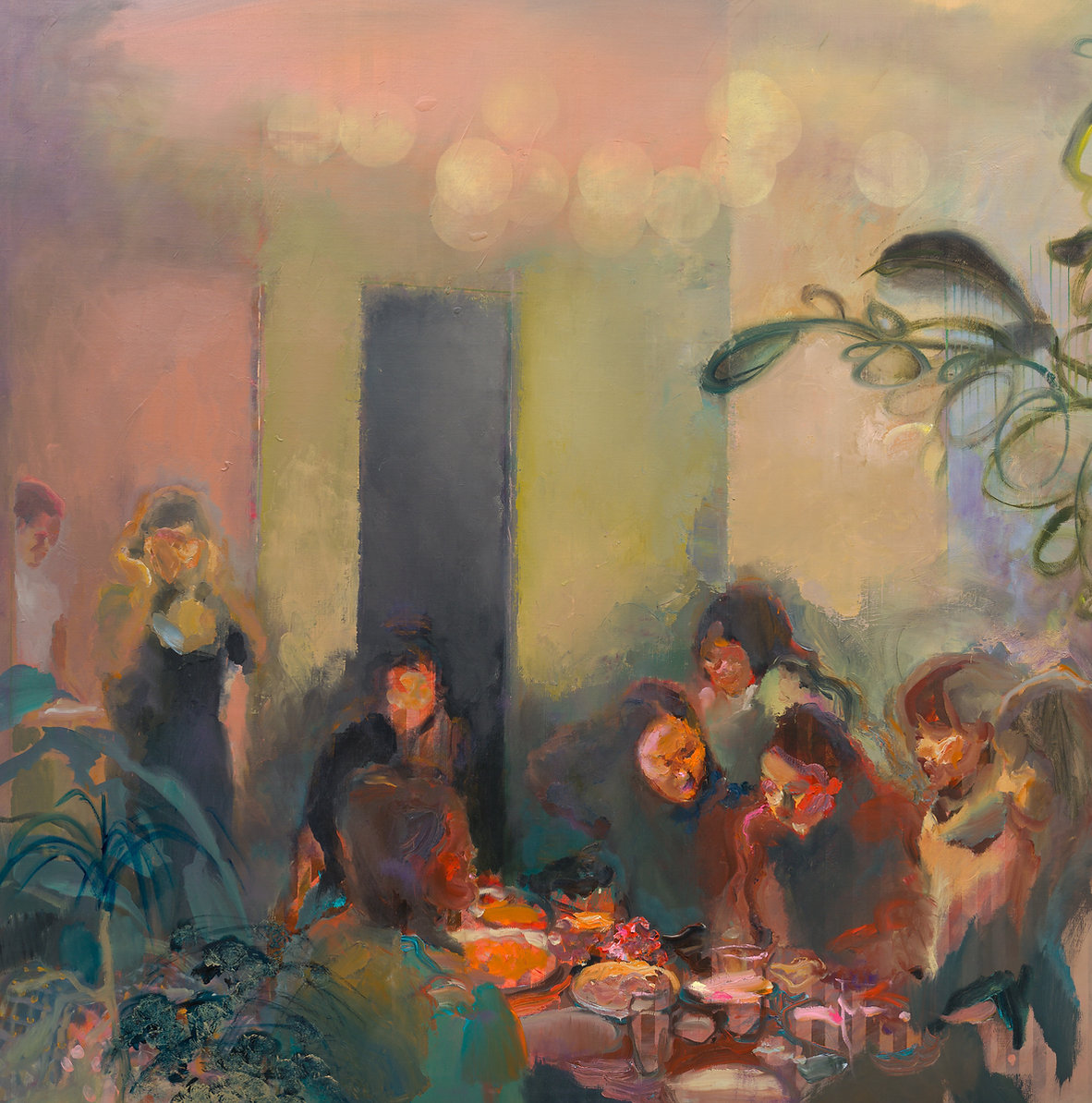
Rather than conveying her personal ideas with precision and fidelity, Leeje's paintings often possess the modesty of someone who uses painting as a means of recording the atmosphere of ordinary places and moments: the air of an evening walk, the feelings shared with friends, the emotional currents that quietly swelled or saddened them on uneventful days in familiar neighborhoods—things that resist translation into language but may nonetheless be carried into paint.
What emerges is a visual narrative more powerful than symbolic interpretation or analytical explanation. Accordingly, the dispersed vanishing point appears not as the engraving of a first-person subjectivity or a third-person objectivity, but as an intaglio image of the self that exists as a second person within a relationship with you.
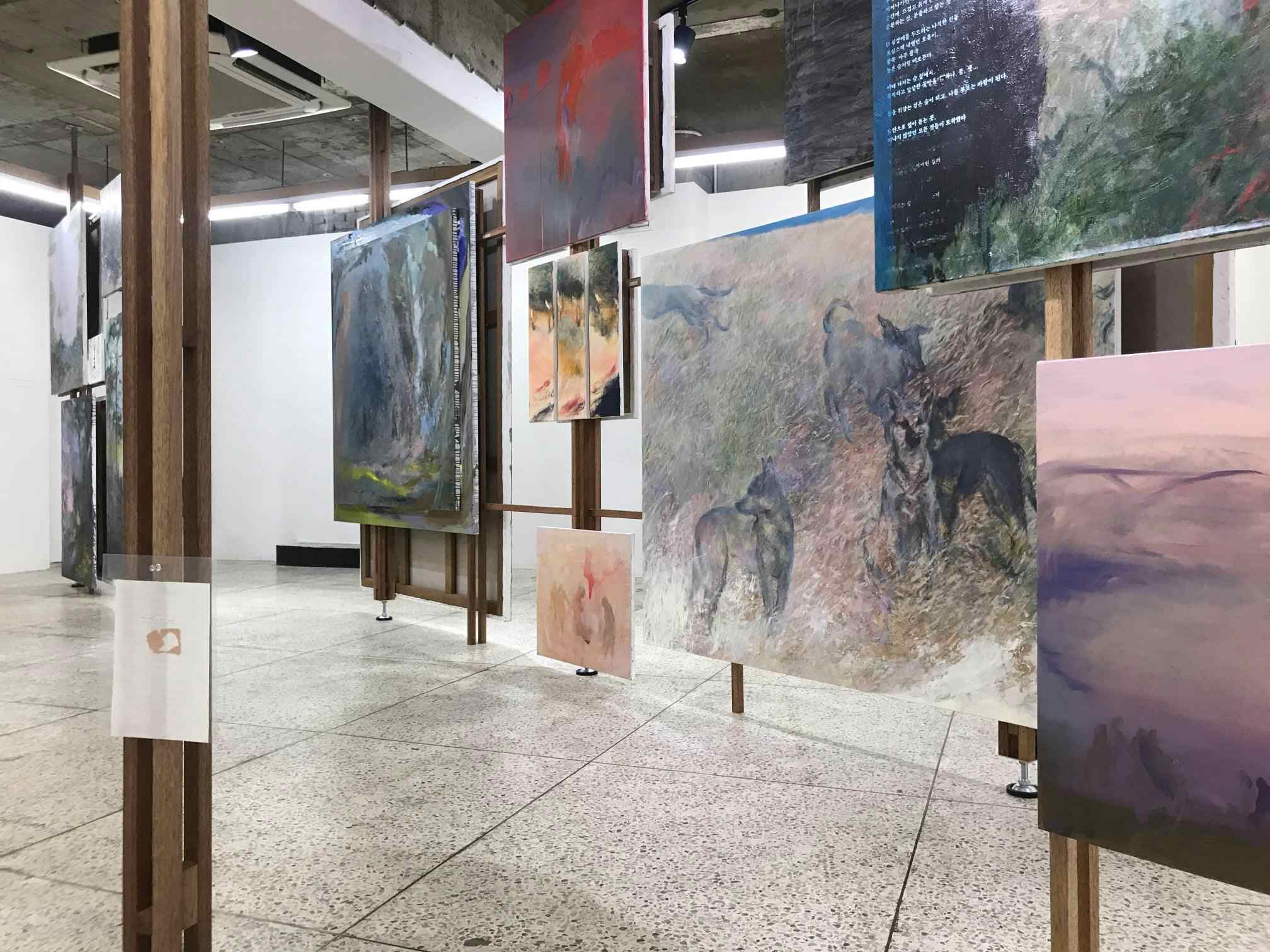
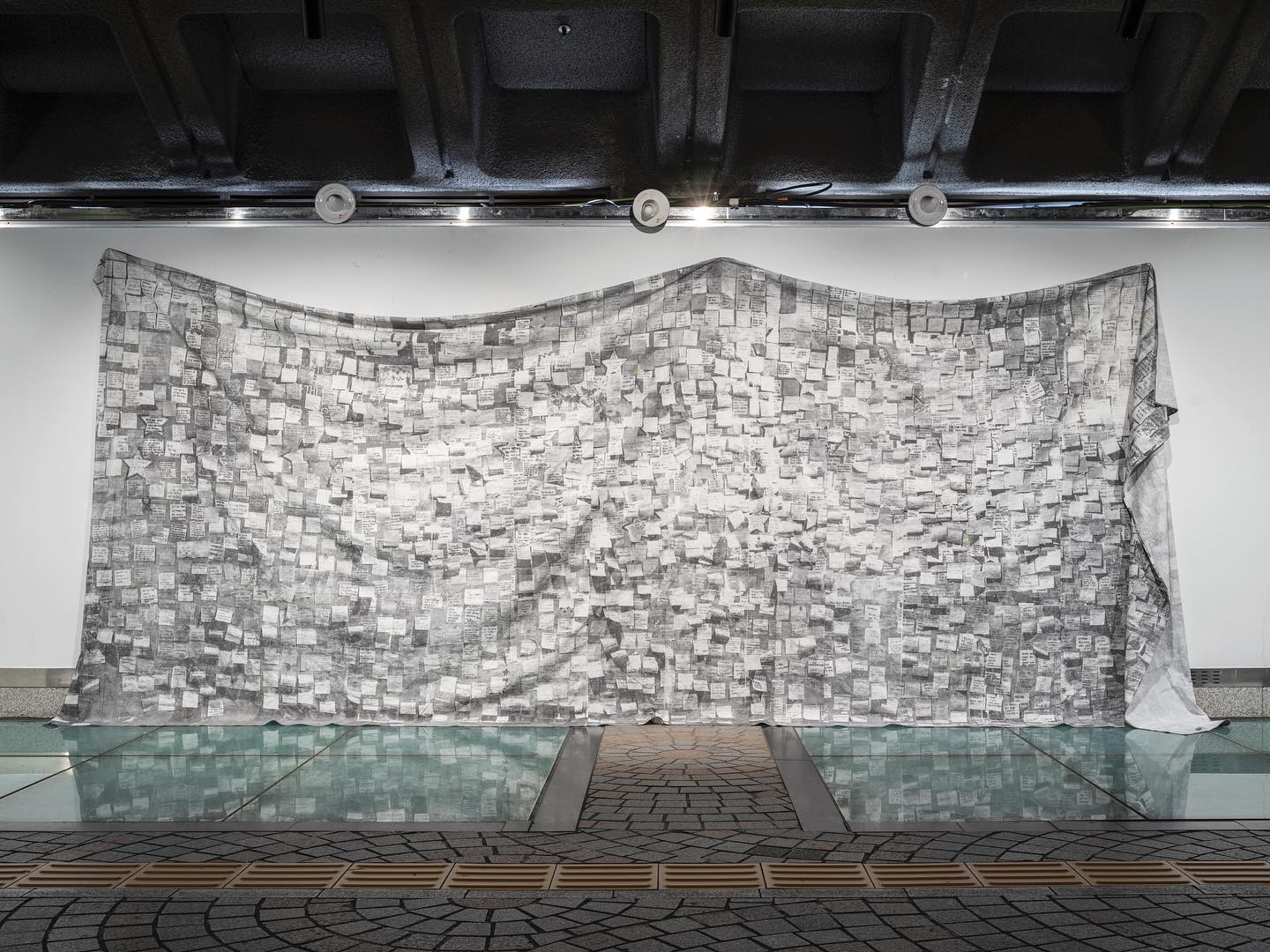
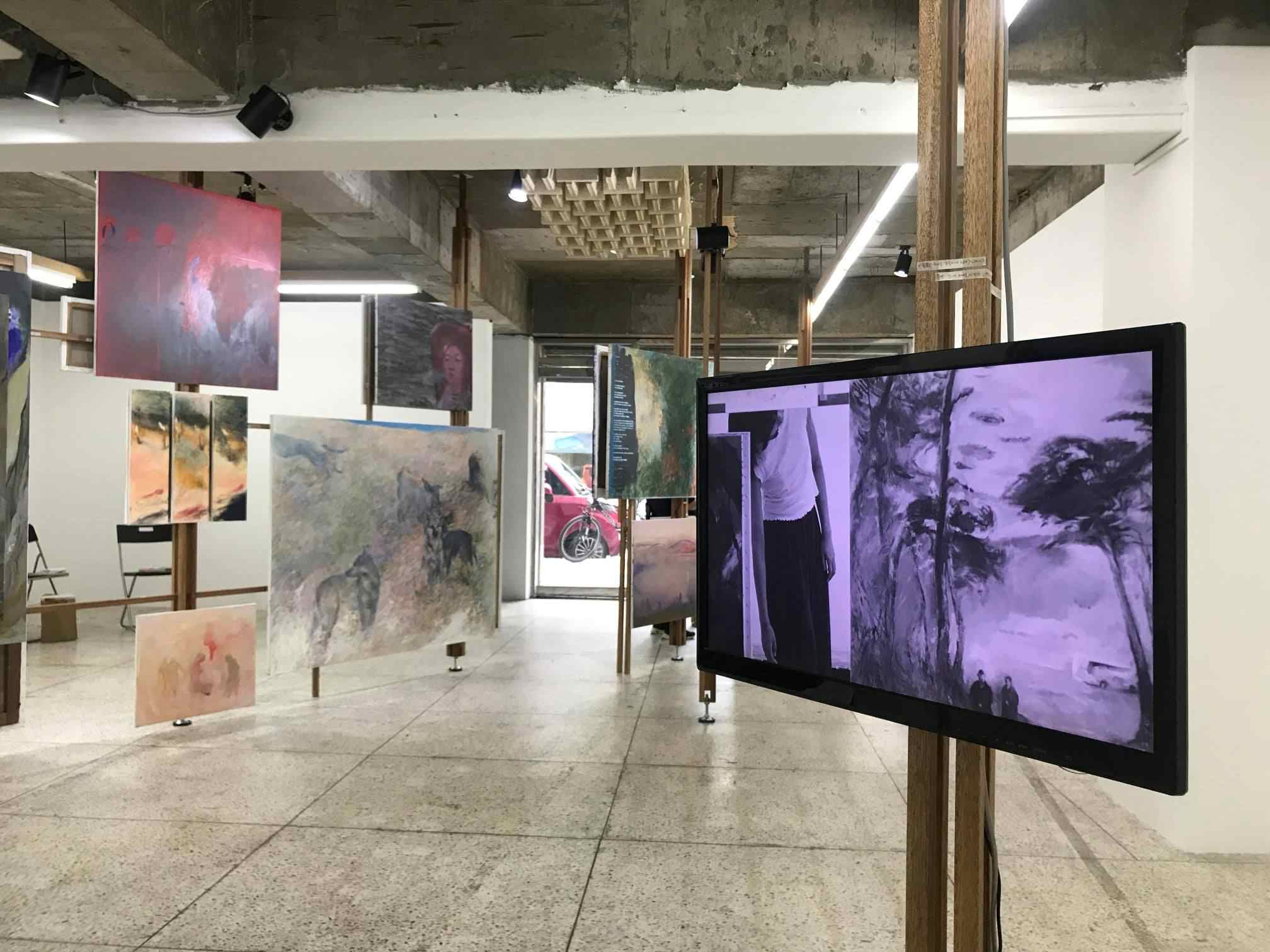
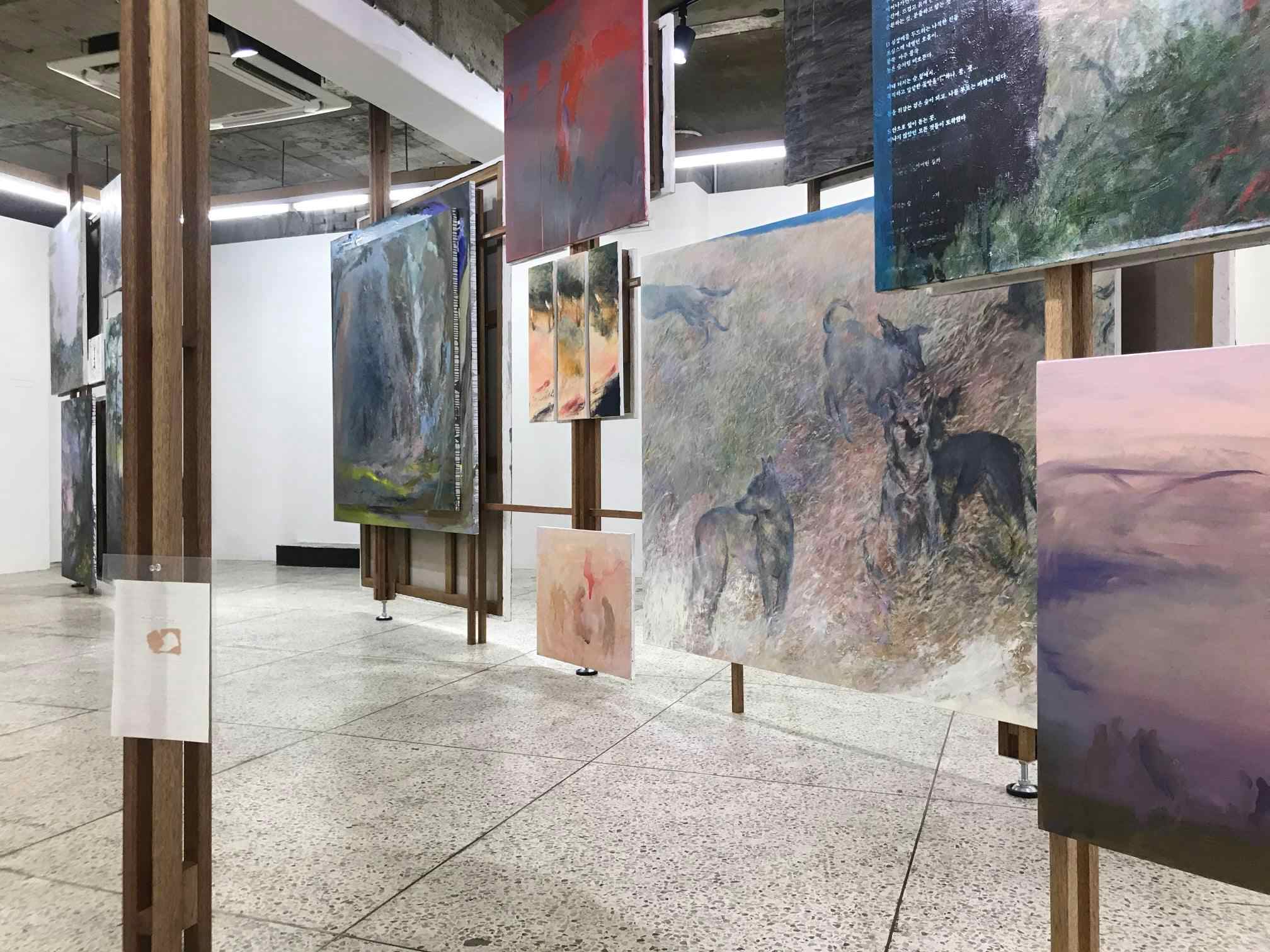
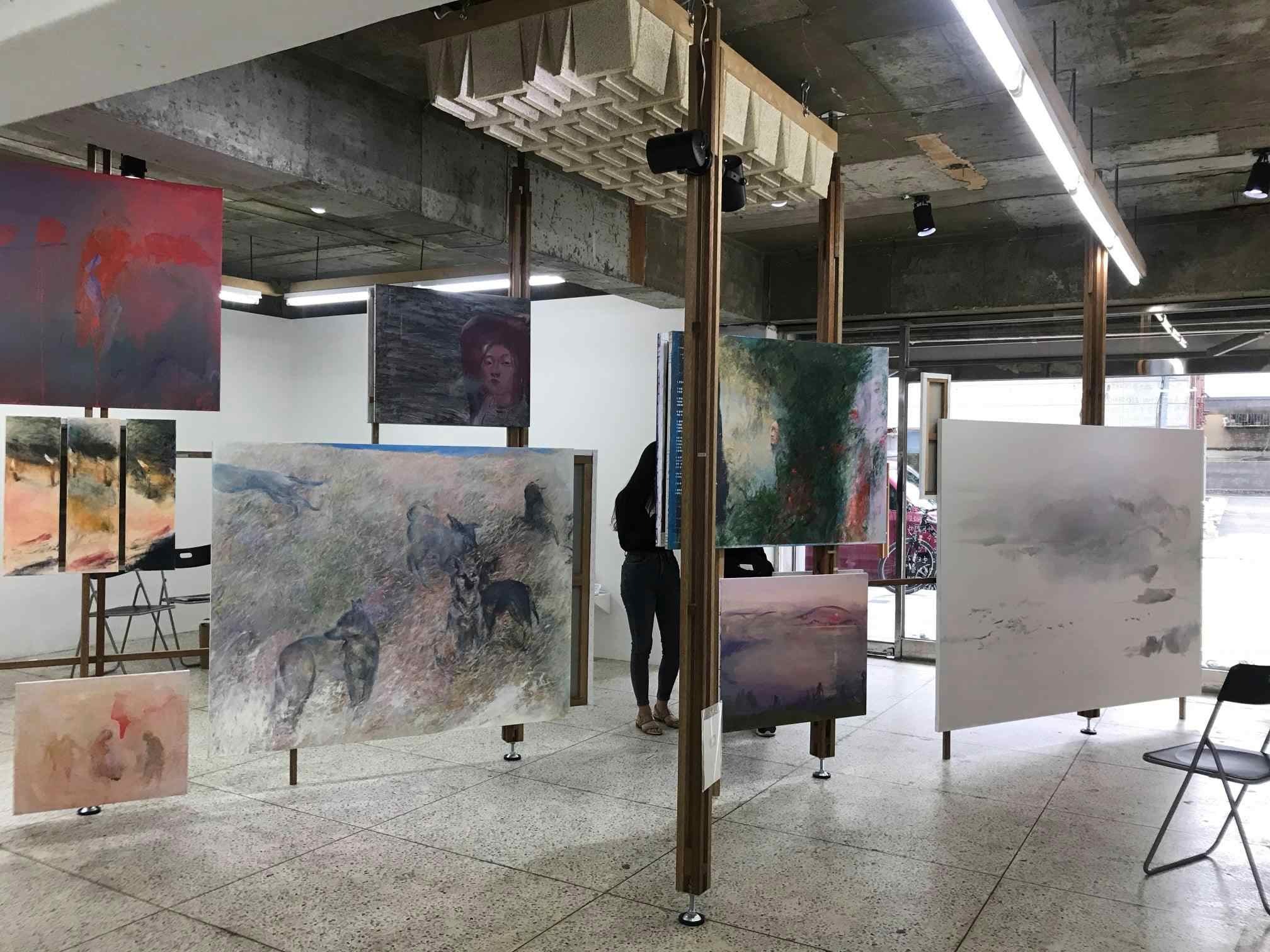
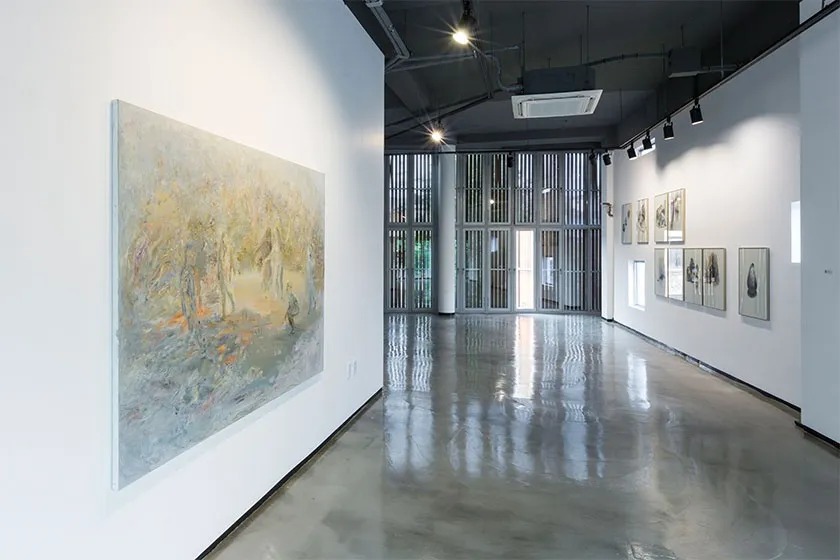
In Leeje's solo exhibition 《Painting Et Cetera》 (2021), the paintings were not hung on pristine white gallery walls but suspended from slender wooden posts woven together like window grilles, stretching across the empty center of the exhibition space. Artist Kim Yeonsei created Wall for 00 (2021) specifically for this exhibition.
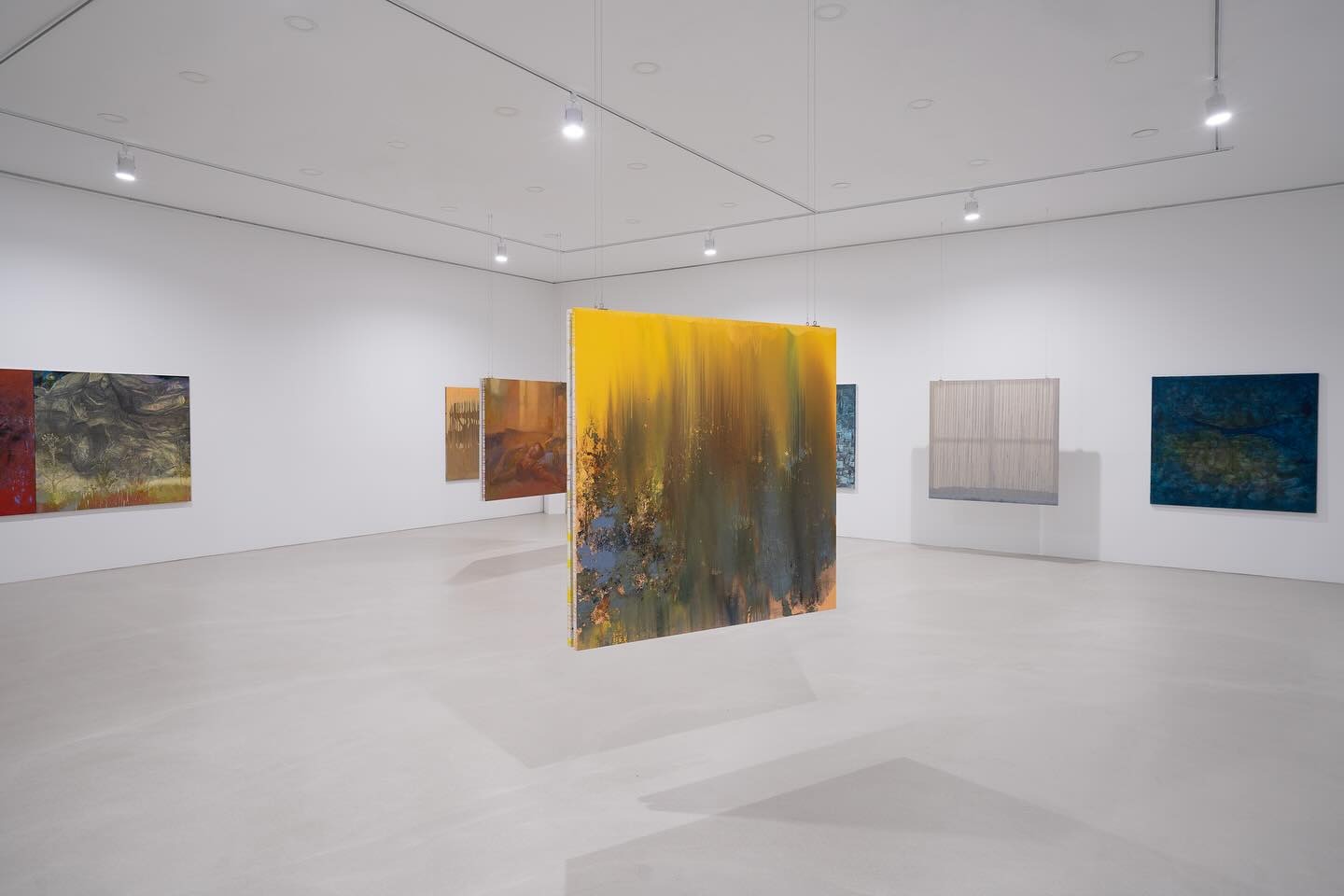
Paintings of varying sizes and proportions loosely filled three clusters of wooden frameworks that replaced conventional walls. Detached from solid surfaces and appearing almost suspended in midair, the paintings seemed as though they could be moved or removed at any moment. Hung at differing heights rather than aligned along a uniform horizon, the unframed canvases revealed both their fronts and the reverse sides of their stretcher frames.
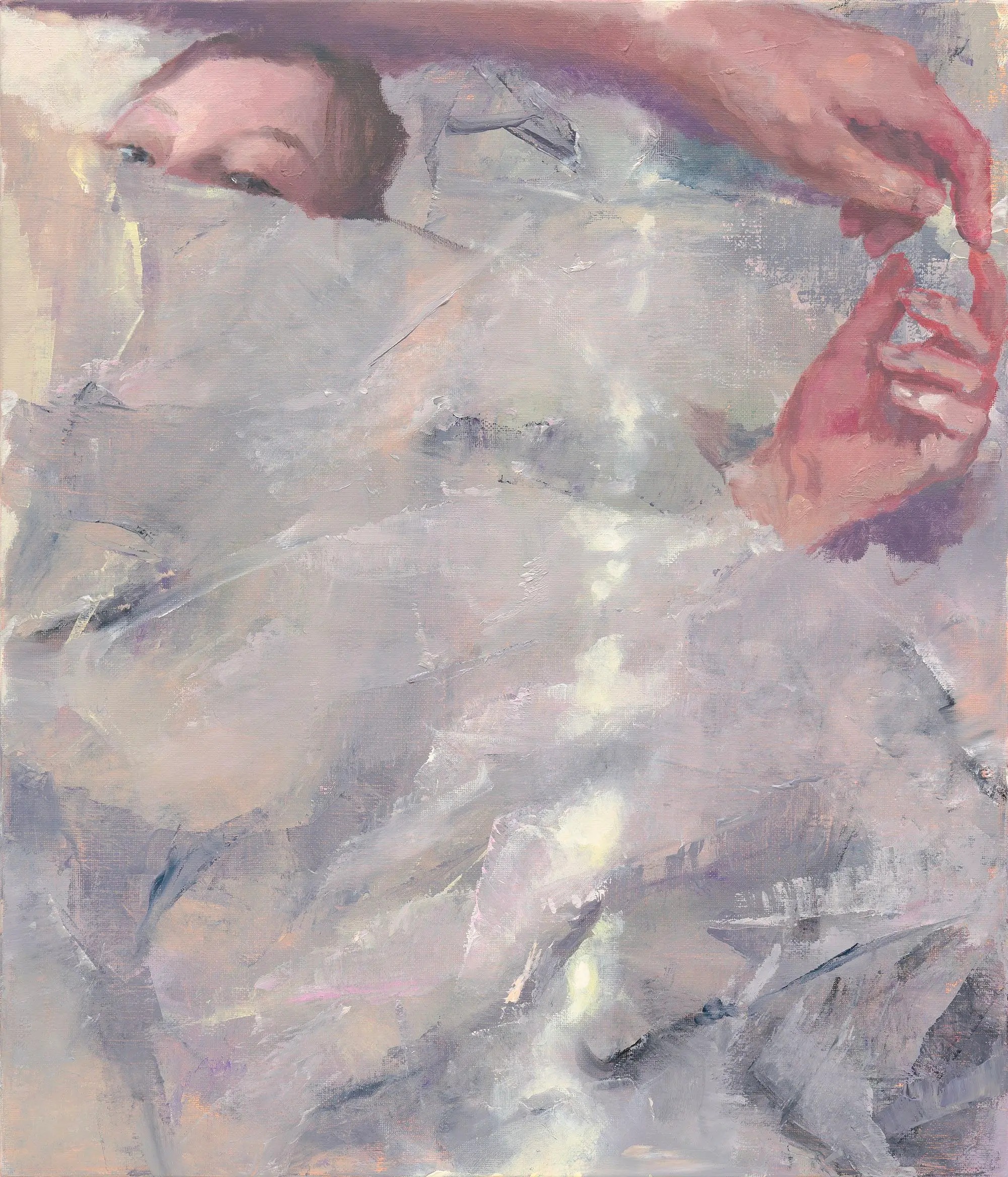
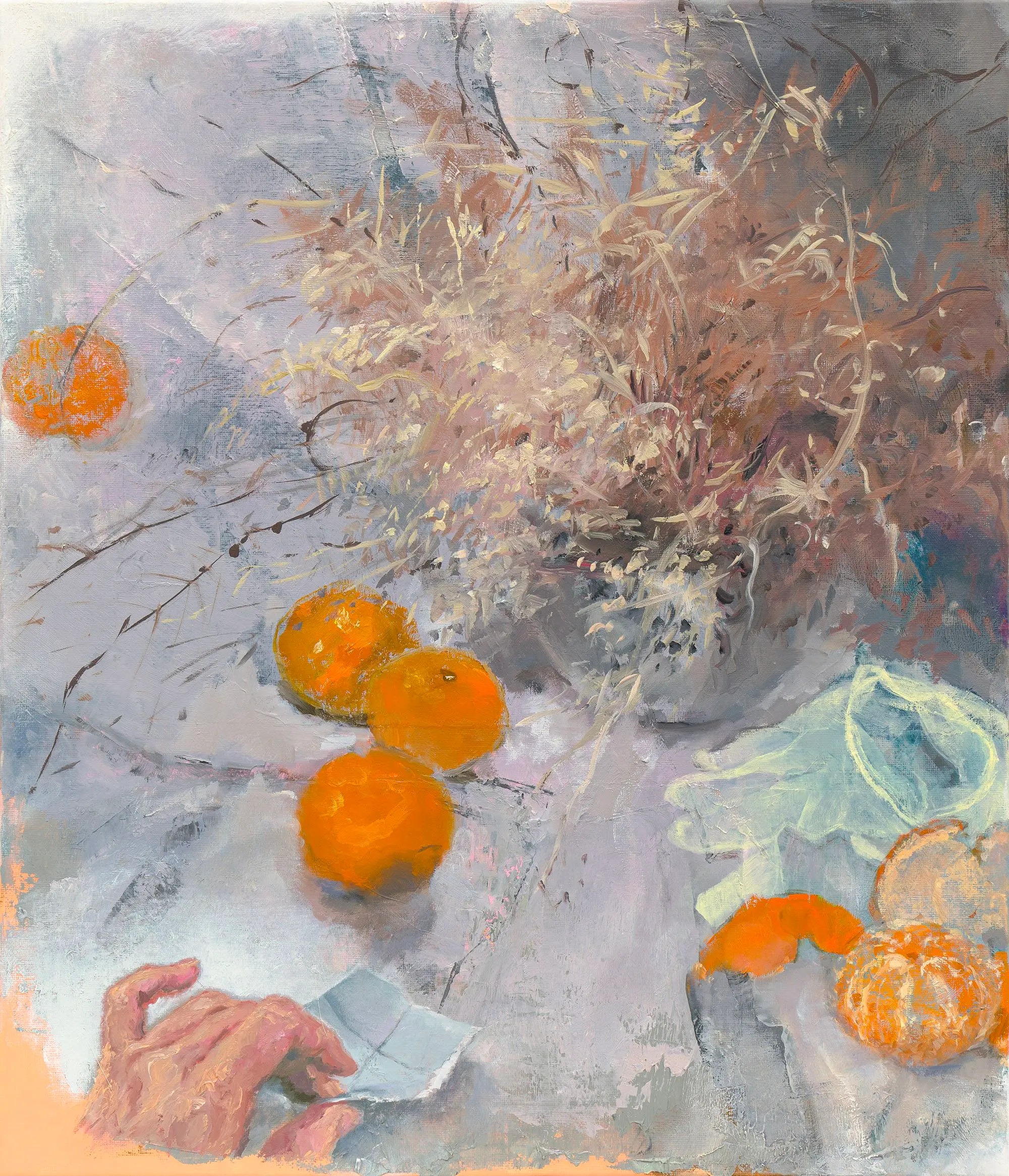
More than twenty paintings, unified by subtle harmonies of gray and pink created through thinly layered paint, gathered into clusters or drifted apart without offering any obvious narrative connection between images. Above all, the paintings were physically entangled.
It was as though nothing that became the subject of these works—friends, memories, landscapes, conversations, emotions—was allowed to remain isolated as a singular, self-sufficient "artwork," as though each painting sought instead to preserve a non-individual life that existed prior to becoming art.
Even if Leeje's paintings reveal the communal nature of painting on an ontological level through the weaving together of gazes and landscapes within and beyond the picture plane, the "community" implicated in these works only becomes perceptible once its body is made more visibly manifest. If ontology is inevitably concerned with I and we, then epistemology permits—and indeed presupposes—a perspective from outside.
After the painting is completed, the artist imagines a community of people who will encounter it together and transform one another's understanding of it. The collaborative works gathered under the heading of "et cetera" in 《Painting Et Cetera》 emerge from precisely this premise.
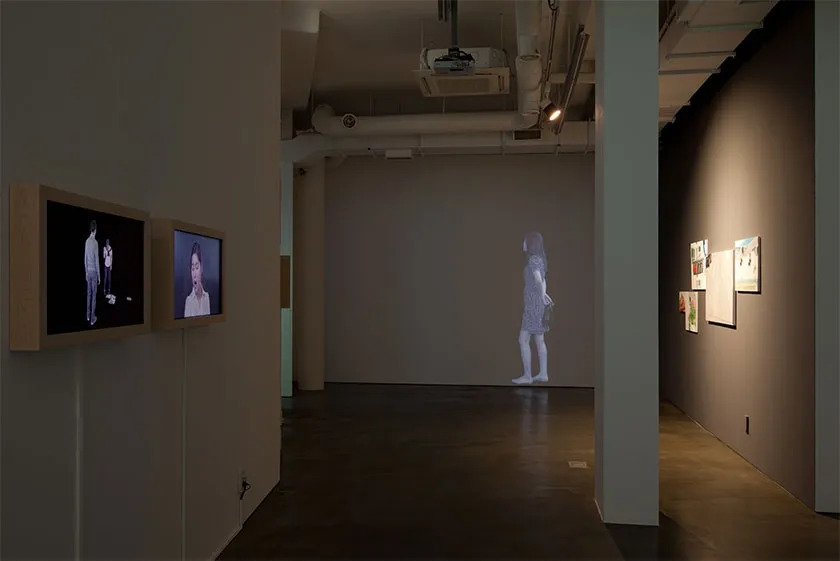
They include Kim Yeonsei's spatial design mentioned above; Choi Taehyun's sound work Suite 1 - Pebble, Silk, Teeth, Owl (2021); Kang Ki-seok's choreography Flames Make Us Tremble (2021, performed by Kang Ki-seok, Yoo Jiyoung, and Yi Minji); Kim Soeun's documentary video Document_Painting Et Cetera_Leeje_Sansumunwha_21.07.27–21.08.22 (2021); and even art historian Yang Hyosil's text on Leeje's paintings, transcribed onto the gallery's display windows.
The paintings came first. People working in different media viewed them, developed ideas from their encounters, and proceeded to create works of their own. Throughout the process, they shared intermediate stages with one another, allowing each work to influence the others. The collaboration unfolded within the framework of Leeje's solo exhibition, where painting remained the primary medium and the other works were collectively designated as "et cetera."
As Leeje simultaneously assumed the roles of artist and curator, questions concerning the individual authorship implied by the term "solo exhibition" and the attribution of collaborative works inevitably became more complicated. Yet so long as everyone involved understood and agreed upon the terms of participation, questions of authorship and ownership were not the central issue.
What mattered instead was creative dialogue. What kind of dialogue was this? It began with Leeje's act of addressing another. A conversation between "I" and "you," or between "I" and "you all." Addressing another generates responses, which in turn invite further replies, gradually unsettling and transforming the fixed positions of the original "I" and "you" while expanding them into multiple overlapping layers.
In most cases, "I" and "you" eventually become groups composed of many "I"s and many "you"s—a collective "we" or "they." Yet what distinguishes Leeje's collaborations is that the "I" remains fixed on one side until the very end. The format of the "solo exhibition," maintained despite not being merely an administrative convenience, decisively shapes the questions that this dialogue raises.
The question is not simply, "How do we become we?" Before that comes another: "How do I relate to you?" And before even that: "Who am I?" Within the history of painting, the excessively familiar question "Who am I?" does not here culminate in the kind of self-reduction associated with modernist painting. This is not merely because Leeje introduces other media such as sound, bodily performance, and text.
Or perhaps it is precisely through these juxtapositions with different media that the self-referential loop begins to fracture. Among the collaborative works, for example, sound and performance occupy and transform the exhibition space as a whole. Choi Taehyun's continuously looping composition first draws viewers comfortably into Leeje's paintings, only to redirect their attention away once the dancers begin to perform.
Dance performed before paintings can easily lapse into cliché unless there exists a compelling point of mediation between the two. For nearly thirty minutes, viewers are invited to concentrate on a performance unfolding among the paintings arranged along columns, within the spaces between them, and throughout the passageways they create. During this time, the paintings themselves gradually recede from the center of attention.
The three performers slowly wander around the paintings, never making eye contact, pushing one another away while remaining connected, walking and leaning on all fours. Occasionally, a painting containing a large face appears, yet even this emerges only subtly through tones that closely resemble the surrounding background, leaving the paintings to remain at a distance as softly blurred gray presences.
The most striking moment of the performance is its beginning: the sound of someone's bare feet touching the floor. (The ending arrives when that same person puts on shoes and exits the gallery.) The sound of bare skin brushing against the ground foregrounds the sensation of the gallery's cool concrete floor.
Bodily presence alone has the power to immerse viewers immediately and inspire awe, often intensifying the humanistic aura surrounding the paintings. Yet this simple exposure of bare flesh simultaneously invites reflection upon the reverse side of humanism itself. As the soles of the feet rub against the concrete floor, human and industrial, bodily and material sensations become unexpectedly intertwined in vivid unfamiliarity.
Then there is the unplanned incident: a performer brushes against a painting, causing it to sway with a dull thud. At that moment, the warm world within Leeje's paintings seems to tremble through its friction with the anonymous materiality of industrial paint.
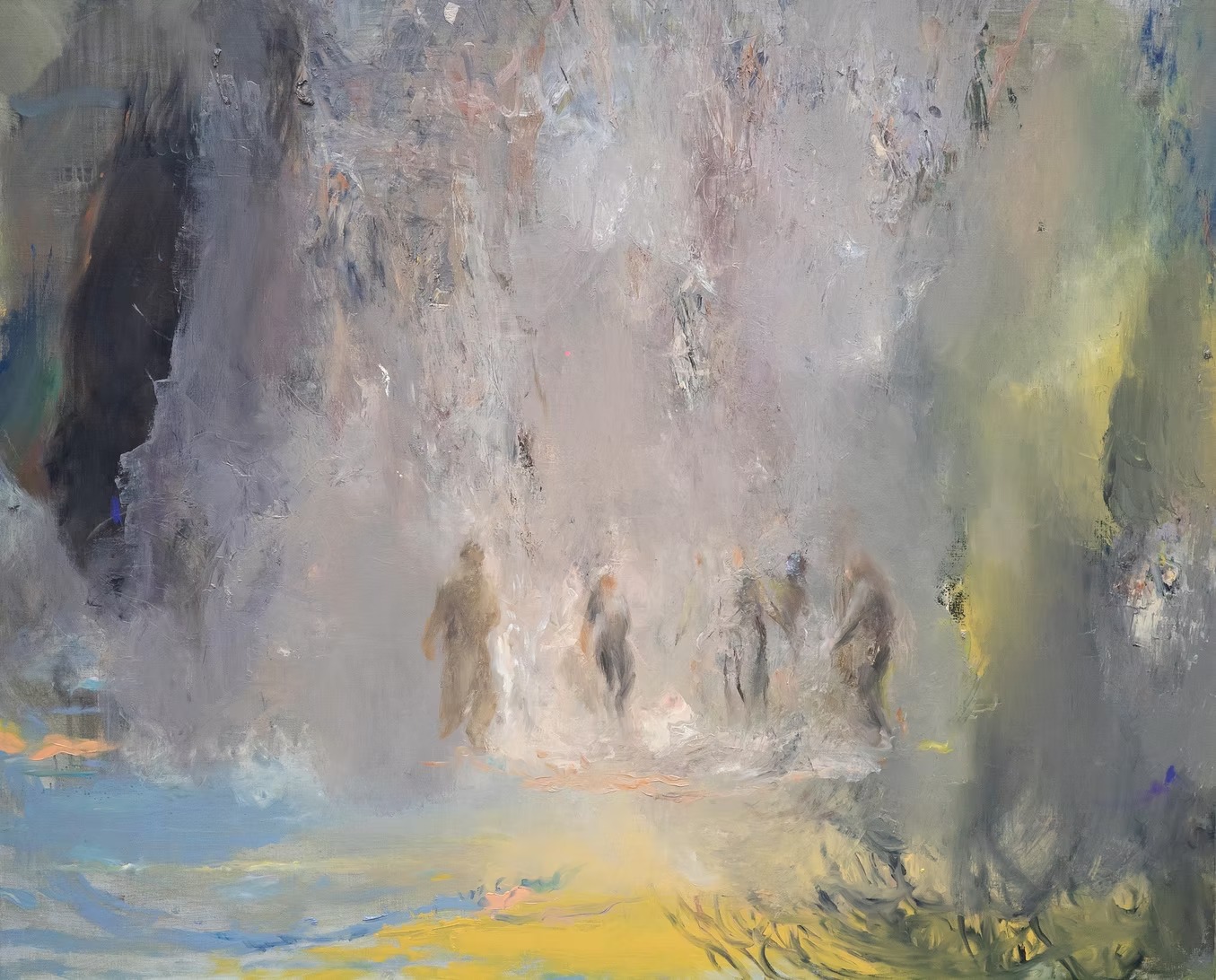
Suddenly one becomes aware of the scattered paint surrounding the faces in her paintings—marks that obscure human likenesses, stains that seem almost to erase previously painted images, amorphous fields of color.
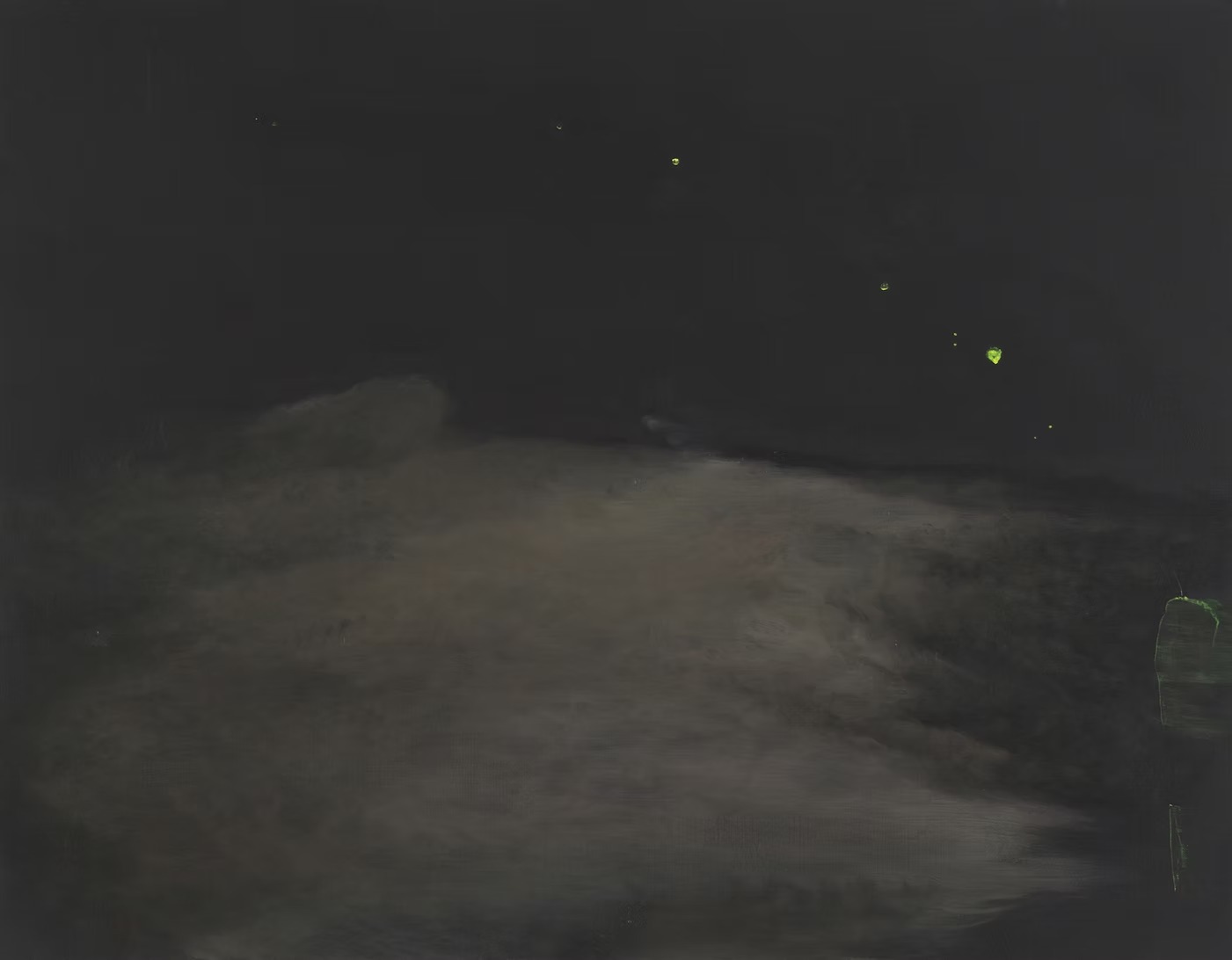
There are the bluish-gray clouds floating like blank speech balloons over the landscape in Highway (2021); the "thrown paint" in Our Dance Always Begins Unexpectedly (2021), rising like sparks or dust to further blur the distant view—the painting itself is even mounted in two layers, as though concealing the canvas behind it; and finally Night Rose (2021), whose already nearly abstract surface is once again erased by vertical bands.
Leeje once remarked, "Painting sometimes feels like an act of damaging images." To someone who has come to remember certain faces through her paintings, the statement is unexpectedly striking. Here, "damaging images" does not seem to mean abandoning painting's representational task, nor merely applying additional paint over figurative forms. Nor does it suggest disrespecting or ceasing to care for the subjects depicted.
Perhaps, by "image," Leeje first thinks of things that have become fixed: singular and uniform entities—identity, norms, events, despair, cynicism, and sometimes even hope itself. Things so solid that they instantly freeze and fade into the past. It seems that the artist is once again reconsidering the painting she has long pursued.
Perhaps she no longer understands painting solely through its power to preserve memory or to erase it, but instead seeks to rediscover it as the force that unsettles and transforms everything.
"To accept everything, reflect everything, project everything, yes, to refract every wavelength and carry it onward; and in the moment when one stretches the neck long and lets out a long cry, what wraps itself around the entire body, hot and red, is that which flows, circulates, erupts, and reaches." Just as breath becomes forest, and the forest in turn becomes wind.