Dirty Gray
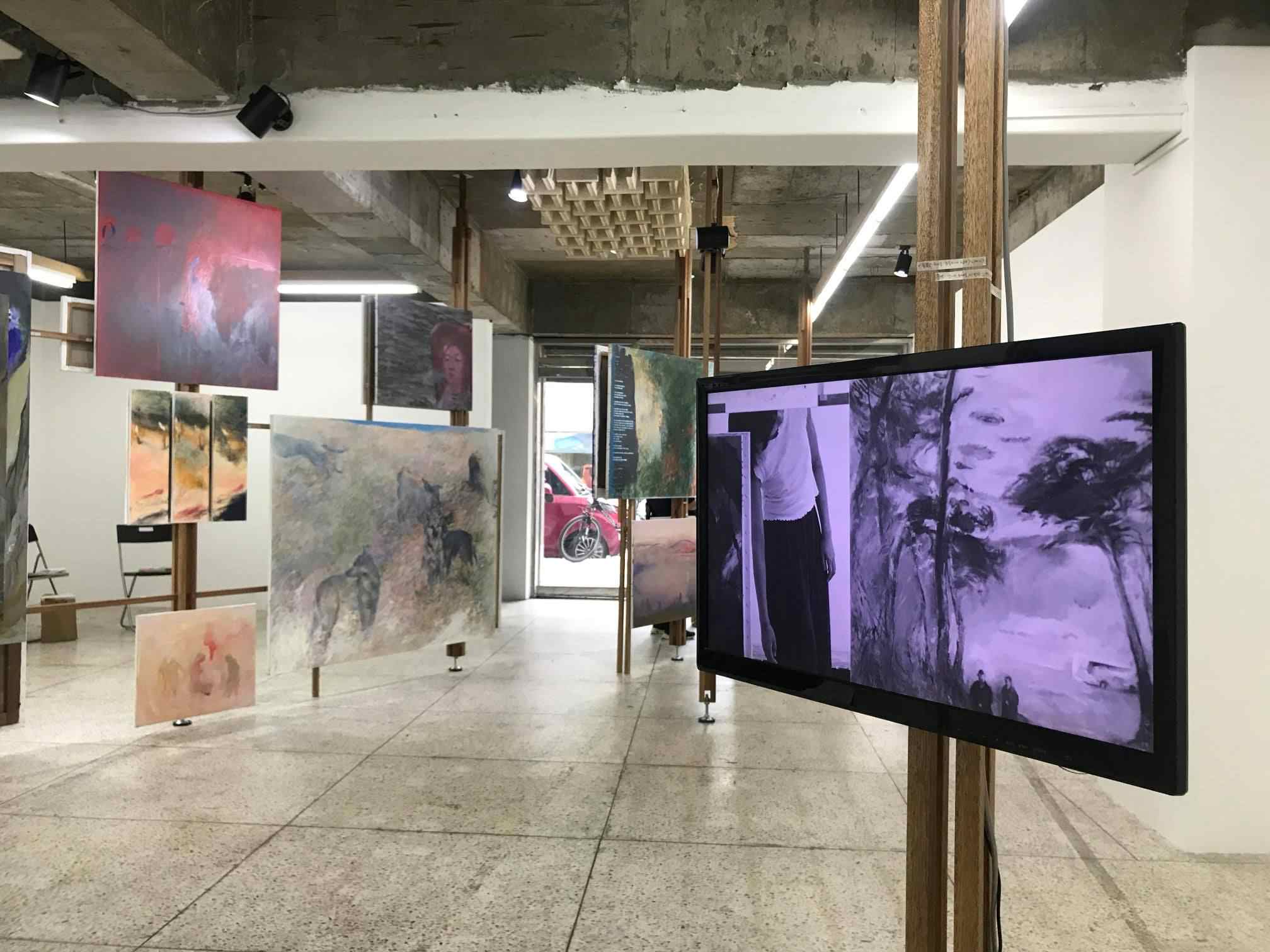
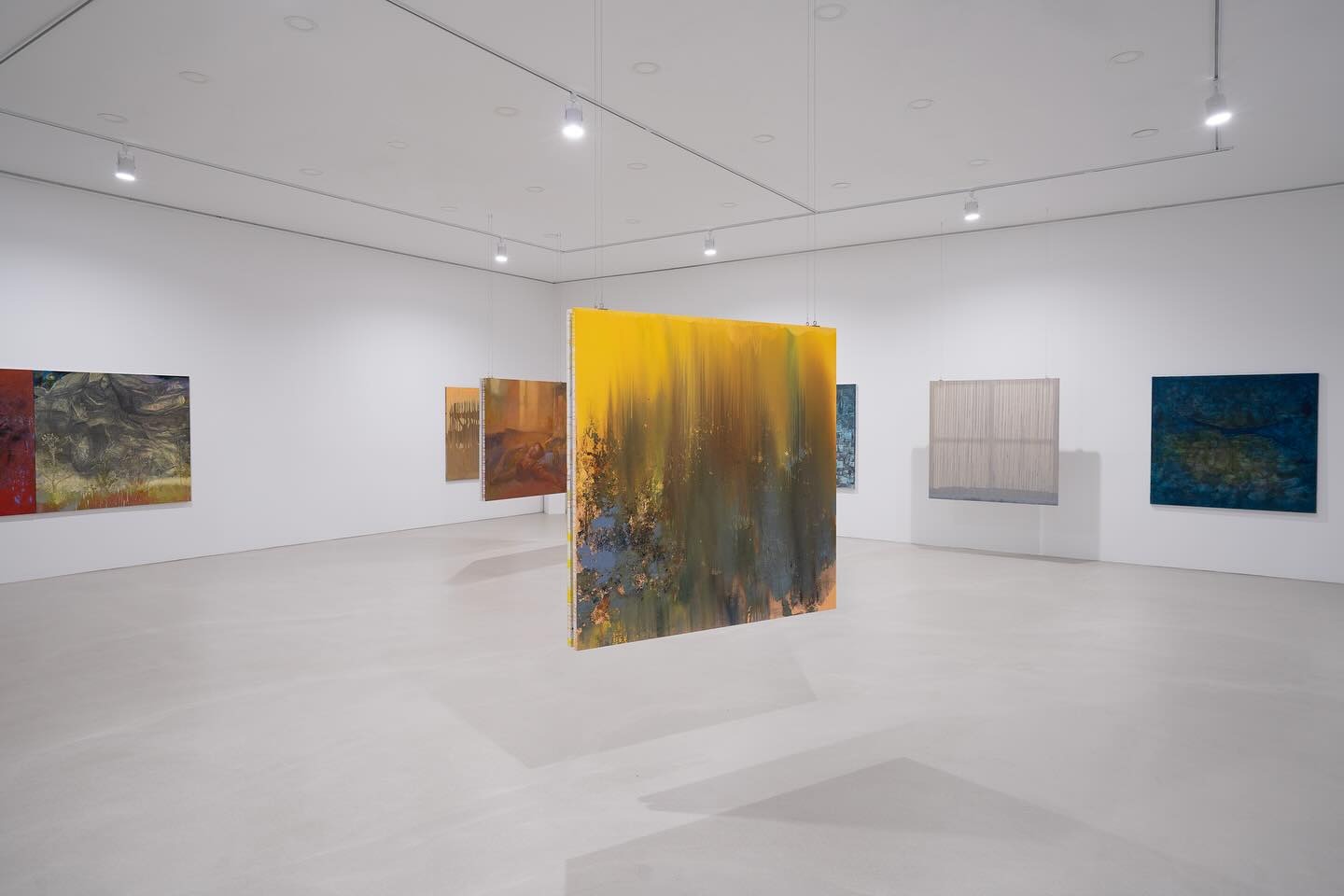
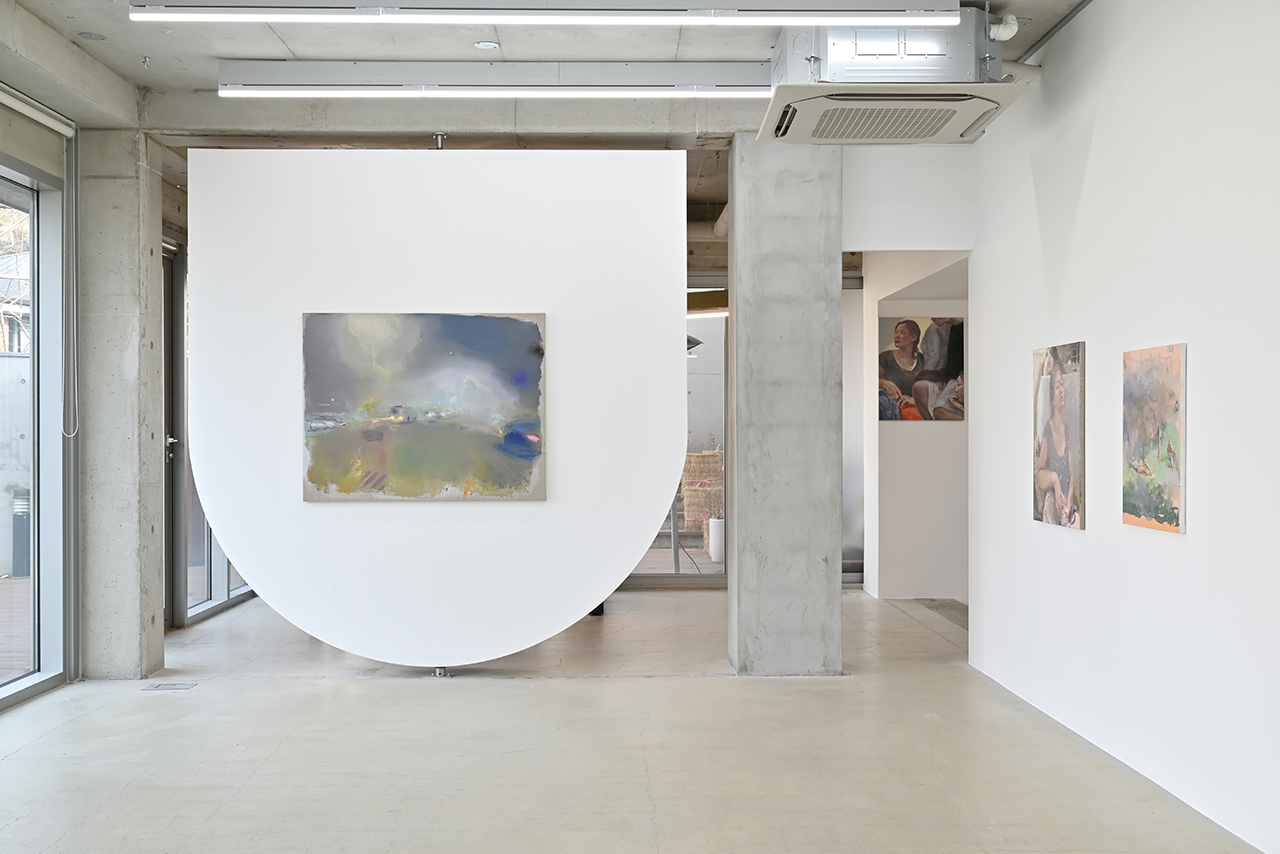
Leeje's 2021 solo exhibition 《Painting Et Cetera》 simultaneously evokes traditional genres such as self-portraiture, portraiture, and landscape painting while summoning painting itself as material—paint applied to canvas, mixed together, and smeared into a state of sheer materiality. There is a background, a pictorial ground, and there are Leeje's women as the figures who inhabit it.
The works remain paintings; they contain stories; and rather than foregrounding experimentation with the medium itself, they continue to reveal what painting as a medium is capable of conveying. In this sense, Leeje appears intent on remaining a painter. The late twenty-first-century neologism "painting-after-painting" names what painting does—or does not do—after its presumed self-completion or self-exhaustion, simultaneously embodying dialectical movement and contradiction.
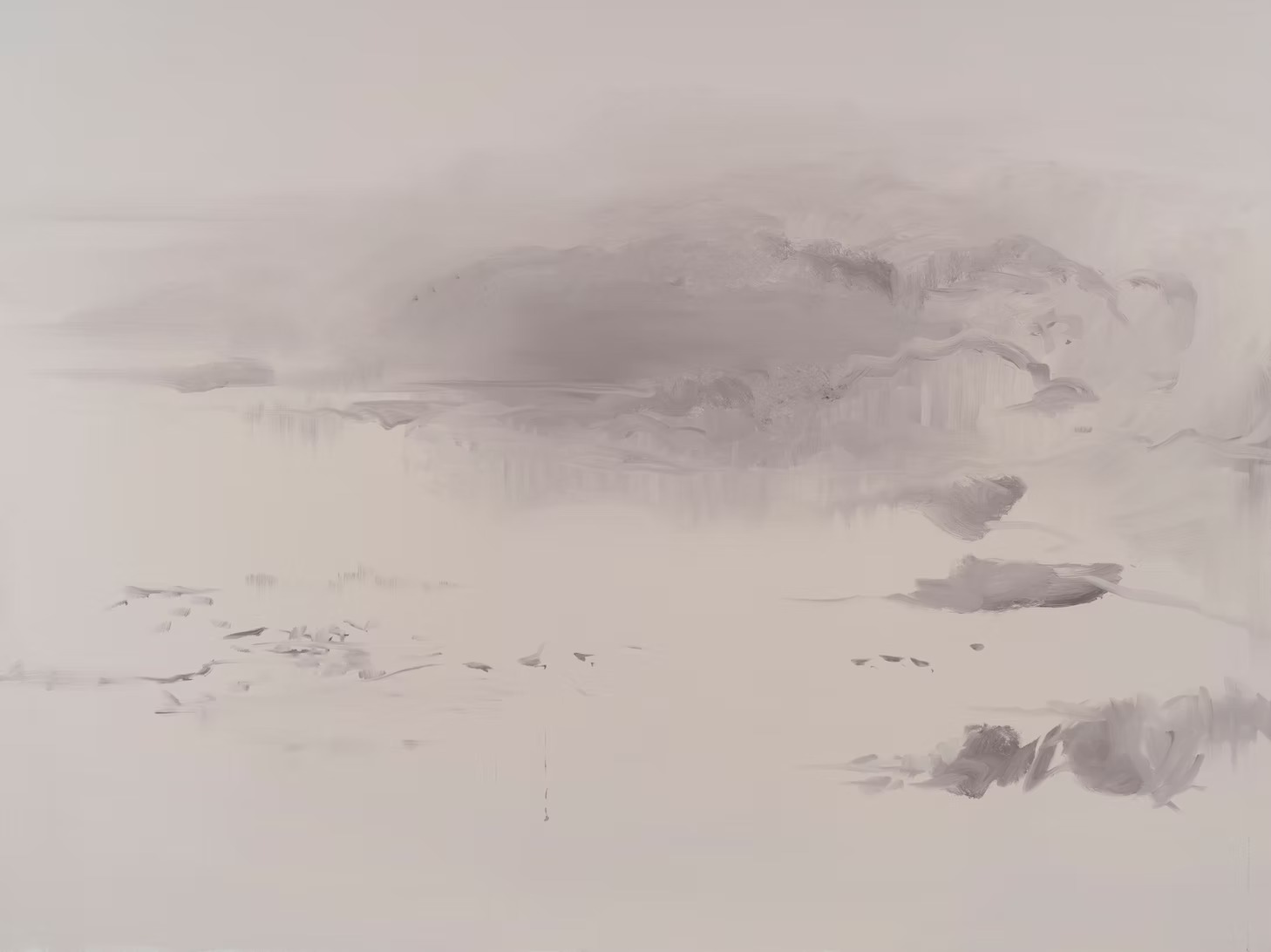
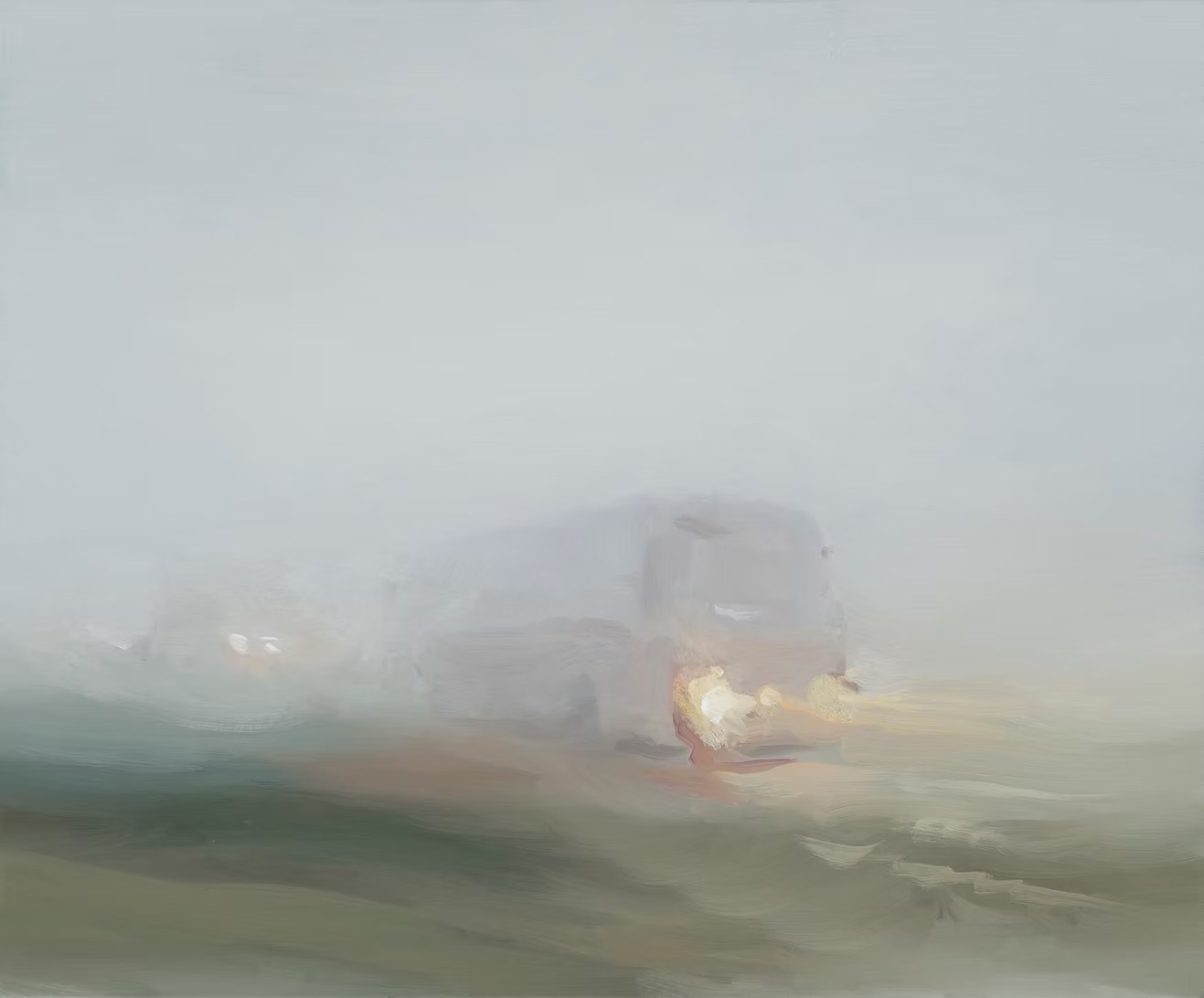
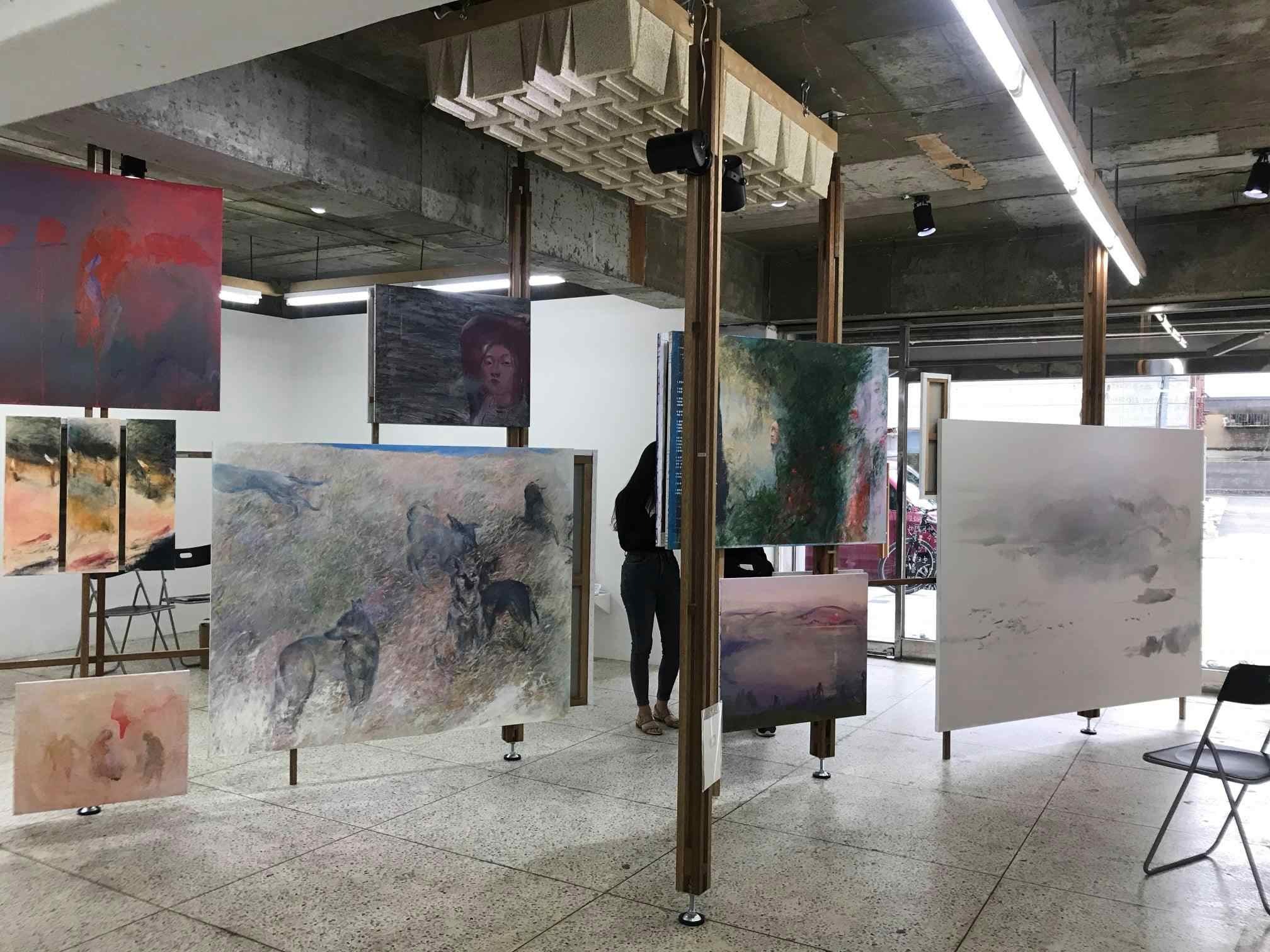
I read Leeje's paintings as a response to the question: What does painting do—or not do—today? The images of Leeje's works that I first received in a PowerPoint file by email seemed soft and painterly. Yet, upon entering her studio and encountering the densely packed paintings, my immediate impression was one of "dirty gray."
The moment to unpack the bundle of ideas I had prepared for the artist, or even to open my internal dictionary of vocabulary, kept being postponed. It was as though the dirty gray of painting were squinting at me, waiting to determine how it should begin to speak from somewhere between the essence of painting and its negation, between the openness of painting and its abolition.
Since language is always a form of compromise, I eventually attempted to move beyond the dizziness and congestion I felt by connecting Leeje's dirty gray—both the reduced essence of her painting and its anti-painterly attitude—to the city outside, to the artificiality of modernity, and to the failure of emancipatory history.
Gray became the color that blocks transcendence and ideality, manifestation and symbolic representation, while simultaneously serving as the foundation upon which all simulacral worldly existence rests. I persuaded myself that Leeje's gray lay beneath the ideals of humanism, only to emerge, through contemporary disasters and catastrophes, as the very background of contemporary life.
It was through this realization that my own response to Leeje finally found its beginning; the words at last began to come. The foundation of Leeje's contemporary narratives is the site of collapse. The painterly essence of her work is gray. Her painting advances while simultaneously coming to a halt, undergoing both dialectics as an act of self-negation and contradiction as an act of self-division.
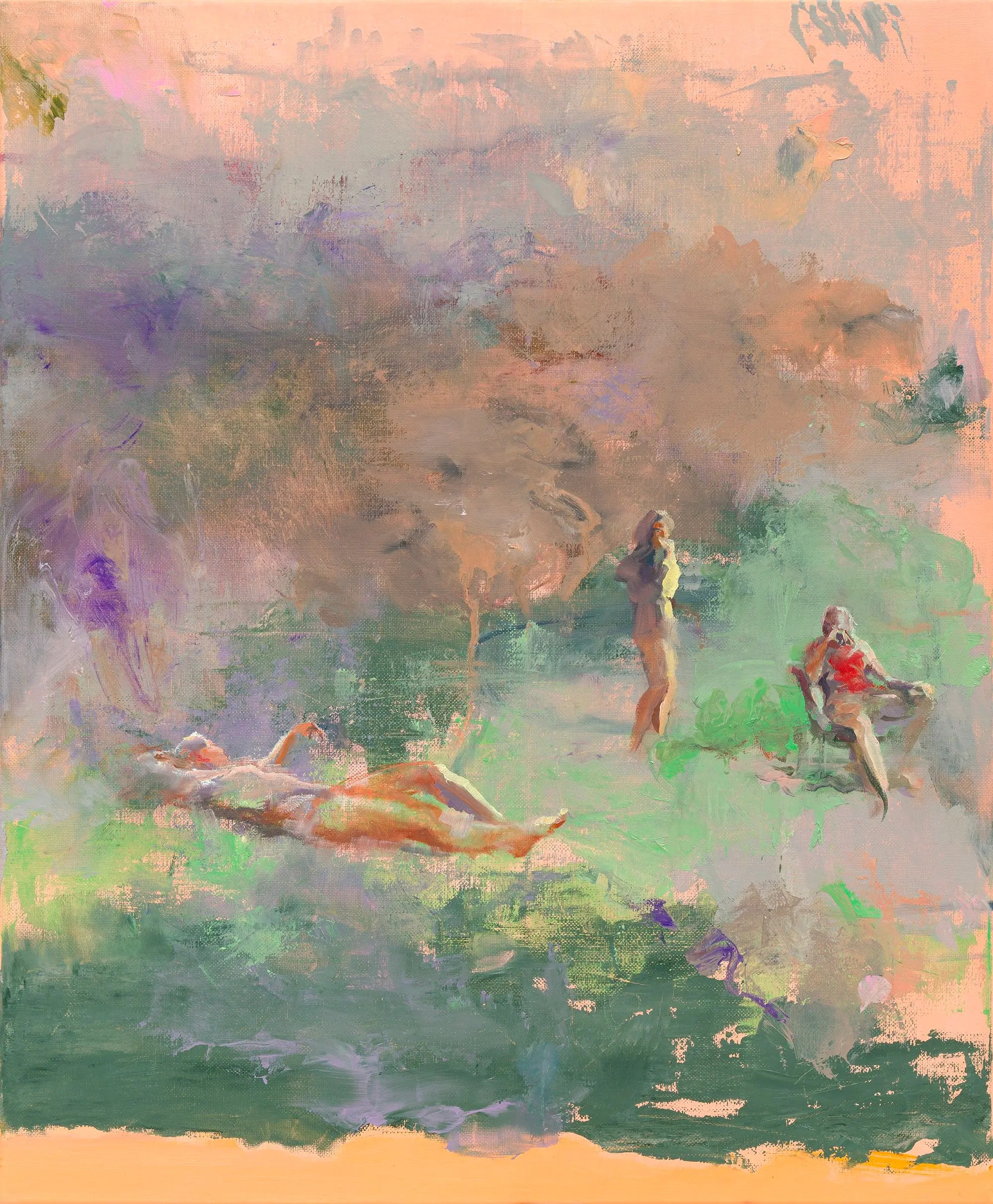
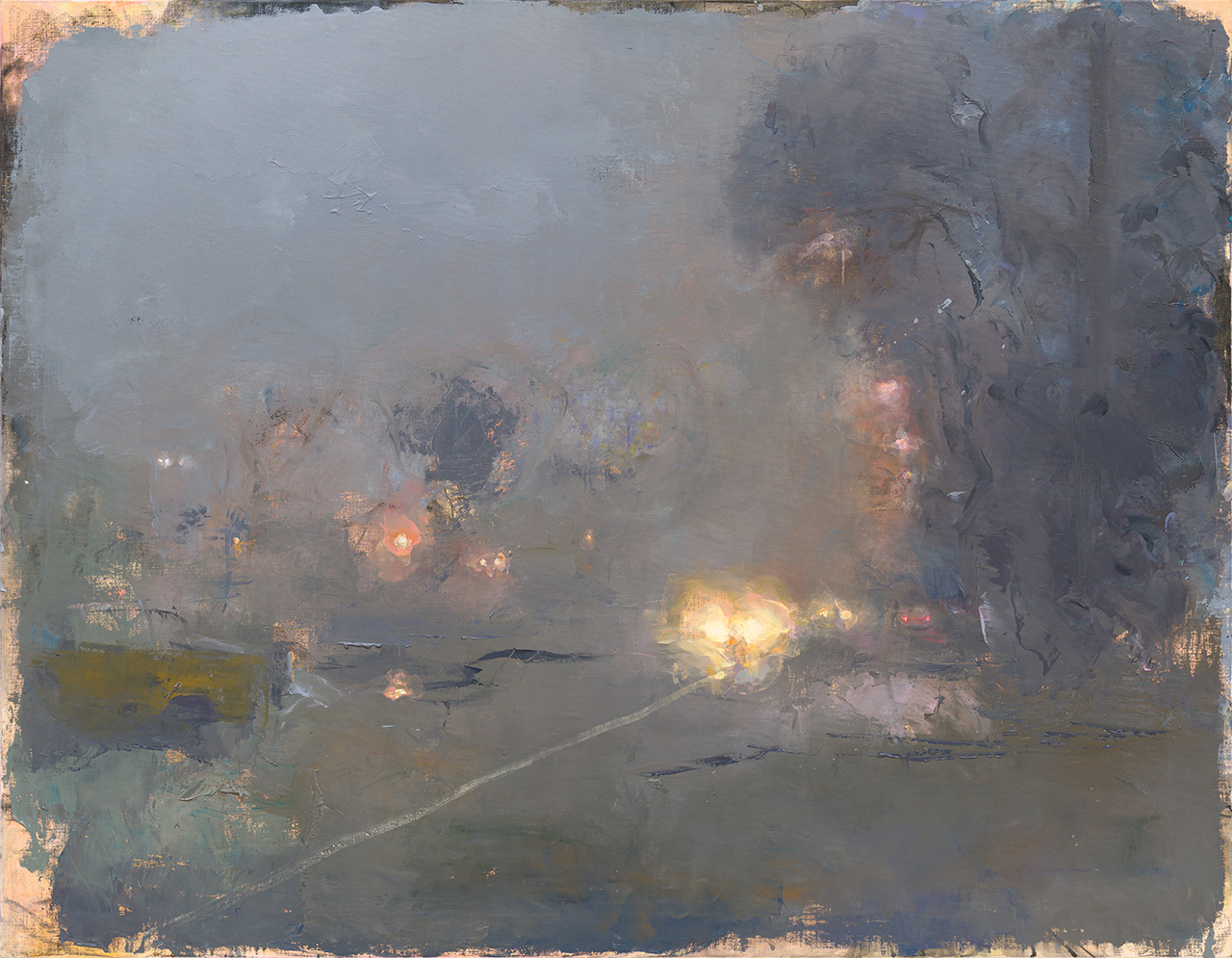
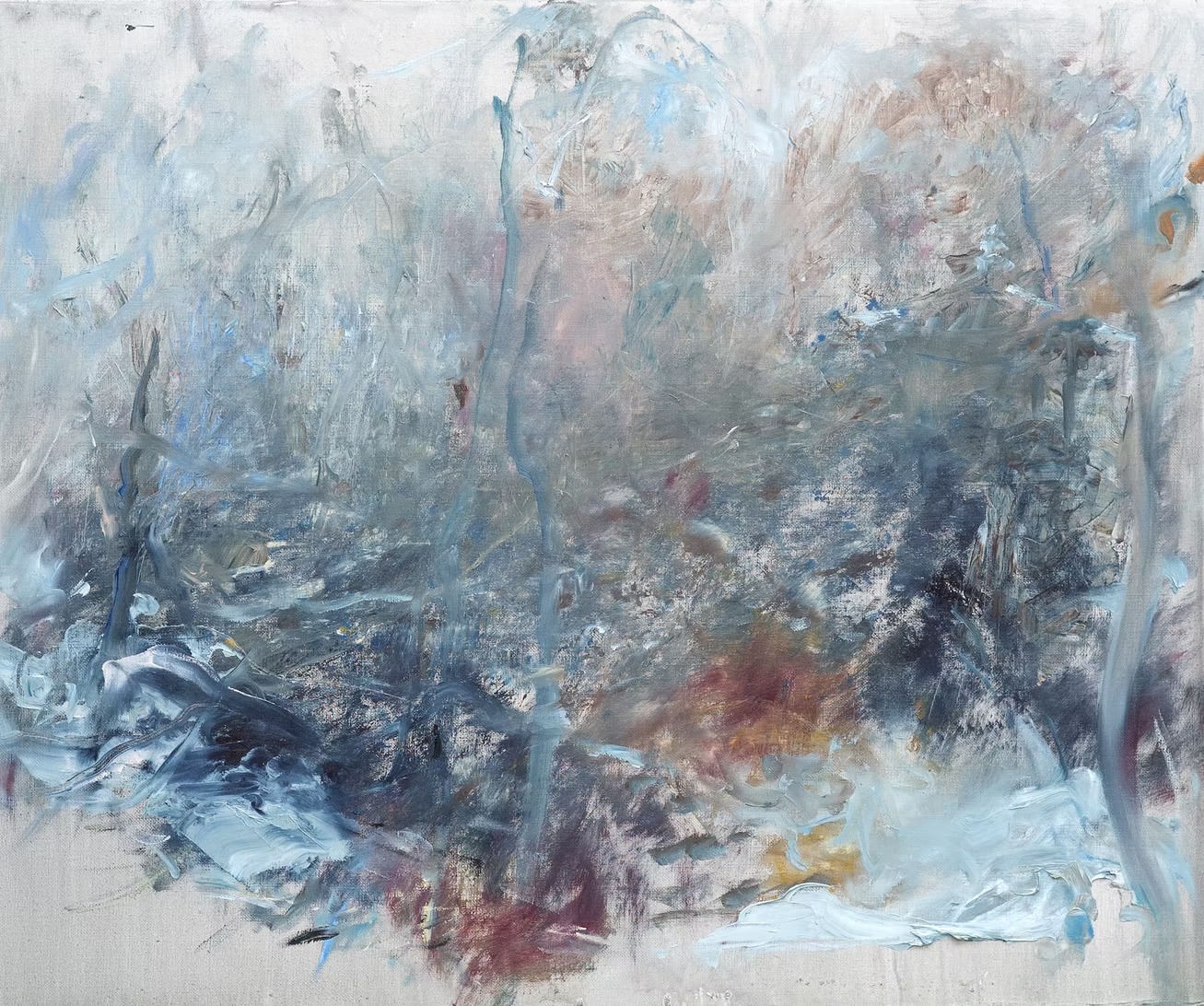
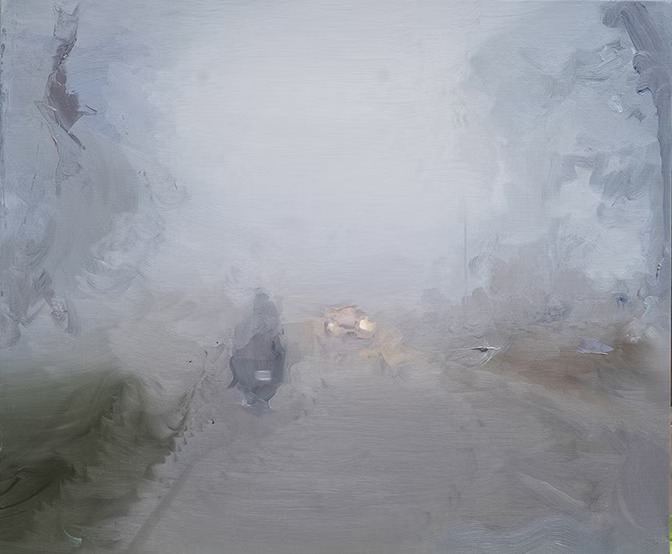
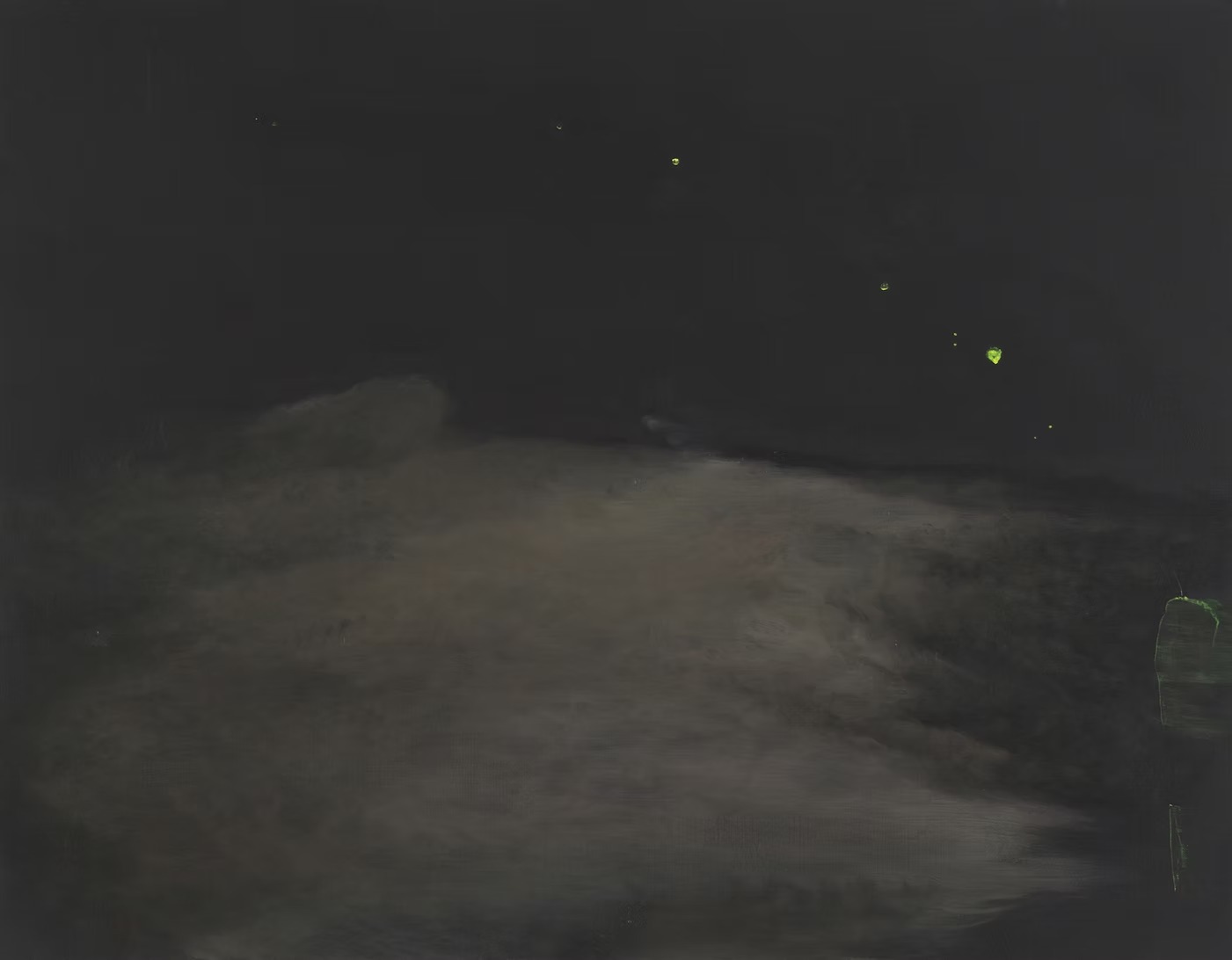
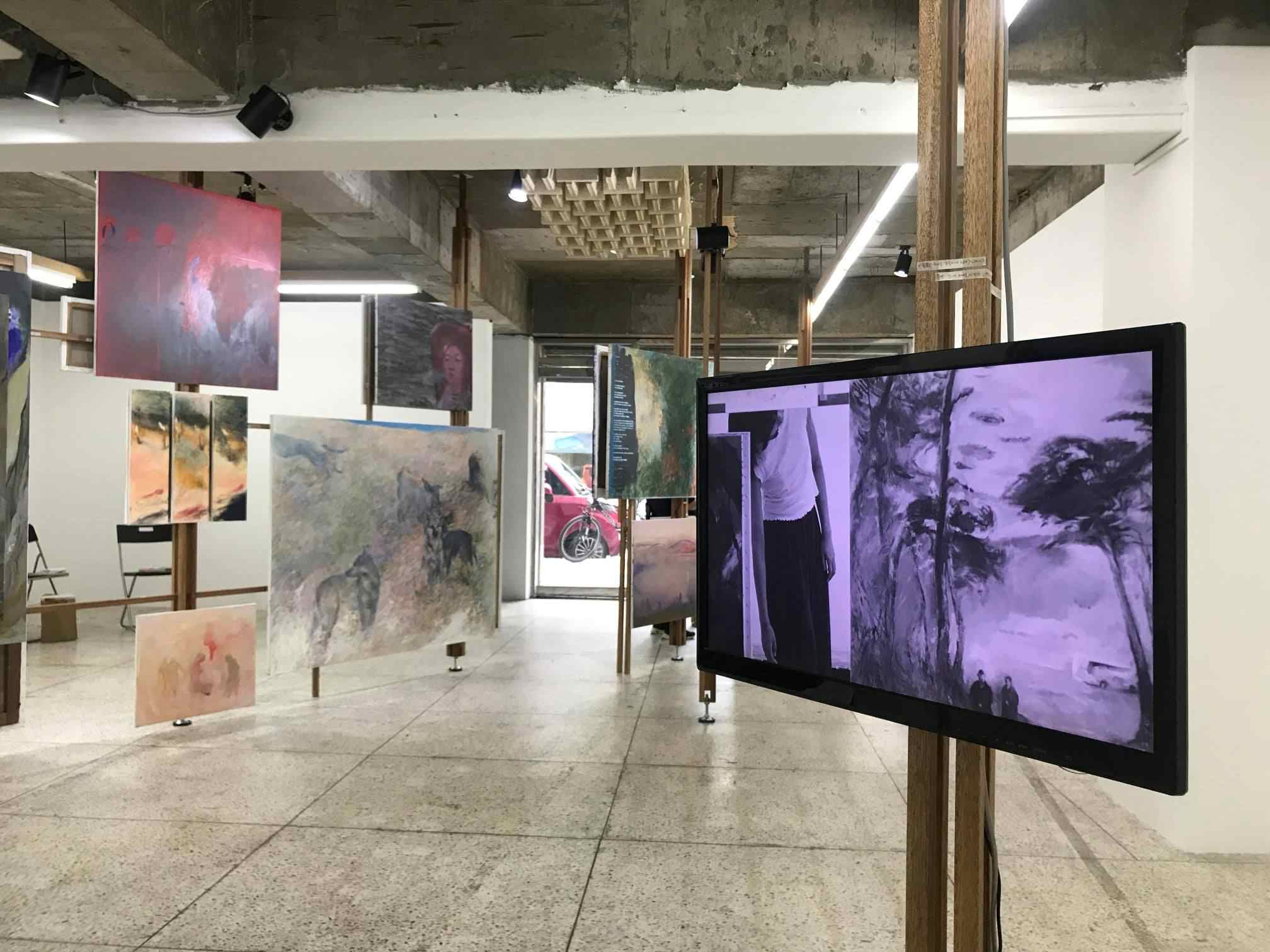
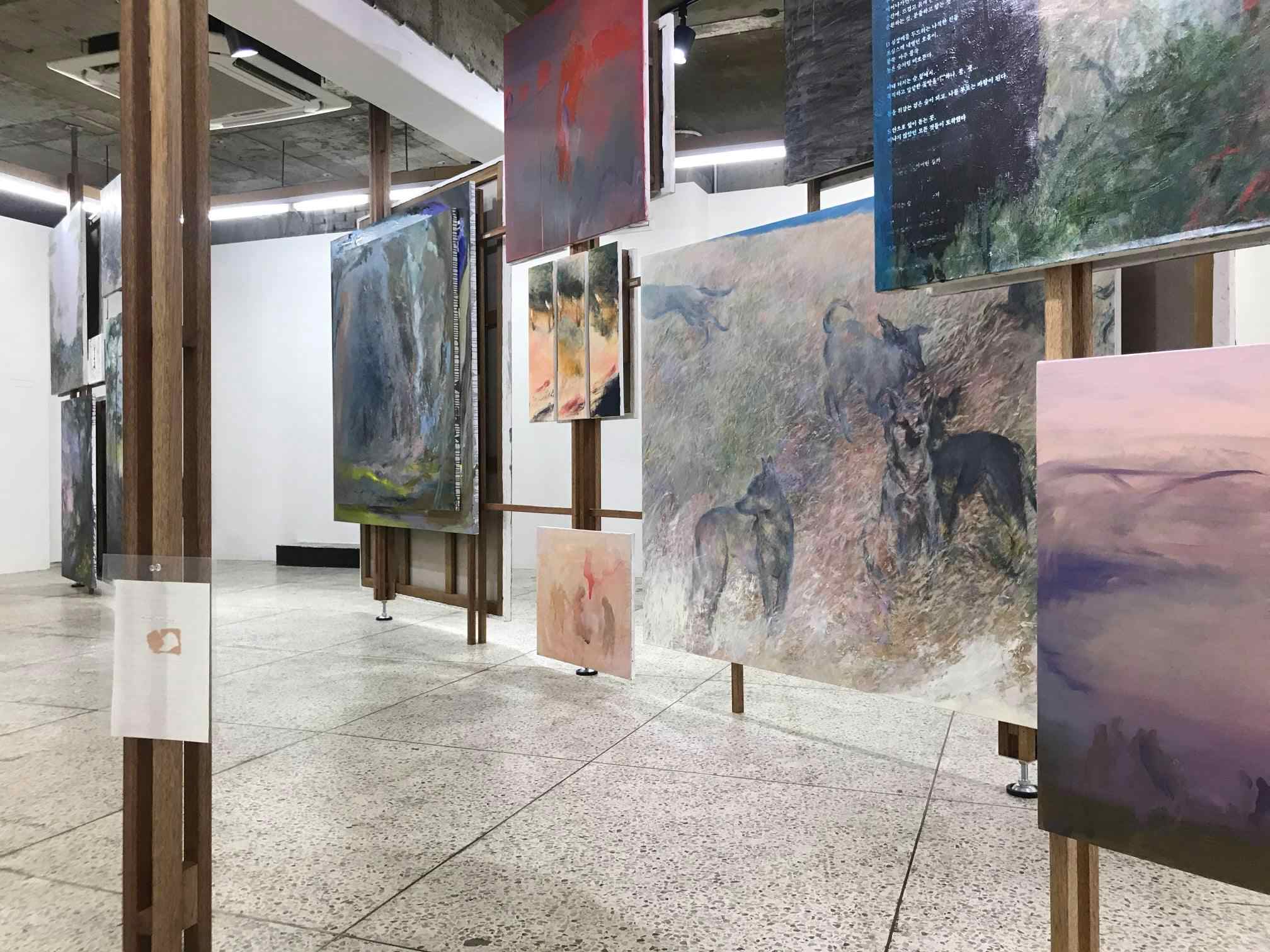
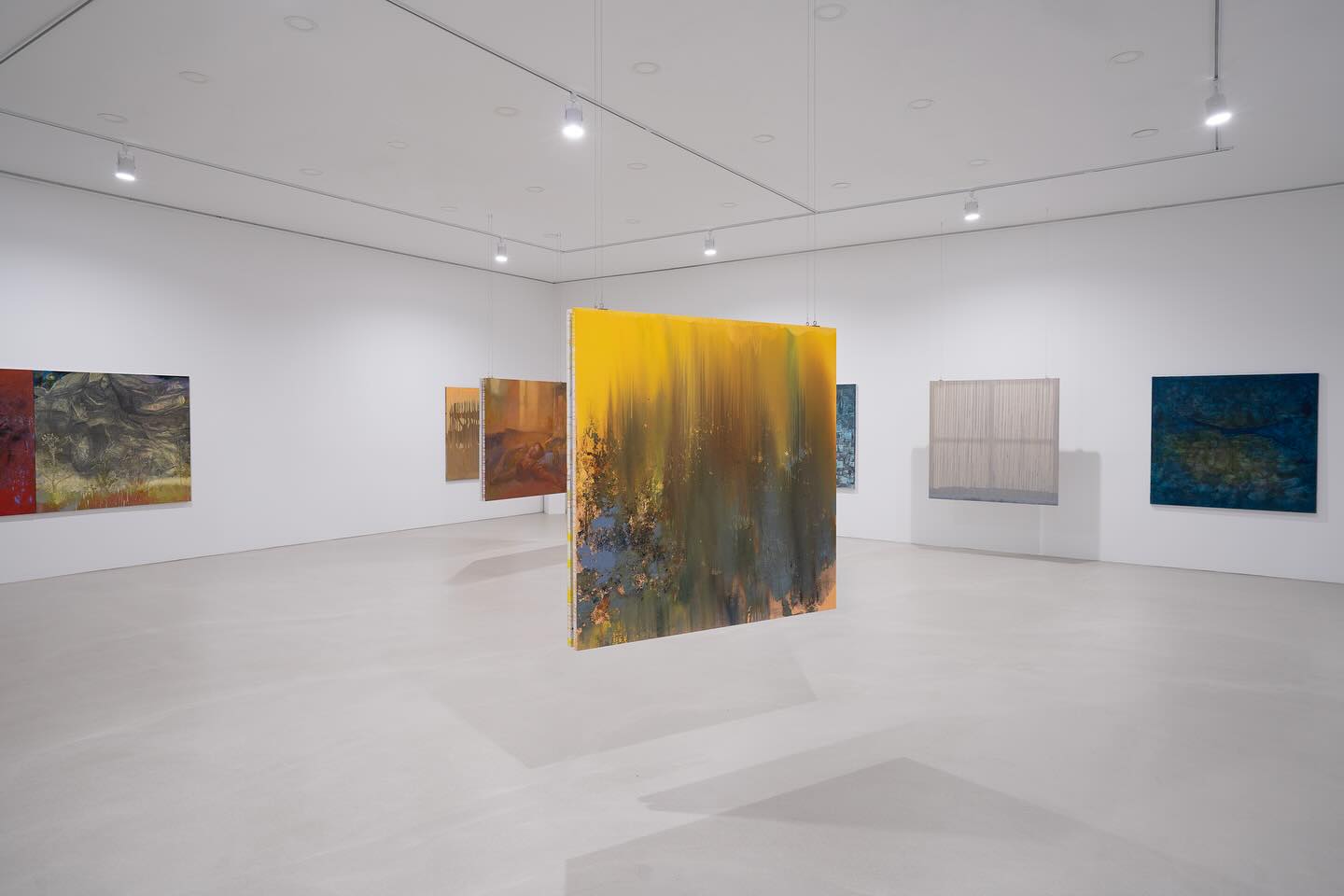
Using brushes, hands, palette knives, and cloth, the oil paint settles onto the canvas, producing planes, layers, textures, representational images, and psychological forms. Were it not for their descriptive titles—such as Han River, Inwang Mountain, or Wetland—what might otherwise appear merely as traces, stains, or reflections becomes legible as people, trees, bridges across the Han River, or evening sunsets, stimulating the playful desire to imagine, embellish, and invent.
Disaster and catastrophe, the endpoint reached by the march of progress, the gray that one ultimately confronts—only then does the story begin. It is when death, failure, or disappearance looms near that people finally begin to tell the stories they have always most wanted to tell, stories that preserve the secrets settled at the very bottom of the box. Thus, we begin—with the gray we already know, because of gray, and from gray itself.
Woman 1
Because of Leeje's paintings, I find myself beginning the kind of story I would ordinarily never have occasion to tell. I begin with For the Time Being (200 × 150 cm), one of the larger works in the exhibition.
Out of habit, I first notice the matte gray ground; next, a single mass resembling a cloud, soot, a stain, or a landscape; and finally, a woman—difficult to distinguish from the background, yet somehow emerging from it—a woman with long hair dressed in work clothes. She stands in the lower right corner, looking toward us.
Hidden within the landscape, dissolving into it, and at the same time appearing from it, this ambiguous woman quietly pushes aside the representational convention that privileges the psychology, interiority, or identity of the "important" figure or protagonist. The lightly applied reddish tones around her face and slightly exposed neck seem to suggest the warmth of a living body—the heart as the organism's engine, the skin as its surface, the body temperature shared by humans and animals.
I begin to wonder what impression a person standing with both hands clasped behind their back and feet planted firmly on the ground conveys, or how such a figure is conventionally read within shared social understanding. I gather phrases for this woman: someone simply doing her work; someone who has stepped outside for a brief rest; someone whose life consists merely of filling each day through repetition and routine, without grand ambitions of self-preservation or self-empowerment.
I also collect the sentence: the indifference of a woman who casually glances at the person looking at her. A woman uninterested in the grand contemporary narrative of disaster and catastrophe, yet difficult to describe as ahistorical or detached—simply a woman living here and there, marked only by utterly ordinary clothing and posture.
I write that I like this woman. She does not seem likely to be swayed by the great humanist keywords of lack, alienation, or freedom, nor by pronouncements about the death of great painting. She is solid, indifferent, simply herself, without even the time to affirm or deny that fact. Reputation, recognition, worldly calculation—none of these seem capable of moving her.
Reading only the painted appearance of this woman and the landscape surrounding her, I find myself imagining that I know her well, recalling a friend who lives far away and whom I have not seen for a long time. She is the sort of woman for whom being herself feels natural, someone well suited to the quiet attitude of "that's just how it is." The title “For the Time Being” is borrowed from a poem by Choi Seungja, a poet whom Leeje deeply admires.
In Choi Seungja's poetry—renowned for its ghosts, weeds, and bare survival beyond the margins—"for the time being" refers to the present moment, when the river, the fields, the sky, the people, and even Choi herself remain unharmed. Yet "for the time being" is simultaneously the premonition of catastrophe soon to arrive.
Those who forget its temporary nature will be caught by surprise; those who understand its role will remain faithful to the present; those seduced by its illusion will ultimately be swept away by disaster. By limiting the unharmed present through the phrase "for the time being," Choi denaturalizes the apparent naturalness of landscapes, objects, and people.
The degree of shock brought by catastrophe depends upon the degree of boredom or peace that precedes it. The poem For the Time Being is one of Choi Seungja's rare "affirmative" poems, unusual for a poet who generally imagines and experiences everyday life itself as catastrophe.
Yet even this lyrical affirmation already contains anxiety, destruction, and collapse through the repeated appearance—five times—of the adverb "for the time being." The world that appears to be the positive image of Choi Seungja's disasters and catastrophes seems, through this single clue, to collapse into something almost trivial.
Leeje's painting For the Time Being, following Choi's poem, visualizes the gestures and actions of ordinary people—women—who quietly pass through the posthistorical present, understood as the ceaseless succession of terrible events and disasters, neither overwhelmed by grief nor consumed by suffering.
For this reason, the women who appear in the smaller works For the Time Being and Walk, almost as though they were close-up bust shots of the woman from the large-scale For the Time Being, draw us near through actions that are utterly ordinary and seemingly insignificant.
Against backgrounds that, were they not gray, might be interpreted as translations of emotion or interiority, the woman in For the Time Being, again pushed to the far right of the composition, clasps both hands above her head. Her exhaled breath suggests winter as she gazes absentmindedly toward us. Anyone who has assumed such a pose knows the feeling: the shoulders relax, the body releases its tension after exhaling.
The quiet satisfaction and comfort that follow an insignificant gesture. The figure, rendered through smeared reds and the barest outlines into something resembling a woman, a person, possesses a vacant gaze that I, too, find deeply compelling. Within the visual structure that almost inevitably teaches us to view women through a male gaze, I find myself looking at this woman through that gaze while simultaneously perceiving another woman slipping beyond it.
There is no vocabulary sufficiently capable of translating her pose, her gaze—or her gaze as a pose—not only for me, but even for feminism itself. The language of the other is always already contaminated from within. I write that she is fully a woman without assuming a conventionally feminine pose; feminine, yet neither seeking our approval nor provoking our resistance.
Regardless of our recognition, she is feminine, and entirely sufficient as a body that simply appears. The bespectacled woman in Walk raises her left arm to shield herself from the blazing sunlight as she looks upward. Dominated by pink tones, the midday heat is conveyed through the colors translating her short-sleeved shirt and the reflected light. Leeje's women do (or do not do) something, just as her paintings themselves do (or do not do) something.
They do not assume the pose of the autonomous subject endlessly repeated after man, nor do they appropriate the framework of representation in order to appear engaged in something significant. They are simply themselves, not bodies emitting profound meanings or symbolic content. They do something, yet there is no hidden layer, no foreshadowing, no assertion behind it.
Precisely for that reason, these empty actions hold us captive. We, who long for meaning and desire production, become equally emptied before these empty images and forms. These unfillable images—whose entirety lies in the present moment, whose entirety lies in the visible body—simply exist against gray backgrounds, untouched by the fatigue of history or the disillusionment and cynicism that follow it.
These "et ceteras" of history—the women and their actions that history never records—come to dwell within the place, the geography, of Leeje's painting. Women who perhaps would never have become visible had it not been for that dirty gray.
Two Women, Five Women, Et Cetera
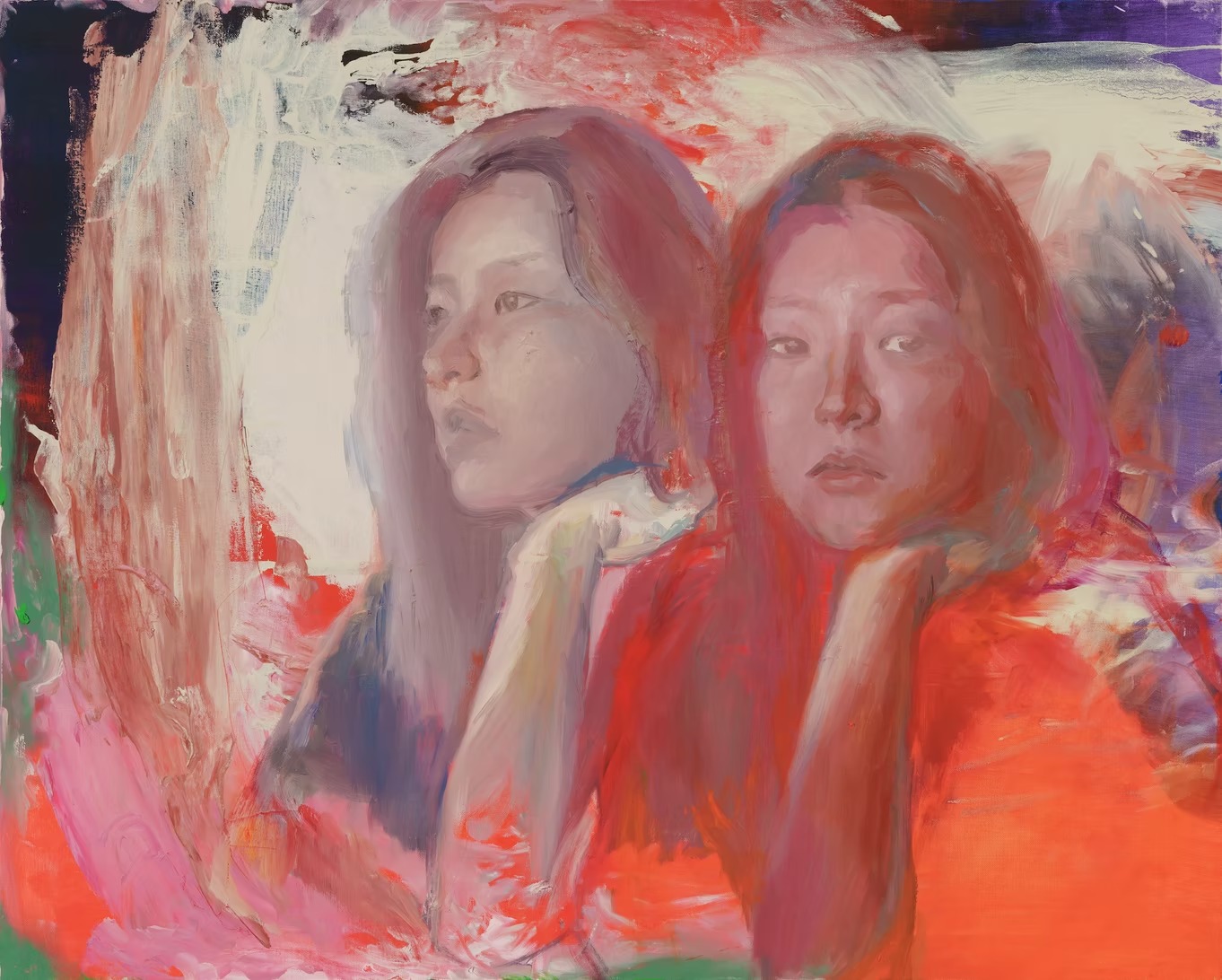
Nayeon and Seoyeon is a portrait in which the names of the figures are explicitly identified. Nayeon and Seoyeon, the two daughters of Leeje's younger sister, look toward their aunt with the warmest and most relaxed posture imaginable—either as close sisters or as happy nieces welcoming the visit of a beloved aunt.
The younger sister's right foot, descending toward us along the body of the older sister whom she tightly embraces, has been almost erased or barely painted at all. The buoyancy of this nearly absent foot connects seamlessly to the two cats playing beneath them in a close embrace—cats that only gradually reveal themselves as two rather than one.
Two, repeated. Togetherness as rhythm. Landscape with Candles is based upon the calculated arrangement of four canvases depicting two, two, two, and three candles indicating the direction of the wind, together constituting a single work. Children, cats, and candles all assume the role of twoness, of being together. Then there are paintings in which Leeje's friends appear as multiple figures, rendered from a great distance.
Paintings that are closer to landscapes than portraits, where people are translated into blurred stains or a few brushstrokes. In the large-scale Field (130 × 162 cm), five women walk or run together at measured intervals toward a low horizon. Their bodies, scarcely more substantial than fluttering garments, survive as traces or suggestions that more vividly evoke their existence than any precise rendering could.
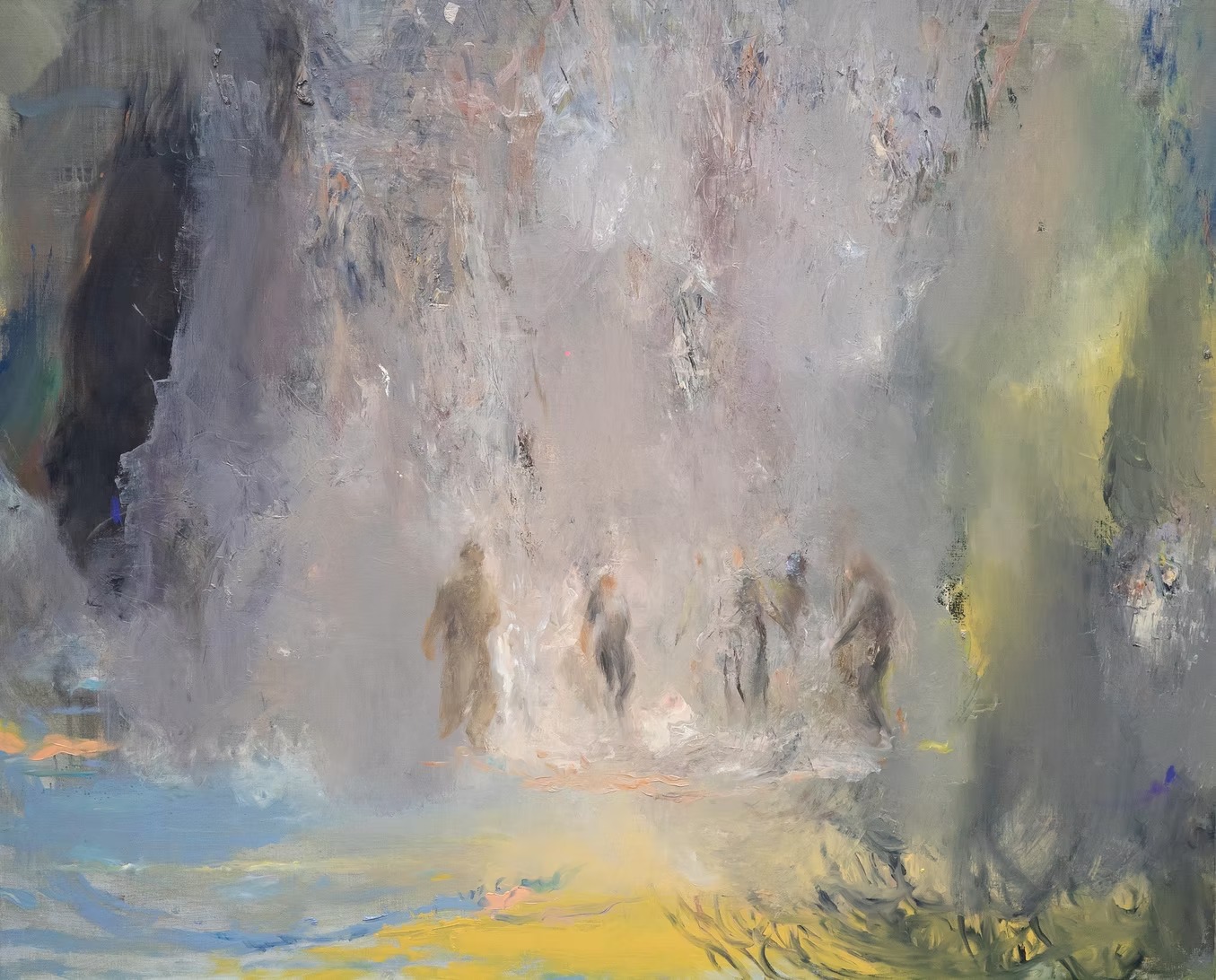
Like ghosts, like wind, they drift through the landscape. To appear is already to disappear; to be together is to lose the unique weight and mass of each individual. Our Dance Always Begins Unexpectedly (150 × 150 cm) is painted from an even greater distance than Field. It is impossible to determine exactly how many women appear.
Enclosed between the enormous tree trunks occupying either side of the composition, they seem—if one follows the title—to be dancing. These women, these friends, whom Leeje paints not from direct observation but as "psychological states and bodily events emerging under conditions of isolation through painterly images that blend abstraction and representation," become wind, clouds, and grass invited into the artist's carefully constructed landscapes and places to dance together.
A faint yellow leaking from the lower edge of the canvas, together with brighter yellows, reinforces and repeats the metaphors of dance, rhythm, cheerfulness, and lightness. Dance transforms space into time, the body into image, and place into body through an unexpected rhythm. Dance uses the body solely to connect, blur, and bind. It concerns meaningless gestures, emptied bodies, bodies that move only to release images and forms.
To My Friends (116 × 90 cm) was completed after Leeje spent three years repeatedly painting, erasing, layering, and covering the canvas, leaving it deliberately unresolved before transcribing sentences sent to her by friends, who appear only through their initials.
The sentences these friends contributed—friends whom Leeje remembers as always moving together or dancing in a shared direction, continuing lines she herself had begun—allow us to perceive a common sensibility among people who have passed through the same landscapes, experiences, and disasters.
Whether because they are friends and therefore resemble one another, or because they possess similar sensibilities, they become two, five, or many; they also reveal themselves through sentences written together by those who carry the same losses and the same patterns within them.
If the lush greens and the touches of red scattered across them are flowers, then the "afterward" awaiting these friends—drawn onward by shared memories, experiences, and stories inscribed together upon the black ground—will surely be bearable. Across the monumental gray landscape, the tiny inscription "Let's live!" in Highway cuts forcefully across the picture plane. It is an almost inaudible cry: let's keep going, don't die, endure.
When death seems the easier option; because I already know how unbearable it is when you die; because I no longer know why those of us who remember too many deaths should keep living; because, even so, I live because of you—so let's live. No implication, no detour, no metaphor. Simply: let's live.
The triptych Night Rose, filling the front window of Space Sansumunwha, is likewise a painting that would scarcely be recognized as roses without its descriptive title. It is the recycling of the rose as a concept and sign worn out to the point where it can scarcely be quoted or painted any longer. Roses at midnight. Roses painted casually and roughly. Roses blooming not in red but translated into white or blue.
A landscape interrupted across its surface by vertical bands. Roses that remain roses despite every distortion, disguise, and intervention. We, too, were once that young, that green, those roses, that trembling fragrance. It is both a whisper and a defense applicable even to painting worn threadbare.
Thus, dirty gray becomes one phase in the dialectical movement of painting itself, or else the very aporia that painting has come to confront.