It is a world overrun by fakes. The fake that operates behind the real, the fake that imitates and disguises itself as the real, exerts influence across politics, economics, society, and even the realm of art. An age in which the fake acts as the real—this is a social phenomenon brought about today by advanced capitalism and a consumption-centered society.
Our society suffers from the presence of fakes that pretend to be real: counterfeits, imitations, mimicry, manipulation, forgery, disguise, substitution. No one would prefer the fake to the real, so why is the presence of the fake encroaching upon society in this way? Behind it lies the desire of those who demand it—our desire as users and consumers.
Consumption behavior in capitalist society has stirred in the public a longing for and envy of the value of commodities. This desire ultimately caused the counterfeit industry to grow in a malformed and bloated way. Counterfeits, imitations, and fake goods are popular items spread very commonly throughout our daily lives.
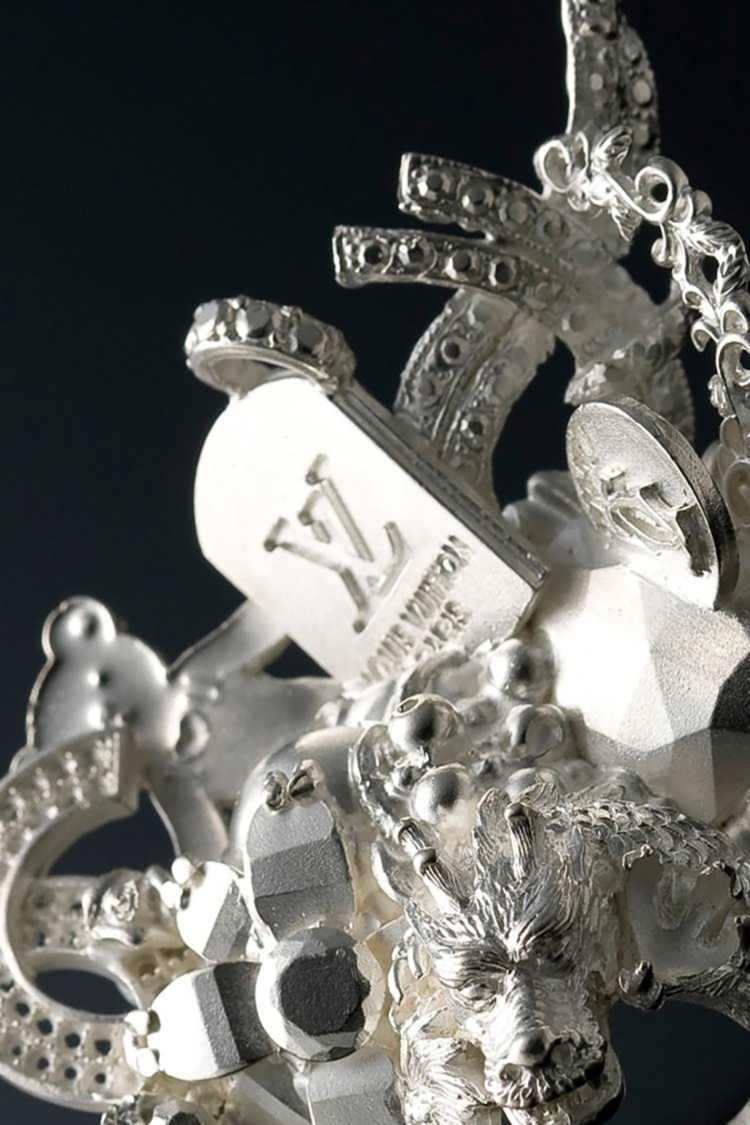
Beyond bags, clothes, and shoes that imitate luxury brands, human ostentation is revealed even more dramatically in fake accessories. Among them, accessories are the cheapest products and, at the same time, items that are replicated, distributed, and consumed in the broadest quantities. Serin Oh’s work penetrates the space between today’s social structure and people’s desires through cheap accessories.
The artist’s suspicion toward fake accessories begins from self-reflective concerns when she studied metal craft during her university years. In the case of accessory design, which responds sensitively to contemporary trends, many designs are copies of luxury designs. People uncritically satisfy their preference for desired designs through cheap accessories, and as this desire grows, low-priced accessories spread social signs of beauty as unified fake signs.
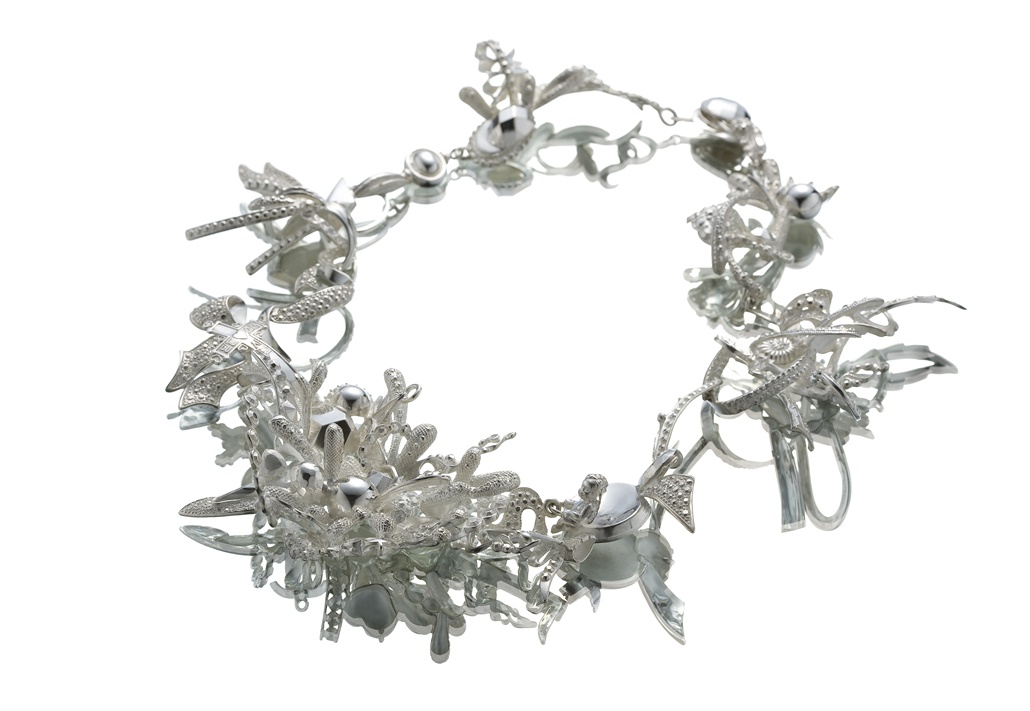
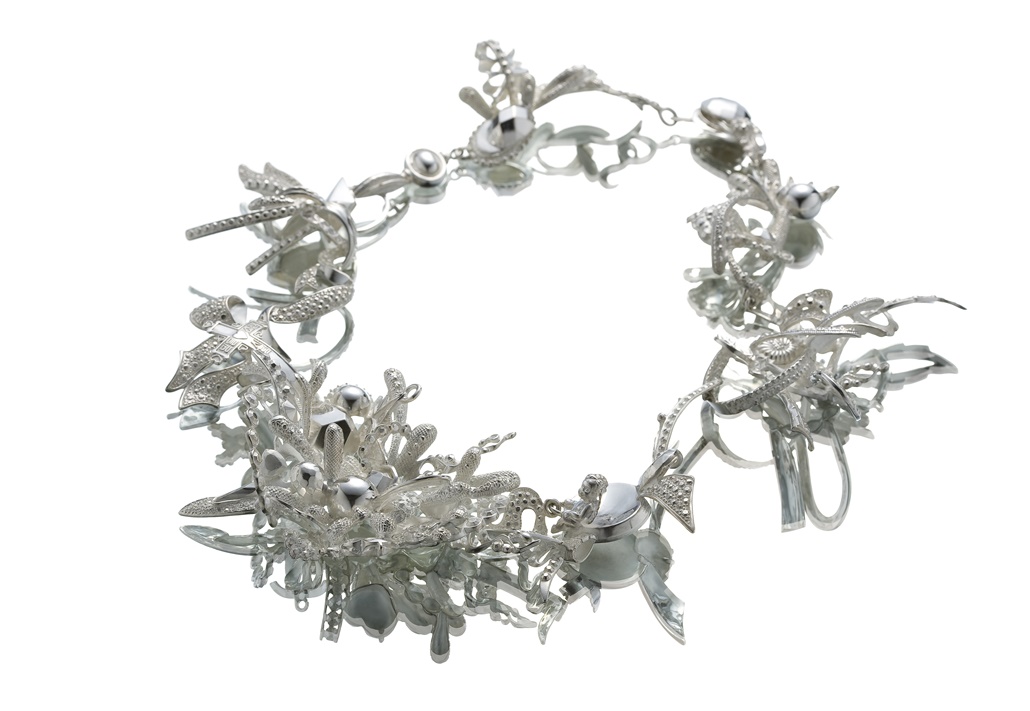
“How much can the fake act like the real?” Asking herself this question, the artist carries out an overturning of the positions of fake and real. ‘Imitation & Deception’, which she has been making since 2009, is a body of work that grants the value and authority of art to cheap replicas.
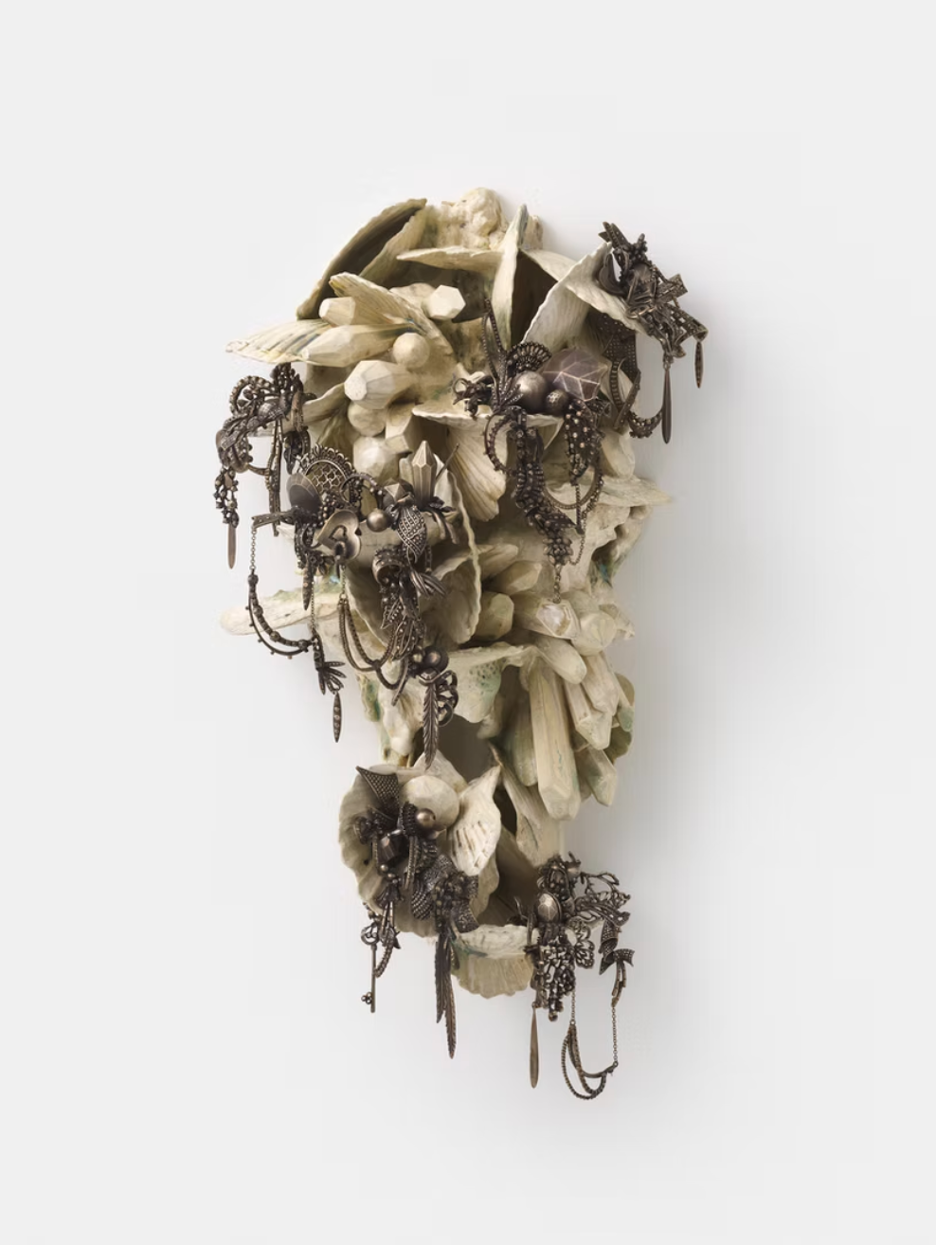
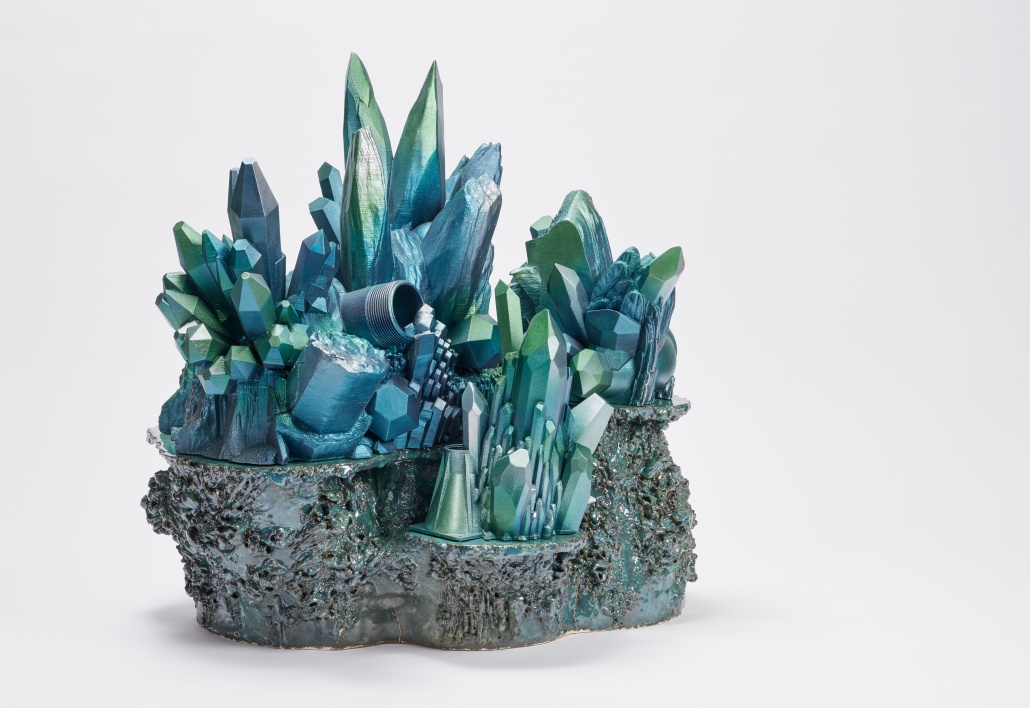
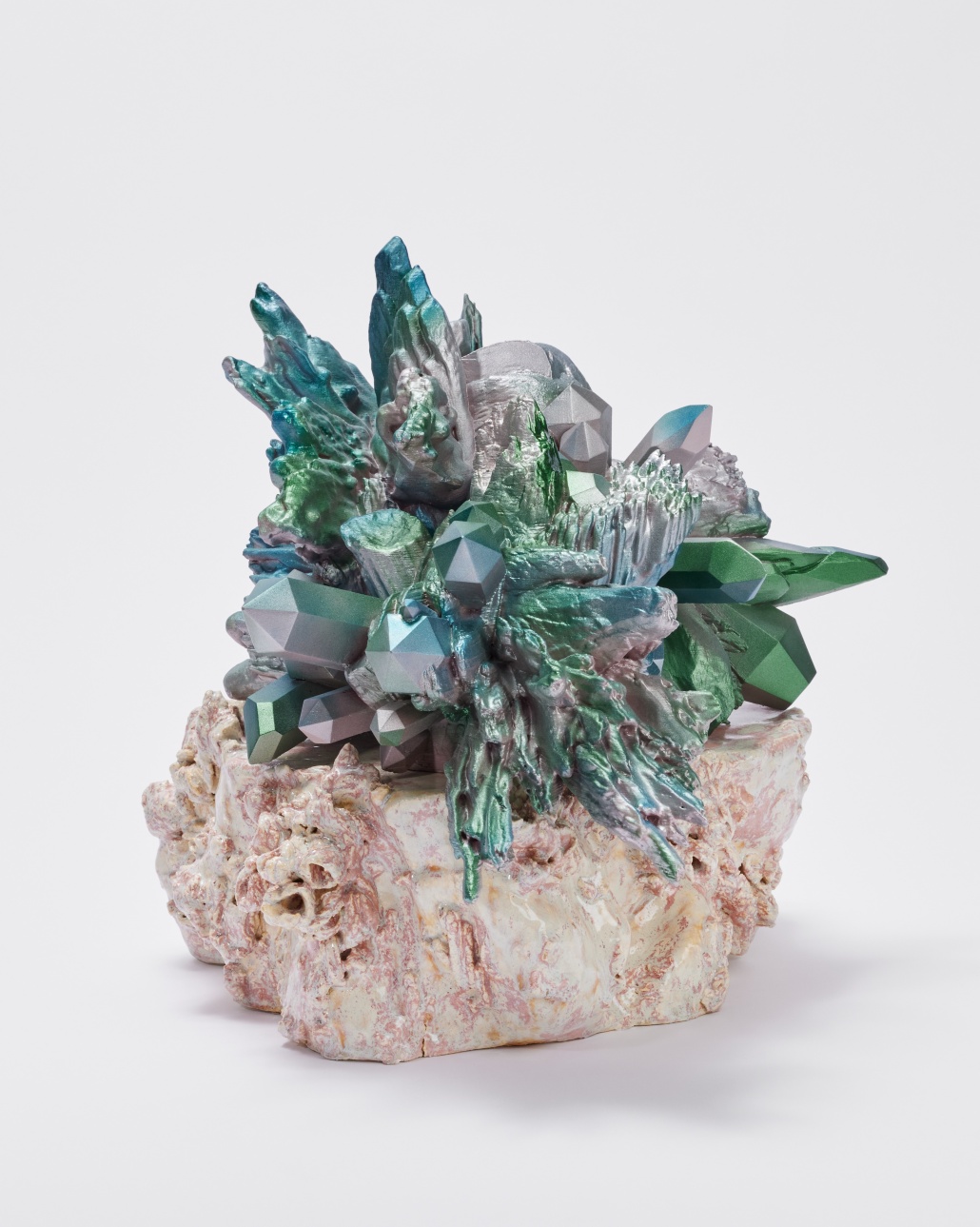
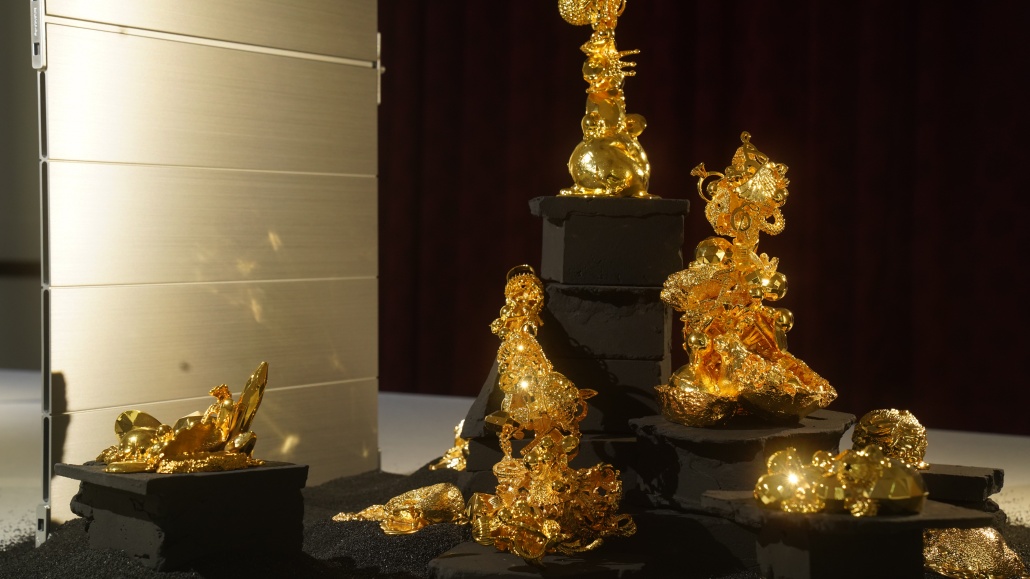
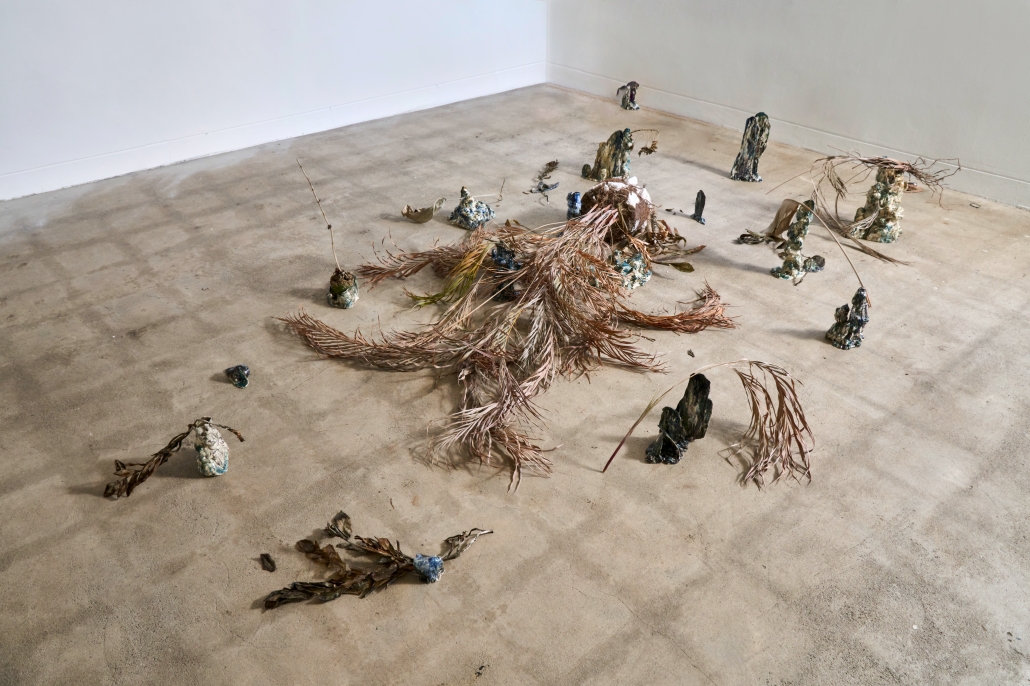
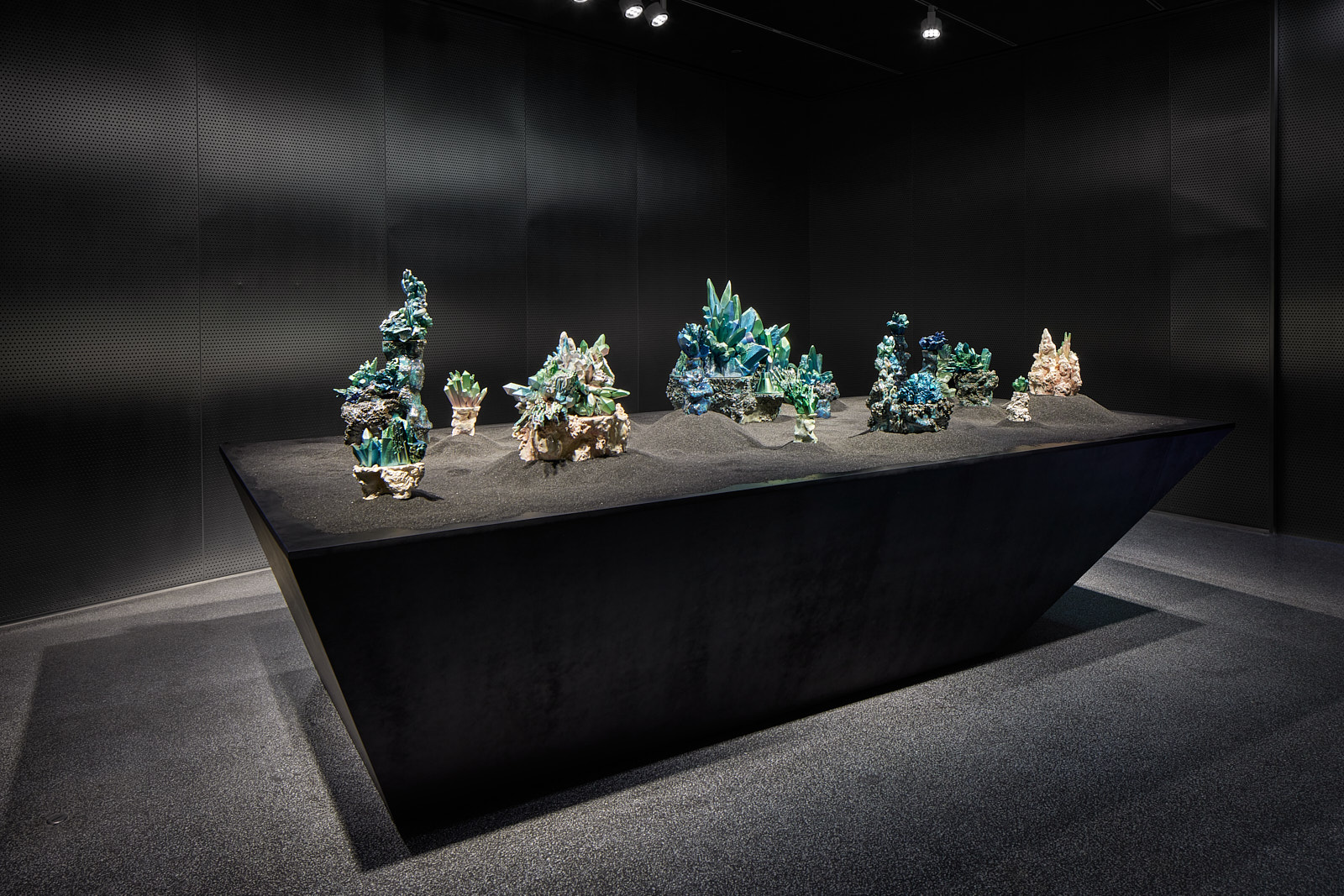
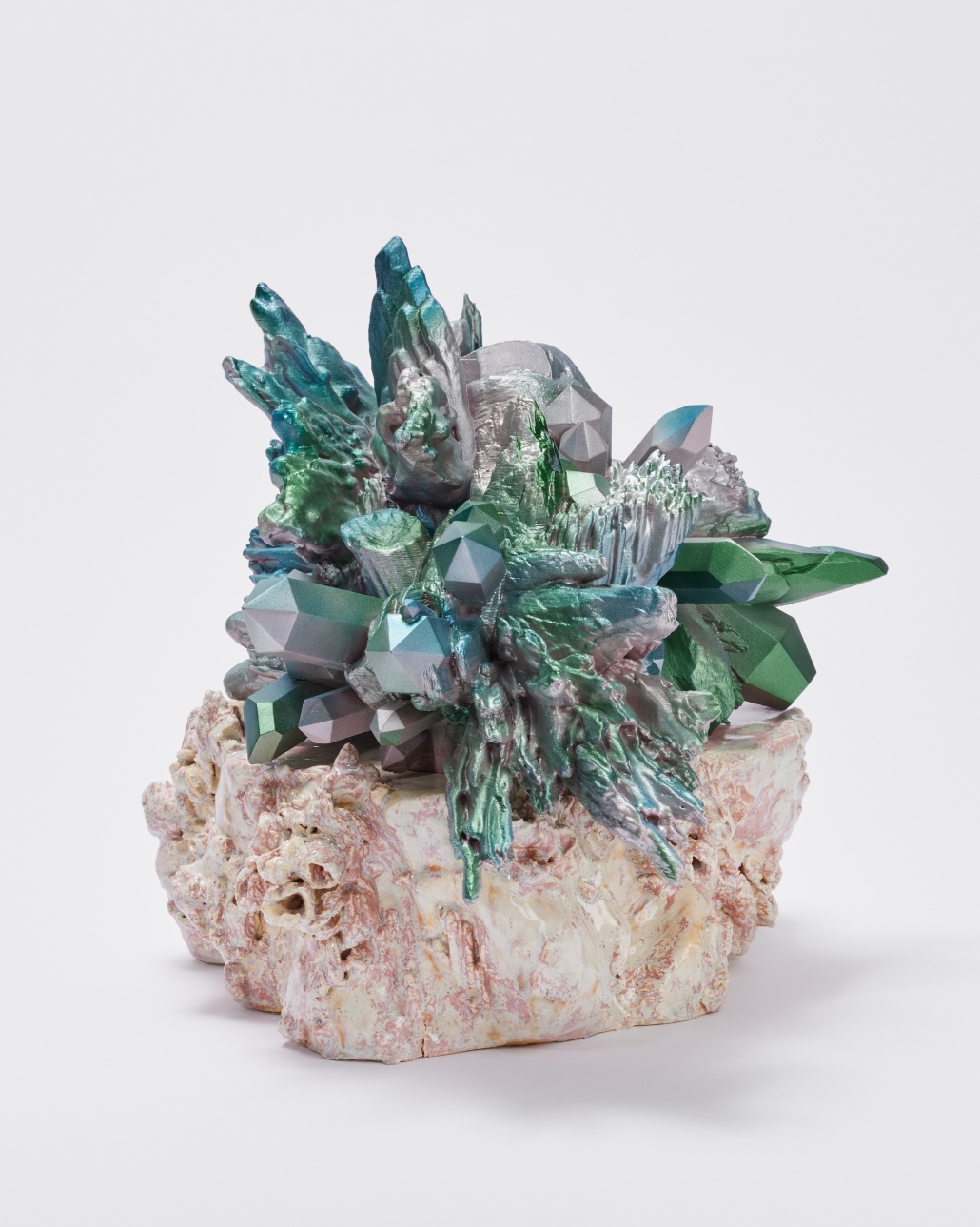
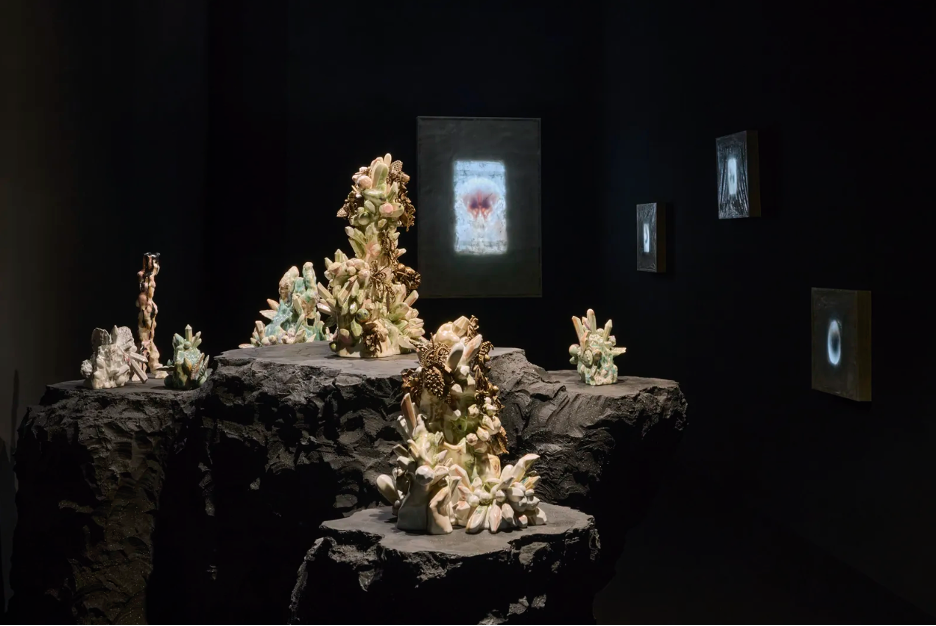
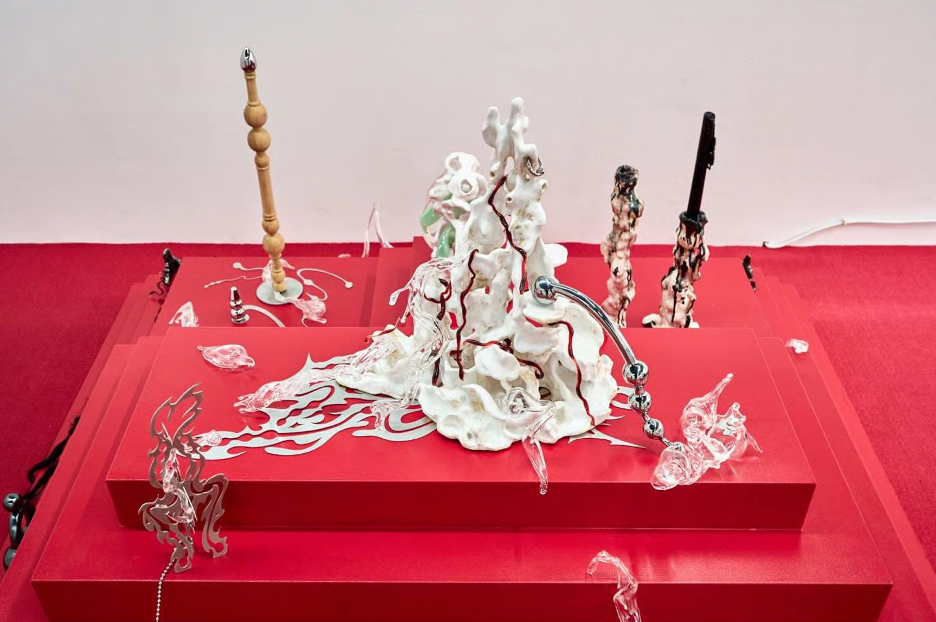
She collects fake accessories distributed in the market, makes multiple copies of them with silicone molds, and then recombines them to produce forms of which there is only one in the world. Up to this point, the work contains a consideration of the originality of art and the copy that may be somewhat conventional.
However, as these unique ornaments become exposed to distribution structures, the context of the work enters a new phase. Regardless of the intention of the work, new added value acquired through the process of distribution is attached to them. Although the somewhat strange forms of the rings are not easy to wear, they instead begin to be recognized for their original value as different from existing jewelry design and are exposed to the distribution networks of high art.
Situations continue to occur in which they appear on the covers of prominent fashion magazines, fashion photographs featuring the works are exhibited in national and public museums, and the works are displayed in showcases at luxury department stores.
Ornaments mixed with fake replicas acquire the value of art granted by museums, department stores, fashion magazines, collectors—that is, by capital. The journey of cheap replicas that, through repeated distribution, become adorned as high art without suspicion recalls a successful self-mythology within the capitalist system.
This is driven by the structure of capital, which turns even the fake into the real. At this point, the artist must have witnessed the phantasmagoria of art that creates the myth of the original. From this sense of skepticism, the place she went to was precisely the true site of production and the starting point of distribution for cheap accessories.
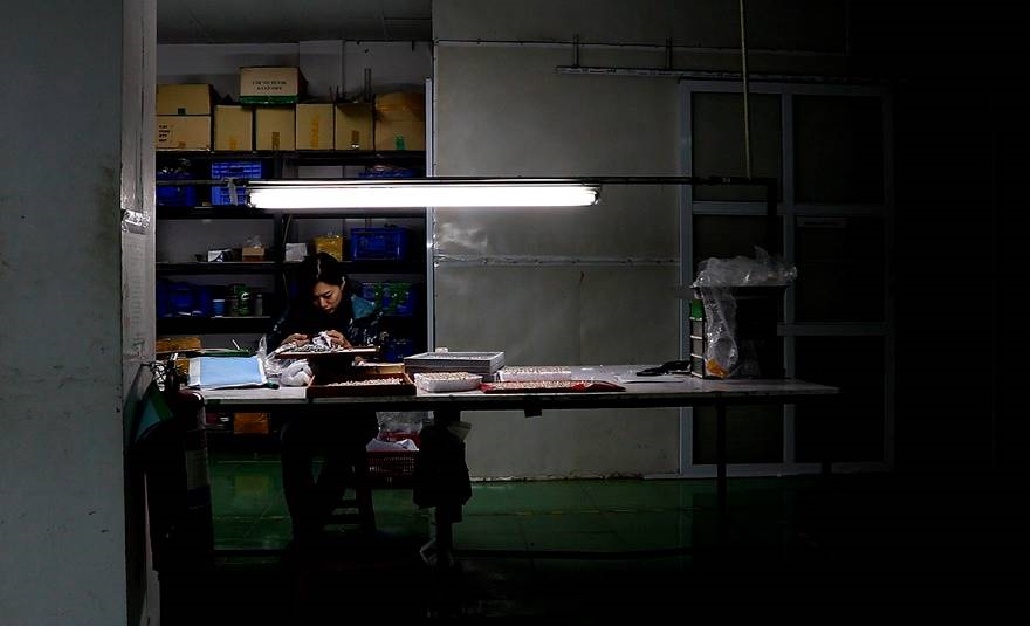
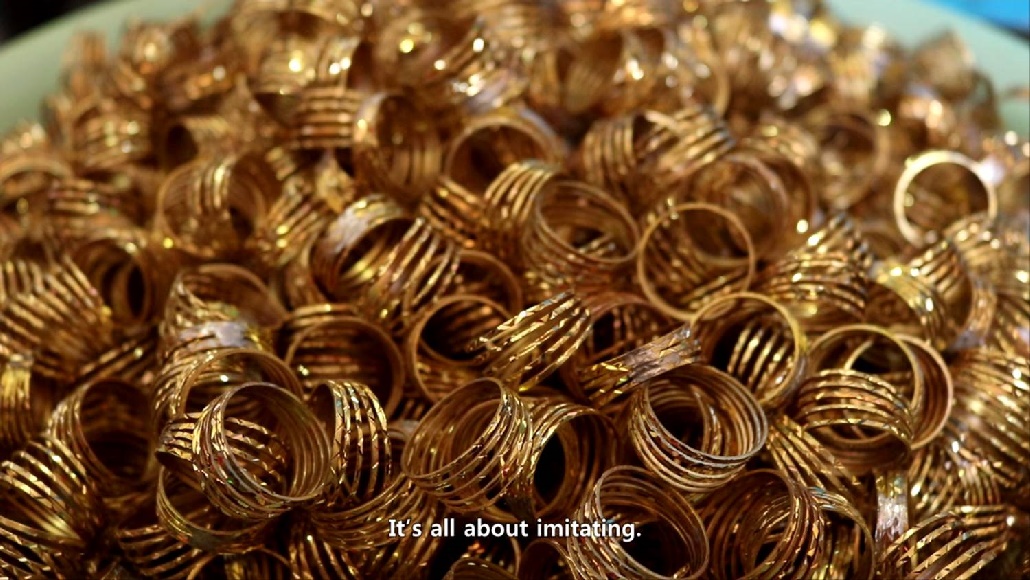
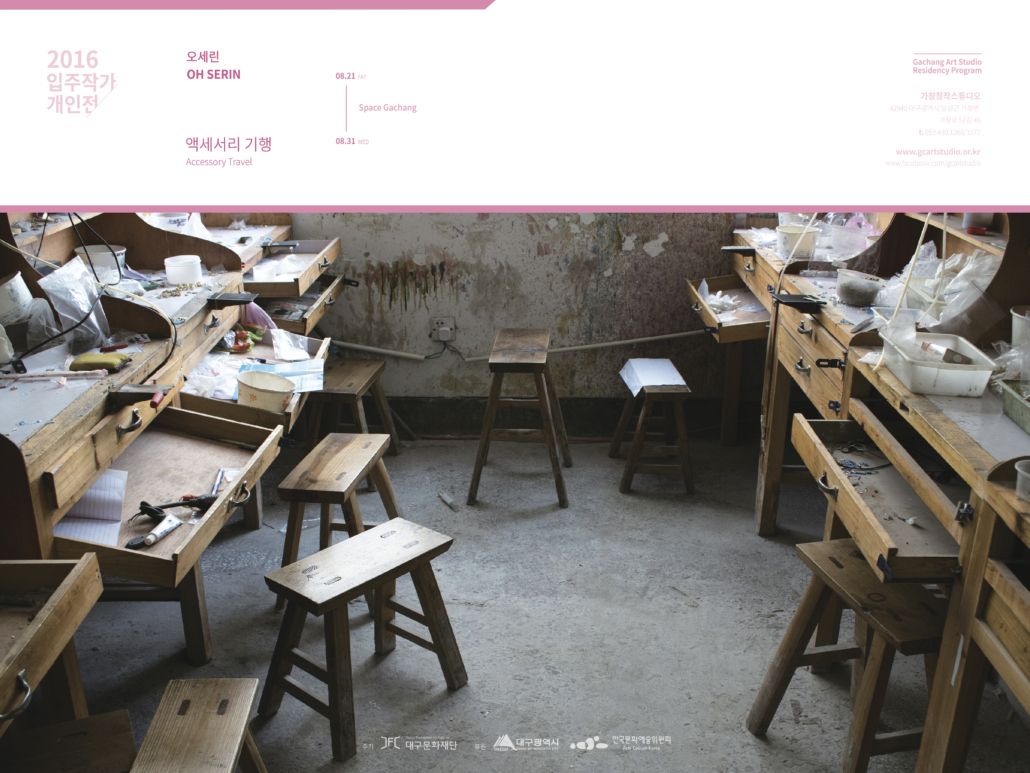
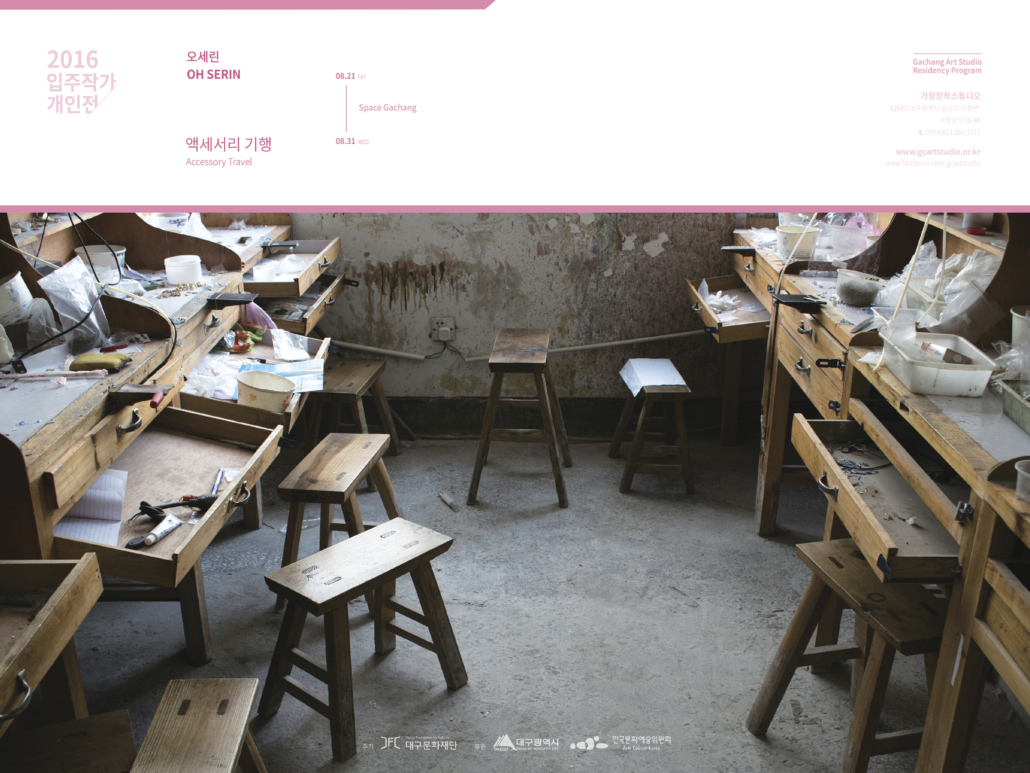
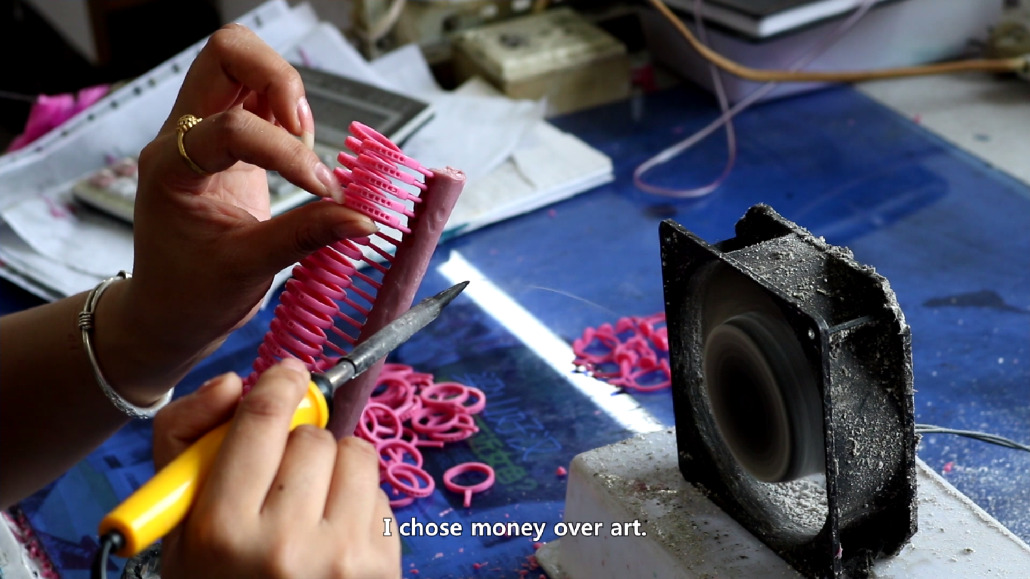
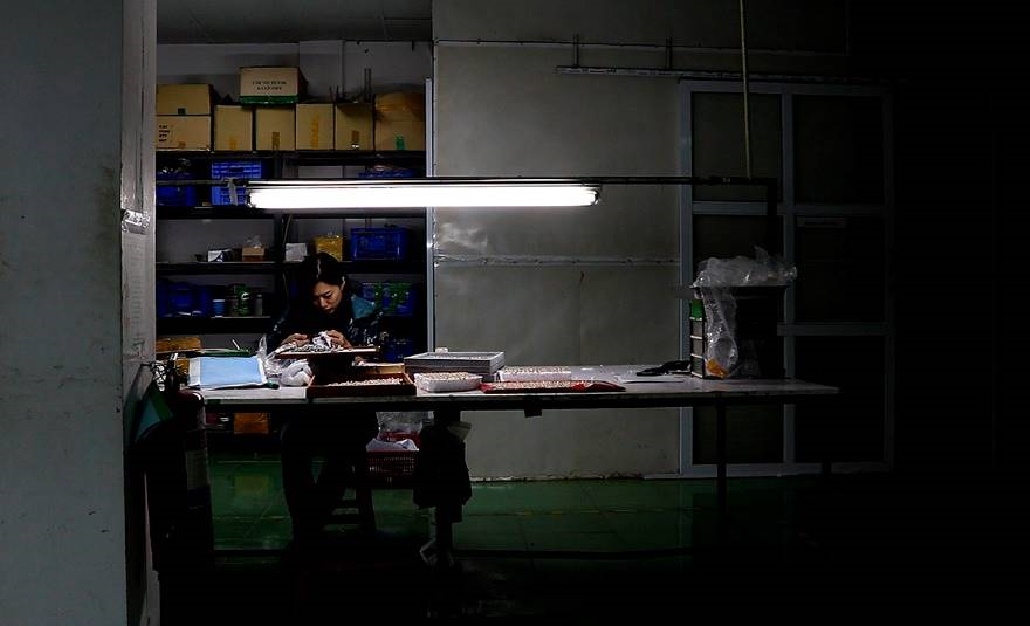
This year, the artist went to China through the Daegu Foundation for Culture’s overseas residency dispatch program and conducted factory filming and interviews in Yiwu (义乌, Yiwu), a production site for accessories around the world. The video work Accessory Travel: Seoul, Yiwu and Companion(2016), which contains this process, features an accessory market even larger in scale than Dongdaemun Market and a manufacturing factory run by a Korean owner.
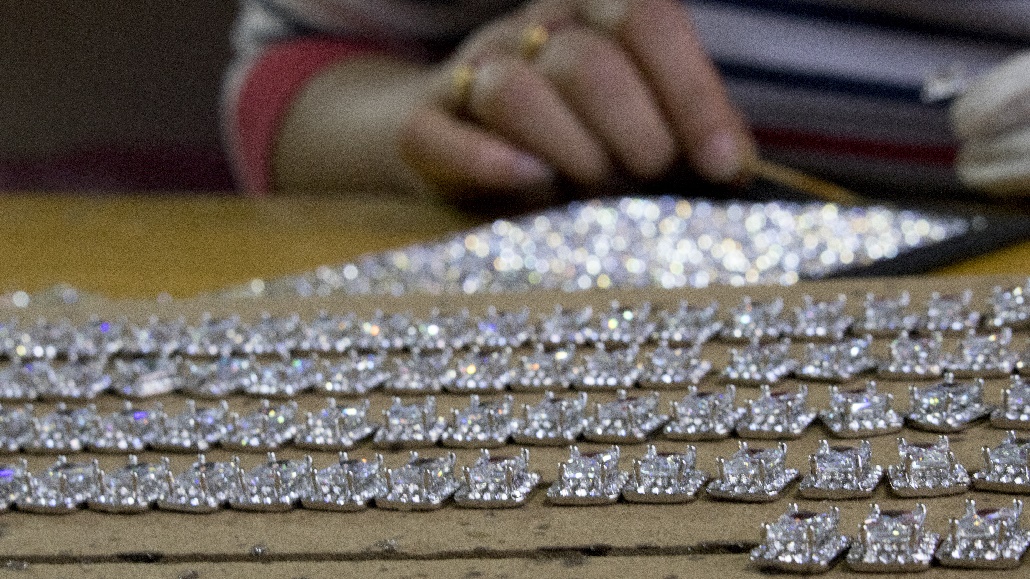
The machines of the factory and the hands of the workers move ceaselessly, almost like a single machine. Hands stained with black oil repeatedly place materials between machines, repeating mechanical movements hundreds and thousands of times. Within these movements, a single form is replicated into piles of thousands of accessories.
Accessories smaller than coins are produced through multiple processes, including casting, cutting, assembly, soldering, engraving, and plating. While the production process of the accessories passes across the screen, a man’s rough voice leads the synopsis of the video. The owner of this voice is Mr. Nam, the president of the accessory factory. Mr. Nam, who was once also Designer Nam, is a successful businessman who has established accessory factories in China and Vietnam and exports around the world.
The word that constantly appears in Mr. Nam’s speech, capitalism, reveals the system of today’s distribution market, where low prices have captured the market. “Low prices dominate the market. High prices dominate only 1%, but what can dominate everything is low prices.”
In a world where the fake acts as the real, cheap accessories that are more real than the real are sold in hundreds of thousands to markets around the world and satisfy the consumption tastes of the public.
The production structure desired by the majority of consumers, and the profits of capitalism, operate through mass production and consumption. It is not easy to criticize this tendency of consumption. This is because the psychology of consolation, in which ordinary people can easily acquire expensive values that they cannot possess, is contained in cheap accessories.
The structure of the survival of the fittest in the capitalist market transformed Designer Nam into President Nam. In his story, the substance of desire directly points to capital. His voice, which speaks of the system of society so explicitly that it is somewhat embarrassing to hear, contains the desire of an individual struggling to survive within the capitalist system.
The enormous fake system responds to the desires of consumers, taking hold of the surface of our lives and desires even more realistically than the real. Amid the fierce system of capital, the artist says that “now, I want to find the role of the artist between producer-seller-consumer,” and approaches the production system in which the fake is real, and the structure of a society in which production is consumption.
The fantasies contained in today’s structures of consumption and possession, and of the survival of the fittest, and the sparkle of cheap accessories stamped out in hundreds of thousands, may be the surface of that hallucination. “Do not start from the good old things, but the bad new ones.” This is Brecht’s phrase quoted by Walter Benjamin in “from the diary of 1939.”
The cheap accessories that the artist deals with are products that approach today’s dream phantasmagoria of consumption, possession, and power. There is something that must not be forgotten in these “bad new things.” It is the countless hands of factory workers, deeply stained with black grime, that appear in the video almost like parts of a machine.
The workers’ hands quietly reveal, beneath this phantasmagoria, the substance alienated from capital. Between the substance and illusion of capital and alienation, how the artist will go beyond exposing this and intervene in the contradictions between the falsehoods and realities of desire is something to watch further in the future.