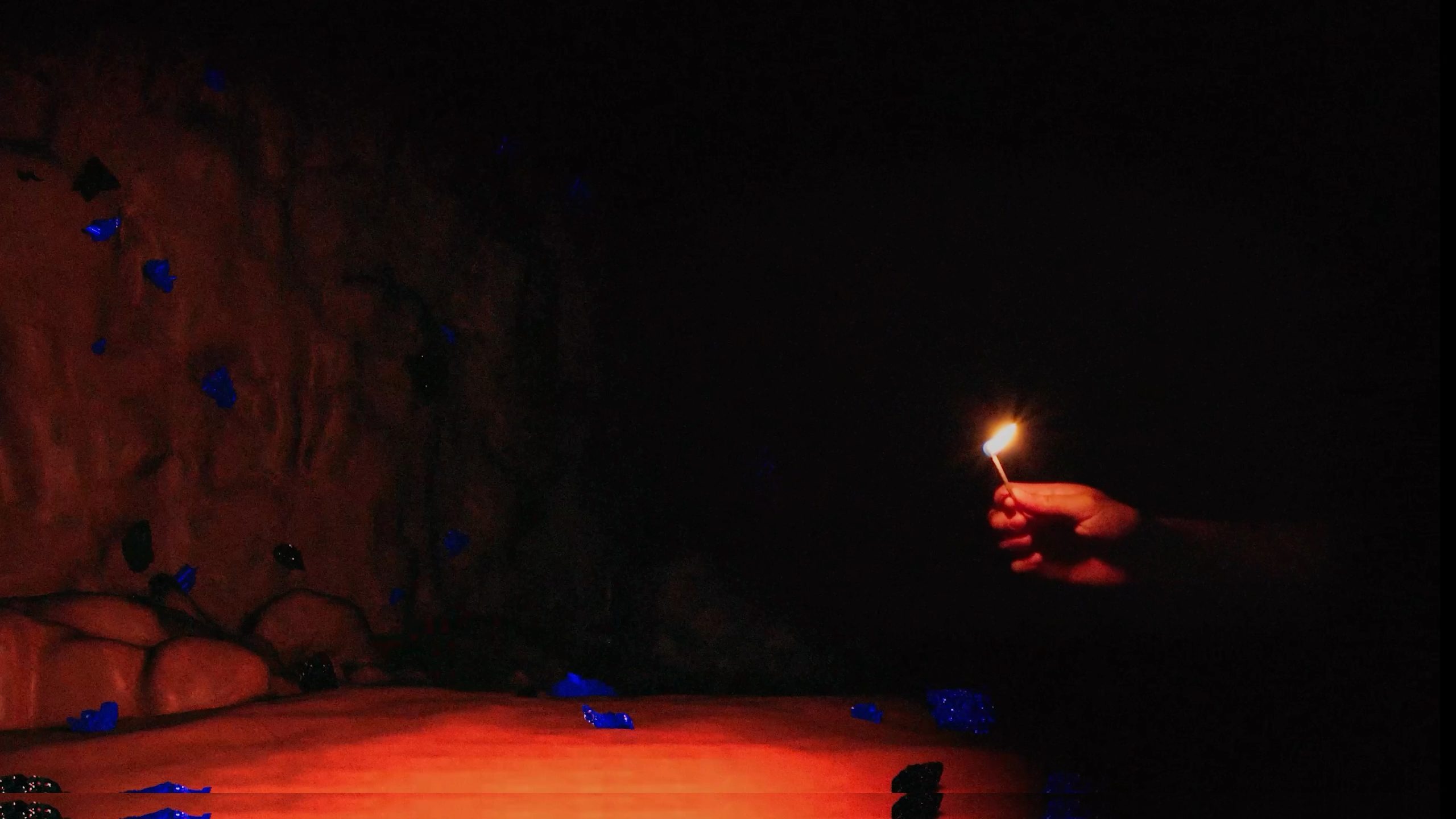
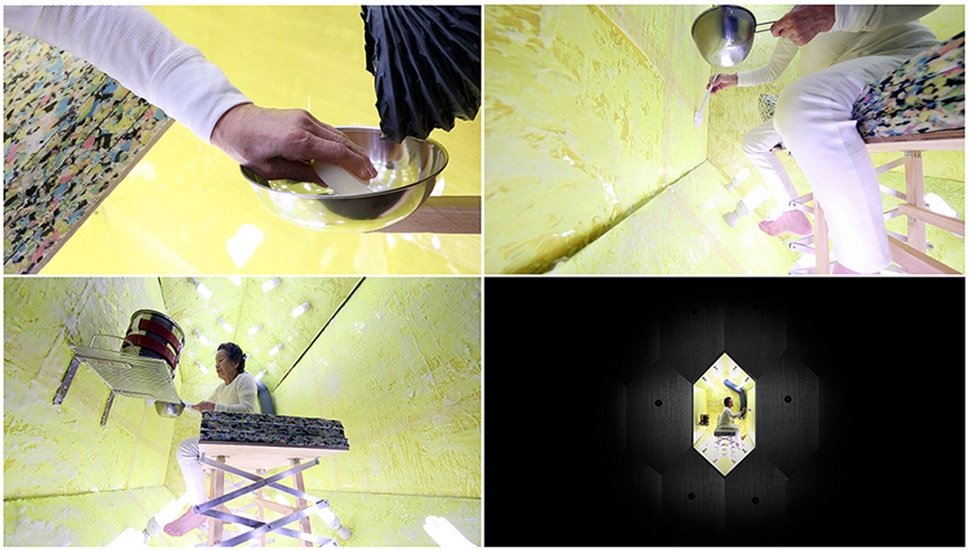
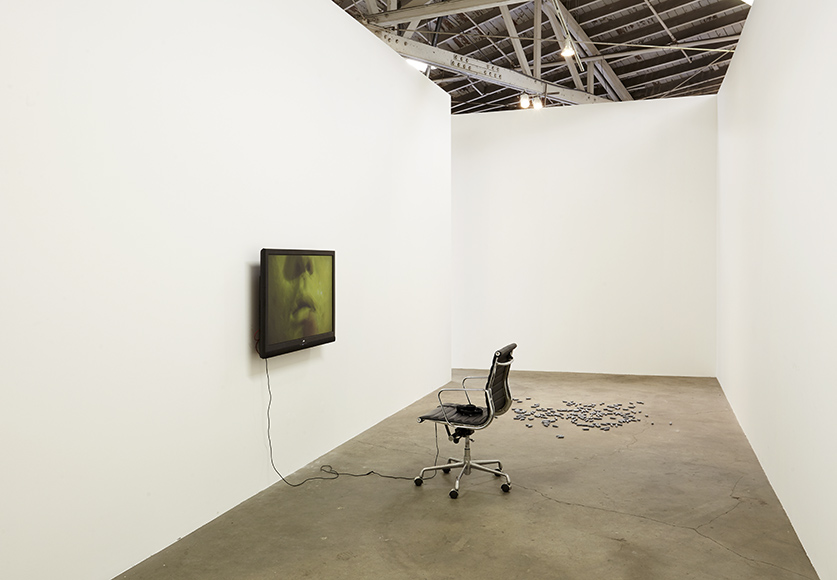
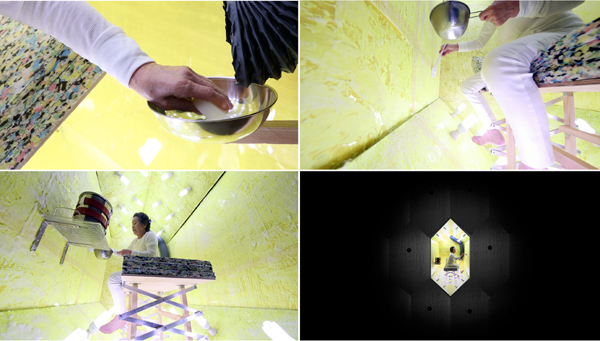
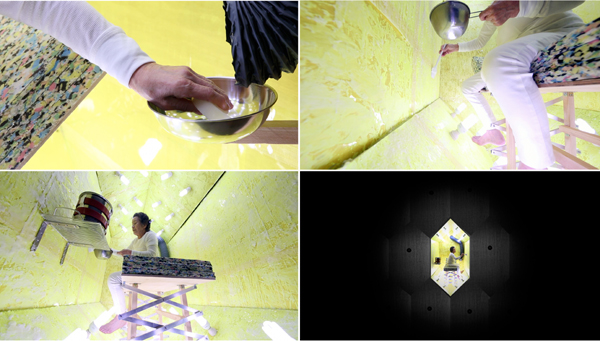
Gyung Jin Shin, Gray Hive, 2013, Performance video, 5 min © Gyung Jin Shin

Gyung Jin Shin's Variables:
Between Measurable Conditions and Immeasurable Outcomes


Artist – Beekeeper – Scientist

A beehive follows a set of principles. Although beehives are built in diverse environments and locations, they possess an inherent order of their own. From the honey produced through a special coating that covers its surface to the perfectly formed structure that allows bees to preserve themselves in comfort, the beehive is fundamentally governed by regularity.

Moreover, the social organization of bees is itself structured according to precise principles. Like ants, honeybees form highly sophisticated social communities in which each individual performs a designated role. Finally, the methods by which bees collect nectar also proceed according to established rules. Humans, in turn, have studied and adapted the design of the beehive.

For the sake of convenience and in response to local needs, they have created artificial hives and endowed them with new forms: hives shaped like houses with mailboxes, or towers stacked upward from the ground. While the immutable hexagonal structure of the beehive remains, new variations are continually added according to necessity.

The reason for beginning this exhibition text with an extended discussion of beehives is that, in several respects, the process by which beekeepers employ and modify the principles of the hive resembles Gyung Jin Shin's own artistic process. Both the beekeeper and the artist spend long periods observing nature and, from that observation, discover certain principles.

This is not to suggest that the artist and the beekeeper perform the same task. Whereas the artist seeks to expose the limitations and flaws of existing principles through a negotiation between contingency and order, such purely intellectual concerns would be a luxury for the beekeeper.

For one who imitates the structure of the beehive, every process is ultimately directed toward preserving the bees safely and harvesting honey according to human needs.

Nevertheless, as is often noted in discussions of art and science through the example of Leonardo da Vinci, the discovery of principles and the identification of variations arising from them are concerns shared by both scientists and artists. In particular, for artists who seek to introduce scientific concepts or methodologies into art, scientific knowledge and systematic approaches are indispensable.

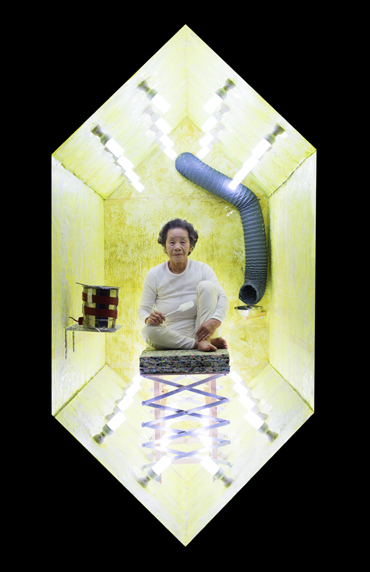
Moreover, in her preoccupation with the principles of nature and the subtle errors and deviations that emerge from them, Shin's practice bears a resemblance to that of the beekeeper. In this solo exhibition, the artist presents a honeycomb-like architectural structure and a video depicting the daily life of an elderly person living alone within it.

Shin sought to reflect in the work the bee's instinct to construct its dwelling through the production of beeswax. Video projections announcing morning and night at regular intervals are cast within the structure, and the performer portraying the solitary elderly resident is given coin-shaped pieces of beeswax every morning.

As if becoming a bee, the performer repeatedly melts the wax using a device inside the room and applies it to the walls, gradually thickening their surfaces. The interior walls eventually become covered with sticky layers resembling those of a beehive.

In the end, the artist assumes and performs the role of an entomologist or a beekeeper, producing diverse outcomes by continuously introducing specific principles and variables into an experimental environment.


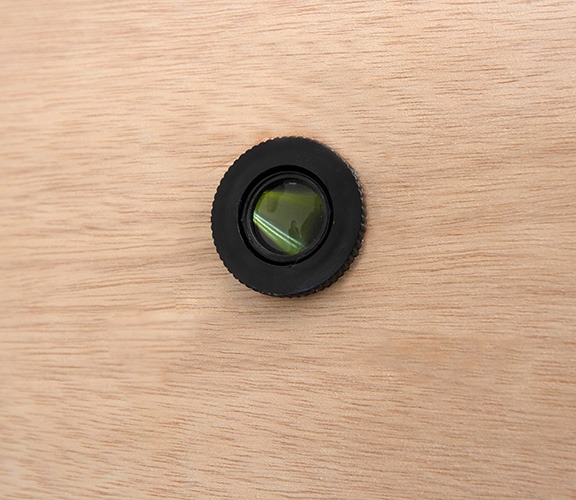
Gyung Jin Shin, Gray Hive, 2013, Digital print, 84 x 118.9 cm © Gyung Jin Shin

Disrupting the Principles of Nature

Upon closer examination, however, Gyung Jin Shin's approach differs from that of beekeepers or Renaissance artists. Unlike the artist-scientists who believed that universal principles exist in the world and that the shared purpose of art and science is to discover and realize those principles, Shin pursues a different objective.

More precisely, rather than merely observing the variables found in nature, she actively introduces such variables herself. Taking note of the fact that a 30 percent chance of rain in weather forecasting represents one of the most unpredictable probabilities, she programmed a machine to produce rain with a 30 percent probability so that this unpredictability could be materially realized.

In another work, she simulated the condition of the sun using far-infrared rays, but programmed a light bulb to illuminate with a probability of approximately 93.5 percent, causing it to flicker anxiously and unpredictably—even to the artist herself. From a position more active than that of the passive artist-scientists who sought merely to uncover the laws of nature, Shin stages and produces contingent situations.

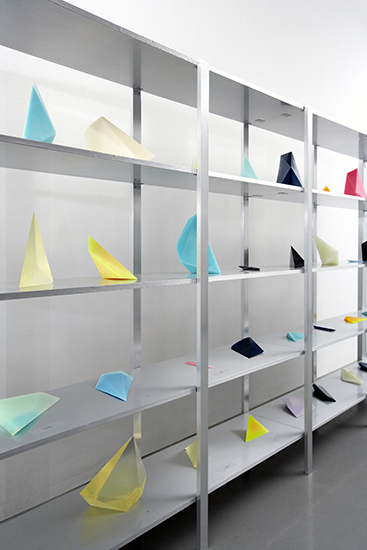
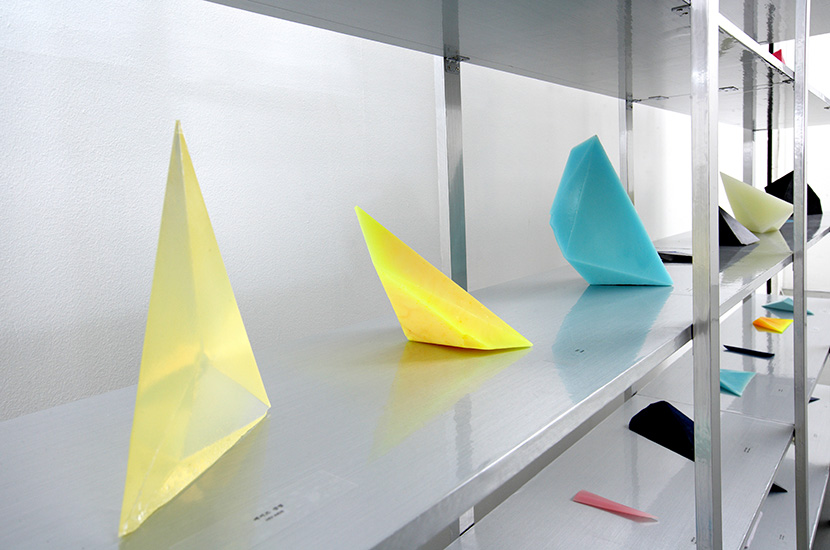
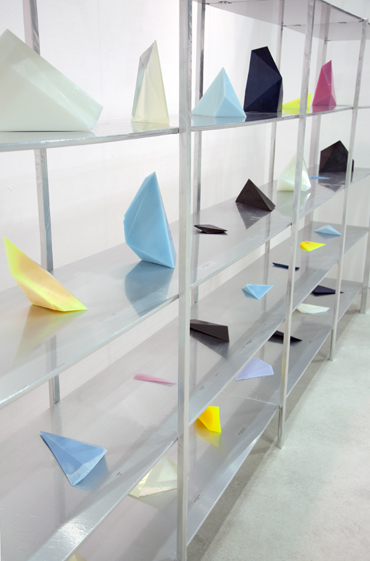
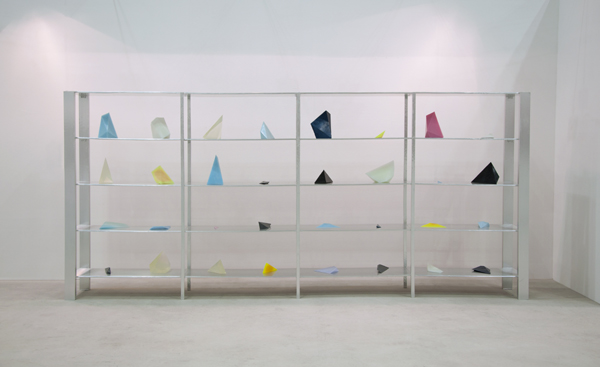
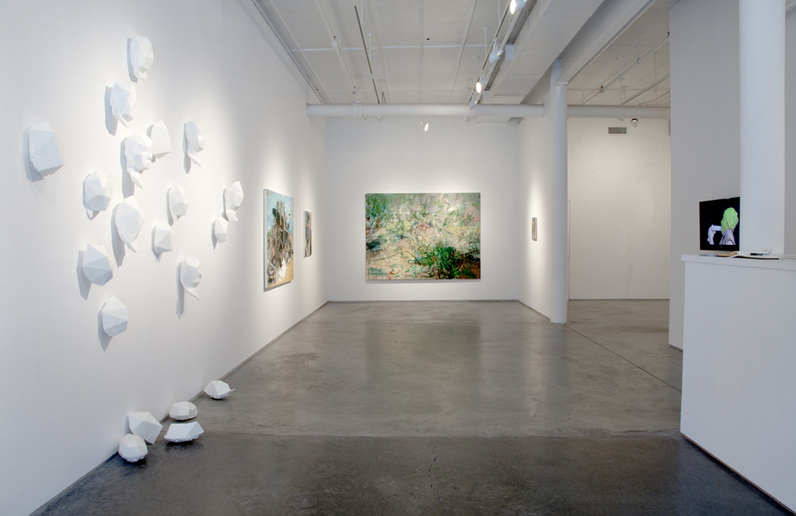
In the table installation presented in this exhibition, the artist likewise collects actual objects that correspond to such contingent situations. She intervenes only minimally so that these objects may be recognized primarily through their basic forms. By coating the surfaces of the original objects with plaster, she suppresses their individual characteristics and arranges them upon a table.

In one sense, this process excludes the specificity of individual objects and subsumes all forms into a typological order. These objects are then placed upon a kind of diagram that simplifies what the artist has recently identified as the fundamental substances of the world.

As defined by alternative religions such as Zoroastrianism, Jewish Kabbalah, and Buddhism, the diagram indicates that the four elemental forces governing the world occupy different parts of a circle, and that diverse phenomena emerge through their encounters and collisions.

In other words, individual mutations and manifested phenomena are placed upon a table that contains the principles of order and change governing the myriad things of the universe.


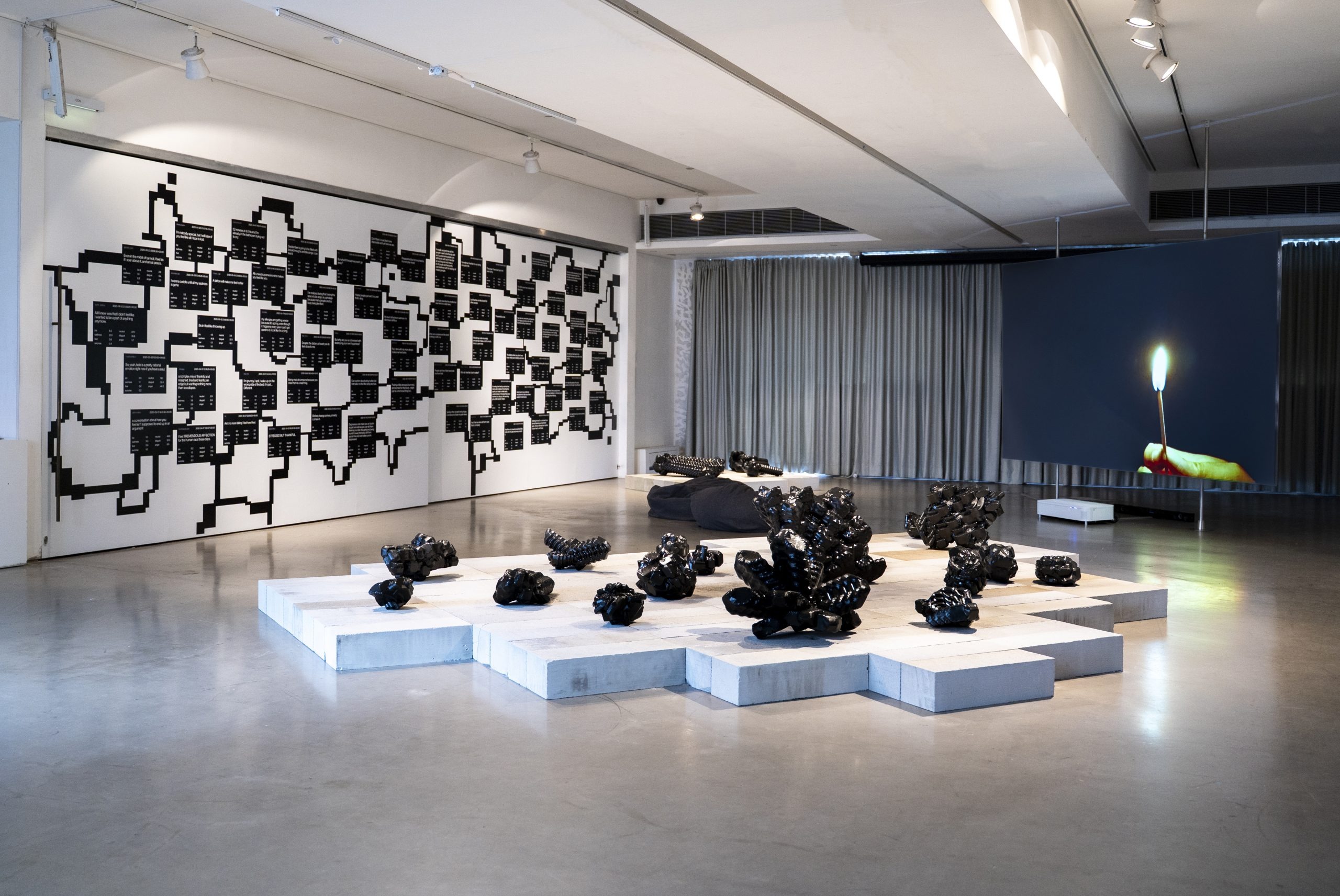
Gyung Jin Shin, Specimens of the Globe, 2012, Pigment, epoxy, and MDF, 180 x 320 x 35 cm © Gyung Jin Shin

Using the Body

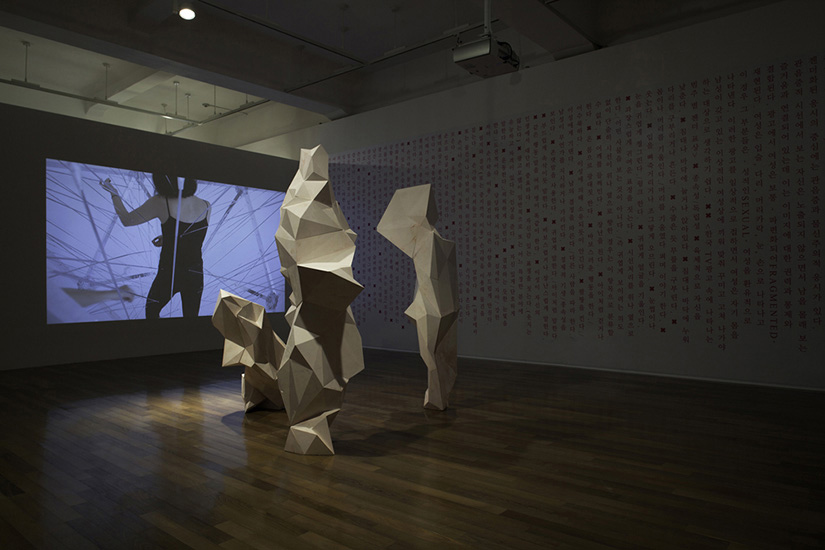
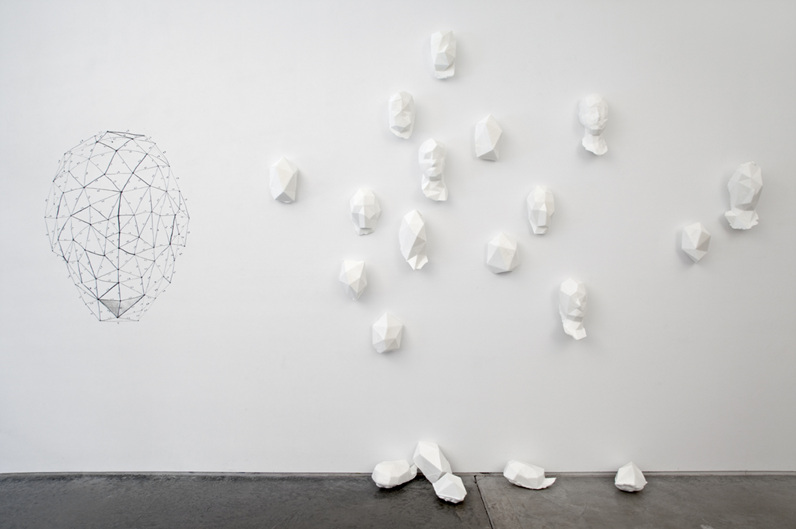
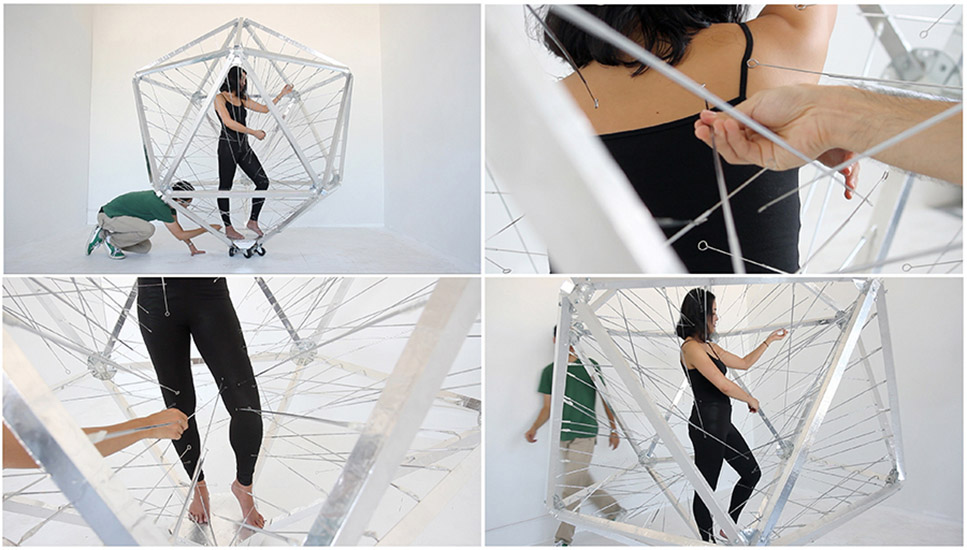
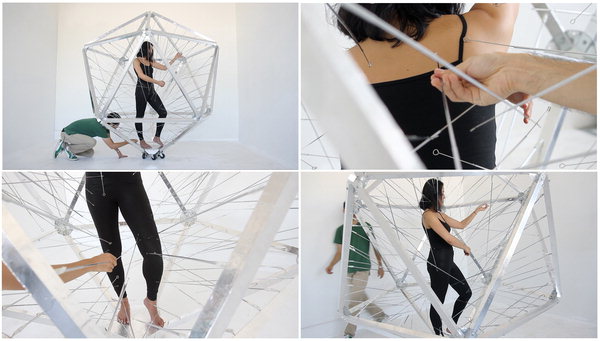
One of the key materials that Gyung Jin Shin employs in emphasizing the principles of nature and the processes of individuality and variation that emerge upon them is the body. For example, her body-measuring device Mimicking Venus (2012), presented at the Incheon Women Artists' Biennale, clearly demonstrates this process. The artist presses each of the pins connected to the interior of a giant sphere against her own body.

Within a generalized form, the particular conditions of the artist's own body are registered, making it possible to measure the body as a whole. The work recalls Renaissance methods of depicting the nude, in which the female form was produced as a variation of an idealized male body, as well as Leonardo da Vinci's facial drawings, in which countless variations emerged from an idealized visage.

Of course, the fact that the female body, or the figure of a sinner unable to perform virtuous acts, becomes a variation in this context can be understood as a natural consequence of male-centered traditional aesthetics.

Indeed, the way in which the artist measures her own bodily form in Mimicking Venus signifies, both symbolically and literally, a deviation from an established principle. In this process, the specificity of the body—its irreducible and ungeneralizable particularity—functions as a crucial variable.

In Pyramid Project (2008), the artist takes as her point of departure the claim that the ancient Egyptians determined the proportions of pyramids according to the radius of the Earth and substitutes, in place of the Earth's radius, the circumferences of the bodies of people she knows. The result is a series of pyramids with elongated and varied proportions that reflect the diversity of human bodies rather than stable geometric ratios.

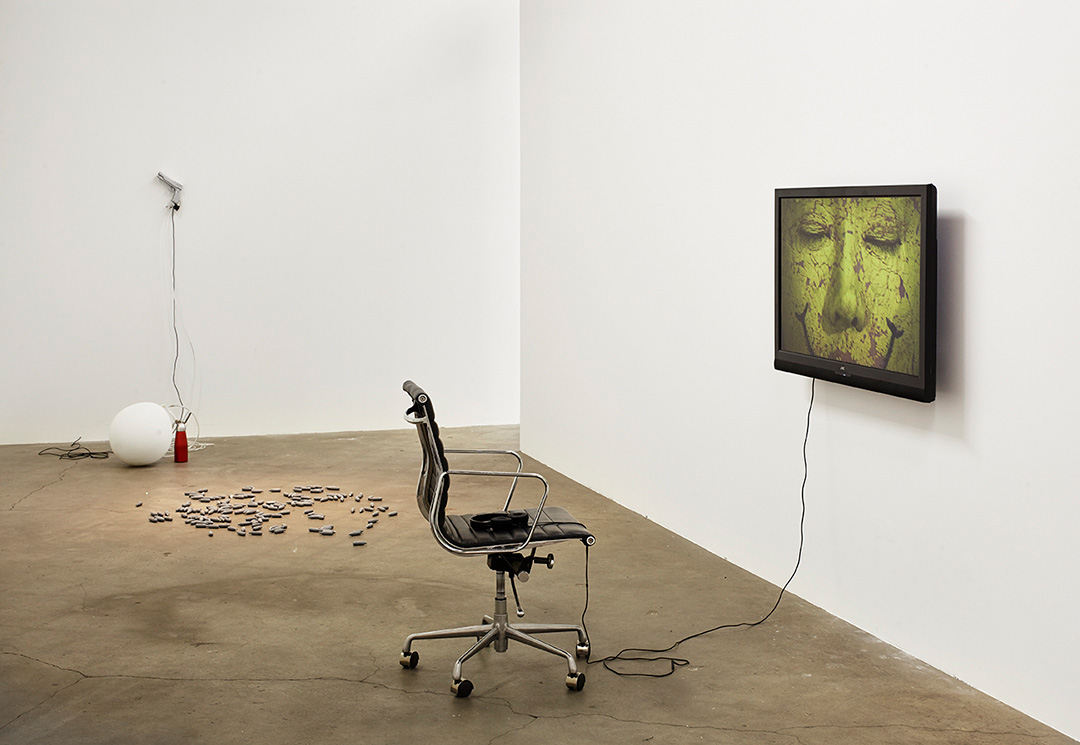
In works such as Smiley Suicide (2009), deviation can also signify deficiency. The artist directly experiments on her own body in order to observe the changes that occur when the brain is deprived of a small amount of oxygen. After inhaling laughing gas emitted from an ominous gun-shaped apparatus, she enters a peculiar state in which she is neither completely unconscious nor entirely normal.

This hazy condition corresponds to a state in which the brain lacks approximately one percent of its required oxygen. Yet even this minor variable brings about significant changes in the body, and the artist compares this condition of reversal to a suicidal act, one that carries the terrifying implications of self-destruction.


Gyung Jin Shin, Specimens of the Globe, 2012, Pigment, epoxy, and MDF, 180 x 320 x 35 cm © Gyung Jin Shin

Between Measurable Variables and Immeasurable Outcomes

Examples of artistic practices that negotiate between everyday reality and variables are frequently found in contemporary art. In the 1960s, Sol LeWitt, who had studied architecture, was interested in alternative mathematics, and many Conceptual and Minimal artists considered how seemingly simple and repetitive cubes might be transformed and arranged through the introduction of minor variables.

Underlying these concerns was the belief that such simple and impractical installations could ultimately reveal an alternative order of principles. This aspiration had already appeared strongly during the more idealistic and rational period of the Renaissance in the West. Gyung Jin Shin's experimental and installation works follow this art-historical lineage.

For the artist, who spent two years in a university robotics club exploring new forms of robotic movement, scientific and physical knowledge constitutes a practical reality grounded in objective foundations.

However, just as human scientific speculation itself remains imperfect, the artist rejects the absoluteness of scientific principles and the complete predictability promised by statistics. More precisely, the variables that Shin employs derive from scientific knowledge, historical knowledge, and scientific systems.

She uses mechanisms such as robotic programming to ensure that these numerical conditions are faithfully reflected in their outcomes. From the 30 percent probability of rain in weather forecasts to a pyramid-casting machine based on the geometric principles of pyramid proportions, she consistently applies specific variables within her works.

Yet despite these scientific and systematic processes, the conditions that Shin produces—for example, her own physical and emotional state under oxygen deprivation—are not those commonly encountered in scientific experiments.

Ultimately, the conclusion she seeks is not another generalized law discovered between everyday reality and variables. Rather, by foregrounding variables themselves, she appears to seek the creation of entirely new and particular situations.

At this point, the viewer may ask: What is the creative situation that the artist seeks to produce between predetermined variables and immeasurable outcomes? And what might viewers gain through experiencing such situations? If the work were merely an experiment in variables, her artistic practice would appear to be an excessively intellectual scientific experiment.

Conversely, if only the unpredictable results generated by those variables were emphasized, Shin's work could be seen as a mere gesture employing scientific knowledge—a kind of "science show."

Gyung Jin Shin's first solo exhibition in Korea thus marks an important occasion, revealing for the first time the direction the artist may take between intellectual experimentation and scientific spectacle or gesture. Ultimately, viewers too will have to consider carefully what new forms of knowledge and experience may emerge when art encounters science.

References