You come silently, secretly
You come to awaken anger and happiness
And then cause this frightening anguish.
Setting fire to what you touch
Planting dark thirst in every object.
- From Poem by Octavio Paz
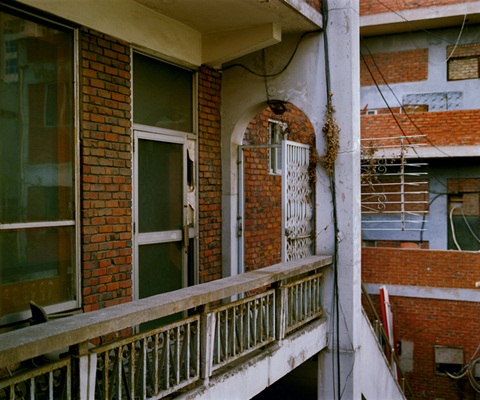
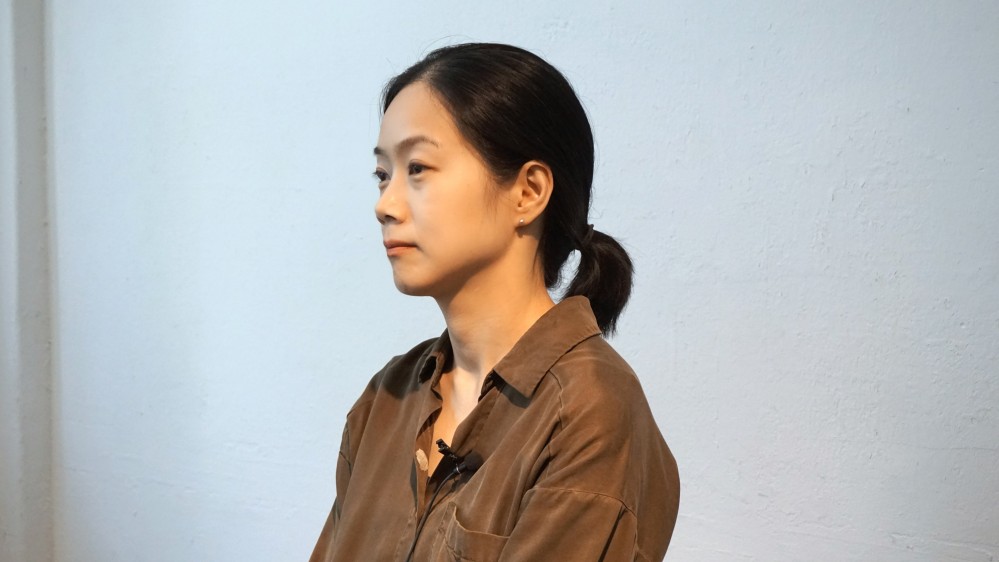
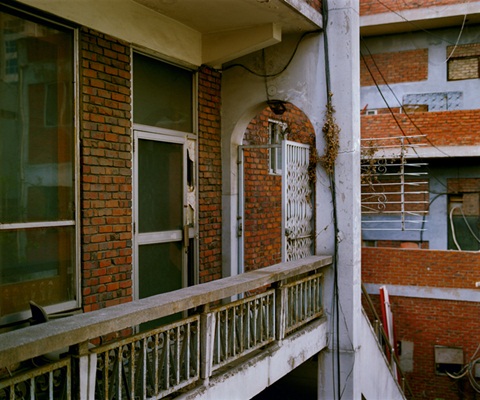
Boyun Jang "trespasses" on "empty houses," where someone once lived, but now there is no one and only the dusty ruins remain. Though no one has ever invited her into those spaces, she enters and documents them continuously. In short, she is an "uninvited guest" or "trespasser." But if we think about it, since it is an empty house, there is no subject to invited her, and of course no subject to refuse either.
Nevertheless, the reason I call Jang's action "trespassing" is because though the residents are absent, their trances still exist here and there. The objects left behind, such as the doors and windows, which protected the inhabitants from intrusion, the bed, clothes, forks, chopsticks, radio, which accompanied the tiresome or happy daily life, and the discolored yellowish wall paper, which silently listened to the joys and sorrows of the owners are now just trash.
Once extractions from life that filled the desires and needs of the residents, they now fill the "empty house." The motivation that made Boyun Jang continuously “trespass" on a certain space is the objects that seem to be placed meaninglessly throughout the empty house. And the important thing is why Boyun Jang encounters these meaningless objects and substitutes them for beings of significance.
In fact, it is not important to the "intruder" why the previous residents left or why they discarded―or just left―several articles there. What is important is that such objects have taken over the empty house. First let us look at the objects encountered by the artist.
There are broken windows, a bed and worn out trousers, many medicine bottles on the floor, a chopstick that lost its twin and is hanging around with a fork, old papers stacked in one side of a bookcase, a misplaced heavy radio that looks like it is lost, a water bottle containing someone's leftover drinking water, a necklace on the floor, knocked over medicine bottle and scattered pills, etc.
There appearance is flawed compared to what they must have looked like with their owners. They are covered in dust, lost their partners, or unable to find their place. In short they are useless objects. But it is clear that the objects came to dwell in the house because they met the needs and desires of the residents, and such relationships were maintained until the residents left.
Though they became useless with the departure of their owner, if the scent of the residents are still there, are the objects useless or still useful? If we try to guess what Boyun Jang would say to this question, she would say they are useless objects, but become useful as they are "faced and looked at."
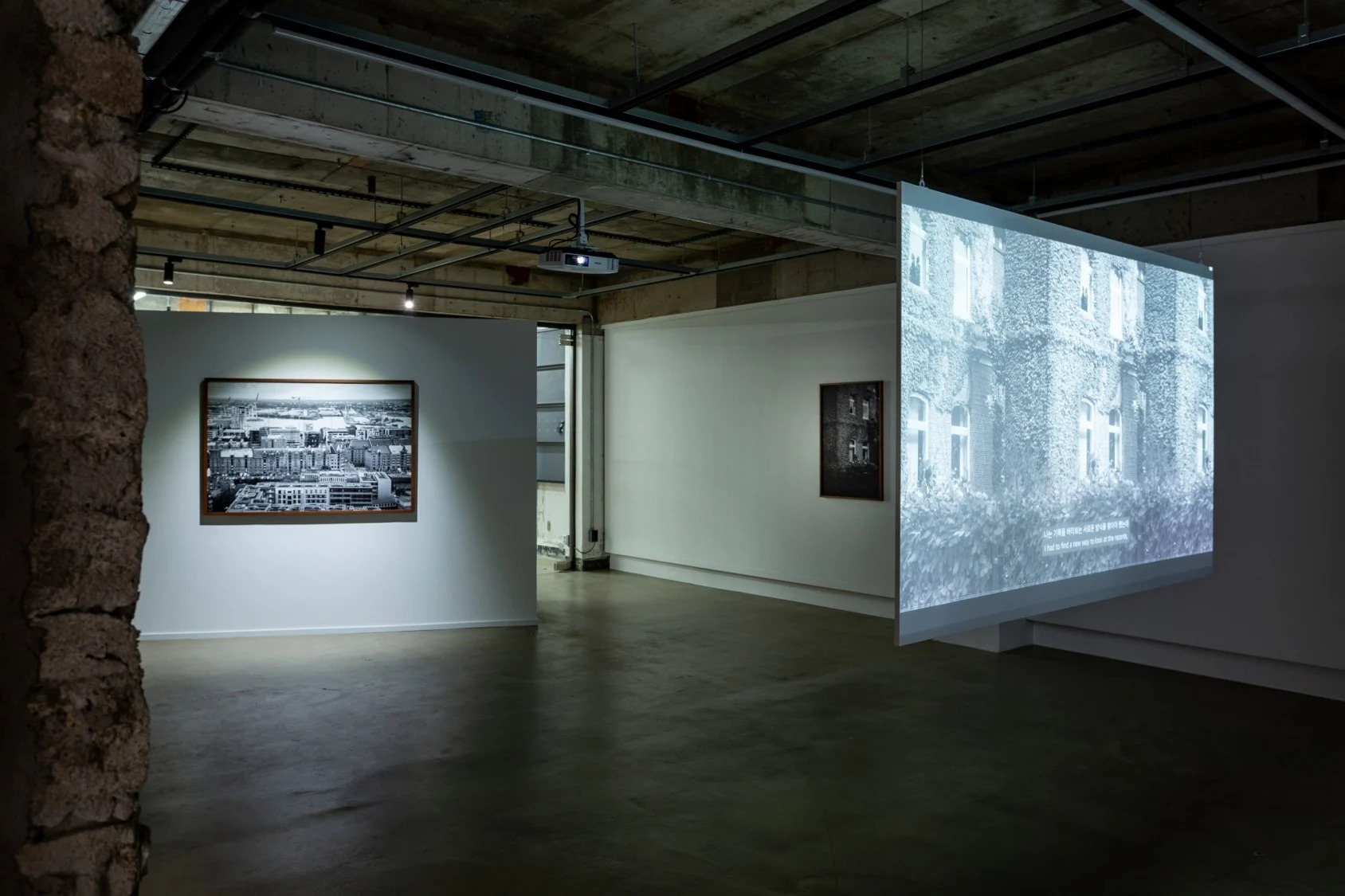
Among the works of Boyun Jang, which mainly focus on single objects to compose the pictures, there is one photograph in which many objects appear at once, unlike the others. In the picture, there are two open magazines, cushions scattered about, an electric fan on the left, various sorts of clothes and hangers stacked up behind the fan, and picture frames, product boxes, papers and pieces of plastic scattered on the floor.
In a glance, this photograph with a mixture of complex objects, which shows a drastic difference from the other works, could be seen as to deviate from the overall context of the work. But this work is an important piece that completes the overall context while forming an antithesis with the other images.
Unlike the other works, in which one object dominates the light and the surrounding areas are darkened―even if the background is lit, everything except the subject is taken out of focus―to lead the objects into an unrealistic context, this work eliminates dramatic effect using the light and darkness. Rather, it maximizes the gloominess of the image by making the picture dark overall.
The light and darkness takes over the picture-plane evenly, while the objects are scattered here and there like trash. This is the image of the "empty house" we generally picture in our minds, and the first-hand image of the "empty house" encountered by the artist. Actually, the term "empty house" is from the standpoint of the resident. From the standpoint of the objects, it is just a "house" in which they still live.
The photograph maximizes the overall images of the collection of things left behind from the resident's point of view, but rather excludes the stories about the objects, which contain the memories of the previous owner and continue to live today. In other words, this work seems to play back the memories of the "resident" through the objects.
But Jang Boyun does not stop here. She arranges the objects in the photograph―even if they do not appear in the same exact way―in different works as single objects to face each of them directly.
Most of Jang's works place single objects in the center of the picture where they receive strong lighting, and demarcate the surrounding areas with darkness. Here darkness is a device to build composition, but also a means of distancing, to divide it from phenomenal world. Such attitude is not active intervention or indifference, but is the standpoint of a neutral and objective observer.
Such composition through the contrast of light and darkness originates from Caravaggio of the Baroque era. Through such compositions, he brought out deep introspection of humans' inner selves. In a similar context, Boyun Jang makes the object and camera face each other to capture the lyricism immanent in the objects.
With the extreme contrast of light and darkness the objects become unrealistic beings. Due to this they free themselves from the meaning of "useless object"―whill freeing themselves from the meaning they established with their owners as well―to be given new vitality as "objects of use" by artist Boyun Jang.
Now we can figure out the answer to the question presented above: "Why does she encounter these meaningless objects and substitute them for beings of significance?" Because in fact the objects in the empty house have no relation to the artist, they approach the artist "silently and secretly," but the moment they encounter they have new "experiences" and create new "memories.'
That does not mean the memories of the previous residents immanent in the objects vanish. They still remain behind the objects and evoke emotions from the artist which could be either "anger" or "happiness." Such relationship does not stop at "object→artist" but could also go the other way from "artist→object," as the artist's emotions are transferred to the objects.
This relation of tension between the objects and the artist become a momentum for the artist to look back on her life and cause a "frightening anguish," which had been unforeseen.
In a time of complex and rapid change Jang Boyun strictly faces objects with traces of the past, thus reflecting not on the traces of the previous residents, but on herself. The useless objects abandoned by the former residents are recomposed through the language of Boyun Jang.