It seems undeniable that painting occupies an increasingly precarious position within the trajectory of contemporary art. From the standpoint of painting, the assault of modernism left deep and lasting scars. Once the American critic Clement Greenberg (1909–1994) pronounced his reductive definition of painting, the medium was stripped of every illusionistic element of representation—its architectural suggestion of space, its literary capacity for narrative, and everything else that exceeded its material condition.
In the end, all that remained was flatness, the two-dimensional plane. Yet even this conclusion proved difficult for many artists to accept—particularly those reluctant to submit to Greenberg's theoretical framework. Lucio Fontana (1899–1968), for example, slashed the canvas with a knife, asserting a physical presence that challenged painting's supposed flatness.
Frank Stella (b. 1936), meanwhile, introduced the shaped canvas, proposing the possibility of painting as objecthood. For both artists, painting could exist as an autonomous object without conforming to the doctrine of flatness. Eventually, Donald Judd (1928–1994) pushed this trajectory even further, arranging three-dimensional geometric structures directly on the wall.
These empiricist strategies were remarkably astute. Without reintroducing the representational qualities Greenberg had rejected, they nevertheless demonstrated practical ways of contesting his theory of flatness. Yet their very success also left painting in an increasingly ambiguous position.
Has art truly escaped the constraints of Greenbergian formalism and achieved complete autonomy? This is hardly a question that admits an easy answer. Even after the radical reactions against formalism, artists and audiences alike have remained unable to entirely free themselves from that historical momentum. We continue to respond most favorably when painting appears least like painting.
Indeed, it would not be unreasonable to broaden this observation and say that we tend to appreciate art most when it appears least like art. Such a tendency has continually legitimized experimental practices employing new media as well as materials traditionally considered external to art.
Whether originating from painting or developing independently of it, other artistic disciplines gradually came to dominate the contemporary art world. Installation, media art, and performance are among the most prominent examples. In time, they established their own visual languages, ones so fundamentally different that painting often seemed unable to compete within the prevailing discourse.
Within the broader field of contemporary visual art, painting has clearly endured a difficult and demanding period. It has become increasingly rare for painting to deliver the kind of radical contemporaneity or startling innovation that once seemed possible. There was, of course, a moment when theories of simulation elevated reproduced images into a contest over authenticity and originality, bringing renewed attention to artists associated with Photorealism.
Much time has passed since then. Even so, imagining a form of painting that works purely through images while still offering something genuinely compelling remains an unexpectedly pleasurable exercise. Perhaps this lingering hope stems from painting's former glory. There was a time when painting occupied the throne of the visual arts, when it was difficult to imagine any artistic practice outside of it deserving the name of art.
The contrast between that past and the present only heightens a certain sense of pathos. Whenever even the slightest possibility of renewal appears, one feels compelled to rush toward it, hoping somehow to contribute to painting's continued survival. And perhaps such a possibility, however faint, has indeed begun to emerge. The name "painting" has not yet been added to the list of the deceased.
To rescue painting from its current predicament, we may first need to reconsider what is most intrinsic to the medium. That is, we must recall painting as a practice devoted entirely to the image. Before discussing such painting in earnest, however, it is worth tracing the genealogy of the image itself. Our expectations of images have always evolved alongside the emergence of new media.
Consider the camera. It was invented as a device for fixing the appearance of reality onto the surface of paper. From that moment onward, visual media concentrated on improving their capacity for representation—from black-and-white to color, from low to ever-higher resolution. The computer, by contrast, began from a position far behind in its ability to render convincing forms.
Early computer graphics, with their conspicuous square pixels, bore little resemblance to reality. Yet graphic technology advanced with astonishing speed. Each new generation of video games and films featuring computer-generated imagery seemed to surpass the last. Before long, digital graphics had approached photorealism to such a degree that spectacular visual worlds could be created without any physical subject existing before the camera.
Disney's 2019 remake of The Lion King can be described as a "live-action" version of the 1994 animated film without sounding entirely contradictory—even though it is overwhelmingly composed of computer-generated imagery. Today, we are witnessing what may be the culmination of visual media's pursuit of realistic representation. But should we simply be satisfied that this original goal has finally been achieved? Hardly. Our expectations of images have already begun to move in another direction.
With the practical emergence of virtual reality, images have assumed an entirely new task. Contemporary VR experiences employ vision as the dominant sense through which all other bodily sensations are deliberately manipulated. Their operation depends upon illusion. One crucial component of this process might best be described as a kind of subtle sensory interference.
Before proceeding, however, I should explain why I have chosen such an unusual expression. Long before VR, 4D cinema had already demonstrated how seemingly trivial stimuli could dramatically heighten immersion. When a seat vibrates or jets of air and water synchronize with events unfolding on screen, our awareness that we are merely watching an illusion momentarily weakens. I refer to these external interventions as subtle sensory interference.
The same principle carries over into virtual reality. Someone experiencing a roller coaster through VR is, in fact, doing nothing more than sitting on a chair that occasionally jolts while wearing an unfamiliar headset over their eyes. They never travel more than a few meters, yet their bodies react with remarkable intensity.
Despite the fact that these physical interventions remain almost laughably insignificant compared to the overwhelming visual and auditory simulation, the perceived experience closely approximates reality itself. Under contemporary conditions, we seem to need a term capable of encompassing every factor through which images manipulate the senses. Subtle sensory interference, then, reflects the increasingly explicit social demand placed upon images. Such interference may be introduced externally, but it may also be embedded within the image itself.
At some point, people began speaking of the "impact" of video games. Clearly, this does not refer to tactile sensations literally transmitted through the keyboard or mouse. Rather, it describes a hallucinated sensation produced entirely through vision and sound. No matter how dazzling the images presented on a screen may be, they cannot physically deliver touch.
Strictly speaking, the term "impact" is therefore inaccurate. It represents a linguistic overextension prompted by the image itself. Yet to dismiss outright the sensory disturbance that players tacitly recognize would only appear pedantic. Perhaps it is better simply to acknowledge the intimate alliance between vision and the other senses, allowing ourselves to surrender to the subtle sensory interference latent within images.
If today's visual culture invites us to be willingly deceived—to participate in the playful tricks and seductions performed by images, even at the cost of sensory misrecognition—there may be little reason to resist.
Whether it is true or false, fact or fiction, is beside the point. This subtle sensory interference may well be nothing more than a groundless enchantment attached to the contemporary image. Scientific thinking has sought to explain the world with ever-increasing clarity, and the attempt to dismantle myth and superstition has persisted for a very long time.
Little attention, however, has been paid to the emptiness left behind by their disappearance. The moment humanity watched the moon landing broadcast live on television was also the moment it became undeniable that there was no rabbit pounding rice cakes on the moon. How, then, was the sense of loss experienced by those who witnessed that revelation to be redeemed?
Even today, humanity continues to look back longingly upon the mythological worlds of antiquity and the religious worlds of the Middle Ages. Temples and cathedrals once offered experiences of awe and transcendence. Likewise, we now expect virtual images—provided they do no harm—to evoke sensations comparable to those experiences. Such a desire is, in many respects, entirely legitimate.
We have never quite abandoned the hope that something extraordinary might erupt within the otherwise unremarkable fabric of reality. Having stepped outside the strict demands of scientific rationality, we willingly prepare ourselves to be captivated by fictions we know to be false.
Art often functions as a spoiler, revealing in advance what the future is about to unfold. Painting, devoted entirely to the image, has now become capable of equipping itself with subtle sensory interference as a strategy for responding to these contemporary expectations. It seeks to provoke immediate sensory disturbances in those who stand before it.
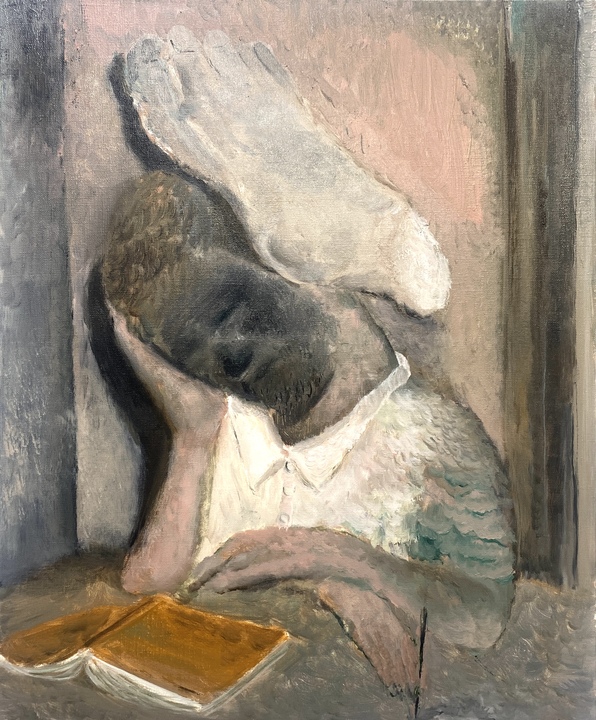
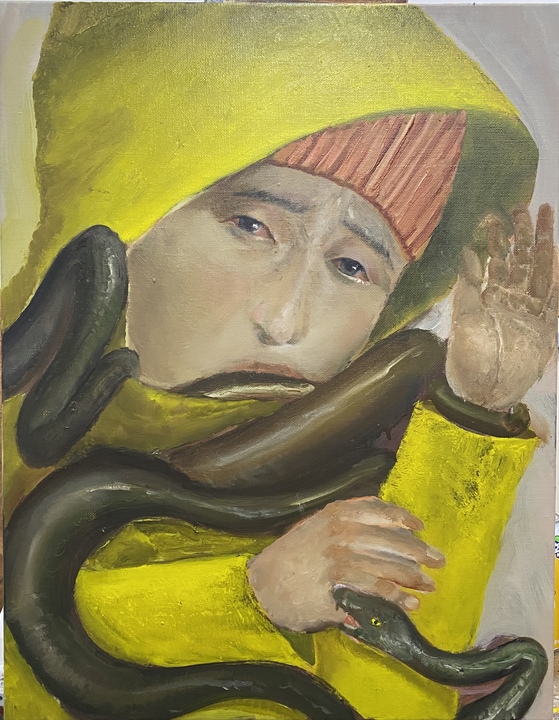
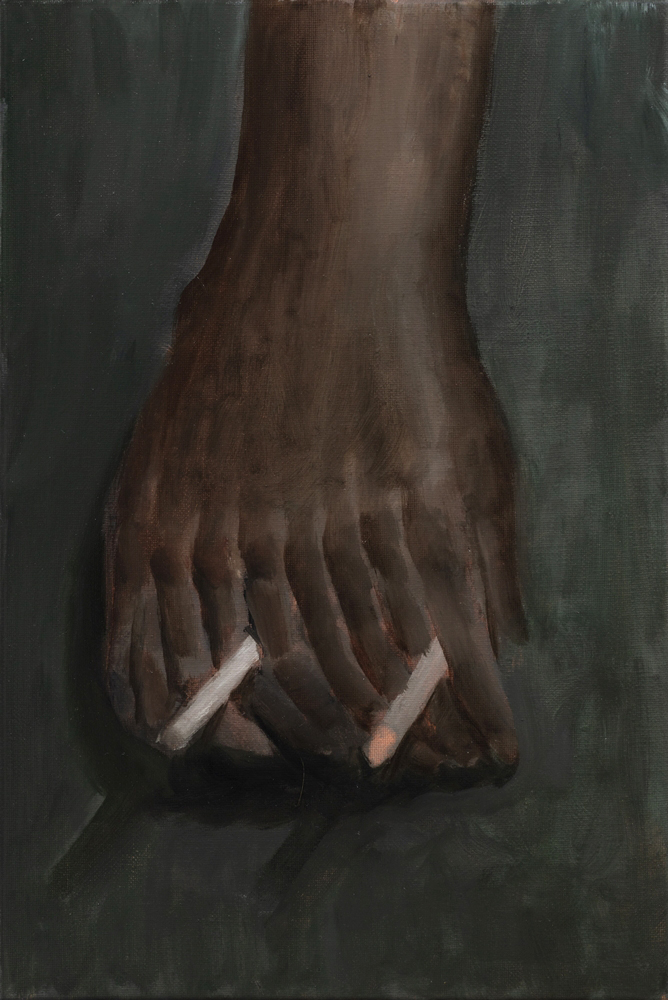
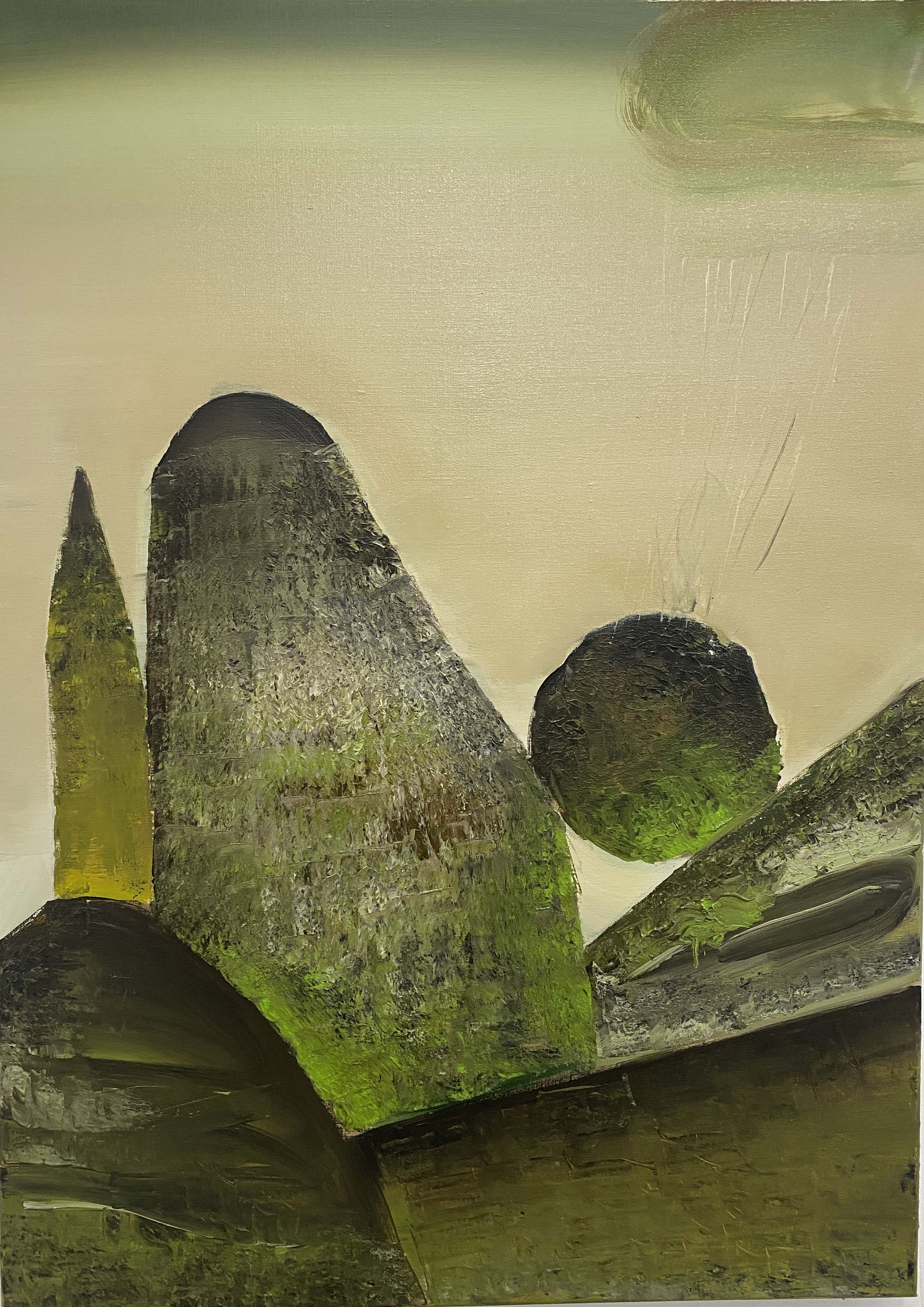
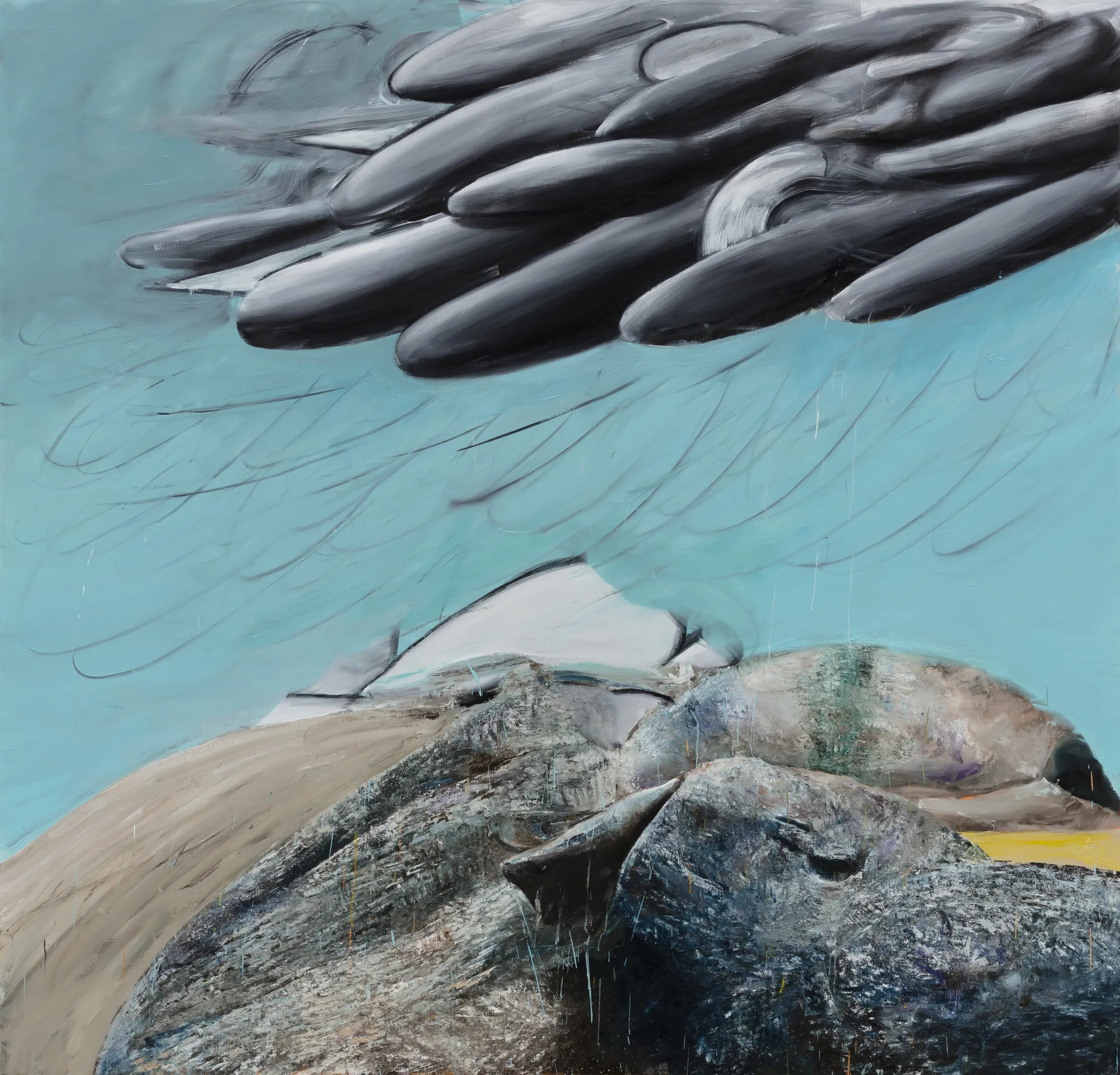
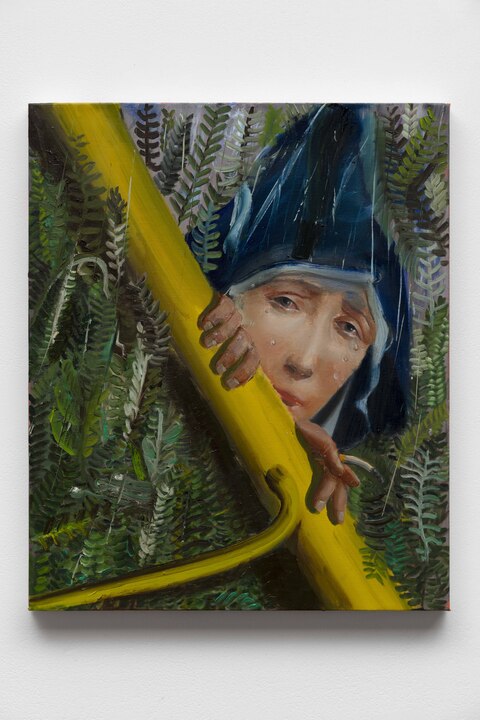
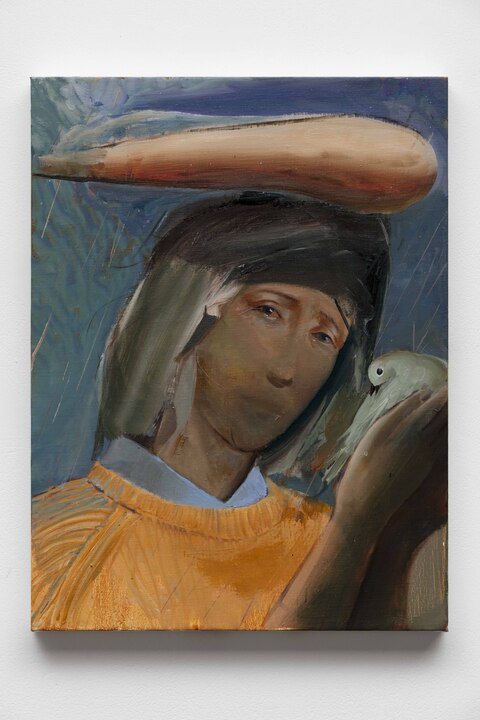
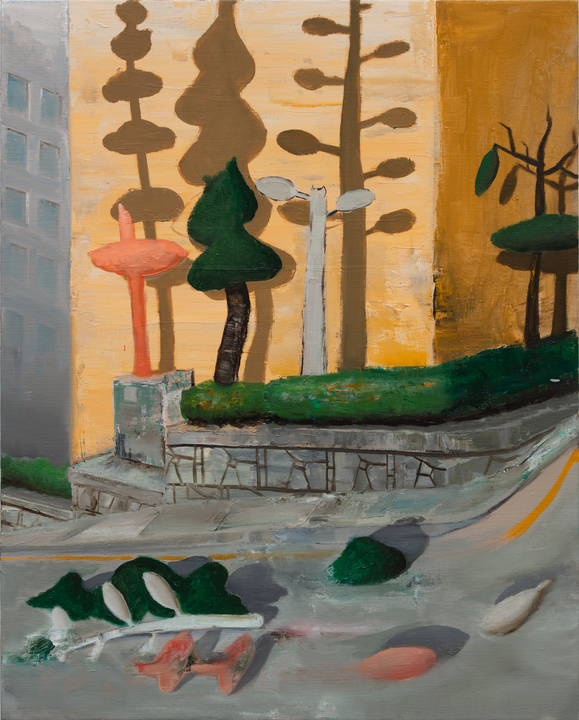
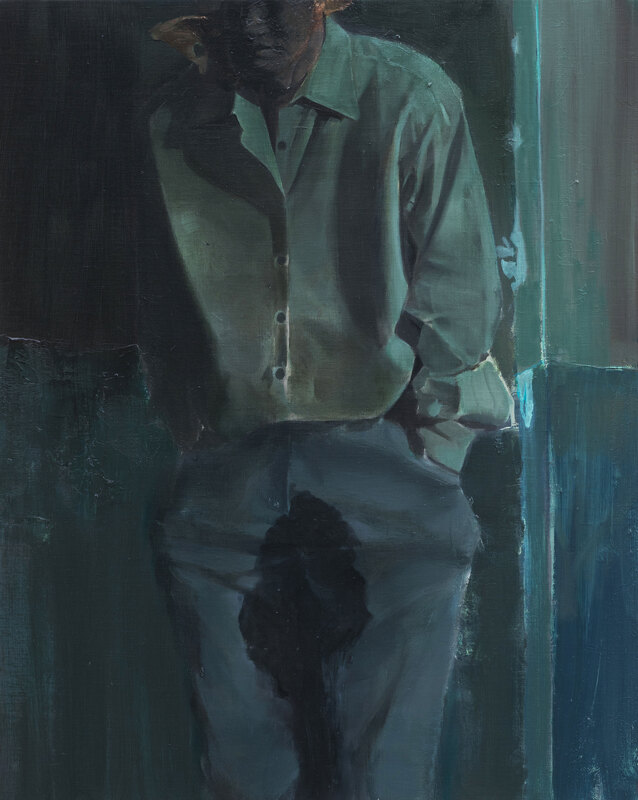
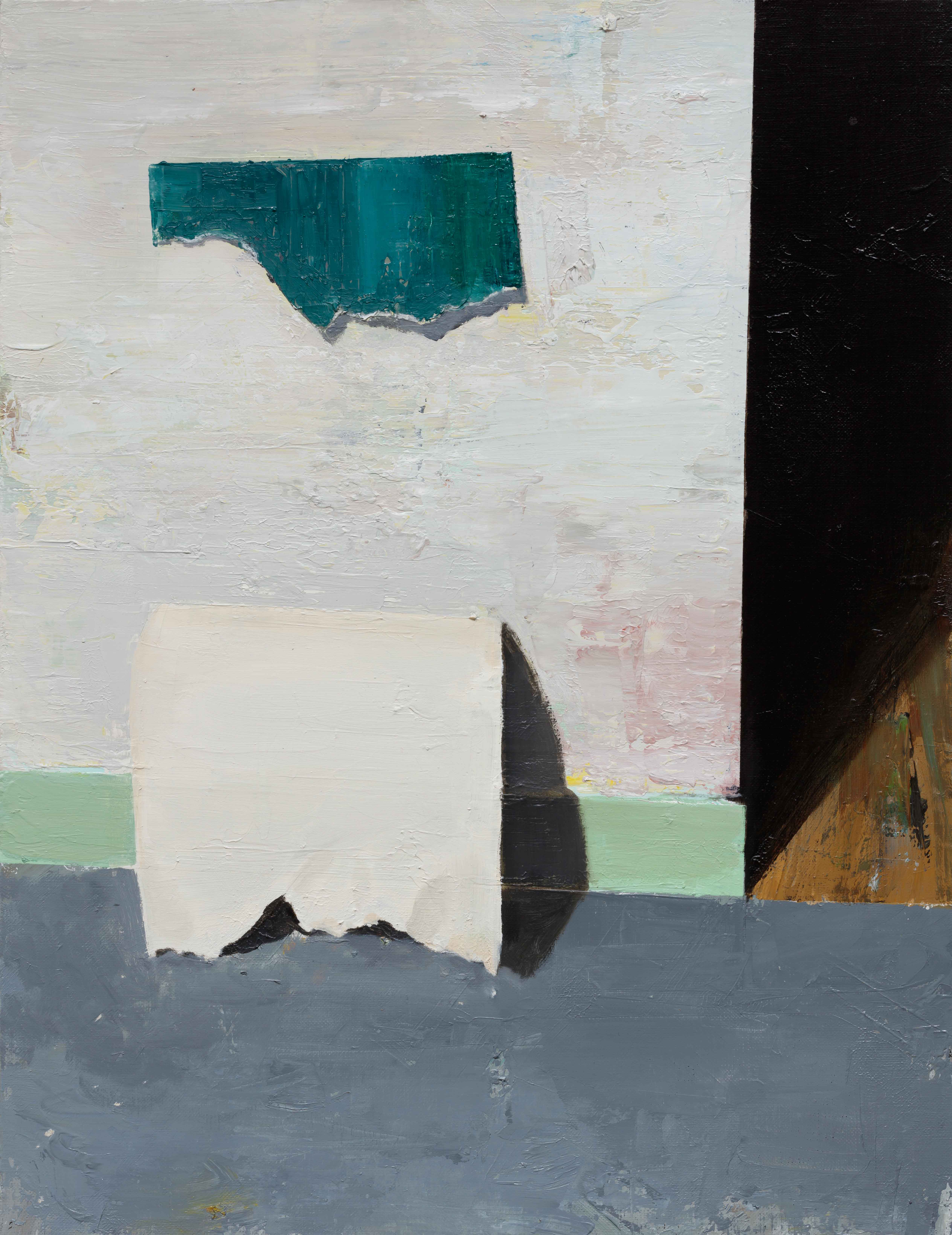
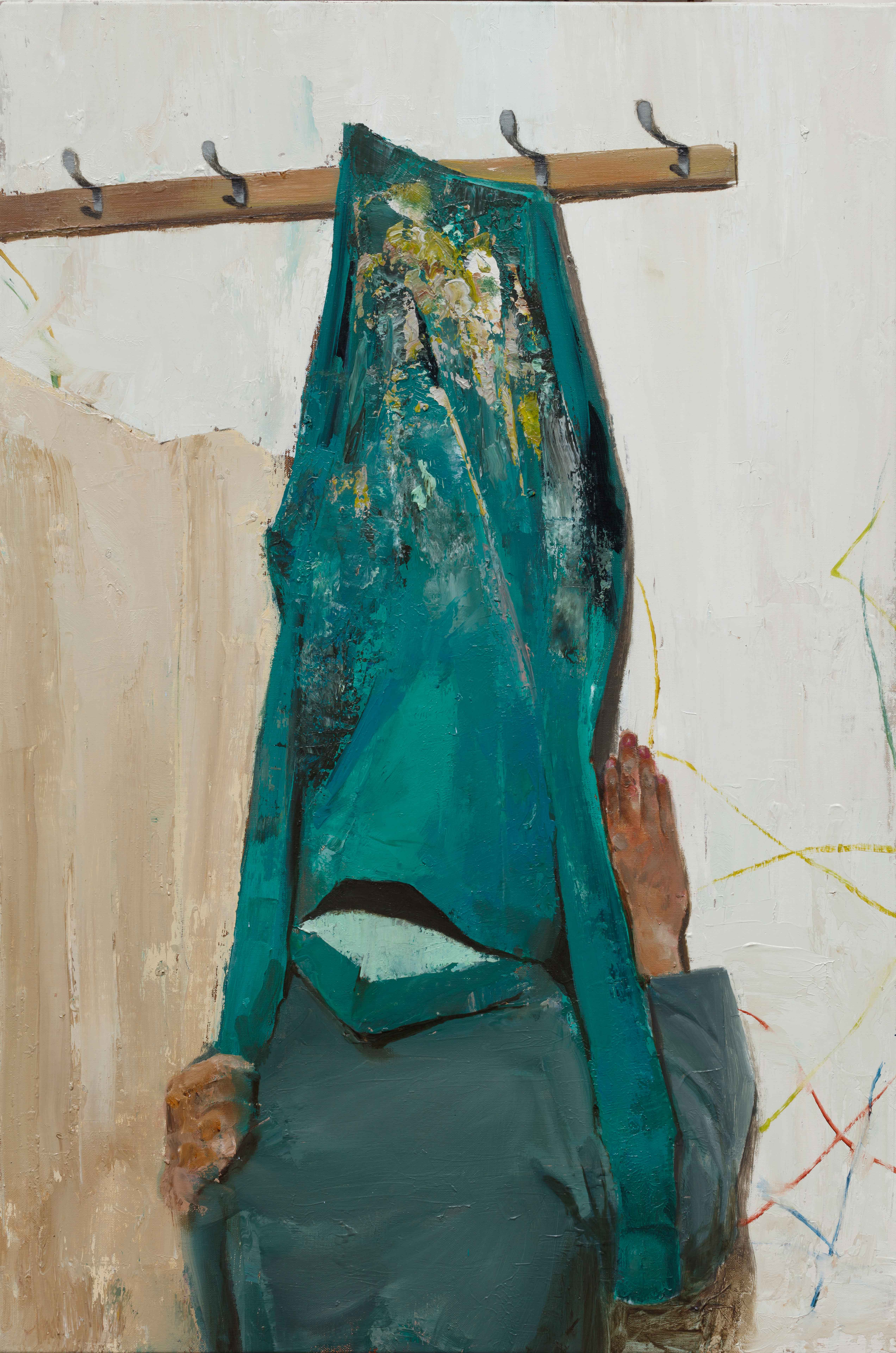
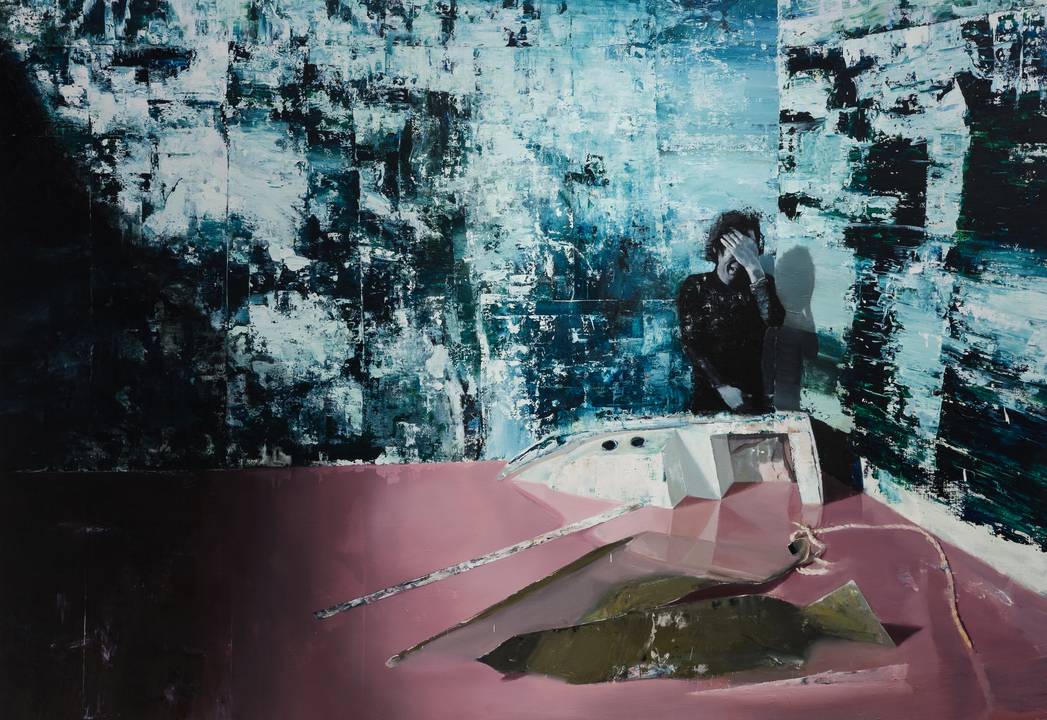
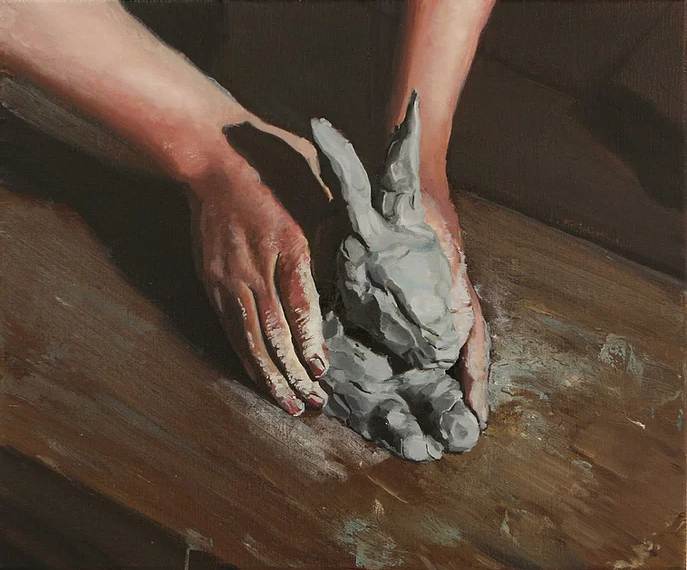
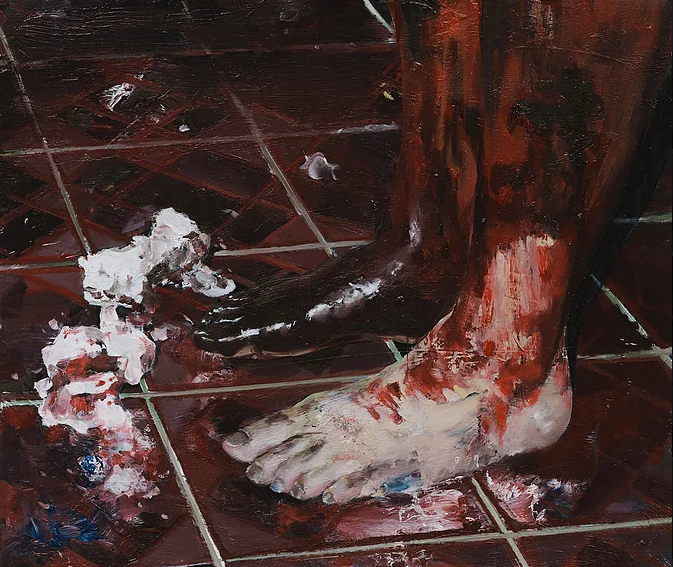
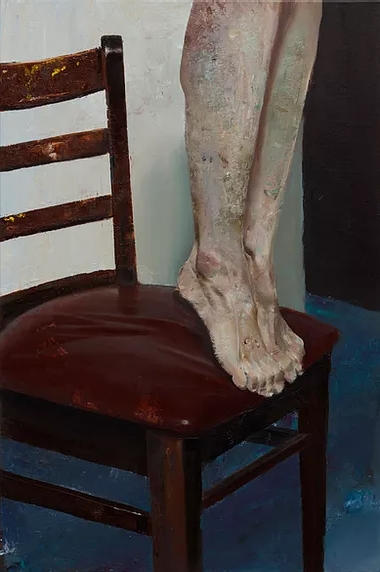
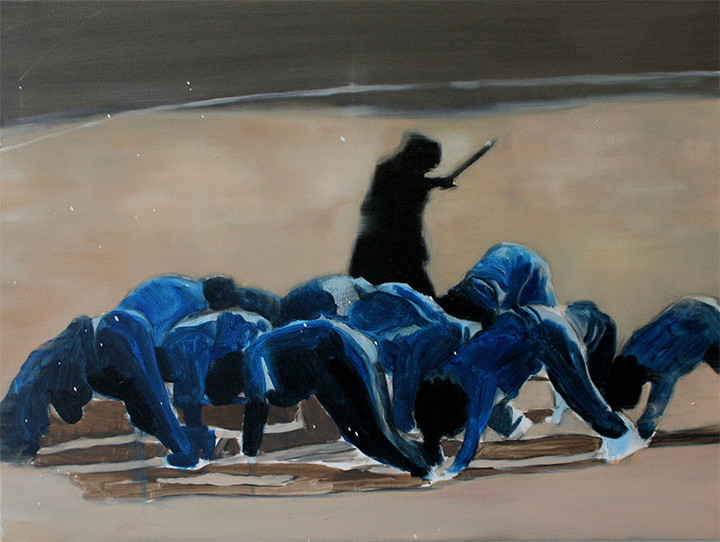
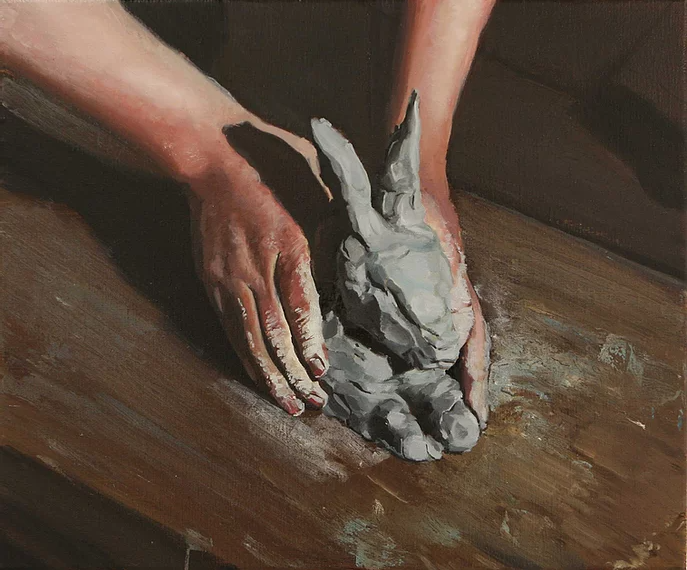
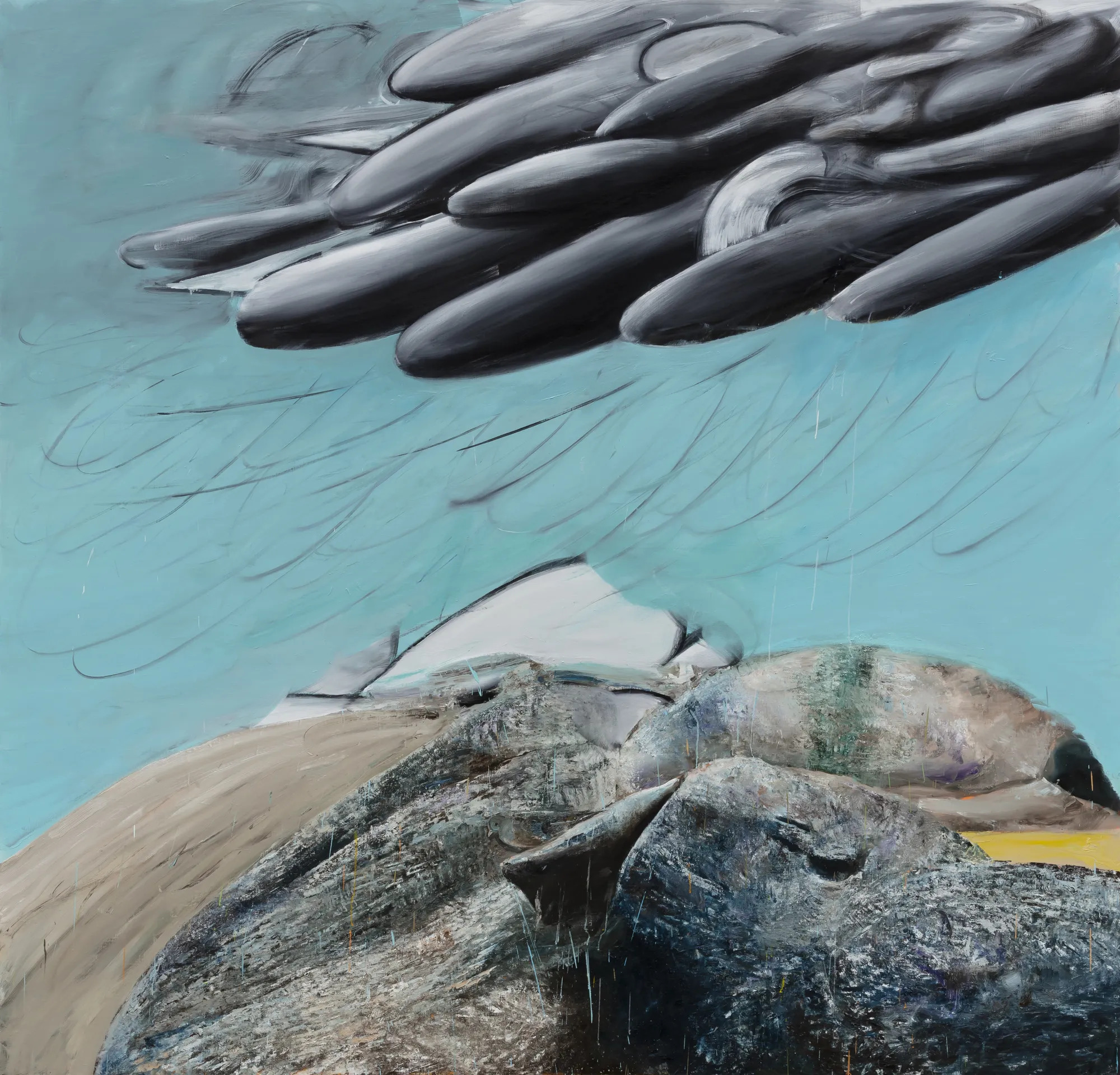
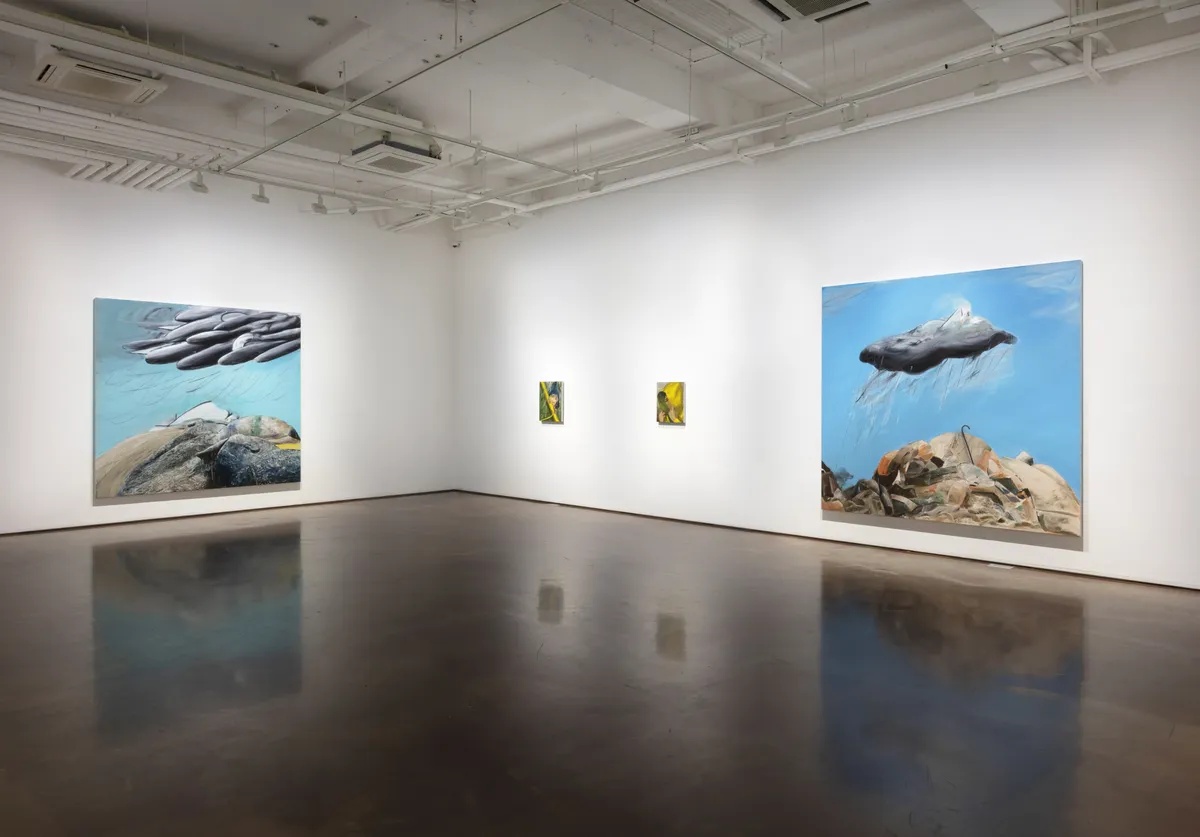
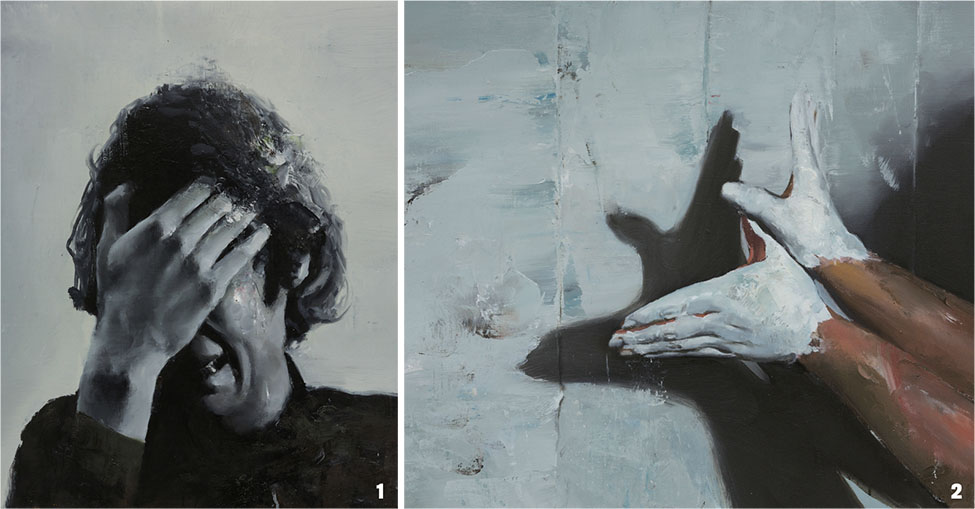
Although this remains little more than a tentative observation, Jisan Ahn's paintings suggest a productive way of considering the image's own capacity to perform such interference. In his work, this quality is embedded within the painting itself. The physical materiality of oil paint is presented without concealment, leaving his surfaces permeated by a persistent sense of dampness and stickiness.
Moreover, the fragments of the body that Ahn isolates and magnifies transmit physical sensations before they communicate emotion or narrative. These images dispense with causal explanation and conventional storytelling. Much like the immediate immersion produced by putting on a VR headset, Ahn's paintings presume an instantaneous sensory connection.
To borrow Susan Sontag's words, they aspire toward the "transparency" of form—toward experiencing the thing itself, exactly as it is. They ask us to set aside the impulse to search for meanings awaiting interpretation and instead attend, however briefly, to the presence of the thing itself. Perhaps it is time for the Korean art world to reconsider Sontag's proposition:
"What is important now is to recover our senses. We must learn to see more, to hear more, to feel more."
Tactile sensation penetrates directly into the body of the attentive viewer. Yet this effect is by no means achieved merely through the faithful depiction of surface texture. Since the Renaissance, painters have mastered virtually every conceivable method of representing texture. Time and again, gifted artists have created paintings so convincing that one almost feels capable of touching the depicted surfaces.
Such achievements have often been extraordinary. Yet the mere representation of texture is insufficient to produce the kind of subtle sensory interference that enables genuine sensory experience. Touch should not simply be depicted upon the canvas. Rather, it must erupt from the canvas itself, seizing the senses of the viewer who stands before it.