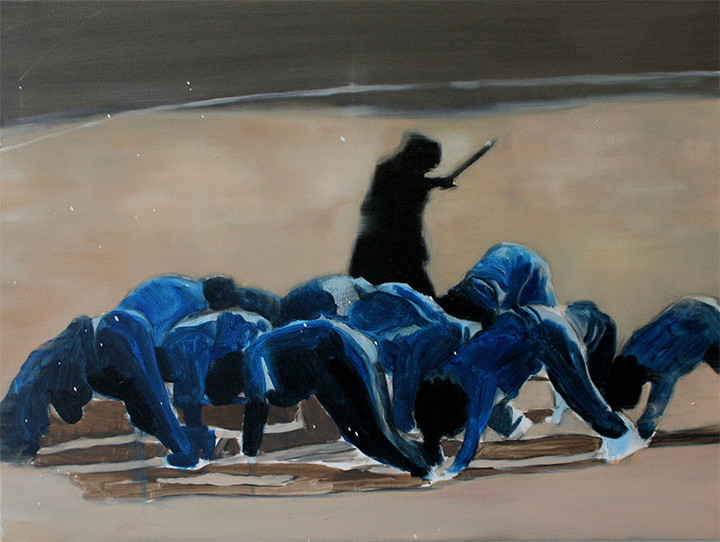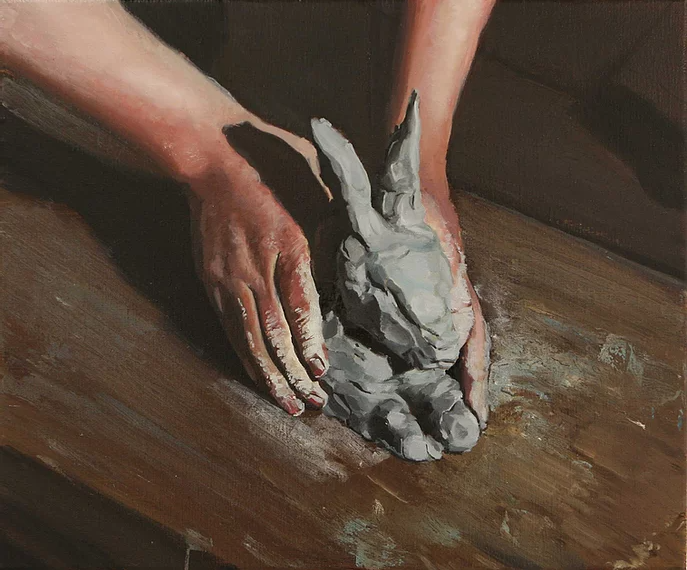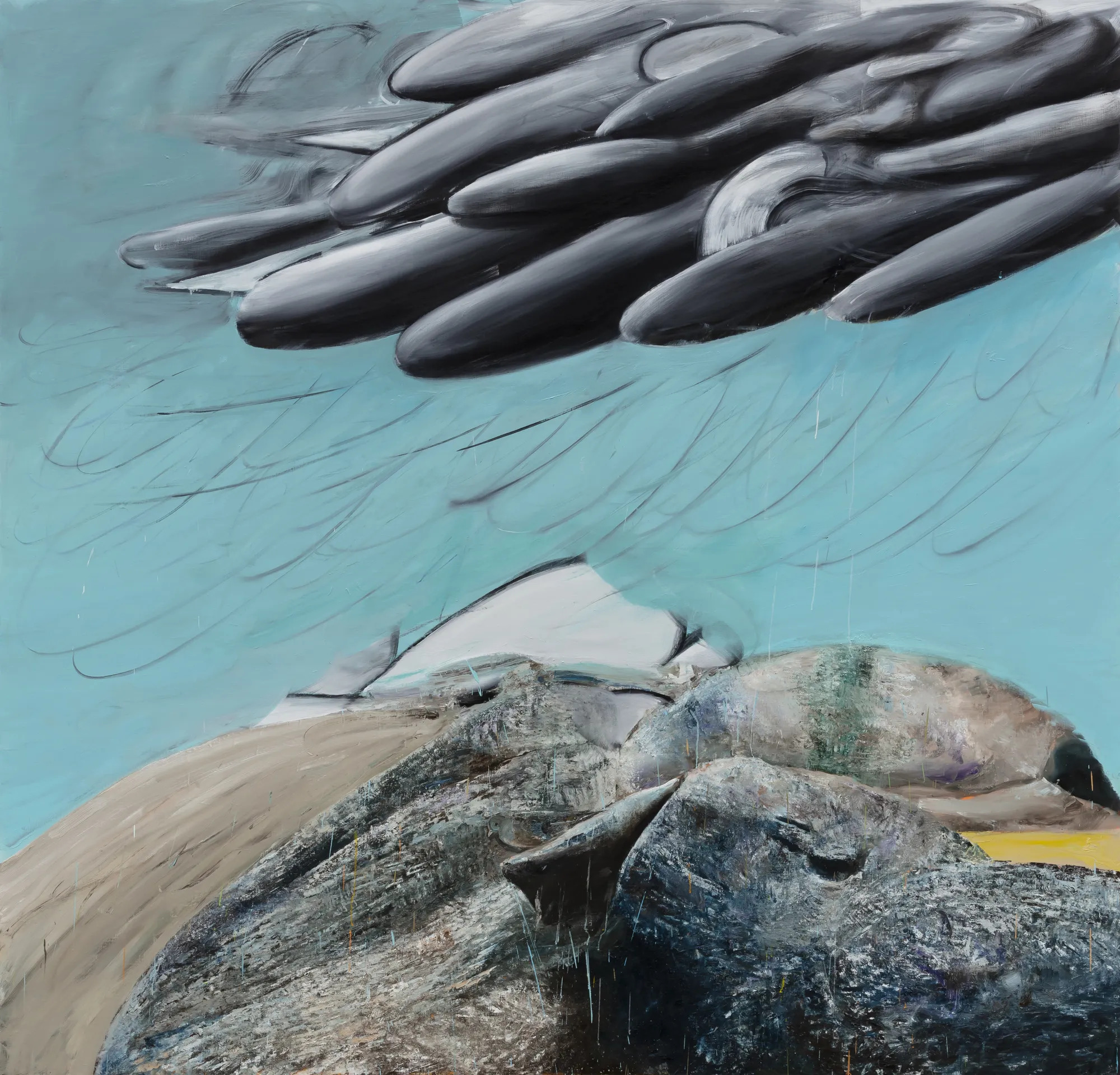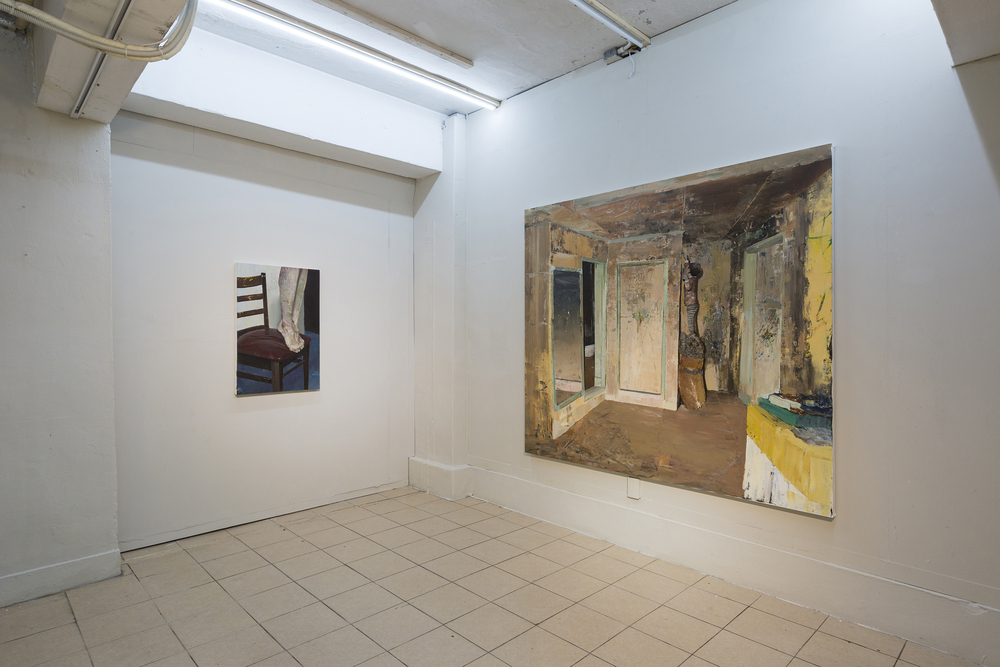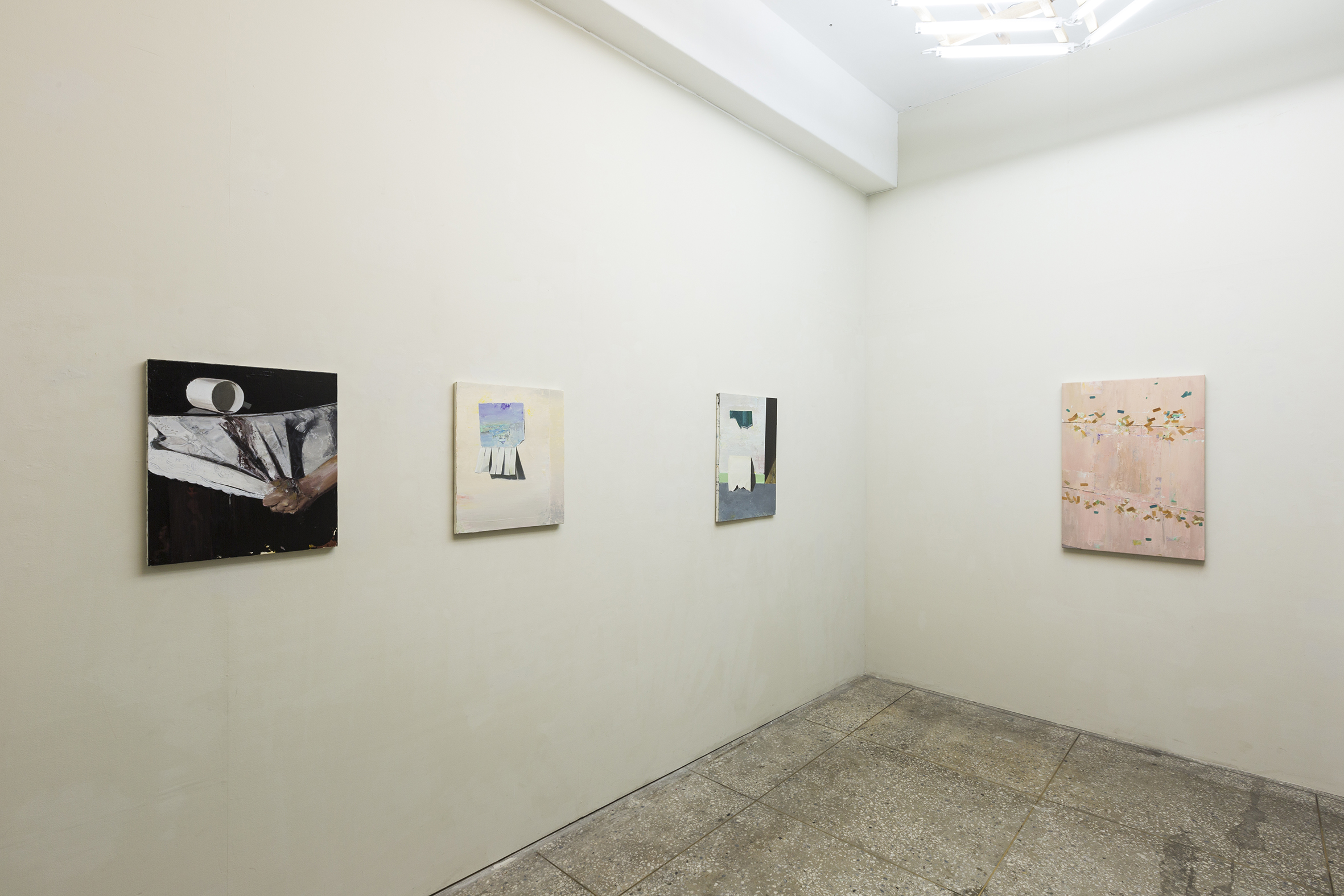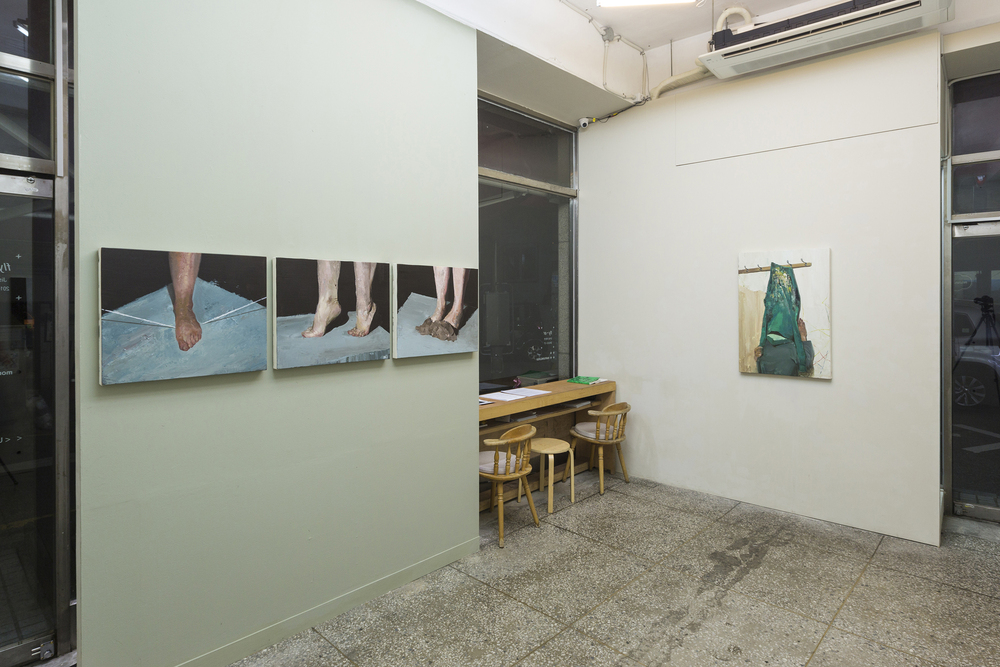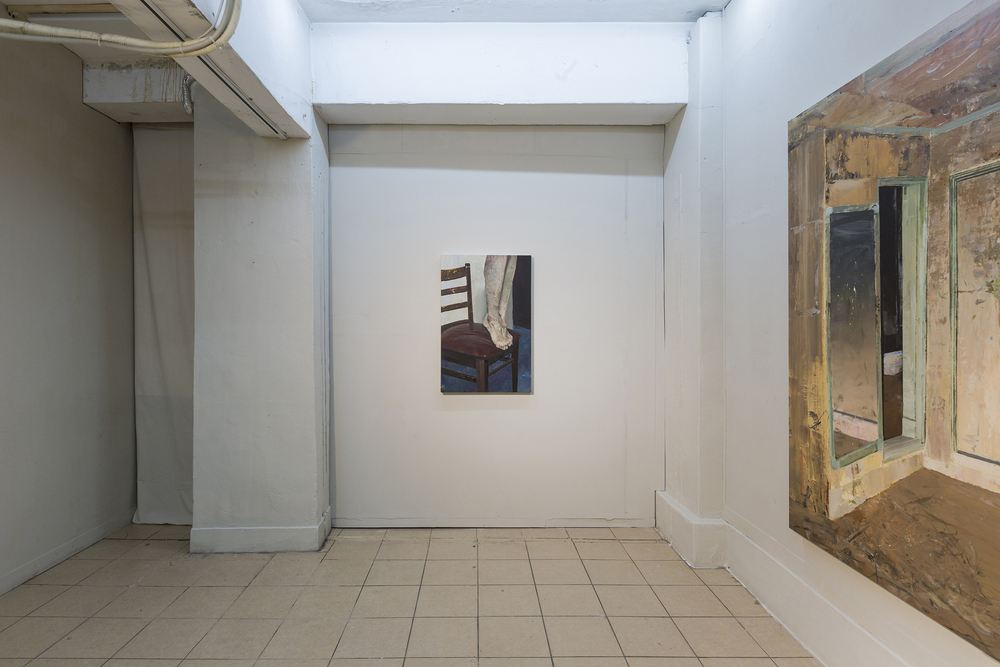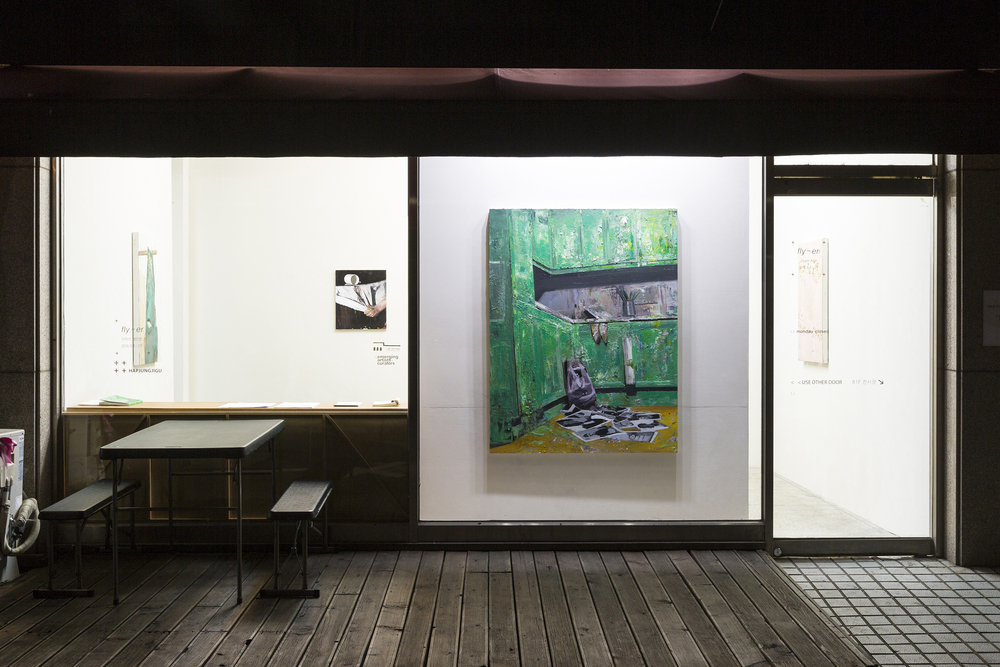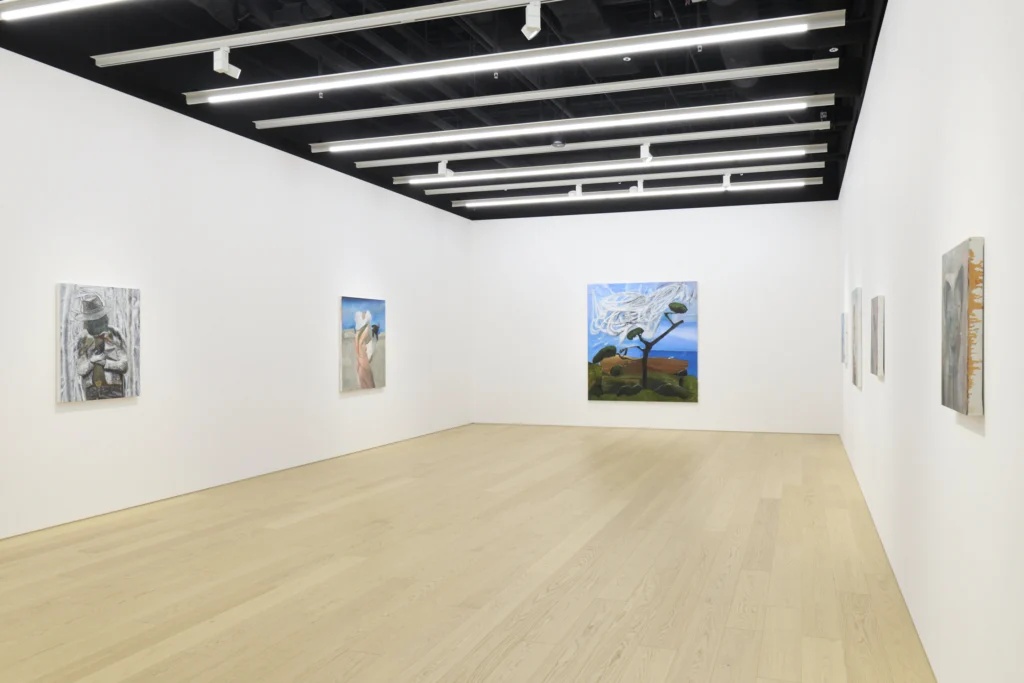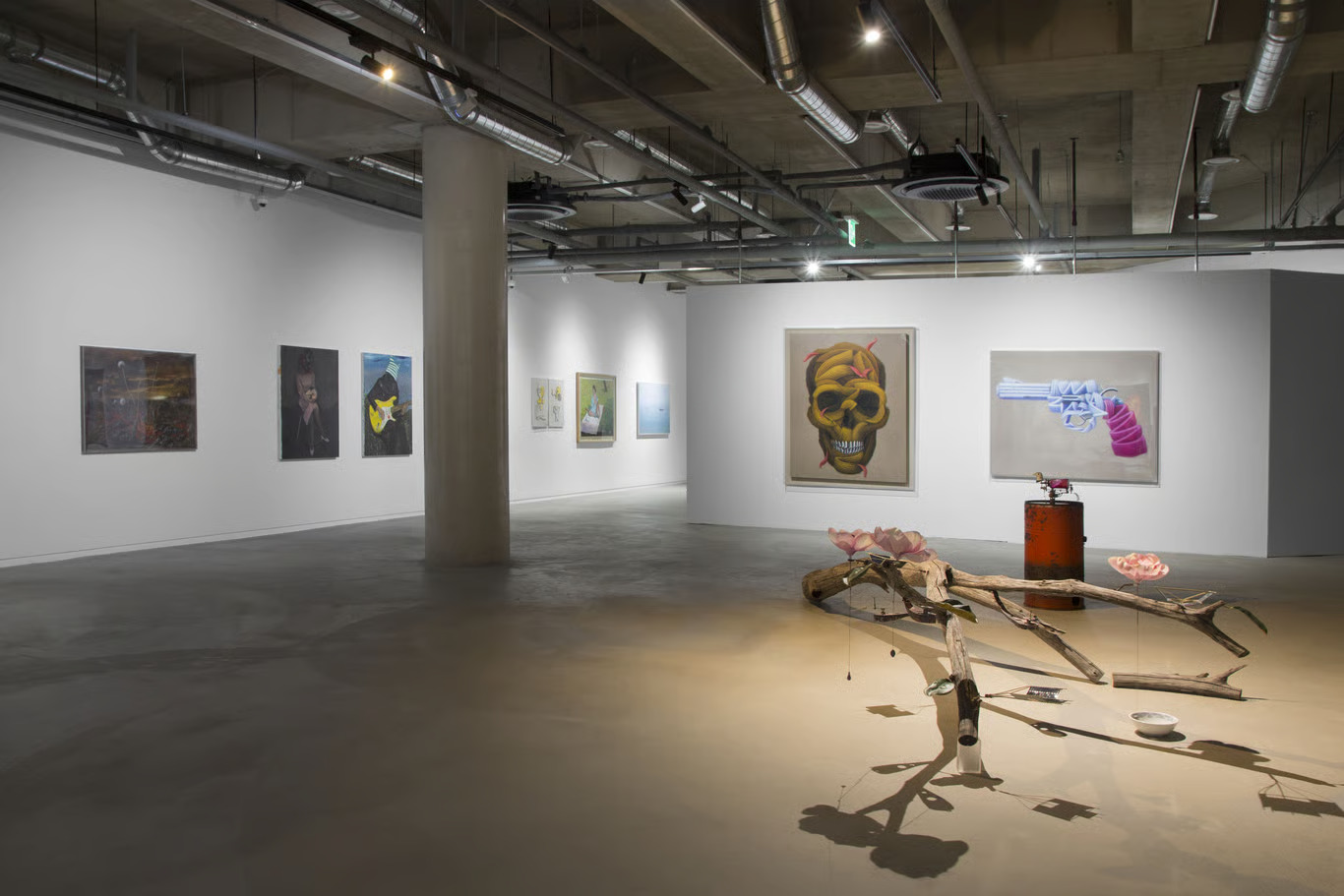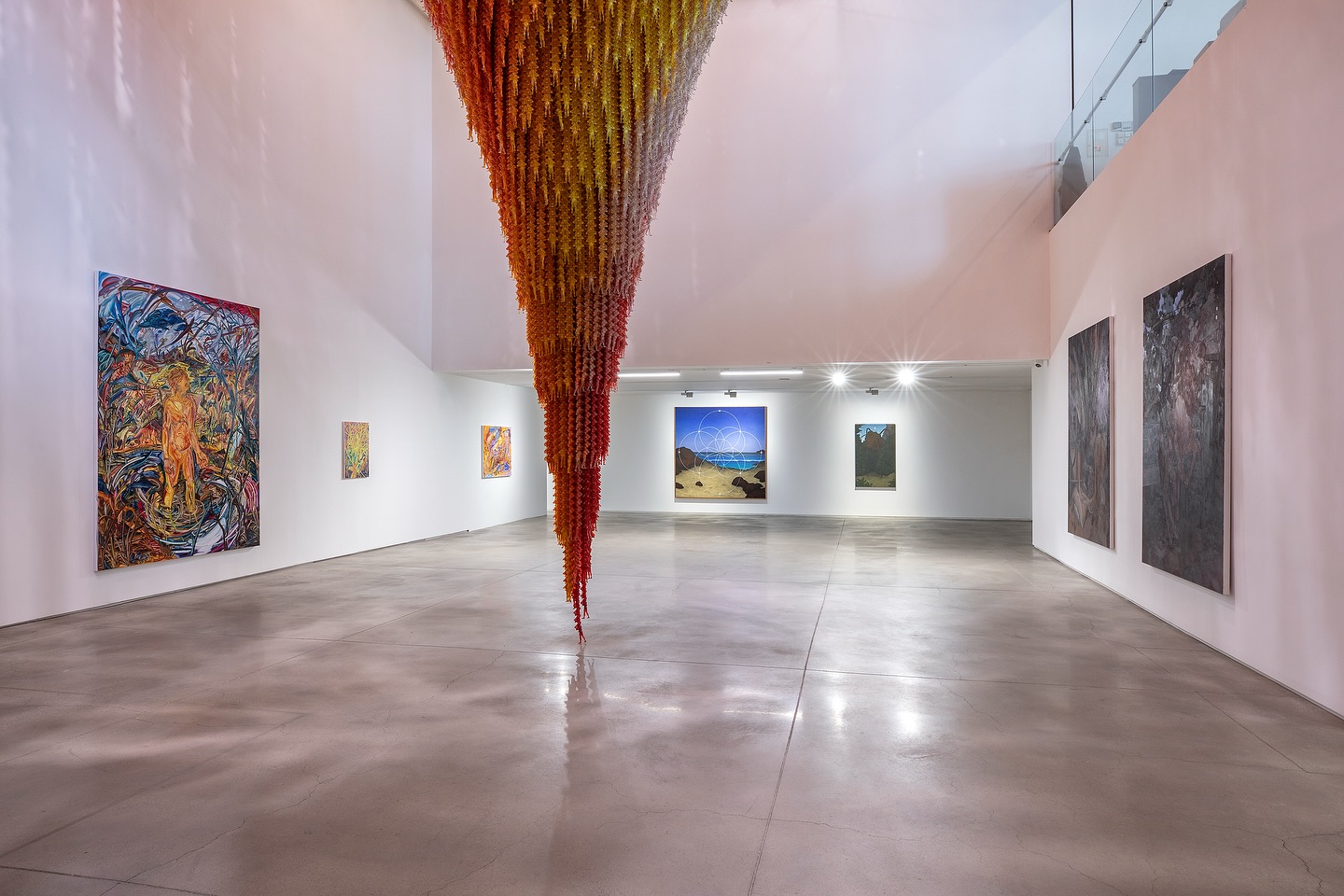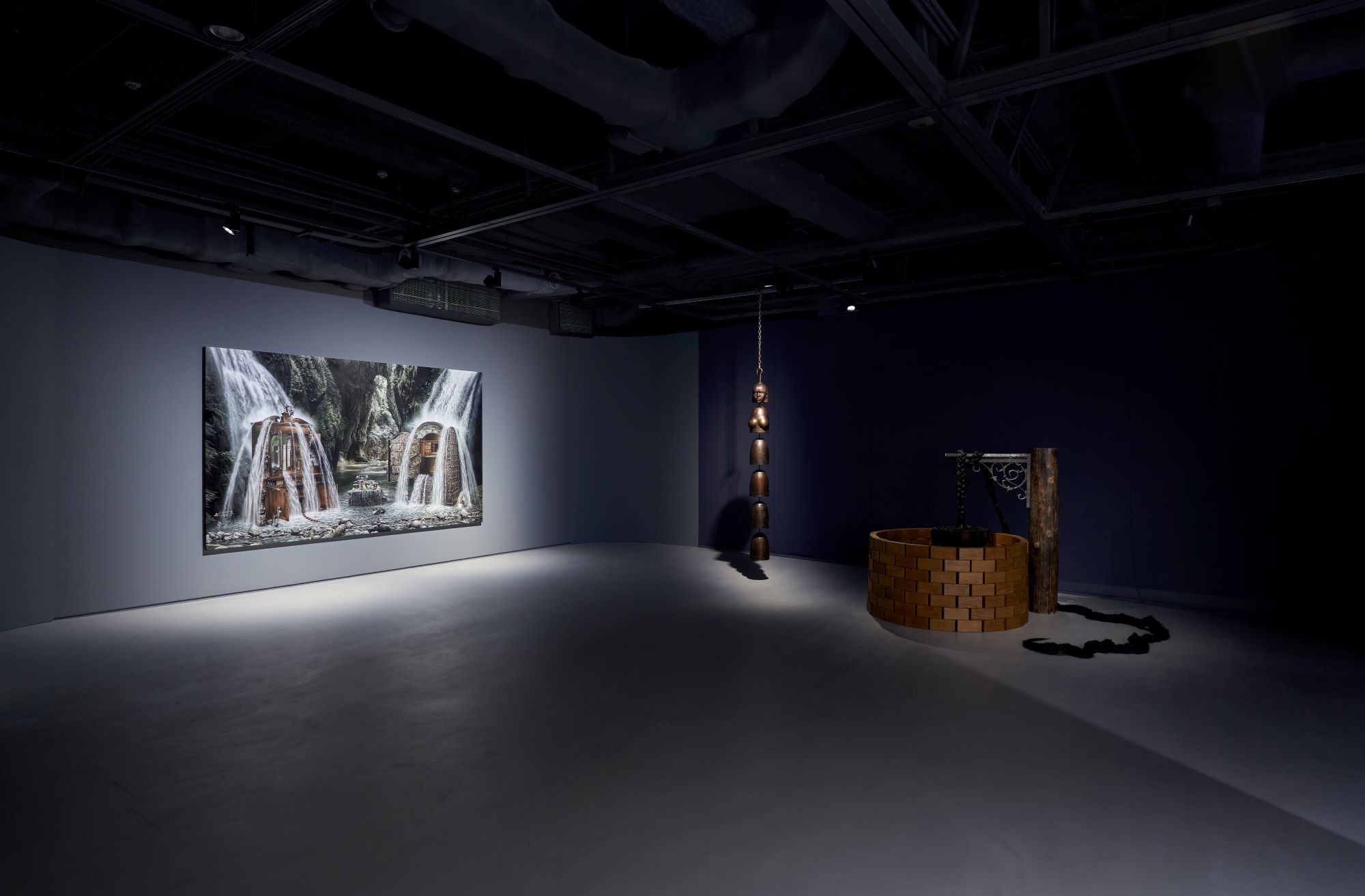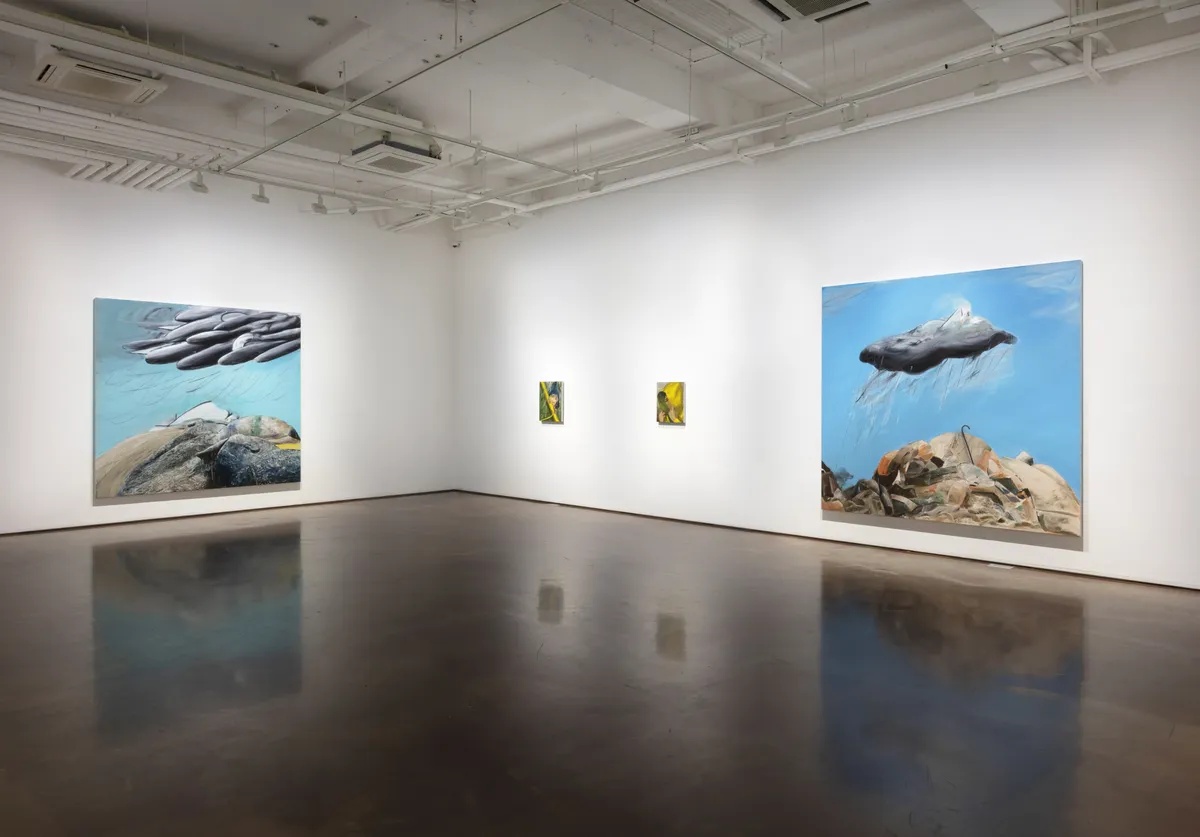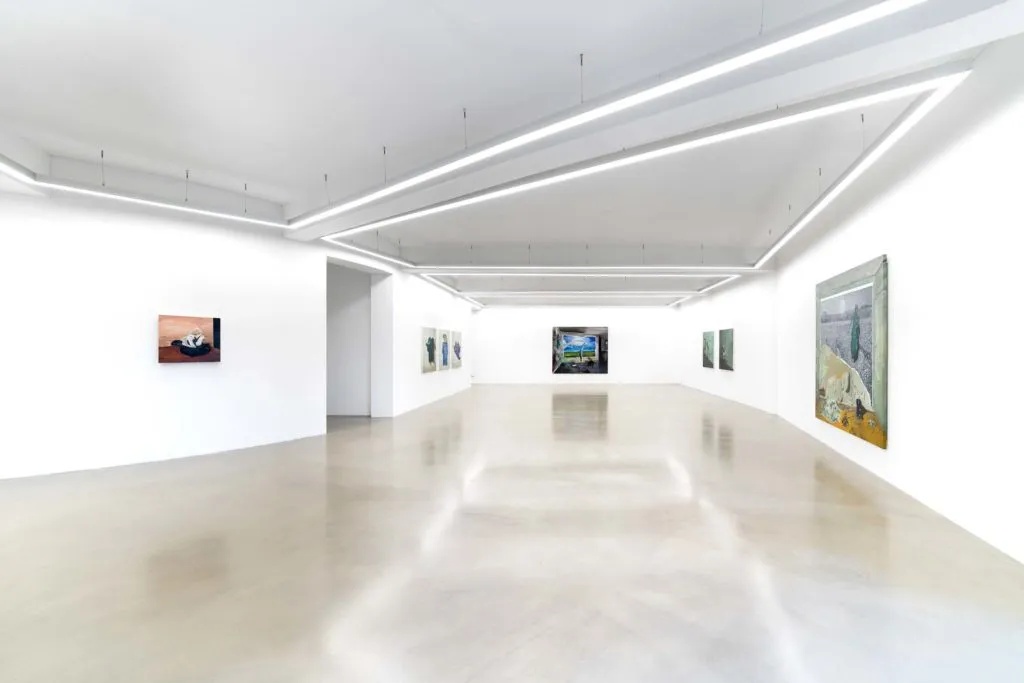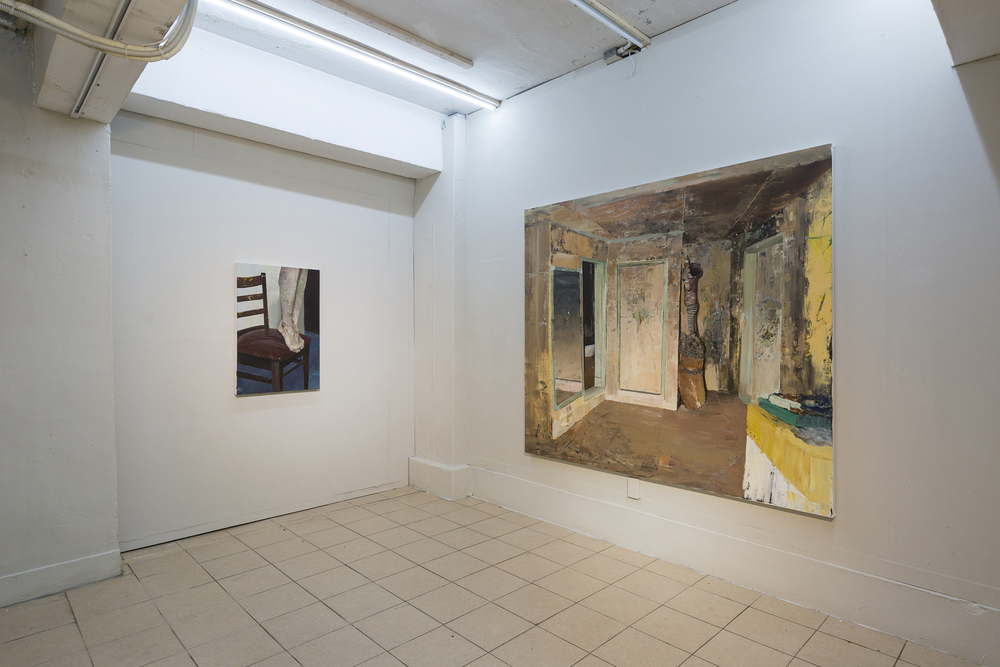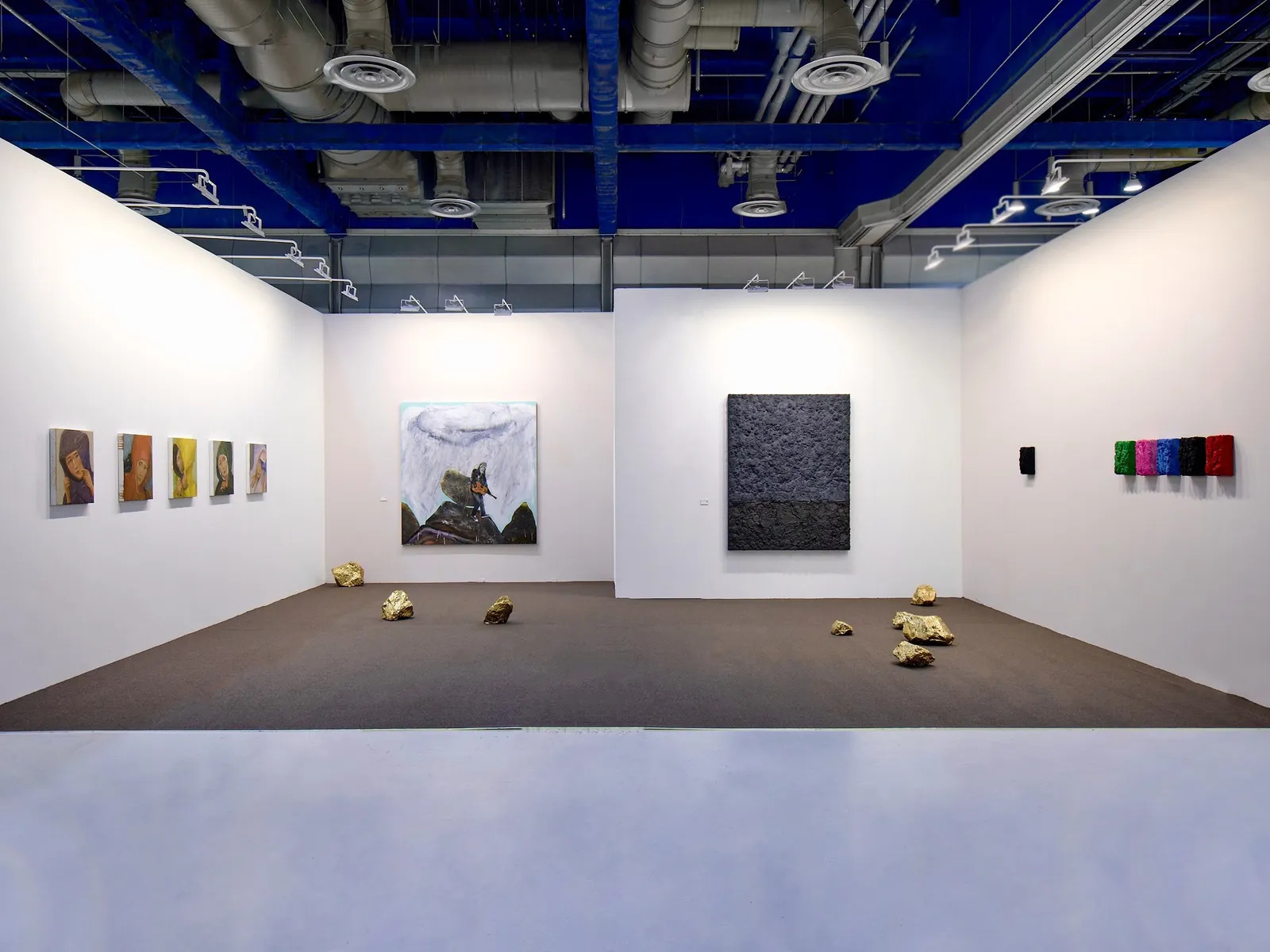

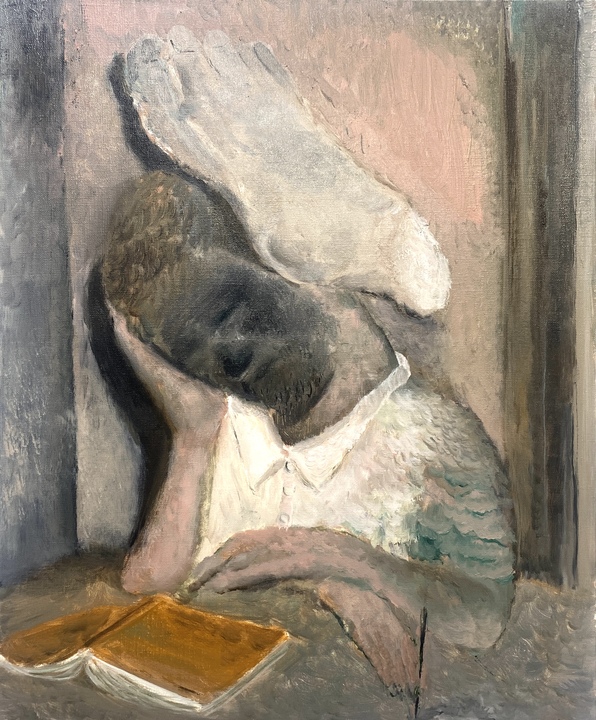
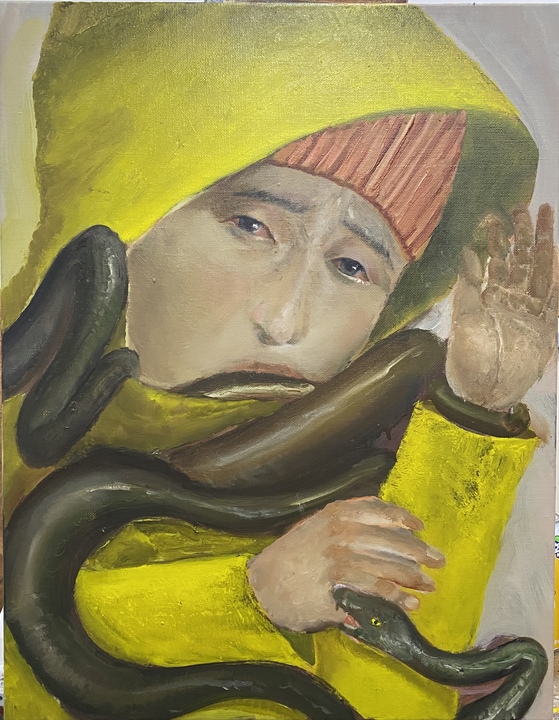
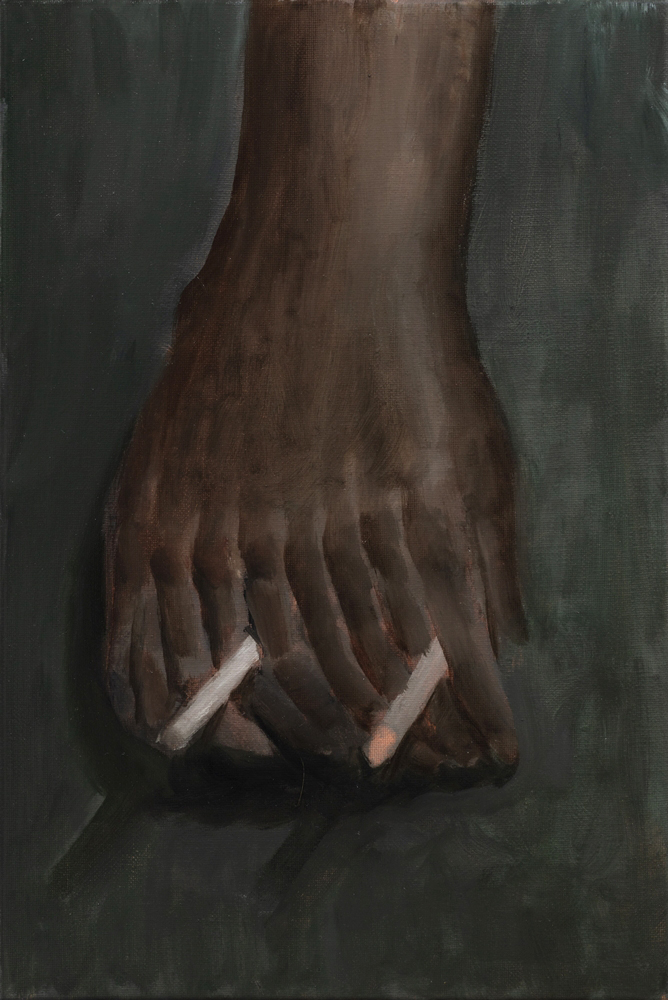
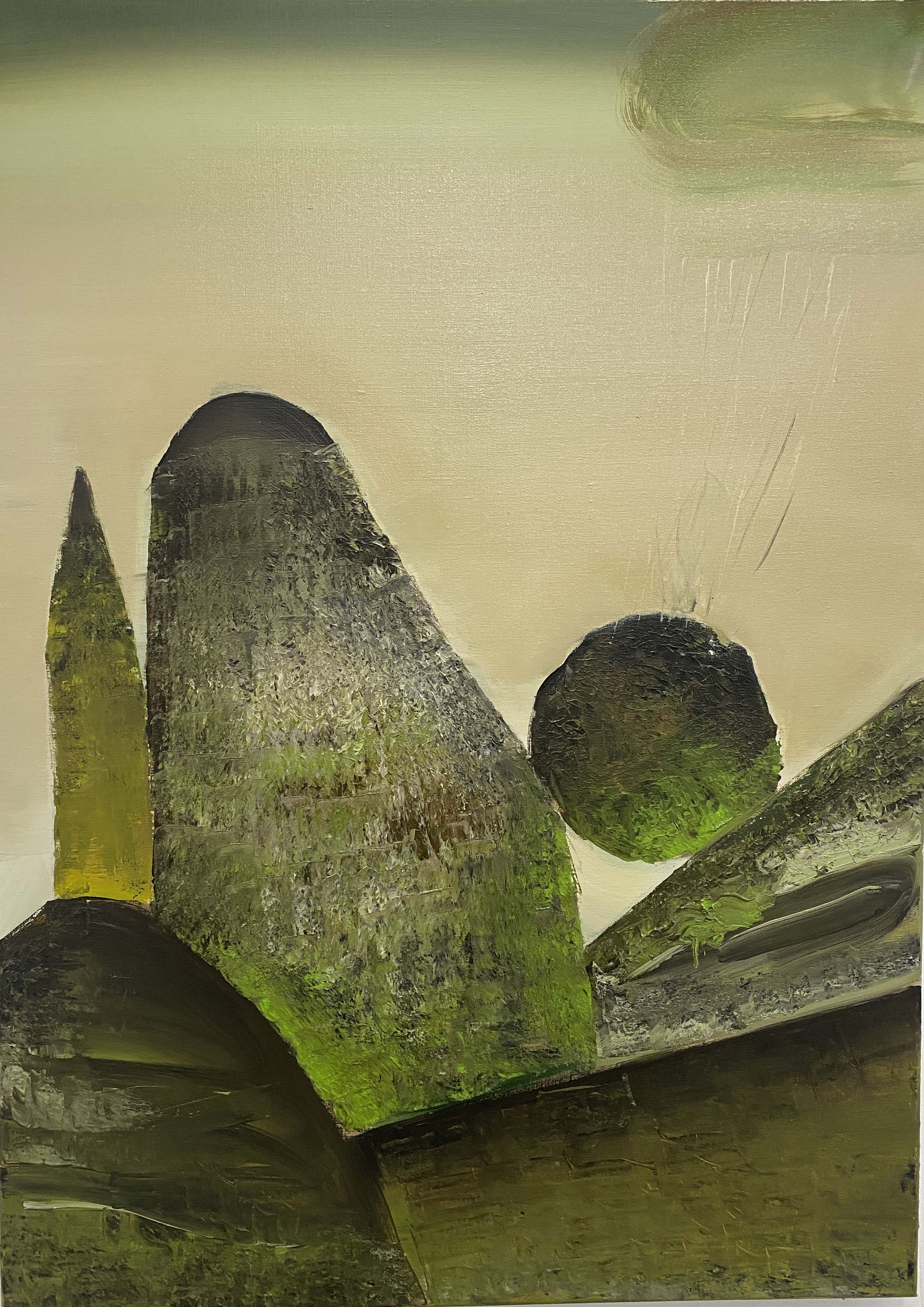
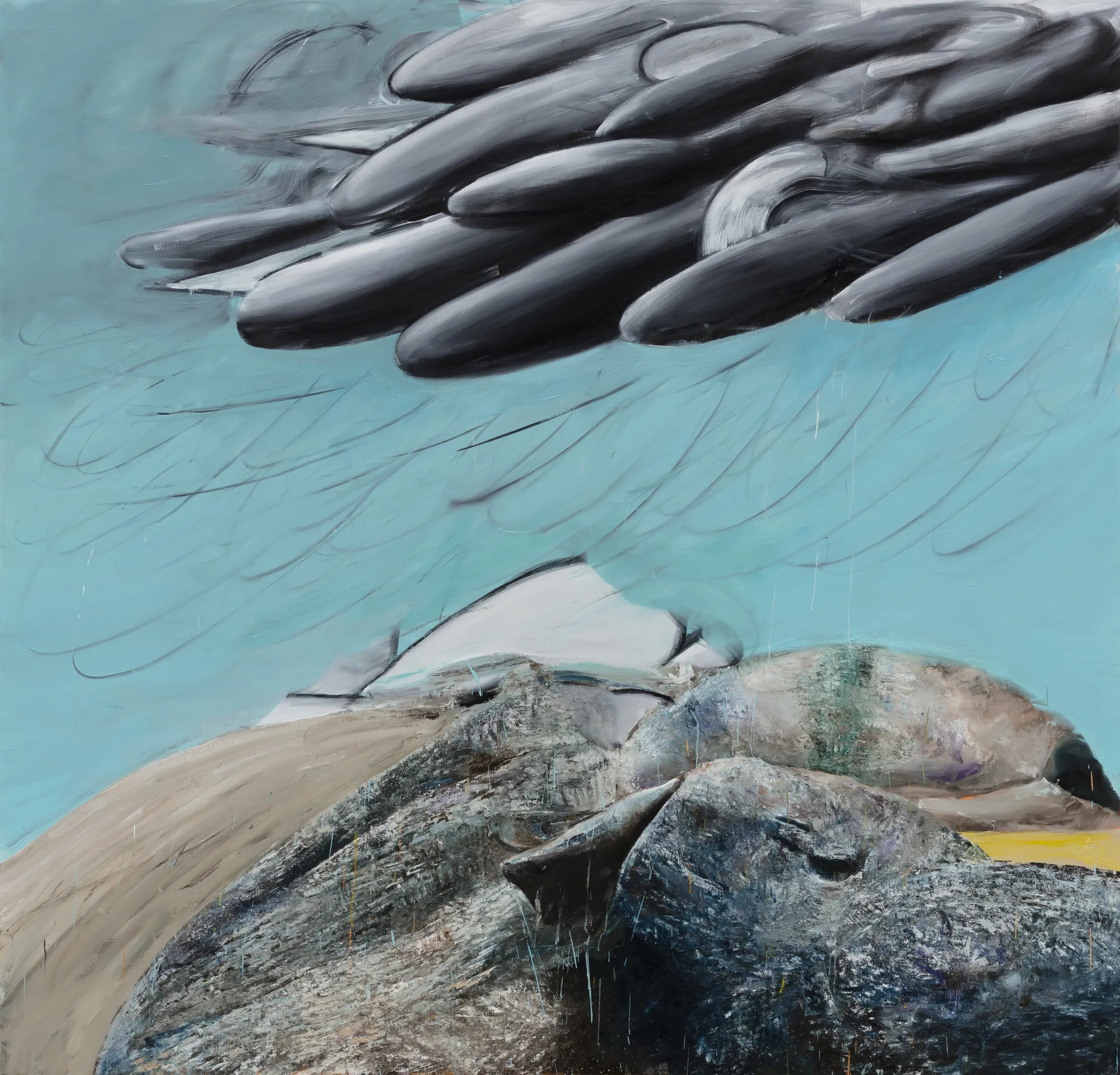
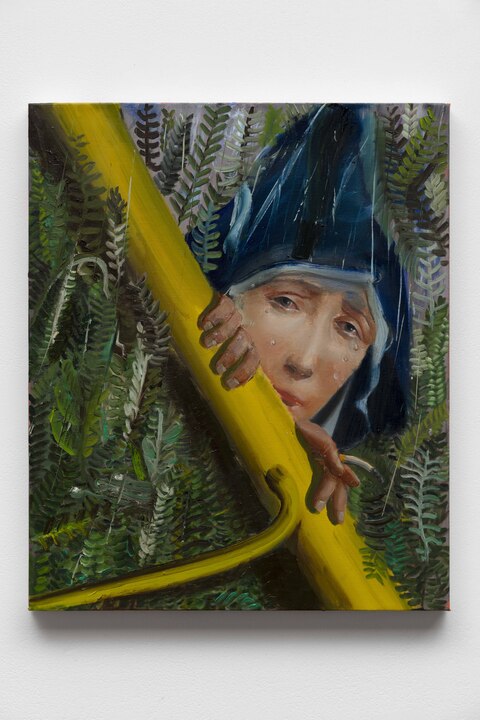
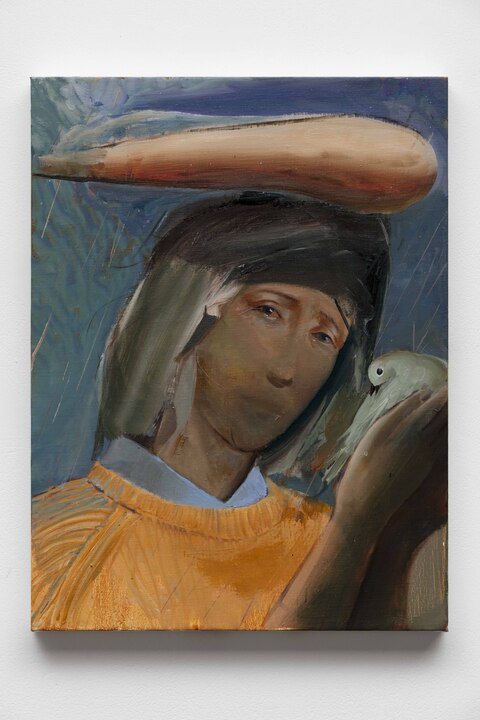
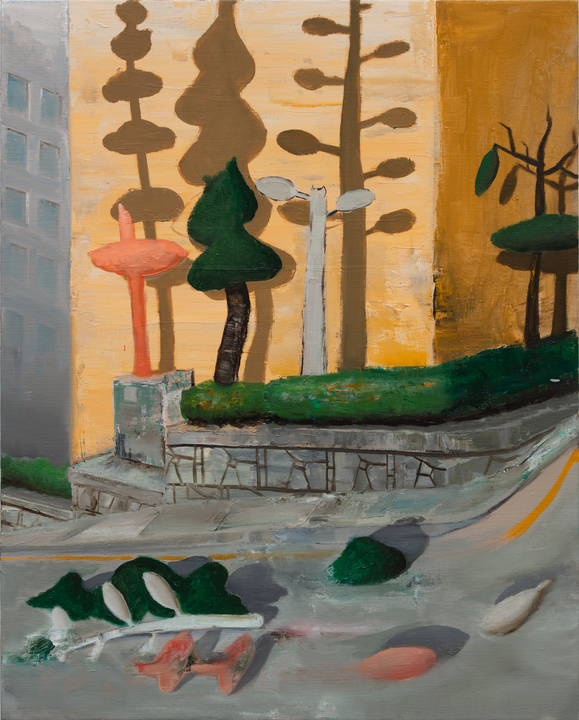
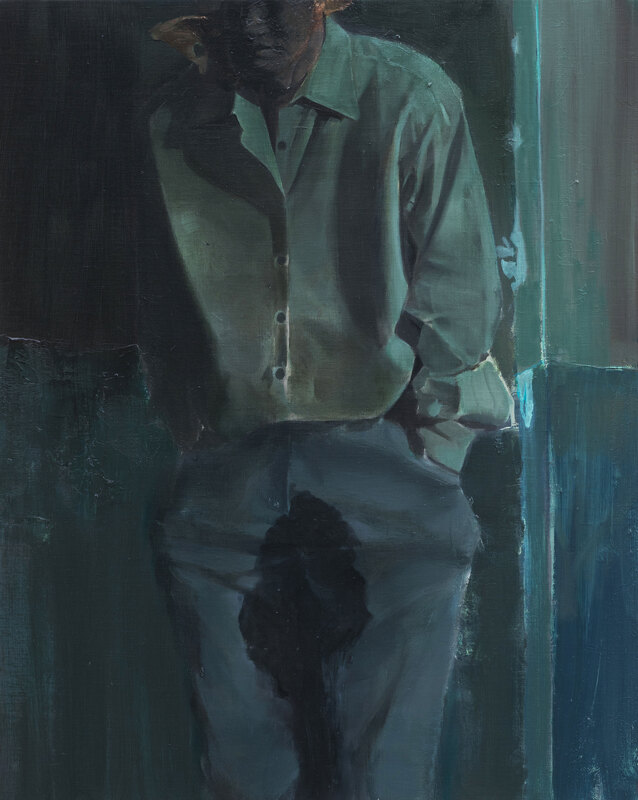
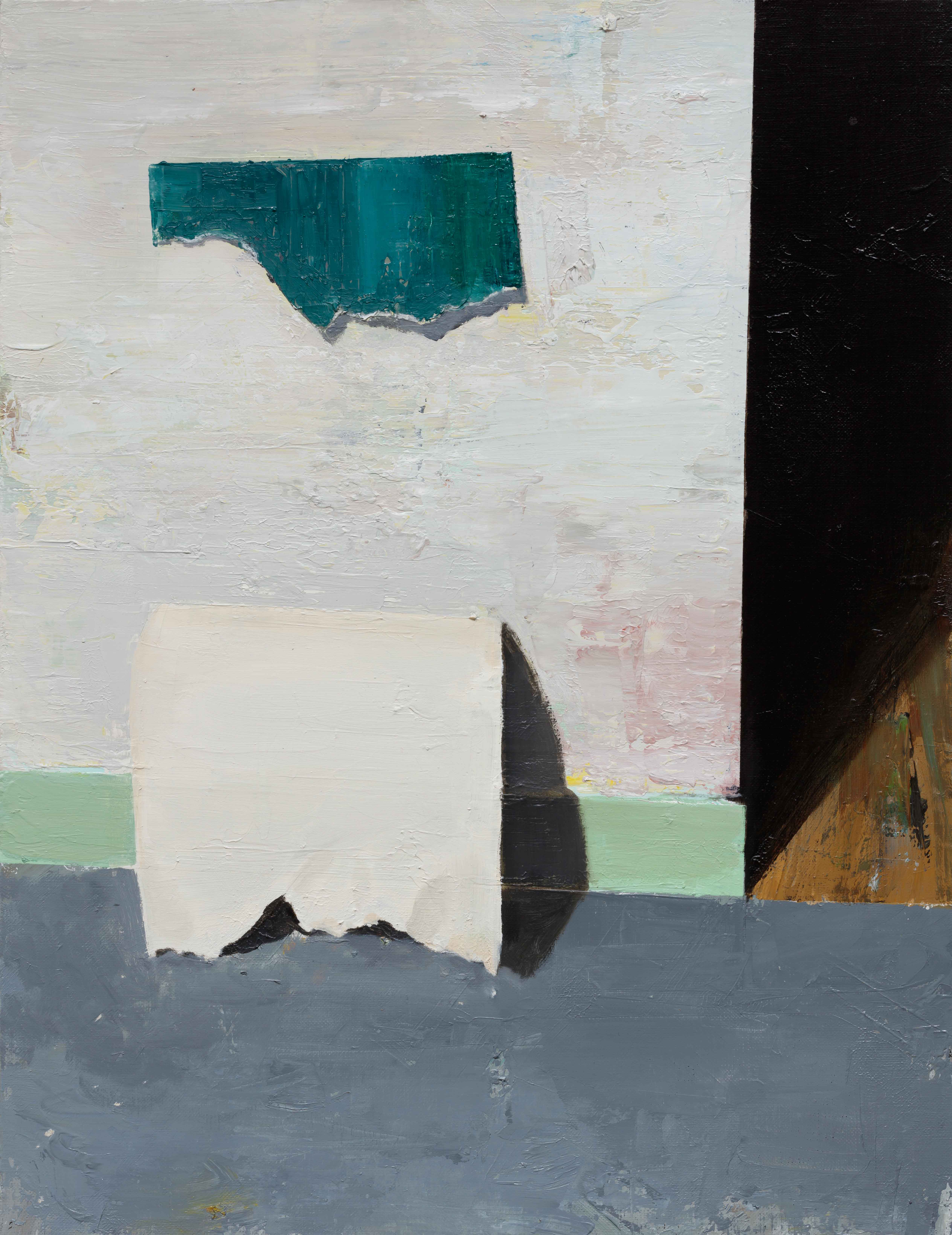
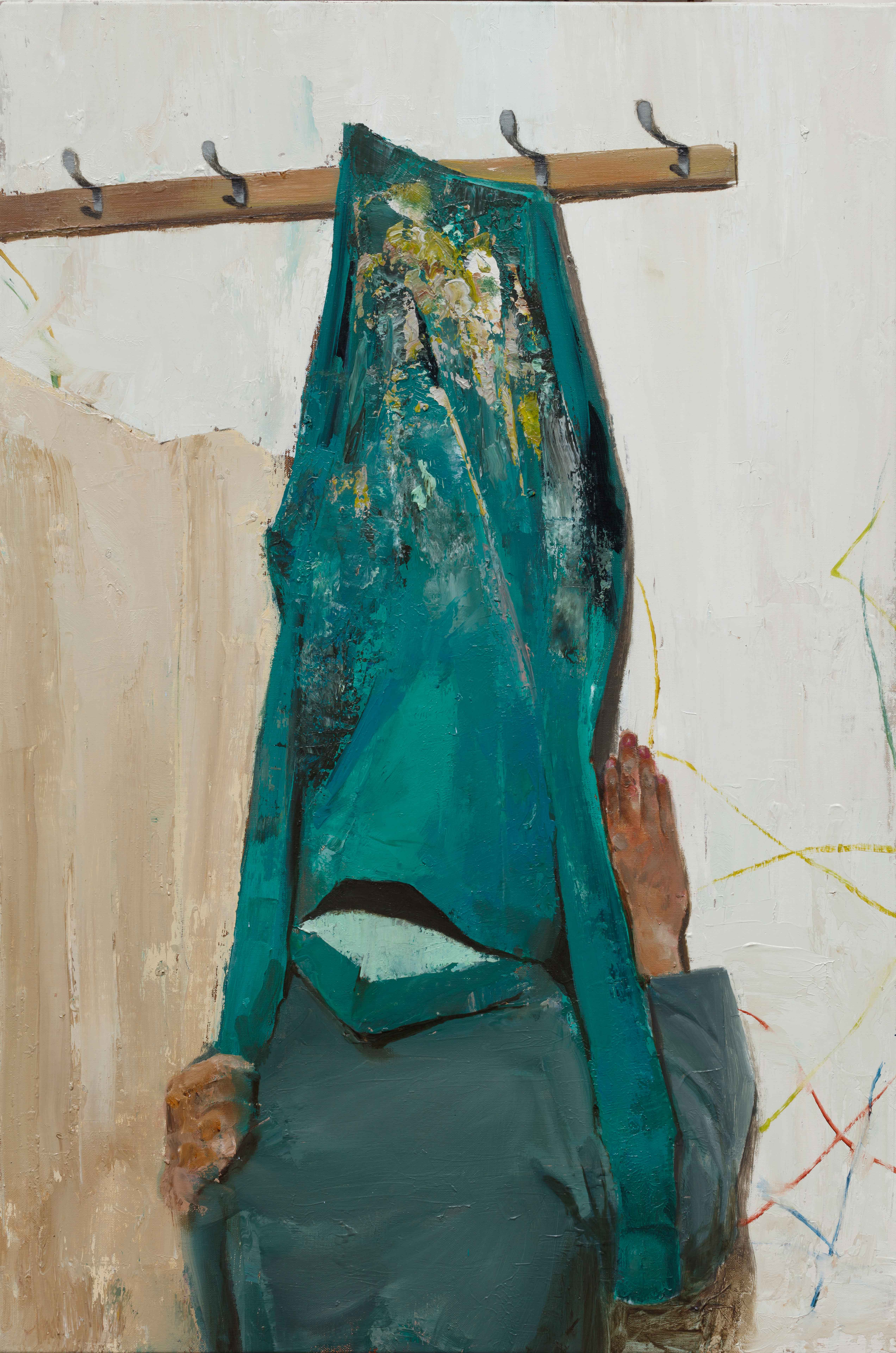
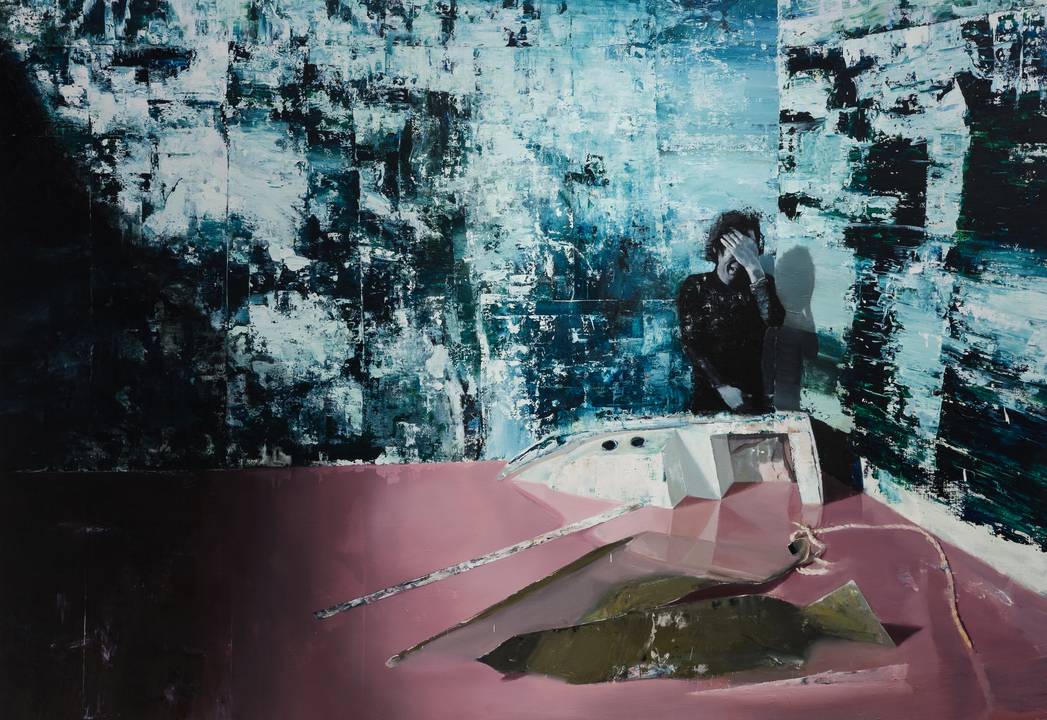
Installation view of 《fly-er》 © Hapjungjigu

Falling and Disappearing: Fleeting Tension of the Moment

Unfolded, the surface of a painting by Jisan Ahn is fully composed of rough walls. My gaze wanders about a site, where everything has disappeared - then my gaze is directed onto a wall. The traces of something that is not to be found any longer drive the present to an irreversible helplessness.

At that moment, a hooded person seen from behind is depicted almost adhering to the wall where the garment is hung, like a transient trace of something.

Ahn was thinking of "things that fall and disappear," while preparing this solo exhibition. Words like "to fall" or "to disappear" are related to Bas Jan Ader's practice, which became a core reference for Ahn's ‘Pause and Gesture’ (2015-16) series. Recalling Ader, who vanished in the ocean during his conceptual performance in the 1970s, Ahn focused on the series of circumstances deriving from the two words.

The current exhibition is entitled 《fly-er》. It evolves around the beings that fall and disappear from their places, the traces that are left in their absence, and the sense of fundamental loss and inquietude. Ahn's 《fly-er》 is an attempt to approach those forms that cannot be captured.

Installation view of 《fly-er》 © Hapjungjigu

Walls and Falling Things

I see two walls: On one wall painted by Ahn, a flipped piece of paper barely hangs, half ripped off; and on the other, colorful pieces of tapes that used to hold something sturdily are left over in a random formation. reference, reference (2016) and flyer (2016), is full of clear hints on arbitrary forms in the process of falling down endlessly.

As suggested in the work titles, the verbal sense of "falling" con­structs the focal keyword of the exhibition and he chose flyers as concrete objects representing "falling forms." More specifically, Ahn's major reference was Ader's ‘Falling’ series. And to Ader, falling was also a focal subject to the extent that he dedicated more than the half of his performance videos to the theme.

Ader executed performances where his body suddenly fell down from rooftop or riverbank, and has once explained the philosophical meaning of the physical con­dition of the vertical falling, dragged by "the gravity." He was immersed in the philosophical investigation of human free will and determinism so to say, while observing the forms of physical movements. 

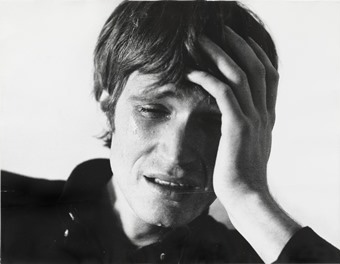
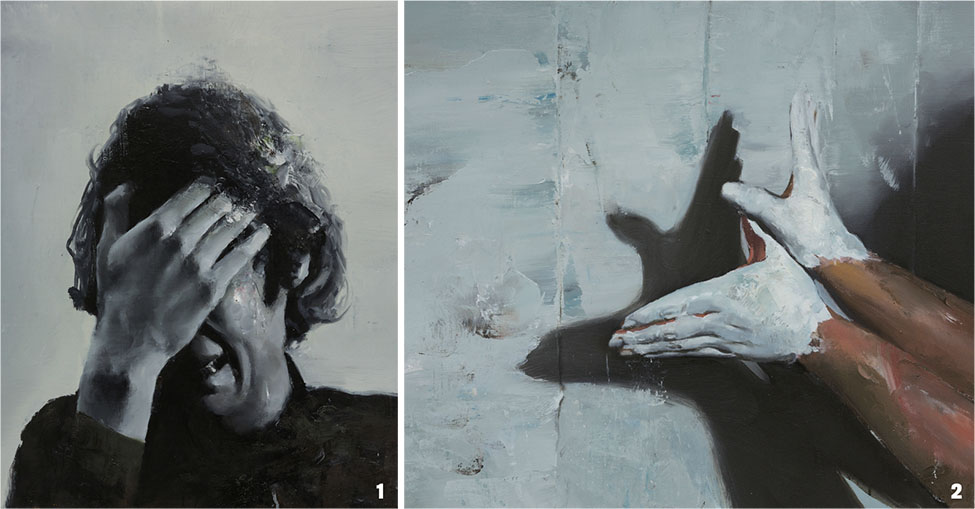
For a long time, Ahn was engaged with throwing earnest questions on painting through dealing with Ader's series of physical activities that were video-docu­mented as material for his painting. For example, in ‘Pause & Gesture’ series, he chose two frames from Ader's video I'm Too Sad to Tell You (1971)to paint them as his 27 sec. 67 (2015) and 43 sec. 90 (2015).

These present his persistent pursue of revealing the causality between the painted object and the act of painting through "the act of painting an actual object."

Like how Ader teetered losing balance affected by gravity then to fall at the highlight of this tension, Ahn juxtaposed this moment to his act of painting in relation with an object, while retrieving the causality of a body act under a certain physical condition. And out of Ader's video works that condense those contemplative processes, Ahn made subject matters of his painting. 

Installation view of 《fly-er》 © Hapjungjigu

In his current solo 《fly-er》, it is remarkable that the notions of "falling" and "disappearing" that derived from Ader's practice get projected onto specific and actual places where Ahn found himself at, overcoming his previous fundamental and philosophical reflections.

Ader's work itself was actually an experiment to attest the invisible yet vast effect of physical forces, applying his own feeble body within the ordinary spaces such as his home. Considering this, the fact that Ahn is expanding similar reflection, which started from ‘Pause & Gesture’ series where he mainly focused on his study on an artist, to approach actual spaces in his painting seems to be a natural development.

In this way, Ader's presence in serial motions disappears, where Ahn's empty walls and falling entities in vague yet familiar sites of everyday finally prevail. These must be based on what he actually saw in reality, estimating from what he usually examines in his paintings, namely the actual objects.

On the other hand, the works mentioned above, flyer and reference, reference present compositions that continue in Private lesson (2016), On my way (2016), Bowling ball (2015), and 2nd Hide & Seek (2016). The canvas is fully filled with surfaces of walls, where merely hung things or their remnants indicate a profound sensation of helplessness.

Indeed, the empty walls that block the entire frame of his painting represent a psychological instability due to their slant angle of hanging as well as their embodiment of self-enclosed absence. Yet Ahn concentrates on the wall as a locus for existential reality, where invisible forces such as gravity affect to the extent that everything finally falls down from their own places and disappear.

For example, traces of flyers that are destine to be attached to and detached from an imperfect temporary wall countless times or musty wallpaper that rips off slowly due to humidity and mold store the moments when the forms that once existed resisted against those inevitable forces in real to collapse altogether and fall down.

Thus the walls that at once look helpless and utterly fleeting, paradoxically threatens the status of the beings that were occupying their hanging position in a drastic way, so to remind the existential questions over and over.

Installation view of 《fly-er》 © Hapjungjigu

Things that Disappeared, Sailing Somewhere

Semi-basement (2016) looks like an ominous ruin and similarly alludes to be a place where something that is now gone, existed. On the inside wall of a building where everything is gone, thick and dark stain fell.

As if the living moments that were attached to this place have collectively sunk, the shut down and empty space is filled with the lingering and futile remains which are left over by things that vanished. Ahn called them "graffiti" and compares it to his act of paint­ing I will return to this later. Anyhow, this situation is close to a staging, and touches the moment when Ader departed on a small boat to the ocean, where he disappeared forever without any audience for his performance. ―his performance.

This performance became Ader's posthumous work, whose result was so much tragic that it almost appears romantic, which leads to a total disruption of the borderline between the reality and its outside when one will attempt to share the experience around it.

Therefore Ahn's concern as a painter that was rooted in Ader's ‘Falling’ series becomes a chase of "the existential site of the absence" in this exhibition, which one can experience in transit from reality to the unreal.

Relying on Giorgio Agamben, this experience could be circumscribed to be a profound exploration of "the dimension of the unreal," while recollecting Ader's last performance, it could be considered in relation to the artist's attitude of sailing the sites of death - "the death is elsewhere," - situated somewhere in our reality. 

So when we return to the image, it might be because of this when a child's ges­ture to doodle some ephemeral graffiti on a wall hard to reach, stepping on the vulnerability of an accumulation of dust, reminds us of Ader's un/real appear­ance of falling after the attempt to cling on a steep rooftop or tree branches.

Like the flyers that prove their presence through hanging during a moment of utmost crisis, Ahn seems to have attempted to approach the unknown essences of deep concerns and invisible melancholia for the beings that have suddenly disappeared or got lost from reality. In this term, Painter's kitchen (2016) is similar as well.

Resembling the temporary walls in reality, that are covered with huddling re­mains of removed flyers, the painter's kitchen bears much of the transient traces from the act of painting. But this kitchen, that has lost its function completely due to the dregs of colors and discarded paintings, paradoxically tells about the presence of the painter who is sailing toward somewhere in a slight disjunction from reality.

Ahn once realized a painting that he made absorbed into the act of smearing colors on his hands and feet then to cleanse them away in repetition, with the aim to record and express the subject matter through a direct painting. According to how he described this action in his painting, it started from the will as well as the skepticism for capturing the shape of things that are disappear­ing or have disappeared.

Thus Painter's kitchen is an actual space where he as painter explores the unreal dimensions within his reality, as much as it is an abstract site comparable to the unfinished journey of an artist who deliberately chose to fall and disappear.

Installation view of 《fly-er》 © Hapjungjigu

Hence preparing this exhibition, Ahn must have desired possibilities to approach the numerous circumstances in reality as well as their concrete shapes that can be recalled from the word "falling."

Stand on tiptoe (2016) suggests me this kind of attitude. In this risky situation of standing on tiptoe on a chair not only gives us a prediction of somebody about to fall, but also reminds us of the familiar tensions in reality that reincarnate unexpectedly at different moments of falling.

Through the stream of thoughts that connects Ader and Ahn, both of the moment of "falling" when one senses the existence and the moment of "disappearing" into an unreal dimension, appear in front of our eyes in greatly real shapes.

As like the moment when we had to witness collectively the ship sinking in front of our eyes. In that sense, the falling forms and places of absence that Ahn unfolded in 《fly-er》 evoke the precise scenes from our reality in a tremendous way, which appear more real than the actual.

References