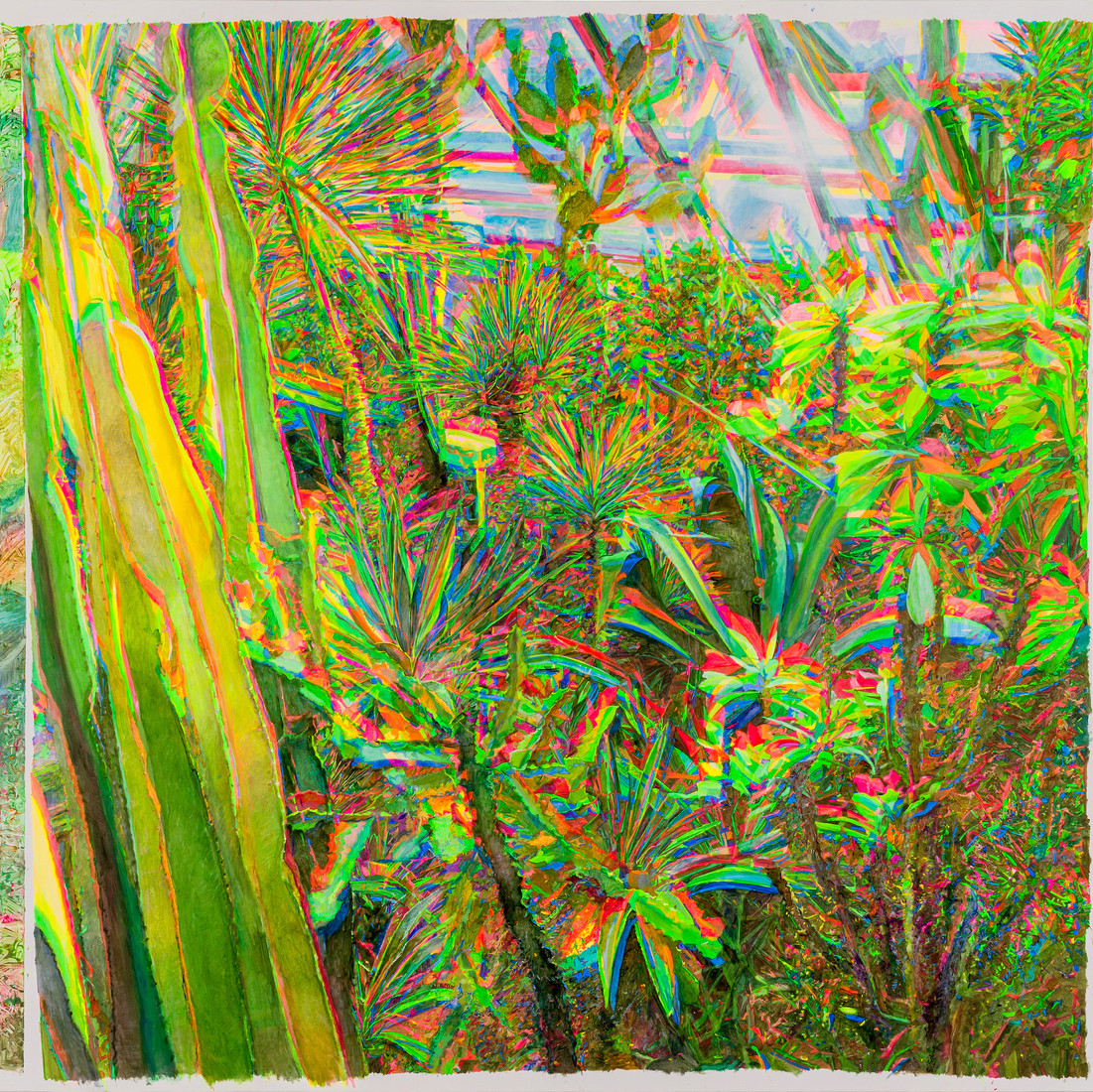
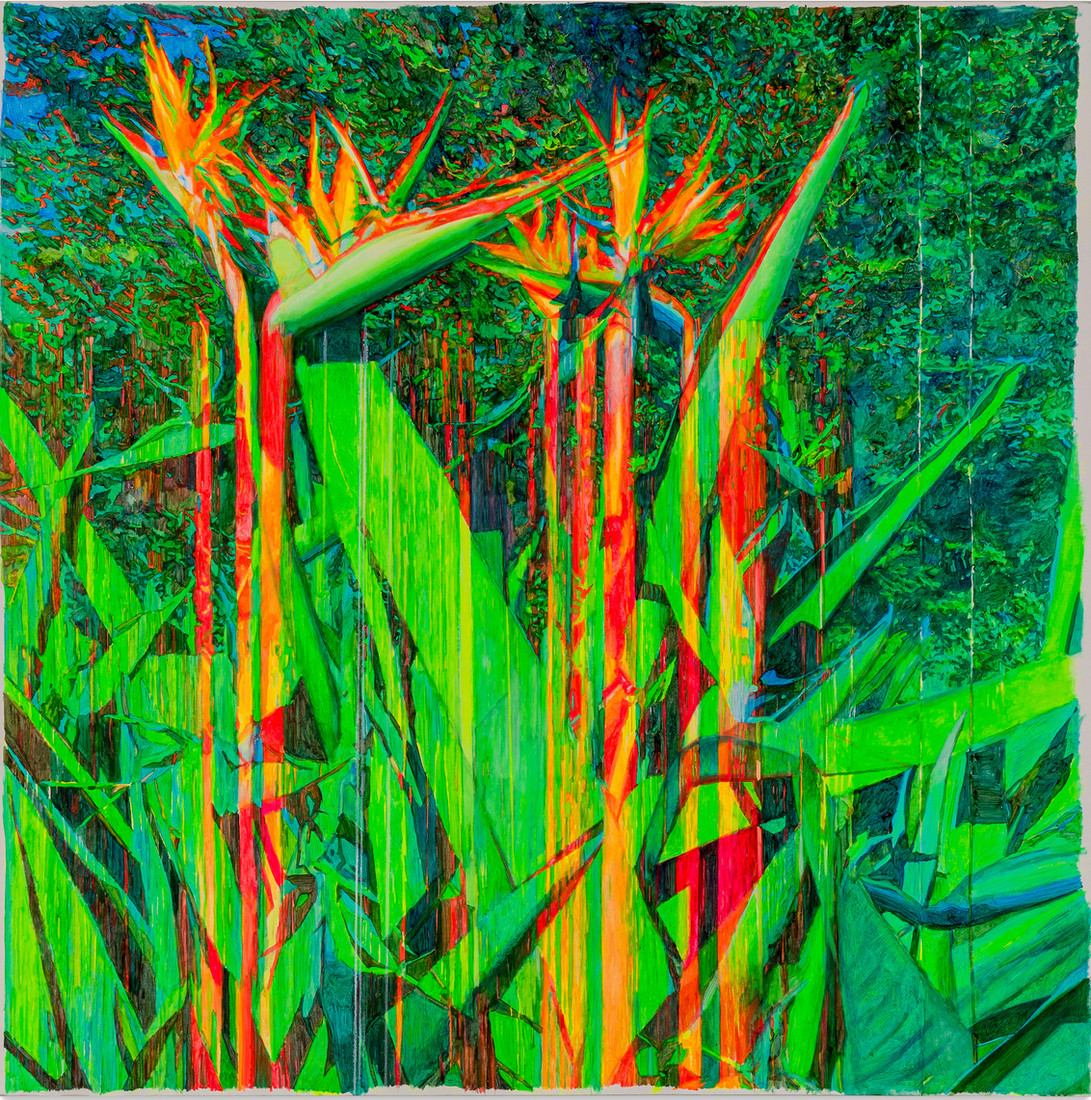
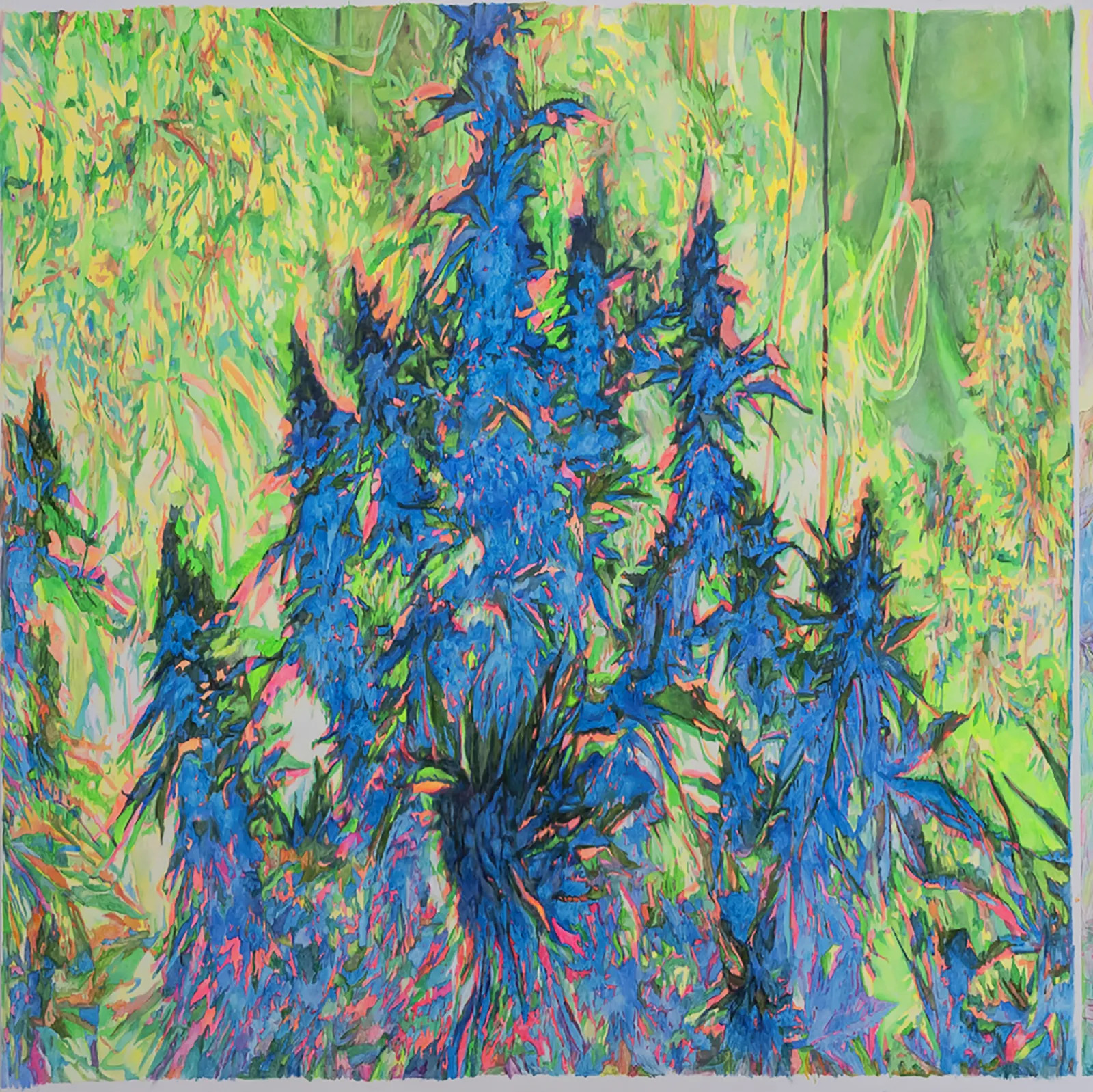
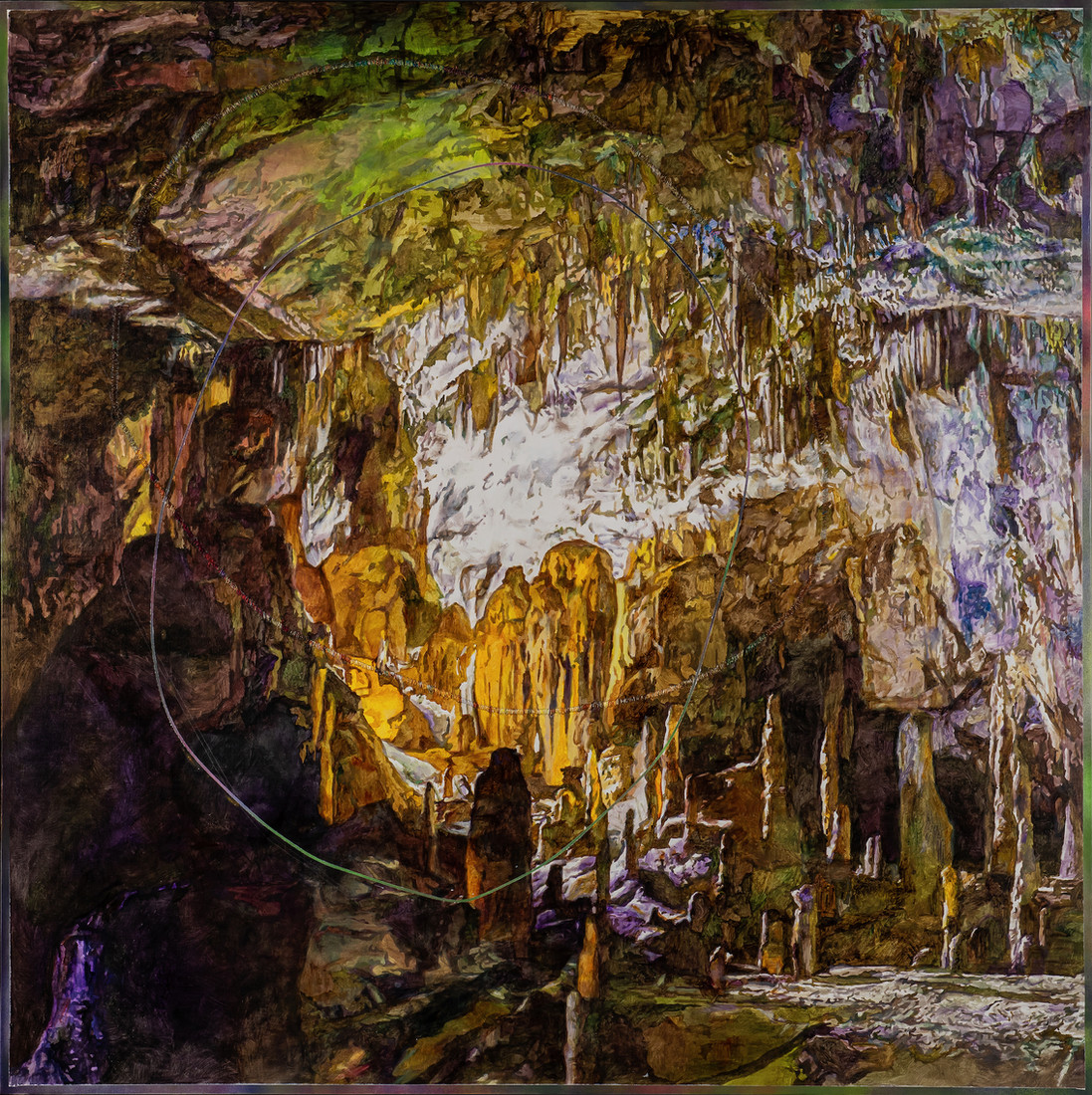
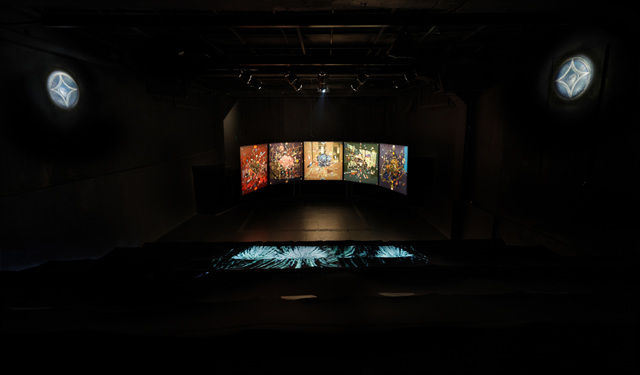
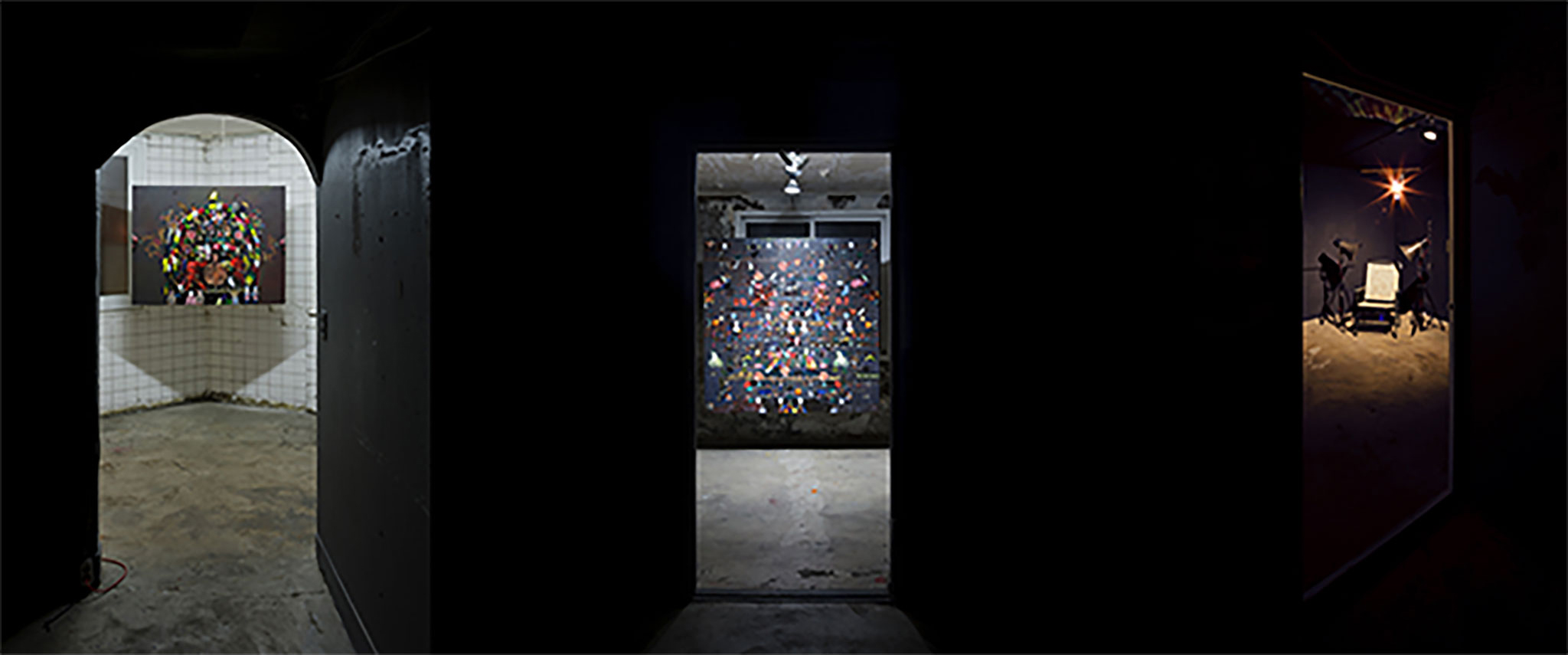
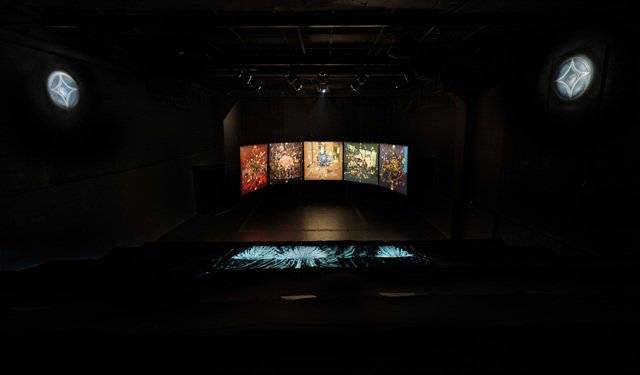
An old theater gradually fading from public memory. On its empty stage stand square-framed paintings facing one another. A stage within the stage of the world, and within that stage, yet more stages.

Choi Soo Jung views the world through multiple overlapping frames. As these frames multiply, their transparency as mirrors or windows disappears, eventually giving rise to self-sufficient universes with only the slightest point of contact with reality—worlds parallel to reality. 《Parallel World》 was, in fact, the title of her 2009 solo exhibition in Norway.

Construction presupposes deconstruction. The artwork, like the stage, is a fiction, yet it is something that can be more real than reality itself. The condition for such reality, however, is temporary. The curtain inevitably falls. Existing only provisionally through intense emotions that are themselves bound to expire, this world resembles the mirage of an oasis that enables one to cross the desolate desert of life.

A mirage is ultimately only a mirage, yet it has its function. The reality of art should not be understood merely as another means of managing life successfully; rather, it should be sought in the context of an interface through which the intense forces that unexpectedly surge up within life are gathered and dispersed.


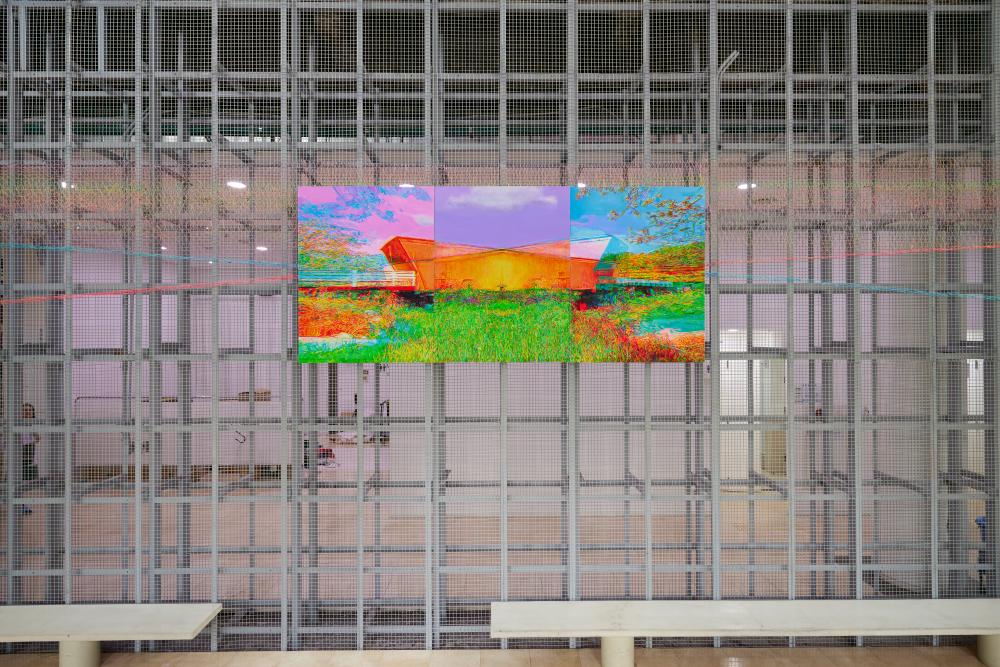
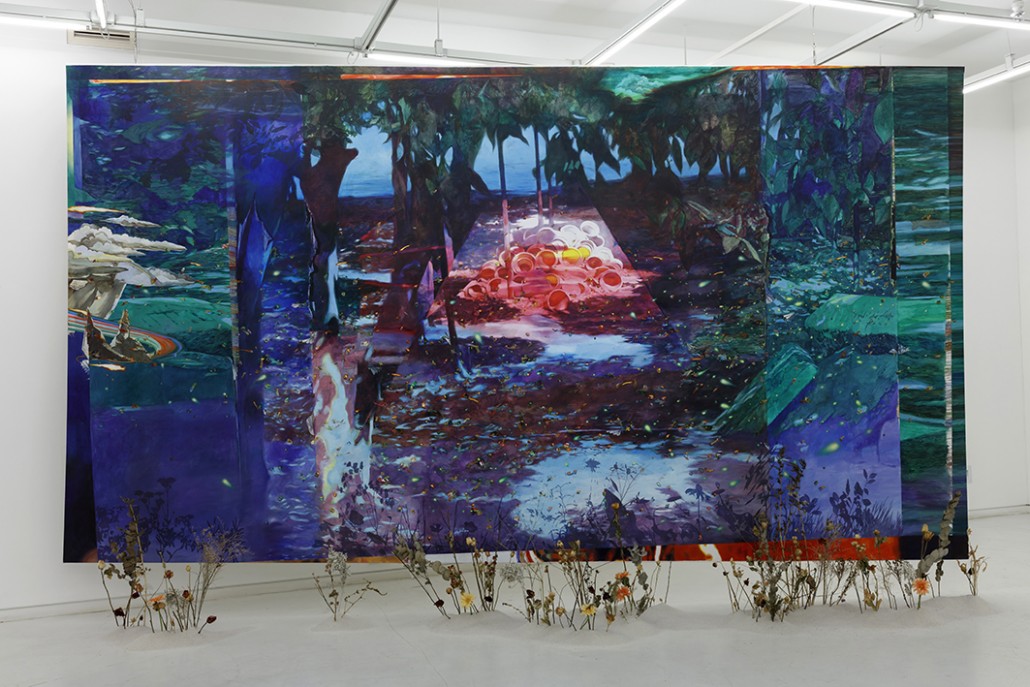
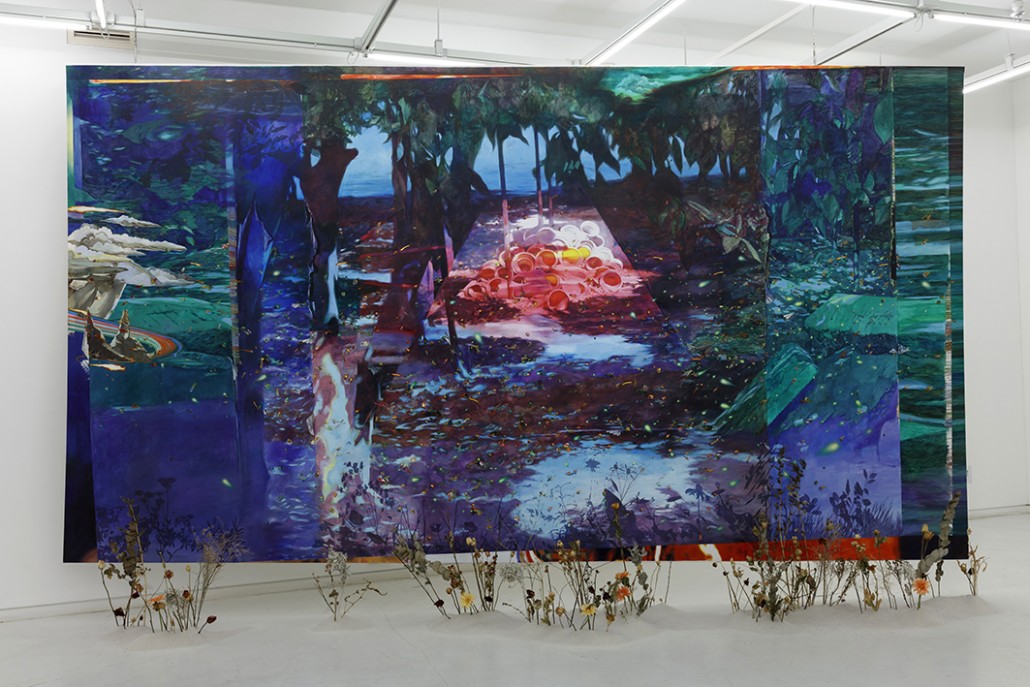
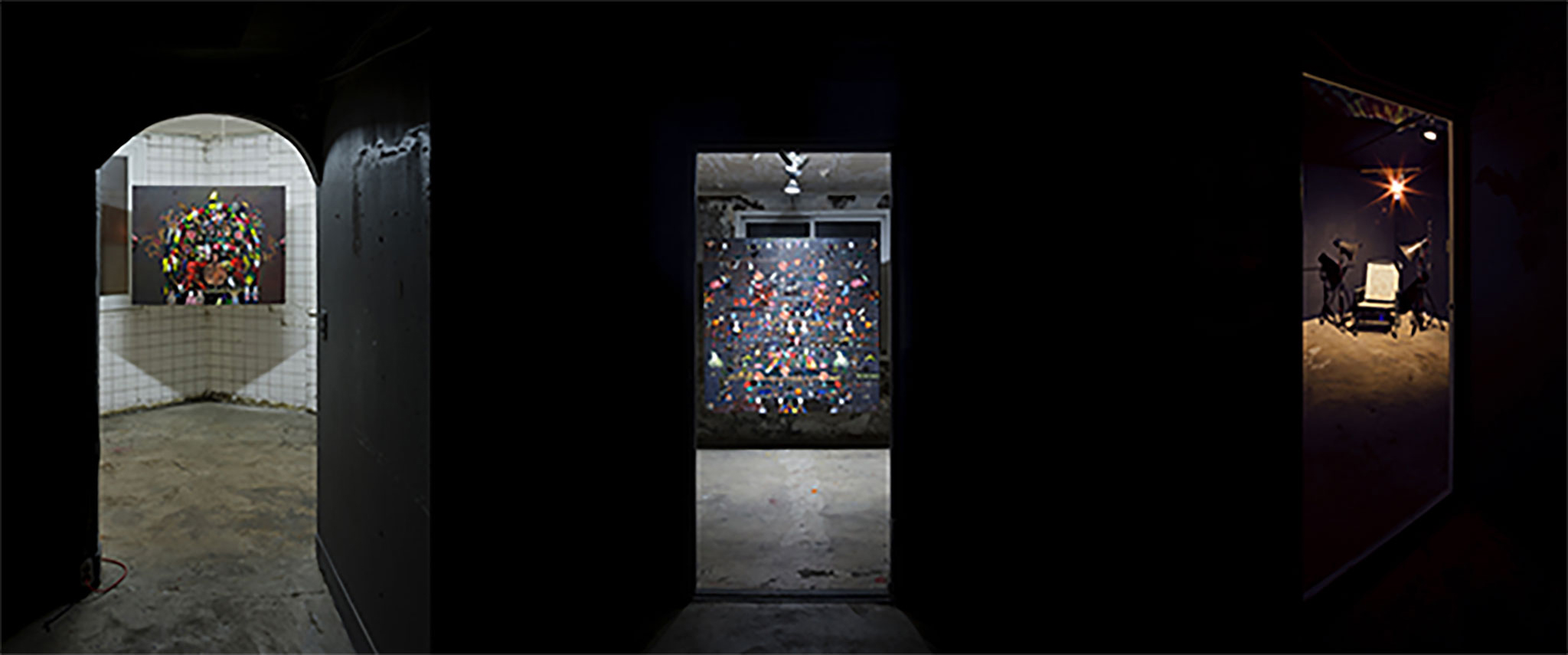
Installation view of 《A Song of Stone》 © Samil-ro Changgo Theate

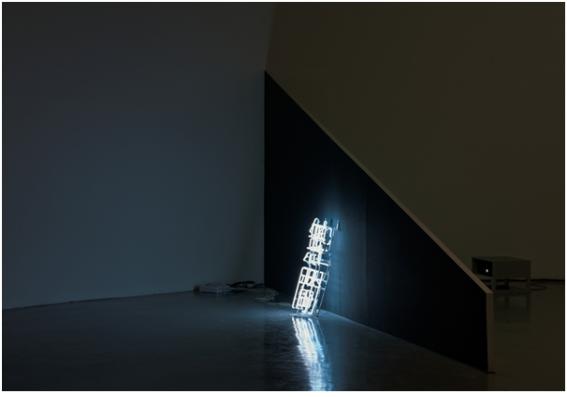
In and around the stage of Samil-ro Changgo Theater, where 《A Song of Stone》 was presented in 2013, neither director nor actors are visible. Paintings that gaze down upon viewers like stage props or performers, along with light and sound, operate toward unspecified visitors. An electronic sign asking after someone's well-being, sounds rendered in Morse code, and footage of fireworks function as machines transmitting messages.

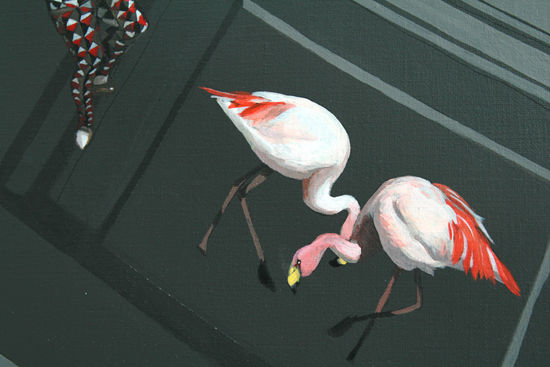
There is both absurdity and mystery in this universe, which seems to operate automatically, without a governing subject. The monkey peering at the stage through the round windows on either side, or the clown appearing within the paintings, is an indifferent observer of this universe whose purpose remains ambiguous, as well as a trickster-like figure who accelerates its absurdity.

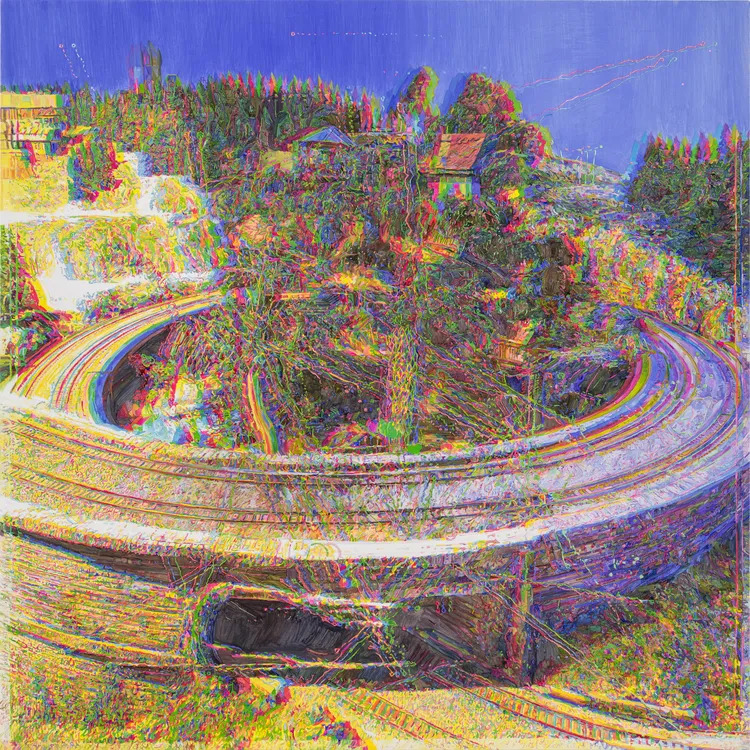
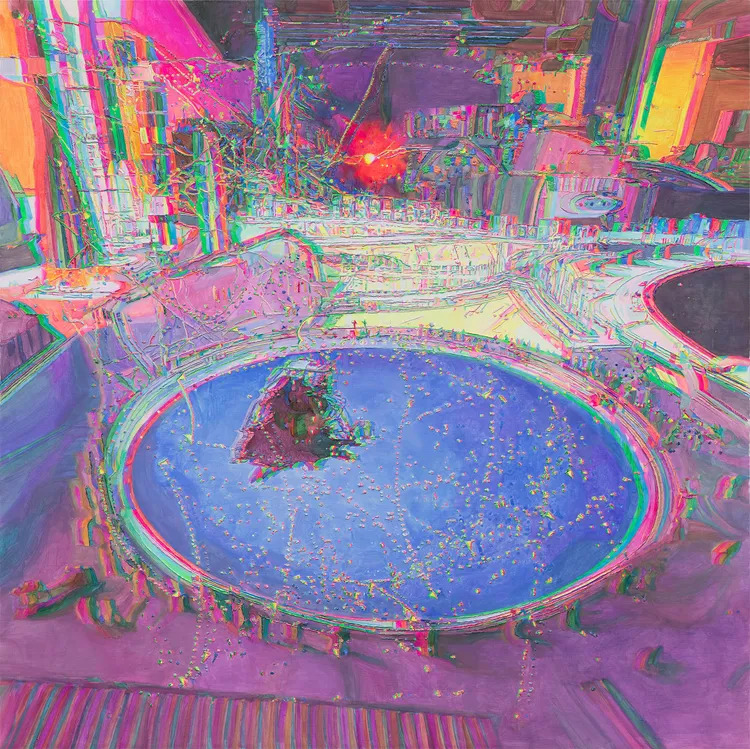
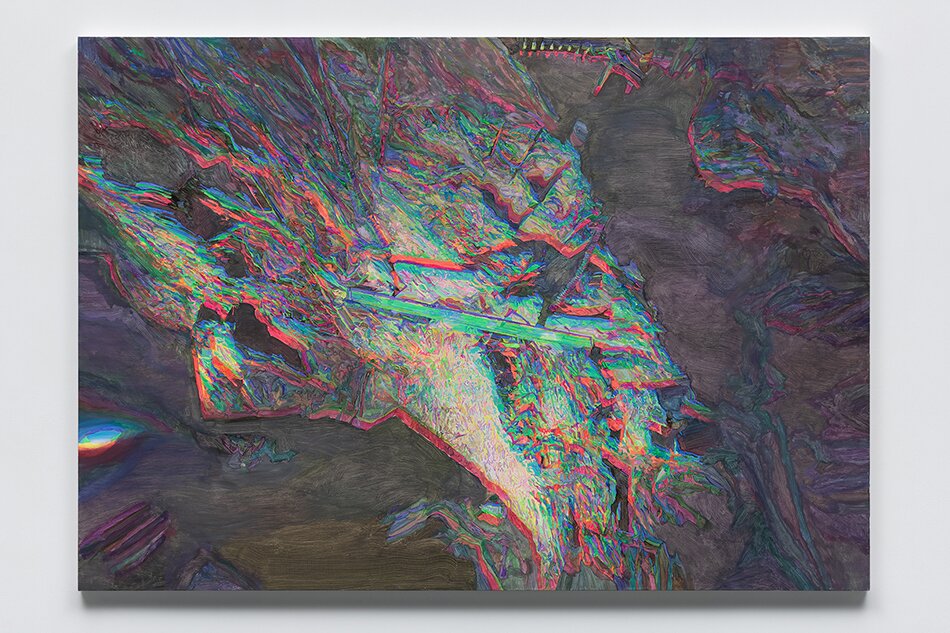
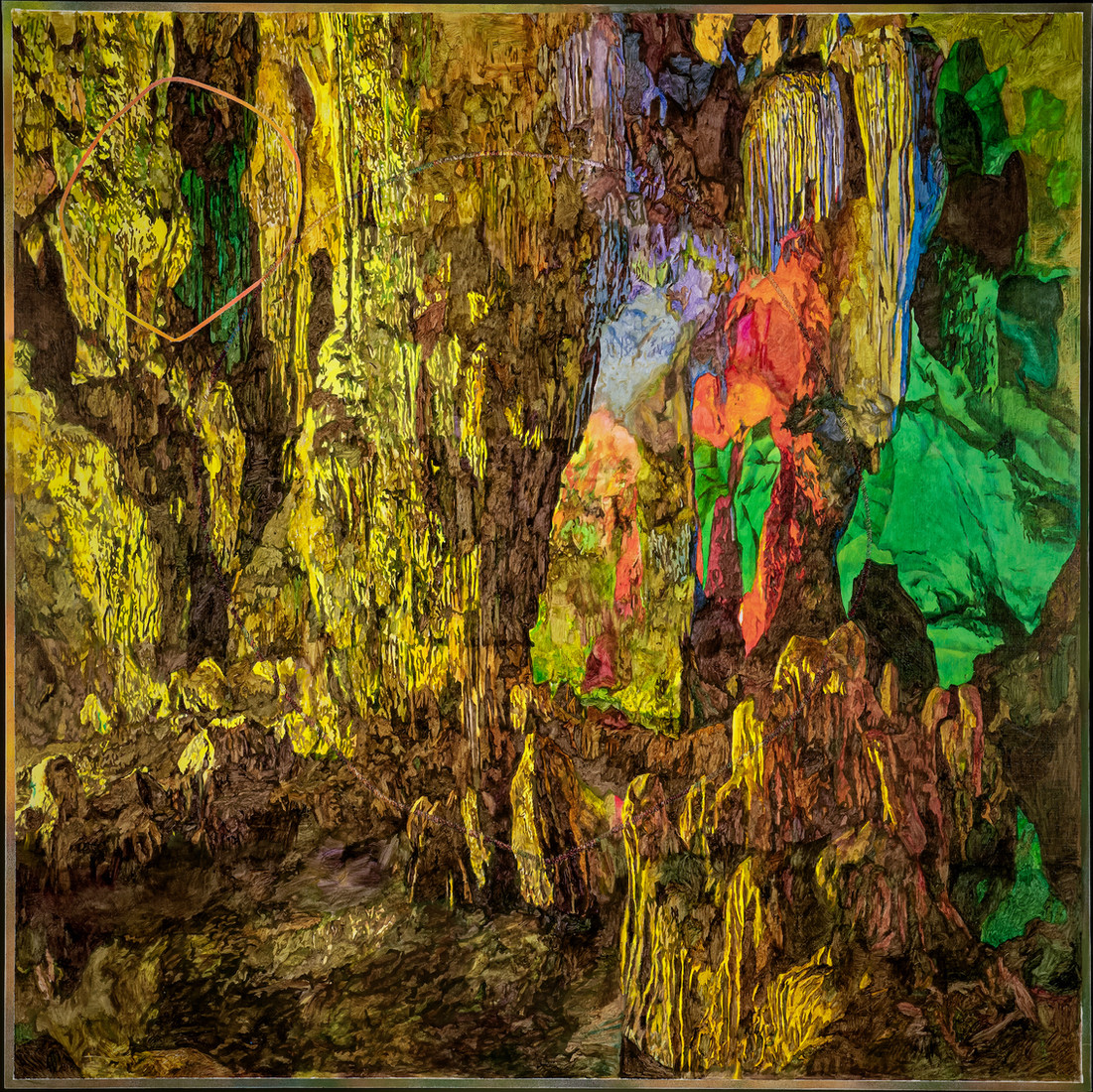
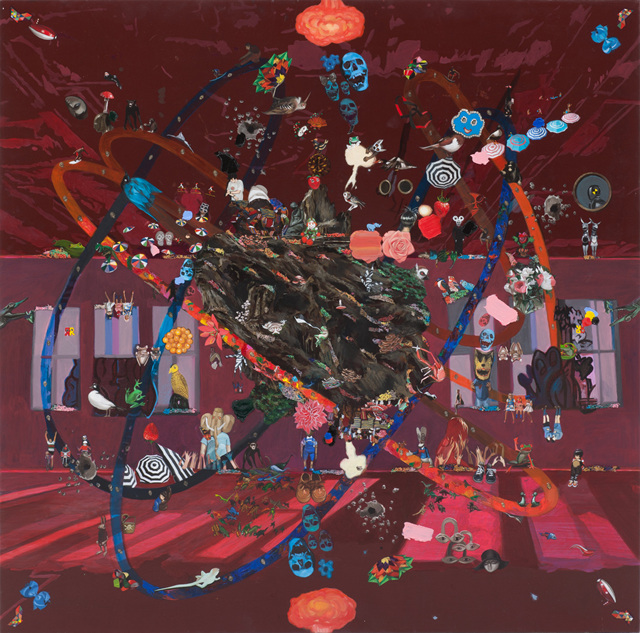
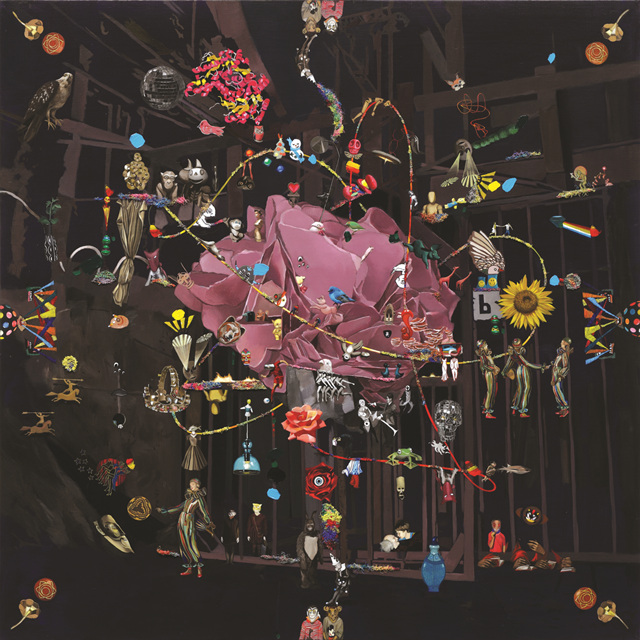
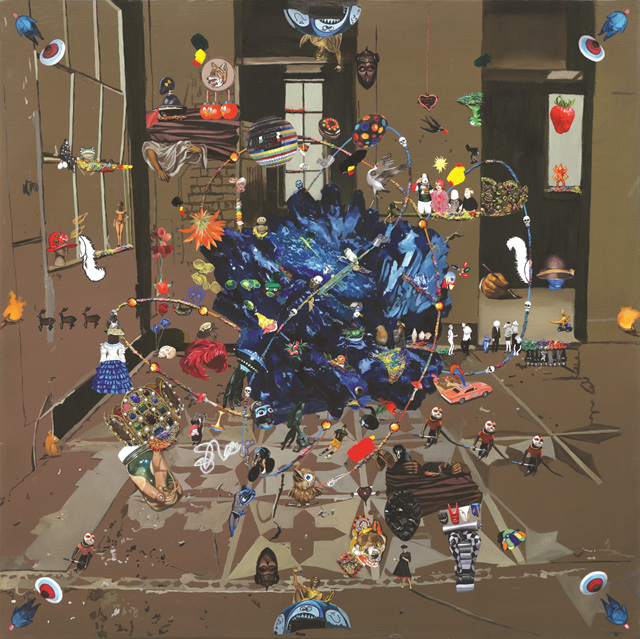
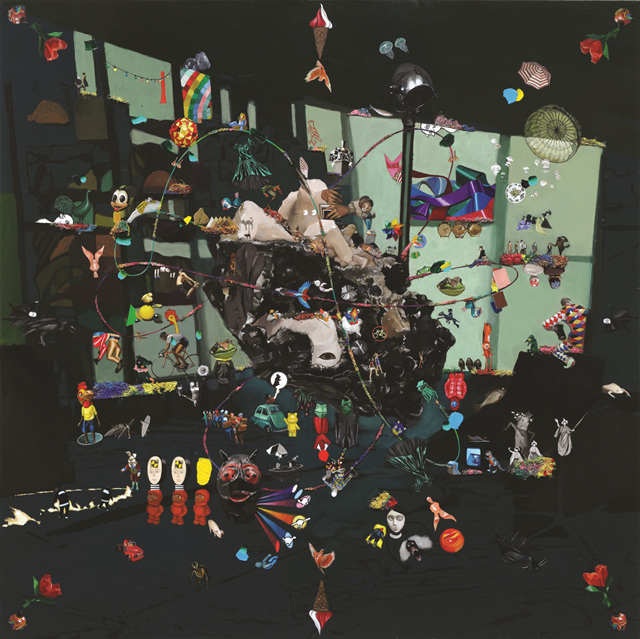
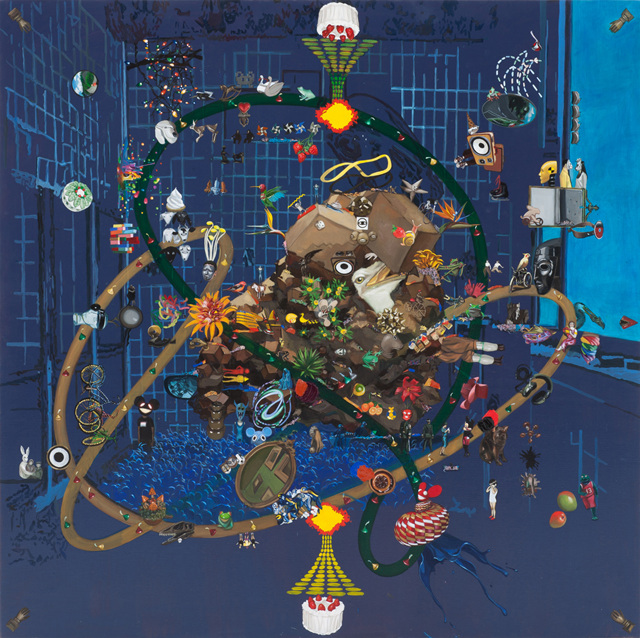
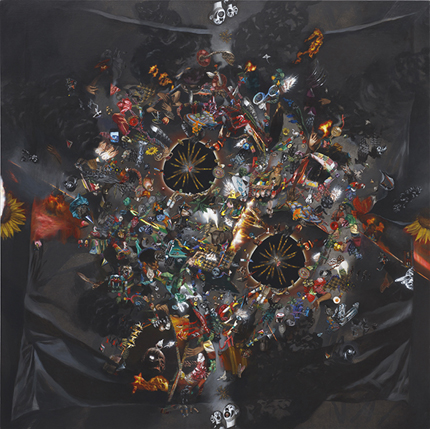
The series titled 'Mineral Painting' (2013), shown in the exhibition, consists of square frames that function as discrete units. At the center of each floats a mineral form with a complex, undulating surface, surrounded by scattered images either excerpted from the world or invented by the artist. Colorful trajectories swirl around and through them, stirring the pictorial space.

Like a whirlpool in a teacup, this movement seems poised to expand outward. It remains uncertain whether these undulating trajectories are the force that has dismantled cosmos into chaos, or whether they serve to impose order upon existing disorder. Aside from the central mineral form that anchors the composition, all other elements appear to have lost their place and exist in the midst of either generation or disappearance.

The mineral core functions as a point that gathers wandering gazes within the space, yet it is not a solid foundation upon which things can securely settle. This center of gravity prevents the pictorial elements from dispersing infinitely into space, but neither does it provide the basis or point of departure for a stable order.

Suspended somewhere between emptiness and center, the scattered images merely revolve within their respective orbits, responding to multiple forces. Viewed individually, each work in the 'Mineral Painting' series resembles the ceiling paintings the artist favors. They are paintings with “no up, down, left, or right,” while simultaneously maximizing the effect of illusion.

A sequence of structural devices—the uniform square frame, the mineral nucleus, and the undulating trajectories—creates events in conjunction with the elements arranged both within and beyond them.



Choi Soo Jung, Mineral Painting, 2013, Acrylic, embroidery and mixed media on canvas, 130 x 130 cm © Choi Soo Jung

The small images scattered throughout this suspended space, where entrance and exit remain uncertain, continually form improbable pairings and generate new narratives each time. The condition they aspire to is that of music—complexly orchestrated and heard differently with every encounter. The latent music resonating here spans a spectrum from highly improvisational jazz to electronic music built through sampling and mixing.

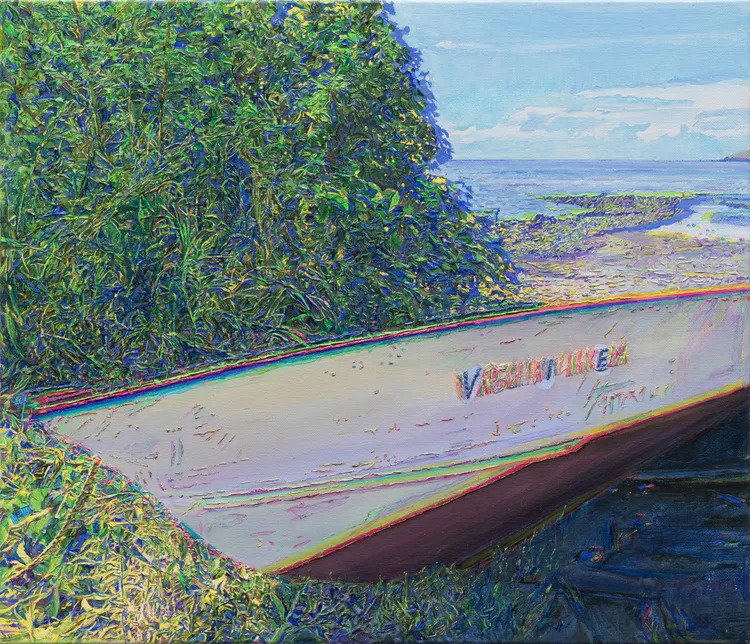
Tufts of multicolored thread that emerge like moss between layers of paint introduce yet another dimension, joining the world of chaosmos. Appearing throughout the canvas, these thread clusters simultaneously emphasize both the flatness and the heterogeneity of the picture plane. If one were to transform one of these alien masses into an image, it would immediately become a painting itself.

Like fractal forms possessing self-similarity, like photographs taken from different angles, or like melodies and rhythms varied through different instruments, they expand their respective worlds. This is not a linear expansion with a defined beginning and end, but rather evokes a world of eternal return, where only what is necessary returns. Eternal return without a single center suggests a pluralistic universe.

The thread clusters appear as extensions of the canvas fabric itself, and at the same time as another layer of paint covering its surface, taking their place as one among the many heterogeneous elements that constitute the painting. Although they are paintings, they inherently incorporate methodologies of collage and montage.

Among the various elements arranged around the mineral forms—which resemble meteorites that have fallen unexpectedly from elsewhere—leaps, discontinuities, and abrupt transitions abound. These provide a pause within a reality governed by spurious causalities. A condition without intervals would become a kind of hell, like the artist’s ongoing conception of 'Mugando (無間圖)'.

Yet if the intervals become too vast, the result risks becoming a tedious utopia. Jean Baudrillard, who argued that imagination exists only at a certain distance, suggested that in utopia the distance between reality and imagination reaches its maximum. At the same time, he described the world of simulation, in which that distance disappears altogether.
In Choi Soo Jung’s paintings, intervals function both as pauses and as potential conditions for transformation. They offer a fleeting glimpse of the infinity to which all finite formal systems are fundamentally connected. Such is the case with the black canvases in her studio, refined to the texture of leather. From the moment finite human beings begin to contemplate infinity, contradiction and paradox inevitably seep in.


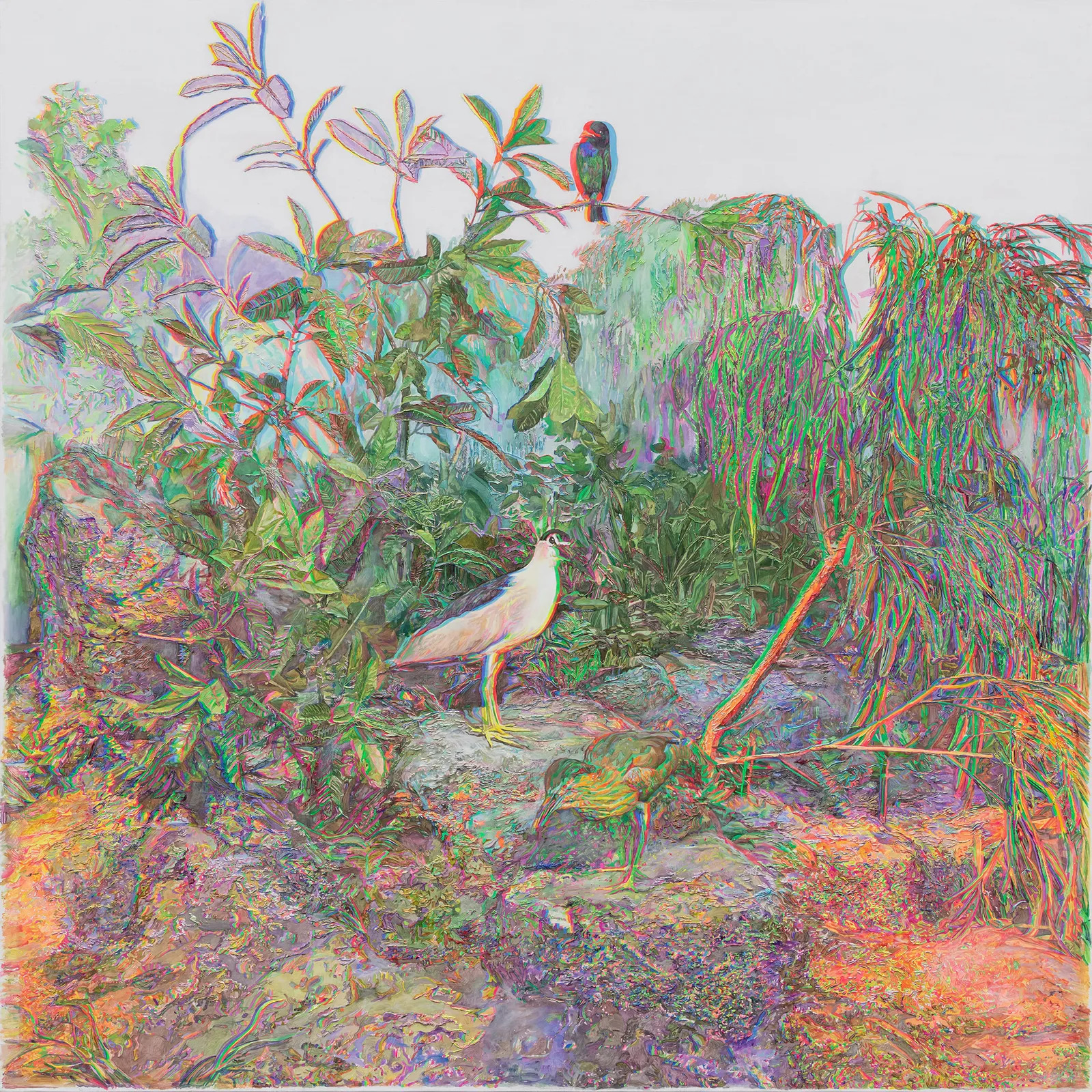
Choi Soo Jung, Mineral Painting, 2013, Acrylic, embroidery and mixed media on canvas, 130 x 130 cm © Choi Soo Jung

To avoid contradiction and paradox, infinity—which cannot be reduced to a finite formal system—tends to be excluded. Contemporary art, however, punctures holes toward an unfamiliar outside (punk), allowing untamed forces to circulate. For Choi Soo Jung, the standardized frame covered with canvas functions as a stable structure capable of gathering together accidents and fragments that generate leaps and discontinuities.

She is a painter in the sense that she believes painting can readily accommodate heterogeneous elements of innumerable origins, placing them side by side or allowing them to collide within a single space. Each image is representational in itself, yet the whole never resolves into a single completed narrative. The narratives her works generate resemble those of the modern novel.

Alain Robbe-Grillet, a leading figure of the Nouveau Roman, once wrote that his new novels pursued “a persistent search for something lacking in naturalness, absent because it is too strange for this world, or perhaps impossible to define; disconnected fragments, frozen gestures, objects severed from their contexts, questions suspended in empty space, brief moments exposed in a confused sequence that never quite joins beginning and end through logic.”

Likewise, Choi Soo Jung’s works, filled with discontinuous elements arranged without apparent justification, become sites where various impossibilities are exposed and staged. From these efforts emerge “complex systems of multiple continuities, bifurcations, ruptures and continuations, logical impasses, scene changes, various combinations, separations and overlaps” (Alain Robbe-Grillet).

Such fragmentation presupposes the death of an organic whole. As in the works of the Nouveau Roman writers, Choi’s practice also entails the death of an organic totality—the familiar human world of everyday life. Fragments repeatedly gather and disperse through forces of attraction (love) and repulsion (hatred). A powerful force runs through them, dissolving established orders.

Rather than being securely situated within the illusory depth of the pictorial space, they drift across the surface, precarious enough to seem as though they might scatter at the slightest touch. This precariousness is also a thrilling mode of existence within an endlessly undulating world. The spatiotemporal interval between the collapse of a previous world and the arrival of a new order is at once vital and decadent.

If one were to discern any order within this anarchic space-time, it would be the sequential repetition of editing and fragmentation. The protagonist of this anarchic world is the clown, masked and made-up.


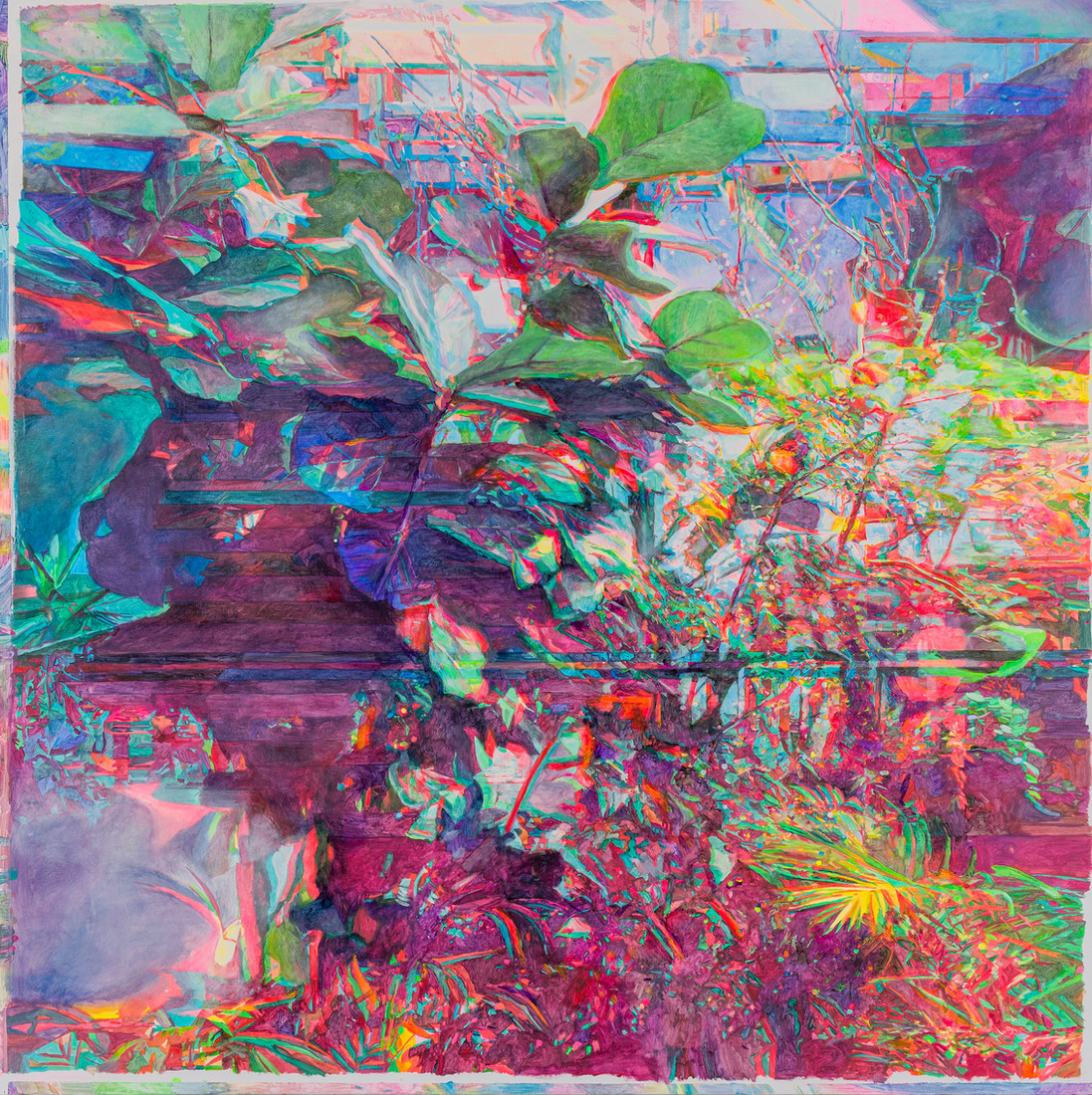
Choi Soo Jung, Mineral Painting, 2013, Acrylic, embroidery and mixed media on canvas, 130 x 130 cm © Choi Soo Jung

The artist regards masks as analogous to painting. There is no hidden essence behind the mask, which functions as another surface layered upon a surface. Might this empty subject not be the ideal protagonist for a destiny in which one temporarily inhabits a world one did not create, only to eventually step down from its stage? Such emptiness is a condition for transformation.

As in Kafka’s world, escape is impossible without the capacity to transform. The artist cites Kafka’s words: “I did not seek freedom. I sought only a way out.” Although various figures, including clowns, appear throughout her paintings, faces with visible expressions are rare. In this sense, the work distances itself from conventional modes of thought that excessively impose human meaning upon a world not created solely for humans.

It is, in other words, a posthuman world. The sites depicted within the paintings, as well as the isolated and uninhabited places where the paintings themselves are installed, seem exempt from the flow of time. They may already be places—or things—that have vanished, like the light of distant stars that reaches our retinas only long after its source has disappeared.

《Future of the Present in the Past》 (2011), a title derived from a 1977 album by Queen, exemplifies a complex temporality in which time and space appear folded and crumpled together.

As with an old Queen album, when the temporal distance separating us from a distant and unfamiliar subculture is added to geographical distance, the conditions become ideal for a surrealist experience. Discarded foreign film reels collected from flea markets reveal what lies Beyond There, as the title suggests.

Frozen moments preserved within faded colors appear, despite being photographic records, as places that exist nowhere—as utopias. They once existed but no longer do; yet through the artwork they become present once again, beginning another life as images. Traversing worlds dreamed, constructed, and reflected by others, the artist likewise assumes the role of the Other.

The clowns, masked figures, and performers inhabiting the stage of painting in Choi Soo Jung’s works embody such faceless others. The recurring clown figure that permeates her work is uprooted from everyday life yet possesses multiple selves.

It is the protagonist of an anarchic space-time in which ordinary orders are overturned. At the stage where an existing world is dismantled and begun anew, the clown assumes the role of creator and artist.


Choi Soo Jung, Mineral Painting, 2013, Acrylic, embroidery and mixed media on canvas, 130 x 130 cm © Choi Soo Jung

In Man and the Sacred, the anthropologist Roger Caillois argues that festivals reactivate primordial time—the earliest phase of the universe, endowed with creative power. By reconstructing a sacred temporality and re-establishing contact with the supernatural, festivals enable human beings to approach transcendent energies.

Such festivals are filled with magical events unfolding within temporary stages or box-like pictorial spaces. Within these inverted, festival-like worlds, the clown who behaves at will assumes a role opposite to that of the omnipotent deity who created an orderly cosmos. As the king of anarchists, the clown appears during moments when authority is absent and transgresses taboos.

According to Caillois, the clown’s activity consists of imitation gone awry; his clumsiness and foolishness produce unexpected disasters. The trickster, who disrupts order through deception and mischief, turns everything into chaos. The mask is a tool for entering this world of disorder. To wear a mask is to become another, and in becoming another, one escapes the limits of the self.

Within humanity’s mythological imagination, the present human condition is often understood as the result of a trickster’s interference with divine creation. According to the historian of religions Mircea Eliade, the trickster sought, like the gods, to organize and complete the world. Yet because of his errors and imperfections, nothing was ever brought to full completion.

As a result, he became the mythical figure responsible for consequences the gods had not intended, including suffering and death. For Caillois, the clown’s mimicry draws attention to a fundamental truth underlying all play: humanity’s helplessness when confronted with an unpredictable universe. A malevolent cosmos and the powerless victims struggling within it—the sufferings of these sacrificial figures evoke both laughter and fear.

The modern playwright Eugène Ionesco regarded this as one way of confronting a universe stripped of meaning and purpose. Within the inexplicable cosmic stage governed by chance, the absurdity of human destiny expresses a shared condition of helplessness before irresistible forces. For the clown-artist, the stage—like a magic circle—becomes the site of a world that must be destroyed in order to be born anew.


Choi Soo Jung, Mineral Painting, 2013, Acrylic, embroidery and mixed media on canvas, 130 x 130 cm © Choi Soo Jung
References