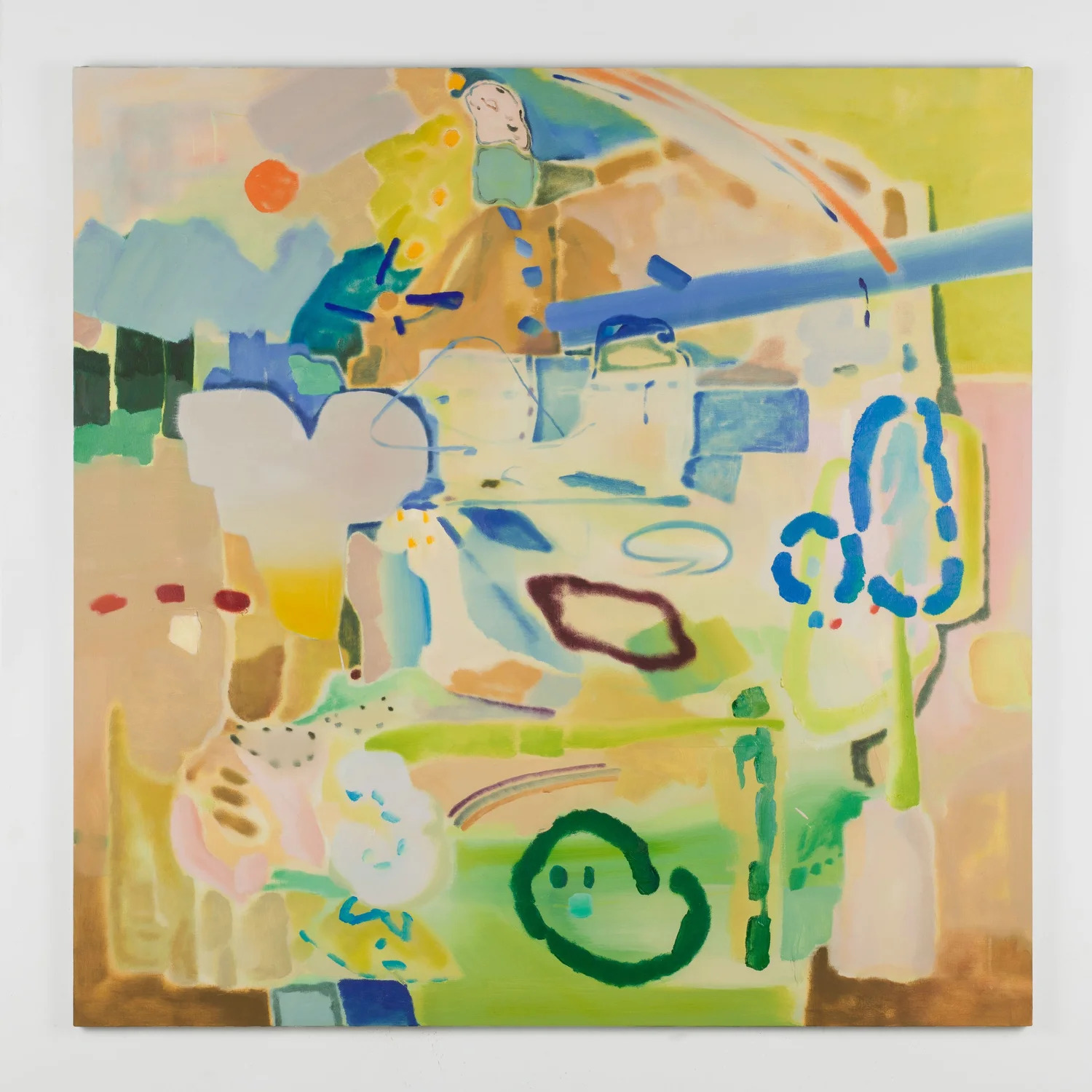
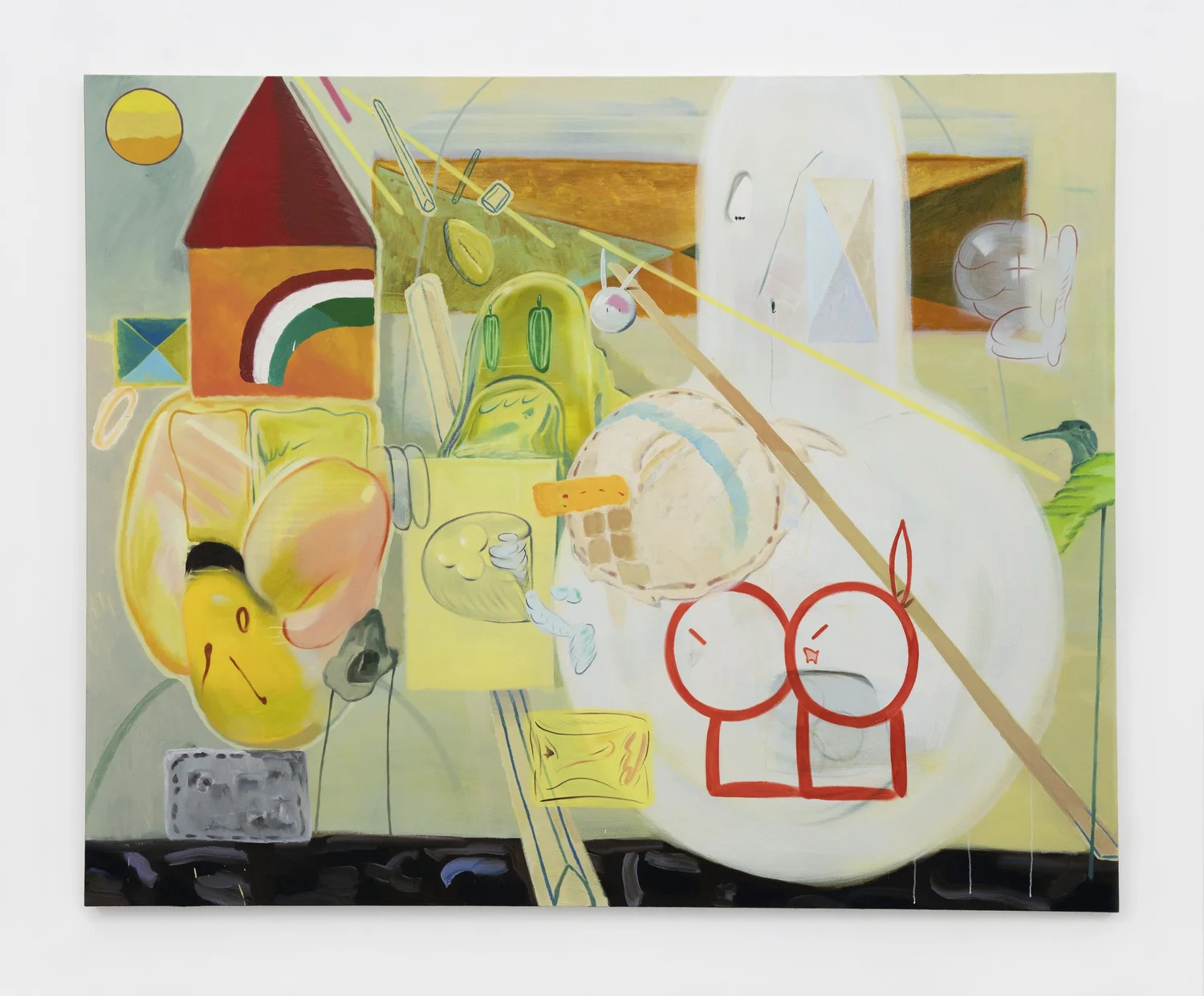
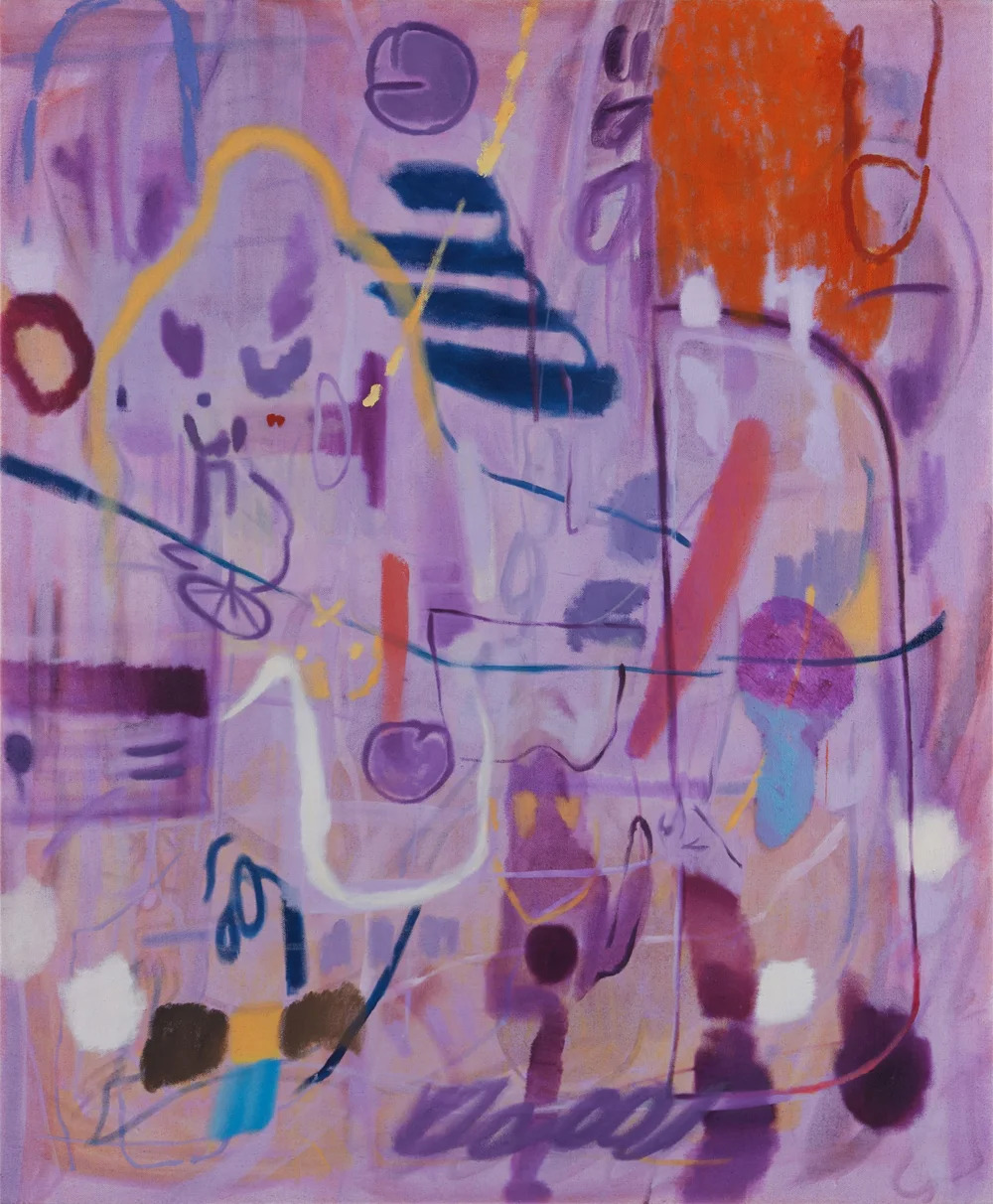
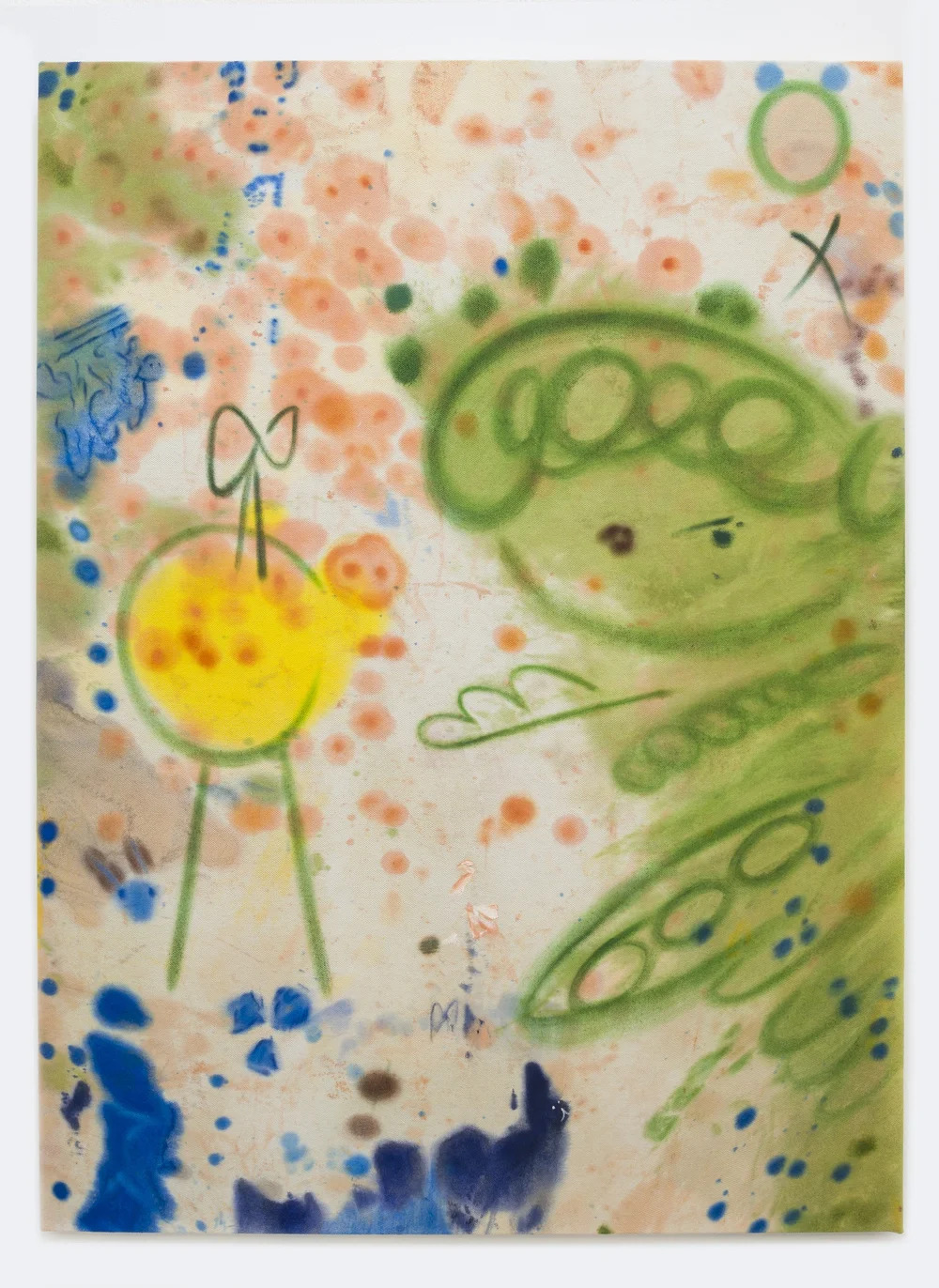
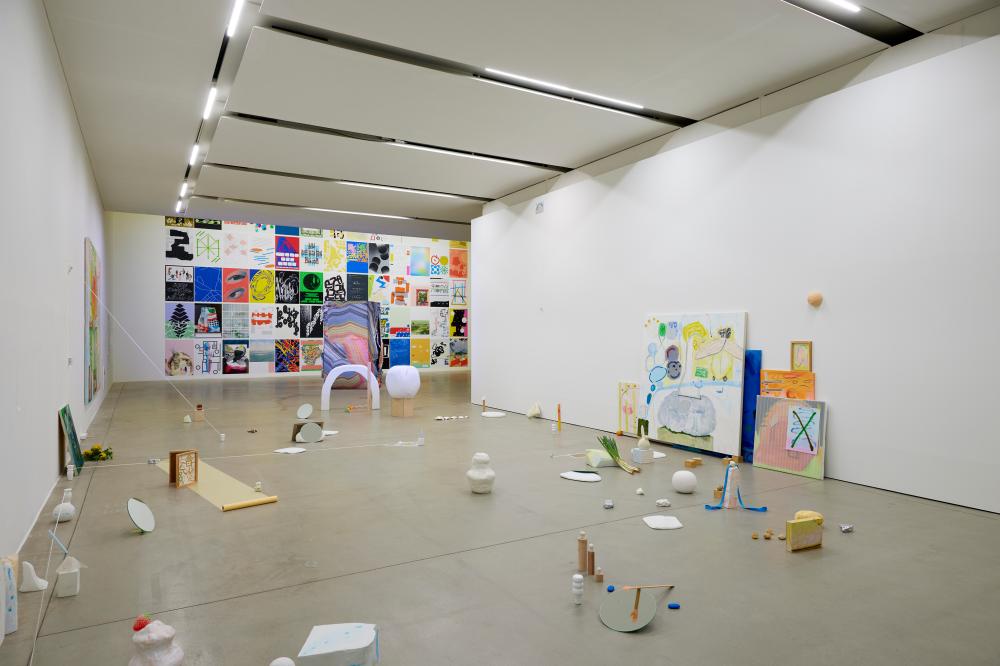
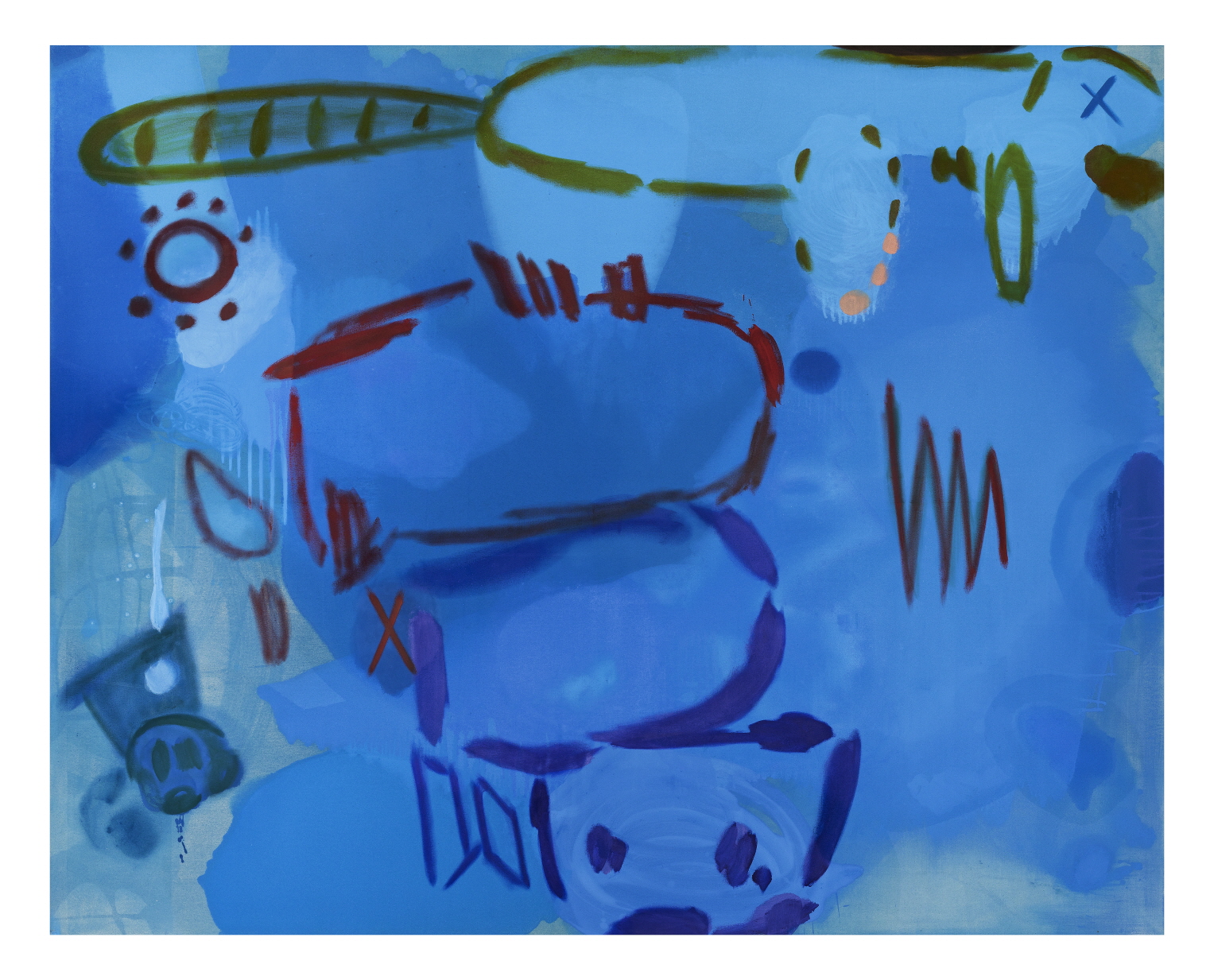
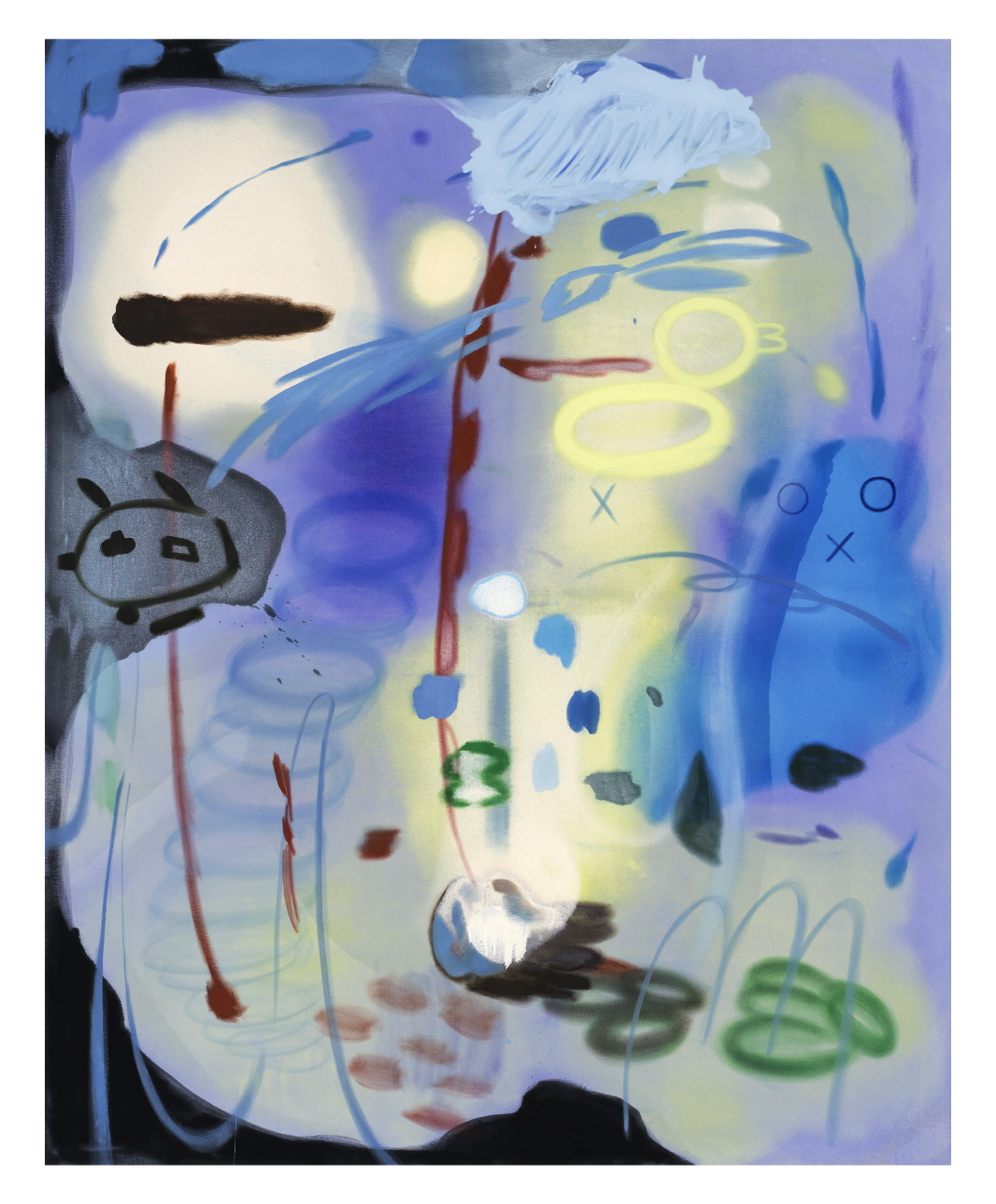
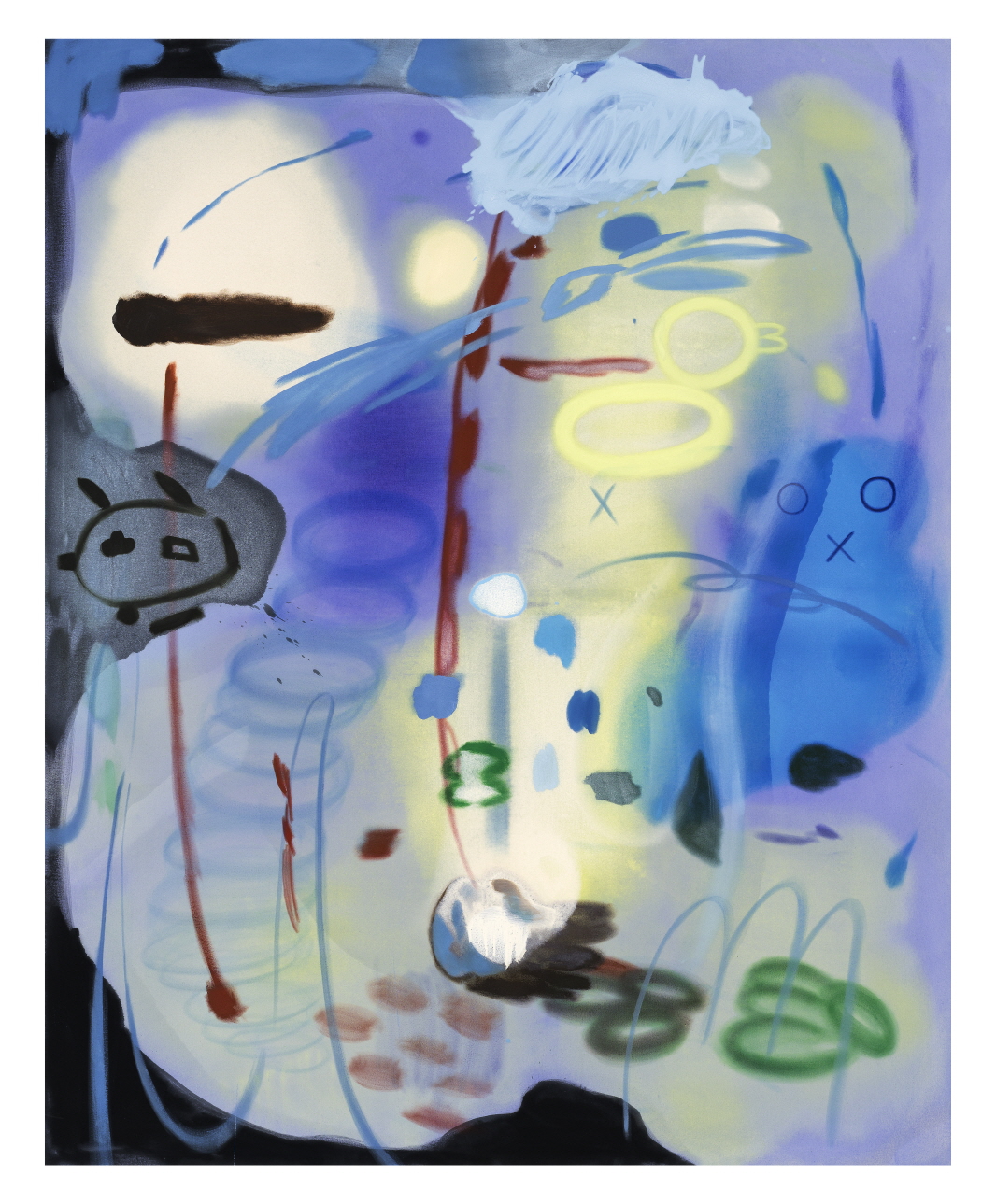
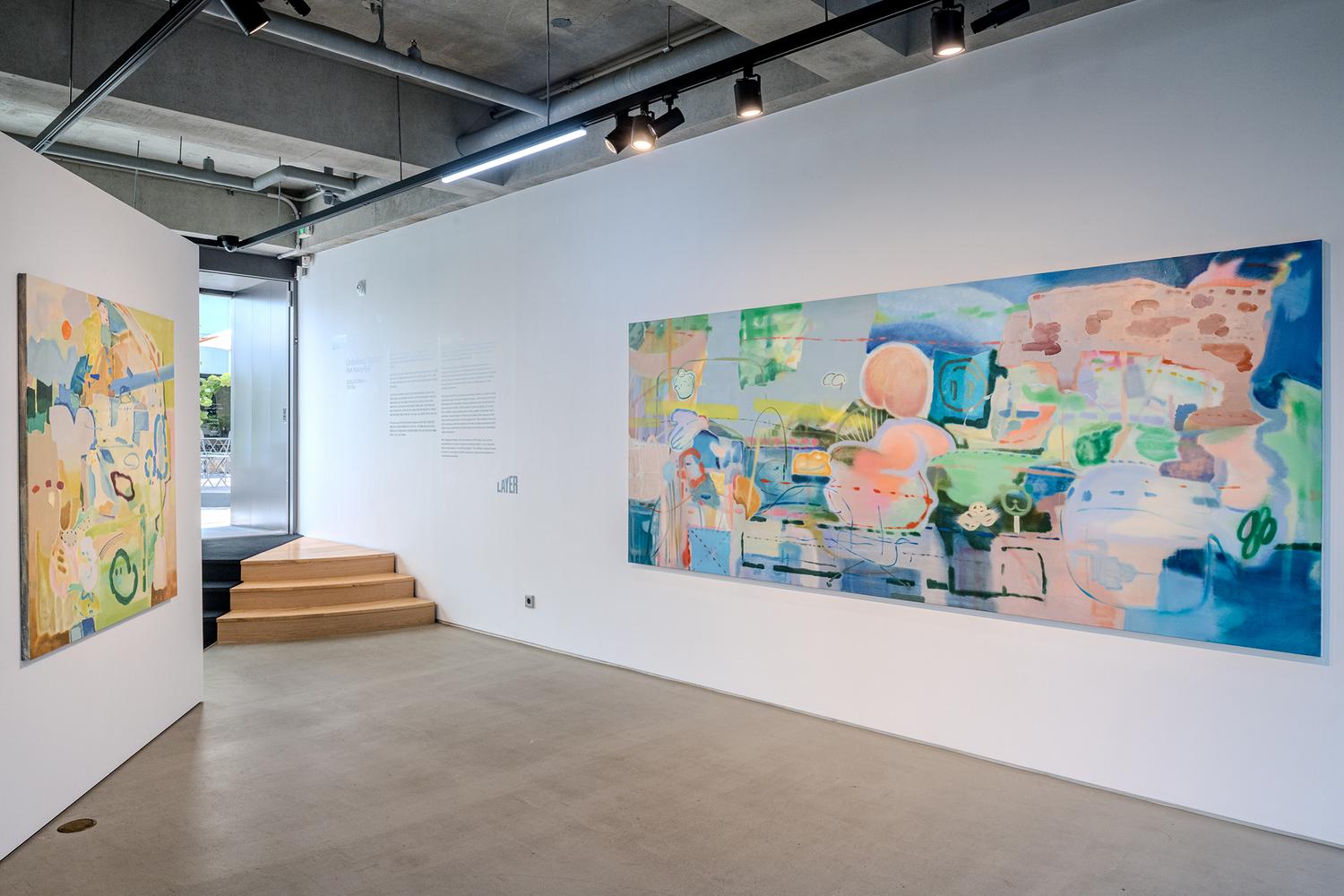
Park Kyung Ryul, Picture 99 (in Blue), 2021, Acrylic and oil on unprimed canvas, 227 x 182 cm © Park Kyung Ryul

1. 
Artist Park Kyung Ryul, who has stated that painting is “fantasy,” repeatedly applies blue paint to enhance the immersiveness of her paintings. Without mixing colors, she places cerulean blue, manganese blue, and Prussian blue paint on the canvas, and she attempts to grant authority to the true nature of the paints confined within the grid of the painting (I wanted to use the term “repress,” but in order to avoid misinterpretation, I say “confined.”).

In this context, when speaking about the materiality of the paint, the term materiality refers to both the paint’s existence as a readymade object from modernist avant-garde painting and as a form of matter that is both unique yet a purely chemical substance.

Moreover, the artist grounds her work in a history of painting that has recognized the canvas as another three-dimensional substance, and she explores how she can allow the painting itself to exist as a material substance.

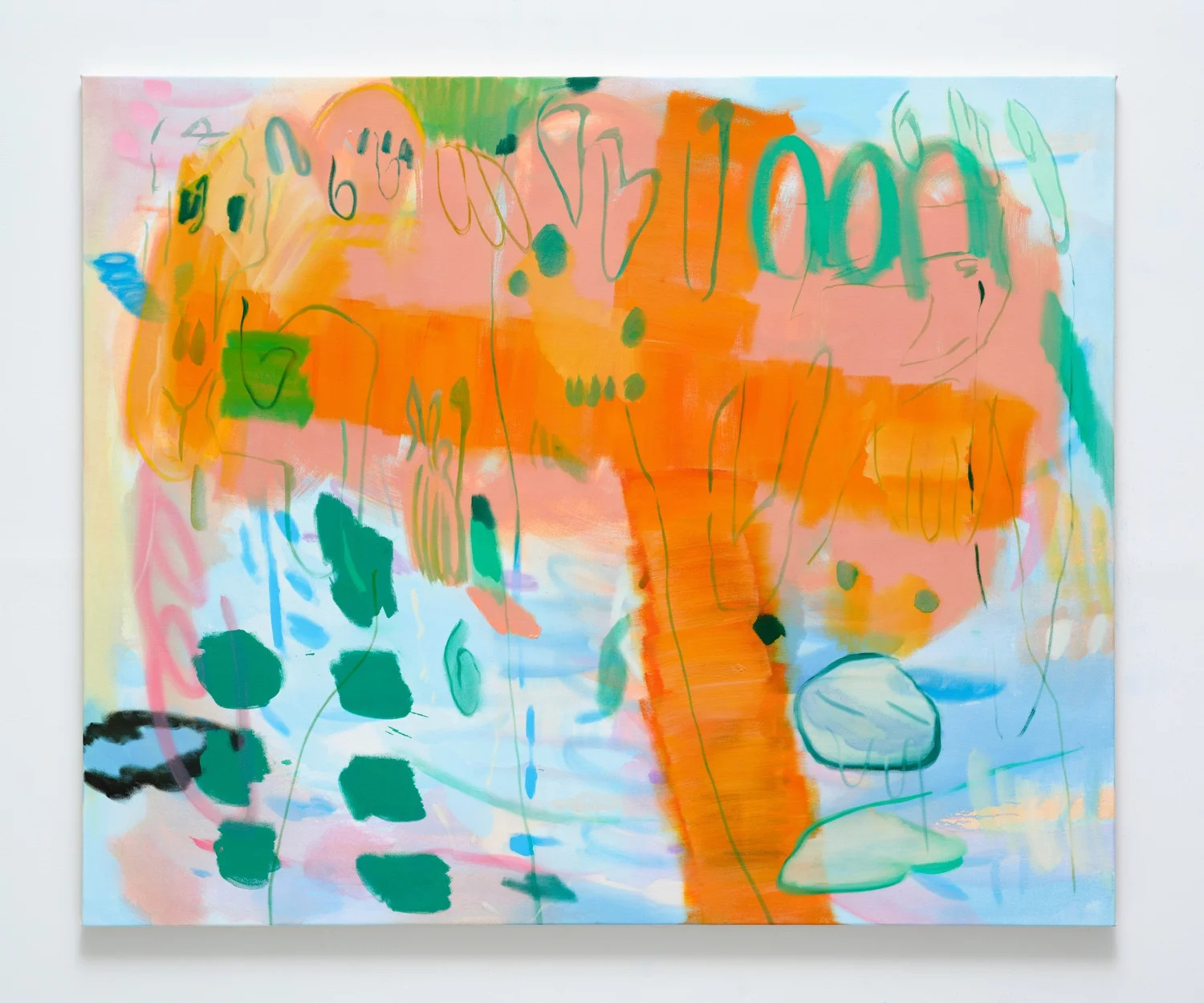
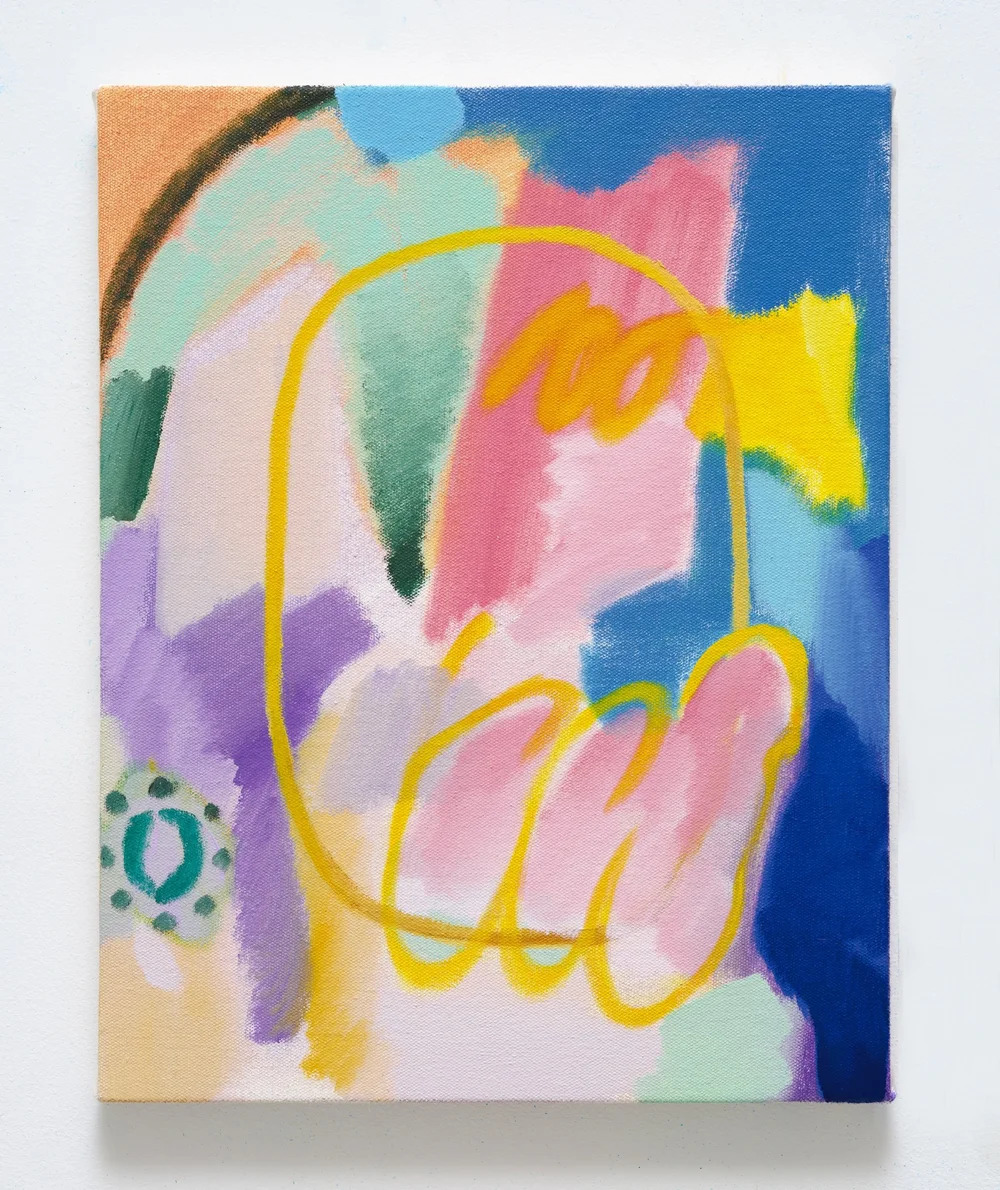
In the exhibition 《Fantavision》, Park Kyung Ryul’s blue paintings offer an intense perceptual experience of color, and the inadvertent arrangement of the 150 canvases of identical size feels as if it is attempting to exclude the moment of narrative composition. Despite this, arbitrary shapes mediated by brushstrokes appear everywhere, with some shapes feeling rather familiar and others rather abstract and vague.

Although this can be seen as producing a unique situation, in the concrete situation such as a painting exhibition, matter and objects as well as form and action tremble lightly, implying the possibility of transformation.

Park Kyung Ryul employs the word “fantasy” to describe her work, and her paintings deal with several elements and attempt to affect a dimensional shift while keeping a firm grip on the (confident) hypothesis that these things can be given material form.

Park Kyung Ryul’s stance on painting—which employs arbitrary selection and judgement to recontextualize both discussions on modernist formalism, which guaranteed the autonomy of painting according to the purity of the medium, and discussions on modernist avenge-guard, which secured the autonomy of painting through everyday reference—is a form of declaration. Indeed, she states that “painting is fantasy.”

This deeply meaningful declaration is a response to the question of whether painting, as a unique genre, still valid in our contemporary, image-centric society, and it begins from the artist’s recognition of the brushstroke as art object (form the Artist’s note for 《Fantavision》 [2021]).

It can be said that what she has concentrated on since the beginning is “brushstrokes,” which can be said to be both an art object and action as well as a corps-pensée that mediates between multiple dimensions.

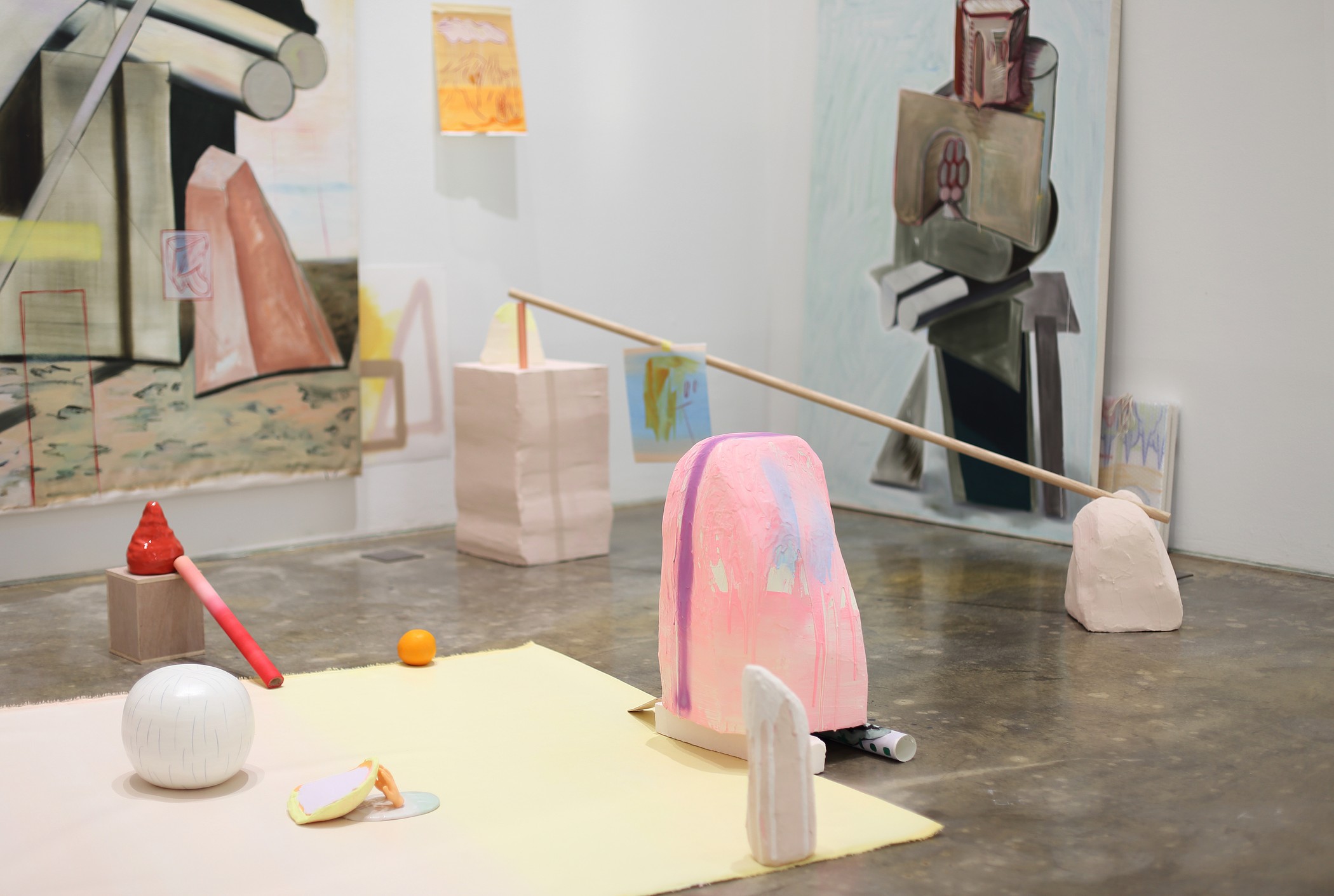
What Park Kyung Ryul refers to as “sculptural painting” is something that reveals her unchanging faith in painting, and, paradoxically, it also contributes to the renewal of the fundamental conditions of painting via a sculptural approach.

While traveling back and forth across the bridge between painting and sculpture established in the previous century, she has avoided making the extension of the medium (as a thing) into a condition, and rather than focusing on painting as a three-dimensional, specific object, she has examined the distinctiveness of painting by employing “sculptural thinking” and a new understanding of medium.

That is, during her work process, she confronts the tendency for three-dimensional perception of sculptural objects, which she has always emphasized, to find a final resting place in a pictorial form.


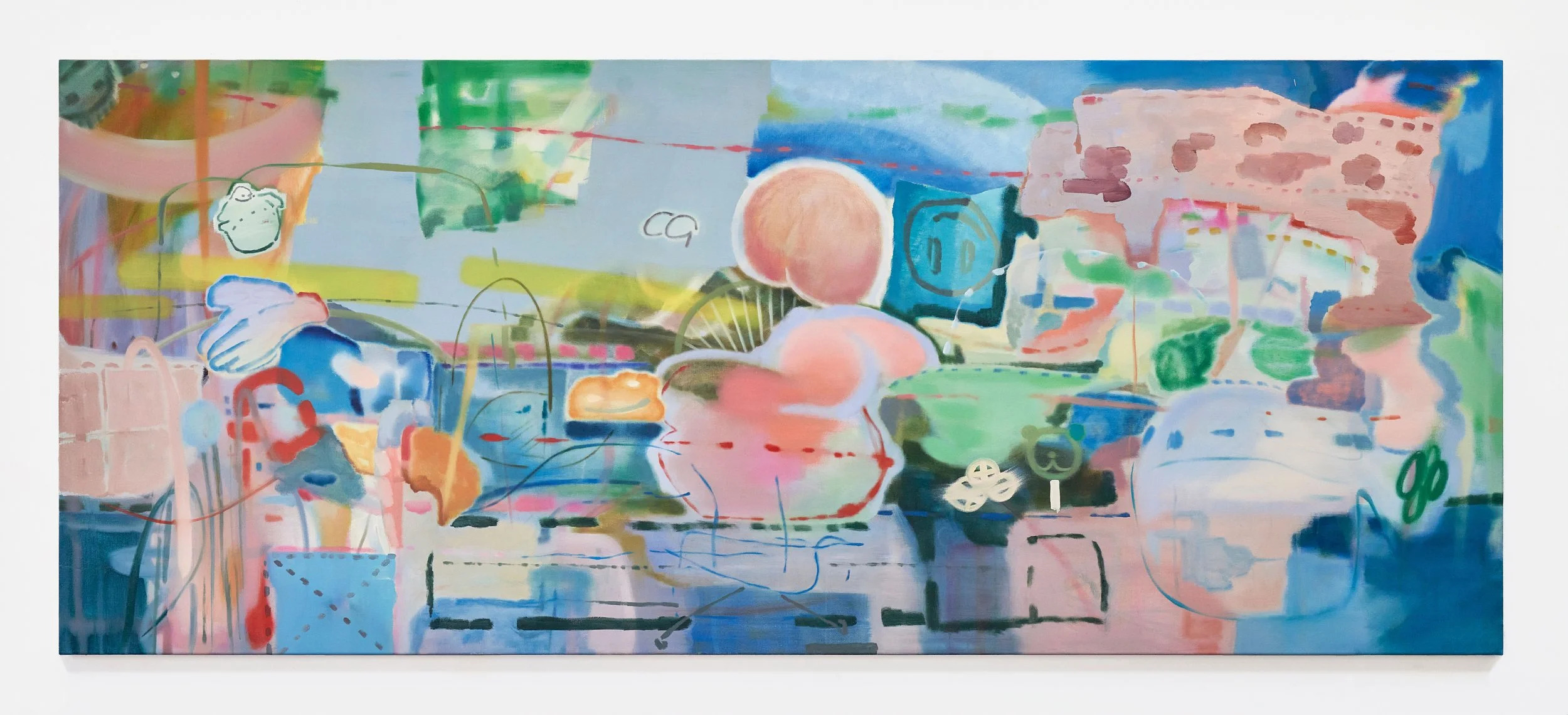
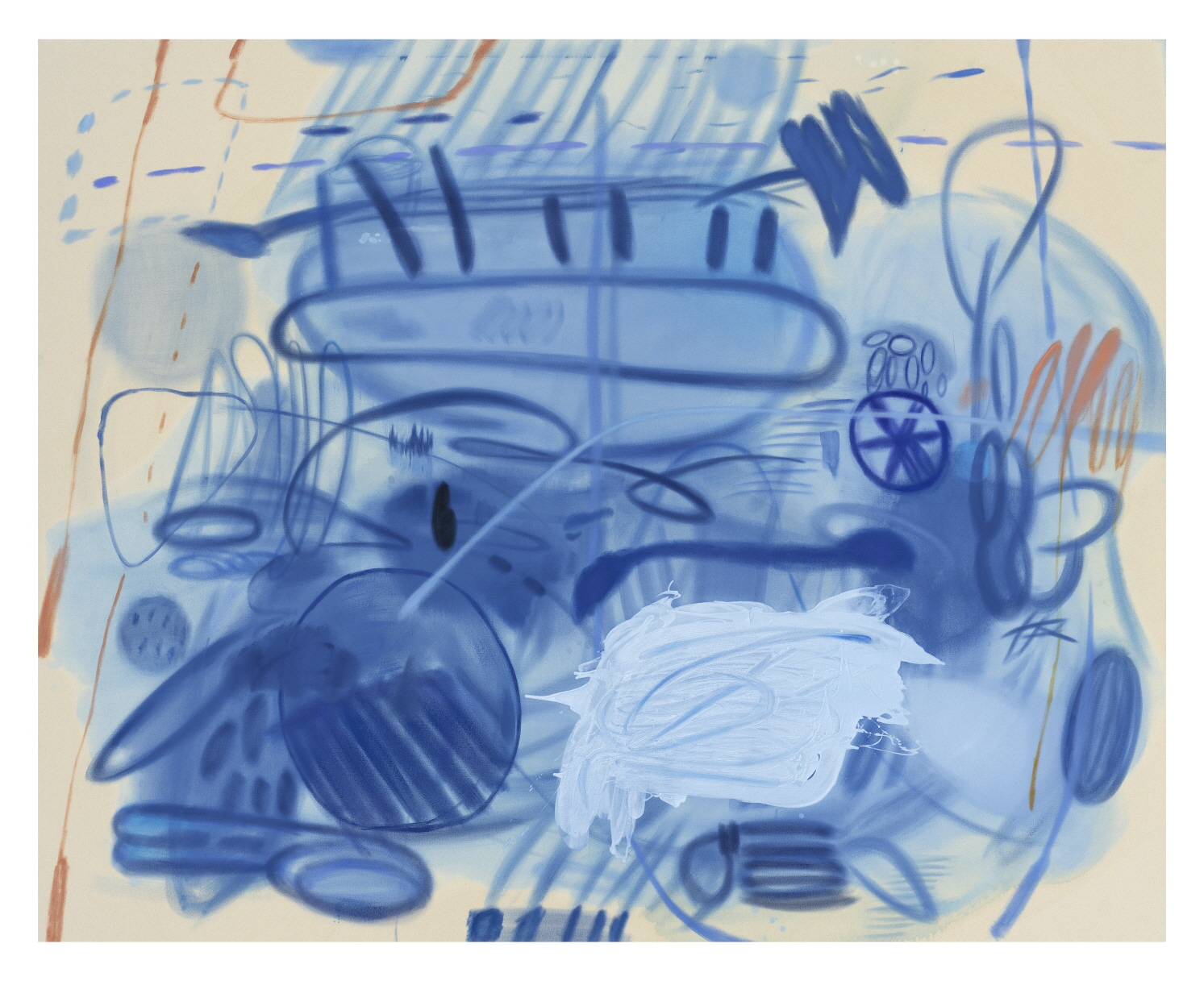
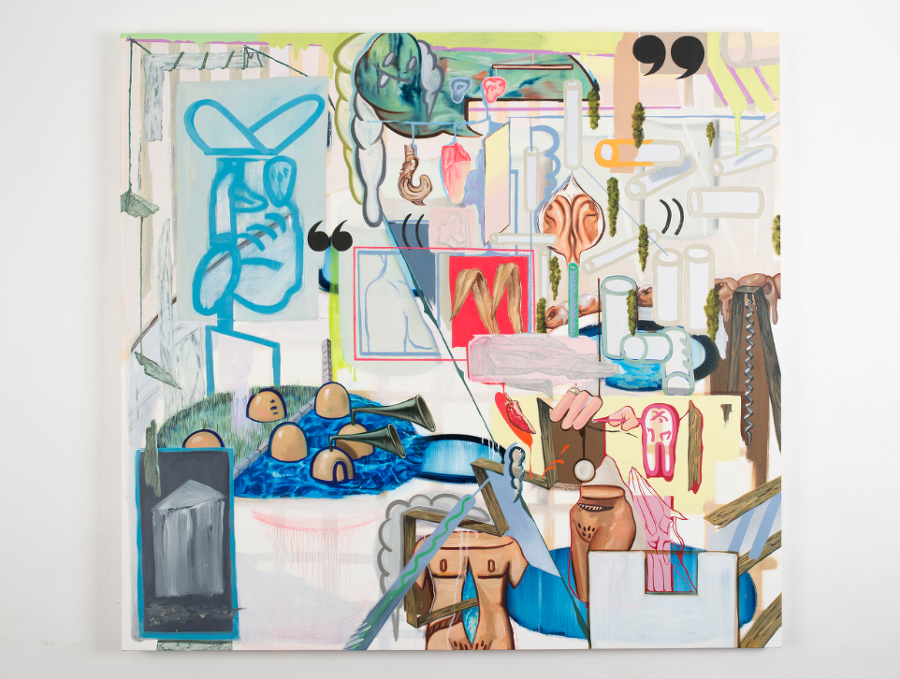
Park Kyung Ryul, Picture 101 (in Blue), 2021, Acrylic and oil on unprimed canvas, 182 x 227 cm © Park Kyung Ryul

2.
What does the term “sculptural painting” mean for Park Kyung Ryul? She has stated, “The essence of sculptural painting can be found in an attention to ‘the act of drawing’” (Artist note for 《To Counterclockwise》 [2020]). Here, the sculptural approach to the act of drawing is reminiscent of the preoccupation with making sculptural attempts in three-dimensional theatricality after modernism, and this can be seen as an analogy for the bodily act of arranging particular objects within a physical space. 

Breaking away from the established environment of sculpture, when considering modernist attempts to experience the shape of “fact” through real materials  in real space via the “use [of] edges and planes to shape an object,”  it can be said that Park Kyung Ryul perceives paint and the canvas as one “material” and “substance” and views brushstrokes, which mediate between them and arrange them in space, as bodily acts (Rosalind E. Krauss, Passages in Modern Sculpture, The Viking Press, 1997, p. 266).

Here, although Park Kyung Ryul appears to pursue the rapid transformation to painting, it can be said that this is a three-dimensional transformation of the pictorial space that is characterized by its four edges.

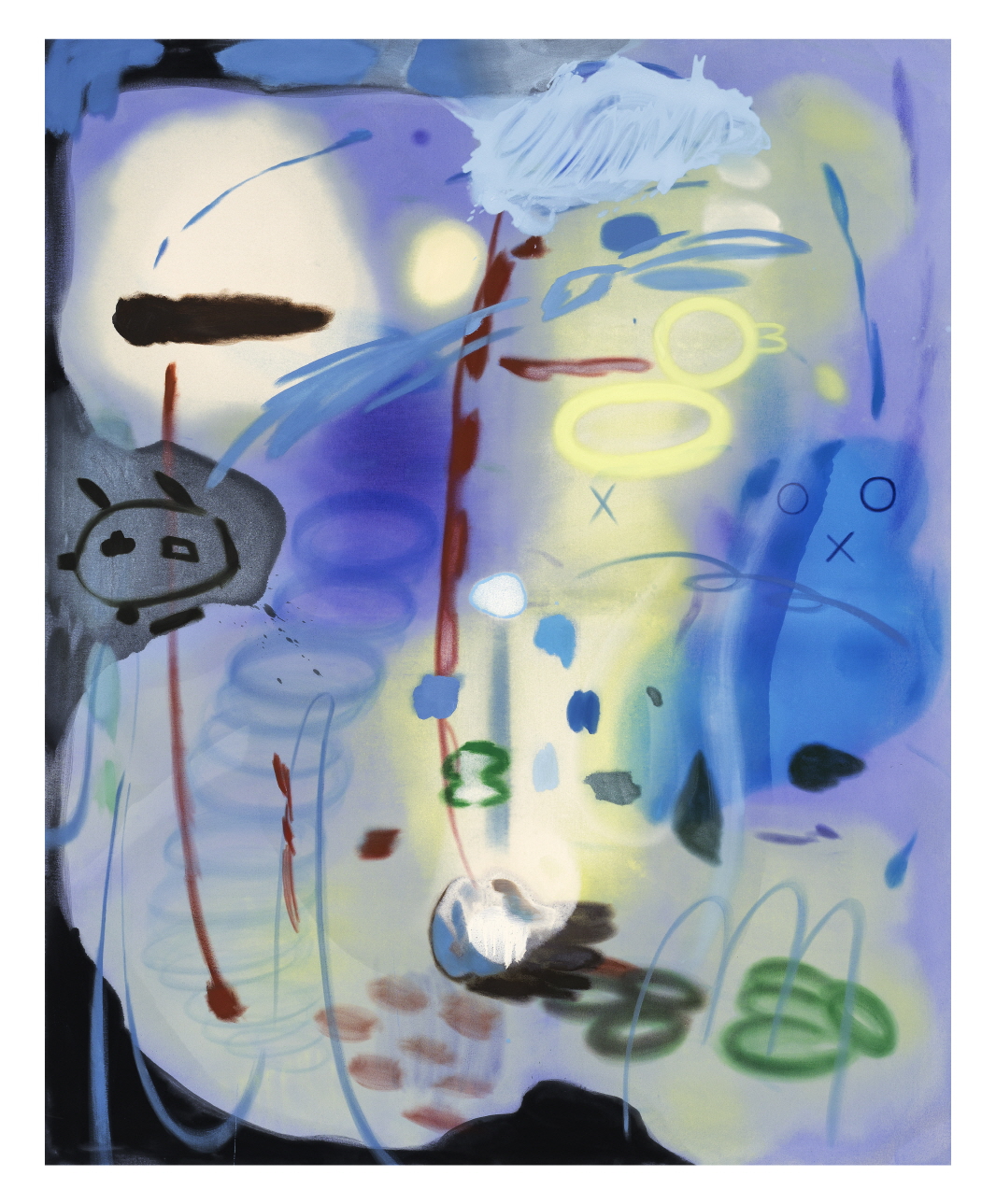
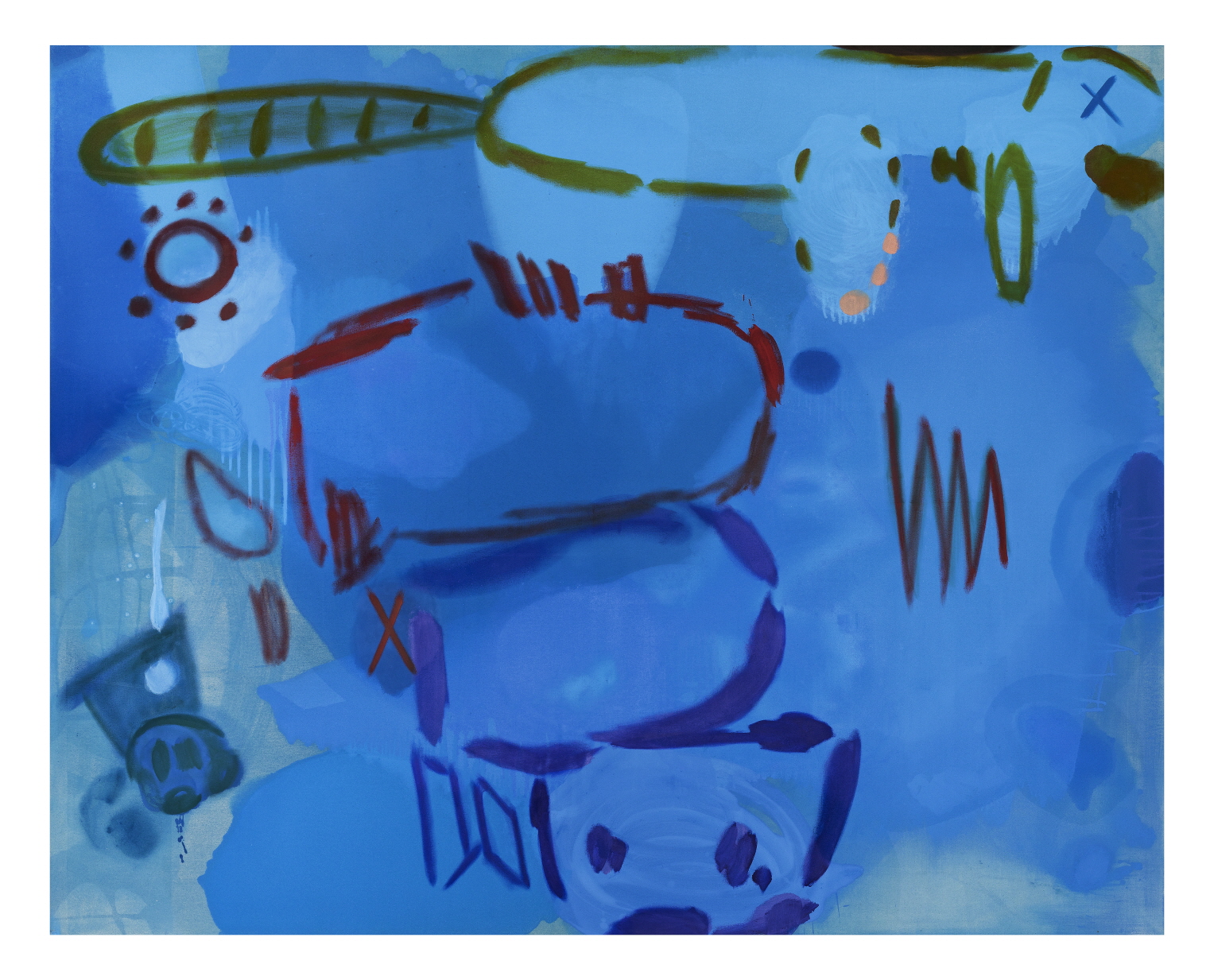
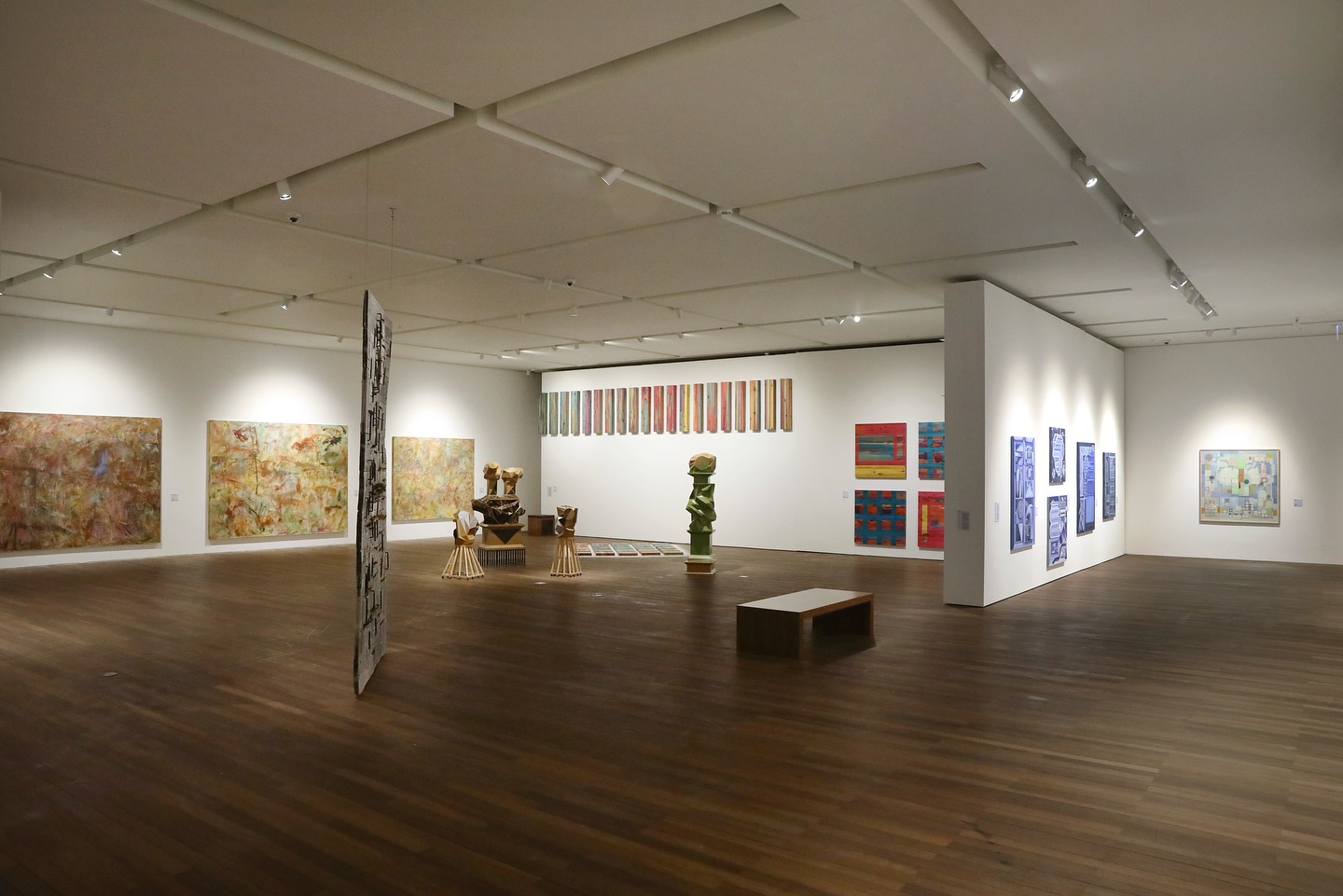
The 《Fantavision》 exhibition space is filled with canvasses that are either 182 cm x 227 cm or 227 cm x 182 cm. The title of each canvas contains the word “Picture” followed by a unique number and the parenthetical note “in blue.”

Moreover, when applying the blue paints, the artist draws on the techniques of atmospheric perspective, including sfumato, as well as Helen Frankenthaler’s soak-stain technique to create a highly immersive sense of space. For example, in Picture 94 (in Blue) (2021) and Picture 102 (in blue) (2021), the traces of the brush on the blue plain of each painting encourage the viewer to scan their surroundings and continually refocus their gaze.

One of the paintings is painted using oil paint on a hemp canvas, and another is painted on a jute canvas. Park Kyung Ryul places great importance on the fabric of the canvas as a support for the painting. She has an intense, physical sense of the properties of the canvas cloth, which she sees as having a decisive influence on the surface of the painting.

Moreover, it is through this that she again experiments with the space of the painting. For example, she has experimented with the spatial potential of multi-dimension painting by balancing the use of blue paint, coloring techniques, and the materiality of the canvas. 

The space of the painting that she has created emphasizes “transformation.” It begins with what she calls the act of painting, or rather, the brushstroke, and it causes the perception and recognition of space and object to intersect. For example, Park Kyung Ryul meticulously examines the properties and composition of the fabric as a flat support for the painting, and, through brushstrokes, she produces subtle differences on the surface.

Similar to the discussion of Park Kyung Ryul’s brushstrokes, which constitute acts that are similar to the three-dimensional arrangement of sculptures that have been liberated from the display pedestal, she arranges the “brushstrokes as art objects” within the space of the painting that she has created herself.

These brushstrokes are placed on the two-dimensional surface of the canvas fabric made of either hemp or jute, and, simultaneously, a three-dimensional transformation occurs due to the fabric and materiality of the paint. Moreover, due to the physical power and technique of her actions, an unrealistic world of thought that exceeds three dimensionality is brought into existence, like the return of a visual (ghost-like) illusion.

Although highly controversial, it is reminiscent of the sculptural origin of the ancient human form that (still) lies dormant under the surface the abstract, invisible, non-directive, existing hexahedral object of minimalism that was highlighted by Michael Fried.

Park Kyung Ryul’s sculptural paintings reveal a delusional preoccupation (like a methodology) with appropriating the gaps and illogic between the perception and awareness that is inherent to three-dimensional sculptures. Moreover, she invokes the illusory elements of the medium of painting that can deftly deal with this, injecting her paintings, which mediate the dimension of sculpture, with power.



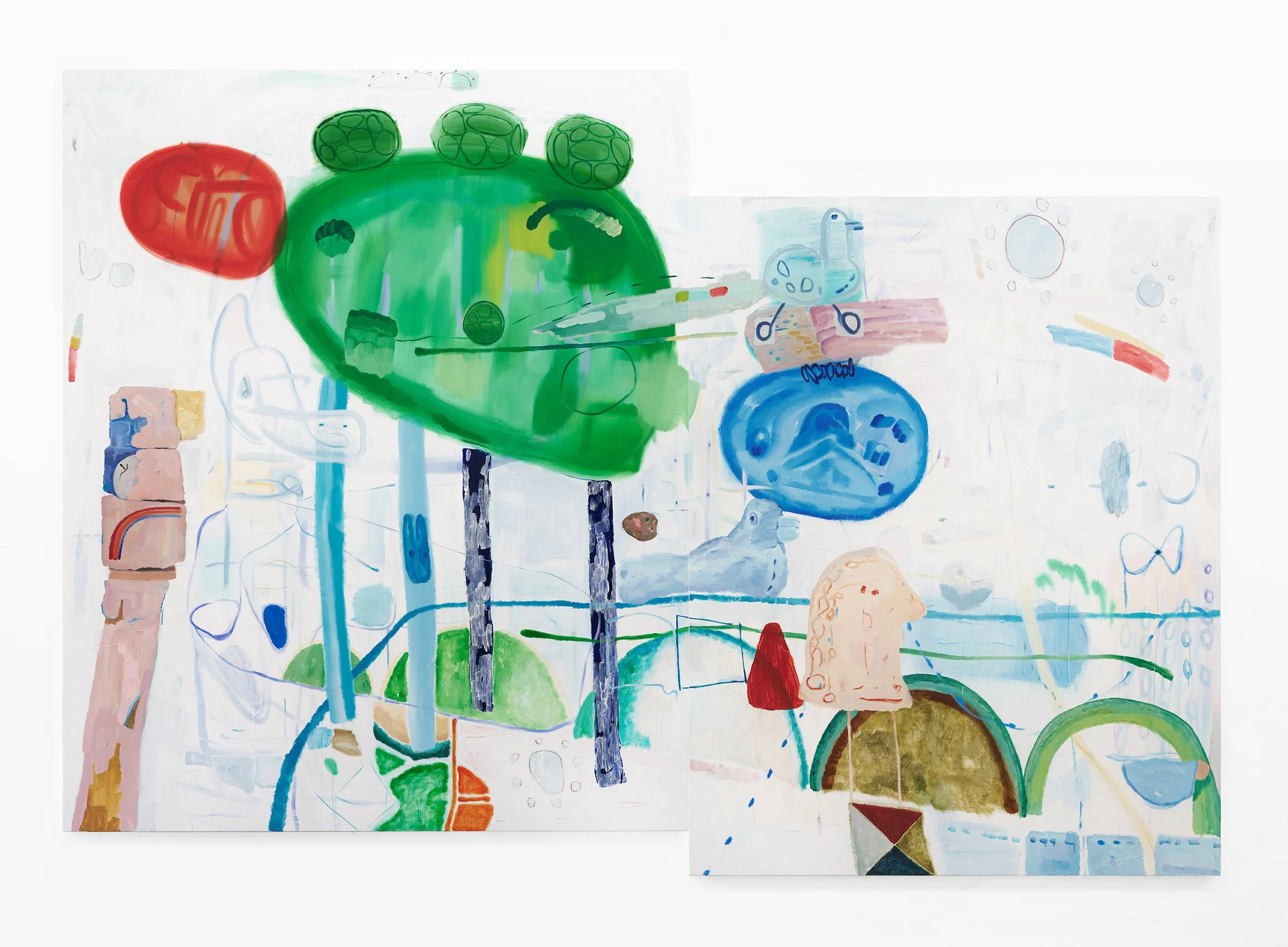
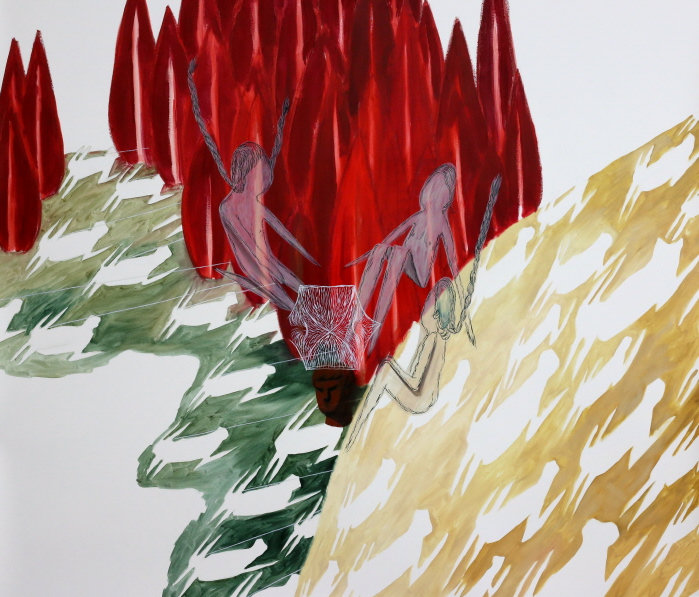
Park Kyung Ryul, Picture 95 (in Blue), 2021, Acrylic and oil on unprimed canvas, 182 x 227 cm © Park Kyung Ryul

3.
Among the various sculptural paintings that Park Kyung Ryul has experimented with, this series of ‘Picture’ paintings is of particular note, as it invokes the word “fantasy.” She coined the English-language title “Fantavision” for this exhibition, and the elements contained with the term make one consider the appropriateness of these sculptural painting.

Regarding these blue paintings, the artist stated, “By providing material experiences and the resulting encounter with transformed time/space, art is endowed with the power to forcibly induce thought” (Artist’s note for 《Fantavision》). For the artist, “encounter” and “thought” are central concepts that are instrumental to the construction of painting as fantasy.

Here, I present non-visible sculpture (sculptural fantasy) as an example of a form of sculpture that reinforced three-dimensional experience in the context of minimalism and subsequent sculptural practice.

Looking closely at Picture 102 (in blue), one can observe not just the actions of the brushstroke, but also the dynamic response of the canvas itself to the gestures of the paint and brushstrokes that are arranged within the flat space of the canvas.

As the brush strokes move in a primitive matter back and forth across the empty, square canvas, the canvas enables the paint to flow through the body, stop, and accumulate in layers. Here, as if tracing her own act of painting, artist Park Kyung Ryul chases it visually, and, simultaneously, as a pretext for sustaining this activity, she seeks to amplify awareness and thought.

For this purpose, she accepts the diminished familiarity of the brush while building layers of unmixed paint on the canvas to create the effect of a substance that has been smeared. In this painterly language, which is built from a series of actions and physical effects, real spaces and fantastical spaces intersect, mediating between thought and perception as “illusion.”

Therefore, the subtitle of this text, which reads “Supporting the Head with the Hands, from Looking to Illusion,” encapsulates the various process through which Park Kyung Ryul’s paintings have approached sculptural experience and perception. The image of a figure supporting their head with their hands in the famous melancholic pose depicted by painter Albrecht Dürer is treated as a representation of conventional, unrealistic thinking.

The gaze of the winged women is directed at an empty space in front of real objects, and it is steeped in some sort of unrealistic thought and skepticism. I bring up the human body in a melancholic state because the realistic sense of the shape of the sculptor in Agamben’s philosophical thought and the fantastical love and obsession of the resulting image presented itself to me as if it were a unified event.

That is, sculptural experience is something given and received within the mirrored structure existing between the sculptor and sculpture, and this both follows a very physical perception while also being a “perception” on a non-material level; that is, it is accompanied by a “knowledge” of the object.

Park Kyung Ryul employs the terms “encounter” and “thinking” as words that gesture towards these two sculptural moments, and in this series of works, through a severely restricted painterly medium and technique, it undergoes a change in dimension, and, in the end, functions to interrogate the renewal of painterly (sculptural) conditions.

References