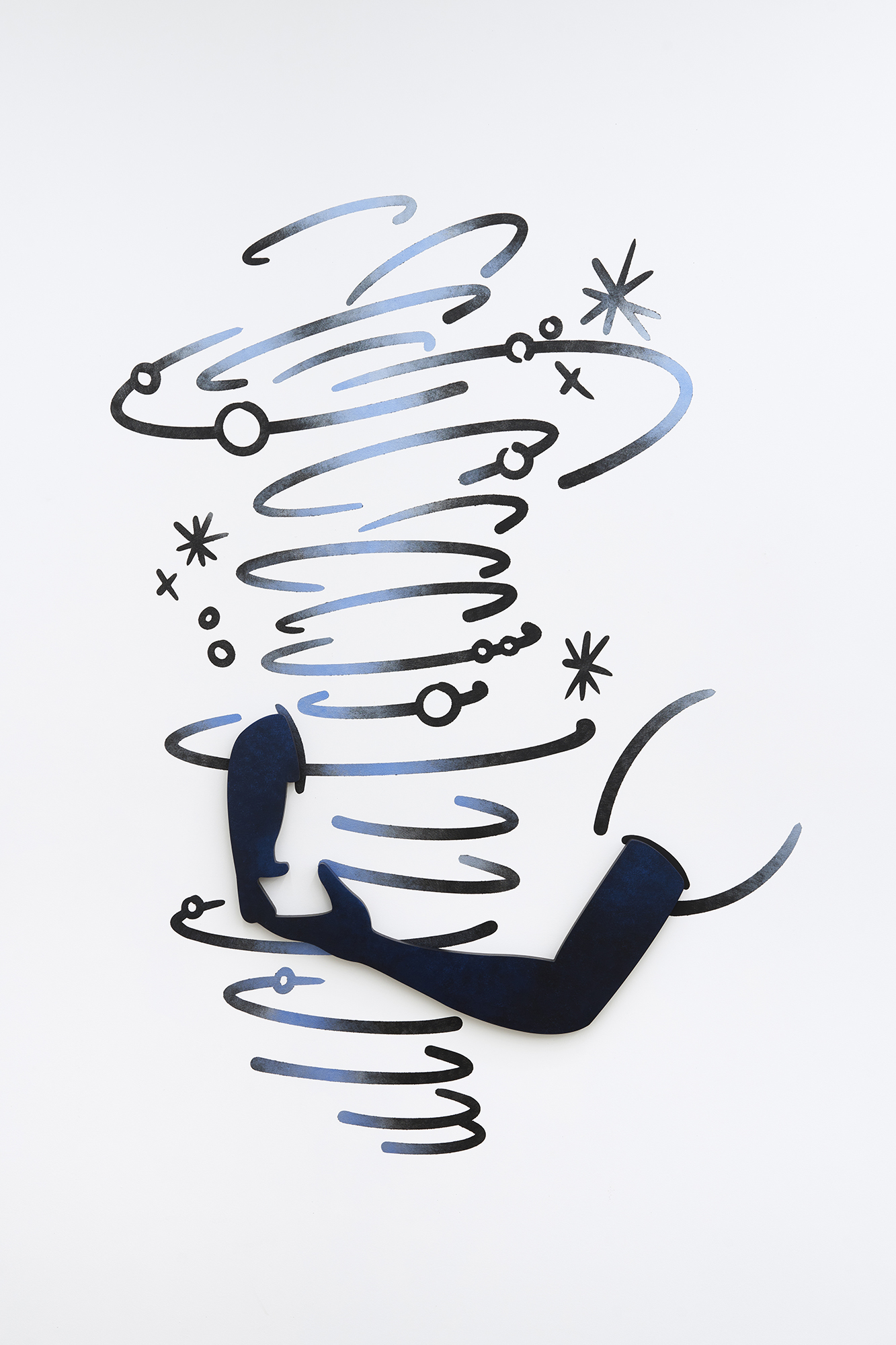
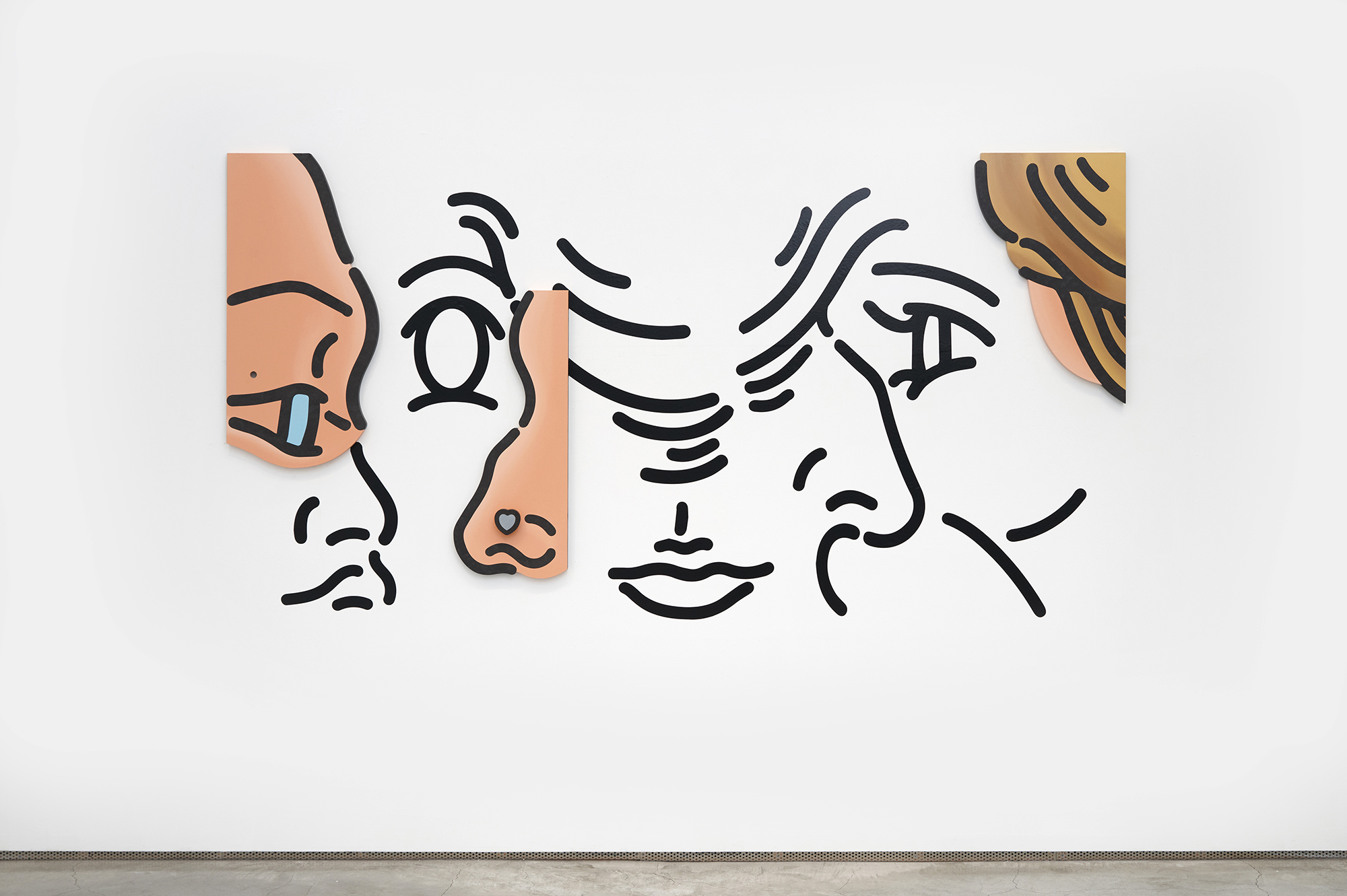
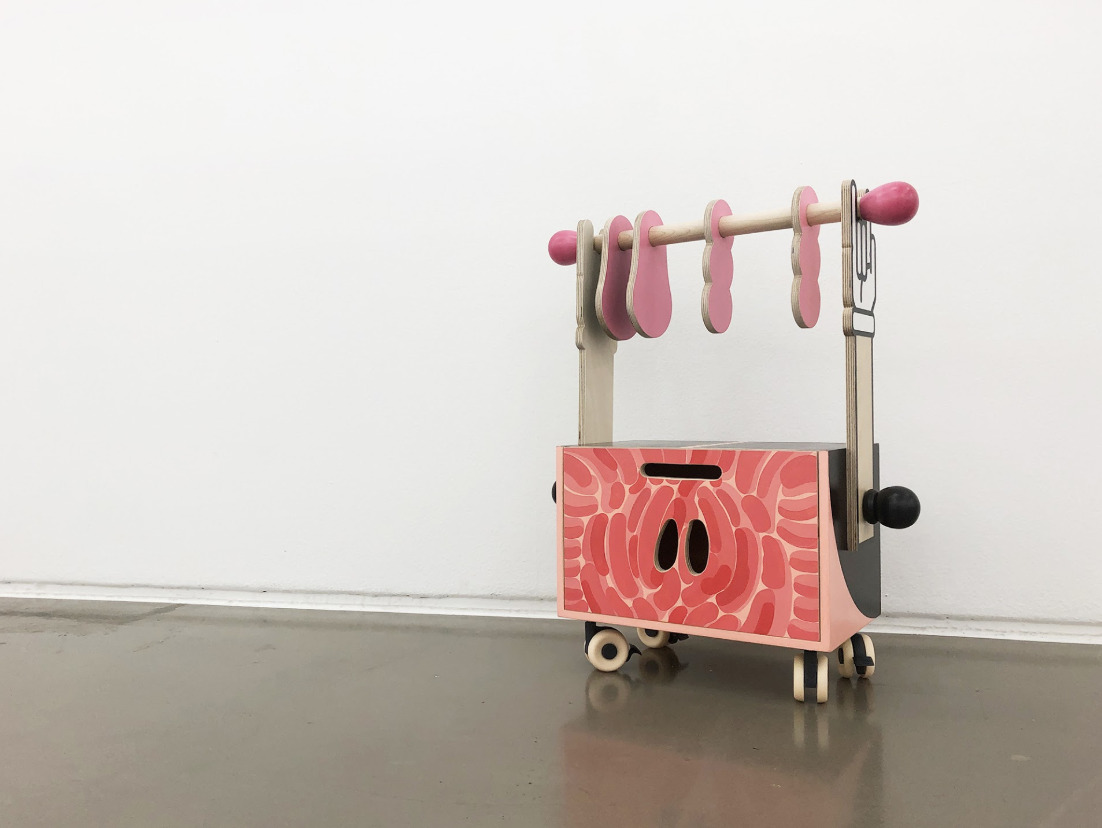
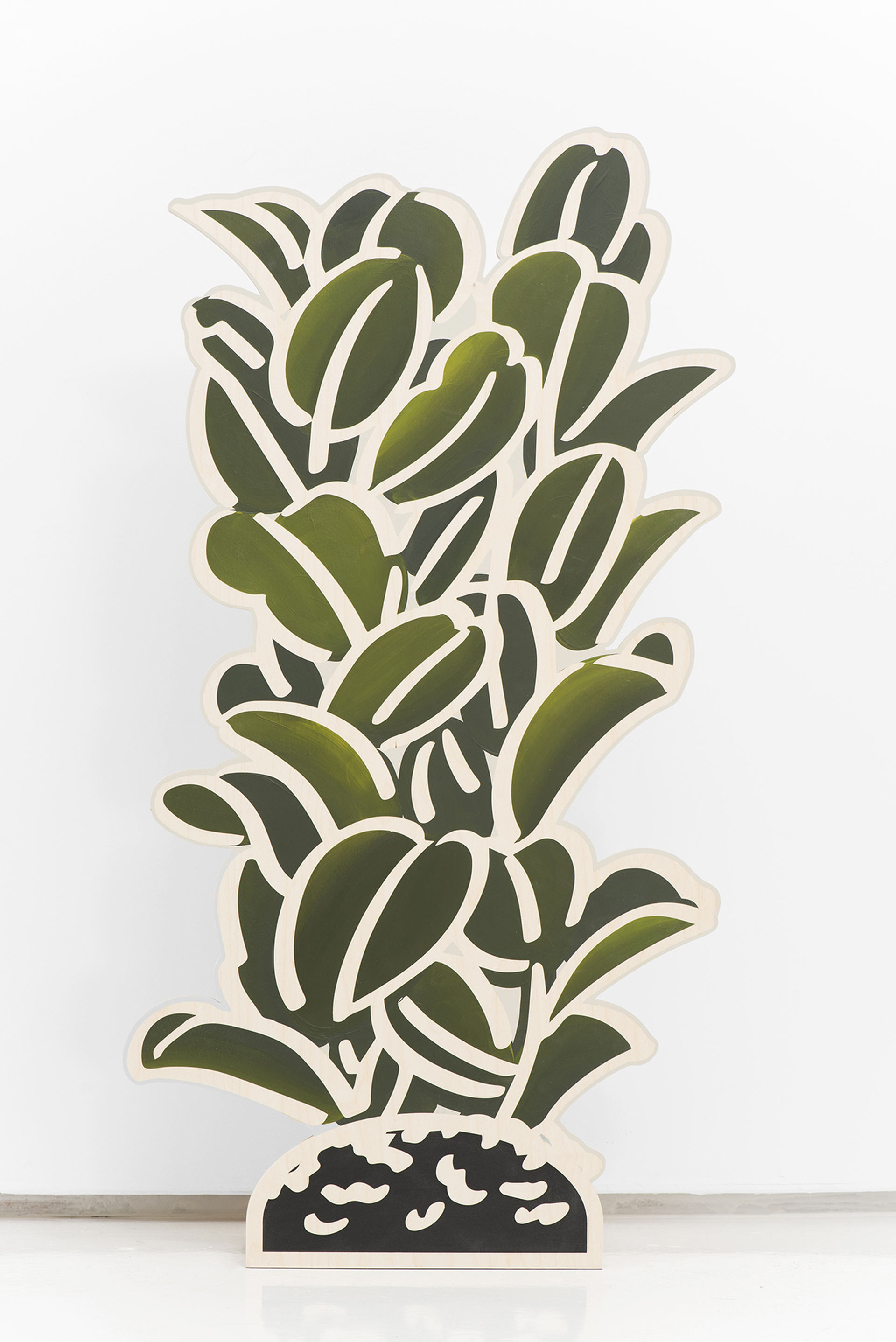
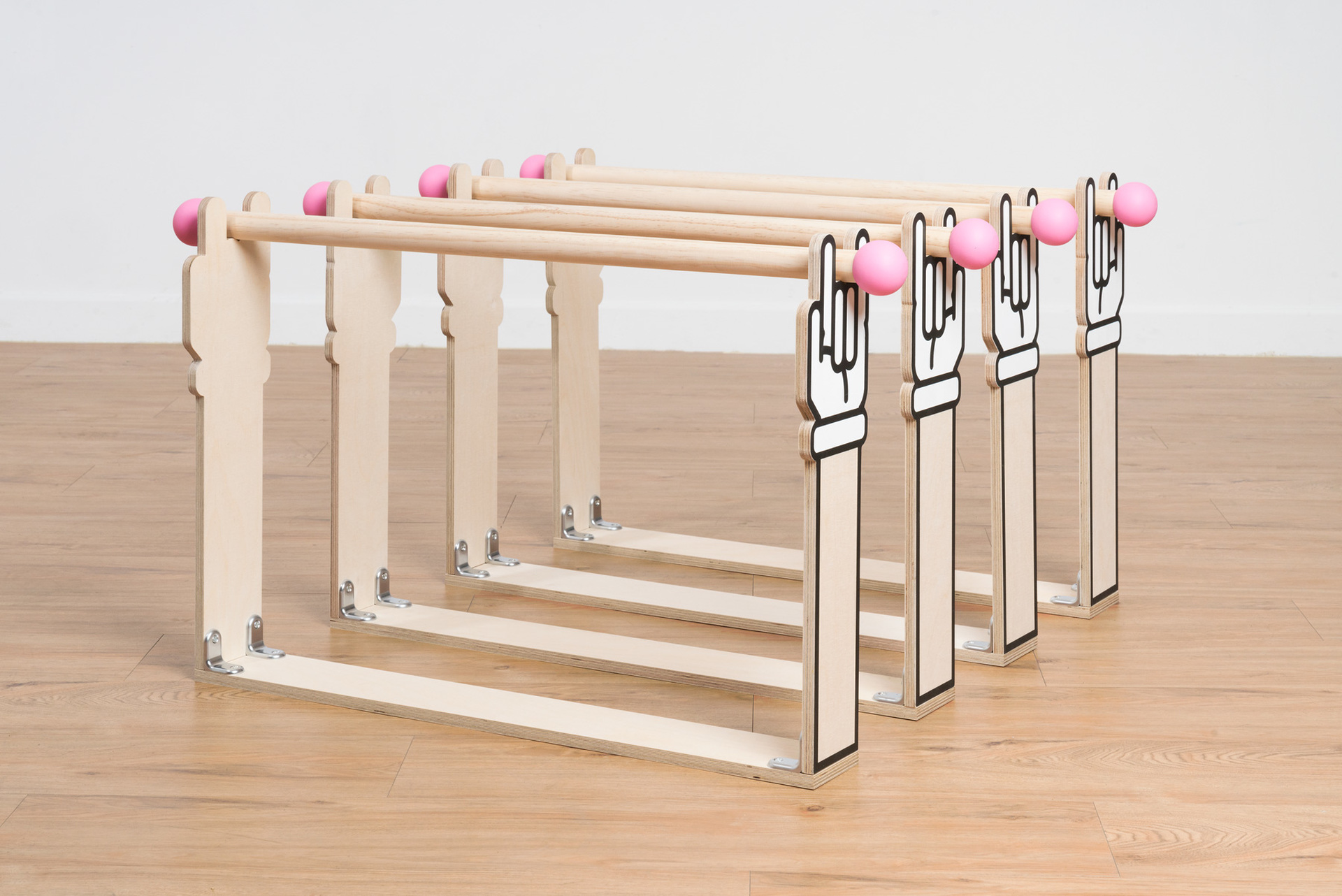
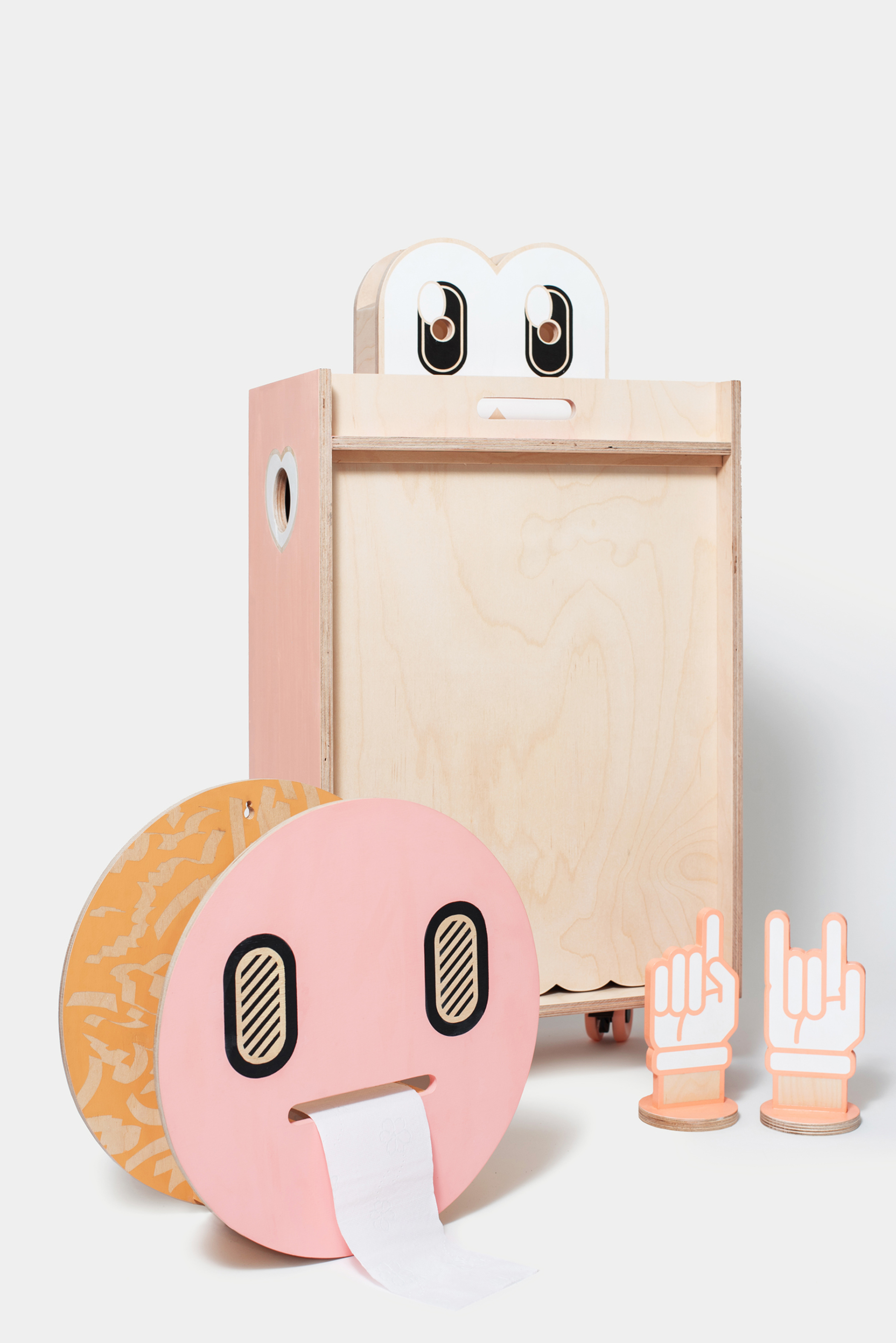
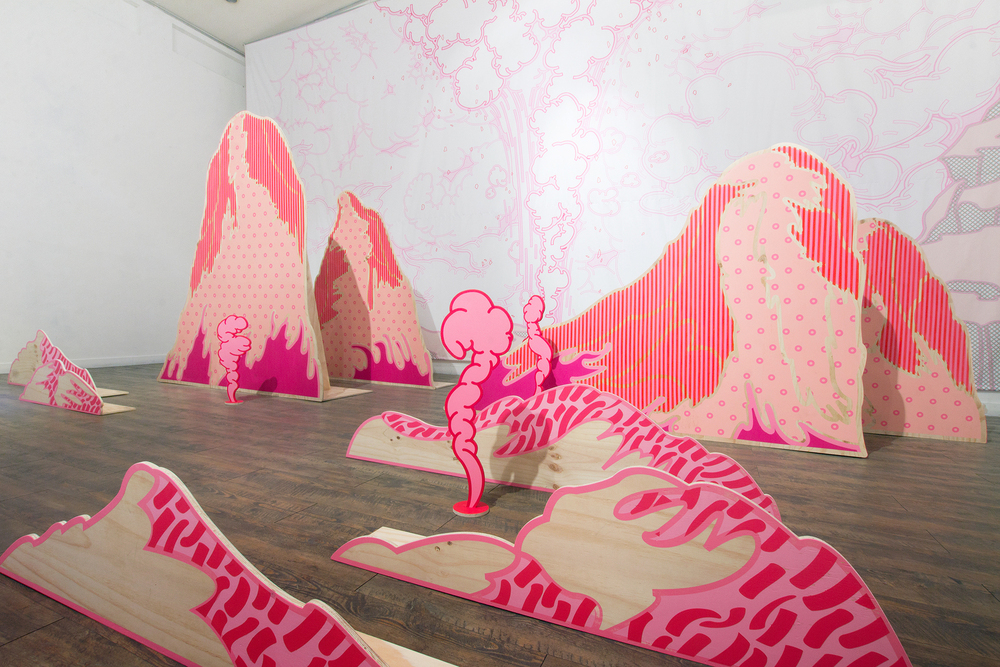
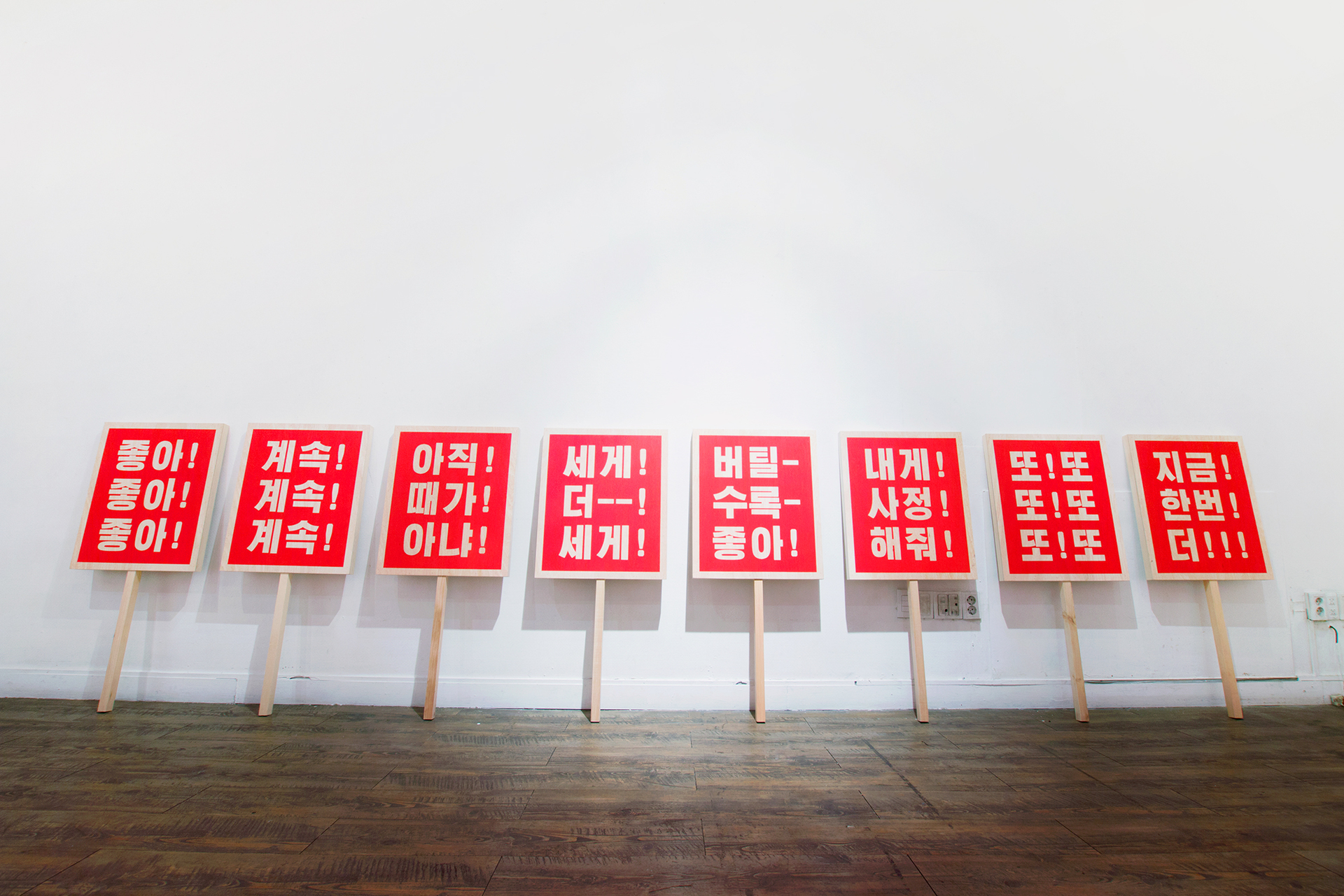
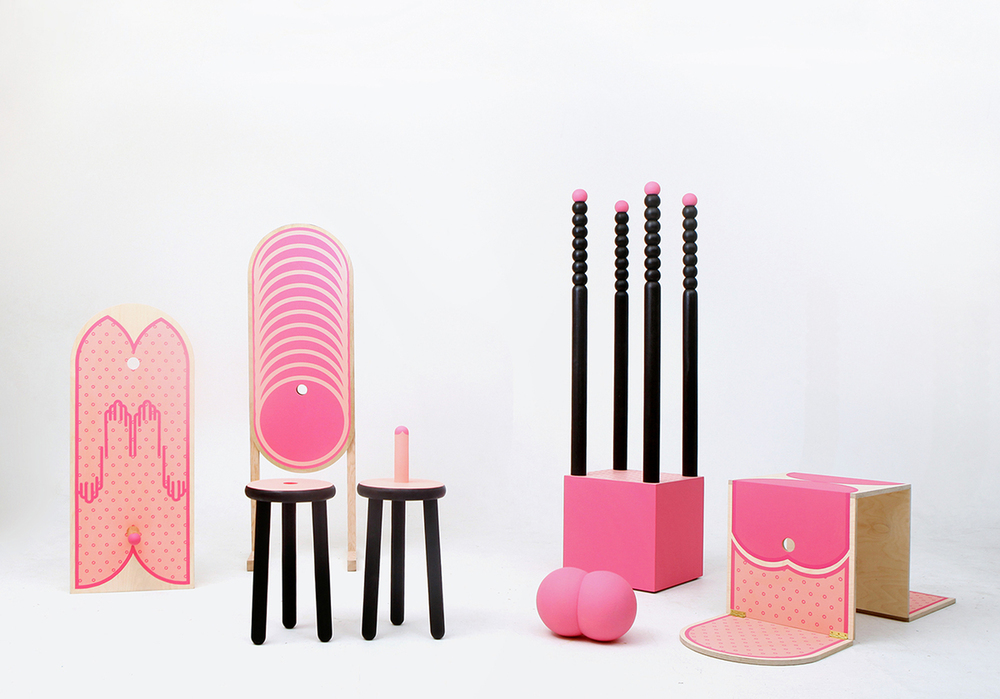
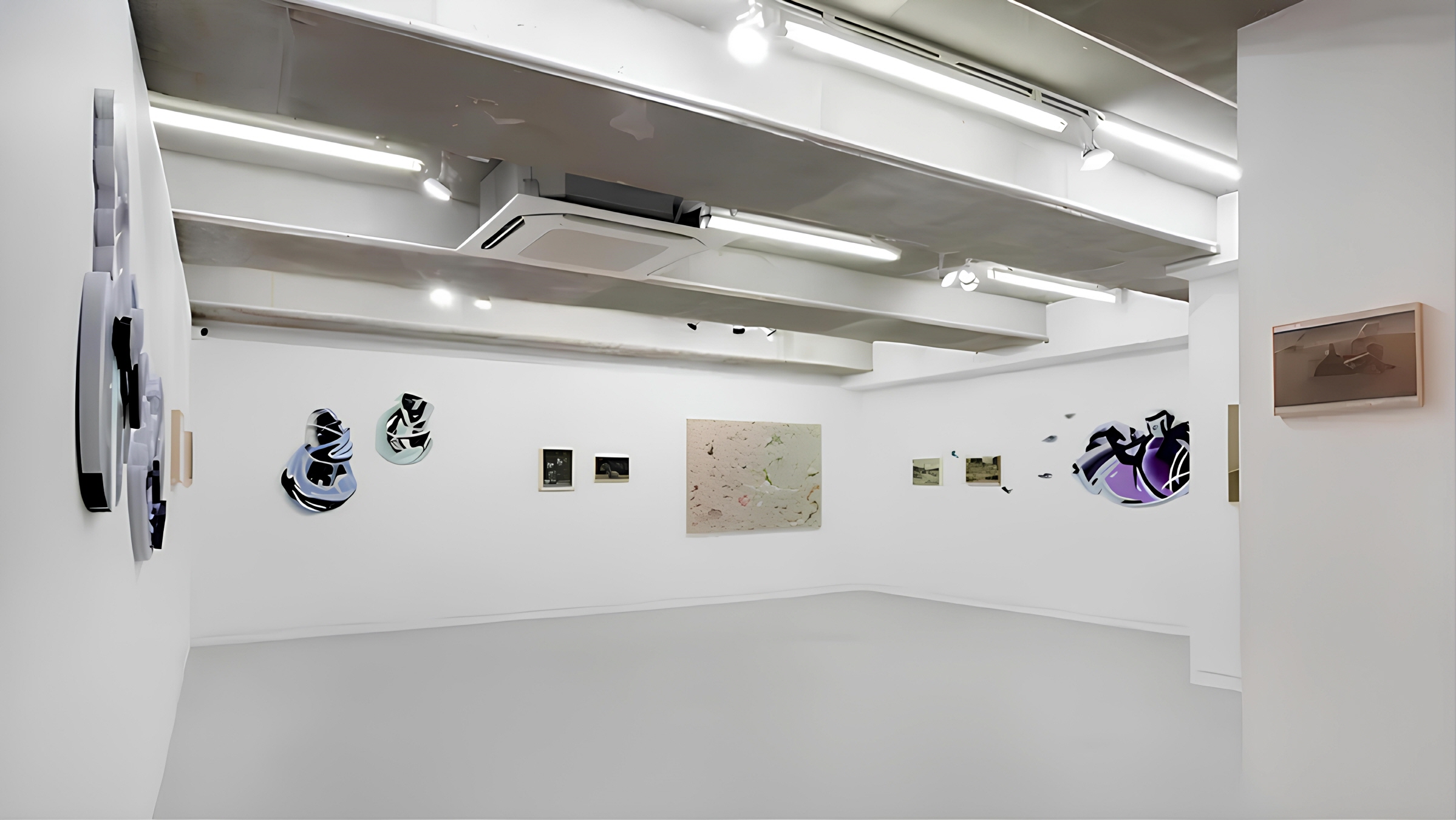
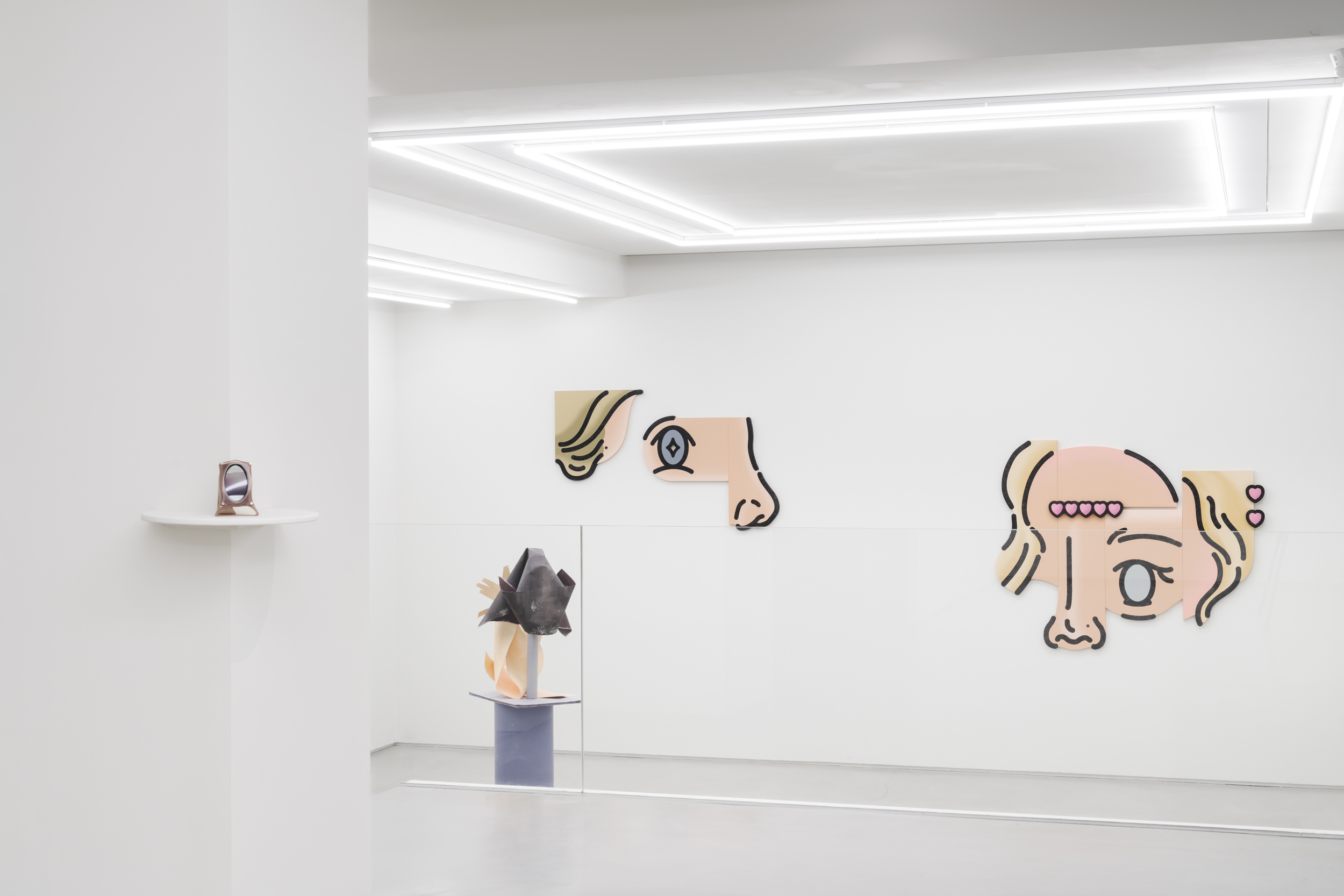
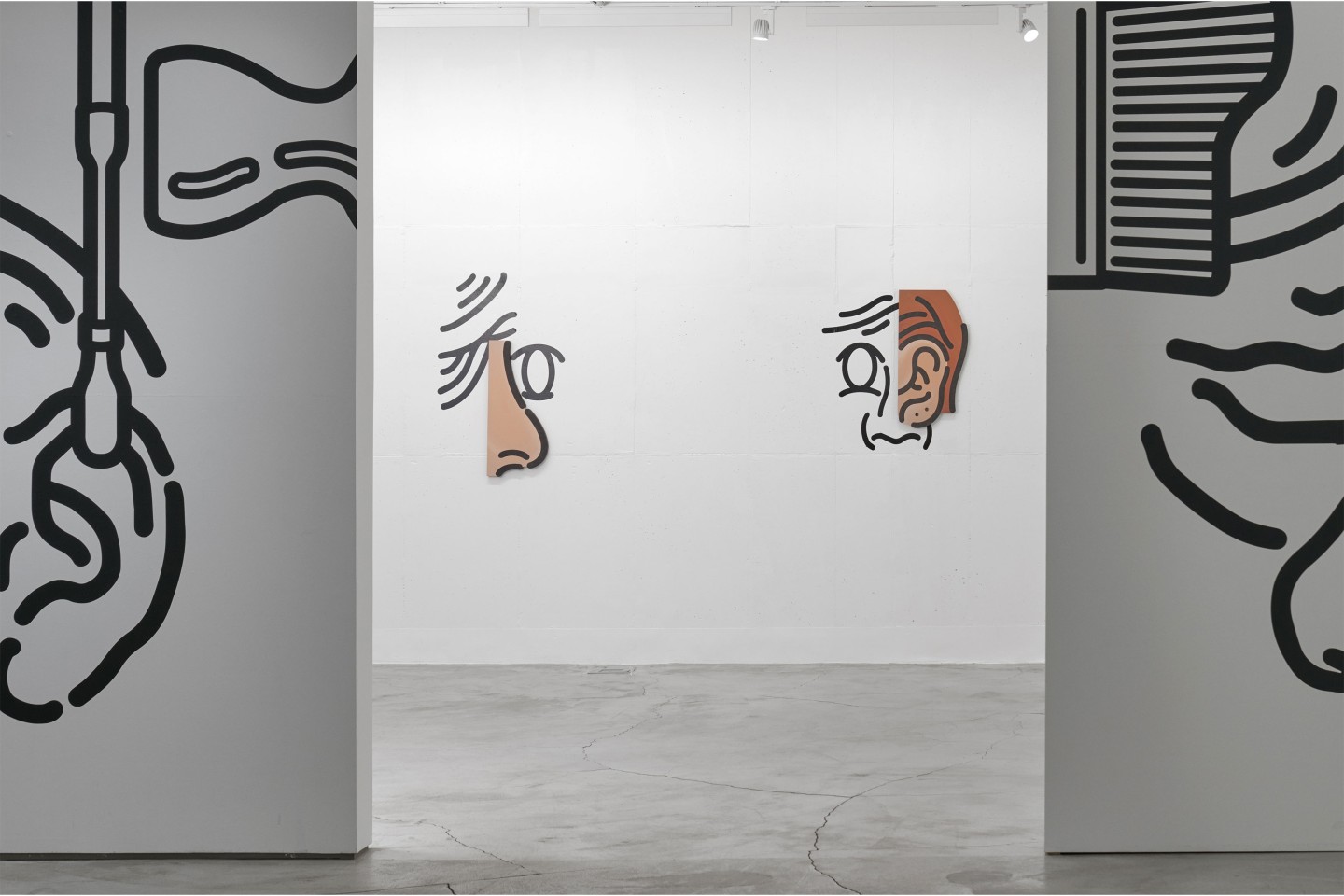
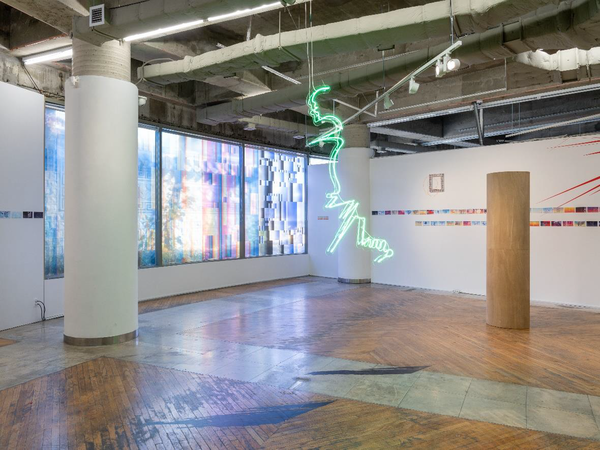
The main art keyword through which the writer remembers Lee Mijung is sexuality. The sexuality she focuses on in works such as the early piece Pink Lens Effect (2009) appeared to visualize the symbols of sexuality rather than sexual intercourse between two or more people. It is closer to illustrating erotic physical symbols than representing direct acts.
The pink combination of hemispheric cylinders and holes powerfully drives sexual association as a symbol of pleasure, rather than having a practical function.
In other words, rather than focusing on the purpose of an action or the utility of an object, Lee's works about sexuality emphasize abstracting these things as symbols and exhibiting the effect. Not only do they replace physically stimulating direct sensory mechanisms with symbols, they also extract sexual symbols from specific contents and contexts using a visual language.
The work's grammar expands its boundaries to other objects and actions while increasing the close distances between the physical positions, erogenous zones, and equipment mediated by sex.
Unlike the tendency of the artist's reviews to (un)intentionally omit or break off her early work, which had sexuality as its motif, Lee Mijung has been processing symbols while variating the object from erotic pleasure to the urge to posses and exhibit, under the general umbrella of objects, or symbol-objects, of flat material properties and the external appearance of symbols.
She branches off her method while making analogies of the user's body and drawing responses with her objects. For instance, she has juxtaposed and combined erotic symbols with fitness (Take-out fitness, 2014) and landscapes (Forbidden landscape, 2014), and recently she has been attempting to variate symbols themselves while stressing their freedom.
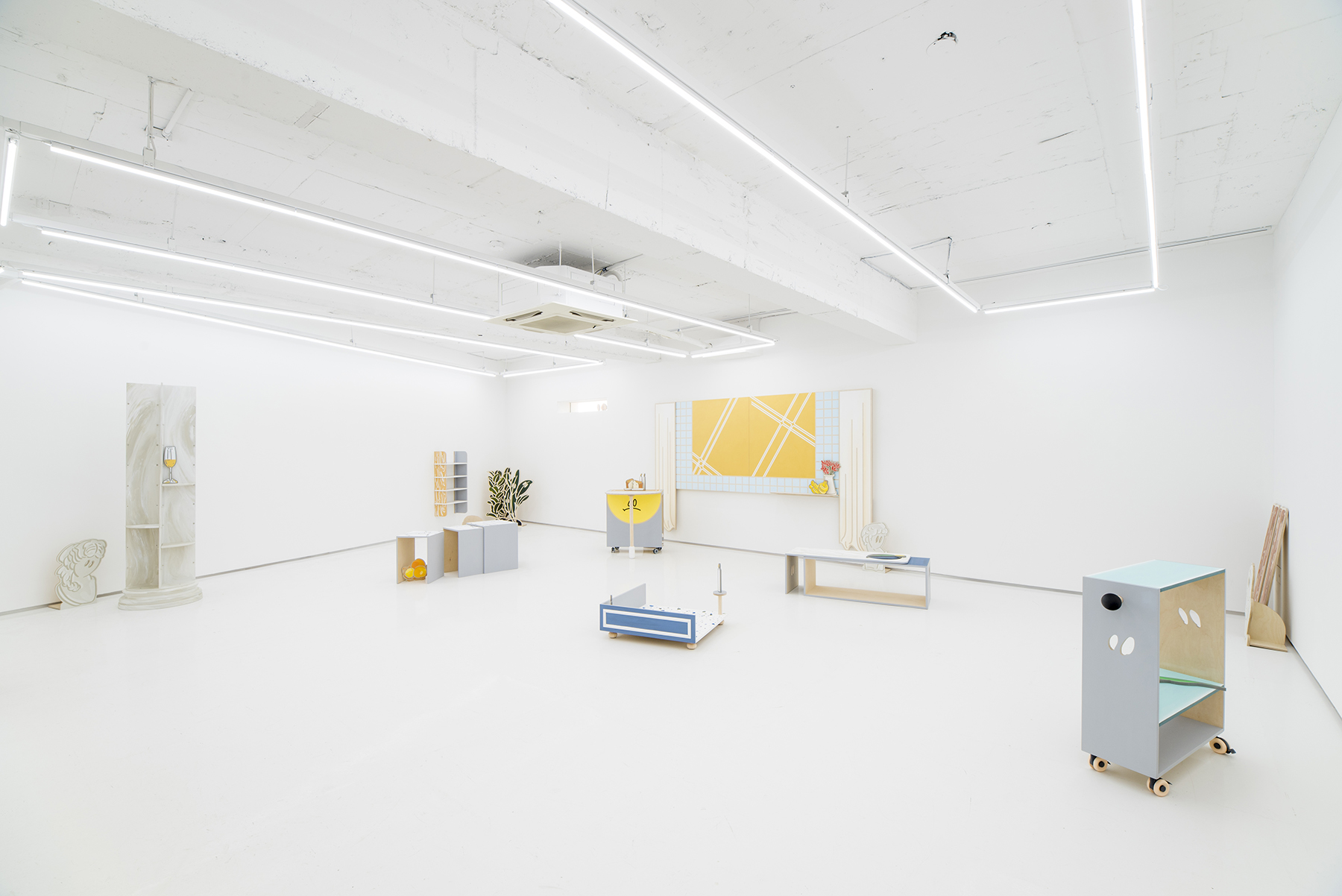
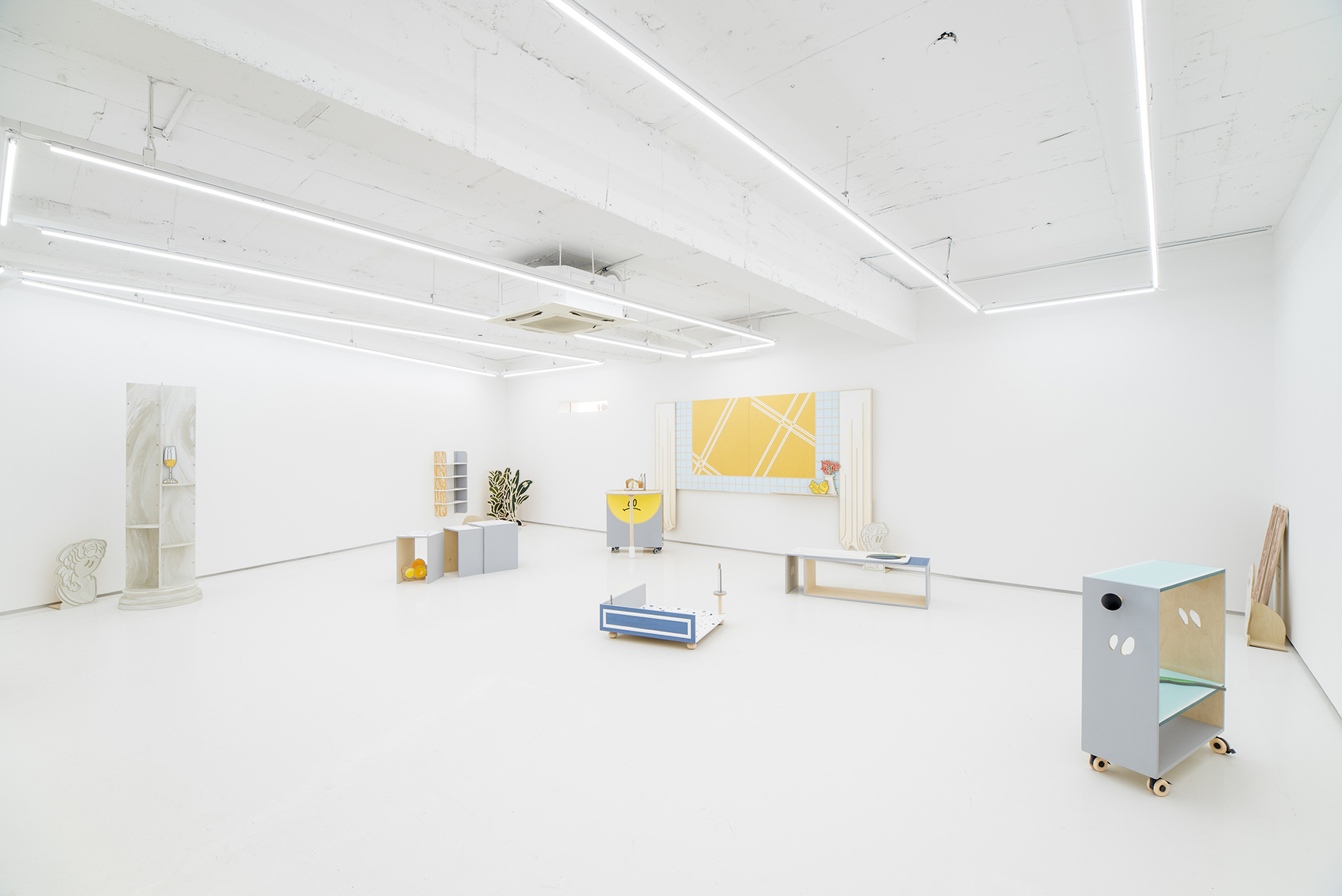
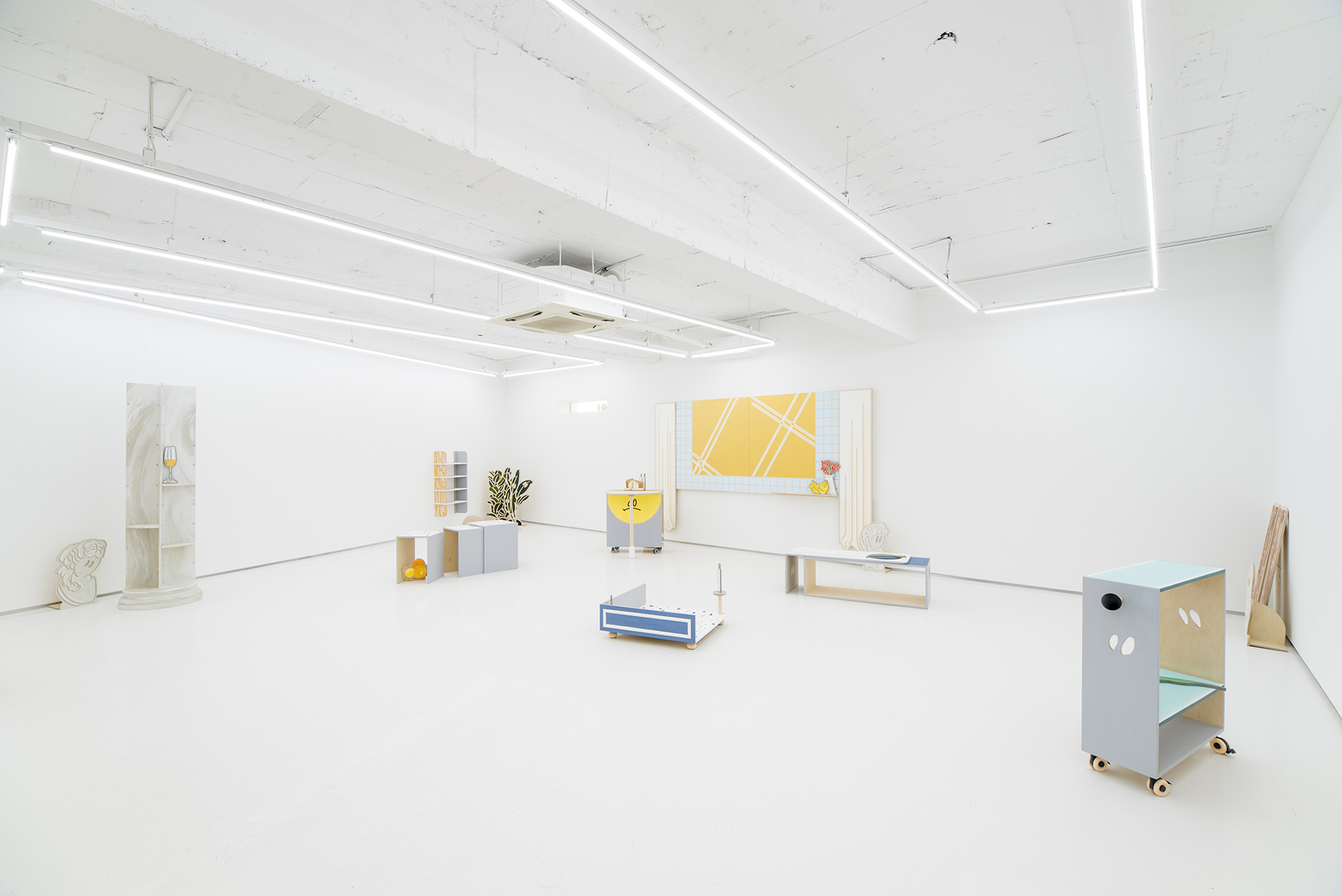
Once upon a time there was a rock (2018), which represents and symbolizes proverbs and maxims while exploring the gap tension and connection possibility between the two, Body collection (2013-2018), which searches for transformative visual symbols while making analogies of the body with furniture, and the ‘Flat-pack’ (2017-) series, which advances toward exploring the spatiality of symbols while deepening the flat form as symbols' physical support and employing the art of arranging it as storage materials and instruments, or wall-filling decoration; compress and combine the meaning of the objects themselves beyond their sexual nuances and the urges surrounding them, and they arrive at building critical objects as multiple layers in which different image effects can overlap and interlock.
Gu Nayeon's analysis explaining that Lee Mijung's art 'reveals with images the surfaces of daily life in which symbols are desired, owned, and manifested' supports the semiotic perspective approach.* '
Like marble textured wallpaper and a bright LED California or Barcelona sky, like enjoying the New York feel of calling one's roommate by their initials,* the satisfaction derived from the object is none other than a momentary, skin-deep sentiment that is swept around by trends and marketplace currents. The artist's practice as images embody cannot, however, be mistaken by direct inference to represent her personal desires.
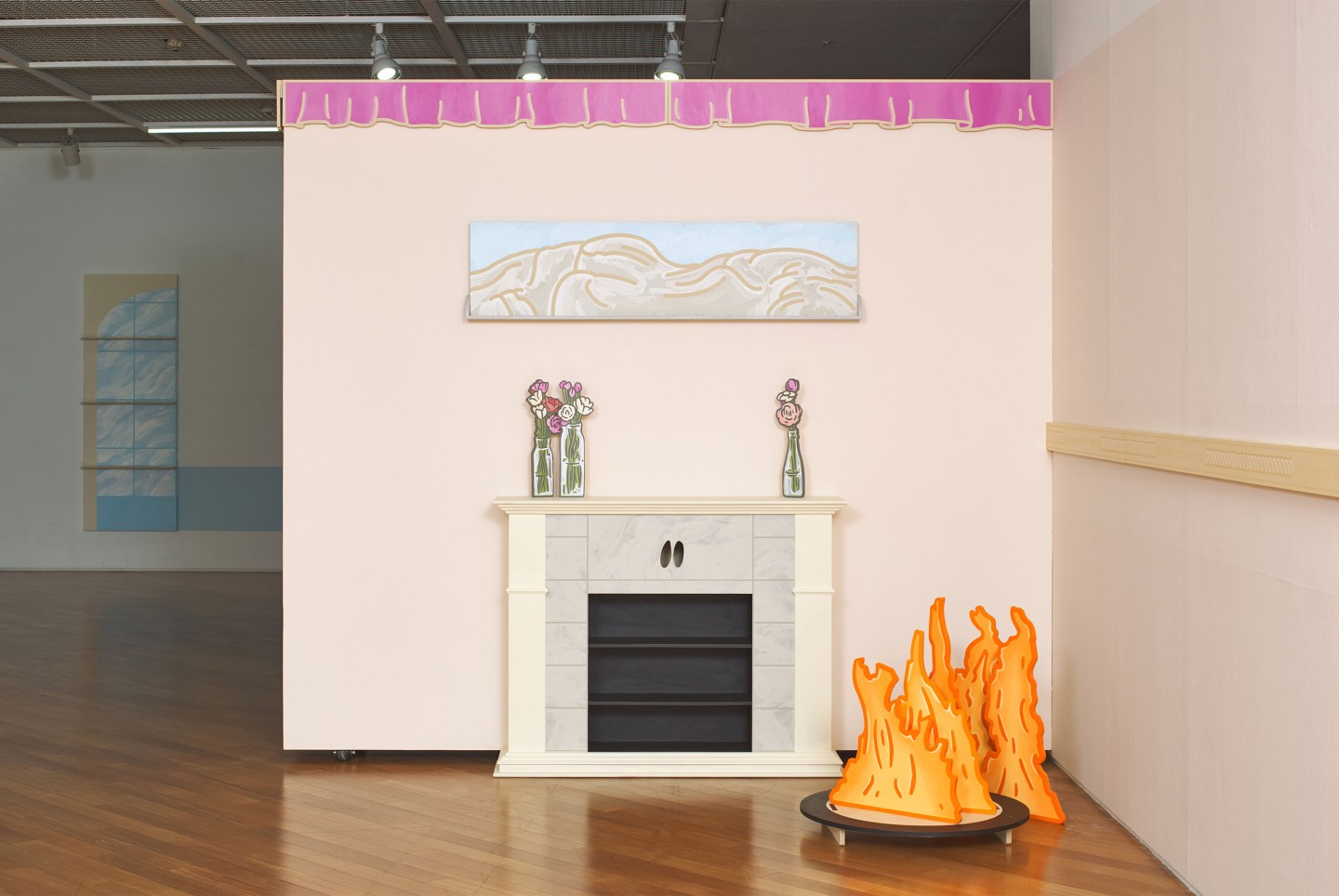
Particularly, one could easily understand The Gold Terrace (2018) to be a product of desire due to the traits of furniture and interior design, which are said to be devices in which status is visualized. However, such an approach runs the risk of devaluing the artist's objects as substitutive imitations that are a product of the artist's lacking of the subjects, premised on the full narrow-minded hierarchy between the original and the copy.
Above all else, the frame of desire also interjects a generation theory and class interpretation while adding economic strength as a condition to the artist's attitude toward her object of reference, and this may lead to the error of attributing the work to the younger generation's defeat and self-deprecation while downgrading it, based on petty circumstances, to a substitute and compromise lesser product made to compensate for the artist's failure to own such goods.
This not only overlooks the artist's critical practice of devising a visual language for the desire for the subjects, it also results in bypassing the effect of the pleasure of substituting objects and urges with symbols.
If one turns to the dynamism itself of the attention and interest in consumer goods for the work's motif, before presuming economic and social conditions disallowing the satisfaction of impulses, we can read the artist's attempt of possessing goods as symbols or, moving beyond the desire for objects, transferring the very contours of desire to symbols.
The key is in exhibiting inaccessibility itself as symbols and reversing the objects of reference to ex post facto results estimated through symbols, rather than in representing the unattainable.
Instead of chasing after the satisfaction of possessing, using, and showing off goods, this practices the object-ization of symbols themselves while generally translating such attitudes into symbols and flexibly assigning capacities. Ultimately, the question of what the artist desires should be switched to the question of how she visualizes desire for material things.
In order for Ahn Soyeon's words stating regarding the self, which Lee repeatedly refers to, that 'it reenacts the effects of imitation and representation by continually circulating them' to be valid, the identity of the act of reenactment must be about the dynamism of symbols it yields, rather than imitation and representation in themselves.* That sidesteps the hierarchical confrontation between the original and the representation.
Function is merely pushed to secondary status, and not excluded, in objects in which the artist has abstracted the effects of function, for example.* That points to the effects of objects leaving, as forms that betrayed usage despite seeming to have a clear use, the purpose itself as something belonging at the representational level.*
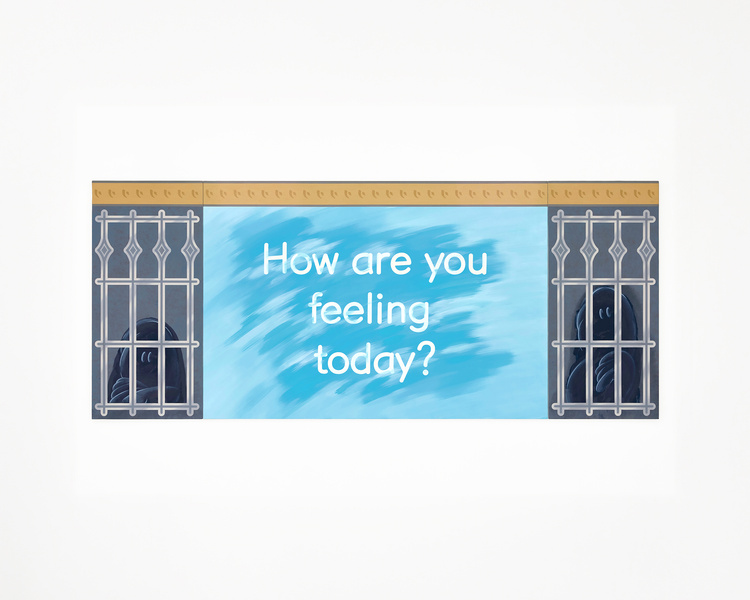
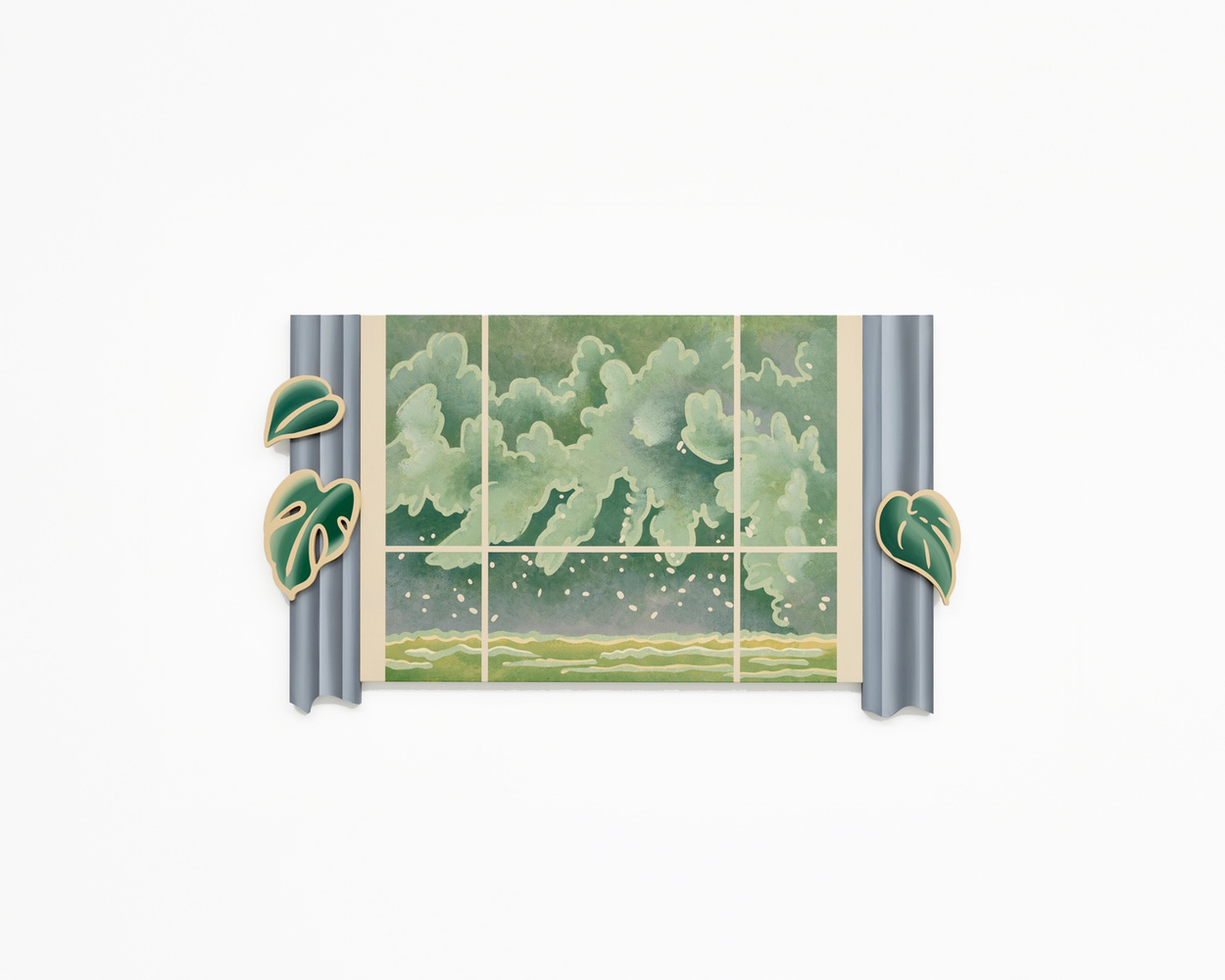
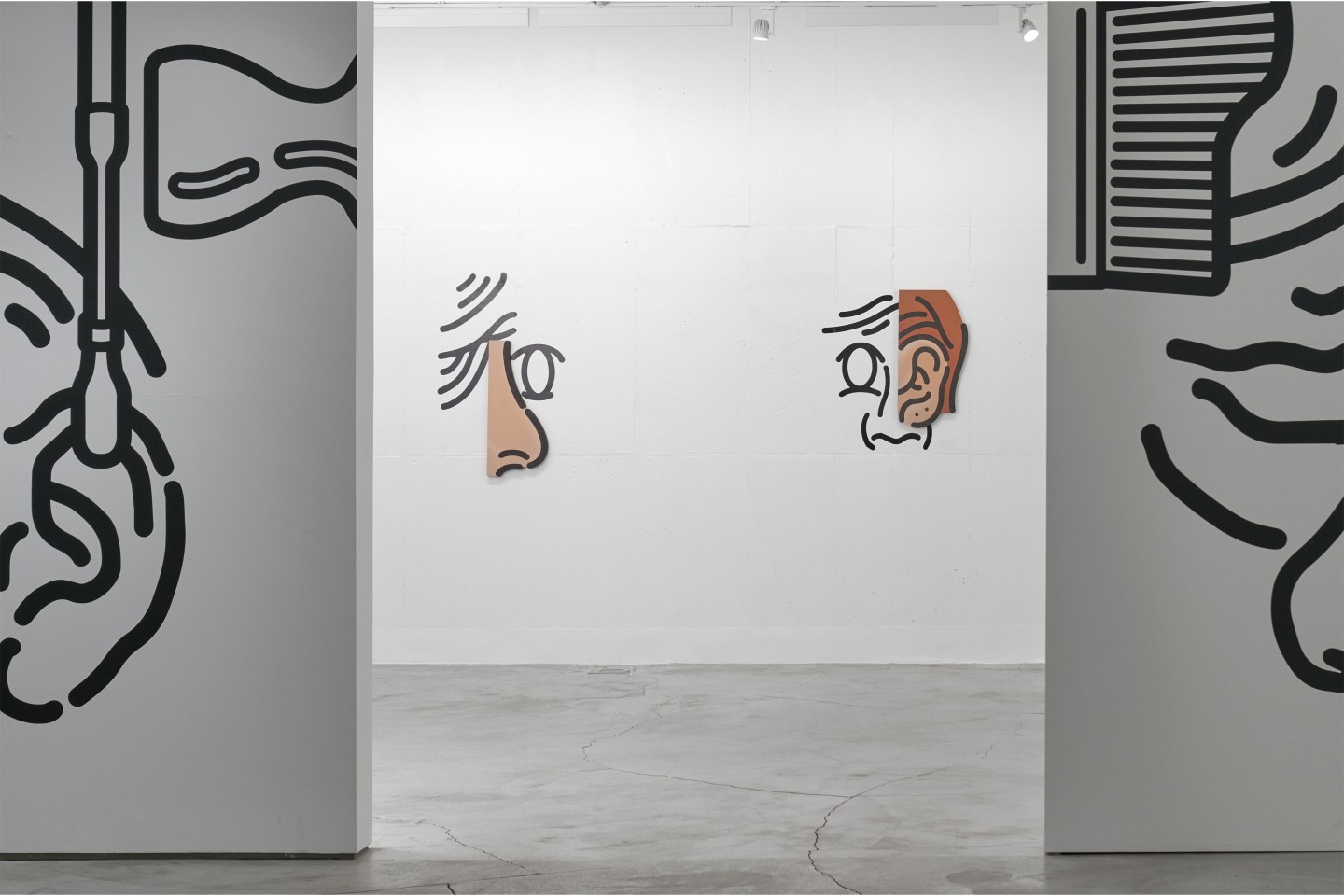
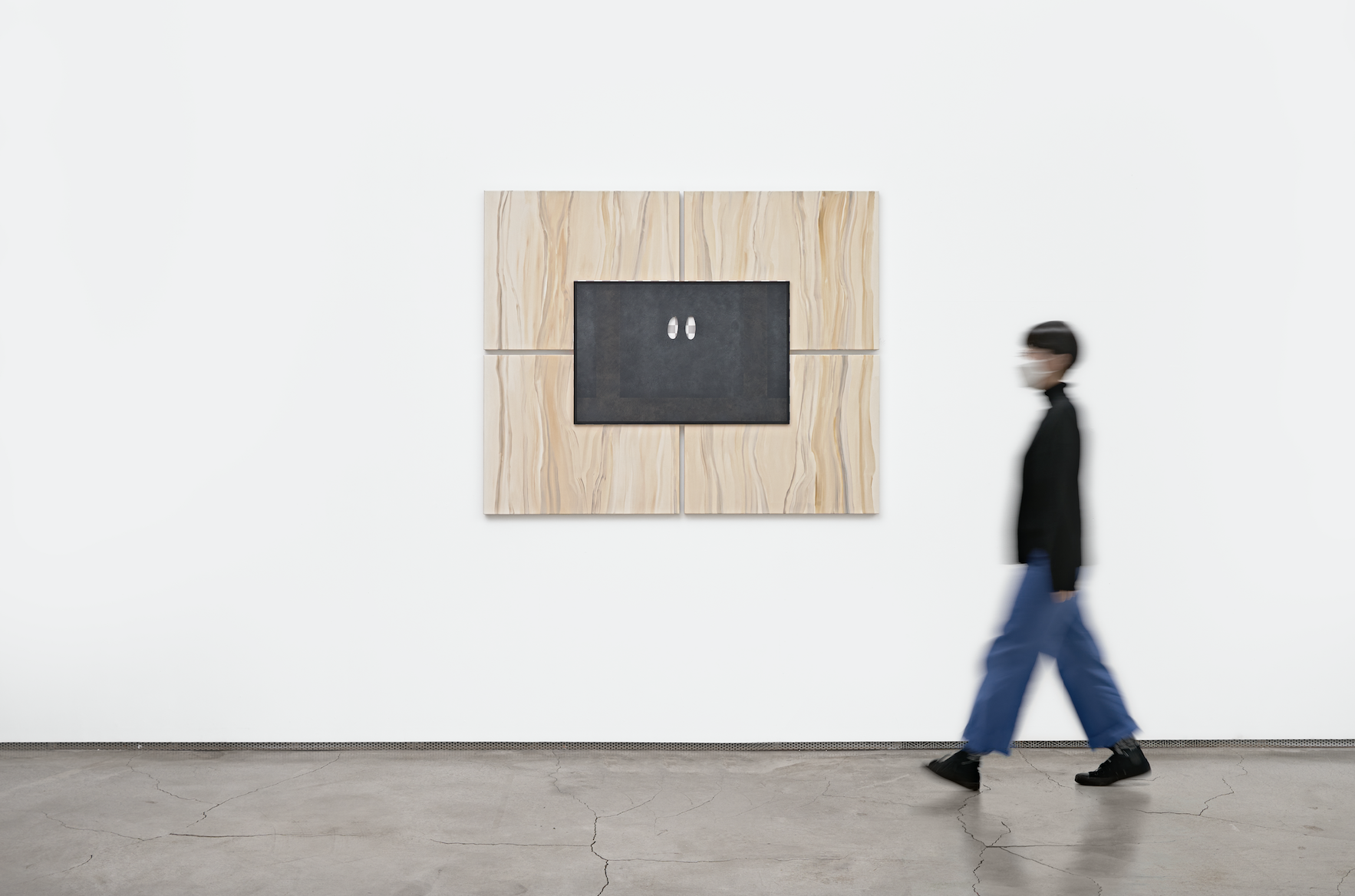
The object's physical properties are closer to textiles that are empty as symbols, things consisting only of skins assembled with flat surfaces, rather than dense volumes, and abstract masks in the form of objects that have been separated from merchandise for their exhibitional aspect itself.
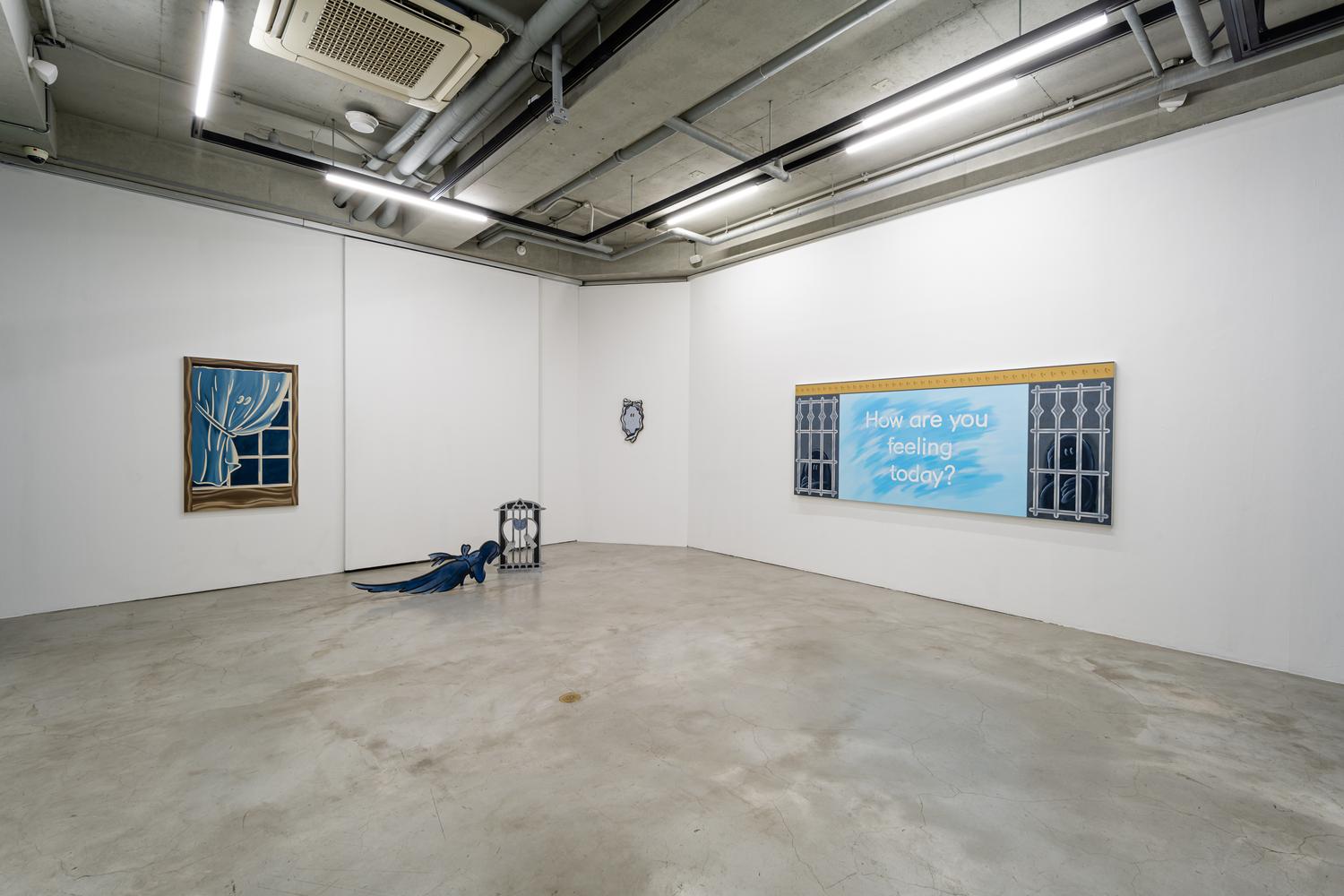
So the pairs of signature-like holes in or on Lee's objects are basically signs seeking to reveal the objects' nature as the face and mask of symbols, before trying to assign personality to the objects. This appears related to the aforementioned erotic objects being analogous to certain body parts but continually reminding viewers of the absence of a body that can touch and use them.
While the empty eyeholes indicate the objects' representation, in which the organs and soul have been drained, the void of symbols acts as a centripetal force drawing in the viewing body.
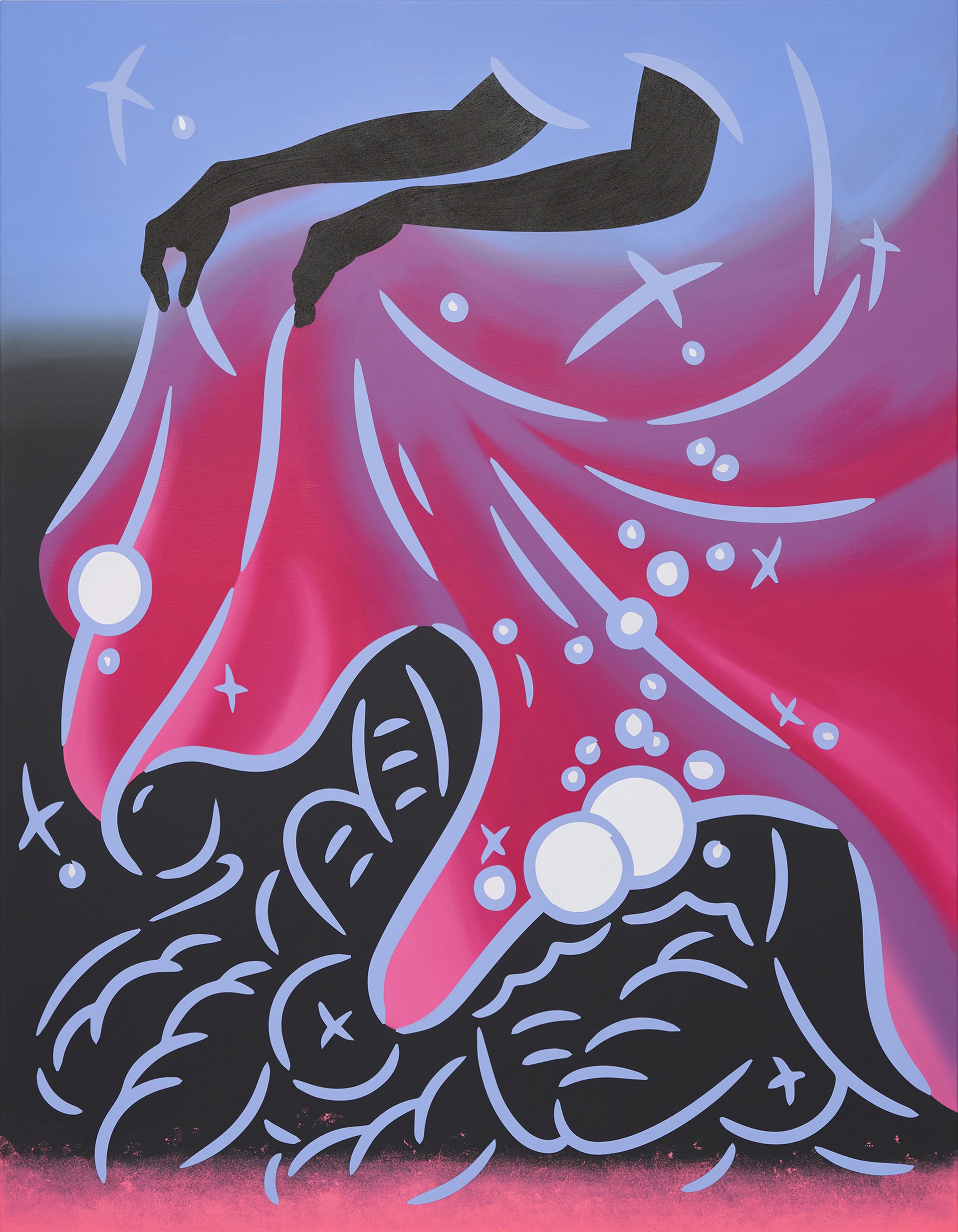
Painting's role as makeup filling representation is pronounced here. As Konno Yūki points out, the function of paint transcends filling and decorating surfaces to assign physical properties to the decoration itself and actualizing the symbols themselves. Painting has come to 'overwhelm the object' by representing objects themselves instead of remaining at decorative functions or uniting with supports.*
Although painting reinforces the surface's contents by applying color to forms, it also erases the attributes and matter of ready-made goods and extracts the functional effects of forms. The practice of displacing the instrumental status of painting by realizing objects through paint can focus on the effect itself of exhibiting images separated from the use of products.
Since objects must be visible even in poor, low-resolution image systems, even gloss is treated as a surface effect on objects' matte surfaces, and the decorative effects of function are also clearly exhibited. Lines become concise and details are deleted on symbol masks with reinforced exhibitional properties.
This, so to speak, approaches painterly pictograms and emojis that compress and abstract Instagram thumbnail images together while eliminating the detailed decorativeness. In that it gives form to the effects of function, the object is more a result of copying the intentions of imitation than imitation, and it is a product of the dynamics that turn exhibitional qualities themselves, instead of utility, into exchangeable symbols.
While the task of translating objects into symbols and then renaming them objects eliminates the objects' substance as objects of desire, it also evokes, from symbols' essential void, the objects' existence. This is simultaneously the artist's critical product and practice converting functional effects to pleasure.
So "Although I have no money or anything/a penis" (Creating Maxims, 2011), which the artist framed, may seem like a self-deprecating and childish cry, but it needs to be reconnected to the pragmatic pleasure of mouthing words of deficiency themselves than be interpreted with the semantic approach of the desperation of trying to survive by any means necessary.
Also, one can discover another irony here. Lee Mijung's work referencing, imitating, and representing objects is actually overturning the hierarchical dichotomy between the original and representation. Having passed through the artist's hand as she flayed the object's layers off of manufactured goods, articulated them, built object-ized symbols, and assigned flat material properties; the object is yielded as a disposable artwork.
It is called an artwork created under the artist's name despite being compressed as symbols and lacking the forms and density of whole objects. If it includes the process of artwork taking merchandise as industrial products as its primary subject extracting the exhibitional properties of merchandise and producing exhibition-ready results, the task of devising forms of critical symbols as visual art grammar from the order of the merchandise economy is also faithfully carrying out the patterns that generate art's added value by disrupting the old order.
Even if it is difficult to deny that the source of masturbation has frailty, the "pleasure of self-revival" she pursues practices a symbolic monopolization that has secured freedom from the desire to directly own and enjoy objects.
The artist's visual language, which defies and twists the folkway of so-called conventional pleasure, finely crafts grammar and expands the pleasurable practice of symbol-objects while covering extensive ground in the body and labor, trends and stories, products and art, cities and nature, and online networks.
✦
- Gu Nayeon, "Inside the Surface of the Everyday," 2020.
* All of the text cited in this essay can be found on the artist's web site. (link: https://emjelee.com/TEXT)
- Chung Serang, "On Our Terrace, a Toast to an Ending World," 2018.
- Ahn Soyeon, "A Complete Display Imitating Actual Spaces, Actual Materials, and Actual Forms," 2018.
- Let us recall a sentence from the catalog introducing the artist's limited edition merchandise at the exhibition "How to Live Alone" (Common Center, 2015). "Although I won't stop you if you insist on using."
- Lee Mijung, "Artist Statement: Six Pieces of Writing on Forms," 2018
- Konno Yūki , "Wall | Wallpaper: Between Painting and Objects, or on Objects," 2019.
✦
Nam Woong is a human rights activist and visual culture and art critic. He was awarded the fourth Platform Art Critic Award in 2011, and the second SeMA-Hana Criticism Award in 2017. He co-authored Infectious Diseases and the Humanities (2014), Meta-universe: the Generations, Regions, Spaces, and Media of Korean Art in the 2000s (2015), and Korea's Issues 2017 (2016). He is currently the steering committee chairperson of Solidarity for LGBT Human Rights of Korea.