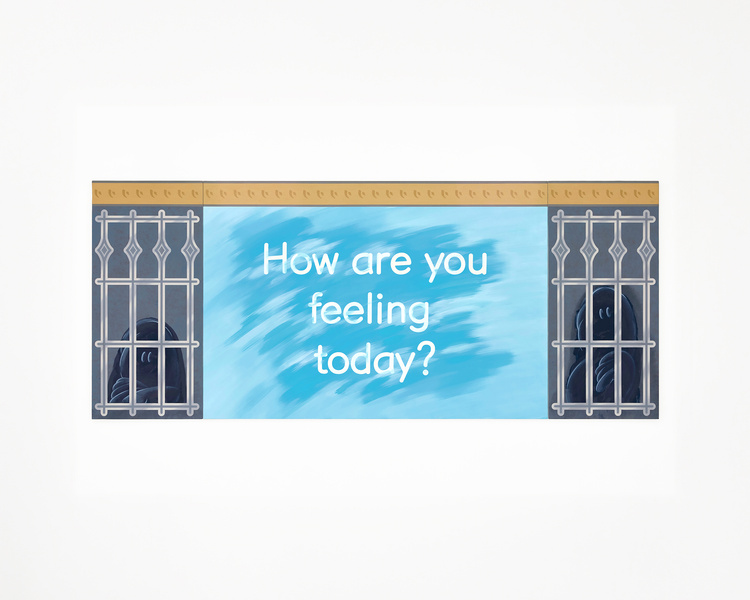
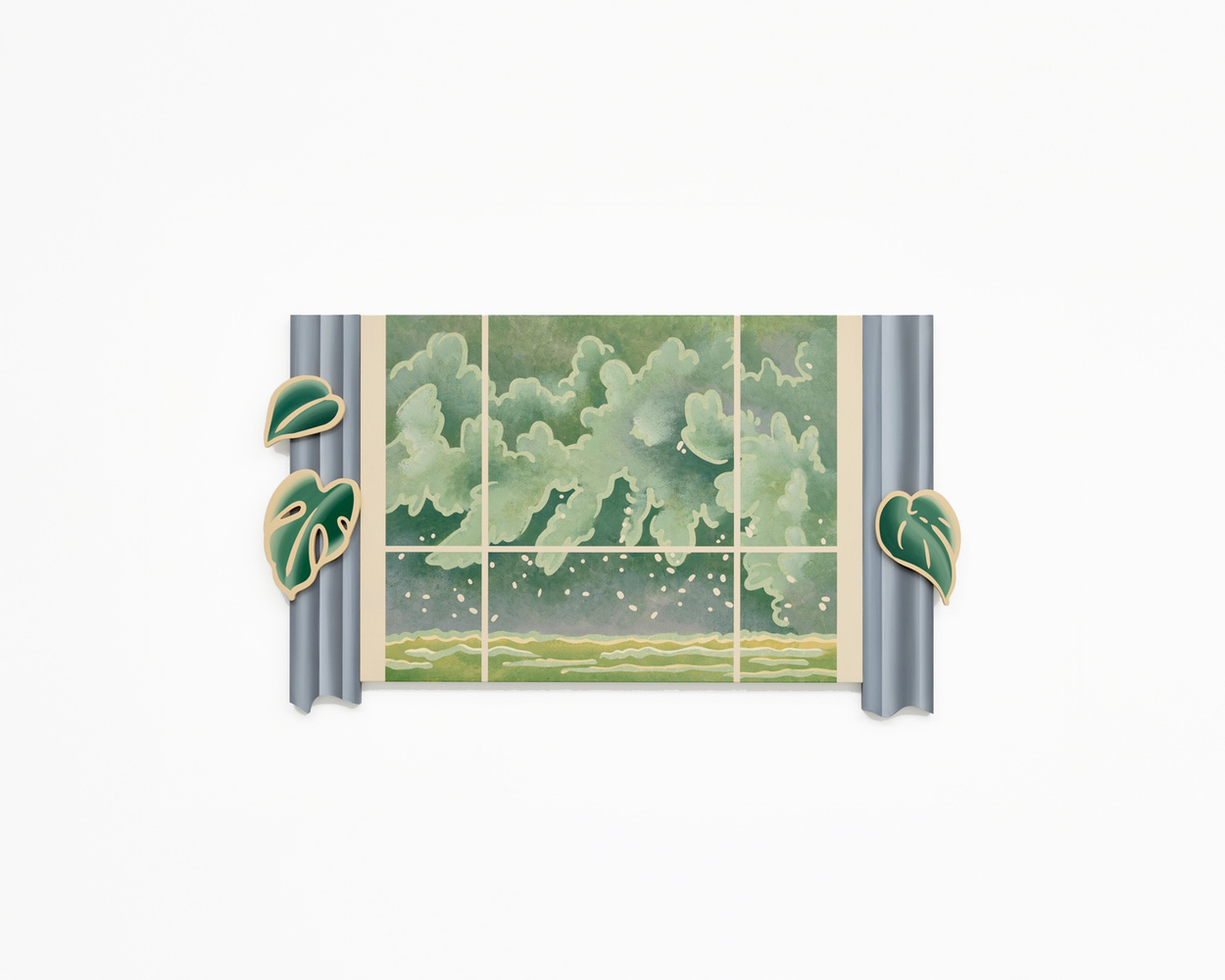
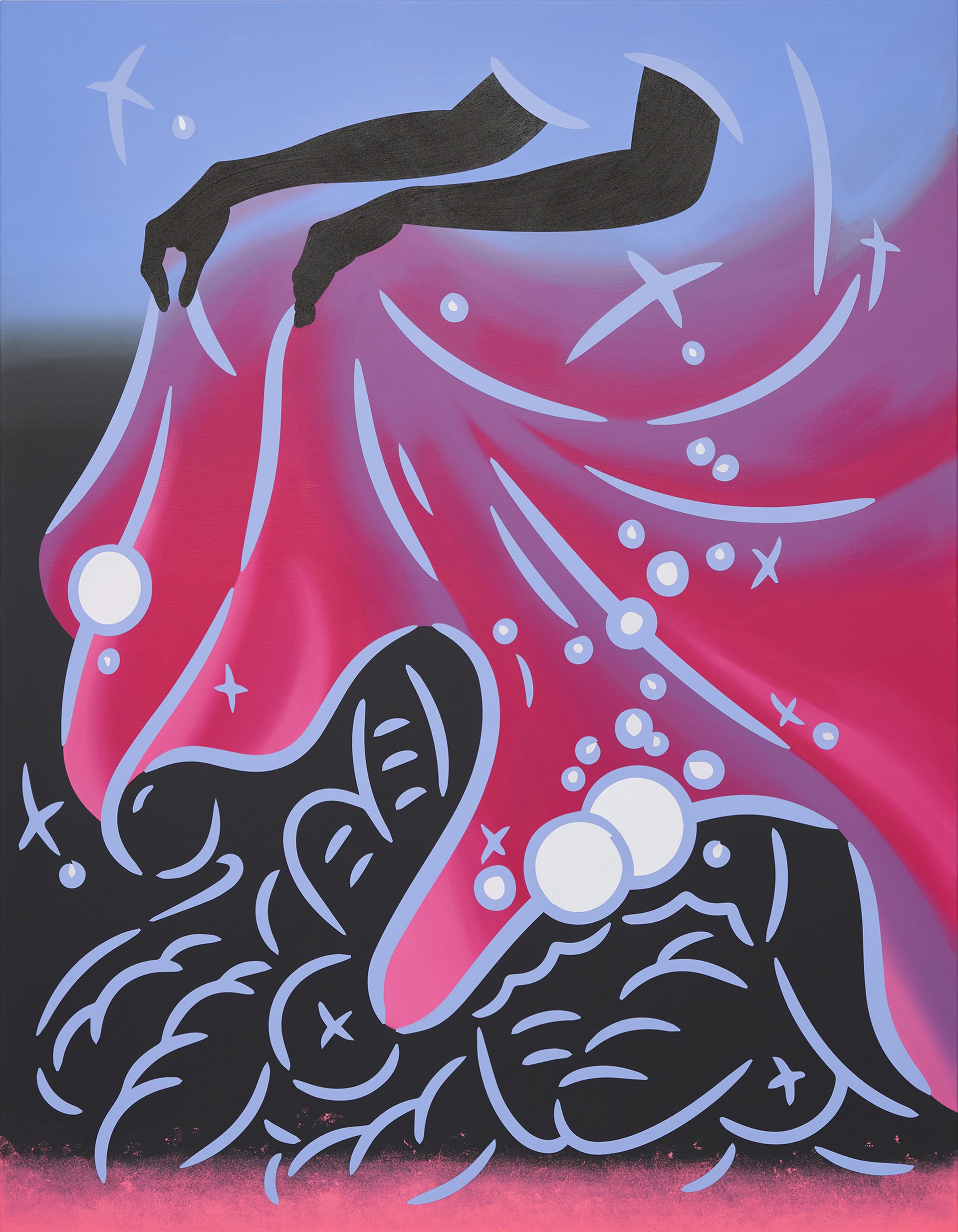
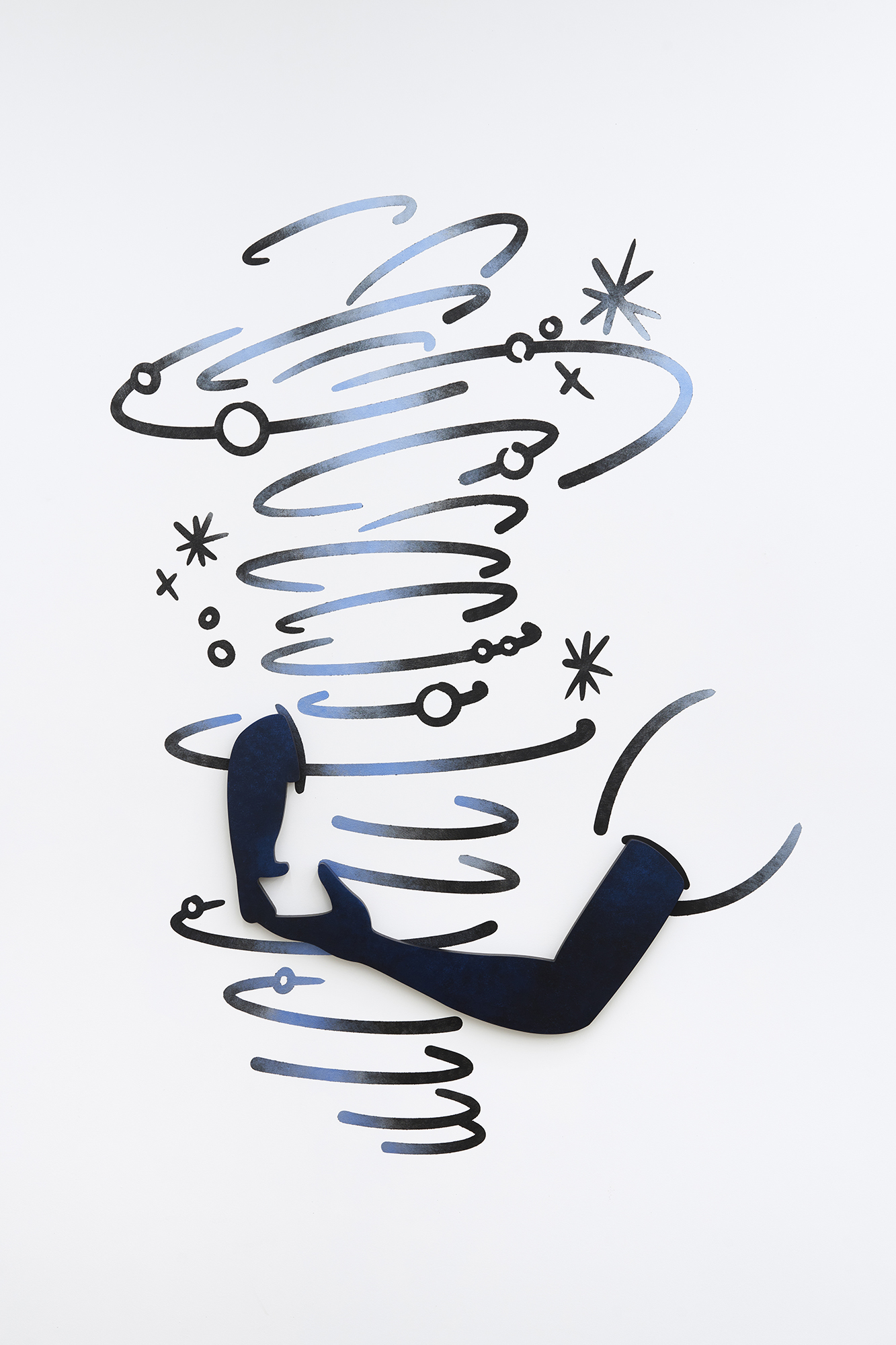
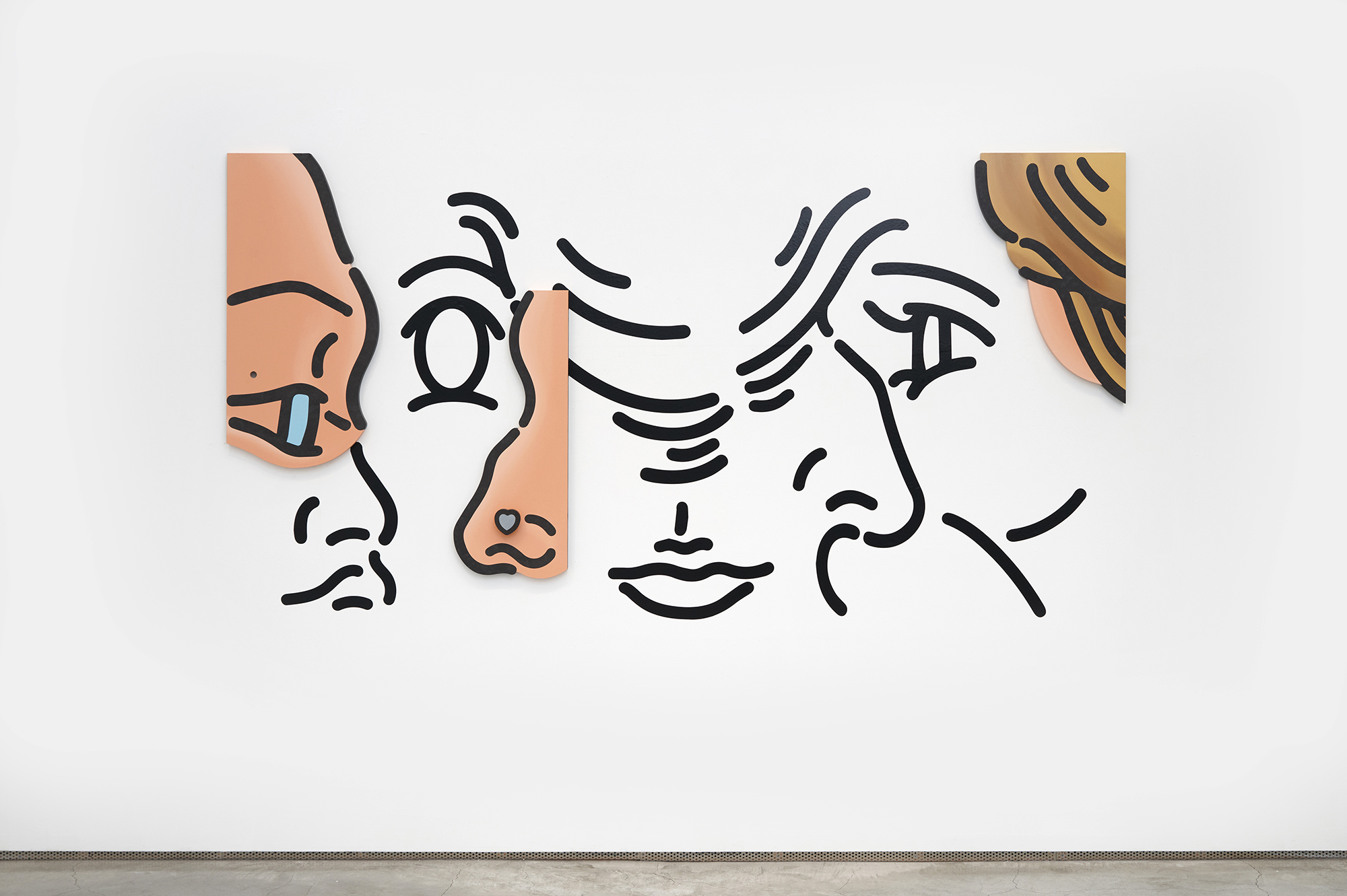
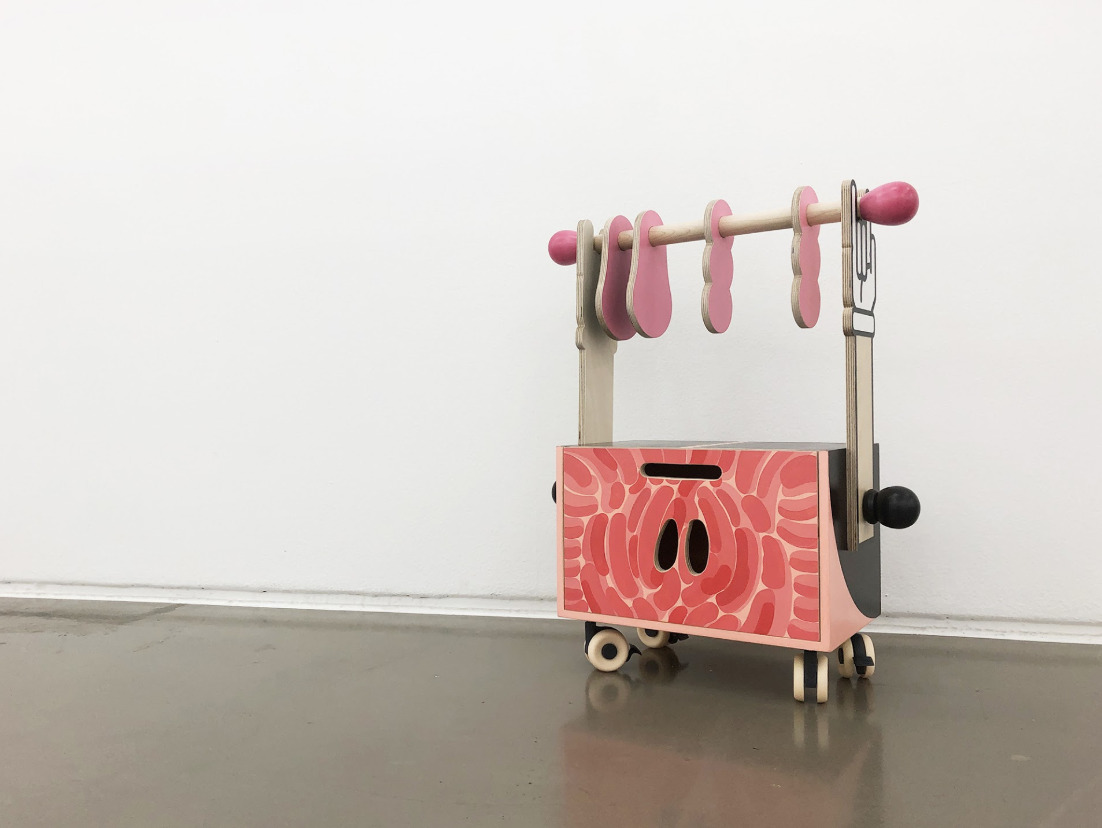
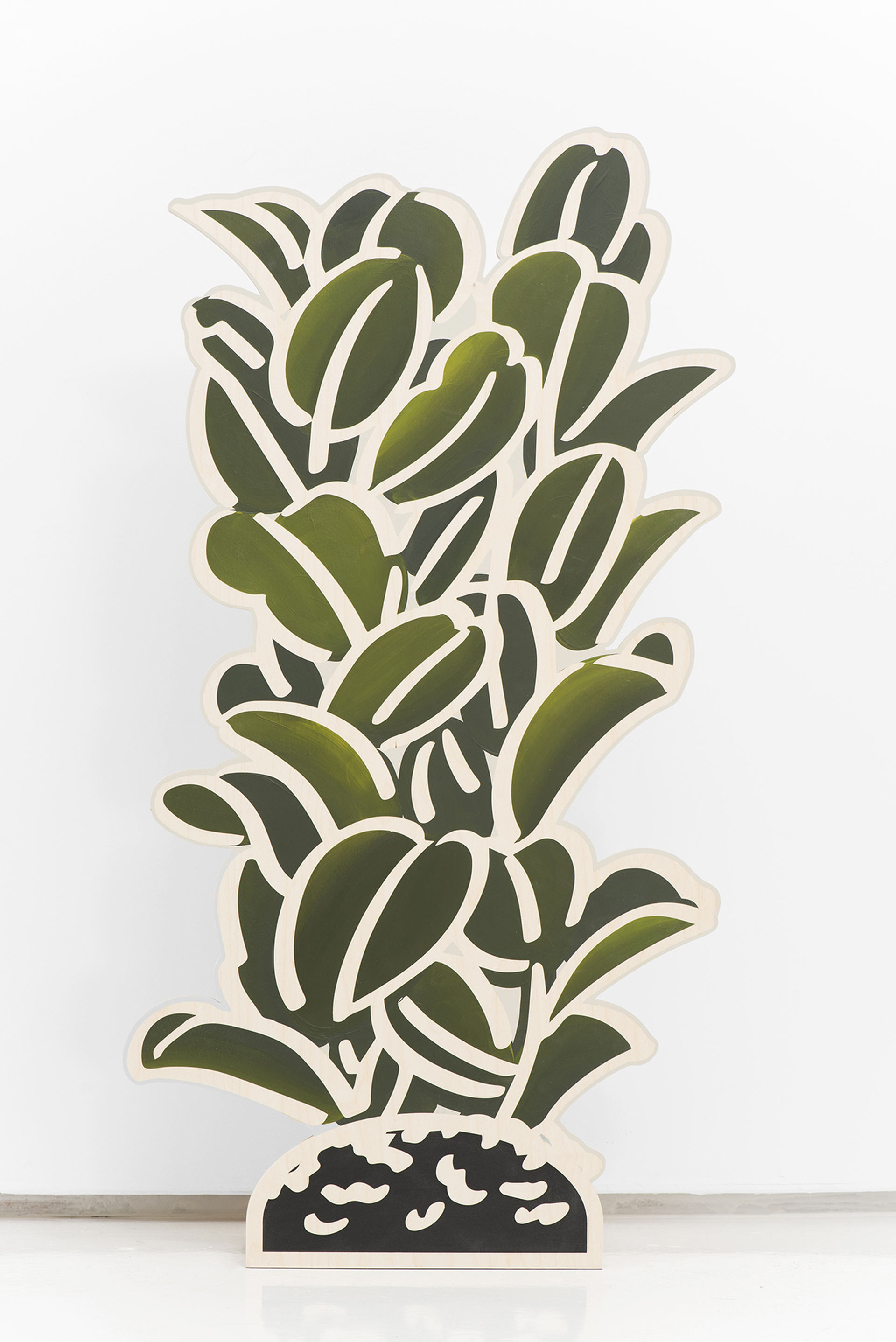
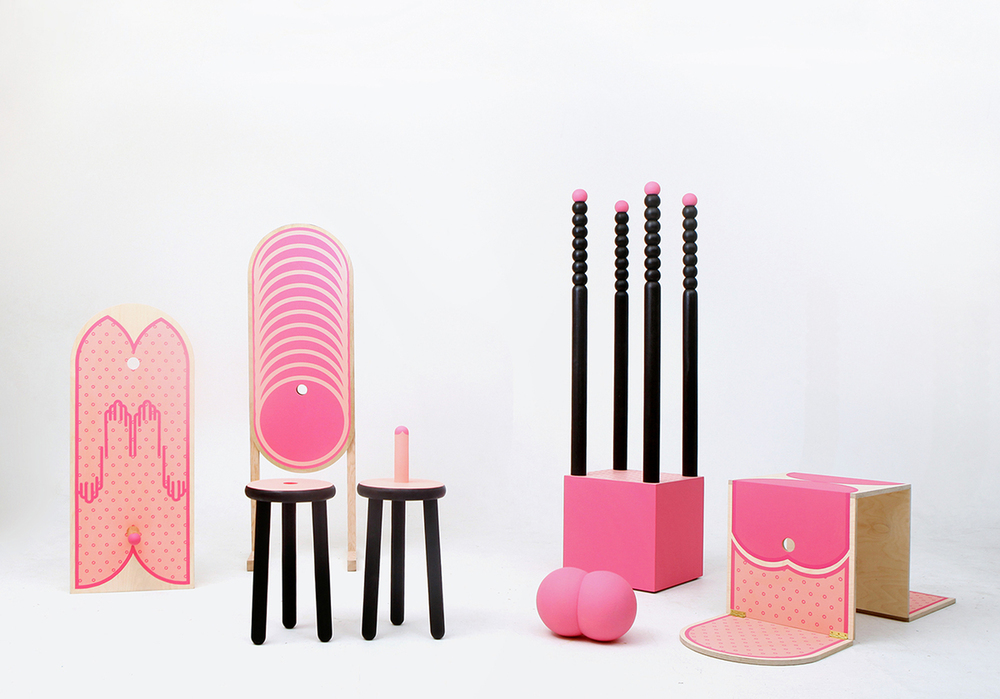
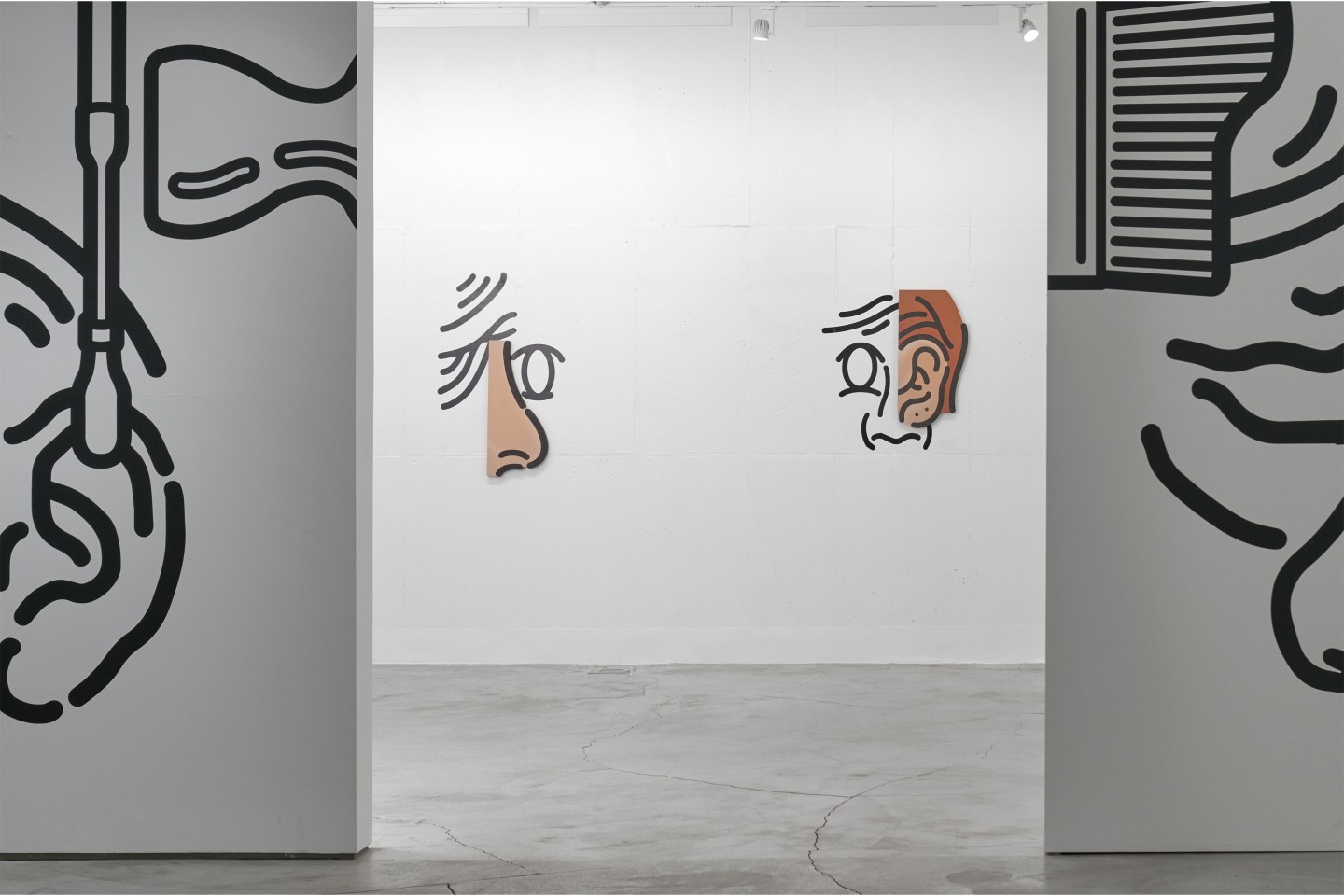
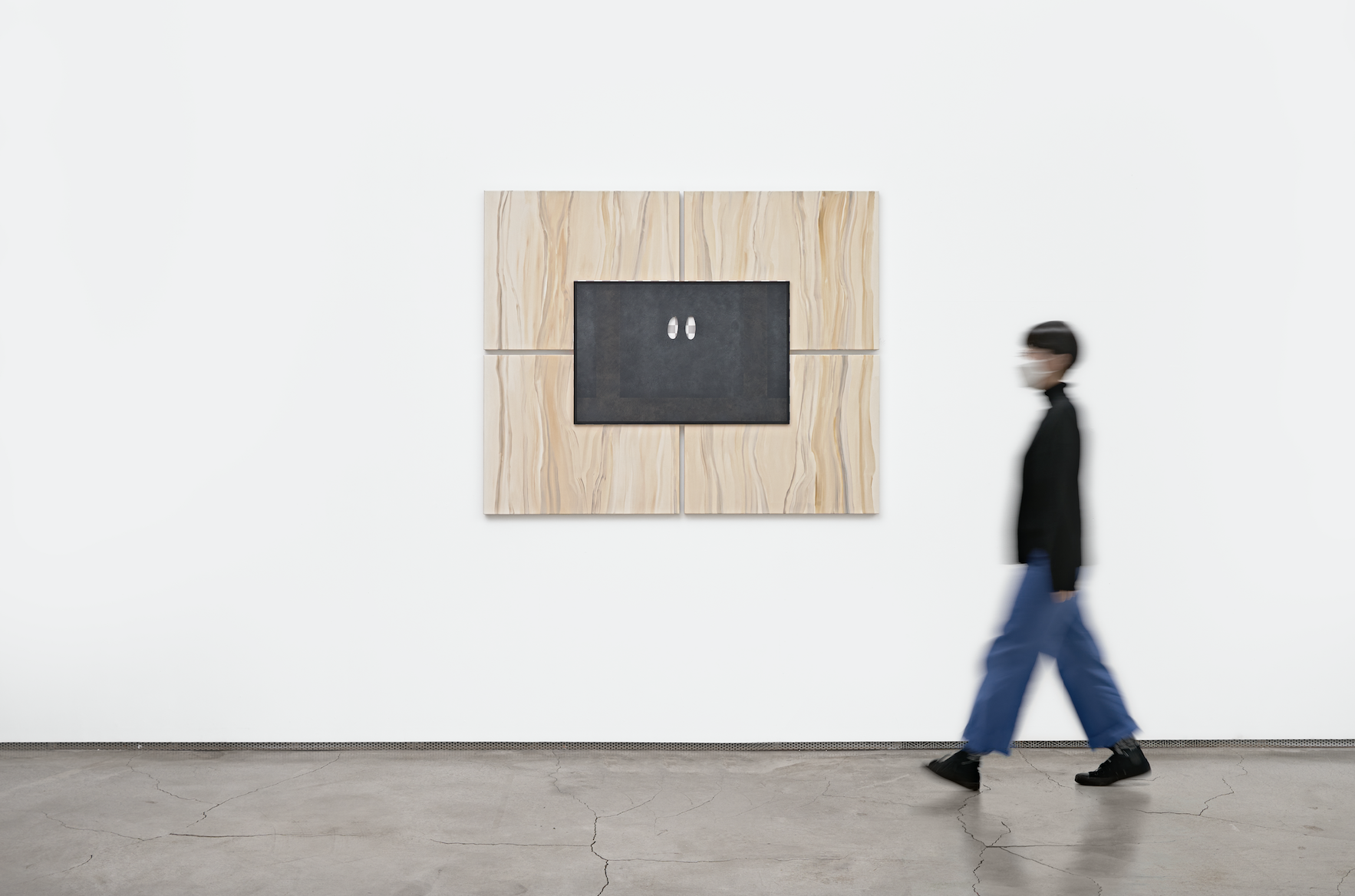
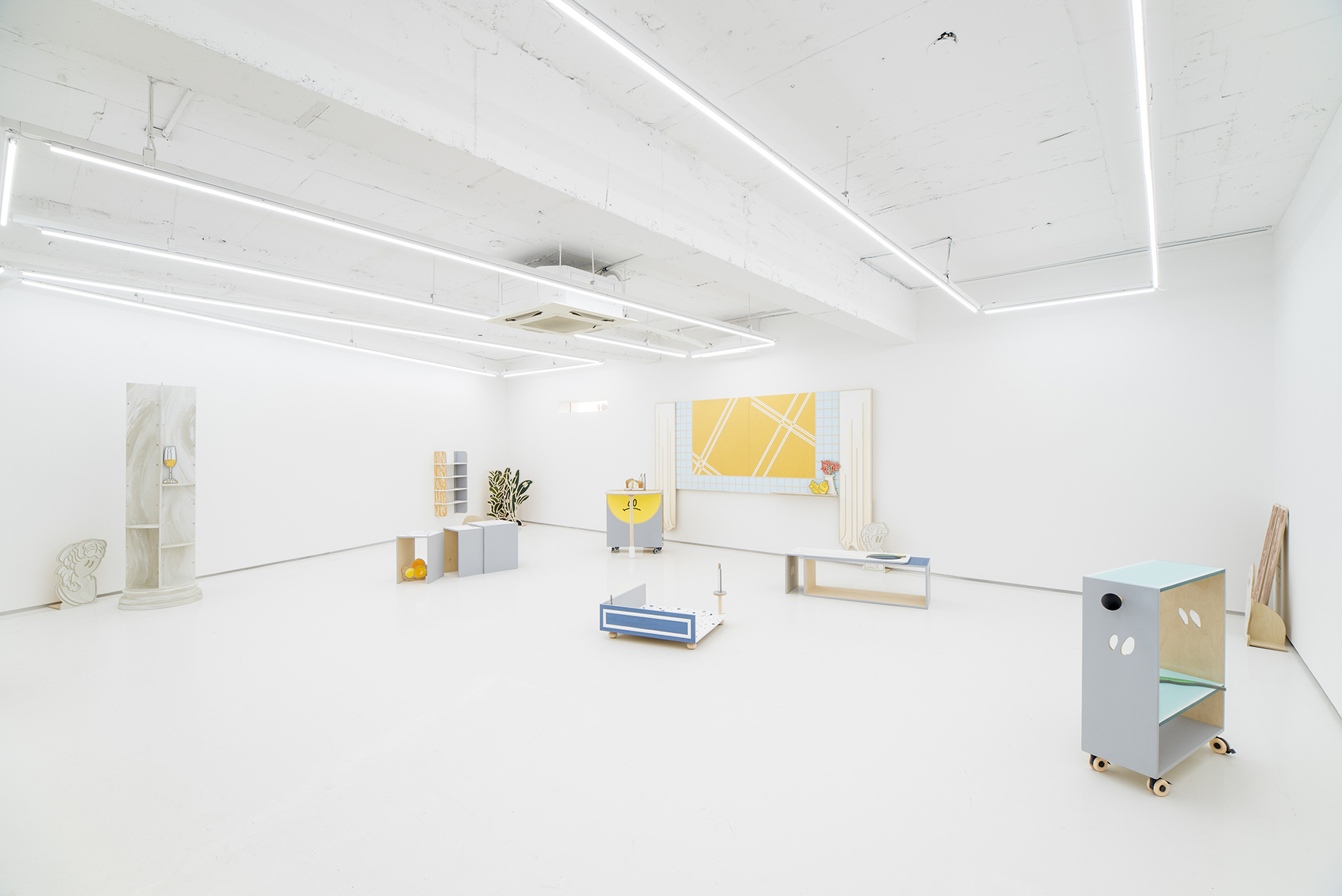
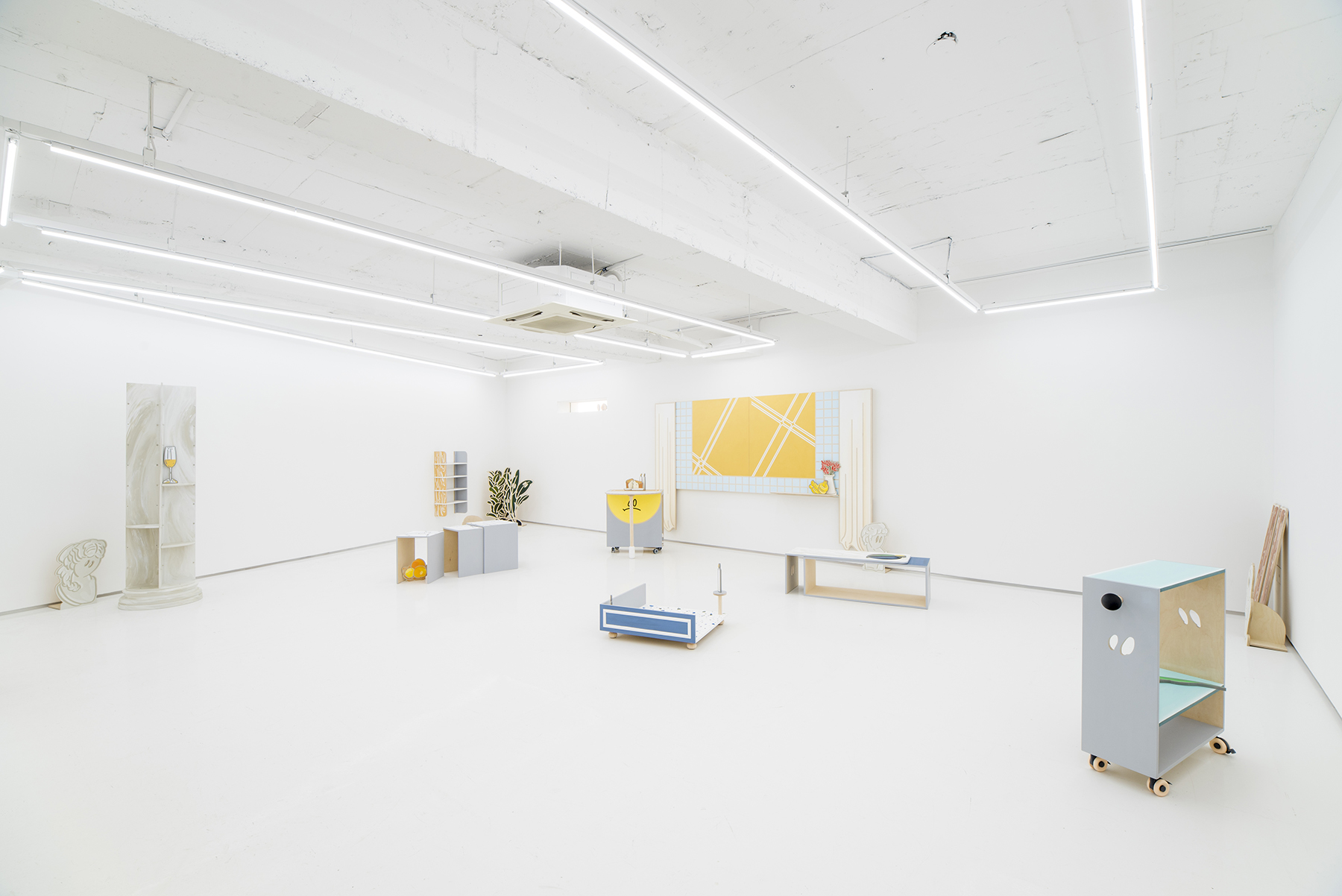
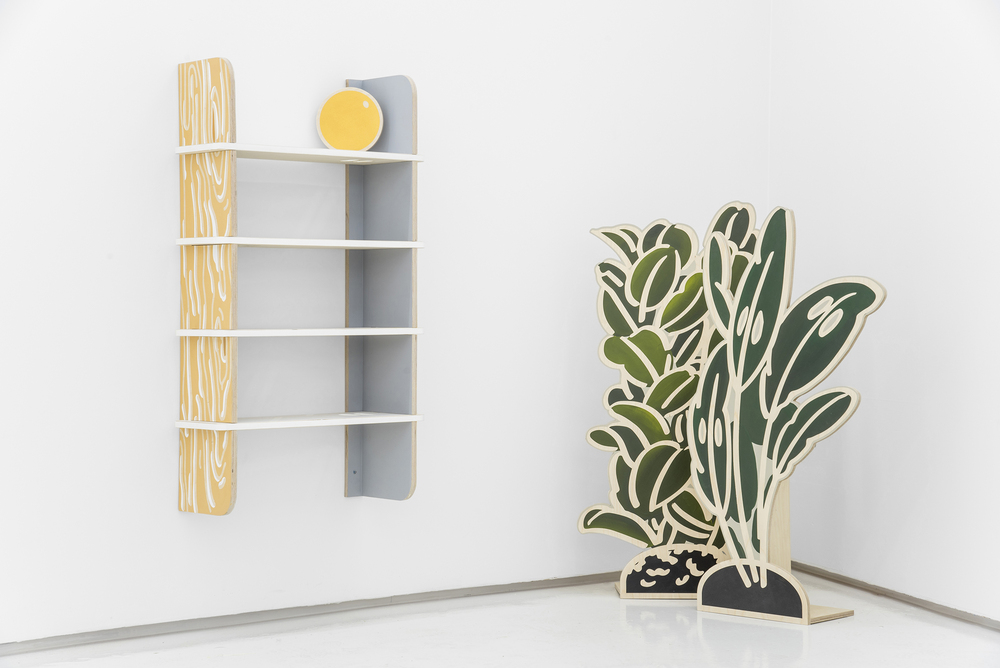
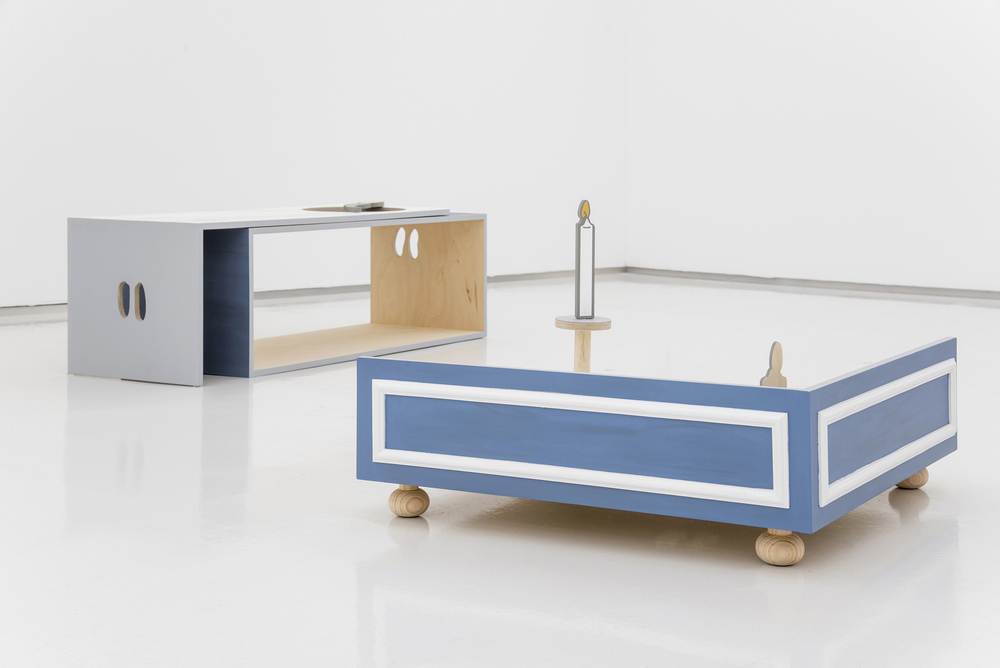
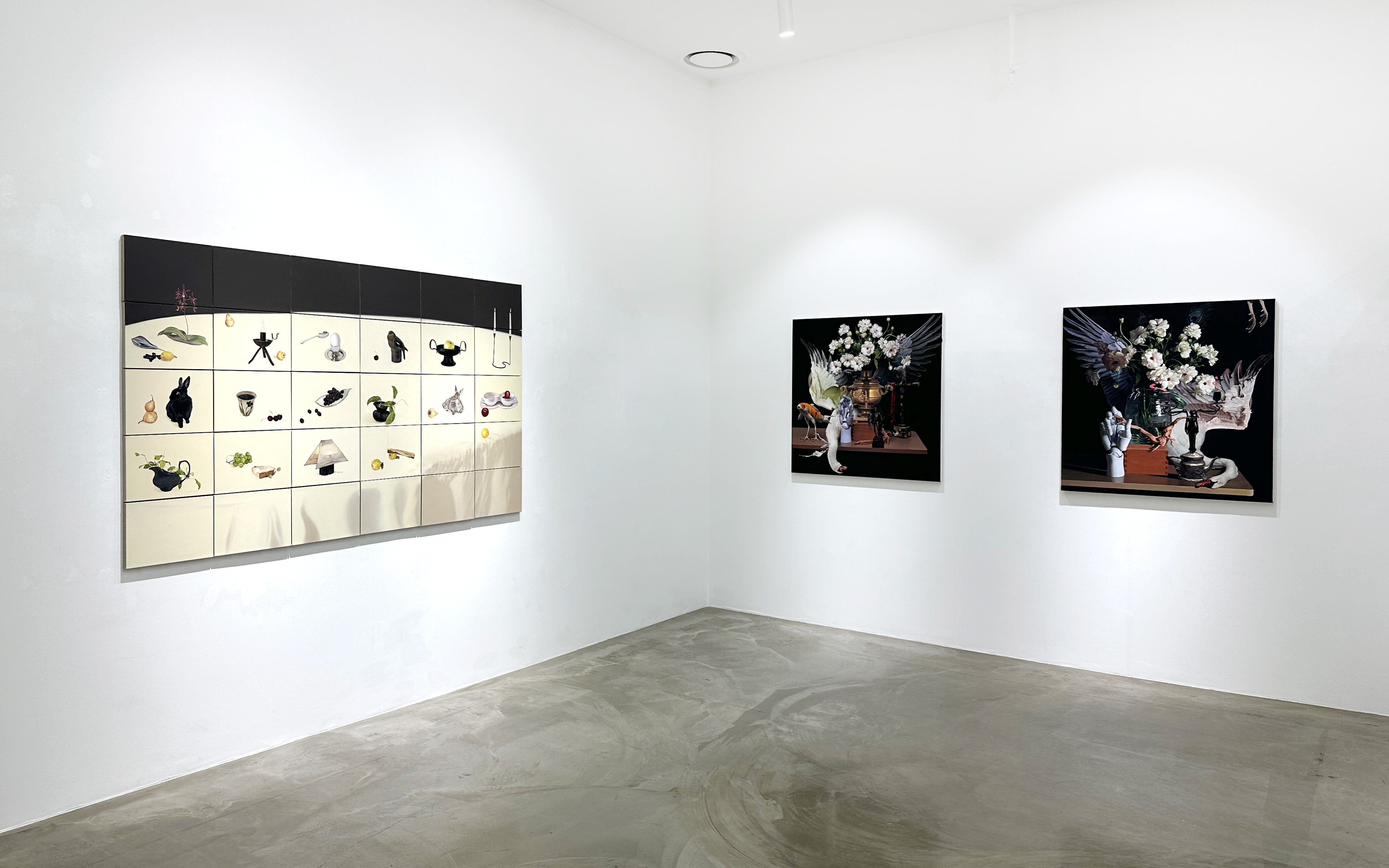
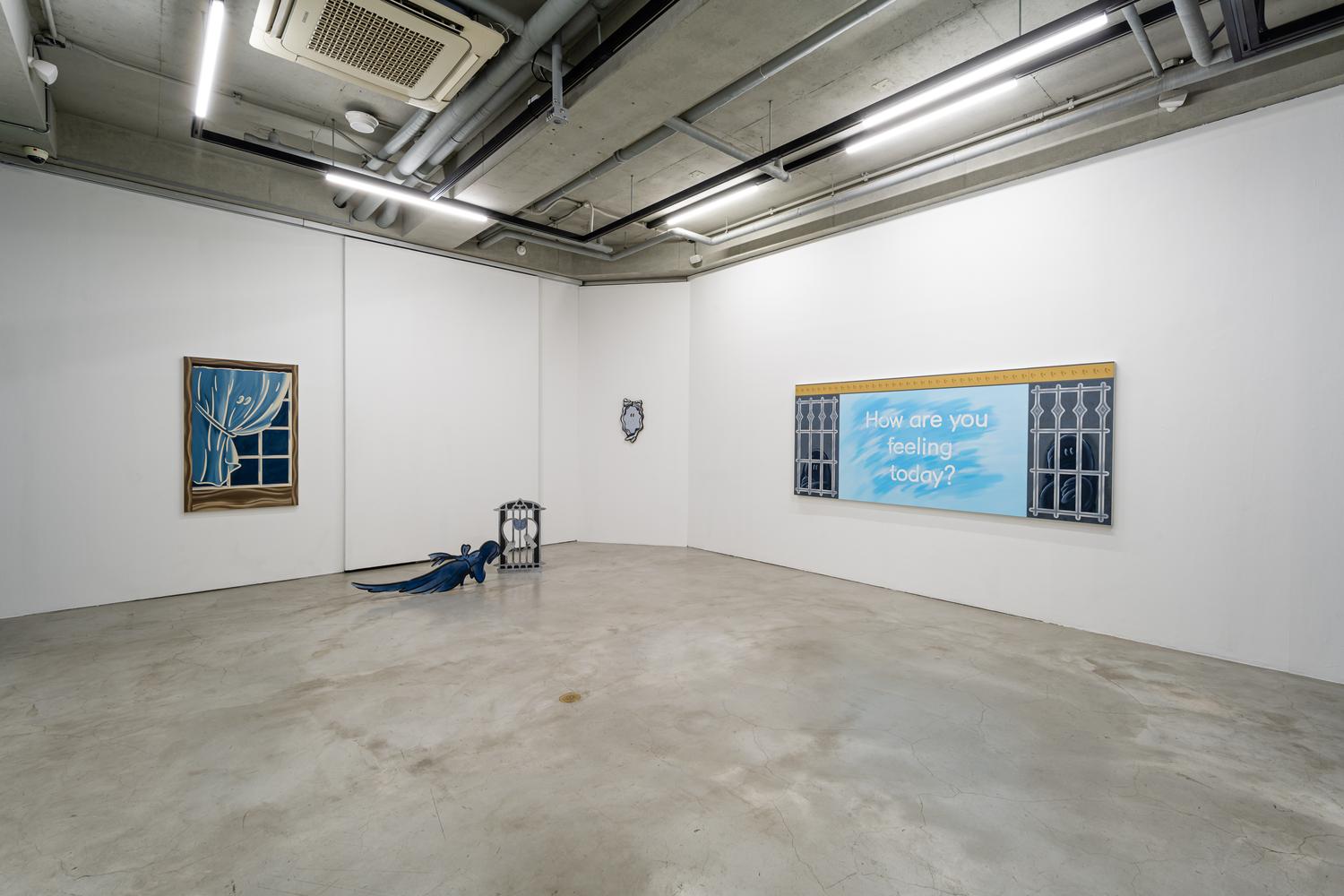
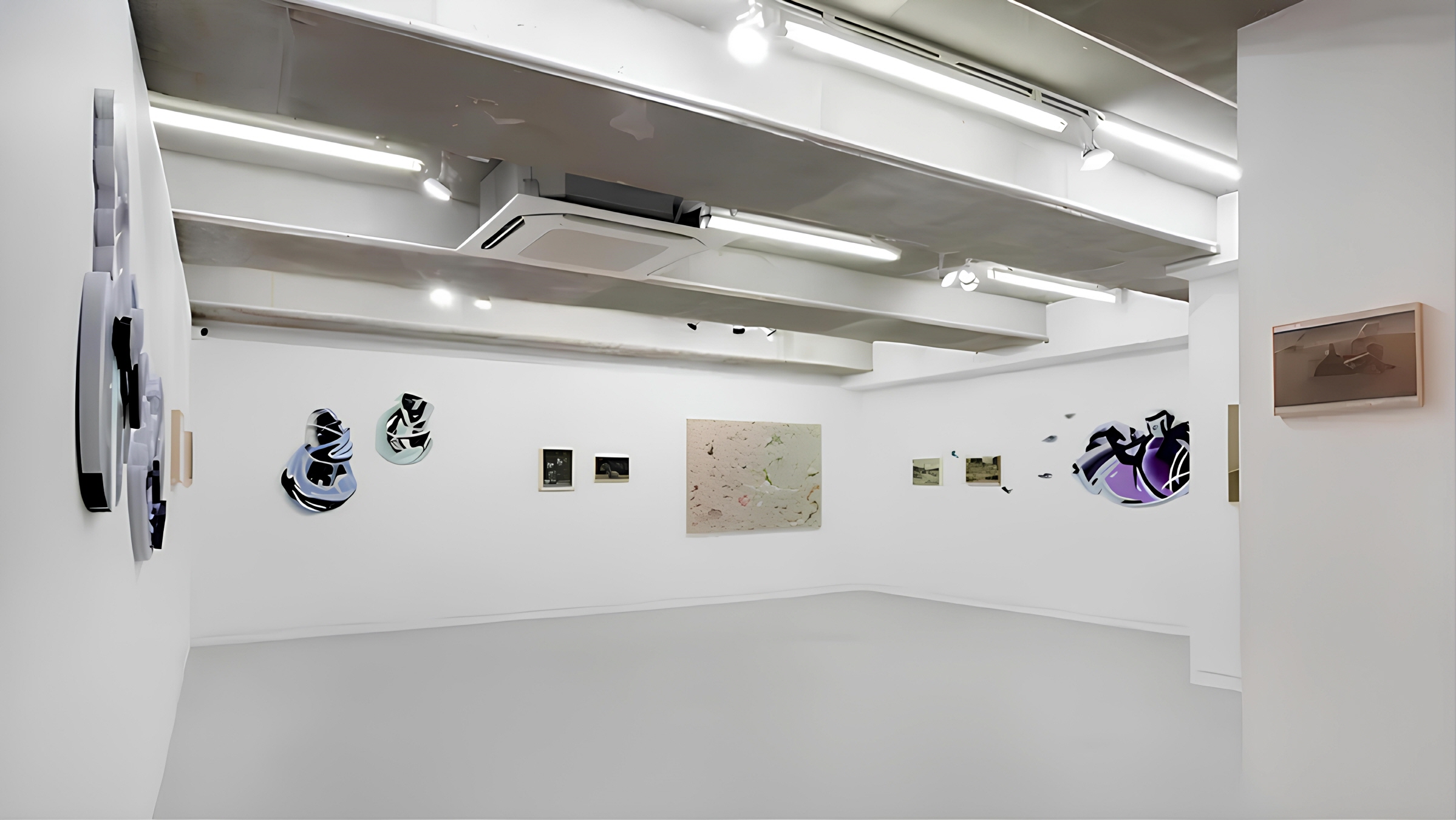
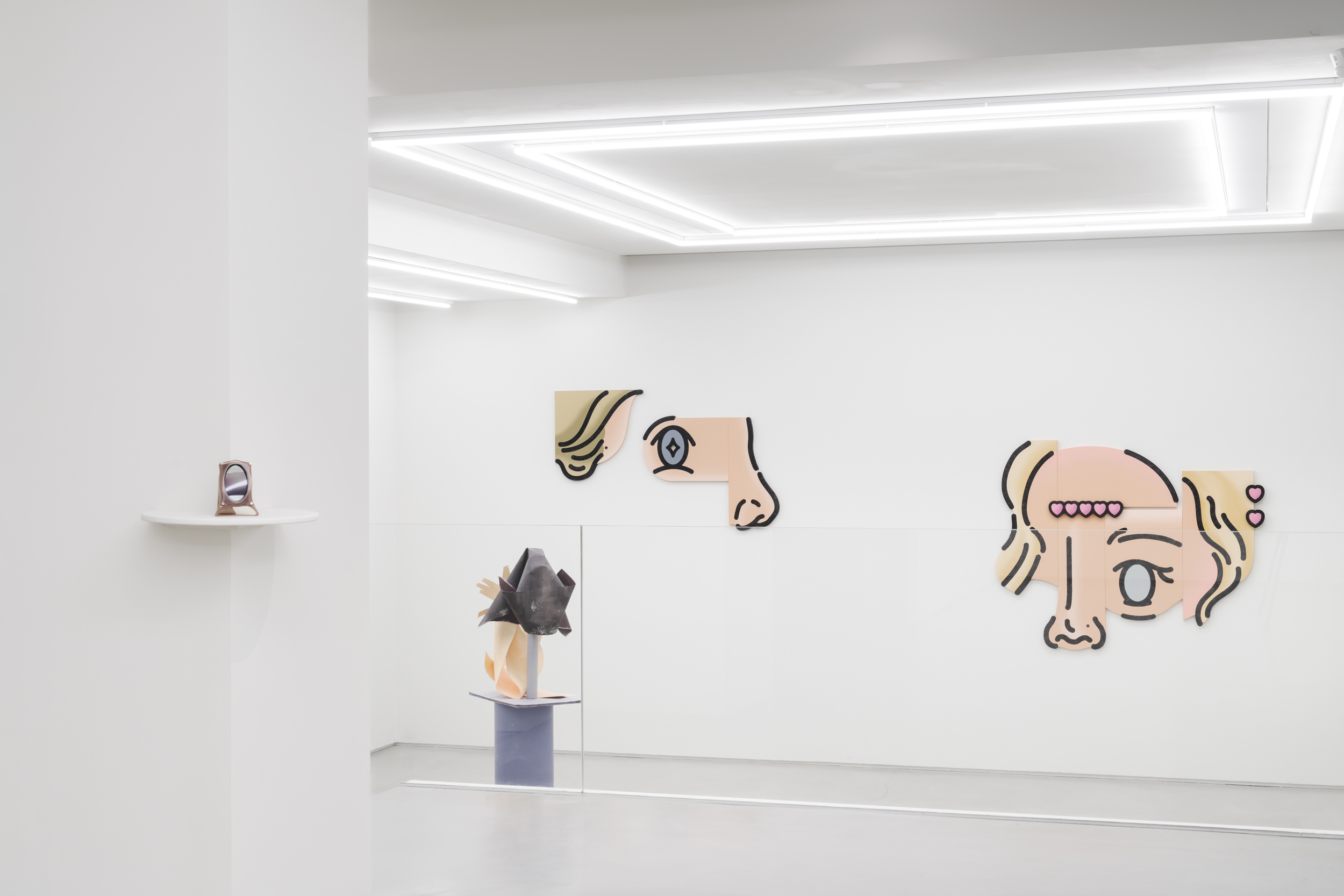
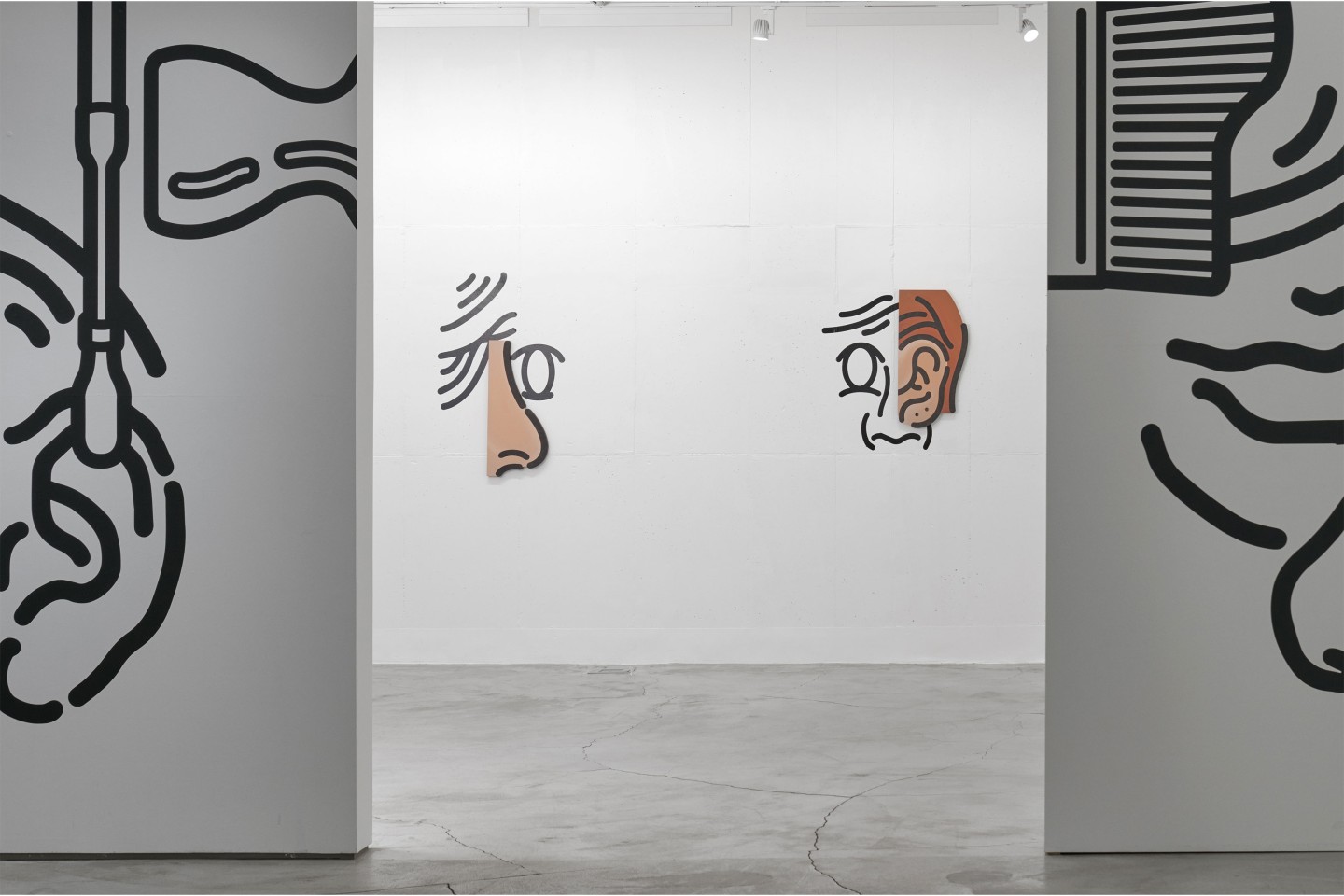
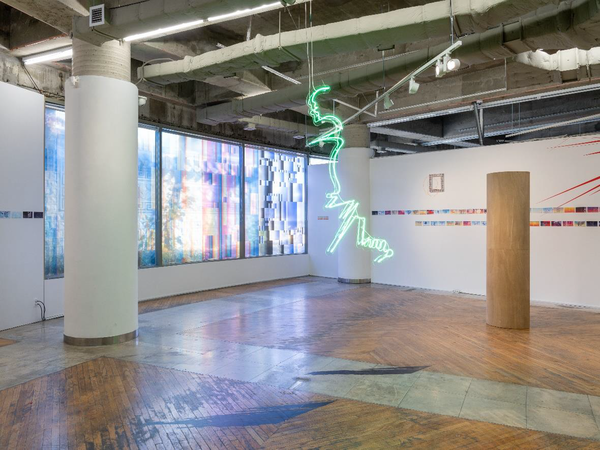
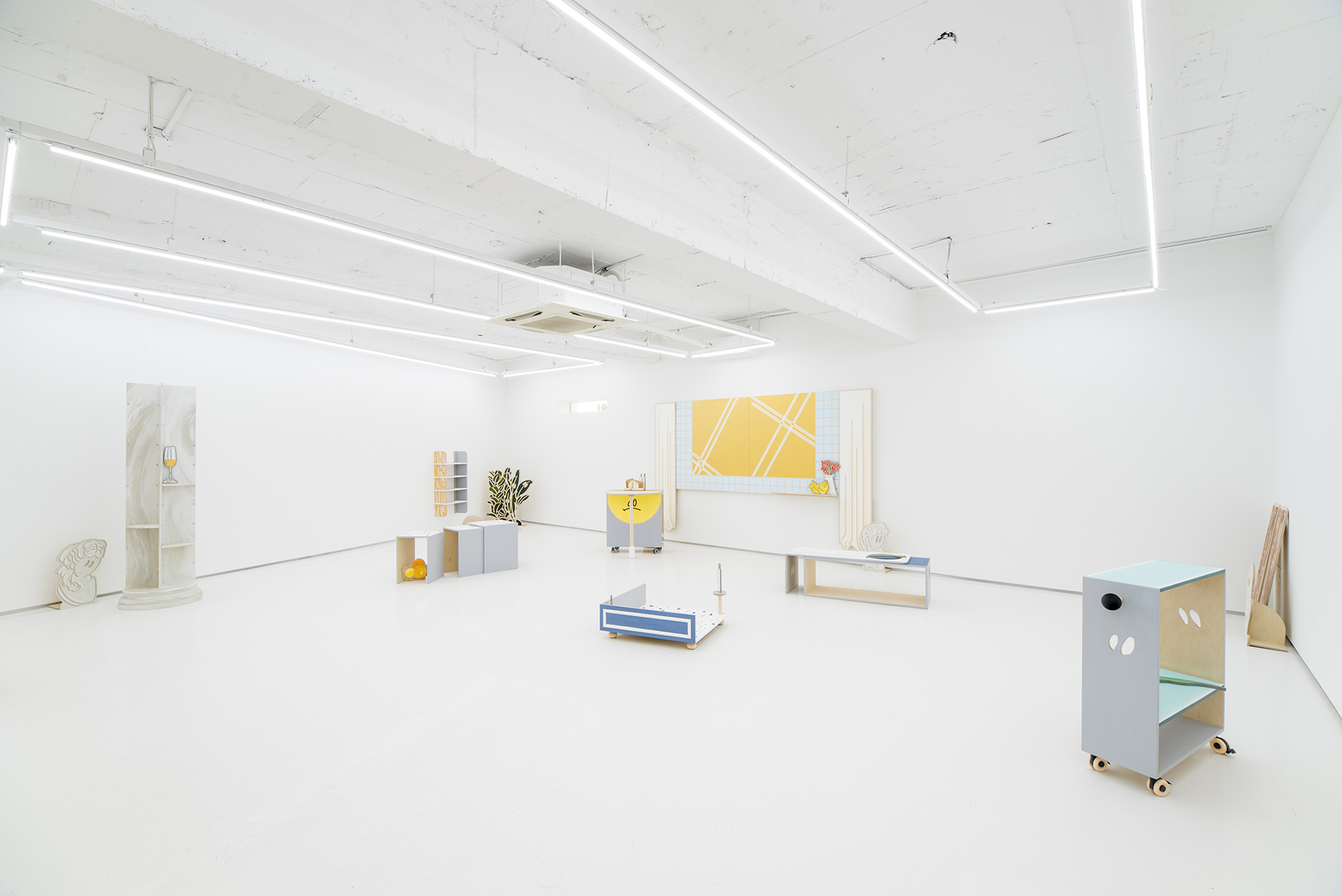
Installation view of 《The Gold Terrace》 (Art Delight, 2018) © Lee Mijung

A leisurely afternoon one November day, drinking a warm latte on a golden terrace

At the entrance of Gyeongridan-gil, I look around for “Art Delight.” After barely spotting the words Art Delight beneath a PC room sign, I move toward it. Passing through the entrance of a low, old building and climbing the stairs, one enters a space that feels like another dimension.

In the artificially constructed space located at the exact opposite end of everyday life, called the “white cube,” where the ceiling, walls on all sides, and even the floor are sterilized white, fluorescent lights brightly illuminate the space. This space is filled with cute objects made by the artist Lee Mijung.

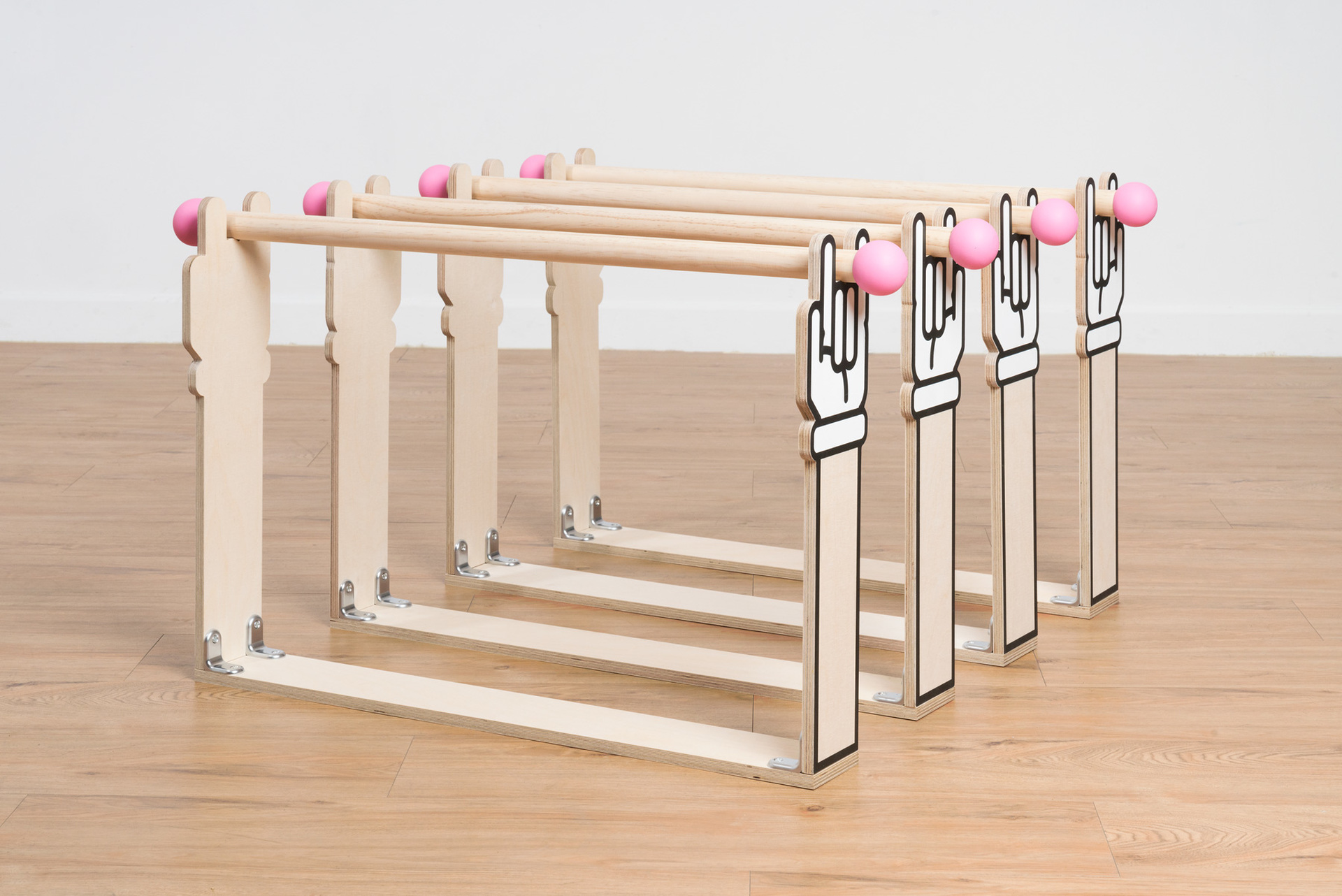
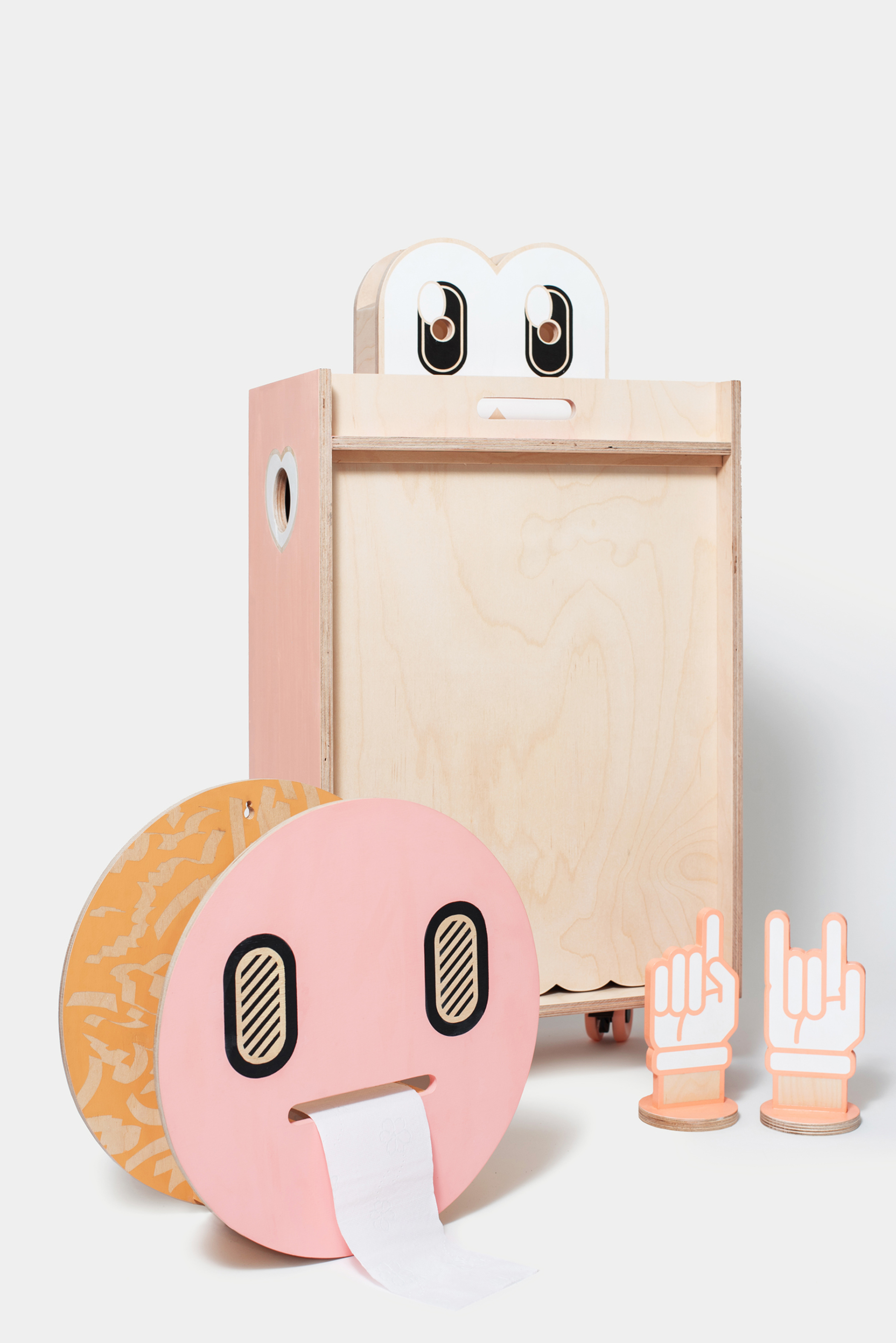
The moment viewers enter the space, they can easily recognize that the objects Lee Mijung presents take the forms of everyday furniture we use in daily life, such as windows and curtains, folding tables, coffee tables, benches, corner shelves, and storage cabinets.

These pieces of furniture, made by cutting and assembling plywood, are dressed in colors that seem similar yet different, including gray, sky blue, and golden yellow. These objects exist as independent entities, while at the same time being placed within the space as parts that constitute the whole.

At a glance, this space resembles a “showroom” that one can easily encounter in places that sell furniture, such as IKEA. Viewers walk among the furniture like consumers who have gone out furniture shopping, observing the objects from all sides.

There are questions we ask ourselves when buying furniture. Will this product go well with the home I live in? Is the price reasonable? Were good materials used? Do its weight or usability meet my needs? And so on.

However, this space is not an actual showroom, but is presented in the form of an “exhibition.” Then what kinds of questions would be good for us to ask when facing these “works”? Why did this artist make “fake-furniture-objects” that do not have actual use? What shift in perception can we attempt through them? How can we understand the elements that look like the eyes of cartoon characters, pierced throughout the furniture? What is my role as a viewer in this exhibition?

In order to find answers to such questions, I first recall the title of the exhibition, “The Gold Terrace.” What meaning do the material “gold” and the “terrace” have? Gold is one of the most expensive materials that can be used in interior design, but because of problems of price and durability, it is rarely used in interiors. Instead, it is common to finish objects made of other materials with gold-colored spray.

In Western films, which we commonly encounter, the terrace is presented as a characteristic space outside a large private house where one can enjoy sunbathing and leisurely free time. However, in apartments in Seoul, the terrace is a space that has disappeared after being expanded to enlarge the home, or is used as a place to put a drying rack or as storage for objects that are not frequently used.

“The Gold Terrace” can be understood as symbolically indicating the shiny and plausible material of gold, and the terrace as a space like a distant wish for young people living in a “one-room” apartment.

Installation view of 《The Gold Terrace》 (Art Delight, 2018) © Lee Mijung

In order to examine the meaning of the “furniture-objects,” it is first necessary to look at the environment surrounding Lee Mijung, the artist born in 1988 who made them. There is a term, “satori generation,” used to refer to young people in their twenties and thirties in Japan after the 2010s.

Satori is derived from “satoru,” meaning “to realize,” and refers to a generation that lives by suppressing desire and cutting off interest in money, honor, and success. Those born between the 1980s and 2000s grew up seeing only recession and economic crisis, and the term refers to a generation with a life philosophy of maximizing their own happiness while moving away from the order based on endless competition and survival of the fittest.

In a similar context, one can think of Korea’s “sampo generation,” or “give-up generation.” It contains the meaning that young people suffering from continued recession and difficulty in finding employment have given up five things because they have no money, such as dating, marriage, childbirth, interpersonal relationships, and buying their own home.

The younger generation in Korea living in 2018, instead of giving up on goals that seem impossible to achieve forever, such as “buying one’s own home,” searches for ways to enjoy the greatest satisfaction and happiness within the economic conditions and limits given to them.

The spread of smartphones and the routinization of internet use have brought many changes to the lives of the younger generation. Instead of directly going on expensive overseas trips, they have indirect experiences through countless travel photos, reviews, and video materials released online, and they substitute hunger by watching “mukbang.”

What made online-based relationships possible was none other than SNS, or social network services. People who share similar tastes and interests form new relationships online through platforms such as Twitter, Facebook, and Instagram. People who share specific tastes follow trends considered “mainstream” online and also voluntarily upload their own daily lives.

“Sohwakhaeng,” meaning small but certain happiness, is often mentioned as a word that reflects the lifestyle of today’s younger generation. As part of this, more people are overcoming the limitations of the small spaces they live in through DIY, or do-it-yourself, self-interior design, and home furnishing. This is work that maximizes effect with a small budget.

Under the title of “online housewarming,” people began uploading interior photographs of spaces they decorated themselves. Instead of buying expensive and heavy marble, some people attach marble-patterned adhesive sheets to existing furniture, or scratch foam board to make vintage-style broken bricks.

Within the limits of their budget, they select materials considering “cost-effectiveness,” so that things appear as plausible as possible. They show no hesitation in choosing plausible fakes that only visually resemble the real thing, rather than the truth or value of raw materials.

Installation view of 《The Gold Terrace》 (Art Delight, 2018) © Lee Mijung

Lee Mijung’s “furniture-objects” appropriate this very situation. If people of her generation imitate, within their own limits and to the best of their abilities, images of luxurious original furniture or interiors—even if that means merely copying the surface—Lee Mijung reuses that gesture itself and uses paint to re-create the texture on fake furniture made of plywood.

The artist does not see this present situation only negatively. This is because the artist herself has also partly learned such an attitude, and also sees a certain possibility within it. Since the essential structural problems of society cannot be changed immediately, she accepts this phenomenon as an alternative suggested by individuals living within that structure in order to take satisfaction within the range of what they can do.

Although Lee Mijung lives day by day in a gloomy and uncertain situation, she chooses a way of facing the situation wittily and living her own life confidently. What appears consistently in Lee Mijung’s “furniture-objects” is the form that looks like the eyes of cartoon characters. If ordinary furniture has labels such as brand names or certificates of guarantee attached to it, in Lee Mijung’s works, holes are pierced in the shape of eyes.

Just as there is a saying that one can know a person by looking into their eyes, drawing eyes onto objects may be a kind of anthropomorphization. According to the artist, “We all live in a society where we cannot be free from the obsession with efficiency and ‘usefulness.’” If “usefulness” is taken as the standard, artists and artworks may be the most useless people and objects.

Each object Lee Mijung makes can be folded or unfolded, and can therefore be stored and used particularly effectively in a narrow space. The furniture-objects with eyes seem to metaphorize a single useful person.

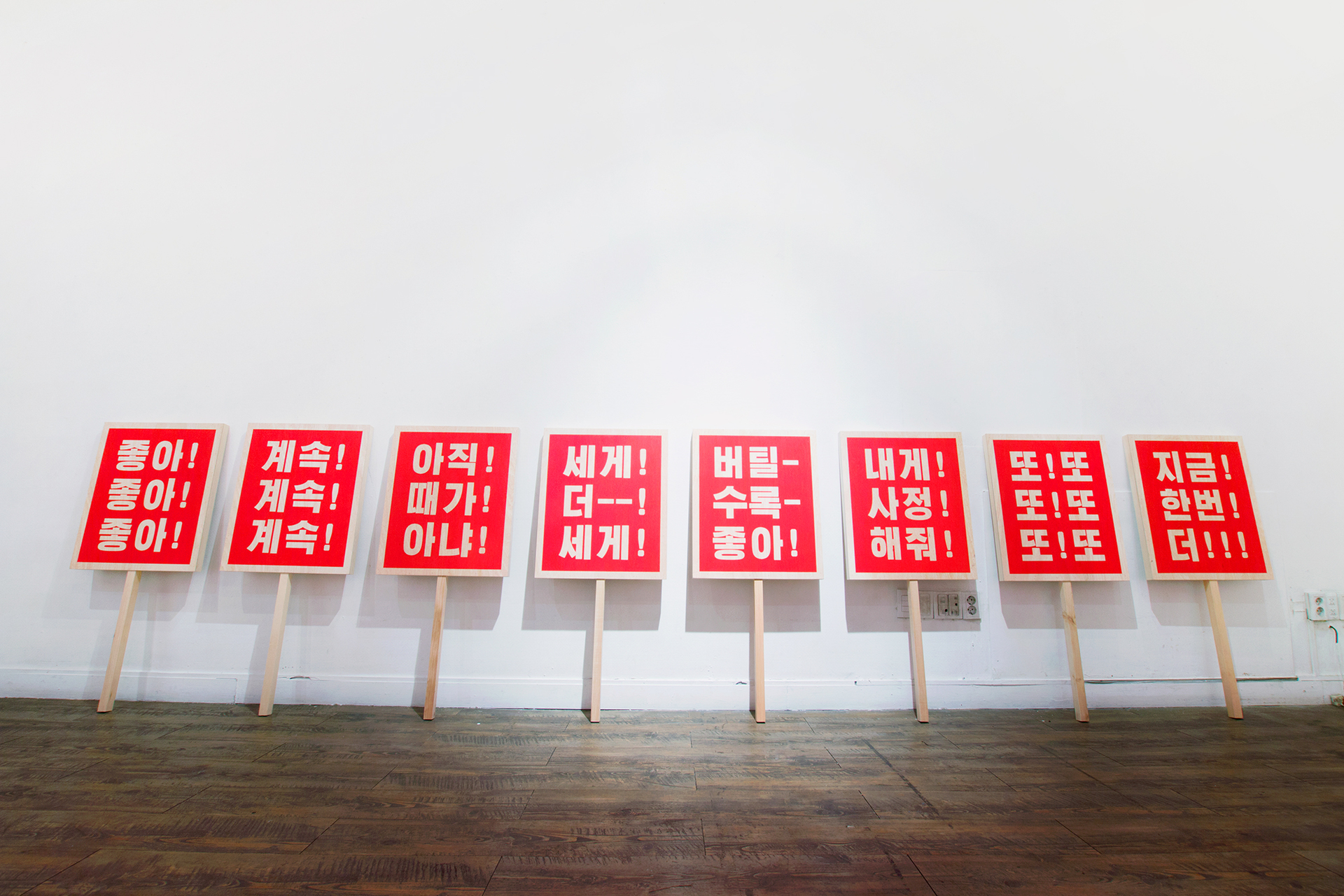
The artist’s interest in “usefulness” was also used in the exhibition promotional postcard. Knowing that most viewers easily throw away exhibition promotional postcards after receiving them for free, she made a “useful” invitation card that also functions as a 20 cm ruler by using thick laminated paper instead of a standard-sized postcard.

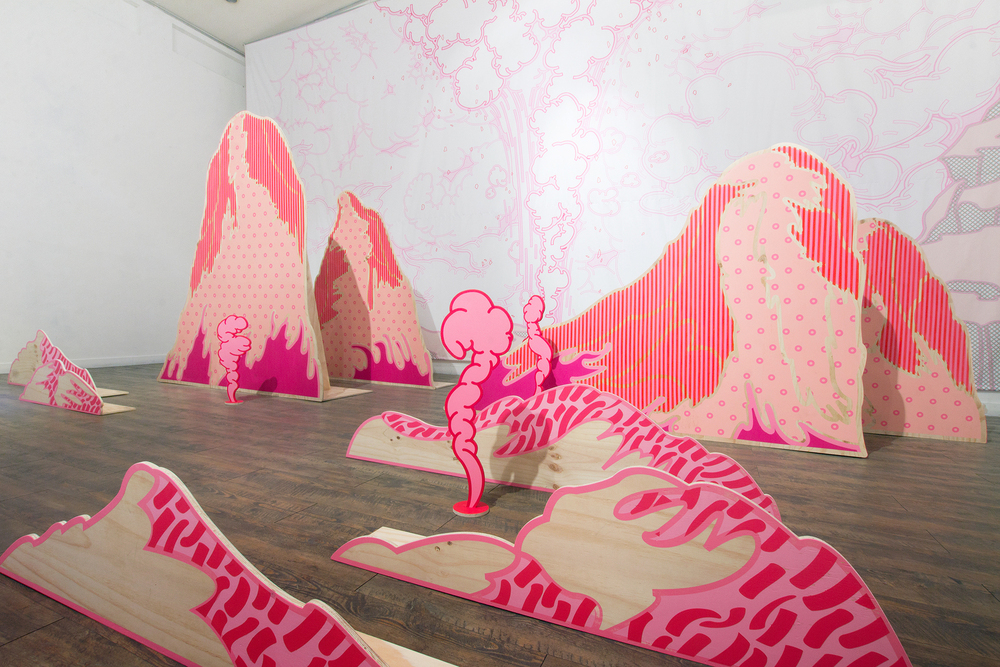
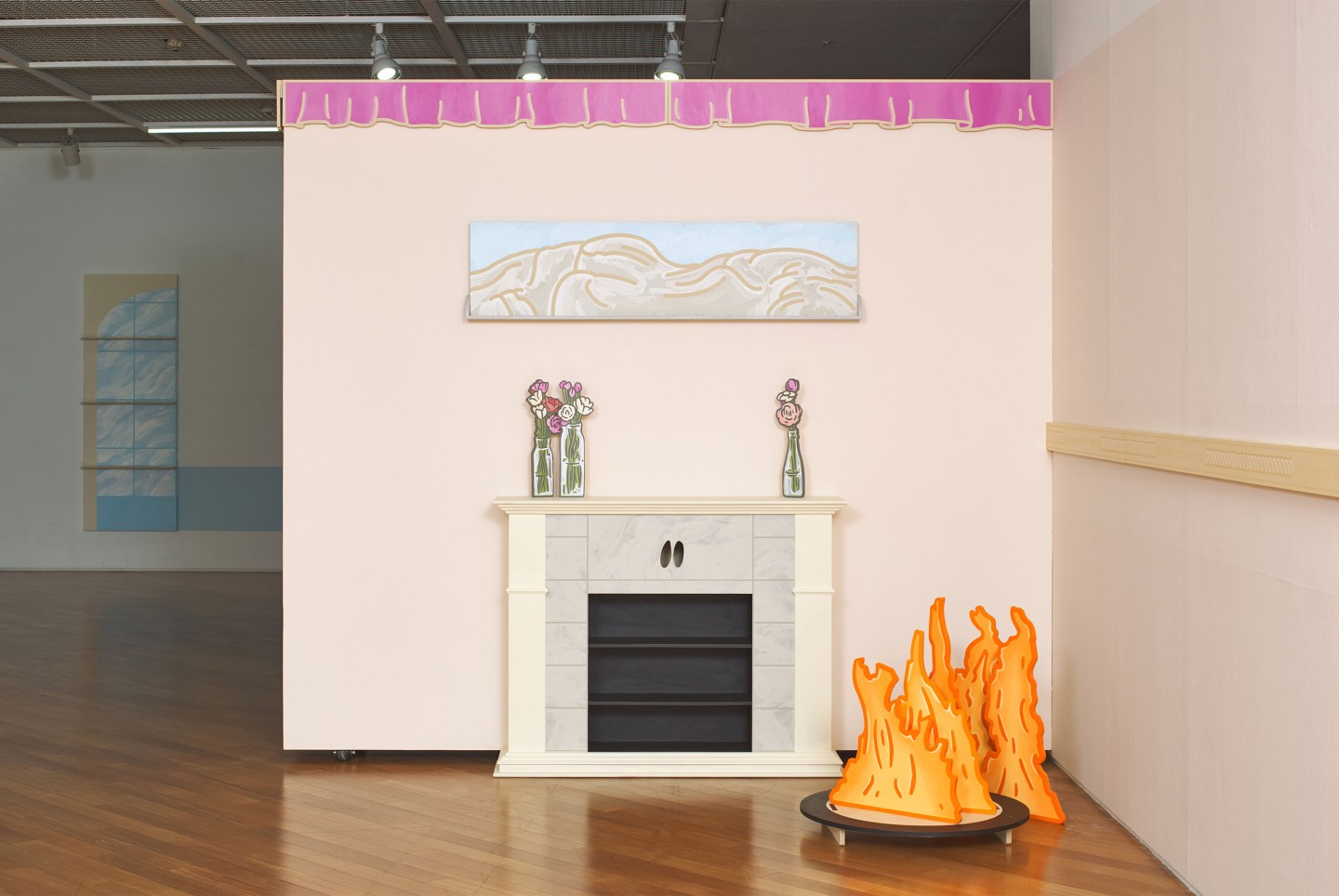
Viewers come to look at the works while walking between the furniture-objects. Lee Mijung exhibited her fake-furniture-objects together with props in order to make them appear even more real. Throughout the exhibition space, viewers can find props reproduced as flat images, such as a bunch of bananas, cake on a plate, a single tulip, a vase, monstera, and plaster casts.

Looking at the cute props, viewers smile quietly and stay in the exhibition space a little longer. The viewer, the only real being inside the exhibition space, is the final part of the work that completes the exhibition, bringing vitality to the theatrical stage like an actor on a set made of fake furniture.
Text. Choi Jeongyoon(Independent Curator)

References