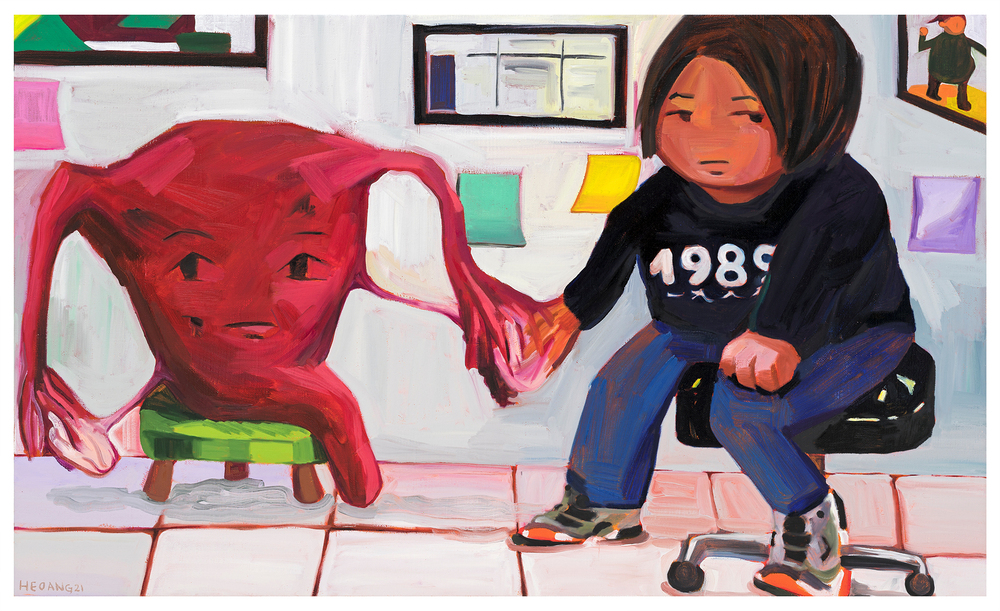
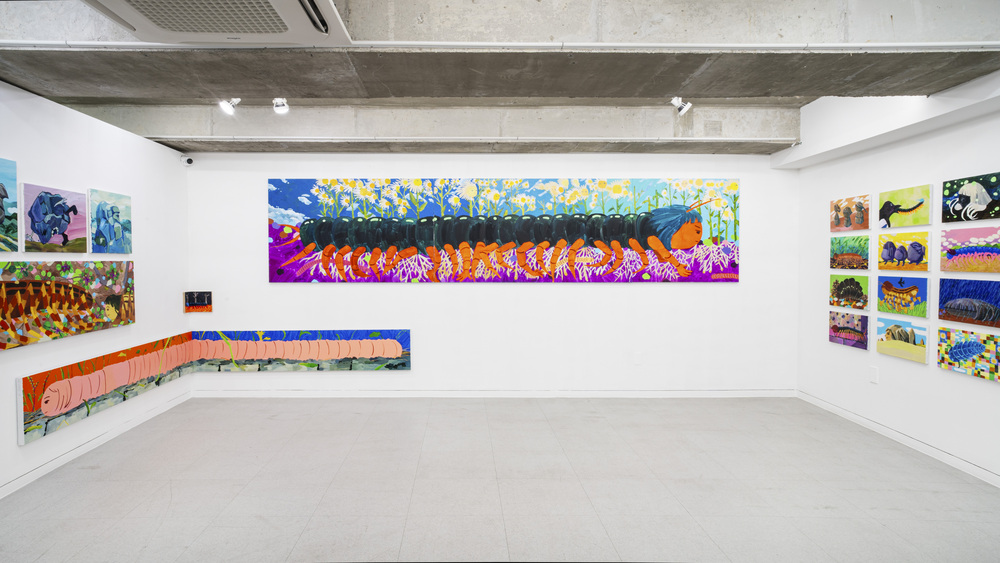
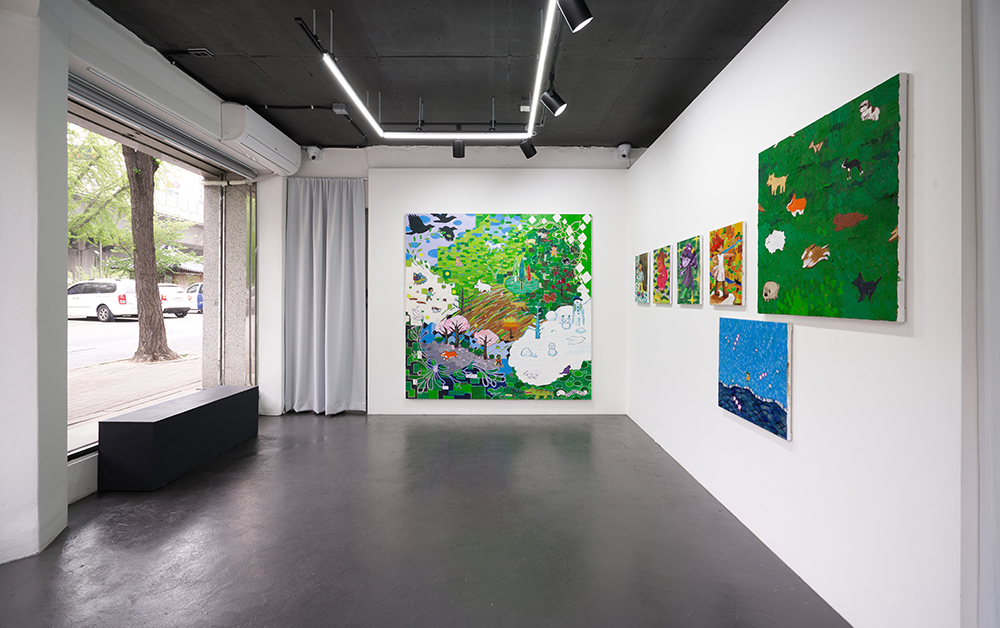
Heoang Kim’s “doing mother” does not precisely take aim at the optimism advocated by reproductive futurism. To a mother raising a child, sounds such as “future,” “hope,” and “humanity” are no more than rainbows that cannot be grasped, just like “self-realization,” “happiness,” and “positivity.”
This is because the very attempt to acknowledge and embrace a situation in which one must stake everything on the present moment of raising a child would already be an act of rewriting the history of an individual who has passed. To confront the imbalance between life before marriage, which could be faithfully verbalized without difficulty in social-structural, institutional, and normative terms, and the entirely different life after pregnancy, mobilizes an impact comparable to the world being turned upside down.
As Barbara Ehrenreich pointed out regarding positivity, if the ideological clothing for the social responsibility that this society thrusts upon mothers does not fit the body no matter how hard one tries, one need only reject it. Of course, it must also be noted that the effects of such negativity may mobilize madness, mental illness, depression, and murder.
In reality, many women have gone mad, died, or killed after giving birth to children. Charlotte Perkins Gilman’s 『The Yellow Wallpaper』 features a woman suffering from depression. In a situation where she is confined to a room and prevented from doing anything according to the diagnosis and prescription of her husband, a doctor, the protagonist becomes obsessed with the wallpaper.
Gripped by the compulsion that women are trapped behind the wallpaper’s strange patterns, the protagonist tears the wallpaper and crawls on all fours. Crawling over her husband, who has collapsed from shock at the sight, she says, “I’ve got out.”
In fact, this work was written based on the author’s own experience of suffering from postpartum depression. As a prescription for postpartum depression, the author was forced to undergo “rest cure,” which limited intellectual activity to within two hours and compelled her to take absolute rest. The fact that the prescription for postpartum depression was confinement disguised as rest is quite ironic.
Even without such a prescription, most childcare entails isolation, confinement, and mental paralysis. In this sense, a Renoir-style painting of a dressed-up mother and a child lying in a cradle enjoying a picnic on a grassy field full of sunlight and lush greenery is as harmful as the women’s magazines that stimulate desire for bourgeois family life.
The more such paintings circulate, the more it is concealed that many women lose the freedom to go outside while raising children. What about Kim Jiyoung, Born 1982, Kim Jiyoung went mad while giving up her career to raise a child.
In fact, when confronting the reality of childcare, the psychological shock women experience is closer not to Kim Jiyoung, who goes mad prettily to the extent of speaking nonsense in order to arouse pity in the audience, but to the figure tearing off wallpaper and crawling on all fours.
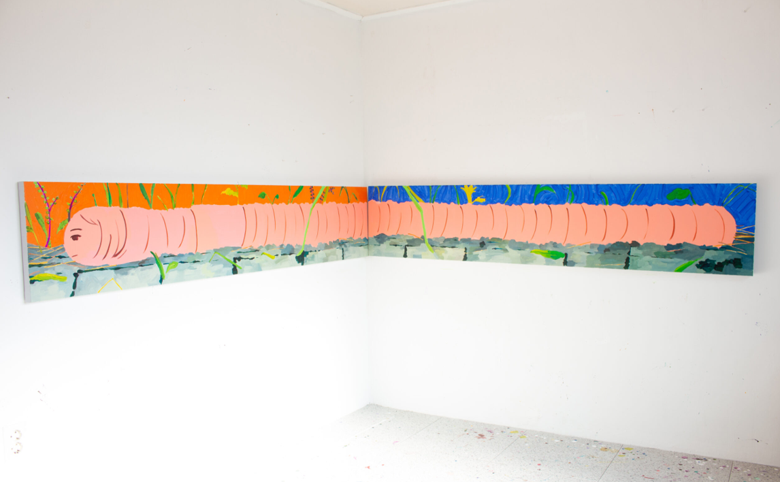
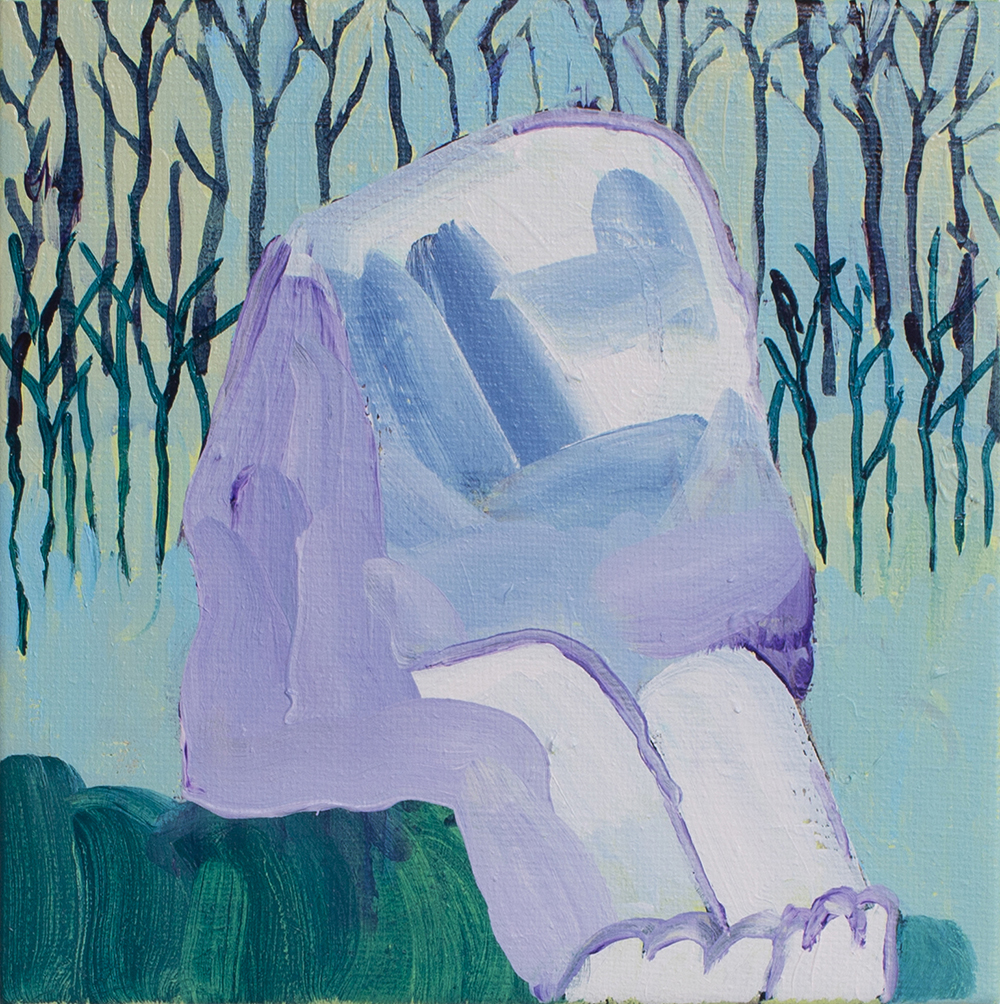
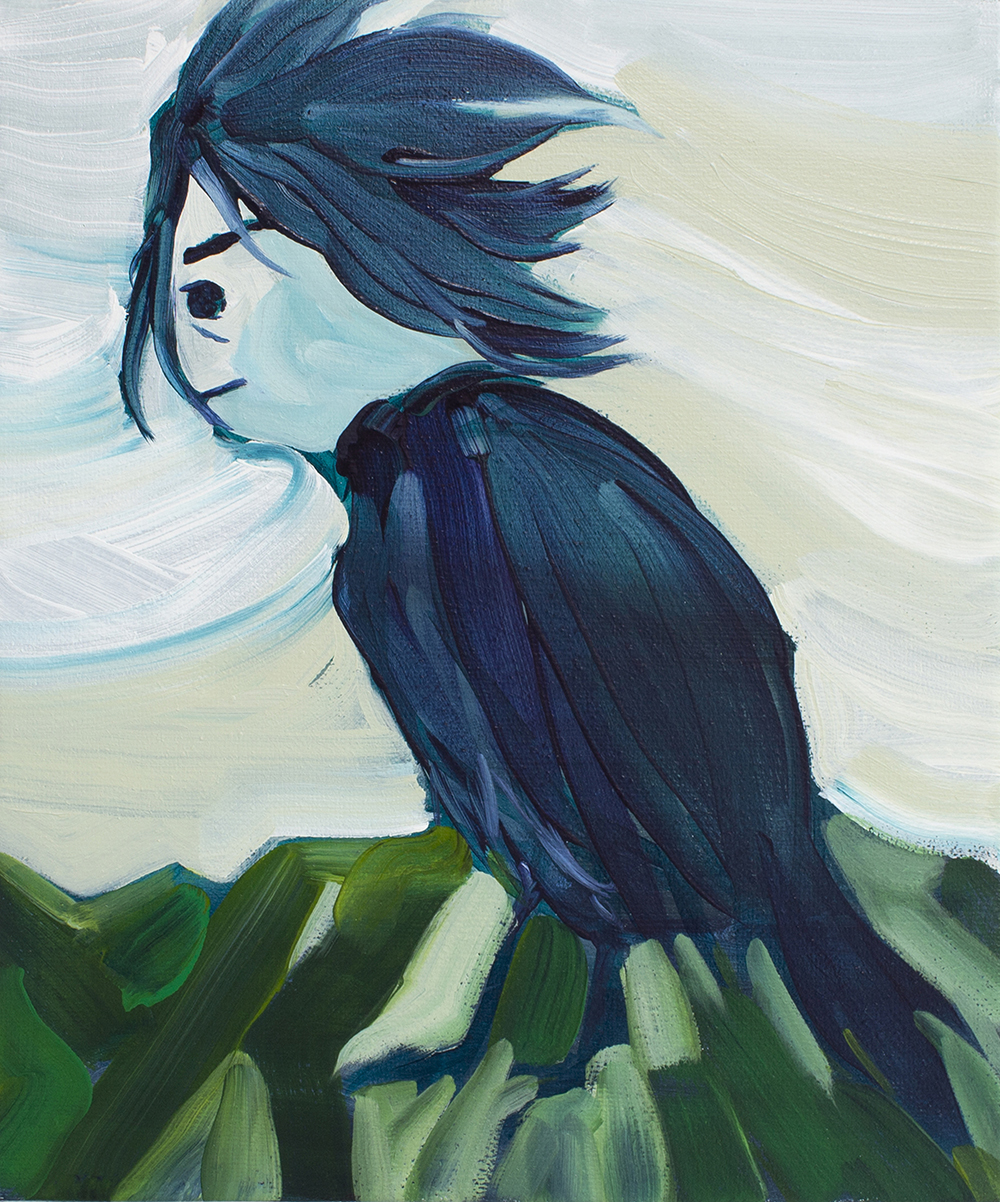
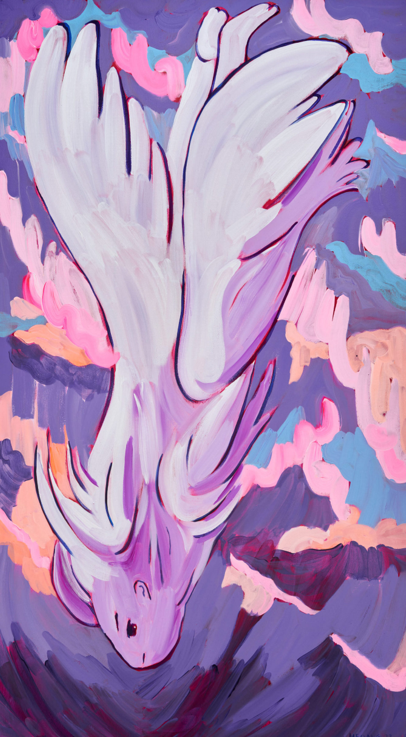
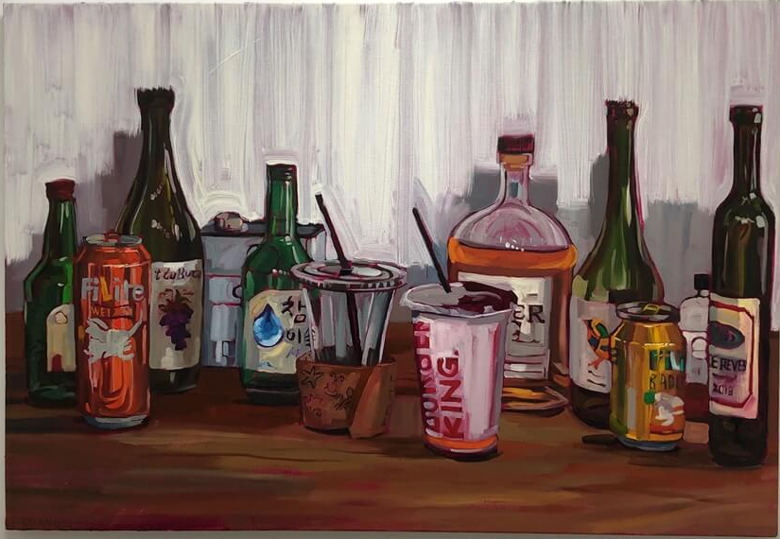
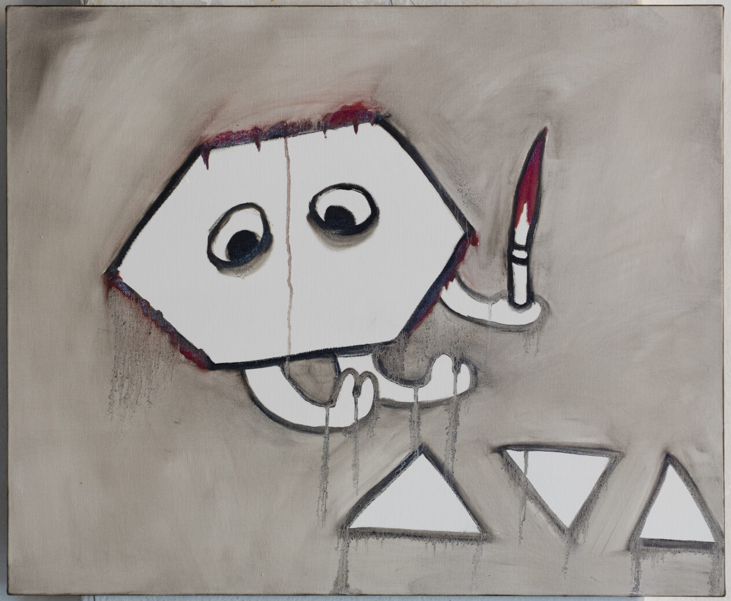
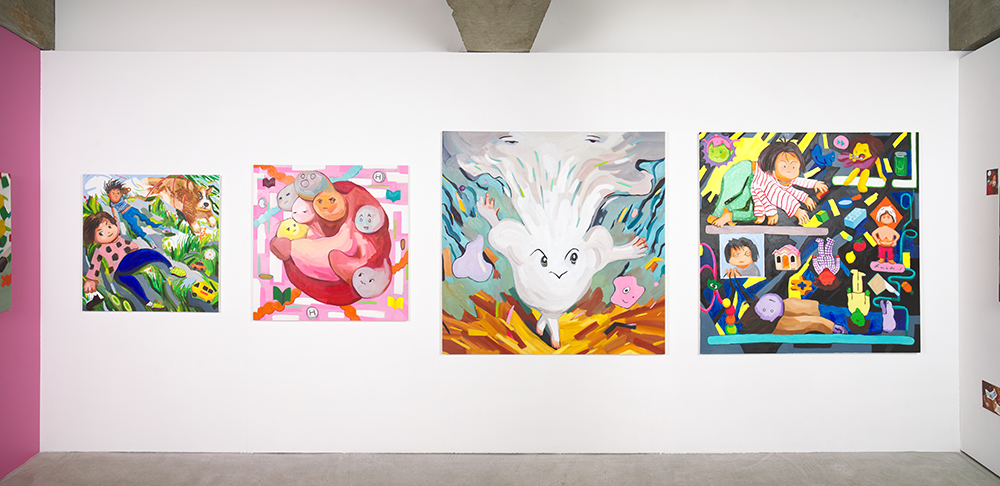
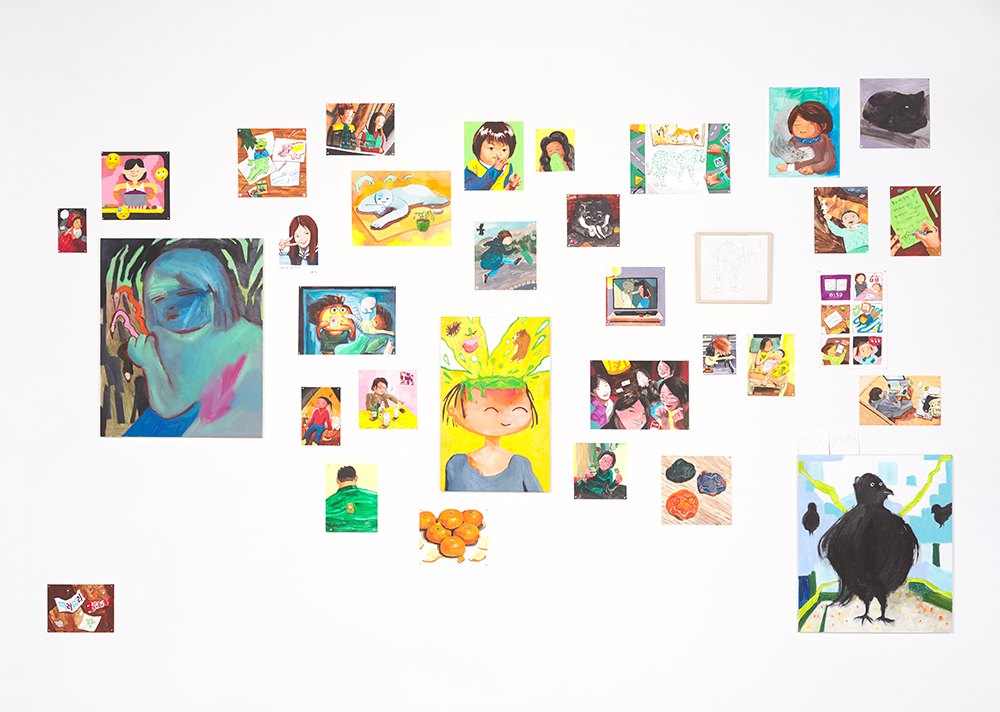
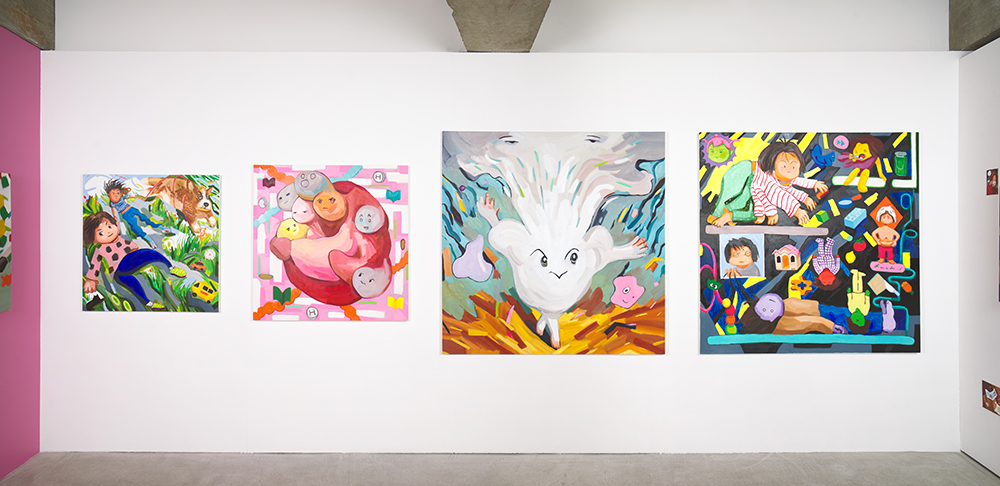
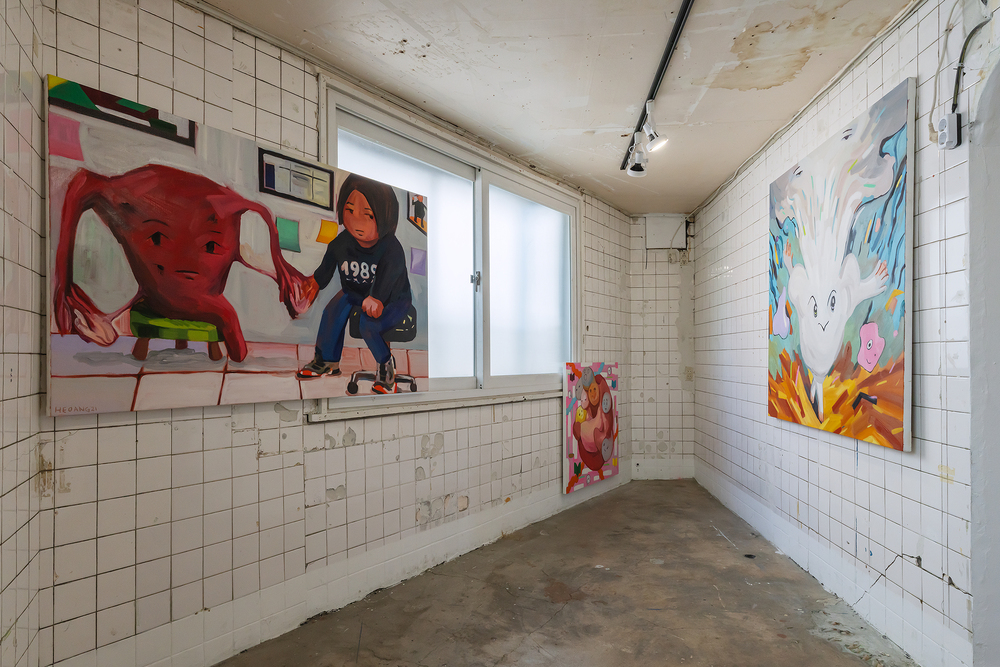
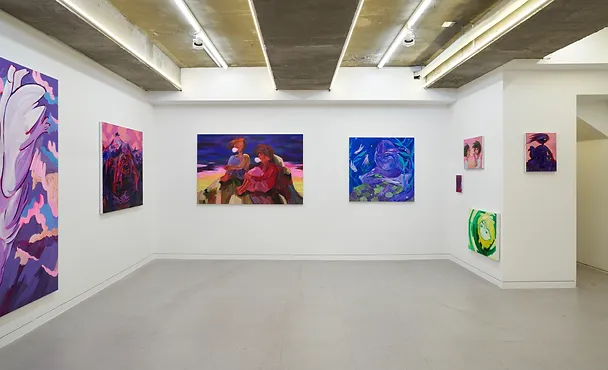
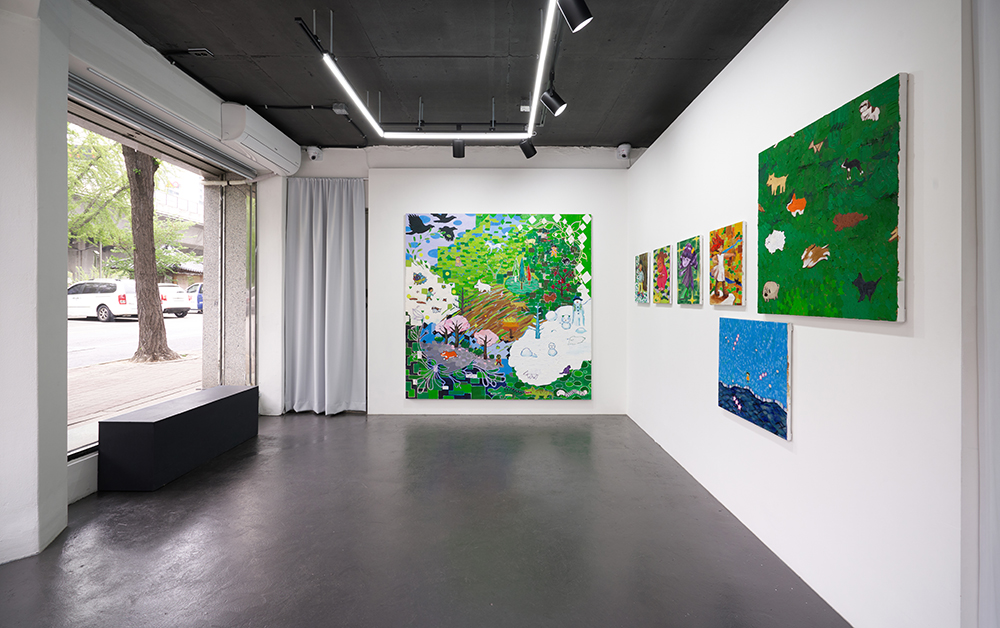
Heoang Kim’s 《mama do》 depicts the everyday life of childcare throughout with an absurd sense of humor and wit, but at the same time, because it is instinctive and manic, one discovers symptoms that emerge from the friction between Ehrenreichian positivity and negativity. One need only look at the figure in The Seething Head Boiled Over and Flew Off with a Bang, who does not lose her smile even at the moment her head flies away.
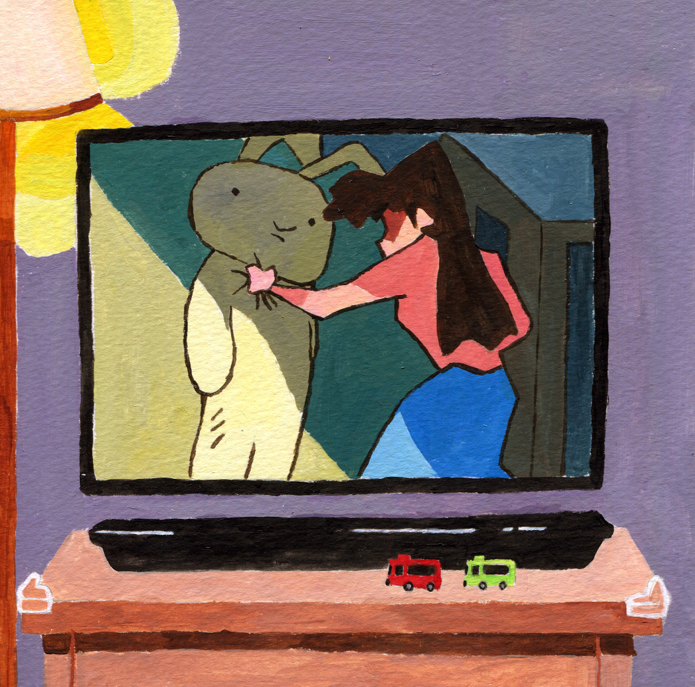
The stretched-out shirt and sparse, falling hair do not feel merely pitiful, perhaps because self-abasement is being performed in the tone of a joke. How is Daily routine, in which she is trapped inside a game console2) and endlessly cleans up the toys scattered by the child, any different from 『The Yellow Wallpaper』? I imagine Heoang Kim—gloomily looking at her sagging belly, her complexion yellow, purple, or even green, and usually sprawled out—making a mischievous face and saying, “I’ve got out (of the childcare game).”
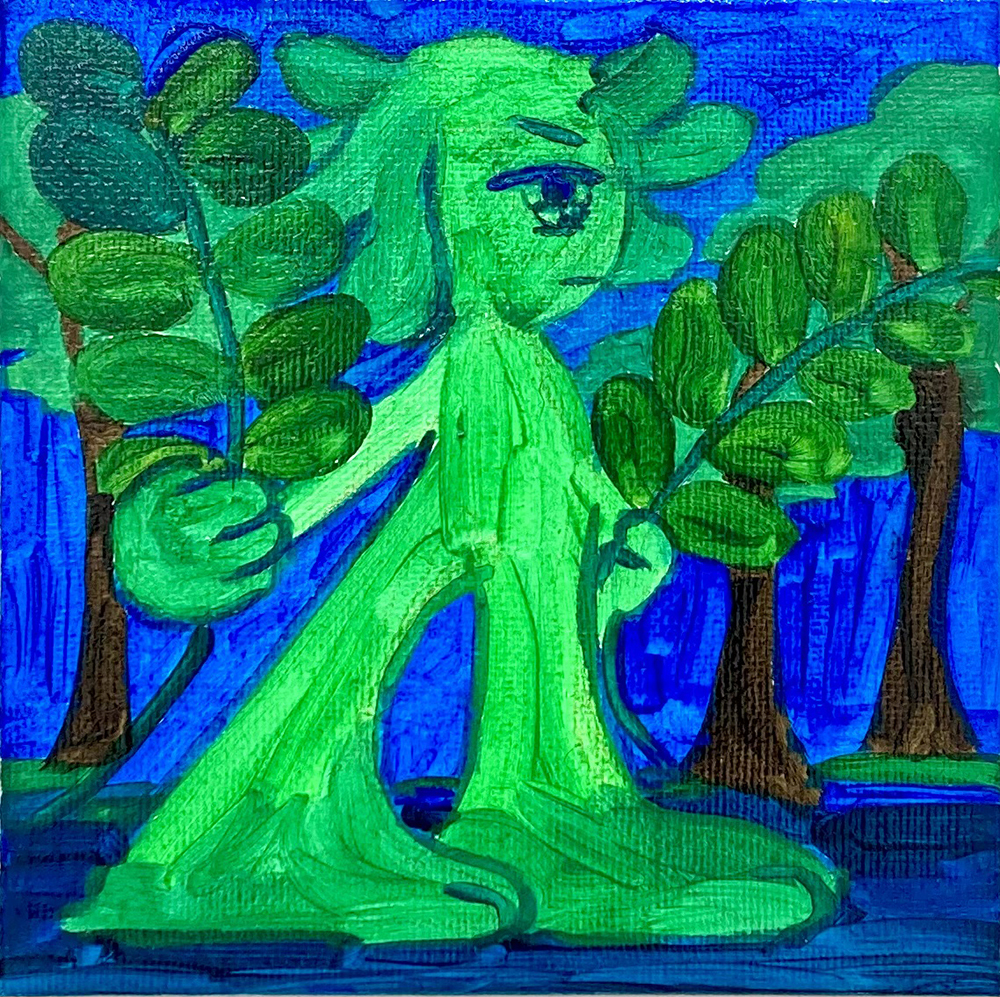
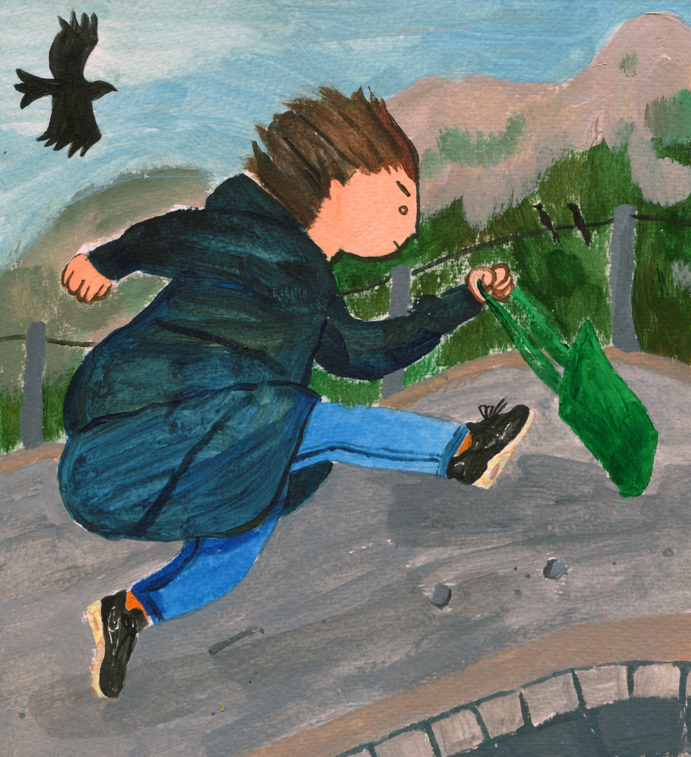
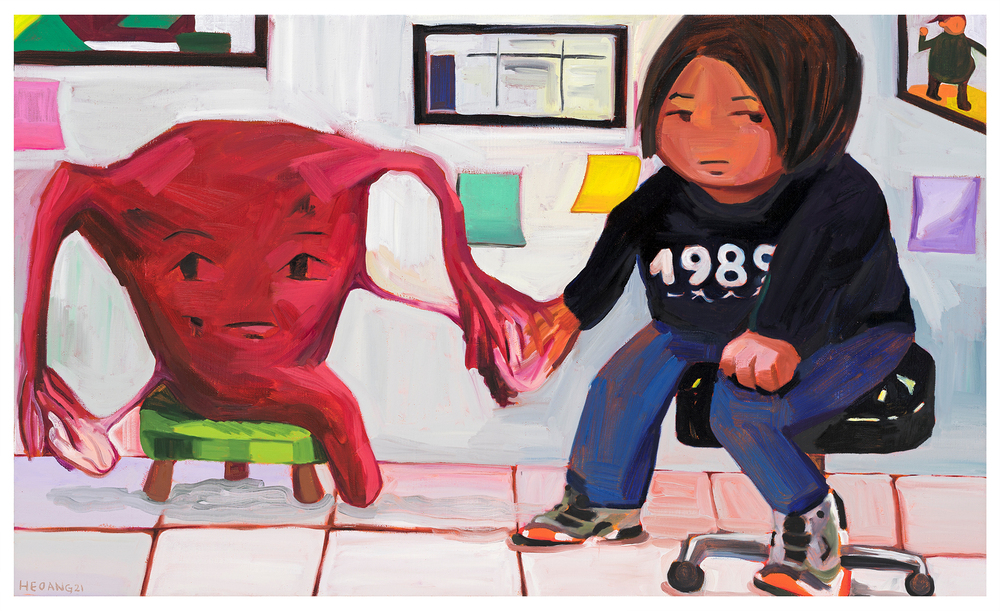
Heoang Kim, born in 1989, is flowing down instead of going prettily mad like Kim Jiyoung. In A Walk in Midsummer, which is by no means as fresh as a Renoir-style painting, Heoang Kim becomes liquid and flows. In fact, Heoang Kim has also said that she feels childcare “liquidly.” The everyday life of childcare is damp, sticky, or flowing down, like the child’s excrement or saliva, the mother’s breast milk, the constantly runny nose from repeated colds, the sweat-soaked baby hair, and the mother’s drooping T-shirt.
“Doing mother” is non-fixed in that it accompanies a transition into an individual narrative that is by no means linear, an everyday life of intrusion and overflow that cannot remain in a single state, and an inconsistent self unable to focus on one thing because of repeated ruptures and transitions. It is confusion itself, and it is living in a liquid state where the norms and boundaries of identity have disappeared.
If women’s art of the past mainly depicted the self of “doing mother” through a gaze that autisticly looked inward, Heoang Kim instead chose to expose that confusion as comedy. The representation of the housewife who sits alluringly beside a cradle reading a book or maintains a leisurely smile is no different from a still life. Into the space of the housewife, taxidermied like a still life enclosed within a closed frame, Heoang Kim appears like a cartoon character and flashes a grin.
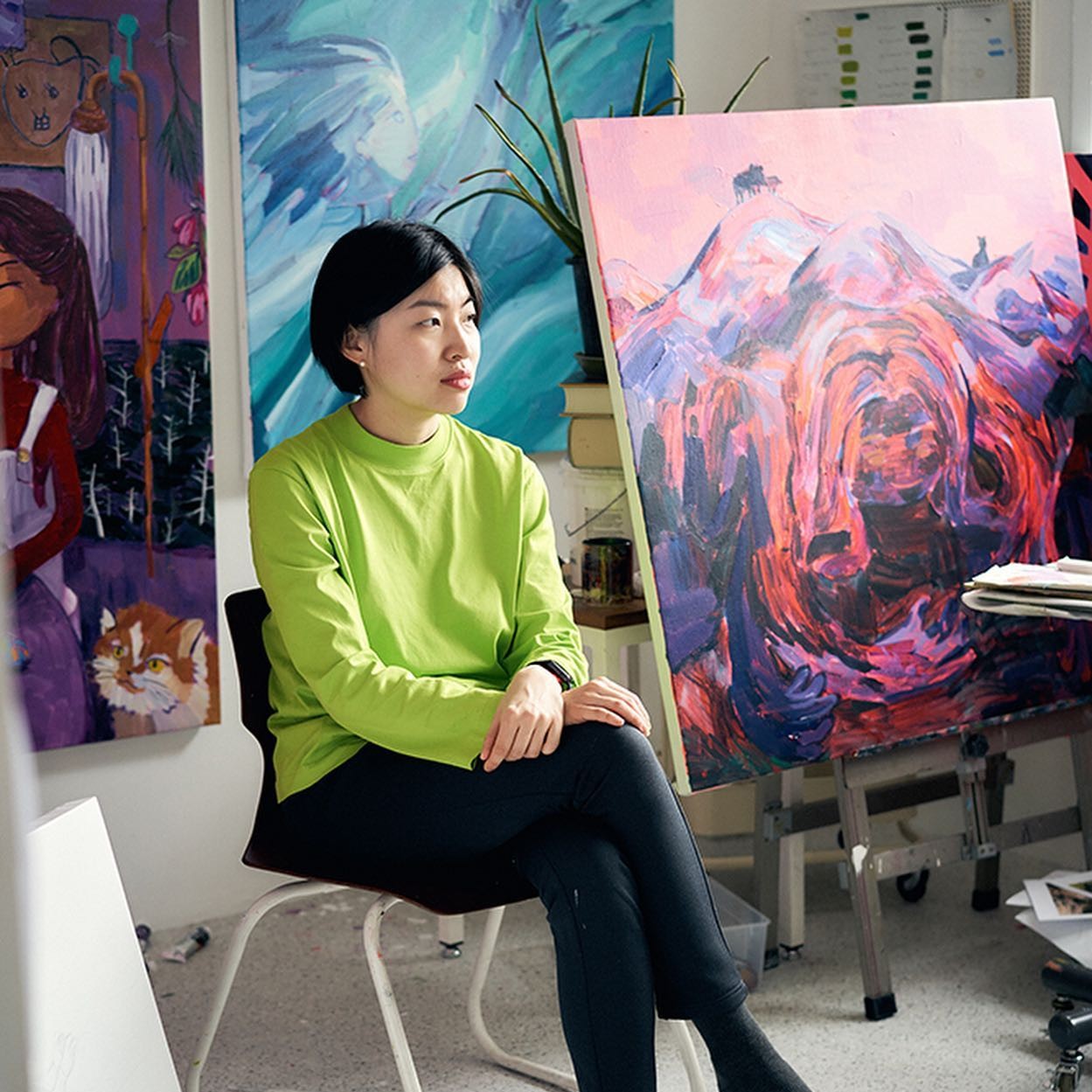
Heoang Kim rejects the image of “doing mother” as something consumed within the tolerance of patriarchy and capitalism, and instead testifies to the manic days that accompany “doing mother” like jokes through humor and wit. And she is living on while struggling to return that testimony to her identity as an artist.
The will to invent Heoang Kim as a mother who raises a child from self-processed options—neither as a wise mother and good wife, nor an ajumma, nor the image of a housewife—will ultimately allow the mother named Heoang Kim to live as an artist.
1. Pogung(Chinese characters: 胞宮) is another word for jagung(Chinese characters: 子宮, English: uterus). In everyday life, the word jagung is used far more often than pogung, and the official medical term is also jagung. However, there is a movement to use the word pogung in order to avoid the character ja, meaning son, in jagung.
2. The game actually referenced is said to be the game Nugoory.