Heoang
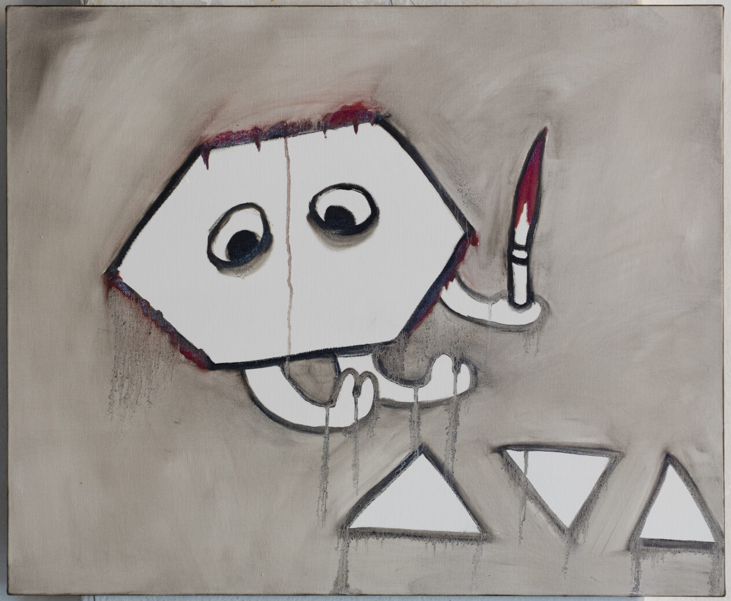
Kim’s work has developed around anxiety toward a future that may never arrive,
the fatigue and incidents repeatedly encountered in reality, and the small
force that nevertheless allows one to keep living. In her first solo exhibition
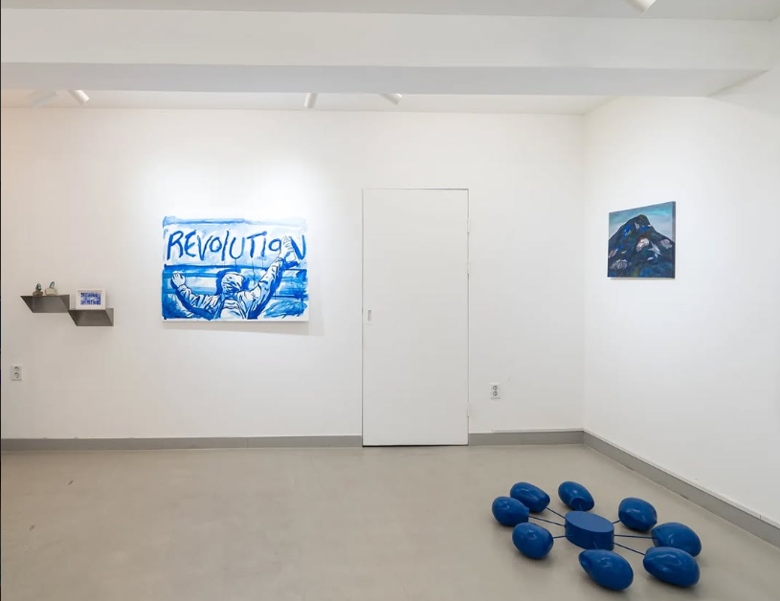
《BAD ENDING ~An Evening When Something Ominous
Could Happen~》(Archive Bomm, 2015), the artist
unfolded, through a drawing-based narrative, the anxiety that the world might
come to an end in the near future as she looked upon a chaotic protest scene.
The figures from this period attempt to escape monotonous everyday life or try
making new choices, but they are ultimately placed within a structure that
returns them to the starting point. Even with the premonition that “nothing
will work out in the end,” the attitude of the figures who weave nets and
sharpen knives anticipates Kim’s distinctive sense of survival, at once
pessimistic and persistent, which recurs throughout her later work.
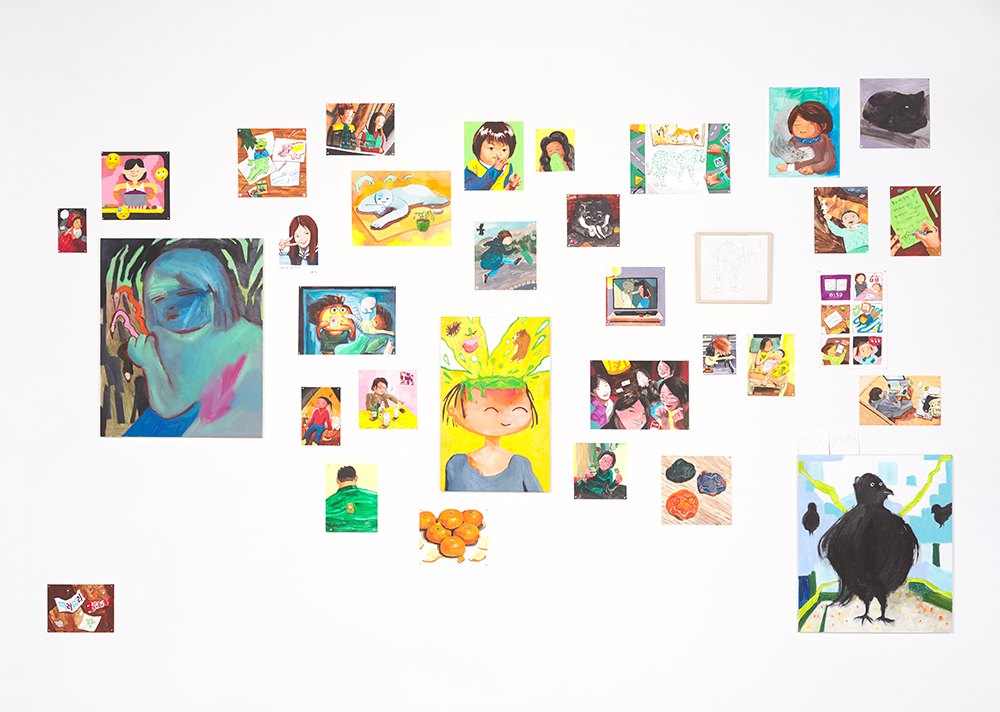
Around the
time of her 2020 solo exhibition 《mama do》(Keep in Touch, 2020), the artist’s
gaze shifted toward the realities of pregnancy, childbirth, childcare, and
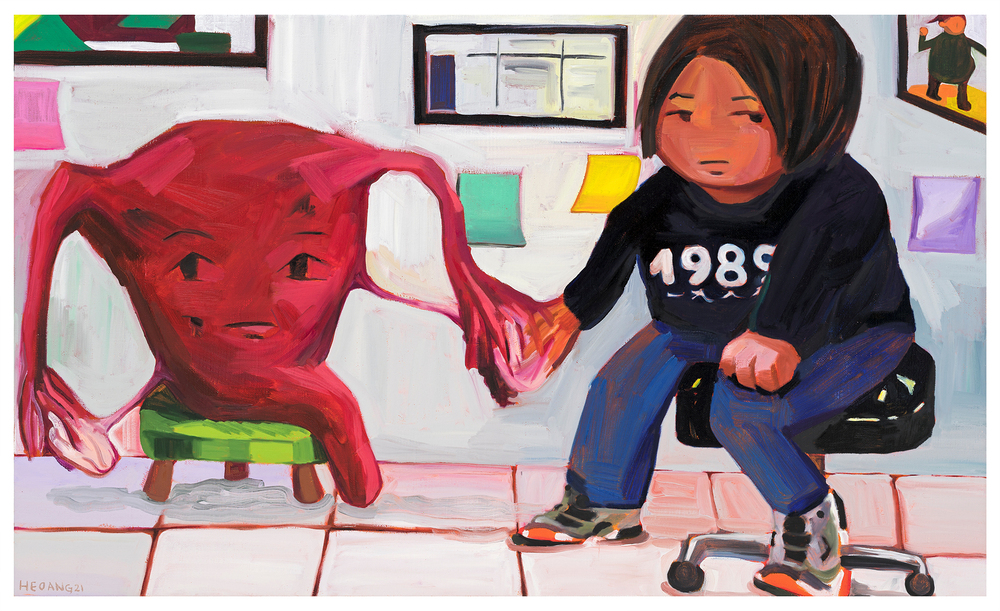
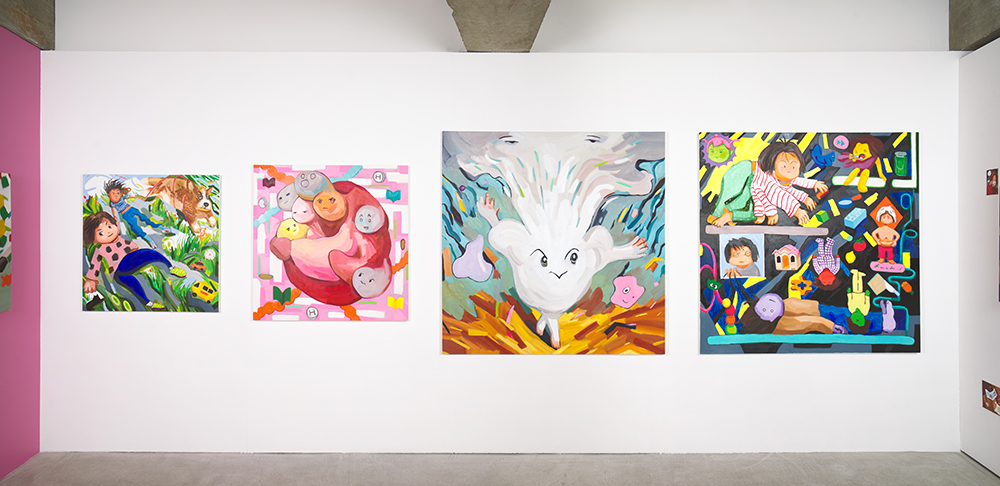
caregiving labor. However, Kim does not idealize “becoming a mother” as a warm
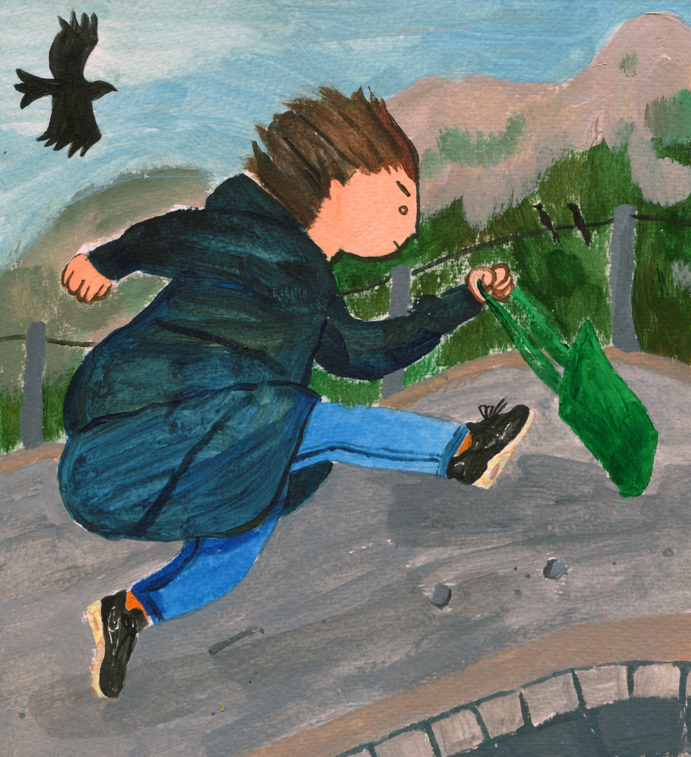
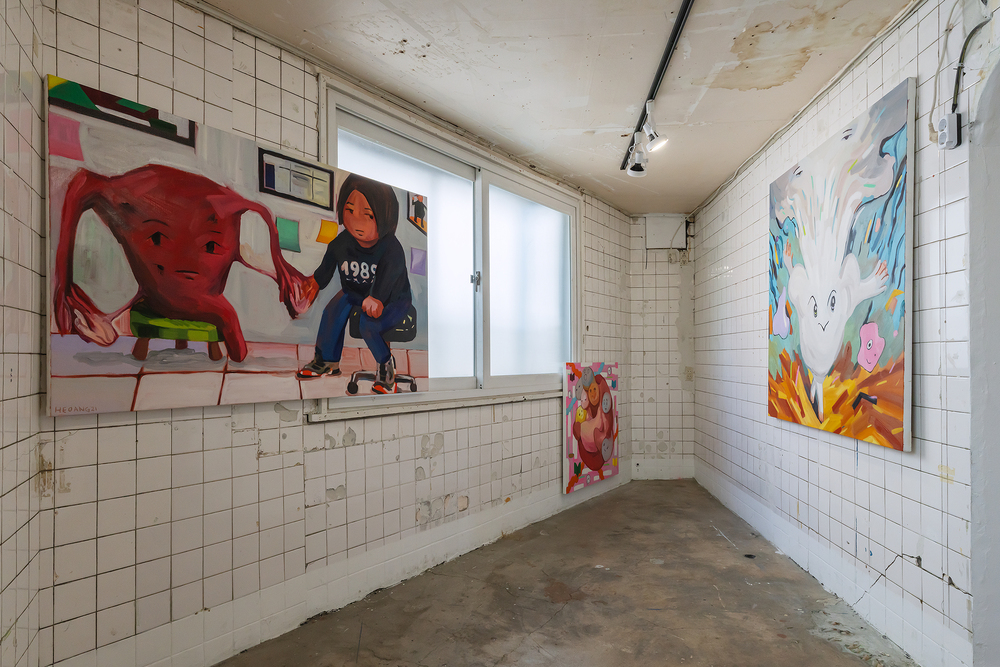
or sublime image. In works such as The Seething Head Boiled Over
and Flew Off with a Bang(2019), Daily
Routine(2019), A Walk in Midsummer(2018),
and I Can’t Sleep(2019), the caregiver is exhausted,
melting down, and trapped in repetitive labor, yet the scenes do not close off
as mere tragedy.
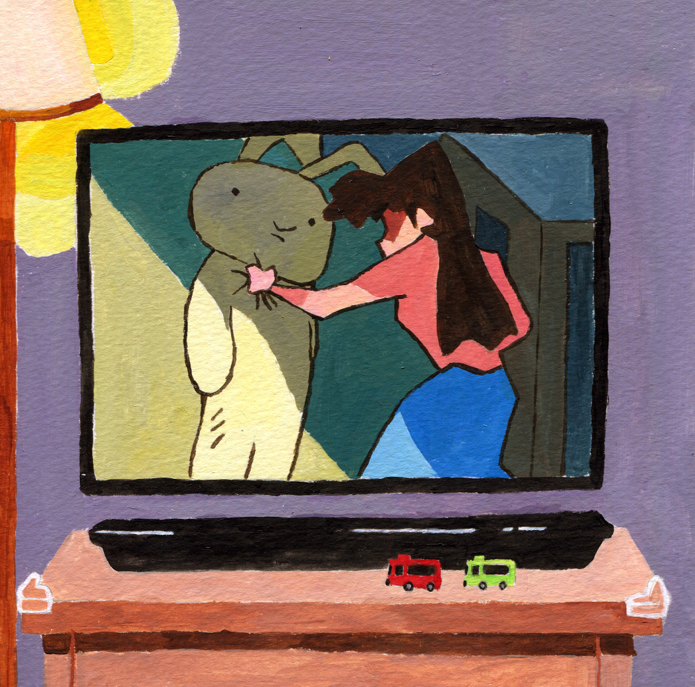
Kim treats the messiness of childcare, changes in the body,
and emotional depletion like black comedy, revealing the actual sensations of
“doing mother” outside the image of motherhood demanded by society. Here,
laughter is not a decoration that covers pain, but closer to a minimal form for
enduring a collapsing everyday life.
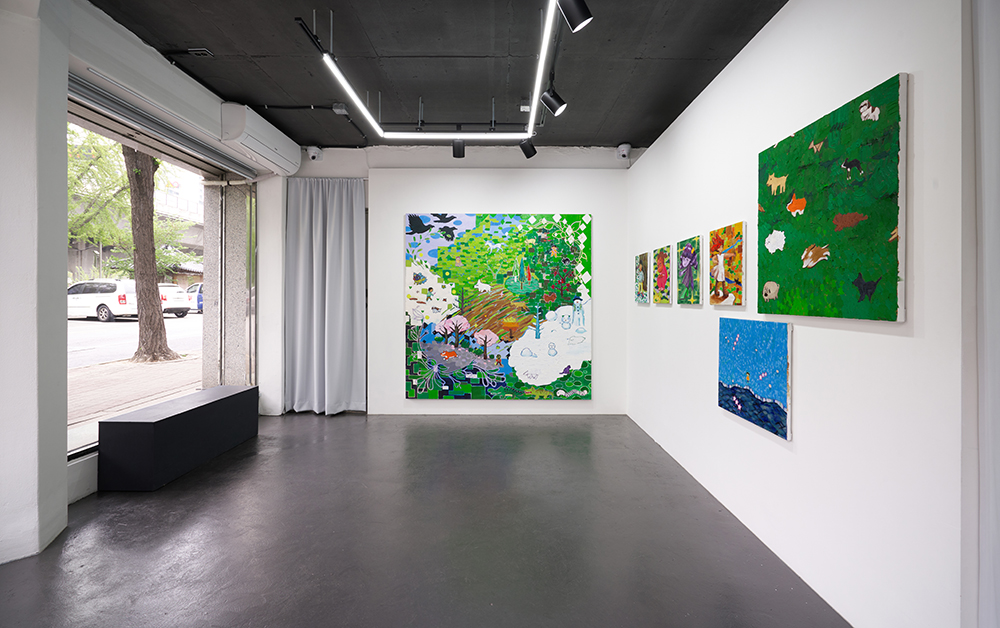
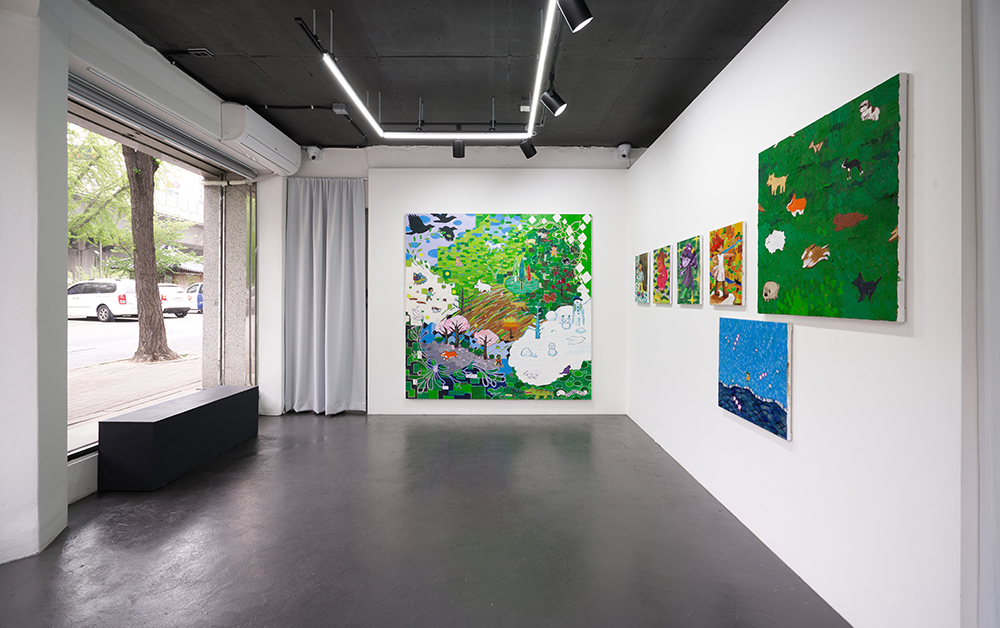
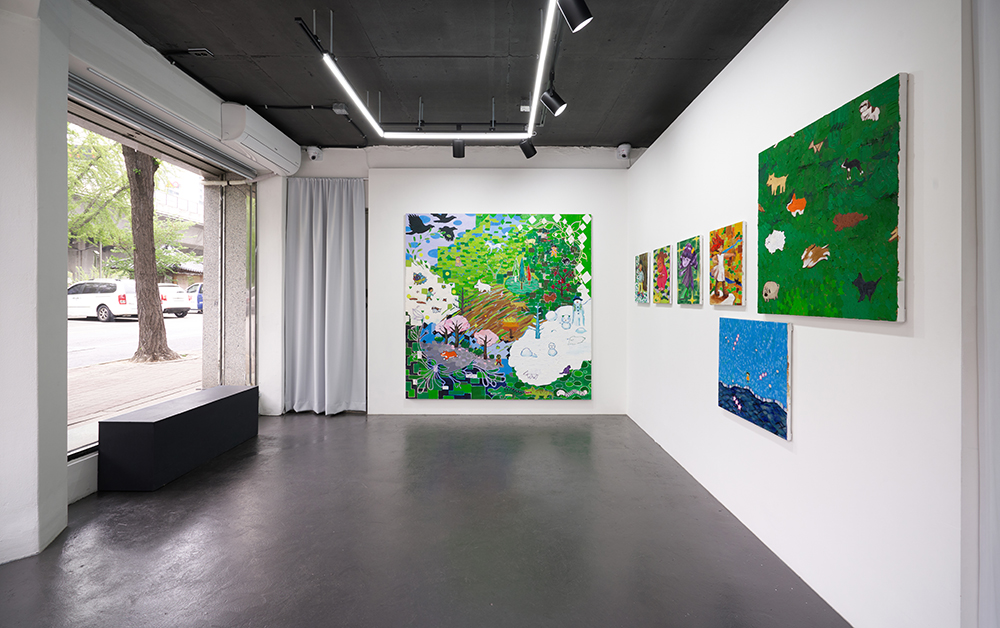
After 《Furry Ways》(Mihakgwan, 2022), Kim’s work
begins from personal everyday life, yet expands into broader time and space
through the worldviews of games and comics. This exhibition, which began with
the death of her companion dog, overlaps an imagined world after death,
memories of childhood games, and nostalgia for a place one cannot
reach. Map of Beyond(2022) evokes both the map inside a
game and the sense of loss in reality through an imagination of “a world one
can access but cannot arrive at.”
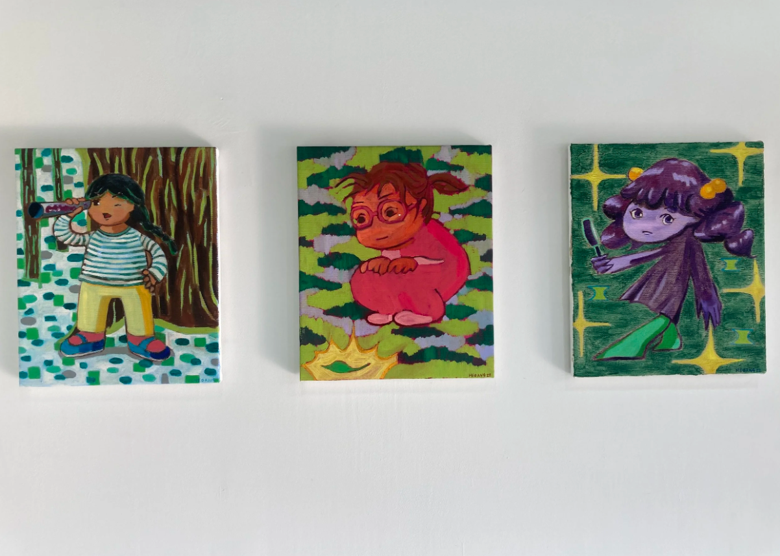
Here, the player figures in the form of
children do not defeat enemies or conquer something, but observe, walk, and
learn the order of the world. This is not a way of solving life like a quest,
but is closer to a way of growing by accumulating sensations within an
uncertain world.
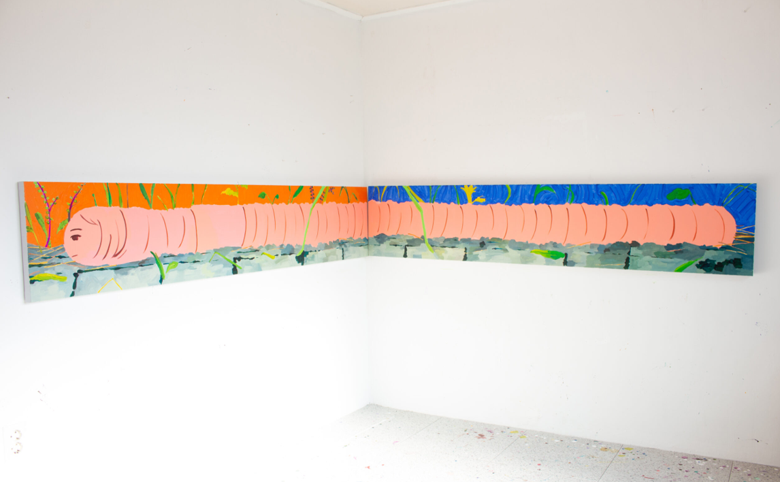
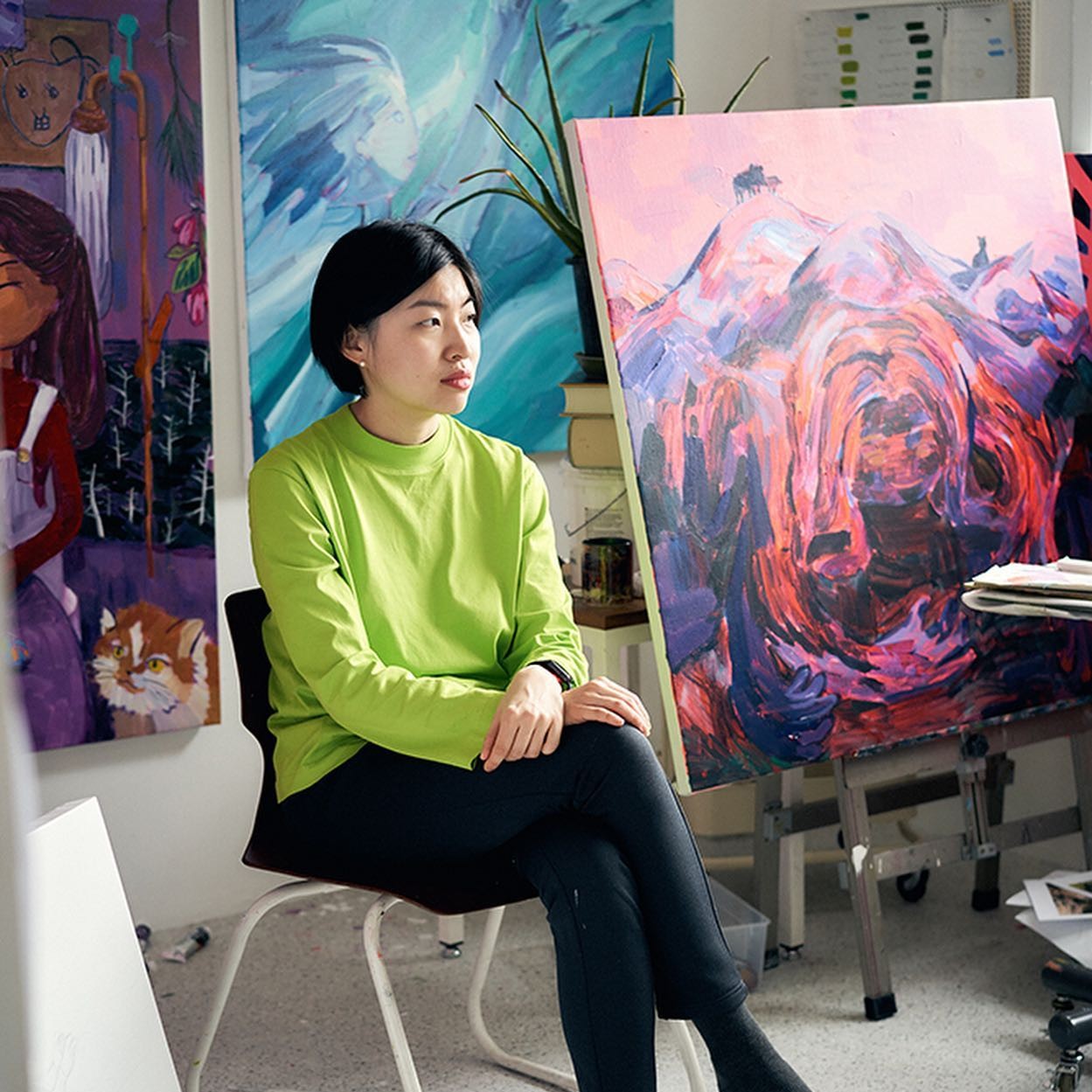
By the
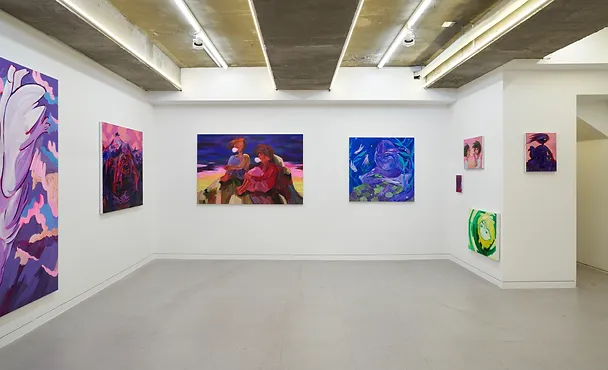
time of 《Please Save My Earth》(Space
Willing N Dealing) in 2023 and 《Dear morning》(Space Willing N Dealing) in 2025, the artist’s concerns move beyond
the experience of motherhood and childrearing toward the Anthropocene, the
climate crisis, and an imagination of a post-human world.
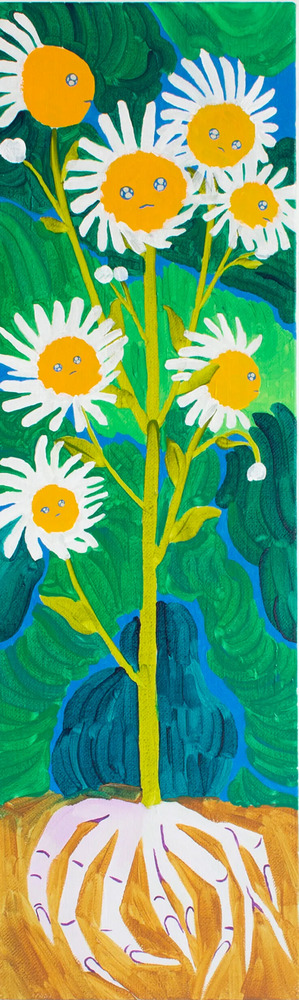
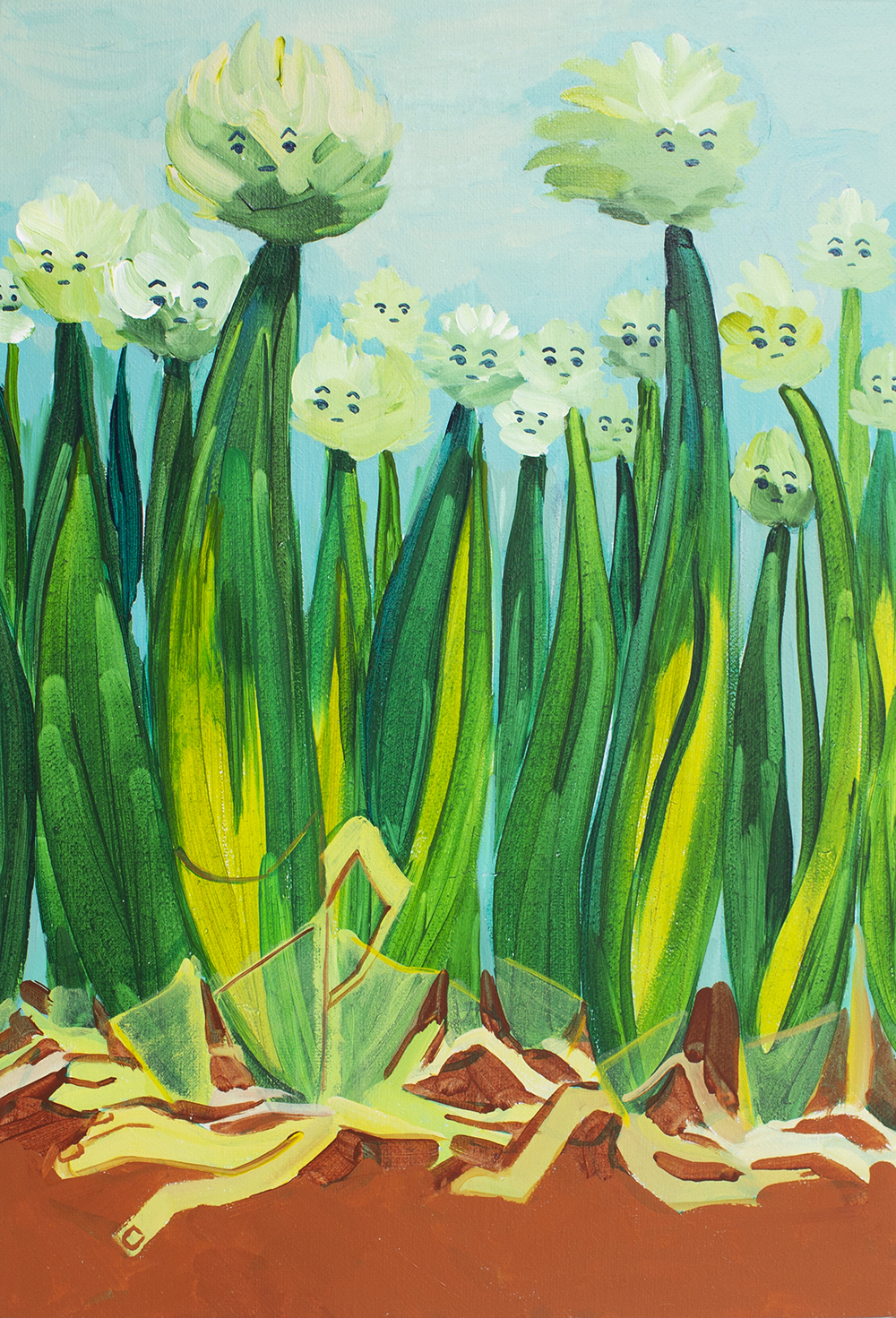
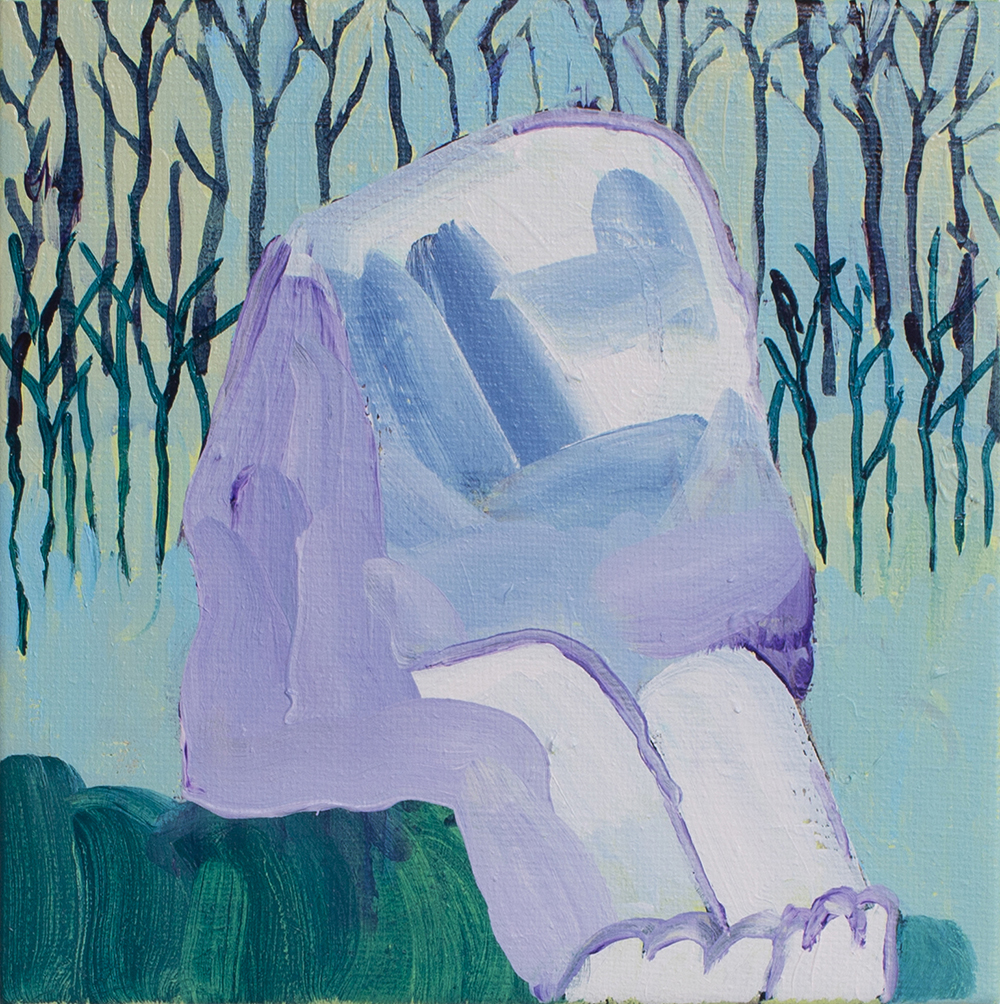
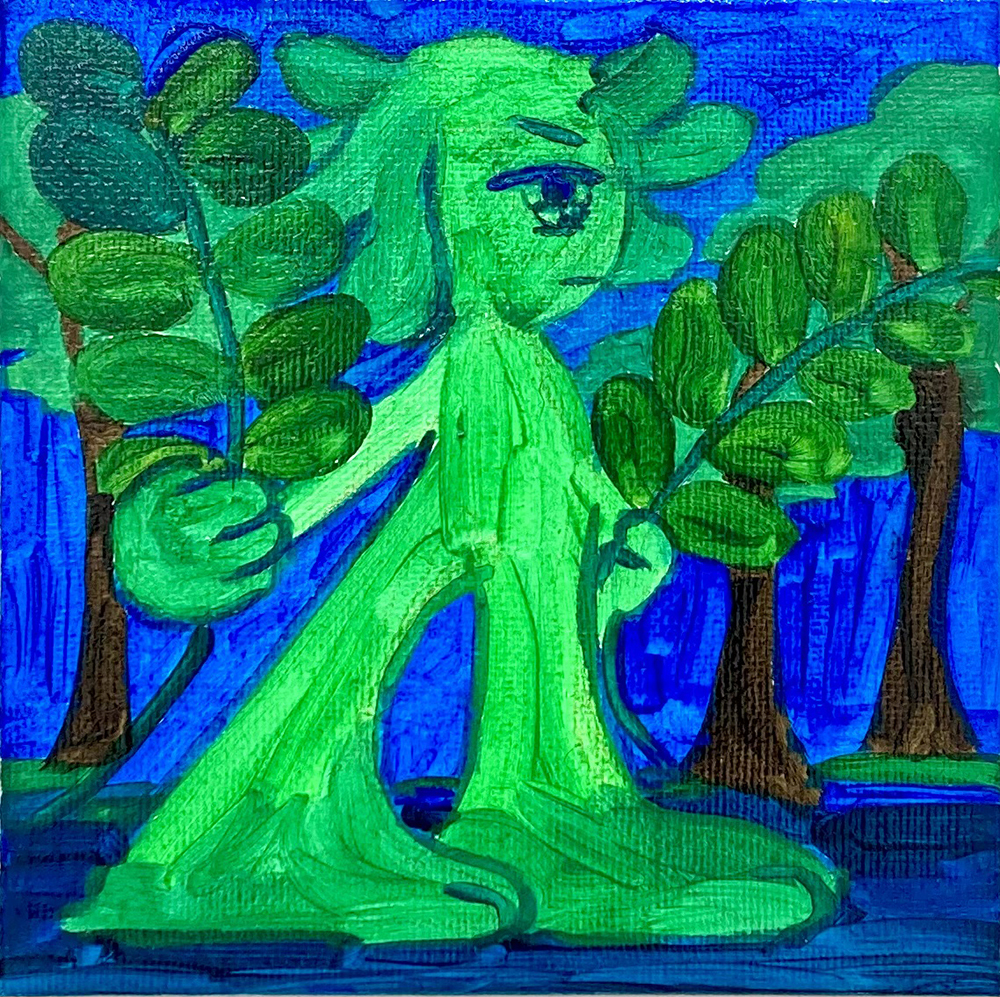
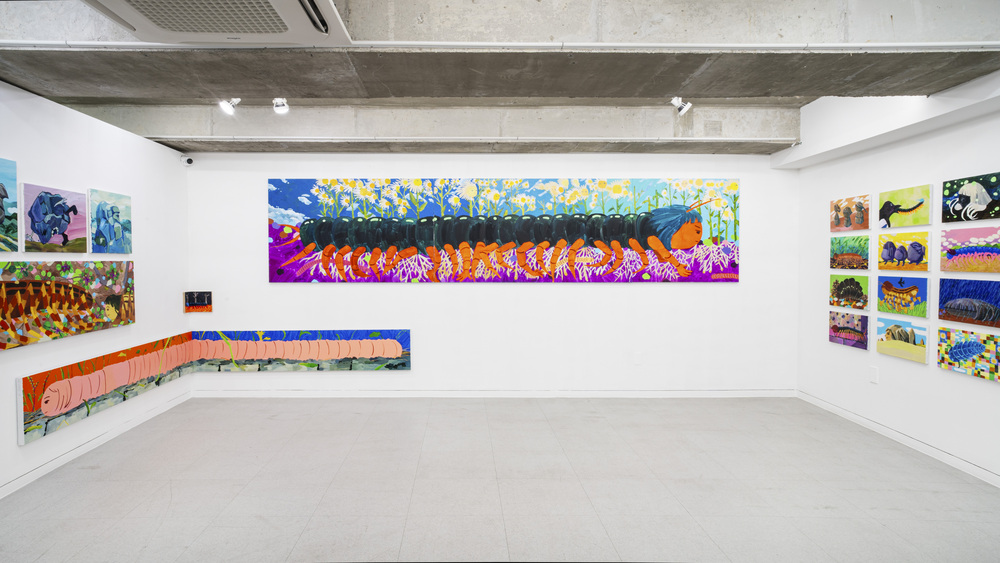
Works such
as Flowers(2023), Dear
Evening(2023), The
Summit(2023), The Octopus Girl(2023),
and Deep Dreams We Shared(2023) create scenes where
adult anxiety and the possibilities of the next generation intersect.
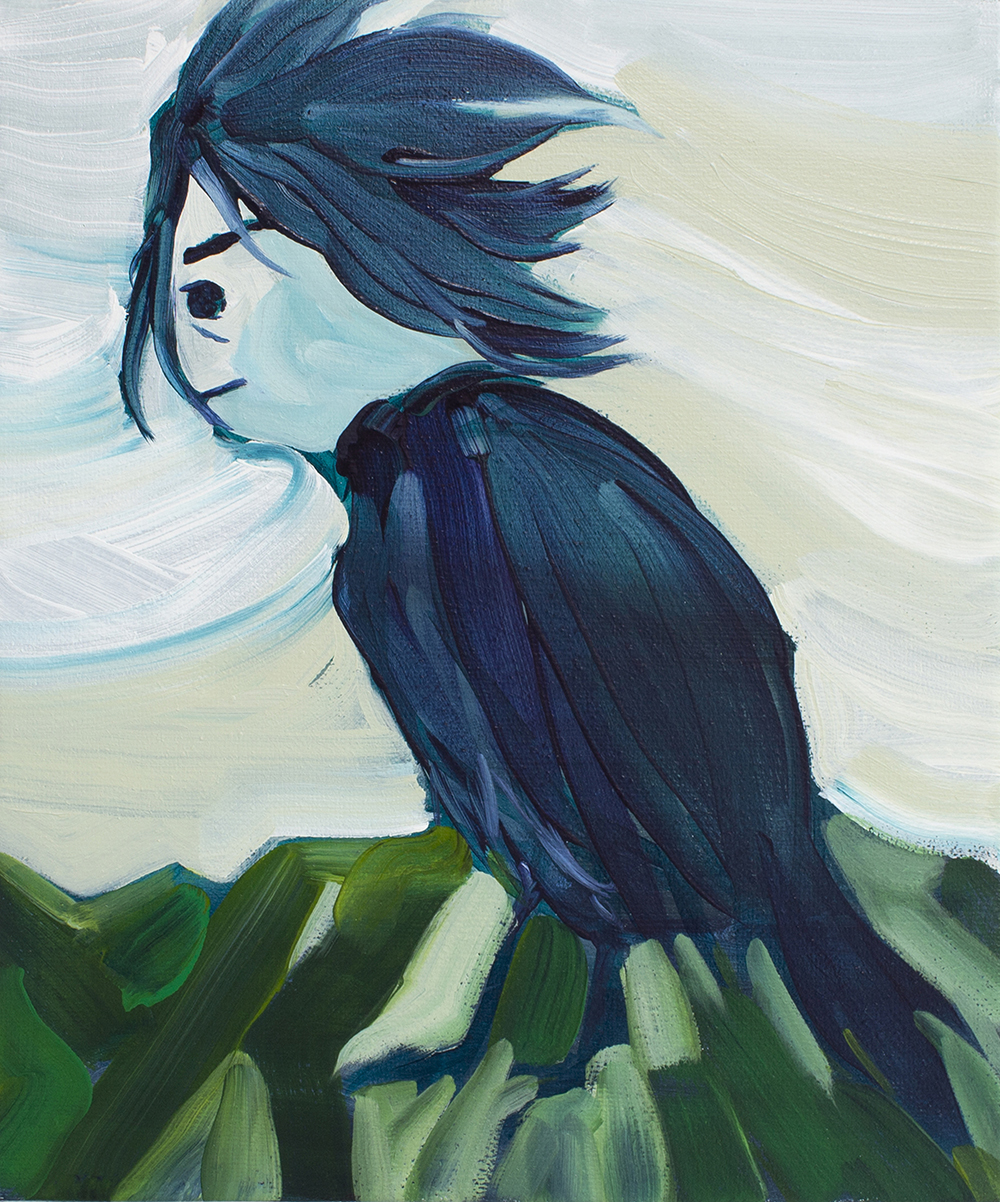
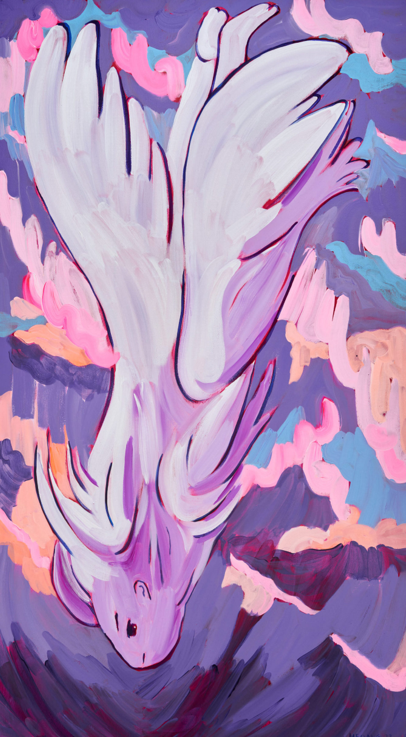
As Kim
states in a recent artist’s note, she imagines a future in which humans can no
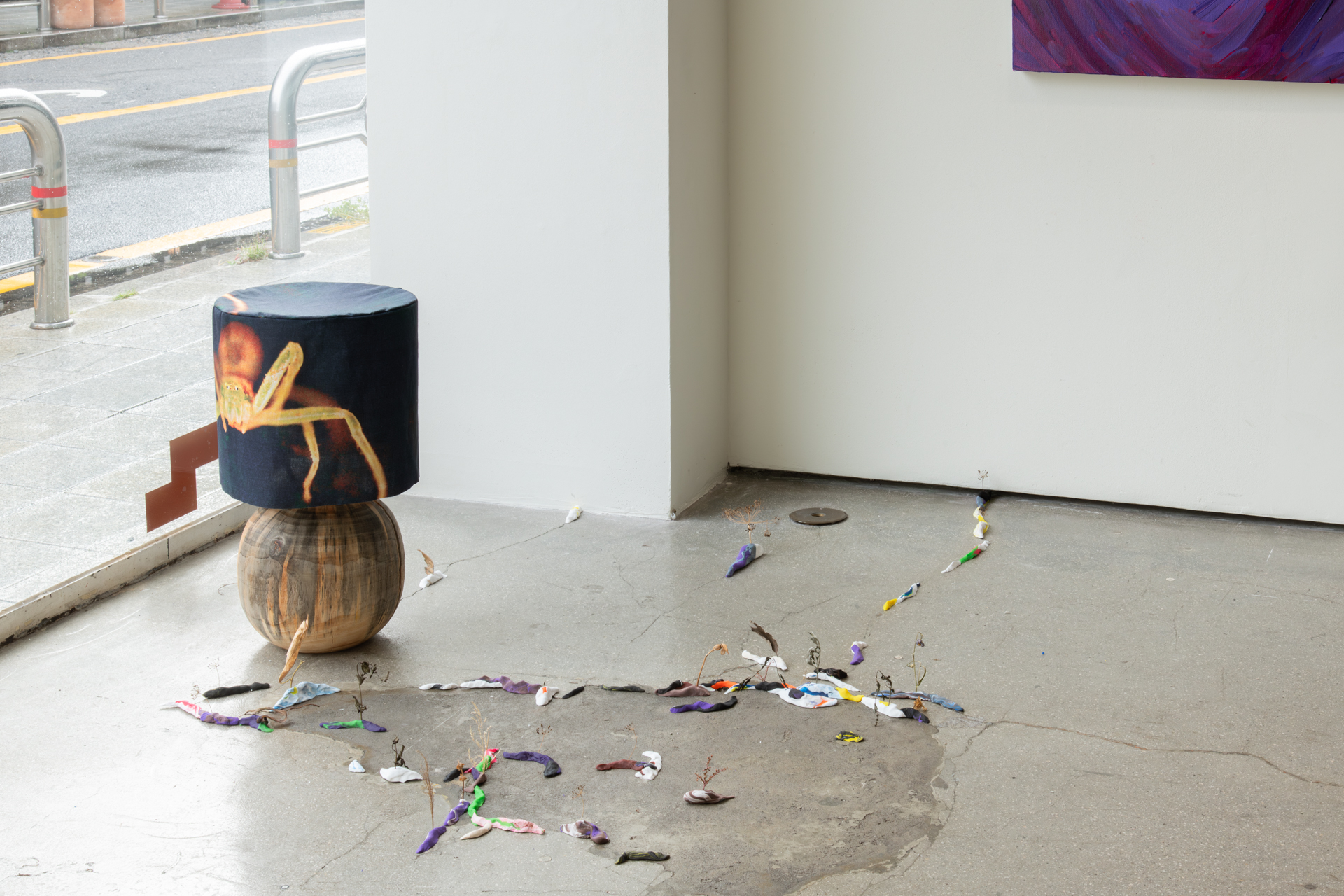
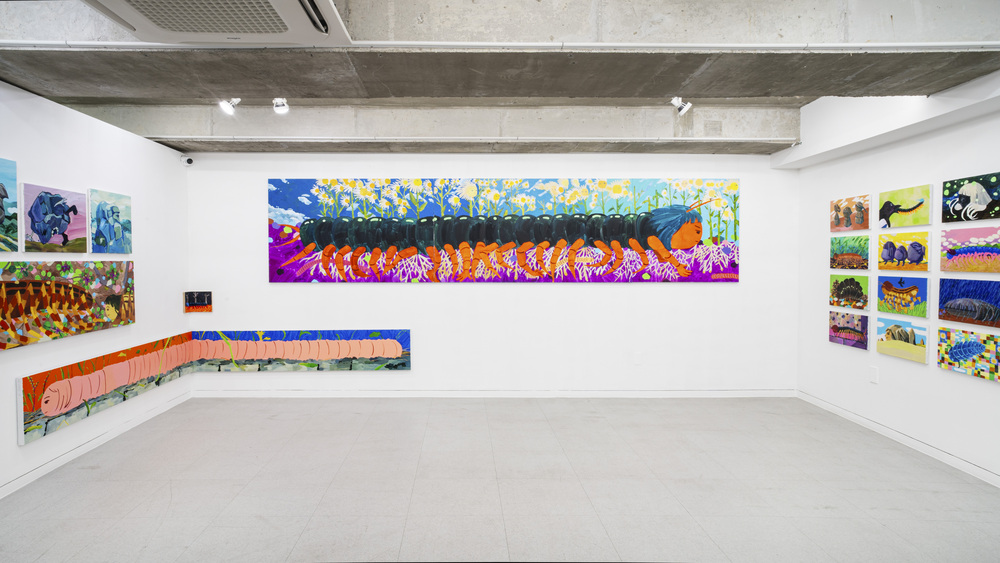
longer survive solely in the existing human form, and paints new life forms
that mingle with beings such as mountains, octopuses, birds, insects, and
rocks. In her work, transformation is not simply fantasy, but a practice for
moving beyond anthropocentrism and an attempt to reimagine the world in which
the next generation will live.