Figurative painters of the late nineteenth century, including Francisco Goya, Honoré Daumier, and James Ensor, unfolded the social realities of their time within distinctive allegorical spaces. The figures that populate Goya’s “Black Paintings,” Ensor’s masquerades, and Daumier’s crowded scenes are beings crushed and distorted by historical turmoil—marked by failed revolutions and continual upheaval—to the point of caricature.
Often described as practitioners of late Romanticism, these artists reinterpreted the unresolved contradictions of the world through pessimistic and somber landscapes or through stagings so radical as to appear unreal.
It is remarkable that Bae Yoon Hwan, who has never formally studied painting in Europe, has developed the pictorial characteristics of Dark Romanticism with such distinction in contemporary Korea. The world of images that unfolds in his work seems too fully formed—in its materials, techniques, and material sensibility—to have emerged naturally from a single artist’s inner life.
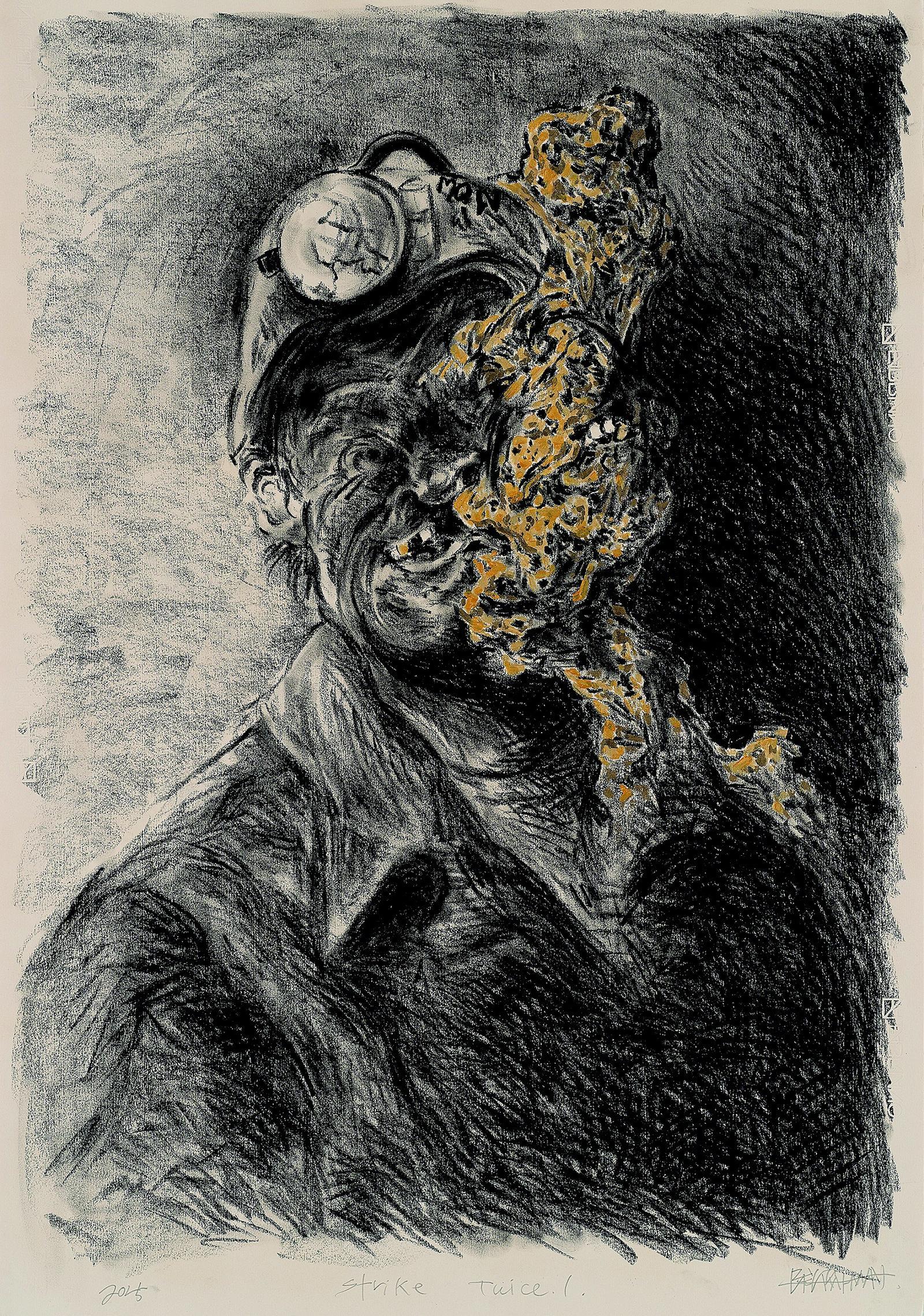
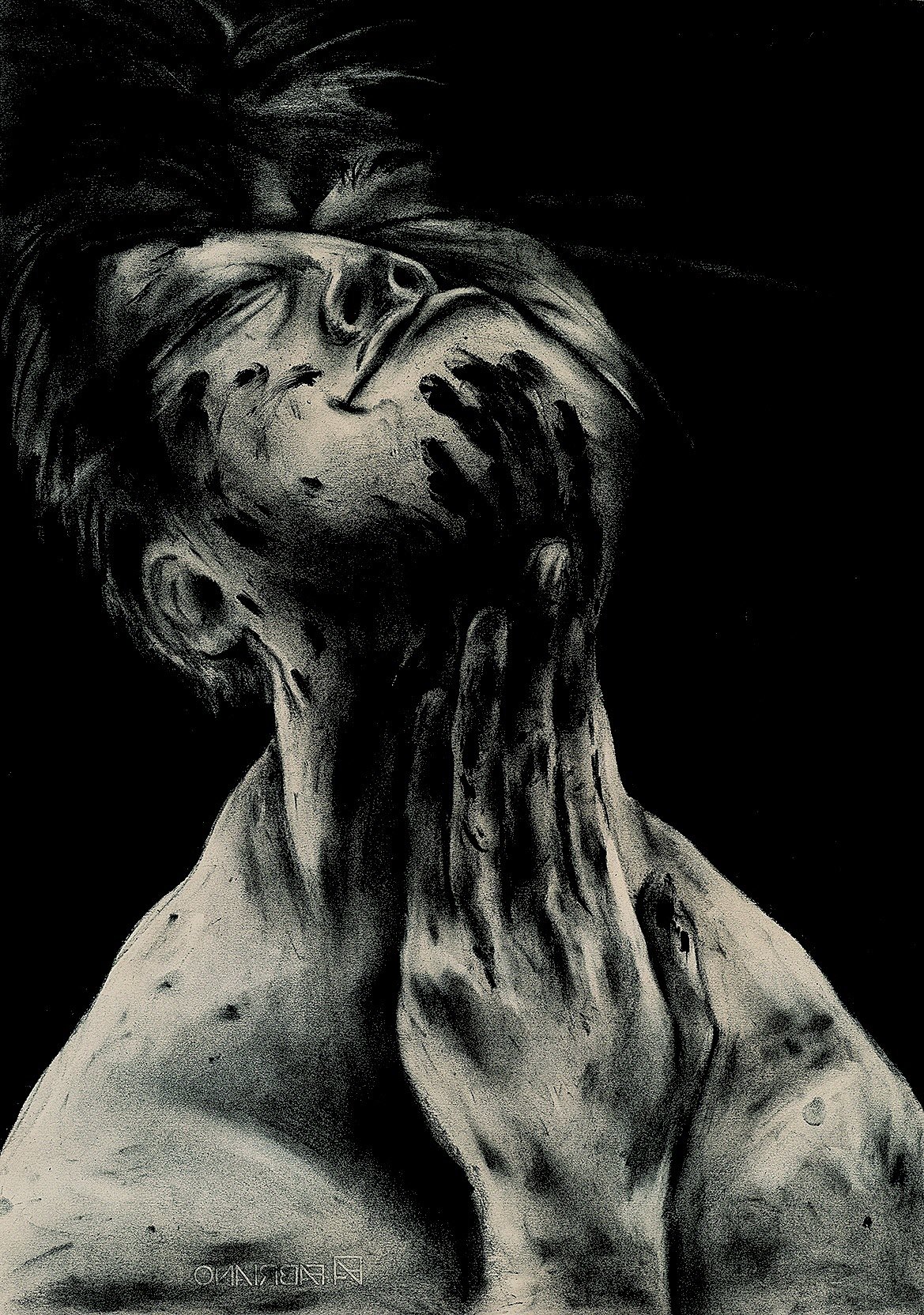
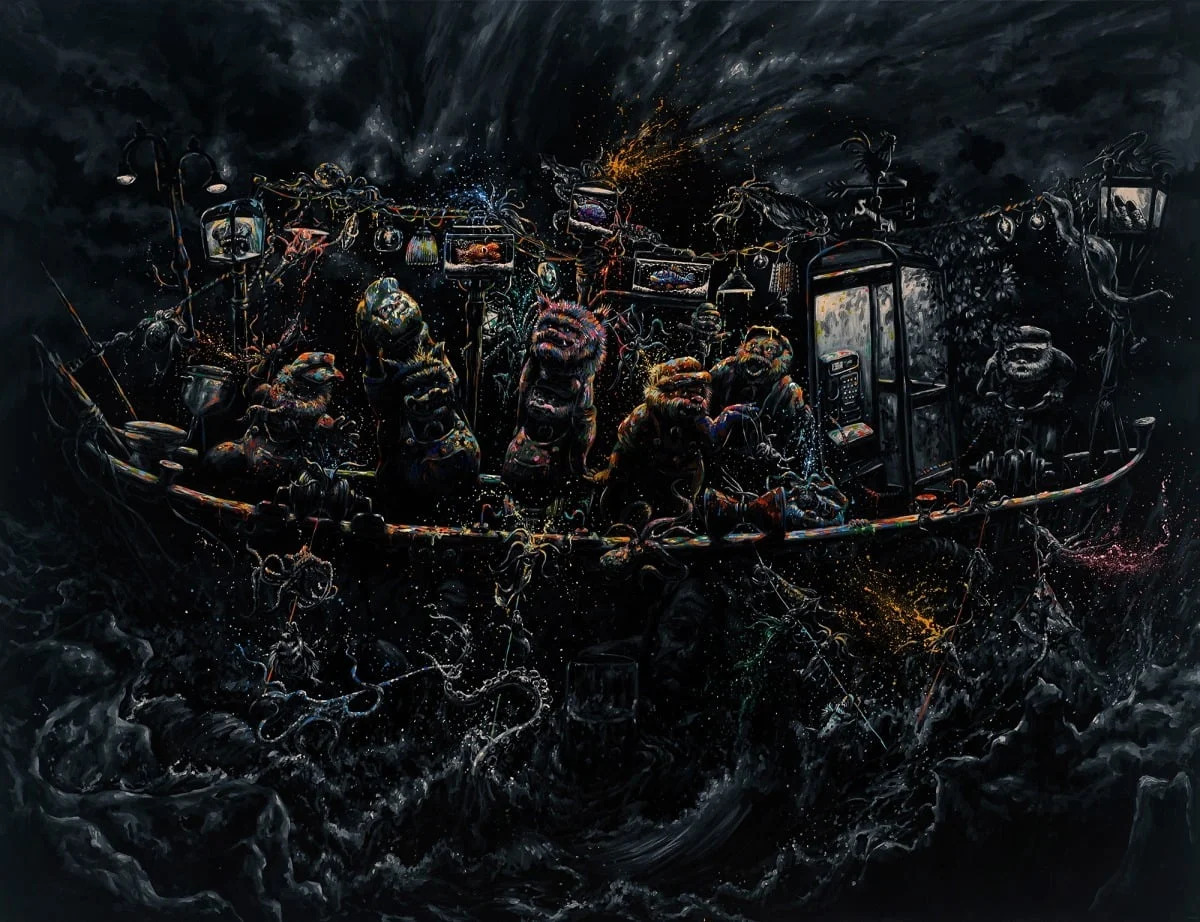
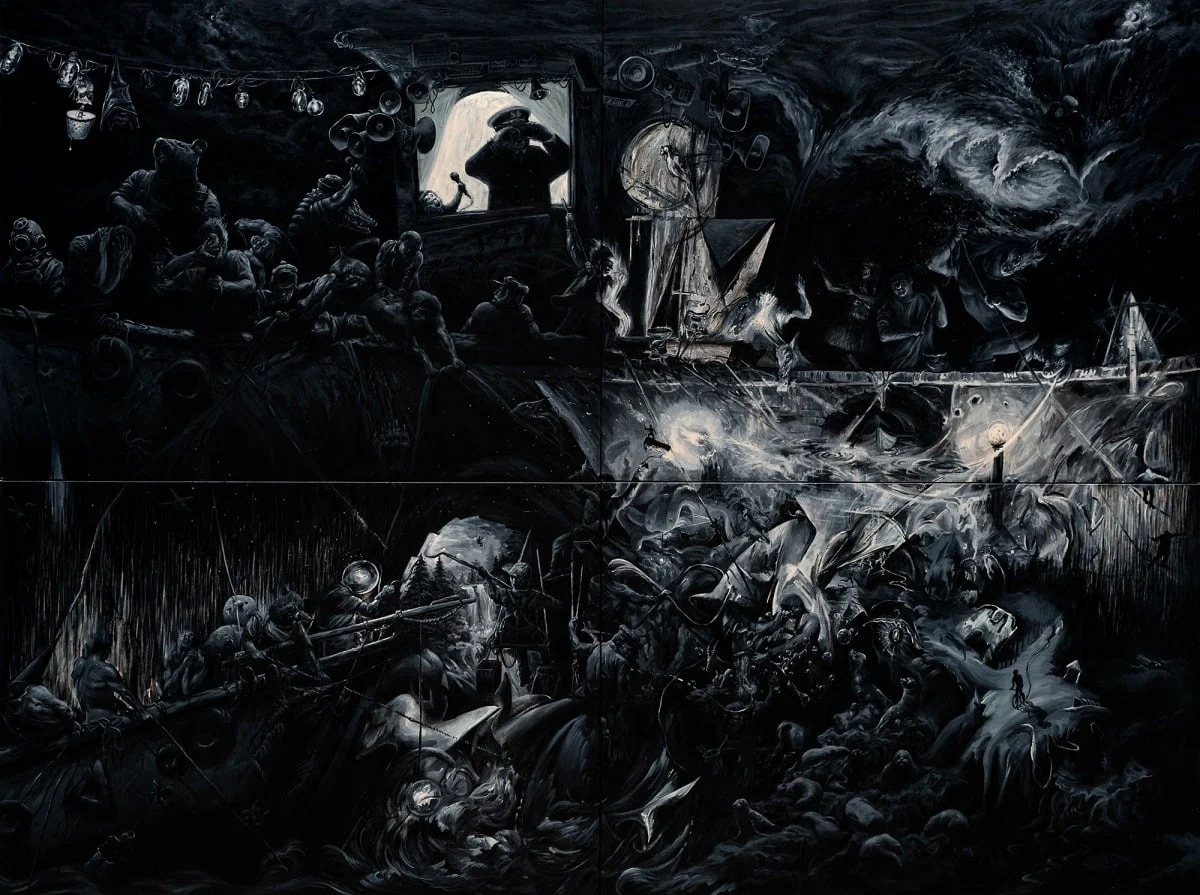
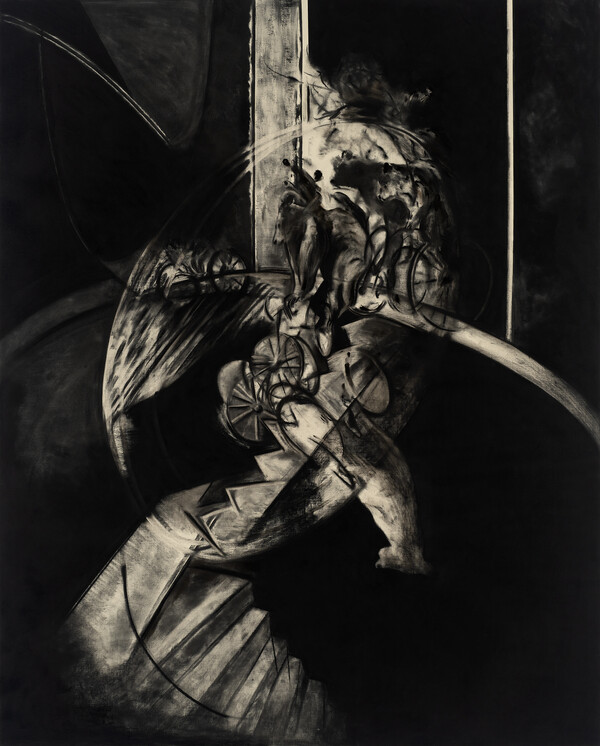
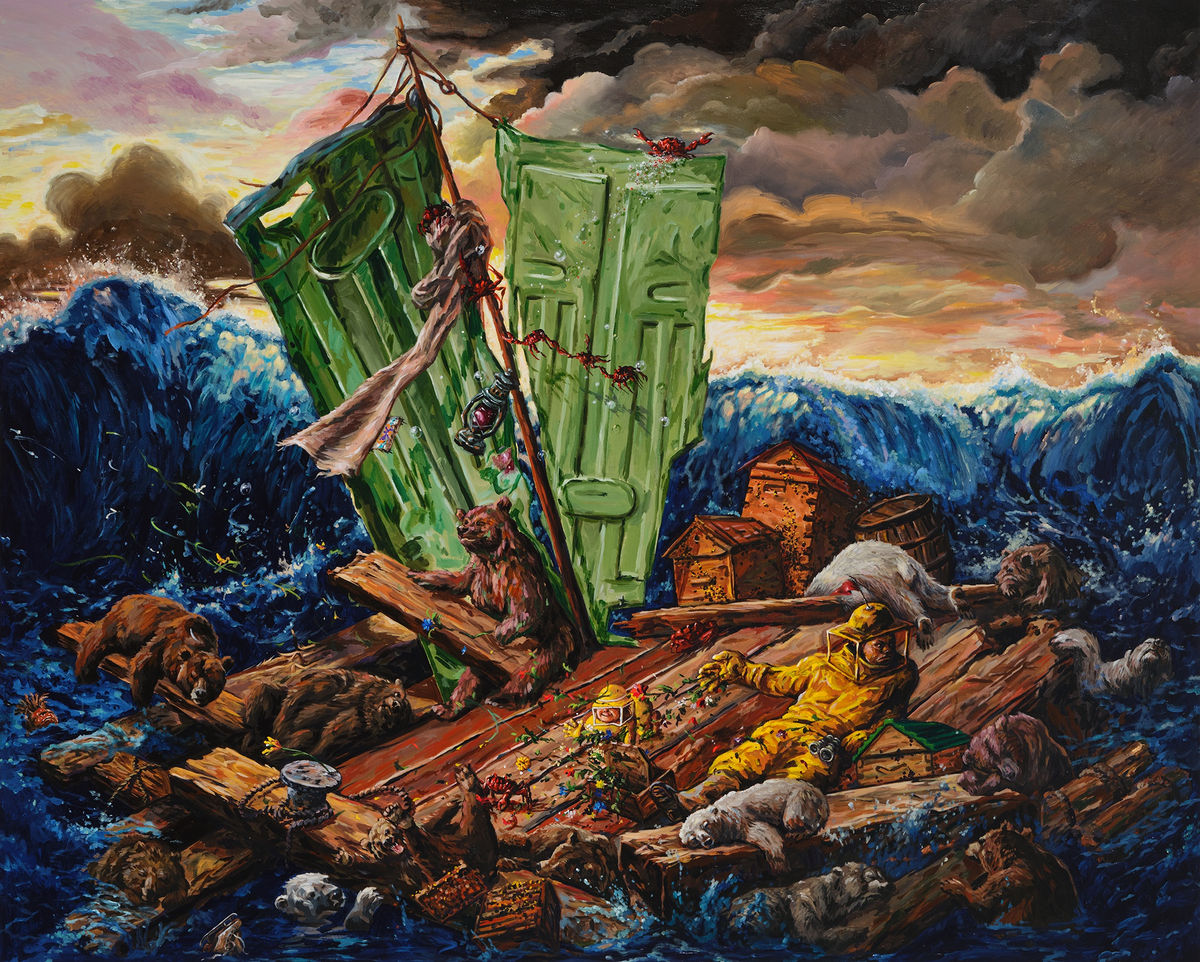
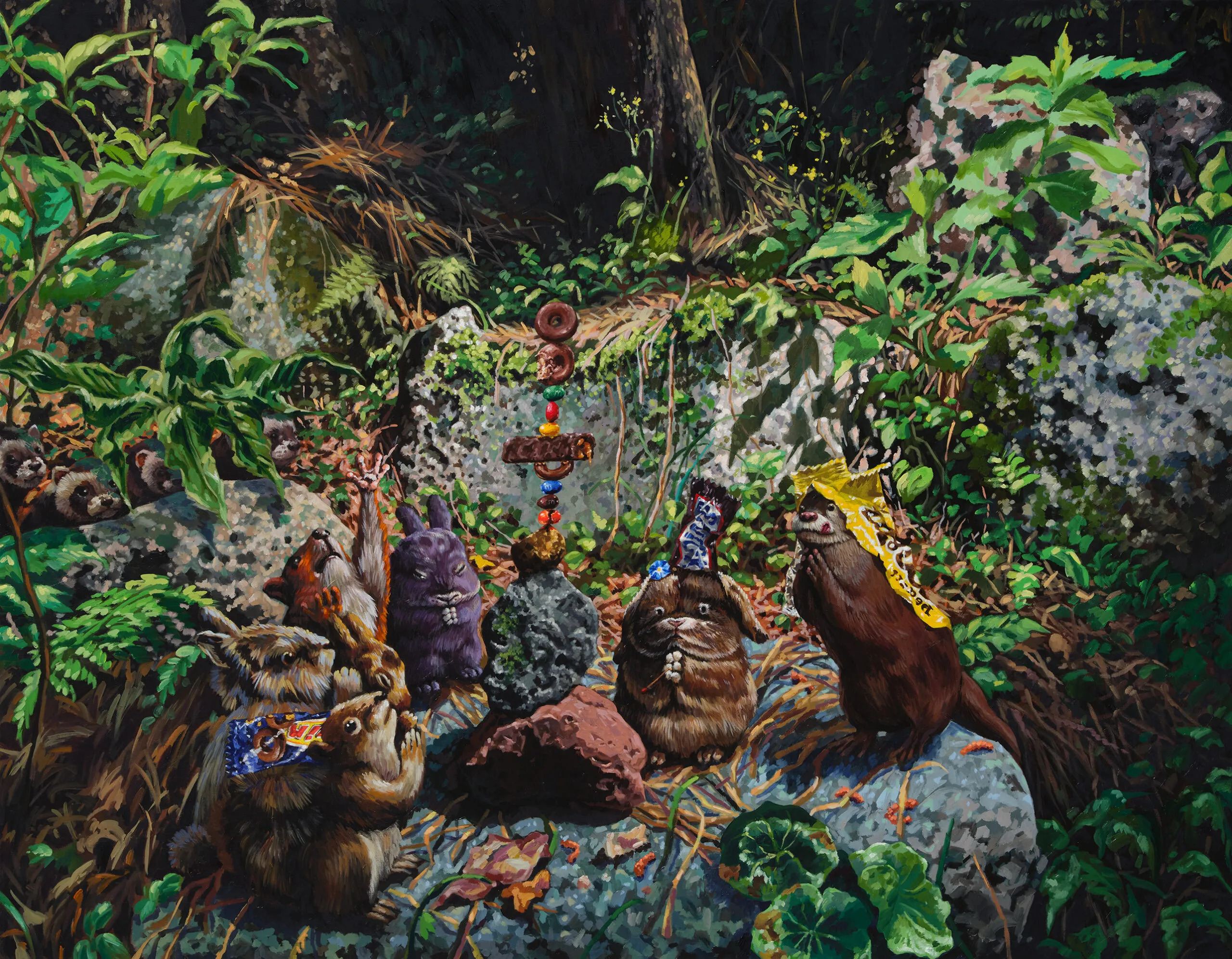
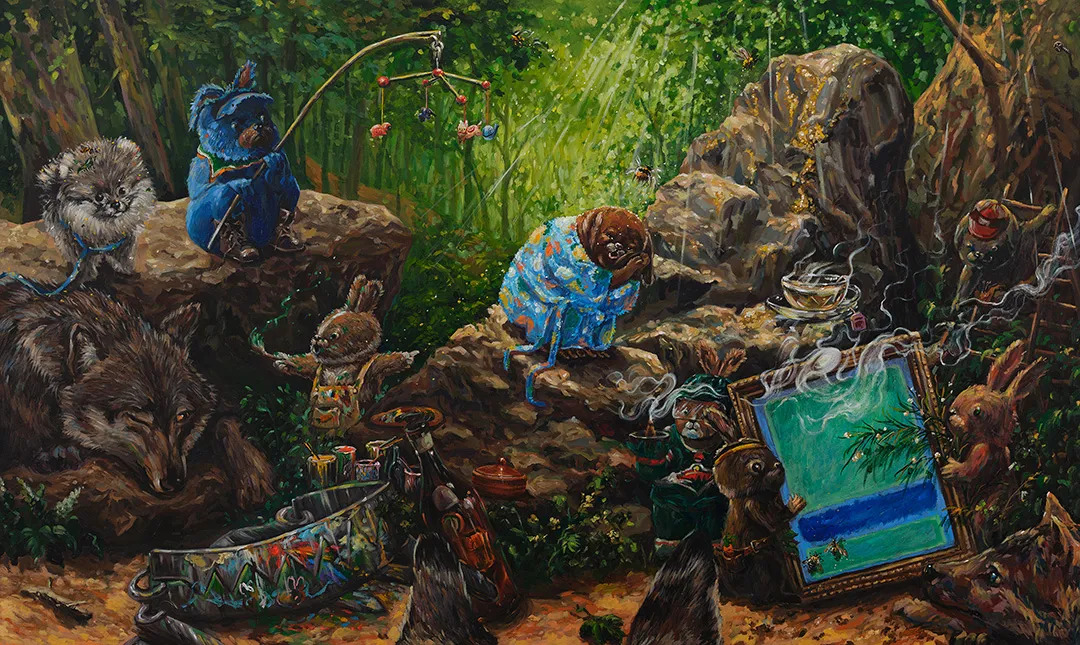
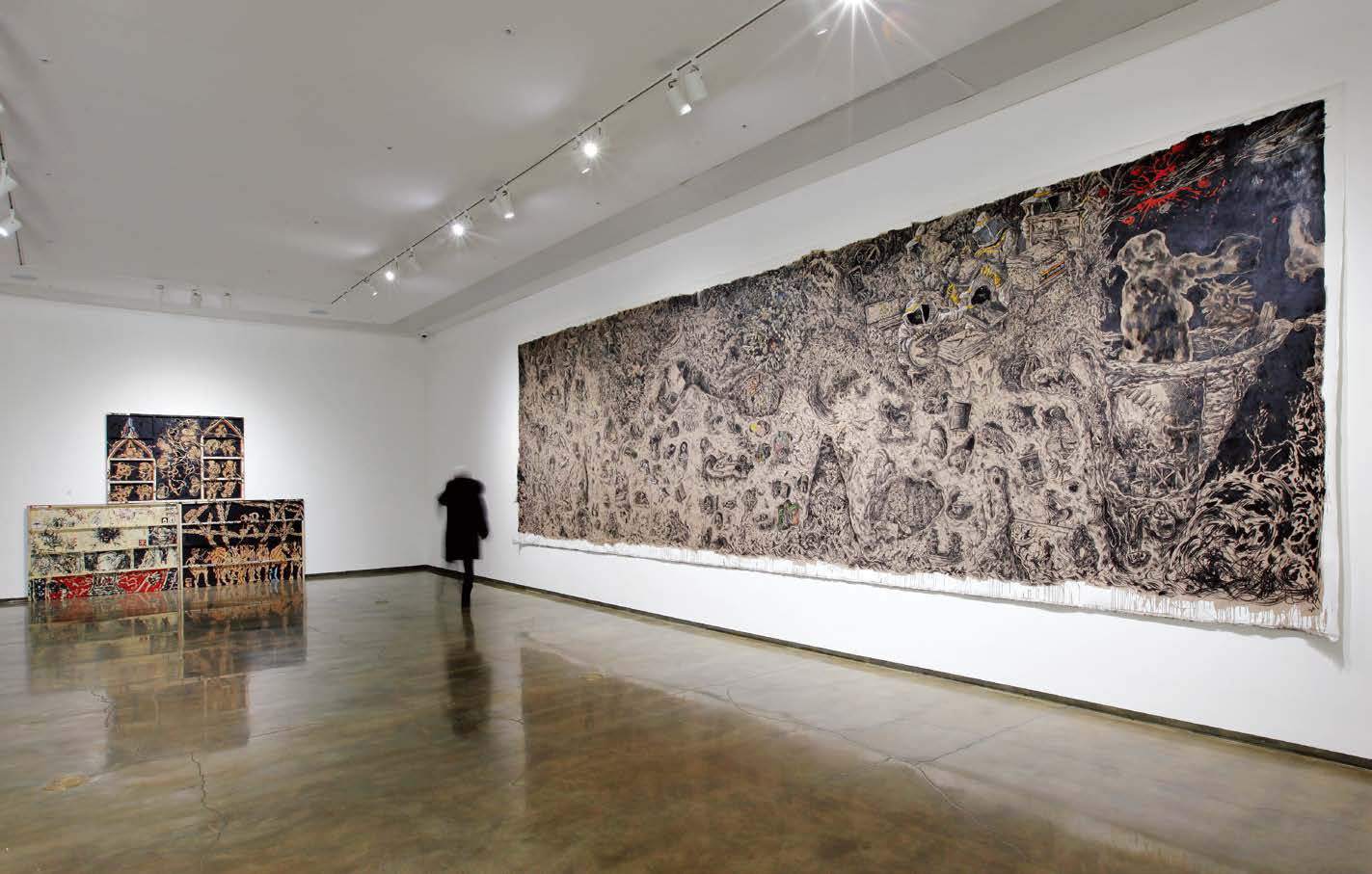
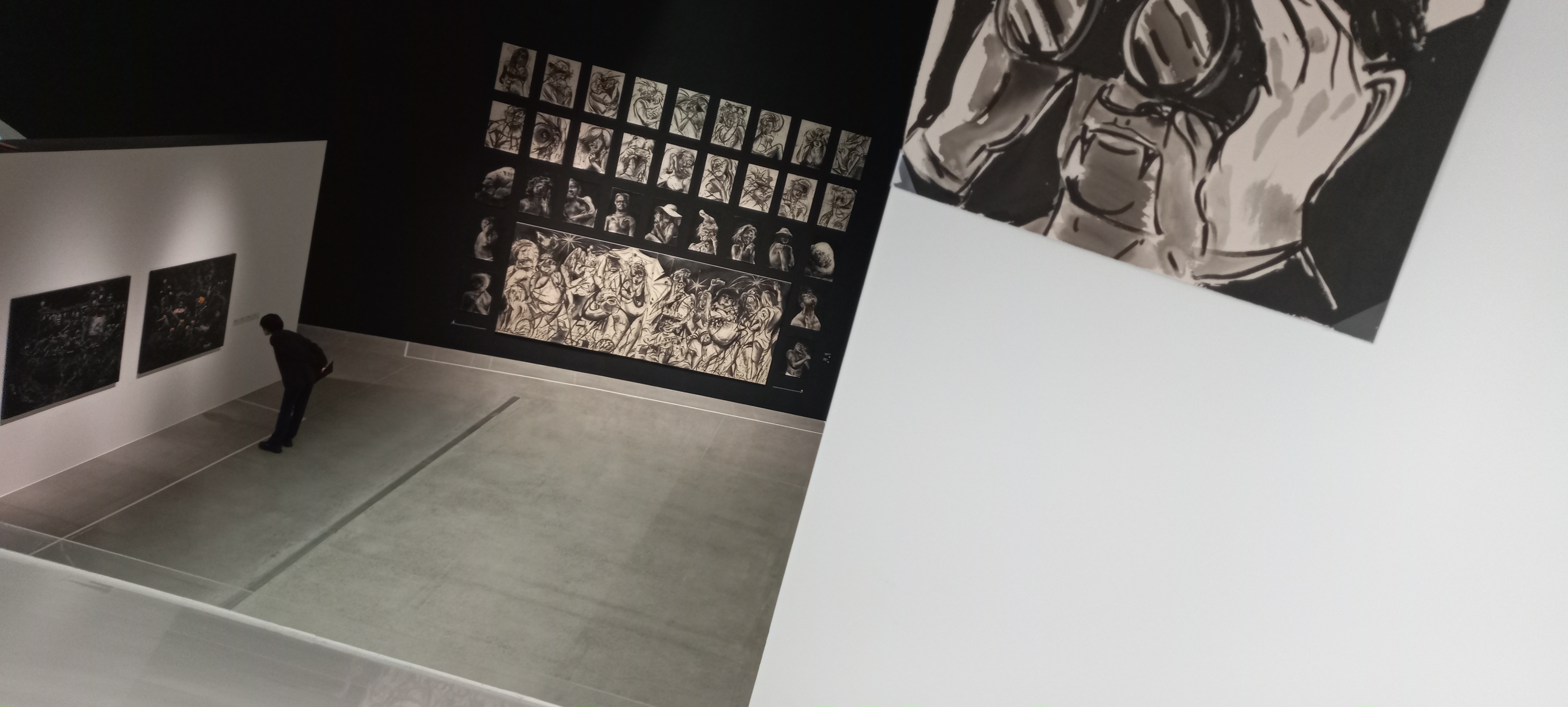
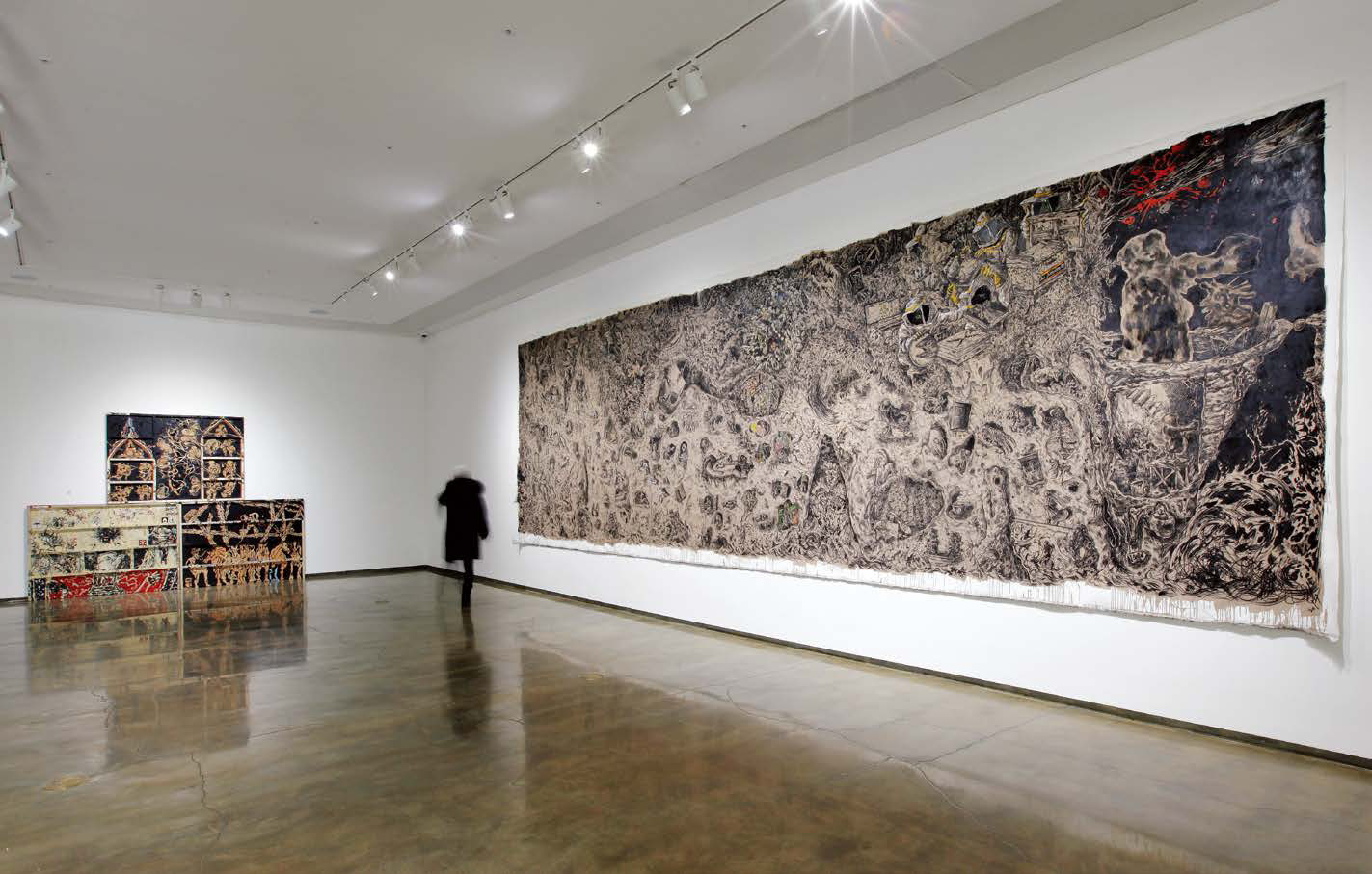
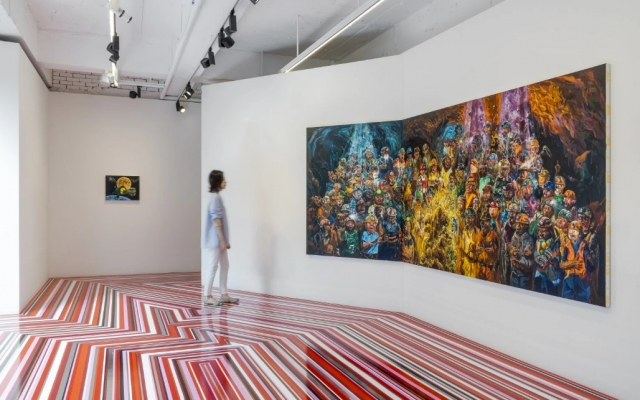
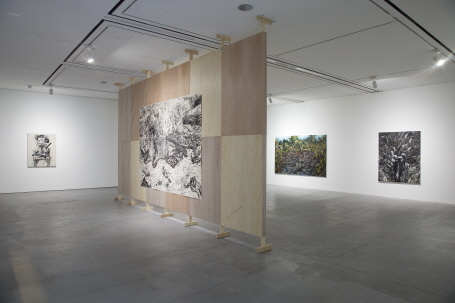
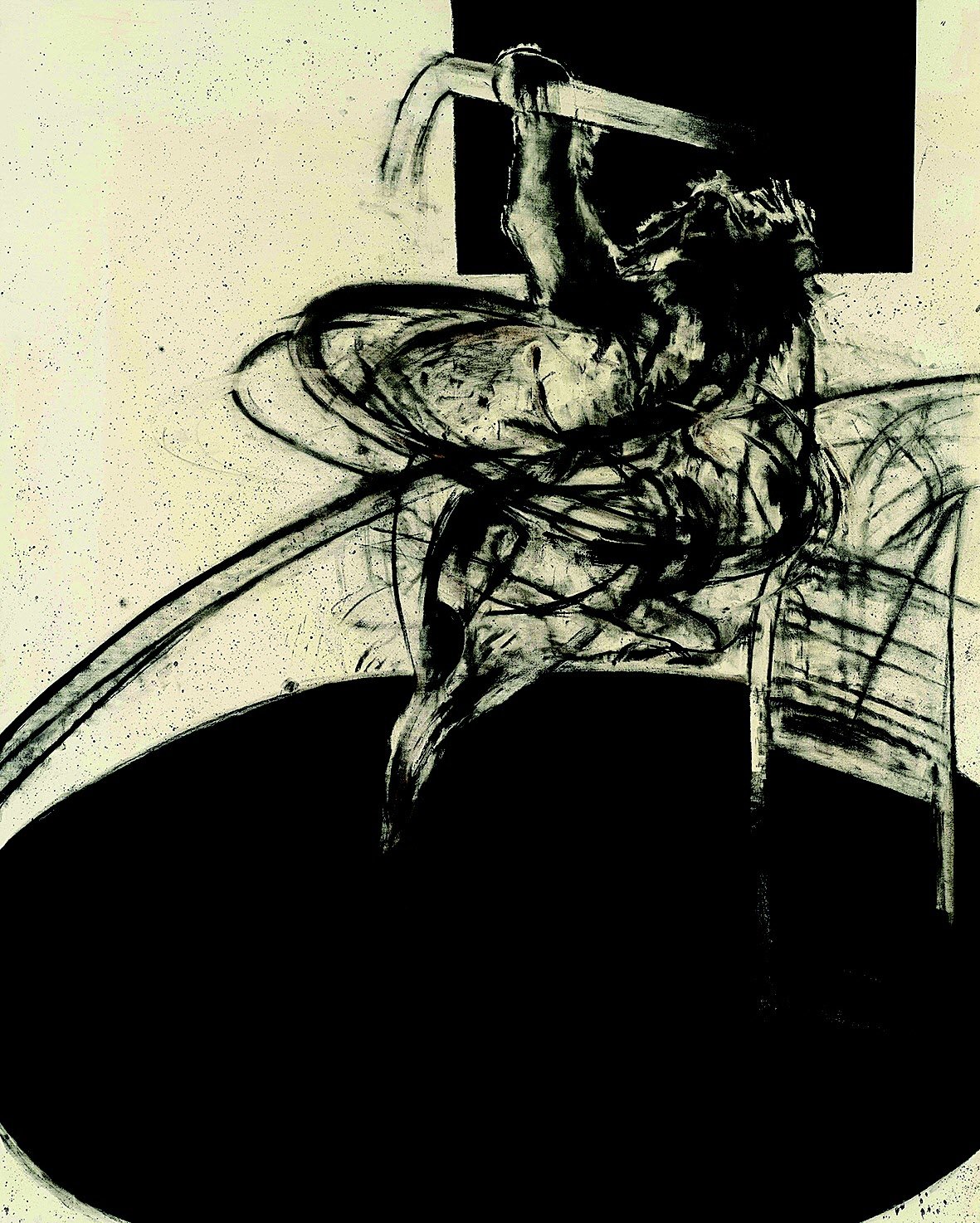
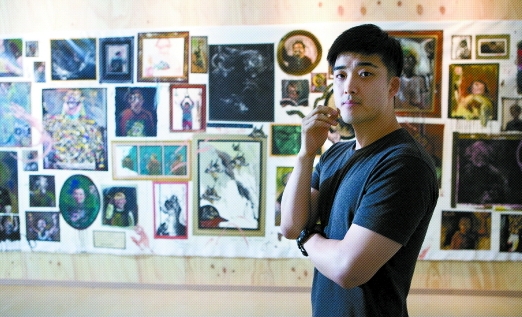
His paintings present vast groups of figures, each absorbed in their own stories, set within apocalyptic landscapes where light and darkness intersect, rendered with a concise yet precise hand. Bae demonstrates an astonishing command of drawing: simple, economical, and complete. He possesses the concentration and energy to finish densely populated paintings measuring up to ten meters in width within only a few days.
The motif that consistently recurs throughout his intuitive and spontaneous practice is the environment surrounding his own creative activity. This space—what might be called the artist’s voisinage, or immediate vicinity—is transformed, through the process of painting, into a vast worldview.
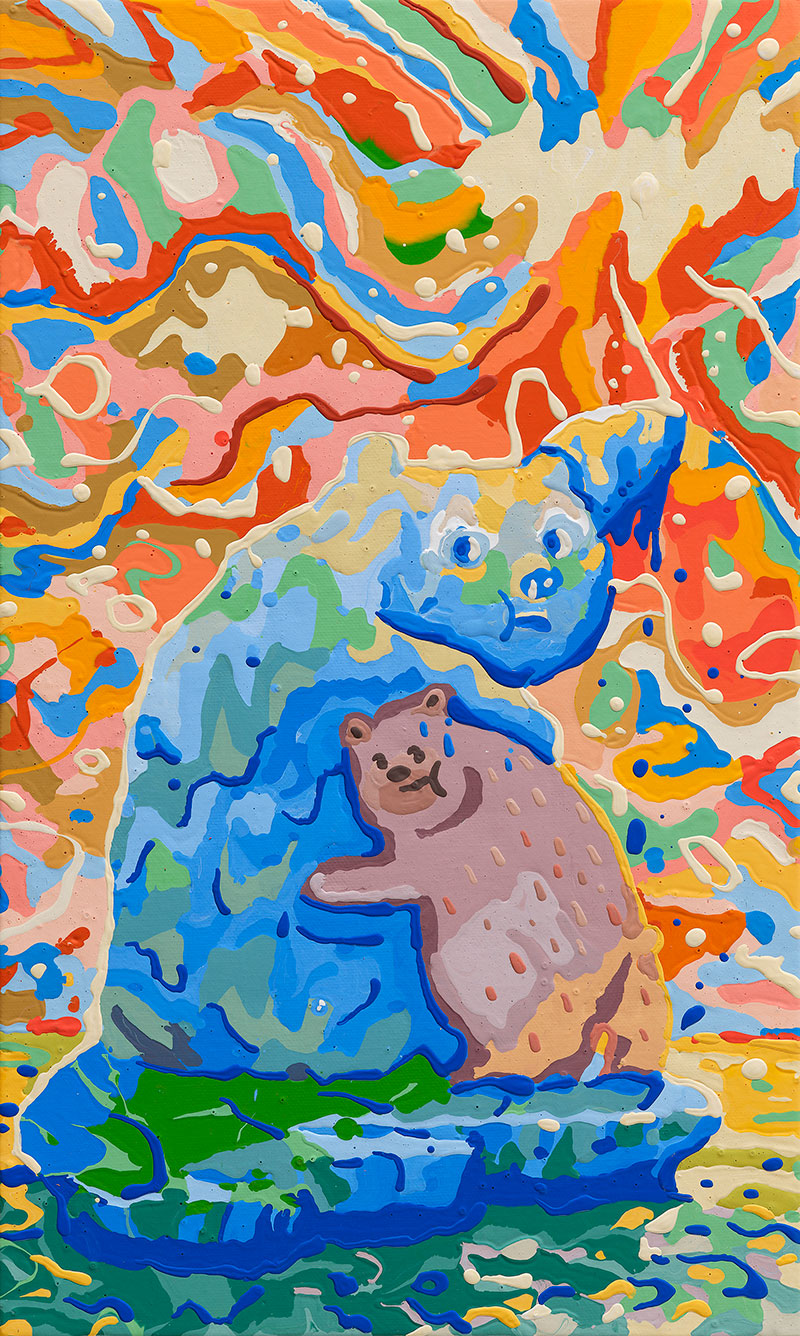
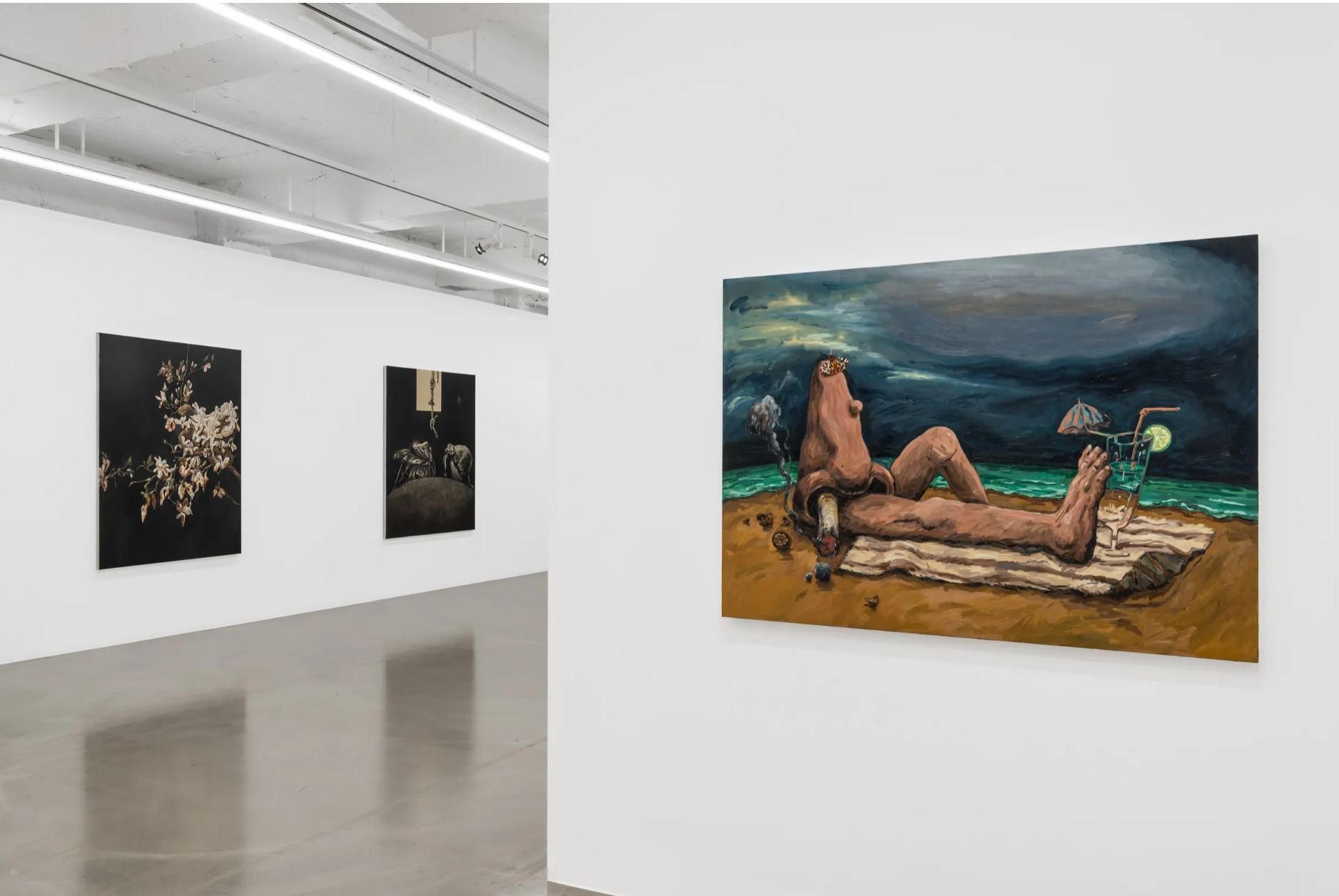
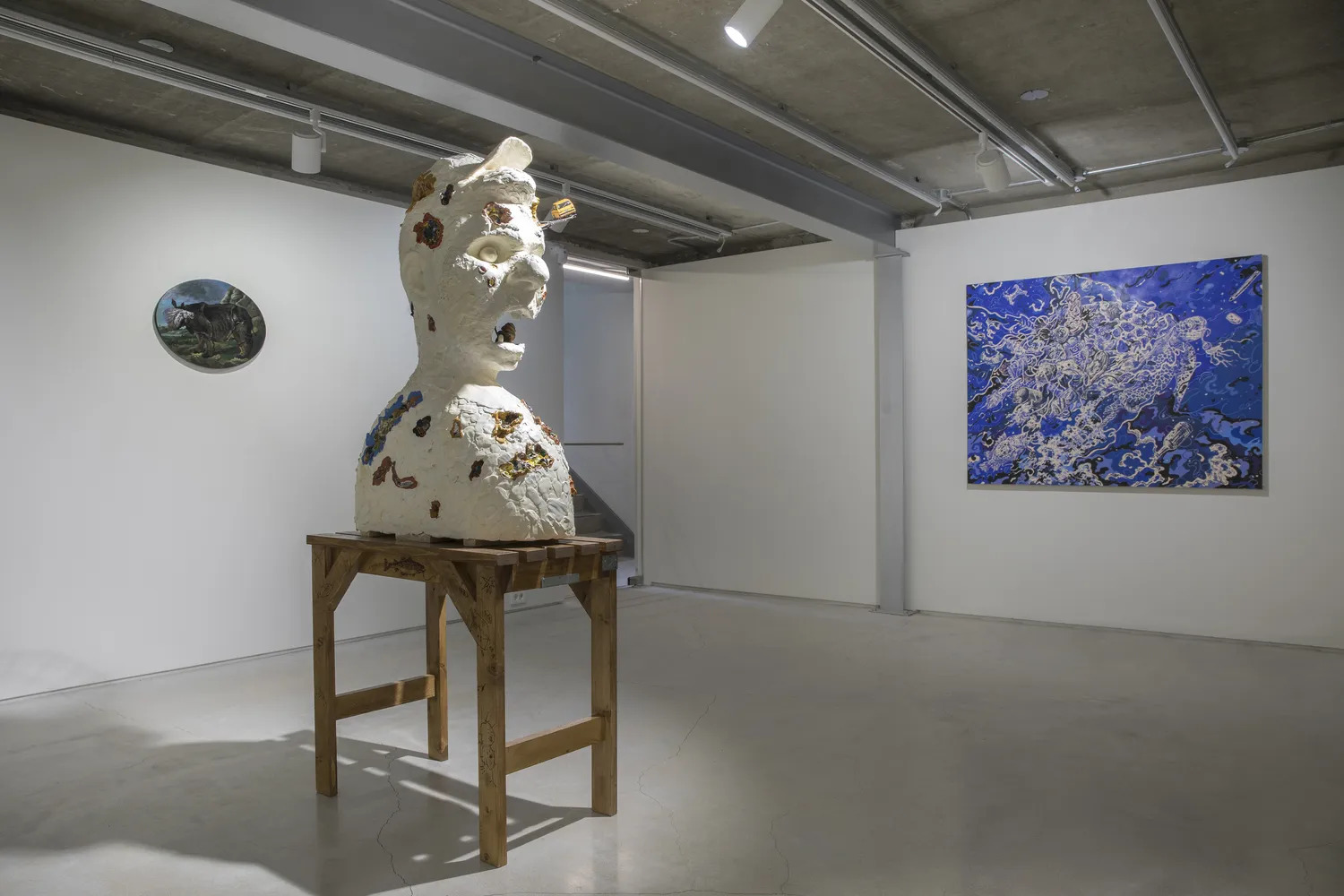
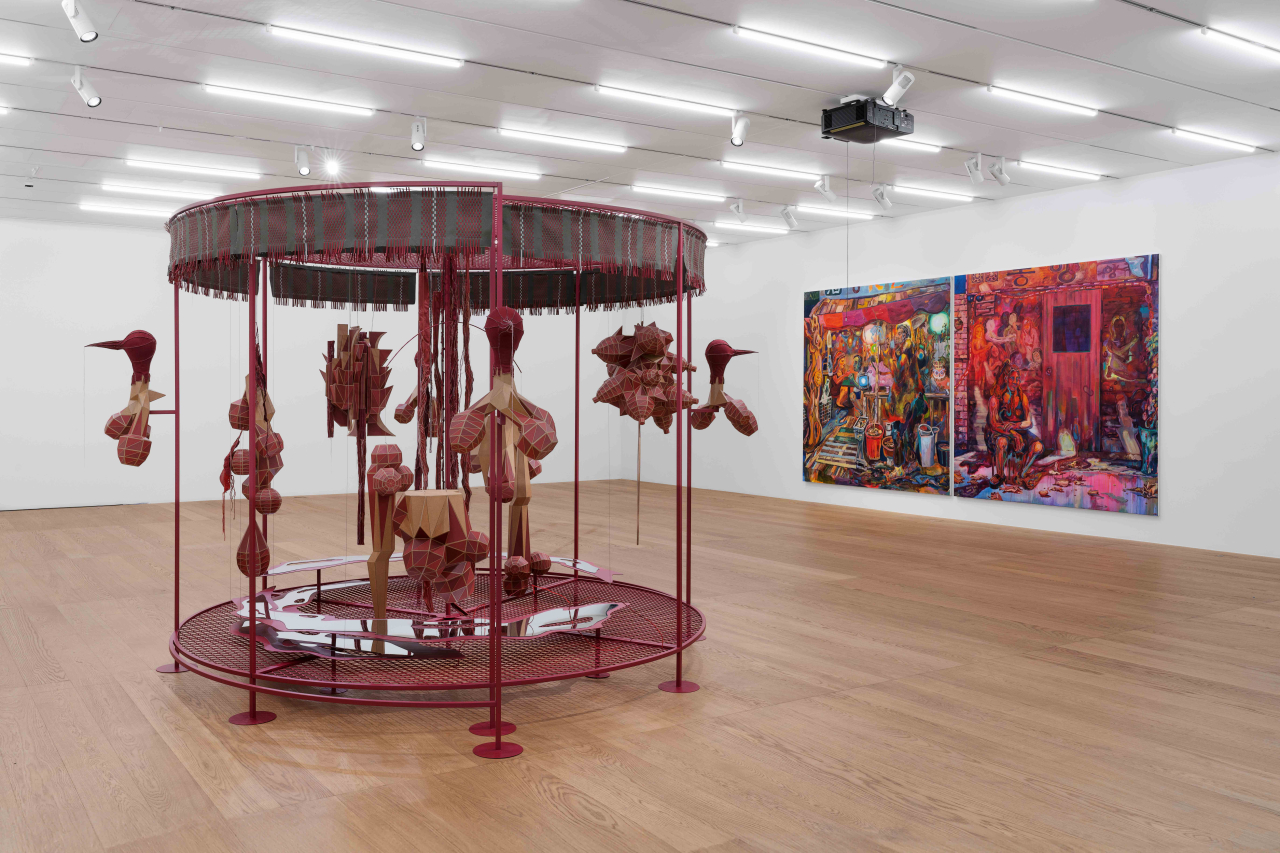
The exhibition 《Breathing Island》 at Gallery Baton presents two monumental works that reveal, without restraint, the artist’s worldview and the remarkable visual narratives that emerge from it: Breathing Island, which shares its title with the exhibition, and Full Fathom Thousands.
Together these paintings form the core of the exhibition, while also extending a theme that has occupied the artist since earlier works such as The Man Hunting for the Point to Smear Gasoline: the relationship between the artist and the world he observes. Like William Kentridge, an artist whom he deeply admires, Bae begins with responses to local and seemingly limited concerns.
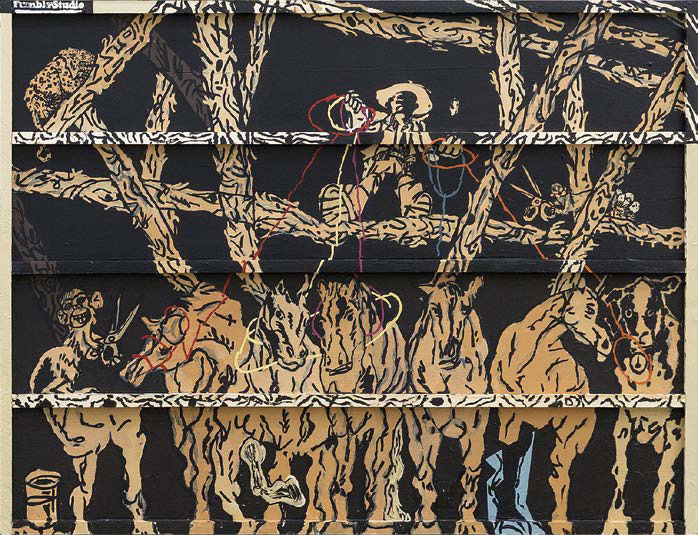
The porous, multifocal world he describes refers to a whole composed of disparate and disconnected parts. His works are generally constructed through the linking and juxtaposition of numerous heterogeneous scenes; at times he literally joins or places smaller paintings side by side. Peripheral and fragmented though these elements may be, together they form a body that continues to breathe, and it is this body that the artist calls an “island.”
The island functions as a metaphor similar to the “tree” that appears in Italo Calvino’s novel The Baron in the Trees, a reference cited in the exhibition brochure. In the novel, the protagonist Cosimo chooses to live in the trees and never returns to the ground, ultimately leaping onto a hot-air balloon and disappearing into the sky.
Far removed from the notion of being “grounded in reality,” Cosimo’s trajectory is above all connected to a determination to maintain the distance of an observer from a world that continually seeks to condition and define him.