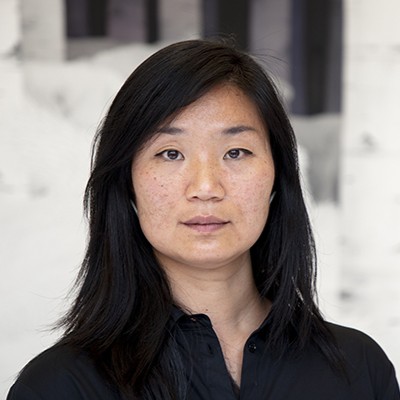
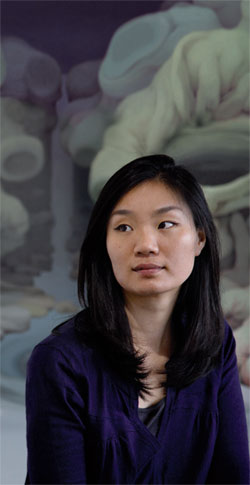
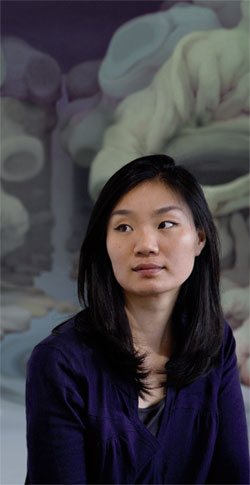
The Artist © Min Jungyeon

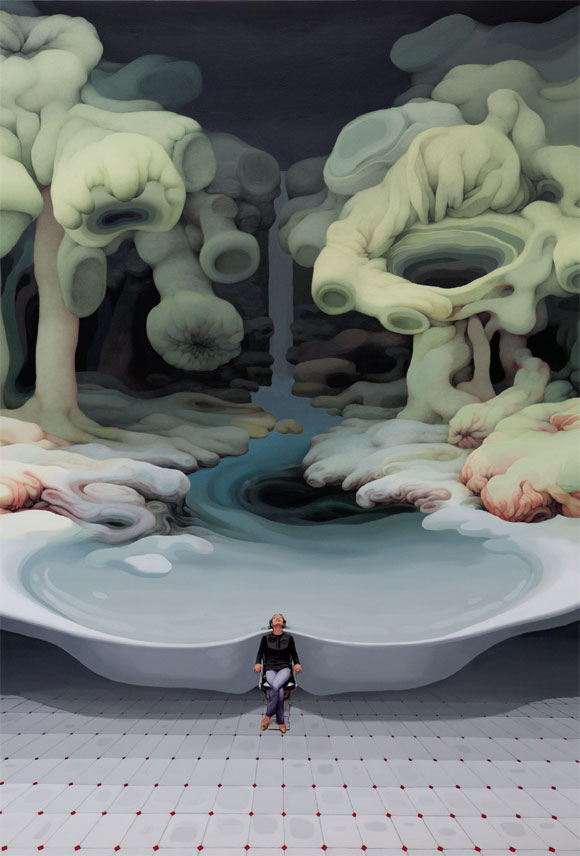
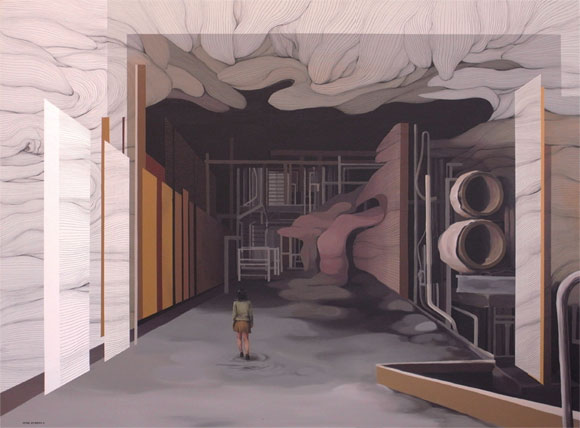
Four minutes. What can we do in four minutes? It is slightly longer than the three-minute limit of a public telephone call and shorter than the interval between buses during rush hour. The catalogue published in 2009 by painter Min Jungyeon opens with a work titled 4 Minutes. Four minutes spent in a vulnerable state, reclining at a hair salon washbasin with one’s head tilted back and one’s hair entrusted to someone else’s hands.

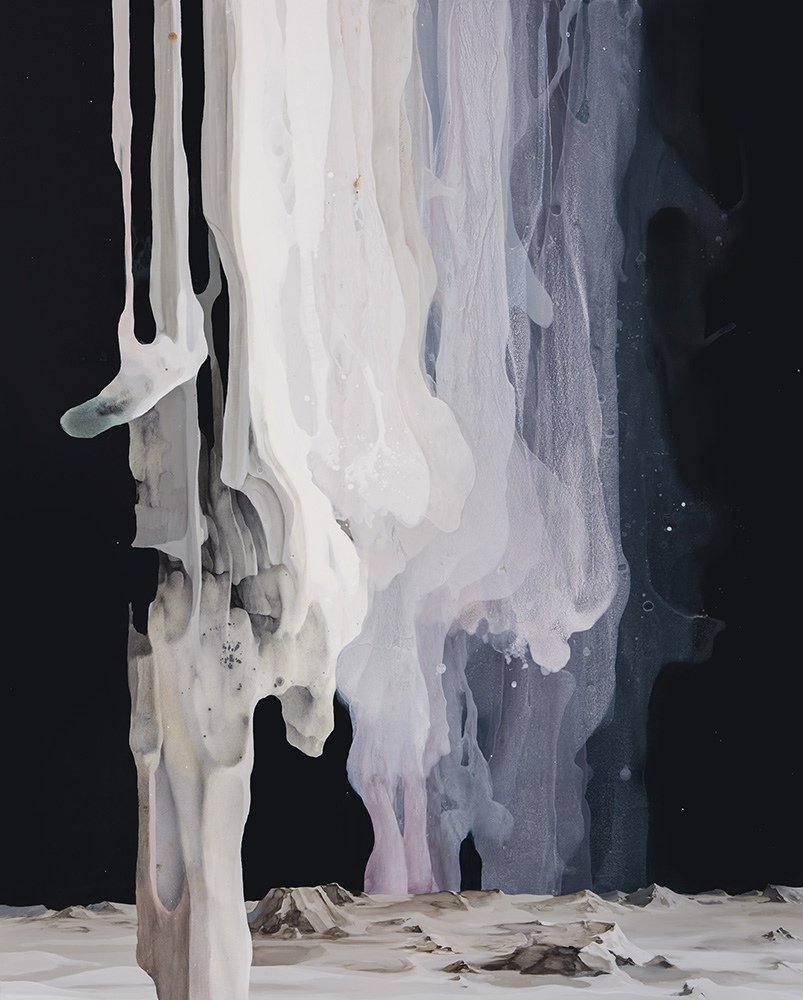
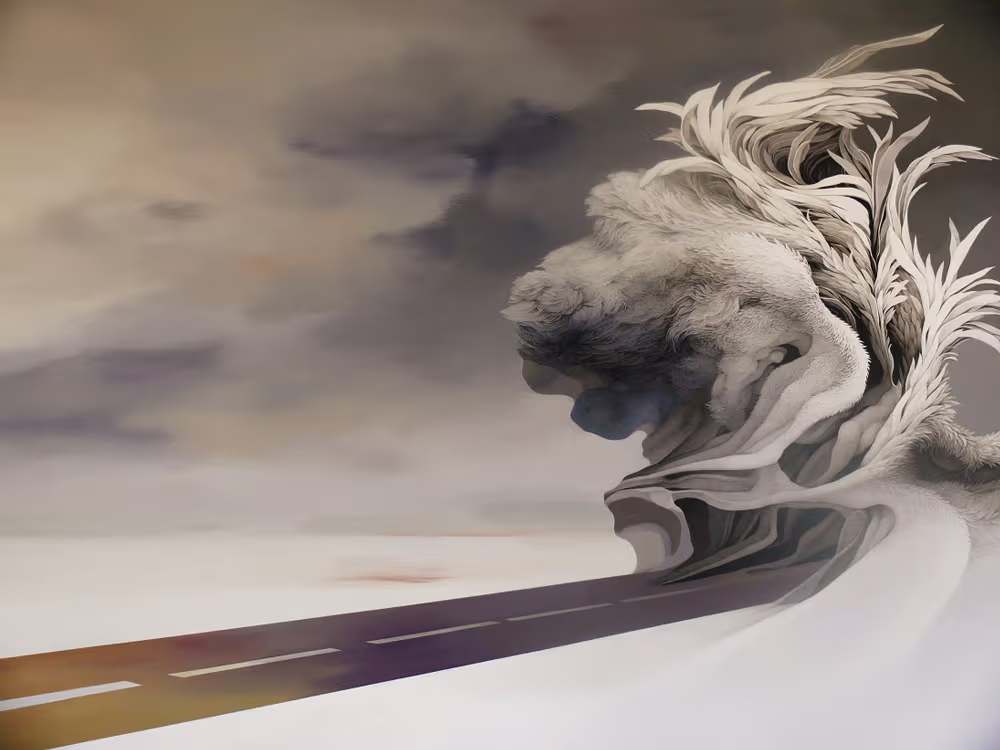
Above the basin unfolds a strange, billowing forest of bizarre forms. They appear soft enough to melt, yet stand firmly like stalactites; at the same time, they resemble living organisms, writhing with life.

At the center of the composition is a whirlpool resembling a black hole, preventing the water from overflowing the basin. The strange forest seems capable of growing endlessly, while the depth of the black hole remains immeasurable. To me, this painting appears to condense and visualize the very workings of consciousness within the brain. The human brain weighs roughly 1,500 grams.

Though this small organ amounts to only about one thirty-eighth of our body weight, it determines everything about us. Yet the possibilities inherent within the human brain, and the processes by which it operates, remain beyond measurement. Min Jungyeon’s paintings are images of this immeasurable world.

They are soft yet structured; a yielding abyss coexists with solid architectural formations; they are simultaneously warm and cold. It is fitting that such a work should appear on the opening page of her catalogue, serving as an interface into the artist’s world.

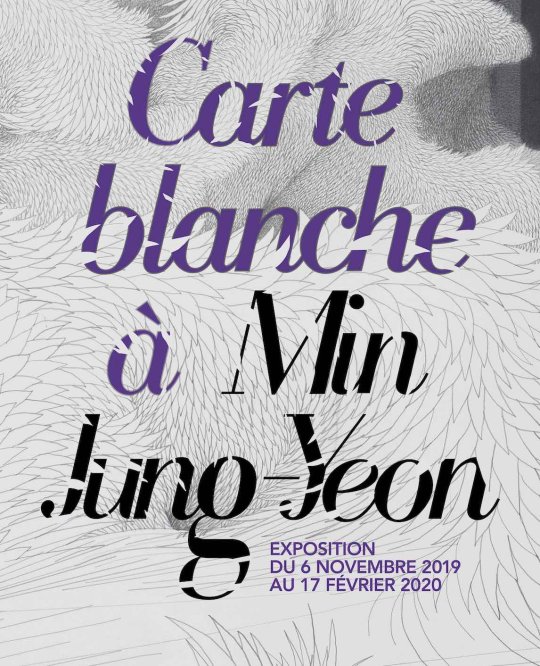
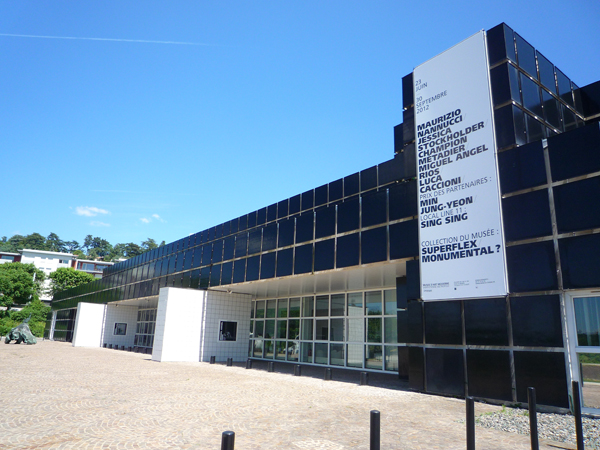
Min Jungyeon’s distinctive paintings first attracted attention within the European art scene. Since her debut in 2004, she has received critical acclaim through annual solo exhibitions in Paris, New York, and Zurich. In November 2009, she also held a solo exhibition at K.O.N.G Gallery in Samcheong-dong, Seoul.

Her reputation grew further when renowned British collector Charles Saatchi acquired her work, and several of her solo exhibitions sold out entirely. She also achieved strong results at Christie’s Hong Kong auctions in 2006 and May 2007. Even amid the global financial crisis, international collectors continued to support her work, with a 100-ho painting selling for 45 million KRW at auction in May 2009.

The artist had briefly returned to Korea for her solo exhibition but, after completing a short schedule that included the exhibition opening, returned to Paris, where her studio is based. Since leaving for France in 2001 to study at the École Nationale Supérieure des Beaux-Arts de Paris, she had been living and working there for eight years.


Min Jungyeon, 4 Minutes, 2009, Acrylic on canvas, 150 x 200 cm © Min Jungyeon

Before completing her studies in 2005, Min Jungyeon was unexpectedly selected by Galerie Kashya Hildebrand. Her relationship with K.O.N.G Gallery, where she held the solo exhibition discussed here, also began in 2004. Recognizing her potential early on, gallery director Kong Geun-hye actively sought her out and established contact with the artist.

Min’s work quickly attracted the attention of discerning viewers, and art professionals began expressing high expectations for the international rise of a new generation of Korean artists, impressed by the maturity of an oeuvre created by an artist who had only just entered her thirties.

After graduating from Hongik University, she moved directly to Paris to continue her studies. That decision would prove decisive in shaping the distinctive artistic language she has developed ever since.
“Contemporary art was particularly strong in the United States. It felt fresh, but because it lacked a long historical foundation, I felt it might not offer the depth I was looking for. I spent a great deal of time thinking about what kind of culture I wanted to absorb. I believed I needed historical depth and cultural context. Paris, where history and everyday life coexist, was the ideal place for me.”


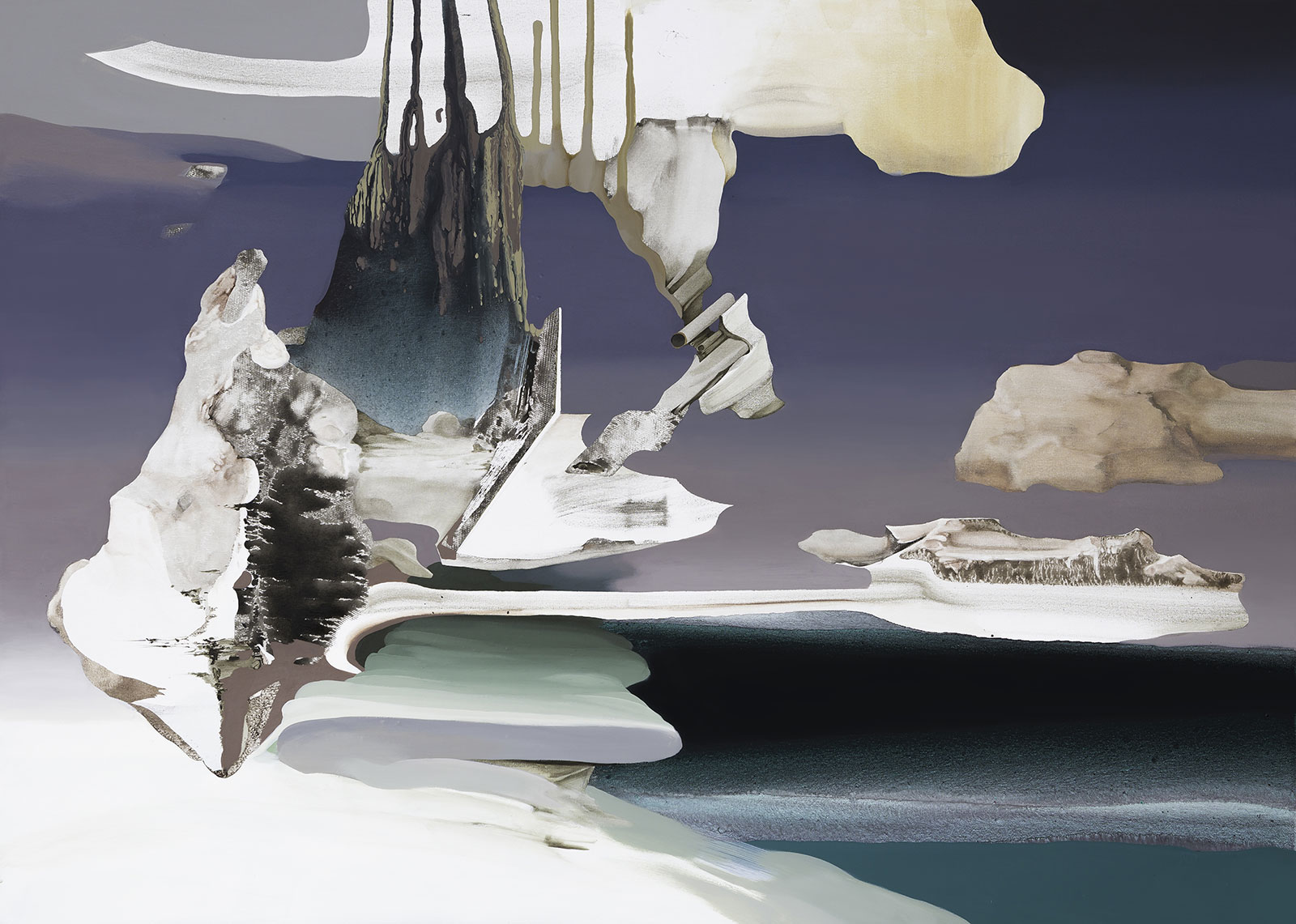
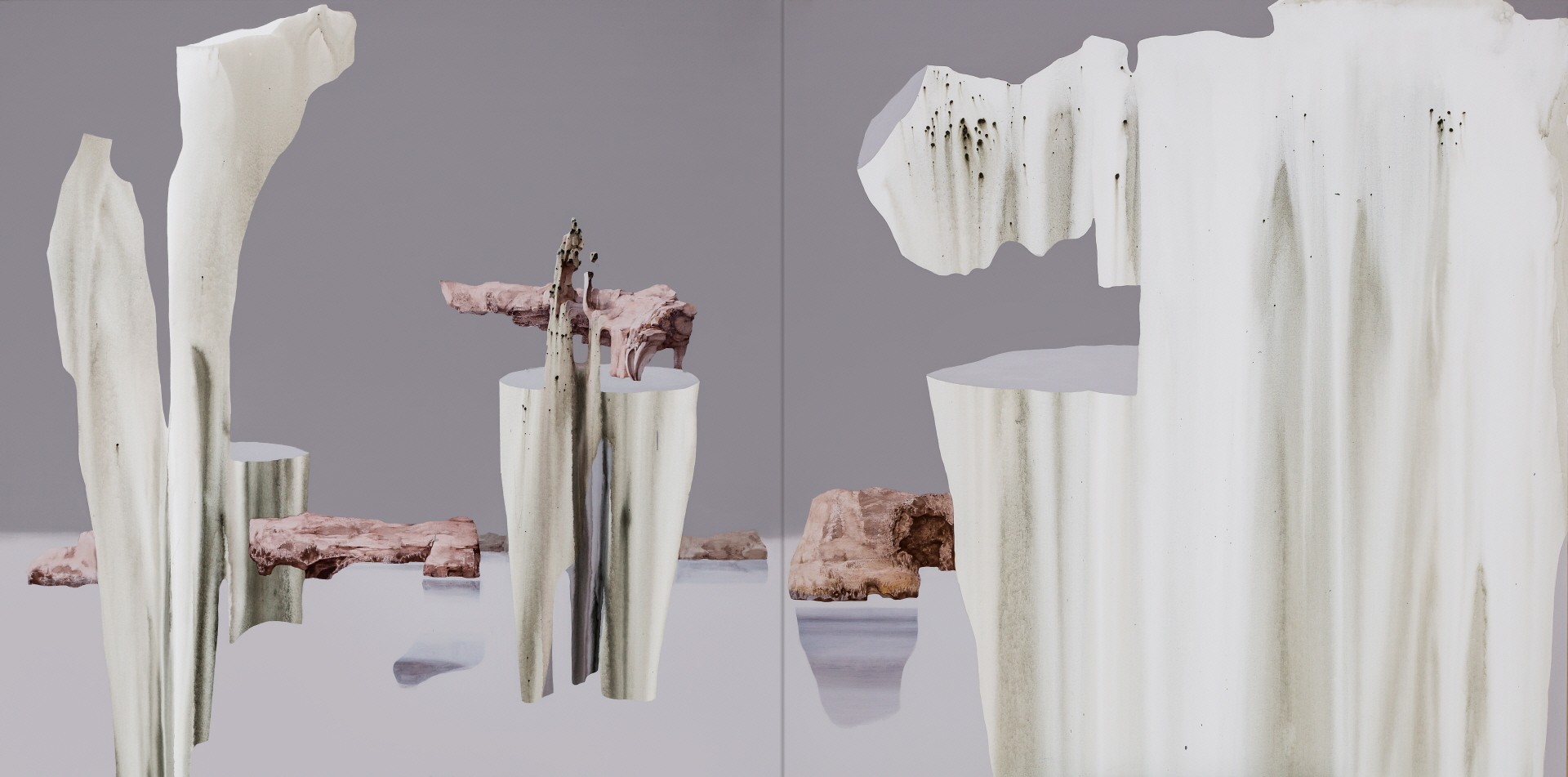
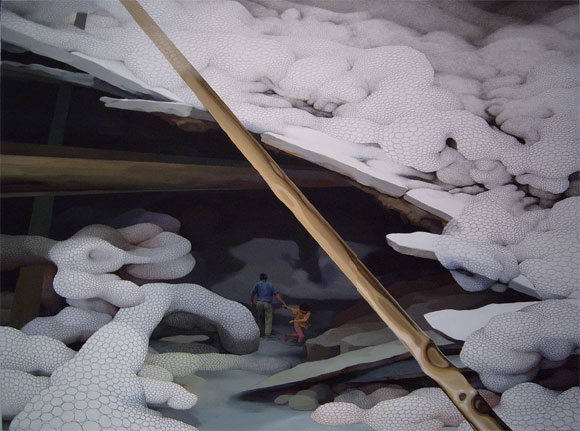
Min Jungyeon, Un après-midi amer, 2009, Acrylic on canvas, 114 x 195 cm © Min Jungyeon

Works Emerging from a Fundamental Inquiry into Art Following Her Move to Paris

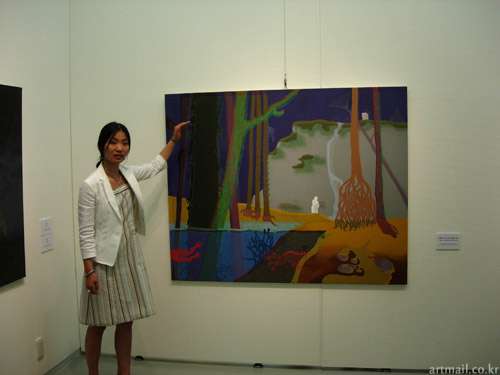
With her long black hair and direct yet witty manner of speaking, Min Jungyeon carries the presence of a Parisienne—someone unconcerned with the gaze of others yet grounded in a strong sense of conviction. What her studies in Paris brought her was not simply refinement or technical skill, but a profound questioning of the very nature of art.

The shock of encountering a foreign culture, combined with an intense period of reflection on painting itself, found expression through the repetitive act of placing countless dots on the canvas. For days on end, she spent up to ten hours a day building surfaces dot by dot.

It was both an outpouring of longing toward a practice whose direction had not yet fully revealed itself and a process of meditation. The extraordinarily meticulous technique that would later become one of the hallmarks of Min Jungyeon’s work was born during this period.

“At the time, I wanted to place dots like a machine,” the artist recalls. Through this arduous process, inherited modes of thinking and the shock of cultural displacement gradually gave way to the formation of a new identity. As this transformation unfolded, her canvases began to fill with images unlike anything she had painted before.

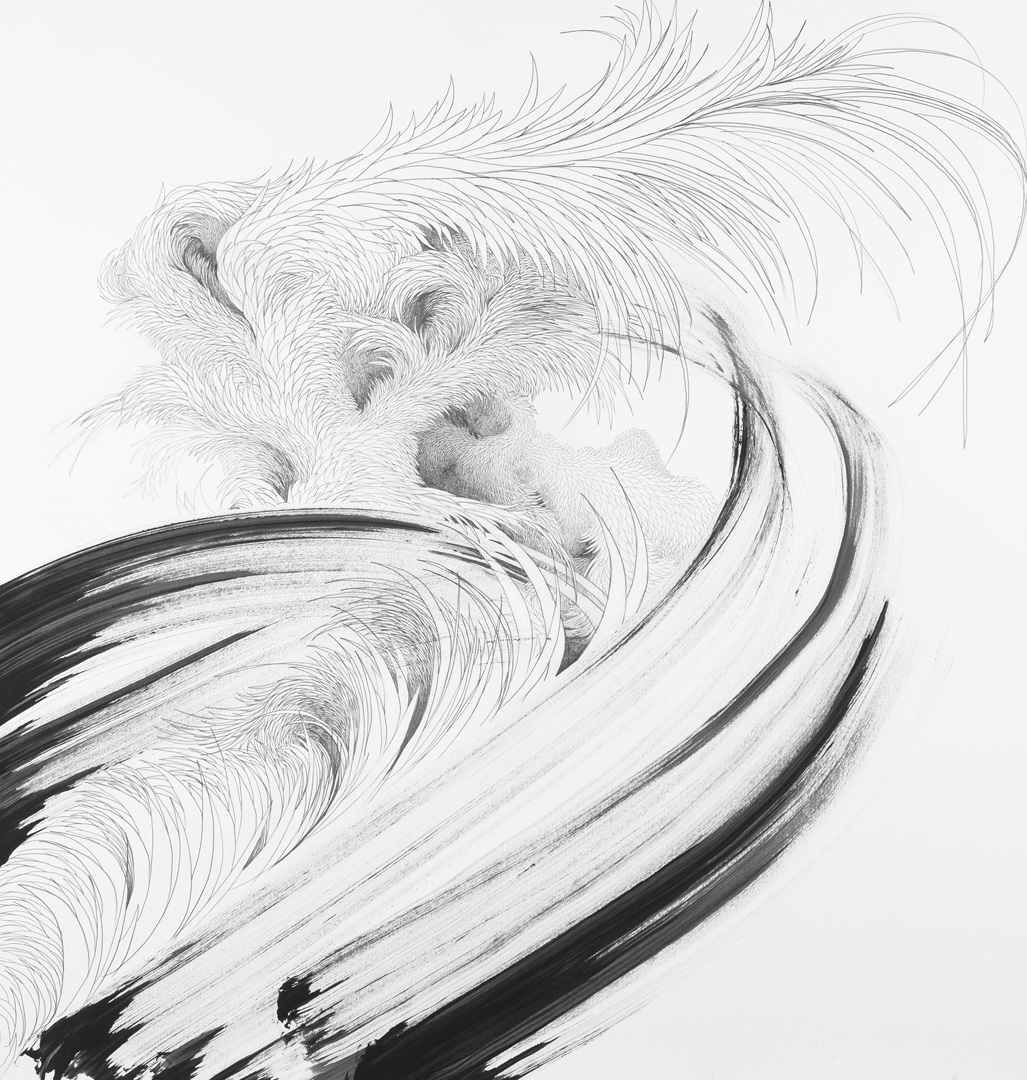
Her paintings are characterized by bold compositions combined with an astonishing degree of precision. Even today, she does not paint quickly or spontaneously. Each work emerges from extensive research, careful reflection, and painstaking execution. As a result, she produces only seven works a year on average, and at most ten. In a market where demand for her paintings continues to grow, each new work remains exceptionally rare.


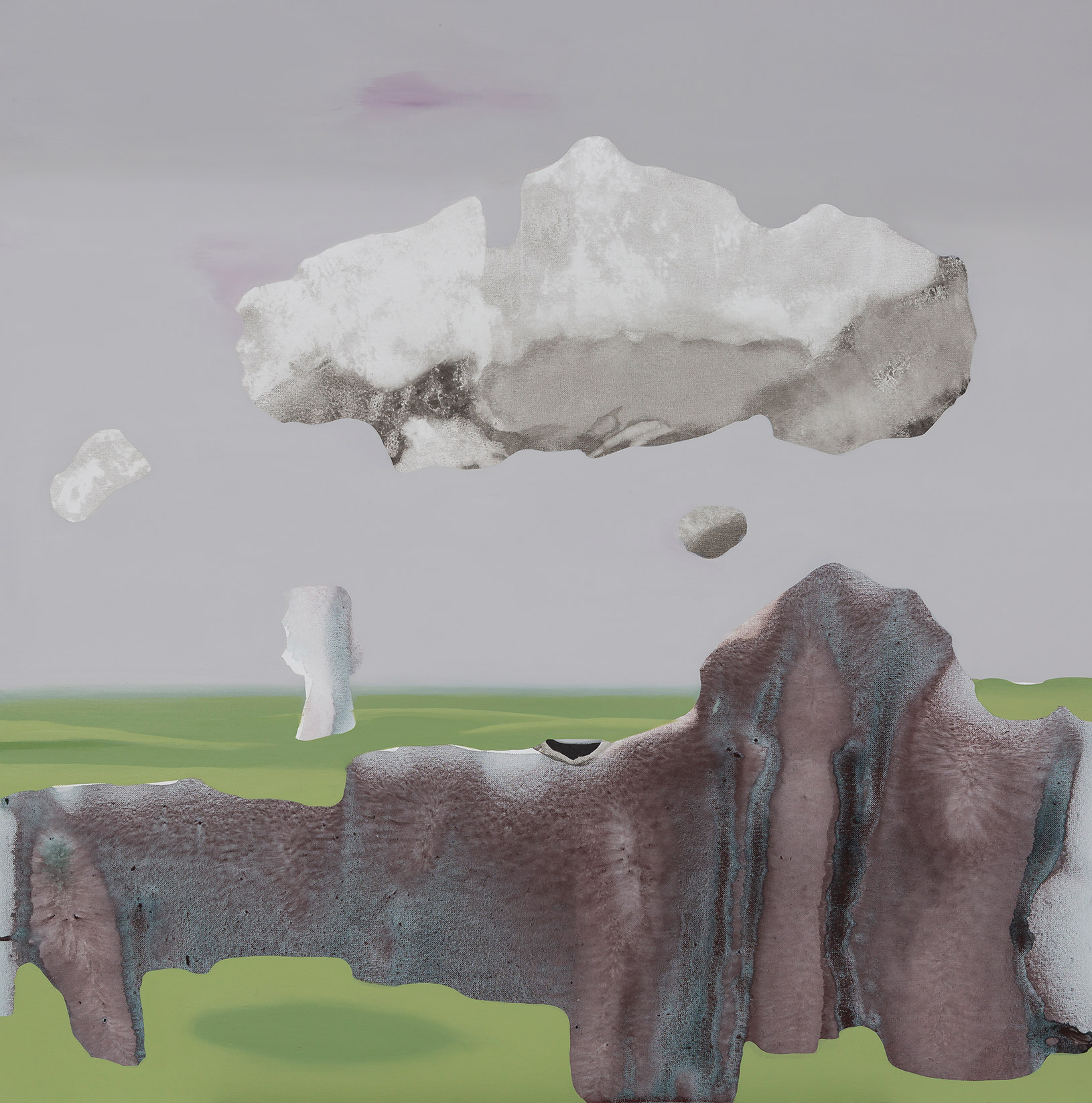
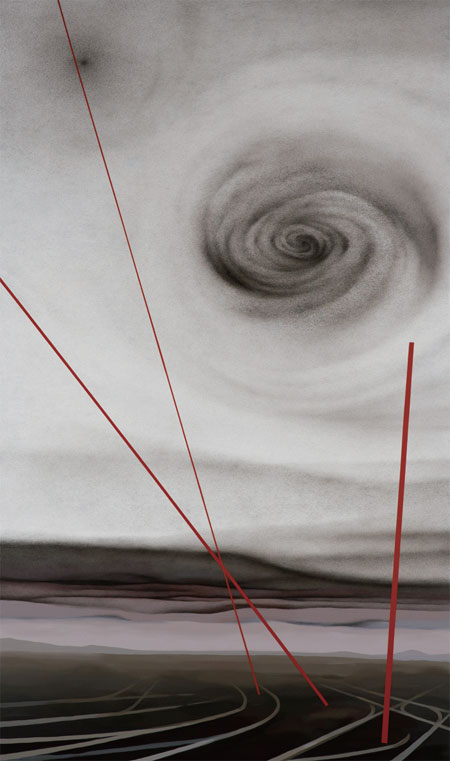
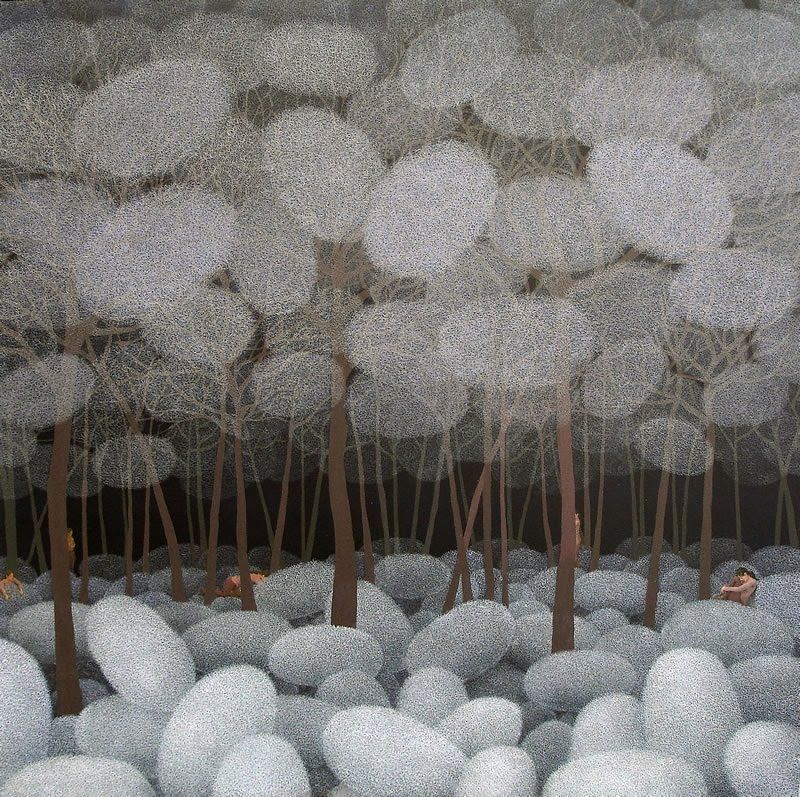
Min Jungyeon, Il n’y a pas de berger dans le désert, 2009, Acrylic on canvas, 130 x 97 cm © Min Jungyeon

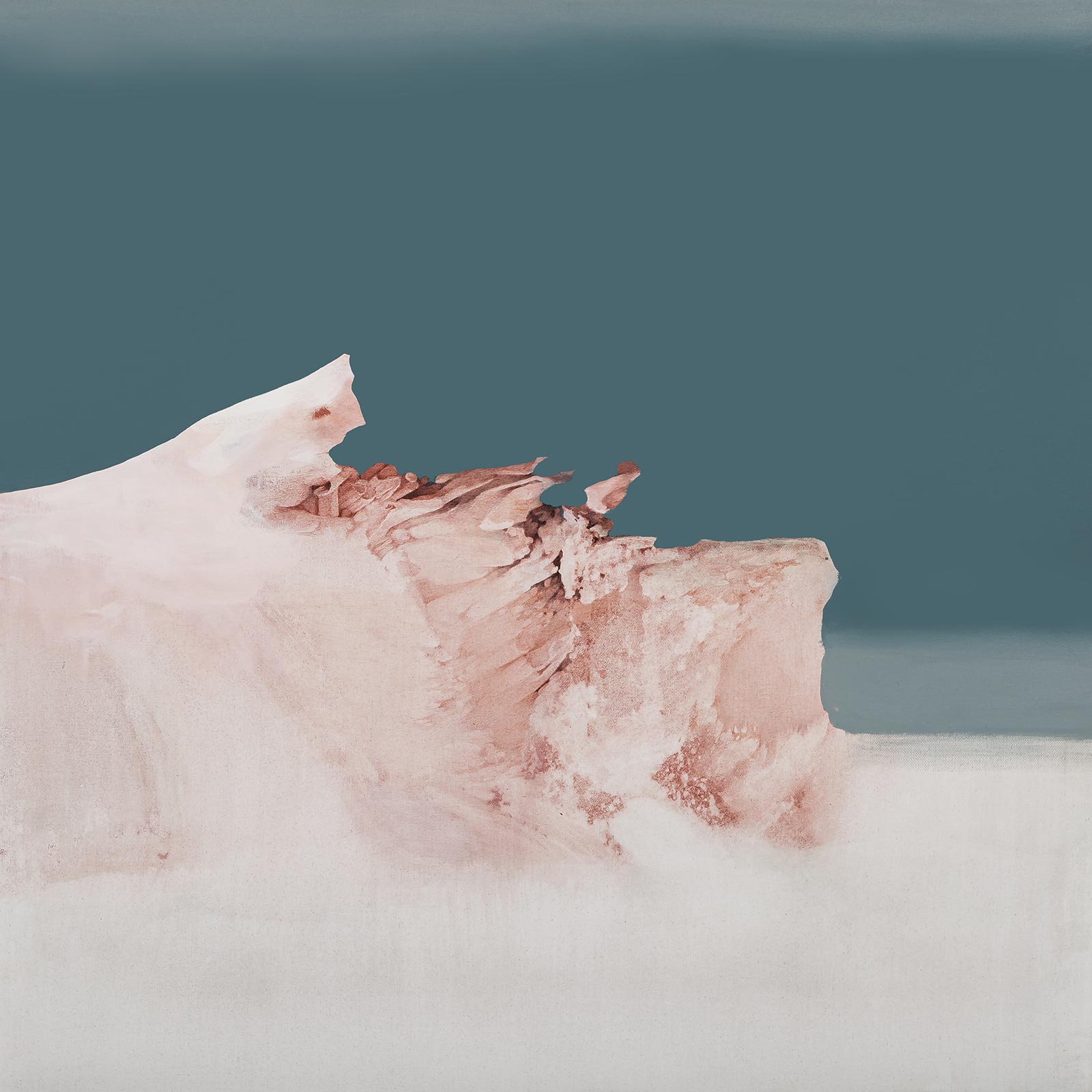
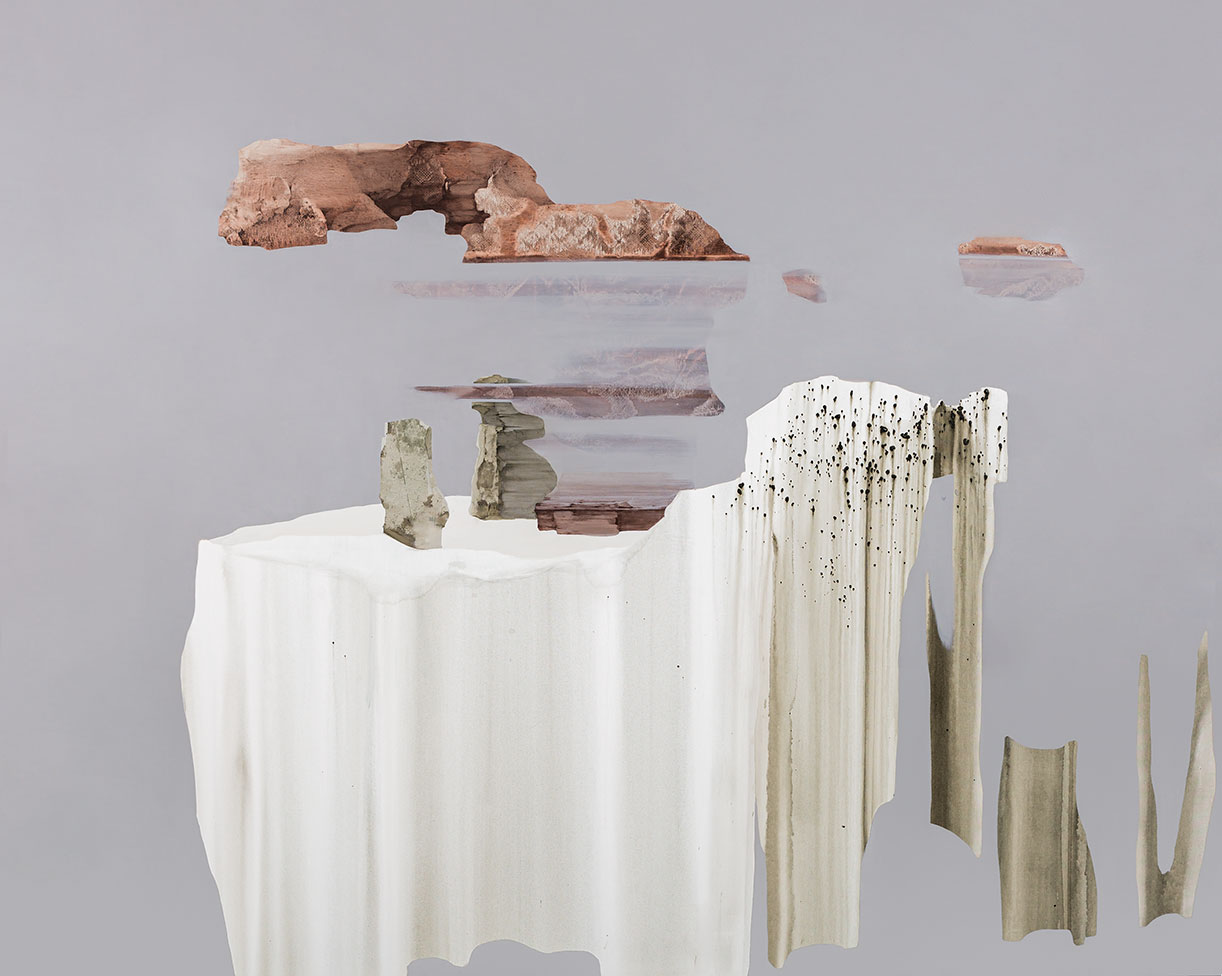
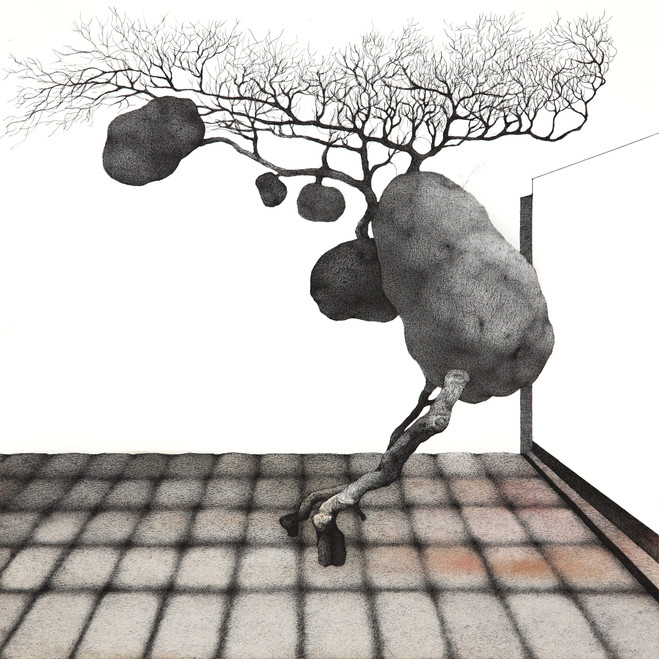
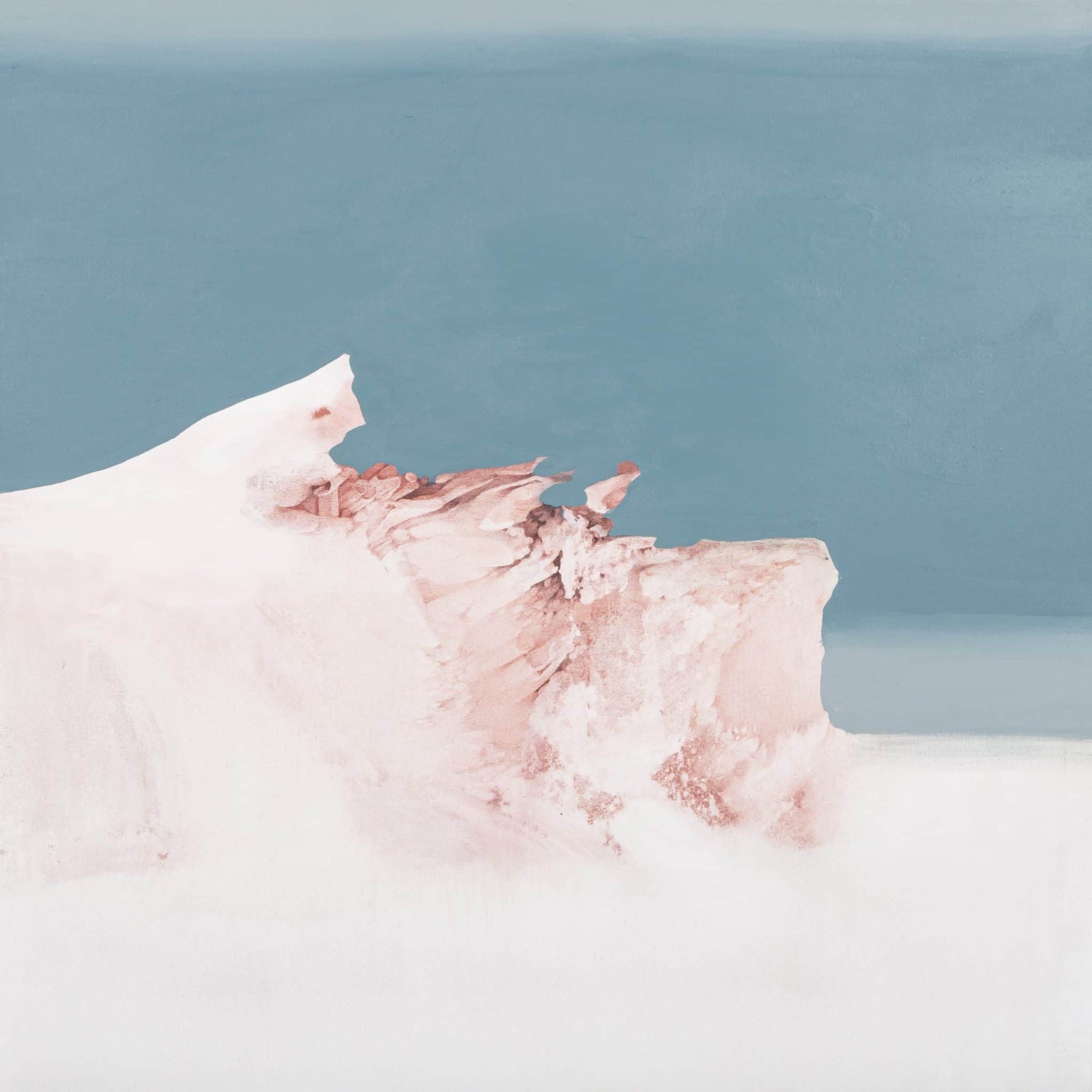
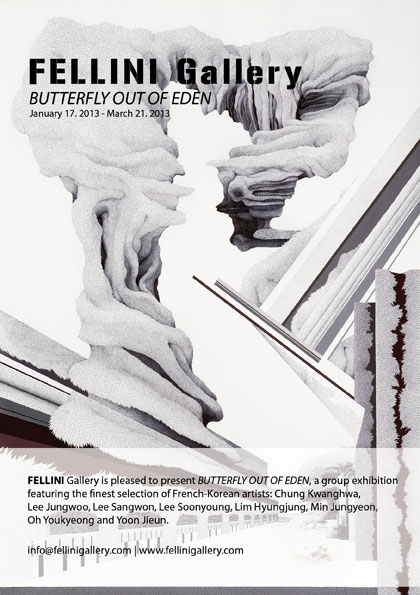
Strange forms resembling tree roots or stalactites frequently appear in Min Jungyeon’s paintings. Her father was an avid collector of fossils, and through him she developed an early fascination with prehistoric life forms, often drawing and studying their shapes.

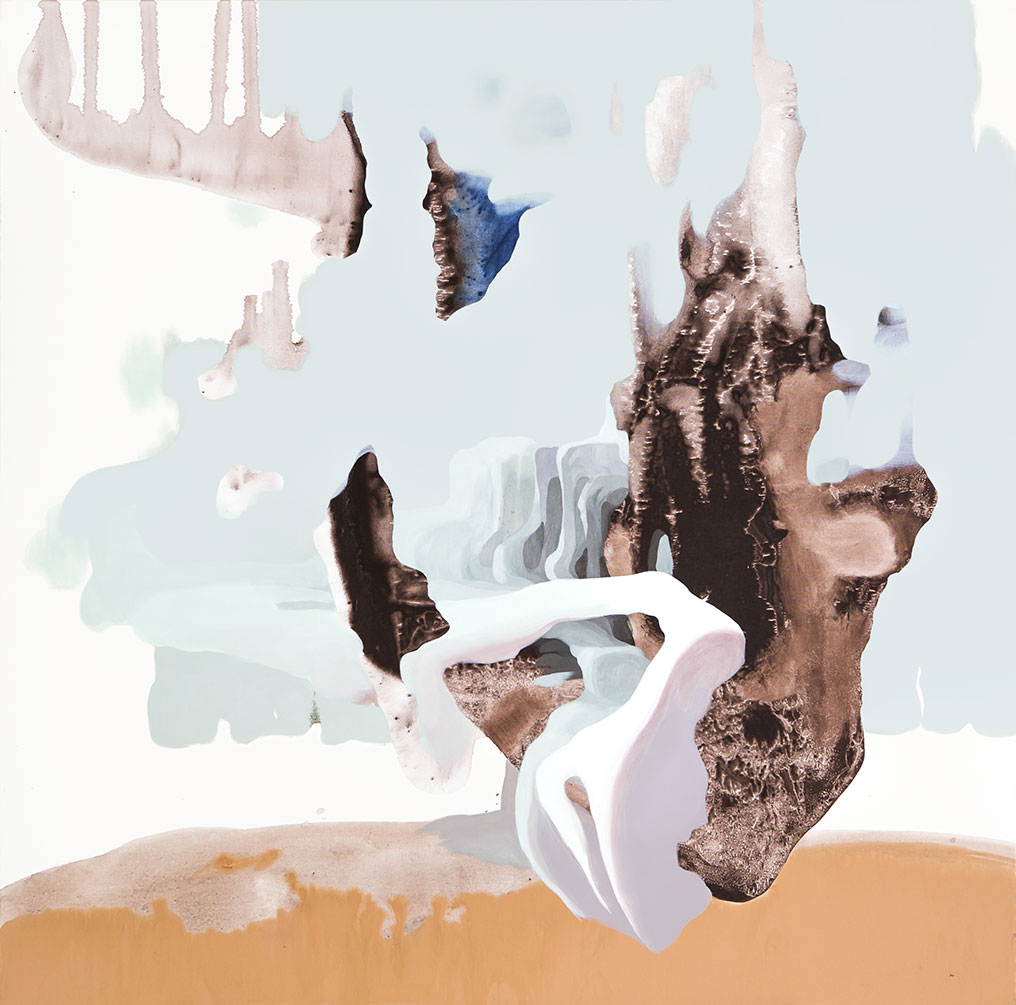
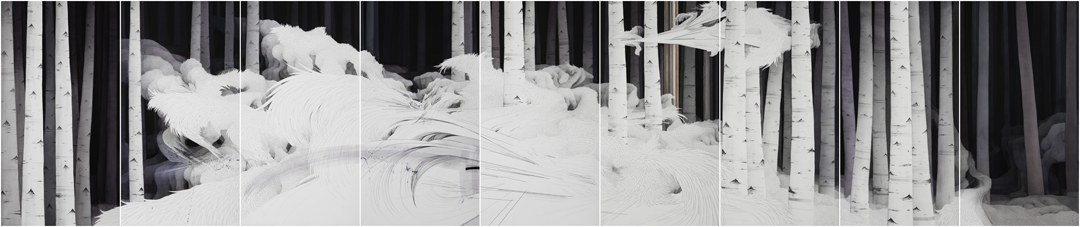
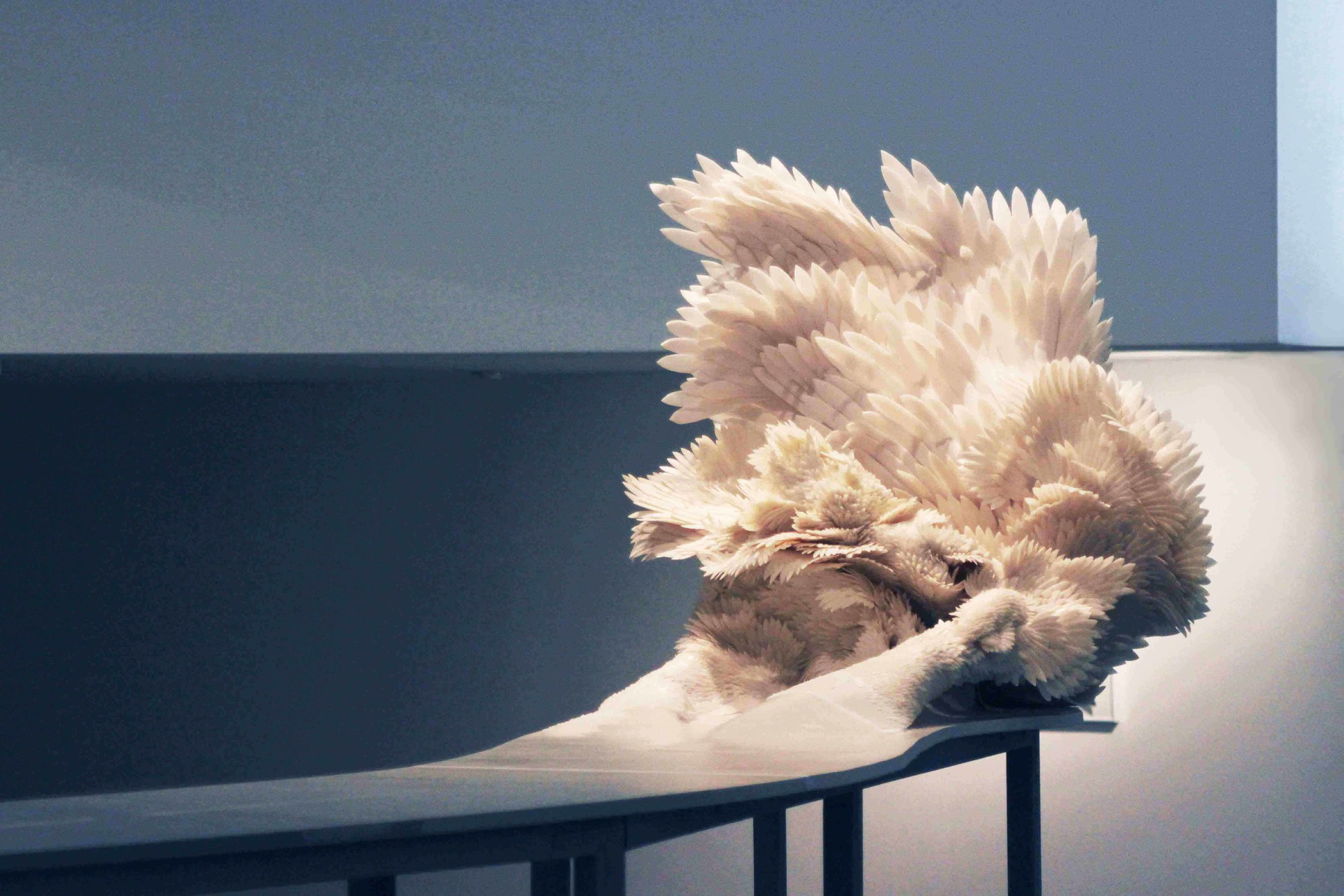
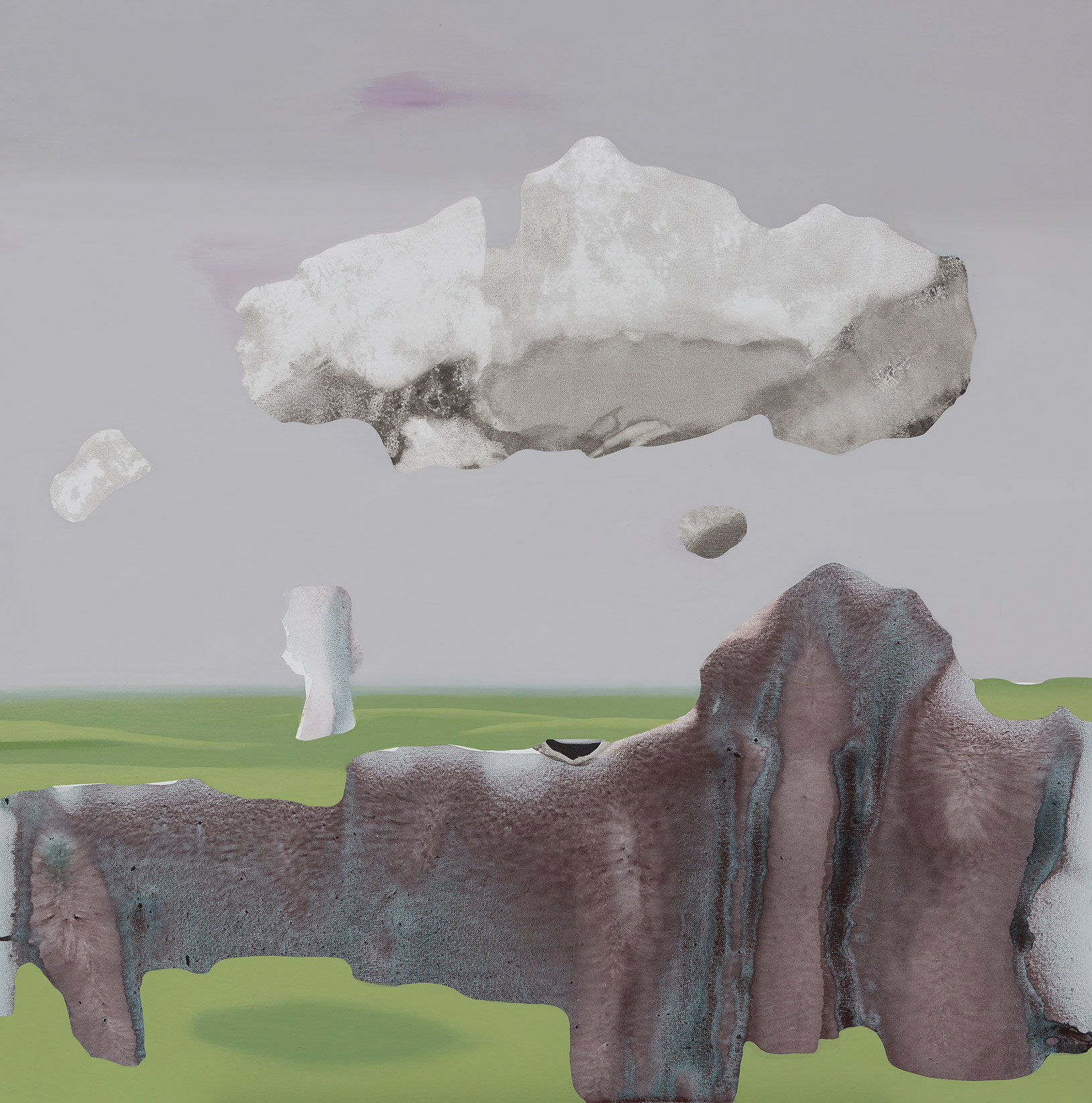
Through her work, new textures and unfamiliar forms have entered the language of painting. Her canvases are populated by images that evoke stalactites, internal organs, smoke, clouds, and other ambiguous entities. What these forms share is their resistance to definition and measurement. Their very reason for being seems rooted in a process of endless self-proliferation.

Some critics have interpreted these infinitely expanding forms through the concept of the rhizome, one of the central ideas developed by the French philosopher Gilles Deleuze. While Min’s paintings are by no means illustrations of Deleuzian philosophy, scholars working on Deleuze have shown considerable interest in her work. In 2010, she was invited to participate in a seminar organized by Deleuze researchers.

It is intriguing that her paintings occupy a productive point of encounter between art and philosophy. Defined as a “horizontally spreading root system,” the rhizome is a structure of infinite growth capable of extending in all directions, assuming multiple forms, and connecting with other entities. The sense of expansion without a discernible beginning or end that characterizes Min’s paintings closely recalls this rhizomatic structure.

The artist herself encapsulates this condition in the title of one of her works, Agrandir Mon Territoire. The territory she expands is not merely spatial; it also encompasses new realms of sensitivity and perception, dissolving established boundaries and opening pathways toward new ways of understanding the world.


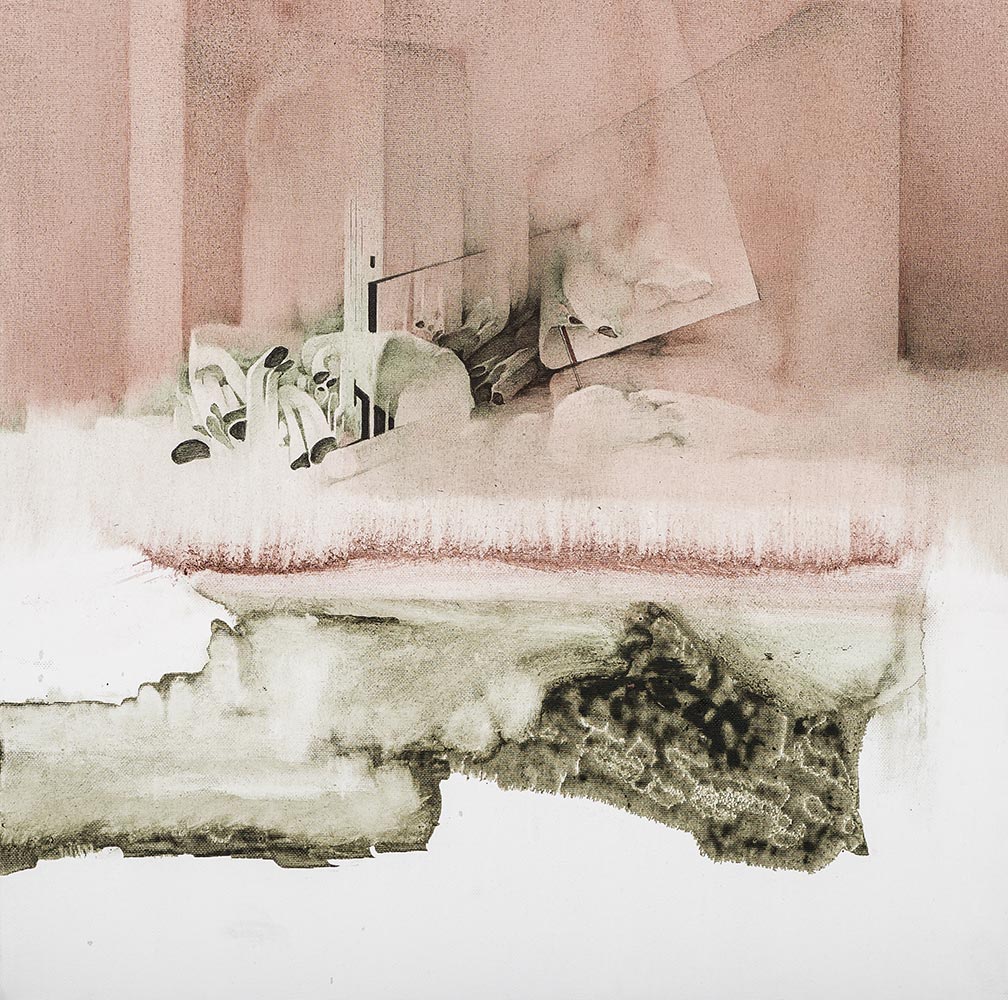
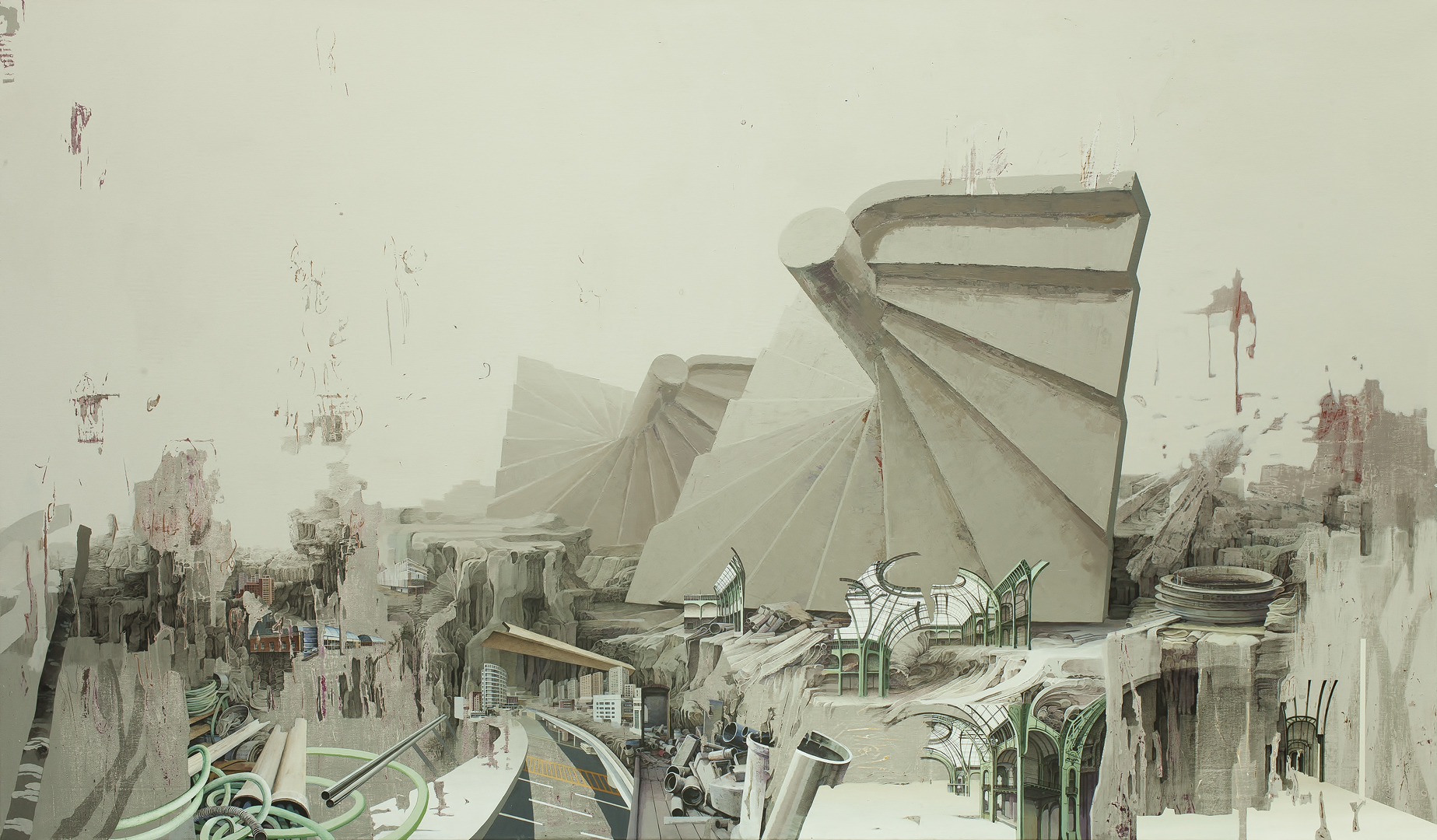
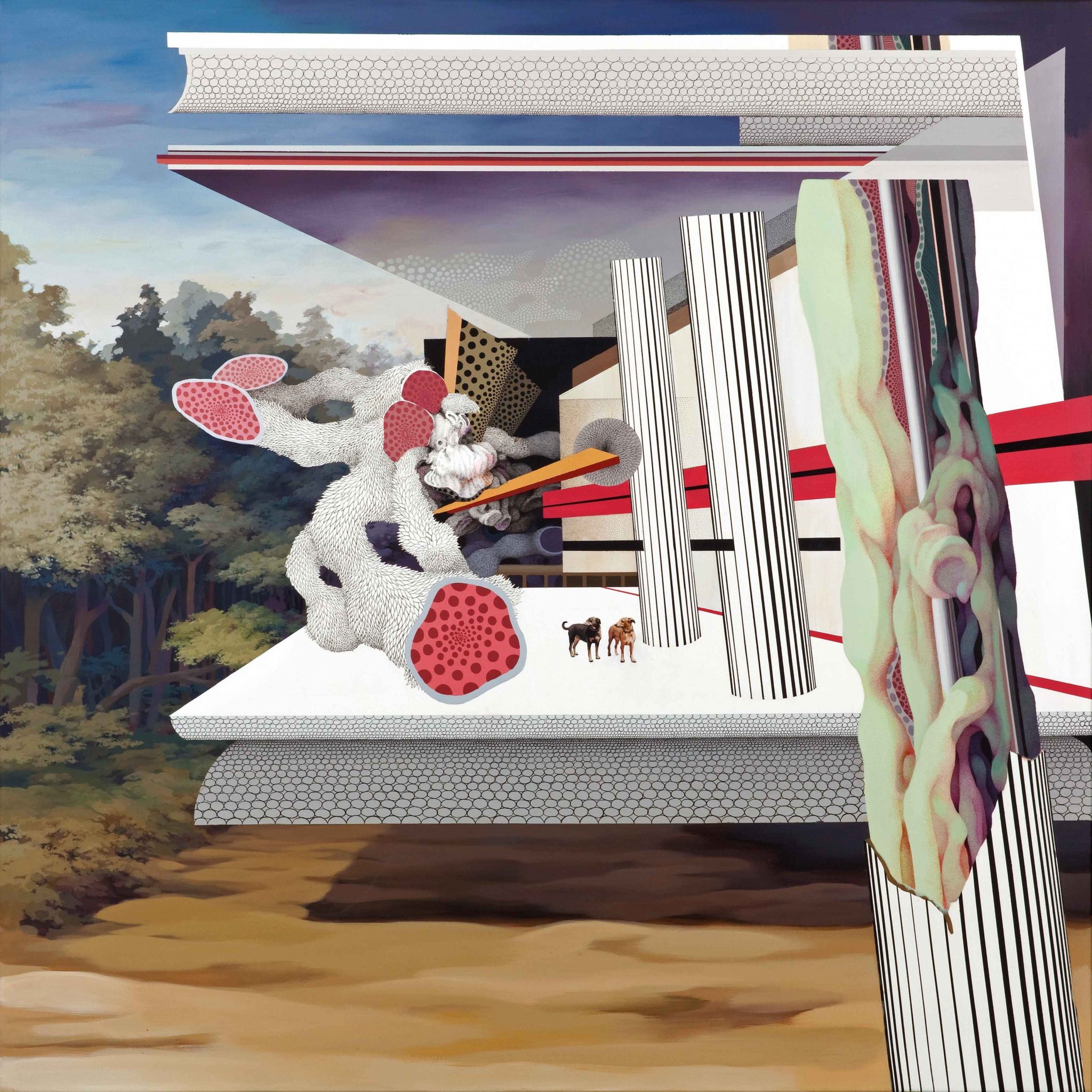
Min Jungyeon, Décombres, 2009, Acrylic on canvas, 130 x 97 cm © Min Jungyeon

“My paintings contain many elements that are connected, yet at the same time disconnected. They may seem melancholic, but they are also luminous; they are cold and warm simultaneously. I am interested in emphasizing the coexistence of opposites. As I focus on simultaneity, both space and subject matter become ambiguous. In doing so, I feel that the possibilities for connection and empathy become much broader.”

Her exploration of the simultaneity of opposites gradually expanded into a reflection on the coexistence of time and space. In her paintings, spaces are repeatedly dismantled and reassembled, undergoing countless transformations. What emerges is a four-dimensional world in which multiple temporalities and spatialities unfold simultaneously.
Within Min Jungyeon’s universe, everything is mutable—soft, fluid, and capable of transforming into something else. Even her own position as a Korean artist working in France transcends the twentieth-century notion of fixed national borders. Toward the end of the interview, she remarked that there was one thing she particularly wished to say: “I am deeply, deeply grateful to my parents.”
It was something she had long carried in her heart but had rarely expressed aloud. When she was only three years old, her parents recognized her unusual ability to draw a fan with a convincing sense of volume and perspective, and from that moment onward they never hesitated to support her aspiration to become an artist.

Today, not only her family but also audiences around the world who encounter her work continue to appreciate and support an artist whose practice moves freely across borders and engages with the world on an international stage.

References