Ahn Soyeon
Art Critic
* Speech and gesture, words or language, blurriness and faintness, between and connection, stroking and handing over, flowing and wandering, untitled and recollection—these series of similar yet different words overlap and intersect with one another, creating a certain situation.
Taking as a single support a space that is divided yet connected by narrow passages and walls, ambiguous meanings sometimes seem to be woven clearly, only to scatter into a dark labyrinth. Like traces of hidden words, the materials and forms left behind by certain gestures alternately fill the empty walls.
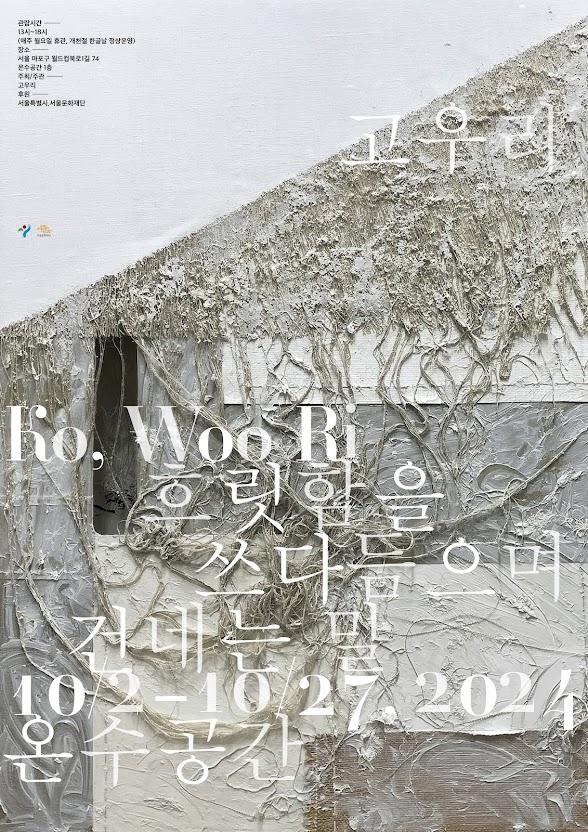
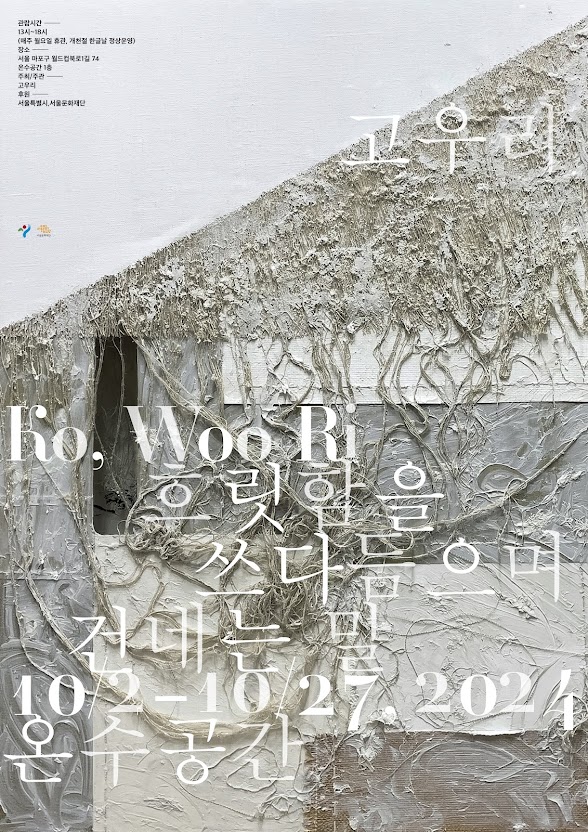
The filled walls seem even more labyrinthine. Meanings of words and actions that should stand on opposite sides—drawing and erasing, attaching and cutting, even inside and outside—coexist without hesitation. Ko Woori’s solo exhibition 《Whispers upon Stroke of a Blur》(2024) shows such a paradox.
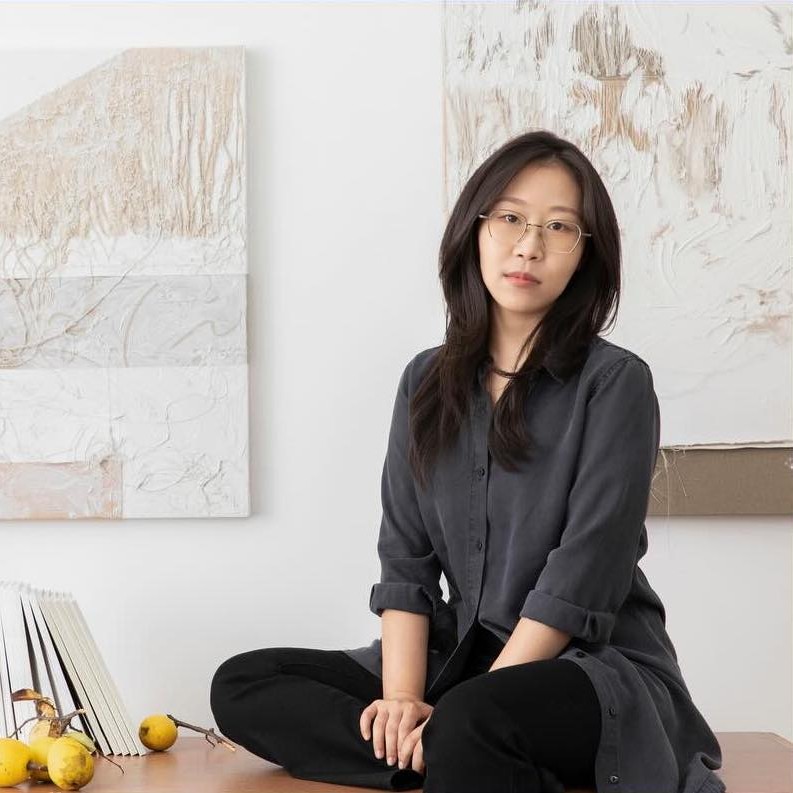
* Ko Woori’s paintings seem to contain a tumultuous inner story: things are intricately tangled with one another, and traces of serious damage and cutting remain as they are.
While openly revealing these circumstances, they also show the immobility of a body halted in a sorrowful moment, like a wounded face that nonetheless hides its own expression. In the sentence “Whispers upon Stroke of a Blur,” I wonder who the subject of this paradoxical act might be.
Is it the artist herself, standing face to face with cut canvas fragments and the textures of surfaces whose saturation has faded into blurriness? Or is it ghost-like beings who, as damaged bodies, continue to repeat lack and repair while circling the relationships between painting and painting?
Her paintings perhaps appear as traces of events occurring within relationships between the second-person pronouns “I” and “you,” whose subjects remain uncertain. Ko Woori, who has built clues for pictorial relationships from the anxiety and conflict of reality experienced in relationships with others, told me, when I asked her what painting meant to her, that painting exists for her in a position somewhat like a friend.
Yet in this exhibition, moving back and forth countless times between painting and painting, she examined the position of the gap opened by the “memory(recollection)” of the “mother body(original form).”
The second-person relationship between her and painting is transformed into a relationship of memory toward the mother body between painting and painting, giving rise to a performative act that ceaselessly adjusts the distance between “I” and “you.”
* The movement through the exhibition space, which flows along the walls through Blurry Language, Connected Gesture(2024), Whispers upon Stroke of a Blur(2024), and Between Wandering Winds(2024), shows a strange tension in which traces of matter combined with certain actions rupture and join the boundary between them, like the blurred connections of individual titles and the joining of fragmented words.
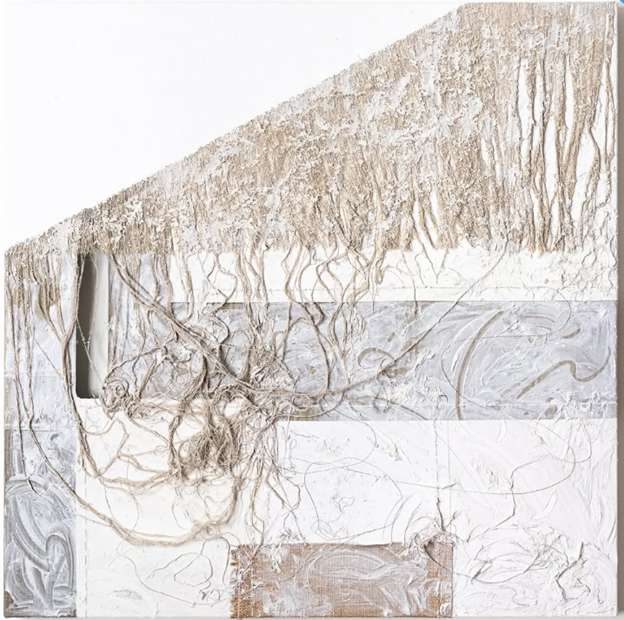
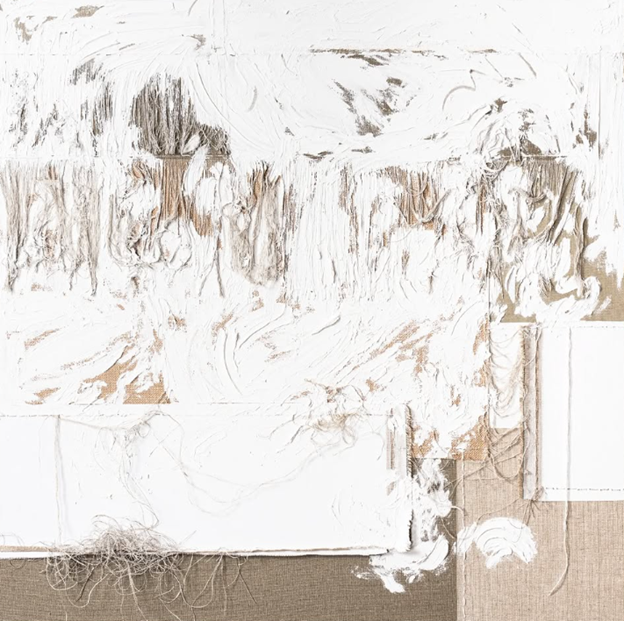
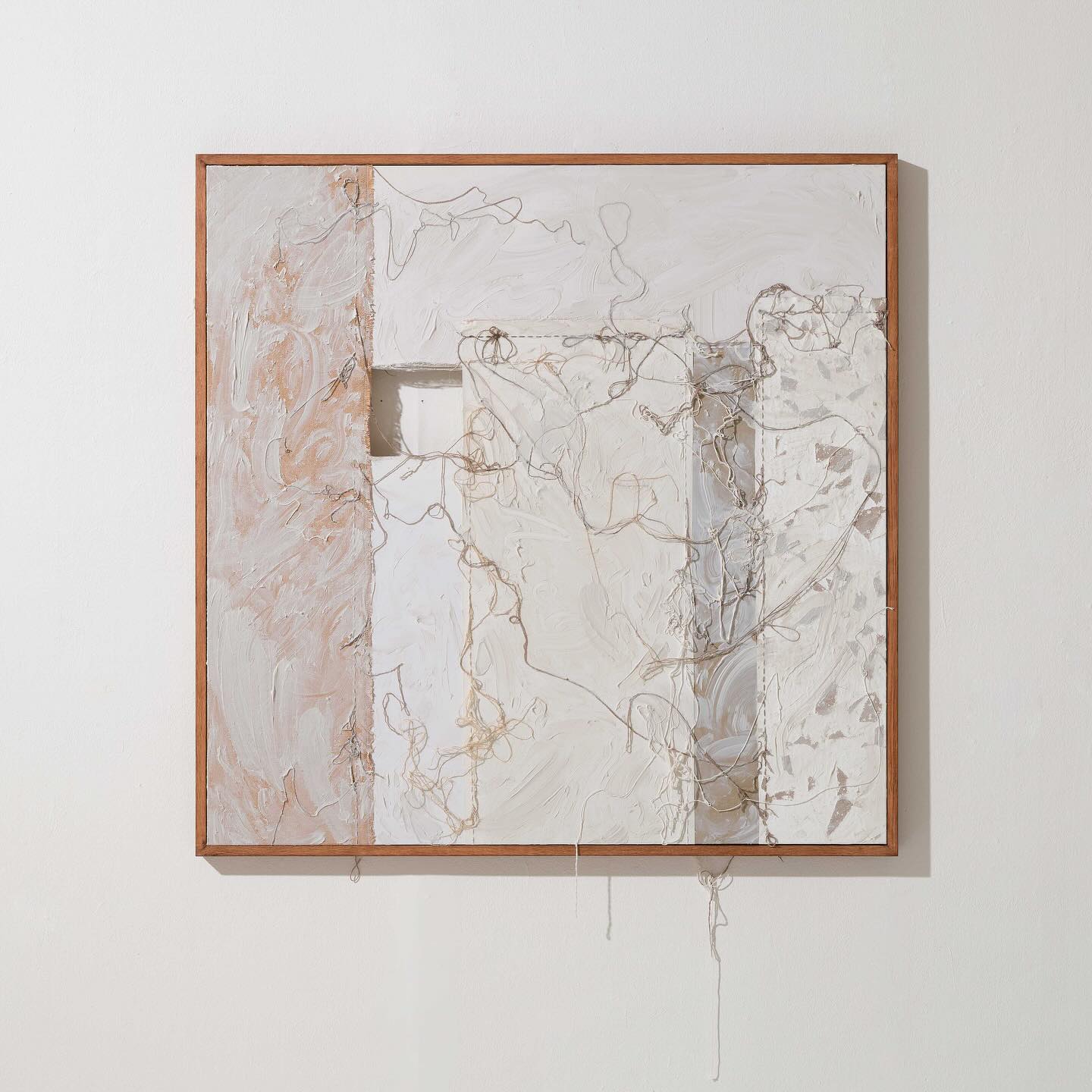
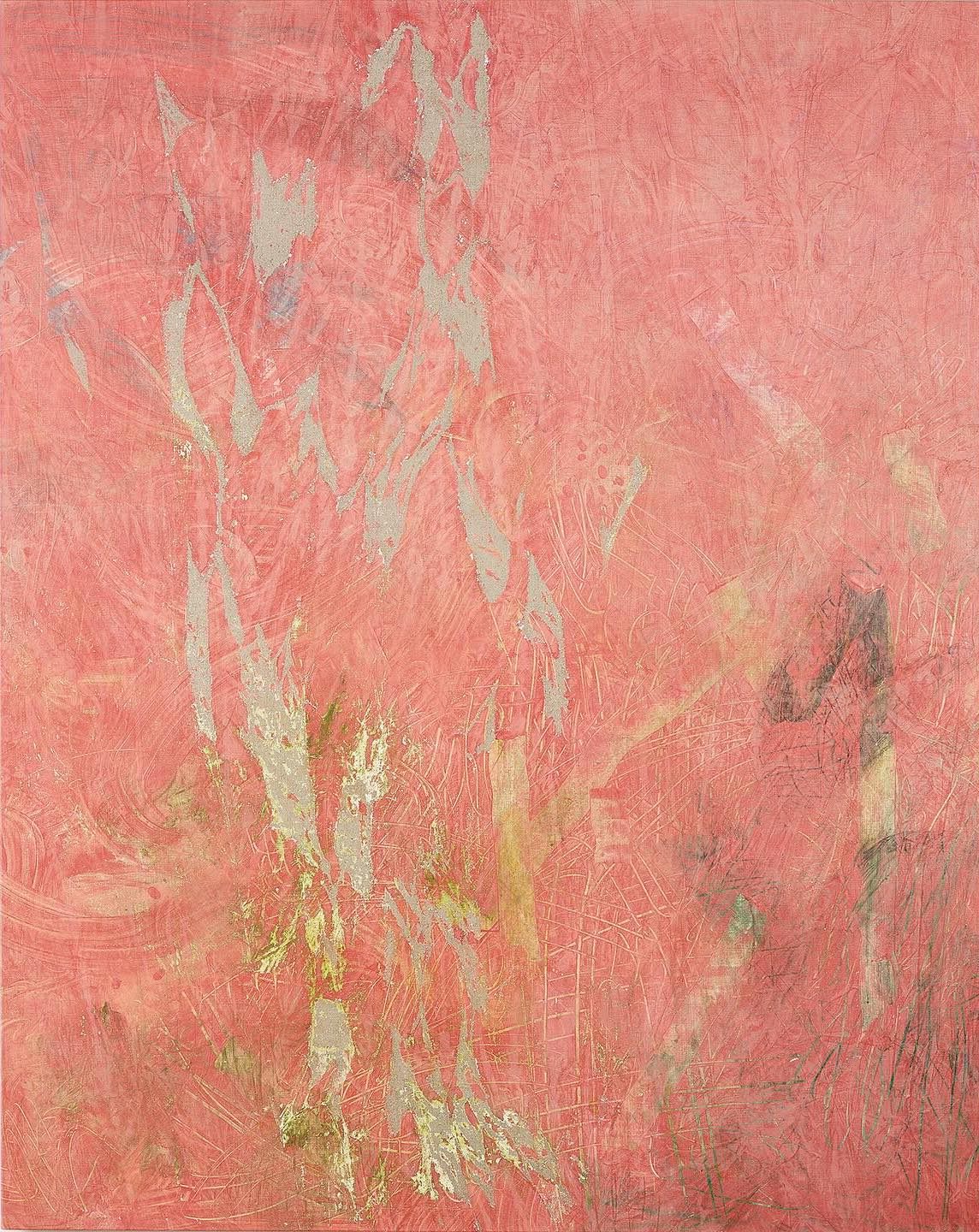
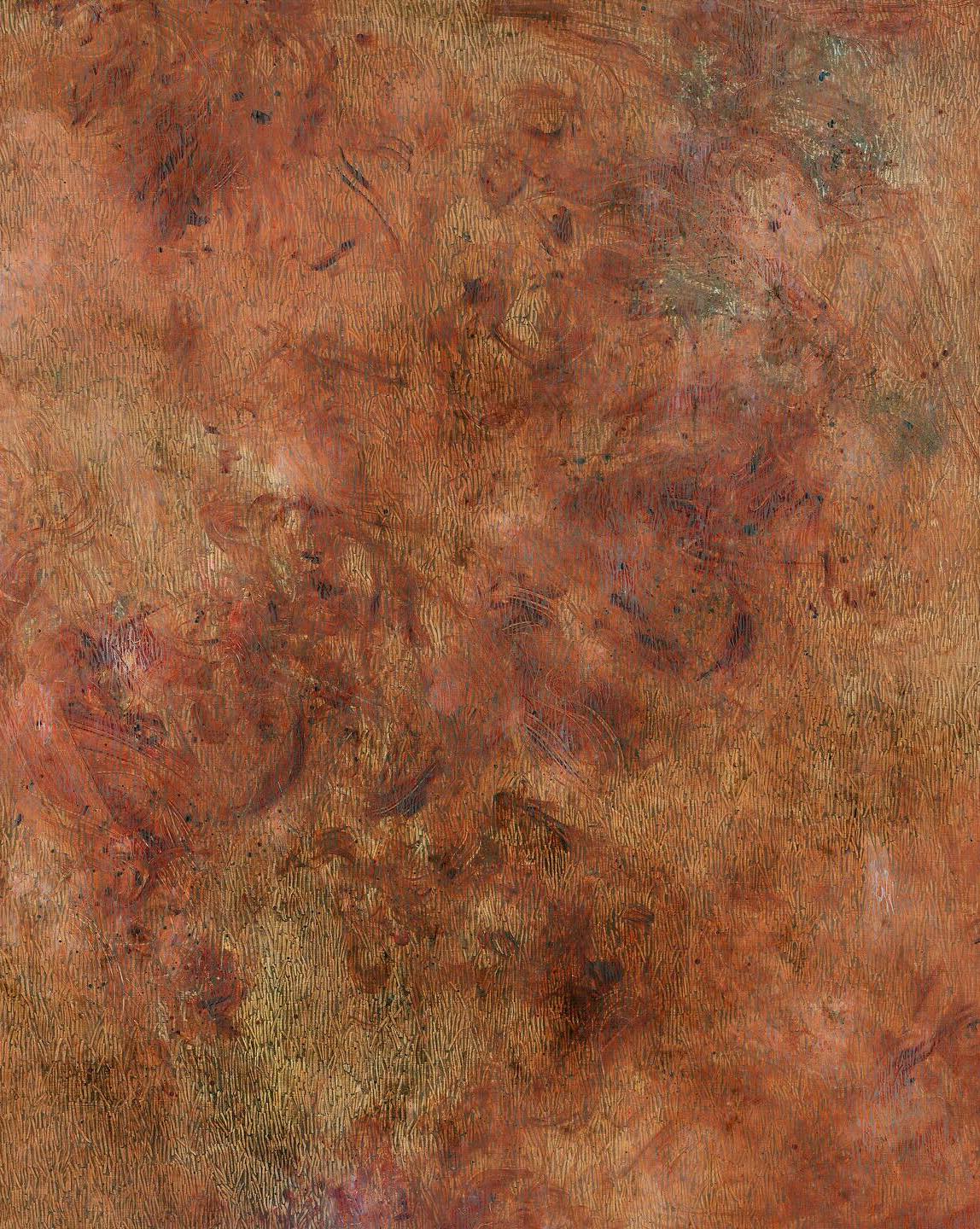
Whispers upon Stroke of a Blur, made by sewing together fragmented canvases and spreading almost achromatic materials—Handycoat and molding paste—over them as if kneading and applying them by hand, leaves room to imagine the exchange of(pictorial) actions between two unspecified figures, “I” and “you.”
With materials that can cover the surface rather than paint, she must have handled transparency and flexible movement in various ways. The incomplete canvas and the bodily acts directed toward it busily seek the conditions under which the “traces caused by the physical relationship of action and reaction” can be called painting.
By dismantling the canvas, and by replacing the saturation of paint with the transparent glimmer of silver materials, Ko Woori constructs a texture of the pictorial surface that satisfies both(pictorial) substance and(pictorial) illusion, closely forming the relationship between “action” and “tactility.” At this point, she personifies not only her own bodily acts, but also the canvas as an incomplete body, making it confront her as an acting subject.
Thus, within the second-person relationship of “I” and “you,” she horizontally(re)positions the way the two acts combine as if stroking one another, and the status of the front and back of the pictorial surface as a kind of boundary plane. Rather than evoking the(conventional) plane of painting that pursues frontality, it recalls a tactile “skin” that confronts another body as a personified body.
The “blurriness” specified in the title suggests a new accessibility within the transformation of a paradoxical sensation: a tactile response powerfully drawn out by visual blurriness. The performative act of the hand, beyond the limits of the retina, gives birth to the possibility of tactile painting—that is, an active skin called painting as the trace of an act.
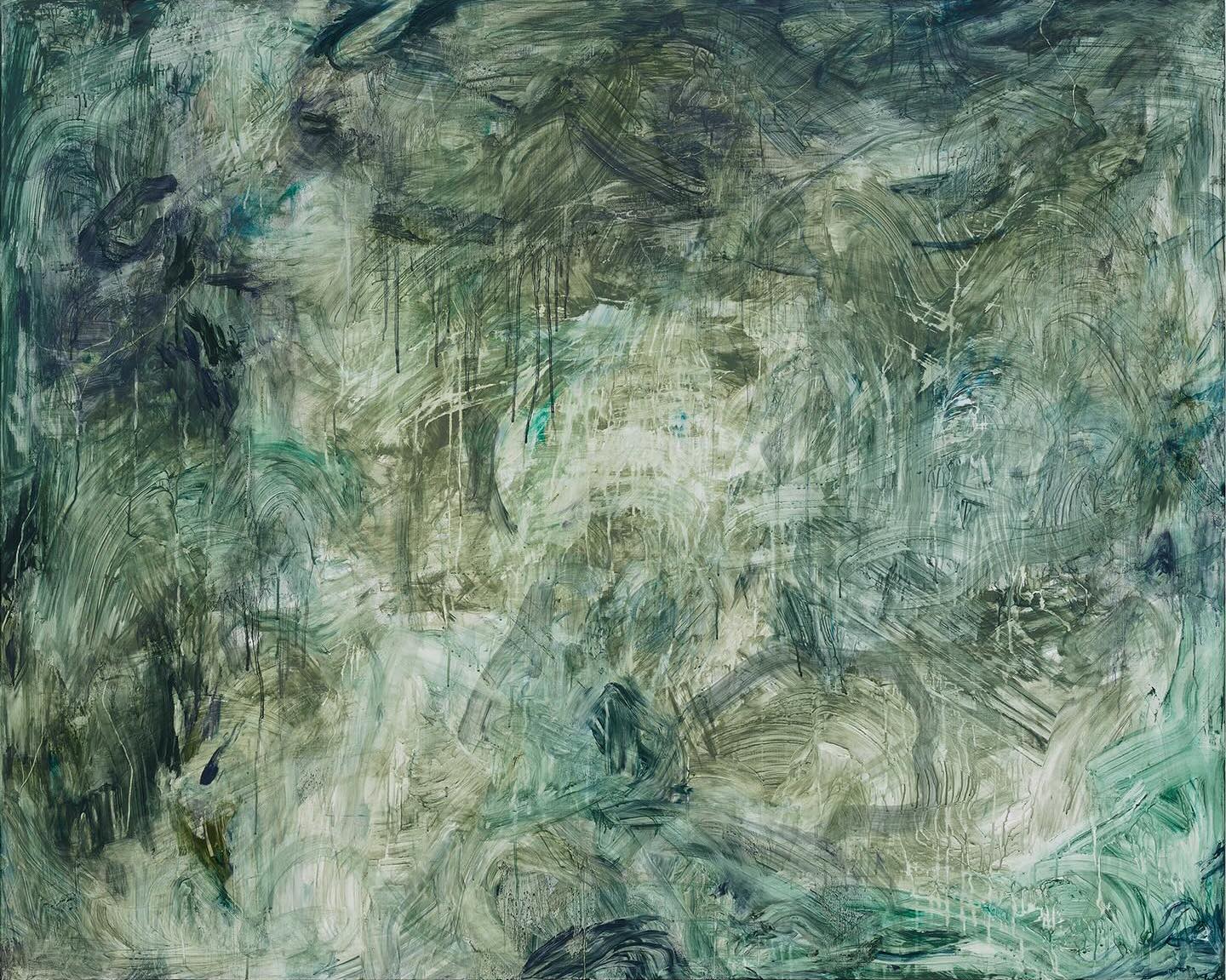
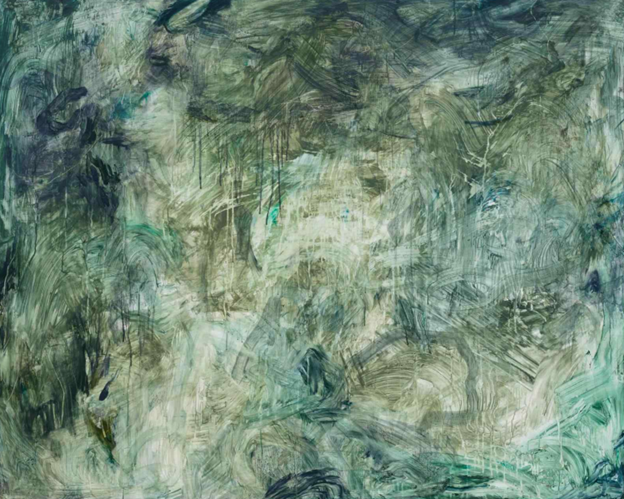
The exploration of the pictorial surface has long been one of her concerns. She accepts the ambivalent pictorial surface of chance and prediction obtained through exchanges between the canvas itself and arbitrary actions. To call this an abstract trace of gesture painting would be insufficient, since the performative action/reaction of the canvas intervenes as much as the artist’s own action.
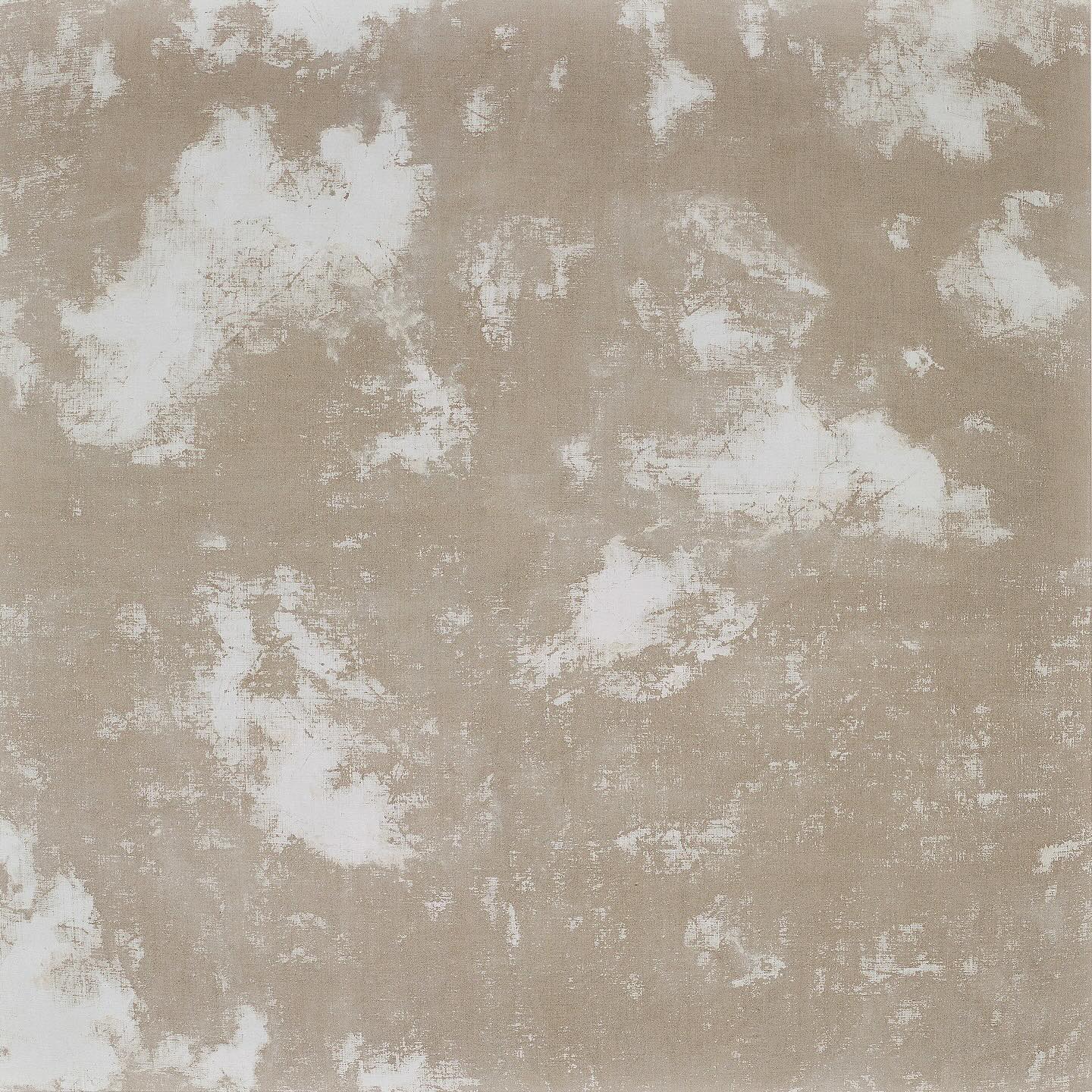
She rolls and twists the canvas, cuts the plane inside the canvas into numerous fragments, and leaves alone the accidents in which threads unravel from the cut edges. Rather, she approaches the cracks of that wounded skin and leaves the irreparable irregularities like stains.
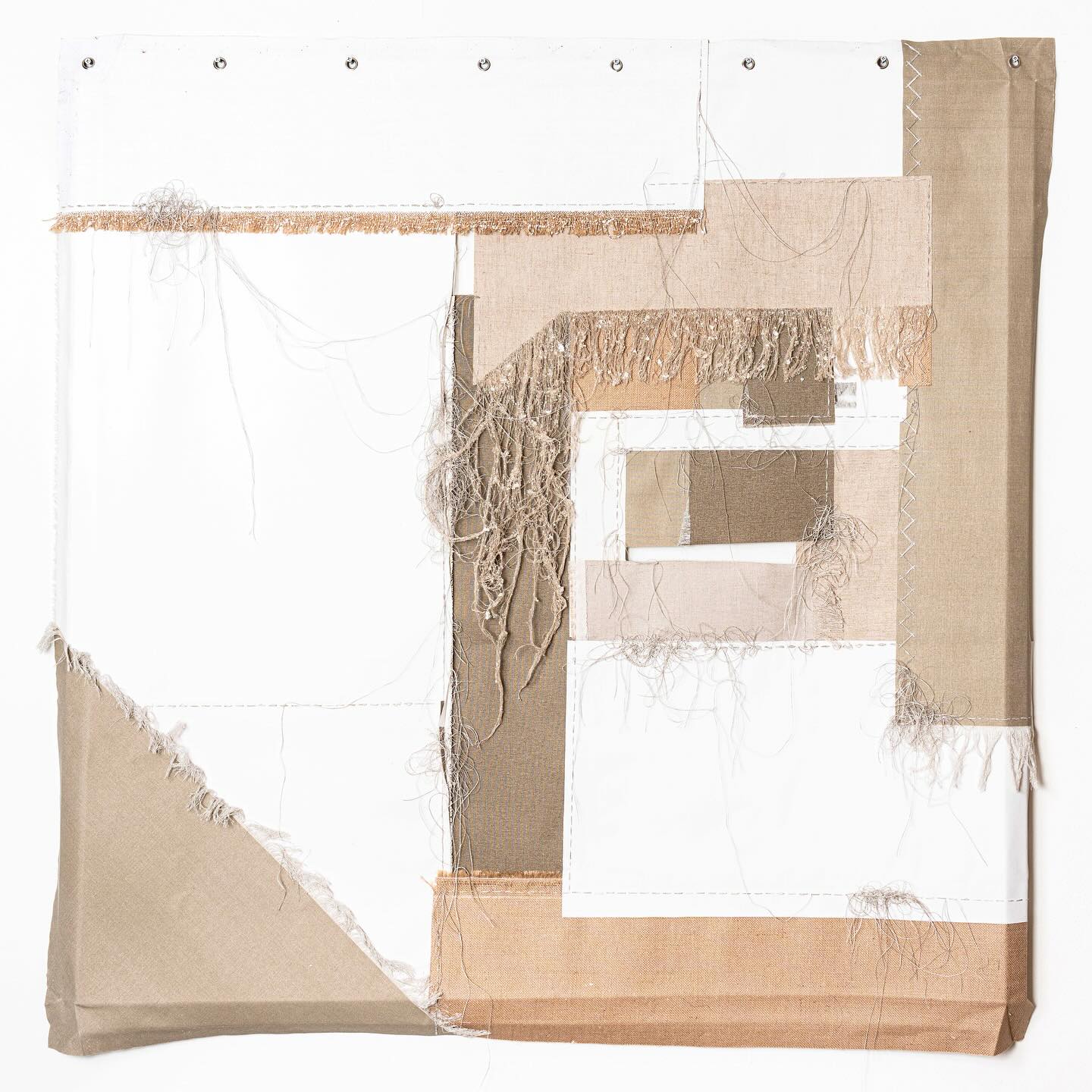
In this exhibition, the dismantling of the canvas is emphasized more than ever, and the traces of these exchanged acts—folded and unfolded, cut and reattached, moving between passive and active positions—are clearly visible on the surface. Looking at Blurry Language, Connected Gesture, the edges of the painting show a tense relationship of force, as strong traces of folding and efforts of unfolding exchange the energies of past and present.
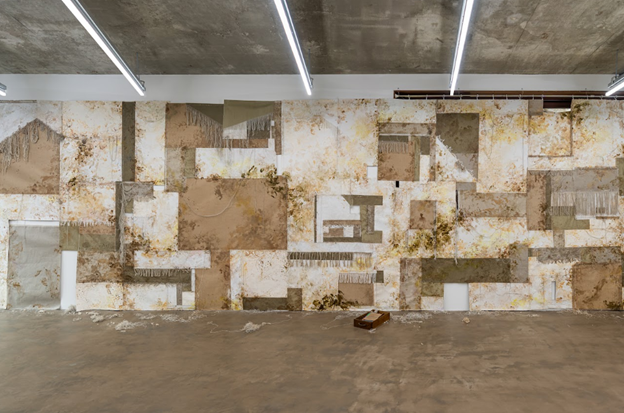
Furthermore, various canvas fabrics are sewn together without much consideration for differences in color, thickness, shape, or strength, exposing even the unreasonable conditions between the individual fragments. From the beginning, the surface of this painting seems honest, as if denying its role as a taut plane spread out to paint something upon it, instead expelling its angular inner flesh outward without reserve.
Facing this untamed, angular surface, the artist then passes over white and flat places and approaches the boundaries where mottled and heterogeneous edges are tangled and connected, adding another act that layers her tactility upon them. In this way, the body of the canvas and Ko Woori’s body are mediated by the(accidental yet inevitable) performativity of the connected “gesture” between them.
* Entering deeper into the exhibition space, one glimpses a subtle time difference(i/Bt) moving between resemblance and difference among paintings, much like the paradoxical joining of the pictorial surface. Here is located the painting that she identifies as the “mother body.”
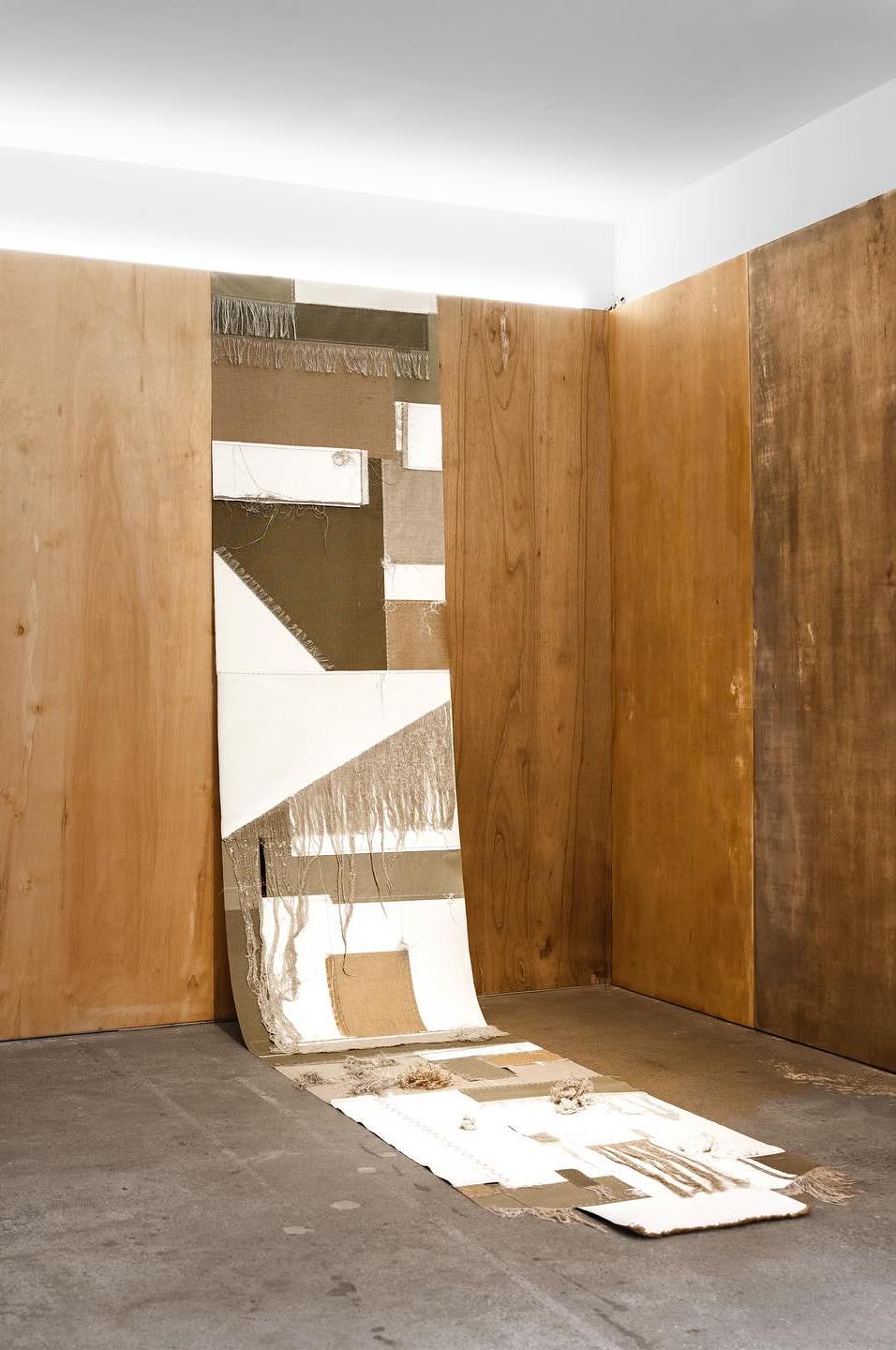
Untitled-Connected Words(2024), stretched long along one wall, boldly reveals the silence of its existence, as if representing a(failed) monumental body, with the endlessly connected canvas surface hanging down from the corner where the wall meets the ceiling to the floor. Her painting, which appears to speak of nothing other than the scars on that skin, merely lays out a long sequence of traces of “sutured” actions.
The image of painting evoked by “untitled” and “connected words” presents the manifestation of absence thrown outside meaning, as if it were only the continuous connection of(meaningless) “absence.” She grants this paradoxical surface the identity of the “mother body” as an(impossible) original form.
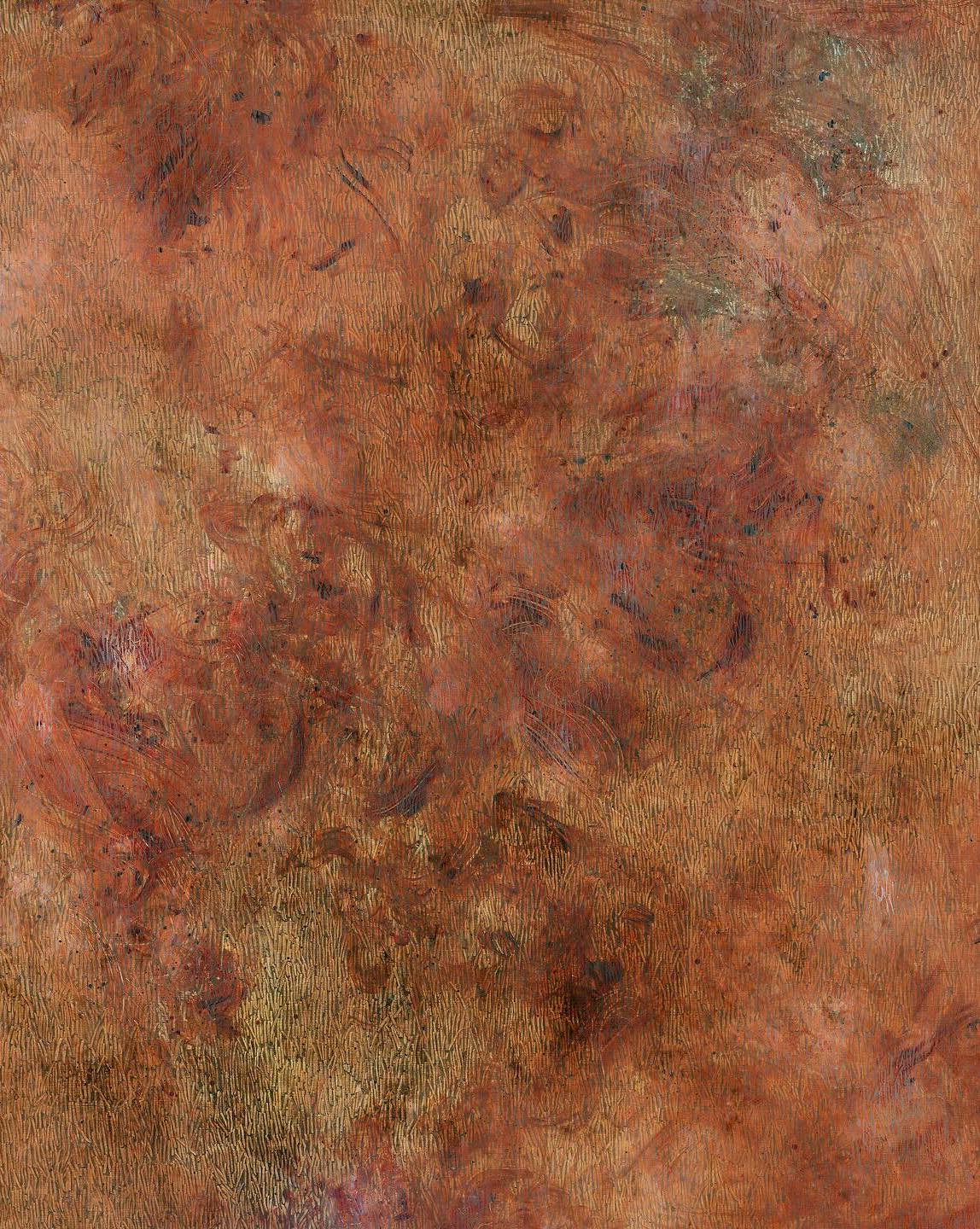
Could we call this the inside of the mother body’s skin? Behind the wall that supports the long-stretched Untitled-Connected Words, that is, on the opposite side of the wall understood as the inside of this painting’s body, Connected Words-Review 1(2024) and Connected Words-Review 2(2024), which recollect the memory of the mother-body painting, are placed side by side.
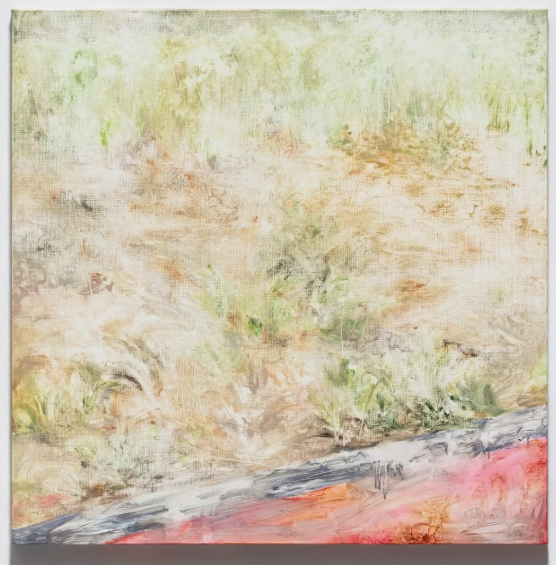
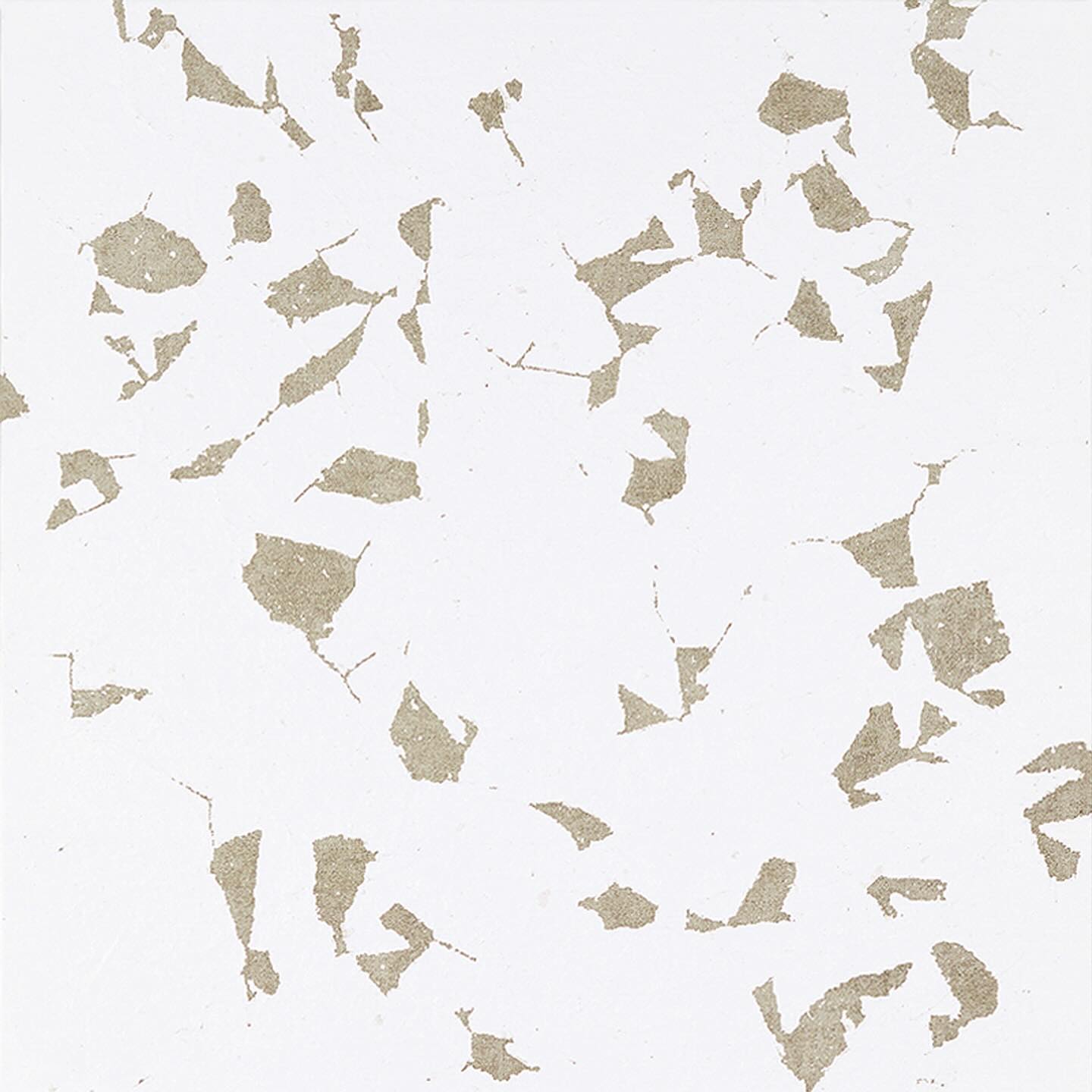
Then are the two a relationship born from one body, sharing the same genetic traits? The two recollected images, different in size and shape, are fragments recorded by Ko Woori through the imitation of her own body, remembering parts of Untitled-Connected Words that one had just passed by.
Sharing both resemblance to and difference from the mother body, and at the same time strangely implying disconnection and connection between the recollected images, this complex relationship of time and space, which shows the repetition of an earlier action remembered by Ko Woori’s body as an actor, reveals the substance of the “blurriness” clearly visible on the surface of her painting.
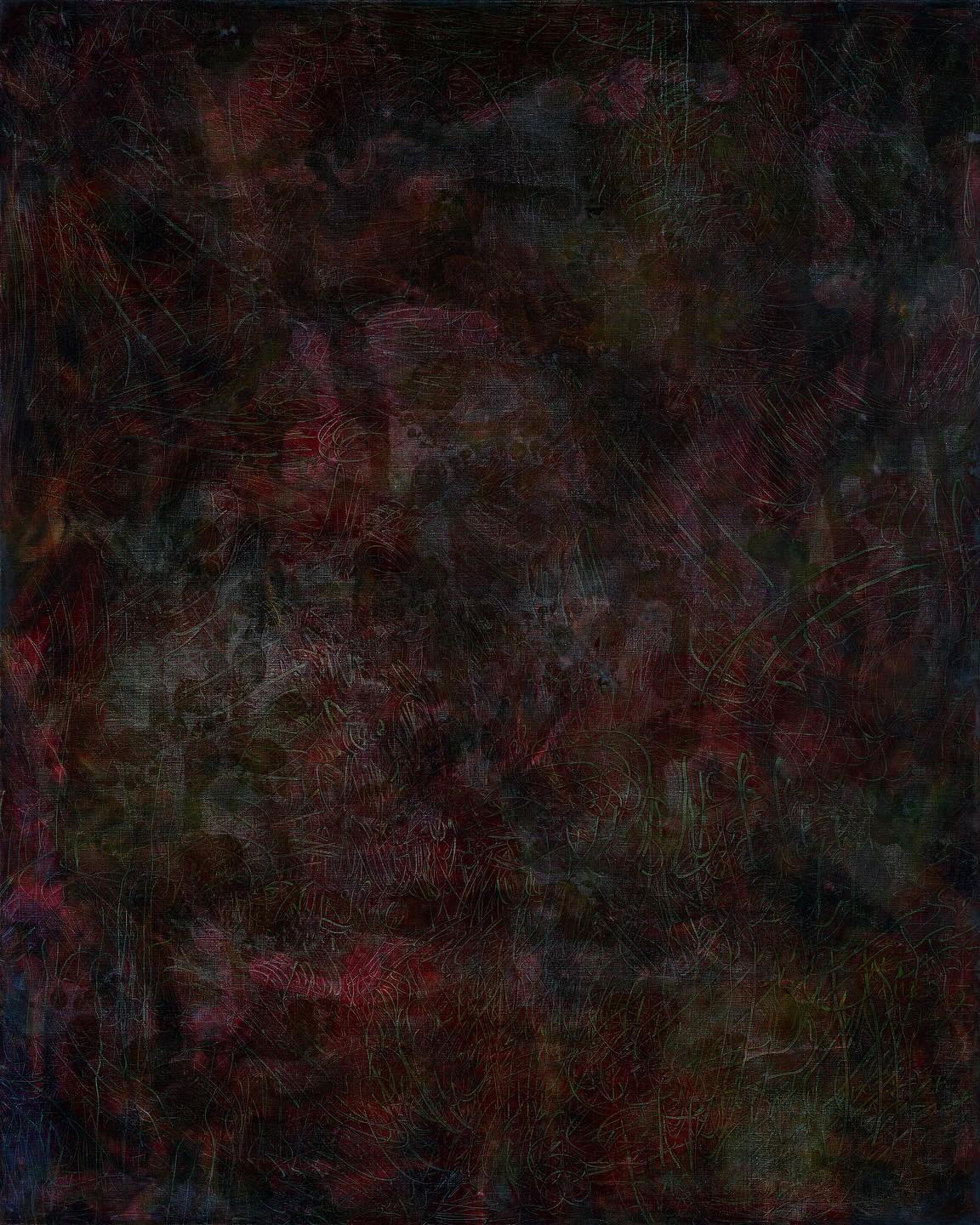
When one reaches the space where Untitled-Faint Words(2024) is placed, Ko Woori arranges three recollected painting works side by side to the right of the mother-body painting, retracing the different contexts of time and space that are disjunctively connected within these three.
The actions and reactions of heterogeneous acts composing the surface of Untitled-Faint Words, the chance and inevitability between them as they betray visual action and again endanger the surface through tactile reaction, and the original form of that mother body, which is nearly impossible to imitate or represent—Ko Woori once again accepts the act of fragmenting it, gathering fragments that retain the memory of the absence of a certain original form like the “part-objects” of the body.
* Perhaps, as a subject or as a creator, the isolation and anxiety she has experienced also evoke the artist’s inner intention to summon the canvas as a personified body and to face a certain blurriness through the words and actions exchanged with it.
Through the arduous repetition of the seemingly useless act of deliberately folding and then unfolding the straight frame of the canvas, and through the contradiction of quickly reversing acts of puncturing and cutting into acts of filling and attaching again, she approaches the blurred surface of painting, which has lost its original plane by its own hand, and searches for pictorial necessity through its mode of existence.