“How inappropriate to call this planet Earth when
it is quite clearly Ocean.” — Arthur C. Clarke, author
of 2001: A Space Odyssey
《Seoul Arts & Tech Festival Unfold
X 2024 ― 2084: A Space Odyssey》 reimagines
our present era from an archaeological perspective, setting its gaze on the
near future year of 2084. In a new space-time created by technology, the
exhibition traces how boundaries between past, present, and future blur—stretching from microscopic ecosystems to the cosmic level. This
exhibition also resembles a work of epic poetry, narrating the current era for
future generations or alien beings. What aspects of our times will be visible
as an alien species visiting Earth in the near future synthesizes and
speculates about 2024 through these artists’ creations?
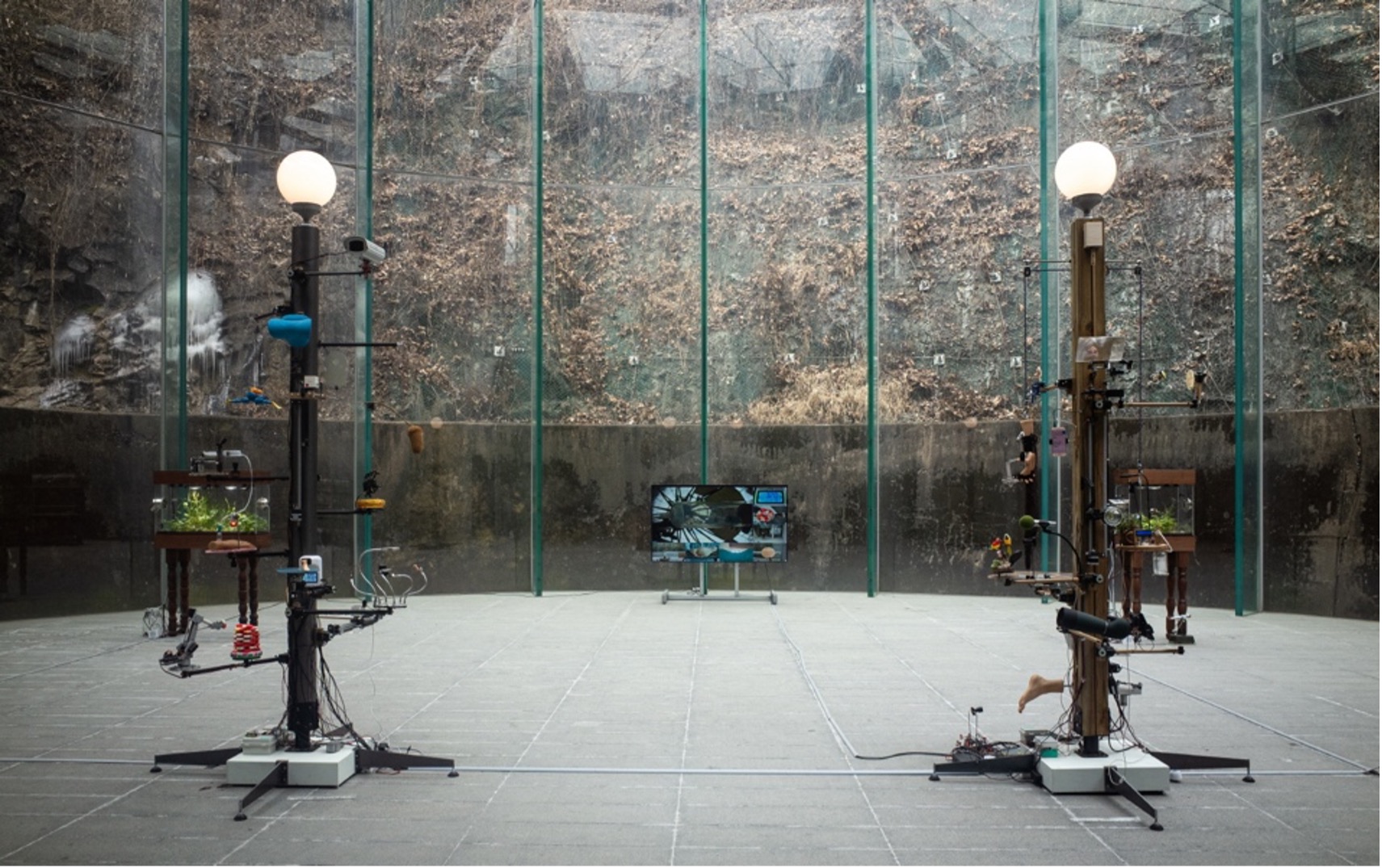
The old Seoul Station, home to countless life stories over the past century—of expectation, hope, joy, and anguish—transforms
in this exhibition into a time capsule, reexamining our present from a future
perspective. The works in this exhibition are future-oriented creations that
incorporate cutting-edge technologies such as artificial intelligence (AI), big
data, machine learning, VR/AR/XR, robotics, and quantum computing. These works
expand our worldview to focus on climate change, animal life, nature, and
non-human entities. They invite us to imagine and construct new dimensions of
reality, including the deep sea, outer space, and quantum mechanics, the
subatomic world—domains that transcend human
perception.
The exhibition consists of three sections: Songs of Whales, Vessel of
Space-Time, and Ruins of the Future. These sections are not
clear distinctions but loose metaphors where the artists’ work positions itself among the various strands, echoing the rapid
progress of technology and the transformation of the times.
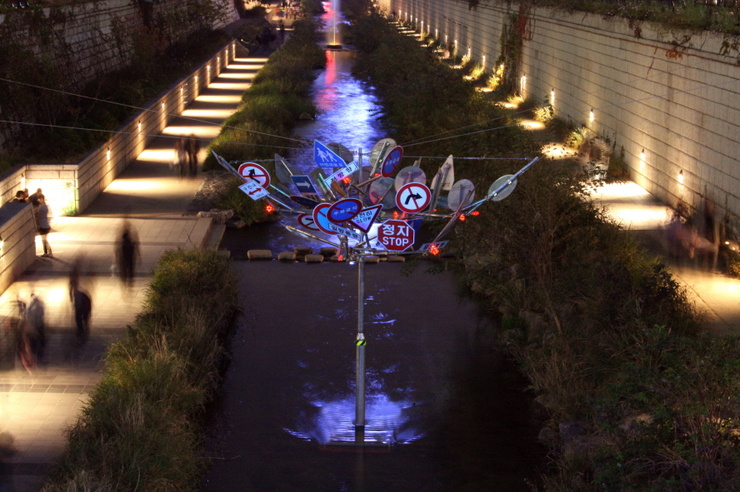
Songs of Whales assembles works where nature and technology merge—winds, skies, trees, and water are interwoven to create immersive
experiences through sound waves that shape spatial perceptions. Whales, the
largest creatures on Earth, symbolize a connection between the deep sea and the
surface traversing the globe. Whales also transcend time and space with their
songs, which have conveyed stories from ancient times to the present. In this
section, artists, much like these whales, bridge the gaps between ancient and
modern, artificial and natural, life and death, human and non-human.
Vessel of Space-Time experiments with the boundaries of a fluid reality
beyond solid ground, exploring realms like the deep sea, outer space, virtual
reality, and AI. They expand imagination by revealing unseen realities,
imagining potential worlds, and shifting perspectives to the depths of the sea
and space. AI-driven, data-based images challenge and broaden our perception,
showing that the world we know is not the only truth, and that truth itself can
be fluid.
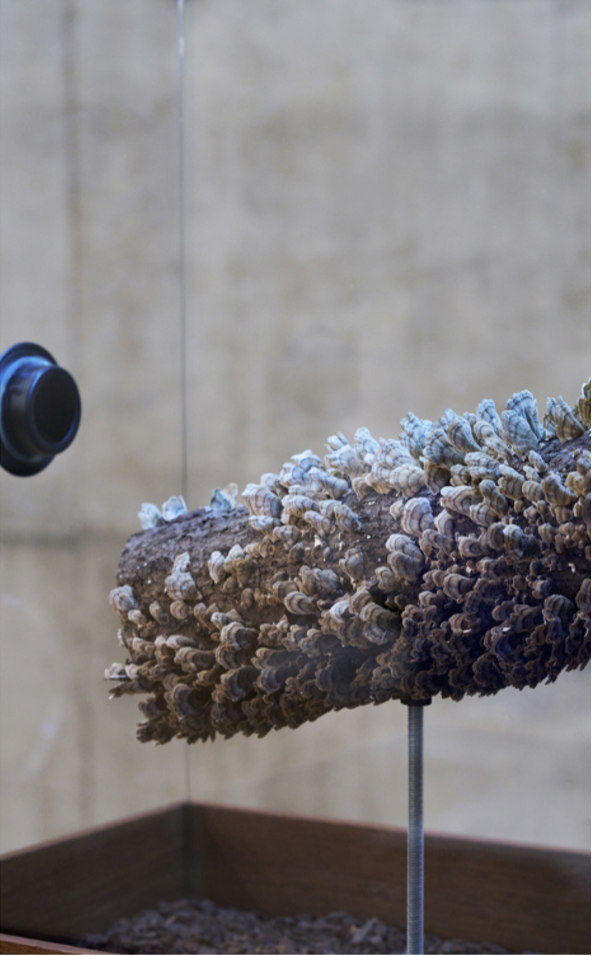
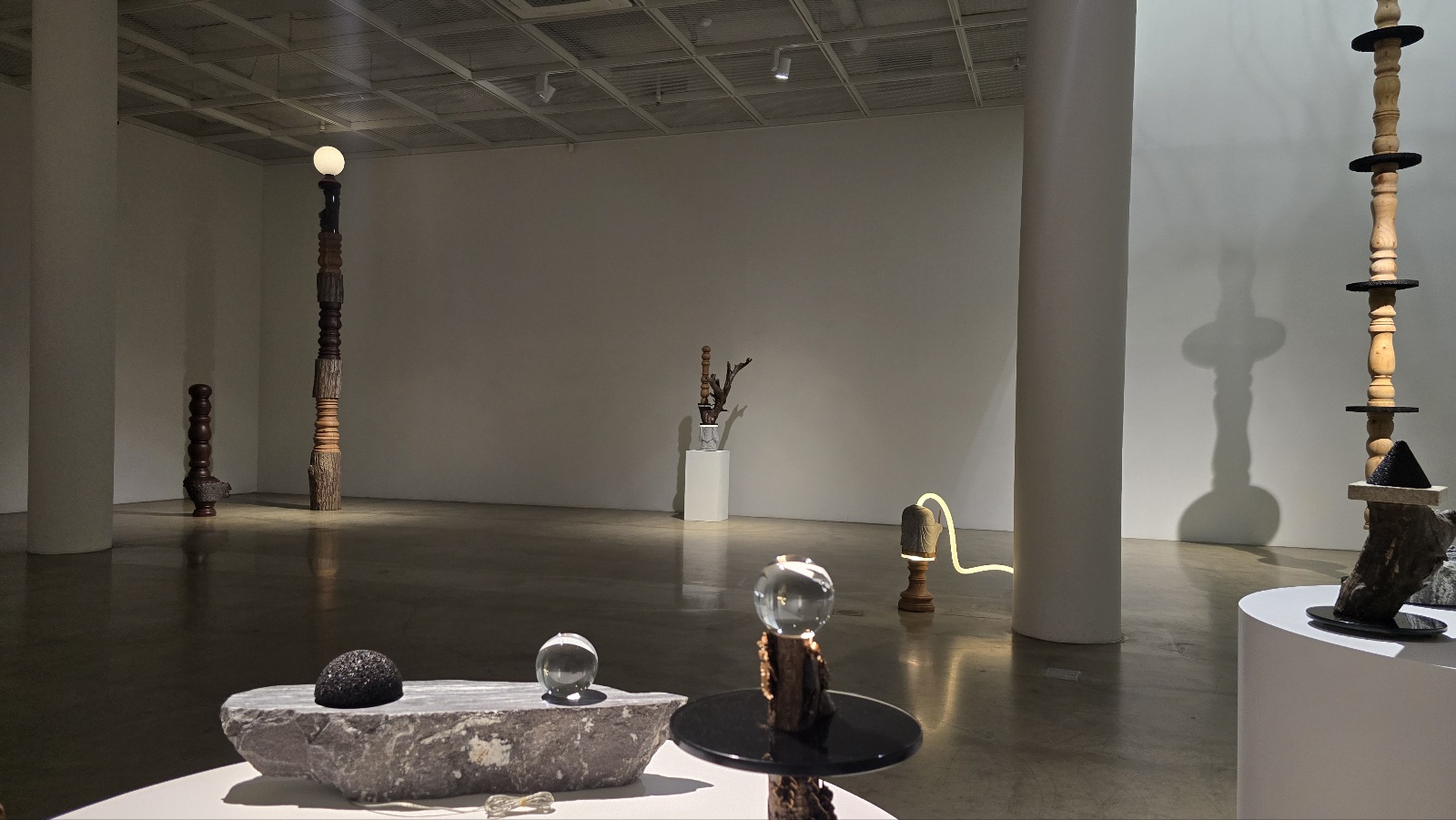
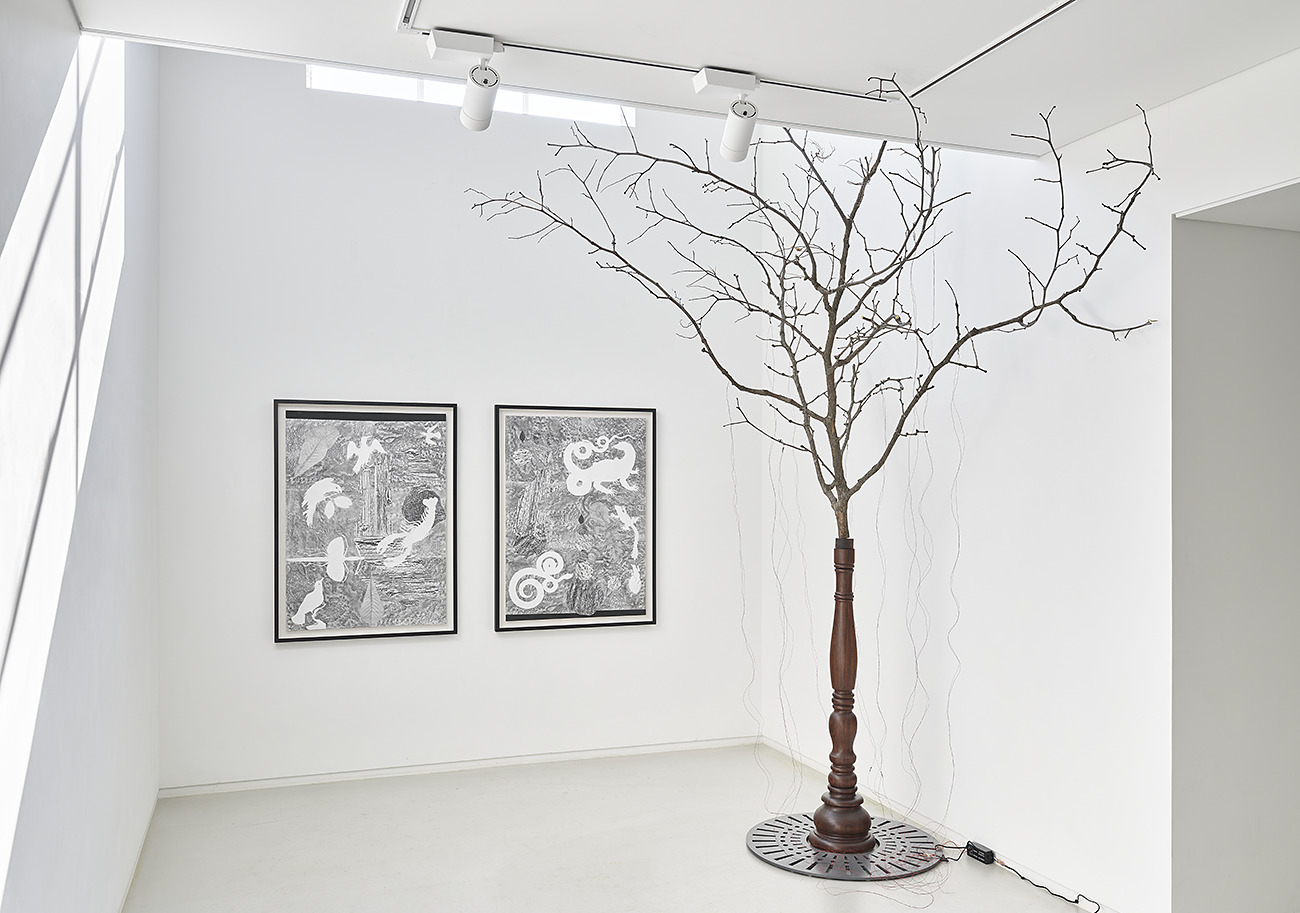
Ruins of the Future envisions what future generations or alien beings
might uncover from traces of our present. The artworks examine these remnants
by weaving history and the present into a new vision of the future. Some call
our era the Anthropocene or the Technocene due
to the geological transformations driven by humanity and technology. Human
beings have achieved radical advancements through the use of tools. The works
in this section are a lens for examining the technological, perceptual, and
social contexts formed through these relationships among humans, tools,
technology, and non-human beings.
One reference point for the “2084” in 2084: A Space Odyssey, is the centennial of Nam June Paik’s 1984 work Good Morning, Mr. Orwell. Paik’s international performance used satellites—the
most cutting-edge technology of the time—to link major
broadcasting networks around the world, marking the dawn of a globally
connected era. Similarly, in 1924, around the same time Seoul Station (formerly
Gyeongseong Station) opened its doors as a signal of Korea’s modernization, a young writer named Han-yong Ko declared
"Dadaism" in Korea, heralding the advent of a new era of a radically
different culture from what had come before. 1924, 1984, 2024, and 2084—the train of time in Culture Station Seoul 284 continues its
journey, intertwining different eras within the histories. In 1924, amid the
darkness of the occupation, a glimmer of light faintly hinted new era. Might
the artists of 2024 also be opening up a new era with their creative activities
based on the use of state-of-the-art technology? Here, time and space, culture
and history fold and unfold, creating new strata of meaning. In a human history
that has advanced through the use of tools, these artists’ works question and imagine the significance of the technological
tools now at our disposal—and the things we might
accomplish with them.