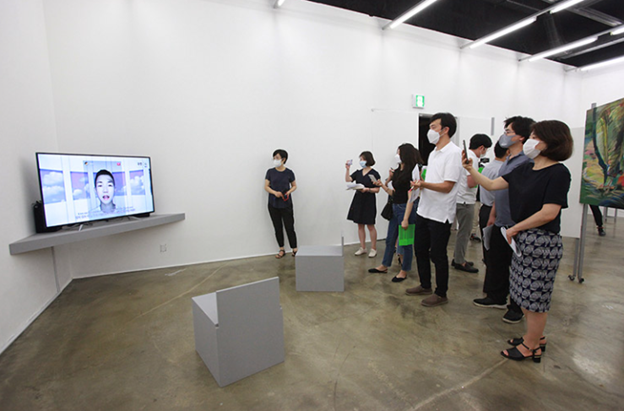
Reading the roughly 15-minute video Hedgehogs and time traveler with full of fight(2020), produced using the toy franchise “Sylvanian Family,” is enjoyable but not exactly simple. Sylvanian Families are sets of animal dolls released in 1985 by the Japanese toy company Epoch, modeled on white British middle-class families living in quiet suburban forests in the 1950s.
That this toy has fascinated countless consumers across Asia, North America, and Europe, regardless of age, gender, nationality, language, and culture, is easily confirmed by the enthusiastic responses that pour out immediately when one searches “Sylvanian Families” on Google.
Above all, the Sylvanian Families series appeals to consumers as an attractive object of “collecting.” Buying the various dolls and elaborate accessories that appear in the many Sylvanian Families series, and reproducing every situation and illustration presented by Sylvanian Families, is a desire that faithful “Sylvanian fans” are likely to harbor.
In this way, “Sylvanian” became not merely a toy, but an object of passionate “collecting” and a “worldview” that the player must actively realize and complete.
As with all successful narratives, Sylvanian Families also produces countless derivative creations. The Sylvanian narrative has been made again and again into animations and games, and in Japan, an amusement park themed around Sylvanian has also opened. YouTube is overflowing with videos voluntarily created by consumers using Sylvanian Families dolls.
However, consumers no longer feel satisfied merely reenacting the master plot of Sylvanian Families. They now become active performers who dismantle, reassemble, appropriate, and subvert the basic settings and narratives of the “original.”
If all of this could simply be reduced to a capitalist practice captured by clever commodity sales strategies, the situation would be simple. However, many studies have already proven that a binary structure such as “creation/active/subject versus consumption/passive/object” is not very effective in explaining the dynamics and projects of subjectivation mediated by commodities.
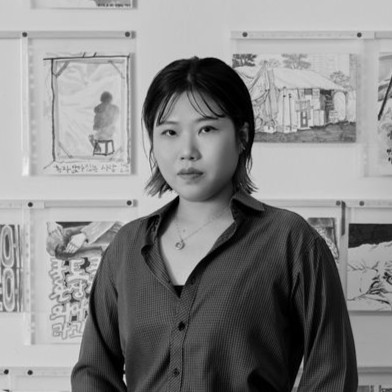
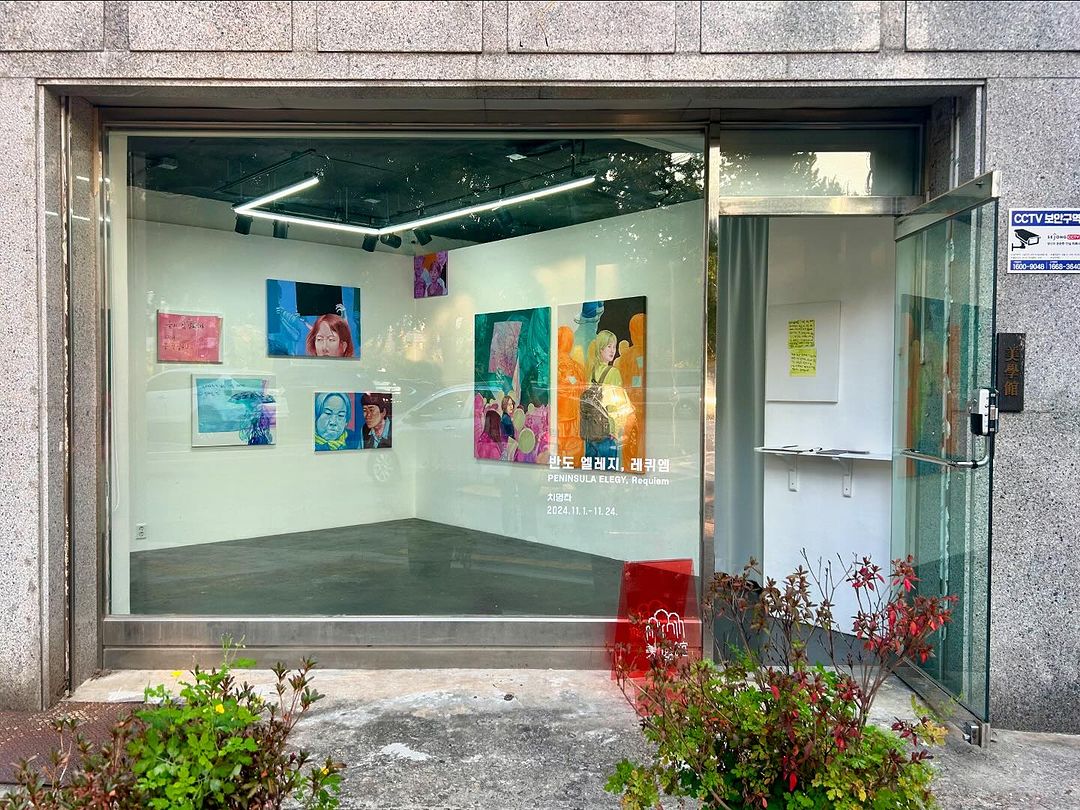
Then what about the Sylvanian world created by visual artist Critical Hit, who has steadily experimented with the possibility of politicization through the subversion of media?
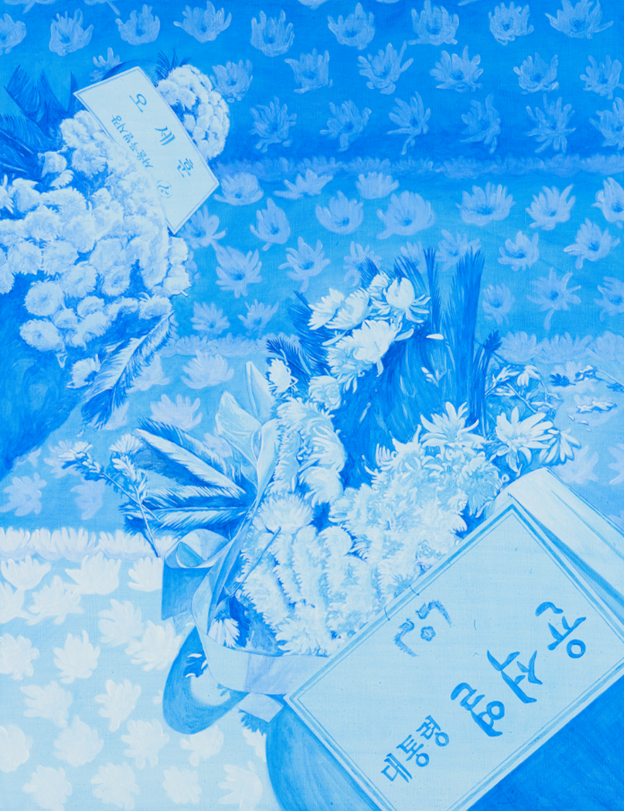
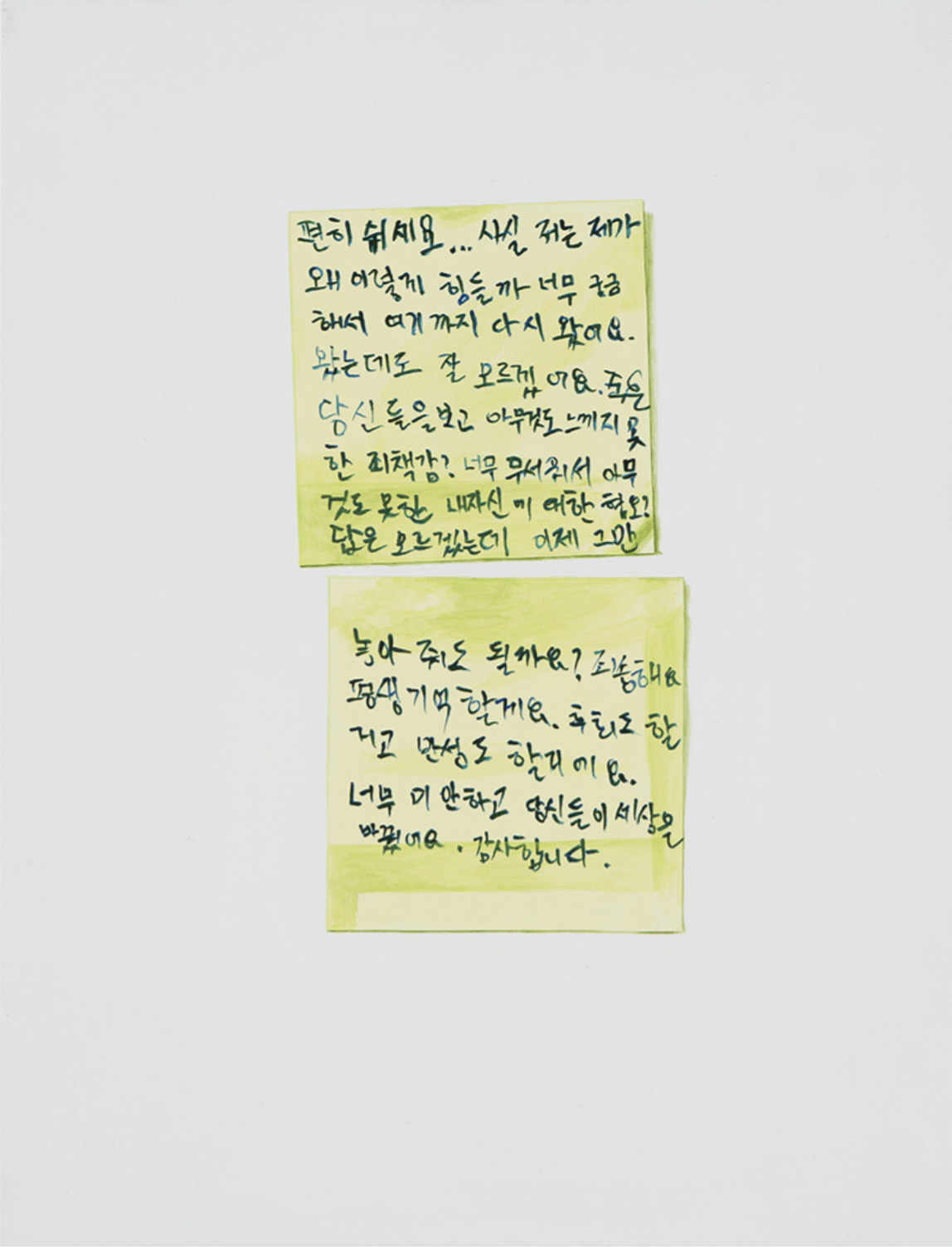
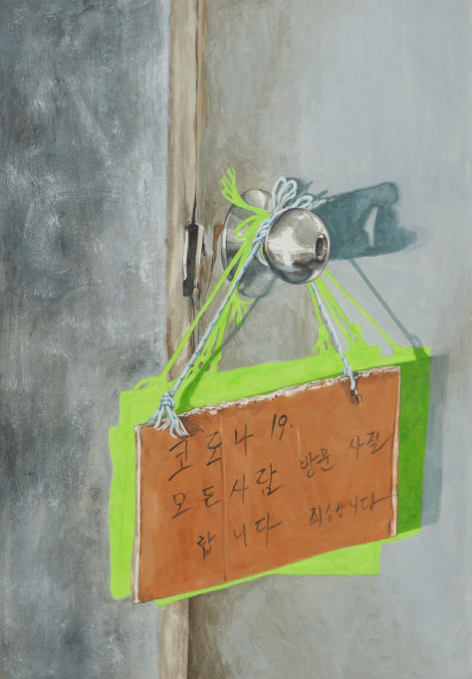
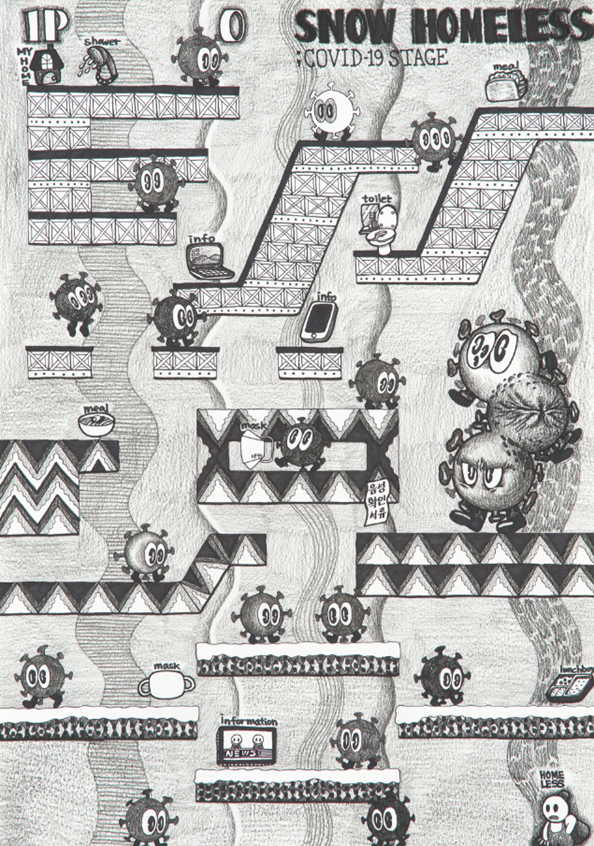
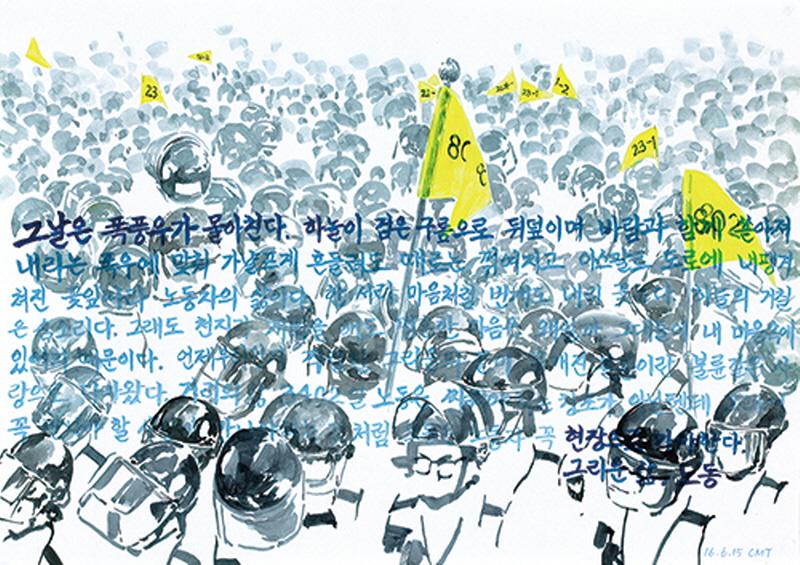
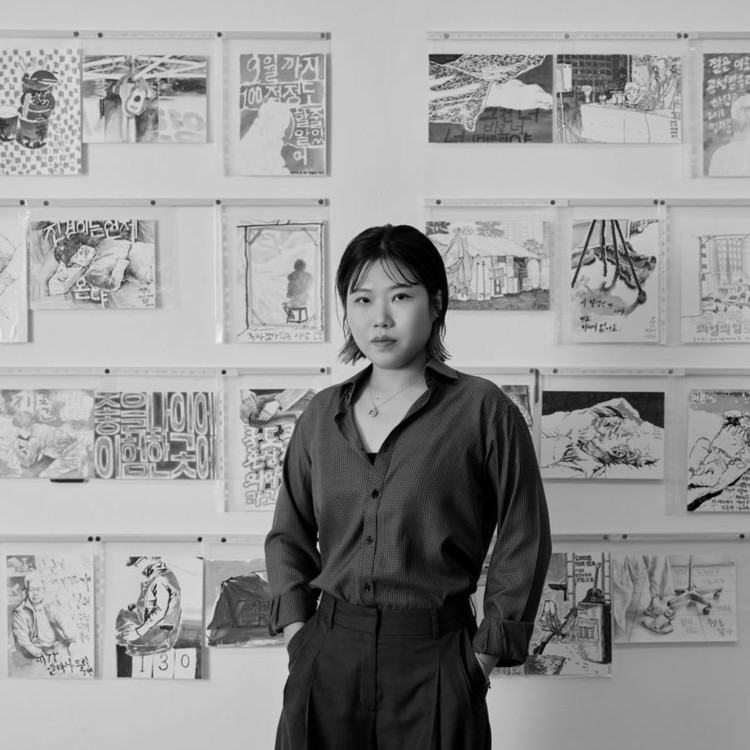
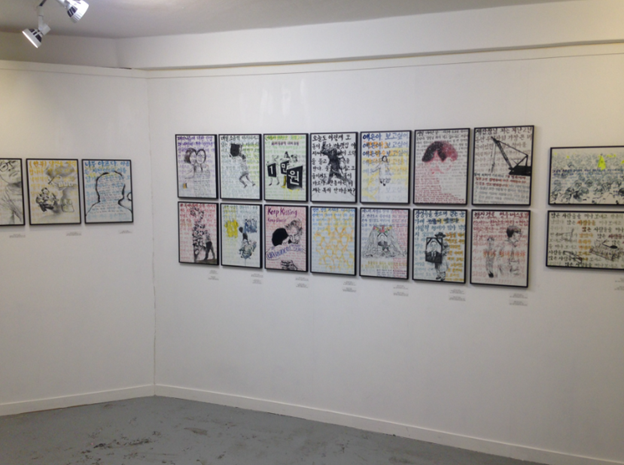
Through her project Yeouido-rawing(2016~2019), Critical Hit documented the protest site of laid-off Colt-Coltek workers, but she made a different choice from field artists who have mainly used the medium of “photography” in order to quickly and dramatically capture urgent conflict situations.
For her, who drew crumpled sneakers, disposable cups, and the protesters’ joking yet pointed remarks, a few sheets of paper and simple watercolor tools were precisely the medium best suited to the site of struggle.
Unlike photography, watercolor, with which one “can draw only what one wants to draw”⑴, was her own way of understanding the “site” of the protesters without being overwhelmed by the weight of words such as “resistance” and “solidarity” at a site where everyone was desperate.
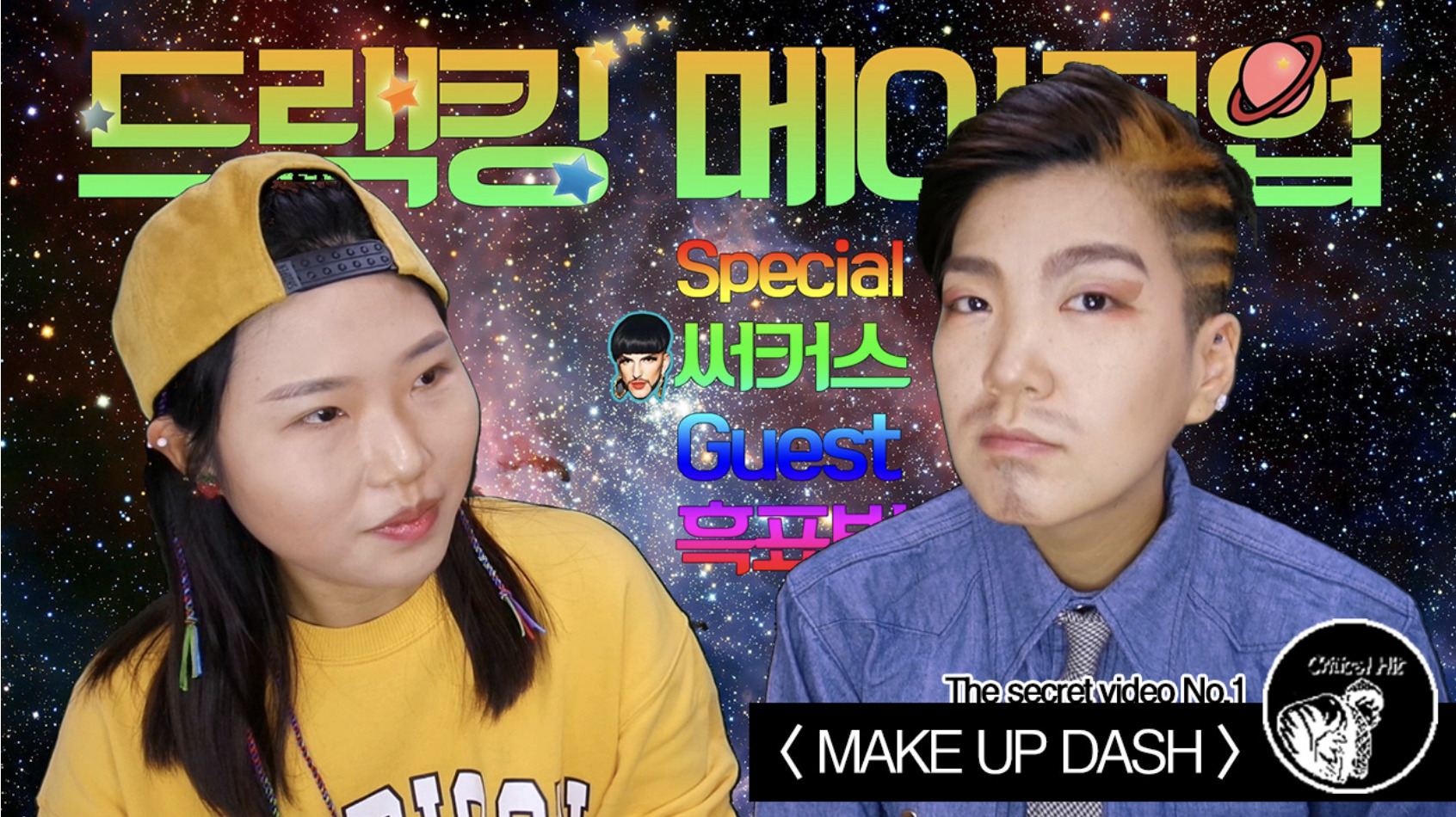
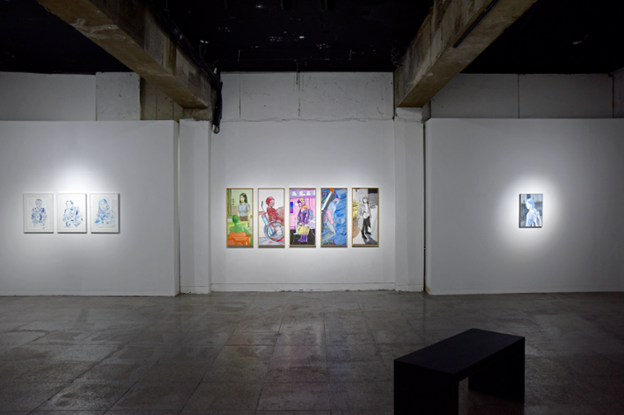
Her particular interest in the “site(field)” continues in a very impressive way in her 2017 project Makeup Dash. These astonishing videos, which follow the grammar of YouTube’s “beauty content,” the most gendered of genres, ride along with it, and then soon make it obsolete⑵, shake and renew not only traditional and social scripts about gender, but also normative perceptions of “art” and “site.”
Thus, the Sylvanian newly created by Critical Hit is not simply peaceful and cute as Sylvanian Families intended, but rather suspicious and sly. What happens if the Sylvanian Families “animal-doll-play,” which strongly requests the narrative intervention of the consumer/performer, is played in a small independent cinema in Incheon, or on YouTube, an online platform that an unspecified number of people can access free of charge at any time?
*
Ivory rabbit family, cotton rabbit family, striped cat family, milk rabbit family, sheep family, chocolate rabbit family, walnut squirrel family, silk cat family, toy poodle family, hedgehog family……. All of the “Sylvanian” animals live as families. It is the typical structure of a “normal family,” where the mother cooks, the father goes to work, and the children study.
The narrative of Sylvanian, which clearly has the character of a family fable, is a clear example of consumer capitalist society transforming animals into family-related commodities through the personification of animals, much like Disney has done.
As aesthetician Kim Youngok accurately points out, it is difficult to avoid the charge that this “reflects nostalgia for a certain archetypal ‘innocence’ pursued by human beings who must live complexly entangled mental lives, and thereby infringes upon the autonomy of both species, humans and animals.”⑶
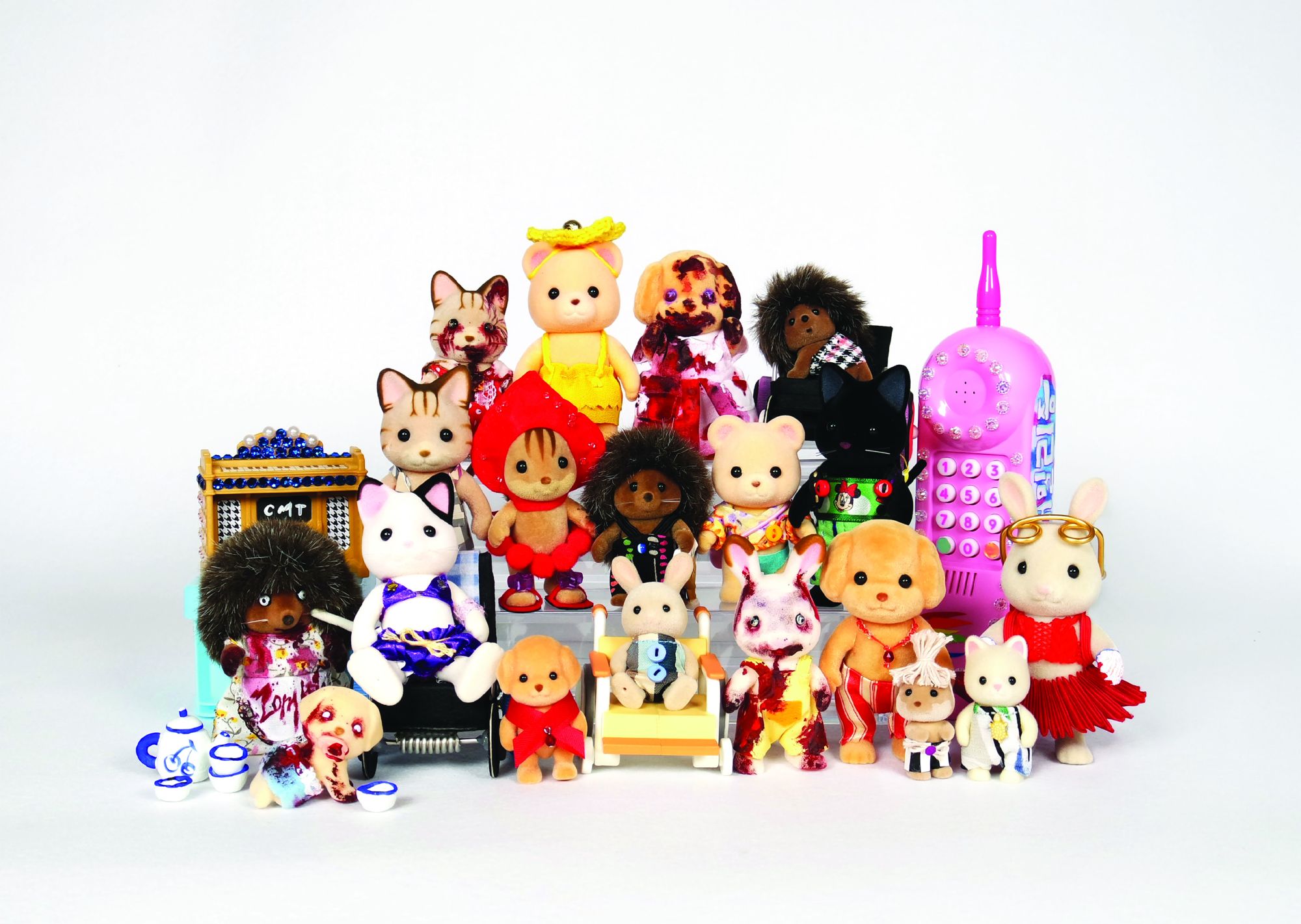
Therefore, Critical Hit first puts the familism represented by Sylvanian under interrogation. The artist removes the clothes of the animals set according to traditional gender roles, and dresses them in newly made clothes according to the “singularity” of the characters assigned by the artist. What escape from normative clothing makes possible is the dissolution of “family” and the emergence of the “individual.”
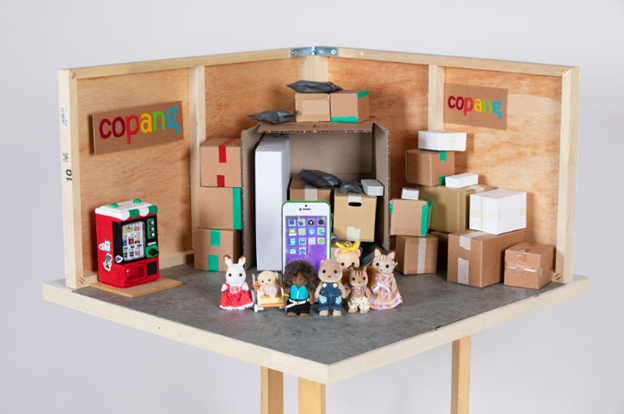
Through this appropriation and reassembly, the artist presents non-blood families made up of animals belonging to different species and various relationships formed temporarily and contingently. Some of them have bodies connected to artificial prostheses such as wheelchairs or crutches, and someone else always wears a “yellow bracelet”(which is fully capable of suggesting a specific event/history shared by Korean viewers).
In the shelter or café where the Sylvanian animals gather, books, posters, and slogans indicating specific events that took place in Korean society are densely arranged.
In the new Sylvanian created by Critical Hit, various heterogeneous bodies exist as families, lovers, neighbors, and others. Now Sylvanian is no longer a stateless forest village unfolding on a fictional background, but can also be read as a plausible sign and allegory evoking the history of a specific community.
*
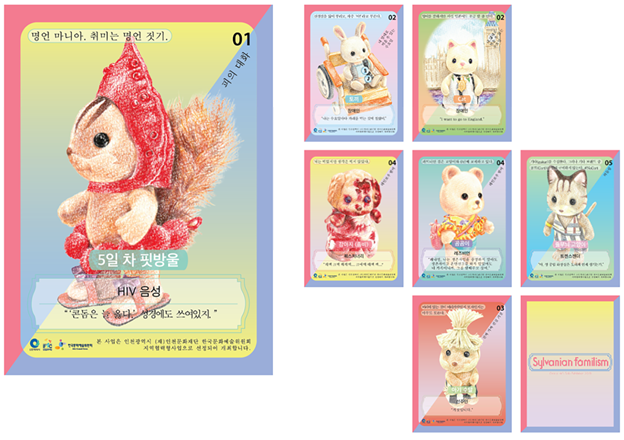
Critical Hit’s Sylvanian Familism was first shown from September 28 to 29, 2019, at “Movie Space Juan,” a small independent cinema in Incheon, and has been available on YouTube from January 24, 2020 through January 2021 at present. Composed of five episodes in total, this video illuminates the existence of minorities who are rarely made visible or whose citizenship is denied in a society organized around the normal family as its unit.
In the first episode, “Conversation of Blood,” the Sylvanian animals become a drop of blood from a woman living with HIV/AIDS, met inside a sanitary pad disposal bin. In the second episode, “Wednesday, when I can eat whatever I want,” the work presents “crip politics”⑷ that challenges and acts against social stigma regarding disability and deinstitutionalization.
The third episode, “Real Fake Truth Falsehood,” borrows the form of a talk show to address the issue of “fake news” that produces public fear and hatred toward refugees. The fourth episode, “Rainbow Summer,” deals with the story of a same-sex couple who cannot enter a survivor shelter during a disaster situation called the “zombie disaster,” because they are in a “legally unrecognized relationship.”
In the final episode, “Huddling,” just as emperor penguins gather together and endure extreme cold through one another’s body heat, a community is proposed in which socially vulnerable people and minorities, including disaster victims, transgender people, and disabled people, gather to share their stories and encourage “recovery.”
In short, the artist made the cute animals of Sylvanian, which had always safely and smoothly acquired the process of socialization, walk out from blood-soaked sanitary pads, sit in wheelchairs, and search for “their own” gender rather than the gender assigned to them. This unfamiliar world, which must surely be bleak to someone, is presented in a not-so-threatening way thanks to the conventions of puppet play or fairy-tale storytelling.
Of course, this ideal “Sylvanian,” where all attempts at discrimination and hatred are sharply refuted and neutralized, may still appear pastoral in a different sense from the original.
If the narratives and images of Sylvanian Familism quite faithfully examine the details of discrimination occurring in the real world and convey clear conditions of an alternative world, the sign system and network of meanings in Hedgehogs and time traveler with full of fight, a spin-off of this work released for a limited time on the YouTube channel from November 15 to December 30, 2020, are even more complex.
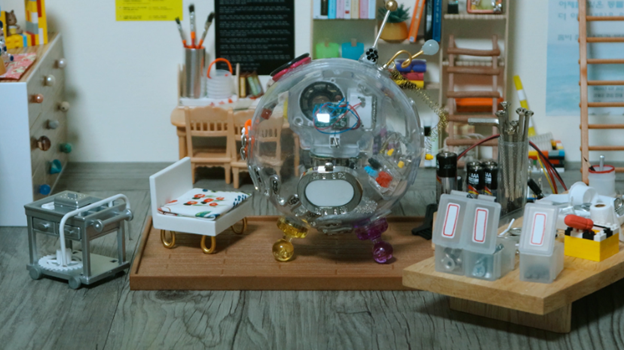
In the first scene, the camera thoroughly shows the room of “Beaver,” who is developing a time capsule that goes to the past.
On the bookshelf are books on feminism, animal rights, and refugee discourse published since 2015, and on one wall are posters from annual events held to remember the “zombie disaster” that occurred on September 28, 2014, and commemorate the victims. On the shelf is a framed photograph of “Cat,” who is closely connected to Beaver and is presumed to have died in the “zombie disaster.”
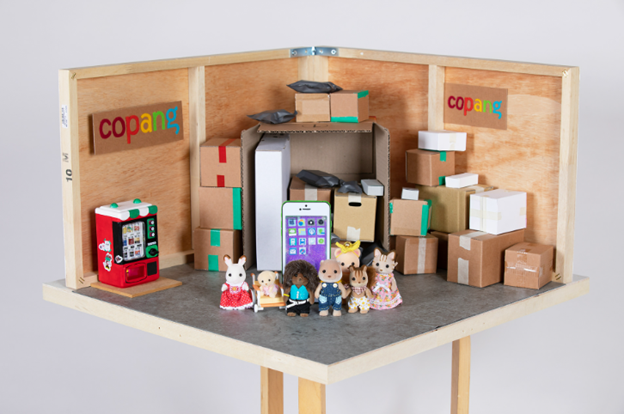
For several years already, Beaver has been making a time capsule to go to “that day” in the past, but fails repeatedly. With no bank balance left, Beaver looks for a job that can earn a lot of money “in a short period” in order to cover the development costs. Beaver’s companion-species AI “Sibari” recommends working at the delivery logistics company “Copang Flex,” where the work is so hard that one’s “nose bleeds like crazy.”
When Beaver arrives at the delivery factory, what she witnesses are workers busily moving around, saying they have to deliver “153 items today.” At that moment, while looking for the manager, Beaver meets an unidentified hedgehog wearing a yellow bracelet on one arm, who acts friendly, saying that he saw Beaver introduced on TV as a “time capsule developer.”
To Beaver, who is developing a time capsule to go to the past, the hedgehog asks, “You want to go to the future, right?” and forcibly hands over a suspicious part that smells “funky.”
Having succeeded in developing the time capsule with the part received from the hedgehog, Beaver sets the desired time to “2014,” the year of the zombie disaster, in order to meet Cat. However, the desired time changes on its own to “2021,” and Beaver, having arrived in the future, is looking at a peaceful horizon together with Sibari.
Then, future Beaver eats together with a dog in a wheelchair, a bear wearing a yellow hat, and a squirrel. Animals who listen to each other’s stories for a long time with tenderness.
Returning to the “present,” Beaver seems to realize something and goes to the delivery factory to find the hedgehog. The hedgehog is handing out flyers while persuading a colleague that they do not have to overwork if “an appropriate workload is assigned.” Beaver asks the hedgehog, “Why didn’t I recognize you?” and says, “The time capsule was never able to go to the past in the first place.”
A cookie video follows after the end credits. In 2007, the hedgehog, who is developing a time capsule that travels to the past, is writing a letter to Sibari, who moved to 2015 in 2006. Asking, “Are we working in the future?”
At this point, it is difficult to resist the work’s gentle request to reconstruct its timeline by actively referring to the labor history and disaster history of Korea in the 2000s.
To overlap the time before 2007, when the irregular worker Hedgehog goes to meet Sibari, with the year when the guitar manufacturer Cortec carried out a large-scale layoff of one-third of all workers for “managerial reasons”; to place 2014, the year when Beaver, a disaster victim and survivor, goes to meet Cat, who died because of the disaster, alongside the time of the state that abandoned its duty of rescue when the great ship called “Sewol” tilted and suppressed commemoration of disaster victims.⑸
However, just as Beaver and Hedgehog ultimately could not go to the past, Hedgehogs and time traveler with full of fight is not interested in representing wish fulfillment through the form of time slip, that is, the past perfect conditional of “if only it had been so then.” Perhaps this is because they cannot reverse the time shared with friends, comrades, and solidarists gained by living through the time of the incident/disaster together.
Above all, the time that Hedgehog and Beaver seek to gain through “fight” does not seem to be merely an exceptional time in which one does not become a laid-off worker, does not suffer an industrial accident, and does not experience disaster.
The world that must arrive is not a world where a particular individual luckily avoids misfortune, but a world where it is okay to be “vulnerable,” and a world that shares the wisdom of living with “vulnerable” beings.
Lastly, it is time to speak about the “hands” that quietly and faithfully labored so that the animal dolls could “move.” The exposed hands of the performer repeatedly make us reflect on the fact that the new Sylvanian is not “nature,” but the product of ceaseless labor.
This is of course a meaningful device that distinguishes Critical Hit’s “Sylvanian,” which “realizes minority politics through the concrete labor of the artist,” from “fantasies made by stories of capital” such as Netflix.⑹
Along with this, from these “visible hands,” I was able to confirm the brave persistence and self-consciousness of an artist determined to invent the “world that has not yet arrived” as her own “present-site” through the medium and methodology she has chosen.
⑴ Critical Hit·Oh Hyejin, “[Speaking of ‘Women-Creation’⑧] ‘You Don’t Have to Press Like. I’m a Visual Artist.’,” 「Women News」, 2018. 12. 4.
⑵ Jung Eunsil, “Art of the ‘Site/Square’ Here and Now─Exhibition Review of Makeup Dash,” 2018. 6. 7. Critical Hit Blog https://blog.naver.com/cmt0000/221293731424
⑶ Kim Youngok, 『Image Feminism─Visual Art Read through Gender Politics』, Media Ilda, 2018, p. 162.
⑷ In the declaration commemorating the 20th anniversary of Women with Disabilities Empathy, “crip politics” means “a struggle that questions democracy and universal justice again, and rewrites the meaning of dependence and solidarity with minorities, and with those who doubt and fight normality and universality,” as beings “omitted from institutions and universality.” Declaration Commemorating the 20th Anniversary of Women with Disabilities Empathy, “Crip Politics at Odds with the Times,” 2018. 2. 2. Women with Disabilities Empathy website https://wde.or.kr/20%EC%A3%BC%EB%85%84-%EC%84%A0%EC%96%B8%EB%AC%B8/
⑸ In describing the work plan for 2020, the artist stated that this work follows “the story of events that occur when the protagonist Beaver, who seeks to develop a time machine and return to before the disaster occurred, meets Hedgehog, who works as an irregular worker and has experienced losing a colleague in a safety accident just two months earlier,” and that “through this, it seeks to speak about what we should focus on after disaster, and what communal discussions are necessary in the process of victims’ recovery.” Critical Hit, “On Sylvanian Familism,” 〈Dongmu Critique 34〉, 2020. 12. 20. https://review34.kr/32
⑹ Chae Heesook, “Critical Hit’s Sylvanian Familism─A Puppet Play That Summons Minority Politics,” 2019. 12. 30. Critical Hit Blog https://blog.naver.com/cmt0000/221754432344