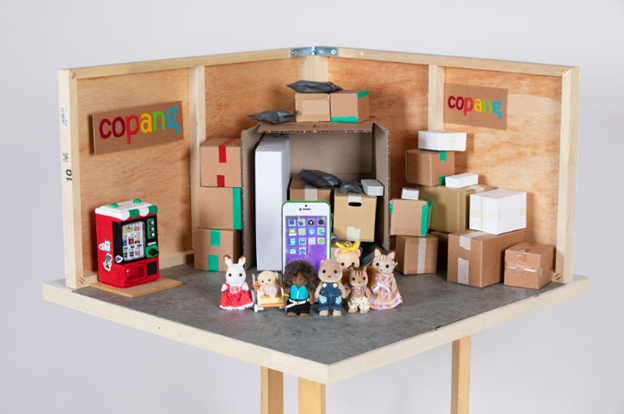
“Sylvanian Families” is a series of character dolls that has continued since 1985, based on the concept of the lifestyle of a middle-class family living in the suburbs of 1950s England. “Sylvania” is a Latin word meaning forestland, so Sylvanian Families could be interpreted roughly as “families living in the forest.” These dolls, which have many series, are loved by people of all ages and genders around the world.
Sylvanian Families are usually sold as a four-person family set, and the family composed of a father, mother, son, and daughter reproduces conventional gender roles as they are. On YouTube channels aimed at children, one can see doll play using the Sylvanian series. Netflix also services a Sylvanian Families miniseries.
Sylvanian Families expands a worldview suited to traditional family role-play modeled on the so-called normal family, and reproduces fixed gender roles. In one episode of the Netflix miniseries, when friends ask a rabbit who is going to do a fashion show what her dream is, the rabbit says she wants to become a sparkling adult like Sylvanian Village. In this anecdote, what sparkles is a department store.
Also, three animals gather and eat chocolate while imagining sweet dates. A conversation continues among girls waiting for romantic dates, and the keyword “girl power” is attached to this episode. Meanwhile, on one YouTube channel, interior-play is presented using Sylvanian Families items, and in the process of play, the surrounding household goods such as lighting, which are accessory items, are naturally evoked.
In this way, consumerism is essentially connected to the process supporting this world. Sparkling dreams are imagined as an extension of fashion, and the value of love realized within an exclusive concept of family is sustained through figure collecting. As a play culture, Sylvanian Families doll play is a device that makes one acquire a fairy-tale world and continuously consume the image of a world smoothly packaged as a harmless place.
Actions criticizing the way fairy-tale worlds reproduce normal-family ideology or fixed gender roles are increasing. News has been reported that Hollywood celebrities with media influence do not show fairy tales such as Cinderella or The Little Mermaid to their children, and creative fairy tales that modify traditional stories to convey different values are also being published.
They resist cultural education by rejecting fairy tales that lack gender sensitivity. Meanwhile, recent Disney has been actively responding to such critical perspectives.
Disney, once synonymous with the reproduction of conservative values, depicts in Zootopia(2016), among others, a world where beings with various identities live together without conflict, and in Frozen(2013), it liberates Elsa’s power, encourages girl power, and depicts a world where sisterhood, that is, female solidarity, is realized.
The princess has leapt out of the smooth fairy-tale world where she lives happily ever after in the Disney kingdom, and Disney is quickly absorbing, like a monster, the values of “political correctness” and contemporary identity issues, building a new Disney kingdom smoothed into a twenty-first-century version.
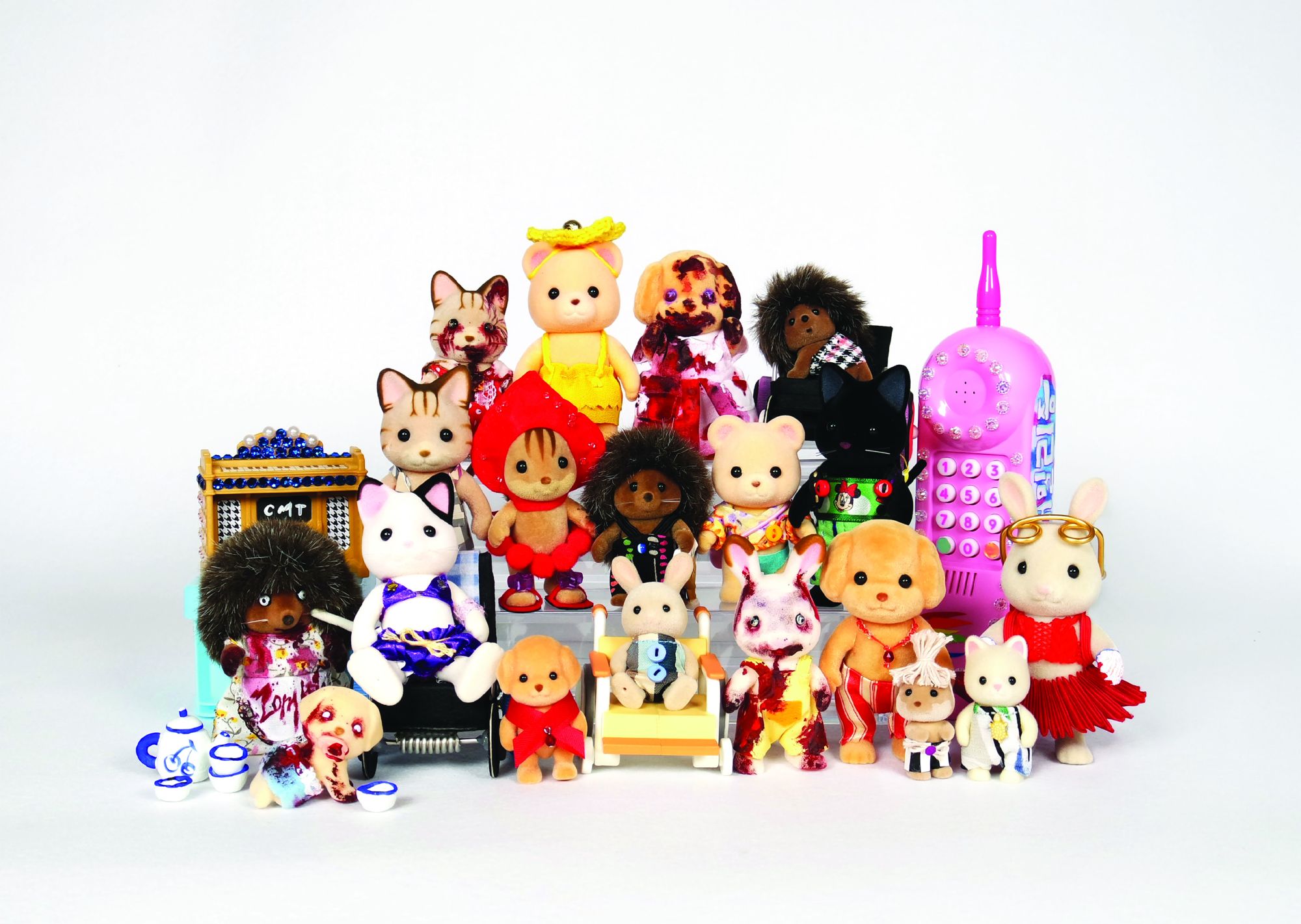
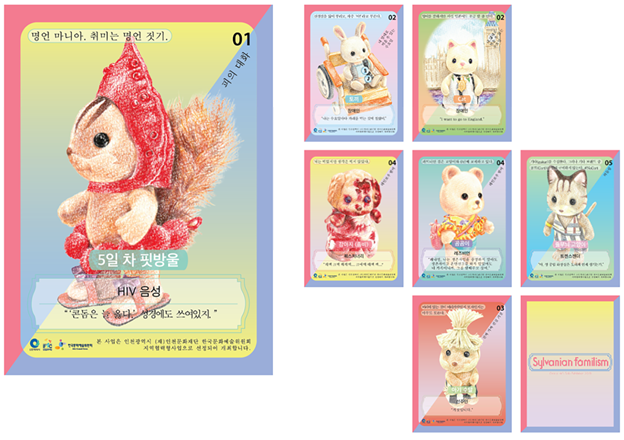
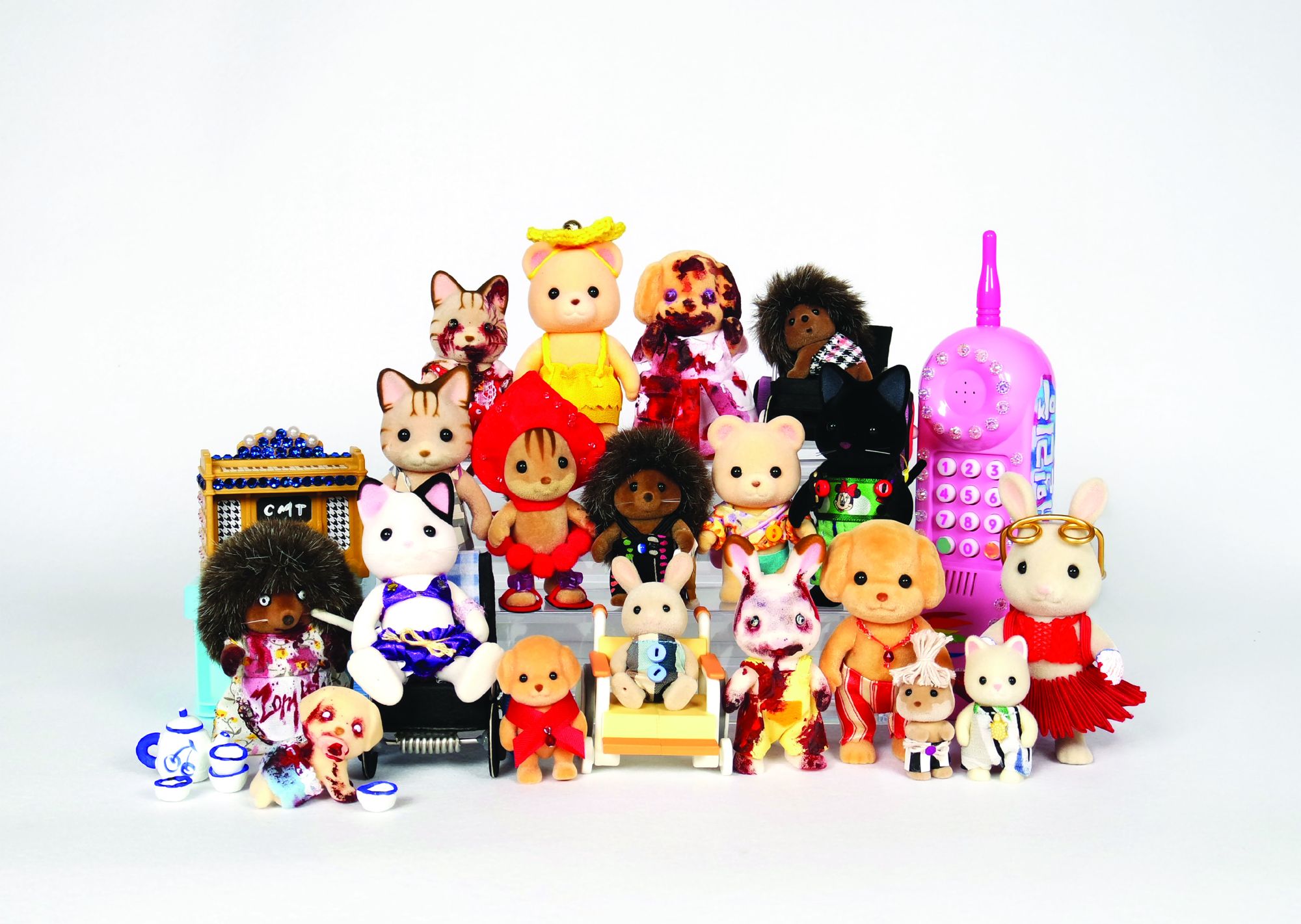
Critical Hit’s Sylvanian Familism(2019) overcomes fairy tales in yet another way, different from the methods above. Sylvanian Familism is a puppet-play performance that twists and subverts the image of Sylvanian Families, which reproduces the normal-family model; the social environment represented here is never safe or smooth.
This puppet play disturbs both the doll play that acquires exclusive gender roles and the image of a smooth world. First of all, the Sylvanians are not members of a four-person family, but minorities who form a community of solidarity.
Stories unfold in sequence about what kinds of violence people living with HIV, disabled people, refugees, sexual minorities, and others face in our society, and at the end, the protagonists of all these stories meet. This meeting belongs to those who have overcome and survived the violence imposed by the national welfare or safety system, discourses produced by journalism or media, and everyday prejudice.
These dolls gathered in this way make us ask where and with whom Korean society, after experiencing the April 16 Sewol Ferry disaster, must begin to seek a safe life. Leaving behind the fantasy of forest families who built an exclusive village isolated in a remote place, the Sylvanians who stepped into dangerous real society meet friends with whom they will navigate that danger together.
Various settings are carefully considered in the five episodes. The place where the story unfolds in the first chapter is the trash bin of a café restroom. The meeting in an anonymous open space is contrasted with a concrete being who is secretly hidden and isolated from society. A café is truly a space where all kinds of people come and go. And a café restroom can be said to be a place where all kinds of things are thrown away and mixed together.
People encounter and converse with one another very actively in this space. However, we do not try to see or understand our blood, saliva, or secretions. Through the trash bin of a space where things actively mix and meet, Critical Hit exposes the most secretly hidden realm. As an expelled being, the HIV blood drop is small and shy.
“Conversation of Blood” mercilessly returns, against merciless gazes, the story that those gazes, which are nothing more than prejudice, are pushing those who become objects of prejudice into dangerous and painful situations. The dry jokes that mention PPL while drinking instant coffee and highlight economic inequality are a bonus.
The second chapter deals with the issue of disability welfare, but rather than a spectacular story, it conveys its critical awareness through the right to everyday life: that one must be guaranteed “Wednesday, when I can eat whatever I want.”
Rather than appealing as a pitiful being through the exhibition of violent stories, it claims the very basic freedom of life as a right, leading us to reflect on the violent images of our society that objectify disability issues. In addition, the presence of Big Bear reveals our ignorance and fear regarding the act of facing the other.
This episode ends with the hedgehog, whose life has been entrusted to the father’s judgment — though this too reproduces a cliché that many non-disabled people might have, rather than an image that is simply violent and oppressive — beginning to ask the father questions first after seeing a friend who has chosen deinstitutionalization.
By having the camera approach the hedgehog and paying attention to the fact that he begins to speak first, this story seeks to overcome images that objectify disabled people and represent the other as a dangerous being. And the newly foregrounded image is that of a subject who has the right to choose and thinks for herself.
The third chapter deals with refugees, but no refugee character appears in it. It is the only chapter among the episodes in which the object at the center of the issue does not appear. Instead, the image of the refugee is produced and spread through discourse generated by mainstream media and journalism.
This is a diagnosis that refugees in our society are still invisible beings who have not yet been concretely represented, while only the gaze that predefines them has been made visible. The voice that judges “real fake truth falsehood” also takes the form of a baby otter as small as the HIV blood drop.
However, instead of embodying the condition of a minority, this otter plays the role of criticizing journalism and media; though small, its voice is unreserved and bold.
In the fourth chapter, the right of sexual minorities to be safe is practically excluded, and because of this discrimination, the queer “Rainbow Summer” is exposed to danger. This is because a living community outside legally approved family relations cannot receive any protection from the state. The danger to survival arises not from zombies but from the state.
Here, zombies are beings who resist the system. The zombies empathize with the story of a sexual minority couple who, excluded by the state, risk danger to escape, and they do not attack them. The work’s interest in and affection for beings outside the sphere protected by the state can be read here. This episode also suspects and problematizes the hateful gaze that produced zombies, together with sexual minorities.
In the final chapter, all the dolls of this work who have survived attend a concert. The café where the concert is held becomes, instead of a space of concealed anonymity as before, a place where those who could never reveal their existence in the world of Sylvanian Families meet, converse, and open relations of solidarity.
Opposing the image of Sylvanian Families, which claims to value nature but builds a village full of items in the forest, and claims to value love but shares love only within family relations based on narrow gender roles, this final episode constructs a modest but safe “Huddling” space where minorities can share issues of state violence and social discrimination.
The five stories each deal with different issues, but their arrangement is not arbitrary or merely parallel; it has a certain flow. That is to say, they must be watched in order.
Sylvanian Familism, which begins by revealing issues of exclusion and discrimination secretly operating beneath urban anonymous spaces or intimate relationships, expands the map of issues that our society seeks to render invisible as it moves on to problems of public facilities and institutions, and to criticism of journalism and the state system.
And as it connects to April 16, it moves toward the issue of our right to live safely and criticism of state violence. The image of a community of minorities who survive, comfort one another, and stand in solidarity presents a worldview based on friends-comrades instead of family, and on an autonomously formed safe space instead of the state.
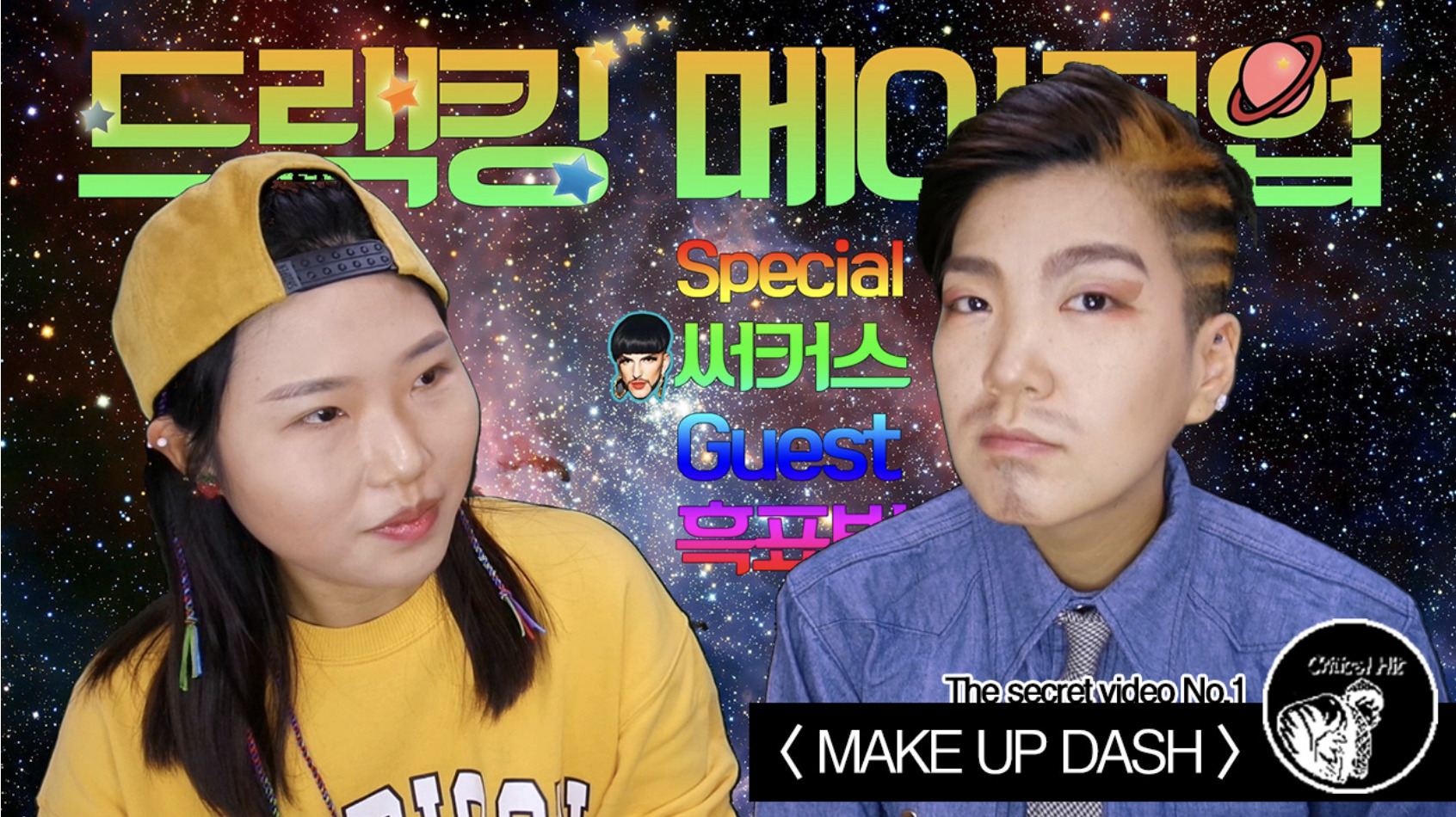
Puppet play, traditionally called kkokdugeuk, represents human society through substitutes that take various forms of human figures. Simplified and standardized forms help us easily recognize diverse types within our society. In previous works, Critical Hit has used the YouTube platform to carry out a kind of performance video work that interprets the makeup techniques of our society — its social masks — and challenges those images.
In this work as well, a kind of mask, or more precisely a mediated image, that reproduces the appearances we desire within the normal-family model is subverted. However, while the previous work was a direct challenge to our very complex faces, this work takes as its object character dolls that do not have expressions.
These expressionless puppets do not have to take the risks that would come from a coming-out made upon appearance in a documentary, and if they were fiction, there is less possibility of error in awkwardly repeating the limits of our gaze through imitation. Because it does not take as its object faces that immediately activate conventions and prejudices, this puppet play helps enable freer speech as a speaker conveying issues of minority human rights.
Since ancient times, dolls have been the play objects closest to us and spiritual beings containing souls. As boundary objects between this side and that side, they mediate souls. The Sylvanian dolls change their souls from normal families to minority solidarities.
Different identities are produced from the same dolls. The reason zombies are frightening is not because they kill us. Zombies are frightening because they assimilate us into beings we never cease to abhor: dirty beings who have lost cognitive ability and have only instinct left. Dolls with changed souls become dangerous and frightening beings that subvert the values of the system and assimilate us to themselves.
Sylvanian Familism calls into our society beings rendered invisible through objects containing the souls and politics of minorities instead of the gender model of the normal family, proposes a new kind of house play, reflects on family relations that become familiar through play, and creates a role-play game through which we can practice forming other relationships that begin from difference.
However, the gaze and speech freed by dolls without expressions and gestures may, on the other hand, be given thanks to safe refuge into fable. To say there is no expression can also mean there is no human face, and these expressionless, faceless Sylvanian dolls are images that are free and at the same time without difficulty.
Fables can easily sharpen the complex and manifold problems of society, but they can also easily reveal powerlessness when it comes to the question of how that fable is reinscribed into concrete reality. For example, if, when we face Big Bear or zombies in reality, worry or avoidance comes to mind before the thought of conversation, in what way and how deeply can fable enter into such psychological reality and rupture it?
I have heard from feminist activists and critics that “safe spaces” are necessary in the process of realizing minority politics. When individuals are alone without the help of any community, an individual’s social speech returns to each of them as a threatening reality, and at that moment, movements lose courage and strength.
First of all, this is because one must hide one’s body in a world that can never be safe. That such things have occurred again recently in the process of the Me Too movement and others is our reality. The form of fable and satire may plainly show that our society is not only vulnerable to criticism but also threatening.
The safety of not having a face, in reverse, testifies to an unsafe society, or to a society where only too many distorted images have been made visible for transparent revelation.
The camera, which is basically positioned as a video record of the performance, approaches more closely the community of survivors and the hedgehog in the facility. They have no expressions, and therefore our understanding, empathy, and critical awareness of their situations are also affected by these expressionless beings. At every moment, the dolls maintain calm expressions and their gestures are plain.
Therefore, in this puppet play, there are no images made pitiful by sympathy, and no images objectified and victimized by the spectacle of violence. We read issues rather than emotions from these puppets.
The Sylvanian Familism performance creates a safe space from the reproduction of minority images operating in highly complex processes of objectification and from the dangers of having to be experienced as visible beings, while instead amplifying the volume of the speaker. All the characters in the puppet play speak confidently and without hesitation as minorities, and the puppet play becomes a kind of campaign.
This movement completes its viewpoint more clearly by staging the auditory experience of a one-person play, as if storytelling were conveying a tale. The speaking voice does not act out drama. Rather than being emotional, it maintains a dry and cool tone.
Through this, the intention and effort not to place various minority images in the existing positions of victims or the weak are emphasized, and through the forms of satire and humor, the characters in the puppet play speak out as healthy beings.
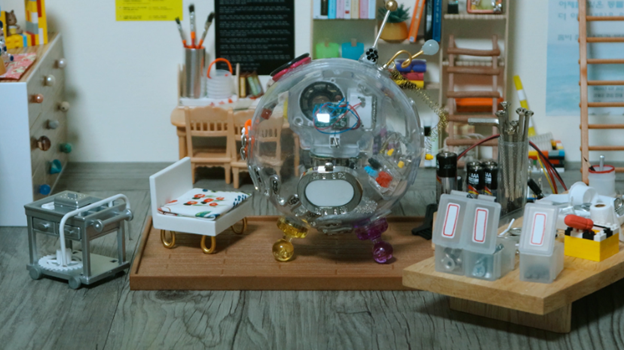
But this puppet play exposes the hands that move the dolls as they are. This literally shows that the image reaching us is not given naturally, but is derived from a process of being made and constructed by someone. It visualizes that an image arrives, above all, on the basis of our hands, that is, labor.
If the Sylvanian Families played on Netflix come alive in beautifully decorated spaces and reproduce the fantasy of a discriminatory and exclusive society, the hands of Sylvanian Familism move diligently to set upright the beings hidden by that fantasy, reconstructing our images. While stories concentrated with capital create fantasy, the labor of a poor artist produces a society realized as minority politics.
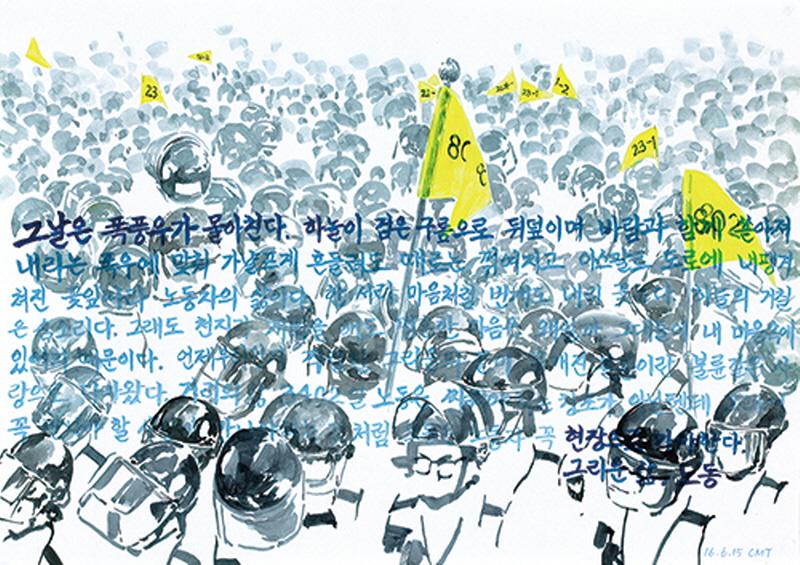
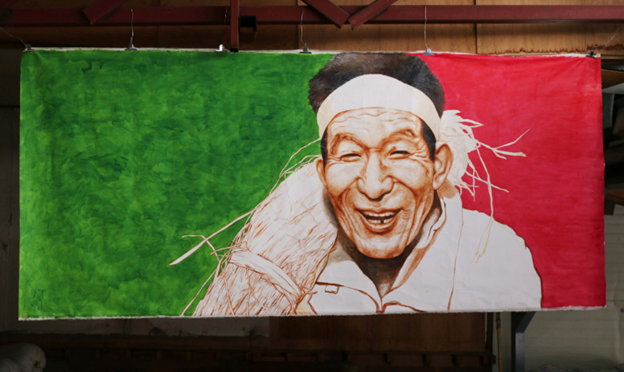
As an artist whose work is based in visual art, Critical Hit understands and does not forget that labor resides in images. In previous YouTube works as well, the process by which the image is completed is exposed as it is, and the work of conveying the atmosphere or message of the everyday lives of Colt-Coltek workers living through struggle proceeds within painting completed together with the labor of the hand.
Could this also be called a campaign about the process of imagining after April 16? What society should we now imagine, and how should the beings who must survive be made visible? That image will not suddenly appear before our eyes without our effort; it will take shape within our labor, that is, within the movement in which we ourselves imagine and move.
Lastly, it seems possible to discuss the issue of media practice. In the process of looking for Sylvanian doll play, I thought not only about each individual content but also about video culture related to YouTube’s autoplay algorithm. The YouTube environment, where, once one finds a single piece of content, one repeats movement into infinitely similar content and can literally lose one’s way among Sylvanian Families living in the forest.
Critical Hit’s Sylvanian Familism is not a project carried out with YouTube content in mind. However, the single-channel sequential playback of this work allows us to indirectly reflect on YouTube’s repeated playback. Each chapter of this work is a completed short piece. Yet the continuity of these stories is not a repetition lost within infinite repetition.
As the episodes proceed and overlap, this story opens into a common problem that we must solve together. If the collecting of Sylvanian dolls is infinitely repeated but continues to show consumerism without satisfaction, Critical Hit’s performance shows that the repetition of stories can accumulate and concentrate as a force through which we can reflect on our society.
In this sense, it is media-practical as an indirect critical image of YouTube culture that makes Sylvanian doll plays repeatedly autoplay. Performance is a one-time and site-specific genre. For a performance to enter video documentation also means giving up this power of performance.
Yet as this performance is continuously played and repeated, it will return more stories to our culture. As this puppet play continues to be repeated and introduced more often, it will accumulate and build up as a healthy force that reconstructs our images.