1. The key point
Yang Jung-uk has been involved in enormous yet delicate,
mechanical yet narrative, numinous yet profane, and structural yet poetic art.
His work can be literally defined as sculpture made by grinding or honing
materials or installation art conditioned by specific space and time. It also
can be a giant machine with innumerable simple power units and diverse attached
devices, a theater in which light, shadow, sound and movement are in accord
with each other, and literature woven with visual images (as “textum,” the
origin of “text” indicates). To be more accurate, Yang’s art can be properly
regarded as a complex or a polyhedron with all these properties and forms at
the same time. In a sense, it is not appropriate to confine his work to any
specific art style or genre in that each work synthesizes all aesthetic
attributes.
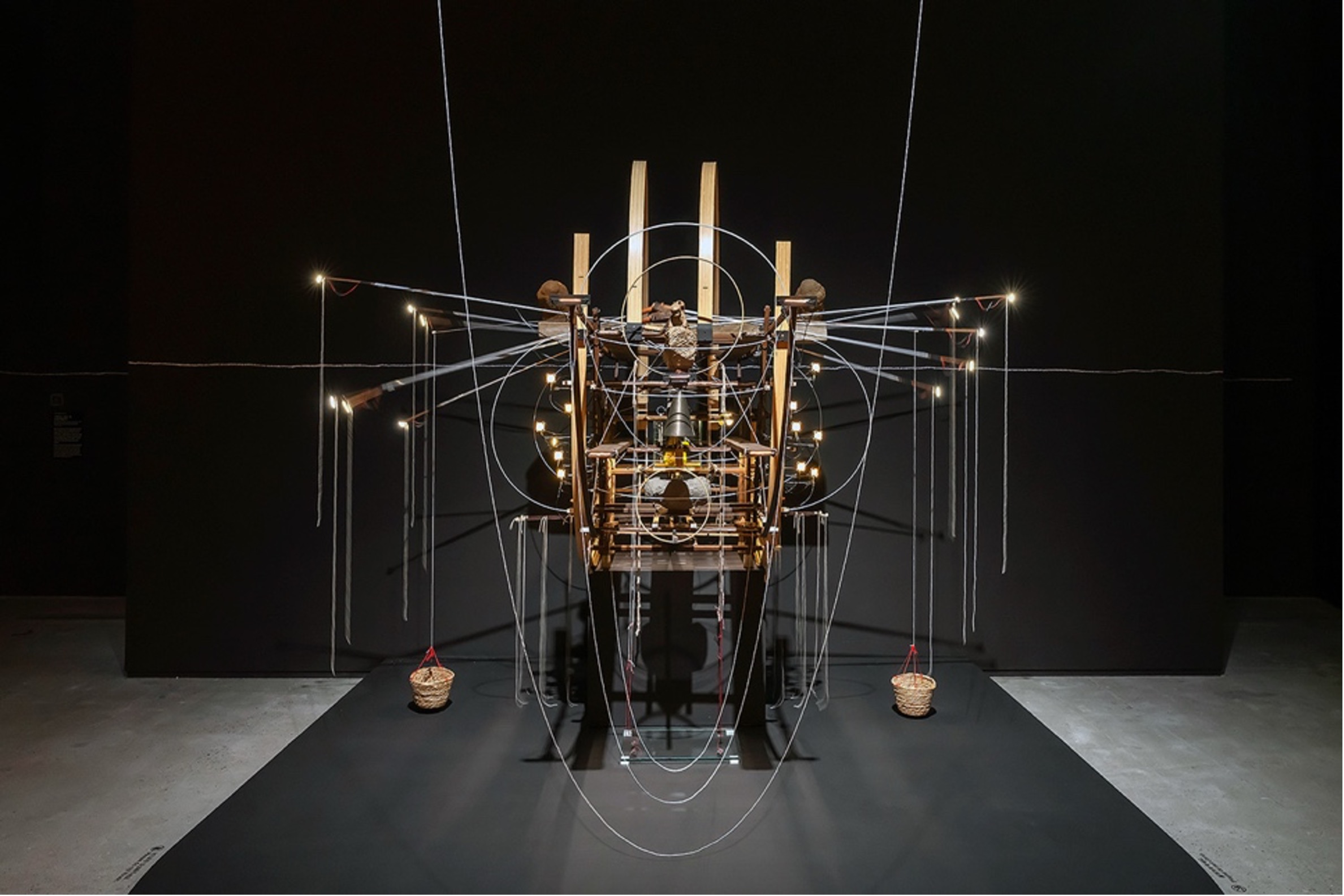
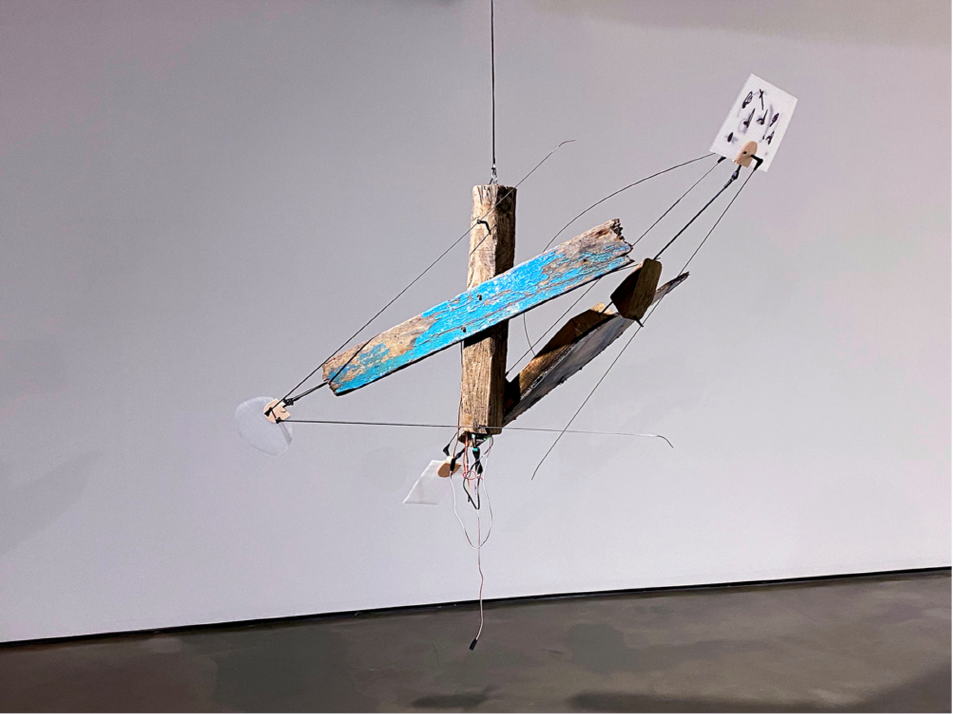
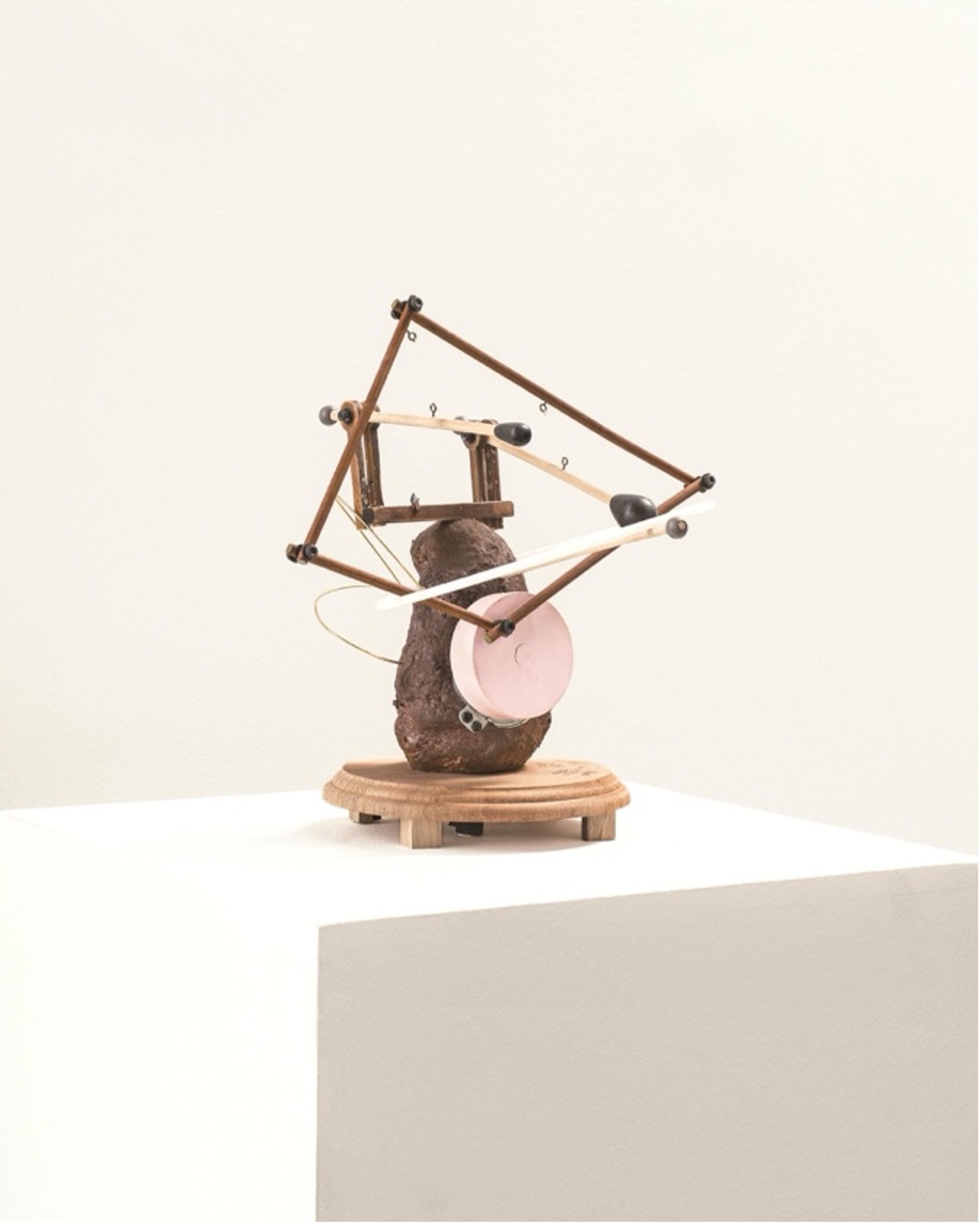
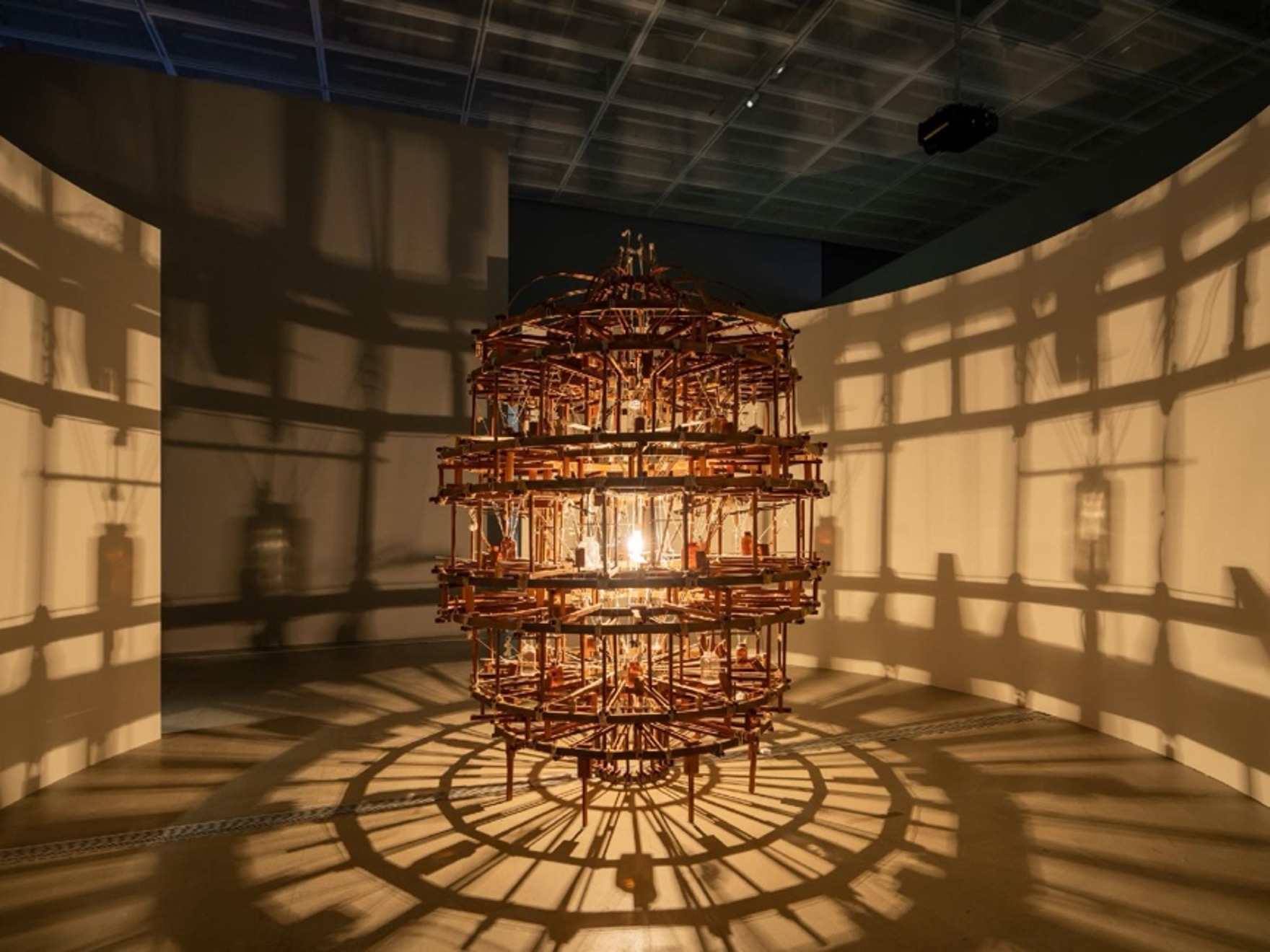
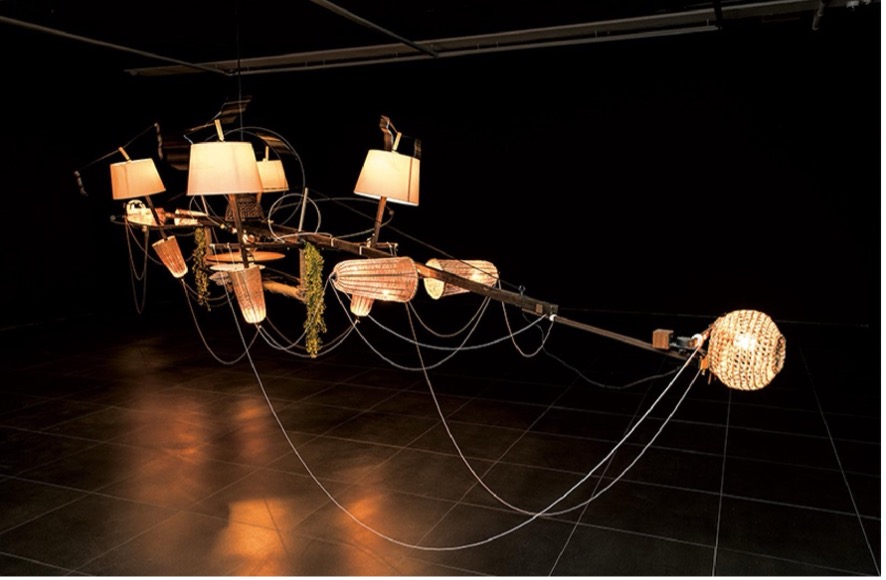
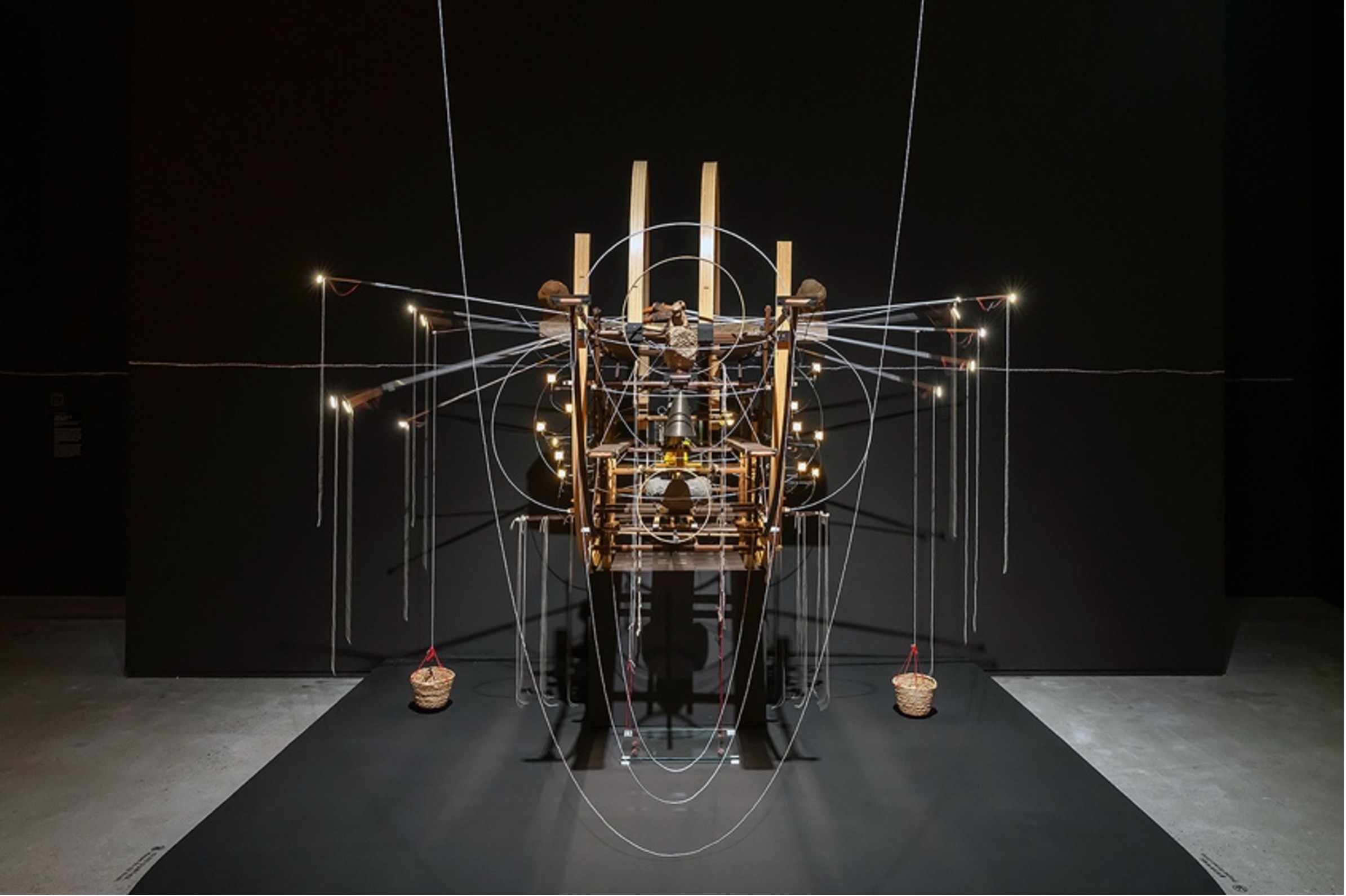
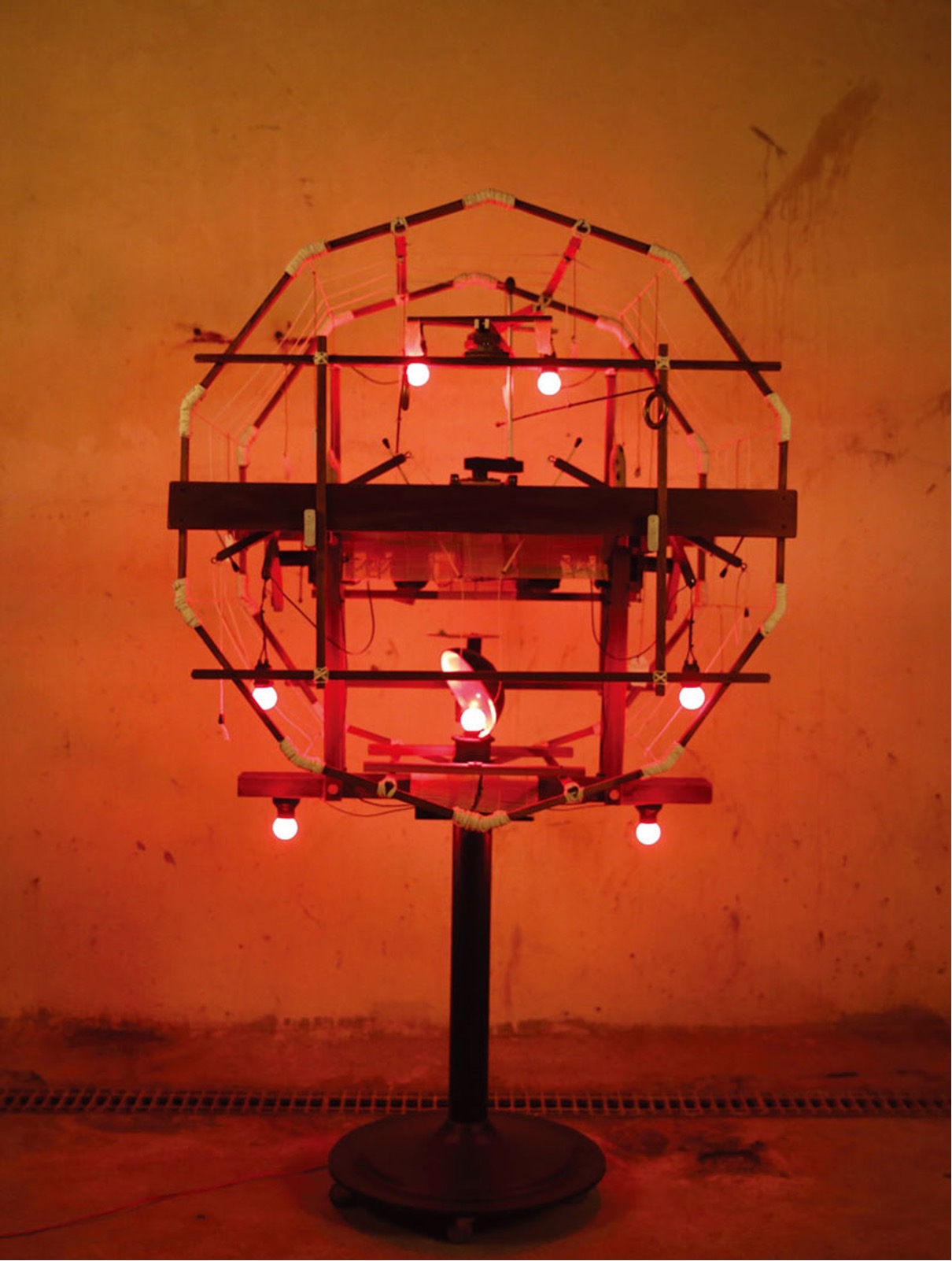
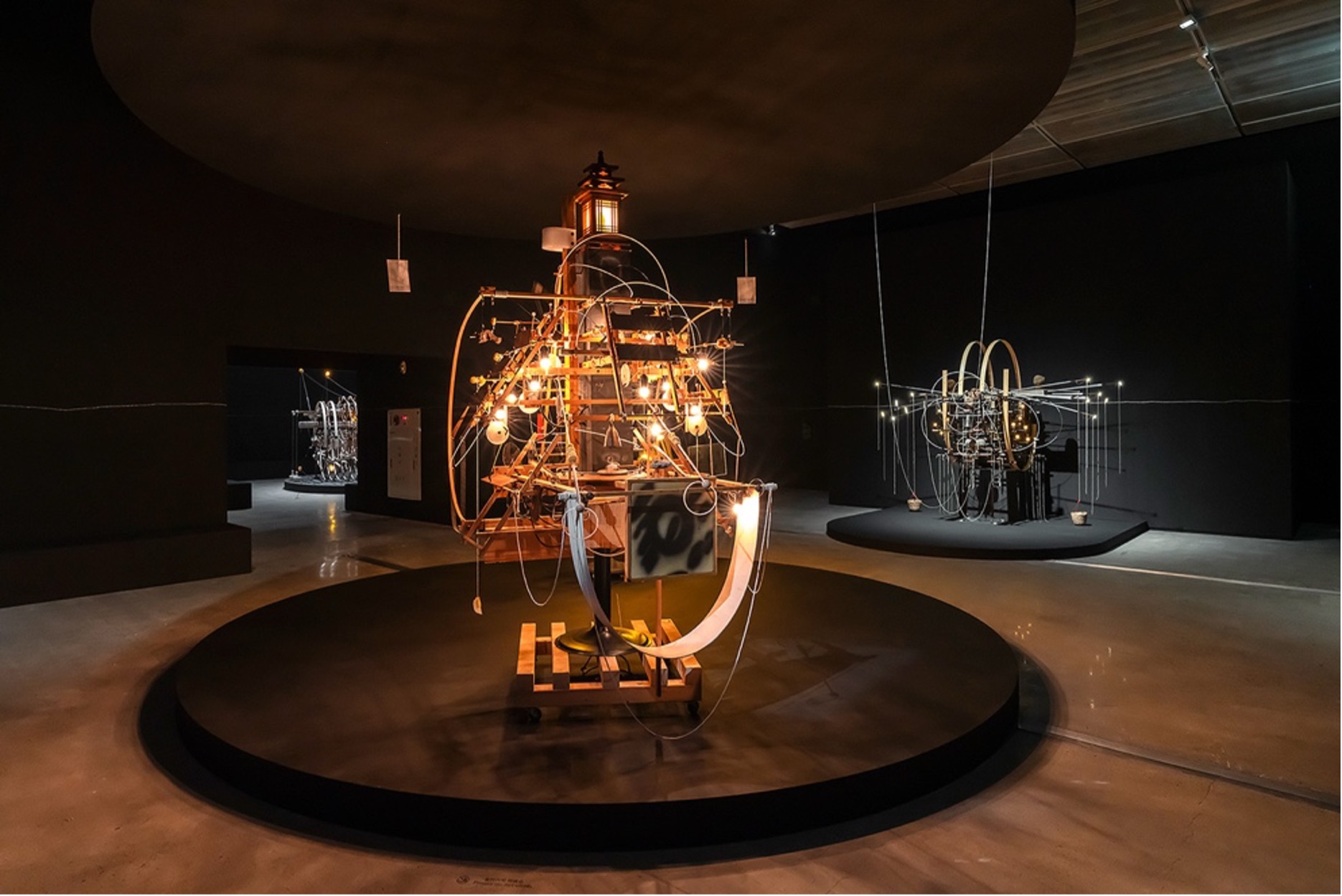
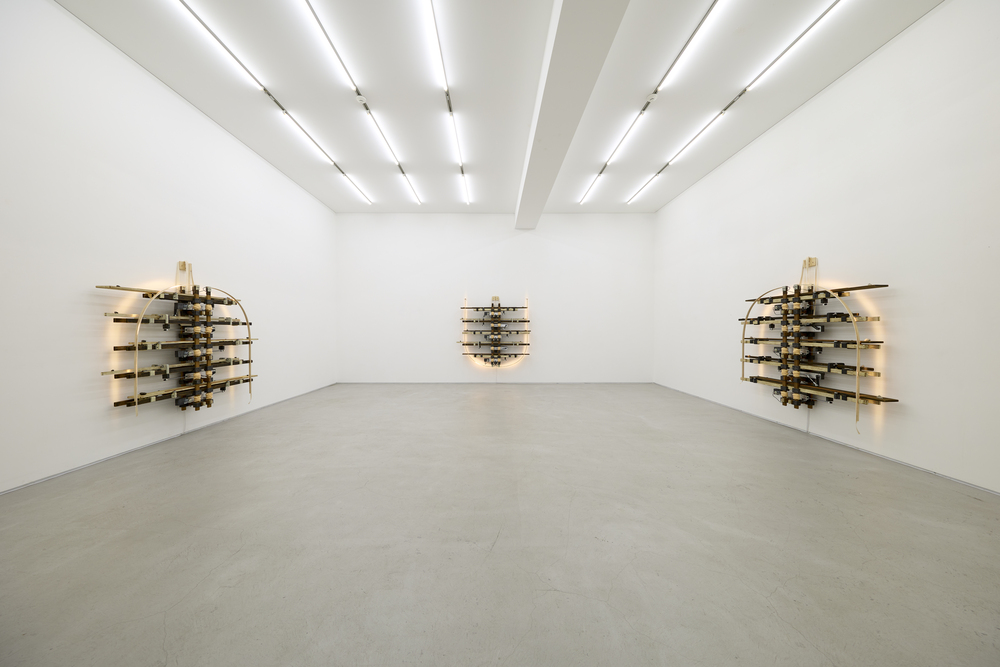
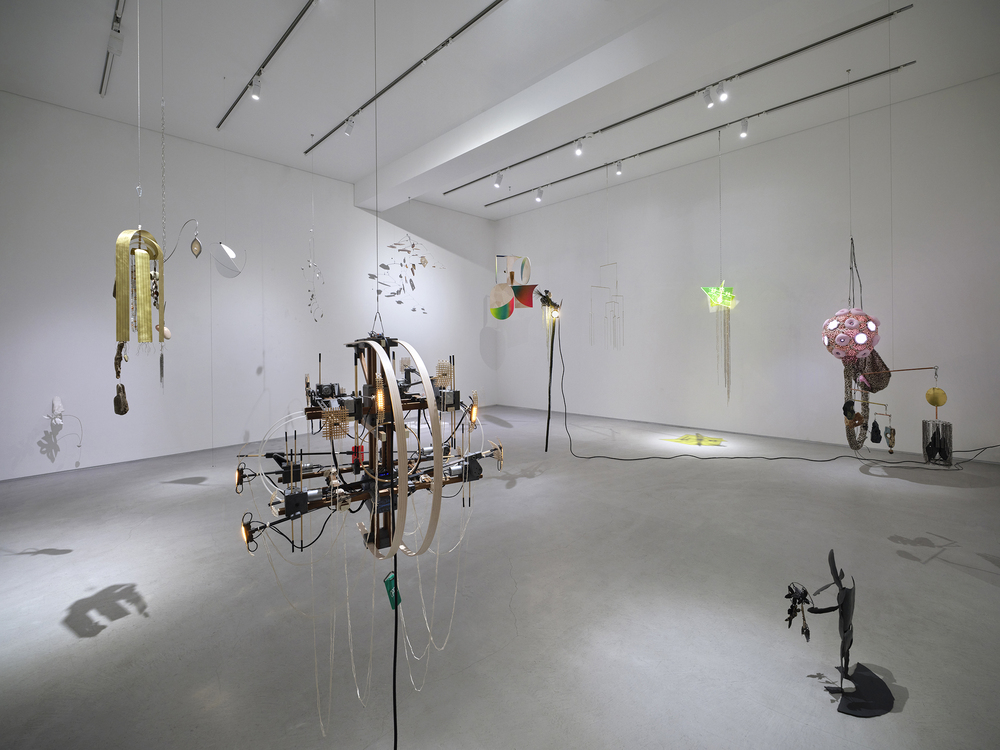
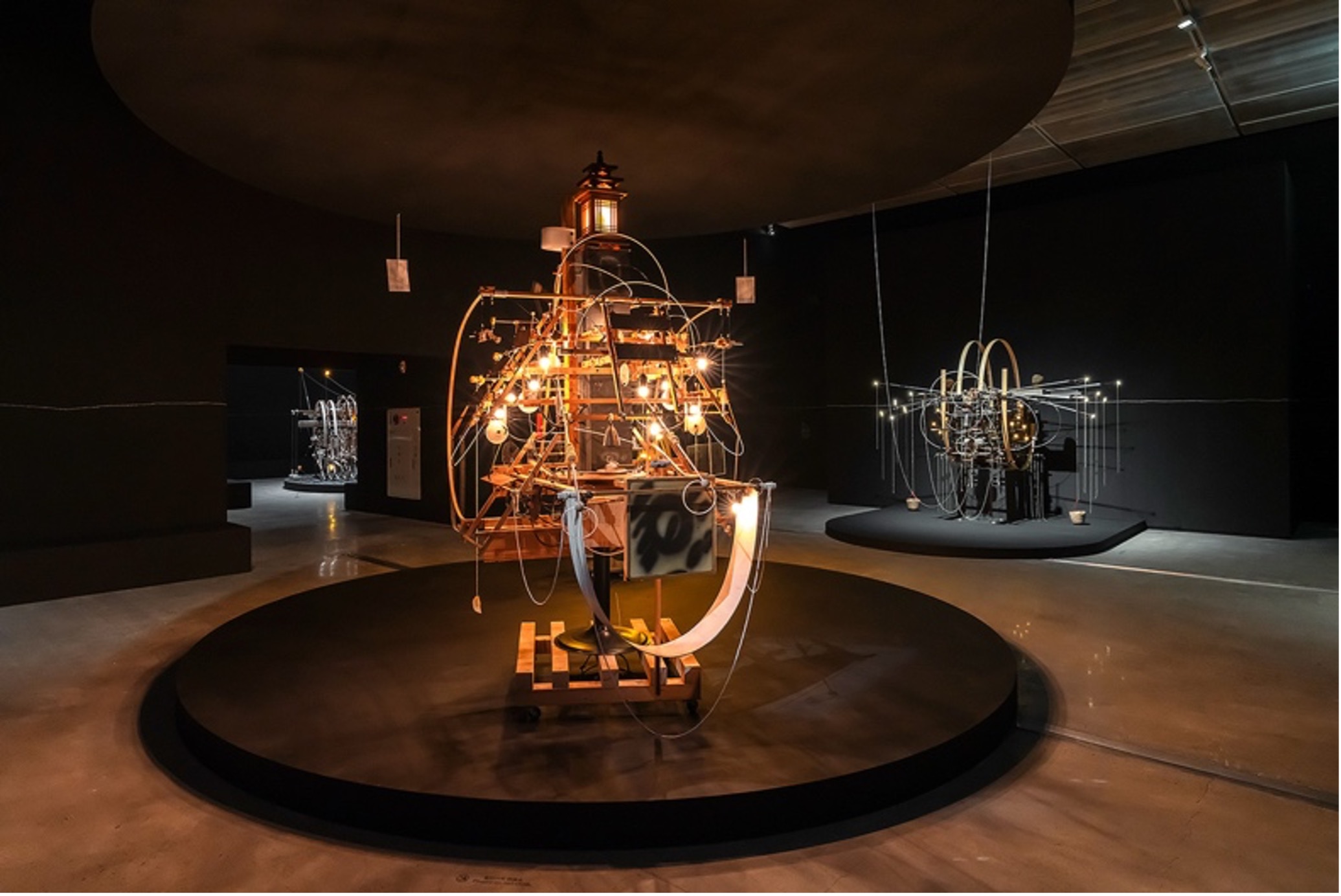
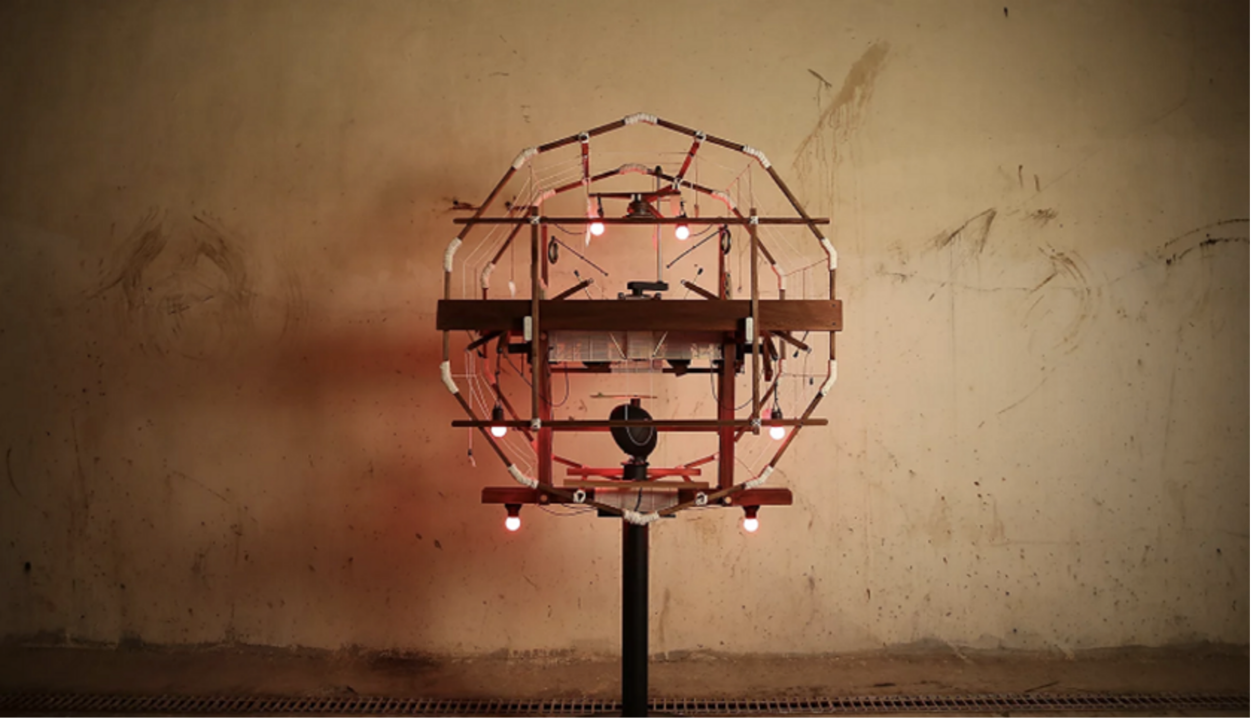
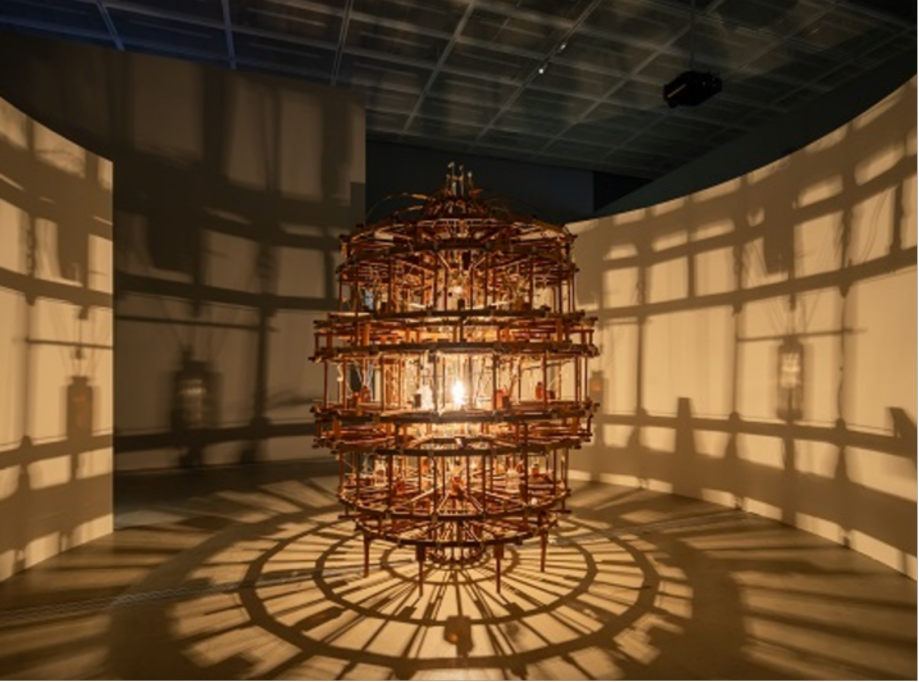
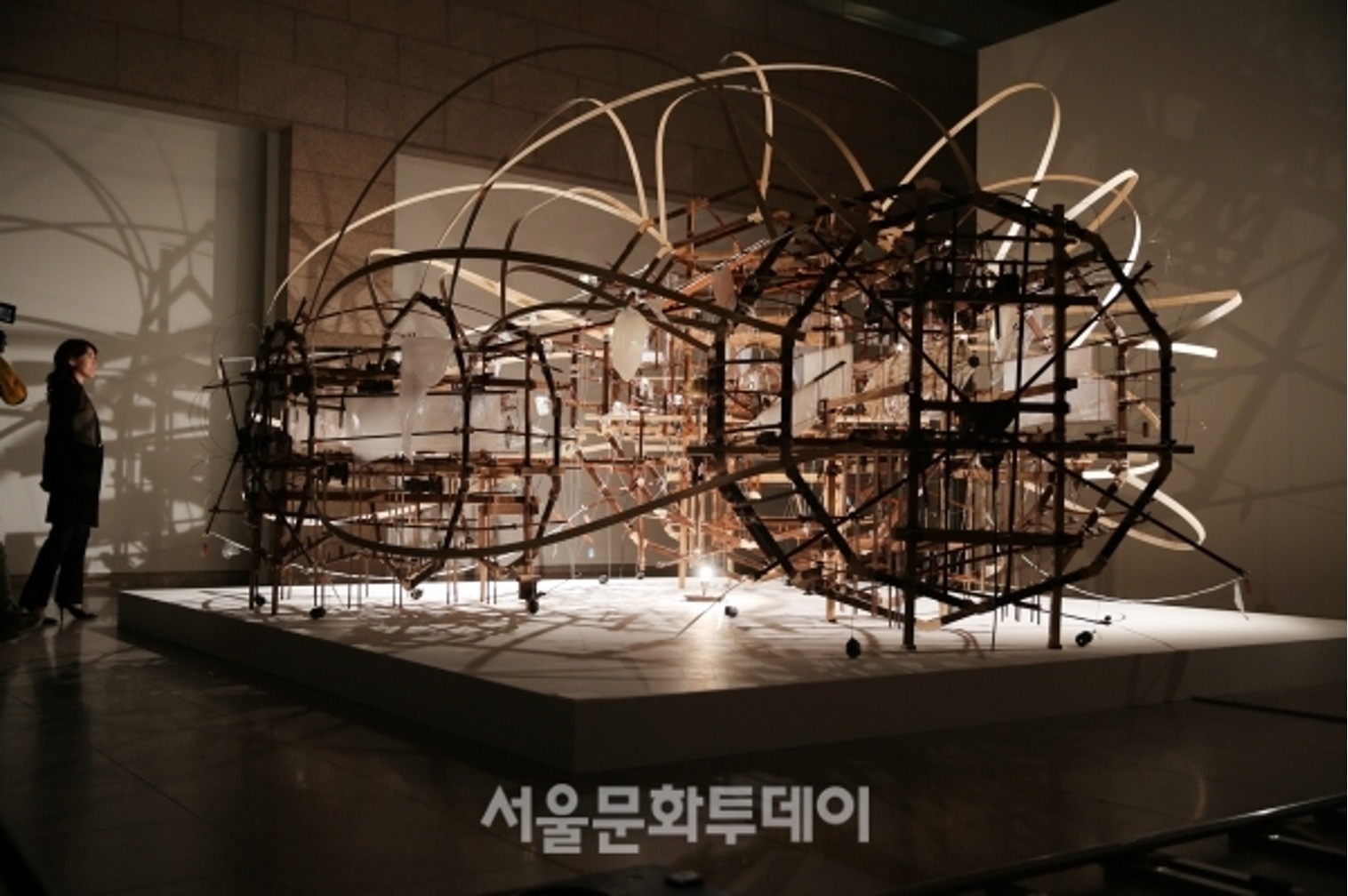
From 2008, Yang set about his work of making three-dimensional
structures that are able to move by themselves with a motor built into a body
carefully assembled with small wooden sticks woven with string (thread, cord,
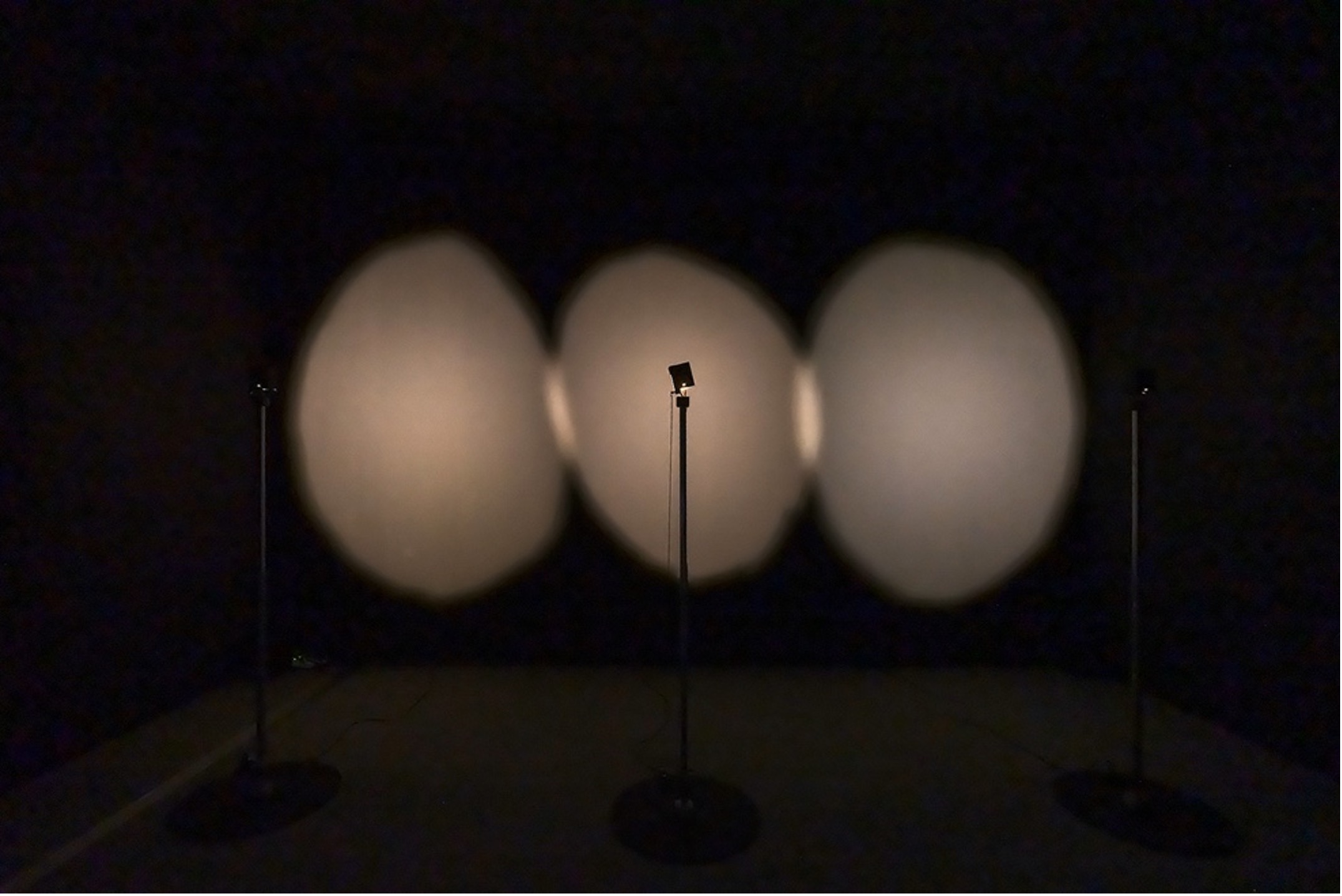
wire). He displays them in venues with the lights turned down. His structures
repeat certain motions and make sounds, casting their shadows on the wall.
Yang’s works resemble unconventional narrative devices, theater stages, or
scenarios from which somewhat audiovisual images-narratives stem, going beyond
mere sculptures. If we apply this to the images that come across our minds, we
may feel some aesthetic quality found in the film Delicatessen.
Craftsmanship, uncanny rhythms, a mysterious atmosphere, fairytale colors,
cold-hearted emotion, extremely strange stories, and temperamental sounds are
condensed and compacted in his works. These condensed elements are experienced
simultaneously by viewers, moving beyond any certain rule or single
interpretation.
2. Guessing wrong
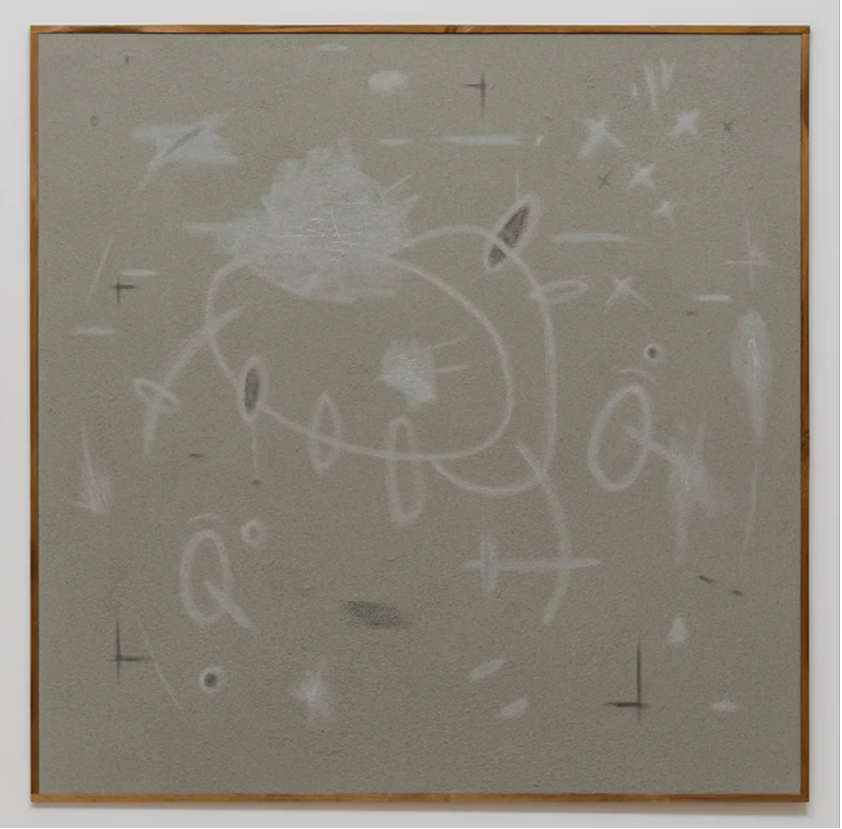
The year “2008” was a turning point for his work. He produced his
first three-dimensional sculpture with mobility as a gift to his girlfriend,
while he had previously did only “pictorial work.”1)
The “stories” here refer to visual narratives that come across
through not only the work titles and text but also the material, the
physicality of his work, and viewer imagination. The year 2008 and his stories
form a duality or “subtleness” I consider the two pillars of Yang’s art. That
is to say, the two factors denote that Yang produced only paintings before 2008
and his works are obviously a kind of fine art but are potently narrative.
These factors seem in conflict with the fact that he majored in sculpture in
college. If attempt to classify his work, they can be called sculpture-like but
are also very different from sculpture. That is, his work is a kind of fusion
art dependent on diverse properties and forms.
We may discover elements of Theo Jansen or U-ram Choe in his
pieces. For instance, Yang’s work The Private Life of the
Wind (2010) may look similar to
Jansen’s Strandbeest (1990- ). Yang’s moving sculptures
may be considered inspired by U-ram Choe’s pseudo-scientific kinetic sculpture
that were praised at the time. Yang’s multiple and multifaceted
three-dimensional structures look a lot like the ‘Animaris’ series
Jansen worked on for over 20 years in terms of appearance, technical structure,
and dynamics. His work also seems like Choe’s work in that it can be
categorized as kinetic art and depends on the mechanism of joint motions
despite being less similar in its material and visual image.
Since I first saw Yang’s works, I have felt there was a strong
resemblance with the works of Franz Kafka, a modern novelist who wrote The
Metamorphosis, The Castle, and In the Penal Colony.
Superficially, the fact that Kafka presented diverse mechanical devices in his
novels may be associated with the fact that Yang has concentrated on producing
mechanical equipment-like pieces. To think more deeply, however, Yang’s art is
more approximate to “minor literature” whose literary imagination is captured
by everyday life rather than cutting-edge art or sculpture. “Kafka clarifies
that minor literature may much better deal with literary material.”2) Similarly,
Yang comes closer to minor language, expression, and sensibility by better
addressing artistic material.
3. Artist able to consider labor
Like Kafka, Yang wanted to work only for his art, but he could not
help but work at a shop to earn a living. He was a part-time worker at a
convenience store that had almost no customers at night because it was located
in a remote place. He only had to exchange greetings with customers who came in
from time to time. During the long hours and due to boredom, he observed
customers and analogized the meaning of things. In this way he practiced using
all the materials of his art. His first solo show 《The Shop Where We Merely Said “Hello” 》
(2013) was the crystallization of such experience and effort. Works displayed
at the exhibition showed exquisite treatments of fatigue and insignificant
aspects of our lives without directly portraying reality.
In Fatigue Always Comes with a Dream (2013), taking
its motif from drowsiness an apartment guard feels, wooden sticks moved up and
down by a motor hit plastic bottles regularly. The guard is startled and awakes
from his sleep by this movement and sound. The artist reinforced the sensation
that the guard is beyond reality by adding the text “Nobody was able to know
how often he was paid afterwards.”
We should take not of the fact that Yang has evolved his realistic
perception and narrative beyond reality without avoiding any realistic labor,
thereby enabling himself to continue his artistic work. This resembles the
situation Kafka faced. Kafka abhorred working to earn a living because he did
not want to lose his time writing. Despite this, he created totally unique
novels and stories between his hatred for such labor and his thirst for
literature. For Gilles Deleuze and Felix Guattari, it seems to be “writing like
a dog digging a hole, a rat digging its burrow.”3) My judgement
is that the two artists Yang and Kafka were able to discover something artistic
and aesthetic using what they detested, and their works brought about some
extraordinary duality and unfathomable subtlety.
“The problem is not to spend time making art or writing but to
spend time doing something that is not artistic and places demands on one’s
time, approaching the point where one enters the fascination and solitude the
absence of time causes.”4)
As Maurice Blanchot commented on the above quote, Kafka had to
write by transmuting time and making time absent. This is neither a retreat
from reality nor any rapid secularization. This is a way of illustrating a
rather fantastic, grotesque world in reality.
As a result, Kafka’s literature was able to be intense, esoteric,
and critical. I’d like to say this to Yang, not Kafka, based on his work
mentioned below and how it might be enjoyed by viewers. In How
Has the Father’s Sleep Been for the Week (2014), robotic
arm-like wooden sticks leave some marks on vast yellow grease spots on windows,
conducting automatic movements. Yang took the motif of this work from the back
of a father’s head that has to go to work without time to arrange his
disordered hair every morning. Before this work, viewers could gain a glimpse
of our fathers’ troubled lives, following the trajectory of such marks. They
would be wrapped in a heavy, subtle atmosphere thinking of the dirt on their
fathers’ pillows and tangled hair.
For woks displayed at the OCI Museum of Art in July, 2015, Yang
took his motifs from realities, especially workplaces, symbolizing aspects,
devices, deeds, mechanisms, and a sense of those they may concern. An example
is Mr.A – the blind, retired masseur – now sells electric
massagers. As its title indicates, this work has the form and
mobility of a massage apparatus, generating absurd, fictitious narratives. The
blind masseur lost his job to the massage apparatus but he tries to sell this.
We wonder if the massage machine could massage as good or properly as any
masseur. And, we conjure up some scene in which a massage chair covered with
black leather waits for someone to massage in the dark (because masseur A is a
blind man), vibrating its body.
The aesthetic experiences Yang Jung-uk’s art offers are such
narratives, senses, perceptions, and imagined scenarios. That is, they are
aesthetic experiences that are three-dimensional, moving, and making sounds.
They exist on the boundaries between light and dark and reality and
imagination.