Prologue. Perfect World: An Afternoon that Gradually Emerged and
Then Gradually Faded Away
It was the last day of a trip. After spending over a month in a
countryside village where I had rested to my heart’s content, had a little fun, and spent ample time reading and
writing amid endless fields of rice paddies and farmland stretched out before
me, that afternoon I thought to myself, Tomorrow, I’ll return home. I rode around the village on a bicycle I
borrowed from the place I was staying. Knowing it was my last day, I found
myself paying keen attention to my surroundings. As if having a long goodbye, I
took everything in while pedaling ever so slowly. A single tree, a tuft of
grass, a discarded chair, a dented sign, a broken streetlamp, a large spider
and its web dangling beside it, moss wedged in the gate of a house, the scent
of the wind licking my skin, the sun setting in a way that highlighted the
silhouettes of the ripened rice paddies…even with
nothing more than those familiar things that had always been there, it felt as
though there was not enough time for me to say goodbye. Just then, a flock of
wild geese began gathering and taking flight. Had you always been
there, too? I wondered. Was it only me who had not
noticed until now? The wild geese quietly folded in their wings
and landed not far from me. They gathered around a puddle full of what appeared
to be shiny black water, lowering their beaks to drink. If it had been
yesterday or the day before yesterday, I might have paused for a moment,
thought to myself, How cute, and moved on. But since I was leaving the
next day, I took the time to watch them a little longer. One by one, raindrops
began to fall into the puddle. The wild geese calmly stood in the rain before
flying off again. Each raindrop that fell into the lonely puddle created
concentric circles, which grew larger and larger before disappearing, only to
be replaced by new ones, repeatedly, over and over. The circles were so
perfectly shaped and the rhythm of each new raindrop breaking the perfection
and forming a new circle so fitting that I parked my bicycle, crouched down at
a distance. A child glanced at me and then approached the puddle. Kneeling
down, she placed both hands on the ground before taking a paper boat from her
pocket and setting it afloat in the puddle. The small boat, neither departing
nor docking, bobbed gently, the paper rustling slightly. Workers carrying
stacked roof tiles on their heads passed by and said something to the child,
who responded with nothing more than a wide smile. When a voice called out from
a distance a moment later, the child turned her head in that direction. This
time, it sounded like a chorus of voices, as if many people were singing
together. It seemed that they were calling for the child, who stood up, dusted
off her hands, and ran toward the voices. I watched her back until she
disappeared from sight. Then I sat there for quite some time, wondering whether
I should take the paper boat with me or leave it where it was.
Recently, I suddenly recalled that long-forgotten day. The paper
boat from that afternoon appeared vividly before my eyes, white and perfectly
clear in my mind’s eye. I was
overcome with a feeling like the one that child might have had when she folded
that paper boat by hand and pulled it out of her pocket. I even felt a little
like the puddle, which had been filled a touch higher than usual thanks to the
rain that had fallen just in time for the child who had run outside to set the
boat afloat. At the same time, I also felt like the house at the end of that
road I was on, which accepted the image of the child, her back to the house, as
she ran toward the voices calling to her, leaving the paper boat behind. The
paper boat carried with it the gaze of a stranger, someone who had spent time
there and who would soon no longer remain, someone who was quietly observing
everything in that place. Even if I had not seen the paper boat that day, it
would not have mattered. Yet because I did see the boat, it felt like I had
spent a perfect day. A series of events that gradually emerged and then slowly
faded away had happened at just the right time on a single afternoon. It was
the ideal last day of a trip. If someone were to ask me what I did on the last
day of my trip, I would have nothing to say other than that I rode a bicycle.
But it was a day where a perfect world—like the
concentric circles spreading out in the puddle—repeatedly
appeared and disappeared.
1. Same/Similar/Alike, Two or Three: The Stories Passed on
One night, I was the last customer to have a meal at a restaurant,
and in the umbrella stand, there was an umbrella that was not mine. At first
glance, it looked like mine—the one I had
brought there—but it was not. The restaurant owner
suggested that I take the umbrella anyway, saying it was the right thing to do
in such heavy rain. And so, awkwardly, I opened the unfamiliar umbrella and
made it home safely. From that moment on, that umbrella lived as if my umbrella
for much longer than my original one ever did, until it, too, eventually left
me. I tend to lose umbrellas easily, but for some reason, I did not lose that
one for a long time. The umbrella was not the only thing that found its way
into my home in such a way. Long ago, lighters often appeared the same way. One
day, I would dig through my bag, and several colorful lighters would rattle
out. My friend’s cat, Pepper, also came into her life
in a similar fashion, and has lived with her ever since. The mushrooms that
occasionally sprout like umbrellas from the pot where my fern is planted are
much the same.
After years of carefully tending to a plant that I received one
time as a gift, I eventually came to repot it. I purposely divided it into two
separate pots before giving one of the plants back to the very friend who had
originally gifted it to me. Over the years, different friends would also give
me plants which I would subsequently repot and give back to them. Some of these
same friends immediately recognized it as the same plant they had once given
me, while others just saw it as another potted plant altogether. Once, while
joking around with a friend, we wondered what it would be like if we were to
receive a child as a gift, raise the child as two separate children, and then
return one as a gift. Our conversation spiraled into something far too problematic
to handle. We touched on issues of individual reproduction, growth, caregiving,
bonds, the identity of gifts and sharing, and bioethics, with our humor
branching endlessly into these topics as if brushing against the farthest ends
of human history. It felt as if our jokes had come full circle and had borne
fruit in the small plant sitting between us. I am thinking of tucking this
story away, like one of the small mushrooms that is secretly blooming in my
flowerpot—perhaps inside a lightbulb
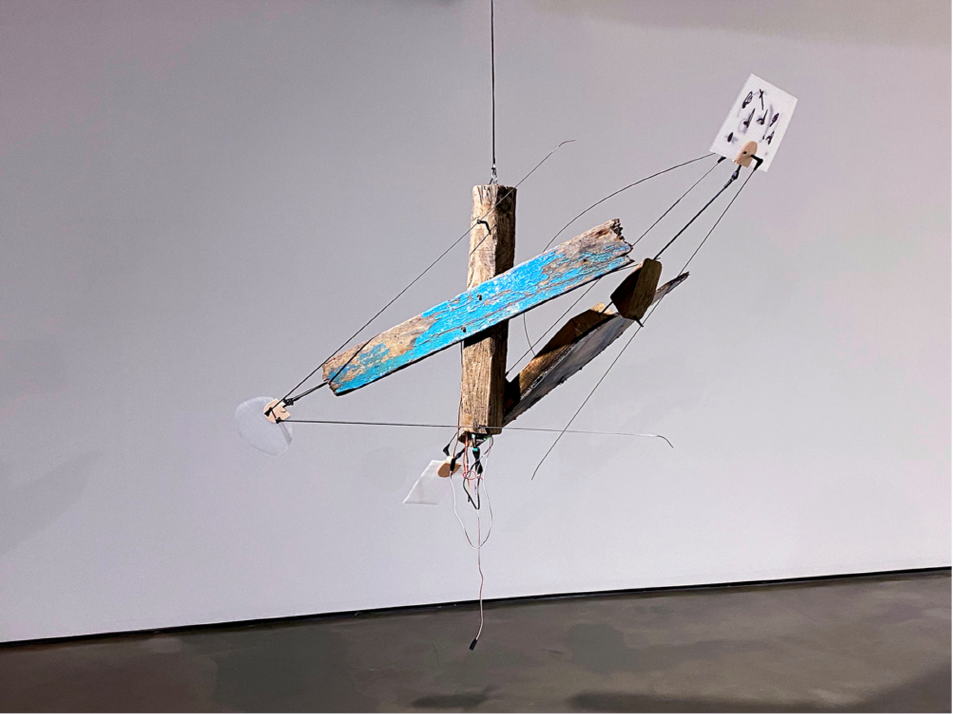
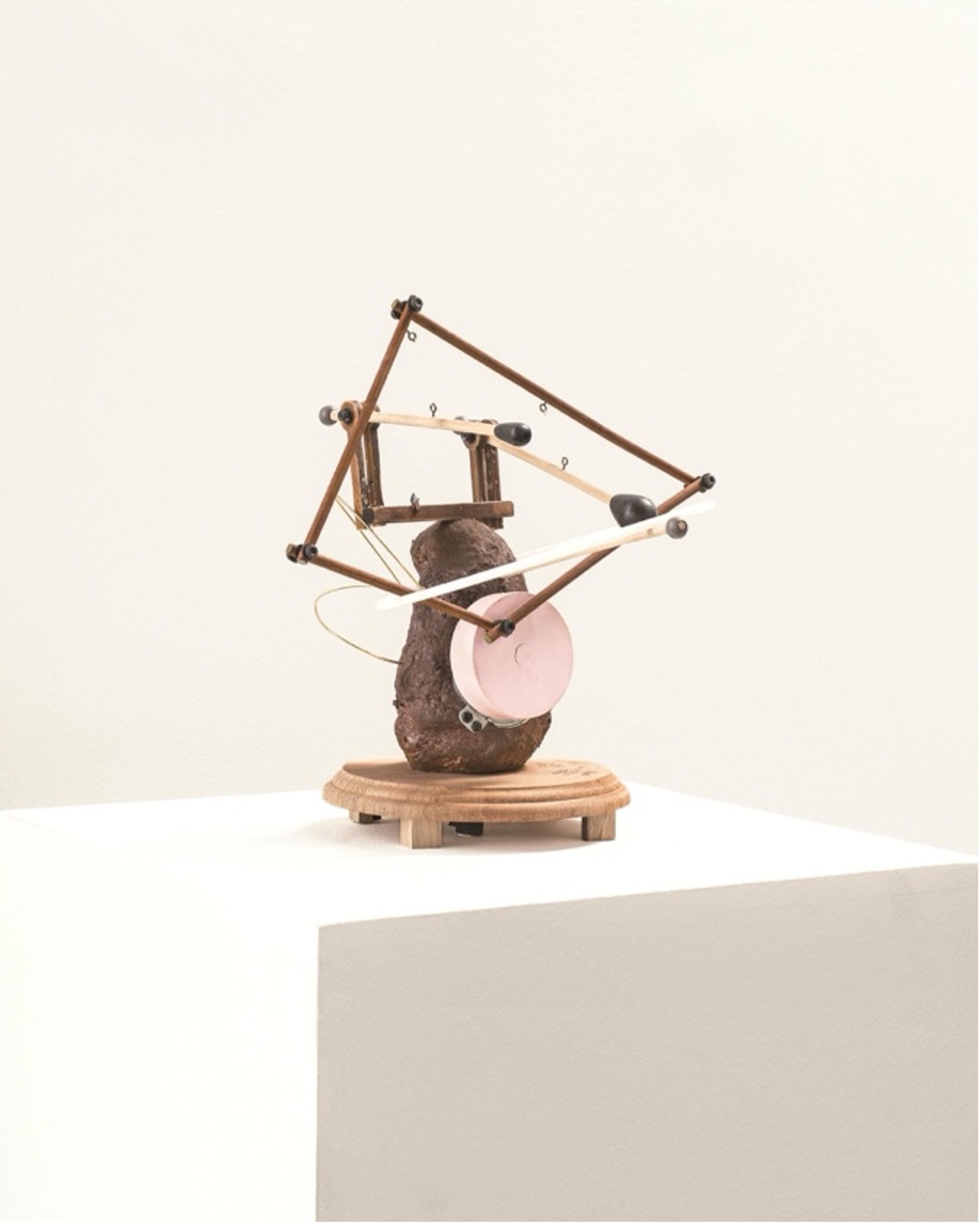
socket or behind the wooden parts of Someone I Know, in His
Garden I’ve Never Seen.
2. The Result: An Ear That Remains Forever, Even After the Story
Ends
Sometimes, when someone excitedly shares a story, and I listen
with joy, I wish that these stories would not just disappear into thin air. I
wish that they could hide somewhere, only to resurface and continue drifting on
as endless tales. Sometimes when I hear such a story, I feel that even when it
ends, I want to remain there with that person, still smiling, still clapping,
still moving my shoulders in delight—without needing a story to do so. It is the same with my poetry. I
really wish that someone’s creative work could exist in
such a form, made to float endlessly in the air like an infinite story. Even
after the story has left, I want there to be something remaining, like a giant
ear, staying in place, so that the story never fully fades away.
This happened on a train from Frankfurt to Munich once. My seat
was one of those four-person face-to-face arrangements, and across from me sat
an elderly couple. Tired from my busy schedule, I immediately plugged in my
earphones, turned on some music, and closed my eyes. Even though the sound of
conversation around me grew louder, I ignored it and drifted off to sleep. I
dreamed of chatting and laughing with people, and when I woke up, the woman
sitting next to me smiled and shrugged. Apparently, she believed I had been
laughing at her joke. They were speaking in German, and since I hardly
understand any German, I could not laugh even if I wanted to. Yet in my dream,
I had been part of their group, talking and laughing together. The elderly
couple sitting in front of me continued their conversation with a gentle yet
seasoned rhythm. The woman next to me, constantly amazed, reacted to their
stories with playful remarks. Her laptop work had long been forgotten, as she
was captivated by the old man’s storytelling.
I could not say for certain whether I had been laughing because of her jokes or
not. It felt like I had, and yet it also seemed impossible. Fully awake now, I
quietly observed their conversation; I studied their expressions, their tone,
and their gestures. The conversation I observed had almost nothing to do with
spoken language. I was the last one to leave our four-person seating area. When
the announcement for my stop was made and I stood up, I noticed a large
ear-like object, similar to a cushion, left behind on my seat. I did not know
if the “ear” belonged to me,
but I left it there as I stepped off the train.
As time has passed, I have come to summarize the story I heard
that day like this: upon retiring, the elderly man bought an old house in the
countryside to renovate as part of his plan to move there. However, nothing
about the renovation went as expected. There were conflicts with the neighbors,
with government offices, and even with the spirits that had lived in the house
for generations. After making numerous compromises and adjustments, the house
turned out quite different from the one he had originally planned. The woman
sitting next to me was in awe every time she uncovered a nugget of wisdom
hidden in the old man’s story, and he
responded to her amazement with lighthearted jokes. She laughed heartily, and I
laughed along with them.
3. The Weekend They Do Not Know About2: Urgent Matters
Happen Everywhere
Once, I went to Odaesan Mountain with several colleagues. We chose
to hike the Birobong trail, which takes about four hours, round trip. As we
climbed the mountain slowly, we decided to rest by a stream. Two of my
colleagues sat on a rock, pulling their feet out of their shoes and dipping
them into the cool water. Another colleague unpacked some fruit from their bag
and offered it around to all of us, while yet another colleague wandered off,
talking on the phone at a distance. I sat by the stream with another one of my
colleagues, dipping my hands into the water. The two colleagues with their feet
in the stream were discussing their hiking boots, comparing the new features
and talking about foot fatigue. The fruit that had been taken out lay on a flat
rock, waiting for someone to reach for it. Meanwhile, the colleague who was on
the phone drifted farther away, still engrossed in their conversation. All of a
sudden, the colleague sitting with me and I noticed a baby grasshopper
struggling in the water. In a rush of concern, I grabbed a nearby leaf and
tried to scoop the tiny insect out of the stream. The baby grasshopper appeared
more terrified by the approaching leaf than it had been while struggling in the
stream. My colleague softly exclaimed, “Don’t be scared! We’re
trying to help!” I joined in, also speaking gently, “Climb onto this!” Miraculously, as if it
understood our words, the baby grasshopper crawled onto the leaf and was
finally placed safely on solid ground. However, once on the ground, it simply sat
there, unmoving. Whether it was because its body was soaked or it was trying to
assess the situation, it nonetheless stayed still. A few seconds passed before
the grasshopper lifted its front legs and reached up to touch its antennae. It
seemed that the antennae, which should have been spread apart in a “V” shape, were stuck together because of the
water, making it difficult for the grasshopper to move. It kept using its front
legs to wipe the moisture away, struggling to separate the stuck antennae. The
grasshopper’s movements became more frantic. We held
our breath, watching carefully so as not to disturb it. The baby grasshopper
then became cautious all of a sudden. Very slowly, it began to move its legs
and carefully inserted them between its stuck antennae. Like an elderly woman
carefully threading a needle—putting her magnifying
eyeglasses to her nose, moistening the thread with her saliva, straightening it
with her fingers, and finally threading it through with trembling hands—the baby grasshopper succeeded in restoring its antennae to a
V-shape. With its antennae boldly pointing forward, the grasshopper suddenly
flew off into the distance. My colleague and I cheered simultaneously, and our
fellow hikers, who had been resting nearby, looked at us in surprise, startled,
just like the baby grasshopper had been after being freshly rescued from the
water. After descending the mountain, I could not engage in conversation with
the group even though we had gone to a place we were all looking forward to going.
Still, the others managed to have meaningful discussions and supposedly found a
breakthrough to a project we had been grappling with for quite a long time. For
that colleague and I who had shared the experience with the baby grasshopper,
however, we only talked to one another in hushed voices about the grasshopper
and how it flew away with its V-shaped antennae intact.
4. Socks: Just Like Bangs Grow Up Soon, You and I
I once traveled quite a distance to visit a friend who had been
bedridden for years after surviving a horrible accident, undergoing major
surgery, and coming close to death. At the time, even without a wheelchair or
crutches, my friend was able to walk pretty well beside me. The morning after
we had spent the night together catching up, my friend sat on the floor,
crouching while putting on socks, and said, “It’s such a joy to be able to put on socks
by myself.” The act of bending one’s back to put on socks is something only those with healthy backs
can do, but only those who have been injured, like my friend, can truly
understand this seemingly obvious fact. While waving a pair of socks in my
hand, I joked, “If doing this makes you that happy, do
you want to put on an extra pair?” Ever since then,
whenever I put on socks, I think of that time in my friend’s life when she was struggling with her physical ailment; the slow,
day-by-day healing of a broken body held together by screws; the patience my
friend exhibited while enduring that torturously long period of her life; the
tremendous effort it all required.
5. If You Have Ever Seen Something That Stood Still4:
That Place Becomes the Furthest Edge You Know, Like a Beach or a Cliff
One day, while taking a walk around the neighborhood, I found what
appeared to be a discarded soccer ball in the bushes. The outer layer was
peeling off and the stitches were coming undone. I looked at it for a moment
and walked on. Seasons changed, and then early one morning after a heavy
snowfall, I was taking another walk around the neighborhood, enjoying the act
of leaving my footprints in the fresh snow and the accompanying sound it made
when, in a world covered as if with a white blanket, I saw a round patch of
brown earth exposed. The soccer ball that had been there suddenly came to mind.
Thanks to the round spot of dirt showing through the white snow, I remembered
the old soccer ball. I started wondering where it might have gone. Maybe
someone kicked it, sending it flying high in an arc. Imagining an invisible arc
in the air, I continued thinking about the ball. I imagined it flying off
somewhere and resting quietly with a soft layer of snow covering it on a day
when the snow had melted and then fallen again, only to be kicked once more by
someone. I imagined a yellow patch of grass was concealing the soccer ball and
its torn stitches somewhere. Beside the round patch of dirt, there was a
fist-sized stone covered in a round cap of snow. I picked up the stone. Now,
next to the big round patch of dirt, there was also a small round patch. I
decided to take the stone home—the stone that
had been guarding the side of the soccer ball. It was the stone that had
guarded the soccer ball, the one that had shown me the imaginary arc in the
air. At home, I placed the stone on my desk and started writing some poems. As
I thought about the soccer ball and the arc, I began feeling like I had become
a baseball outfielder. When I opened my notebook, imagination took over and a
bunch of old baseballs, their seams undone, tumbled out in my mind’s eye. All of a sudden, I was standing at the furthest point of a
field I knew, wearing a glove and guarding the edge of the field. Baseballs
kept flying in arcs, and I stretched out my arms, trying to catch them all.
Some balls I missed, but I did not mind. The missed balls, in their own way,
would roll off somewhere and form a round patch of dirt like the soccer ball I
had once seen, wearing the fallen snow like a beret.
Could I ever properly convey such a story to someone? Perhaps
while drinking tea, or during brief moments of small talk in the middle of a
conversation about work. I could, if I wanted to, but I have chosen not to.
These are the kinds of experiences that cannot be conveyed through words—stories that could never be fully understood if told. They are more
fragile and layered than stories that can be shared, and they are felt only
faintly, like someone’s breath. Stories that would not
change anything, even if someone told them out loud.
6. The Invisible Part of Labor
For some time, after getting home from work, I would sit down to
write this piece, little by little, at night. When the sound of cars outside
the open window grew louder, I would stick my head out and take a look. I could
see a line of trucks with their headlights on or a delivery vehicle entering my
apartment complex. In the morning, after opening the front door, items I had
ordered would be waiting in boxes. I would pick up the boxes, bring them
inside, and step back out into the hallway. On one such occasion, I could smell
the faint scent of bleach. Standing on the freshly cleaned floor, I pressed the
elevator button. An announcement came on and mentioned that several trees had
fallen due to the typhoon the night before. At the entrance of the apartment
complex, two workers stood next to one of the fallen trees. I thought to myself
that by the time I returned home, the trees would be standing upright again.
Road maintenance on the highway asphalt usually happened at night, at which
time the cracked and worn road was transformed into a glossy, new road.
Workers, equipped with their tools, must have gone to the damaged highway in
the middle of the night. They likely returned home only at dawn, finally laying
down on their back, which had been bent over throughout the night, to rest.
Every night, I continue to write, little by little. There are more words I have
erased than I have kept. There are more thoughts that have disappeared while
trying to emerge than those that have actually surfaced. Experiences and memories
flicker in and out of existence, never quite materializing into sentences. If
they were made of fluorescent material, my body, while writing in the dark,
would be glowing in the night.
7. Gestures: The Encounter between What Is Seen and What Cannot Be
Seen
I want to call this a gesture, not just a movement. A single scene
and a single story transform like a tree walking with its roots, its
expressions, movements, and emotions becoming interwoven with the body’s joints. This is how a gesture begins to form. The stagnant air
scatters, moving restlessly as it starts to weave a space different from
before. Any gesture takes on significantly more meaning with the help of
language. It captures and preserves, without omission, the first scene imagined
by the artist, scattering it anew into the aforementioned space—and all without confining it to anything material while also not
relying on any notion of the immaterial. A gesture realizes the encounter of
the material and the immaterial. Landscapes we should have long noticed emerge
in relief from the void. Stories that cannot be clear or concrete, the missing
pieces, meet us in this way.
Epilogue. A World that Cannot Be Complete: Beauty Shaped by What
Never Stops and Repeats Eternally
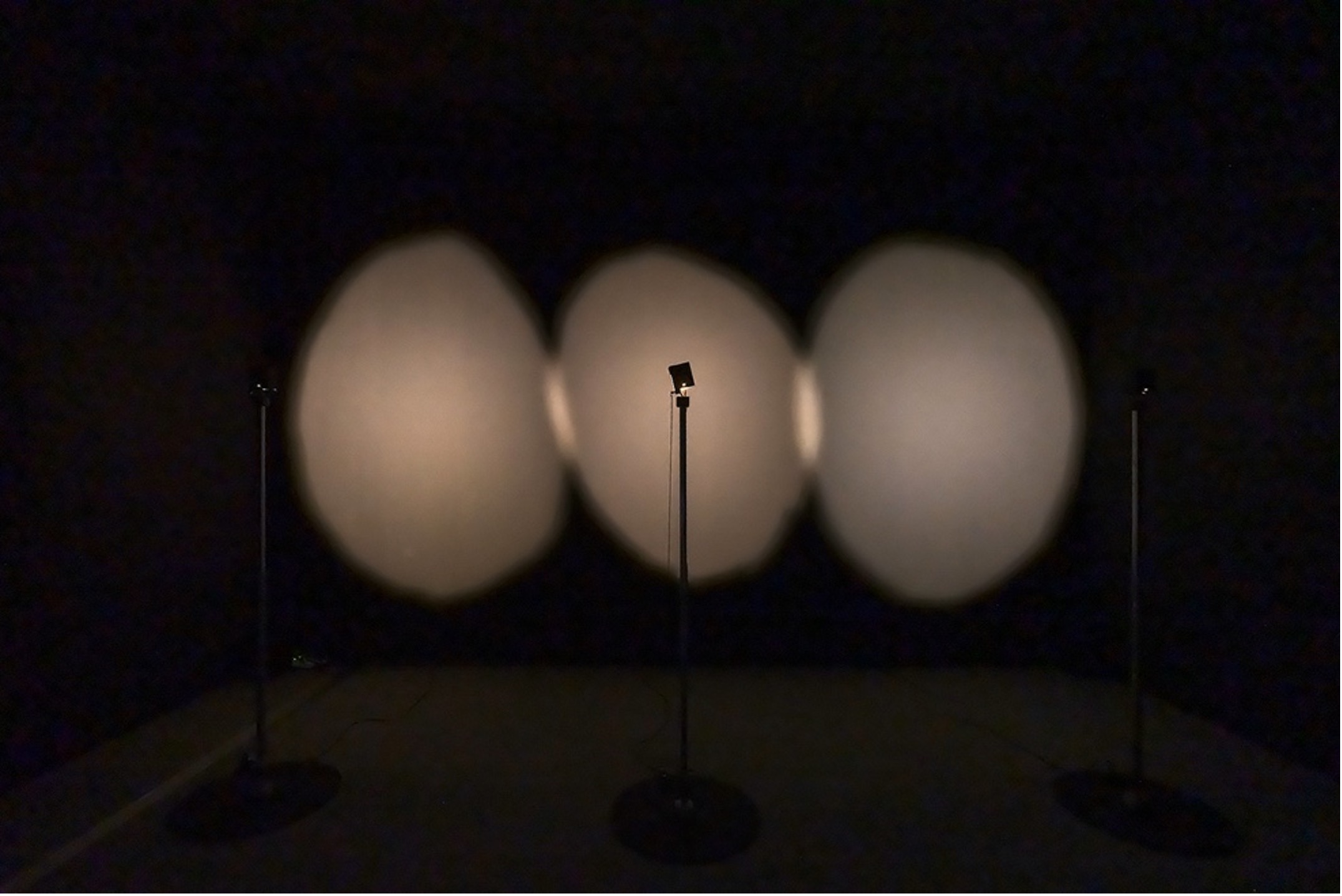
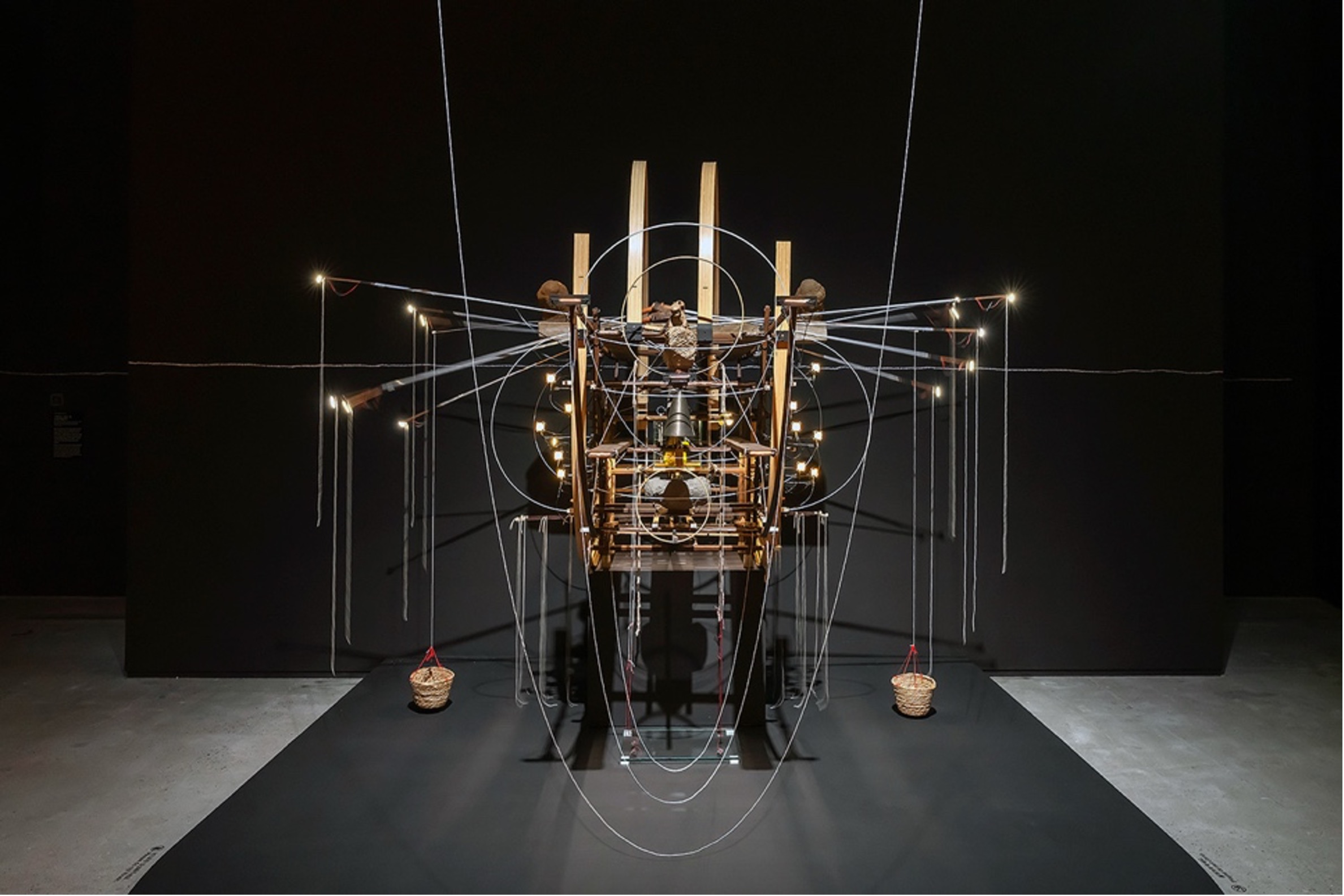
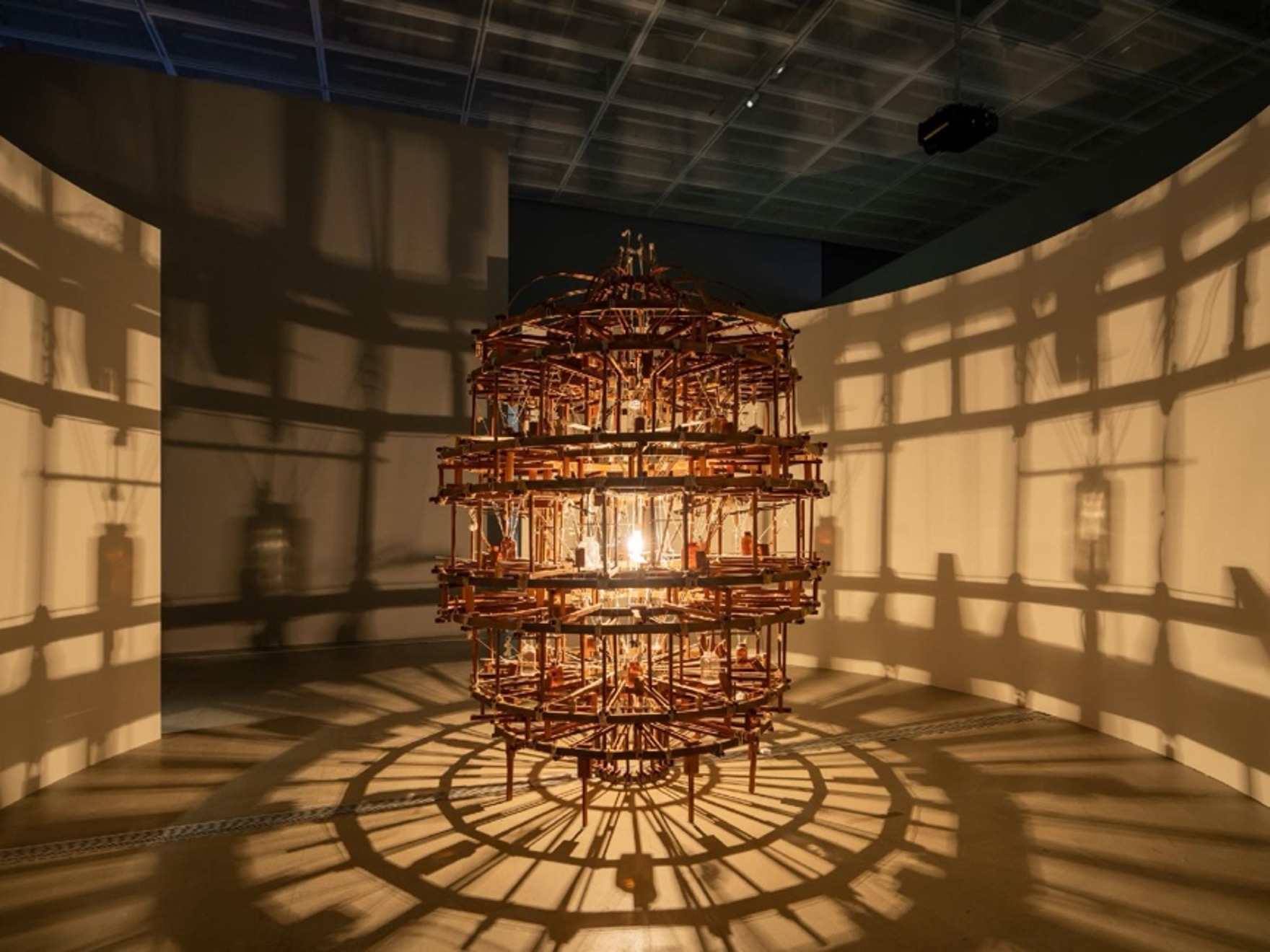
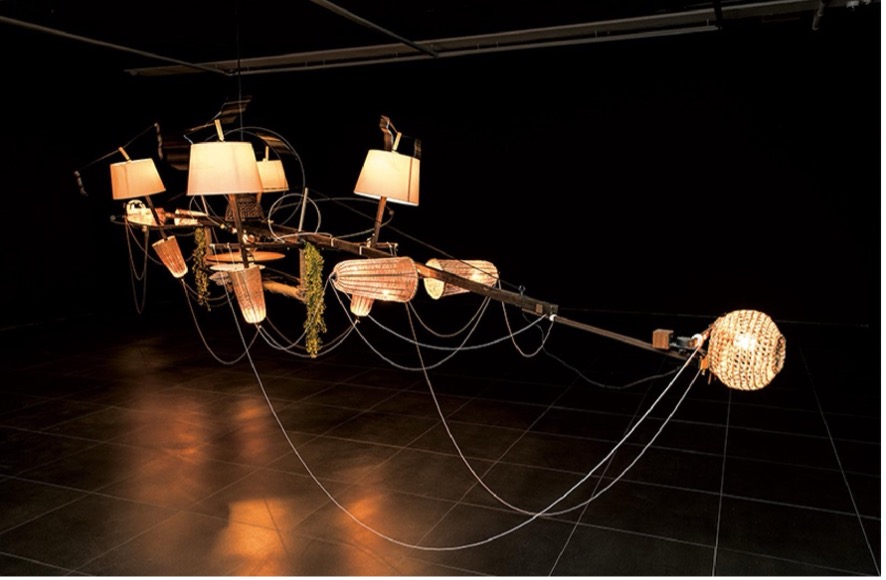
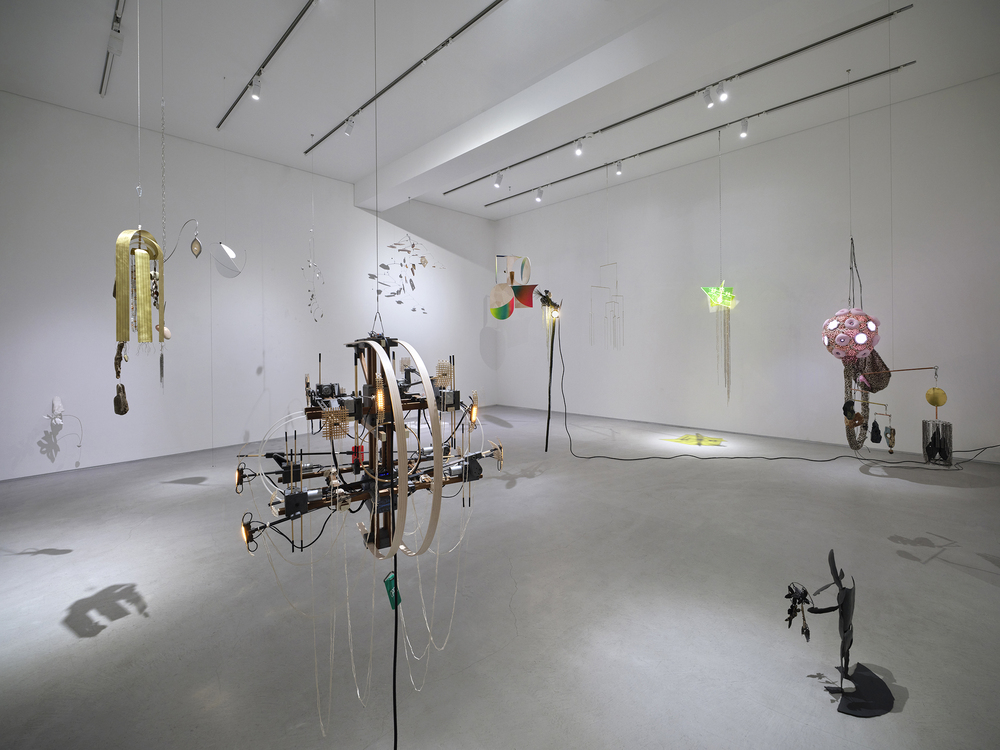
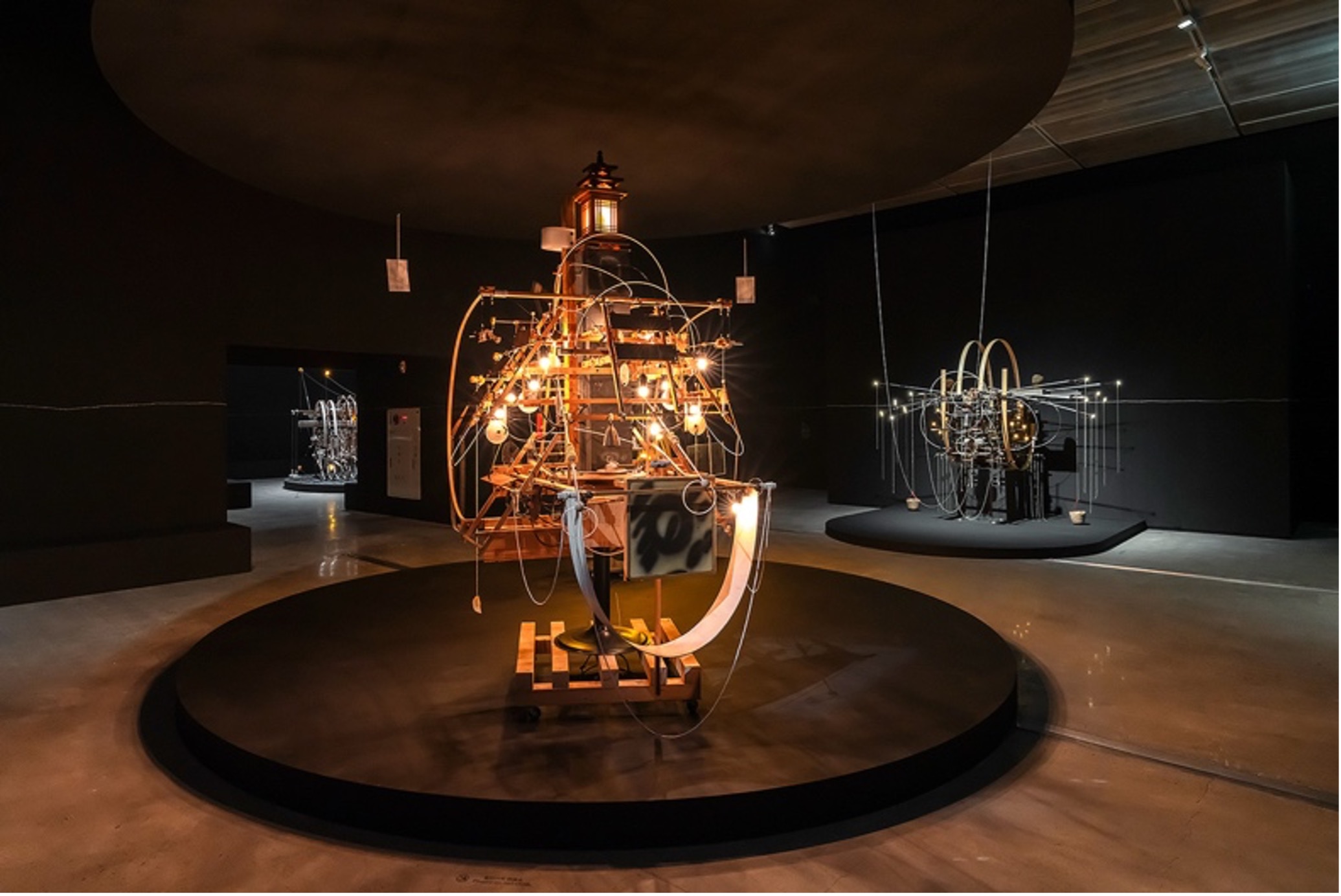
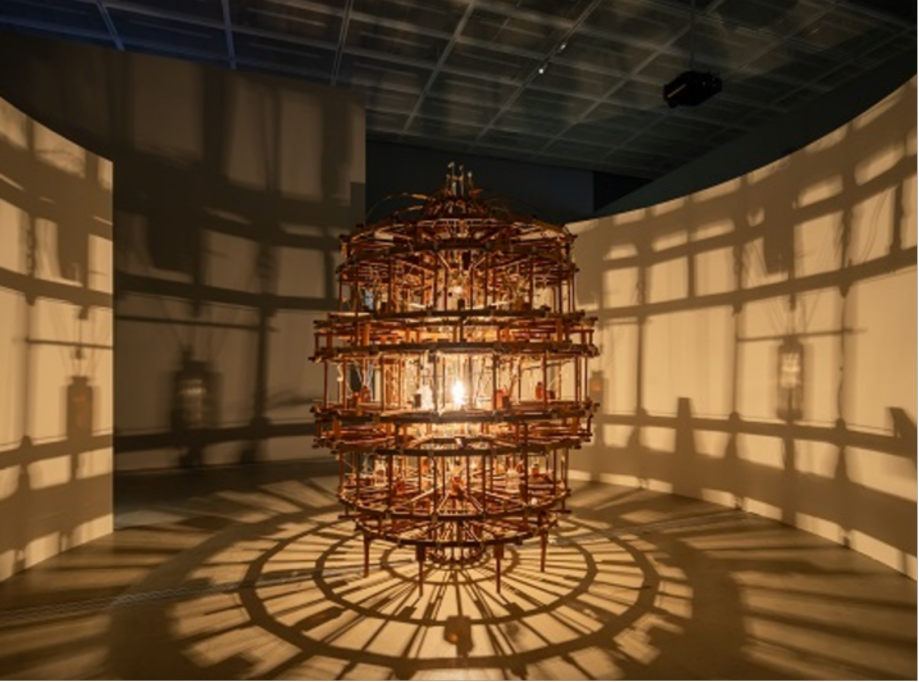
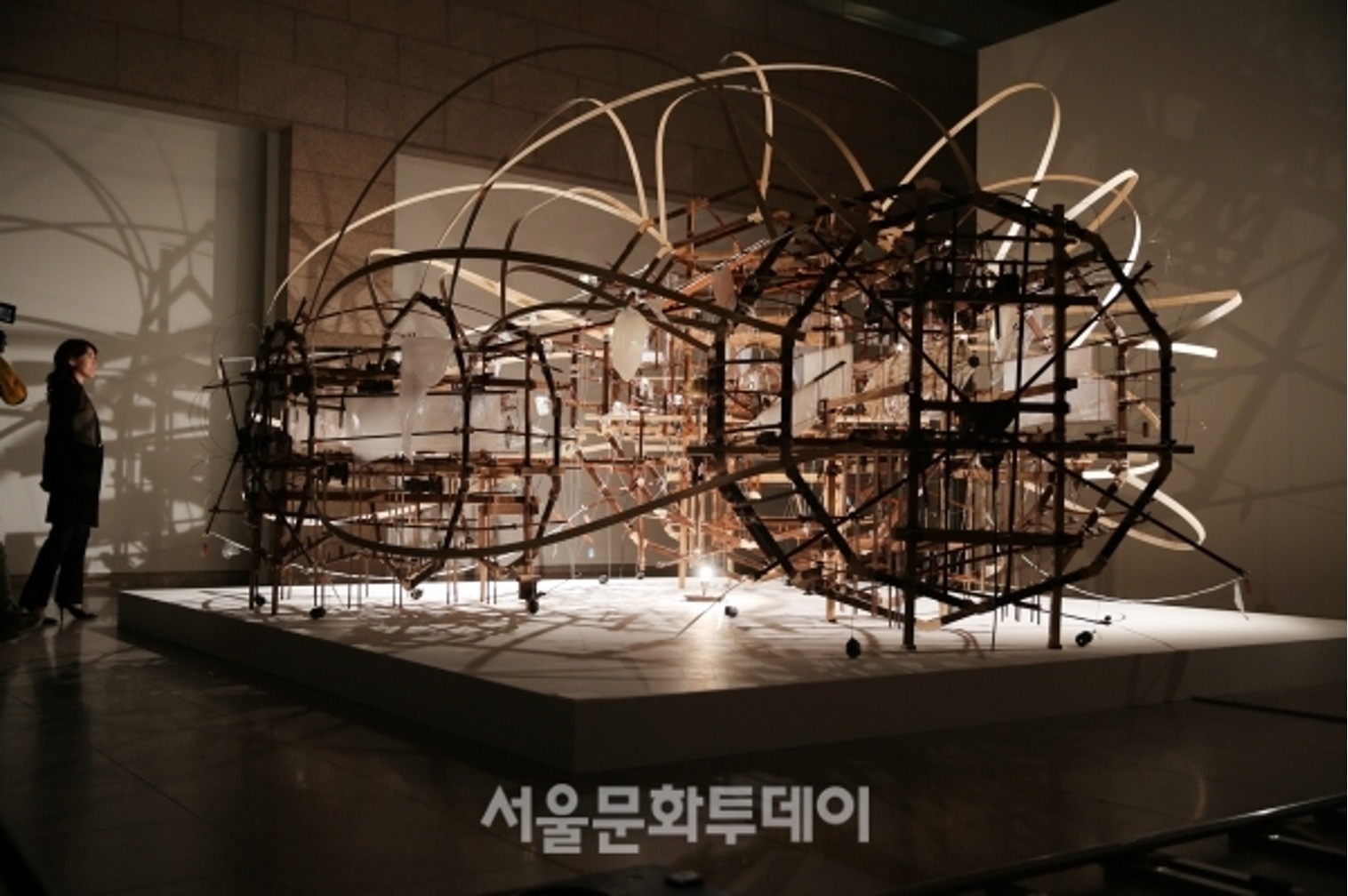
When a piece of art rests under a dim light, stories like the ones
above drift through the softly lit space. They flow gently, with little
strength to grasp anything in their path or simply continue on a slightly descending
slope—and without any desire to dominate anyone’s ear or stir a person’s heart. Fleeting and
weak, they creak as they move along, constantly repeating themselves. Yet there
is a belief in the weight that comes from the eternal repetition of such
fleeting and powerless movements. Though no words are exchanged, a conversation
flows and lingers around us. It seems that when we realize there is a story we
want to tell, this story begins to move, intertwining with our own. These
movements are designed within a non-sophisticated calculation. Movement, while
it is something realized, also functions as a body language that initiates
dialogue. At the same time, it also works as an invitation, suggesting that we
bring forth dialogue. It is a mechanism that responds to the stories we have
long wanted to tell. Like nodding your head, like spreading your lips into a
glorious smile. After we offer stories that we have never spoken before to this
place, we become people who have experienced a conversation we have never had
before.
Scenes we had certainly seen, yet completely forgotten, omitted
from our memory, or deliberately shook our heads at, wishing to pretend we had
never seen them. Stories that, even if told in the language pervading our
everyday lives, would hold no meaning or evoke no emotion. These are not merely
stories but the backgrounds of stories. Like a nut and bolt, the stories and
their backgrounds fit together tightly. The protagonist of a story may become
its background, the observer may become the protagonist, and the listener may
become the main character. In other words, there is a rich tapestry of stories
around us at any given moment. Stories like insects with too many legs, trees
with too many arms, the hidden veins on the back of a leaf hanging from a branch,
or capillaries embedded deep within every corner of our bodies. They were
already stories, but have been waiting a very long time to become stories in
the proper sense. Stories that will continue to live on even after they are
told and the listener has disappeared. Today, I stand before this work as
someone who has received a message that these stories are safe somewhere.