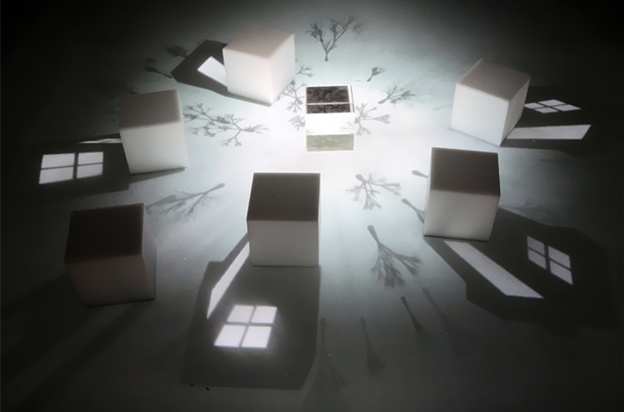
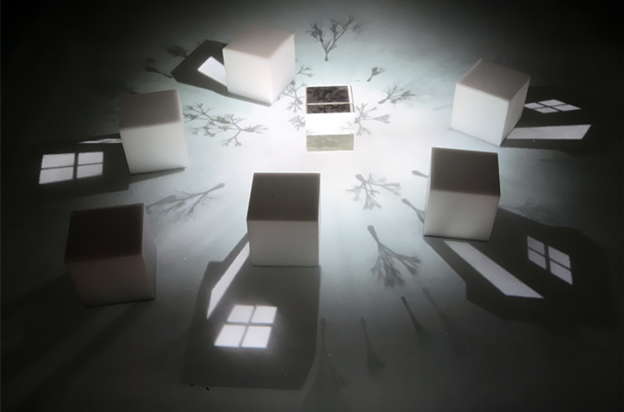
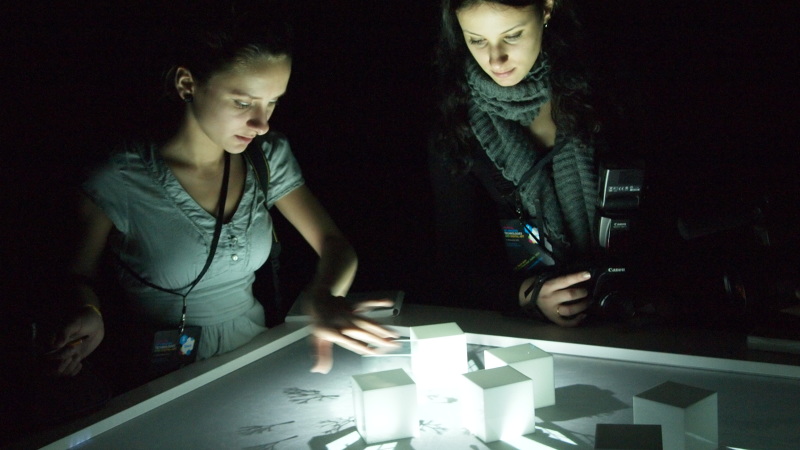
Joon Moon’s practice is centered on interactive installation, combining computers, projectors, sensors, position-tracking devices, LEDs, custom electronics, and custom software. His early work Augmented Shadow uses a relatively small interface composed of a display table and cubes, connecting objects touched by the viewer’s hand with the shadow world generated beneath them.
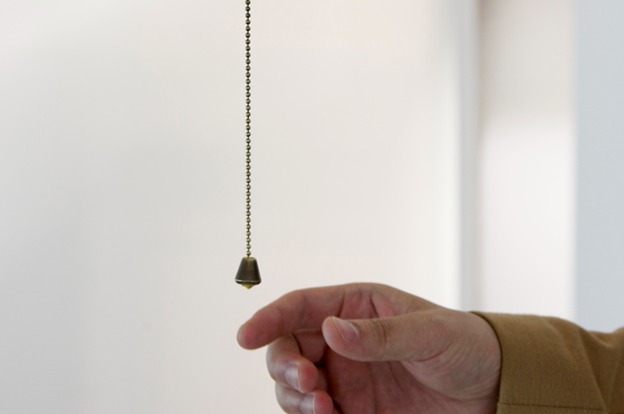
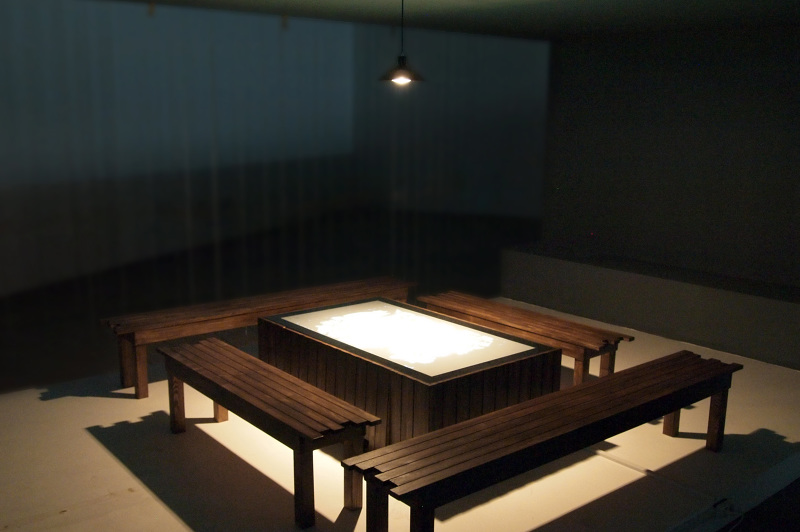
Makuro Kurosuke Table is also based on an everyday object, a tea table, and creates a scene in which small beings of light gather and disperse through the simple action of placing a hand or object on the table. In this way, while using complex technology, his early works constructed emotional and narrative experiences through small-scale interfaces that viewers could approach intuitively.
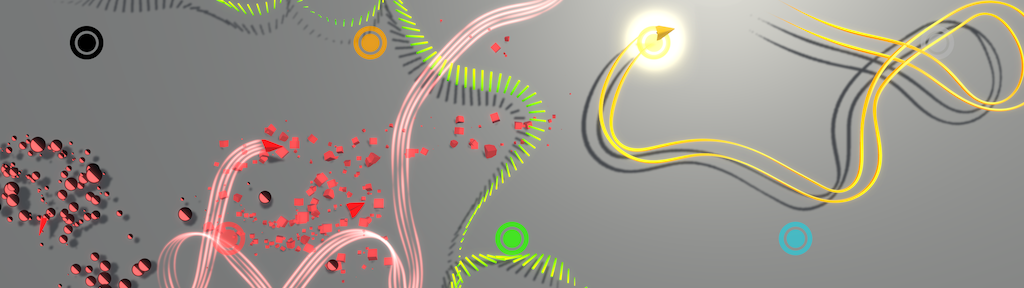
In later works such as Inter-Scenery and Flying – Body Pen(2017), the viewer’s entire body becomes the interface. Inter-Scenery draws the viewer’s silhouette into the virtual space within the video, while Flying – Body Pen expands the relationship between the body and the screen through a method in which images are generated by bodily movement.
Here, the viewer’s body is not a hand that manipulates the work from outside, but a condition that generates images and events within the work. In Joon Moon’s practice, the interface is not a separate operating device such as a button or joystick; rather, it combines with the viewer’s hands, body, gaze, and position, and is gradually absorbed into the content of the work.
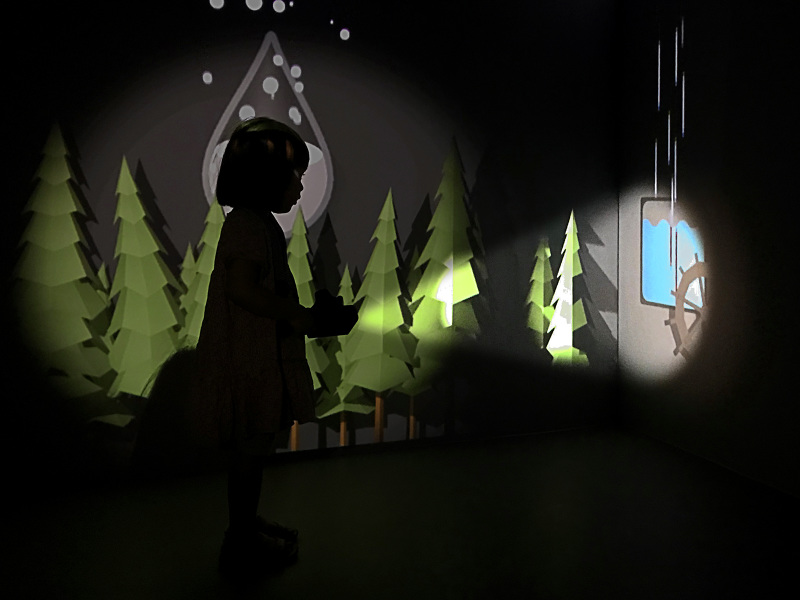
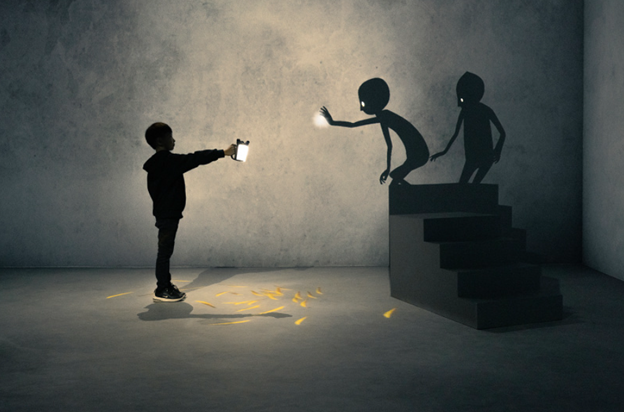
In Hello, Shadow!, Lighting the Eco, and Park Soo Keun, The Light Village(2020), a flashlight-like device appears as an important medium. When viewers shine the light, images are overlaid on that point, and images and events hidden in the darkness are revealed. In particular, Lighting the Eco is an educational interactive installation structured so that children can use a flashlight to discover changes in an ecosystem, showing that media art can contain play, learning, and narrative at the same time.
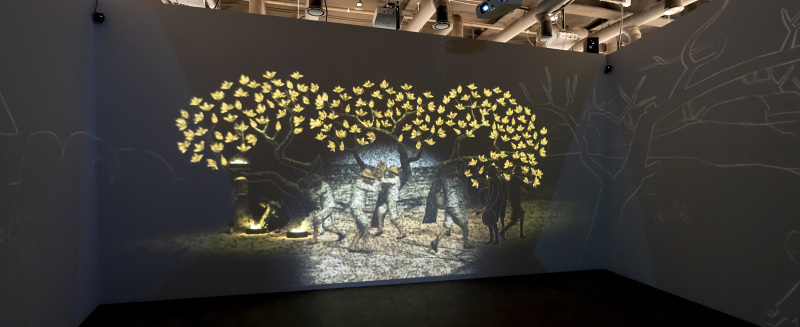
Park Soo Keun, The Light Village also suggests the possibility of a meeting between painterly images and interactive technology by activating a specific image world through light. These works do not require complex commands from viewers; instead, they operate through very simple bodily actions such as “shining,” “searching,” and “approaching.”
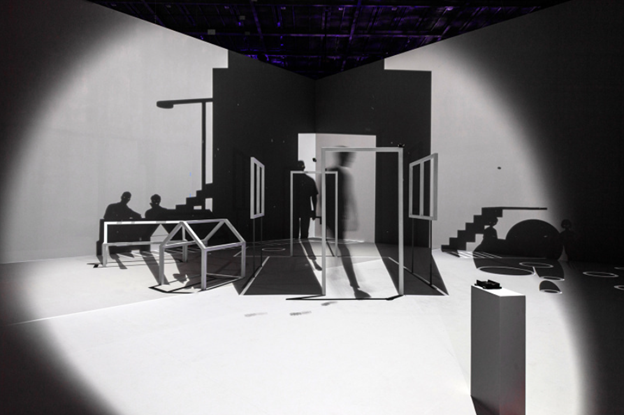
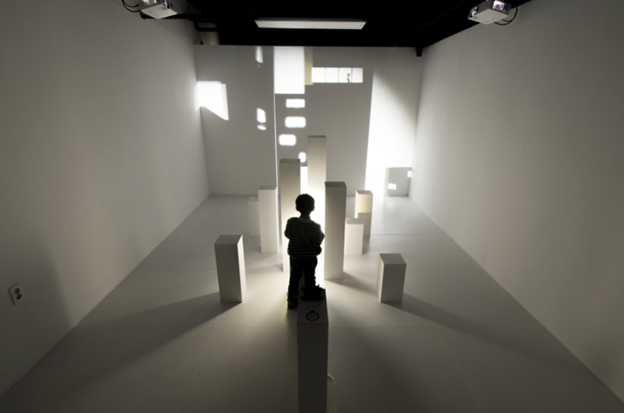
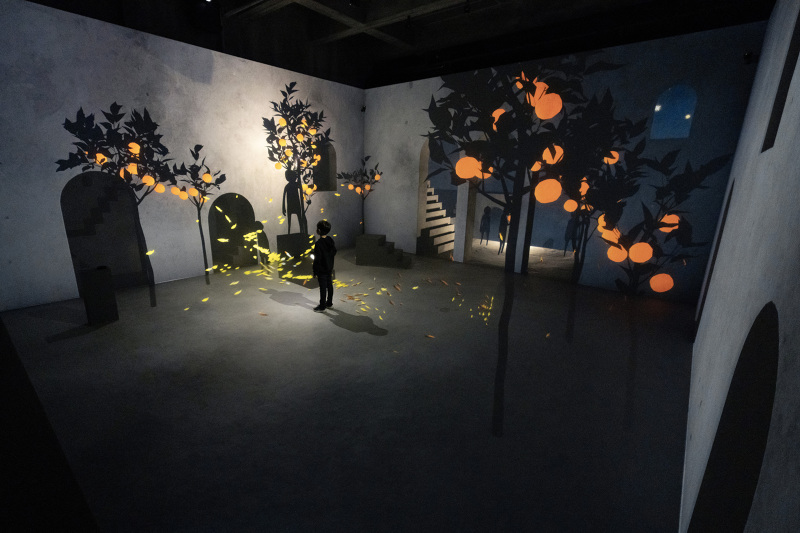
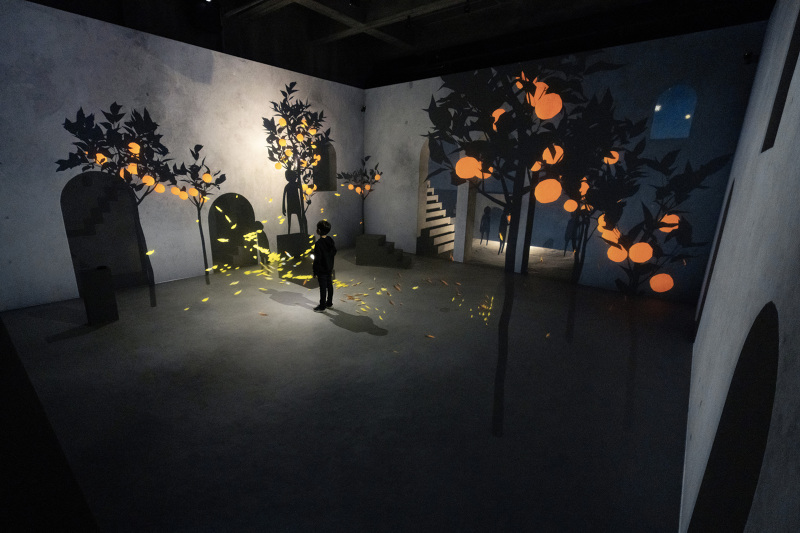
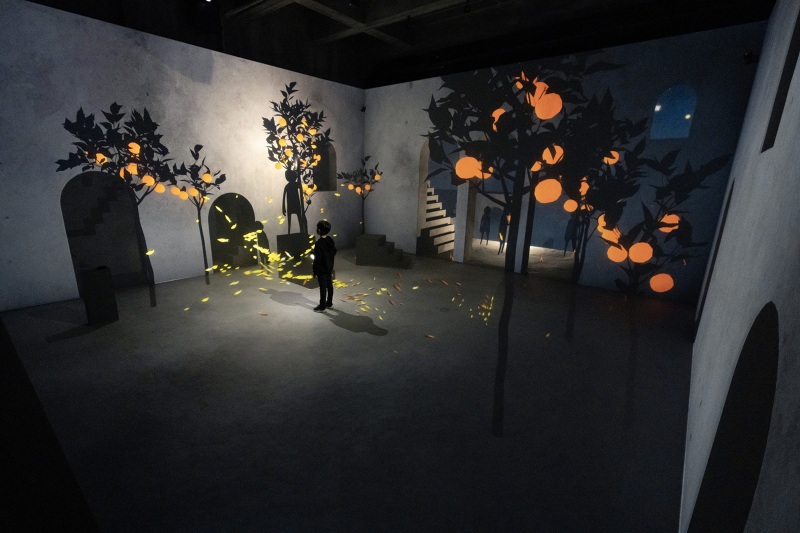
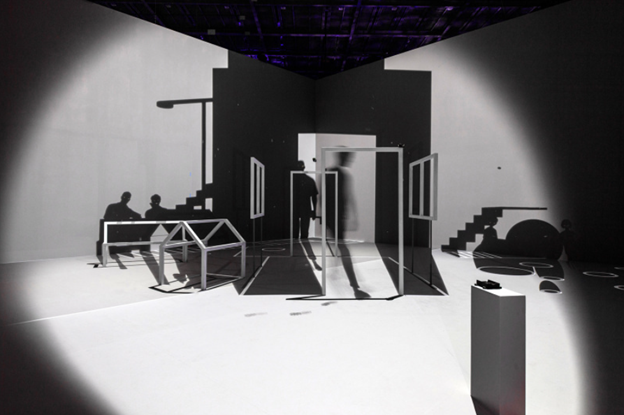
In Augmented Shadow : Inside and Augmented Shadow : Chasing Stars in Shadow, which expand into large-scale immersive installations, the form and content of the works become more tightly connected. Augmented Shadow : Inside overlays virtual space onto the shadows of physical objects such as doors, windows, walls, and chairs, allowing viewers to move between inside and outside, reality and the virtual, and the positions of seeing and being seen.
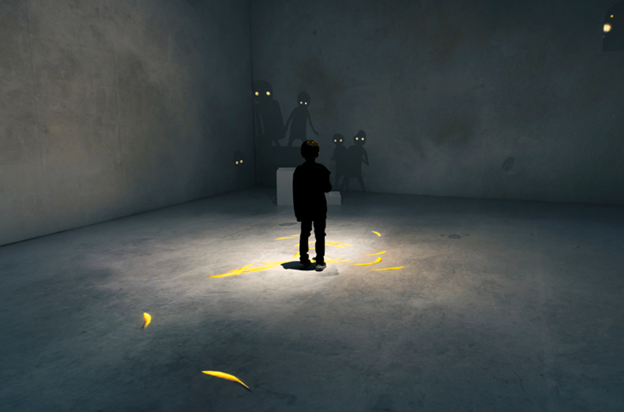
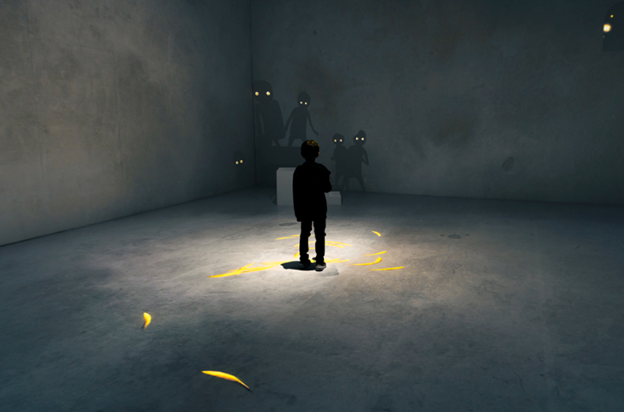
Augmented Shadow : Chasing Stars in Shadow uses the lighting device held by the viewer and a position-tracking system to change the shadows and lighting of an entire room in real time, making those changes themselves the method by which the story progresses. In this work, the viewer’s light is neither merely illumination nor simply a controller. It is the central narrative device that enables exchange with the shadow children, calls forth fish, trees, and doors, and expands the closed room into a sea of stars.
His works, presented in the recent solo exhibition 《Joon Moon: Augmented Shadow》(Gwangju Media Art Platform, 2023) and 《Gray Box Area》(Kiaf SEOUL, 2023), combine the existing grammar of projection mapping, augmented reality, and immersive space with the viewer’s shifting point of view, transforming the screen from an object to be viewed into an environment to be entered and experienced.