



A New Perspective
 
“I was born in this special world that has always existed for me. It makes me think. It is both my friend and my protector. Through it, I learn so many things. It allows me to explore anywhere I wish, enabling me to transcend the limits of human curiosity.”

These lines appear in an advertisement for the Phantom 3 series by DJI, the Chinese company often referred to as the “Apple of the drone world.” And of course, the “It” being referred to here is the drone itself. Conveyed through the tender voice of a young boy seemingly yearning for a new world, the title of the short advertisement is “A New Perspective.”

Accompanied by sweeping aerial views of magnificent natural landscapes, the video heroically narrates humanity’s challenge against the physical limits of the human body. Challenge, exploration, curiosity—images assembled from such familiar vocabularies unfold alongside narration whose intentions are transparently obvious.

Yet despite this, what ultimately captures our gaze emerges precisely at the moment when our own viewpoint ceases to remain below the world and instead overlaps with that of the drone. Our eyes are absorbed into the anthropomorphized gaze of the machine, transforming us from the object of exploration into its subject.

There is neither dizziness nor weight within the drone’s gaze. The world captured through the vision of this mechanically controlled bird appears elegant and perfectly stable. Yet there is something strangely fascinating here. Human hands both invented this astonishing visual machine and continue to operate it, but before long, “what we ask the drone to do” becomes “what the drone itself does for us.”

Through its broadened and elevated vision, it guides new ways of thinking and seemingly helps humanity transcend the limits of its own curiosity.


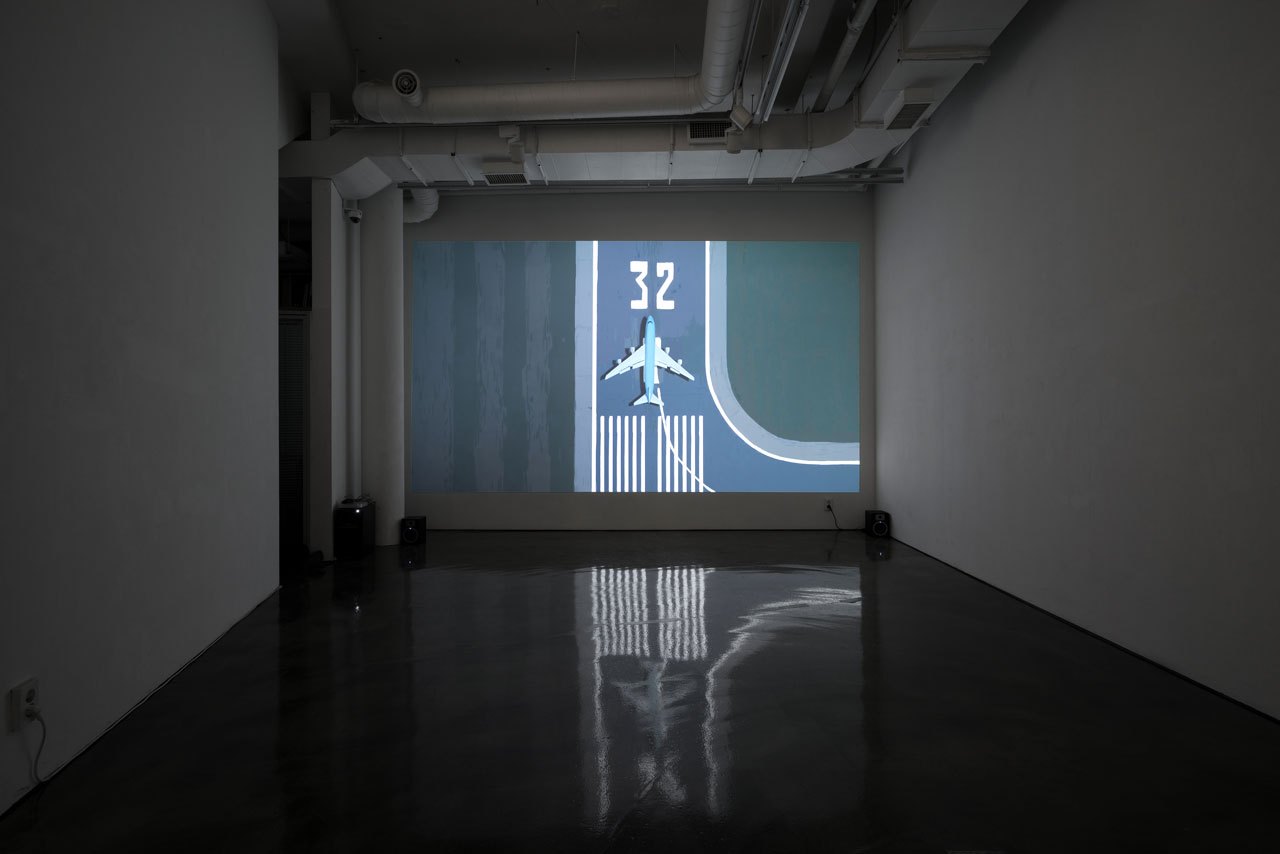
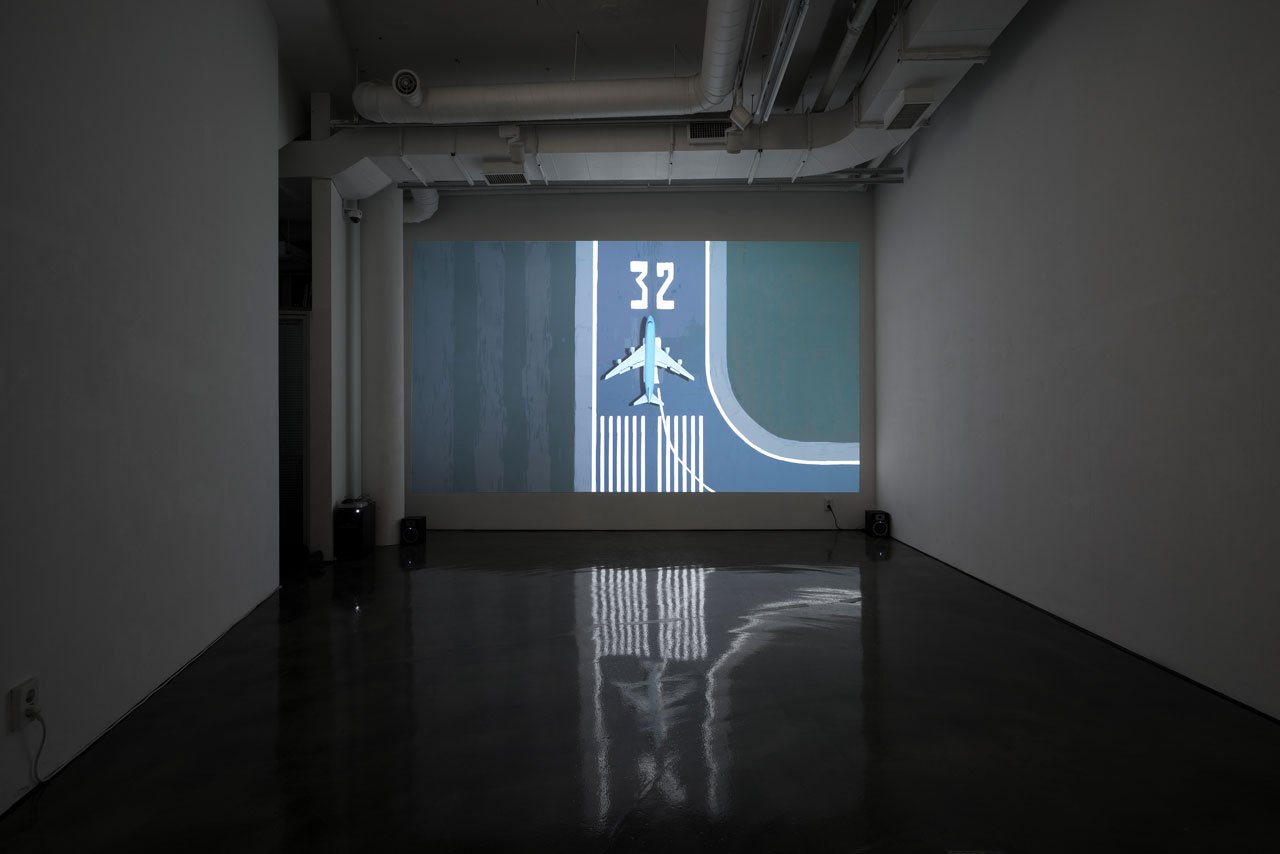
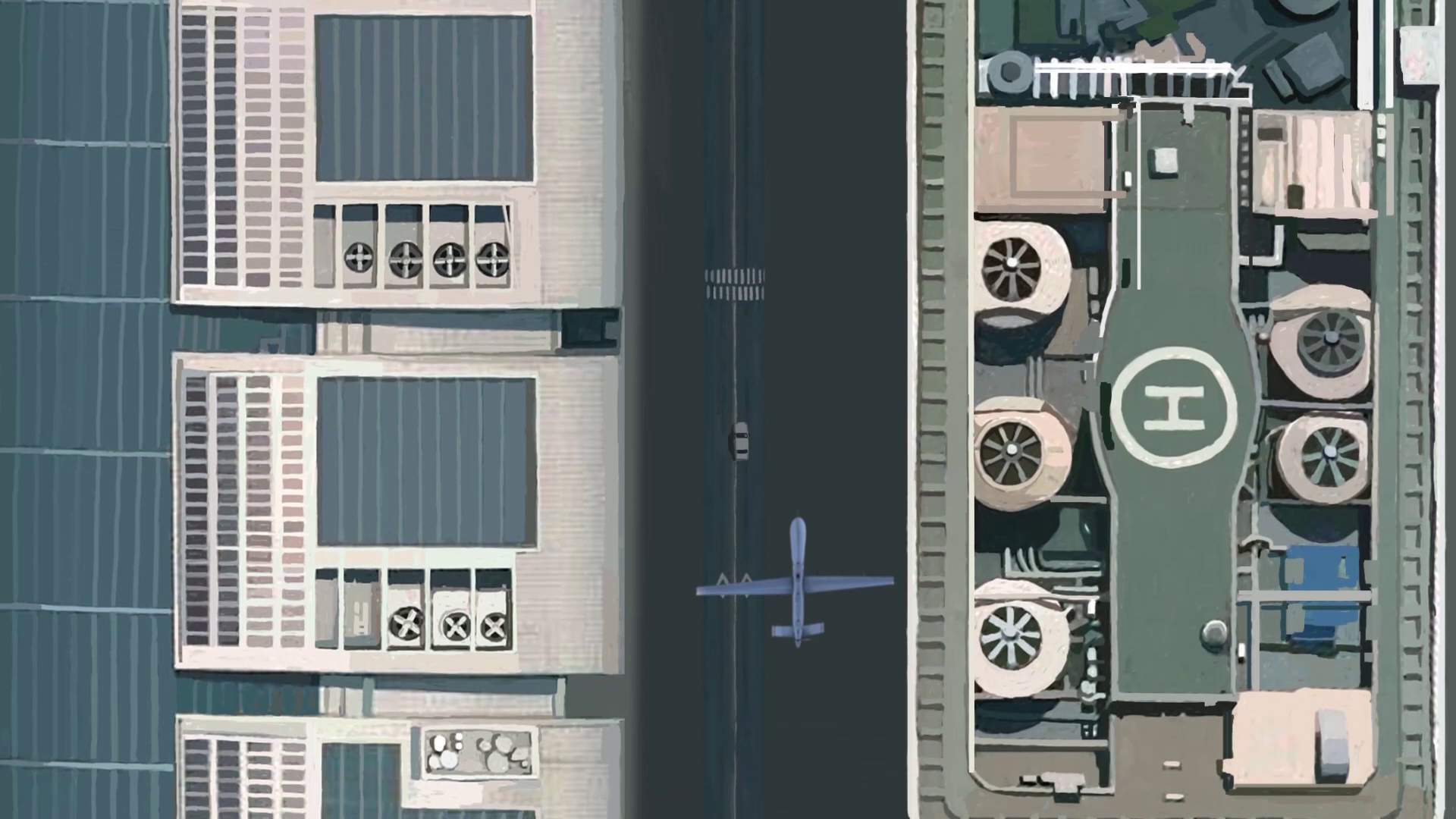
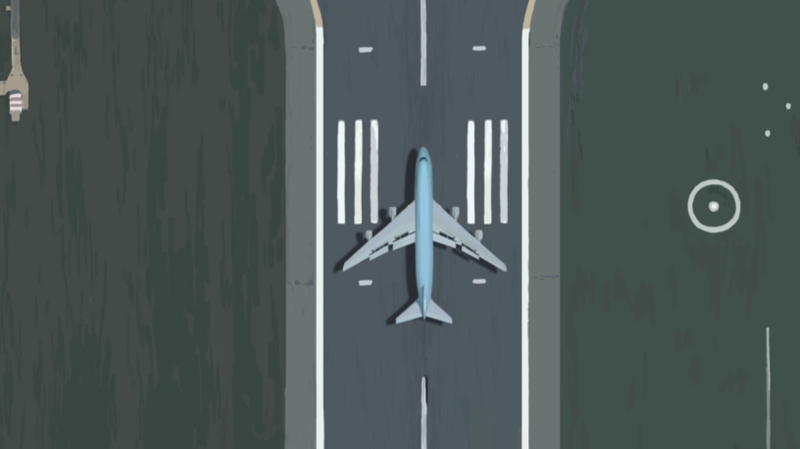
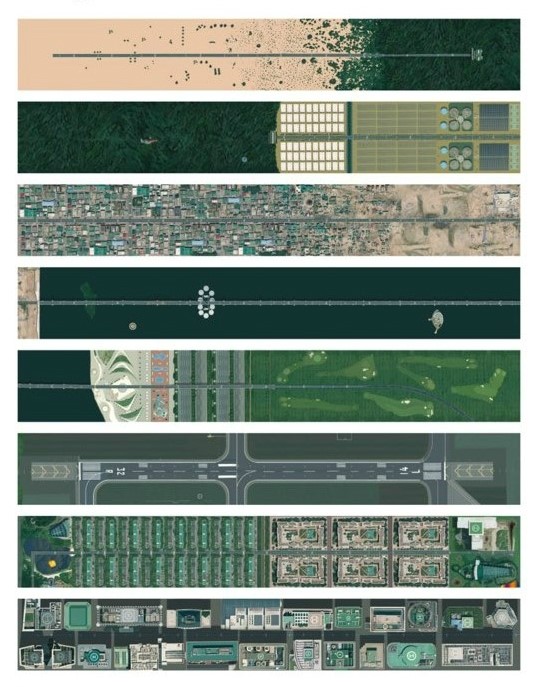
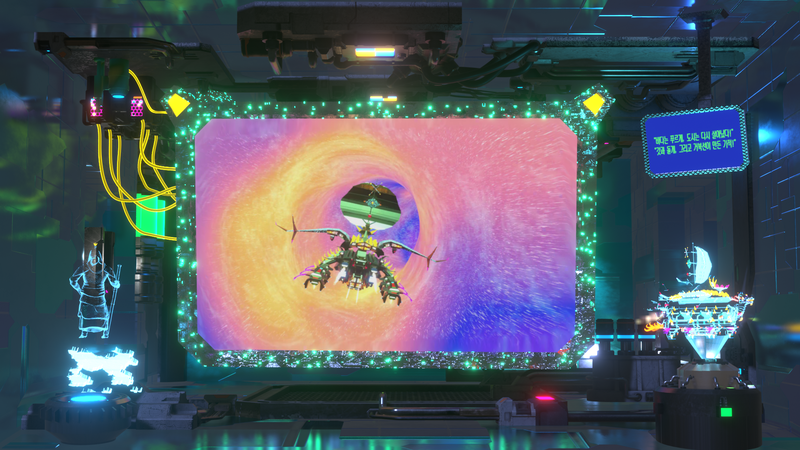
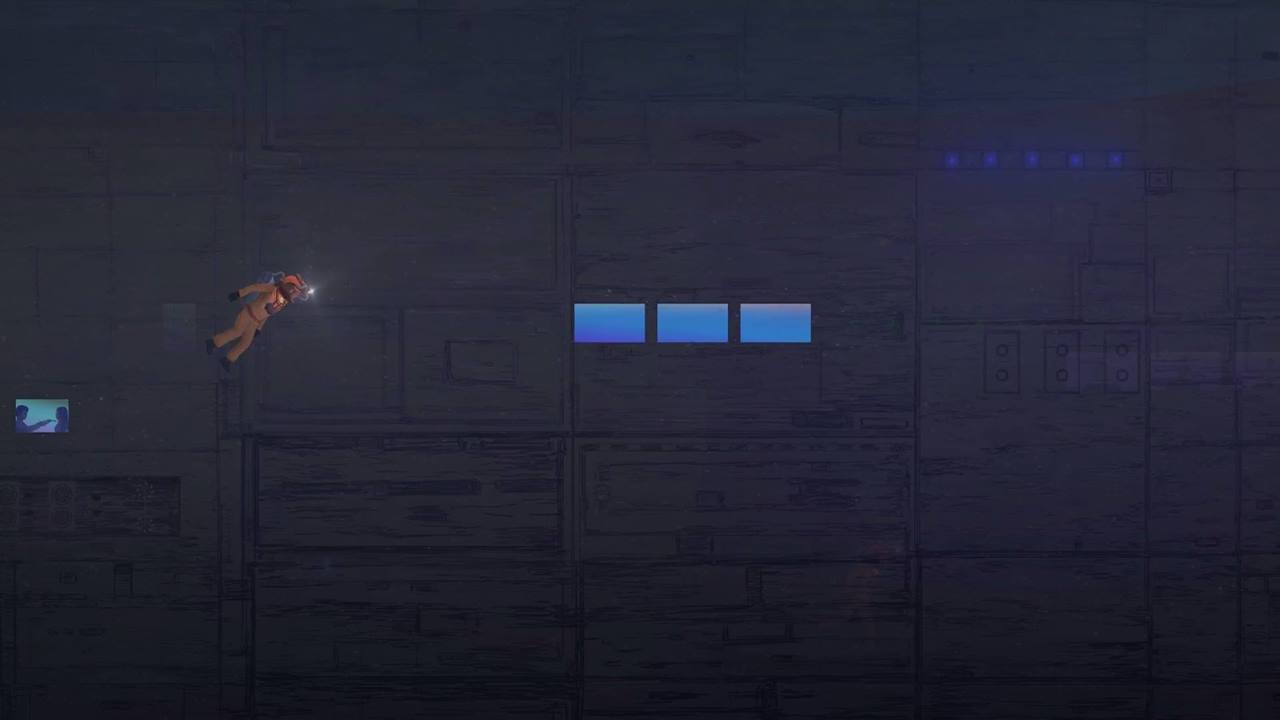
Sung Rok Choi, Scroll Down Journey, 2015, HD 2D animation 1080p, 6 min 20 sec © Sung Rok Choi

Explorer, Sung Rok Choi: An Explorer of Exploratory Devices

Meanwhile, Sung Rok Choi, who began his practice from painting, could in many ways be described as a “machine enthusiast.” This characterization extends beyond the simple implication that he is a new media artist fluent in digital tools and deeply engaged with digital media.

Choi has consistently maintained a strong interest in the historicity and aesthetics of technology itself, and this machine-critical perspective has frequently manifested throughout his artistic practice. Among the various works Choi has developed over the past decade, one important axis may be described as the role of an “explorer of exploratory devices.”

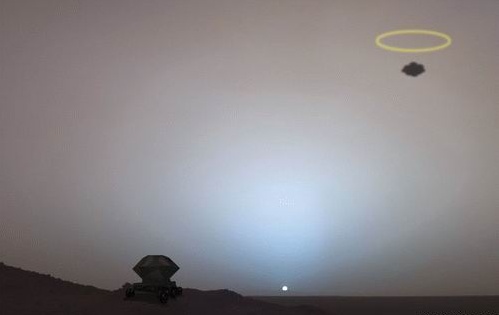
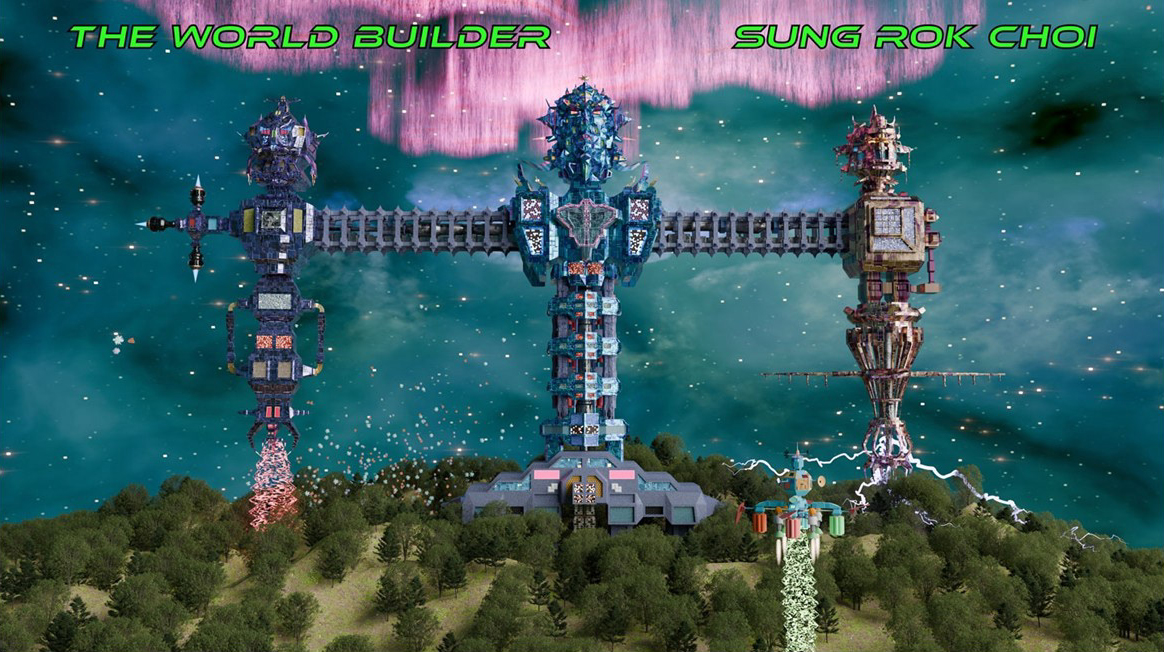
Beginning with Mission to Leo and The Rocver Project (2006), works inspired by Mars exploration programs, a series of projects infused with science-fiction sensibilities and cosmic imagination reveal his fascination with exploratory machines drifting through unknown worlds. Of course, the artist’s interest does not remain confined to the morphology of exploratory devices alone.

Choi’s concerns gradually shifted toward the cognitive systems embedded within robotics—machines capable of autonomously operating their own bodies like living organisms while exploring new worlds—as well as toward the specific forms of space and temporality they represent and construct. In this sense, it was perhaps inevitable that Choi would eventually become interested in drones as contemporary visual machines.

If his earlier works centered on exploratory devices were based primarily on speculative morphology and fictional storytelling, the recent works actively utilizing commercially available drones reveal the diverse formal manifestations of critical interests the artist had long cultivated. To quote the artist directly:

Scroll Down Journey and A Man with a Flying Camera, presented in this exhibition, are stories of exploring our world as constructed by—or as revealed through—the tools created from humanity’s fundamental instinct to see, observe, and explore this world more efficiently.”
—Excerpt from Sung Rok Choi’s artist statement, September 6, 2015

In his artist statement, Choi repeatedly employs the phrase “the acquisition of viewpoint.” As the artist recognizes, the invention and rapid development of modern optical devices provided perspectives that were higher, broader, and increasingly detached from the human body.

Such perspectives soon became linked to the acquisition of control over the world through visual appropriation. Choi is an explorer tracing how the camera’s viewpoint is acquired and how that acquired viewpoint, in turn, re-acquires the world itself. In other words, he is an explorer of exploratory devices.

Unlike the human eye, which ultimately remains bound to the body as one of its organs, the camera exists as vision detached and isolated. It infiltrates hidden blind spots through CCTV systems, transforms into black boxes mounted within speeding vehicles, and becomes endoscopic devices penetrating deep into the human body.

Clad in technologically advanced exteriors, cameras resemble ghosts endowed with amphibious survivability and the capacity for endless multiplication. Thus, within this exhibition 《The Height of Phantom》, the drone—named after DJI’s “Phantom” product line—functions simultaneously as the object and subject of the work, as both its semantic structure and its methodology.


Virtual Vertigo Game, Scroll Down Journey

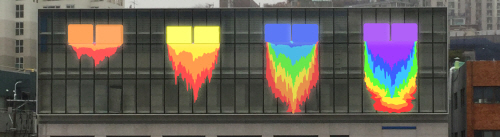
In Choi’s studio in Jangchung-dong, the moment I first encountered Scroll Down Journey through a monitor, I was immediately reminded of his earlier work Operation Mole (2012). Composed of eight horizontally connected animation channels, the work unfolds as a fictional travel narrative burrowing into an underground world like a mole, exactly as its title suggests.

Although the two works do not organize their themes and narratives in identical ways, they share a similar momentum of journeying through familiar spatiotemporal environments from radically unfamiliar perspectives, using distinctive topographies of viewpoint and directionality.

Borrowing the artist’s own explanation, “Scroll Down Journey is a work depicting an automobile moving through a two-dimensional world constructed within a digital screen. It is an animation created through digital painting based on orthographic projection, presenting landscapes viewed from the perspective of a machine.”

Before these distinctive digital paintings infused with painterly tactility, the body remains still while the screen continues its downward movement, mediated through the velocity of the automobile. Following multiple cycles of landscapes, the continuously “scrolling down” screen abruptly breaks off without warning.

Before the viewer can fully overcome the threshold-level vertigo produced through the intertwining of the screen’s downward movement and the forward-directed gaze, the image suddenly returns to the beginning of the screen and begins again.

As one stares into the screen accompanied by sounds resembling video game music—where the hardships of urban civilization and the concreteness of everyday life have evaporated—the viewer’s eyes gradually become like a kind of Google viewer, tirelessly scanning the reorganized urban topographies reconstructed by the artist.

Although the screen is composed of signs familiar from this very city, the aerially viewed urban landscape appears strangely alien, like encountering a civilization-building simulation game for the very first time.


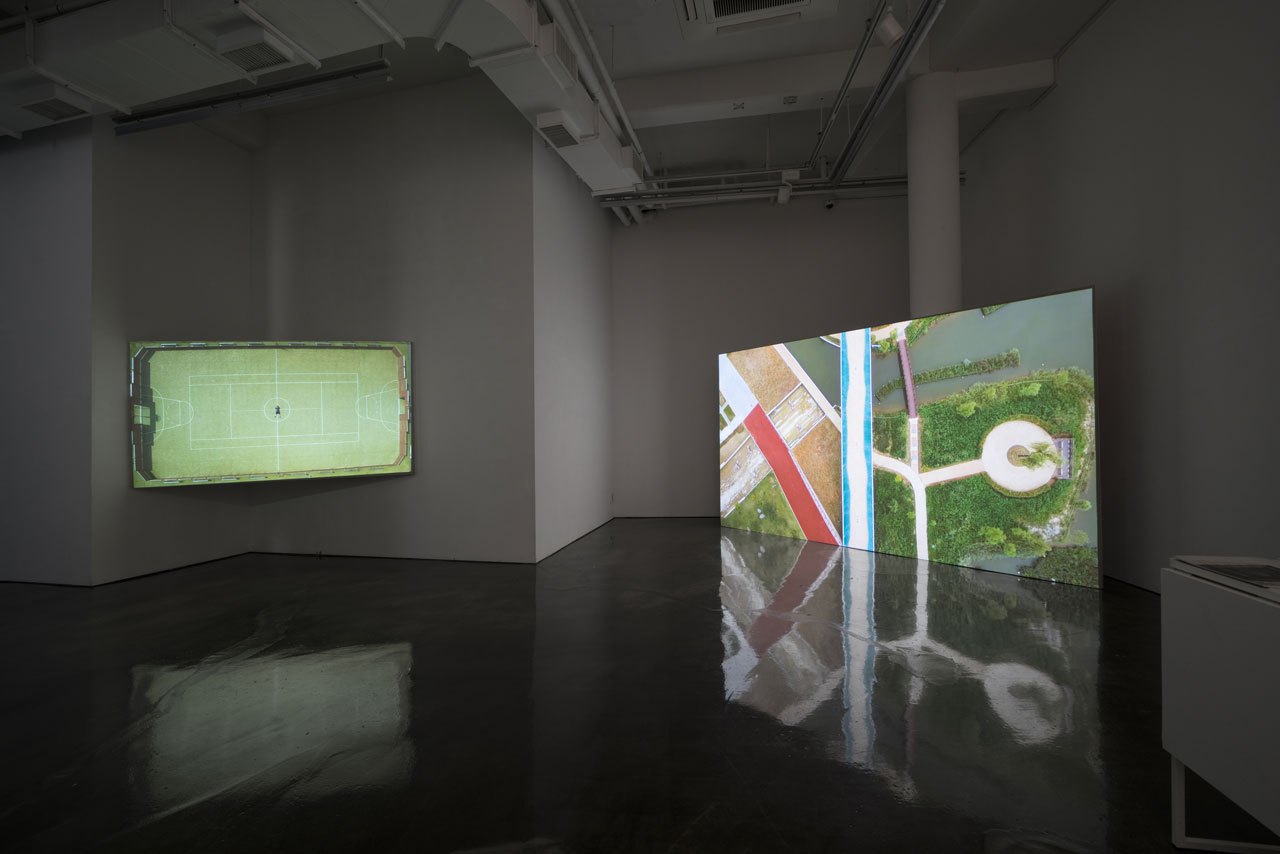
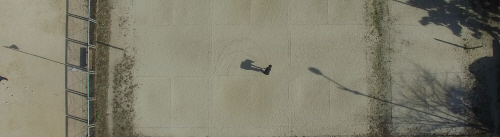
Sung Rok Choi, A Man with a Flying Camera, 2015, HD video 1080p, 7 min 2 sec © Sung Rok Choi

A Man with a Flying Camera, “Droning” the World

During the summer, Sung Rok Choi traveled throughout various locations on the outskirts of Seoul with his newly purchased phantom—his ghost capable of flight and image capture.

While working in the studio on the post-production of digital animations depicting urban landscapes viewed from the drone’s perspective, outside the studio the artist himself became “A Man with a Flying Camera,” learning methods of drone operation and producing a range of video works through this process. In this sense, the title A Man with a Flying Camera serves as a direct description of the artist himself.

At the same time, the title is borrowed from Man with a Movie Camera, the iconic film by Dziga Vertov, a central figure of Soviet montage cinema in the 1920s. Vertov regarded the camera of the twentieth century as a “Kino-Eye”—a new visual organ capable of responding to the material properties and internal rhythms of objects themselves—and sought through the camera’s gaze and montage techniques to overcome moments inaccessible to the human eye.

Choi’s attempt to acquire new modes of vision through drones certainly resonates with this classical theory of the Kino-Eye. Yet when one encounters works such as A Man with a Flying Camera, in which the artist himself appears onscreen, or the drone-based series ‘I’ll Drone You’, it becomes clear that these works remain distant from any Enlightenment-like desire to teach viewers new methods of seeing through the camera, or from any impulse to mythologize the sensory capacities of the camera as a kind of super-eye.

The visual construction of the works likewise remains far removed from cinematic montage.

The texture of the images—landscapes filmed from relatively close aerial distances alongside figures crossing through them—appears strangely vacant, even painterly, to the point that the scenes seem artificially manipulated. Rather than producing the breathless sensation of being relentlessly “droned,” the images instead induce an unexpected lethargy.

Appearing beneath the camera of the very drone he operates, Choi performs a dual role as both the drone’s owner and its model, continually oscillating between seeing and being seen.

Through the Point of Interest technique—setting the camera to lock onto and follow himself as a target—he renders viewers conscious of both the directional force of the machinic gaze that obsessively pursues its object and the fluctuating distance between camera and subject through carefully staged movements and poses. Like a small unit appearing in an online game, he seems constantly active, yet simultaneously stripped of vitality in an uncanny way.

We have likely already spent years learning how to synchronize human vision with machinic perspectives and optical systems. As Vertov once declared, we are already eyes—mechanical eyes. Yet unlike the 1920s, we now inhabit a world deeply suspicious of and cautious toward the camera’s eye that supposedly “helps us to see” the world and its movements. Moreover, there are now simply far too many people carrying cameras.

As a diligent explorer, Sung Rok Choi proposes not only relying upon machines capable of seeing farther and more precisely than the human eye, but also diagramming the height and directional orientation of those gazes themselves—so that fleeting lives may be observed more sharply, and so that the everyday scenes we scrutinize so carefully may also be contemplated with greater distance and softness.

From the height of the phantom, Sung Rok Choi’s expedition log will continue, endlessly shifting its direction.

References