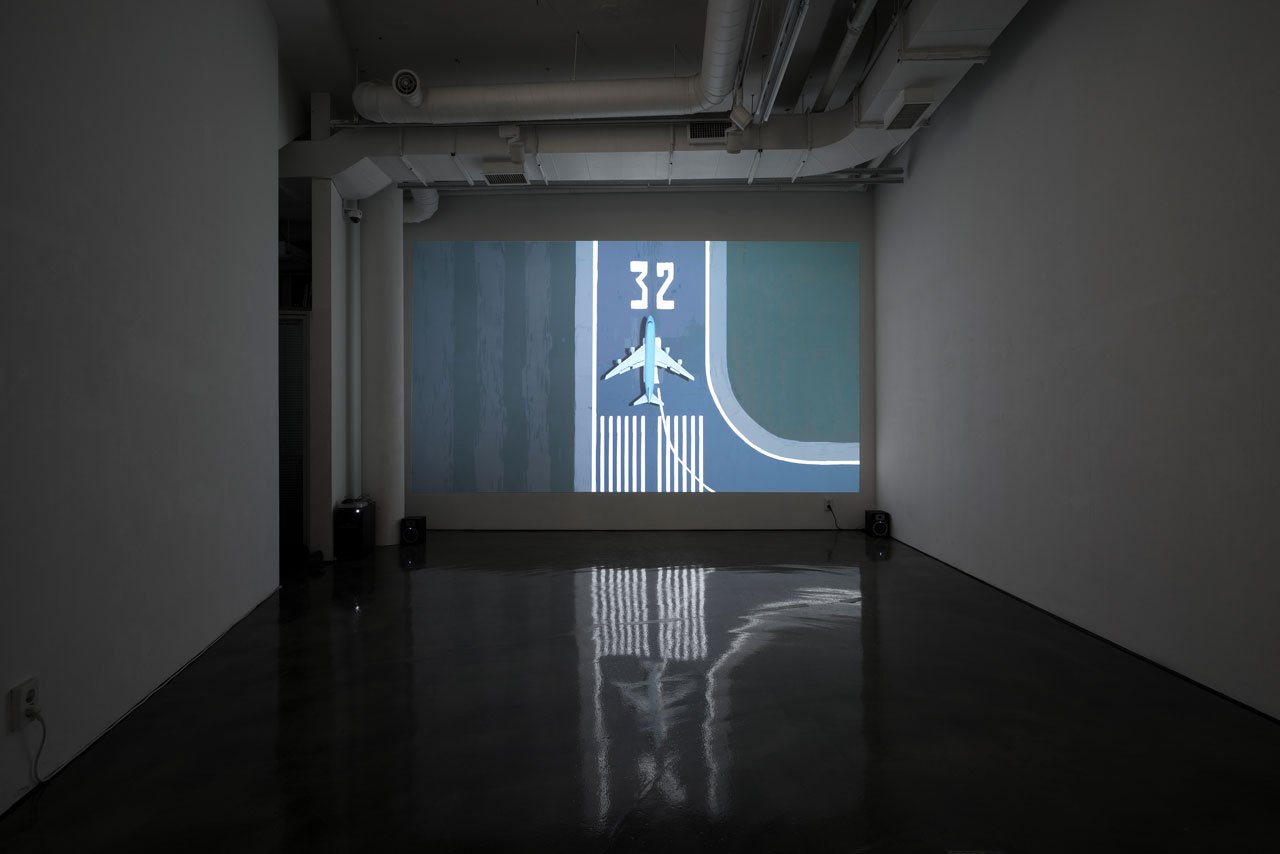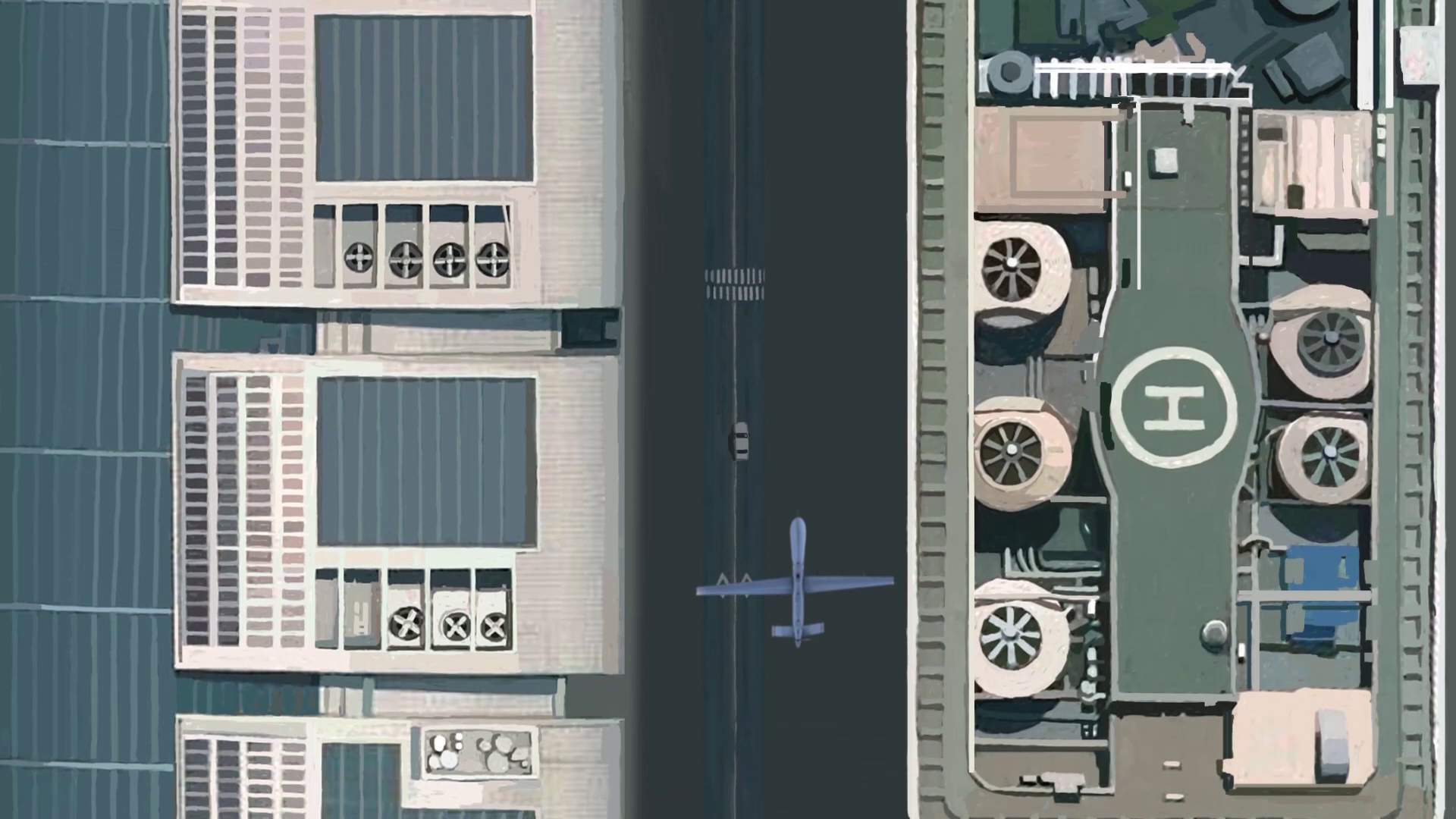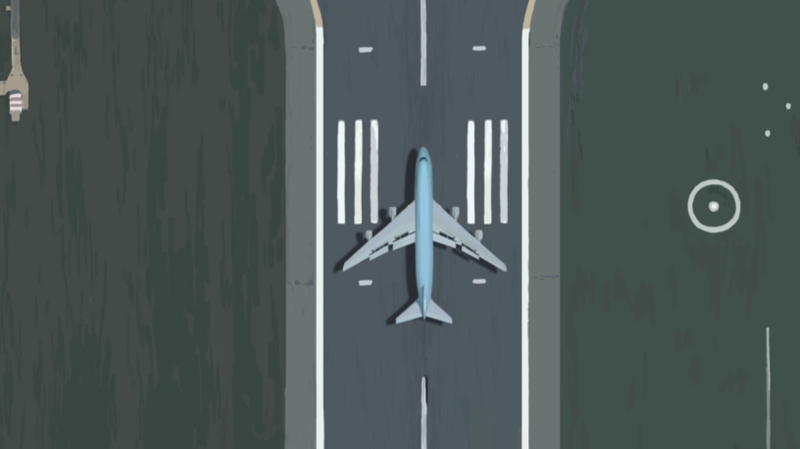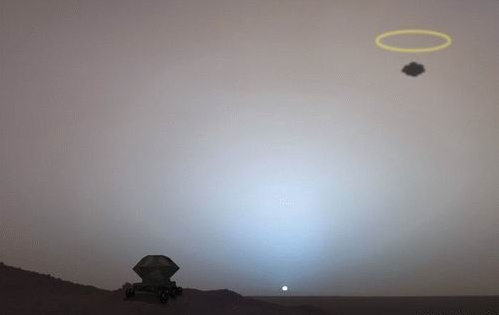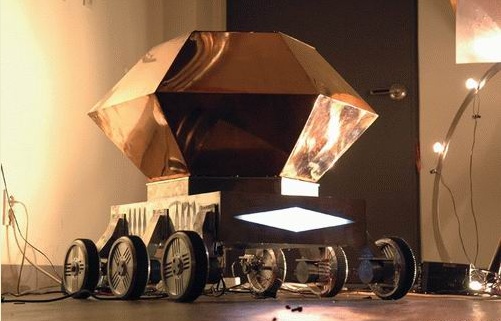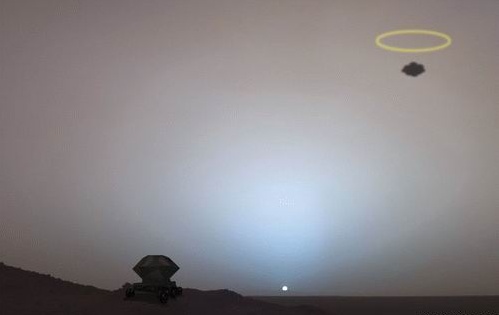


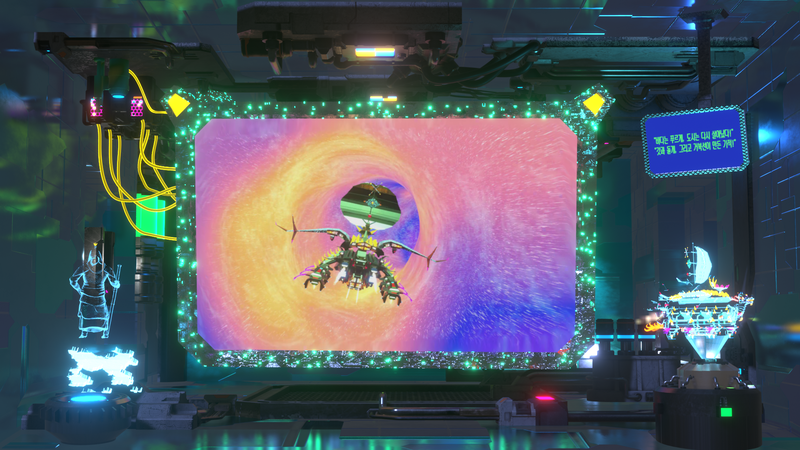
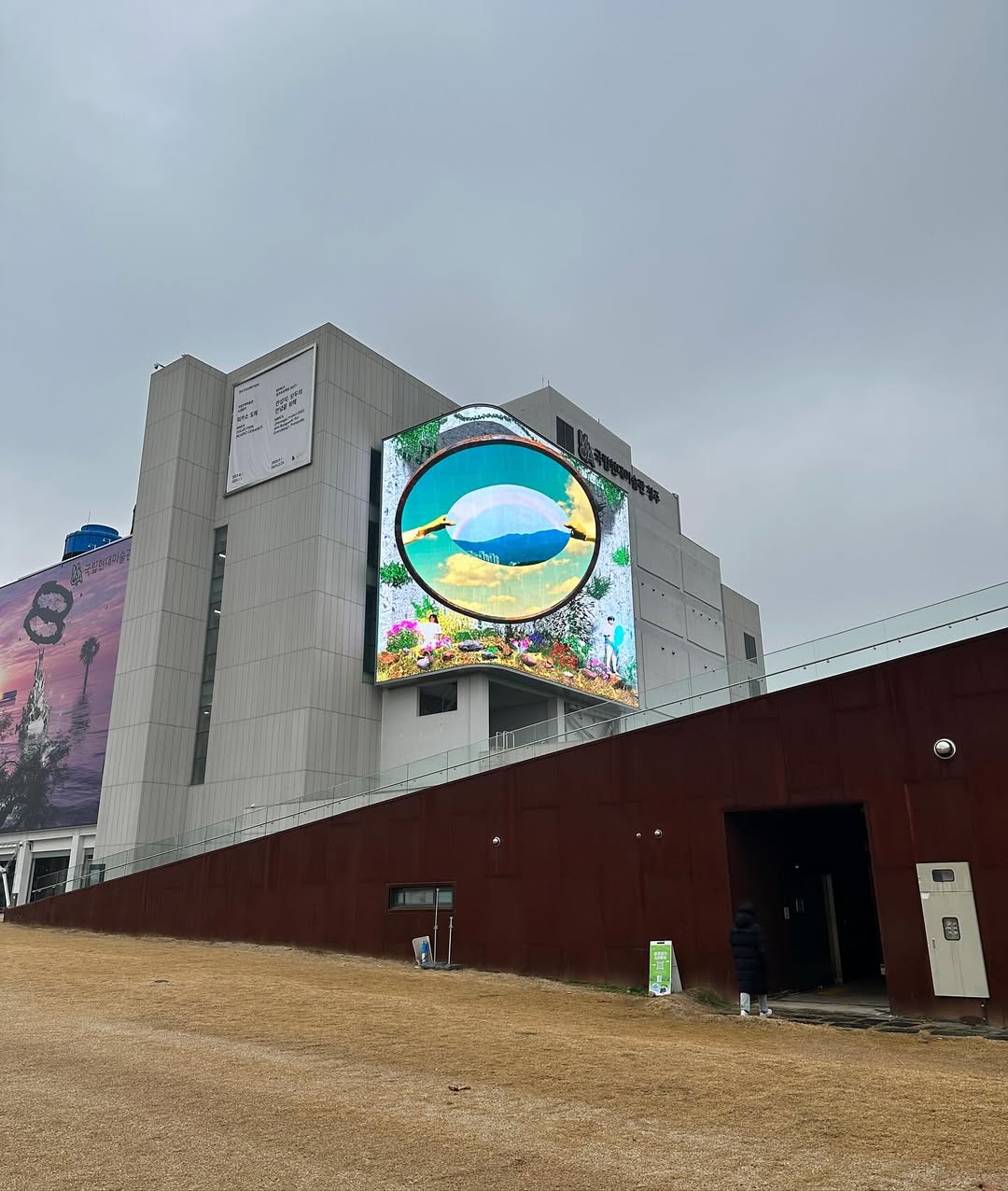
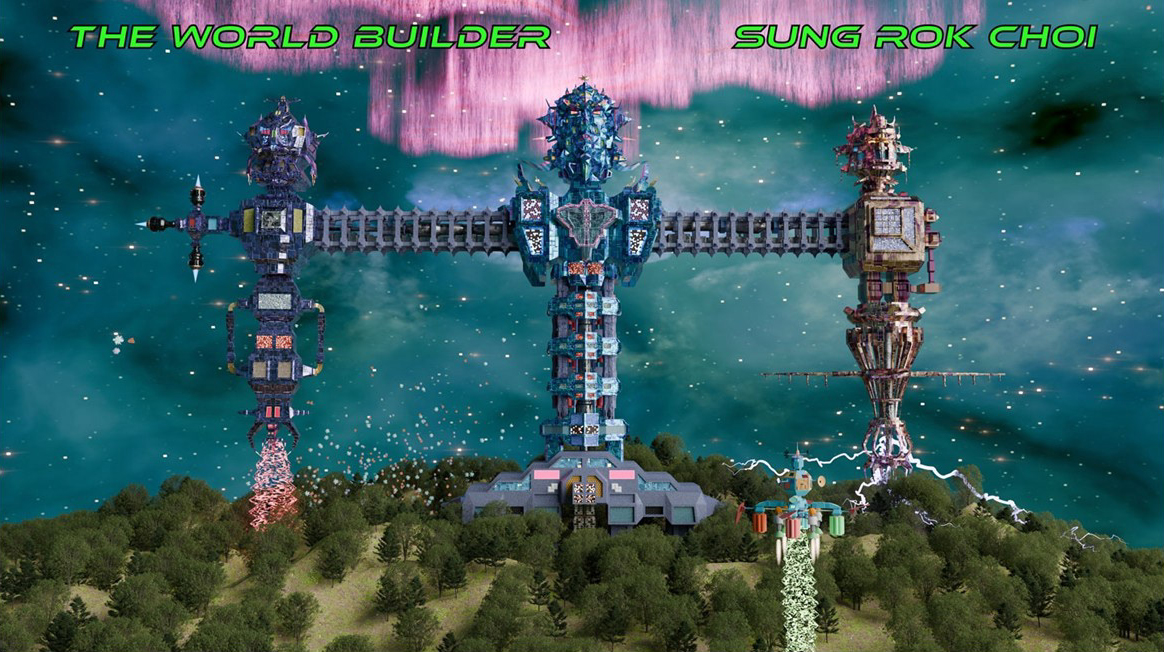
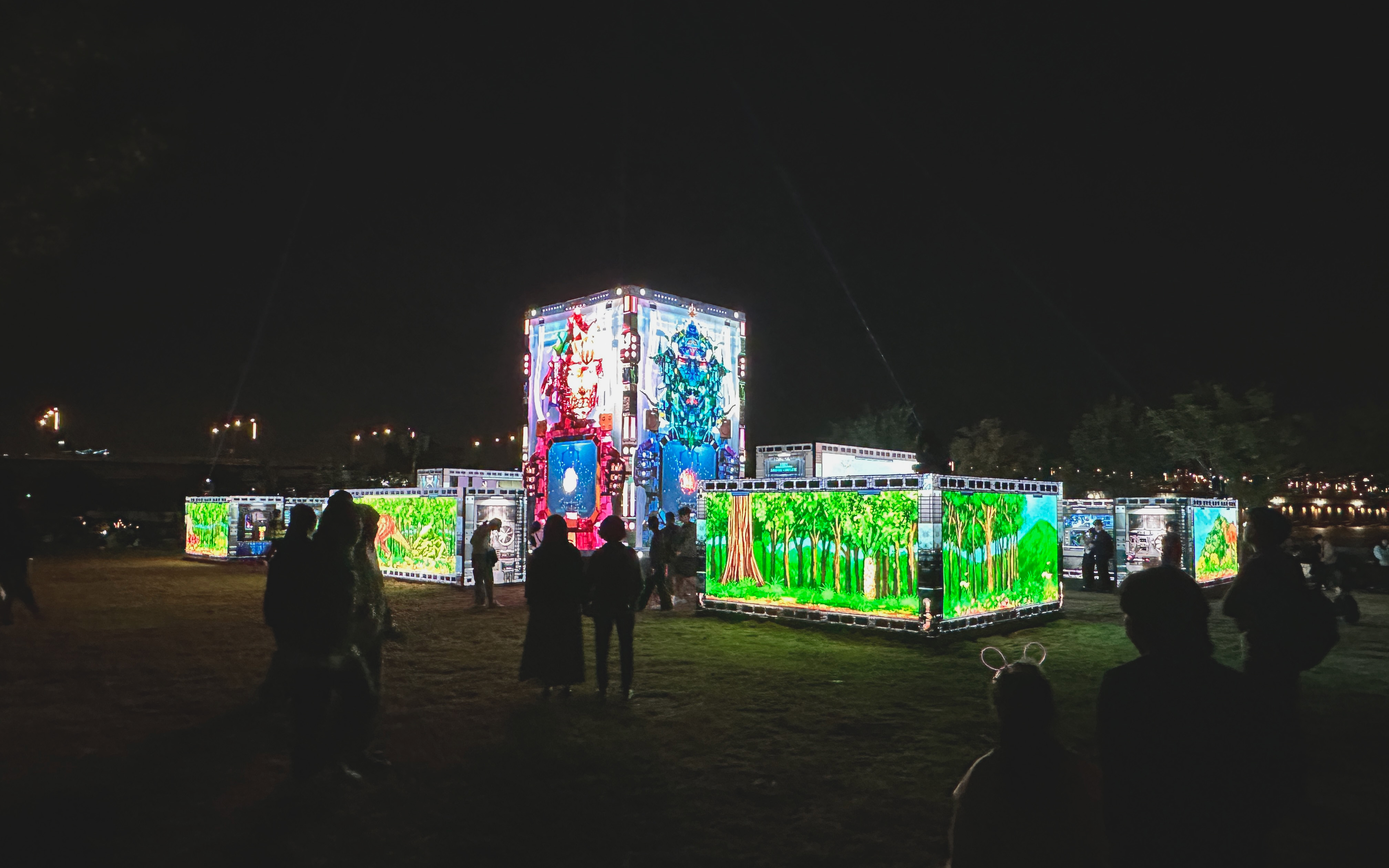
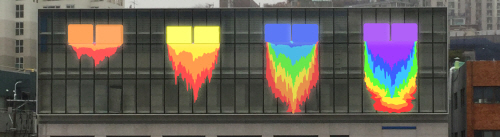

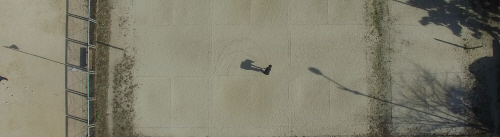

Sung Rok Choi, Rocver's roving, 2006 © Sung Rok Choi

Technology of Imagination and Art

In this solo exhibition at Art Space Hue, Sung Rok Choi presents a body of work that interprets NASA’s Mars exploration rovers as significant aesthetic metaphors. Distinct from the works he developed over the past three to four years—during which he dismantled and reassembled the materials of plastic model kits to create entirely different objects—this exhibition introduces a new formal direction within his practice.

Passing through the artist’s hands, fragments of plastic materials once intersected in tangled, web-like formations, transforming into uniquely shaped battleships or imagined spacecraft. These constructions largely belonged to the realm of fantasy and unreality.

Yet to dismiss Choi’s practice as a form of amateur hobbyism driven by instinctive formal desire or lacking coherent direction would be a hasty judgment. Recalling the emergence of structuralism, which brought about a major transformation in twentieth-century modes of thought, one may recognize that Choi’s work in fact pursues a certain system of aims and rules.

At stake here is ultimately the question of subject and structure, as well as the notion—opened up by structuralist thought—of the constituted subject and the subject’s essential relationality. Such thinking compels us to consider the complex dimensions of the subject as a being that produces and structures meaning.

It also gives rise to attempts to discover, within artistic phenomena and the figure of the artist—who accumulates seemingly unplanned and non-essential gestures—a form of rationality and structural logic distinct from scientific positivism. The subject as a free being and the subject as a product of structures organized through environment and world are undeniably antithetical.

Nevertheless, the precedents established by modern artists have demonstrated that radically opposing conceptions of subjectivity may coexist and collide within the realm of artistic imagination and poetic consciousness. Moreover, the strange experiments and eccentric provocations undertaken by contemporary artists have opened entirely new conceptions of art and aesthetic perception.

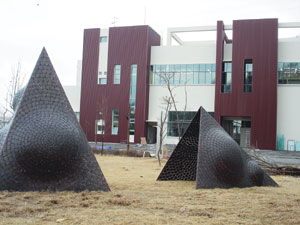
Setting aside such reflections and turning to the phenomena unfolding before us, one notices that in this exhibition Choi presents objects constructed through playful and improvisational assemblage, together with the spaces surrounding them, in forms that appear more organized and structurally solid than his previous works.

Yet both the interior and exterior of these solid forms remain clothed in the artist’s own imagination and vision, now veiled in the patterns of science and the language of technology.


Sung Rok Choi, ROCVER X1, 2006 © Sung Rok Choi

The world of scientific cognition has, in fact, provided a dialectical foundation for the creative movement of images generated by the poetic spirit. Here, the dialectical refers to the reciprocal clash and exchange between forces of affirmation and negation, through which the human mind is propelled toward new realms of perception and offered occasions to envision the future or a more expansive horizon.

Within the realm of art, the fictional or pseudo-scientific qualities of Sung Rok Choi’s experiments are transformed from potential weaknesses into powerful strengths.

Mars has long existed not only as a subject of astronomical science, but also as a recurring motif within myth and alchemical imagination. Choi regarded humanity’s exploration and adventure toward Mars—initiated through the mechanical apparatus known as the rover—not merely as a scientific event, but as a significant metaphor for his own imagination and artistic creation.

In this exhibition, he pays homage to humanity’s attempts to understand Mars through the rover by creating an artistic transformation of the machine titled ROCVER. His ROCVER simultaneously functions as an homage to Marcel Duchamp’s The Bride Stripped Bare by Her Bachelors, Even, Jean Tinguely’s self-destructive machines, and Nam June Paik’s Robot K-456.

The movement of the copper-toned ROCVER, evoking the vitality of the human spirit and imagination, together with the projected video-text imagery it emits, suggests a considerable transformation in Choi’s earlier modes of presentation. The uncanny fusion of mechanical apparatus and poetic inspiration within his work reveals the possibility that humanity’s metaphysical imagination toward outer space and cosmic science may, even if only momentarily, become vividly perceptible within our secular field of vision.

As we anticipate reencountering the inspiration Choi drew from Mars and rover-based space exploration through the modest vision of art, we may imagine that his poetic exploratory machines and experiments will become travelers and messengers introducing contemporary viewers to yet another unknown world of dreams.

References