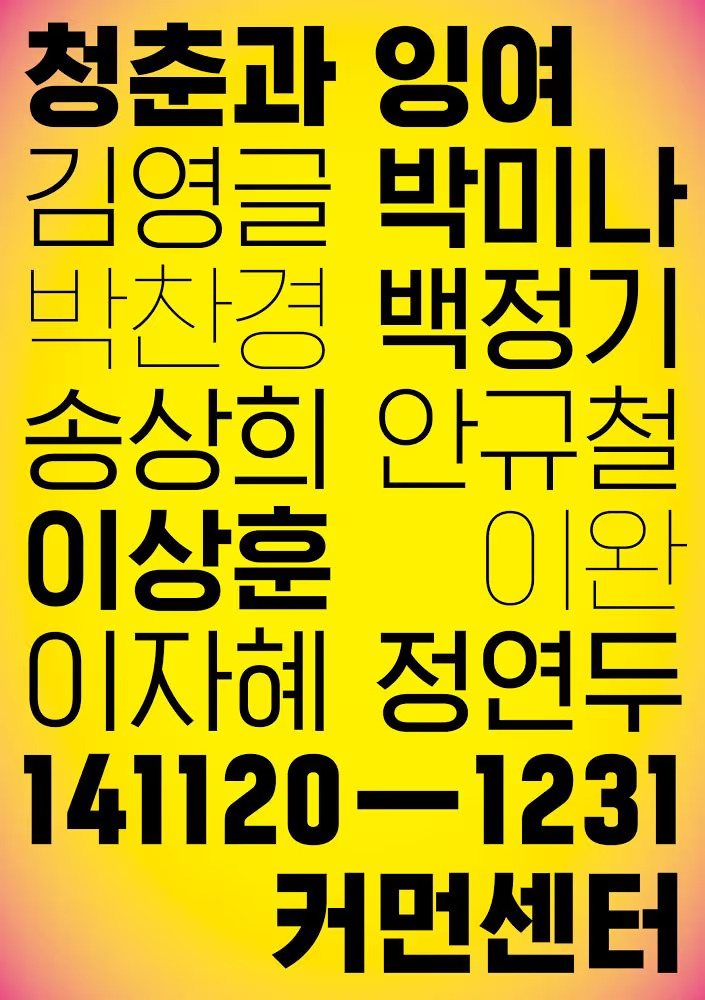
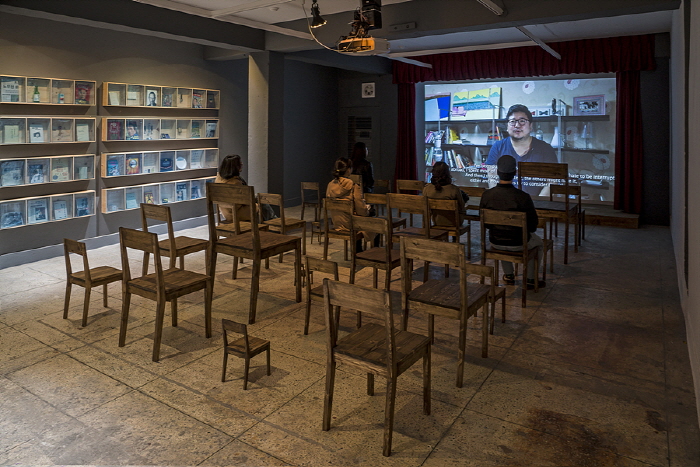
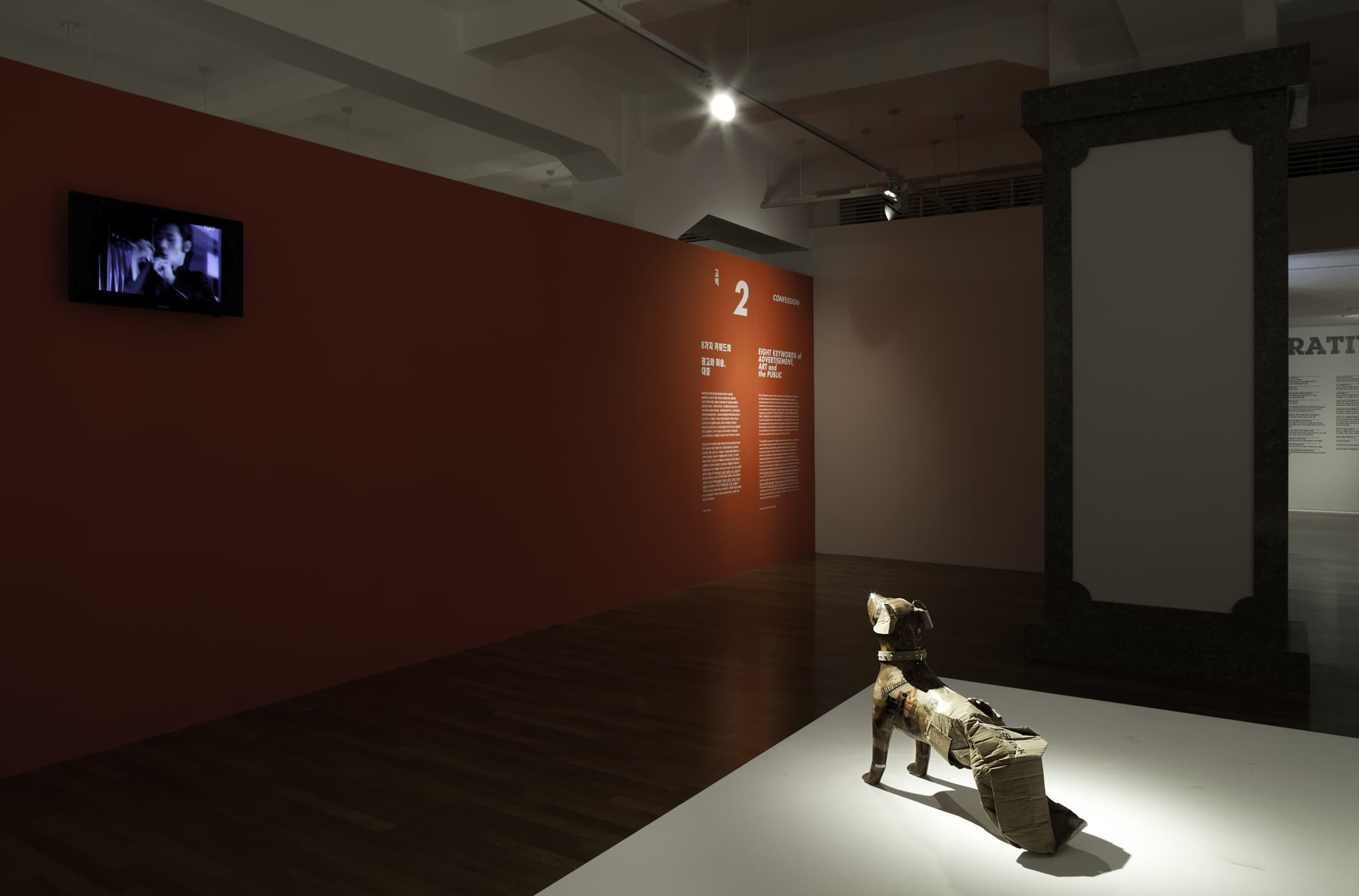
Since the 1990s, Park Chan-kyong — an heir to the Minjung art movement who has long explored the modern unconscious of Korea through themes such as the Cold War, national division, and shamanistic belief — and Lee Wan, who has investigated the structures of capitalism as a universal contemporary condition, share the geopolitical theme of “Asia” in this exhibition.
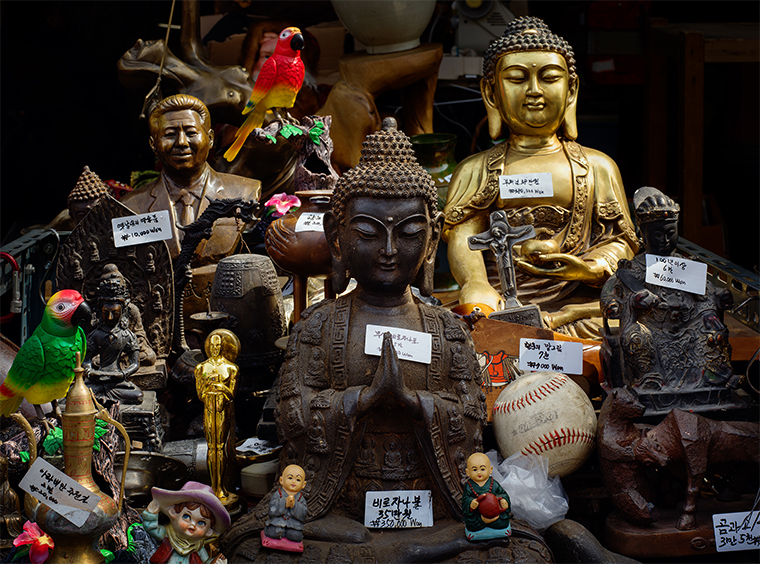
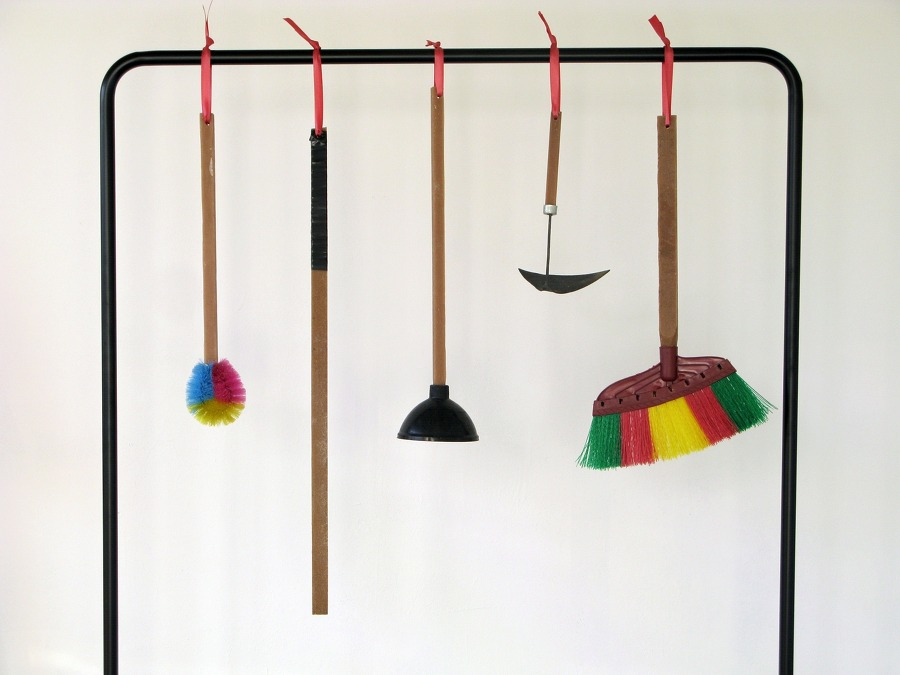
In his new work Pa-gyung(罷經) Experiment 1 (2014), Park Chan-kyong undertakes an experimental inquiry into the relationship between “traditional (religious) culture” and Asian modernity. The work unfolds through questions such as: “How should we understand ‘traditional (religious) culture’?” “What kinds of artifacts might serve as references?” and “Can ‘traditional (religious) culture’ itself be interpreted as a sign system?”
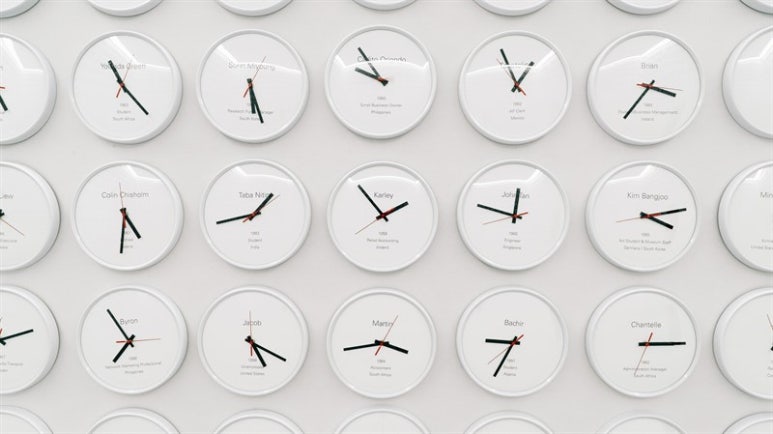
If Park Chan-kyong resembles an archaeologist excavating omitted or suppressed histories, Lee Wan assumes the role of a detective-collector gathering fragments of the past as decisive evidence through which the contemporary condition of Asia has been produced.
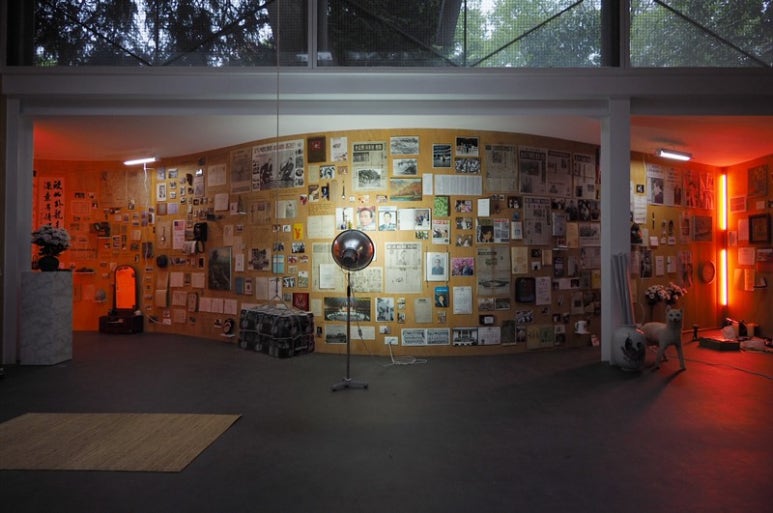
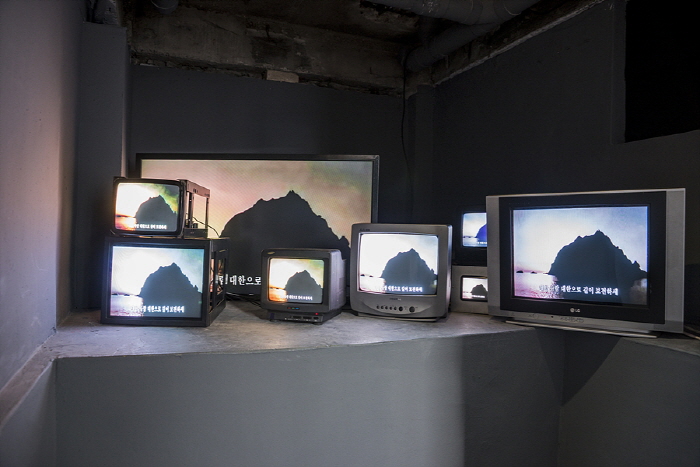
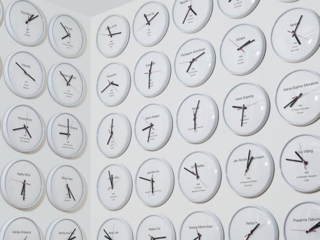
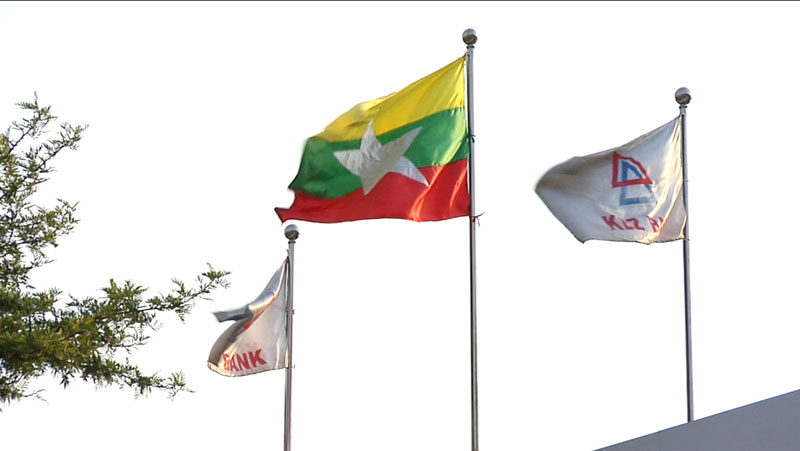
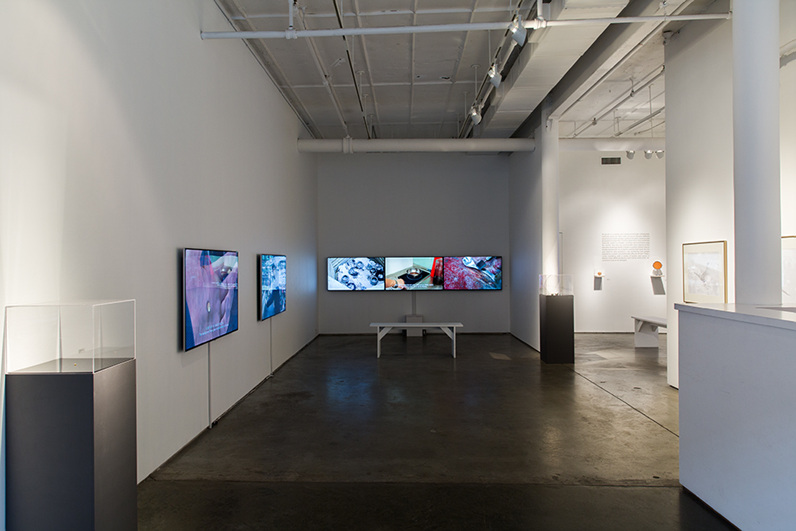
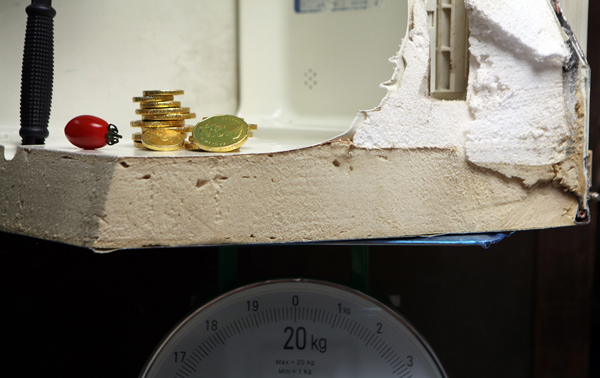
His new work Movement (2012–2014), which captures the realities of countries such as Cambodia, Myanmar, and Indonesia amid rapid industrialization; Made in Taiwan: Sugar (2013), which reflects on the present state of a declining colonial sugar industry; and Korean Modern and Contemporary History Hobby Collection: “Political Power” Edition (1940–present), a collection associated with political moments in Korea’s modern and contemporary history, all bring disparate temporalities into simultaneous appearance.
These montages of collapsing — or soon-to-collapse — memories become occasions through which contemporary neoliberal culture may once again be reconsidered.
Song Sanghee, whose practice has continuously critiqued the contradictions of modernity, and Lee Jahye, who has created online comics allegorizing the impossibility of the contemporary era, share the common theme of “a protagonist venturing through a particular world.”
In her new work Finding O (2014), Song Sanghee juxtaposes the colonial histories of European imperial powers between the fifteenth and seventeenth centuries with mating scenes of cichlid fish inhabiting Lake Tanganyika in Africa, exposing desires for reproduction and expansion. Lee Jahye presents a mural installation utilizing the architectural structure of Common Center.
The work follows a protagonist named Annie Lorie as she undergoes a series of trials in order to become a female warrior within a magical world. Across successive historical periods — from the Middle Ages and early modernity to modernity, the 1970s, and the present — the protagonist repeatedly encounters unjust death, yet through each stage acquires the virtues required to become a warrior, eventually arriving in a magical paradise devoid of pain and sorrow.
Each wall pairs scenes depicting the protagonist’s path toward death with scenes of parties held in consolation of her death, collectively constructing a magical landscape known as Moon Patrol Garden. The “adventures” staged by these two artists, traversing time and space, vividly reveal generational perspectives on approaching utopia.
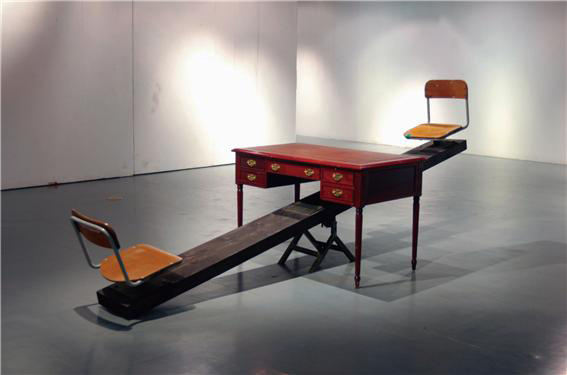
Ahn Kyuchul and Youngle Keem, both of whom have utilized “storytelling” as a mode of communication within their practices, engage in this exhibition with narratives surrounding the 1990s. Ahn Kyuchul presents a sequel to his representative work The Man's Suitcase (1993).
The Man's Suitcase II (2014) unfolds as a continuation set twenty years after the temporal point of the earlier work. Whereas the original piece concerned “the existence of another world, the existence of deferred possibilities,” the new work instead implies an attitude that “declares there is no longer anything left to wait for,” suggesting the arrival of a new phase.
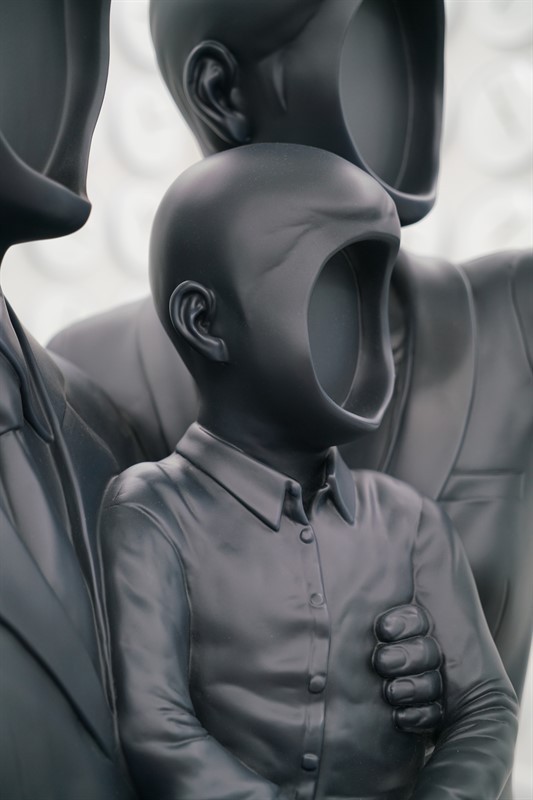
If Ahn Kyuchul metaphorically rereads the 1990s through a critical reflection on his own practice, Youngle Keem approaches a more immediate emotional texture of the decade. Keem’s new work The Cares of a Family Man (2014) revisits the figure of the middle-class patriarch brought to collapse during the IMF crisis of 1997.
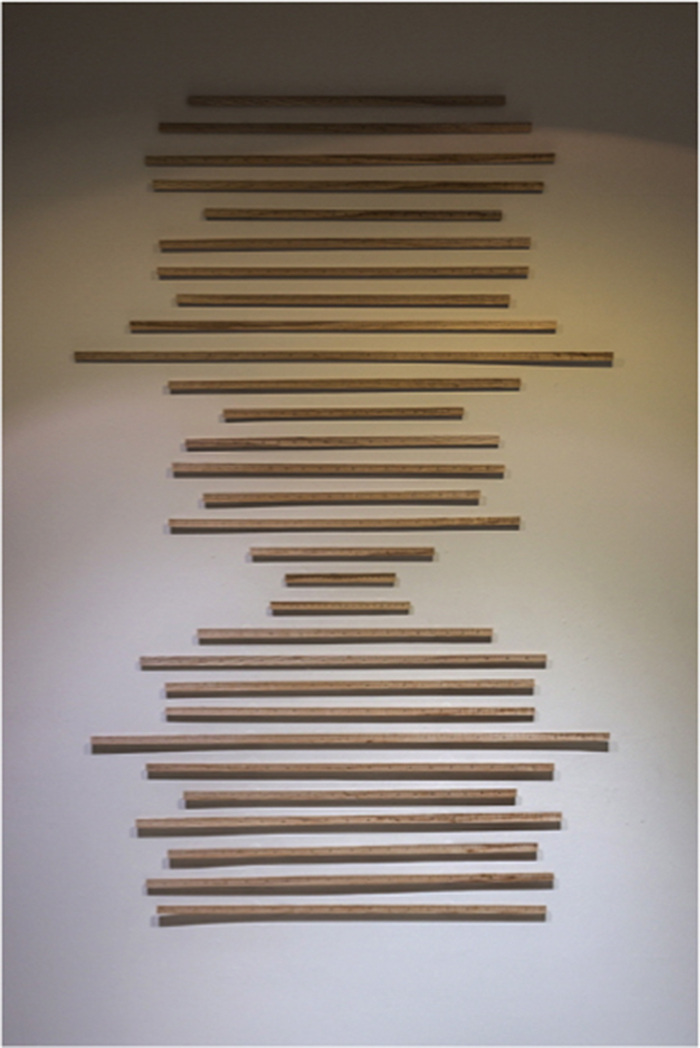
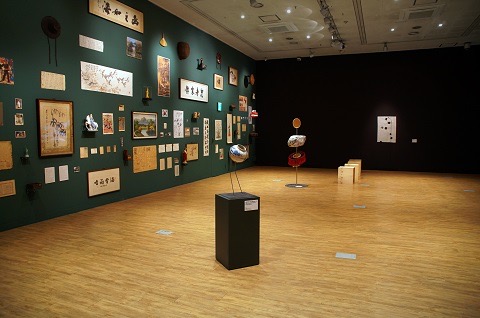
More than three hundred words describing the presumed psychological state of the household patriarch at the time — along with the names of objects one might have found within his room — are dispersed throughout the exhibition space. Together, the narratives proposed by the two artists simultaneously critique the emotional atmosphere and attitudes of the 1990s while offering clues through which the present might be newly understood.
Yeondoo Jung and Jungki Beak reconsider the meanings of dreams, aspirations, and their realization within a contemporary context. Their new collaborative work Air Pocket(2014) organically recombines elements from the artists’ previous works with various objects and mechanical devices into a single installation.
Behind the final image presented in Yeondoo Jung’s representative work Bewitched (2001) lie innumerable untold stories. Narratives belonging to previously unintroduced characters are transmitted through a radio powered by electrical energy generated by Jungki Beak’s candle device. In another room, a bubble generator operating on the same electrical current continuously releases small streams of air into a water tank.
Combined together, these elements form a work that functions as an allegory of catastrophic circumstances, simultaneously activating dreams, hopes, and a layered sense of impossibility. Although both artists have long been celebrated as “artists of dreams,” this exhibition reveals an ambivalence that cannot easily incline toward either optimism or pessimism alone.
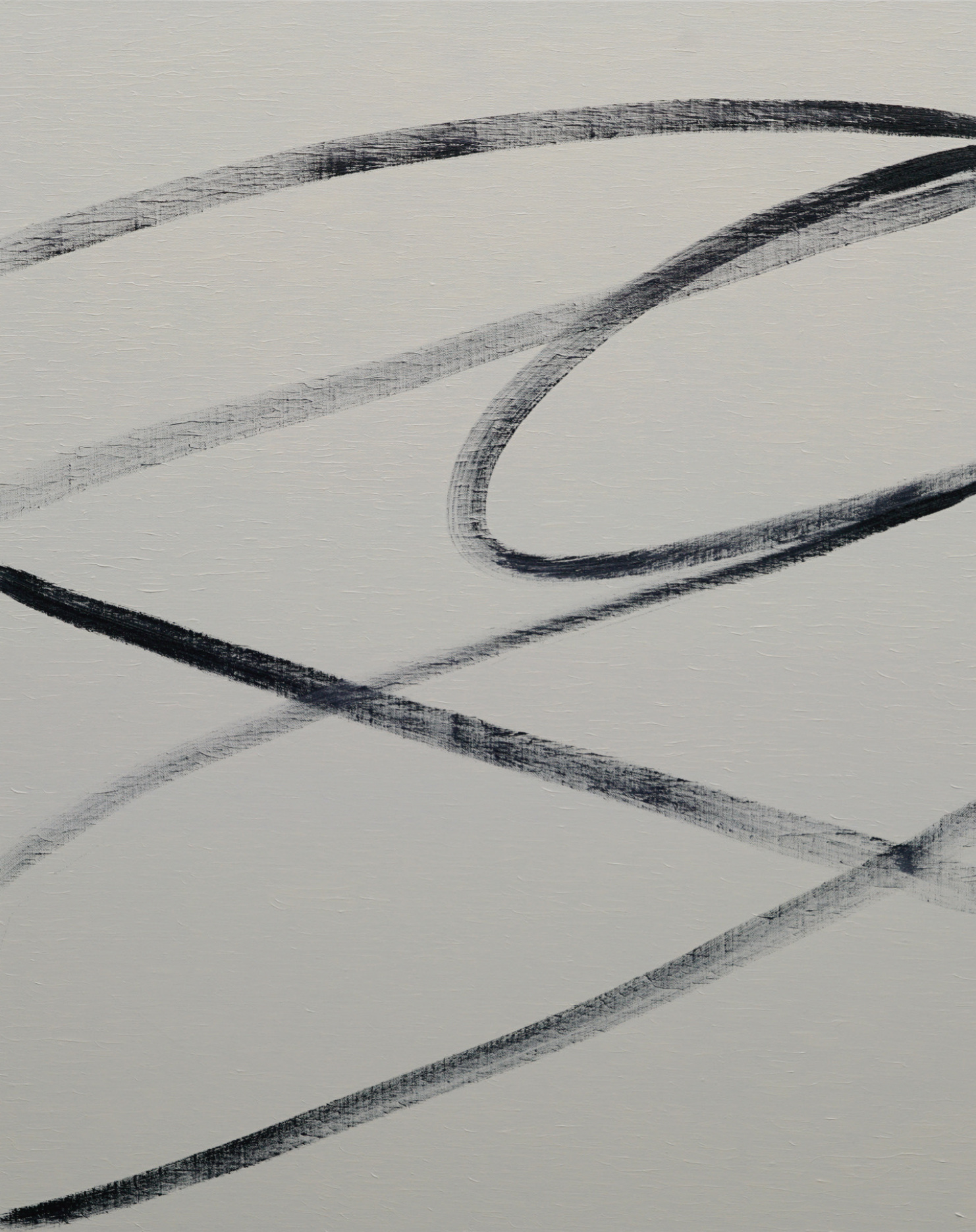
MeeNa Park and Lee Sanghoon have each continued attempts to reconfigure painting as a traditional medium under specific conditions. In this exhibition, the two artists engage in a loose collaboration grounded in the shared denominator of “black and white.” MeeNa Park’s new work 2014 – Black (2014) extends her earlier work 12 Colors (2013), which dealt with the standard colors proposed by various paint manufacturers.
Using fifty-five commercially produced black oil paints from different companies applied onto standardized canvases, the work compares and contrasts these “constructed” shades of black. For Lee Sanghoon, whose participation in this exhibition may also be regarded as a debut presentation, diagrams adapted from the publication Method of Building Shadow(造影法) 1: 000-111 (2014), published by Mediabus, are displayed alongside the book itself.
By decomposing the conditions of sketching from observation, Lee attempts to construct a kind of manual for the production of painting. Through these reflections on medium specificity, the exhibition offers a glimpse into contemporary artists’ efforts to secure at least a minimal aesthetic point of reference amid what appears to be the dead end of pluralism.
The problem of contemporary visual culture — often described today as a condition in which “nothing is new” — is, in fact, something that has been endlessly repeated throughout history. We continue to discover problems through the mirror of the past, believing that they may still be renewed through a contemporary perspective.
If this much can be understood, then — to borrow a phrase from Park Chan-kyong — it should not matter “even if this exhibition amounts to nothing more than an awkward attempt at drawing a map.”