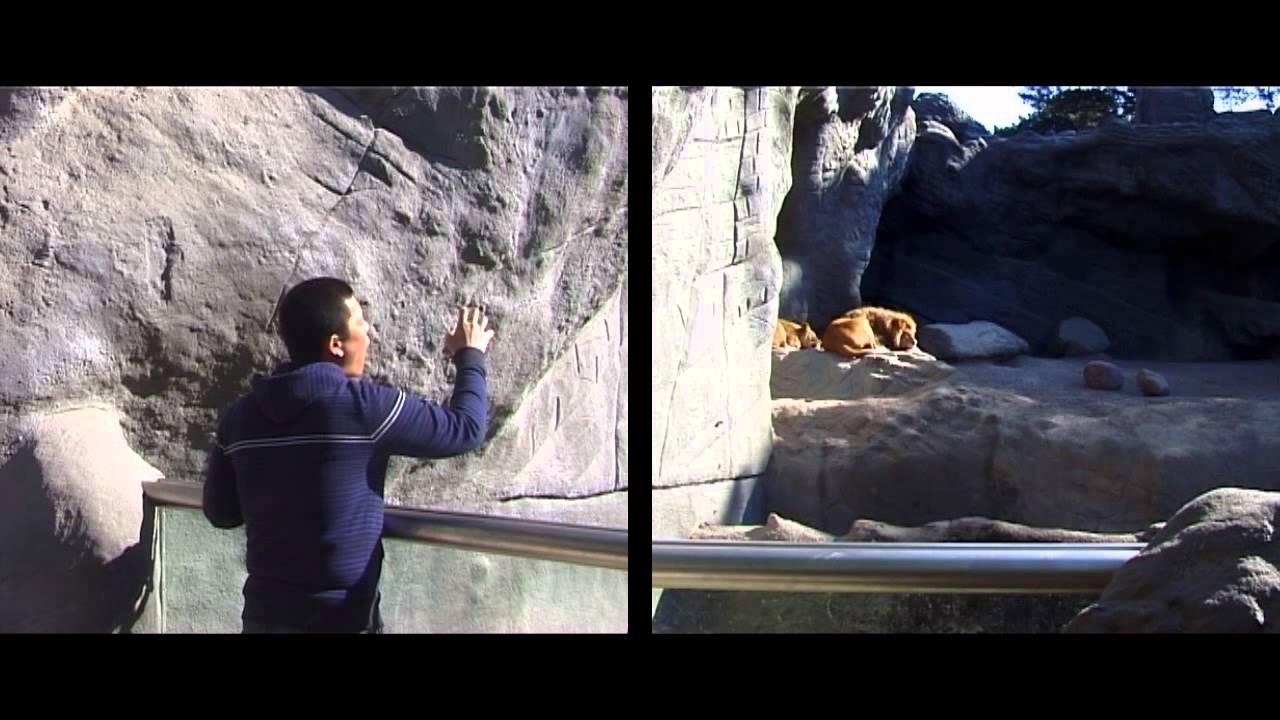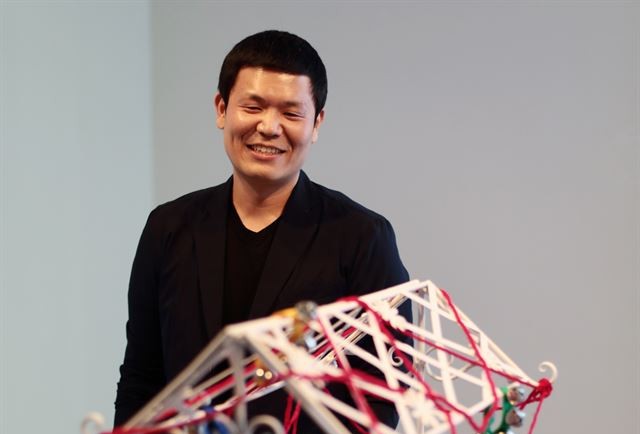

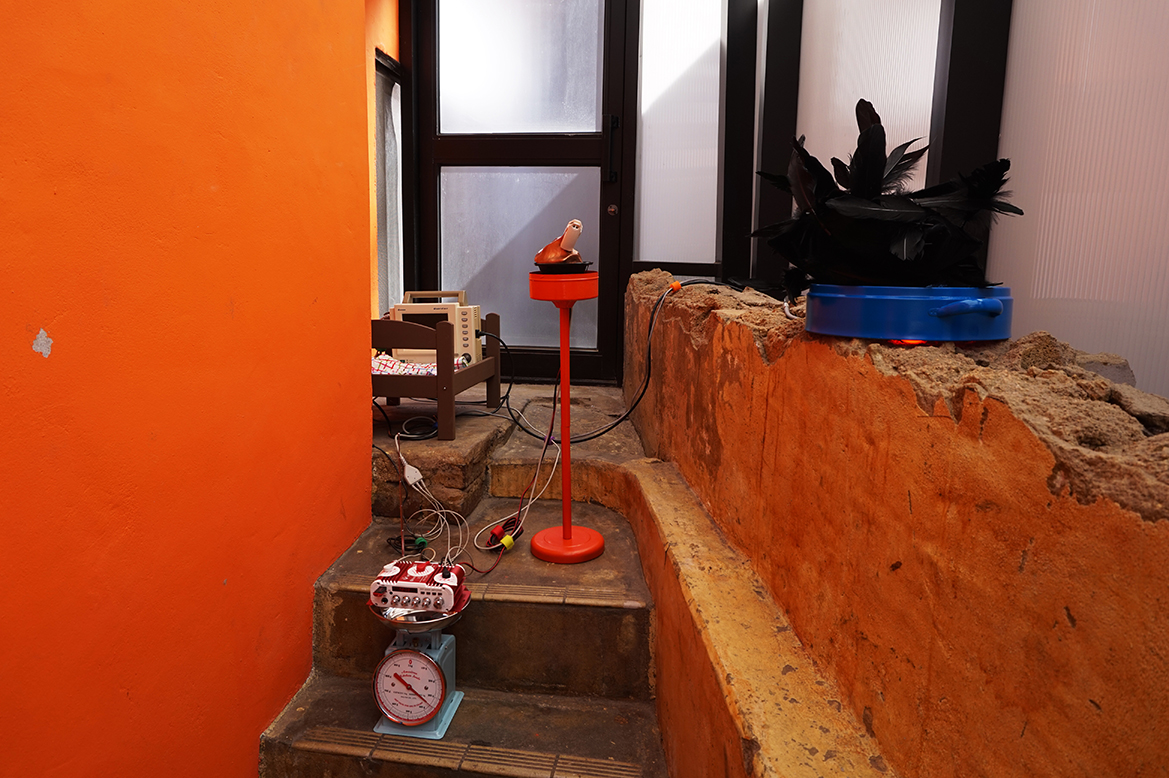
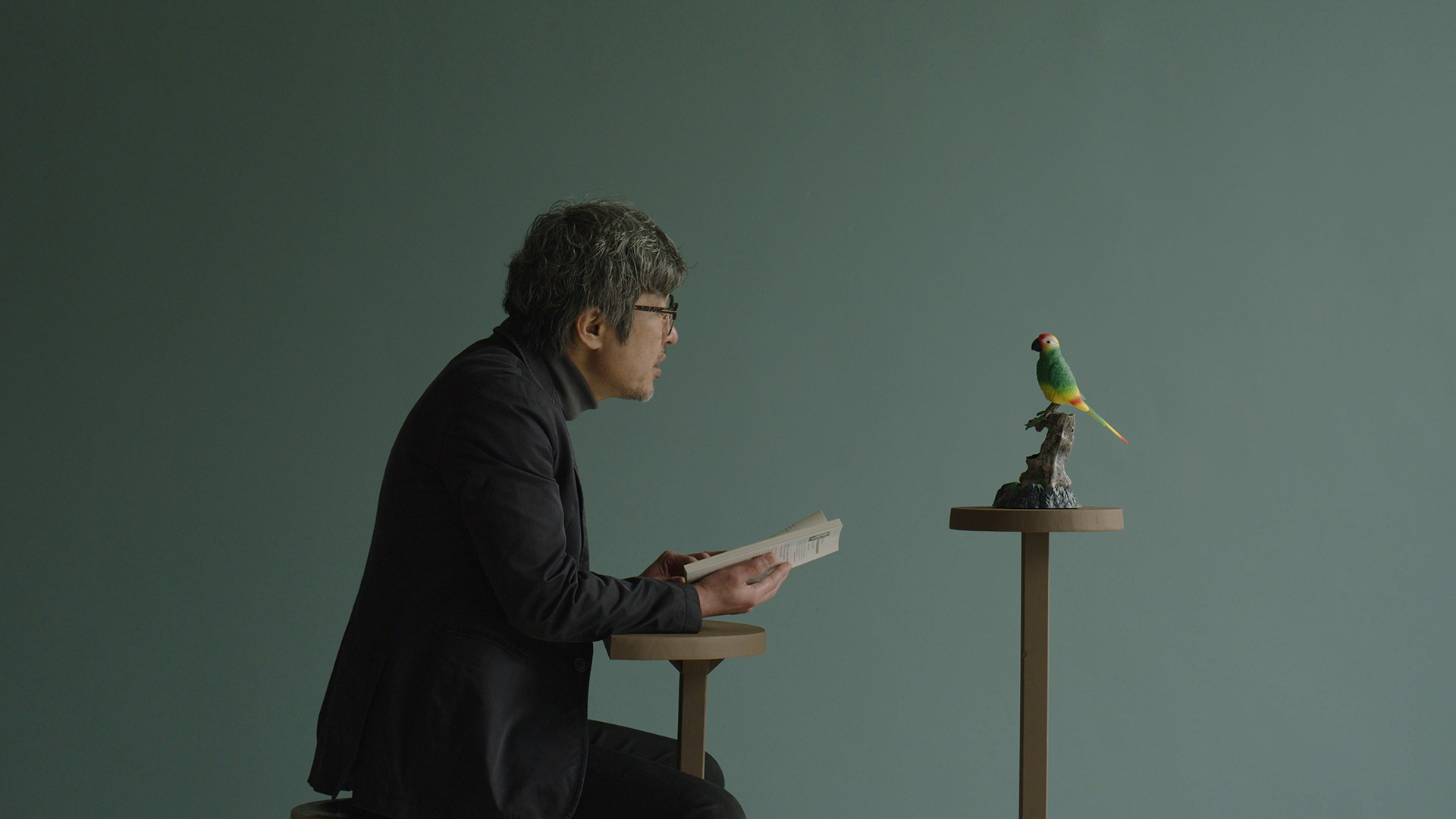
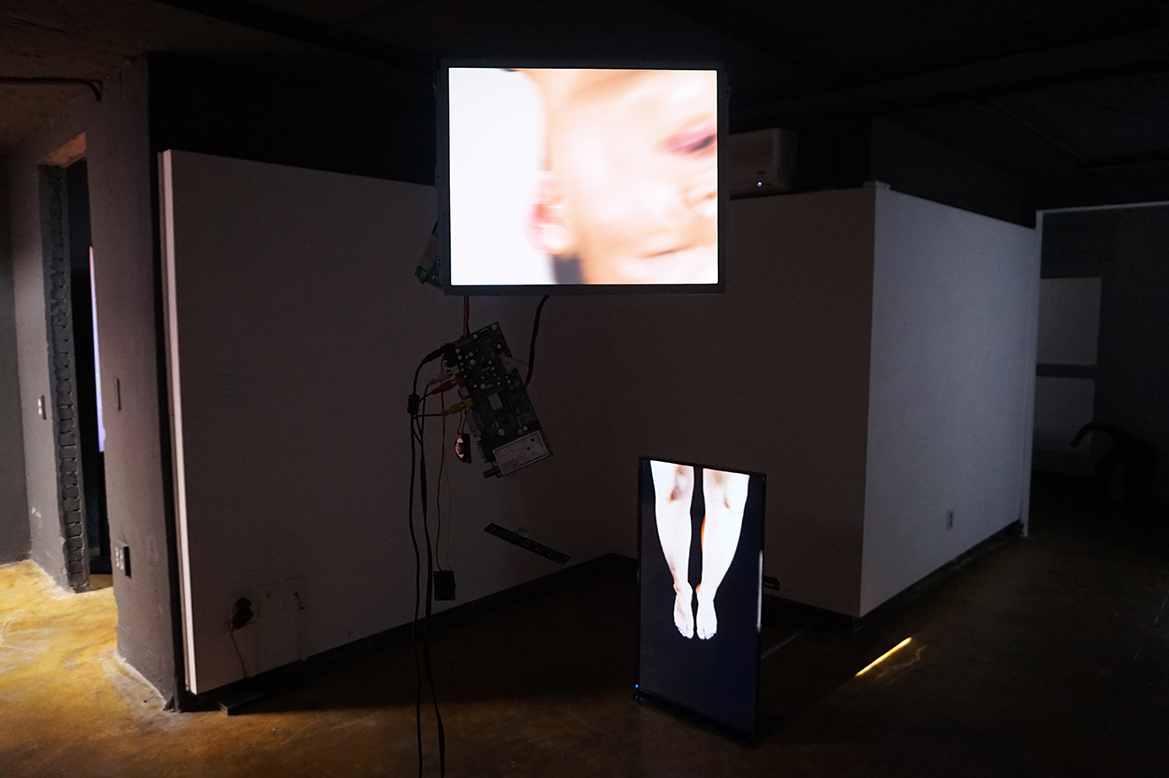
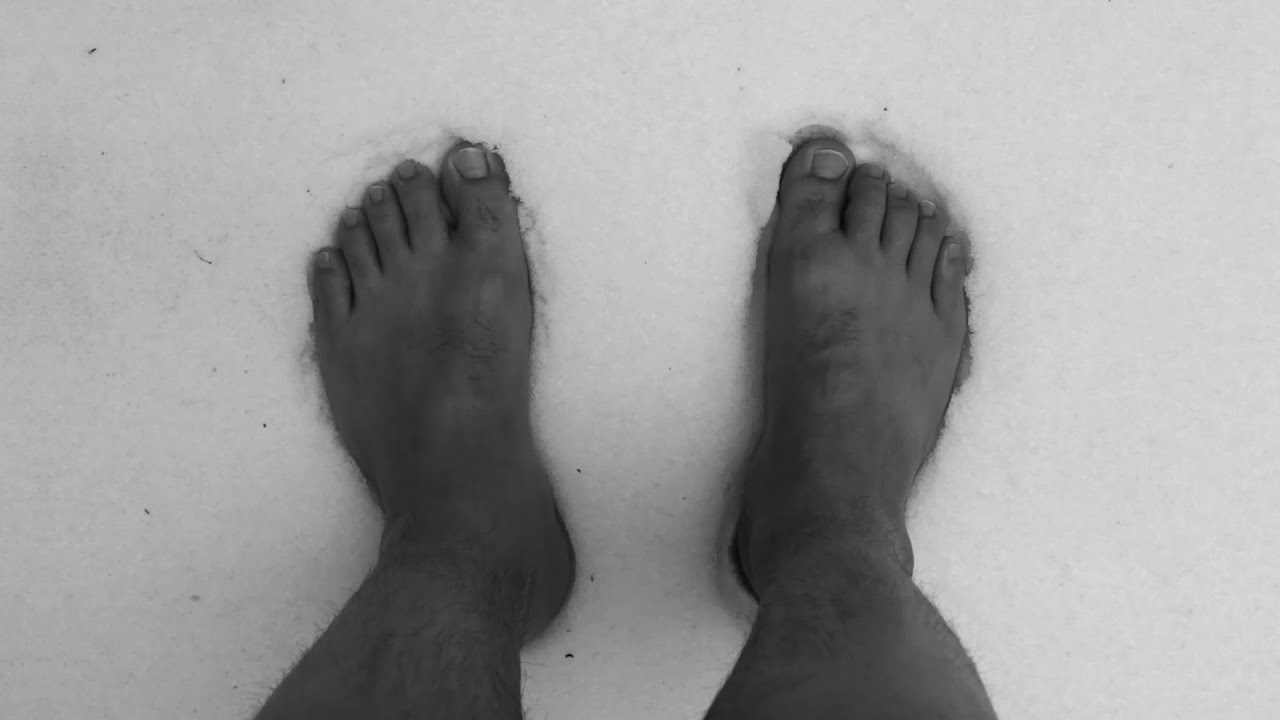


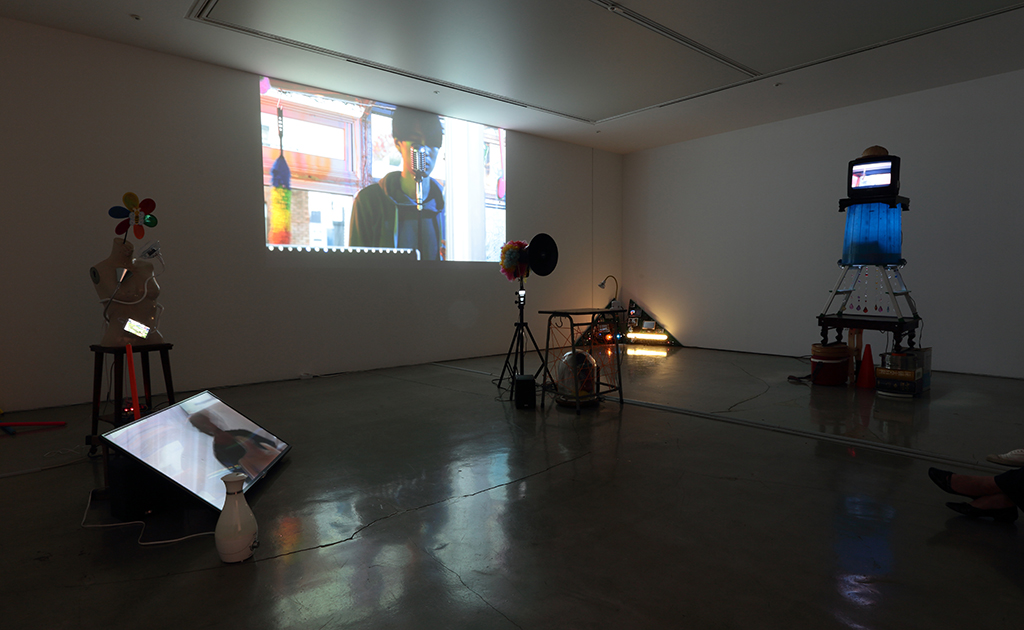


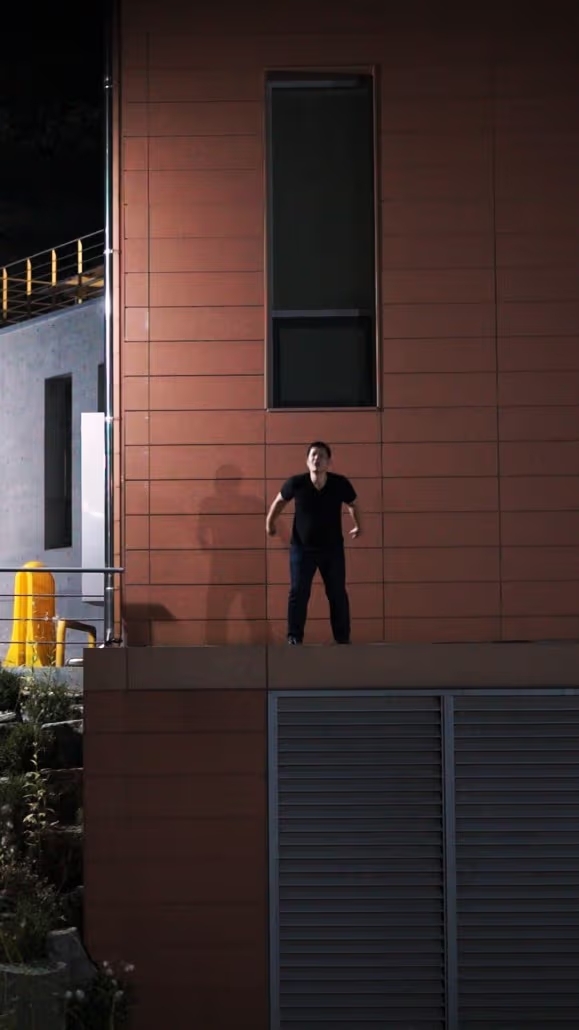
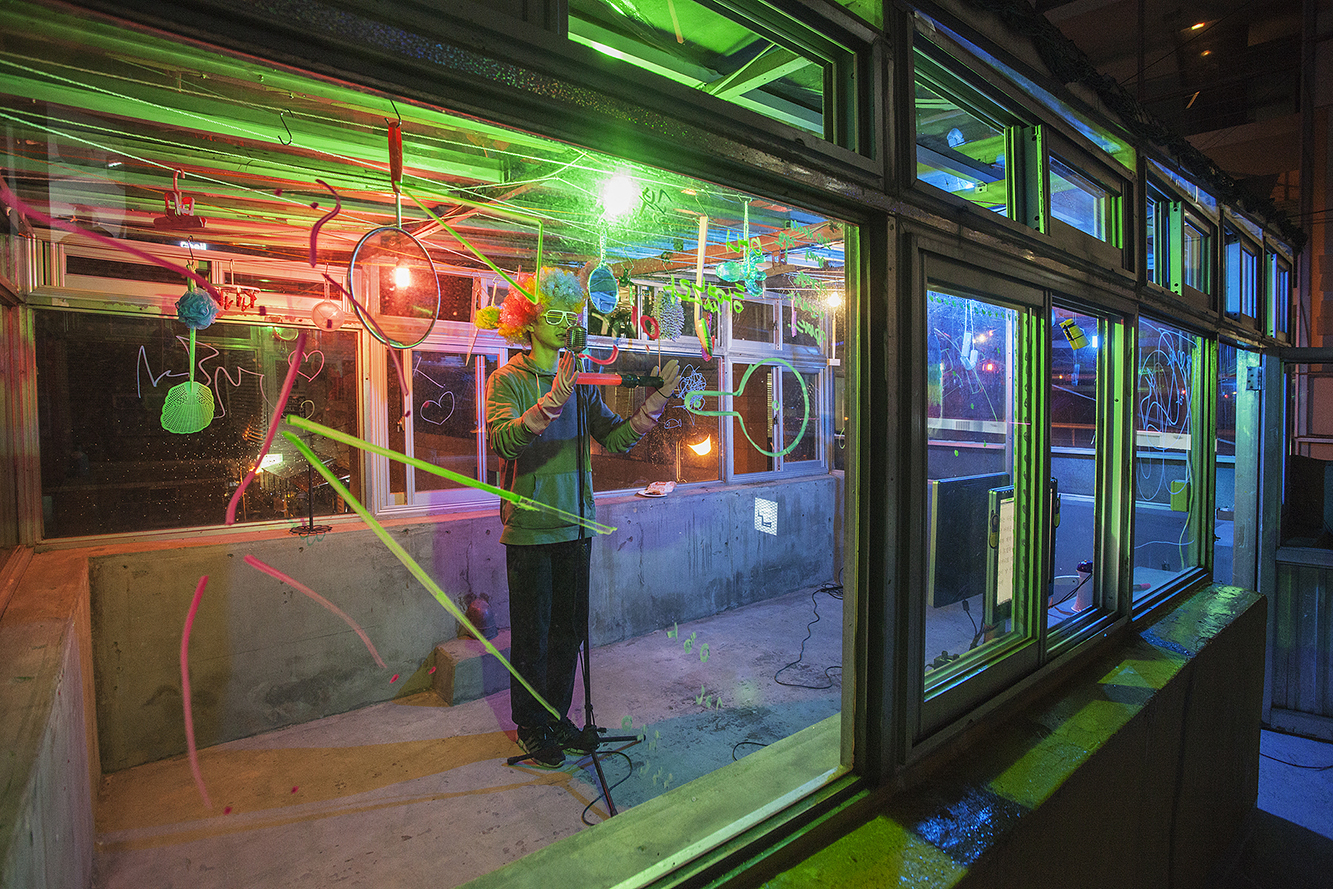
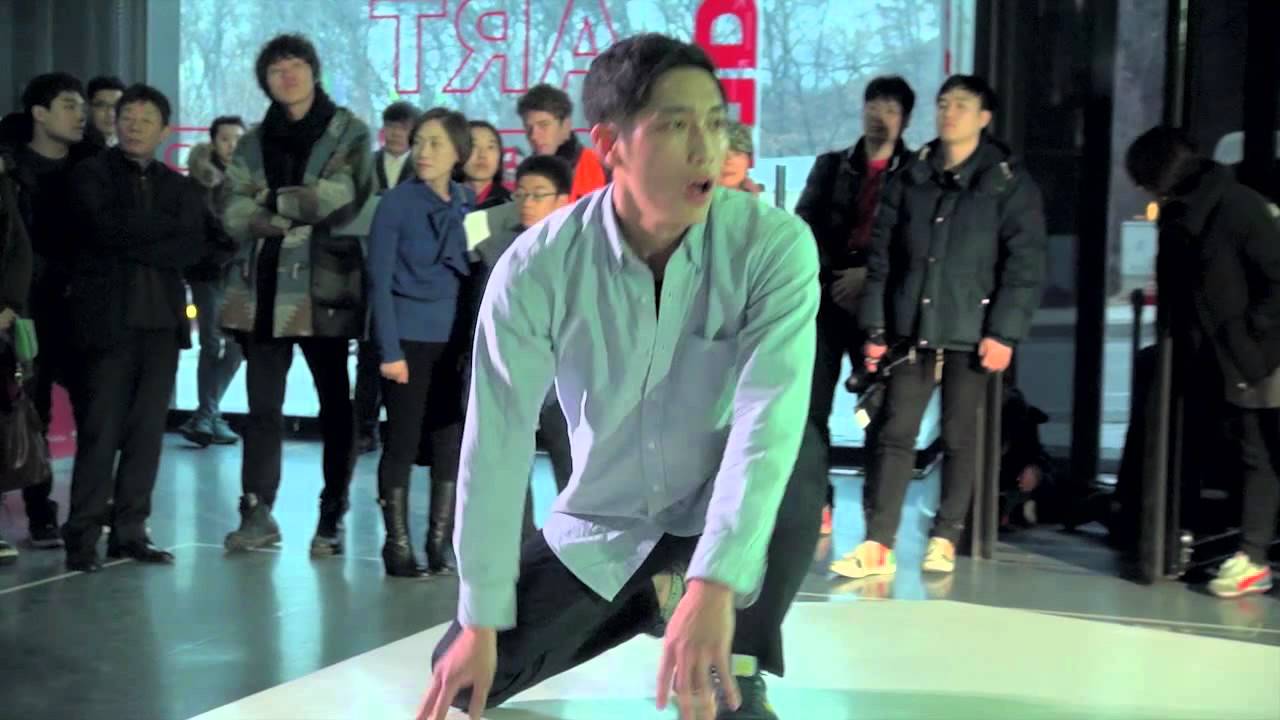
Seungwon Park, Gut gebrüllt, Löwe!, 2011, Single channel video, 10 min 39 sec © Seungwon Park

“Humans morally disparage all beings other than themselves through the term ‘inhuman,’ yet considering that no being on Earth has inflicted greater suffering and violence upon other living creatures than humans themselves, the word ‘human’ must sound utterly horrifying to the ears of animals.”
— Jung Hyang-gyun, Becoming-Animal

On the screen, a figure appears facing a pride of lions. The lions remain enclosed within the boundaries of a zoo, while the figure stands outside the enclosure’s edge, continuously shouting toward them. His forceful cries resemble those of an animal.

Existing outside language while simultaneously borrowing the language of the object (the animal), his vocalization becomes a kind of non-linguistic utterance — not one that is selectively adopted or unconsciously emitted. Rather, it emerges as something profoundly necessary, to the extent that the subject seems incapable even of imagining another method. It is desire itself directed toward communication with the other.

For this reason, even viewers entirely unfamiliar with the context of the work can intuit its meaning without much difficulty. Although everyone knows that genuine communication with others is far from simple, we nonetheless endlessly desire and fear communication with other beings at the same time. The subject within the screen reflects precisely this condition.

Attempting to communicate with the absolute otherness of the animal, he imitates them not through verbal speech but through guttural vocalization. Yet this attempt reveals only its own limitations: not an exchange constituting communication, but merely the one-sided cry of a beast directed toward another beast.

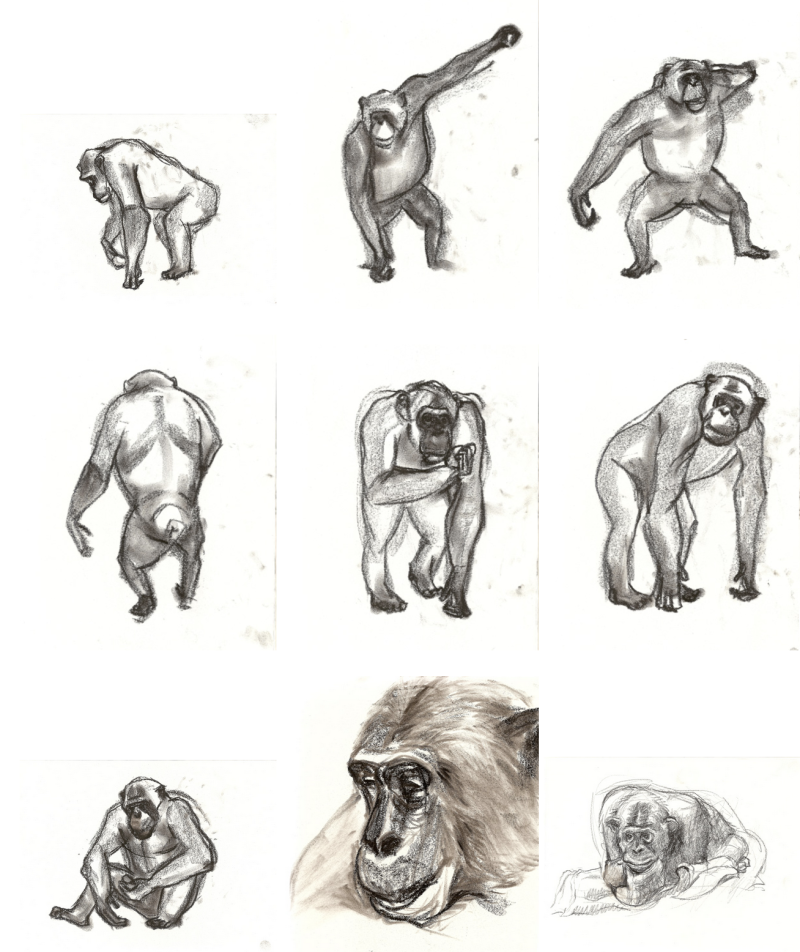
From his earlier works onward, the artist has consistently attempted communication with animals. In siaraM-part.1 (2008), which depicts communication with chimpanzees, he projects his own experience as a foreigner living abroad.

By practicing chimpanzee movements and attempting communication with them, the artist seeks to overcome the absence of belonging he experienced in a foreign country through his own “becoming-animal,” forging contact with another group or pack. The reason he abandons language as a conventionalized sign system in favor of natural signs such as emotional movement and gesture is self-evident: he understands that there exists something fundamentally shared within the expression of emotions themselves.

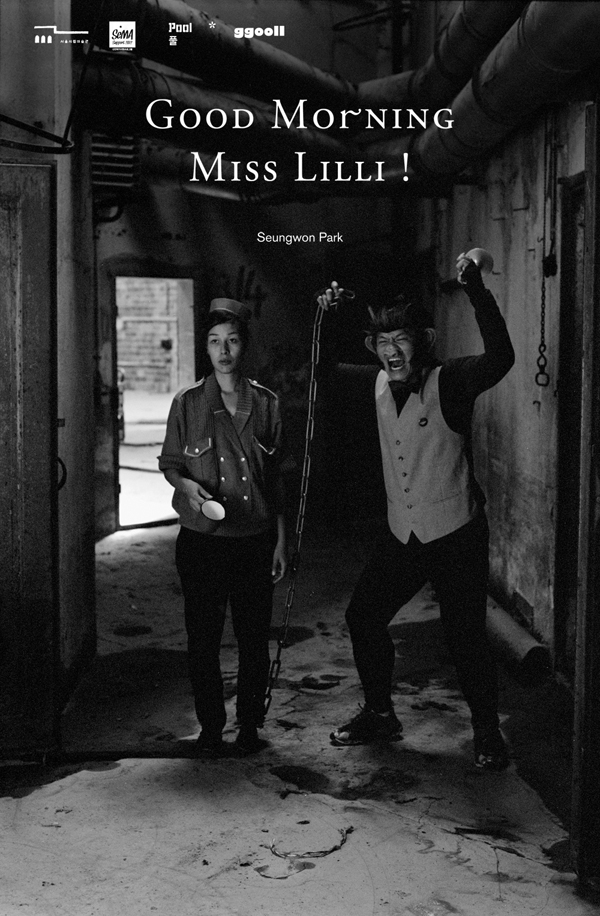
The mirroring effect produced through the instinctive and primal bodily gestures of the chimpanzees proves remarkable. The chimpanzee Lily appears, for a fleeting moment, to enter into communion with the artist, who imitates her like a mirror before her eyes.

The ‘siaraM’ series reveals a kind of temporal dialectical structure. In Part 2, where the artist reenters the world while assuming the role of a chimpanzee who believes communication has succeeded, he ultimately discovers people once again imitating him near the conclusion of the work. In other words, after reaching a certain degree of communion through his attempt to communicate with chimpanzees, he succeeds in sharing emotions — albeit in a limited way — with other people as well.

By contrast, Gut gebrüllt, Löwe! presents a horizontal dialectical structure whose center of gravity cannot converge into a single flow. Although this series of works similarly seeks communication with others through “animal-becoming,” it ultimately reveals a crucial difference: unlike the earlier works, which achieved a degree of success, this work stages instead the condition of impossible communication.


Seungwon Park, siaraM-Ape Drawing, 2008, Charcoal on paper(200 sheets), 21 x 29.7 cm each © Seungwon Park

The binary horizontal structure adopted by Gut gebrüllt, Löwe! operates as follows. First, there exists a clear distinction between the human and the animal as subject and other. Next, because communication ultimately fails to occur between them, the roles of sender and receiver become even more sharply defined.

Finally, as the artist himself acknowledges, the zoo setting prefigures the limits of communication through the explicit division between inside and outside the enclosure. What is particularly striking is that this horizontal relational structure is revealed to the viewer through two divided screens.

The protagonist’s incessant attempts to transmit messages toward the lions within the enclosure unfold within a form that is simultaneously one image divided into two and two images contained within a single frame — namely, the structure of the single-channel video itself. This formal arrangement becomes central to the work’s meaning.

The sender (human-subject) and receiver (lion-other), each positioned in their respective places, can never arrive at a state of union. As such, the work allows viewers to experience the development of the artist’s reflective thinking: the hopeful conclusion suggested in the earlier works cannot persist as a permanent condition.

Although projected within a single frame, the sender and receiver ultimately occupy separate visual spaces, already foreshadowing the overall message of the work. Communication and understanding through gesture may be grasped through the reciprocity between the subject’s intentions and the actions undertaken by the other, as well as through the reciprocity of intentions readable within bodily movement itself.

Yet unlike the earlier works, the lions here are portrayed throughout as irreducible others with whom communication cannot be established despite the subject’s desperate cries.

At this point, the viewer encounters a form of violence. Although the subject attempts communication by imitating the language of the lions, these unilateral vocalizations — incapable of reciprocity — fail to arrive at meaning and repeatedly collide against an invisible wall. Consequently, viewers confront both the absolute other that can never become a representation of the self and the contradiction inherent in the subject’s desire to reduce all forms of otherness (or transcendence) into the sameness of the self.

The phenomenologist Maurice Merleau-Ponty warned that if we suspend our perceptual “occupation” of the object and instead encounter things through a detached attitude, we are faced with the object as an antagonistic and unfamiliar presence — no longer a conversational partner, but a resolute and silent other.

In other words, the uncomfortable truth emerges that the genuine communication with the other we dream of may ultimately be nothing more than an impossible fantasy. For this reason, the “beautifully roaring lion” anticipated through the title never actually appears within the work. Instead, what we discover is only ourselves, desperately crying out toward the other.

References