Everyone has, at least once, experienced inequality in reality. If there exists someone who has never encountered such an experience, then the world to which that person belongs must surely differ from the actuality inhabited by most of humanity. Despite differences in generation, language, and experience, most people living within reality implicitly recognize a form of common sense — perhaps ordinary consensus, perhaps universality itself.

Anthropocentrism positions humanity as both the creator and savior of the world. Even if the existence of God is acknowledged, God nonetheless assumes human form, and above all is represented as the most idealized image of the human. In any case, there is no need to debate the existence of God. Humanity already dominates the Earth through innumerable means.

One cannot deny that humans are the sovereign power ruling over nature, animals, and plants alike. But let us imagine the reverse: the revolt of plants, the anger of nature, the intelligence of animals, and the transformations such forces might bring about. Since antiquity, humanity has exploited and monopolized nature under the pretext of civilization.

Nature is developed according to human necessity and baptized by language, thereby granted a singularized identity. Nature’s own consent or intention has never been considered particularly important, because nature cannot speak. Yet the environmental upheavals and ecological disorders now unfolding across the globe signal crisis not through speech but through action.

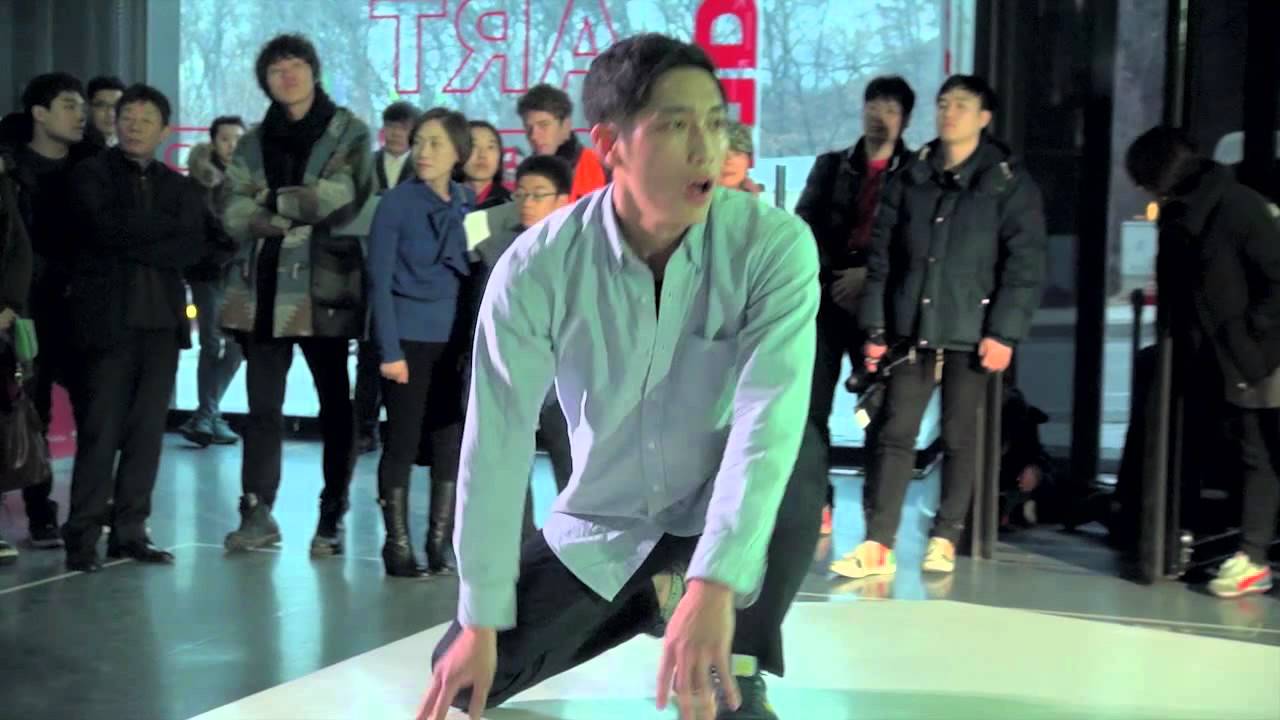
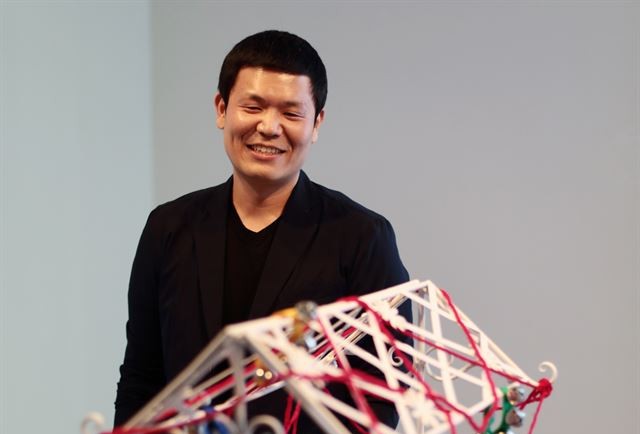
Although the work of Seungwon Park appears outwardly focused on the body and performative action, the artist’s fundamental inquiry actually begins with the hierarchy between speech and the body. His practice examines — and at times satirizes — how speech (language-logic) governs the body (the non-linguistic and non-rational), what meaning a body outside language might possess, and whether gesture can function as an equivalent capable of replacing language itself.

In some respects, the series of actions he performs may resemble acts of ascetic practice or gag-like comedy, yet they are ultimately struggles to liberate the body from the constraints of language. These gestures thus become acts through which bodily thinking is enacted in practice — a mode of existence that Park himself appears to long for.


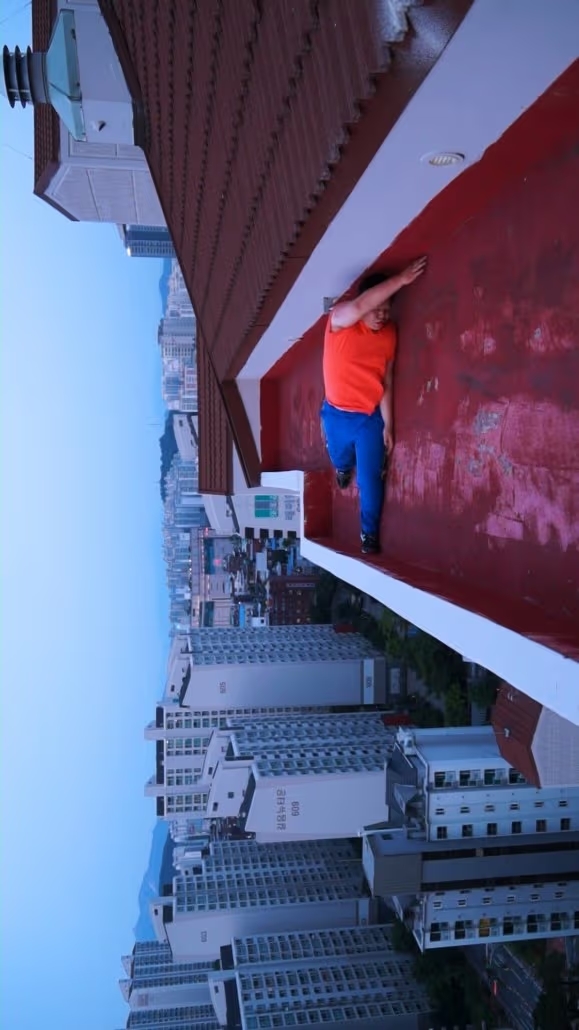
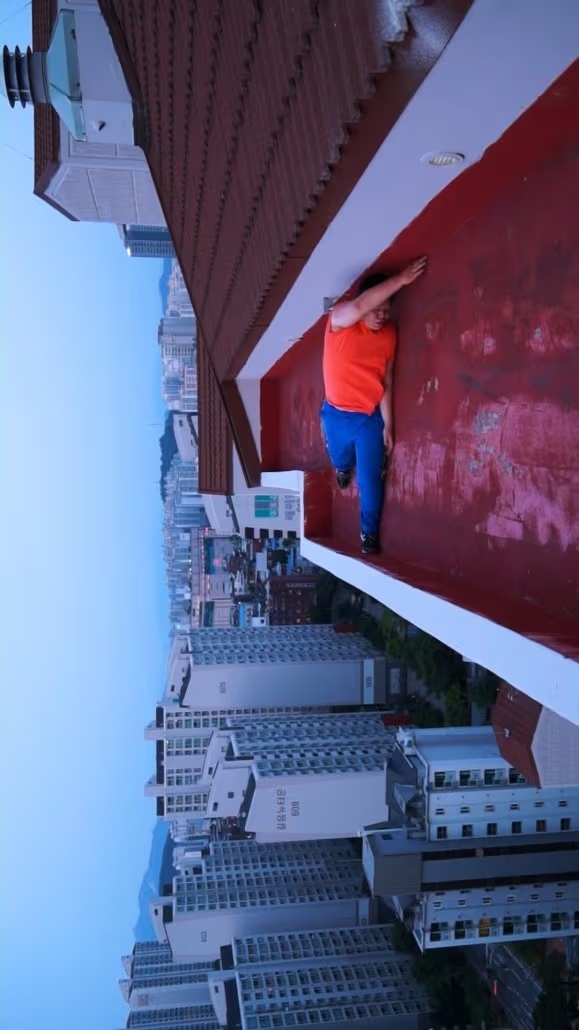
Seungwon Park, Breathing, 2018, Single channel video, 5 min 4 sec © Seungwon Park

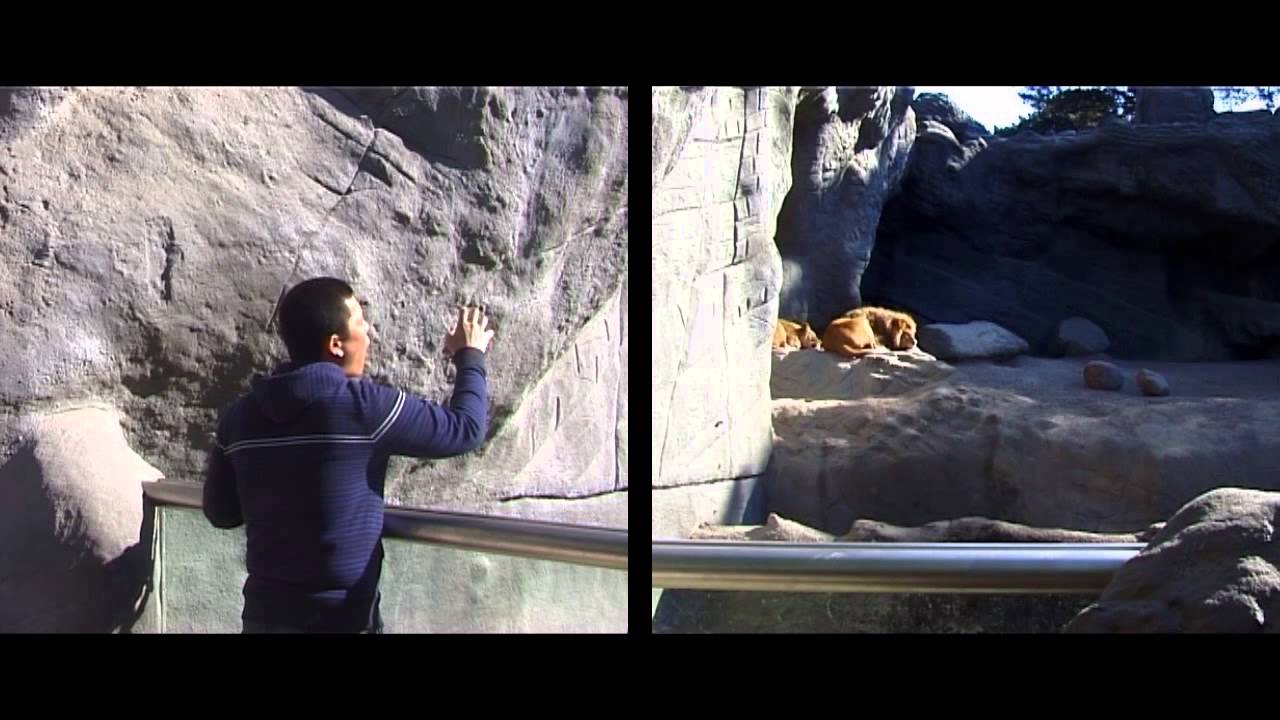
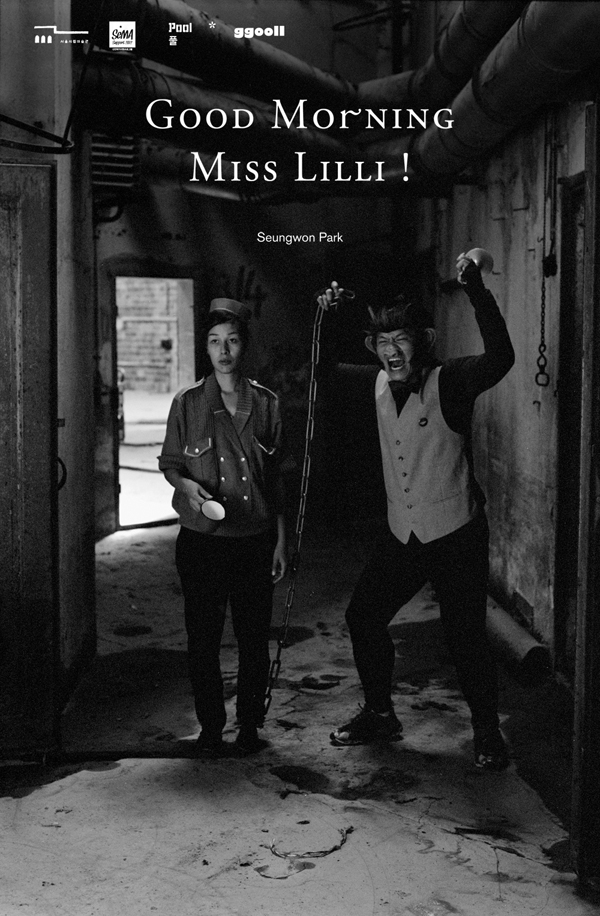
Seungwon Park undertakes attempts to escape the confines of a civilization structured around language. The point of departure for this effort was becoming-monkey. Initiated during his years studying in Germany, this process of becoming-monkey involved an intensely physical period of training. In some respects, the act also constituted a process of erasing the humanity shaped through convention and discipline.

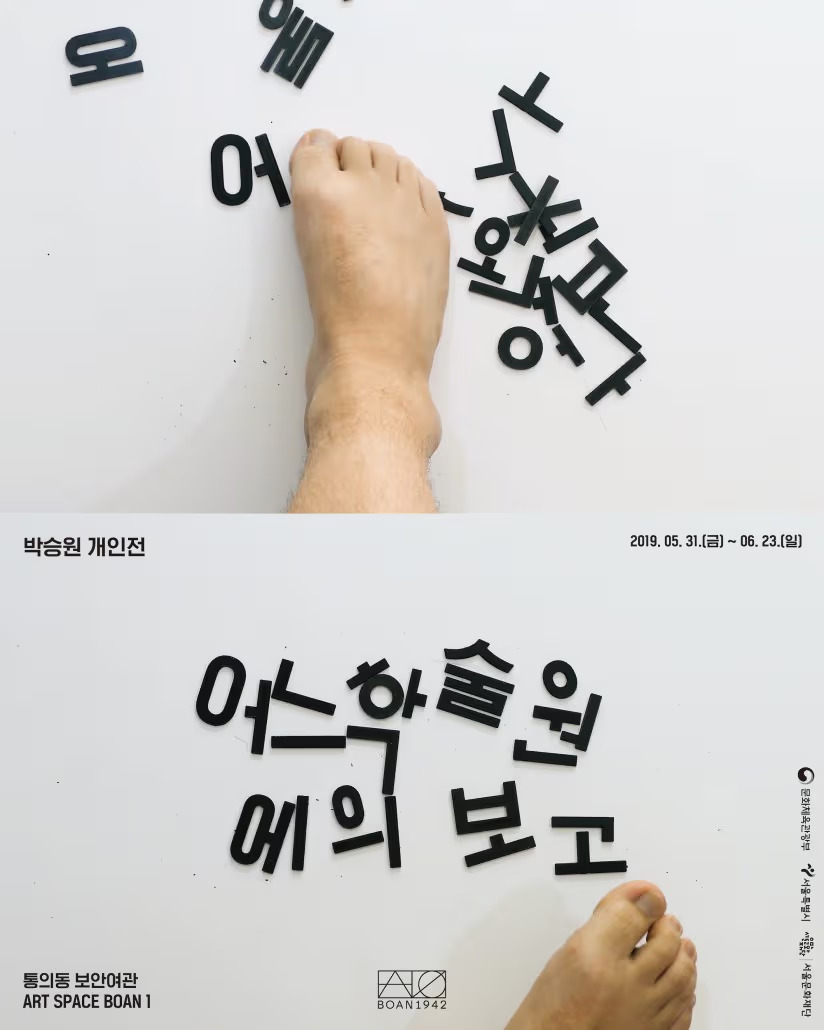
The artist himself describes that period as one in which he lived as a free monkey. The monkey protagonist in Franz Kafka’s short story A Report to an Academy, which serves as a motif for this exhibition, is portrayed as a self-aware being who “evolves” into a human while yearning for freedom. Here, the monkey demonstrates a will of affirmation that adapts not to fate, but to circumstance.

It even possesses the audacity to defend its own existence before human beings. In fact, the theme of metamorphosis that recurs throughout Kafka’s fictional universe most often leads to tragic conclusions, yet intriguingly, this particular story culminates in the proof of one’s existence through the acquisition of language.

A similar worldview appears in the recent film Us. The premise unfolds through a rebellion by cloned humans created for the comfortable lives of their originals. Although these clones possess appearances identical to the originals, they are depicted as beings deprived of language. The uprising becomes possible only through a clone who acquires language.

In this way, language comes to stand in for mind and thought, while the body remains merely a tool executing the commands of language.

Park pursued freedom through a method opposite to Kafka’s narrative. His project of “becoming a free monkey” sought liberation from the conventions through which humans are domesticated, moving instead toward a life faithful to instinct by escaping the internalized constraints imposed by civilization.

Yet the path toward becoming-monkey was far from easy. Walking and behaving like a monkey placed severe strain upon his body. Perhaps the will toward freedom could not ultimately overcome the bodily limitations imposed by fate itself. Nevertheless, the freedom of becoming-monkey seemed, above all, to signify the experience of liberation from the constraints of language, nation, religion, gender, and culture.

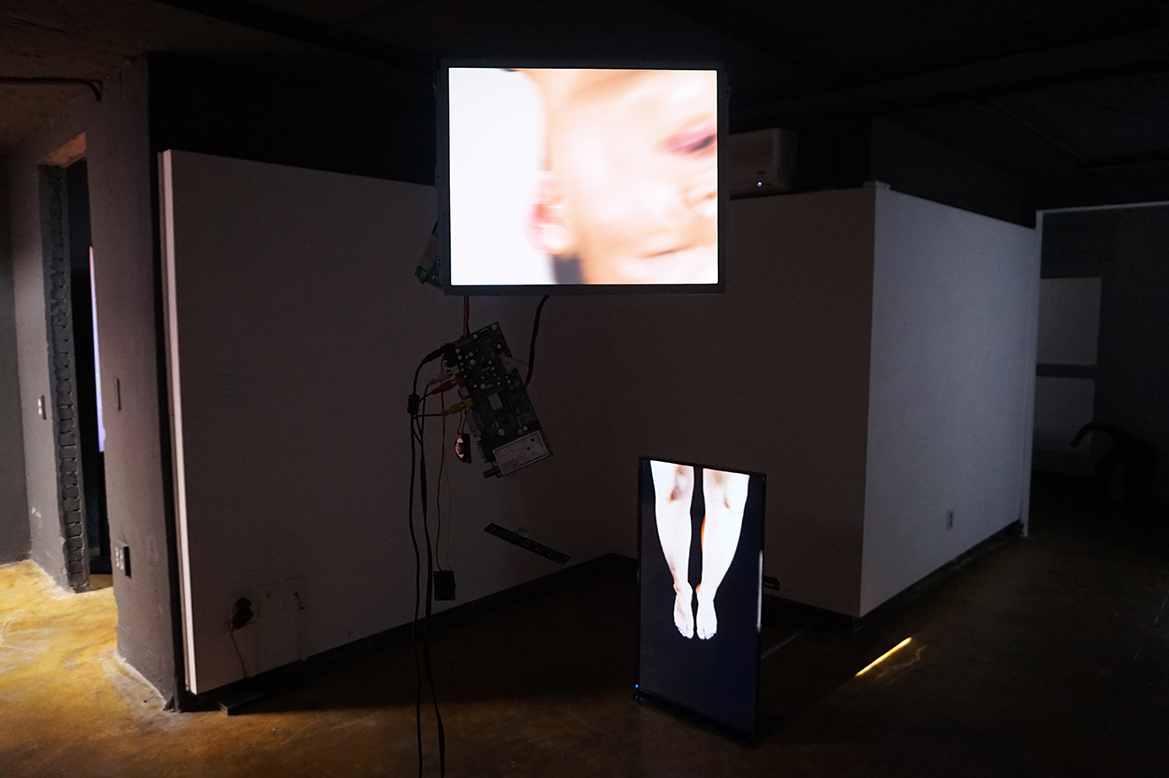
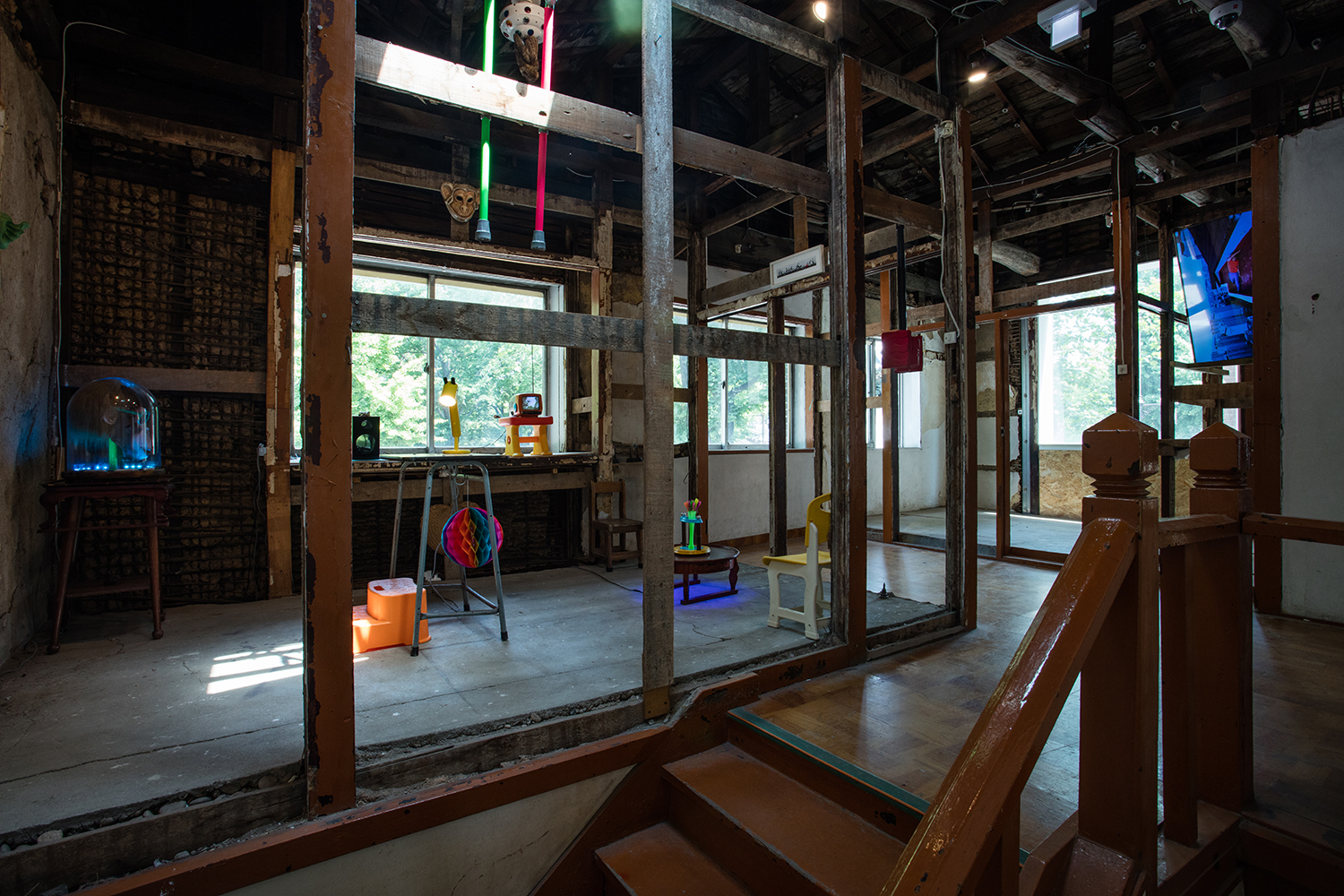
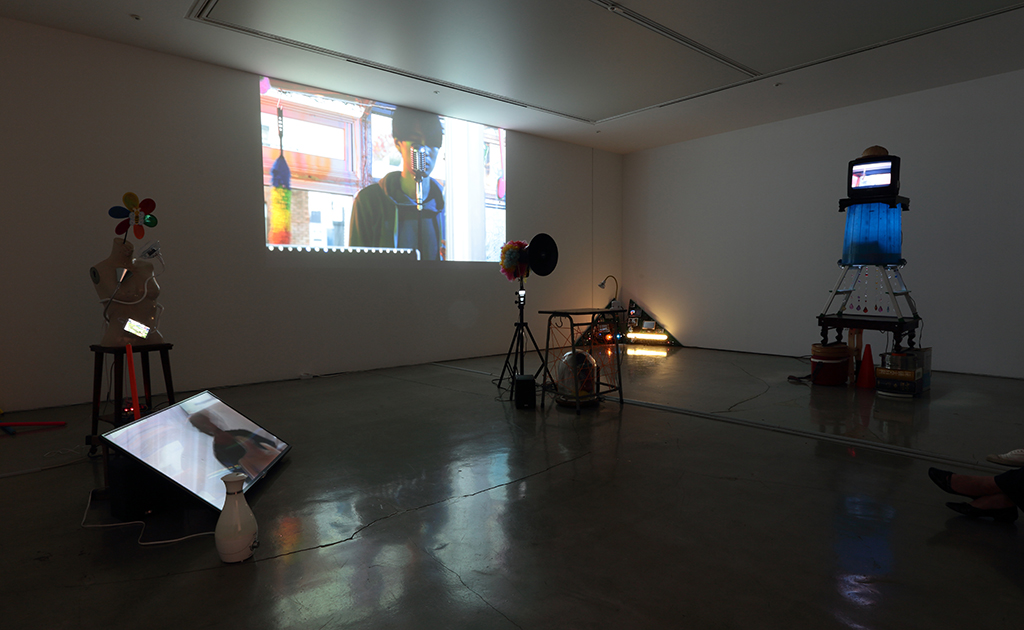
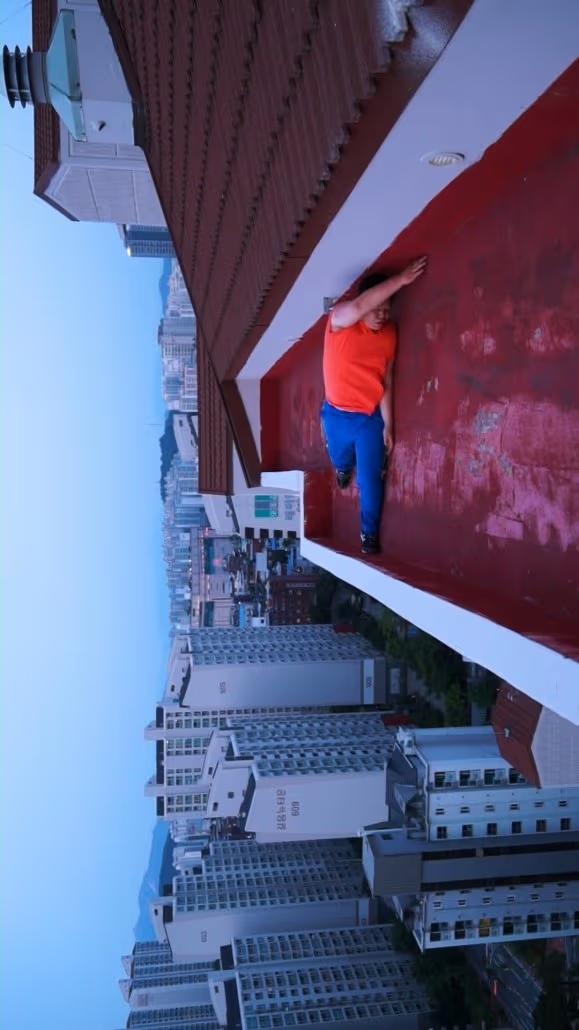
Let us turn to his work. Most of Seungwon Park’s projects consist of videos documenting actions, accompanied by sound and minimal installations. In Breathing (2018), a man appears rolling his body along a railing as he moves forward. Because the monitor is installed vertically, his movement appears even more precarious. We are never told why he engages in such dangerous behavior. Consequently, the man’s movement — whose sole purpose seems to be movement itself — exists entirely on its own terms.

Giorgio Agamben compares the gestures of dancers, pornographic actors, and mime performers, though his analysis is not intended to establish hierarchy or classification. For example, regarding interpretations that understand dance as governed by a certain logic serving movement as means, Agamben reveals a certain dissatisfaction.

Instead, he argues that dance itself, as gesture, functions as a medium for display. “If dance is gesture,” he writes, “it is because dance bears and exhibits the mediating character of bodily movement.” For Agamben, mediation constitutes a necessary and irreversible ontological action through which existence reveals itself. In other words, gesture differs fundamentally from linguistic means that merely convey predetermined meaning.

What matters is asking what the purpose of gesture might be. Why do we use gesture? Is it because of the limitations of language, to supplement the insufficiencies of expression, or perhaps to transcend language itself — to intentionally slip outside of language altogether? Let us return once more to Breathing.

Where exactly is this man performing such precarious gestures? He is carrying out his dangerous acrobatics atop the railing of a skyscraper — a monument that has become emblematic of development and success. The modern ideal of ceaseless progress induces a vertigo that feels perpetually on the verge of collapse.

Hannah Arendt once described modernity as follows: “Strictly speaking, modern man has not gained the world, but has instead been thrown back upon himself, into the interiority of self-reflection. The highest experience available to him is the empty process of calculative thought and the operations of the mind upon itself.

The only remaining contents of this mind are greed and desire — the numb impulses of the body.” According to Arendt, the totalitarian logic of modernity reduces human beings to useless tools through its obsession with unnecessary utopian development. What, then, are the necessary conditions for human life? Arendt identifies them as life itself, the construction of one’s own world through thought, and language and action through which the world may be shared with others.

Perhaps the isolated man atop the railing has voluntarily embraced this ordeal in search of the lost conditions of humanity that have yet to be recovered. One is compelled to ask whether this is also why Park abandoned the human figure in order to study and discipline animal gestures. Rather than reproducing the psychology of contemporary individuals, Park chooses to embody the physical phenomena through which reality is experienced.

Instead of becoming a monster blinded by success, he voluntarily undertakes becoming-animal. He abandons language and moves toward what lies outside thought — much like the man atop the railing, who experiences precarity itself through his entire body rather than through words.



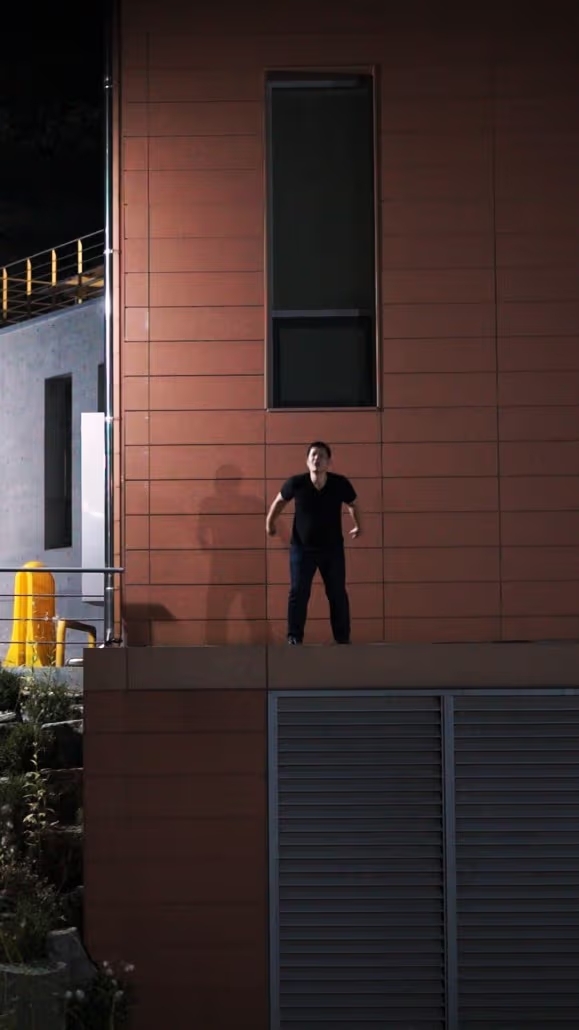
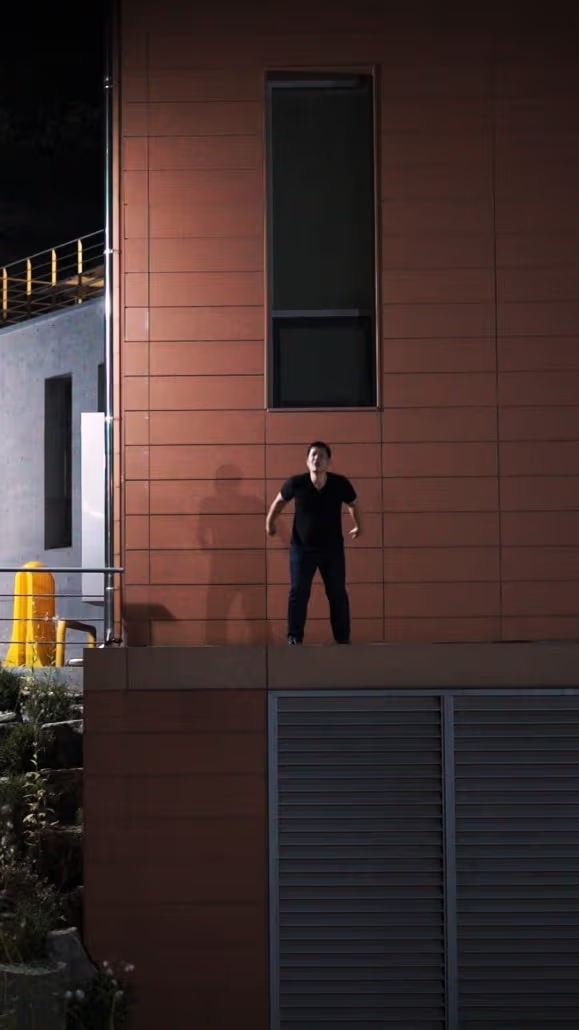
Seungwon Park, Conversation, 2017, Single channel video, 4 min 27 sec © Seungwon Park

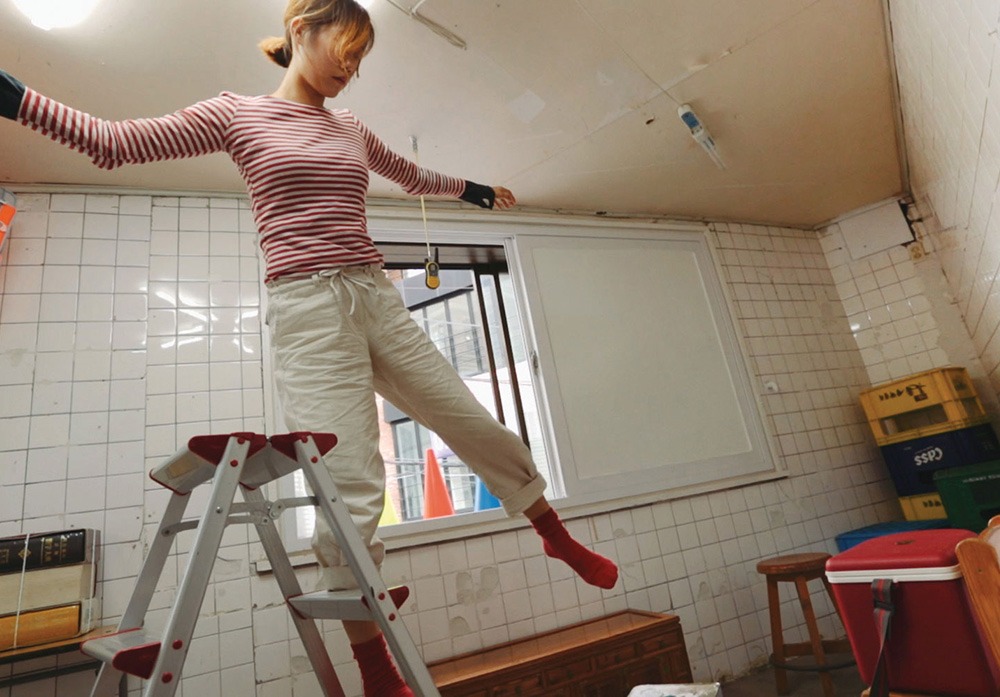
In Conversation (2018), a man climbs to the upper level of a building and repeatedly stomps his feet. This act of rhythmically rolling and striking the body to generate noise fills the empty nocturnal space. The man’s gestures, charged with an inexplicable intensity, seem to cry out as though this were the only possible means through which existence could reveal itself.

This man, who once lived as a monkey, ultimately fails to speak through human language. Thus, the timid disturbance of awakening even the owls’ sleeping night through blunt noise becomes the most forceful provocation he is capable of making. The man’s pitiful provocation continues.

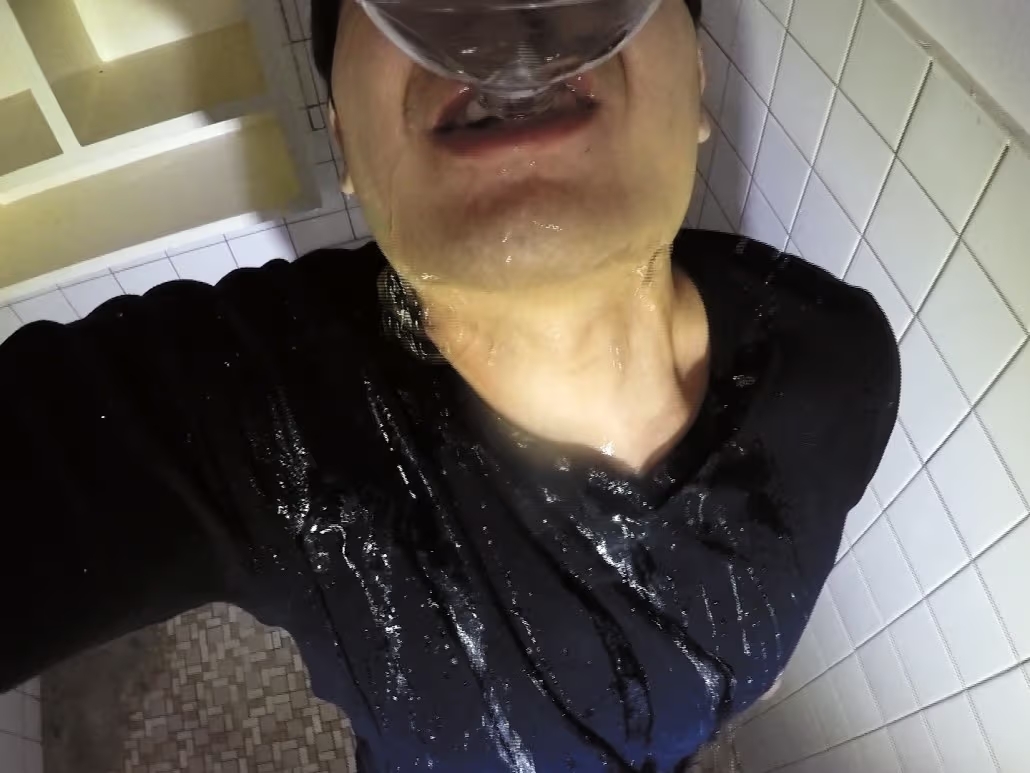
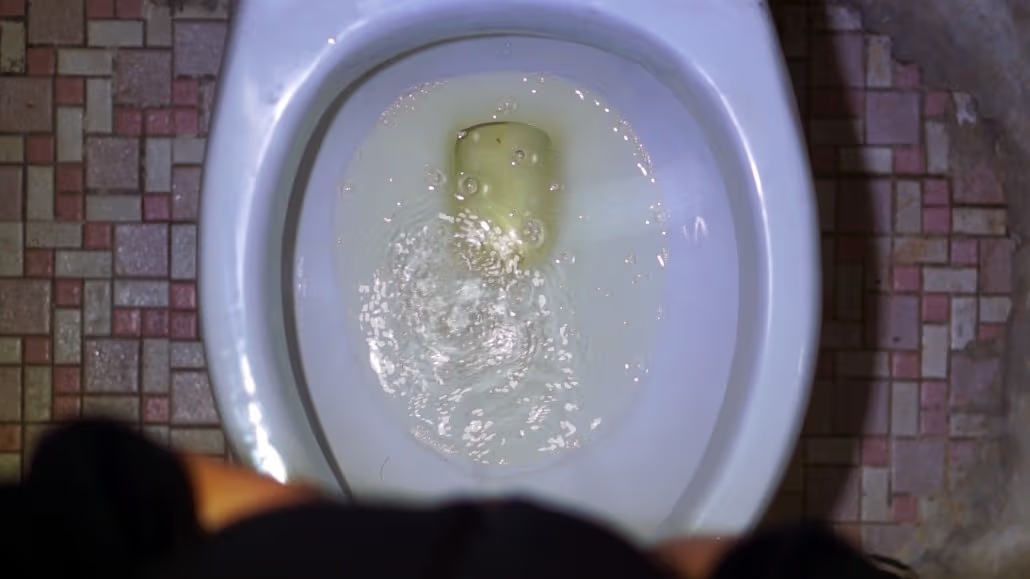
In the paired works Baptism (2017) and Self-mortification (2017), he endlessly gulps down water while attempting to expel every drop of urine from his body into a toilet. Appropriating the practices of Bruce Nauman and Marcel Duchamp, these actions heighten the compulsive psychology inherent in repetitive behavior.

By embodying the simple biological mechanisms of intake and excretion, the figure compels viewers to reconsider the relationship between life and living. From the perspective of Gilles Deleuze and Félix Guattari, the body proposed by Seungwon Park appears less aligned with psychoanalytic structures that bind action and meaning than with a mode of existence grounded solely in production and connection.

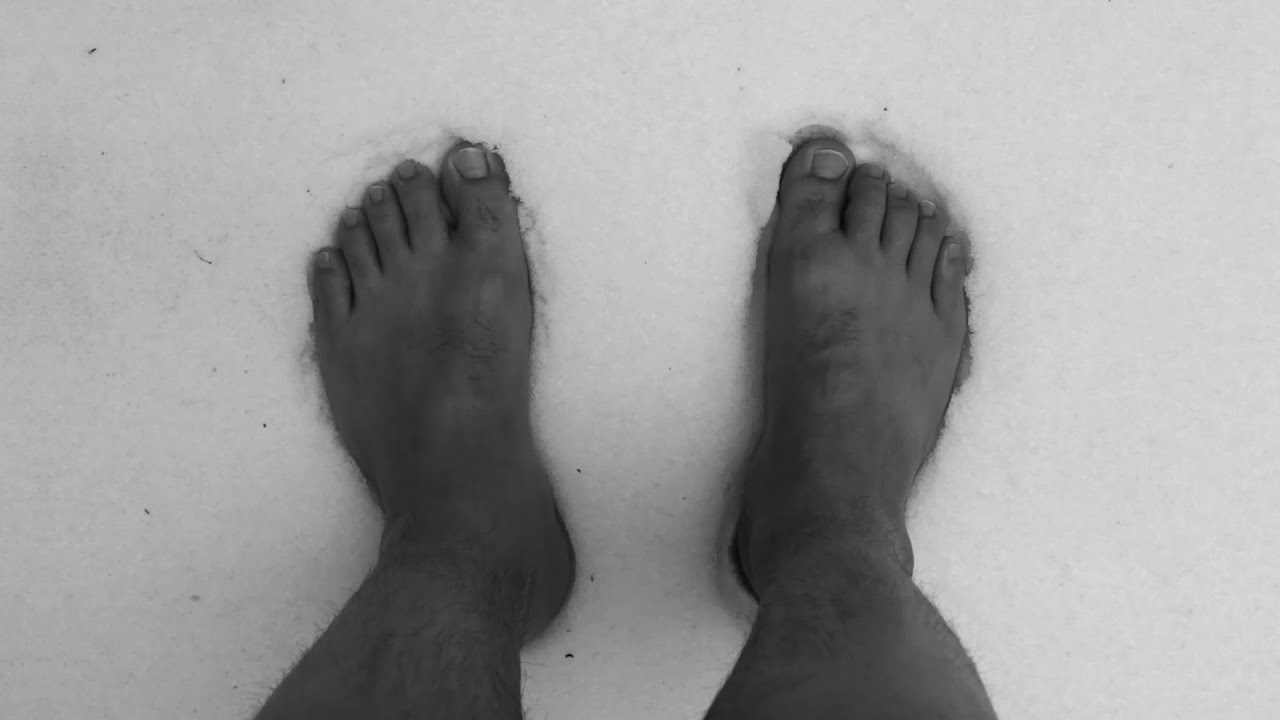
In other words, the bodies and movements that emerge in Park’s work demand attention not as psychological symbols requiring interpretation, but as bodies and organs connected together through processes of operation and function. Black Feet (2019) is a video depicting feet standing upon white snow. Snow inevitably melts through body heat.

Eventually, the black ground hidden beneath the white surface emerges in the shape of footprints. This is not the trace of existence, but rather the result of survival. To understand this requires a transformation in perception. Above all, it becomes important to reconsider how one understands the opposition between thought and schizophrenia.

We generally regard thought as the privilege of the “normal” human being, while identifying schizophrenia as the destruction or pathology of thought. Deleuze, however, regarded it as “one possibility of thought.” Park’s becoming-animal is not regression. His absurd and seemingly useless actions recall Antonin Artaud, who rejected the Buddhist notion that human beings are innately endowed with thought.

Artaud confessed: “Those who believe themselves to be beings, beings by innate essence, are fools. As for me, I am one who must whip my innate essence in order to exist.” Park dreams of liberating himself from the representations and concepts of the self already internalized prior to the emergence of “I.”

In short, this will toward liberation is equally a resistance against interpretation itself. By now, it should already be clear that 《A Report to an Academy》 was never intended to glorify the myth of self-improvement through which a monkey acquires knowledge equal to that of humans. The monkey in Kafka’s story insists:

“I repeat: I had no desire to imitate human beings. I imitated them because I was searching for a way out — for no other reason.”

From the perspective of Gilles Deleuze, the monkey practiced thought outside thought itself — thought enacted through the body. This was possible precisely because its actions consisted of imitating the human. The monkey desired another enclosure and, through that desire, attempted a line of flight toward another mode of existence.

Red Peter, the monkey who abandons a pure self in order to acquire language, ultimately appears driven less by existential fulfillment than by the will to survive. He arrives as an intermediary being suspended between animal and human. For the sake of survival, the body enters into relations with surrounding forces.

This external necessity itself becomes a mode of existence through which thought is practiced. Seungwon Park’s becoming-monkey similarly aims toward bodily thought. Bodily thought means escaping from reason and reflective consciousness as constituted by the modern subject. In this sense, the becoming-monkey project might also be described as a “flight toward the impersonal.”

It is neither a theatrical body nor an imitation of any concrete object. In short, while maintaining a certain distance even from performance as an artistic genre, Park experiments with what might constitute an ethics of the body through modes of bodily existence operating as mechanisms composed of multiple organs and systems.

Within a contemporary art ecology that frequently transforms impoverished images into dazzling linguistic rhetoric and visual spectacle, Park’s work instead attempts to escape toward what lies outside language. Yet perhaps it is precisely this absurdity — this eccentric deviation — that still allows us to affirm the possibility of art.

References