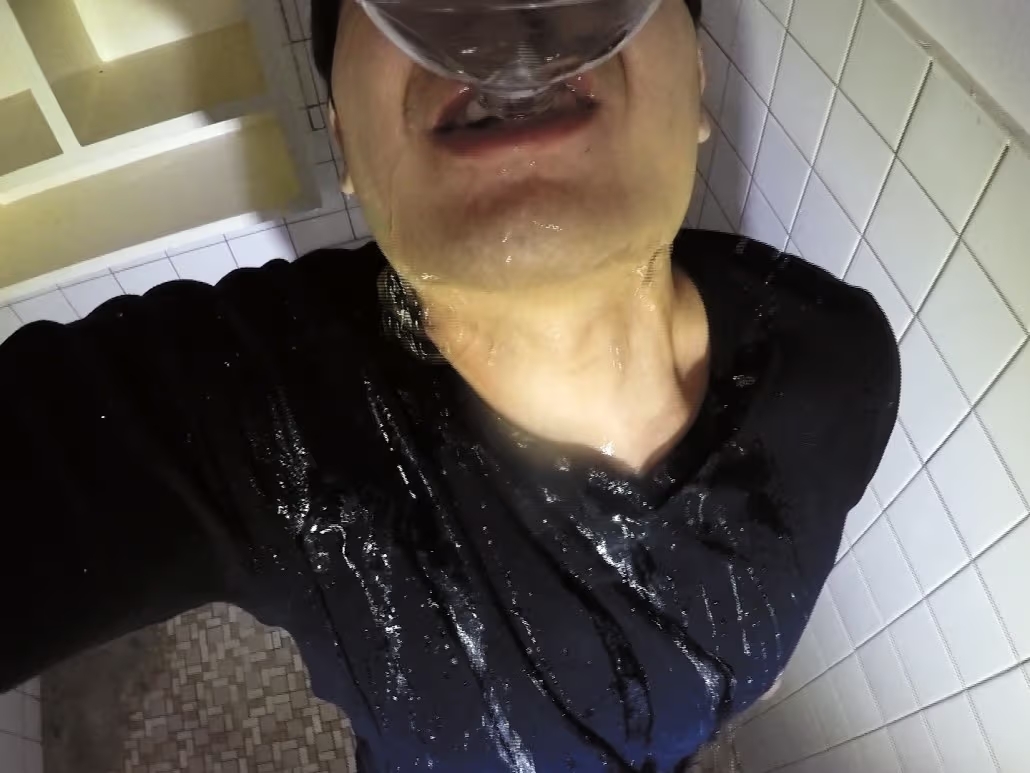
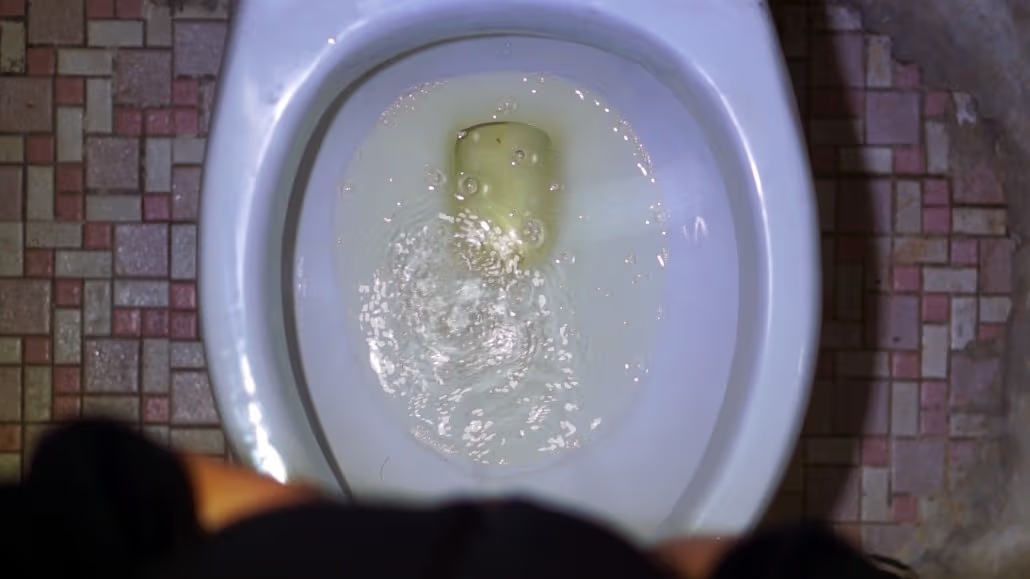
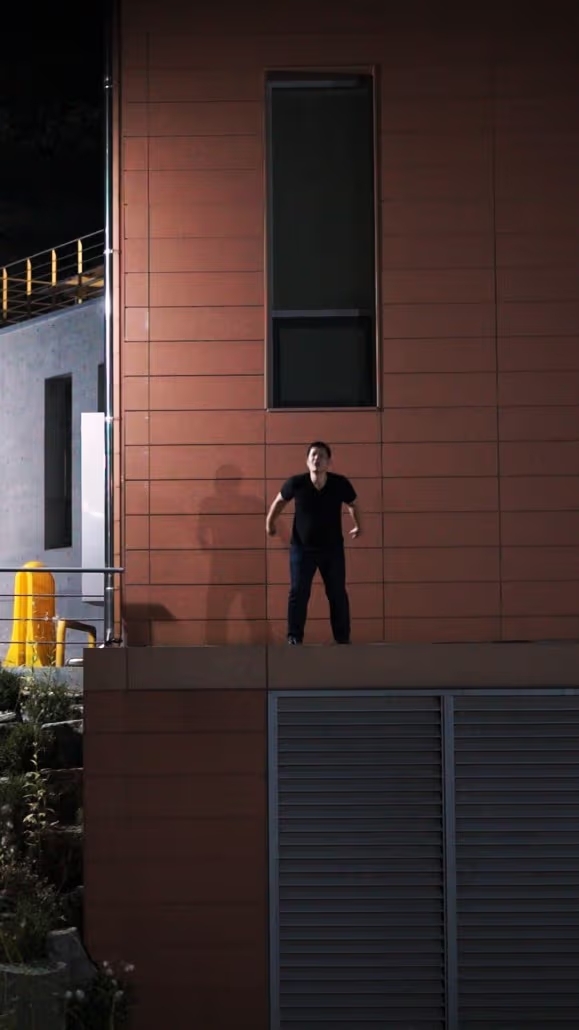
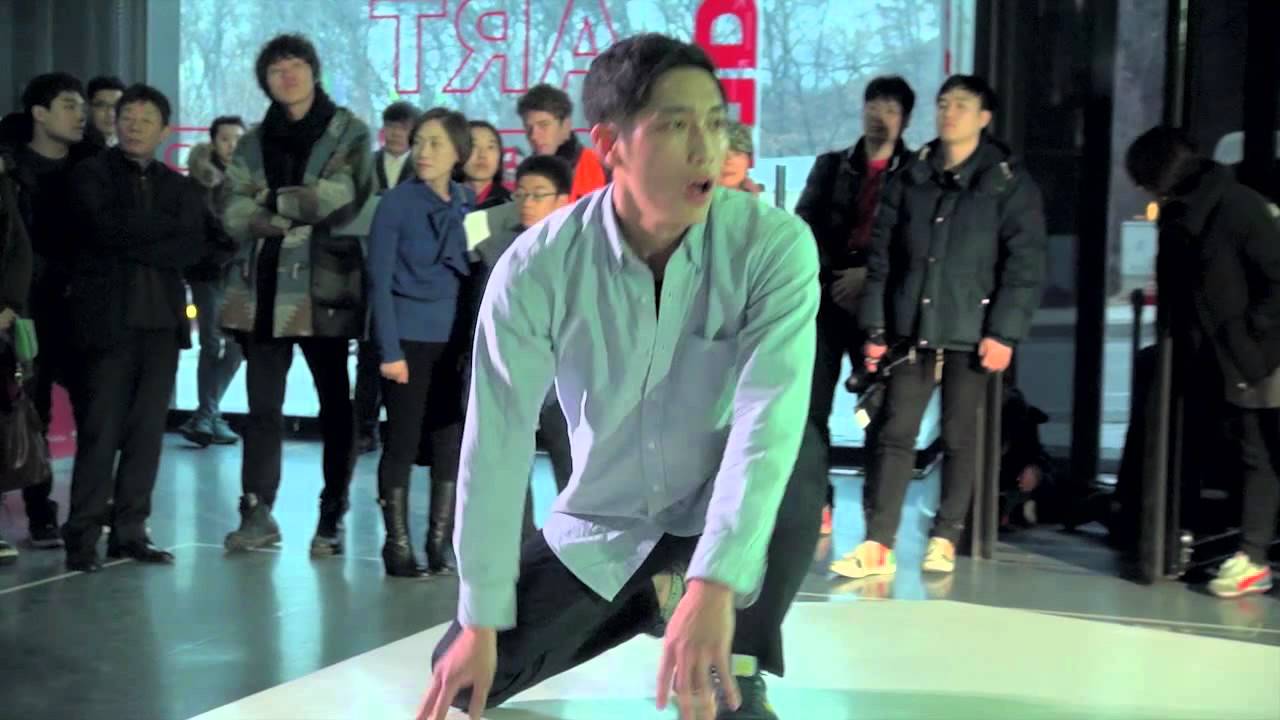
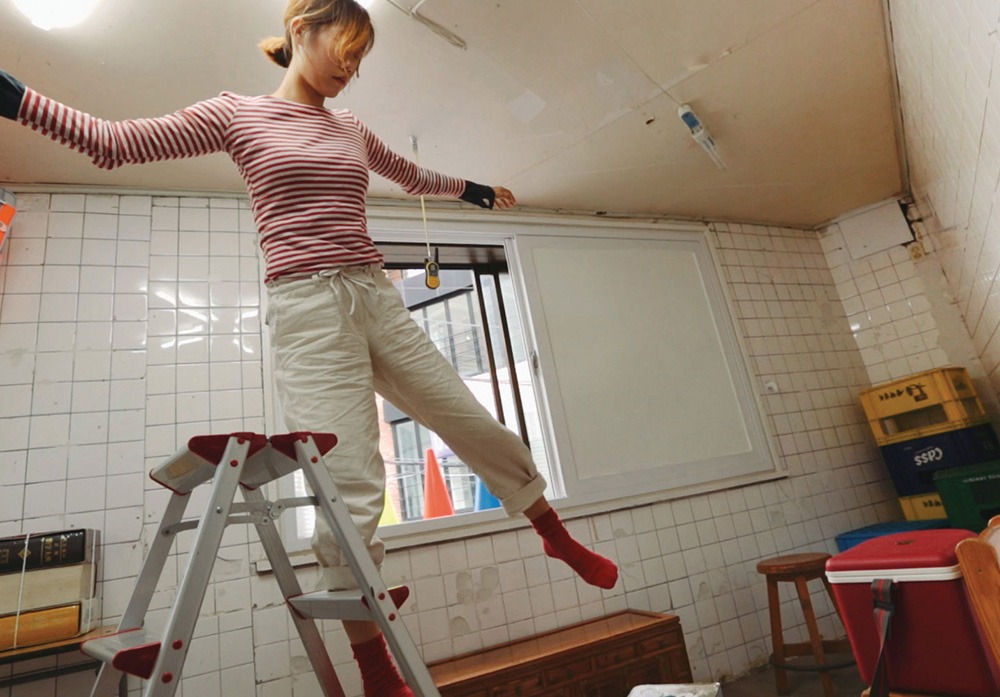
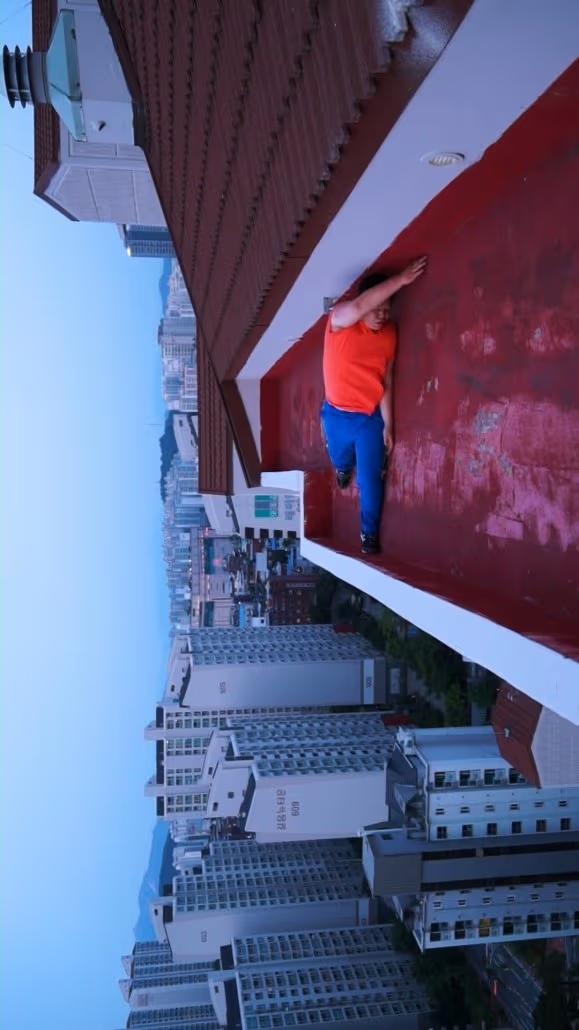
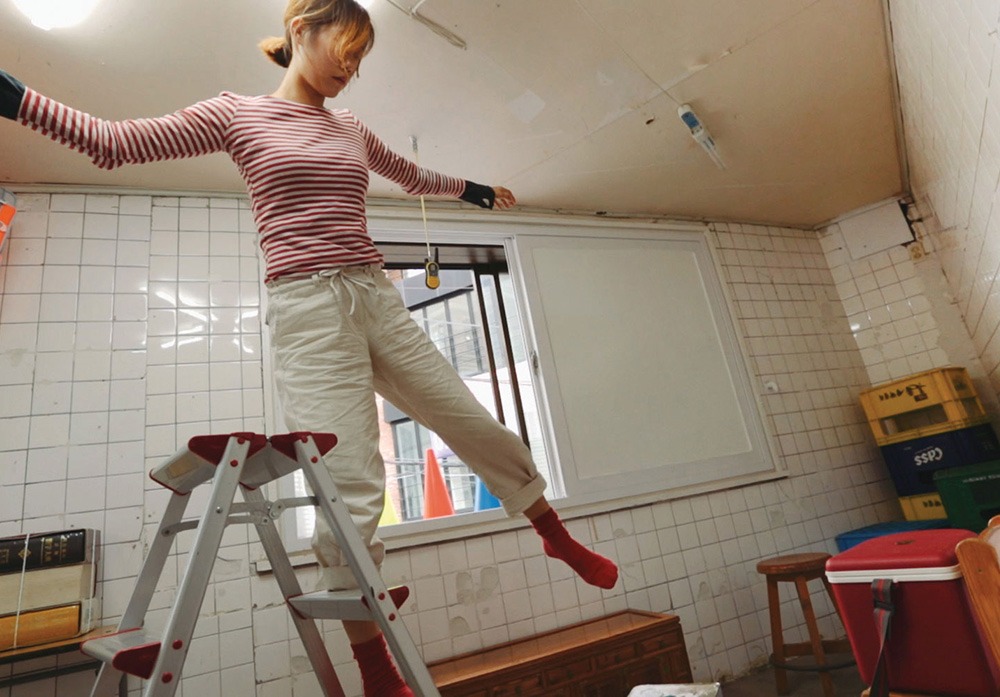
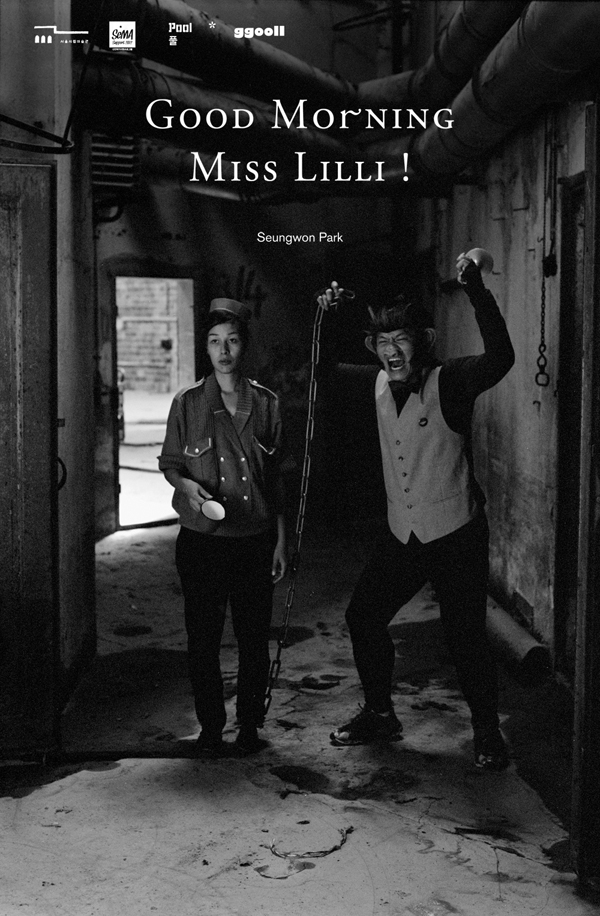
In the work of Seungwon Park, solitude appears in a multitude of forms: mimicry and repetition, pounding and limping, offbeats and roaring noise, stretching things out only to tear them apart, pulling and collapsing, shouting and fleeing, slow motion, cheap flashes and fake plastic. Beneath psychedelic mirrors, urban dwellers who have forgotten savagery repeat endless cycles of ping-pong, chak, pang, ching, thud-thud-thud.
Carefully, one-step, two-step — and then you stagger. Who are you? Unable to release the savagery boiling within your own body, you devote your passion to colorful cheap toys, rejoice at the monkey reflected in the mirror, and surrender yourself to wavering gravity. In Park’s work, solitude becomes a series of foolish and absurd behavioral variations.
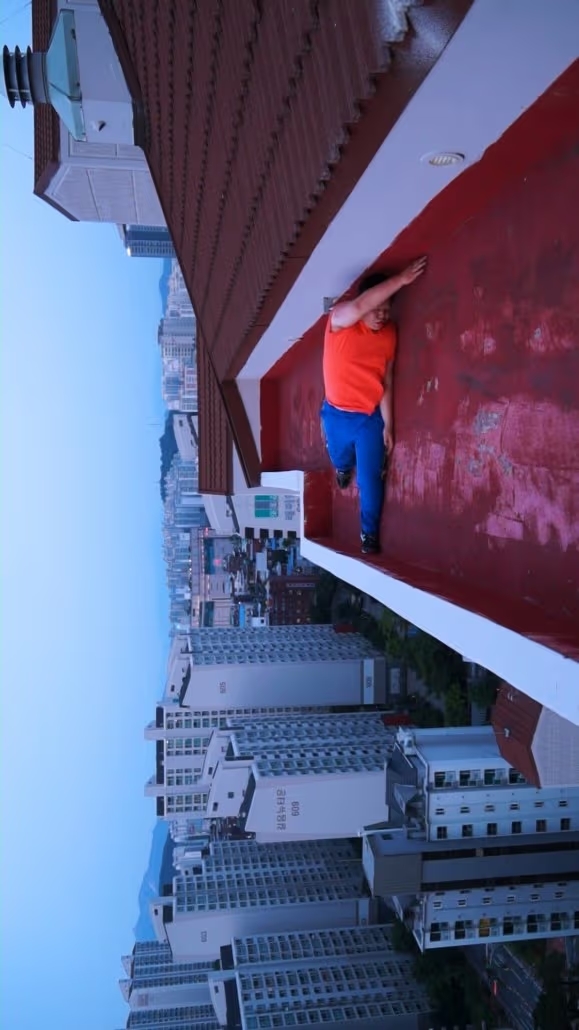
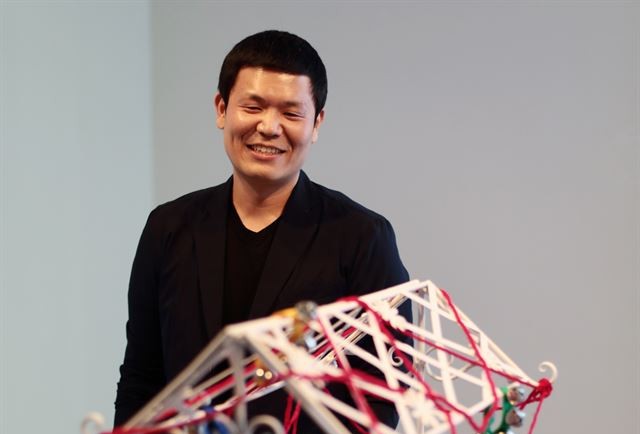
Yet these countless variations generate a consistent resonance: something like an approaching sense of liberation, or perhaps a narrow exit. When I first met Park on the rooftop of Amado Art Space, we spent a long time facing the sunset over Itaewon. We blew fanfares and talked endlessly — about performance, about art, about life.
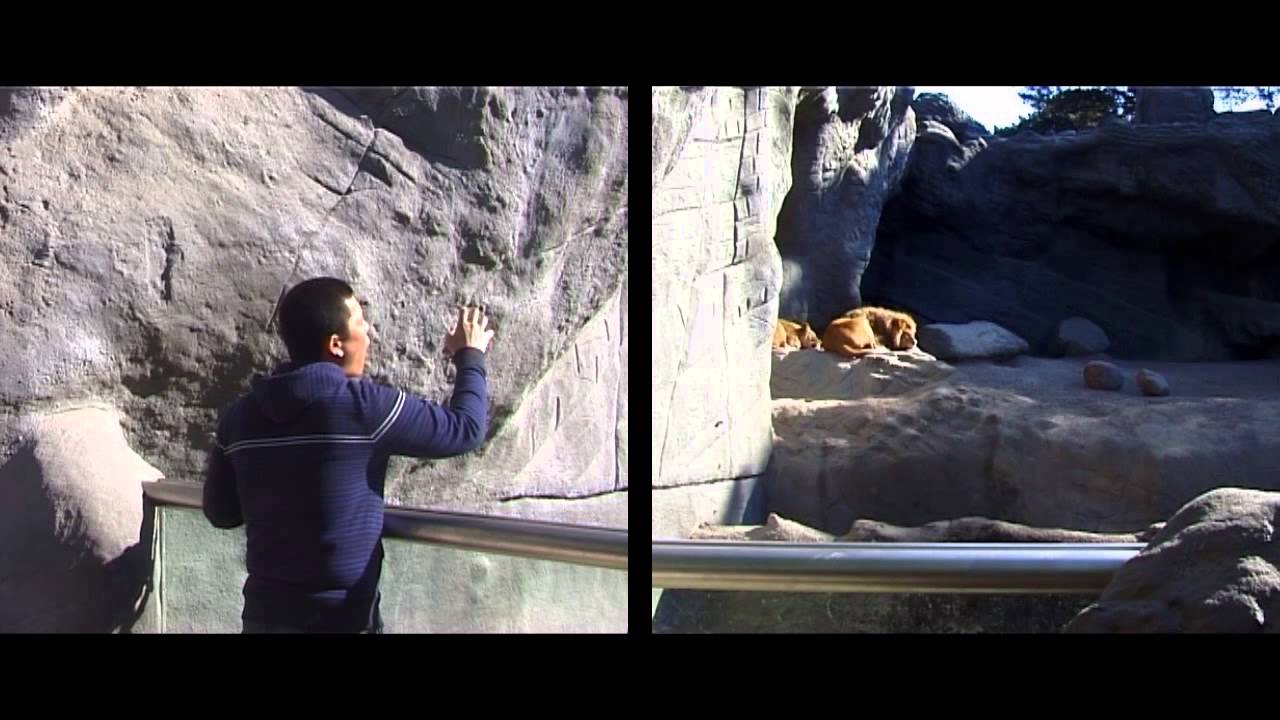
Looking across Park’s practice, one finds that while the artist consistently engages solitude as his central subject, he has simultaneously moved fluidly across diverse media and formal experiments. Having studied painting at university, Park spent his years in Germany mimicking zoo monkeys, savoring his solitude amidst crowds.
The torn cartilage in his knees, damaged through the prolonged labor of imitating monkeys, gradually shifted his attention from his own body toward the bodies of others. He began hiring performers, collaborating with partners, and organizing performances, gradually expanding his concerns from solitude toward communication.
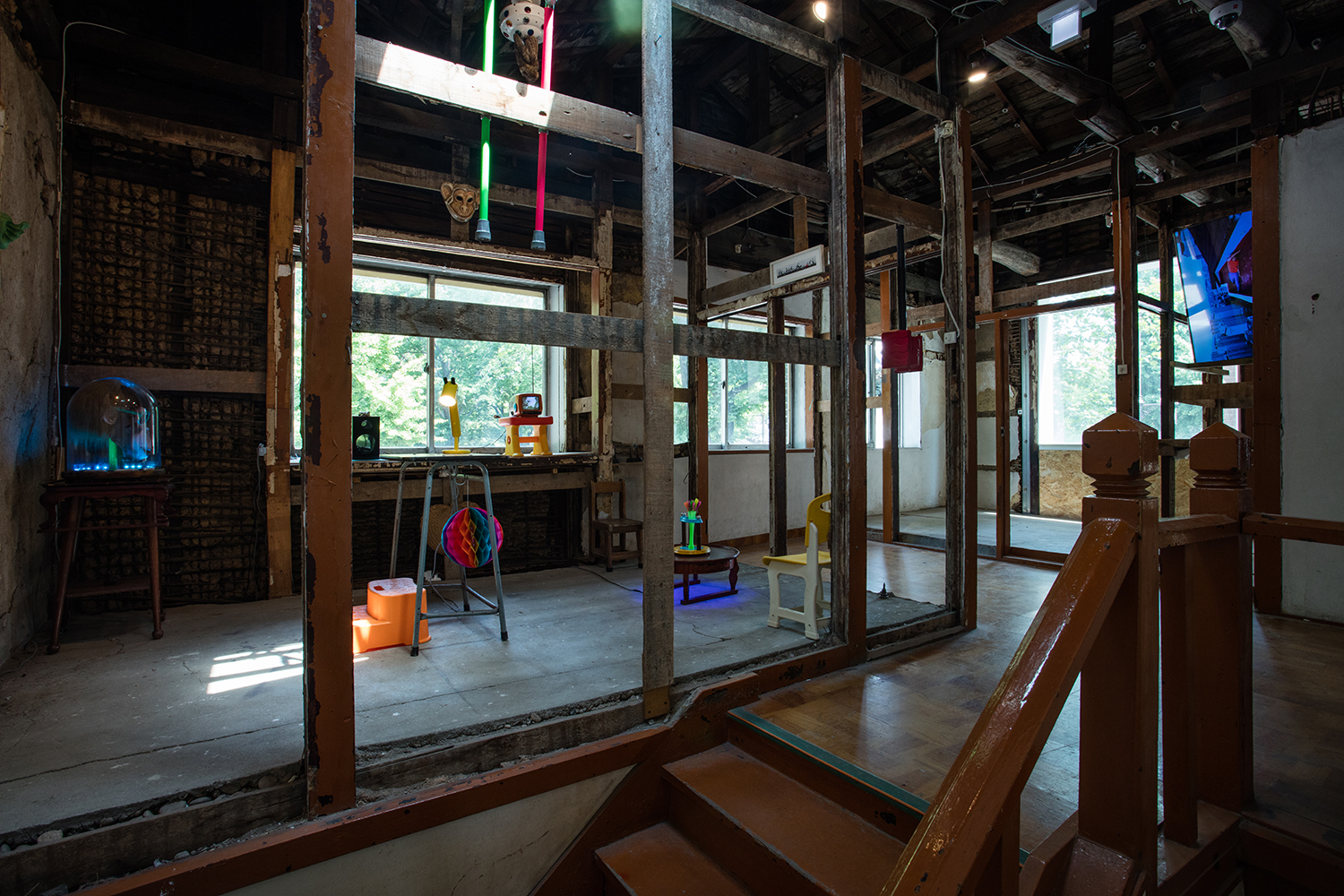
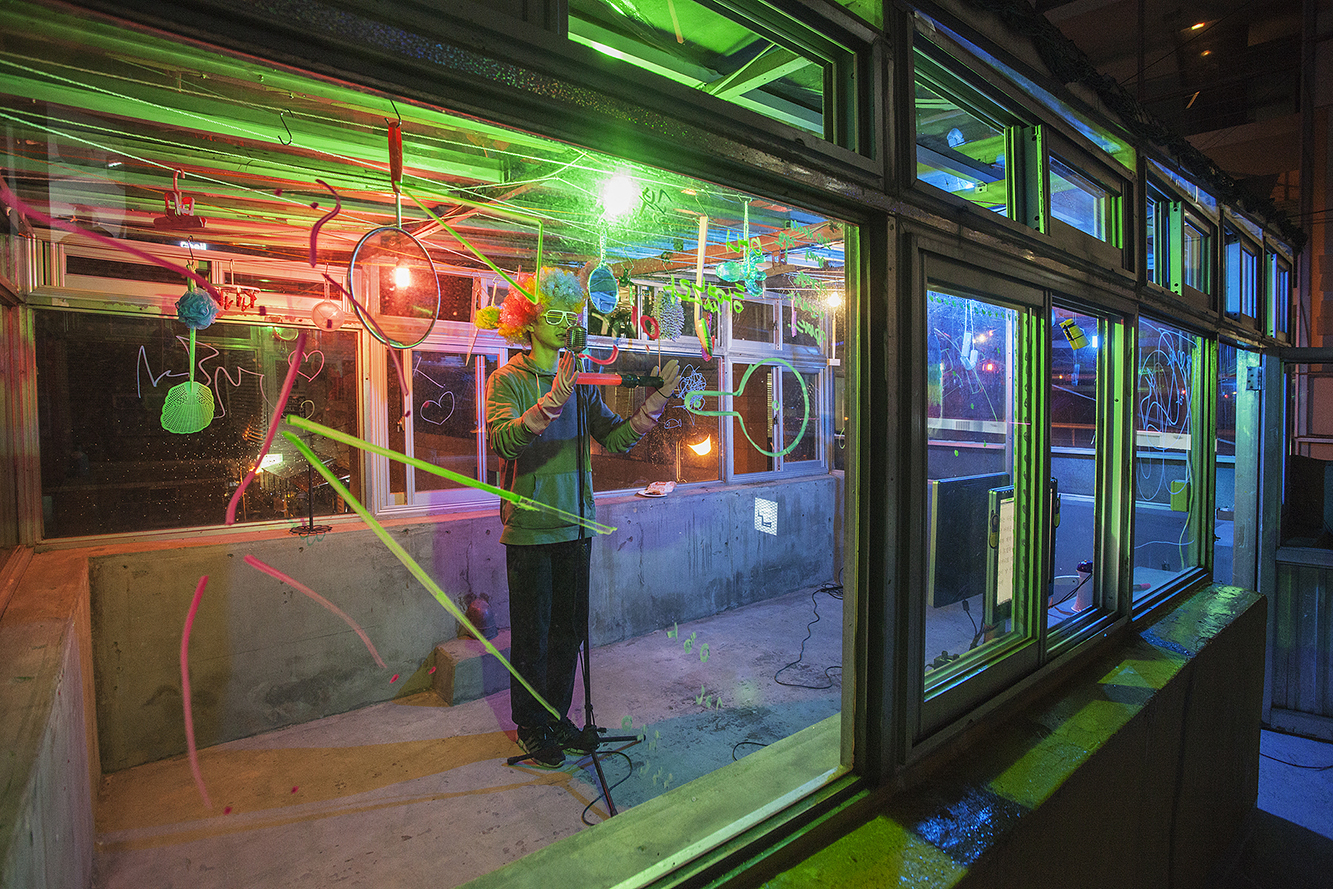
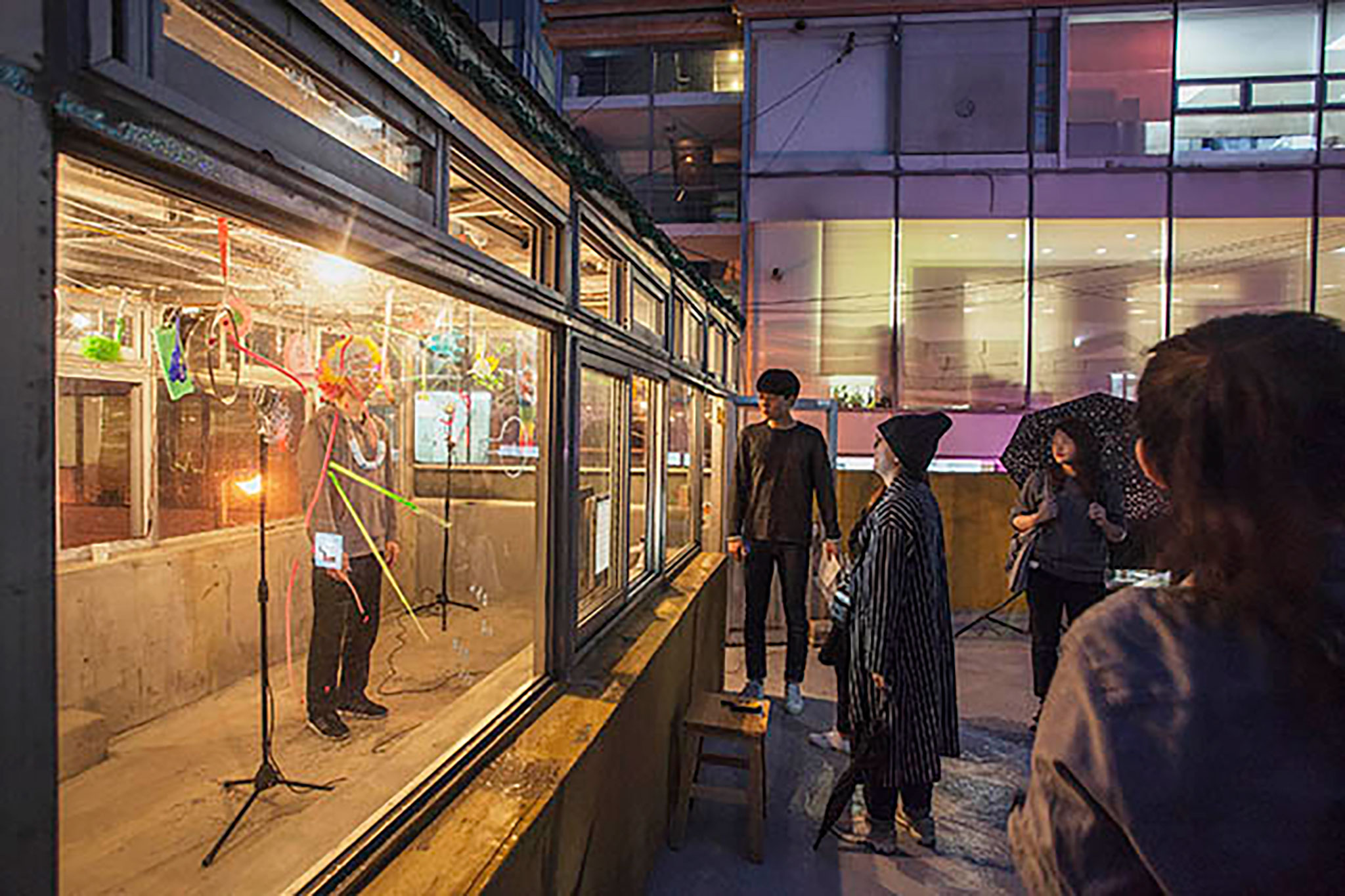
Flexible Struggle, presented at Amado Art Space in 2016, choreographed the movements of solitude performed by five performers across five segmented spaces. These five isolated struggles became amplified through meaningless language and metaphysical sounds, ultimately generating an abstract spatial environment.
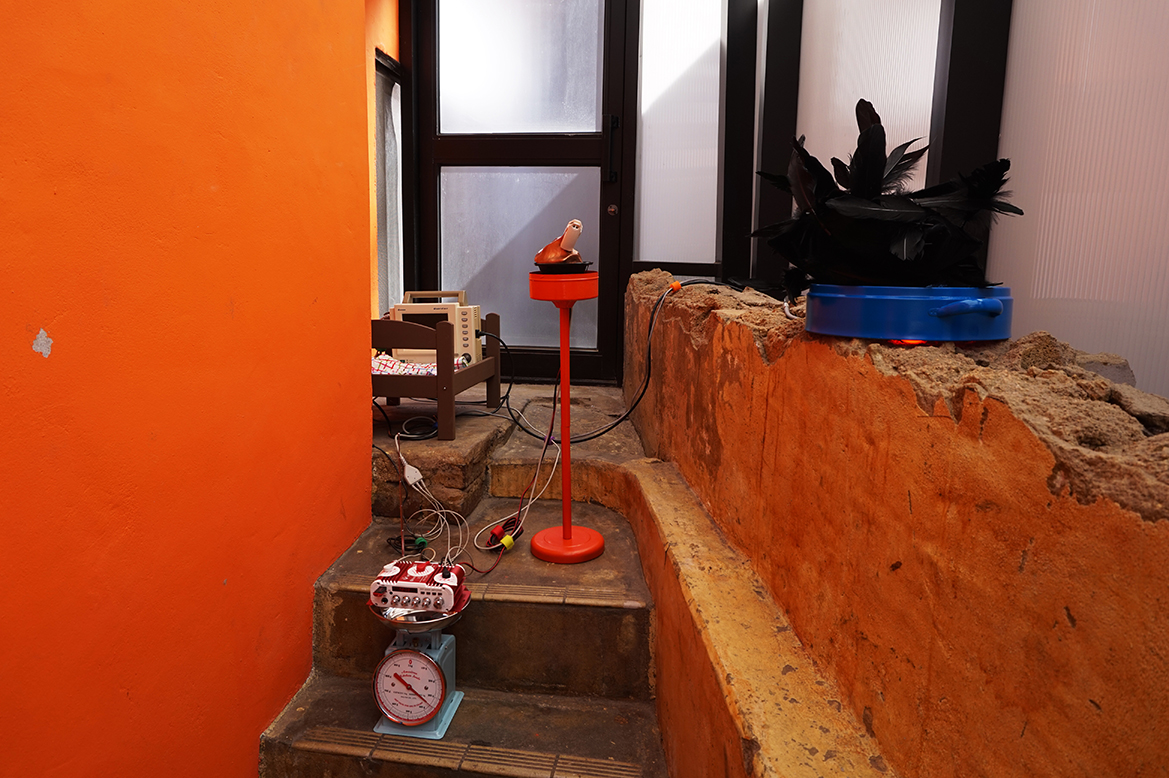
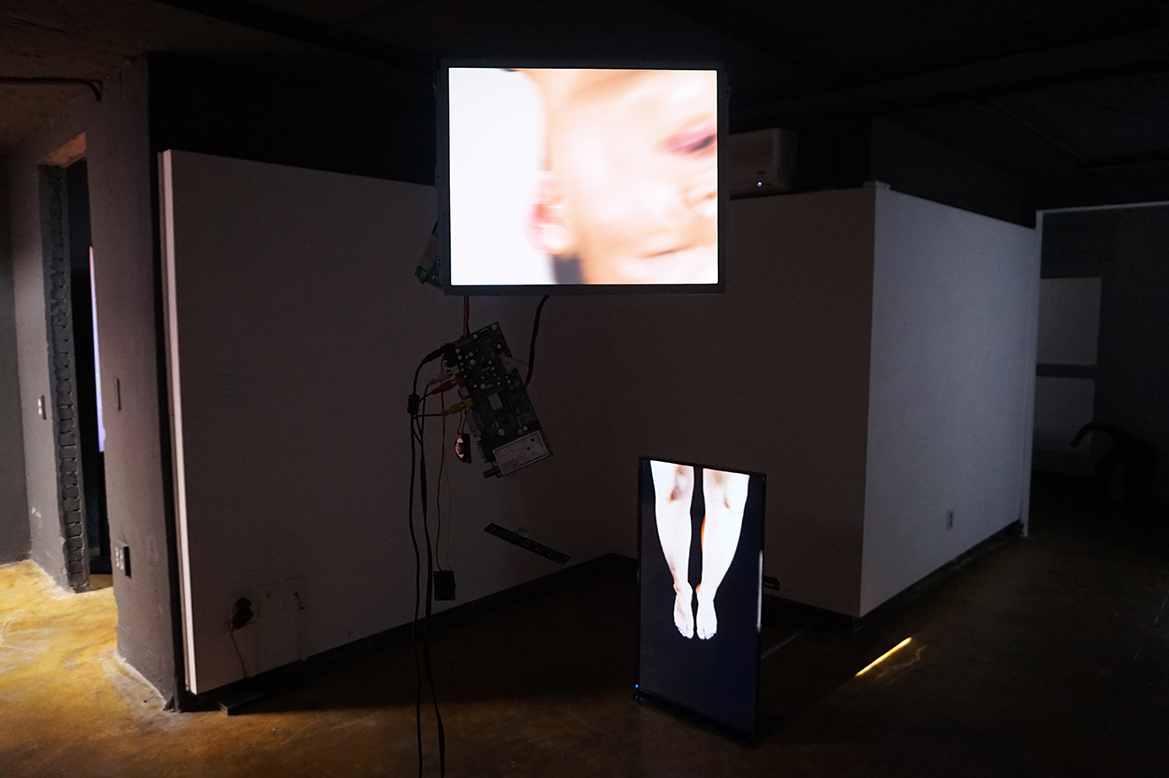
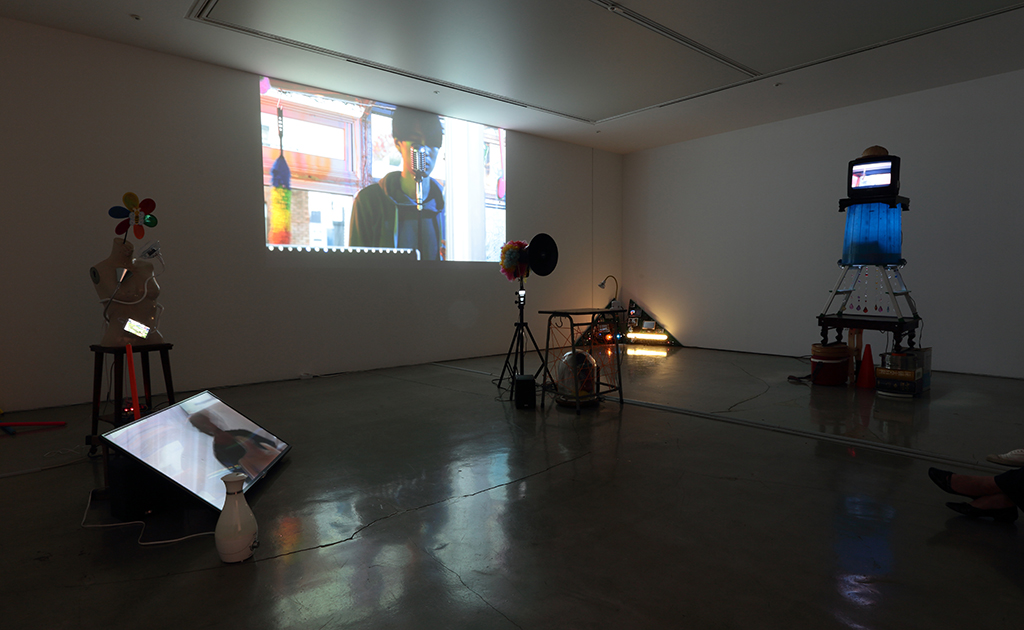
Korean Groove, exhibited at Gallery Koo in 2017, is a twenty-six-minute multi-channel multimedia installation composed from recorded and edited movements originating in Flexible Struggle. A neatly positioned desk and the camera tripod behind it become a body supporting a loudspeaker wearing a rainbow wig. A bizarre head formed through the fusion of brain and mouth spits out abstract sentences through a cellphone screen.
A mass of plastic fragments dressed in a pink tube dress remains stickily bound together by fluorescent cords, tickling the heels of bubbles floating somewhere underwater in the distance. A multicolored pinwheel with the chest of a mannequin spins endlessly, while exposed buttocks emit steam into the sky.
In the corner, a moving light crouches and spins around, while a CRT monitor wearing a straw hat stands solemnly on a fake lamp heating miscellaneous kitchen utensils, its bare legs exposed. Healthy chaos, variety show, warriors shouting “advance” from inside a massive white crate!
Korean Groove cannot be separated from the original experience of Flexible Struggle. Nevertheless, it cannot simply be dismissed as a secondary product akin to a performance documentary, because of the complete fictiveness that Park stubbornly constructs.
This fictiveness emerges from the artist’s attempt to reject, with his entire body, the logical structures produced by past temporalities and spatialities, while mechanically dismantling the sensory relationships between living bodies and objects.
These fake video-object characters — cheerful yet somehow deceptive — perhaps embody the melancholy of a specifically Korean “Korean Groove”: a condition Park finally embraces upon returning to Korea after a long journey abroad, where unimaginable things brazenly occur, where everything is faster, shinier, more hypocritical, and utterly impossible to escape.