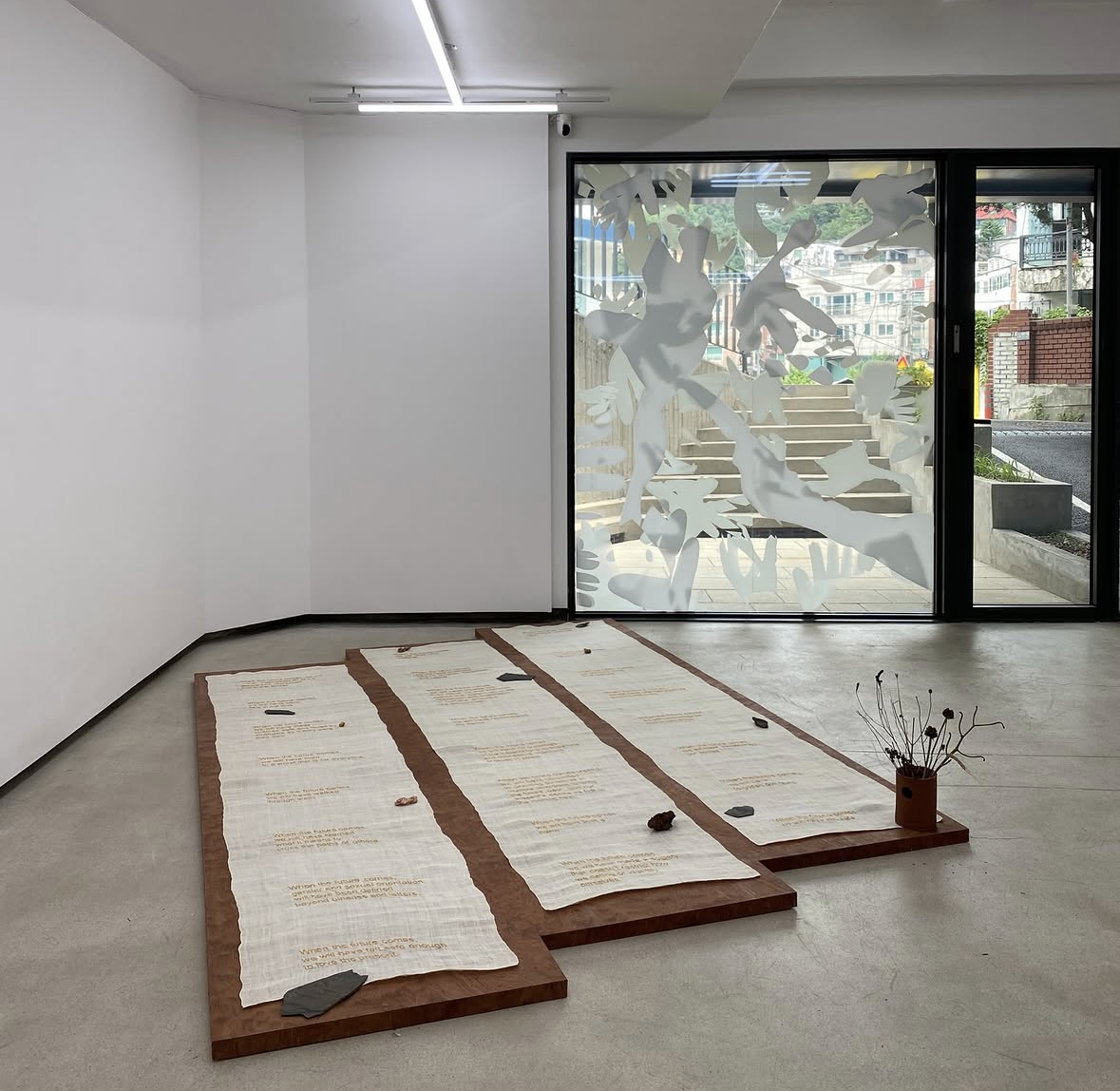
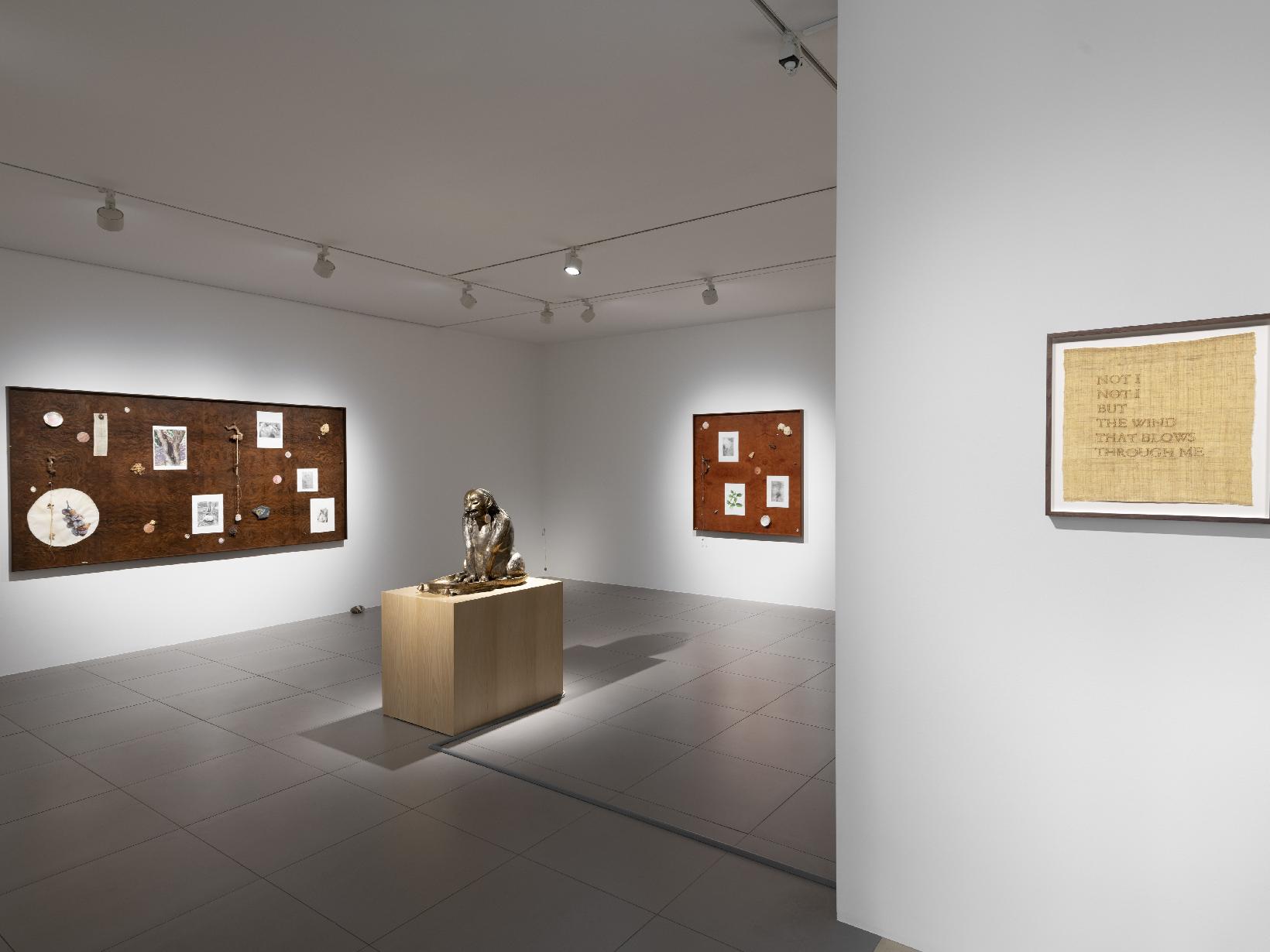
Embroidery,
an ancient cultural heritage, entails adorning fabrics with decorative patterns
using needles and a vibrant palette of threads. Across two millennia, Korean
embroidery has been instrumental in cultural exchanges with East Asian
nations, giving rise to distinctive and visually captivating artistic
expressions throughout different historical periods. The term “embroidery”
often evokes established traditional forms, notably referencing the home
crafts practiced and cherished by women during the Joseon Dynasty. It also
encompasses the subsequent transmission of inherited embroidery techniques.
However, the concept of modern embroidery remains unfamiliar, primarily due to
its perceived lack of a solid historical foundation. The historical trajectory
of embroidery post-19th century has been shaped by pivotal periods marked by
port openings, modernization, Westernization, colonization, warfare, nation
division, and industrialization.
As
the diverse developments in embroidery during these transformative epochs have
been unfortunately marginalized within the purview of mainstream art history,
this exhibition addresses this gap by highlighting the works of
under-recognized embroidery artists. Furthermore, it delves into the trajectory
of embroidery practices across various historical periods, providing valuable
insights into their positioning within the broader framework of Korean modern
art history. The visitors will discover that behind the delicate and
intricately embroidered facade of modern embroidery history; there are
interwoven layers of fine art and crafts, painting and embroidery, creation and
imitation, tradition and modernity, East and West, male and female, public and
private, handicraft and industrial (mechanical) craft, amateurism and
professionalism. By incorporating the “external discourse” of embroidery, the
exhibition seeks to move beyond fine art perspectives.
1. Artistry Woven: A Needle Perfected Through a Hundred
Refinements
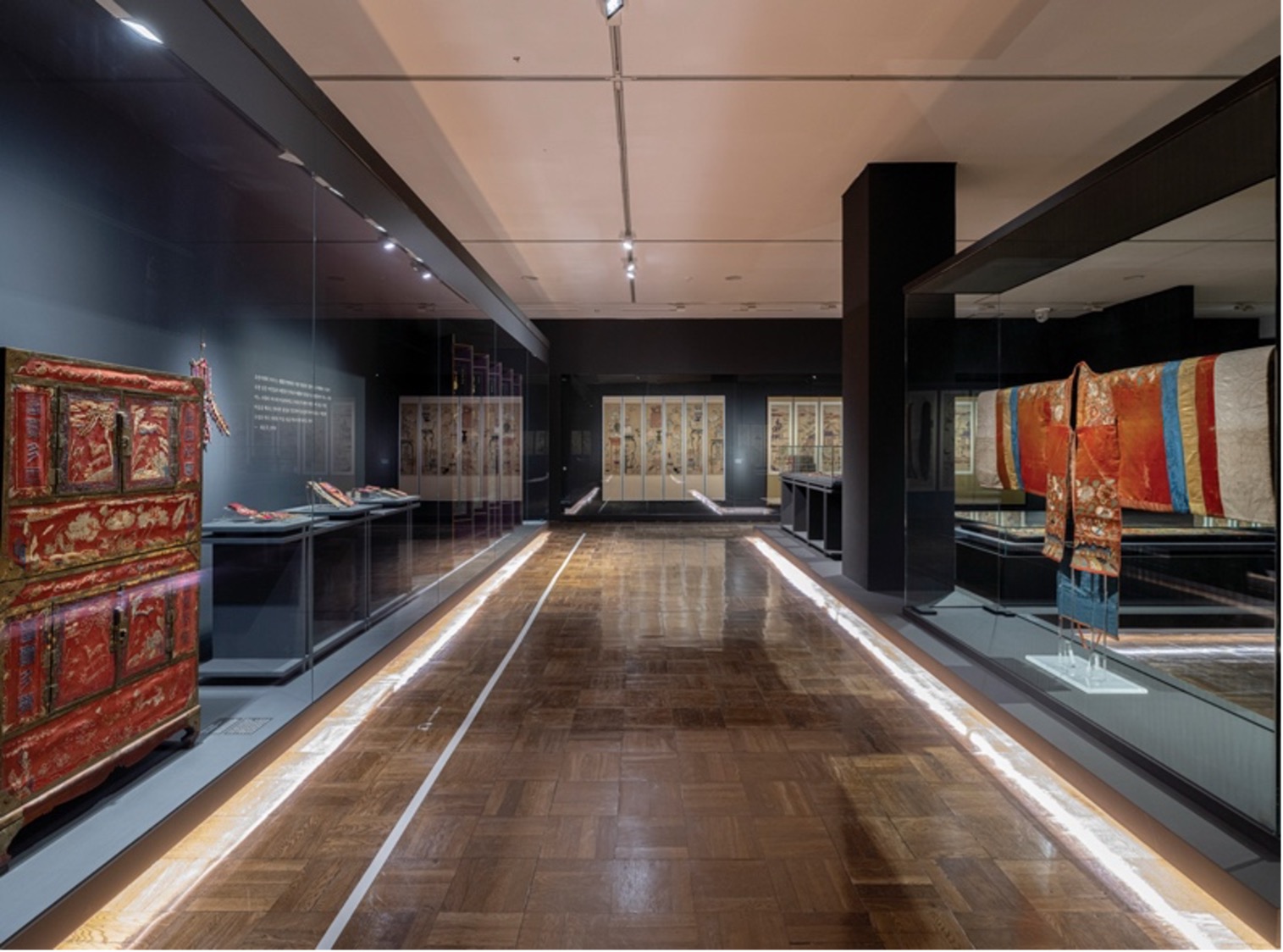
The
exhibition starts with the embroidery with diverse traditional forms in the
late 19th to early 20th century. Embroidery of Joseon period falls into two
categories: Royal embroidery (gungsu), created by palace women in the
embroidery department based on outlines provided by court painters, and folk
embroidery (minsu), crafted by women from the general public. While the
appreciation of embroidery for its aesthetic qualities traces back to the
Goryeo period, significant development occurred during the Joseon period,
particularly after King Sukjong‘s reign. While embroidered garments and
practical items prioritize formalities and utilitarian purposes, embroidery on
folding screens offers a fertile ground for artistic expression, drawing
inspiration from traditional painting subjects in contrast.
Following
the country’s port opening, the concept of “crafts” occurred within traditional
society, marking a turning point for embroidery. With the emphasis on national
strength and industrial development during the era of modernization, embroidery
transcended its status as a self-sufficient “emale skill (yeogi)” hin
the inner quarters of the home (gyubang). It began to regard craft as
equivalent to technology and industry that could contribute to realizing a
modern civilized nation. As a result, embroidery started to be prominently
shown at domestic and international exhibitions. Additionally, the flourishing
of commercial culture and transportation modernization led to an increased
demand for embroidered goods, and this surge in demand spurred the rapid expansion
of embroidery production by skilled male artisans in the Anju region of
Pyeongan Province.
2. Embroidery Looking like a Painting
The
modernization of embroidery involves changes in design, techniques, and
materials, along with its shift towards gaining public recognition and
engagement. During the late 19th to early 20th centuries, embroidery, once
confined to the private sphere and passed down through generations by
grandmothers and mothers in domestic settings, emerged as a significant element
of women’s education. This shift coincided with implementing compulsory
education policies, highlighting embroidery as a key handicraft within women’s
education. Embroidery gained prestigious status as a valued skill and gentility
bestowed upon women, aligning with the aspirations of a modern nation-state and
its citizenry.
Under
these circumstances, a number of elite women embarked on journeys to Japan to
specialize in the art of embroidery. Tokyo’s renowned “Women’s Academy of Fine
Arts (Joshibi)” emerged as the preferred destination for these aspiring
individuals. Upon completing their studies, graduates from Joshibi secured
teaching positions at women’s schools, art academies, and other educational
institutions nationwide. They introduced a new form of embroidery that diverged
from traditional techniques, and their economic self-sufficiency and active
involvement in society played a significant role in elevating the status of
women.
Meanwhile
in 1932, a pivotal moment unfolded in the progression of crafts within the
Korean art scene, particularly evident during the 11th Joseon Art
Exhibition. This era marked the dissolution of the existing calligraphy
division, and the establishment of a newly formed crafts division.
This
transition played a crucial role in redefining crafts as “artistic crafts” and
elevating their standing within the field of art. As a result, previously
labeled merely as “crafters,” craftsmen started gaining recognition as
both craftsmen and artists.
3. A Universe Woven in Embroidered Tapestry
The
evolution of embroidery in the post-liberation era of Korea manifested in two
distinctive forms: abstraction and the revival of tradition. Both approaches
progressed concurrently, predominantly within academic circles, while the
latter extended its influence beyond academia. The third gallery explicitly
exhibits the expression of embroidery as a creative or modern craft while
presenting the significant milestone of establishing the Embroidery Department
at Ehwa Woman’s University in 1945. The process of integrating the Embroidery
Department to the Textile Arts Department in 1980 reflects the changing status
of embroidery.
The
global rise of abstract art as a progressive visual language post-World War II
significantly impacted Korea’s artistic landscape, gaining recognition in
Western painting and extending its influence into Eastern painting, sculpture,
and crafts. Embroidery actively embraced this new visual language of
abstraction. Whether formally trained or self-taught, embroidery artists
embarked on experimental journeys with abstraction, pushing beyond conventional
techniques and materials. Despite persistent explorations in abstraction,
the once-prominent status of embroidery within the National Art Exhibition
gradually diminished. It began to be perceived as a medium that consumed
materials and time inefficiently, necessitating modernization to overcome
perceived limitations.
4. The Modernization of Traditional Beauty
In
contrast to its diminishing recognition in academic circles, embroidery
experienced a notable resurgence in importance beyond academia. It positioned
itself as an industrial craft crucial to the nation's modernization and
industrialization efforts during the period of national development. It
garnered acknowledgment as a traditional craft deserving preservation and
succession. During this time, Eastern embroidery gained attention, enjoying
popularity both domestically and internationally as exports in the form of
wedding gifts, souvenirs, and interior decoration. Skillful women from various
regions collaborated in embroidery workshops to produce a diverse range of
embroidered goods tailored to market demands.
From
the mid-1960s onward, there has been a renewed interest in traditional
embroidery, previously interrupted by Japanese colonial rule, which prompted
active engagement in collection, research, and exhibitions. In 1976, Park
Youngsook and Huh Donghwa established the Museum of Korean Embroidery, building
upon their extensive collection of traditional embroidery and bojagi dating
back to the 1960s. Simultaneously, scholarly literature emerged dedicated to a
structured examination of Joseon embroidery, and finally embroidery was
recognized as a national intangible cultural heritage in 1984, two decades
after the implementation of the Cultural Heritage Protection Act. The
preservation and modernization of traditional embroidery continue to be driven
by individuals who possess deep passion and unwavering dedication, fostering a
reevaluation of the intrinsic value of artisanal skills and crafts among their
contemporaries.