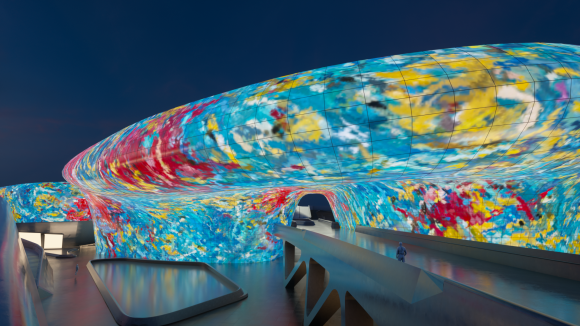
Held over two days from June 12–13, 2011, the Media Theater Exhibition Je Baak Special Day offered Korean audiences their first opportunity to encounter works the artist had produced during his years studying in the United Kingdom. Since 2008, Je Baak has simultaneously pursued photography and video works, through which he has consistently explored the existence of the self — particularly the question of how that existence forms relationships with the world.
In particular, his first video work, A Towel, gathers photographs documenting moments from his childhood and adolescence. By erasing the figure of himself from these photographs, leaving only the empty spaces behind, and connecting the original still images into moving sequences, the work transforms them into a video.
As though returning to his earliest self in the process of forming relationships with the world, the artist erases the image of his younger self crying on a towel, staging a situation in which he had once existed within those past spaces yet might equally have been absent from them.
Just as it may be the destiny of artists to spend their lives continuously searching for their own existence, confronting fundamental and essential questions, and resolving the tasks placed before them, Je Baak reconstructs photographs from his childhood and transforms them into moving images as though embarking upon the beginning of an artistic journey.
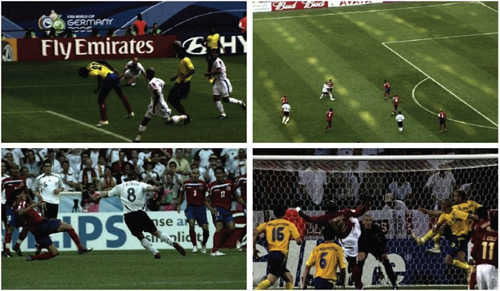
It is undoubtedly a period of preparation and resolution — a time spent questioning why he wishes to create art and from what emotional and intellectual state his works emerge. Beginning from this point, he went on to produce Gong 1 and Gong 2 between 2009 and 2010. These works may be understood as reflections on the society to which he belongs.
By erasing the soccer ball from scenes of players violently moving across the field, or by removing artworks displayed within museum spaces, he strips those objects and subjects of their functions and roles. Once the soccer ball — the essential means and focal point of the game — is removed, and once the exhibited artworks that define the function of the museum are erased, the gestures and bodily movements of the people appearing within the video become unnecessarily exaggerated and strangely absurd.
At the same time, by removing seemingly minor yet essential elements from the functional structure of the museum, the works produce bizarre and unsettling situations that viewers unexpectedly encounter.
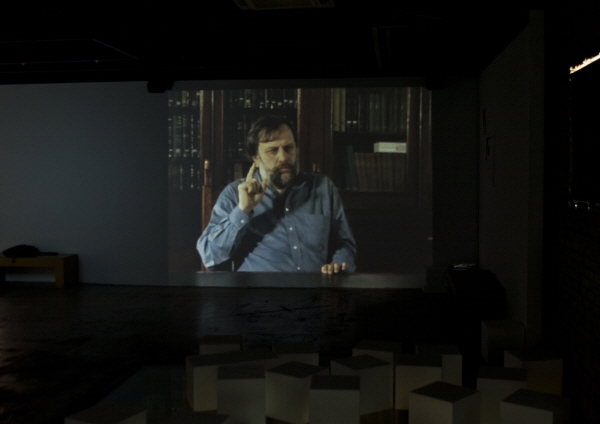
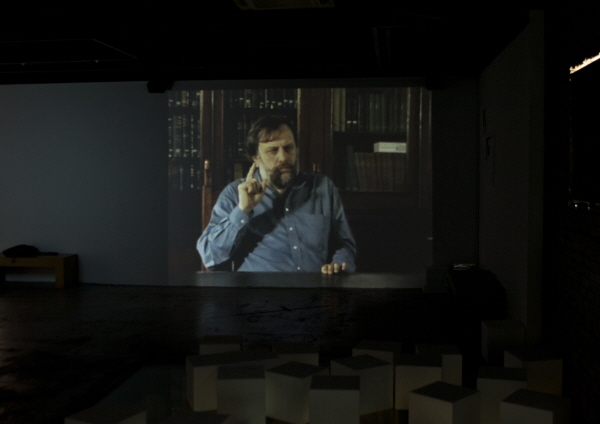
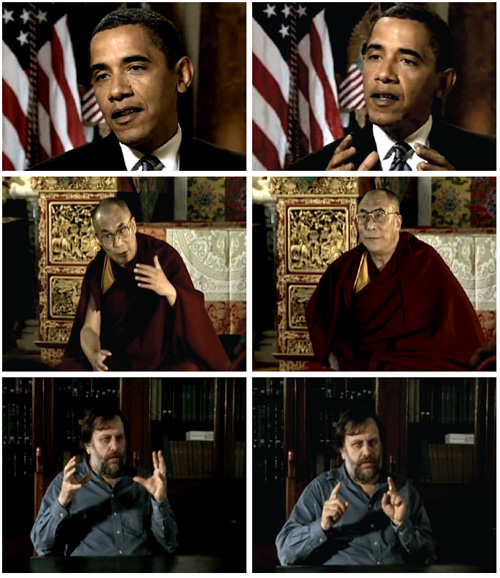
Produced consecutively in 2010, ‘His Silence’ continues along the same trajectory as Gong 1 and Gong 2. Composed of three screens, the work appropriates speech footage of figures who may each be regarded as supreme authorities within their respective fields: Slavoj Žižek in philosophy, Dalai Lama in religion, and Barack Obama in politics.
Within these speeches, Je Baak removes segments of sound from individual syllables, stripping language down so that, in place of eloquent rhetoric, the speakers emit only blocked and meaningless noises produced by the constriction of the vocal tract — sounds generated by the mouth, throat, and tongue without semantic function.
By erasing consonantal structures from the voices of these three figures, all commonly believed to possess exceptional eloquence, the artist presents a condition in which language itself ceases to function properly. In doing so, he instantaneously collapses generalized conventions that have been accepted as truth not through logical reasoning, but simply through familiarity.
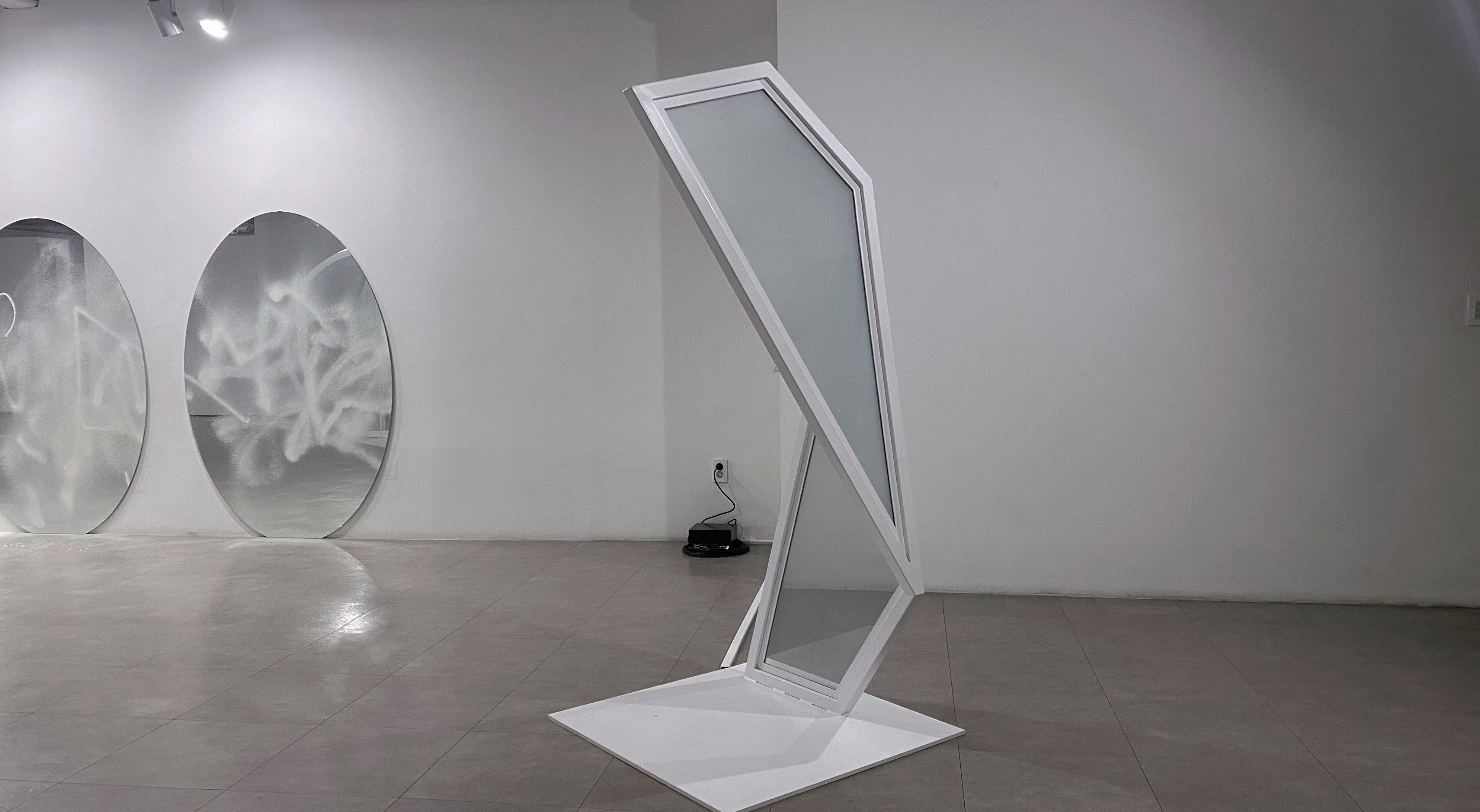
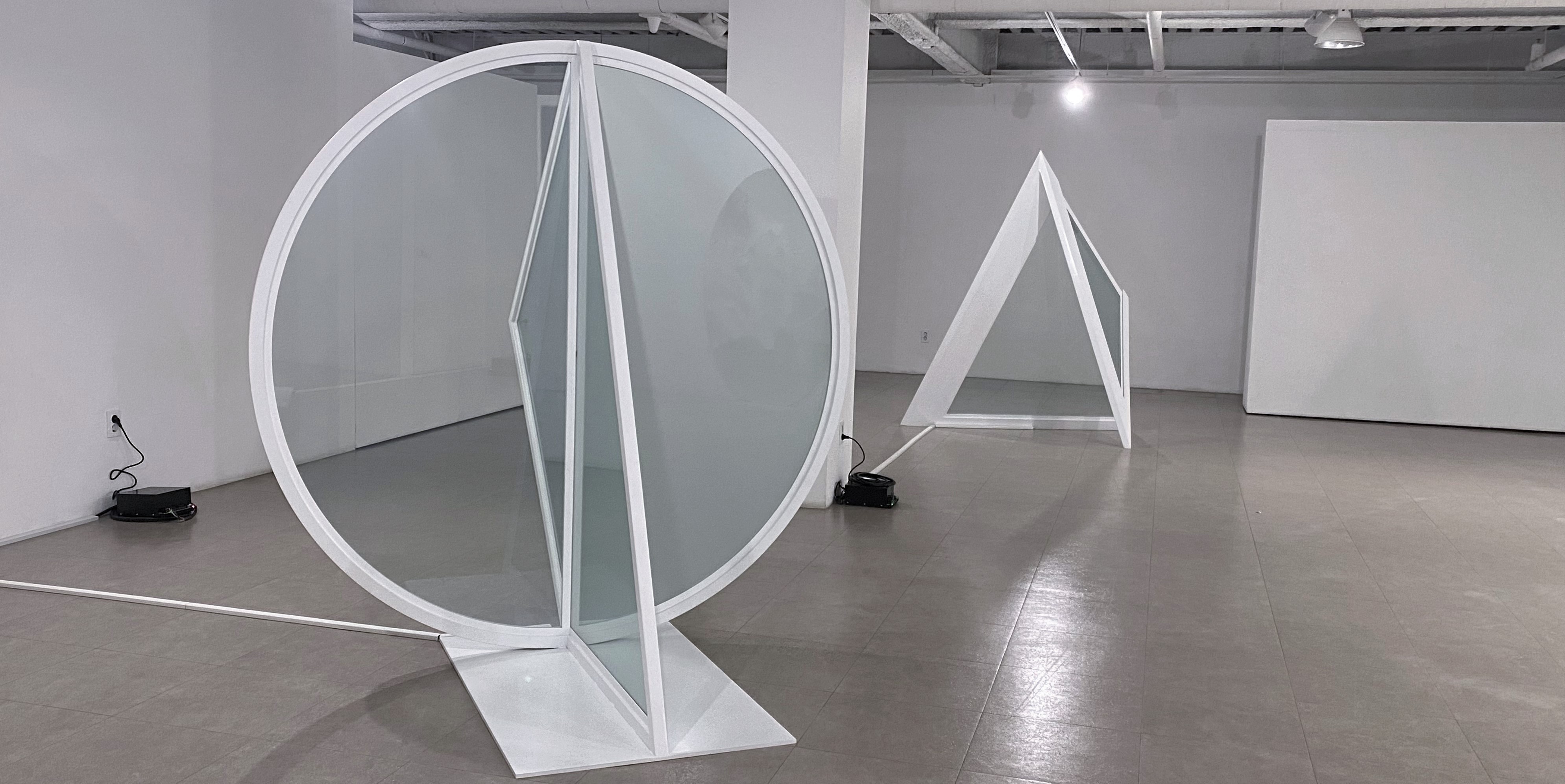
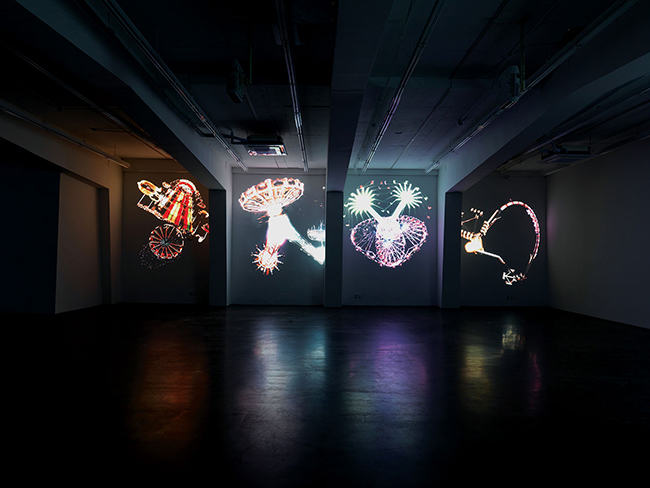
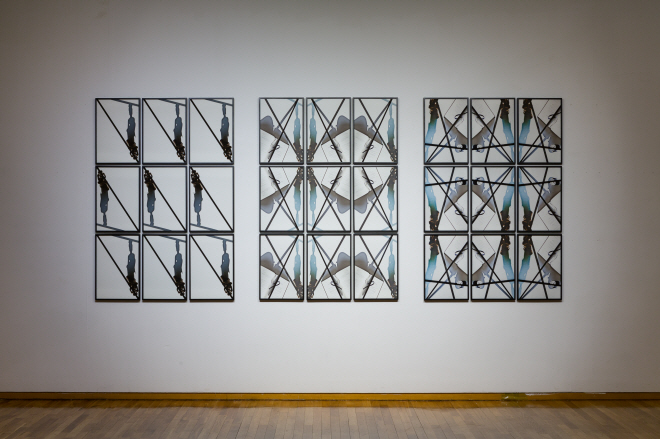
In the ongoing series The Structure of, the viewer encounters amusement rides reconfigured by the artist as though suspended within a state of zero gravity. While the works construct spaces that feel almost suffocating, they simultaneously contain the artist’s intention to discover new forms of fantasy within them.
Since the amusement rides originate from locations across the world before being dismantled and reassembled, the resulting forms that appear on screen resemble structures that could exist nowhere in reality. Viewers encountering these works indirectly experience a kind of bodily virtualization, as though riding an amusement ride that distances them from ordinary physical space.
Through these works, Je Baak continually raises questions about the foundations upon which supposedly “true” values within reality are established, asking whether “the very point at which definitions of truth begin may already contain error.” Centering his practice on such inquiries, he visualizes situations that encourage viewers to cast doubt upon socially fixed assumptions and systems.
Consequently, his works are highly logical, at times even leaving traces of suffocating tension. Yet rather than becoming immersed solely in emotion and sensibility at the expense of meaningful discourse, Je Baak steadily unfolds his ideas through artistic forms that communicate his message with greater clarity and precision.