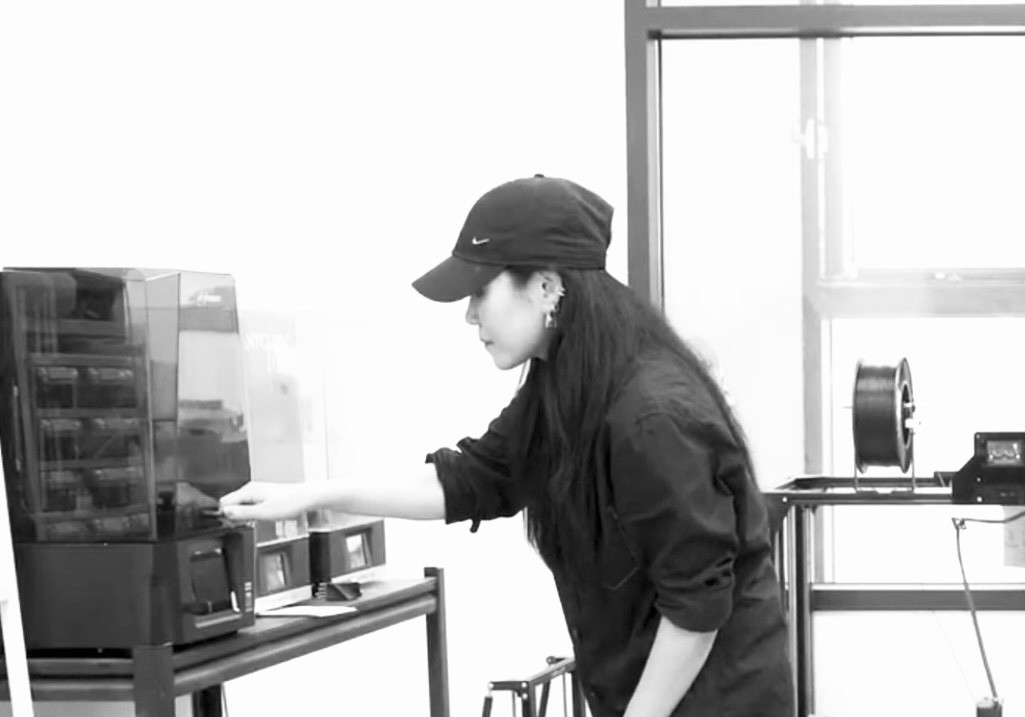
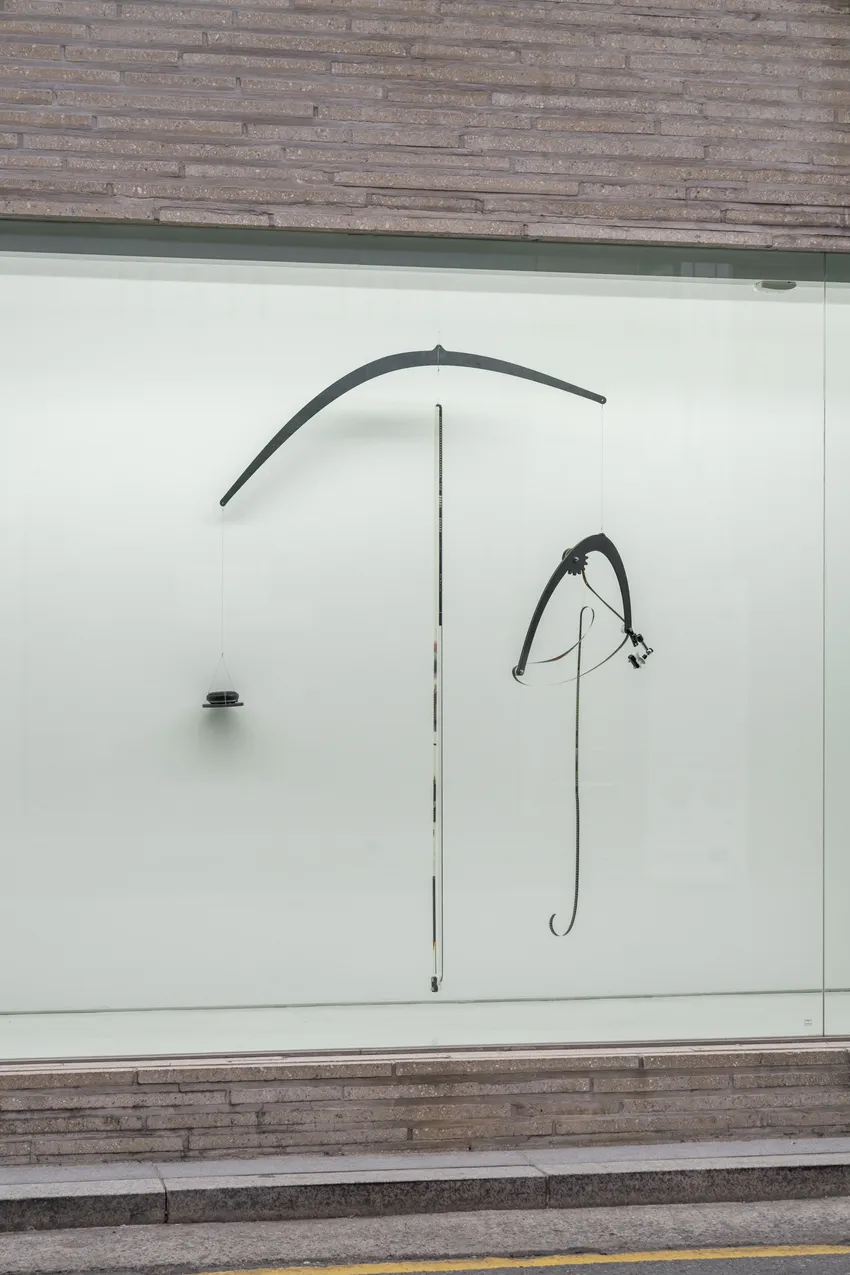
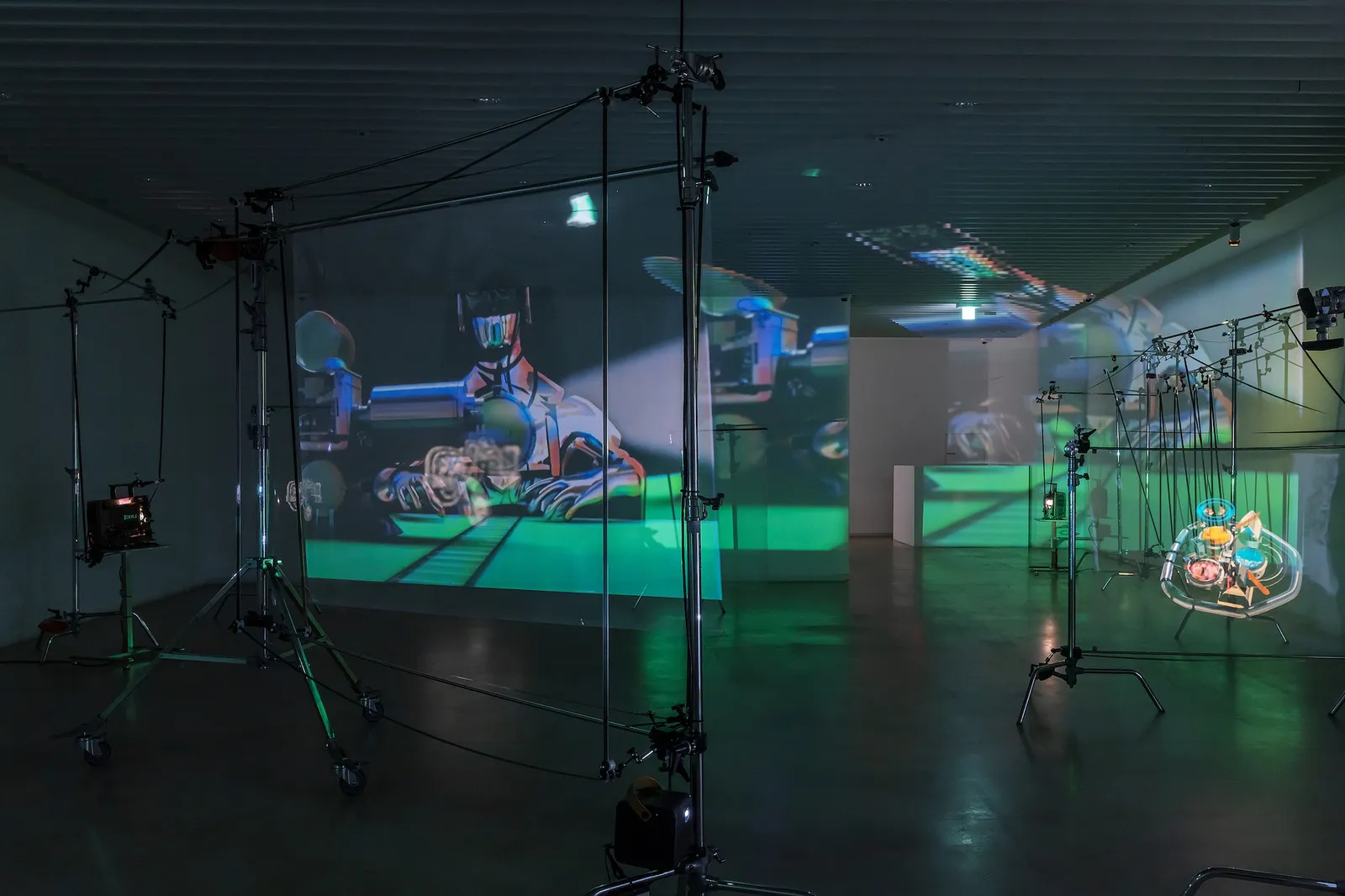
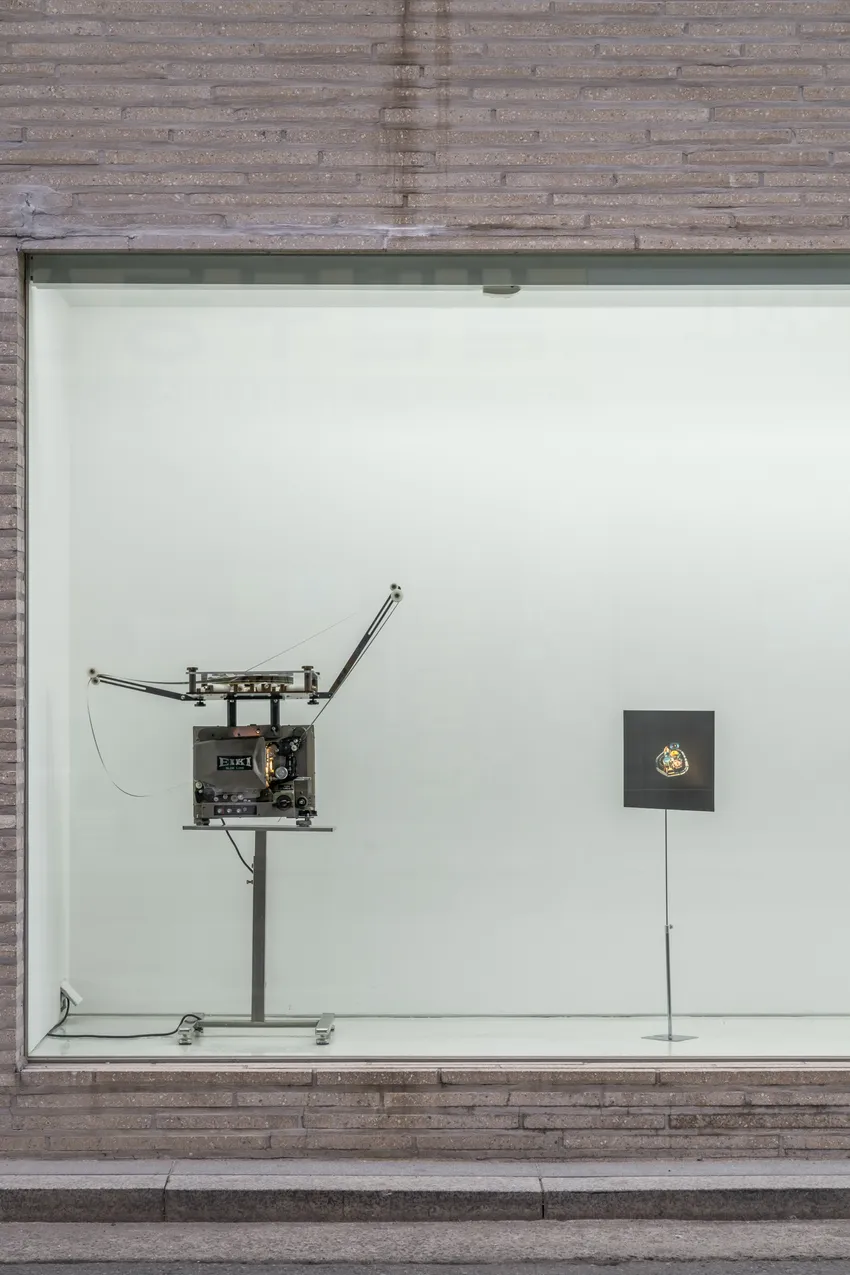
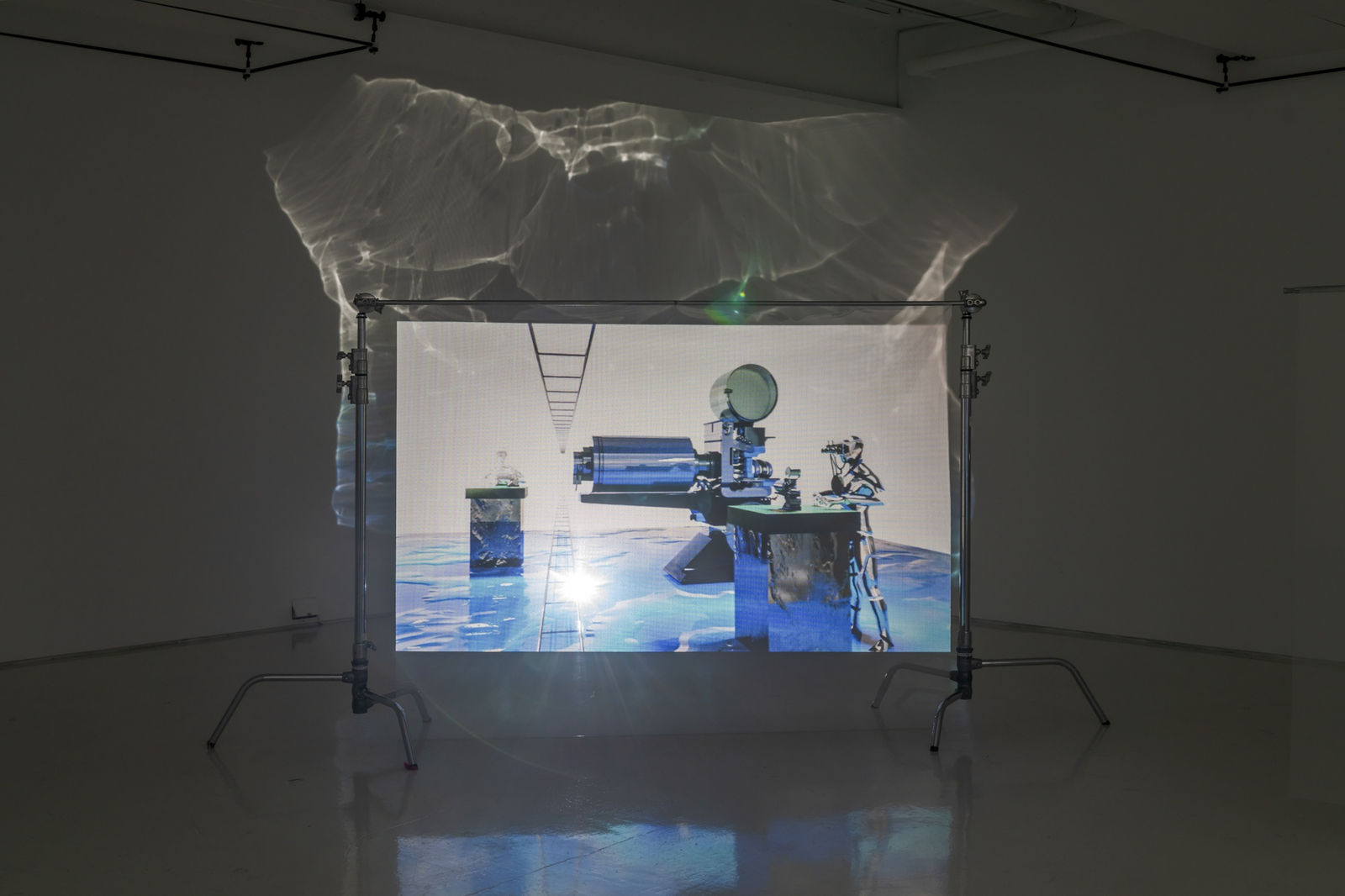
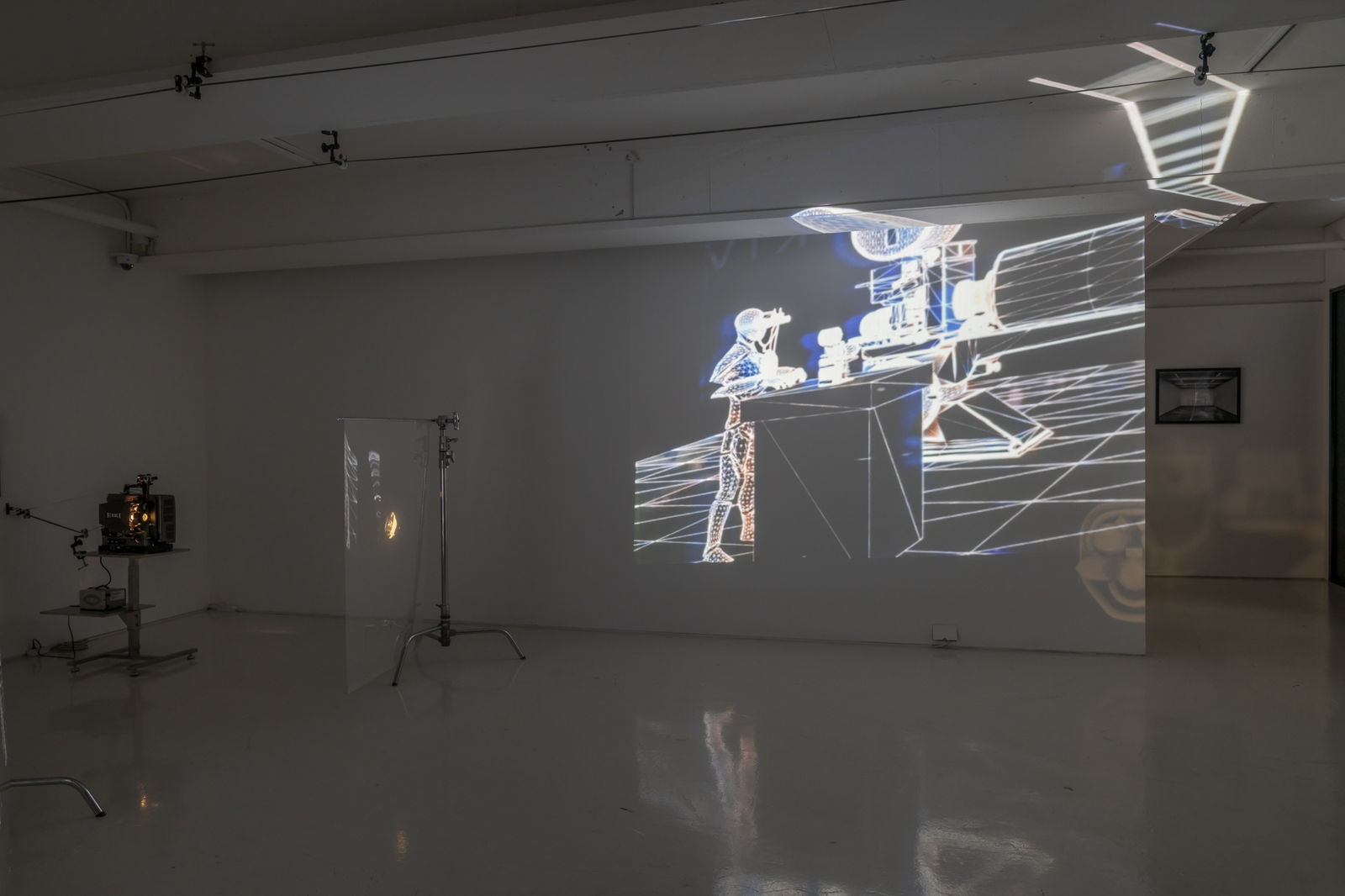
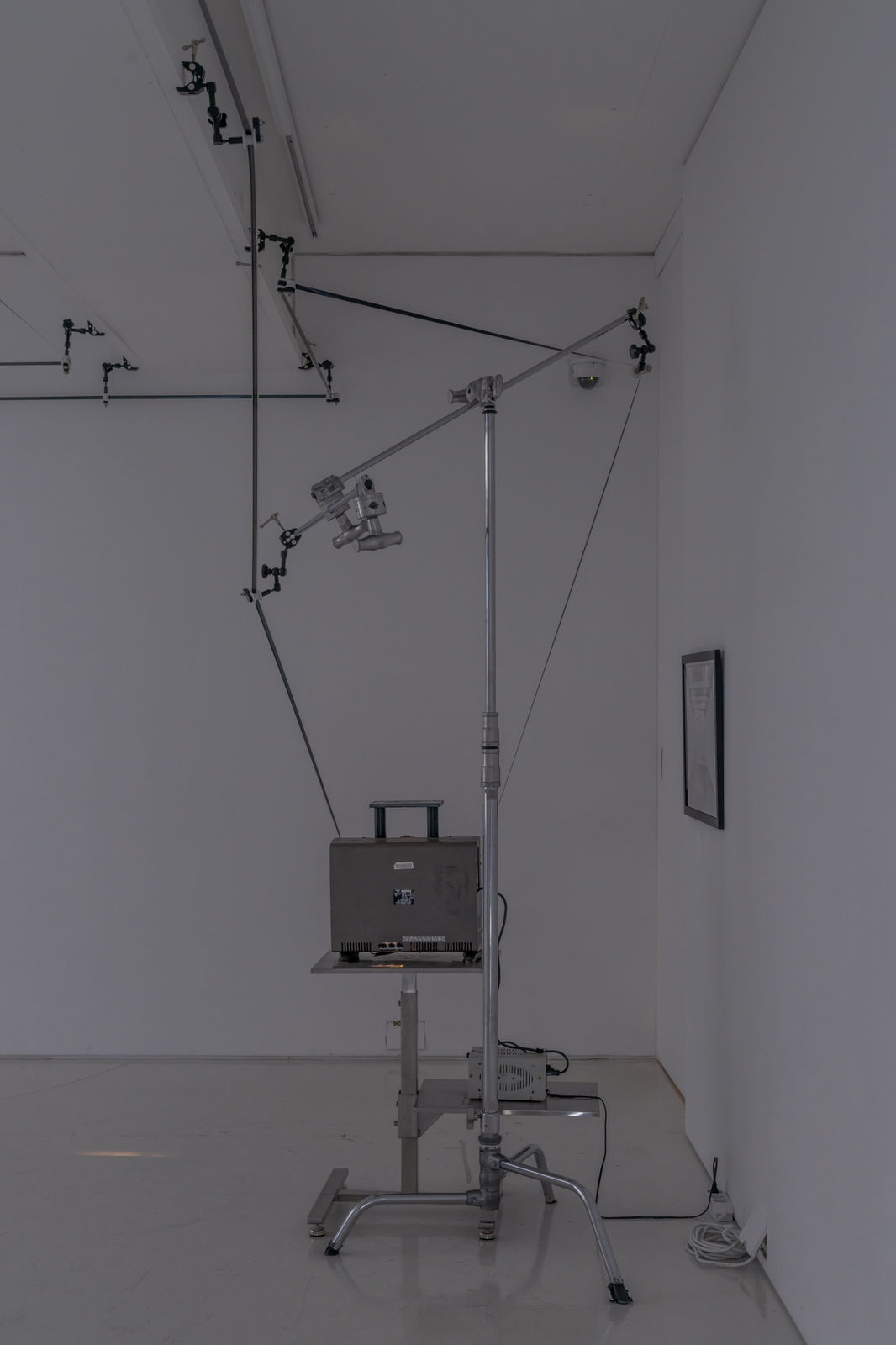
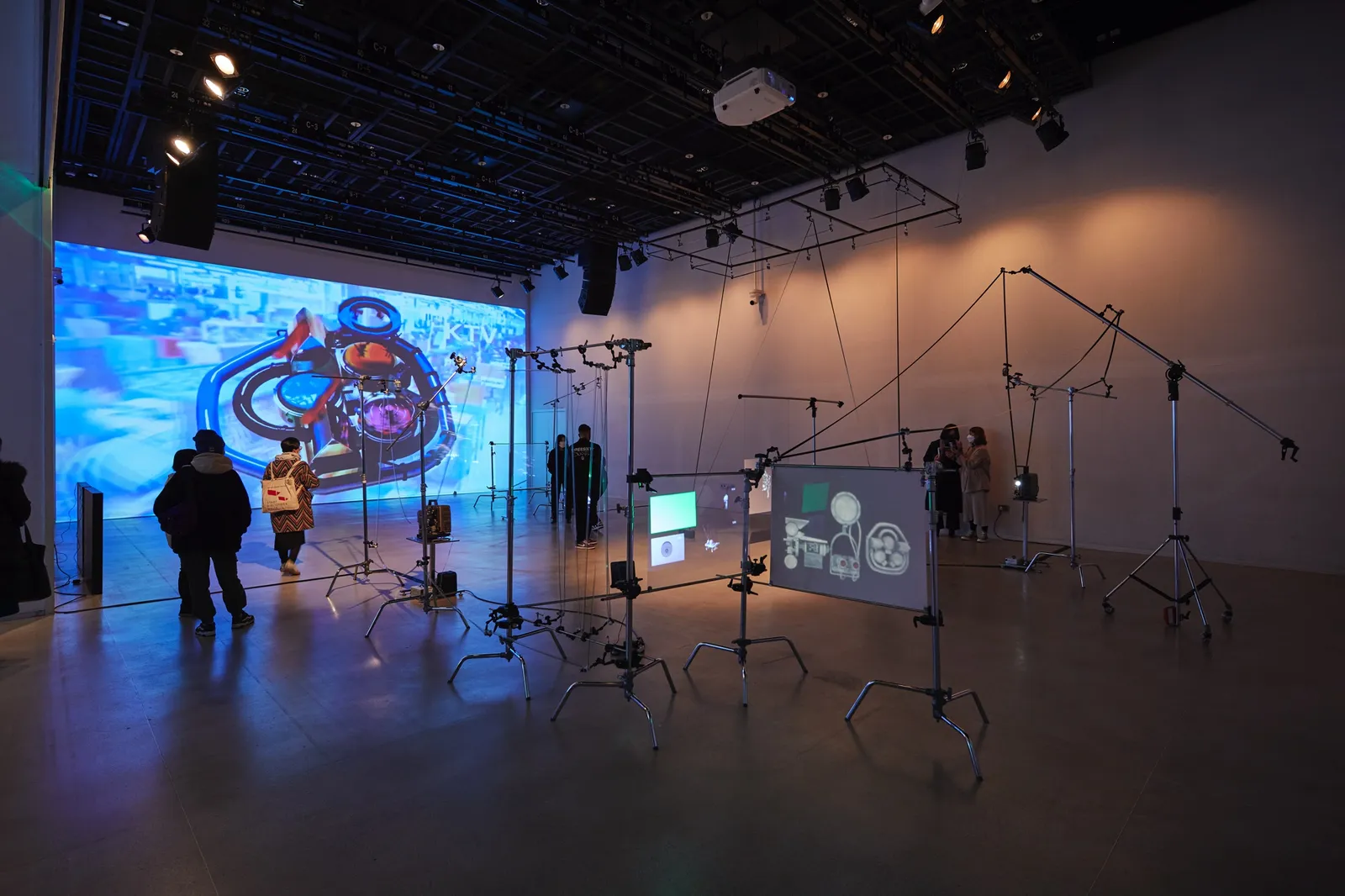
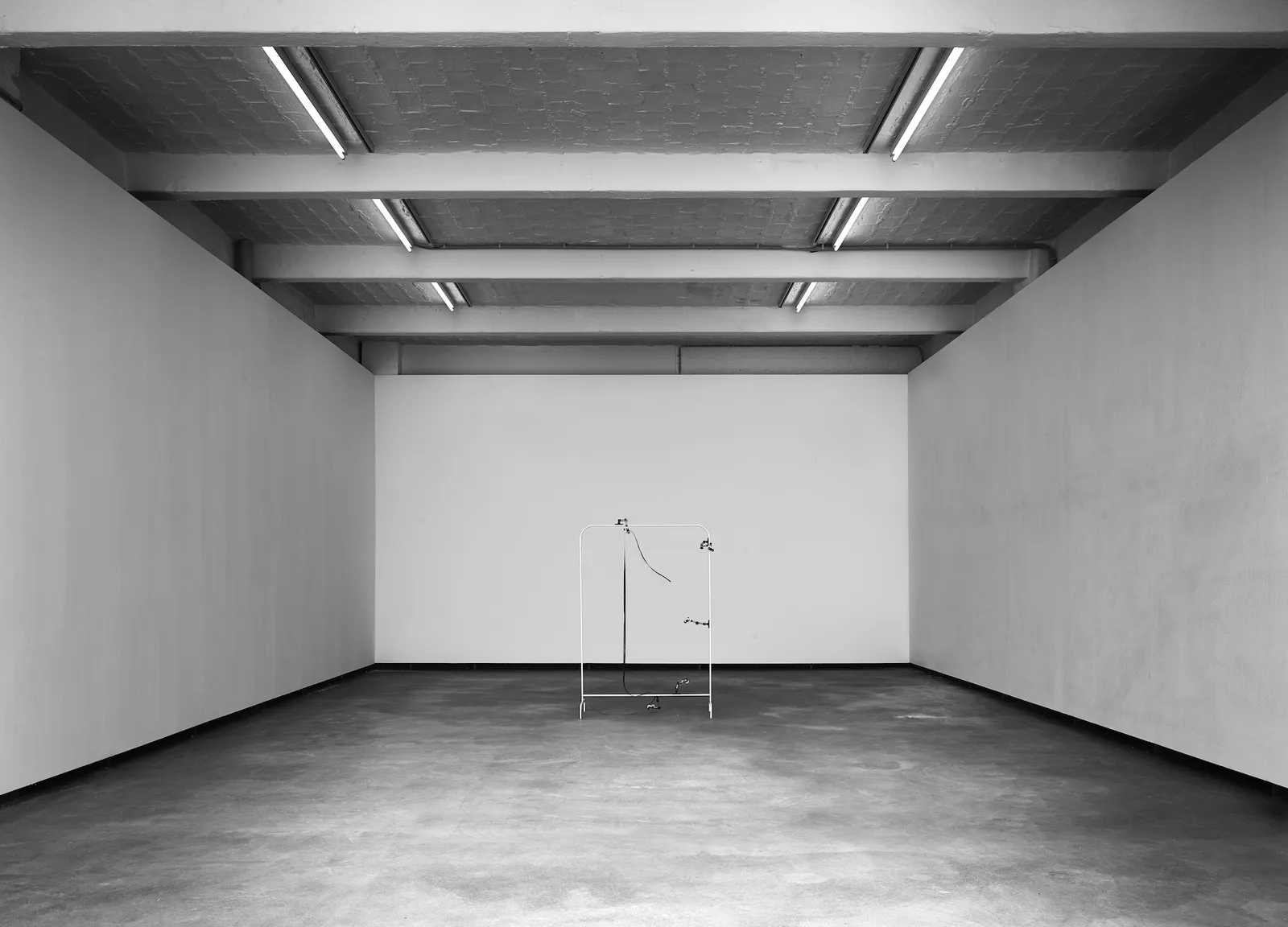
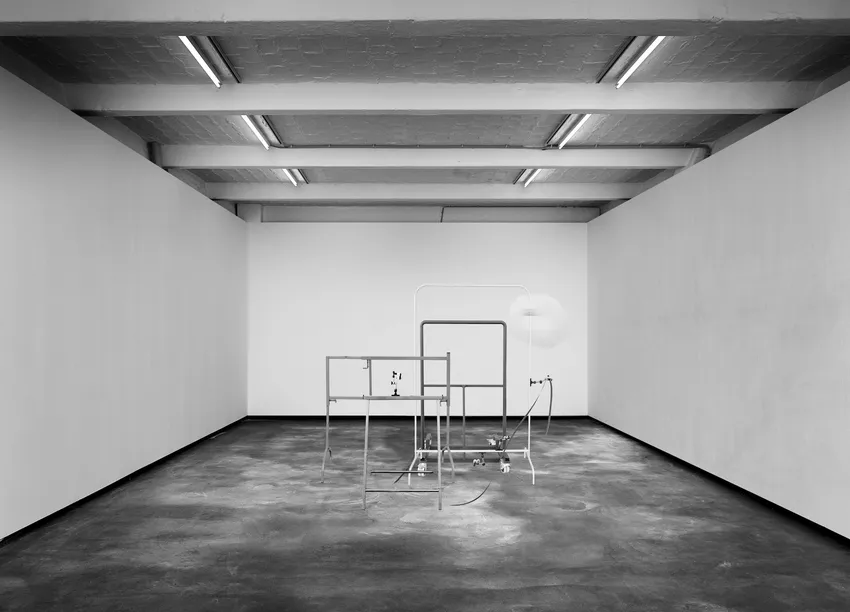
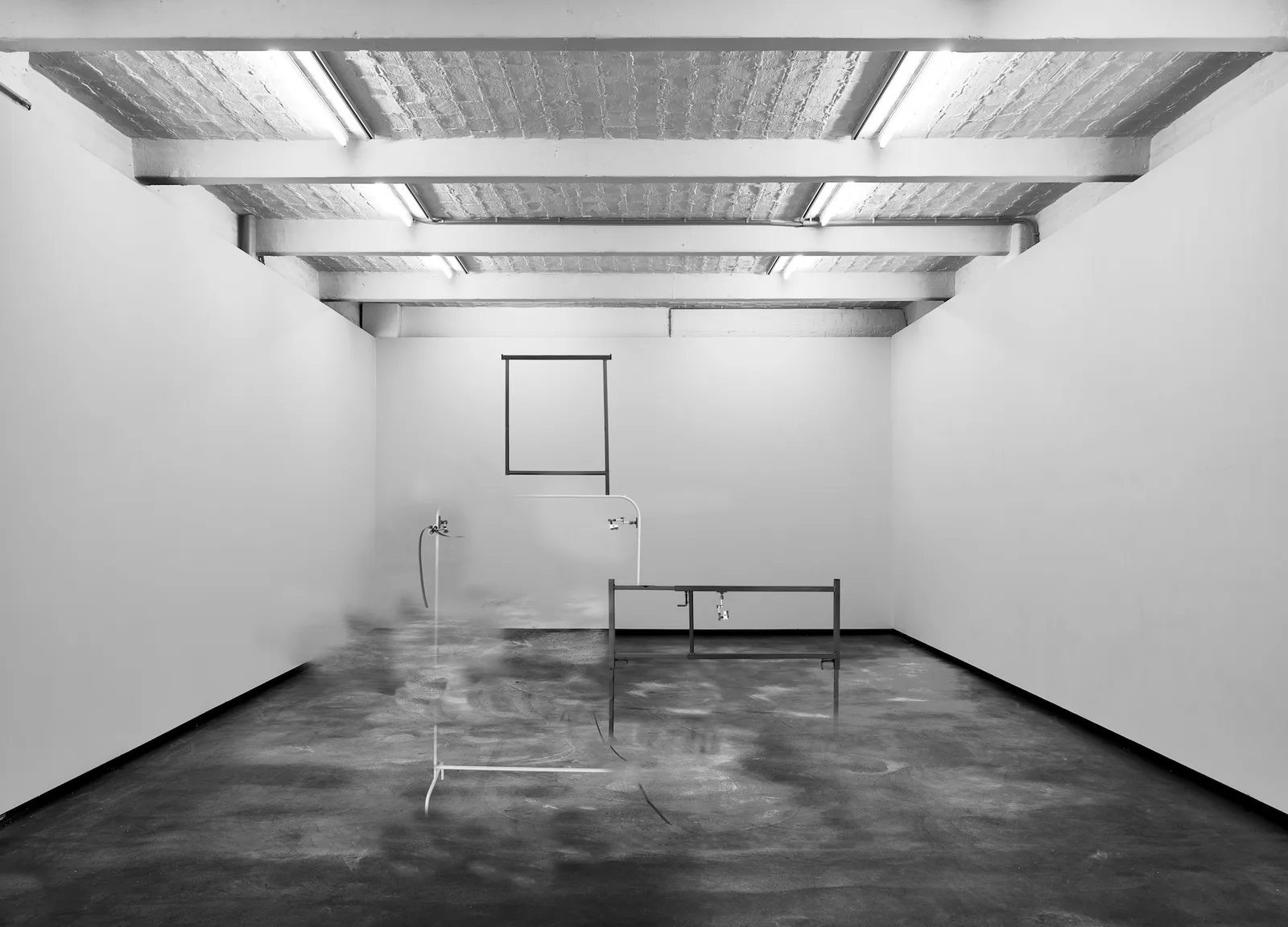
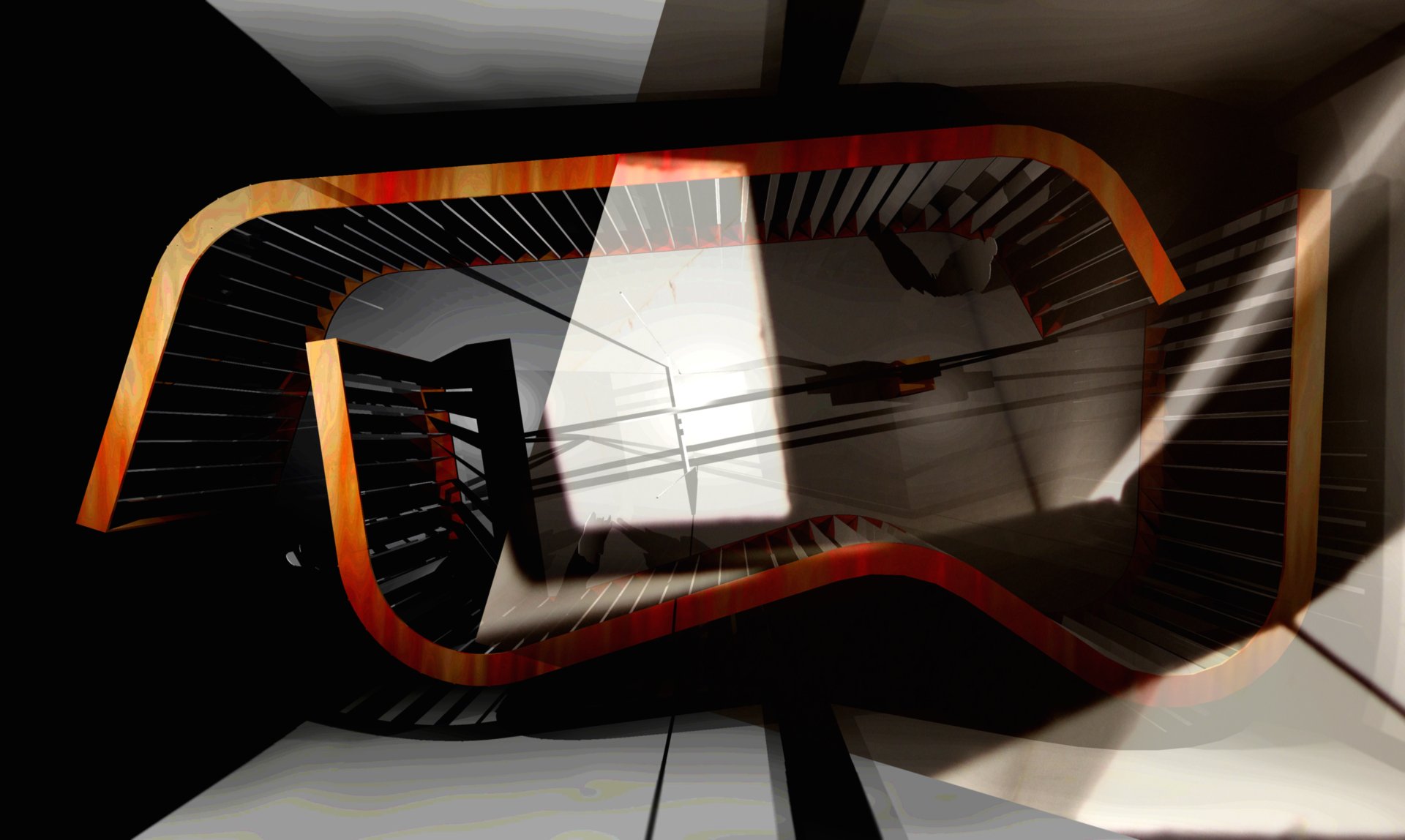
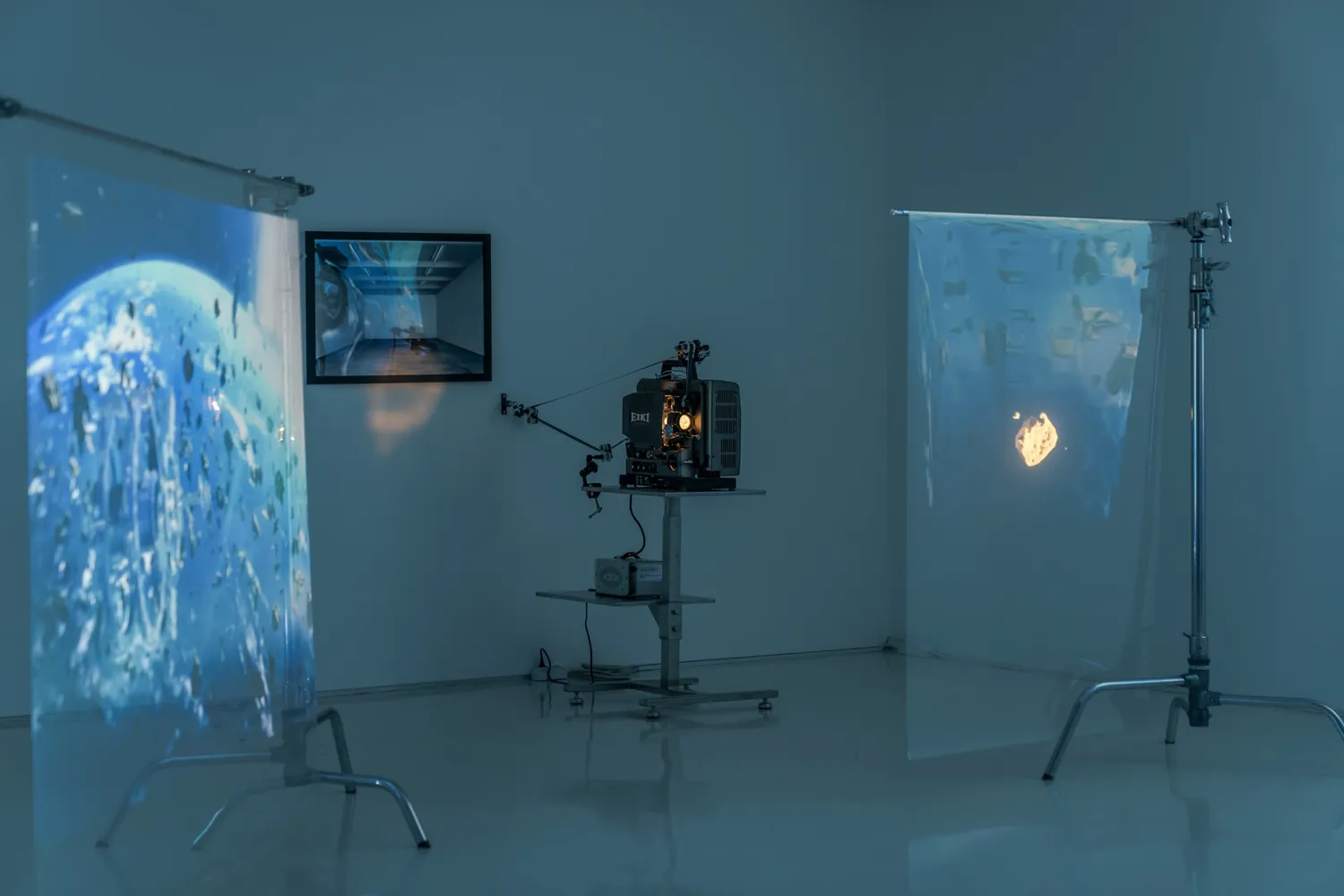
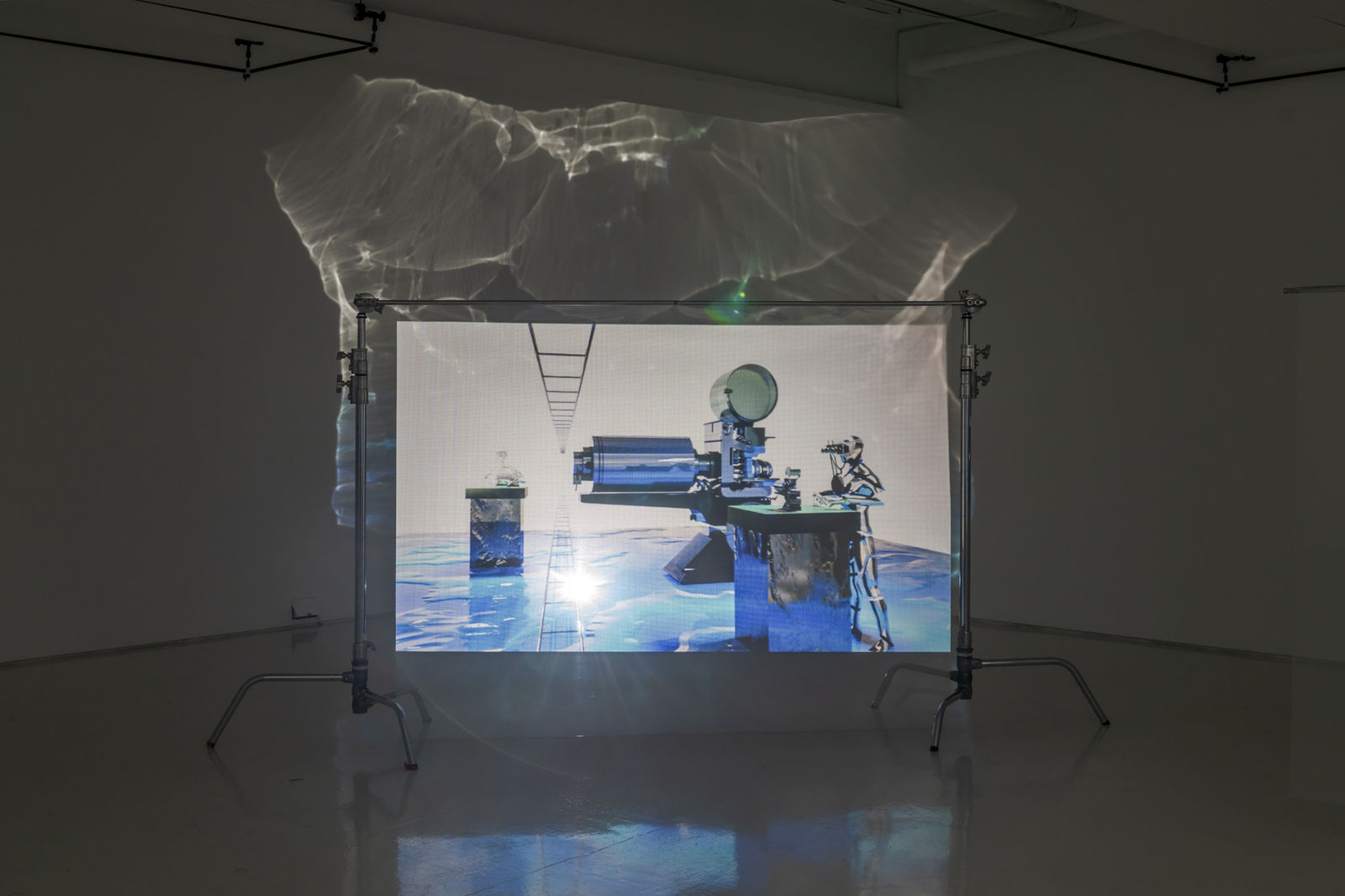
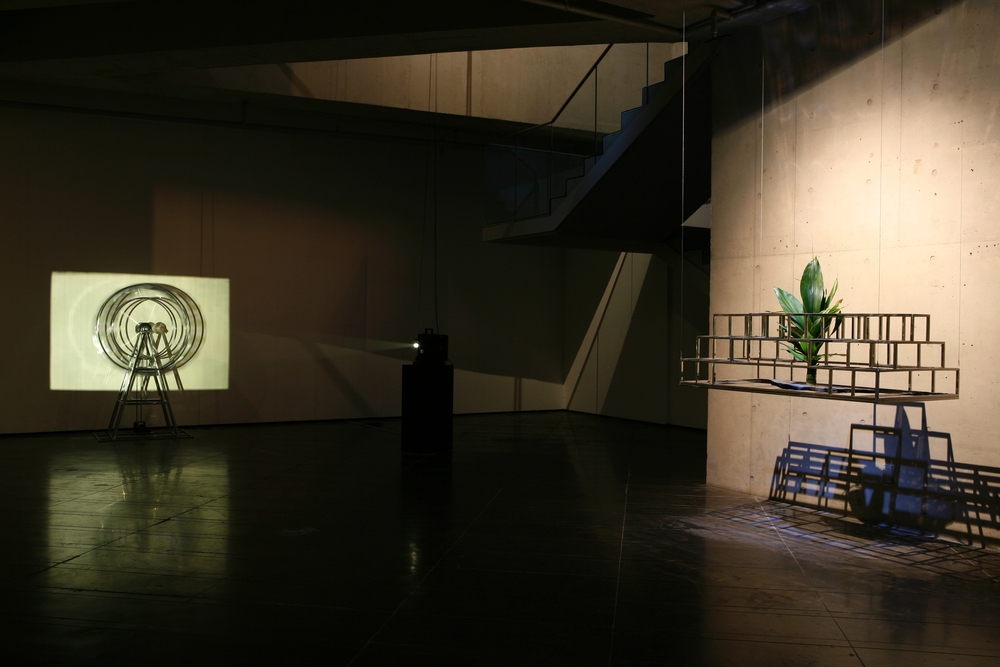
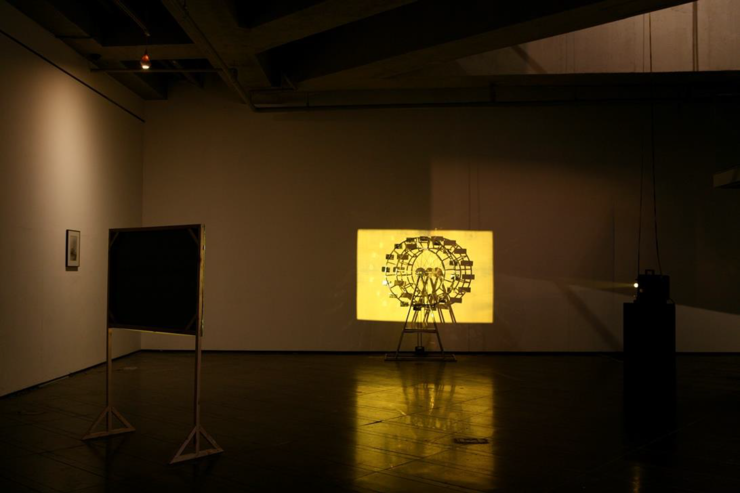
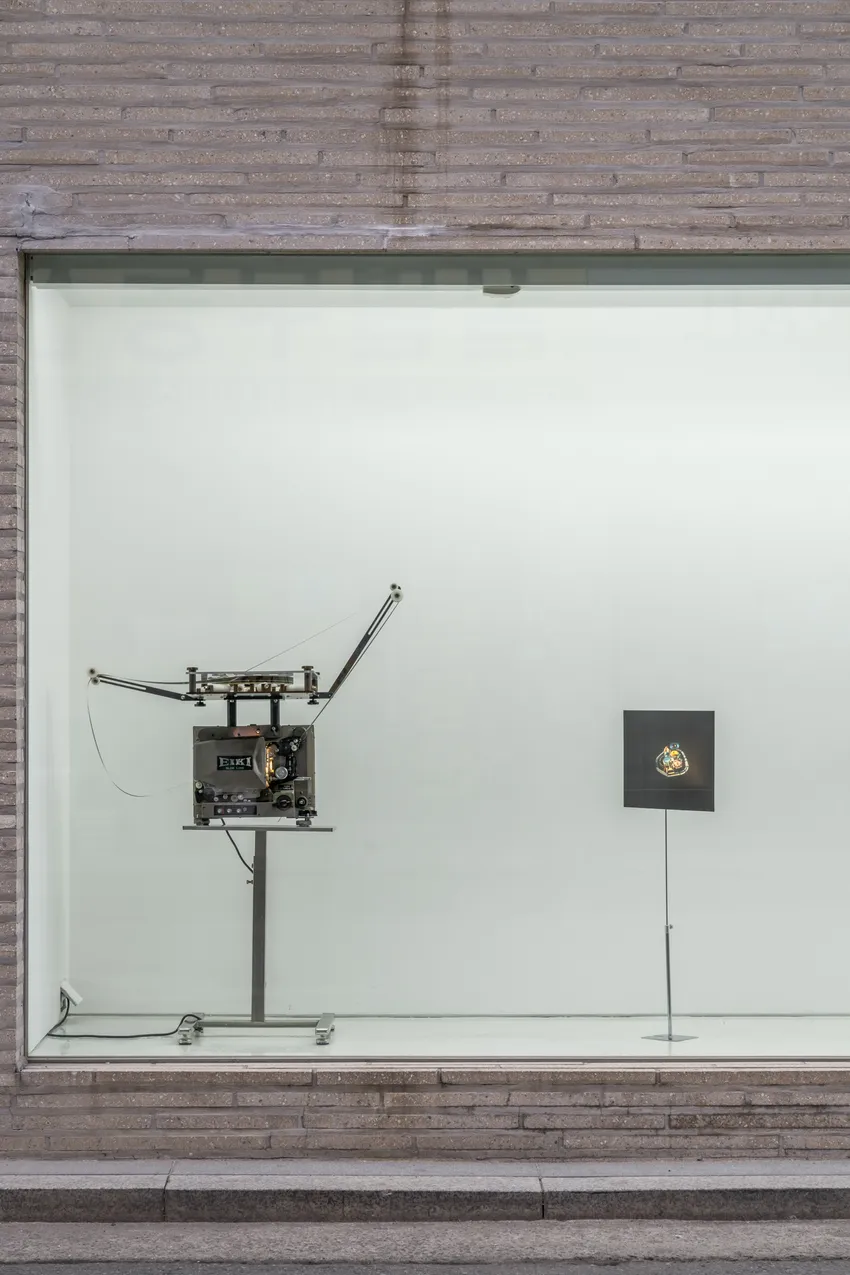
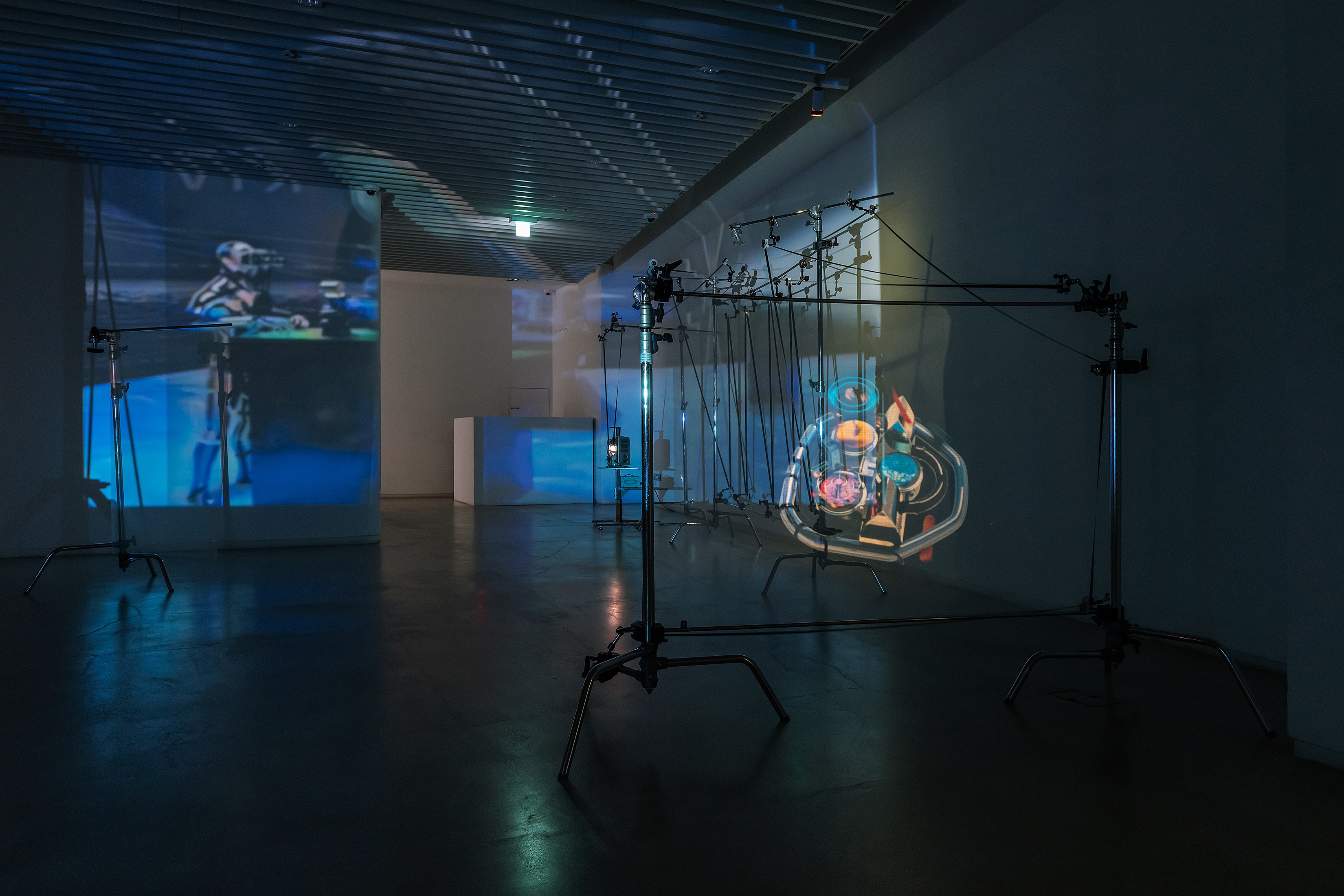
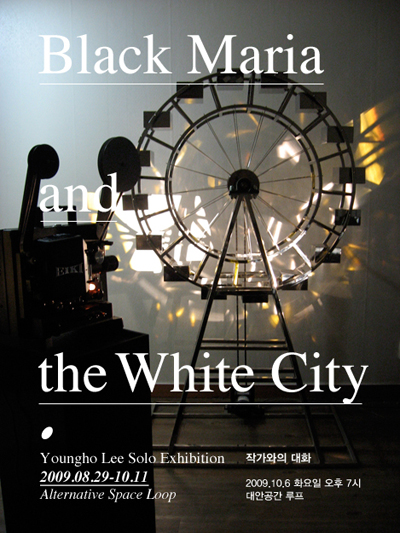
Youngho Lee’s practice takes the form of a complex media environment that combines cinema, installation, sculpture, and performative elements. The artist structurally arranges 16mm film loop machines, projectors, rollers, mirrors, optical devices, hologram screens, and augmented reality (AR) interfaces within space, constructing the processes of image projection and reflection as immersive spatial environments.
Rather than merely “screening” moving images, her works focus on physically revealing the very conditions through which images are generated and circulated. Film is no longer confined to a fixed screen; instead, it moves across structures and throughout the exhibition space, prompting viewers to reconsider the relationship between image, apparatus, and their own bodies.
A central formal language in Lee’s work lies in the materiality of analog film and the physical movement of mechanical devices. Repetitive film loops, vibrations from motors, mechanical sounds, and the reflection and refraction of light collectively create rhythmic structures within the work, encouraging viewers to perceive cinema not simply as a moving image, but as a moving mechanical system. Another defining aspect of her practice is the juxtaposition of early cinematic apparatuses with contemporary digital interfaces.
Rather than presenting technological development as a linear progression, Lee constructs sensory landscapes in which visual devices from different eras coexist and collide. Her installations therefore function simultaneously as cinematic projection systems, sculptural structures, and spatial apparatuses that organize the viewer’s movement and gaze.
The moving images within her works are also composed less through complete narratives than through fragmented imagery, repetitive movement, and loop structures. Roller coasters, mechanical devices, urban landscapes, traces of light, and archival footage appear in parallel rather than within a unified storyline, generating sensory collisions and associative flows instead of conventional cinematic narration. In this sense, her method is closer to montage, collage, and archival arrangement than to traditional narrative editing.
By incorporating historical news footage, early cinematic imagery, and industrial mechanical landscapes, Lee overlays past visual systems with contemporary digital environments. Such image constructions encourage viewers not to seek a singular interpretation, but to navigate the relationships formed between images themselves.
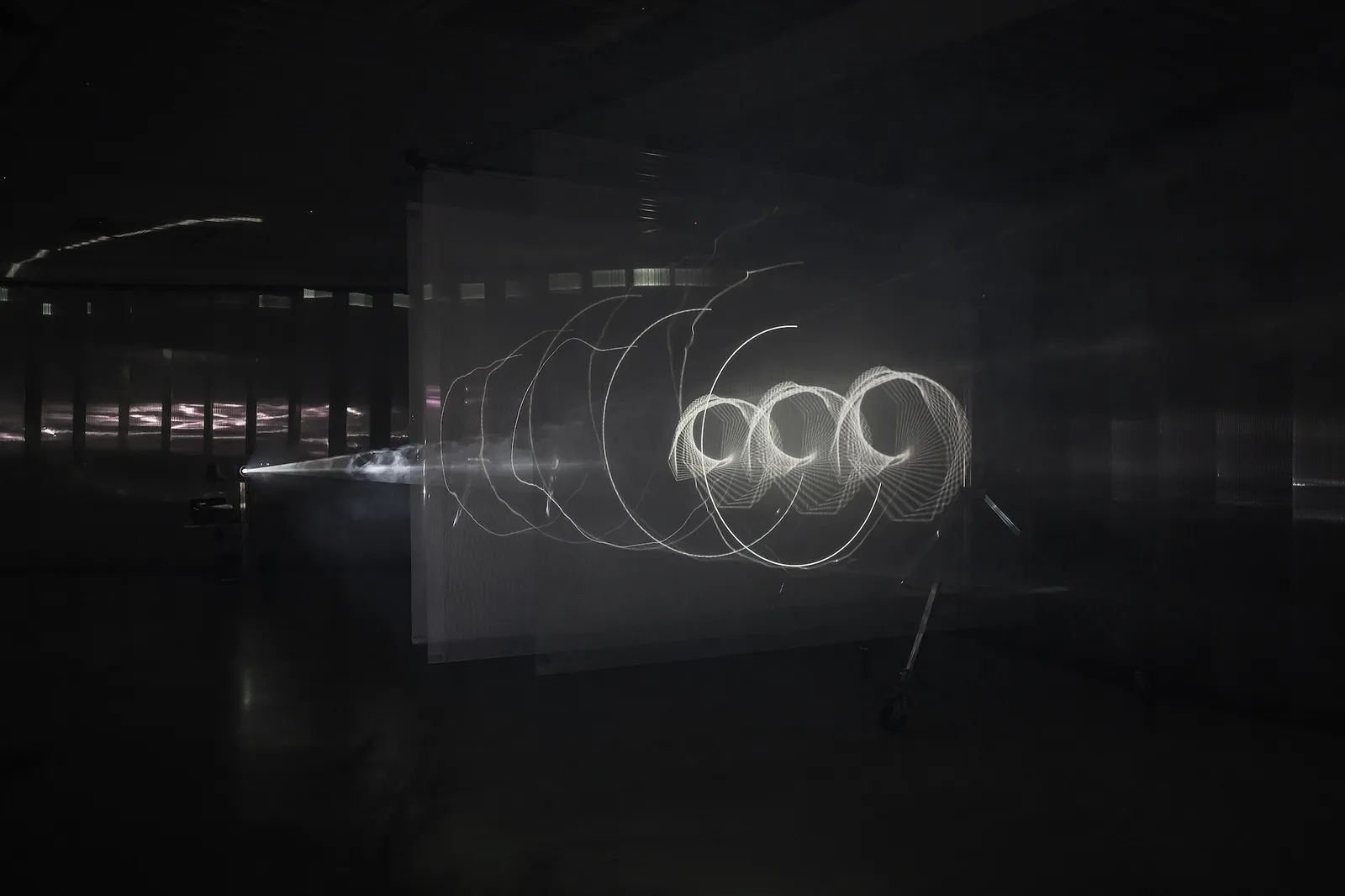
In her recent works, Lee has increasingly employed fog, reflected light, projection mapping, and augmented reality interfaces to create more immaterial and immersive environments. Light, sound, moving image, and space operate not as separate elements, but as an integrated sensory system through which viewers encounter constantly shifting visual experiences while moving throughout the installation.
Rather than presenting complete or stable images, Lee deliberately exposes imperfect projections, misaligned loops, noise, and technical errors, revealing the instability and fractures inherent within technological media. These formal characteristics function as critical devices through which the artist examines how visual experience is constructed and destabilized within contemporary digital environments.