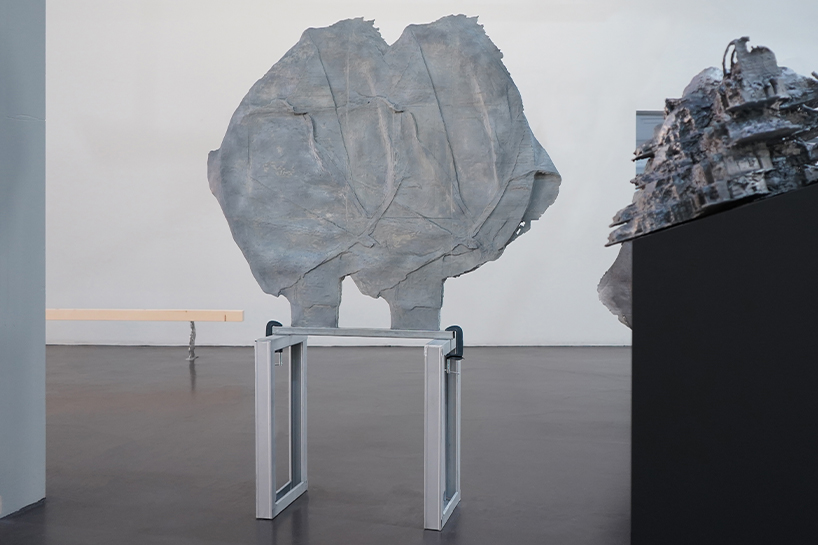
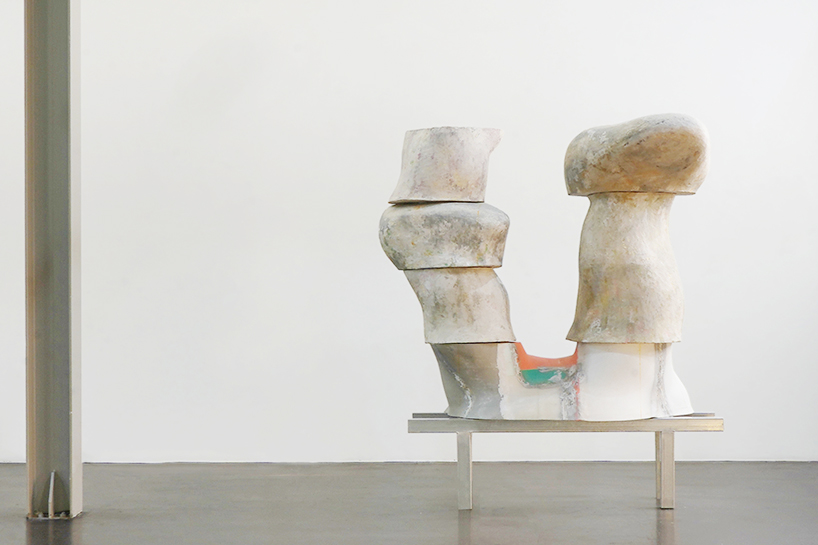
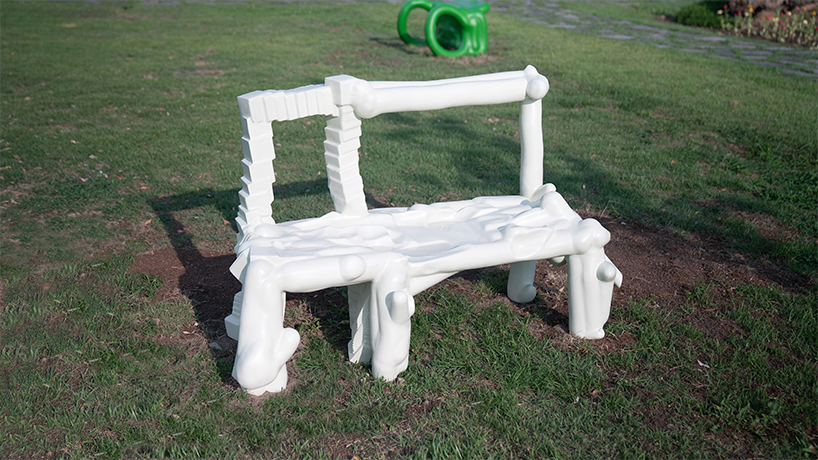
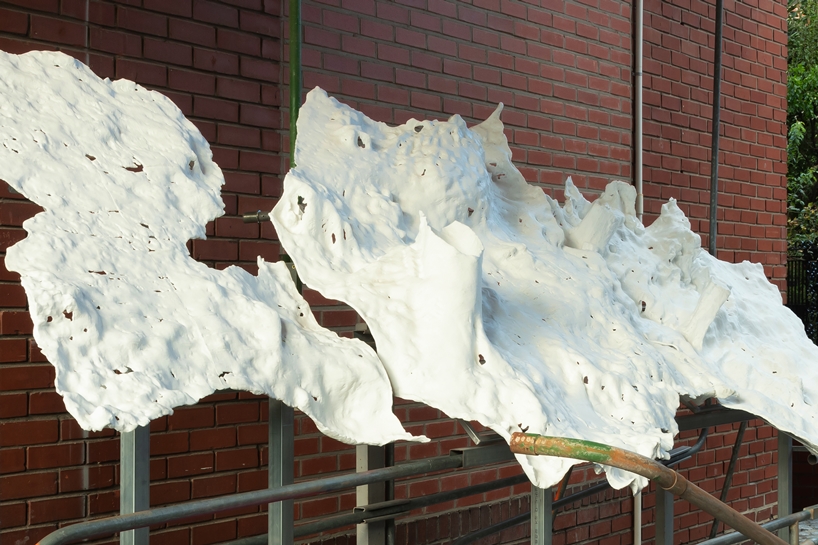
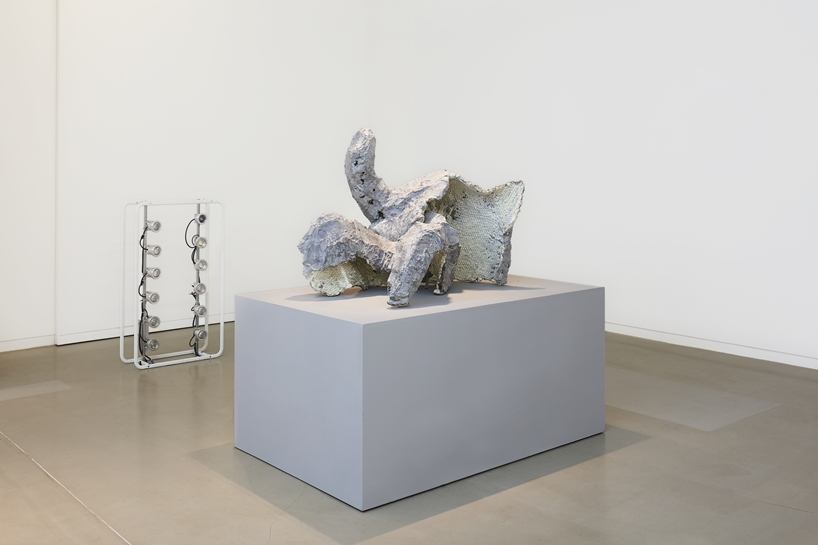
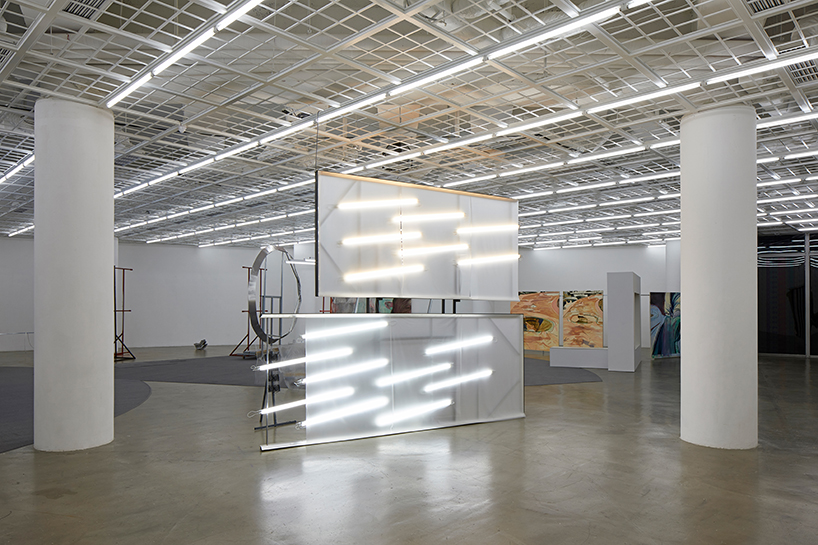
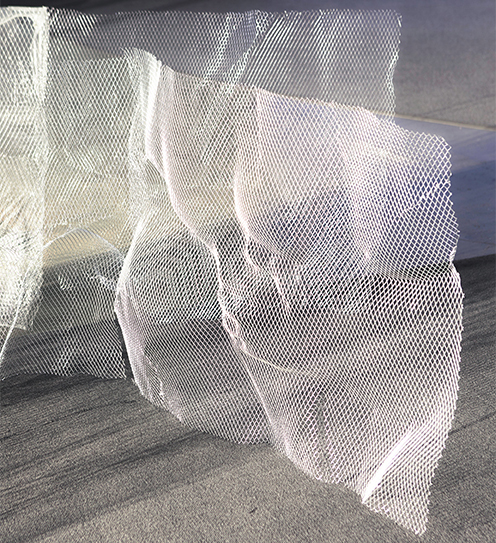
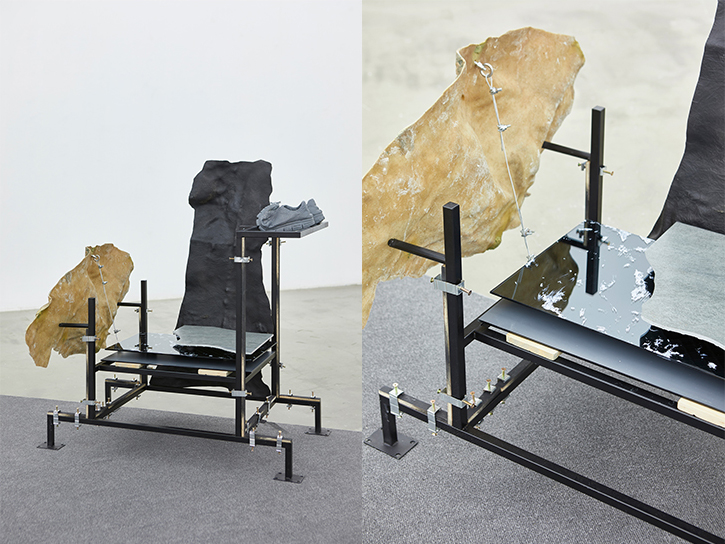
Upon entering the exhibition space for
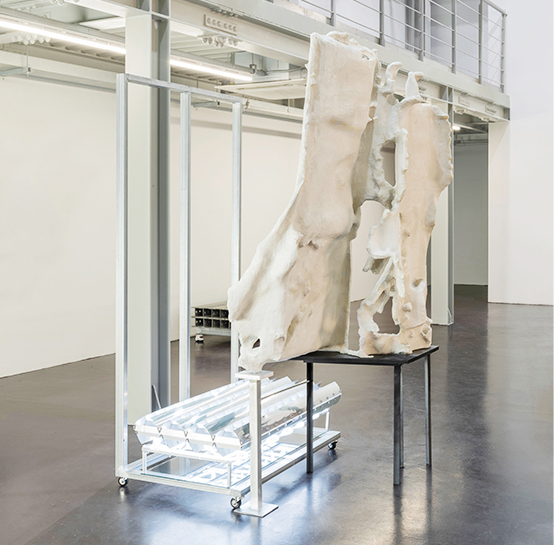
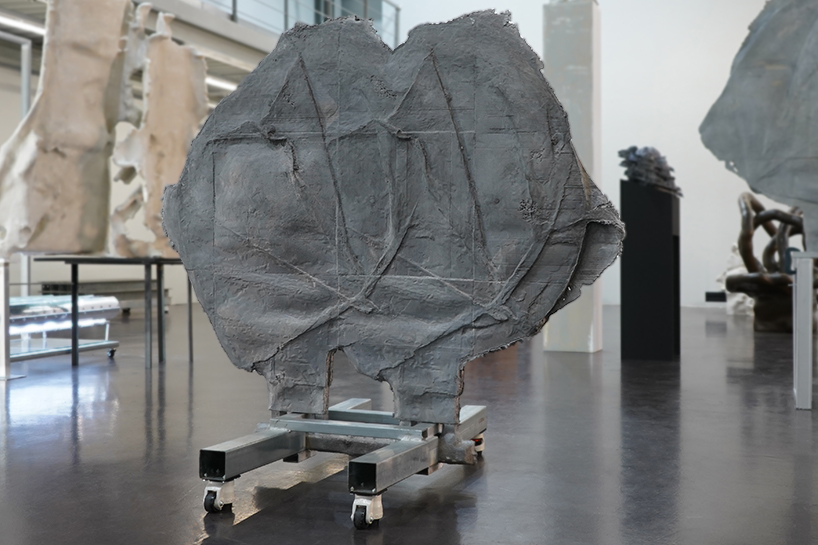
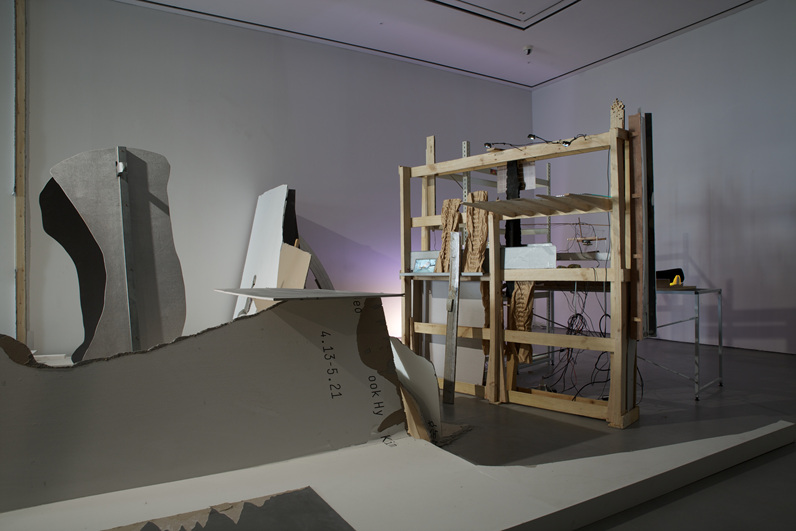
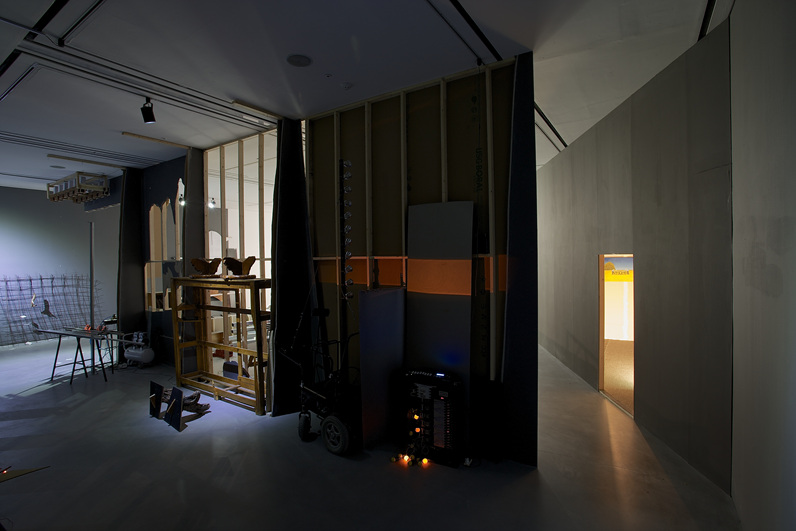
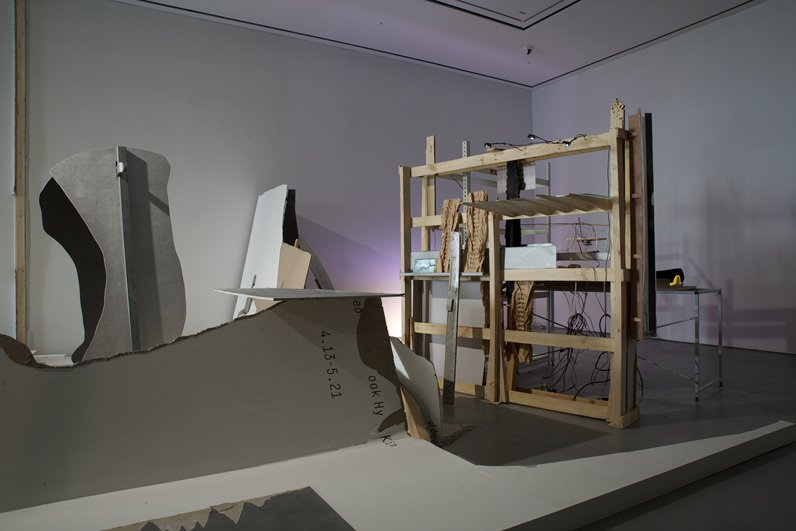
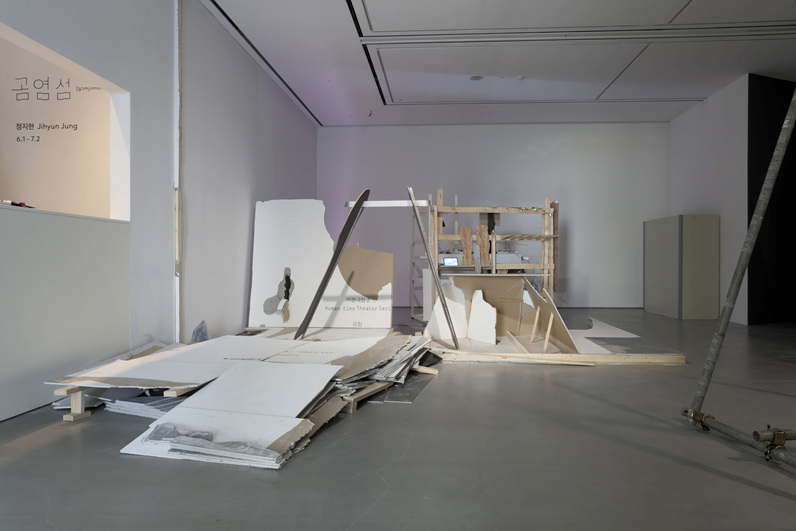
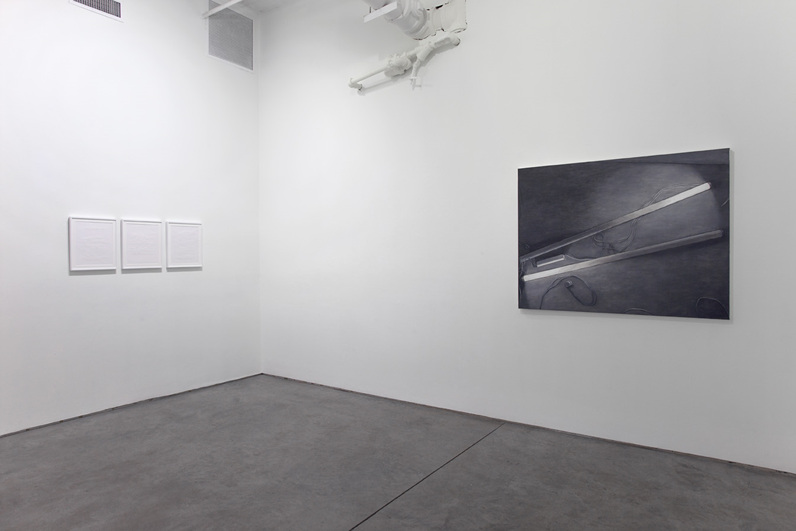
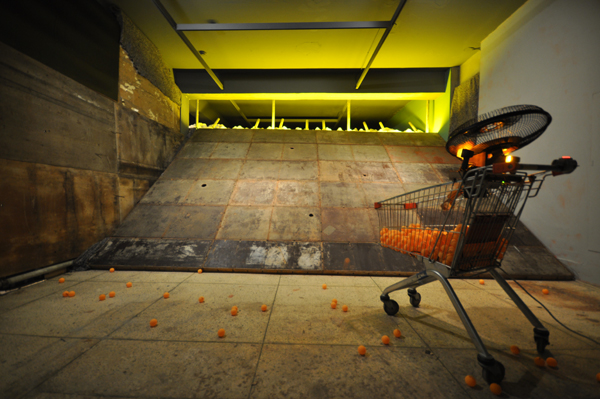
Jihyun Jung’s solo exhibition, the first thing one encounters is a stark scene
of partially dismantled temporary walls—remnants from a previous
exhibition—left exposed and piled up. Electrical wires scattered throughout,
wooden structures revealing their frameworks, and objects that feel at once
familiar yet strange are haphazardly connected to what, for those unfamiliar
with Jung’s prior works, may appear as miscellaneous and purposeless fragments.
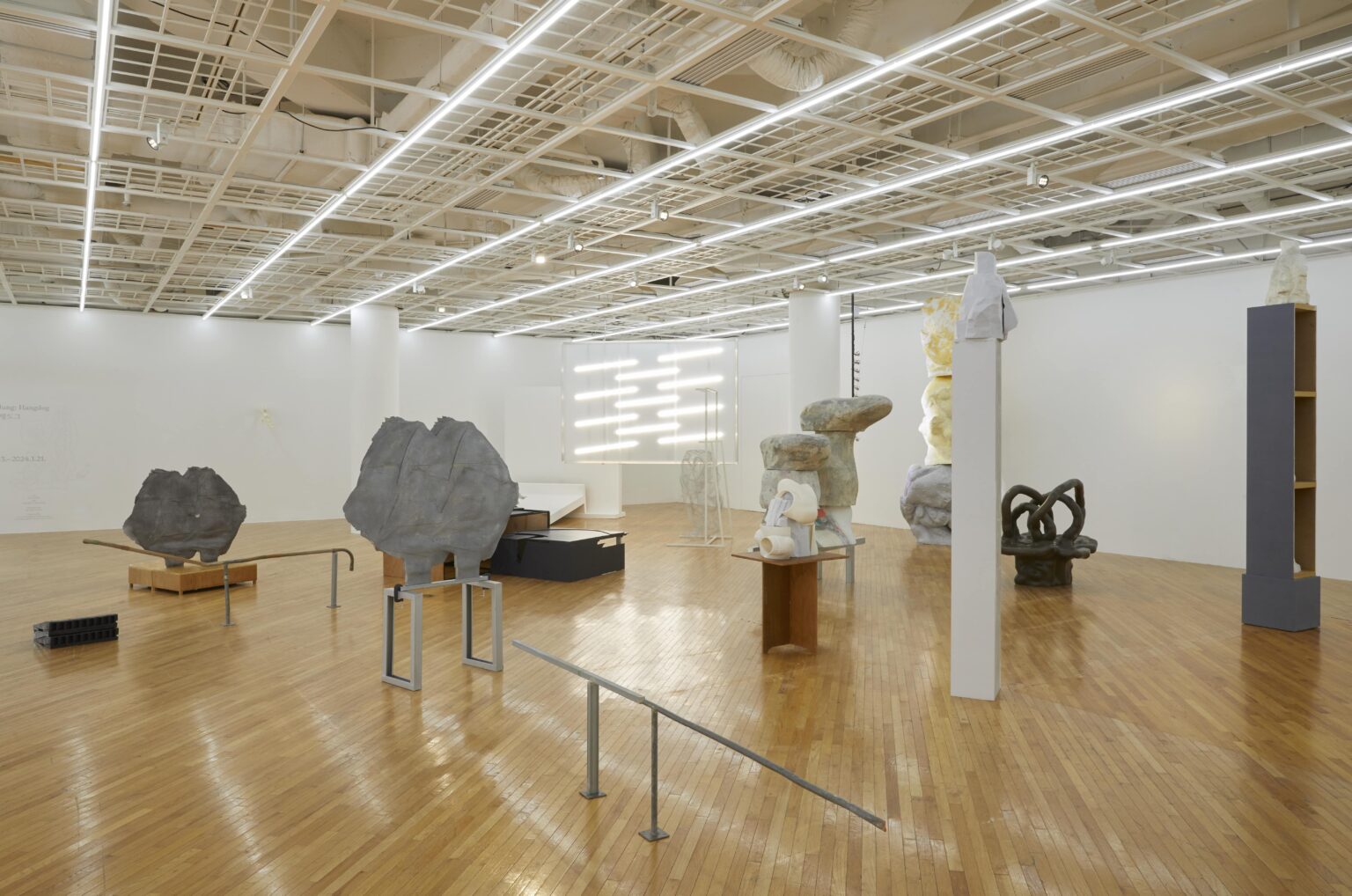
Although the exhibition is arranged in a way that allows the entire space to be
taken in at a glance, it “stages” a scene in which it is difficult to discern
what constitutes an artwork and what does not, or even whether the space is an
exhibition at all or still in preparation.
“What could this possibly mean?” Looking
to the exhibition title 《gomjumsum》 offers little help, as the artist has already declared it to be
nothing more than a meaningless arrangement of letters. Yet, the more one walks
through the space, the more traces of a carefully constructed order begin to
emerge within what initially appears as disorder, and calculated staging
reveals itself within what seems random.
At this point, one might pose a
somewhat unfashionable question in an age dominated by sensory immediacy and
trend-consciousness: “What, exactly, does the artist seek to convey through
this deliberate presentation of an unfamiliar landscape?” One cannot help but
ask why the viewer is pushed into this discomfort—this uneasy state of seeming
to understand while ultimately not understanding at all.
The artist describes this landscape as a
response to “the sense of helplessness individuals experience in the face of
rapidly changing, mutable realities, and how such conditions affect and
transform one’s life.” Having worked with Jung as both curator and
collaborator, the author knows him to be a meticulous artist.
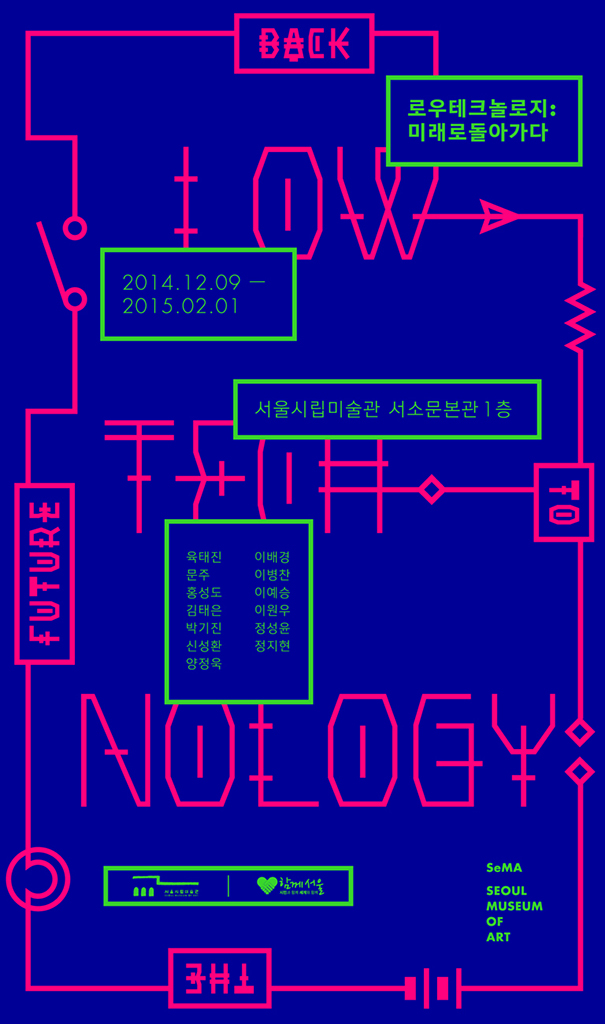
During the
exhibition 《Low Technology: Back to the
Future》 (December 19, 2014 – February 1, 2015, Seosomun
Main Branch, Seoul Museum of Art), despite a tight preparation schedule, Jung
carefully reviewed the curatorial proposal and responded with a precisely
aligned new work plan, along with a clear articulation of his artistic
intentions. Even through several rounds of sensitive negotiations, he
consistently persuaded with precise language and approached adjustments with
flexibility.
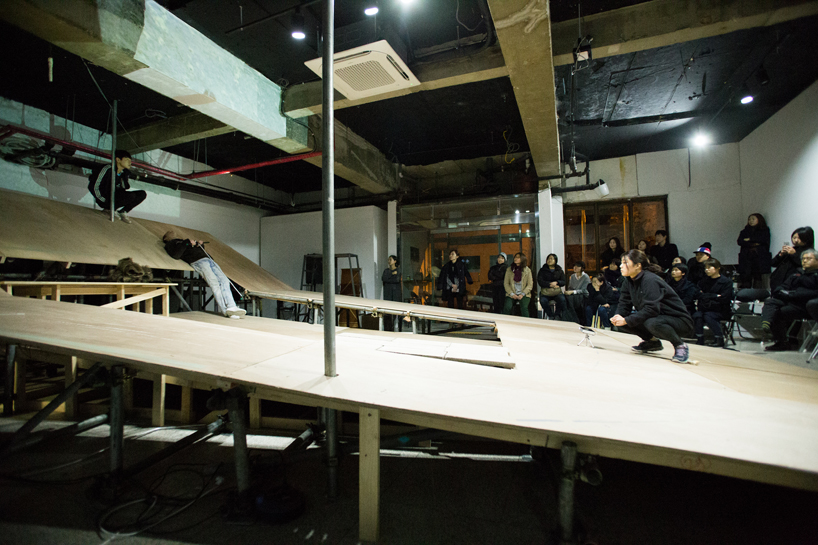
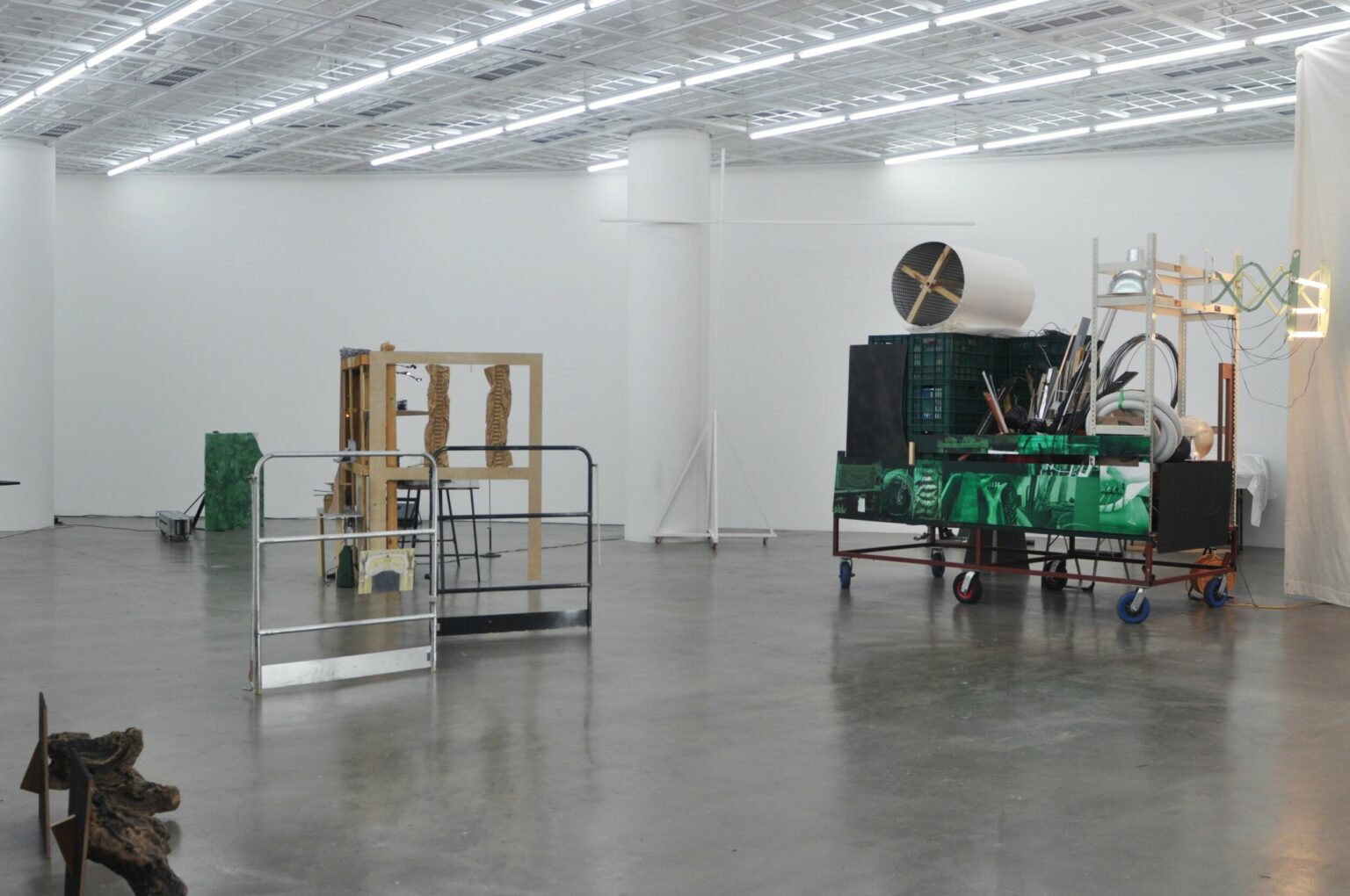
Ultimately, he presented the work
Tech Rehearsal, which juxtaposed his earlier works—placed
behind a skeletal stage-like structure reminiscent of a theater set before
performance—with a new piece, Skin Paster, featuring an
internet broadcast by a BJ combined with a 3D avatar skin. This configuration
questioned the coexistence and boundary between low-tech and high-tech
realities. Such a method of interweaving past and new works corresponds closely
to the exhibition structure of his current solo exhibition 《gomjumsum》.
For the author, this exhibition itself
functions as a single work—one that presents a landscape as a collective image
of contemporary society. One of the elements that runs through Jung’s diverse
body of work is the self-awareness of the individual artist standing before the
vastness and repetition of society and reality. This self-awareness is often
deeply personal, poetic, abstract, and persistently marked by frustration and
helplessness, yet it never relinquishes the detailed recording of these intricate
patterns.
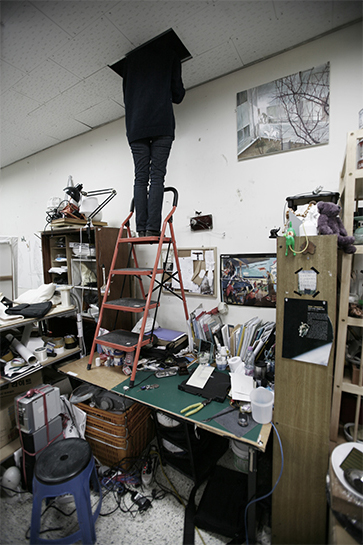
In pursuit of such individuality and
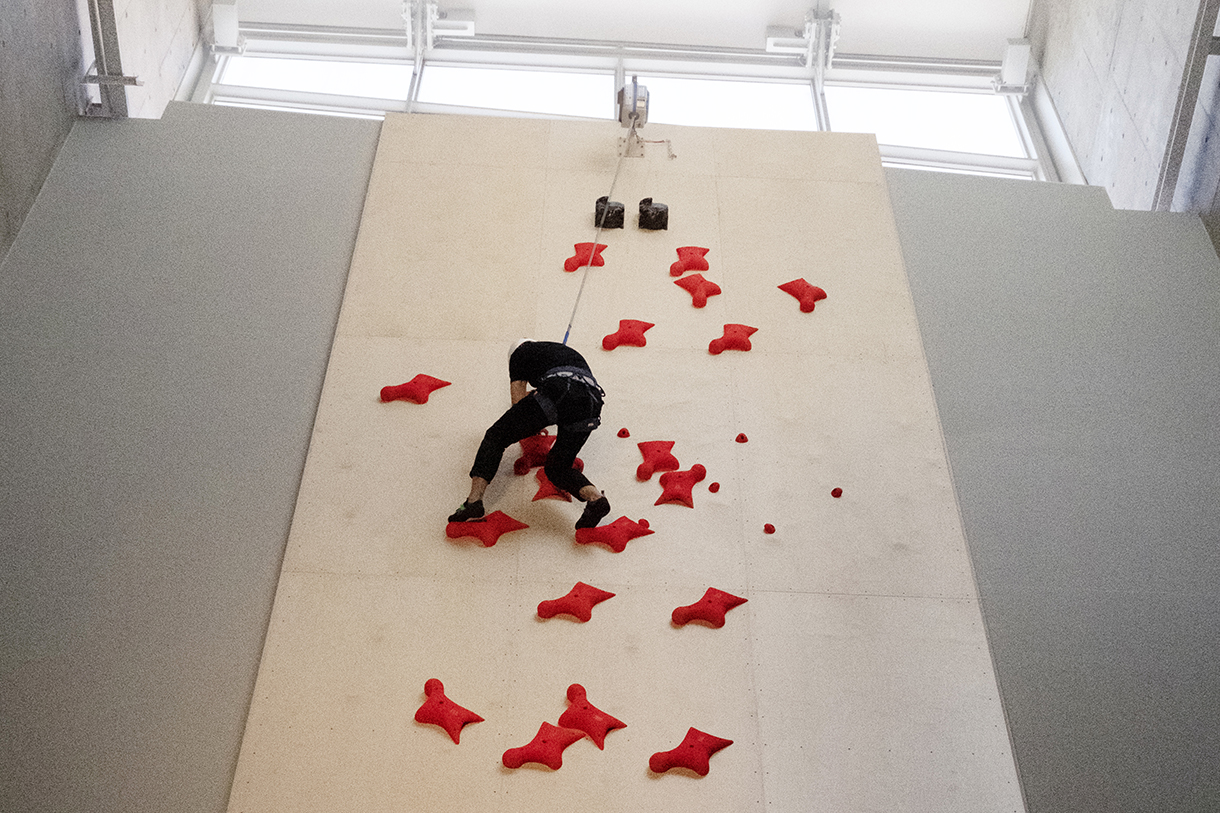
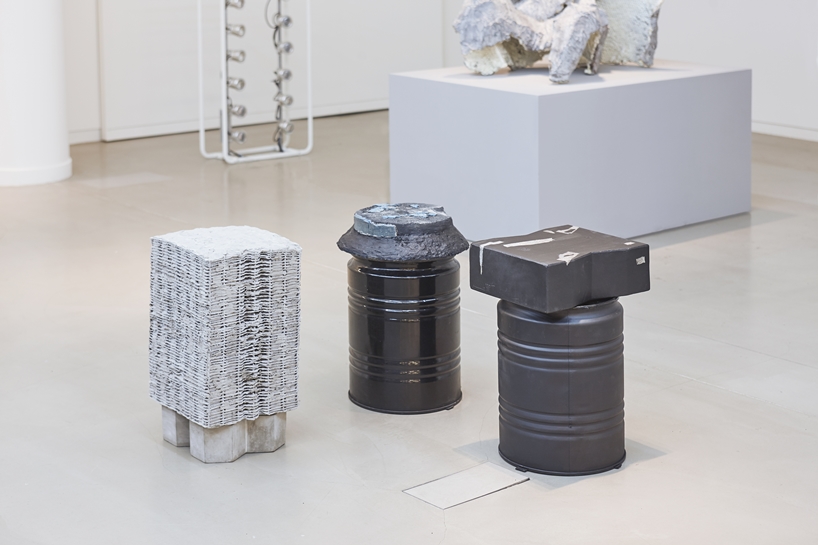
delicacy, Jung creates his own objects—some closely resembling reality
(Nobody Knows Where), others strikingly grotesque
(Bird Eat Bird), some subtly moving or drifting (Distant
Rhythm), and others glowing before gradually fading away
(Night Walker). The force of ruin that boldly reduces even
his own previous works into fragments is slight, yet it persistently triggers
reconstruction through destruction and remembrance through oblivion.
This resonates with the concept of
“iconoclastic force” (破像力), a term coined by
sociologist Kim Hong-Jung in reference to the philosophical approach of Walter
Benjamin. Opposed to utopian imagination—which brings absent objects into
presence—this iconoclastic force reveals the non-substantial or illusory nature
of what is present. It suggests that the possibility of redemption lies not in
the future, but within the present as ruin: in the act of acknowledging,
dismantling, and reconstructing it.
If there is a 21st-century manifestation
of such an iconoclastic force—one that operates through destruction,
collection, and kaleidoscopic reconstruction—it may well be found in this very
landscape. For within the floating debris of reality, the power to reconstruct
ruins anew begins with the act of laying that very landscape bare before our
eyes. It is here that the meaning of Jihyun Jung’s seemingly “meaningless” work
begins.