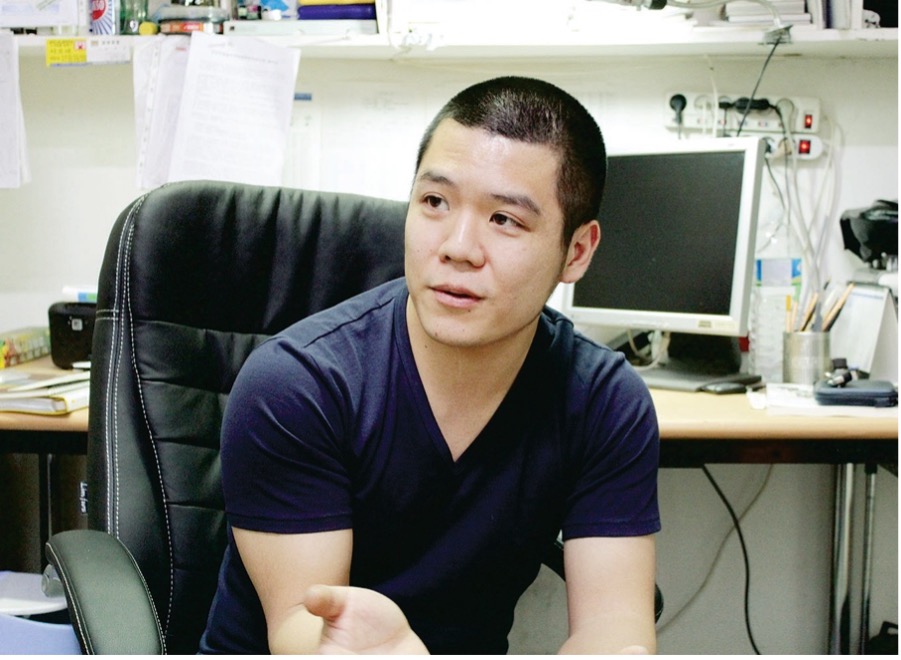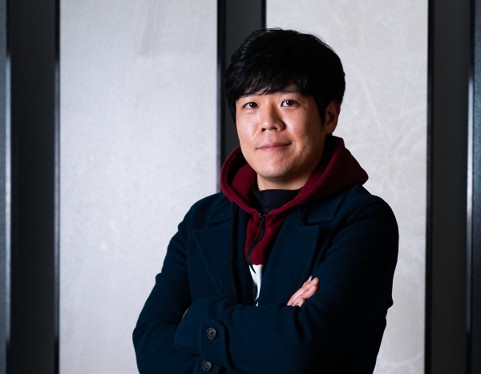


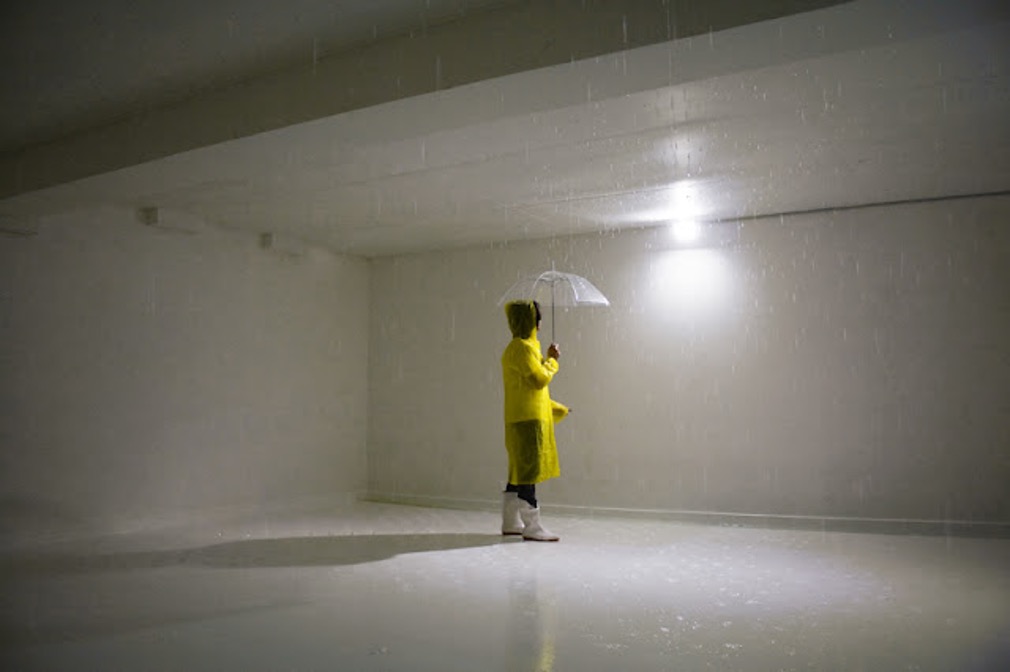
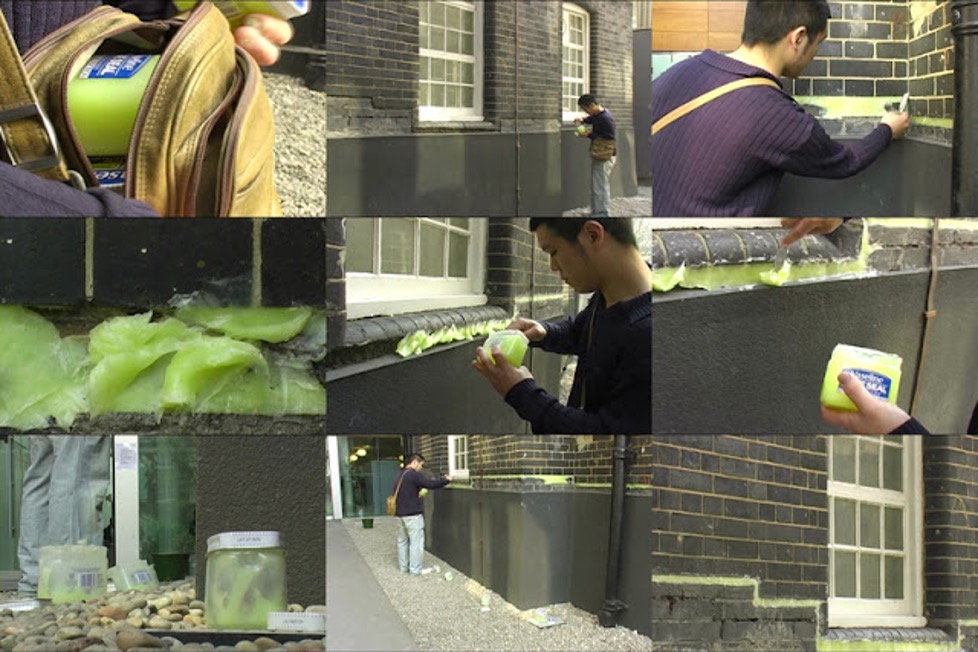
The 12th SongEun Art Award Exhibition is currently being held at SongEun Art Space. The SongEun Art Award, established by the SongEun Art and Cultural Foundation, aims to nurture talented young artists. This year’s Grand Prize was awarded to Choi Sun for his installation art. Out of 572 applicants, the foundation selected four final winners, including Grand Prize winner Choi Sun, along with Excellence Award winners Baek Jungki, Yoon Bohyun, and Ha Taebaum. These awardees have been recognized for successfully establishing their own unique artistic worlds while responding to global artistic trends. Their works can be seen at the SongEun Art Award Exhibition until February 28.

Grand Prize | Choi Sun

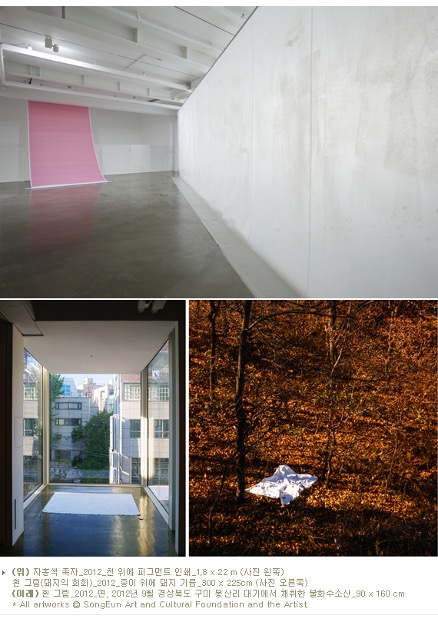
A massive "white painting" stretches across the exhibition space. At first glance, it appears to be a purely blank scene, but the substance of this work is “pig fat.” The entire surface of a thin parchment paper is coated with pig fat, and as the audience approaches, the heat from their bodies gradually melts the fat, leaving empty spaces. Whether intentional or not, the purity of the "white painting" inevitably fades due to the presence of the viewers.
What does Choi Sun seek to convey through pig fat? His work reflects the dark reality of “foot-and-mouth disease culling.” Another "white painting" on display captures a different tragedy—this time, the aftermath of the hydrofluoric acid gas leak in Gumi. The piece was created by absorbing hydrogen fluoride from the contaminated air onto a white cloth, resulting in an invisible, odorless painting.

Another work by Choi Sun, installed on the mezzanine, is Purple Scroll. From afar, it resembles a pink-hued abstract painting, but in reality, it was printed using ink similar in color to the water-based dye stamped on the skins of pigs that were buried alive during the foot-and-mouth outbreak, where 3.5 million pigs were slaughtered. Through these works, Choi Sun borrows the medium of fine art to reveal the repulsiveness of reality. His work challenges the conventional boundaries of art, questioning the dichotomy between beauty and ugliness, and reminding us that all values are inherently relative.


©Jungle Magazine

Excellence Award | Baek Jungki

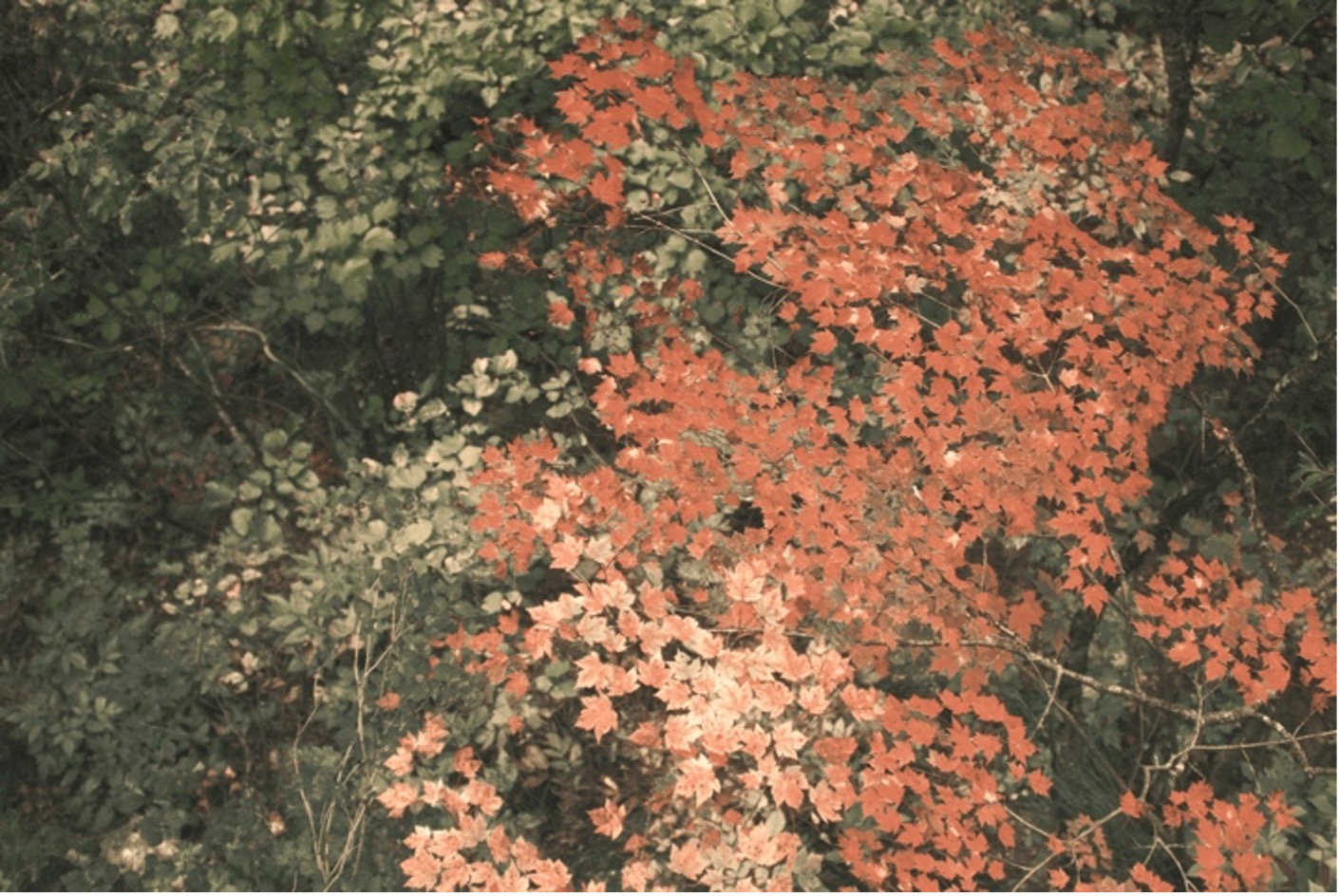
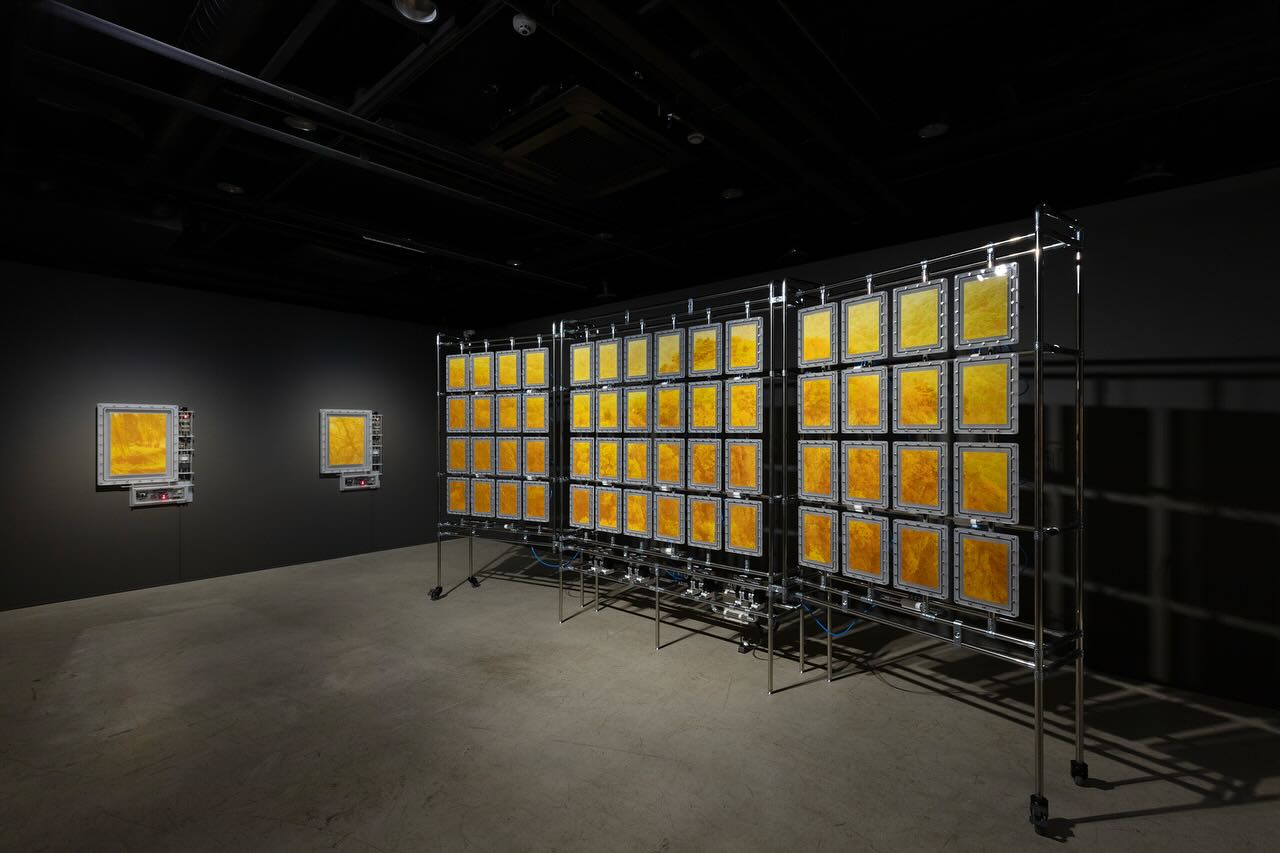
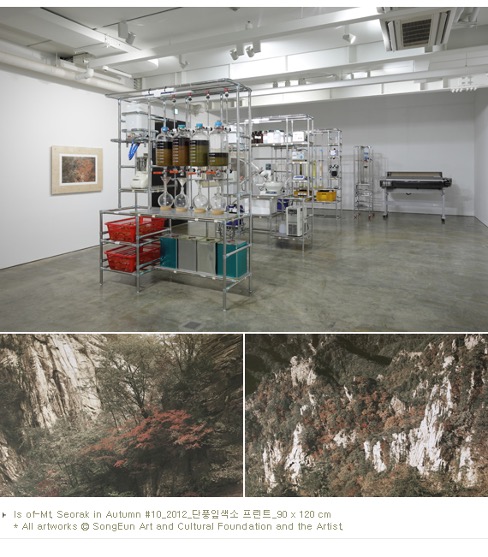
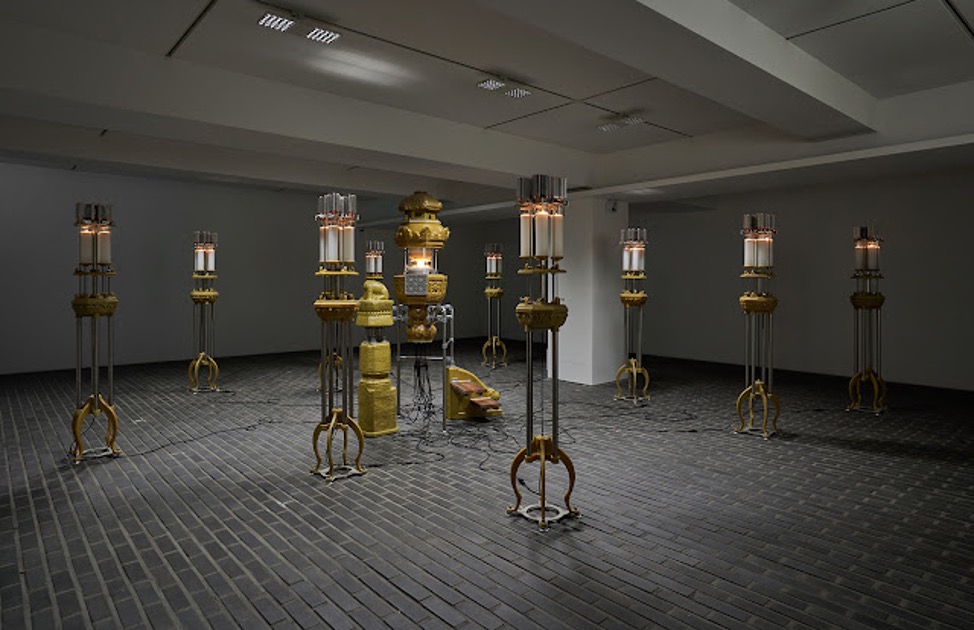
Baek Jungki’s work Is of: Mt. Seorak in Autumn explores the essence of representation through images. The work presents a landscape of Mount Seorak, but rather than being printed with conventional ink, it was created using pigments extracted from autumn leaves collected directly from the site. Compared to ordinary ink prints, the colors may appear less vibrant or distinct. However, since the image itself is composed of the same material as its subject—real autumn leaves—it establishes a fundamental connection between representation and reality.

Notably, the pigment from the autumn leaves fades when exposed to air and sunlight, mirroring the natural process of autumn foliage turning colors and eventually disappearing. The mechanical devices used to extract the pigment—such as grinders and concentrators—were constructed by the artist himself. Unlike standardized manufacturing processes, Baek’s method requires individually crafted equipment tailored to each subject, emphasizing the uniqueness of each creation.


©Jungle Magazine

Excellence Award | Yoon Bohyun

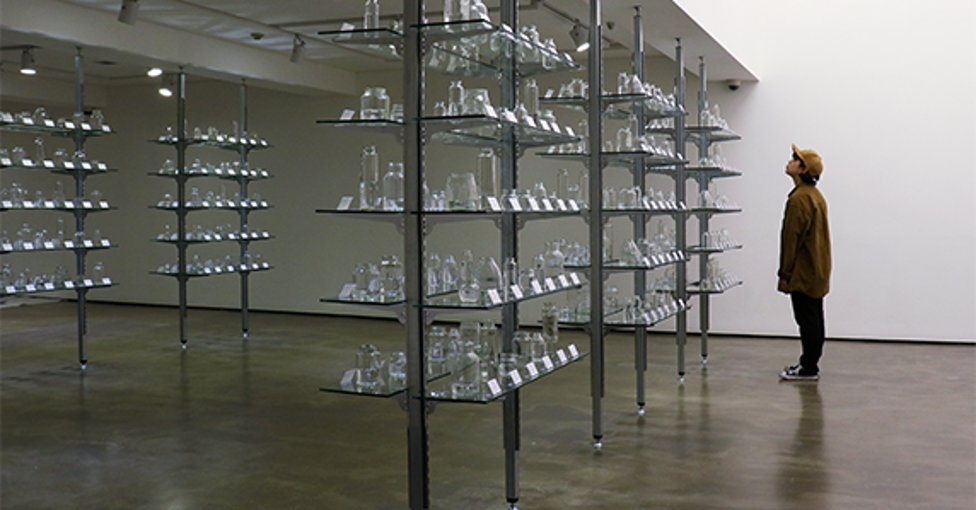
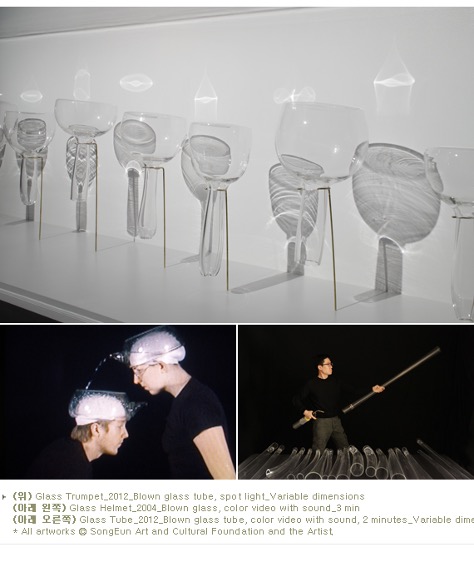
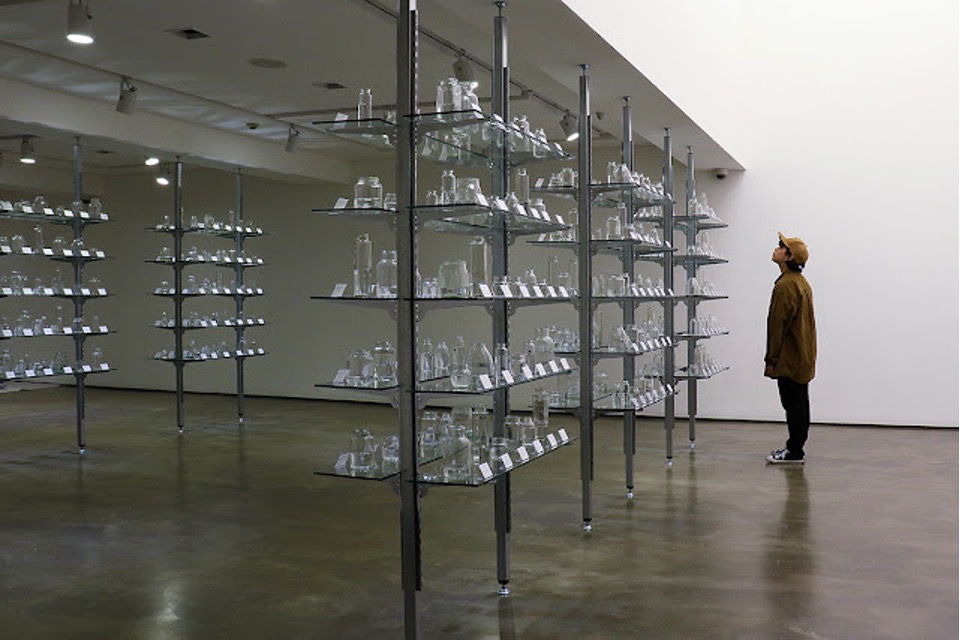
Yoon Bohyun explores the invisible qualities of glass—its transparency, refraction, and distortion—making these characteristics tangible through his work. Glass Helmet challenges the traditional notion that glass cannot be worn, presenting it as a prosthetic-like object attached to the human body while examining the interaction between glass and water. According to the artist, this piece originated from his experience of struggling with language barriers while living abroad, leading him to explore alternative modes of communication beyond spoken language.

Glass Tube generates sound through variations in air pressure when a wire mesh at one end is heated. The pitch of the sound changes depending on how the differently shaped tubes are moved. The process of producing sound metaphorically transforms the rigidity of modern life’s burdens into something more fluid and playful, akin to playing a musical instrument.

Glass Trumpet was inspired by a painting by Kitagawa Utamaro from the Edo period, depicting a woman playing a trumpet. The piece recreates an old toy that produces sound by the contraction and expansion of a thin glass membrane. By generating unpredictable sounds and refracting images, the work highlights the limitations and distortions inherent in communication. Through the unique properties of glass—its shadows and the sounds it produces—Yoon Bohyun reveals the hidden realities and dimensions of communication that often go unnoticed.


©Jungle Magazine

Excellence Award | Ha Taebaum

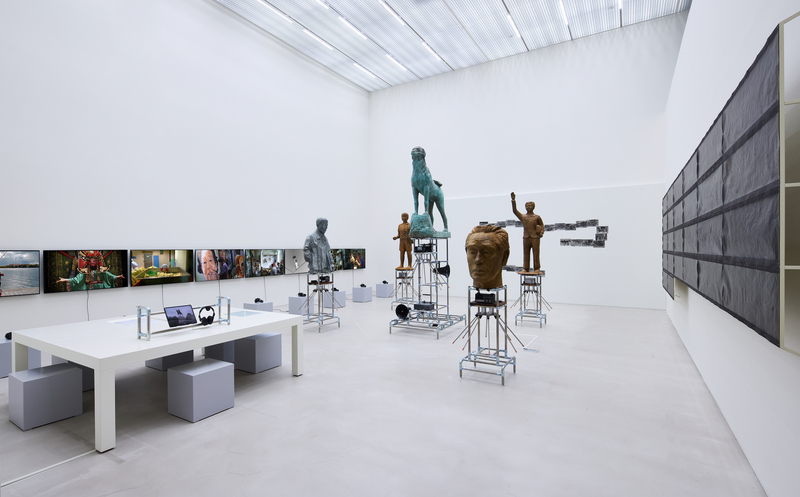
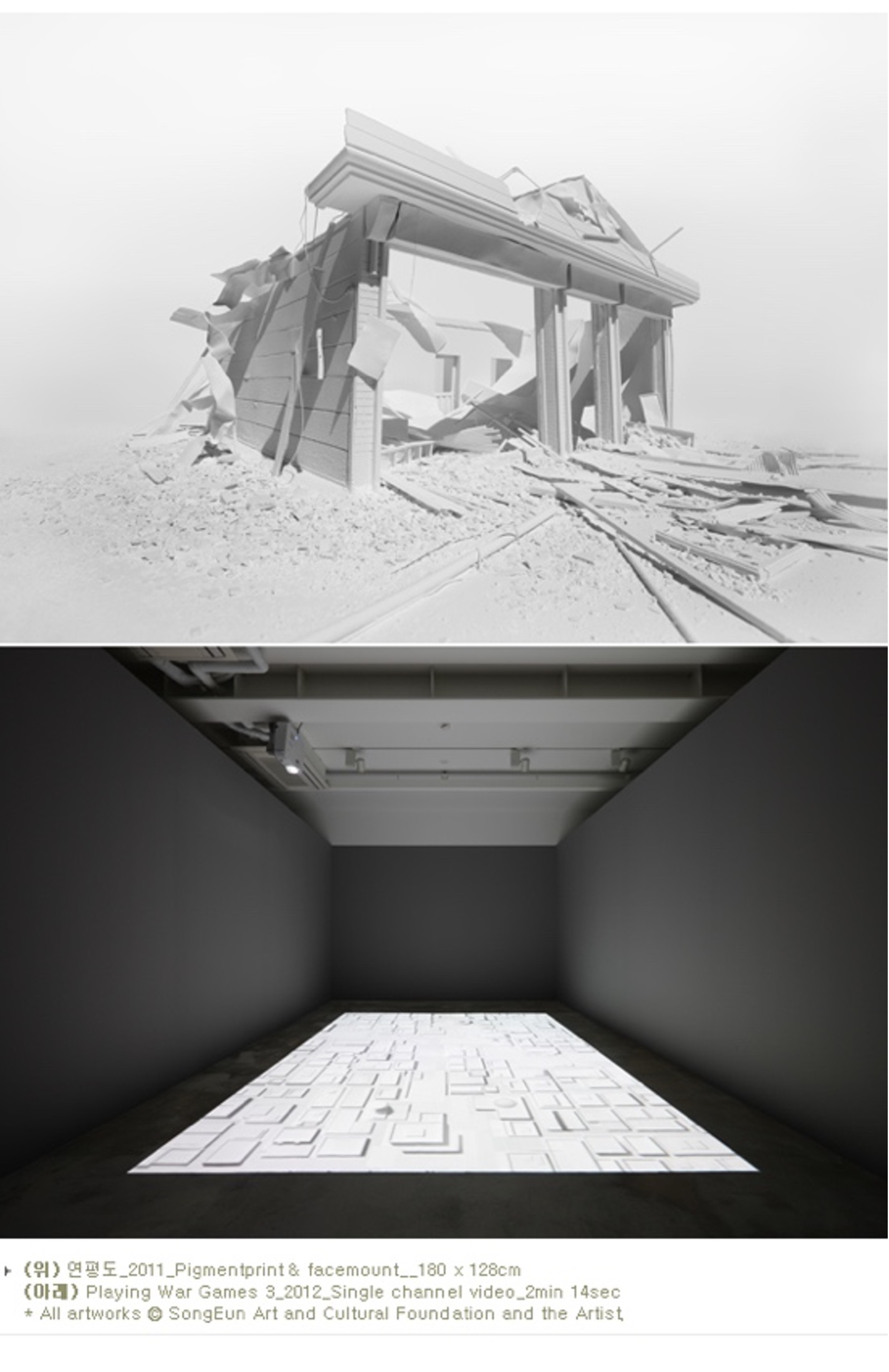
Ha Taebaum’s work focuses on news images documenting real-life disasters and tragic events. His reinterpreted images depict sites devastated by natural disasters such as earthquakes and tsunamis, as well as politically charged incidents like wars and terrorist attacks. These reconstructed scenes are based on images already disseminated by the media, reshaped through the artist’s perspective.

His approach can be categorized into two methodologies: "Actuality", where he precisely recreates news photographs as scale models and then rephotographs them, and "Imagination", where he reconstructs scenes based on real events while incorporating his own subjective interpretation. The models meticulously replicate the details of disaster sites, down to the smallest debris. However, figures of people, traces of blood, and signs of burning—key elements that evoke immediate emotional responses—are deliberately omitted. Instead, the scenes are rendered in monochromatic white, stripping the images of their raw emotional impact.

This method reflects the desensitized way modern audiences consume news images. His series White embodies this perspective, presenting sanitized versions of catastrophic events. This detached approach reaches its peak in his video work Playing War Games, where buildings are destroyed by BB guns, accompanied by loud sounds. The piece critiques the way war is gamified and destruction is consumed as entertainment.

In an era oversaturated with images, Ha Taebaum highlights the growing numbness in our perception of disaster. By presenting depersonalized, colorless images of catastrophe, he urges viewers to reconsider their own perspectives on media consumption and reality itself.

©Jungle Magazine
References