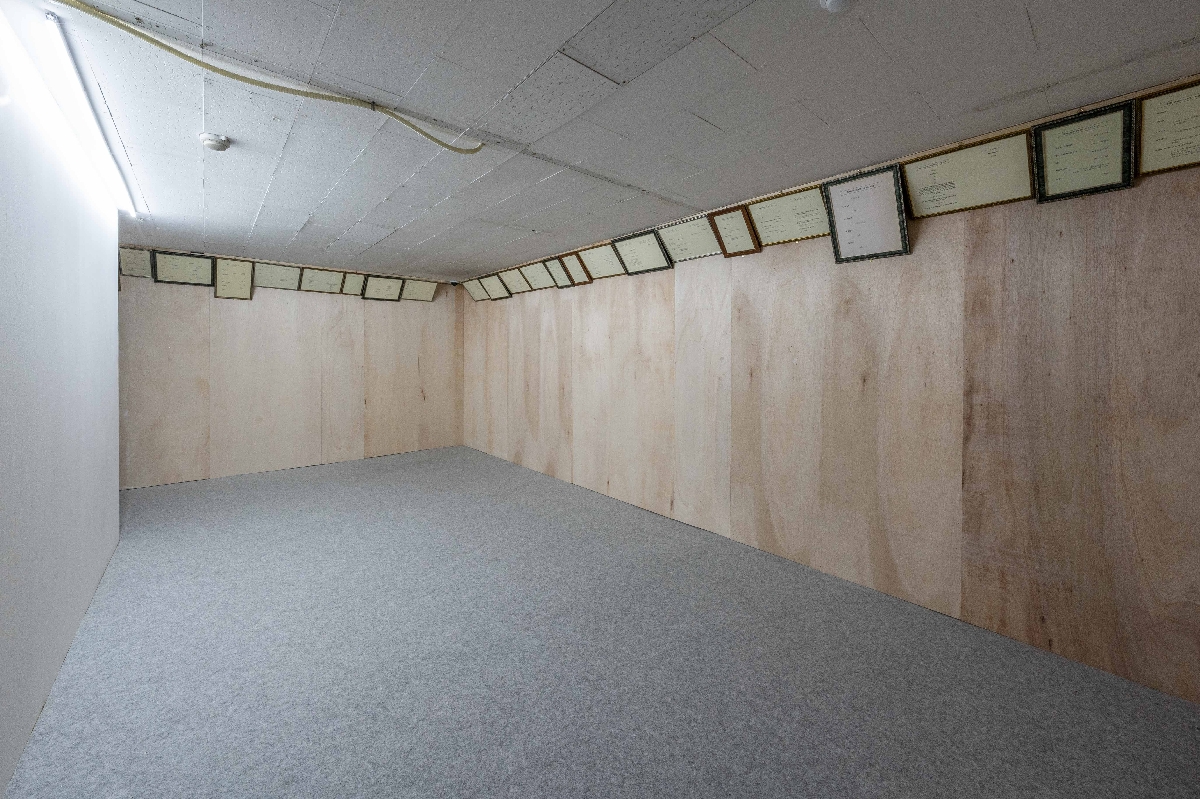
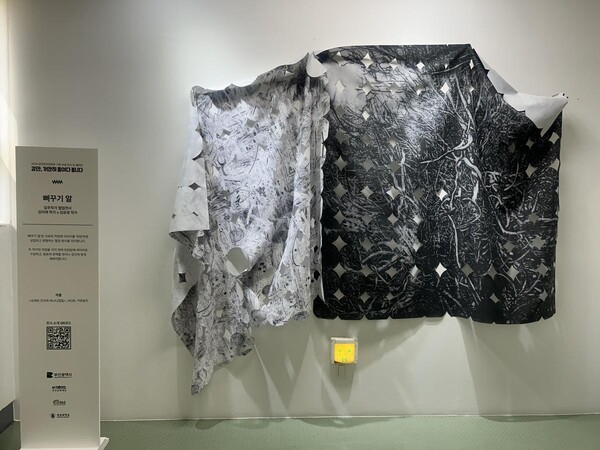
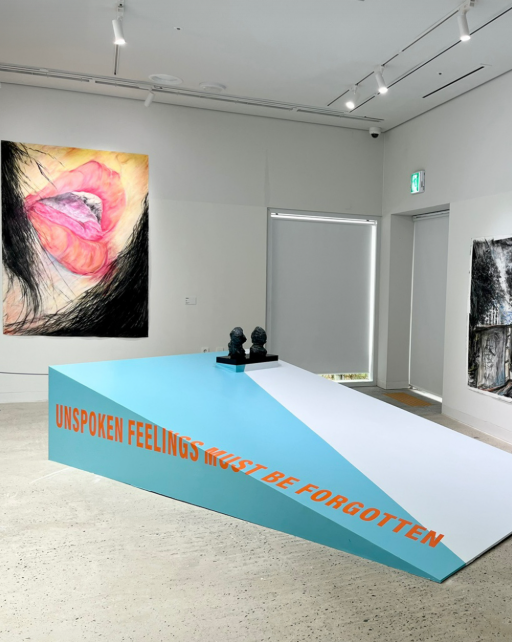
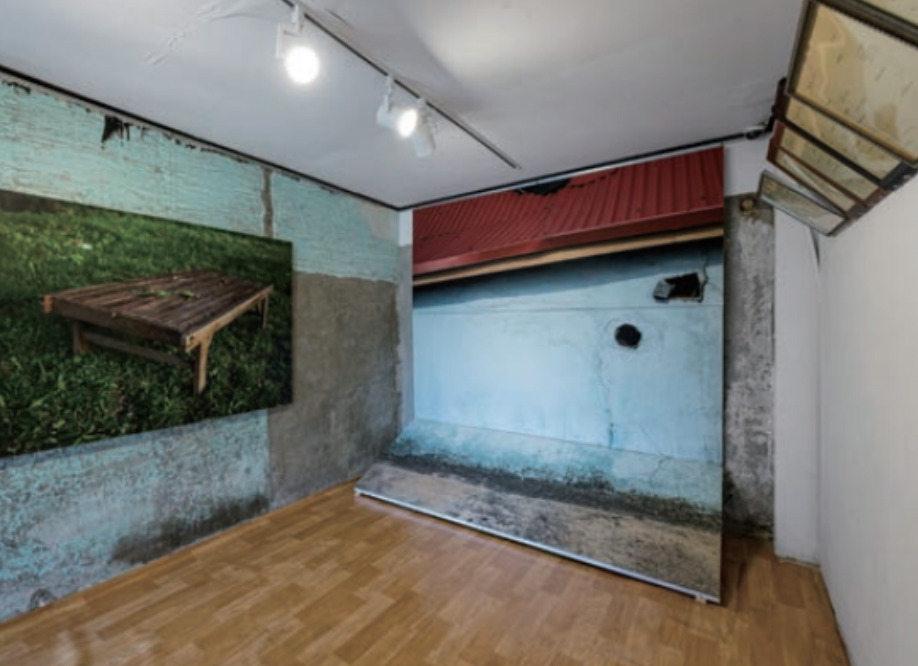
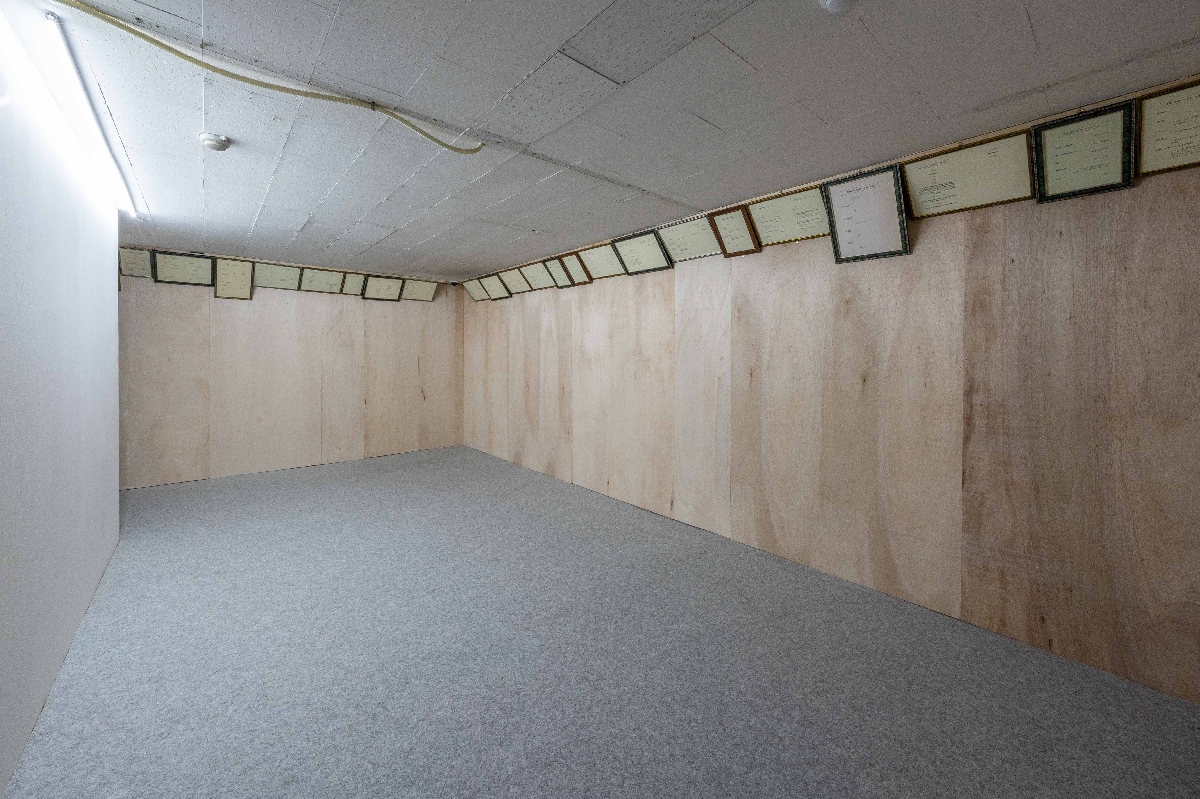
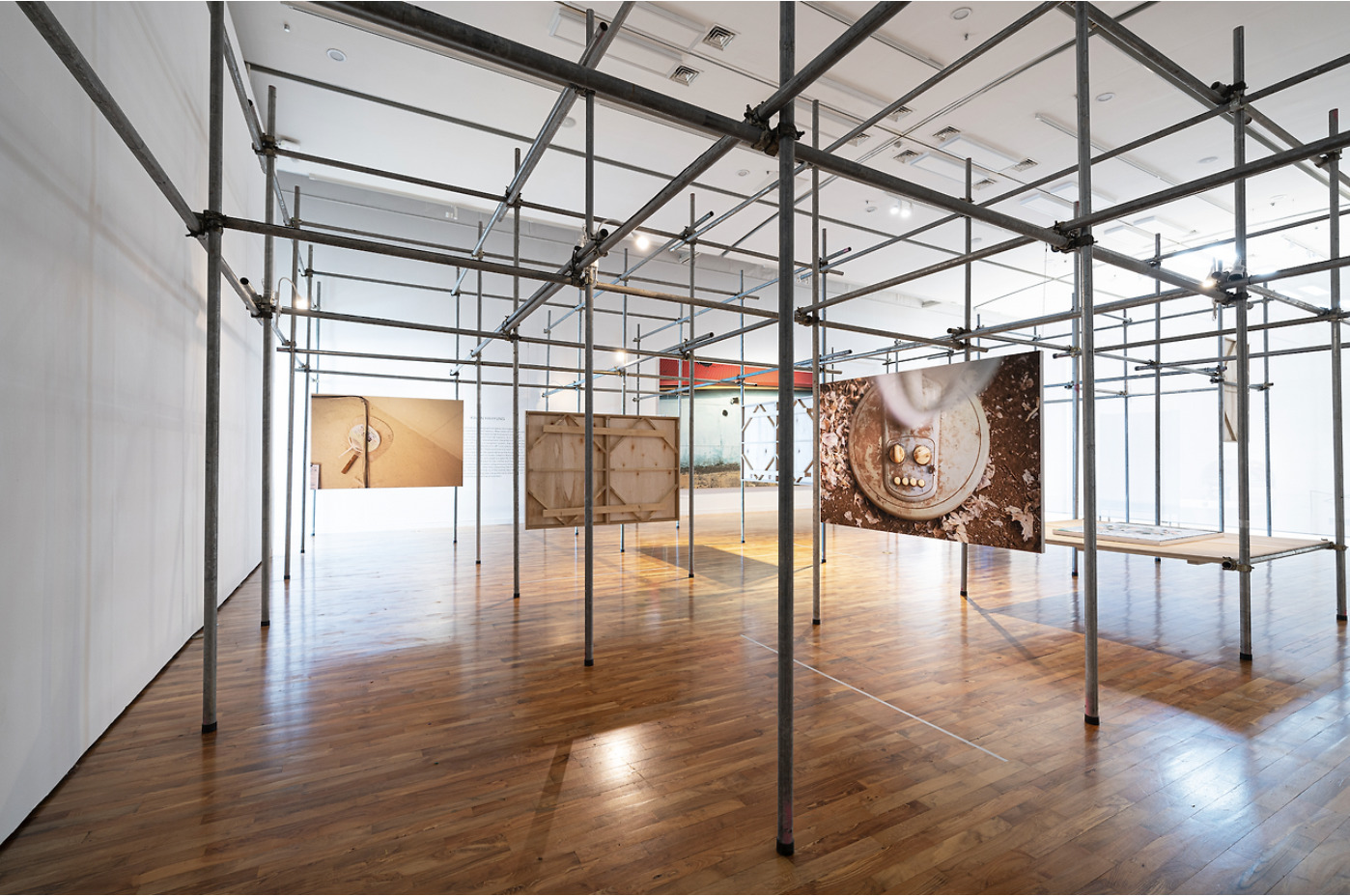
Kwon Hahyung, 상세 서비스 (Detailed Services), 2022, Installation view of 《Room Without Night》 (Space Heem, 2022) © Space Heem

This exhibition is curated by Lee Dasol, who participated in the 2021 Space Heem “Curatorial Program.” From May to October 2021, Space Heem conducted discussions among participants and workshops with experts related to exhibition planning. As a result, 《Room Without Night》 is presented. 

《Room Without Night》 contains both the situation in which a shadow is cast over someone’s room and the opposing movement of attempting to escape from it. This exhibition explores multilayered images related to women’s private spaces. Participating artists approach the theme either by drawing out new interpretations of space through diverse storytelling or by examining underlying power relations.


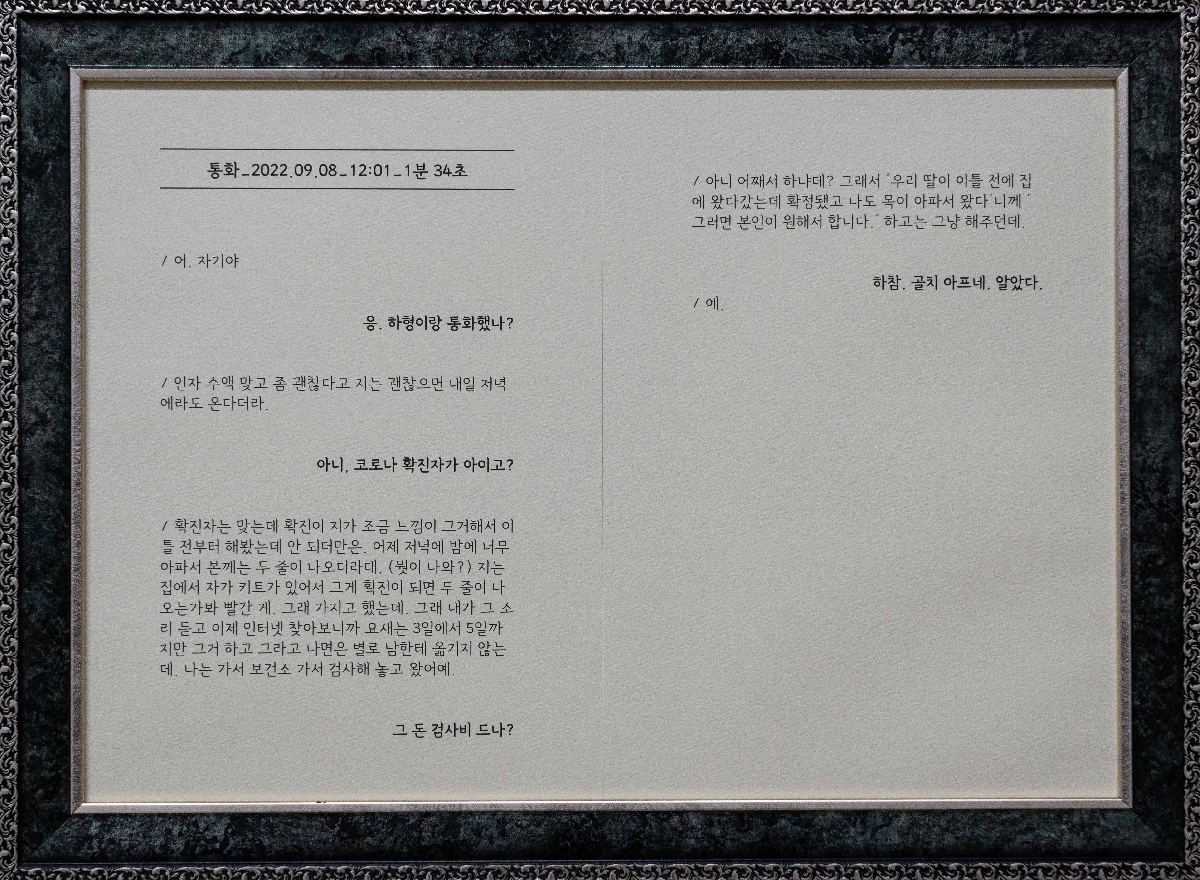
Kwon Hahyung, 상세 서비스 (Detailed Services), 2022, Installation view of 《Room Without Night》 (Space Heem, 2022) © Space Heem

(Exhibition Introduction) Room Without Night

1. Introduction

Two years ago, a disturbance occurred online due to a post by a Twitter user. “The room next to the front door is the room of the K-eldest daughter.”* Shortly after this sentence appeared, debates erupted across various communities. Although the original post cannot currently be confirmed, messages of agreement left by many female users can still be found through search. Why did so many people retweet and quote the original sentence, adding their own thoughts? It cannot simply be said that their rooms were literally next to the front door. Rather, it is likely because the condensed meaning of this short sentence pointed to a shared question among many women. 

French historian Michelle Perrot (1928– ) notes in Histoire de chambres that although the origin of the word “room” lies in a space for rest, it gradually expanded into a political space over time. Among these, women’s rooms were for a long time appended to men’s domains (harems), separated as sacred spaces of purity (convents), or confined to places of childbirth and labor (the home), making it difficult for them to exist as independent spaces. The problem that the functions of rooms have not been equally distributed according to gender has been repeatedly reproduced throughout history. 

Meanwhile, as women’s participation in society increased, movements to break away from existing conditions began to emerge. Virginia Woolf (1882–1941) argued that women need “500 pounds and a room of one’s own,” emphasizing the necessity of a foundation to support women’s activities.*** Woolf’s claim still operates effectively here more than 100 years later. However, it should be noted that the issue of money and the possession of a room is not limited merely to material conditions. It refers to a state in which a woman can fully express her voice and is not governed by inertia—that is, to move beyond the room next to the front door… 


2. Controlled Space

Among the outdated and antiquated ideologies that dominate Korean society, what is the current state of patriarchy, and how does it attempt to control women’s spaces of activity? In this exhibition, Kwon Hahyung addresses this issue by presenting installation works instead of the photography she had primarily used. 

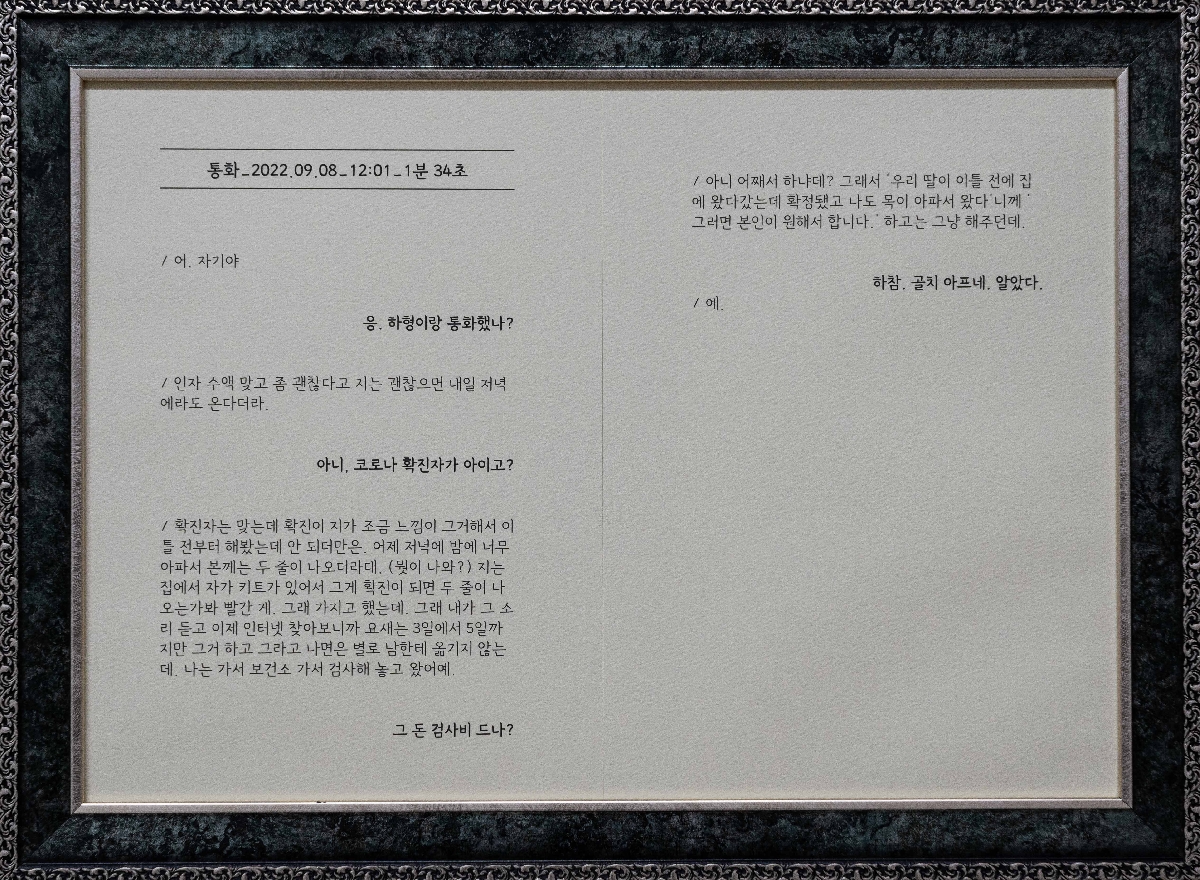
At the highest point of the exhibition space, Detailed Services(2022), composed of around 20 frames, contains transcripts of phone conversations collected by the artist over the course of a month between her parents. While at first glance the conversations may seem unproblematic and even affectionate, subtle aspects gradually emerge upon reading them. Most of their exchanges consist of requests and responses. The artist’s father calls multiple times a day, instructing that things in the house be placed “where he wants” or “prepared in the desired state.” Like a Bixby routine, this becomes part of everyday life, gradually confining the mother’s range of movement within the borders of antique frames. 

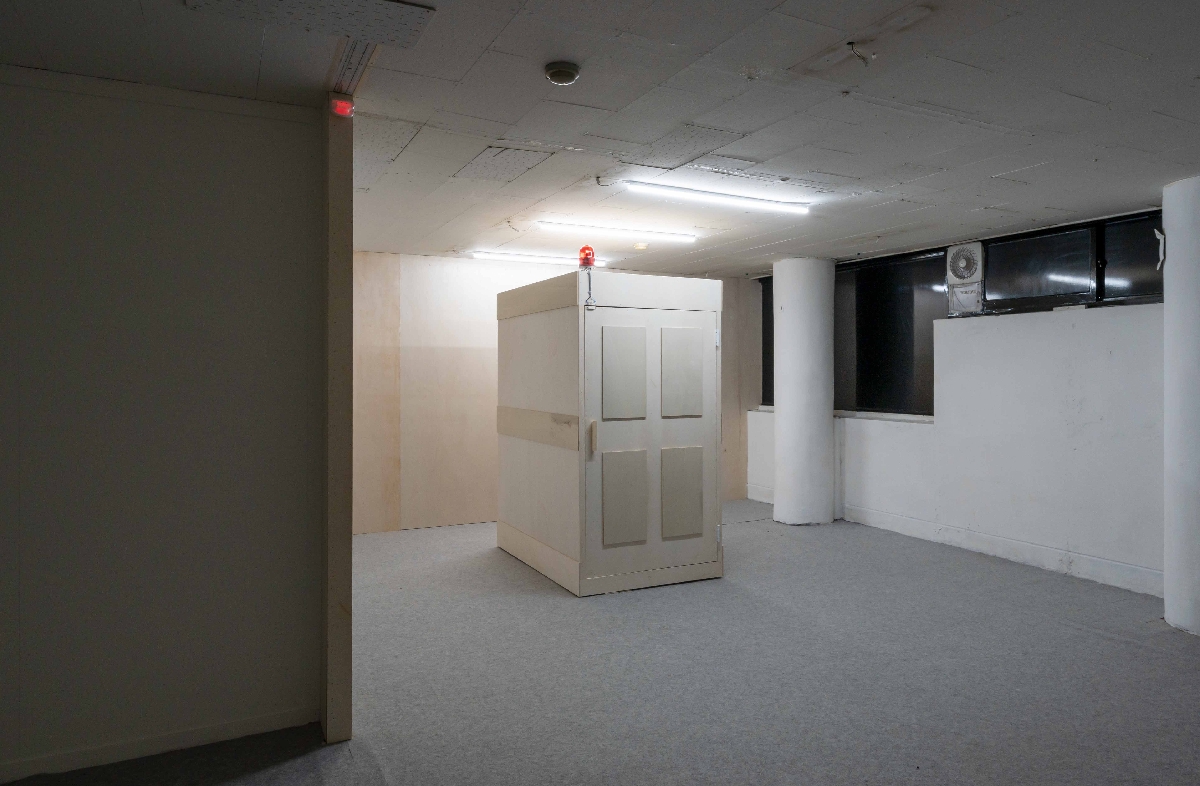
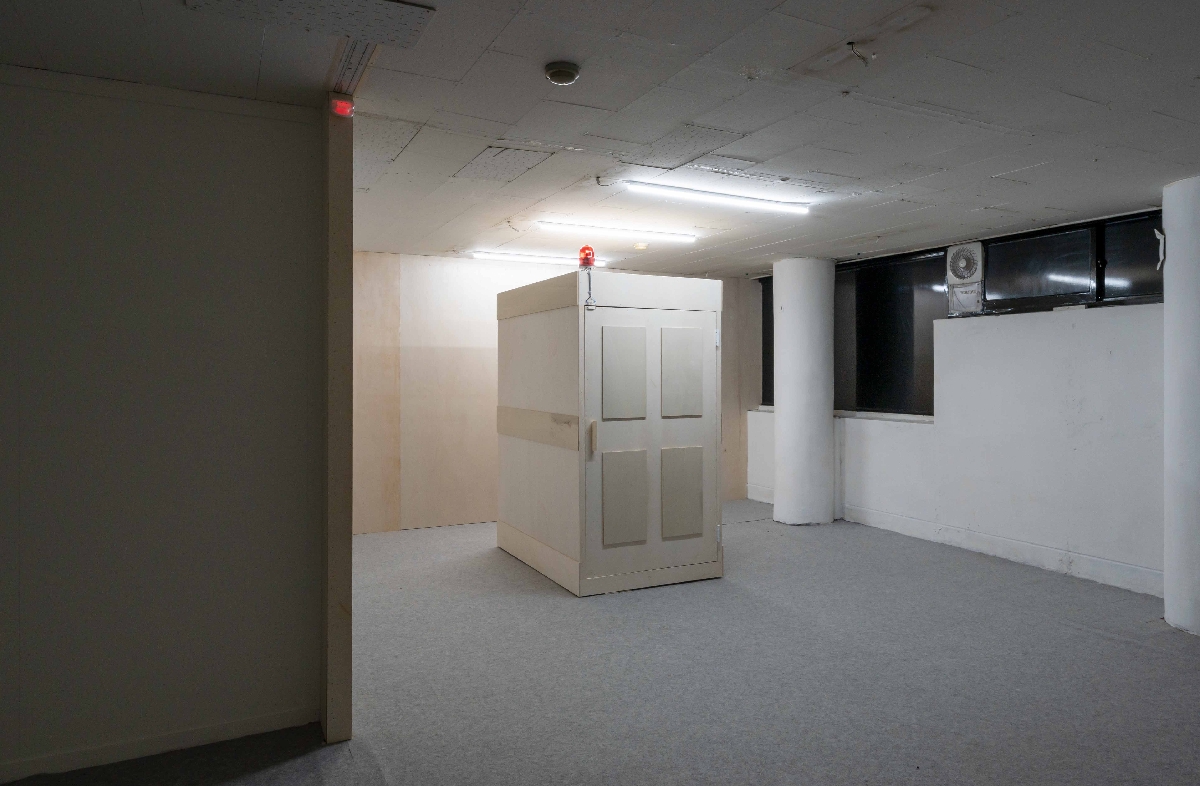
Extending from the previous work, Calling(2022) focuses on the one-directional nature of the father’s repeated phone calls and materializes this through a wooden booth and several devices. When a viewer approaches within a certain radius of the sensor installed in the exhibition space, a ringing sound is triggered inside the booth, inviting entry. Inside, subtitles of the parents’ phone conversations are presented, and on the wall is a statement summarizing how frequently such conversations occurred over a month. Through this method, Kwon Hahyung points out the close relationship between language and power. 


Kwon Hahyung, 호출 (Calling), 2022, Installation view of 《Room Without Night》 (Space Heem, 2022) © Space Heem

3. Expansion of Boundaries

Meanwhile, Kim Hyeyeon presents two video works based on an alternative approach that either dismantles the physical boundaries of the room or actively utilizes them. Important Story(2022) consists of three episodes. The first begins with a room remembered by “her,” who worked as a nurse in the 1990s. She perceives her room as a space closely connected to her social self and expands its physical and psychological boundaries across home and workplace. Her room cannot be defined as a single physical space and is a complex space that cannot easily be categorized as good or bad. 

In the second episode, the story of an orchid album cherished by a new character “he” unfolds in a calm tone. The photographs in the album do not center on people and thus represent objects that are not regarded as valuable. The artist focuses on such peripheral subjects while connecting the act of creating and organizing an album to the way one engages with a room. The final episode depicts an “anonymous narrator” waiting with villagers for the moon to rise. Interestingly, the others soon leave, and only the narrator remains, ending with the moment of encountering the moon rising in a corner. The loose gaps between episodes invite multilayered interpretations of the theme. 

Following this, A Room Where One Can Only Breathe(2020) is a performance-based work expressing the suffocating experience endured as a daughter within family relationships. Instead of words, the artist creates an opportunity to convey sincerity through specific actions. Within a spatial condition where one can “only breathe,” as the title suggests, the artist, her mother, and grandmother communicate their feelings by tearing or folding paper. In this work, the “room” functions both as a closed condition requiring limited actions and as an alternative space where three generations of women achieve harmony. Viewers can sit around the work and experience a sense of participating in the process. 


4. Conclusion

This exhibition explores the current state of women’s rooms and how they seek alternatives through the works of two artists. It addresses both the persistence of dominant ideologies in women’s spaces and the ongoing efforts to move beyond them. The night that seemed endless in the room next to the front door may one day come to completion. 


Shin Jimin, “The room next to the front door is the room of the K-eldest daughter,” Hankyoreh21, July 19, 2020.
https://h21.hani.co.kr/arti/society/society_general/48982.html (last accessed: September 26, 2022)
** Michelle Perrot, Histoire de chambres, translated by Lee Younglim and Lee Eunju, Geulhangari, 2009.
*** Virginia Woolf, A Room of One’s Own, translated by Lee Miae, Minumsa, 2006.
**** A feature on Samsung smartphones that automates routines according to daily patterns.

(Text: Lee Dasol)

References