Objectified Spectatorship
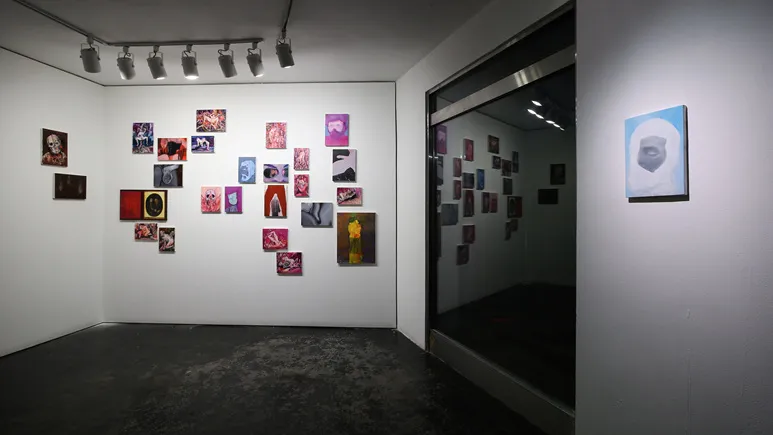
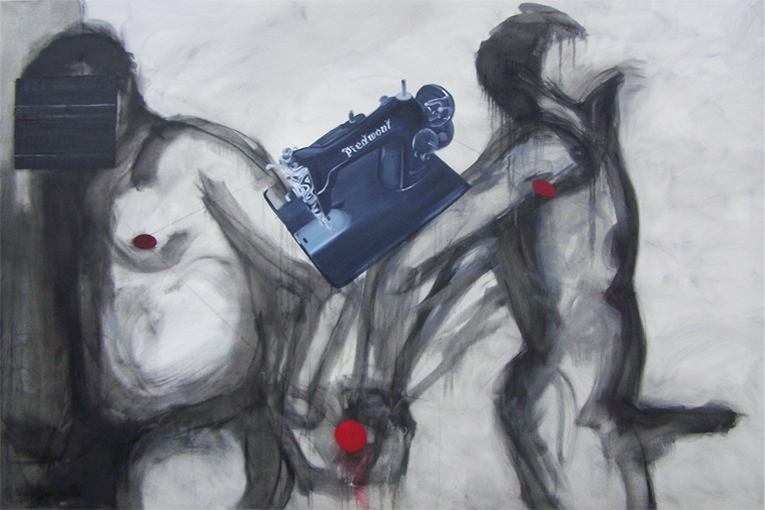
It has already been five years since I first formed a connection with Yongseok Oh through his first solo exhibition at Gallery Jungmiso in 2007. What remains most vividly in my memory are the cruel and tragic stories of the real figures he collected as subjects—Nijinsky, Elizabeth Short, Joey Stefano—and the narratives the artist himself poured out while rendering them through the luxurious medium of painting. In the exhibition space, these stories were kneaded, crushed, and remolded onto the canvas with vividly colored paint alongside soft, fleshy penises.
The wicked yet seductive manifestations of sadomasochistic violence born from human desire—desires utterly beyond the reach of law—and the viewer as both accomplice and hedonist, inevitably captivated by the spectacle of violence. That very act of viewing now surfaced directly within the image itself. The gaze of spectatorship, as always, continues its cruel observation from a powerless and irresponsible distance before the aftermath of violence. The distance between the viewer and the scene of violence remains precariously close, yet ultimately safe.
Precisely because of this safety, spectatorship increasingly pursues dimensions of stimulation and pleasure. Yet the destiny of such pleasure eventually drives itself toward the impoverished bottom of a desire in which pleasure no longer functions. At that moment, pleasure enters onto a new path of destiny in which it can only revive itself by establishing new relations with the objects that once enchanted it.
Looking at Yongseok Oh’s work over the years, one senses that the dimension of mourning is embedded within his repeatedly performed gestures. His works always contain certain recurring images, along with bodies that feel both sensual and cold at the same time. The collected images continuously reappear through repetition and distortion. The dominant emotional atmosphere is tragic, lonely, desolate, and melancholic. Yet, as always, these feelings merely linger around the “objects” themselves. Encounters are misaligned, relationships are severed, and the distance from the object is never truly overcome—even when bodies in the paintings appear tangled together or physically attached to one another.
These emotions are particularly dominant within the artist’s working notes. Yet this lingering sensation—never possessing, never being possessed, always anticipating separation—is one deeply familiar to us. It is the feeling of never truly having possessed something in the first place, and therefore never truly having experienced its loss, nor having genuinely mourned it. Instead, something always seems to arrive suddenly, snatching something away and leaving behind only a hollow emptiness.
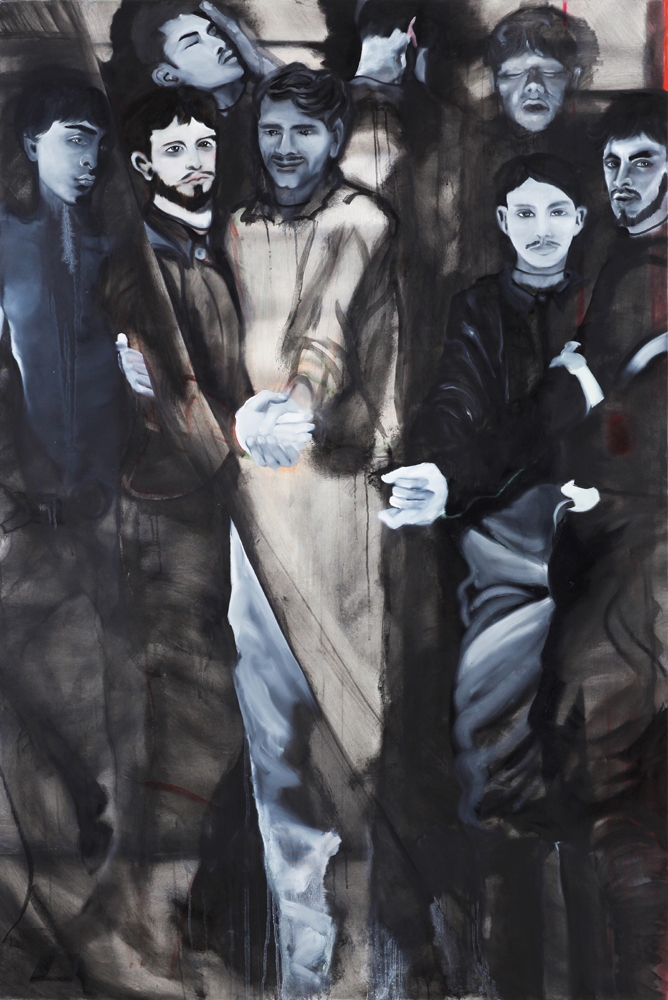
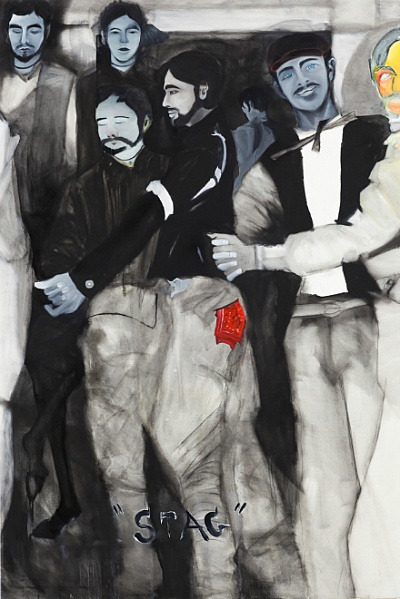
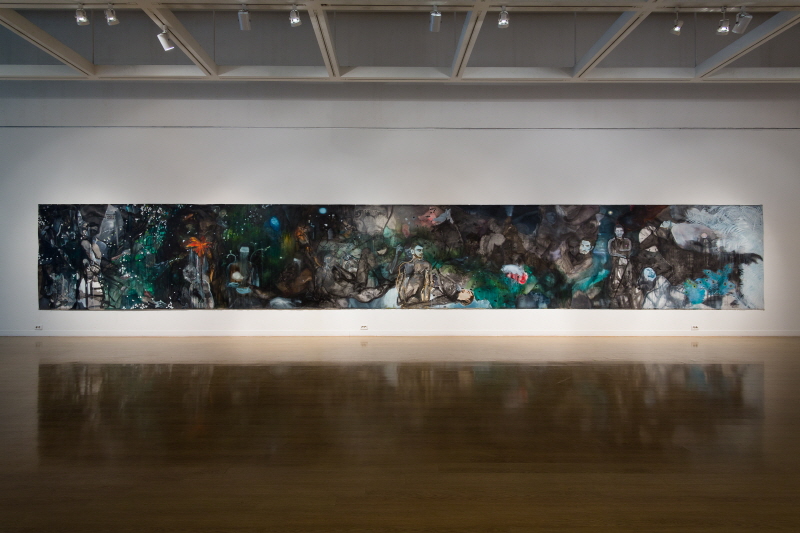
His previous solo exhibition 《Tu》 (Kumho Museum of Art, 2011) seemed to originate from an impossible relationship and the invisibility arising from it. In the crowd scene of COWBOY DANCE STAG : DANCE OF THE KNIGHTS (2011), the figures gather collectively, yet each remains isolated, filled with aching emotions toward things that have departed, disappeared, or are destined to vanish. Traces of certain presences are suggested only through silhouettes. Yet rather than stemming solely from personal experience, it is perhaps more accurate to say that these are transferred memories of the collective.
However, collective memory has become numb through repeated losses, to the point that it no longer even knows what has been lost. Separation, loss, and forgetting thus repeat themselves in a state of emotional paralysis. If pleasure, once its mechanism ceases to function, must seek new objects and establish new relationships, then when the tears of sorrow over loss have dried up, how can the object be reborn? And what kind of new relationship can then be formed?
Luminous Colors, or the Splendid Tomb
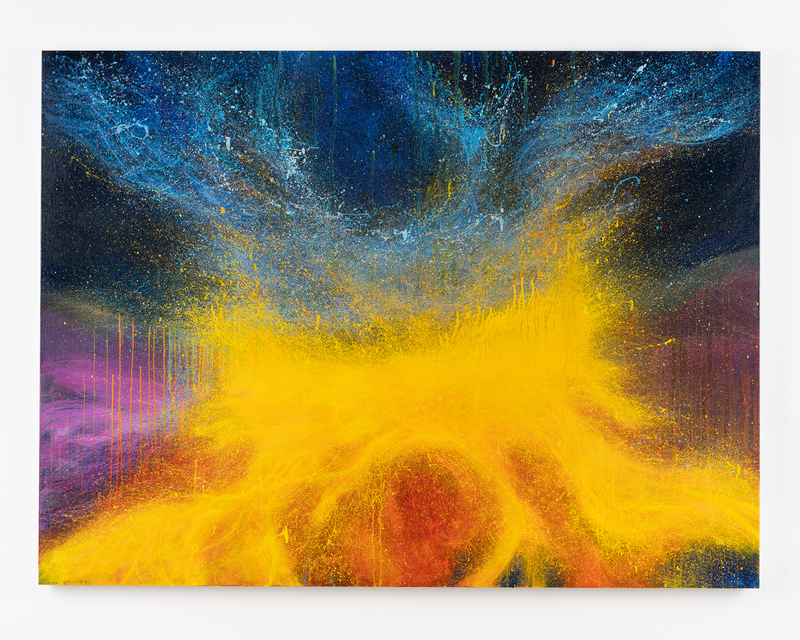
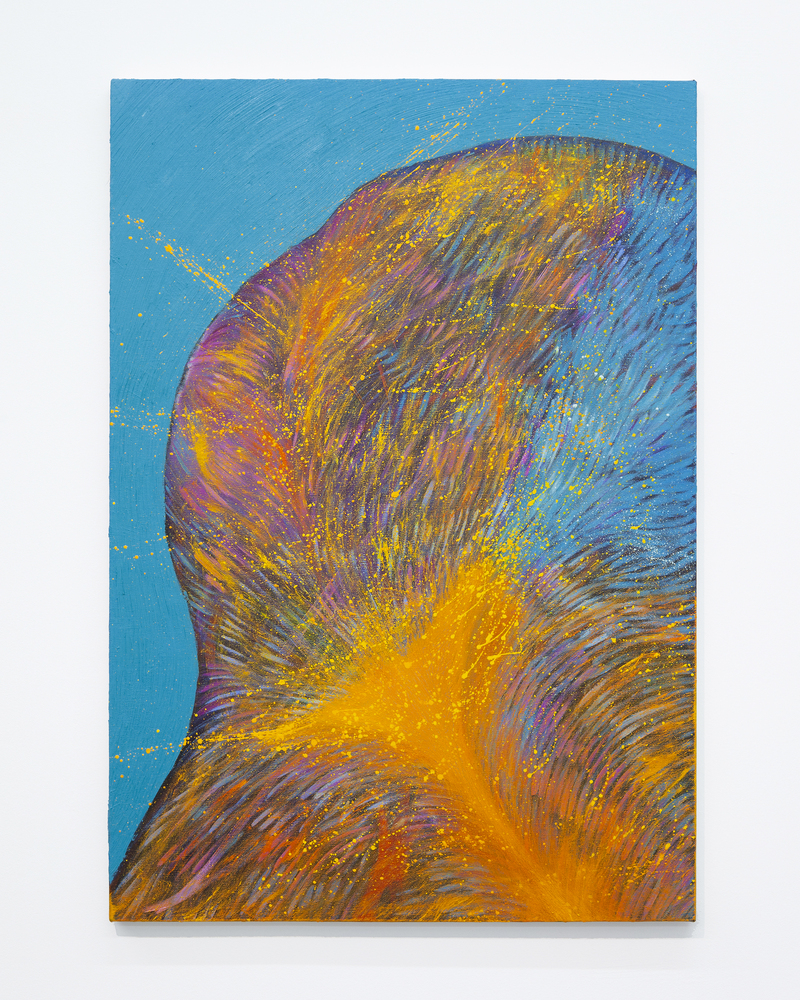
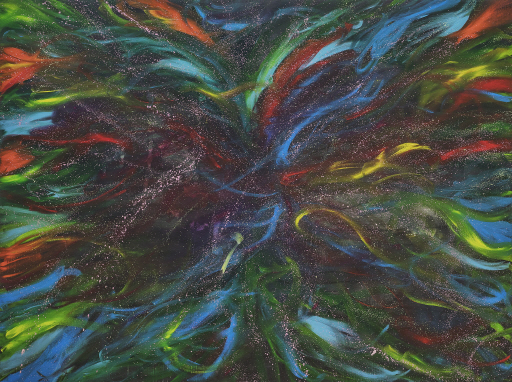
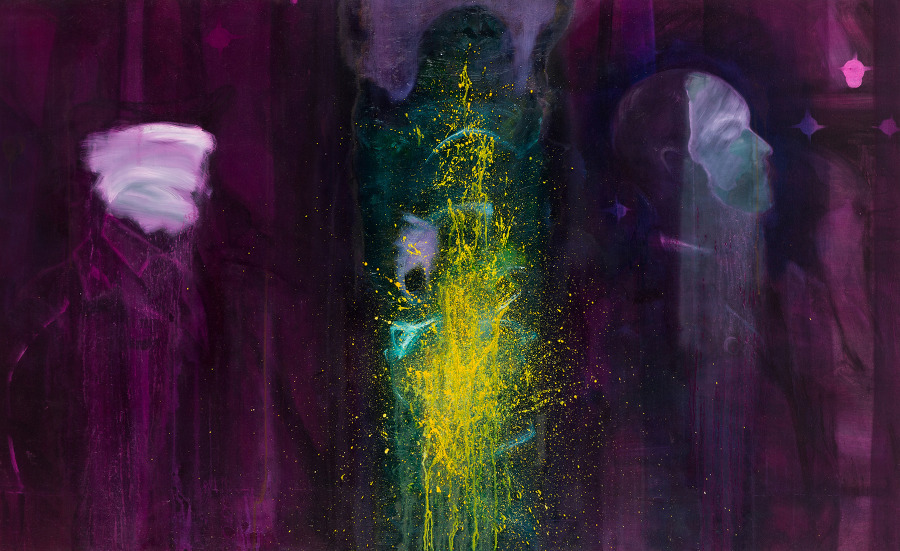
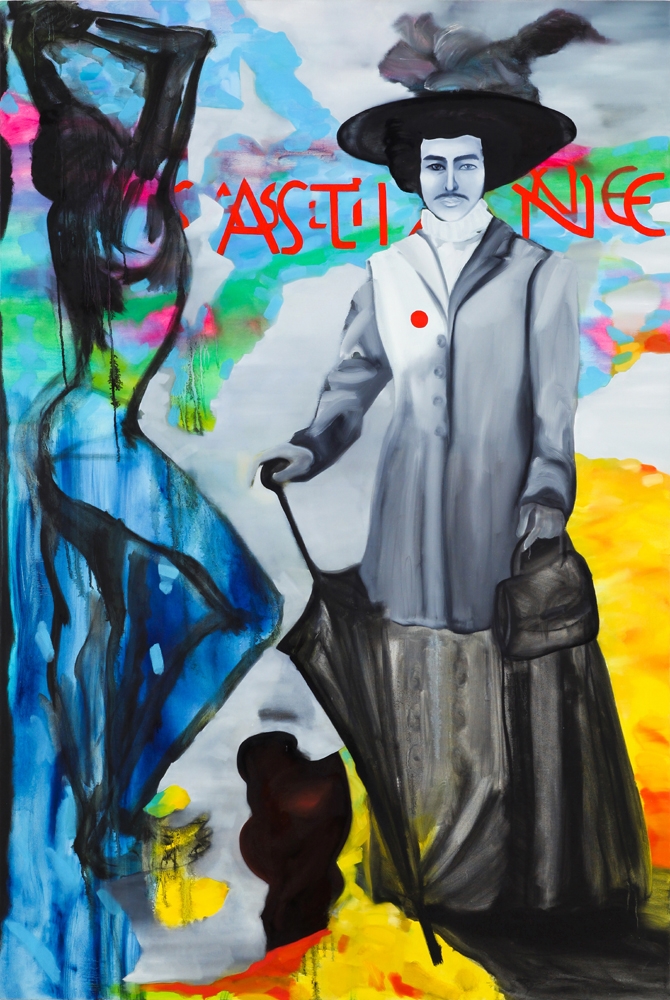
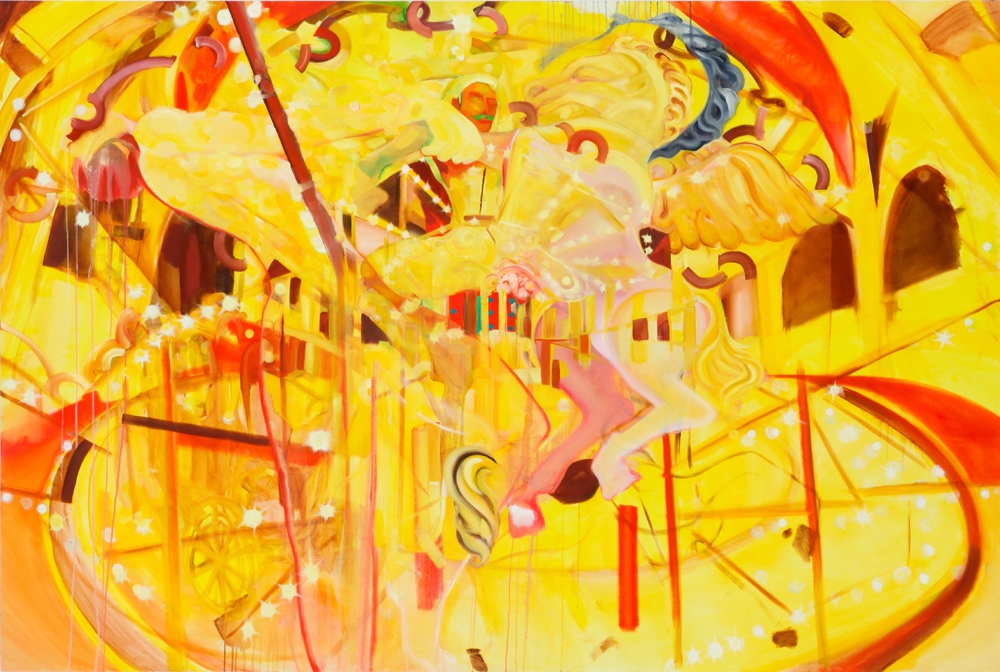
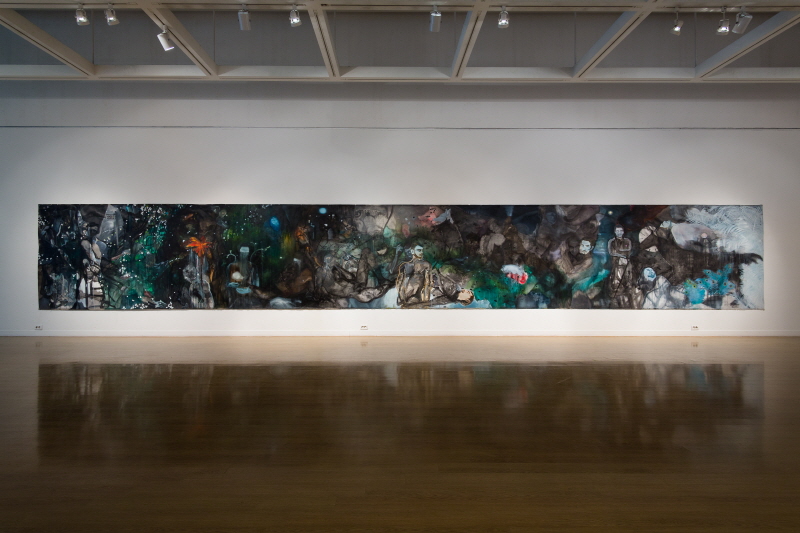
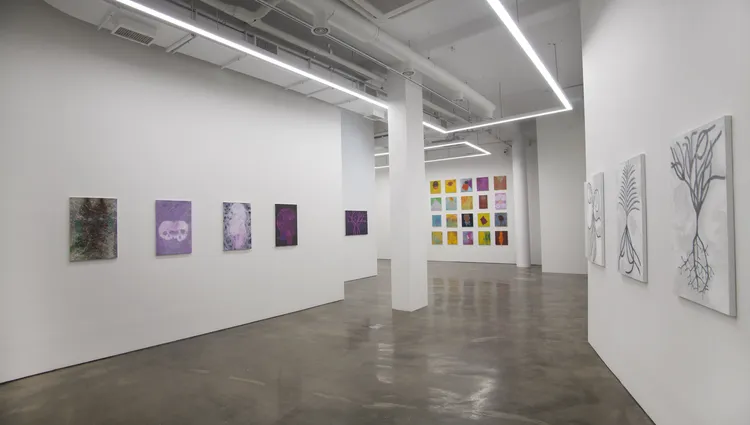
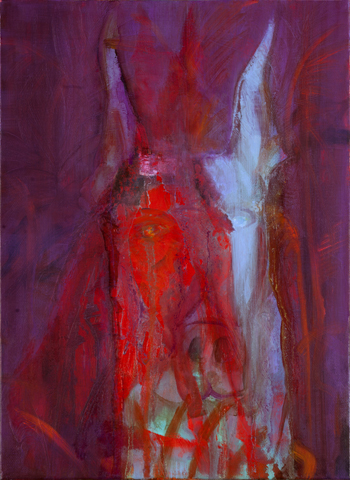
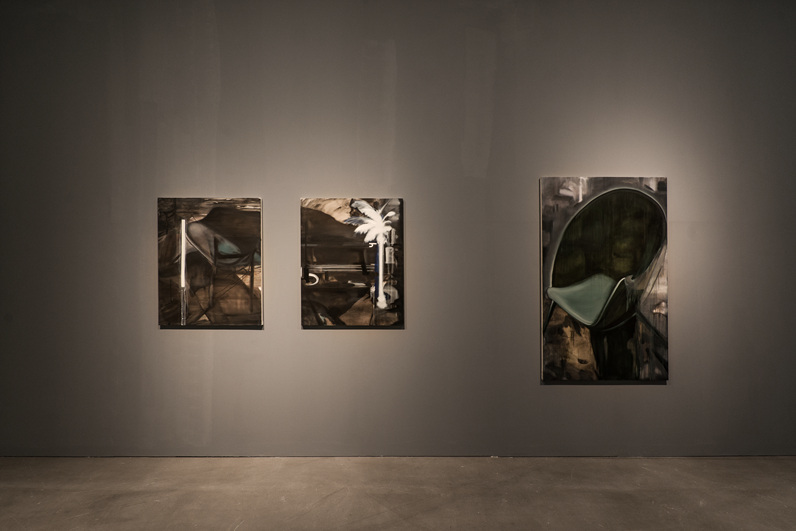
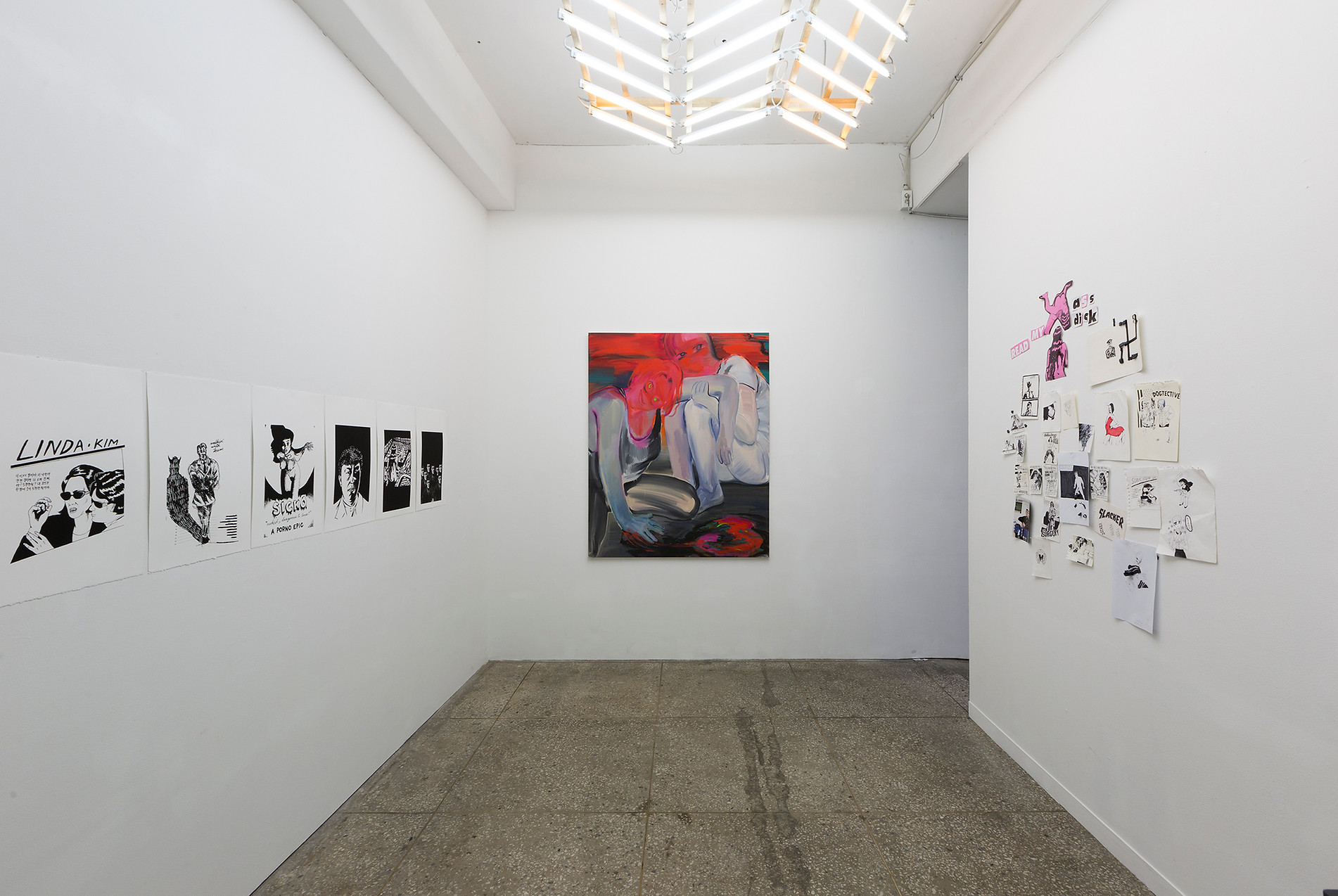
Ironically, the figures in this exhibition are enveloped in luminous colors that seem almost “filled with ecstasy.” Bodies captivated by these radiant colors have themselves become painting. These bodies are no longer the concrete flesh of particular individuals, but merely bodies of one sort or another. No matter how brutally tortured, murdered, or mutilated they may have been; no matter how violently they may have made love; no matter how richly erotic fluids may have emanated from beautiful bodies. These bodies no longer possess stories. They remain detached from any relationship, whether violent or erotic. Now the bodies simply seep out from color itself.
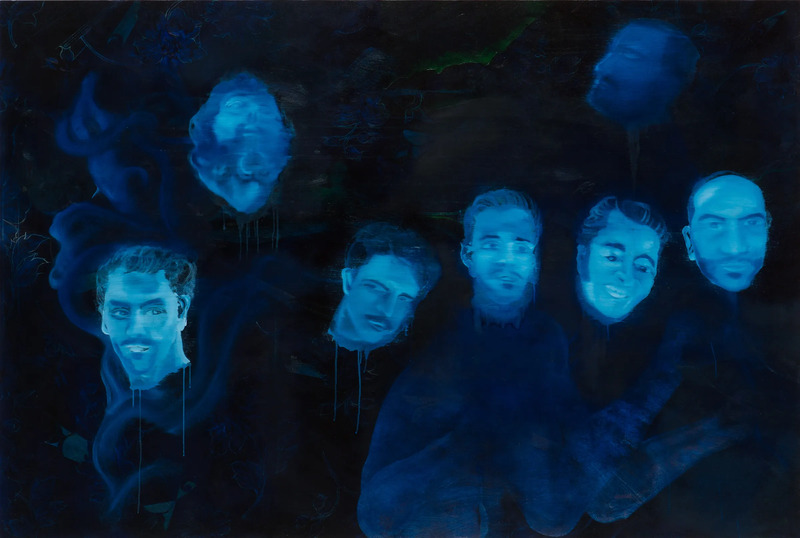
Faces float in isolation, or dissolve into backgrounds of color and nature. They continue to leave behind only traces in the form of silhouettes. Yet the gestures of these indistinct bodies remain entangled through posture alone, through pose alone, through expression alone. Having shed the limited flesh of the body as an object of pleasure, these shells—or rather, these de-subjectified bodies—have abandoned both the body and relationships themselves, endlessly repeating only their actions.
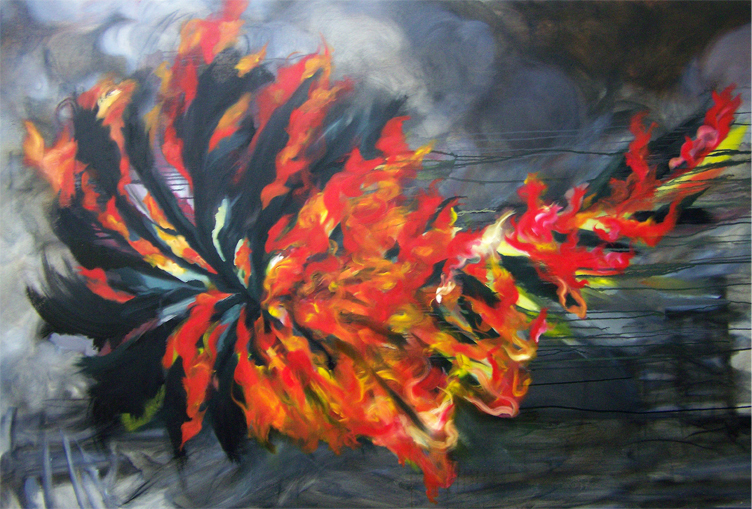
But what exactly are they celebrating, these figures immersed in their own festival within such luminous colors? Is it an escape into painting? Or perhaps a retreat? Shall we sink ourselves completely into the yellow, white, red, blue, and black colors that radiate so intensely, along with the beautiful memories we once possessed? Or perhaps attempt to reproduce them? It is difficult to say. In some sense, these bodies reduced to gestures alone may be the residue of memory, or perhaps entirely new and liberated objects. Perhaps the brighter the colors glow, the more they assume the burden of “sublimation.”
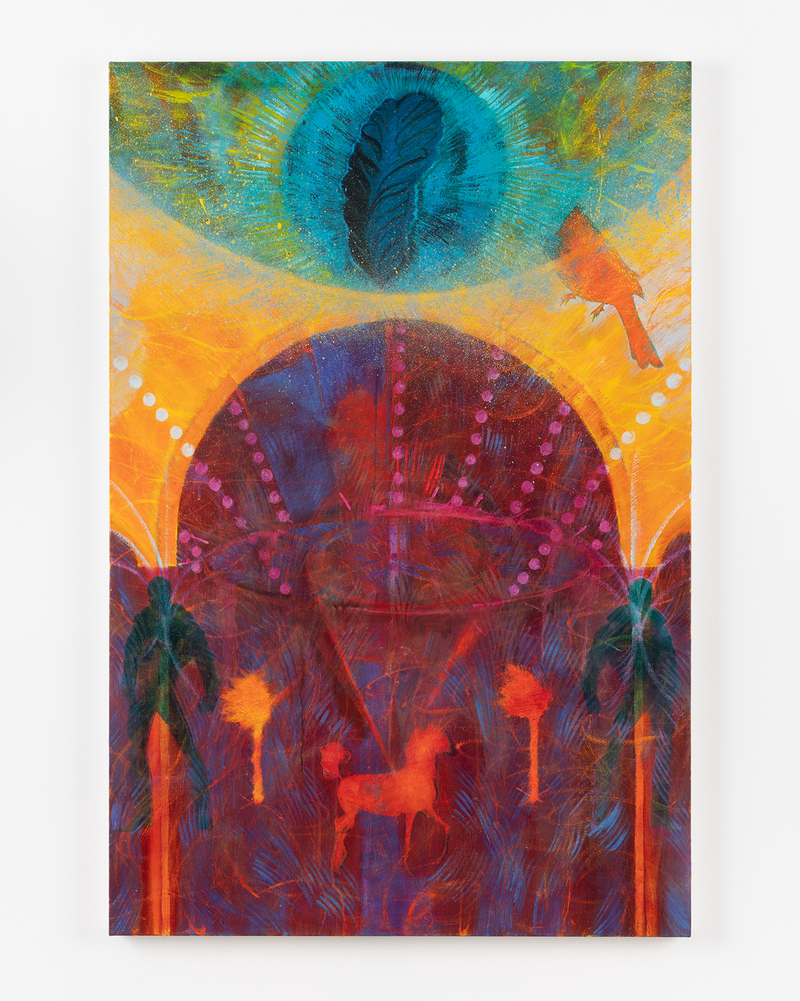
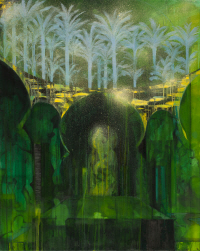
And now that I think of it—“sublimation.” What an elusive word it is. In a way, the motifs that have been repeatedly summoned until now, returning endlessly like ghosts, finally seem to undergo their funeral rites in Holy Night (2012), bidding an eternal farewell through a single exorcistic ritual. If that is indeed “sublimation,” then it means that the long process of mourning reaches its conclusion only at the moment when one is finally able to truly let the “objects” go.
This is the dilemma facing contemporary subjects burdened with thought: pleasure no longer functions, even melancholy itself no longer operates, and the mechanisms of desire have reached their limit, yet habitual games and exchanges continue while one stubbornly insists on maintaining the dimension of “life.” That itself becomes the problem. In other words, within a stage where only the death drive dances and ghosts alone swarm across the scene, there seems to be nothing left to do. And yet Yongseok Oh’s works offer a proposal far simpler than expected: “Let us hold a great exorcistic ritual together.”