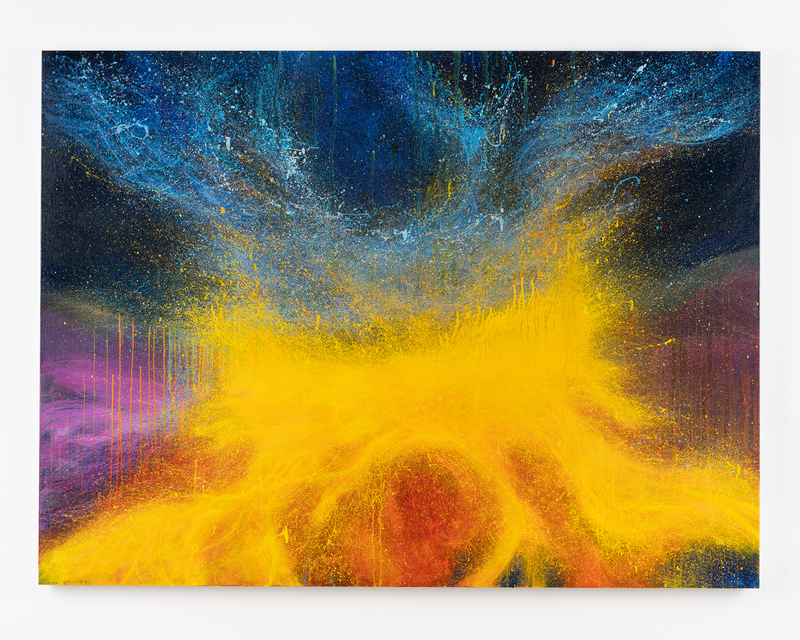
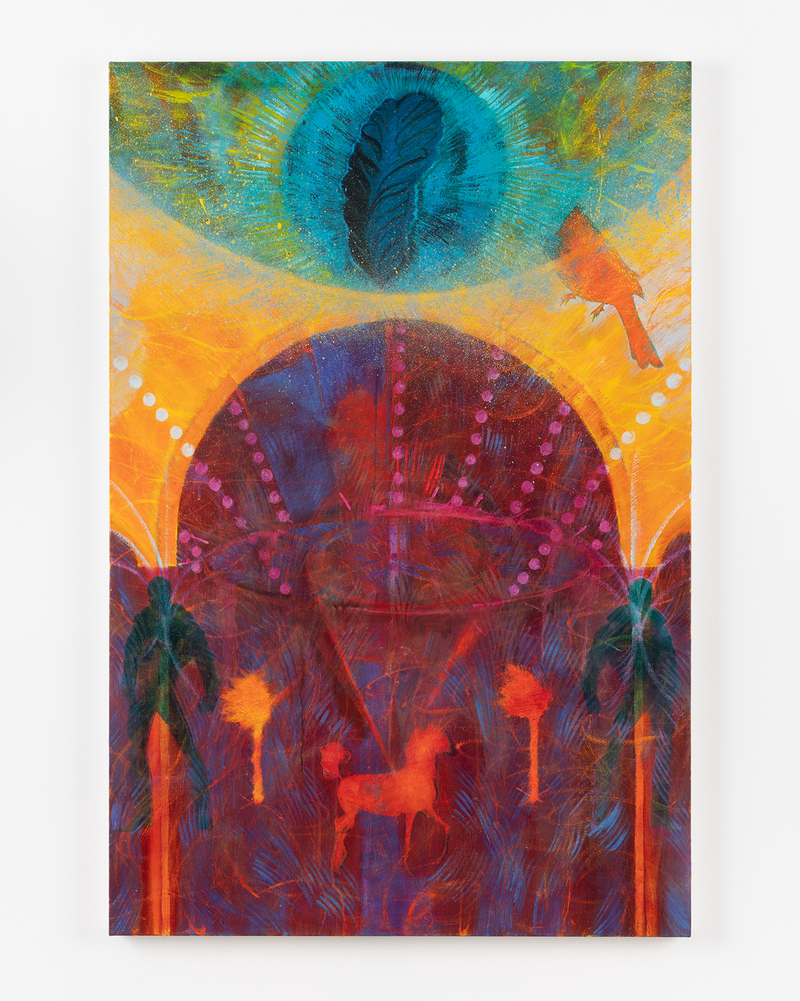
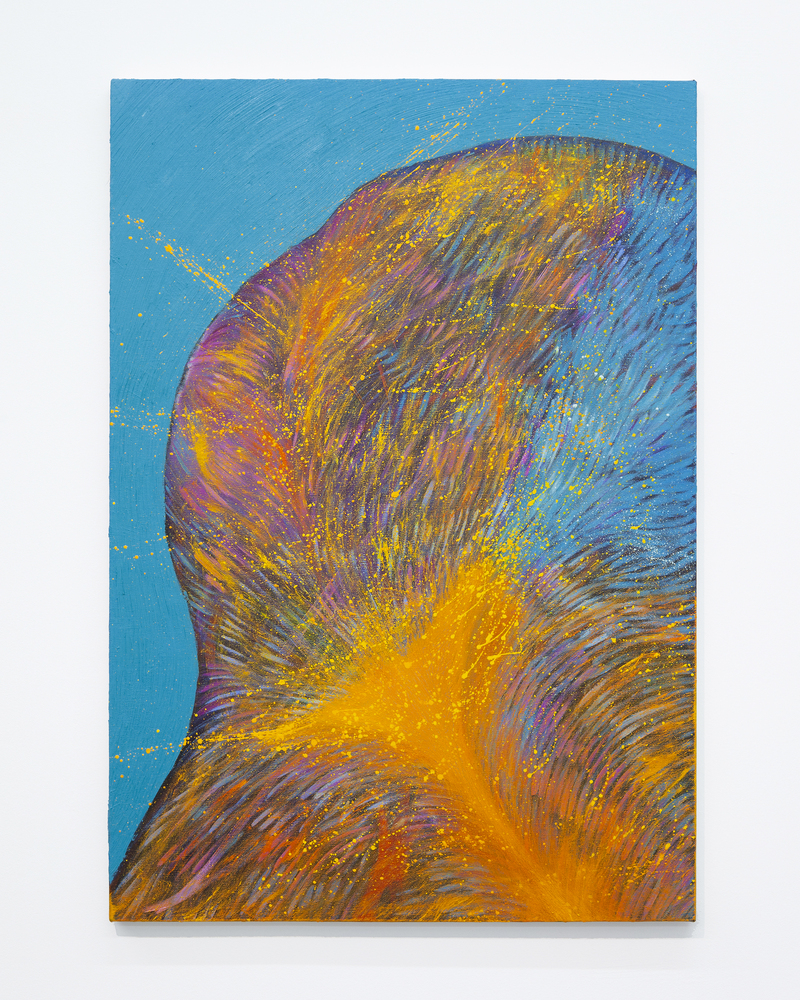
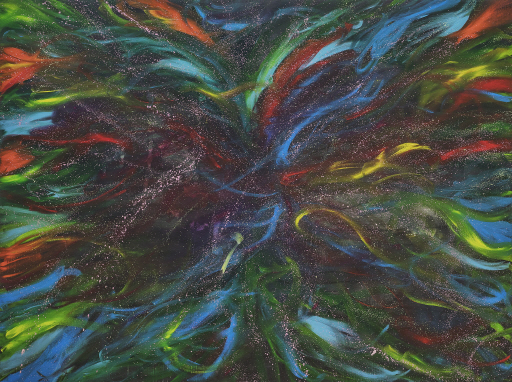
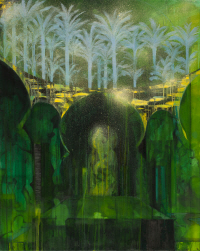
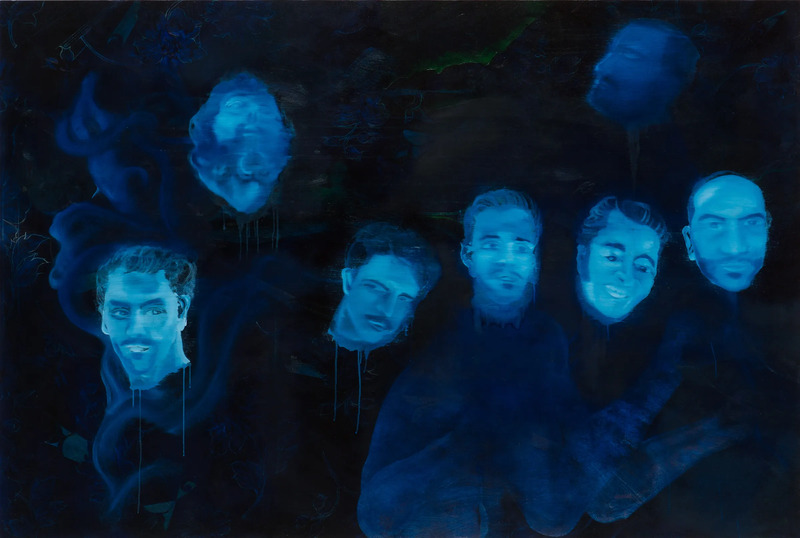
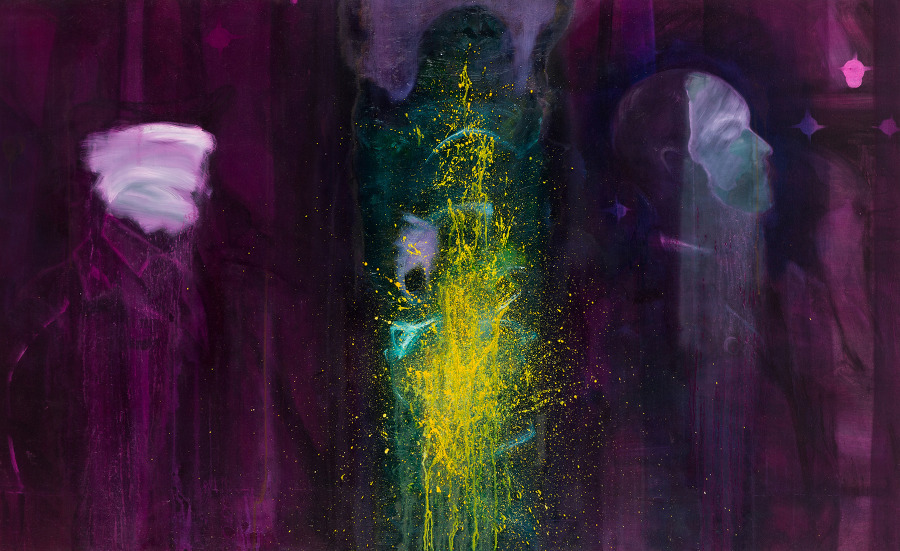
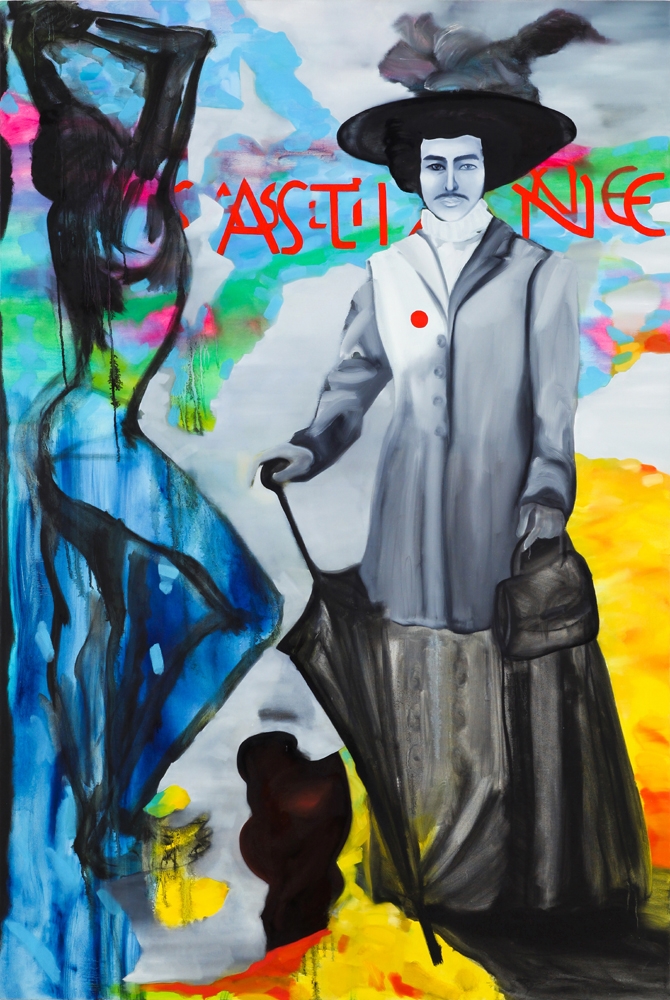
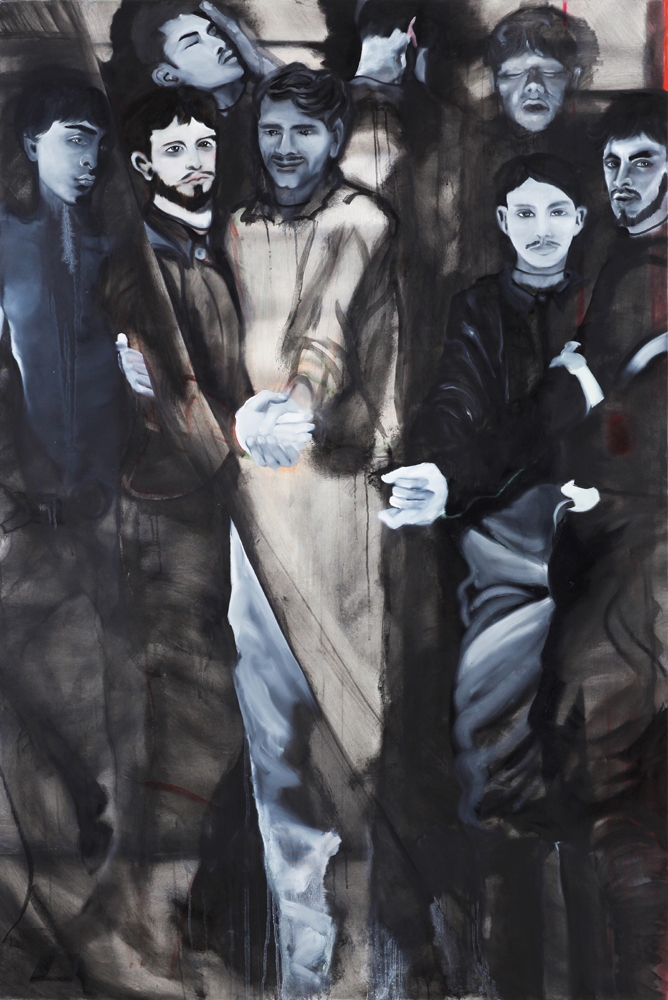
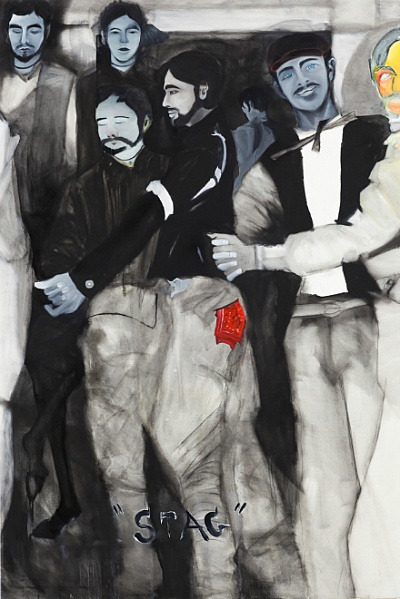
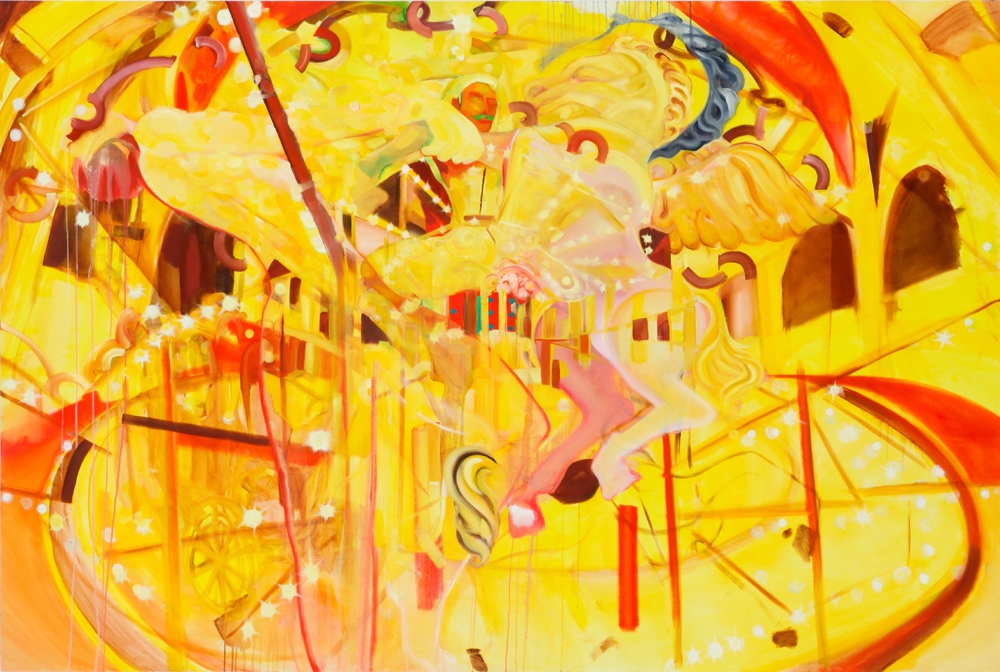
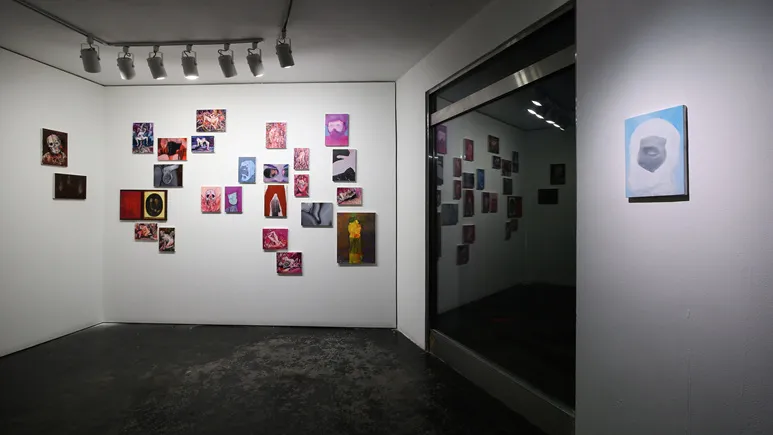
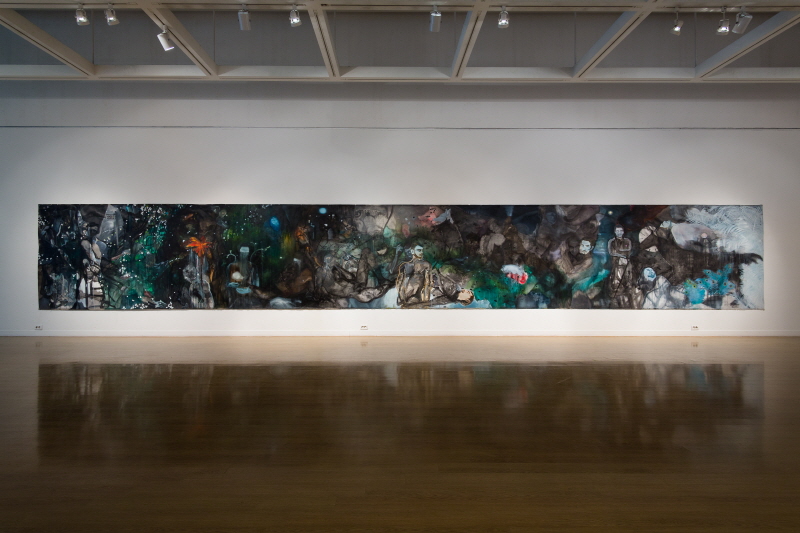
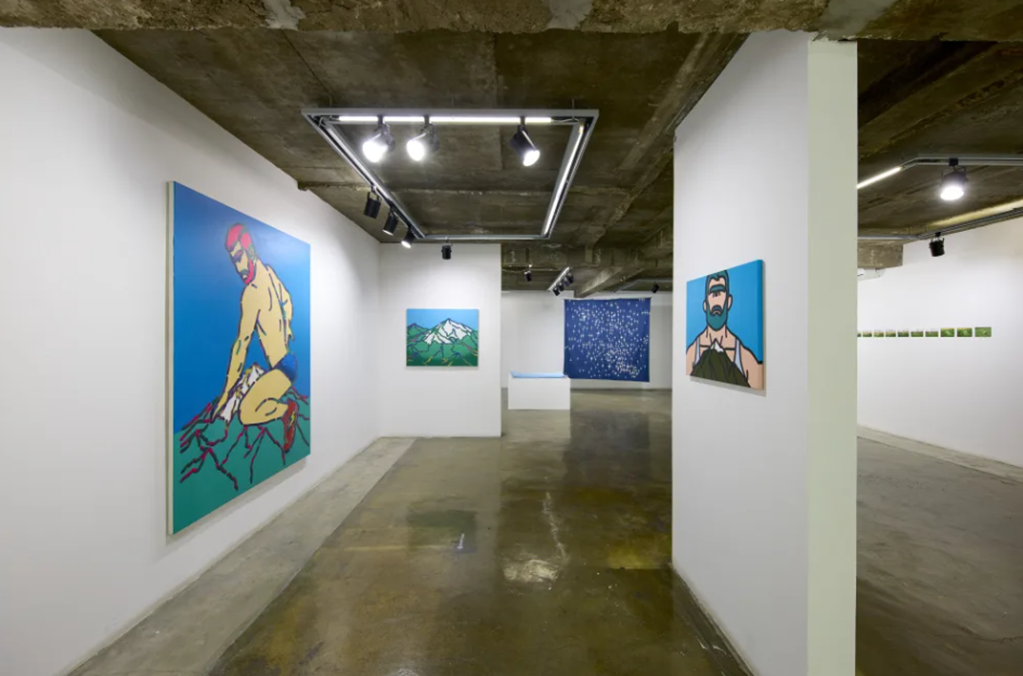
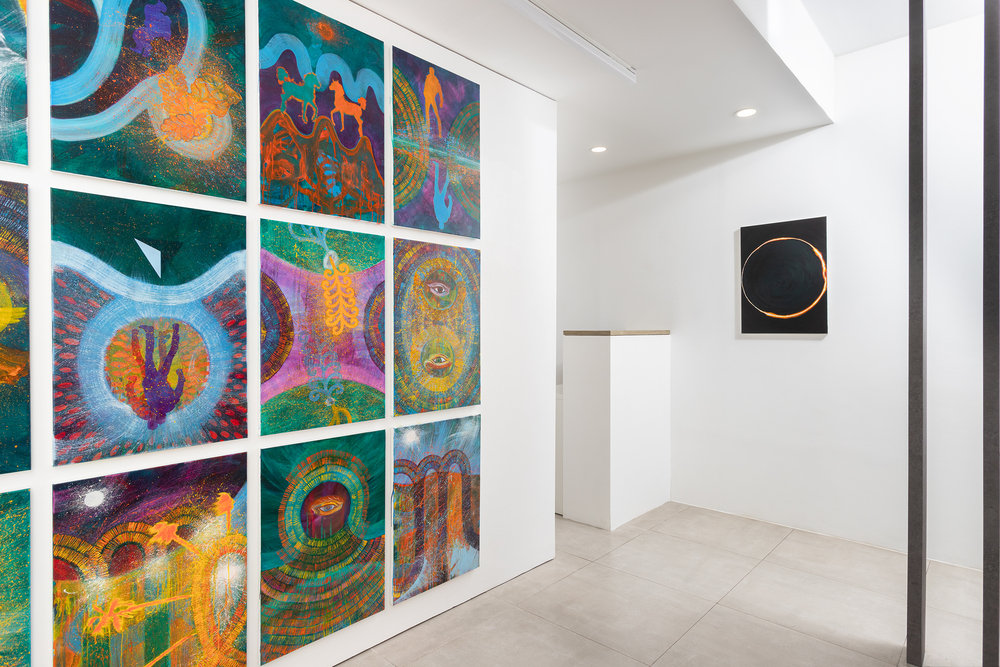
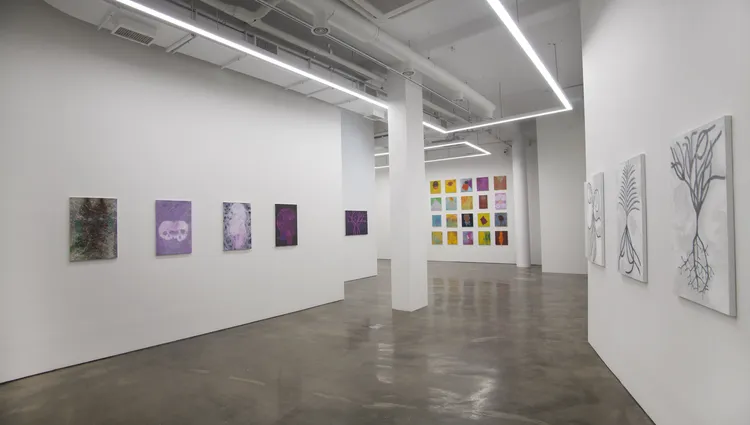
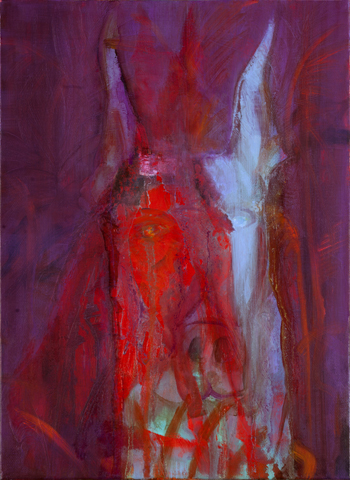
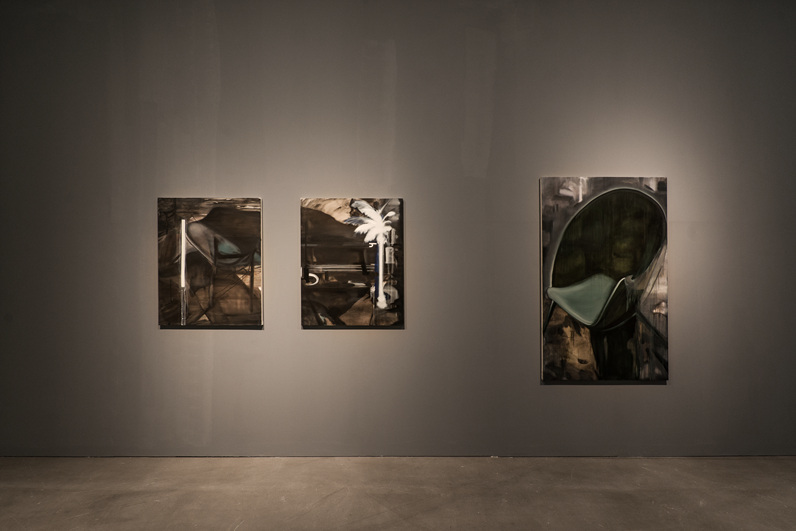
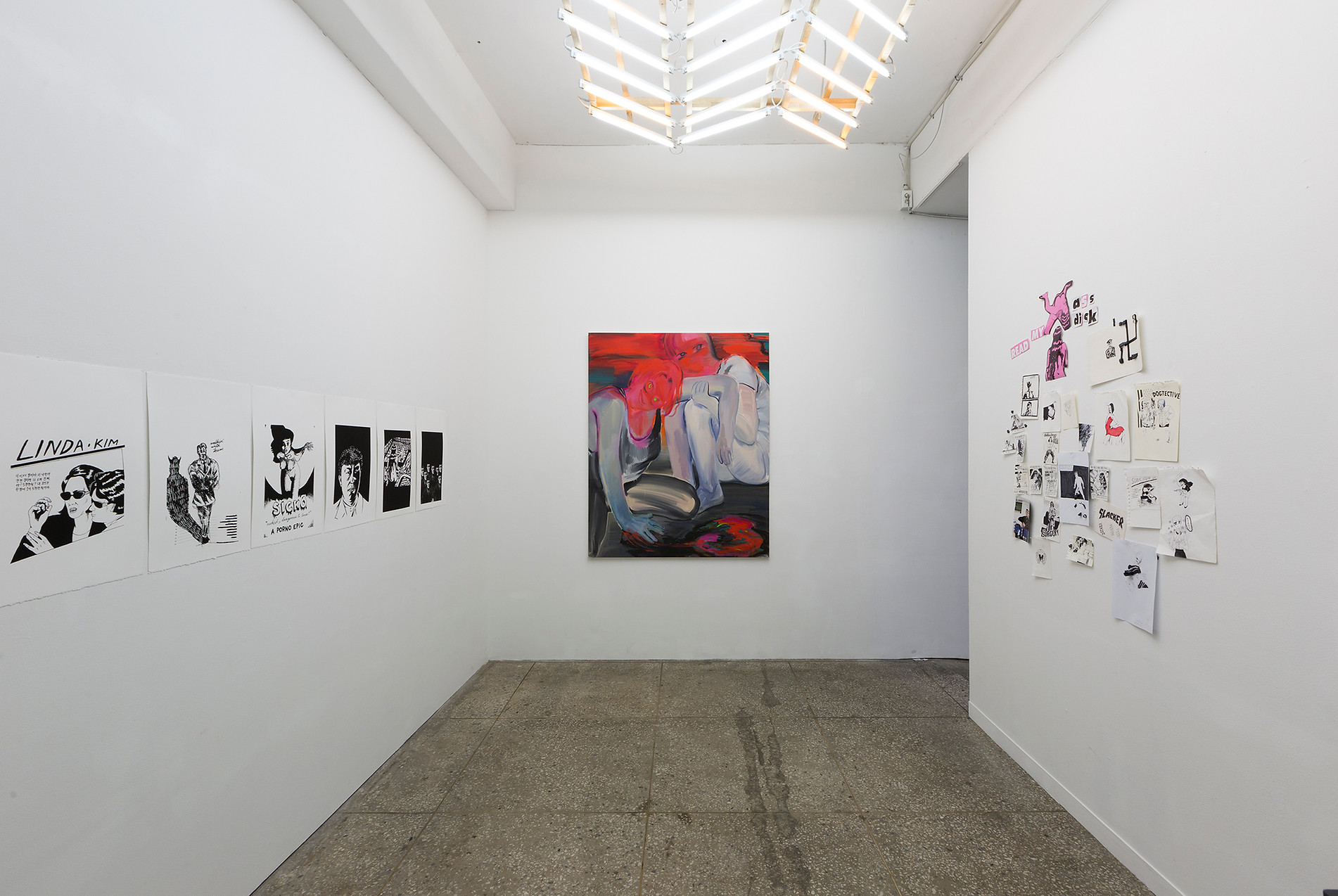
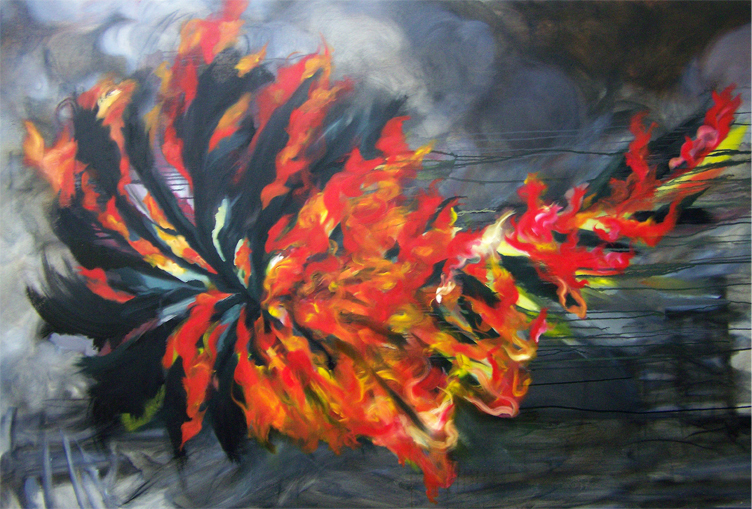
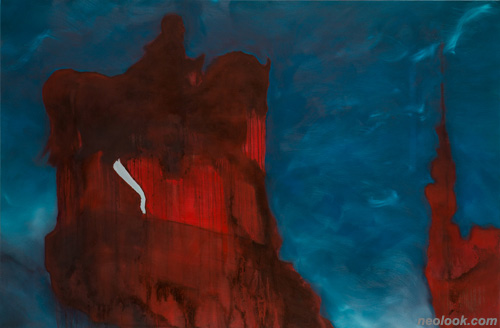
Yongseok Oh’s paintings generate a distinctive visual tension through intense colors, flattened compositions, and collisions between heterogeneous images. Human figures, animals, plants, mythological beings, and photographic imagery frequently overlap within his canvases, yet rather than forming a unified narrative, they function by juxtaposing different layers of sensation and emotion. In particular, vivid colors such as red, blue, and black transform the entire pictorial surface into an emotional space, leading viewers not toward narrative interpretation but into atmospheres and sensory experiences. As a result, his paintings resemble psychological landscapes in which dreams, hallucinations, memories, and the unconscious intermingle, rather than realistic spaces.
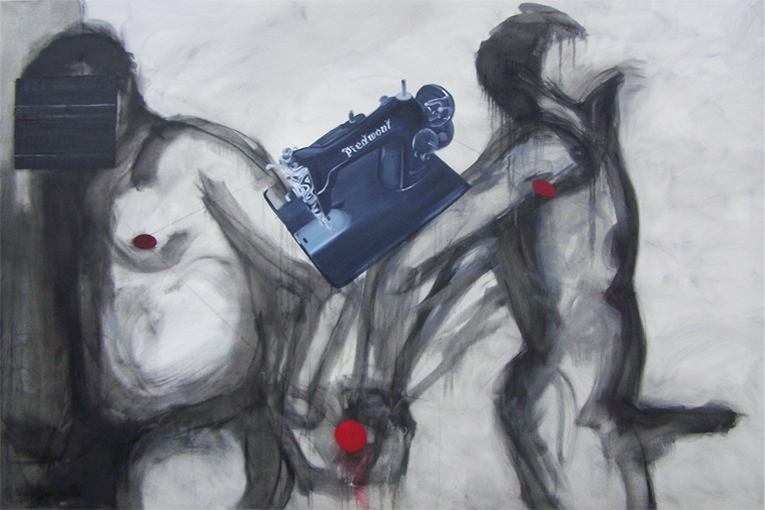
His paintings deliberately weaken traditional perspective and representational spatial structures while emphasizing flatness. Indistinct vanishing points, severed bodies, floating faces, and overlapping backgrounds remove conventional depth and allow images to exist simultaneously across the surface. Within this flattened structure, the artist recombines and stitches images together, encouraging collisions between forms that originate from different sources and meanings. In this sense, his use of appropriated visual materials—such as photographs, film stills, and internet imagery—is not simply an act of reproduction, but a process of transforming them into new relational networks within painting itself.
Recurring bodily imagery functions as a major formal element within Yongseok Oh’s practice. His figures often appear with ambiguous gender identities or fragmented bodies, and at times emerge as forms entangled and sutured together. These bodies do not serve as straightforward representations of the human figure, but rather as devices for revealing invisible emotional states such as desire, anxiety, absence, and relational instability. Faces and bodies appear not as complete entities but as fluid presences that are continuously transformed and dismantled, and this instability contributes to the grotesque yet dreamlike atmosphere of his paintings.
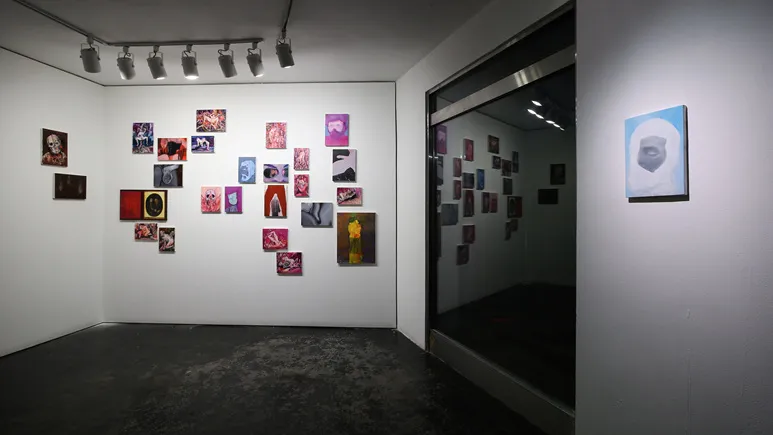
The artist has also maintained an ongoing interest in text and narrative structures alongside painting. Words appearing within exhibitions, novelistic forms of writing, and images suggesting incidents or hidden events imply narratives beyond the canvas while never fully explaining them. In this way, Yongseok Oh’s work operates less through the delivery of fixed meanings than through the accumulation of clues and sensations, encouraging viewers to construct their own interpretations by connecting fragmentary images and narratives. His paintings therefore function not as closed images, but as open structures in which disparate sensations and memories are continually stitched together.