1. Ecology of Images
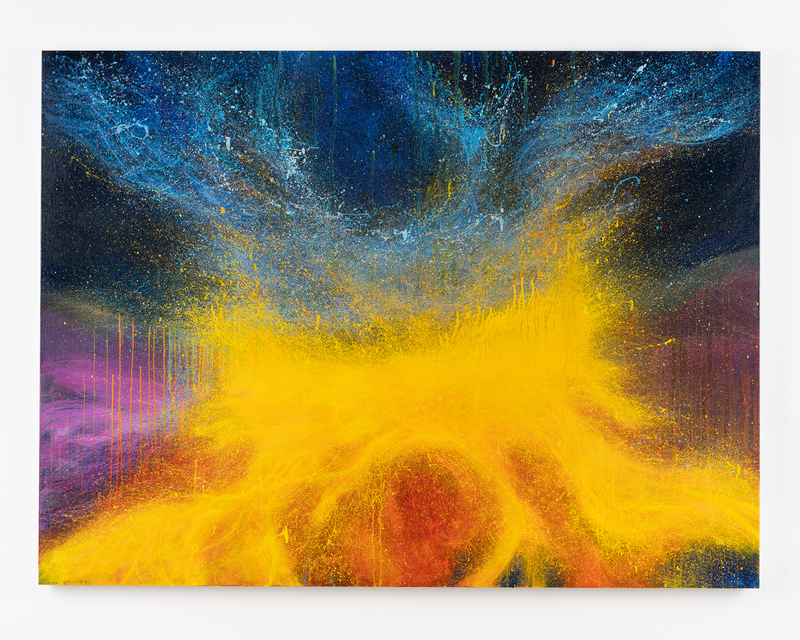
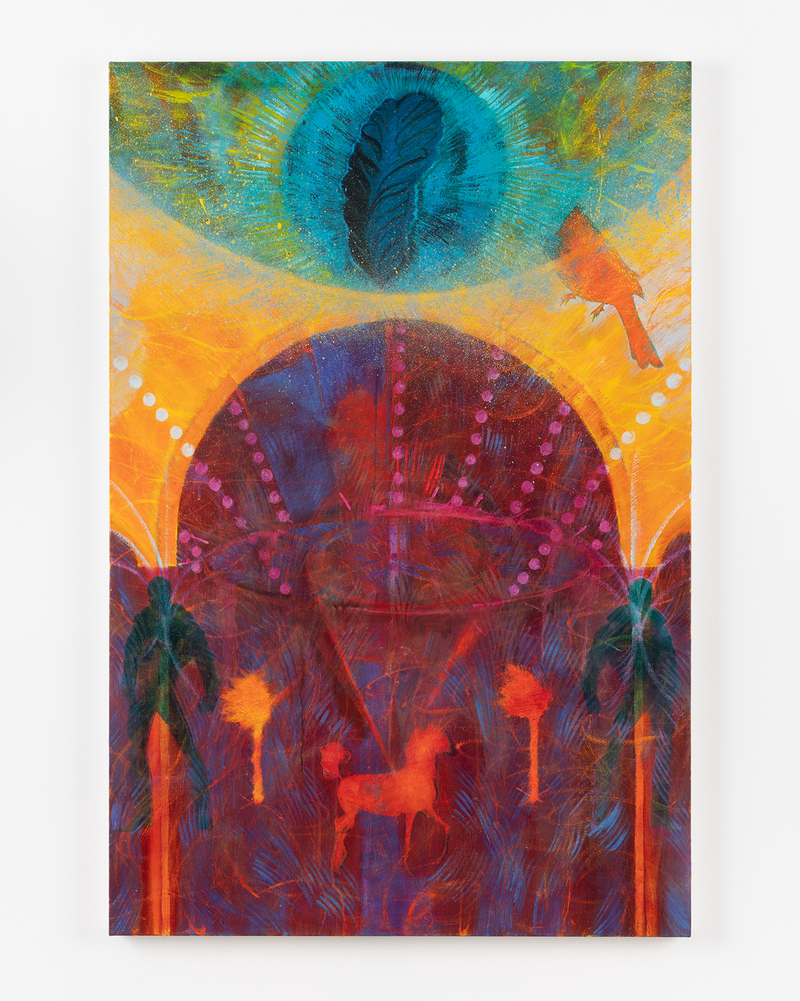
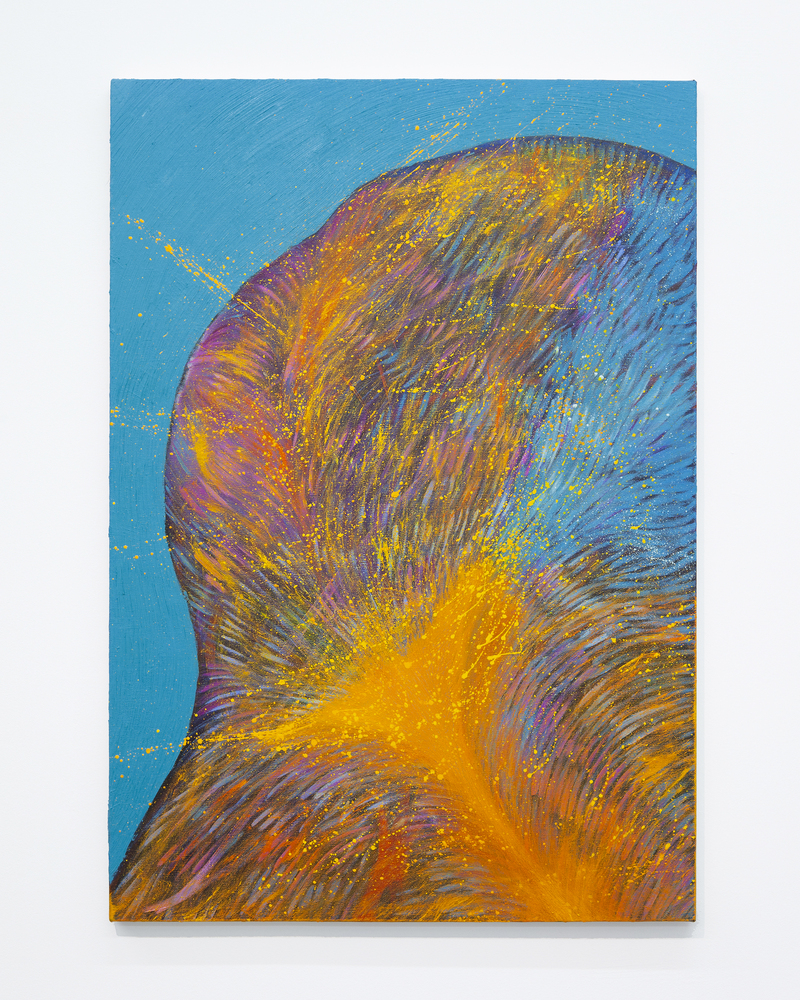
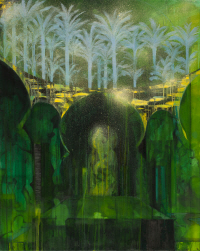
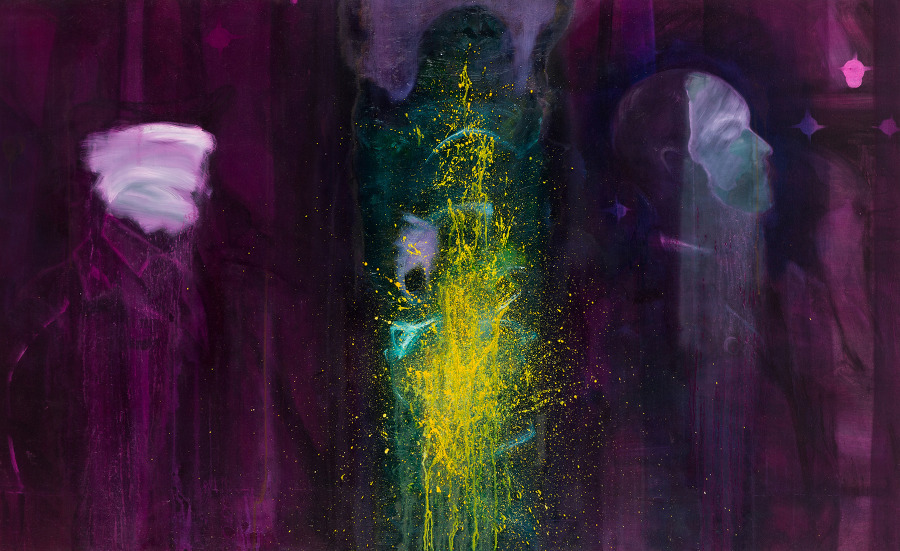
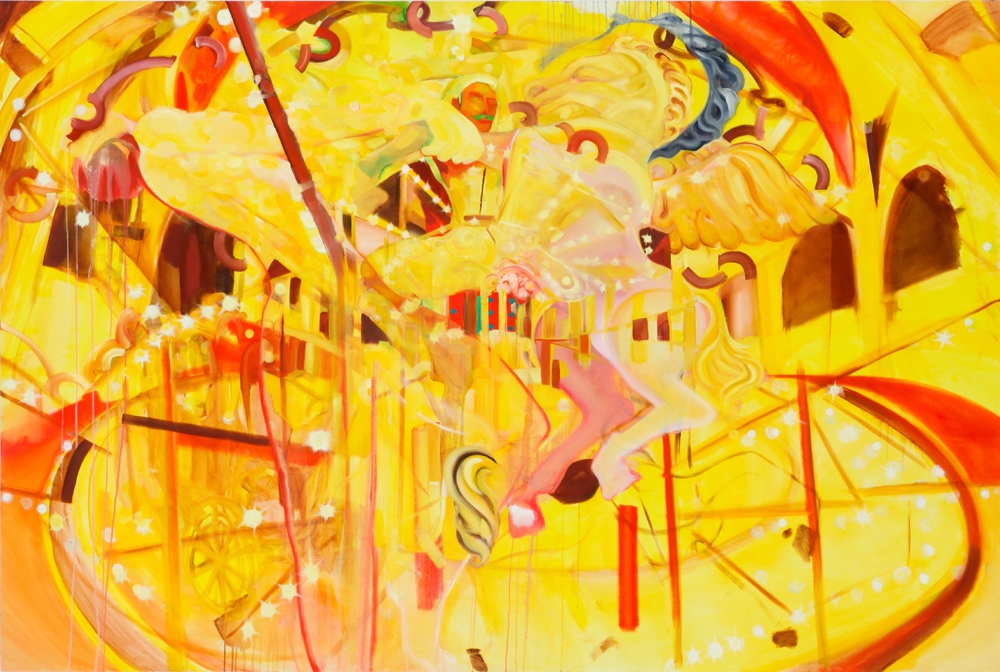
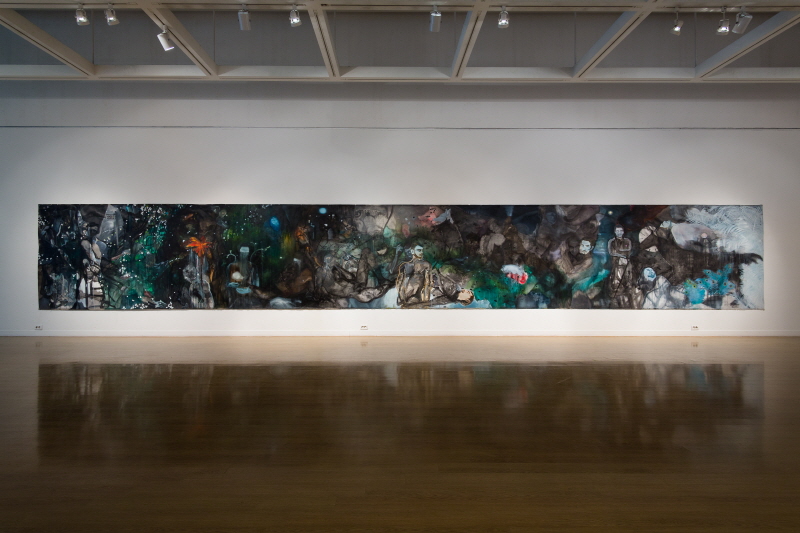
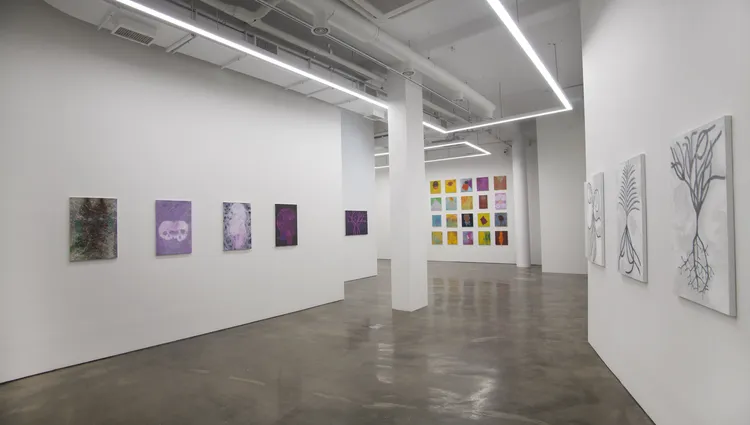
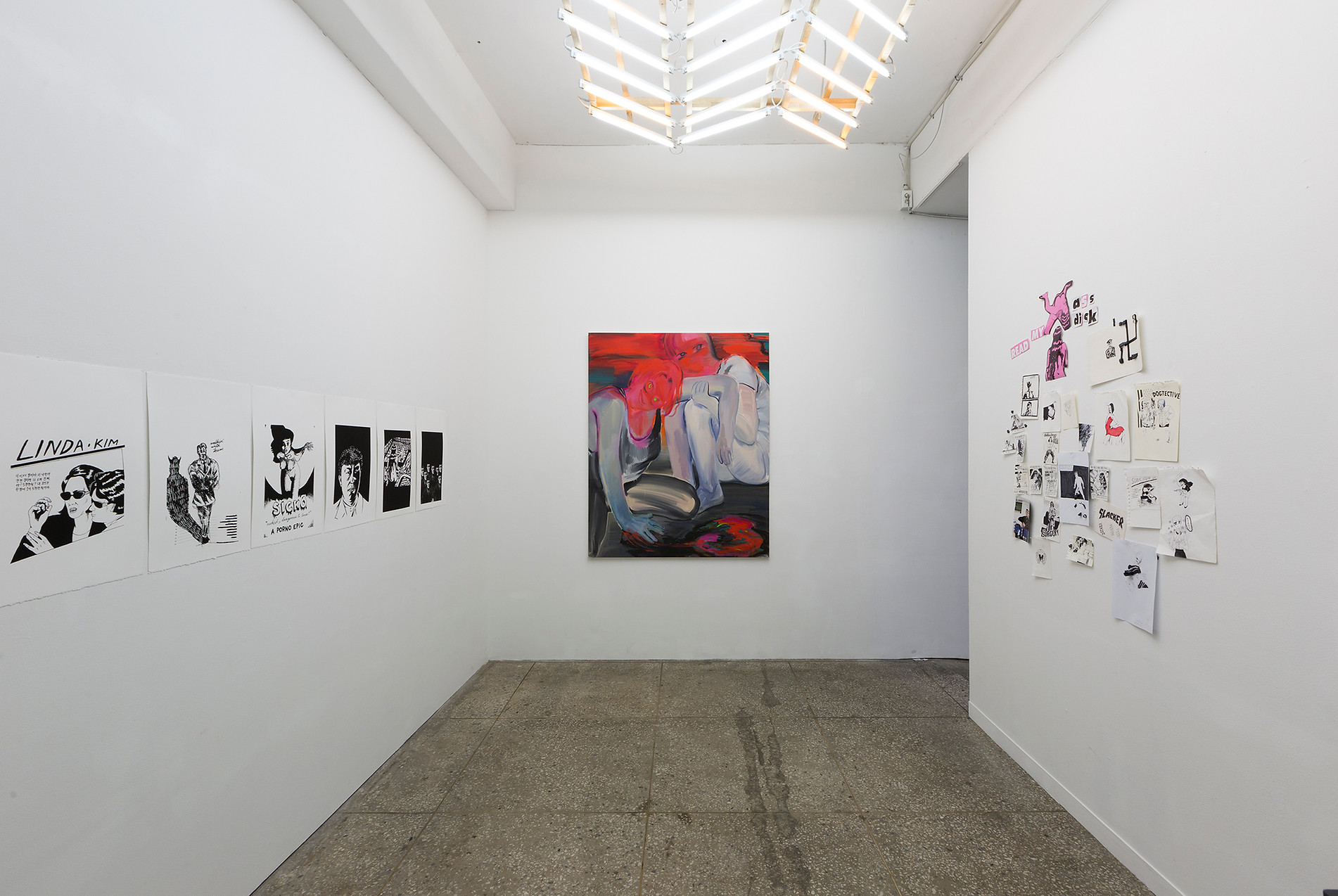
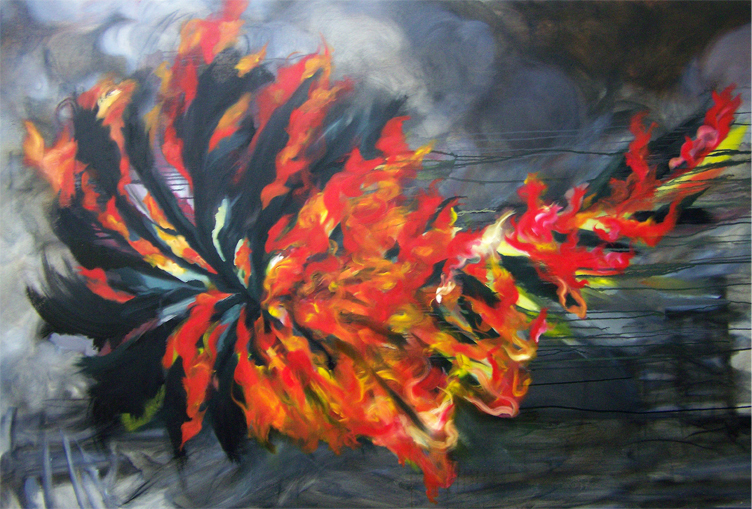
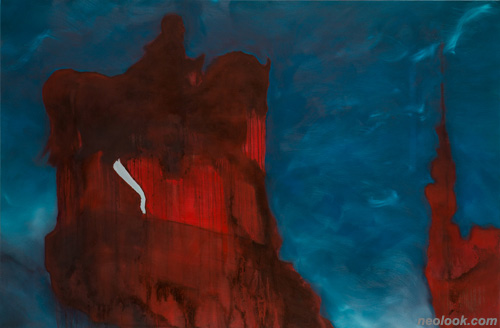
Yongseok Oh’s paintings are a jungle. One should not misunderstand this statement simply because painting and jungle are being treated as equivalents. Nor should the metaphor of his paintings as a jungle be dismissed through the familiar joke that it is not literally a jungle and that painting is merely painting. If reflection upon painting once aimed to strip away the fantasies embedded within painting itself, Yongseok Oh’s paintings instead focus on establishing a jungle of images through a richer utilization of the magical properties inherent to painting.
As is well known, a jungle may be described as a world in which a vast ecosystem—encompassing all manner of vegetation, reptiles, crustaceans, and mammals—exists freely or according to its own internal principles of balance. In this sense, to regard Yongseok Oh’s paintings as a jungle means that images, each believed to belong to different archaeological or organic orders, achieve balance and harmony upon the canvas. Of course, even if the canvas functions as a habitat for images, this does not mean that every image in the world may recklessly settle onto the canvas together with its ontological horizon.
In other words, the “species-genus-family-order-class-phylum-kingdom” taxonomy of images capable of inhabiting the canvas is determined according to the nature of the soil that constitutes Yongseok Oh’s canvas. Yet even if the images appearing on his canvas form lineages according to the canvas’s own internal logic, this does not necessarily mean that they can be fully classified into fixed categories. For even if the typologization of images teaches us methods for organizing them, it is far more important to consider that Yongseok Oh’s canvas contains an implicit critique of systems in which objects and images are treated only in privileged ways under dominant and disciplinary structures of image order.
In other words, rather than focusing on the fact that images are being typologized, we should pay attention to another dimension entirely: Yongseok Oh’s canvas is more deeply concerned with allowing objects and images to escape modes that force them into singular forms of existence and enabling them instead to live in different ways. Or rather, why is Yongseok Oh’s canvas—one that allows the images carried by objects and beings to grow differently—so important?
It is common for the image possessed by an object in reality to become fixed to its original place and be forced into being understood in a particular way. Everyday objects and experiences remain attached to “place.” Yet places are continuously being lost, and the instability and superficiality of images have, if anything, become more realistic conditions of existence. In a reality where people believe that life and identity can be changed through style, fixed images of objects and beings become impossible.
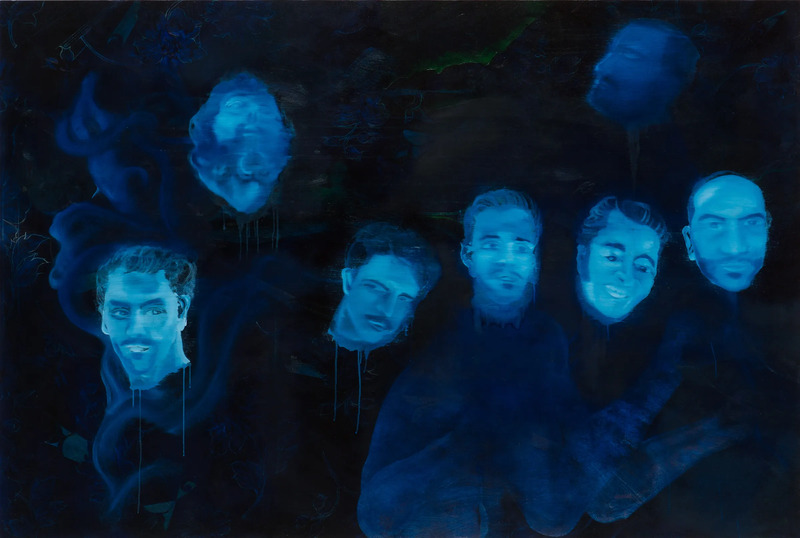
What must be noted, however, is that even if one believes life can be altered through style, social structures still judge negatively the alteration of identity markers according to particular principles, and strong taboos remain against crossing the boundaries signified by identity itself. One must remember that boundaries such as gender, nation, ethnicity, race, and sexuality are overshadowed by a “guillotine” capable of severing the heads of those who cross them. Crossing such boundaries is therefore far from easy, and the lives of those who do cross them are inevitably marked by suffering.
In this sense, within a capitalist reality where experience and memory are continually being lost, various modes of thought that critically discuss the privileging of place and the abstraction of life may themselves become newly problematic. Strategies that fix the identities of objects or beings may certainly offer critical perspectives on capitalist society, yet they can ultimately restrict and close off the very possibilities and diversity of objects and existence themselves. Moreover, even if it is true that life within this system consists in the continual loss of one’s own place of living, the politics of identity that presuppose a return to place—that is, to one’s homeland—nonetheless contain profoundly dangerous implications.
In other words, the handling of images inevitably involves the themes of fixation and liberation, and what modernist aesthetics mythologized as the “new,” as the “aesthetic,” should not be accepted as self-evident but rather understood as a proposition marked by conflict.
It is well known that modern art adopted the process of liberating objects and beings from the “contexts” in which they were situated and transforming them into “texts.” In other words, by transferring objects and beings onto the canvas, the flows of the world in which they existed could be interrupted and treated in isolation, allowing those objects and beings to be “liberated” from their original places while simultaneously forcing them into an ontological leap toward fundamentally abstracted relations. That is to say, once objects and beings stepped onto the canvas, they inevitably entered into relationships with anonymous viewers.
In this sense, the objects and beings liberated by the canvas once again had to endure their fate upon the new terrain of the canvas itself. We called this not representation but expression, yet the world appearing on the canvas fundamentally could not easily deny “representation.” From this perspective, it is hardly accidental that contemporary art sought to escape the spell of representation and to investigate the principles inherent to painting itself.
Yongseok Oh does not, from the outset, concern himself with the problem of representation in this sense. What must instead be noted is that he brings objects and beings onto the canvas not in order to represent the world, but in order to establish a world that is absent. In this respect, Yongseok Oh’s canvas may be understood as a kind of soil that allows the images of objects to survive in different ways. For this reason, careful reflection is required regarding both the nature of the terrain constituted by his canvas and the characteristics of the images that he repeatedly cultivates within it. This does not simply mean that the ecological condition of the canvas should be investigated only through social circumstances.
Rather, if the canvas is a horizon capable of allowing all the images of the world to grow, then one must ask more intensely what kinds of images are actually being cultivated within that horizon, for only then can one encounter forms of life that are driven into an “invisible world,” yet are precisely maturing through that very condition. Put differently, within a world smoothly refined through ordered and normative forms, the possibilities of object-images are reduced to a minimum. If those object-images are to grow in different ways, then surely the very soil of the canvas itself must also become different.
2. Crying Out in the Jungle: The Form of the “Sewing Machine”
It should first be clarified that he is not “Tarzan.” That is to say, within the jungle of images, no noble creatures come running at his command simply because he lets out a loud cry. What matters instead is which images respond to his calls and through what processes those images are transformed. Not only should one avoid assuming that the images settled onto the canvas possess original prototypes, but paradoxically, it is not especially important to know precisely which object-images respond when he cries out within this jungle of images. The images appearing on the canvas are already altered images, matured through the soil of the canvas itself, and therefore they do not exist in a state that can be obtained merely through comparison with reality.
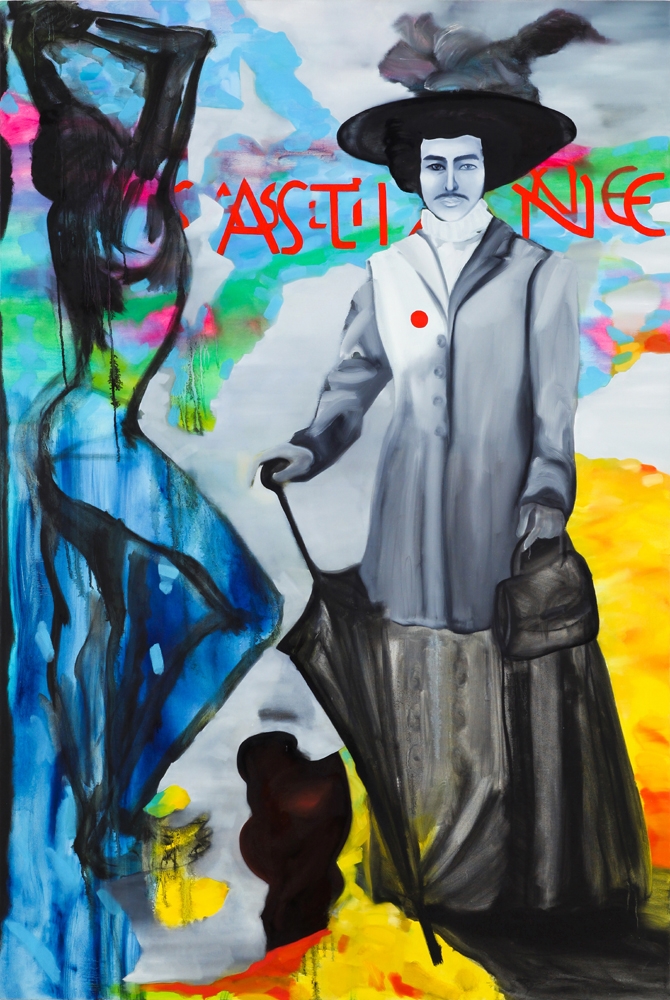
When he collects countless images through the web or works through the mediation of various images from popular culture, those images no longer possess origins or “homelands.” In giving rootless images new roots and musculature, his canvas may be understood as a “habitat of heterogeneity” that constructs a “nonexistent world.” Of course, even if, like Tarzan, he cries out forcefully to images and all images arrive before the canvas, this does not mean that every image can automatically step onto it. The birth of hybridity itself operates according to a distinct principle of its own.
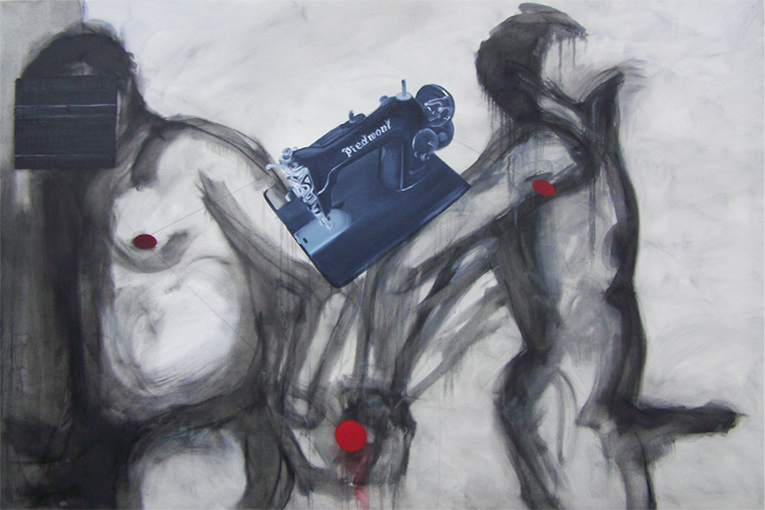
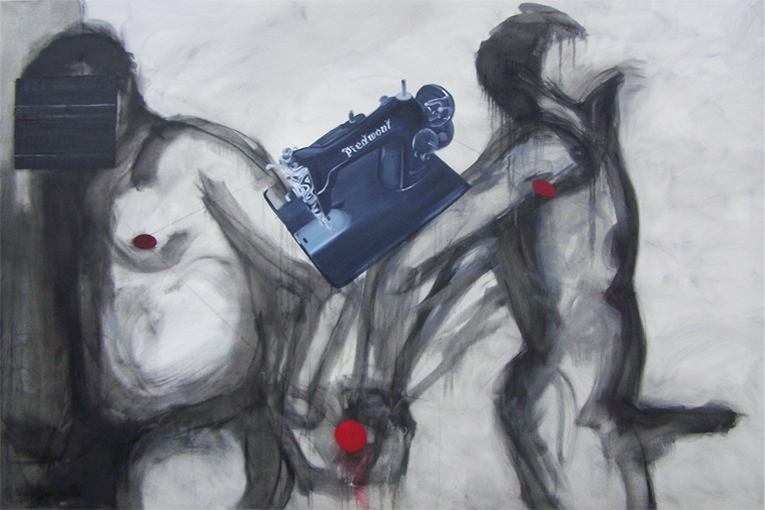
This principle may be summarized as follows. One element is fabric that can be endlessly stitched together; the other is the photographic image. Through the mediating mechanism of the “sewing machine,” these two heterogeneous objects are able to combine, thereby generating new species. In that sense, might painting for Yongseok Oh itself be a “technology” of the “sewing machine”? One should recall that art has long been understood as a form of “techne.” According to Greek philosophy, techne was regarded as a principle through which the world is harmoniously organized, and art was therefore inseparable from the formation of relationships among lives and beings within the polis [city]. Just as information and communication technologies connect distances [relations], art too was considered something that connected lives and beings to one another.
Artists were thus a kind of technician—at times even ghostly presences—who connected viewers to worlds that had already perished or to worlds that could not yet be acknowledged as existing. (For this reason, it may be necessary to distinguish between the world that Yongseok Oh’s canvas brings together and the way viewers themselves become connected to that world. Entering Yongseok Oh’s world alone is already difficult enough, and the latter question may need to be approached in another way.)
The principle of sewing together fabric-objects-beings-photographic-images may perhaps best be examined through the following two sections.
The Sewing Machine Spins Well, Keeps Turning: The family members have all disappeared somewhere in search of work, leaving only the child and his mother at home to endure a rainy afternoon. Watching the rain strike the slate roof, the mother and child—who had just finished making and eating kimchi pancakes together—noisily bring out the sewing machine onto the wooden floor in order to replace the worn bedding covers that had endured the entire winter. At his mother’s request, the child carefully spreads out the blanket and, using scissors, cautiously separates the neatly stitched outer and inner layers. A brief exclamation escapes the child.
As the upper fabric is torn open, the inside reveals itself to be filled with white cotton. “Mother, wow, it’s amazing that such white cotton could be packed inside this red and splendid cloth.” “But that is not the only amazing thing. Look, not a single piece of cloth must be thrown away. As long as there is a sewing machine, many smaller fabrics can be stitched into a larger one, and that larger one into something even greater still. That is why the outer shell is just as important as what lies inside.” “Then, Mother, the whole world is nothing but shells?” “That’s right. Everything on this earth is connected.”
“Look at arms and legs, at the torso. Though each is used differently, and though no trace of stitching can be found, they form a single body. In the same way, the world is made of many different bodies attached together here and there.” “Then am I attached to your body, Mother?” “Attached, and also separated.” “I don’t understand, Mother. Should I say we were attached, then separated, and attached again?” “You could also say we were separated and then attached. But that doesn’t mean every piece of fabric can simply be stitched together. The ways of stitching differ according to the person doing the sewing, so perhaps it is more accurate to say there are endless methods and endless forms. Look at yourself. You, more than anyone, are a child born from stitching together.
Everyone is born stitched together, and you were born with your whole body already sewn into place. Since even Mother is stitched together, then from when, how, and from whose stitching was I made?” “Mother, why is it that things must sometimes tear while being sewn together?” “That is because of ‘love.’ Love stitches things together, and love also pulls them apart.”
“Mother, but you must know that yesterday I stole five ten-won coins from your wallet to buy a ‘Kkandori’ ice cream, right?” “Of course I know.” “Then why did you scold my sisters?” “Because at that very moment, you yourself were already being scolded.” “‘Sin’ is infinitely light for the innocent. When stitching cloth together, if you want it to be sewn well, one piece and the other must both lie flat without fluttering.
In order for you to understand what sin is, would it not become a greater sin for you to see your sisters being punished?” “Their undeserved scolding was Mother’s way of wanting you to understand the weight of sin, and that you and your sisters are all bound together like those pieces of cloth.” “Was that your heart tearing apart, Mother?” “Perhaps even hearts are stitched together.” “I’ll never take ten-won coins from your pocket again.” The rain falls heavily, and the sewing machine rattles on. Carried by the sound of rain, the needle and thread of the sewing machine softly seep between one piece of fabric and another. The world of one cloth meets another and becomes infinite. One is already many.
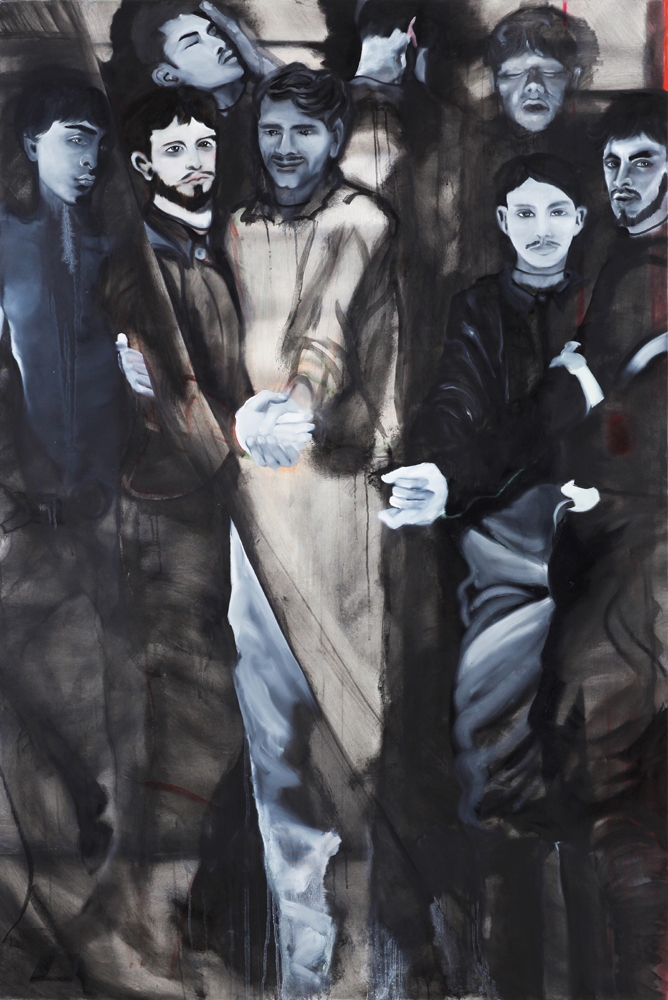
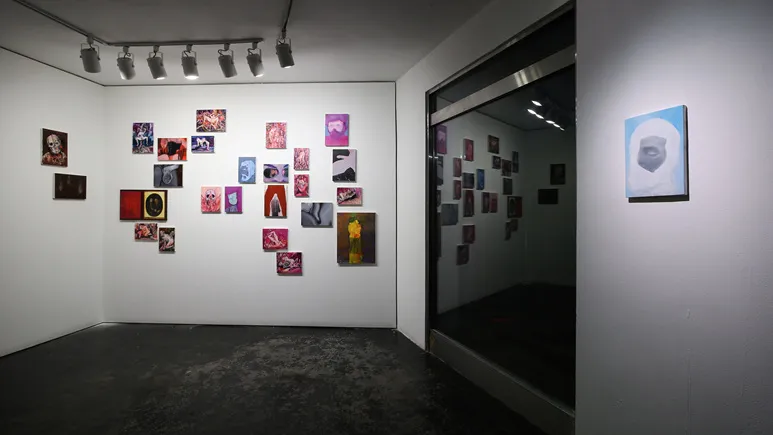
Memories Fall Like Droplets: For Yongseok Oh, the photo album serves as the foundation of his work. Yet except for albums produced through ceremonial and ritual conventions—such as wedding albums—photo albums have become increasingly rare today. Thus, when one says that he uses photo albums within his practice, it is more accurate to understand that he regards the entire world itself as a single photo album. For to him, the world is both a momentary suspension of time and a synthesis of localized forms of objects, understood as an accumulative system of images.
What must not be misunderstood is that when his work draws upon photo albums as its groundwork, it remains far removed from the conventional use of photography for the representation of landscapes or figures, nor does it function merely as an auxiliary tool for accurately reproducing an object. Rather, unlike the moment when photography ceases to speak—or unlike Barthes’s notion of the “punctum,” in which the photographic image wounds the quiet interiority of the viewing subject—the images appearing in photographs are instead made capable, upon the canvas, of expressing possibilities that they themselves do not speak.
In other words, he attempts to reconstruct the world de-framed by photographic images within a new frame. This means that he activates photographic images in a dual direction. First, rather than merely capturing the world outside the forms contained within photographic images, he adopts methods that refract and distort the framing gaze itself. That is to say, if what is regarded as a common-sensical and normal gaze functions as a so-called legitimate gaze, he refuses to naturalize the violent and coercive visual power embedded within it. In a reality where the very ways of seeing the world are predetermined and positions from which events and objects may be viewed are limited to only a few possibilities, Yongseok Oh’s transformation of photographic images becomes almost inevitable.
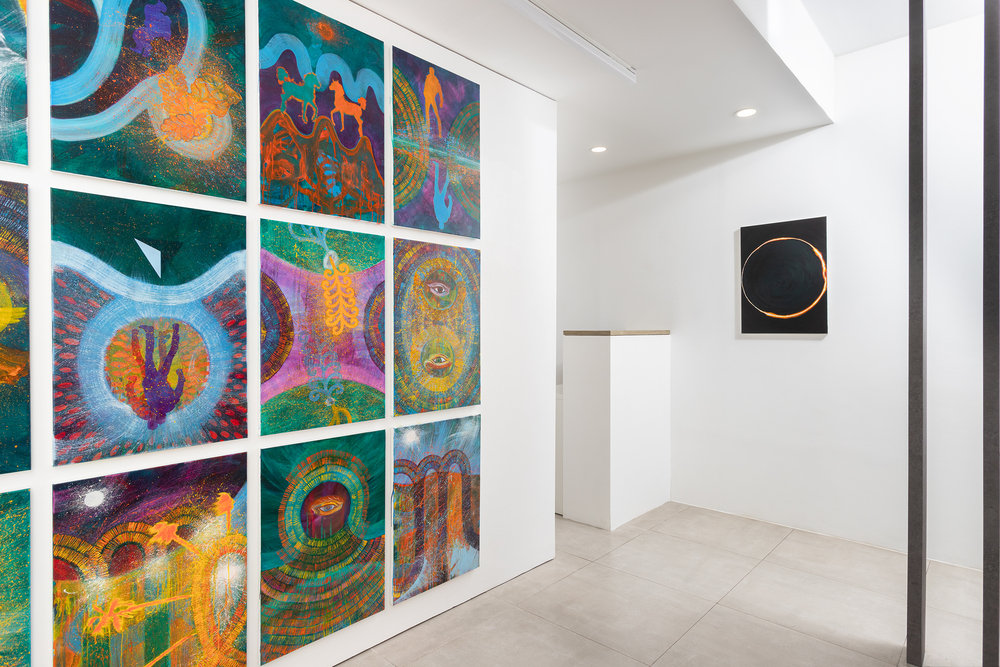
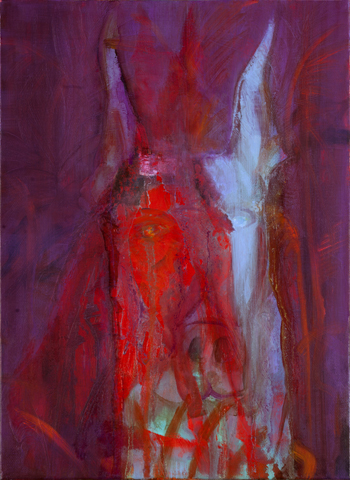
For example, images related to “horses” are no longer accepted simply as horses in the sense of species or animals. In other words, the images detached from their original places by photography are, through Yongseok Oh’s canvas, stitched onto another world. Of course, in that moment, the canvas cannot function as a complete world but instead operates as a point of connection.
The method of the “sewing machine” is a far more significant principle for the growth of the canvas than the artist himself may realize. (One should note: this is not “growth” in the developmental sense, but biological proliferation.) If the sewing machine is understood as a method—or more precisely, a “machine”—that joins separated objects and beings together, then it appears to depart from the methods employed in Yongseok Oh’s earlier works, where ontological relations of combination emerged only after repeated bodily distortions and fusions of flesh. In other words, although images had been transferred onto the canvas in ways suited to particular themes and subjects, those heterogeneous images had not truly bonded, nor had their overlaps materially occurred.
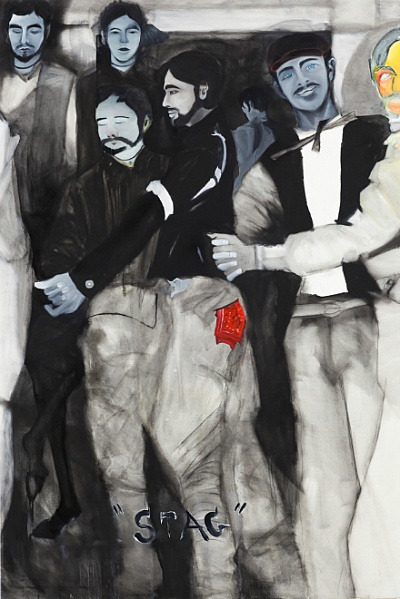
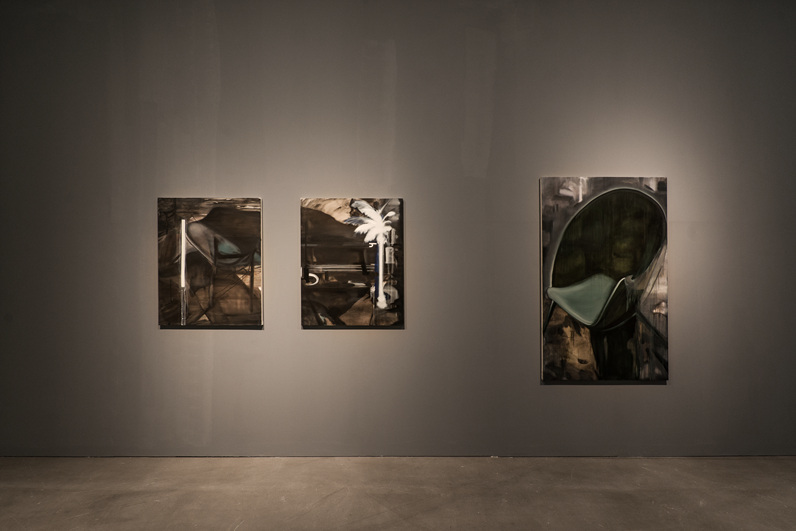
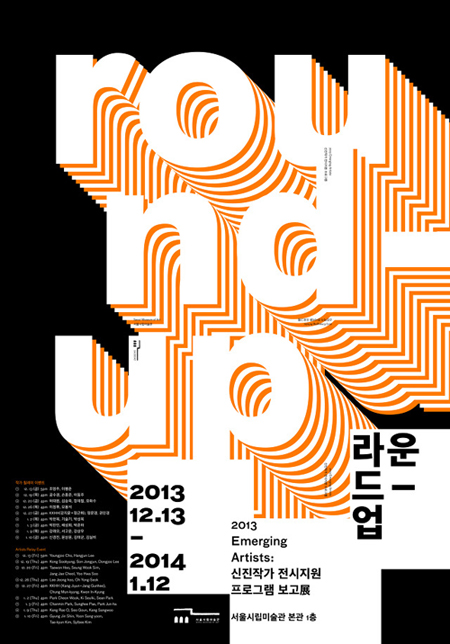
In this exhibition, however, Yongseok Oh introduces into painting a machine that allows diverse images to exist simultaneously. All of the figures and objects appearing there are stitched together, and they—or it may be said, those things—are always already articulated as “multiple” forms.
3. The Thickness of the Canvas: The Density of Loneliness
Bonding means becoming one, yet before that, the very possibility of calling something a bond arises only when two heterogeneous beings become intertwined. In this sense, one must keep in mind that the fundamental condition lies not in their becoming one, but in the difference between those two heterogeneous beings. If the canvas is understood as a medium mediating between artist and viewer, then even when viewer and artist seem to become one body, the difference each fundamentally possesses nevertheless remains.
Likewise, even if the canvas attempts to forge a bond between viewer and artist, the two can never be bound together identically. Even when two heterogeneous images are mixed together and images are cumulatively introduced onto the canvas, they are able to combine precisely because they remain distinguishable from one another. For this very reason, the images on Yongseok Oh’s canvas exist in a state of embracing multiplicity while remaining singular at the same time.
What must be asked more fundamentally here, however, is why the bonding of images is necessary at all. Why must one bring about the bonding of images rather than leave them as singular images? Why does the canvas summon images together? This intense calling and breathing is bound up with the problem of loneliness/loss and at the same time with the impossibility of mourning. When the loss of my neighbor—or of a being I never considered my neighbor—comes to constitute pain within me, it surprisingly reveals that those neighbors, or those beings I did not regard as neighbors, were in fact part of what constituted “me.”
This demonstrates that the solitary consciousness called the “self” can only ever come into being through relationships with elements outside itself, and it serves as evidence that one being is always profoundly vulnerable to the losses experienced by beings other than itself. We call this loneliness, and because of this loneliness we repeatedly demand and seek new forms of bonding.
In this sense, an image that is simultaneously one and many is not a mirror image perfectly overlaid into singular unity. Rather, it refers to a condition in which a single individual being is bound together with multiple others. The moment such bonds collapse is what we commonly call loss, and when confronted with this condition, people generally attempt to perform successful mourning, processing loss through ritual and ceremony. Yongseok Oh, however, resists loneliness not by accomplishing successful mourning but by failing at it. Put differently, the moment mourning succeeds, we are confronted with the loneliness of never again being able to bind ourselves eternally to what has been lost.
Thus, by rendering mourning impossible, one responds to the condition of loneliness, and precisely for that reason one goes on to perform ever more acts of bonding. This does not mean that loneliness disappears, yet it is precisely this sensation that allows one to confirm the possibility of the self’s existence alongside the “neighbor.” In that sense, the “neighbor or object” can never be something to dominate or govern. Rather, Yongseok Oh’s canvas may be understood as an ontological field of care that resists the loss of images and beings. It is much like the way catastrophe and ruin give rise to new forms of life—to different ways of loving and relating. Is it really so surprising, then, that his love is “performed” together with loneliness?