This exhibition brings together strange, or “queer,” works centered around the concept of drag within queer politics. Generally, drag refers to playful performances by sexual minorities—such as drag kings or drag queens—who wear the clothing of the opposite gender and exaggeratedly imitate their behaviors. Accordingly, this exhibition may initially appear to address queer art that either takes queerness as its subject or embodies queer identities through representation.
However, the term “queer” can refer not only to those who identify as sexual minorities, but also to a wide range of phenomena that transgress normative identities related to race, class, gender, and beyond. For this reason, the “drag” discussed here is not limited merely to cross-dressing practices such as male transvestism. Rather, it refers to diverse formal attempts that traverse and transform boundaries between male and female, object and human, everyday life and art, the white cube and subculture.
To slip away from, deviate from, slide beyond, and escape from pre-given and widely accepted norms—sometimes returning to those norms, at other times forming entirely new relationships. In doing so, these practices blur the boundaries between norms themselves, or between binary oppositions. These are the strange works that this exhibition seeks to present.
The exhibition title ‘READ MY LIPS’ is borrowed from a catchphrase used by Gran Fury, the visual design collective of ACT-UP (AIDS Coalition to Unleash Power), which led AIDS activism and human rights movements from the late 1980s to the early 1990s. Gran Fury adopted the Situationists’ strategy of appropriation in order to raise public awareness in American society about the deaths and human rights of AIDS patients, reformatting, recontextualizing, and recirculating these strategies as concrete practices of sexual politics.
However, simply borrowing this phrase cannot suddenly render visible the long-absent existence of queer art in Korea, nor can the visual productions of existing Korean art instantly transform into meaningful strategies for LGBTQ+ activism. Instead, through the strategies of contextual displacement and appropriation embedded in the phrase ‘READ MY LIPS’—as well as strategies of crossing boundaries and creating connections—we seek to examine the faint presence or potential of Korean queer art and expand it toward various points of contact.
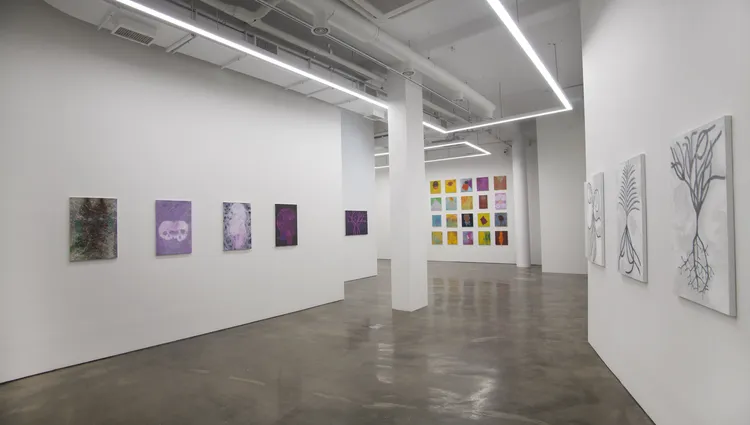
Encompassing a wide range of genres from painting and installation to performance, live podcast broadcasts, and archival materials, this exhibition aims to create a chaotic and exuberant space of collision through works that speak of different desires, different forms of love, and different cultural frameworks. In doing so, it hopes to become an event through which the term “queer,” as a concept of sexual politics, expands into diverse contexts.
The works and performances participating in the exhibition may be described through the keywords drag, disguise, crossing, freak, body, and love. Ibanjiha, a queer singer-songwriter and performer, creates songs that traverse various boundaries, ranging from the heteronormative sexual conventions of mainstream society to the contradictions and tensions within queer communities themselves. Ibanjiha’s very persona—distinct from her everyday self—is itself a form of drag. Draped in fur and strange objects, wearing bizarre headpieces, and appearing in radically unconventional forms while singing honestly about life, her ironic performances move between meticulous disguise and intimate truth.
SUNGJAE LEE’s performance Fringe is likewise rooted in disguise. In a performance first presented during his years studying abroad, an Asian man standing within predominantly white Swedish society is transposed into the figure of a foreign man surrounded by Koreans in Seoul. As an outsider, he conceals his true appearance behind an elaborate and beautiful mask while wearing garments adorned with white feathers. His act of disguise, endlessly circling the margins as one positioned on the periphery, simultaneously evokes and traverses the boundary between center and margin.
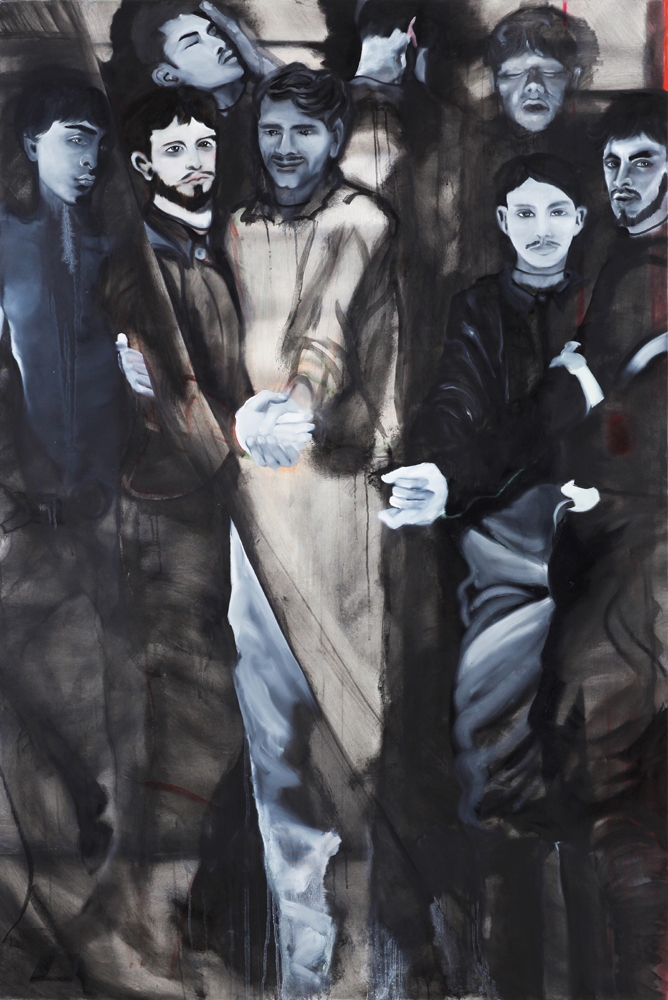
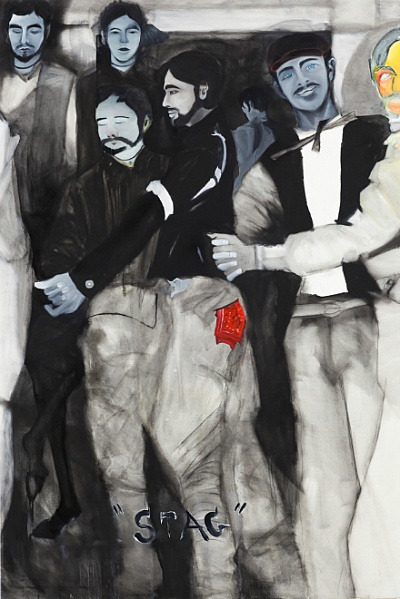
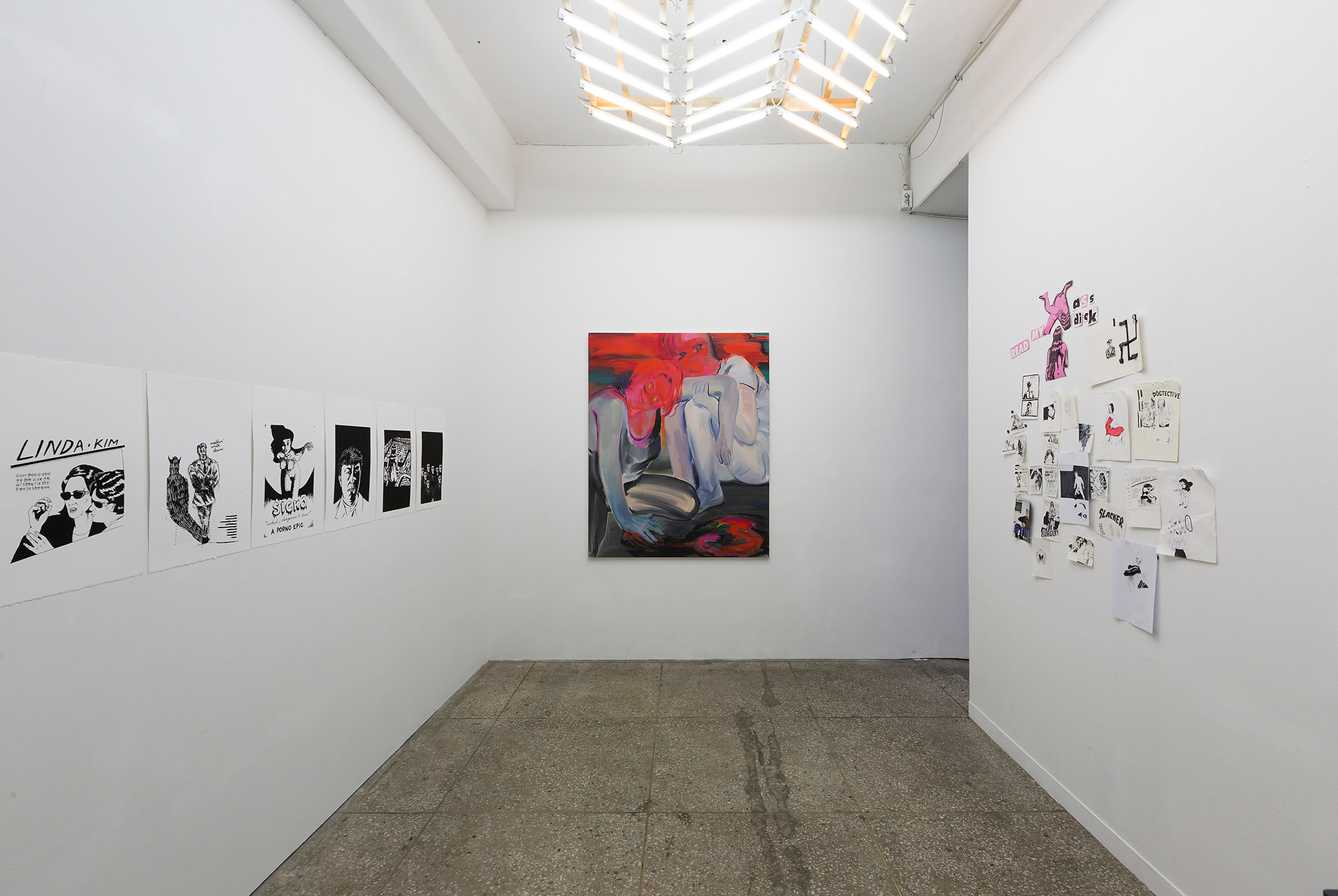
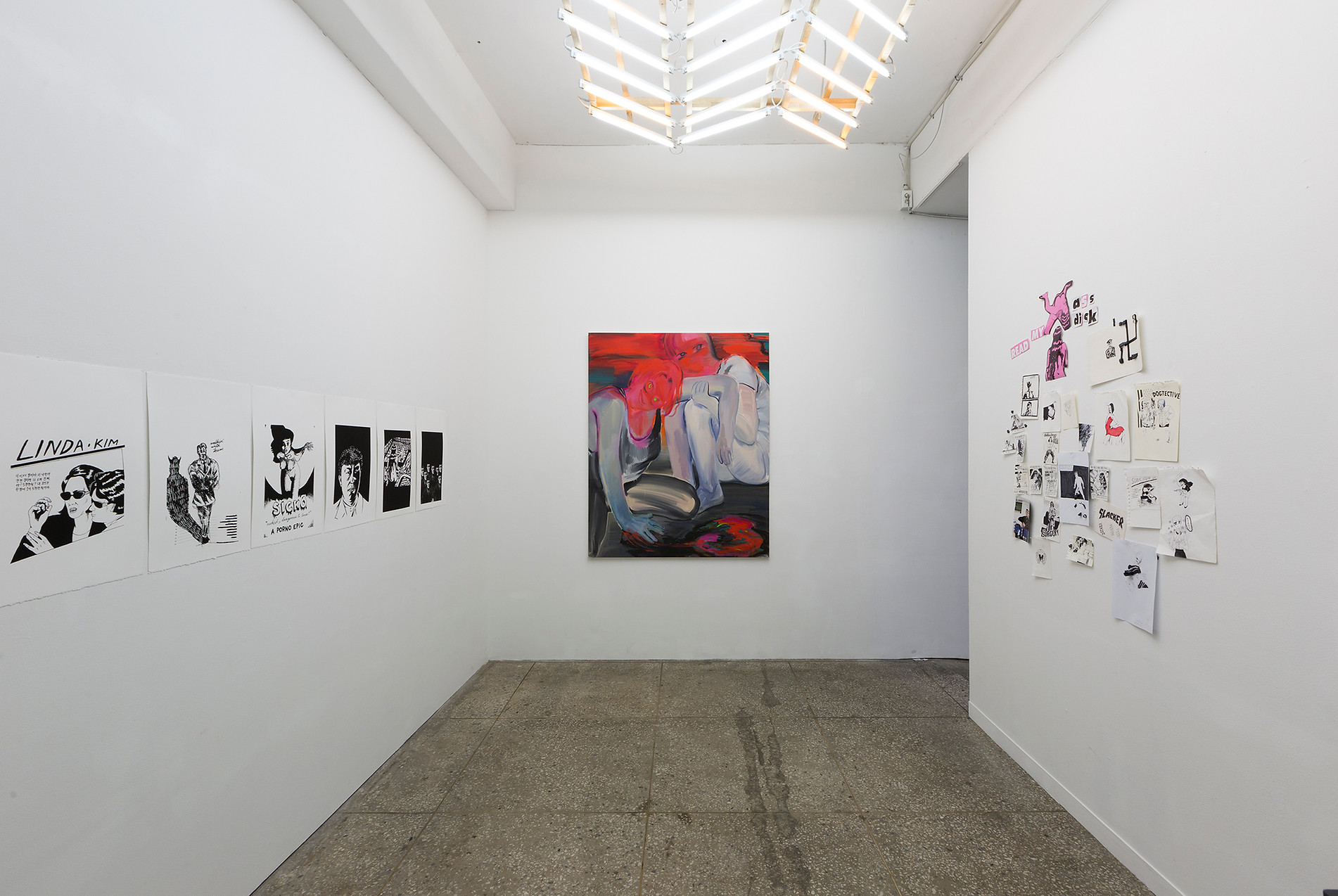
Illustrator Kim Euisung’s drawings radiate the energy of subculture—filled with appropriation and parody—at the very center of the exhibition space, traversing the boundary between the white cube and subculture. Drawing from familiar characters of popular culture as well as widely recognized images from high art, he dissects and transforms them into grotesque forms through his own satirical and critical sensibility. These images, displaced from their original contexts and deliberately degraded, may at first appear to reproduce violent masculinity or femininity, yet their positions are reversed or strangely intertwined. Kim Euisung’s drawings, which play with the violation of norms and the crossing of boundaries, are themselves bizarrely formed freaks.
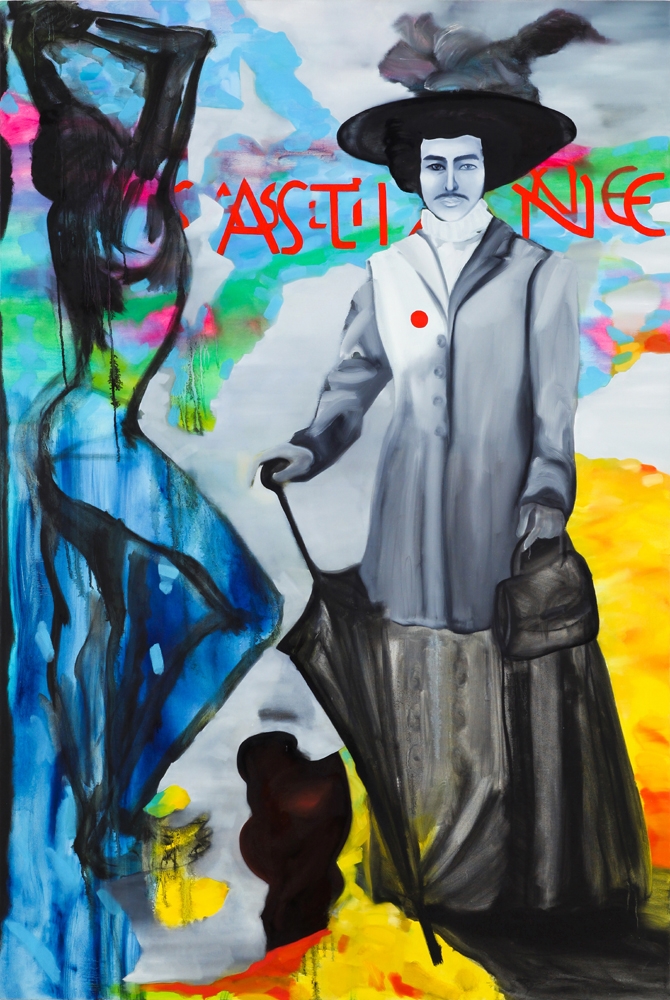
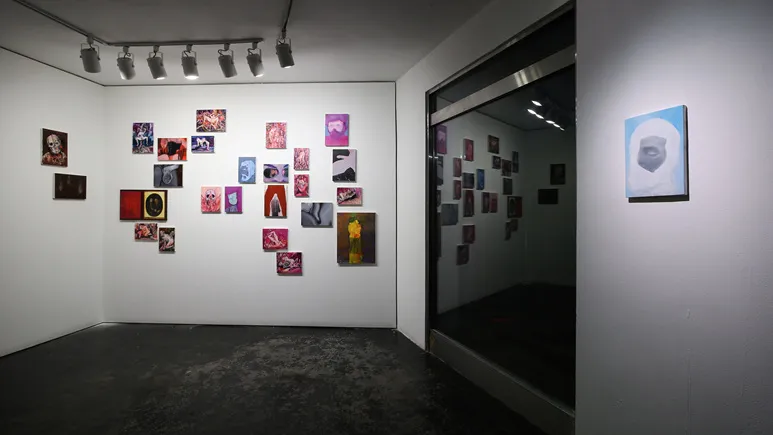
These freaks, weirdos, and “crazy women” are also the protagonists of Lee Eunsae’s paintings. In the figures of women sprawled drunkenly across the floor with crooked smiles, or women casually staring at their phones while exposing their genitals without hesitation, there emerges a sense of madness that feels difficult to approach. In Lee Eunsae’s provocative paintings, which resist and violate stereotypes surrounding young women, the very weapon of this transgression is, interestingly, the women’s bodies themselves—bodies that would ordinarily have been positioned as objects of voyeuristic desire.
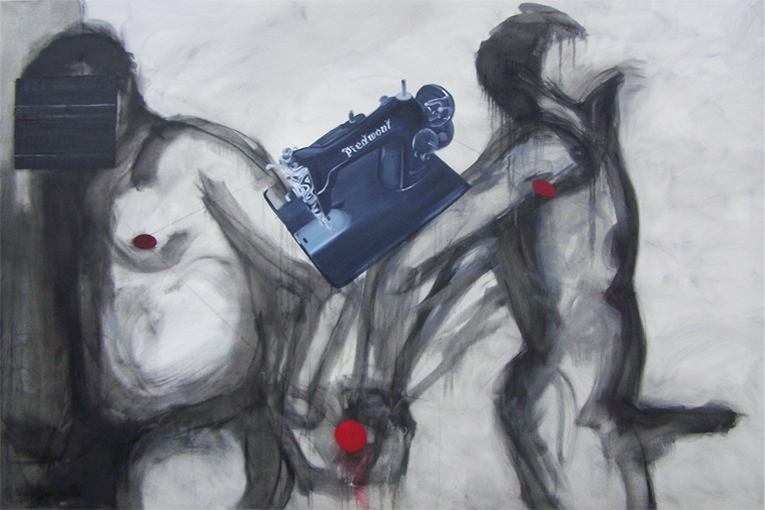
Mire Lee’s installation works present drag-like forms that move across the boundary between object and organism. Mechanical sculptures that continuously move by motor while evoking bodily organs, or strangely conjoined bodies severed and connected through artificial metal joints—these artificial-body-machines tremble uneasily, recalling substitutions and disruptions between objects and living beings. This unstable combination and movement may be the gesture of desire trapped within a closed circuit without escape, or perhaps a metaphor for a masochistic love that can never truly be reached.
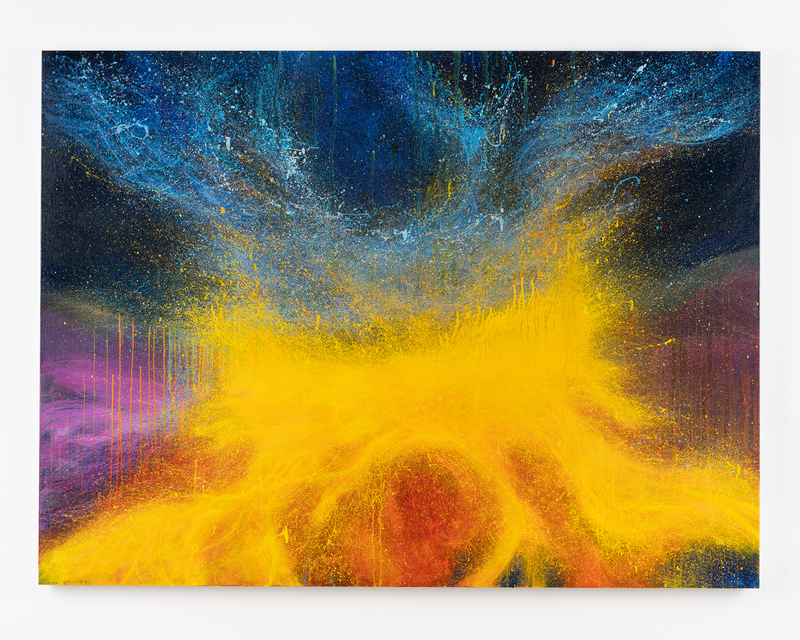
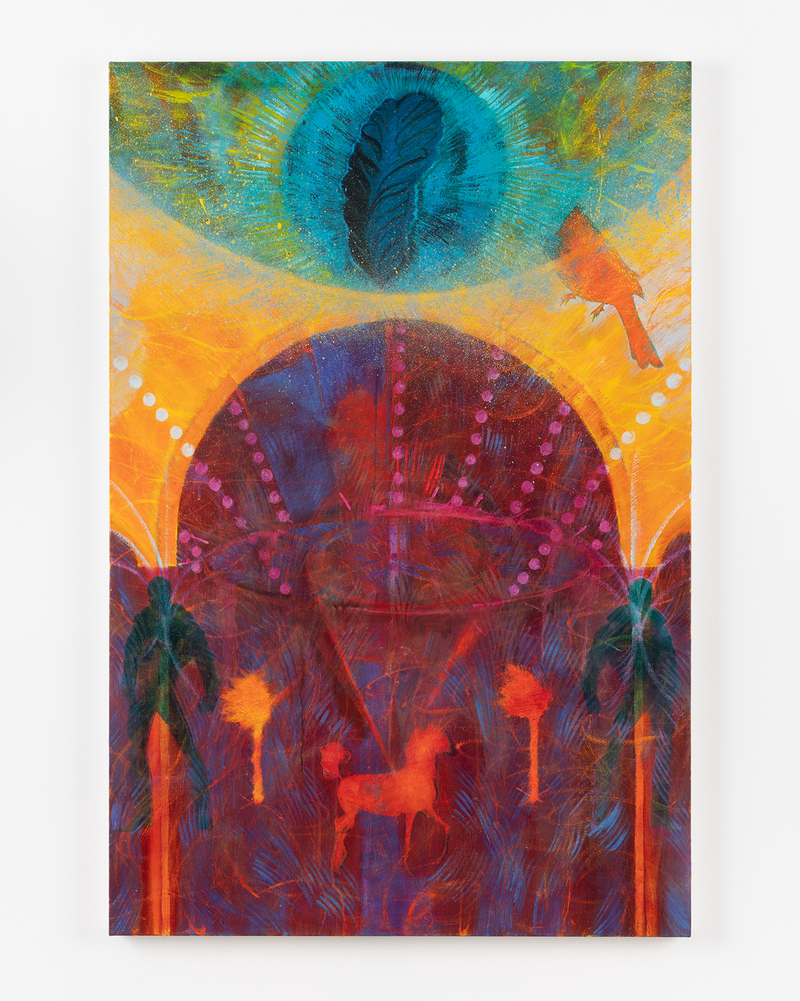
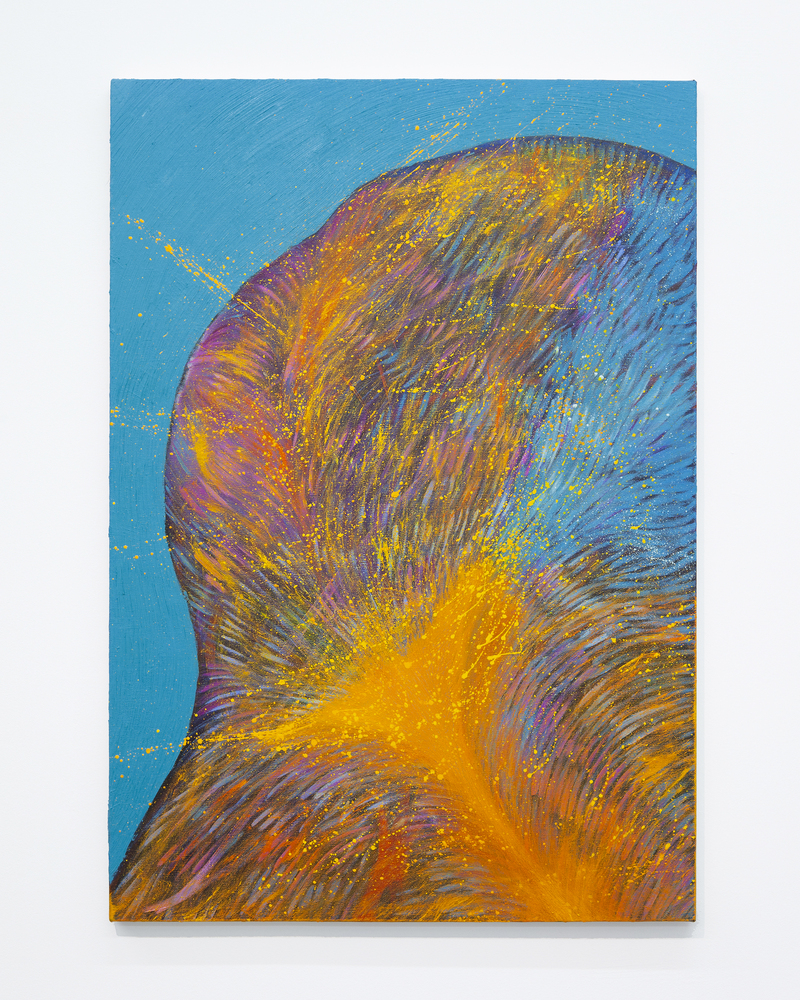
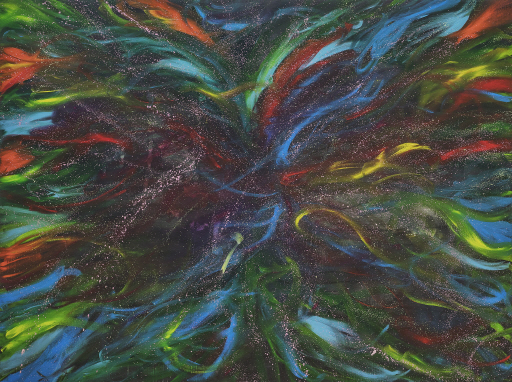
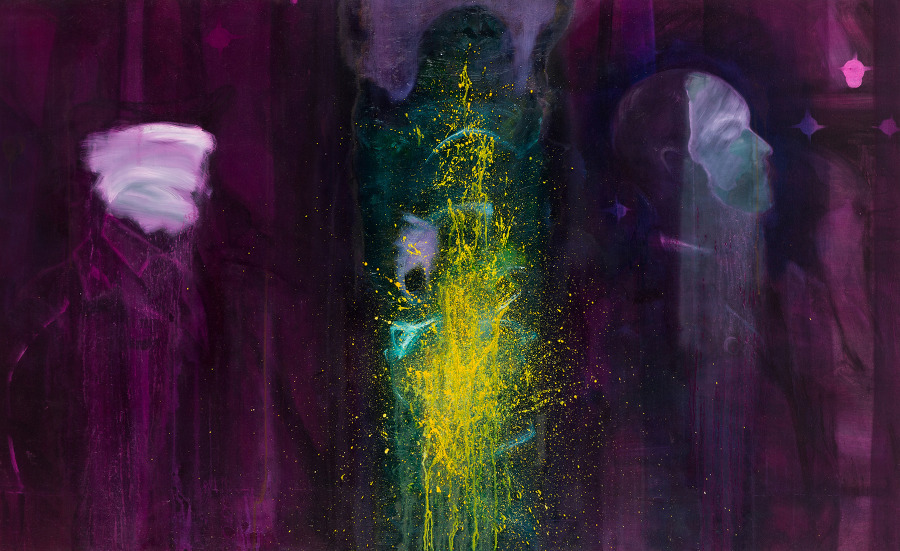
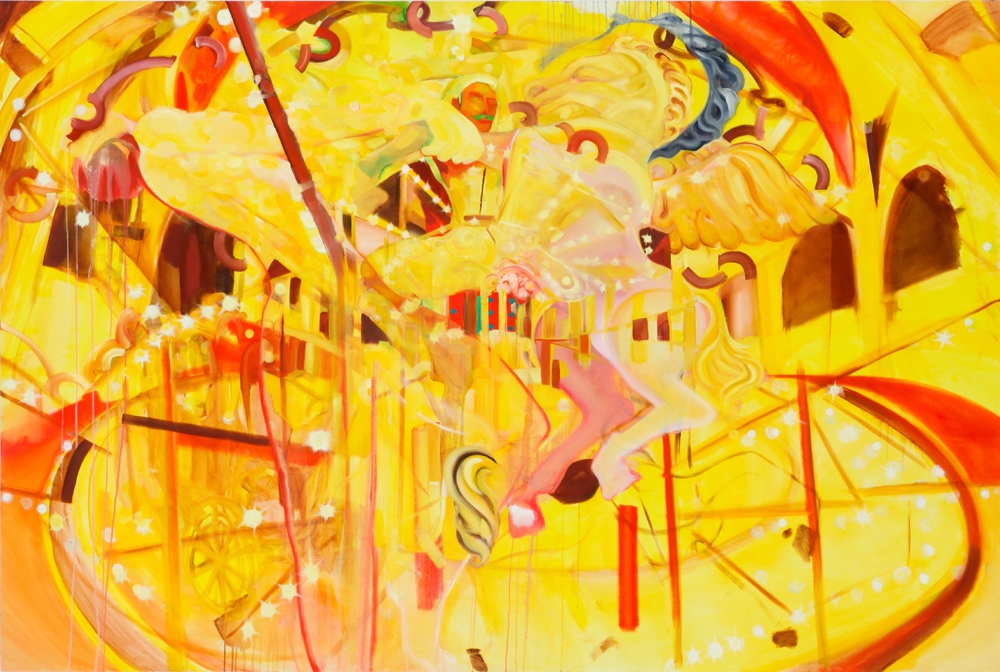
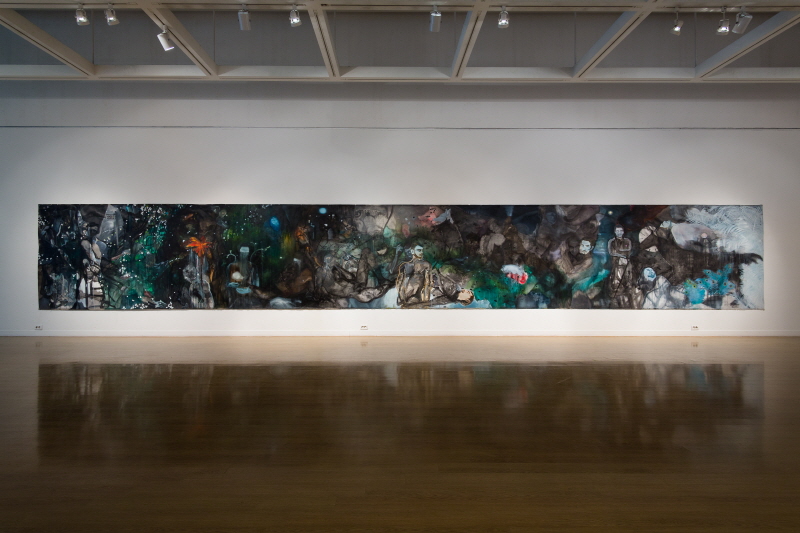
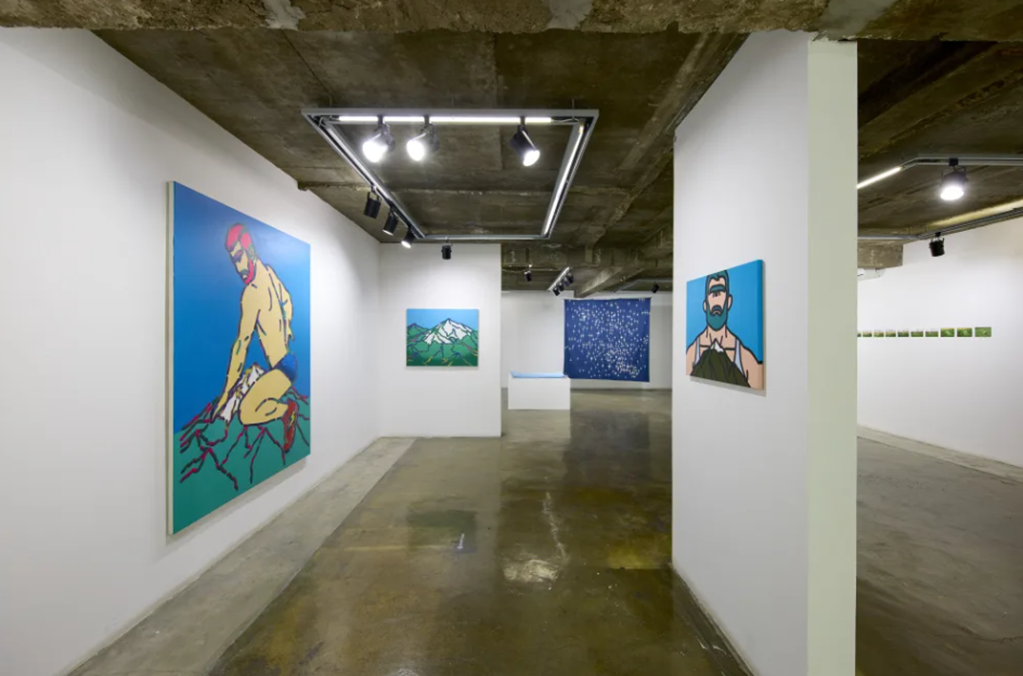
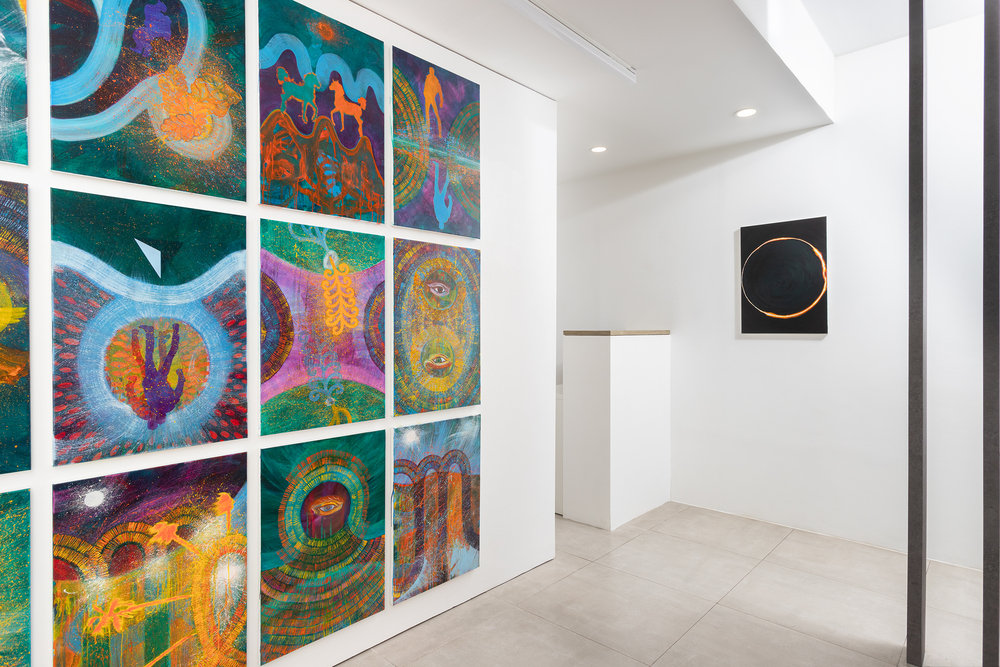
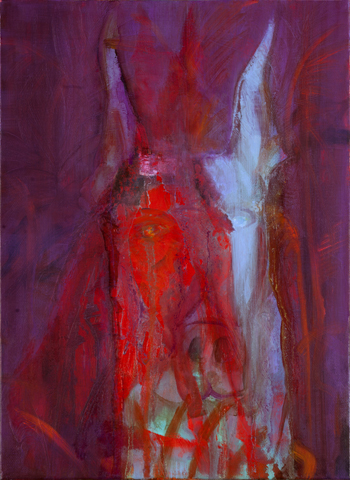
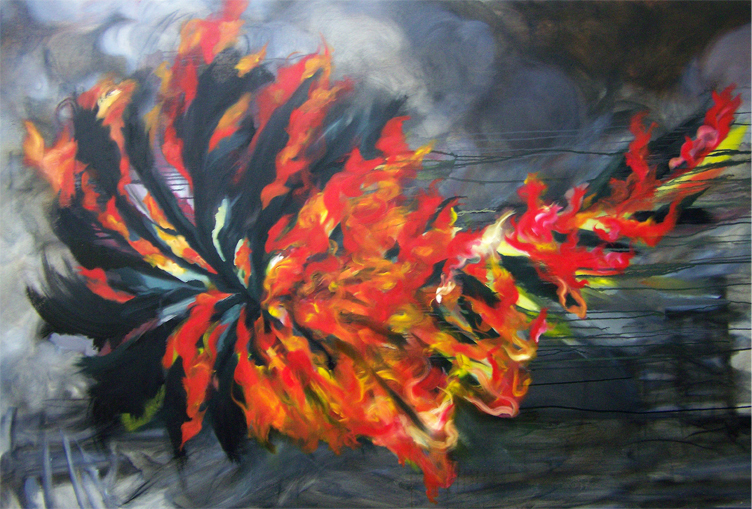
Yongseok Oh’s paintings evoke moments akin to the birth of existence, condensing or exploding erotic and primordial sensations within such forms. Images of male torsos collected by the artist from various sources form a typology within his artistic universe and are reborn as a single body. Yet this body is one without boundaries—its contours separating inside and outside are indeterminate, and even its gender cannot be identified. Furthermore, this bodily form as a world of chaos cannot even be discerned as existing at the moment of generative differentiation or at the moment of dispersive dissolution.
Finally, Rita and Seo Dongjin each unfold their own versions of queerness within the exhibition space. Rita, host of the podcast “Queer Broadcasting”, stages a live closed-room broadcast inside the gallery, bringing the sharp and intimate conversations of queer individuals directly into the center of the exhibition and amplifying both communication and disruption. Meanwhile, Seo Dongjin, who has created a small lounge titled Like Fassbinder, opens up his personal archive to foster empathy and communication with countless others seeking to understand desires that stand in conflict with the world—or perhaps to provoke yet another form of dissonance.
The works in 《Read my Lips》 traverse different boundaries and norms in their own respective ways. This exhibition neither seeks to define the participating artists’ works as queer art nor to redefine queer art through them. Rather, by introducing a broader concept of drag, it may further complicate the very image of queer art—an image whose existence itself remains uncertain. Yet perhaps that very ambiguity is queerness itself, something that cannot be articulated through affirmative language alone.
What we discover within these works are acts of crossing boundaries through disguise: women becoming monsters, monsters becoming men, men becoming hermaphrodites, and hermaphrodites transforming into objects. To wear the body of something other than the self one has been until now, and for that very moment to give birth to another self—that is precisely the moment of drag that this exhibition seeks to capture.