Drawings often appear free-spirited or cheerful. Even those who do
not pursue art as a profession frequently produce meaningless scribbles.
However, such doodles are easily discarded. Because we believe the world is
constructed from solid truths, unstable drawings are readily abandoned. Drawing
has long been understood as a preparatory stage for painting, that is, as a
sketch. Yet today, drawing is increasingly chosen by artists due to its
adaptability as a medium.
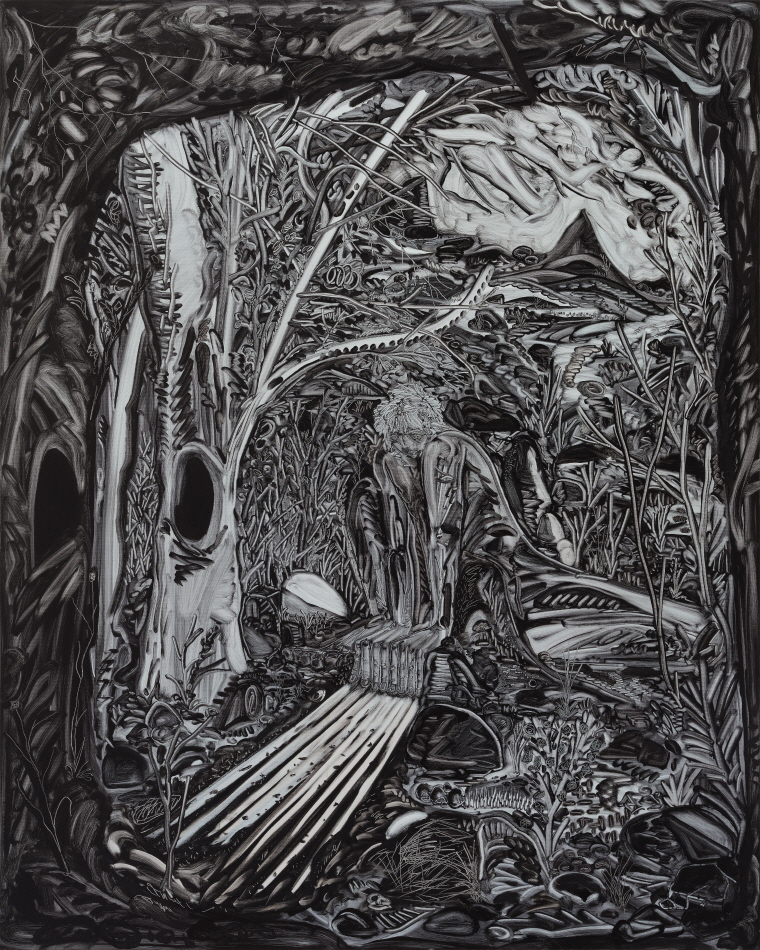
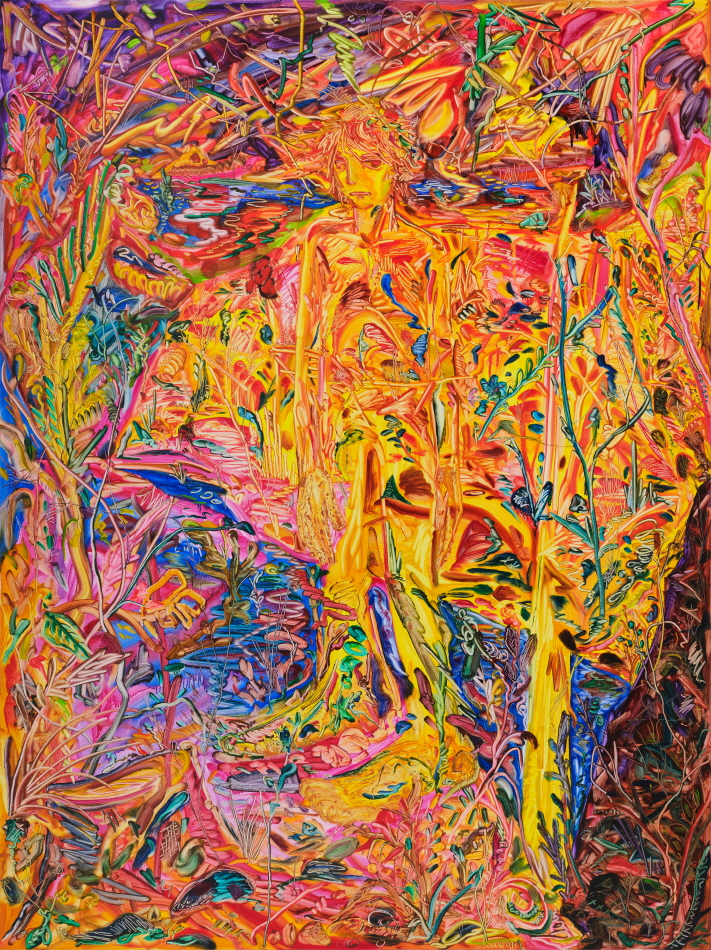
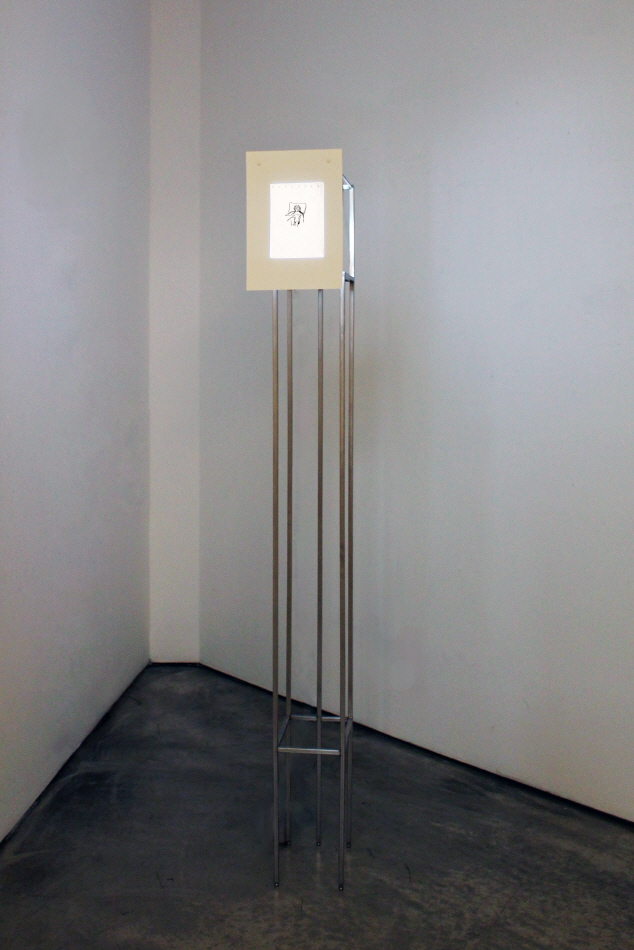
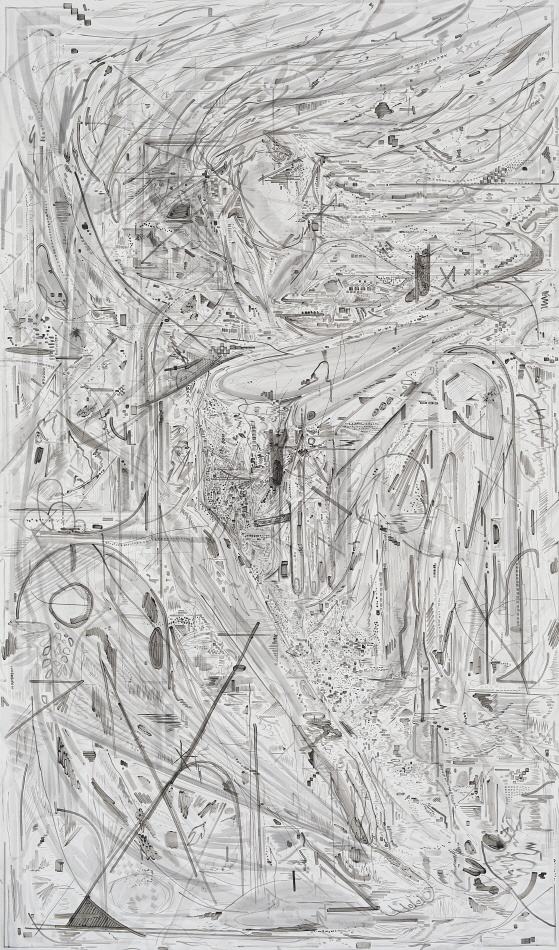
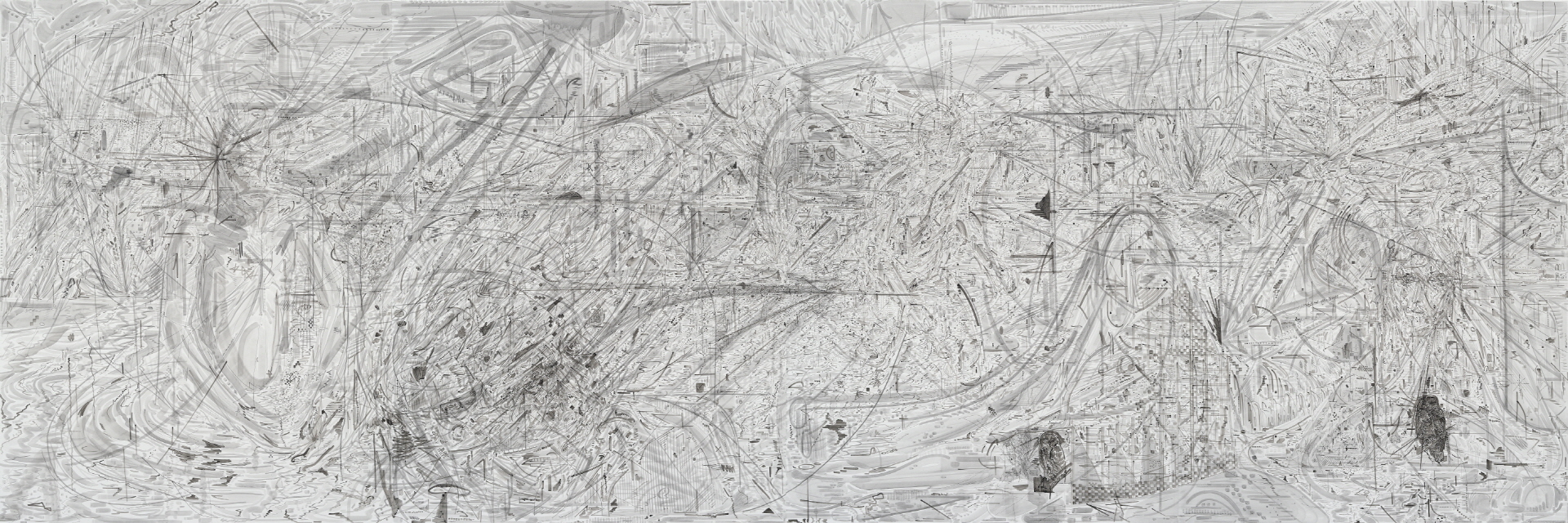
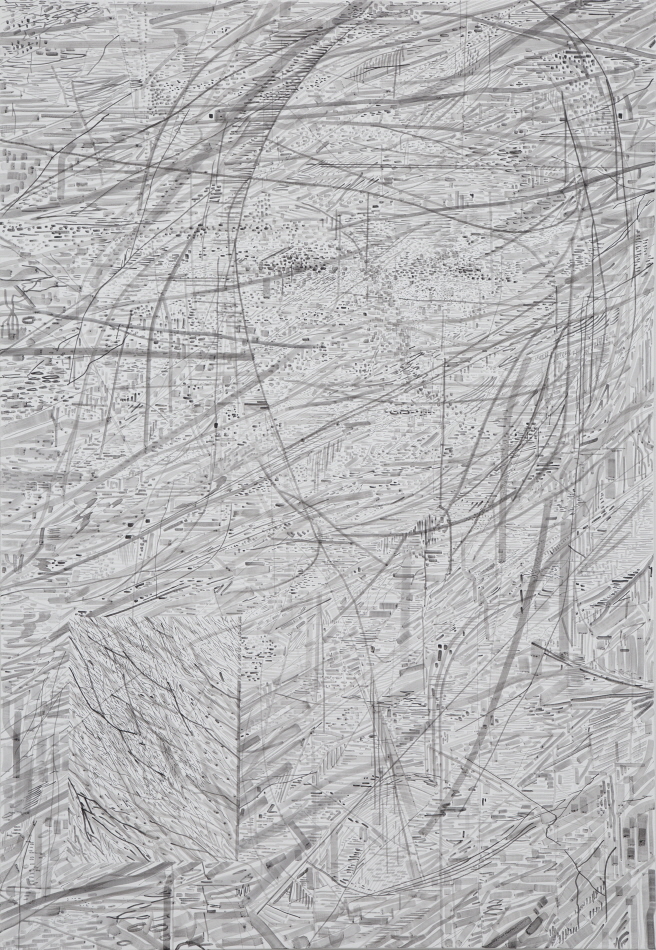
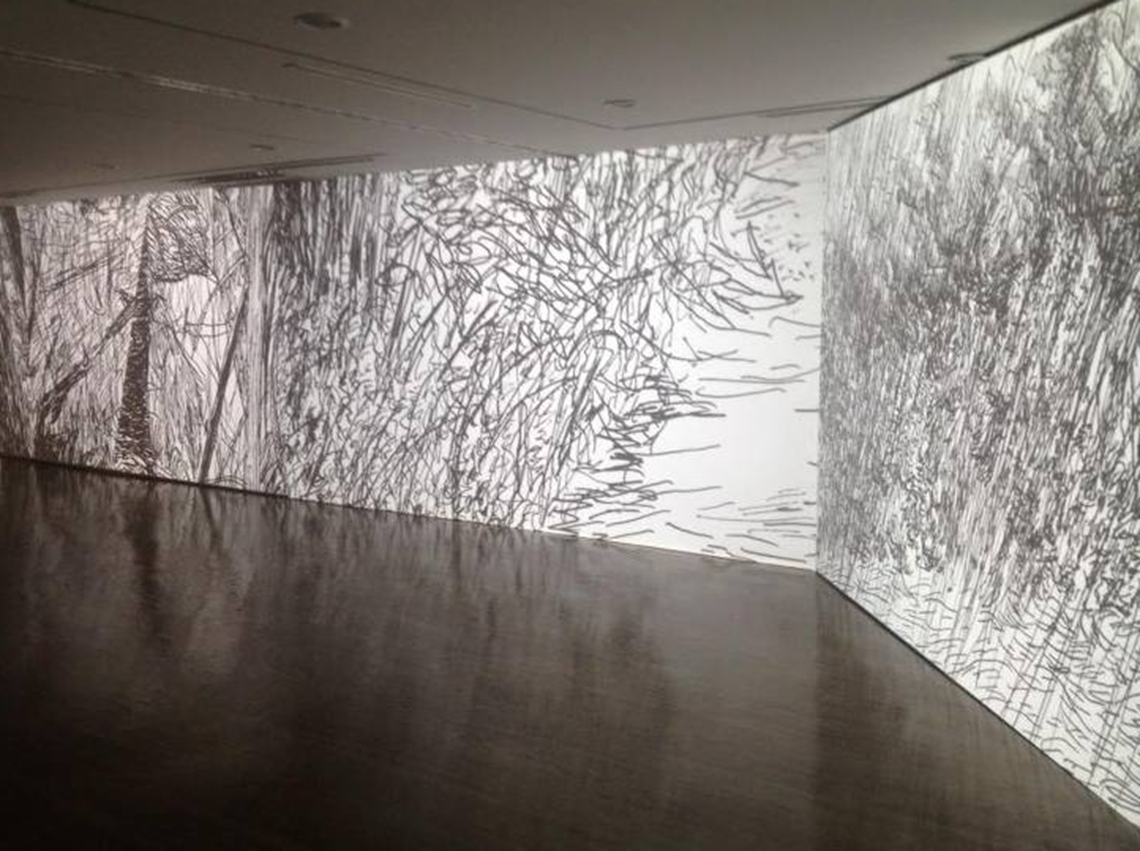
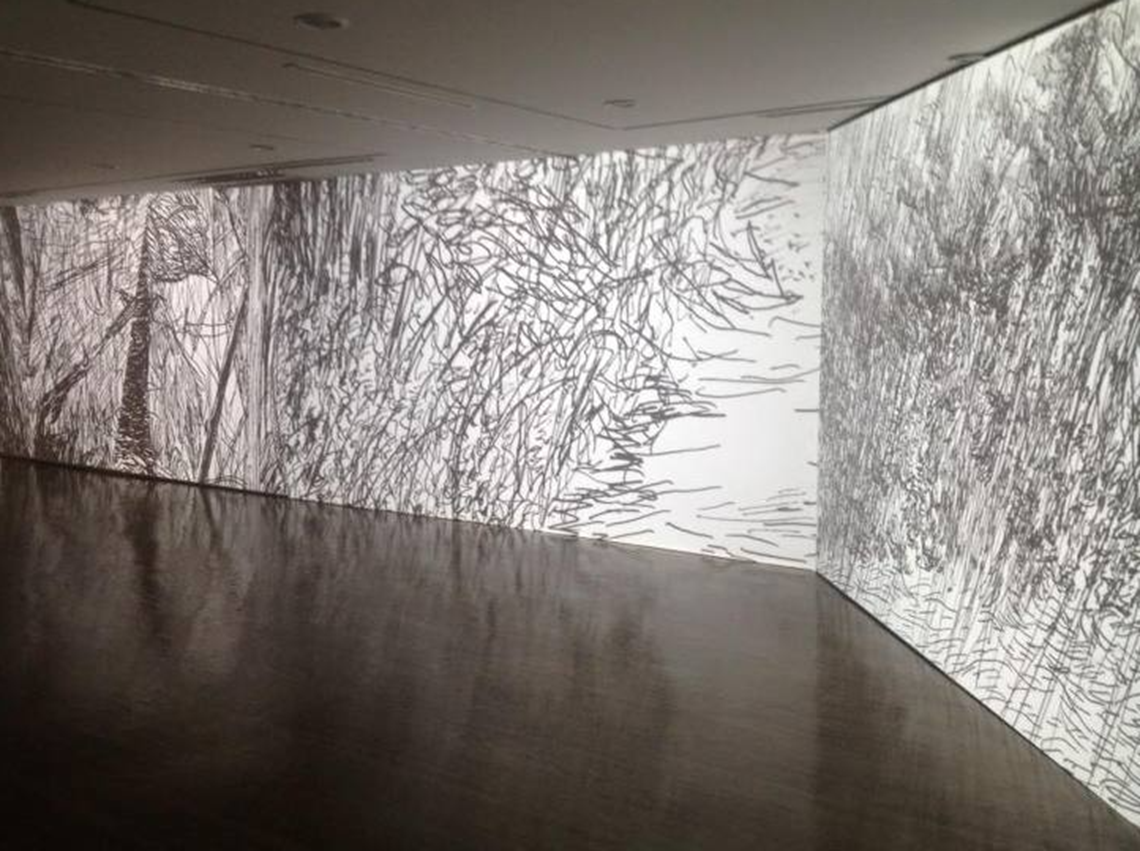
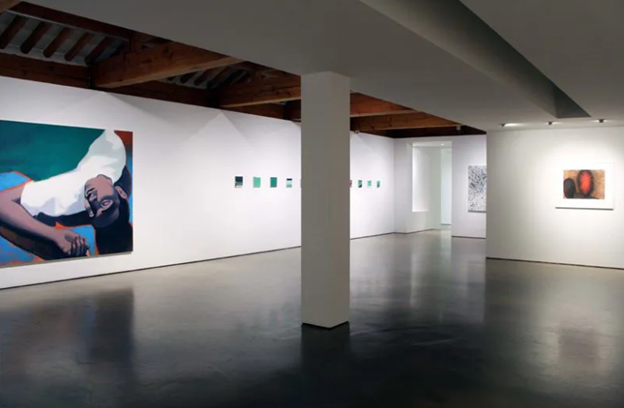
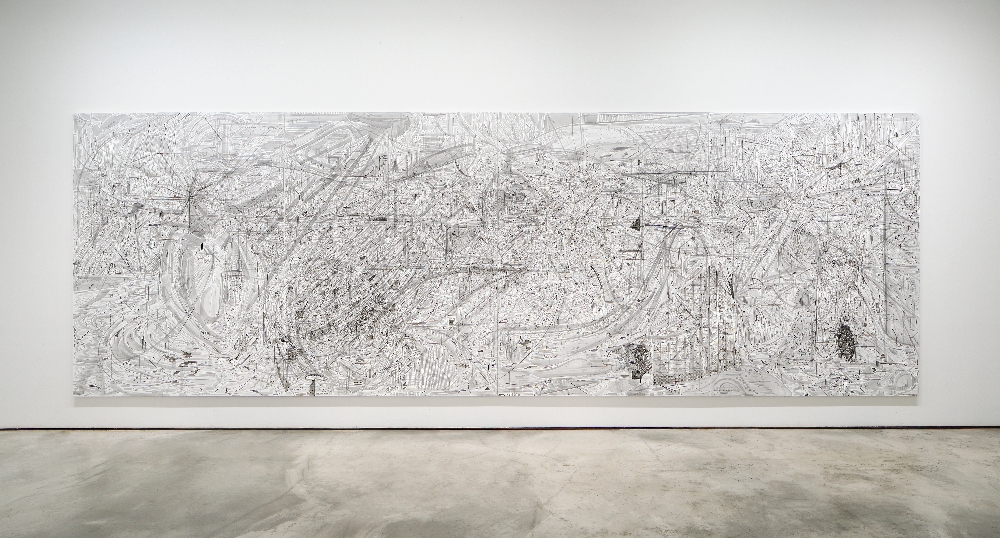
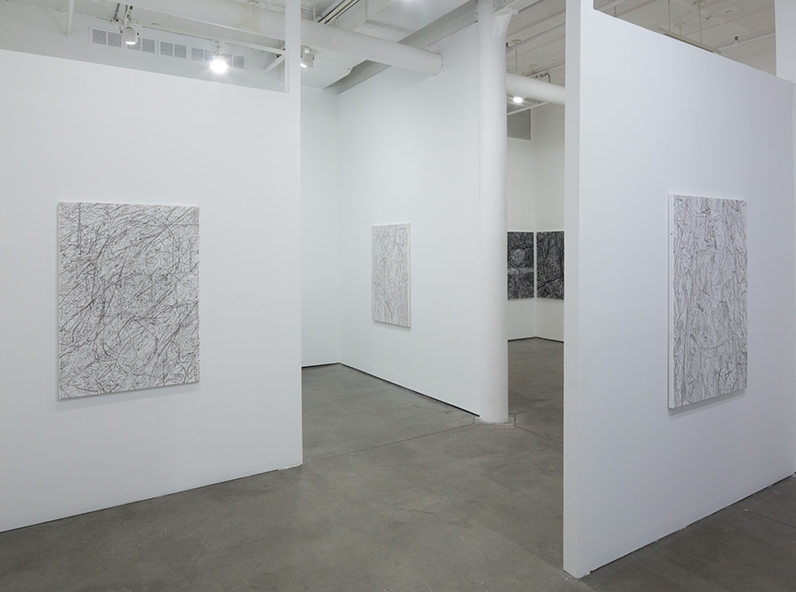
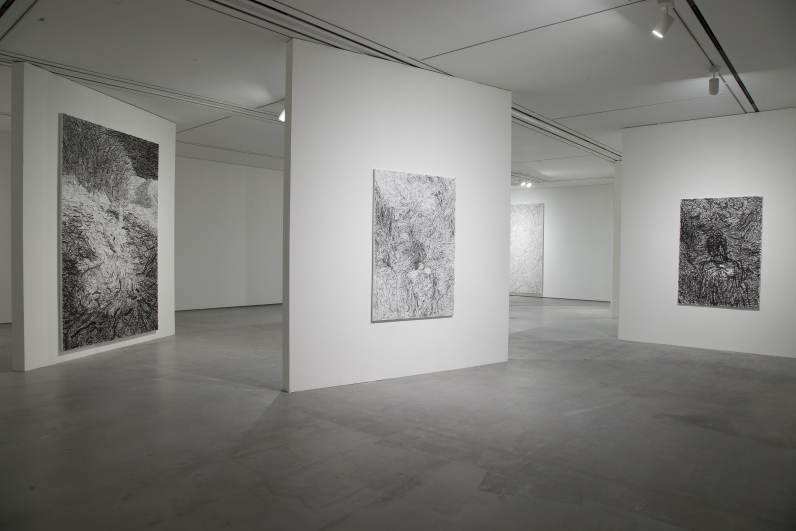
In Park Gwangsoo’s solo exhibition 《Black Wind, Bonfire and Drumbeat》 held at Shinhan Gallery Gwanghwamun, works based on drawing could
be observed. His drawings can be understood as a strategy for perceiving and
reorganizing the world. A total of 15 drawing-animations were screened in the
exhibition space with ambiguous causal relationships. As the exhibition title
suggests, the sound of drums filled the space. Why, then, did the artist
transform black-and-white drawings into animations composed of assembled
frames?
To better understand the work, it is useful to first explain one
technique: rotoscoping. This method is used in most of the artist’s animations.
In simple terms, rotoscoping is “a technique in which movements of a person are
filmed with a camera and then redrawn frame by frame as animation.” The artist
states, “The content of my drawings is conceived from fantasies about the
underlying aspects of the physical world I experience daily.”
These underlying
fantasies are interpreted differently in each exhibition. However, the strategy
of transforming drawings into animation has been consistently maintained. The
works are broadly divided into three types: [1. original drawings, 2.
animations that zoom in, zoom out, or scan the drawings, 3. rotoscoping
animations]. In this exhibition, the original drawings were not displayed
separately.
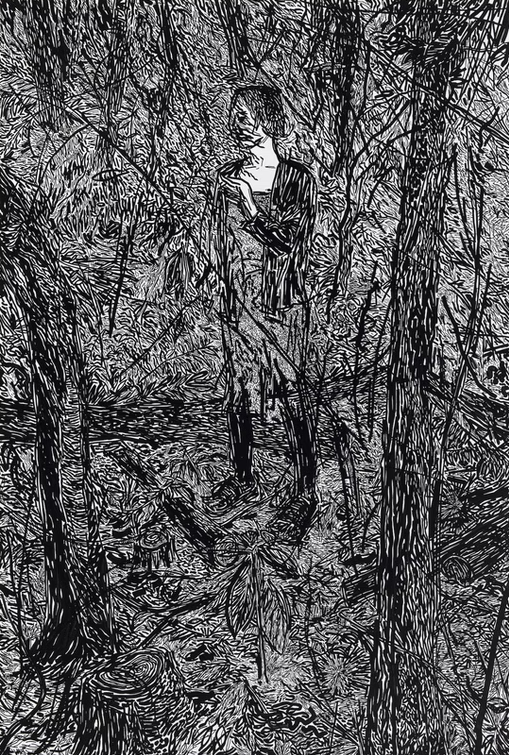
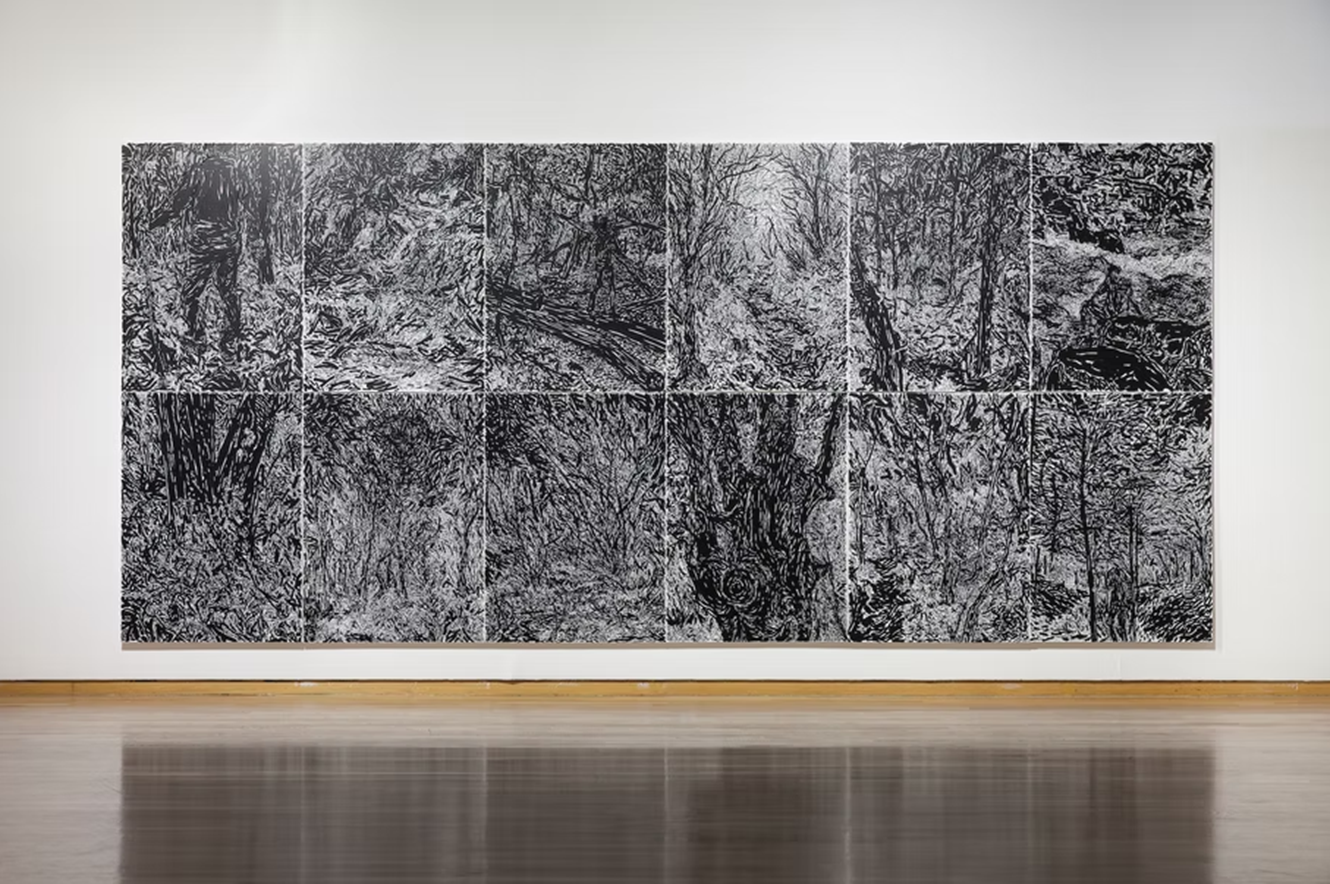
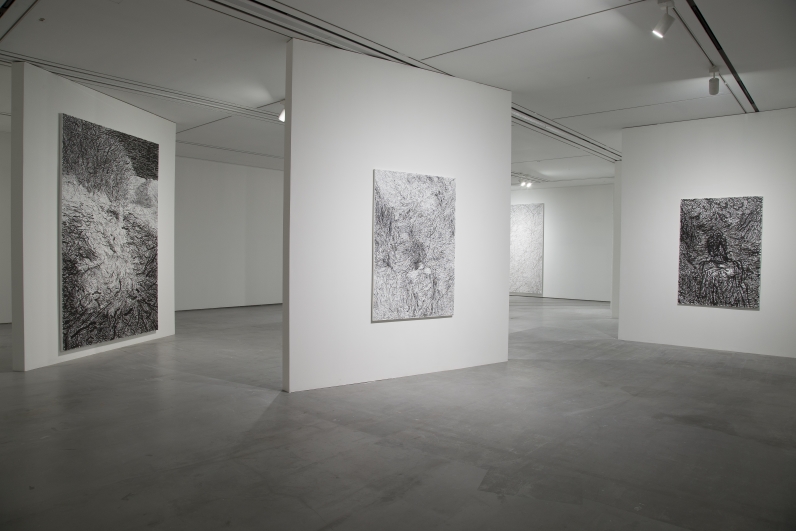
Interestingly, many of the works previously exhibited at Park
Gwangsoo’s solo exhibition 《Walking in the Dark》 at KunstDoc were
reconstructed into animations and screened in this exhibition. Thus, the
artist’s methodology of repeatedly drawing the same image to produce different
works over time extends into the exhibition. While repetition may seem banal,
the artist maintains freshness by encoding drawings into animation.
Typically,
encoding refers to converting video for use across different devices or programs,
but here the artist uses encoding to revisit drawings or rework them for the
exhibition, setting “drumbeats” as a background. As a result, the animations
derived from drawings exist as parallel yet distinct works.
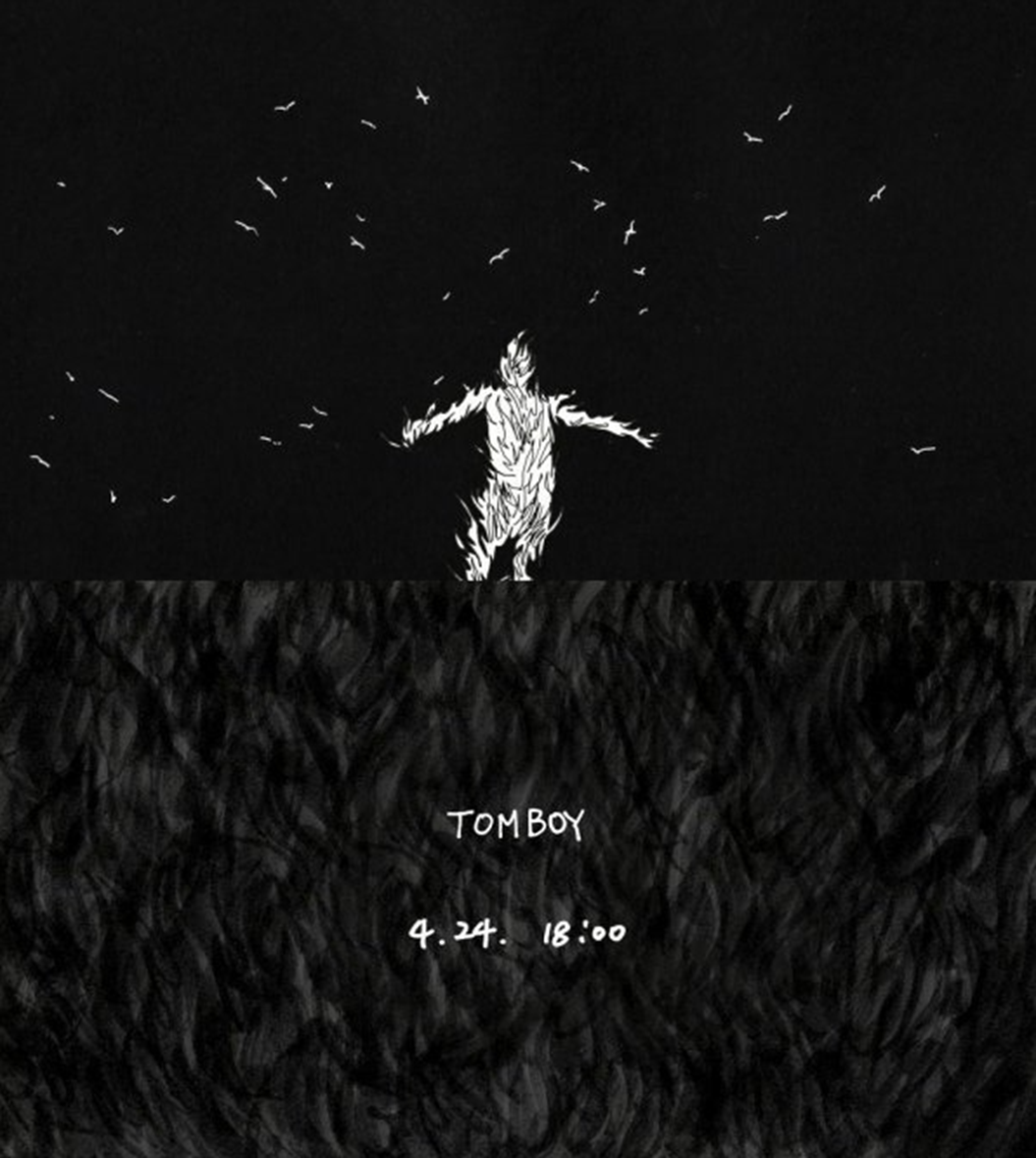
The work Fire Man – March effectively
demonstrates the strategy of encoding the world through rotoscoping. Footage of
people walking to work, burning with passion, calories, or life, is transformed
into animation. The artist’s imaginative vision—something not immediately
visible in the original footage—emerges as flames piercing through the surface
of the subject. Interestingly, the surrounding environment has been removed,
making it difficult to recognize the scene as a commute.
This focus on isolating
subjects is a prominent feature in other works as well.
In Weather and Hand, only the “hand” of a weather
announcer is extracted using rotoscoping. The gestures resemble sign language
and were selected from a broadcast on the date of the artist’s mother’s death
anniversary. The unpredictability of “death” and the apparent predictability of
“weather” do not perfectly align. The artist connects these unrelated elements
through rotoscoping.
The artist also incorporates 3D and game imagery into his
work. Rolling Stone and Black
Bird are based on 3D tool tutorial videos,
while Falling Man derives from a character in the
game GTA. Rolling Stone reconstructs a tutorial
explaining how a “sphere” becomes a “stone” in a 3D tool. The rolling motion of
the stone in the animation reveals that it is being constructed in virtual
space.
3D is not a true three-dimensional reality, but an illusion projected
onto a two-dimensional plane. Human fascination with the virtual becomes more
apparent as these 3D objects are transformed into animation. The artist’s
process thus moves from one form of virtuality (3D) to another (flat
animation). Yet this reconfiguration is effective in demonstrating the
indistinguishability between reality and virtuality.
Black Bird also originates from a 3D tool
tutorial. It features a simple action of a black bird exiting the frame.
Inserted repeatedly between other animations, it suggests that drawing,
animation, and projection are ultimately all images. Coin in the
Air appears to mediate the exhibition space while maintaining
the artist’s signature.
It originates from coins displayed in the Financial
History Museum next to Shinhan Gallery Gwanghwamun. Like the endlessly spinning
top in Inception, the coin repeatedly falls and rises. The work simply
demonstrates that physically impossible phenomena can be realized within the
artist’s hand-drawn world.
The animations in the exhibition follow the sequence [base image →
drawing → animation]. Through this encoding process, black-and-white images
composed of lines and dots appear rough, unstable, and writhing rather than
smooth. The disjunction between frames paradoxically gives vitality to the
work. As frames intersect continuously, the original image’s boundaries and
meanings become either obscured or clarified.
The artist’s work is
fundamentally based on labor-intensive drawing, further intensified through its
transformation into animation frames. Yet the process is clearly one of
transformation—of encoding and reconfiguring existing material. The artist
describes his drawing-animations as proposing and guiding a new reality.
Indeed, the encoding strategy appears to successfully reconstruct real images
into virtual fantasies.
Park Gwangsoo’s drawing-animations express the
relationship between virtuality and reality through the embodied movement of
the hand. Images and footage captured through personal perception are cut and
reshaped by the artist’s “knife,” revealing fantasy. However, this fantasy will
in turn transform into countless different fantasies for each viewer.
1. Encoding originally means “codification” or “encryption,” and
is also commonly used to describe the conversion of video formats. Here, the
term is used to describe the artist’s strategy of transforming drawings into
animation or video into drawing.
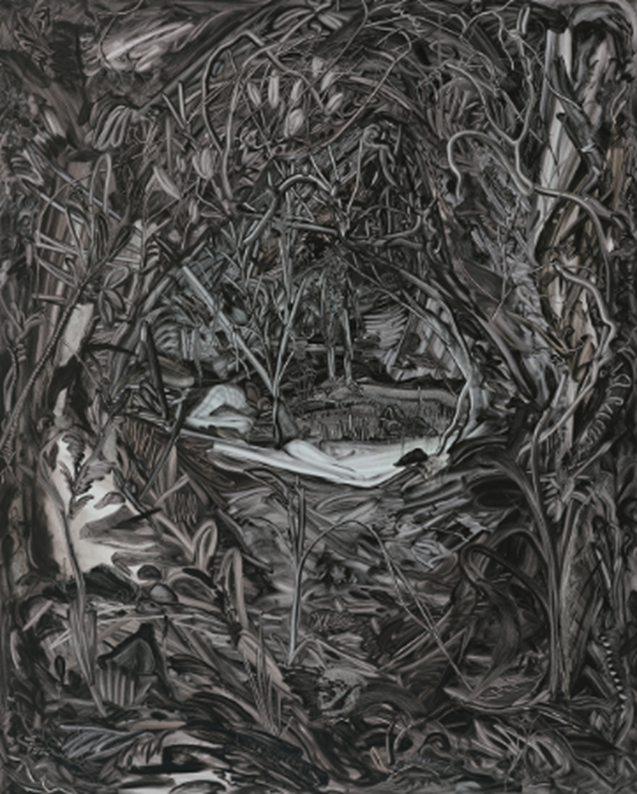
2. Man Disappeared in the Forest is
particularly notable, as it zooms in on or scans a drawing, suggesting a
gesture of revisiting the work itself.
3. The “knife” that cuts space, first appearing in the artist’s
2011 solo exhibition 《2001: A SPACE
COLONY》, continues in later works as a tool that
creates gaps in space and opens up a world mediated through the artist’s
personal, almost ritualistic vision.