Park
Gwangsoo’s work deals with a world in which forests and nature, humans and
civilization, creation and disappearance are intertwined. His childhood spent
in Cheorwon, Gangwon-do is closely connected to the sense of the forest that
repeatedly appears in his work. In his early works, the forest appears not as a
simple natural landscape, but as a place where dream and reality overlap and
unknown life stirs.
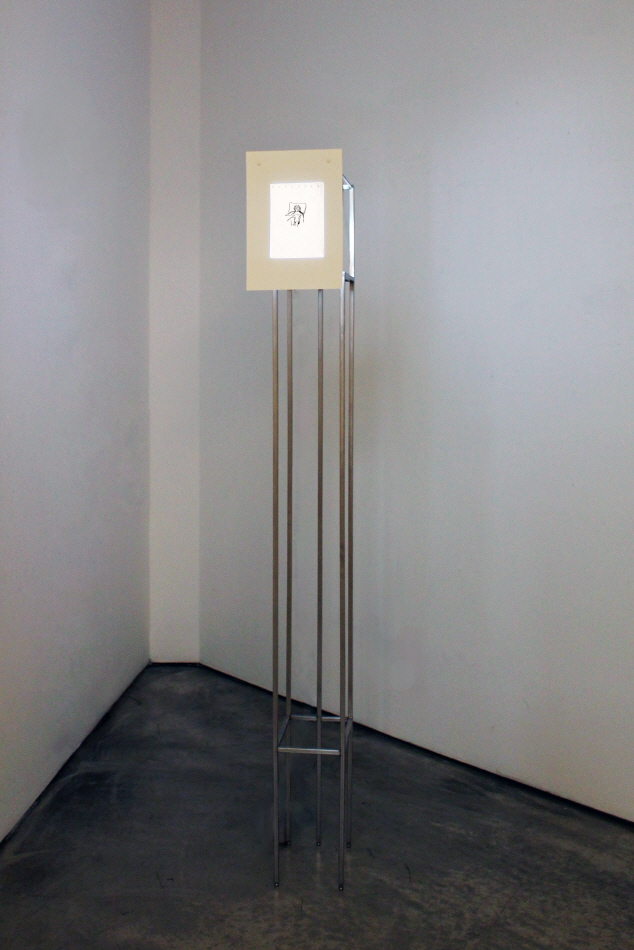
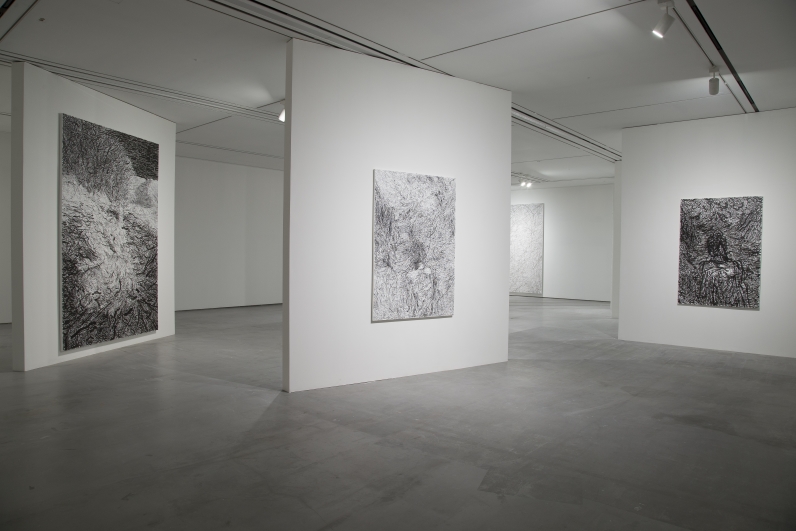
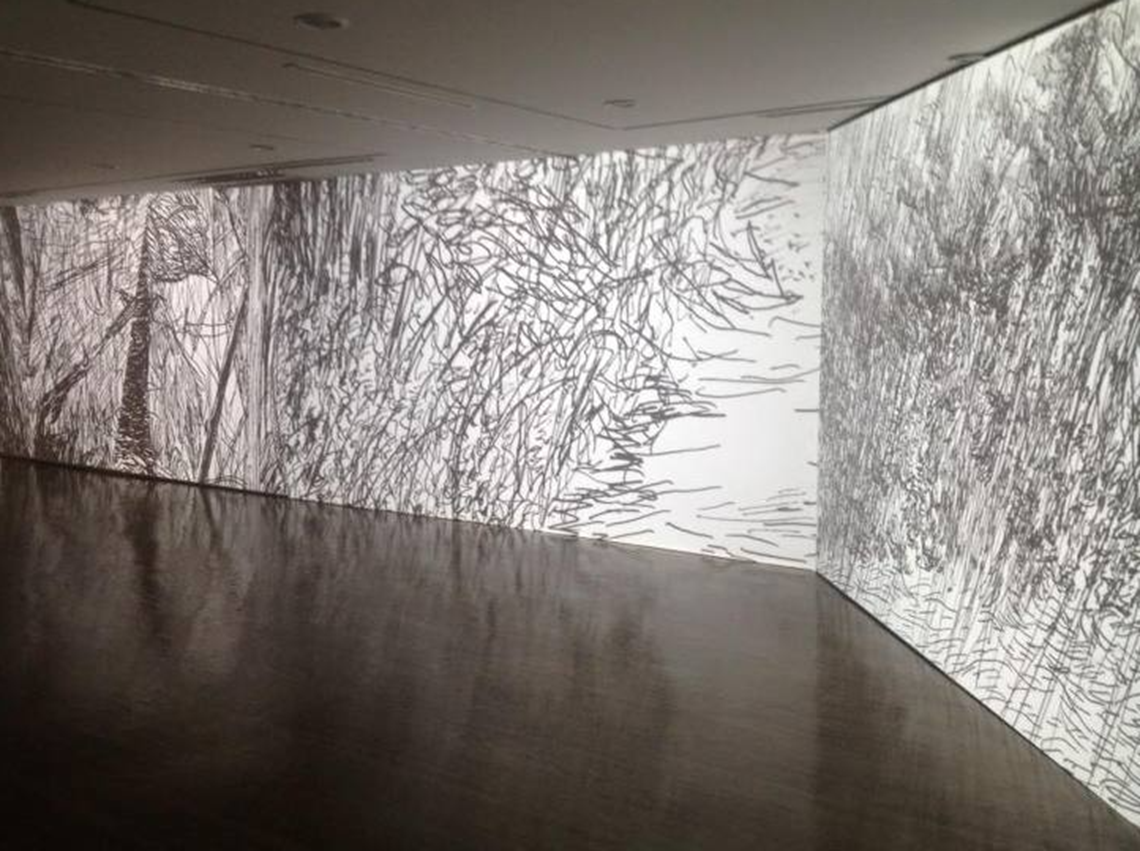
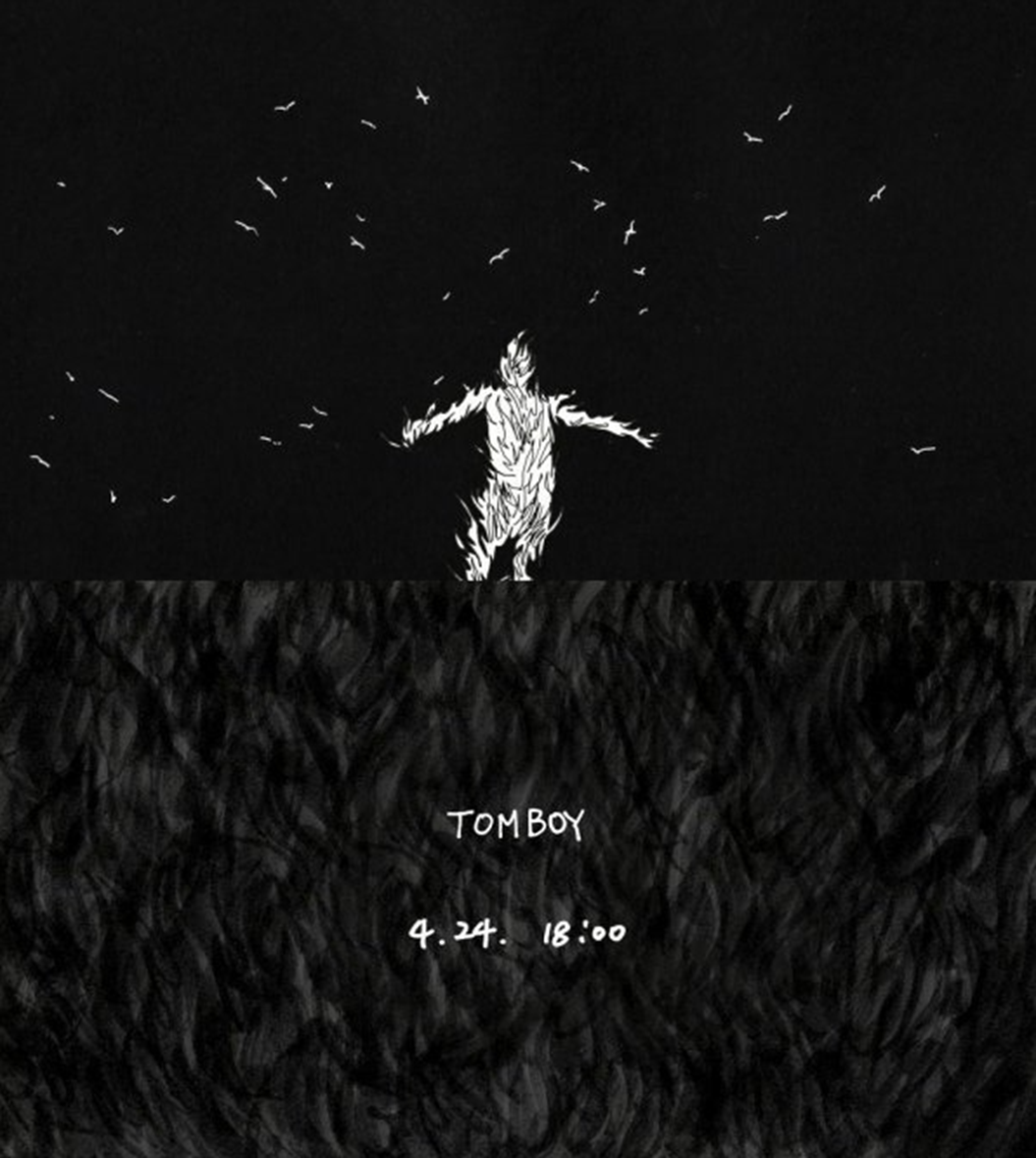
Beginning with the drawing animations in his solo
exhibition 《Black Wind, Bonfire and
Drumbeat》(Shinhan Gallery, 2015), the artist has
transferred images from reality, 3D tools, and game scenes back into drawing,
exploring uncertain fantasies and sensations that exist behind the real world.
This
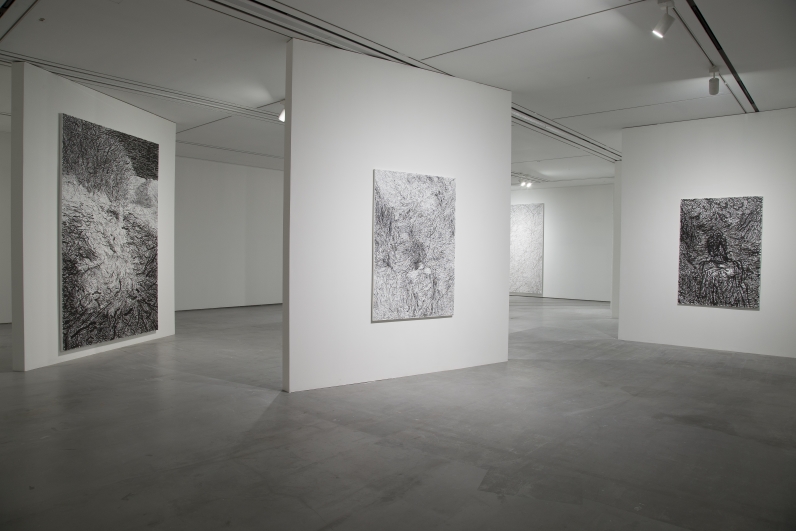
interest becomes clearer in his later solo exhibitions 《Crack》(DOOSAN Gallery, 2017) and 《Windswept》(DOOSAN Gallery New York, 2018).
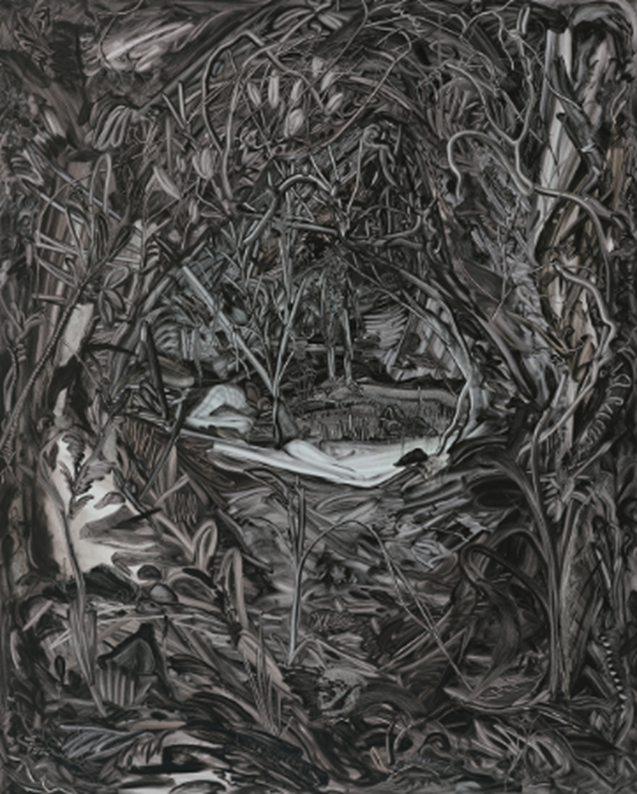
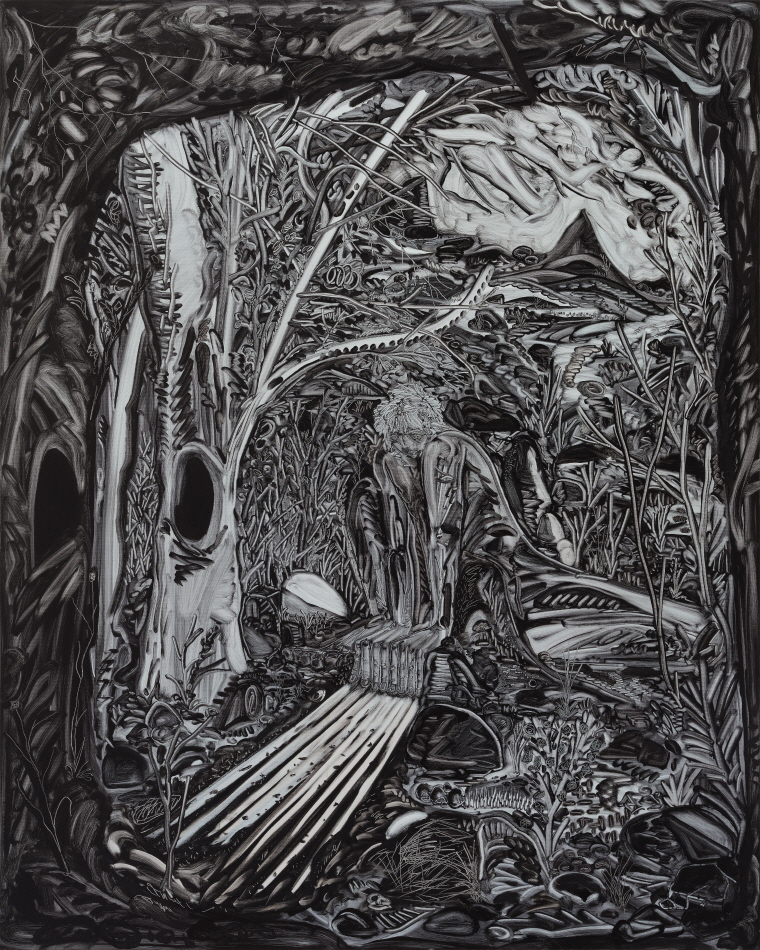
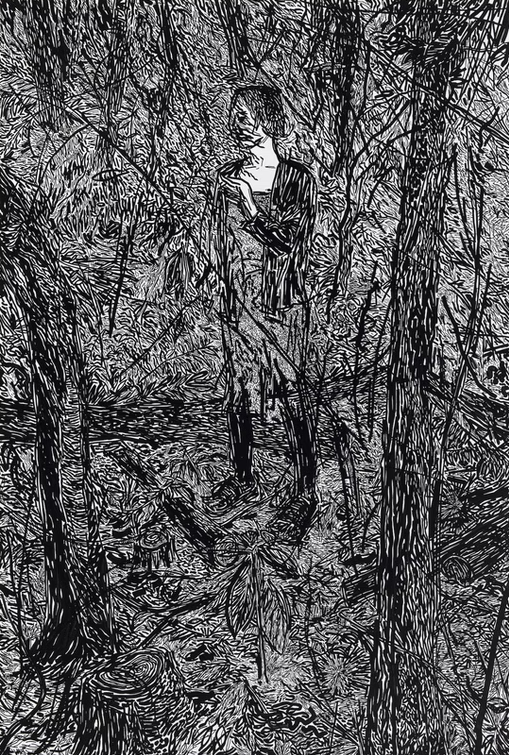
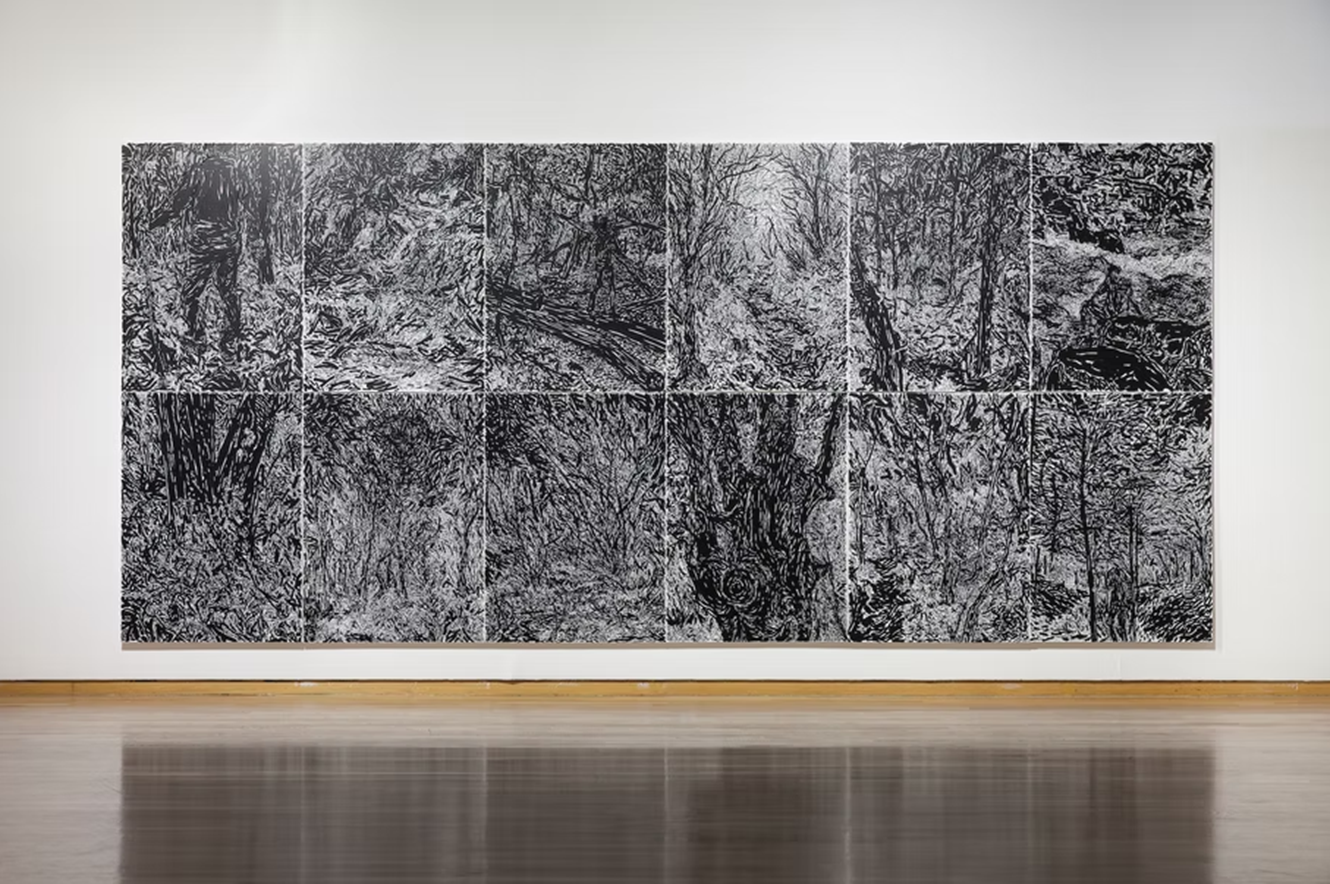
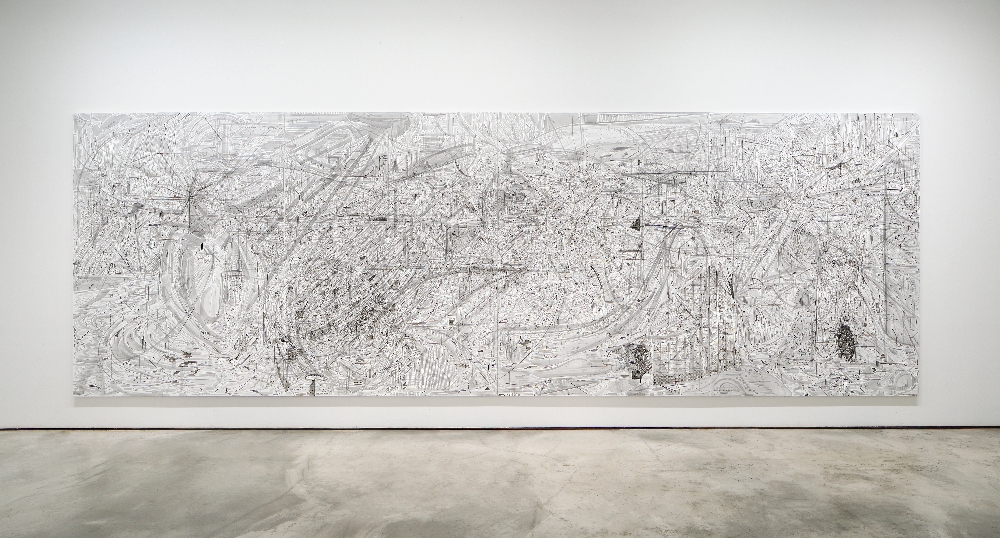
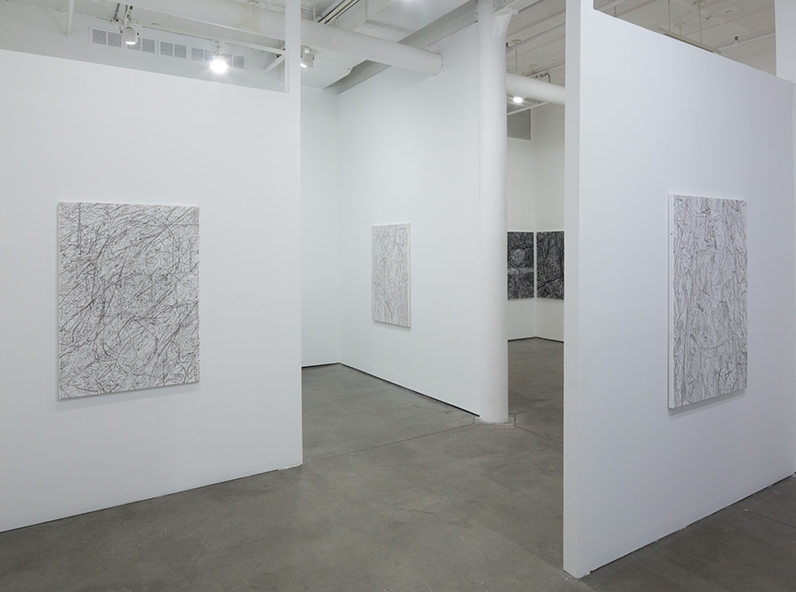
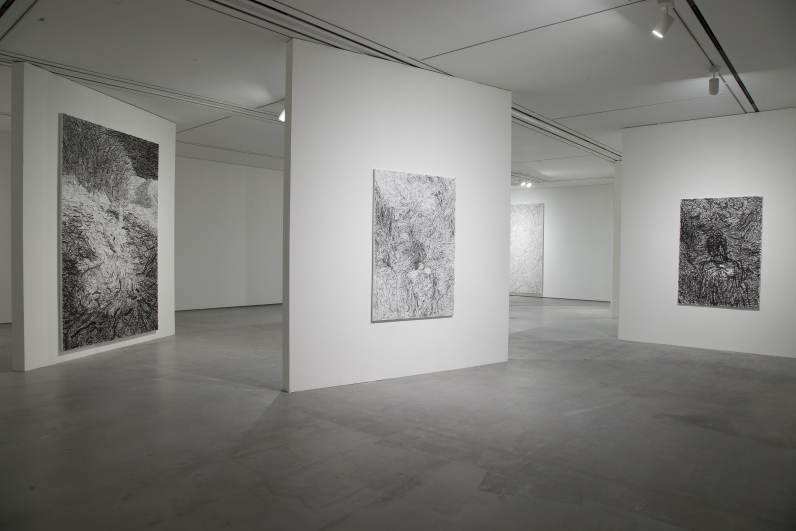
Representative works such as Dark Forest(2017)
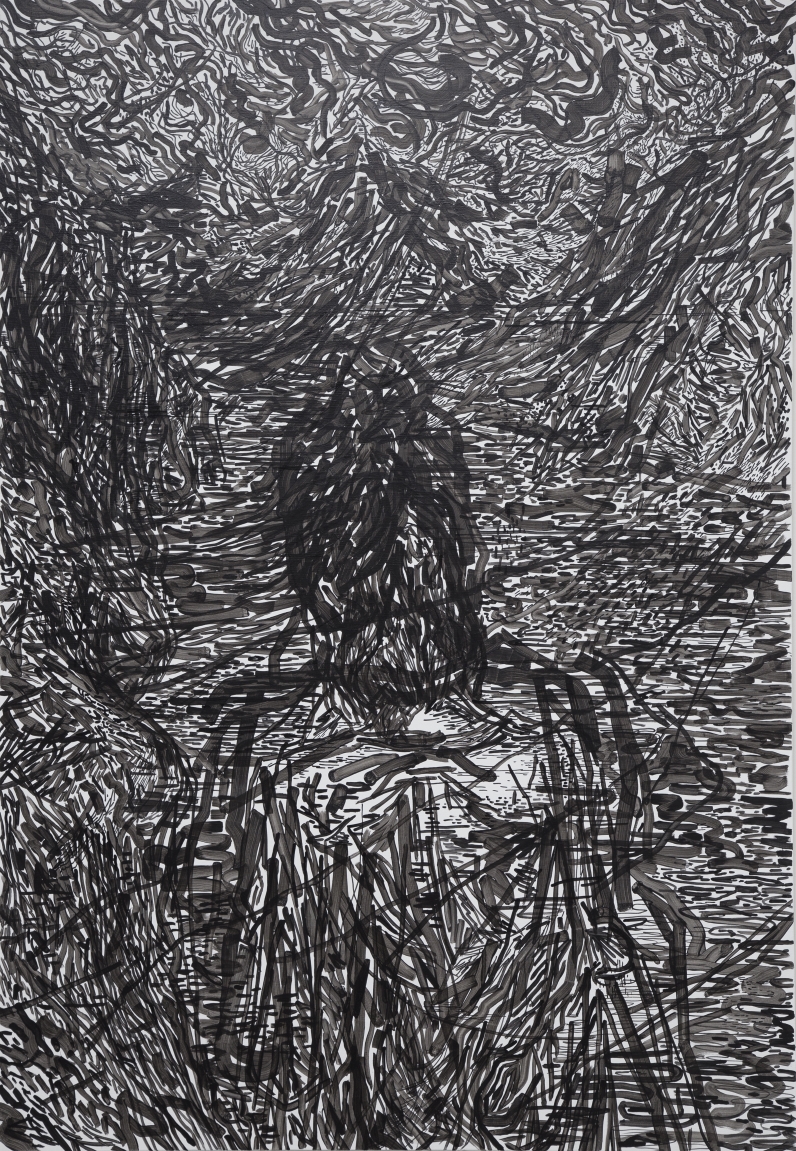
and Crack capture the moment when figures and
landscapes appear and disappear through countless black lines and the gaps between
them.
In this period, “disappearance” is not simply absence, but is connected
to the passage of time, aging, loss, and the state of an existence that has not
yet fully taken shape. The forest does not function as a place where forms
become clear, but rather as a scene where boundaries blur, images crumble, and
new forms are generated again.
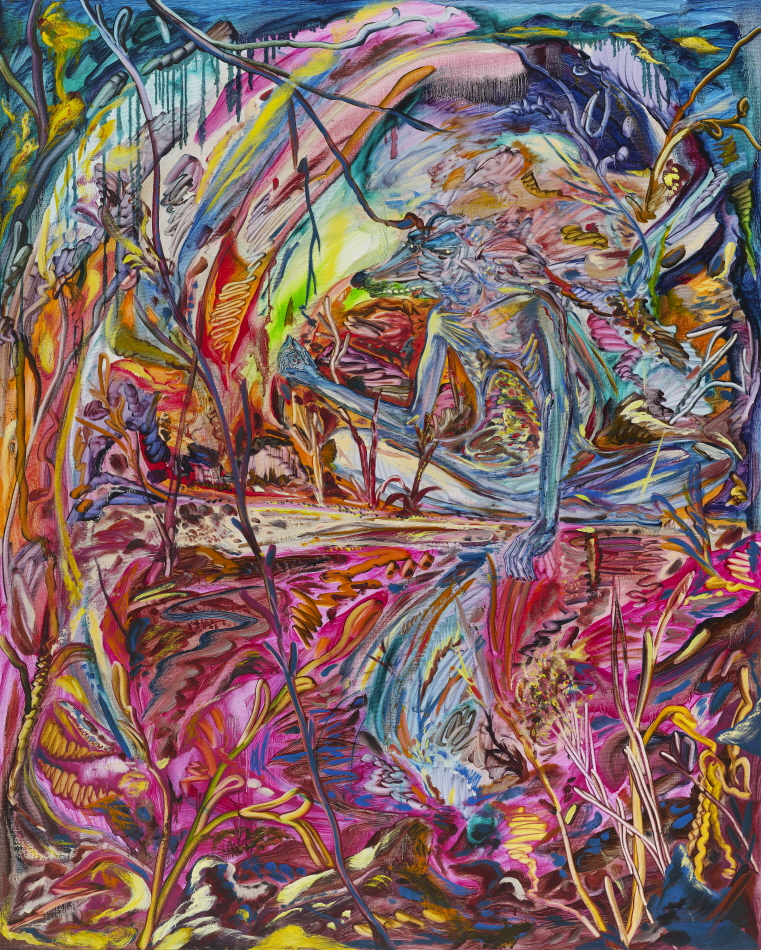
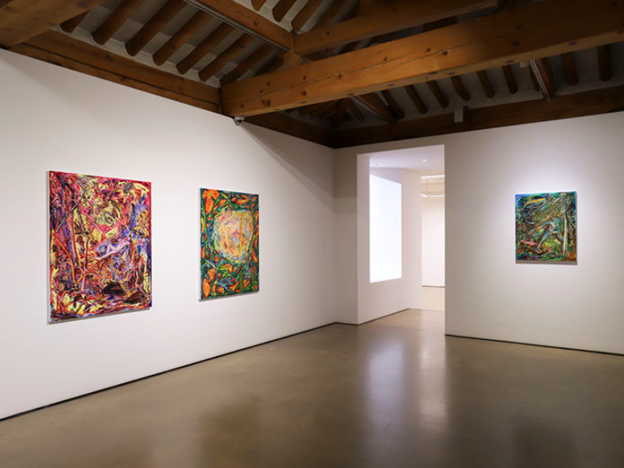
After the
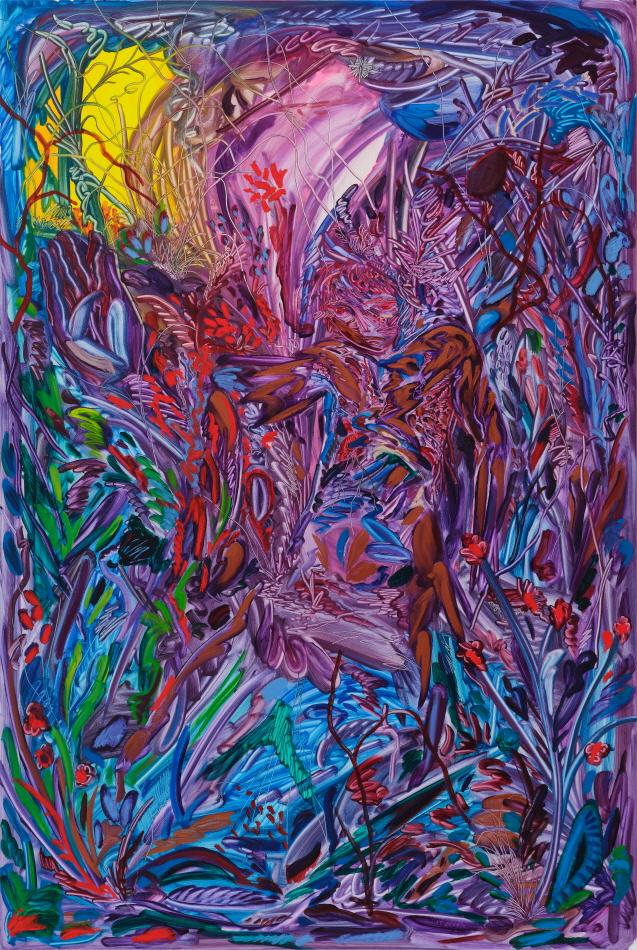
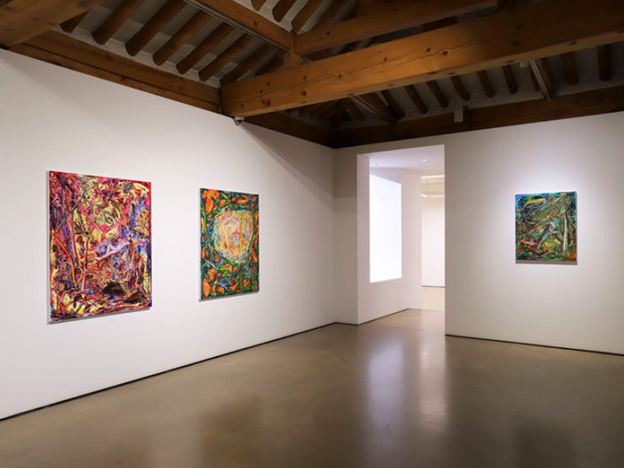
2019 solo exhibition 《Nevermore》(Hakgojae Gallery, 2019), Park Gwangsoo’s work gradually expanded
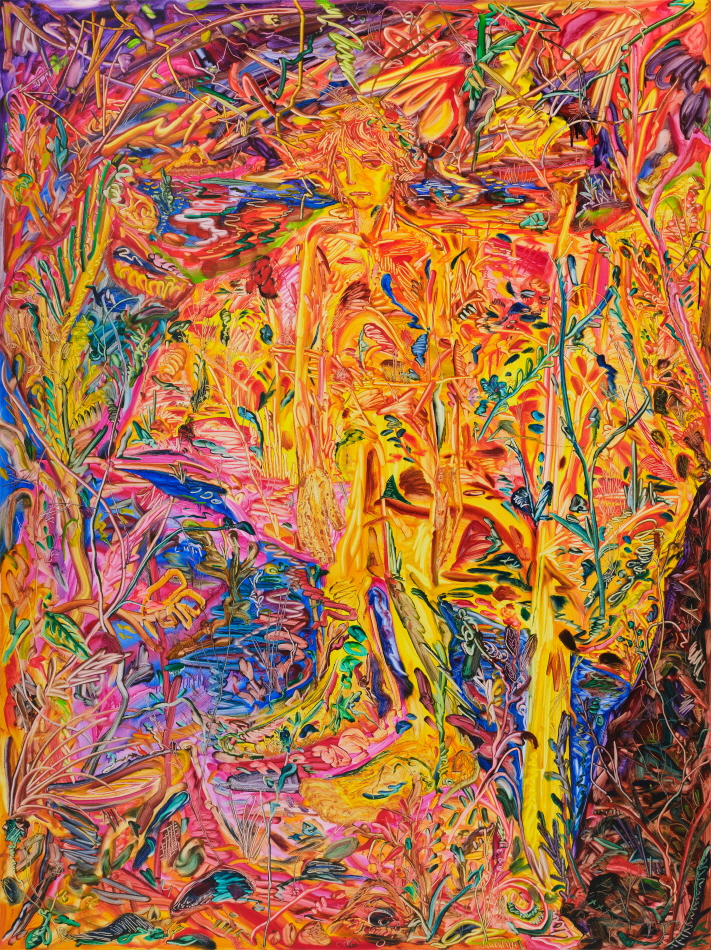
from surfaces centered on black lines toward the materiality of color and oil
paint. He still deals with forests, humans, and incomplete beings, but the
surface no longer remains within the dark density of black and white.
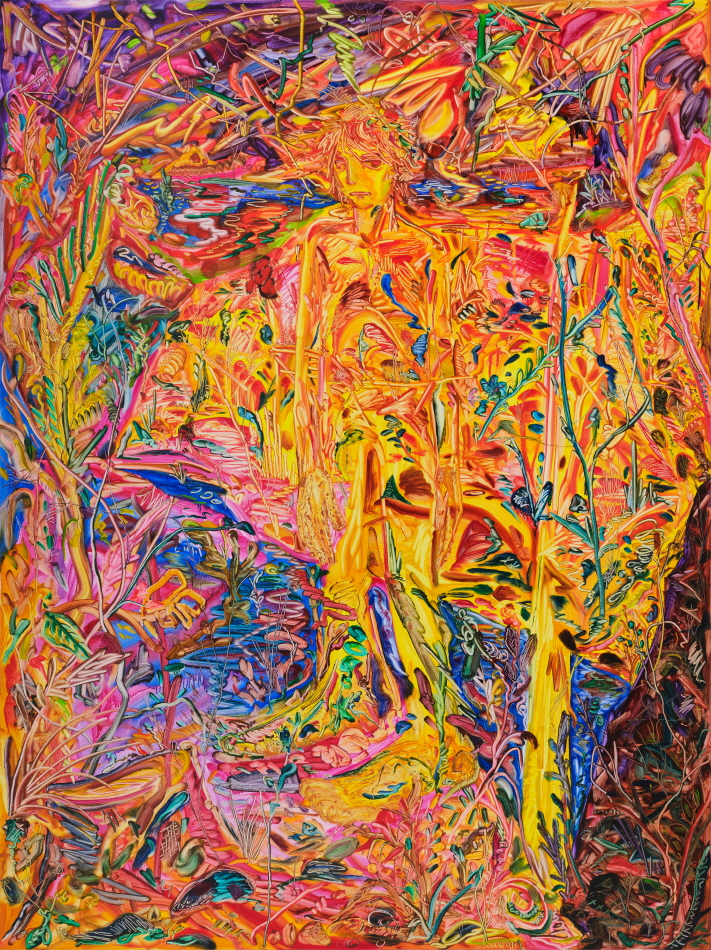
Rather
than harmonizing with one another, colors collide, and the surface is presented
as a writhing space like a prehistoric state where something begins to sprout.
This change can be seen not simply as a stylistic shift, but as a process in
which the sense of disappearance and vanishing leads to questions of
generation, making, failure, and repeated attempts.
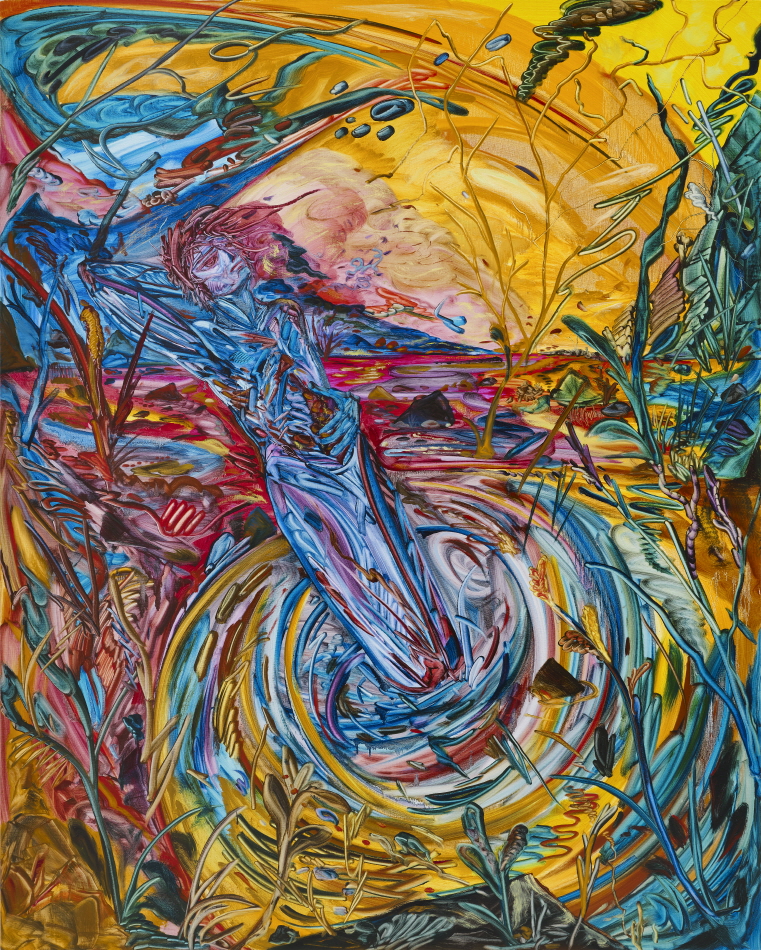
In his
recent solo exhibition 《Copper and Hand》(Hakgojae Gallery, 2023), this trajectory is organized through the
relationship between “the one who makes and the one who is made.” In
representative works such as Small
Mountain(2023), Emerald(2023), Bark(2023), Copper
Head(2023), and Copper and Hand(2023),
figures no longer remain only as disappearing beings, but appear as beings that
touch, observe, gather, and make something.
If “copper” symbolizes the
beginning of civilization and its material foundation, “hand” is the subject of
action that realizes thought and sensation. At this point, Park Gwangsoo’s
painting presents a world in which nature and civilization, humans and the
body, creation and destruction are intertwined without being separated.