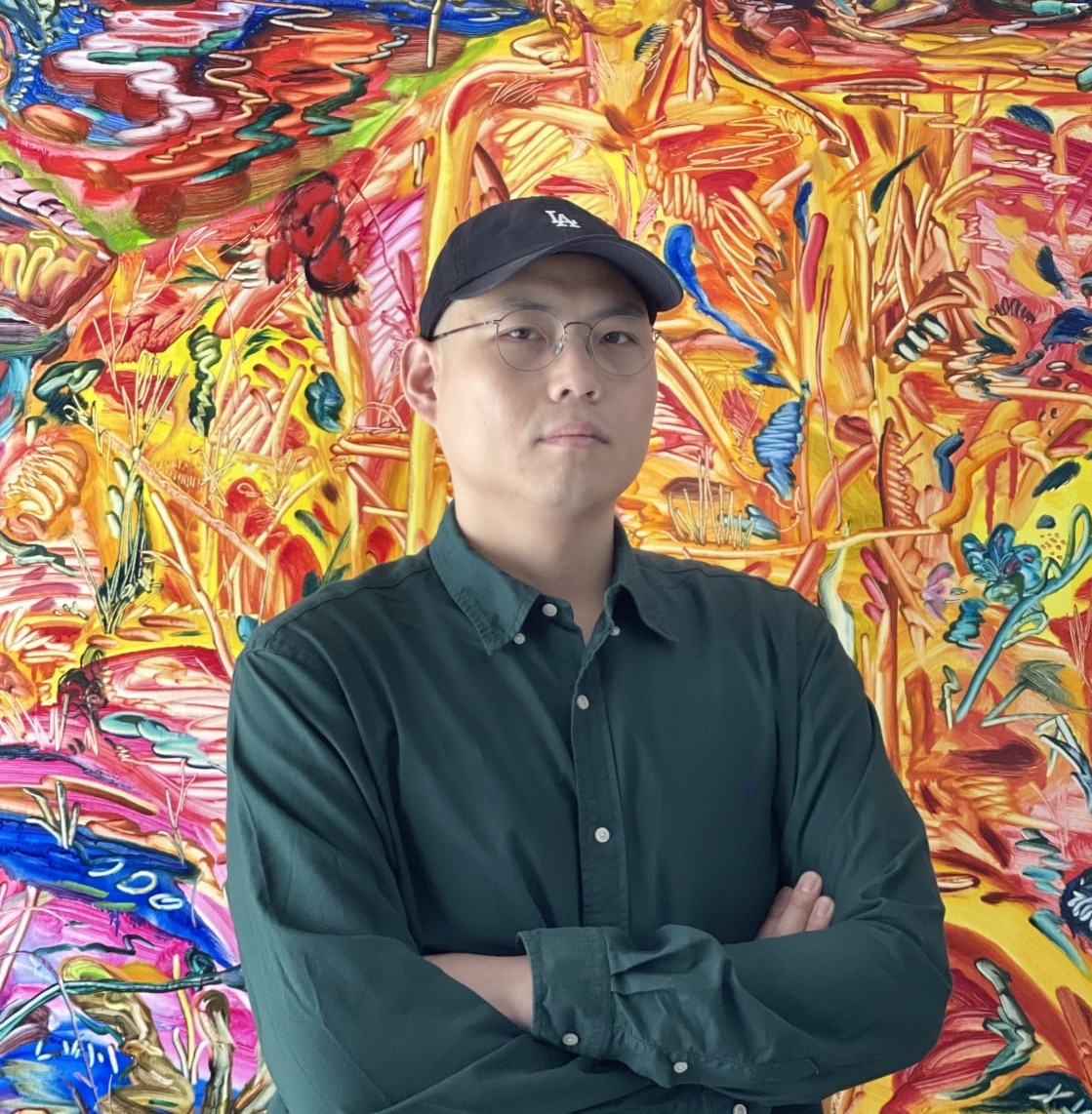
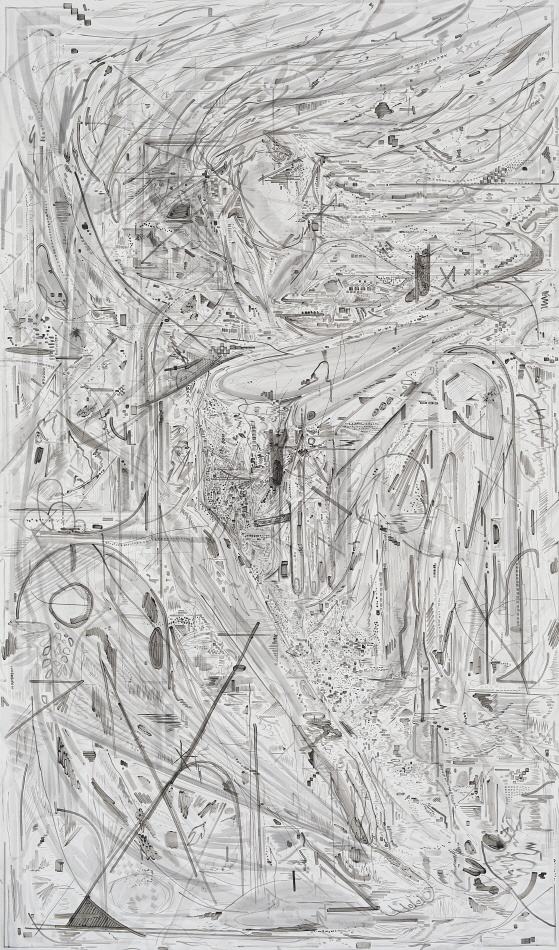
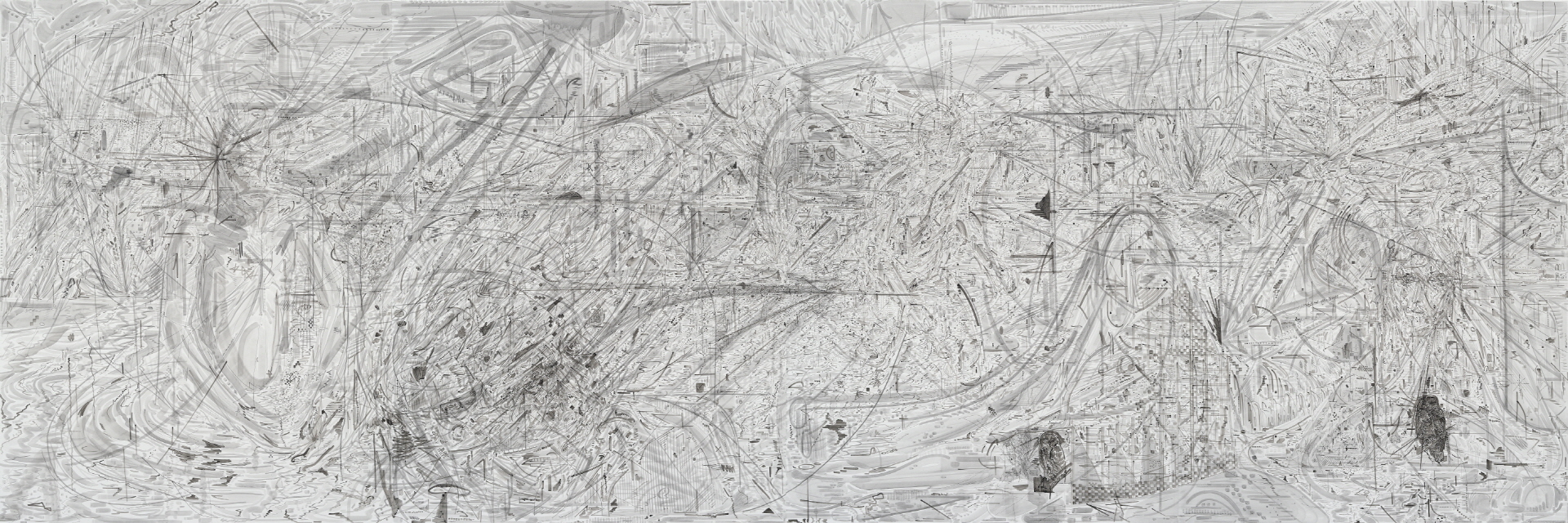
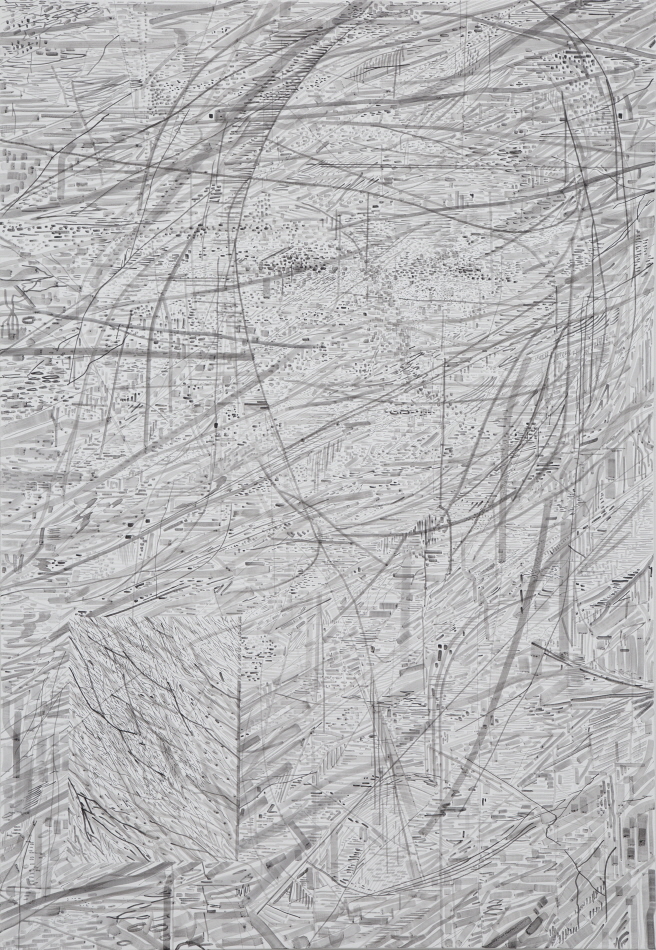
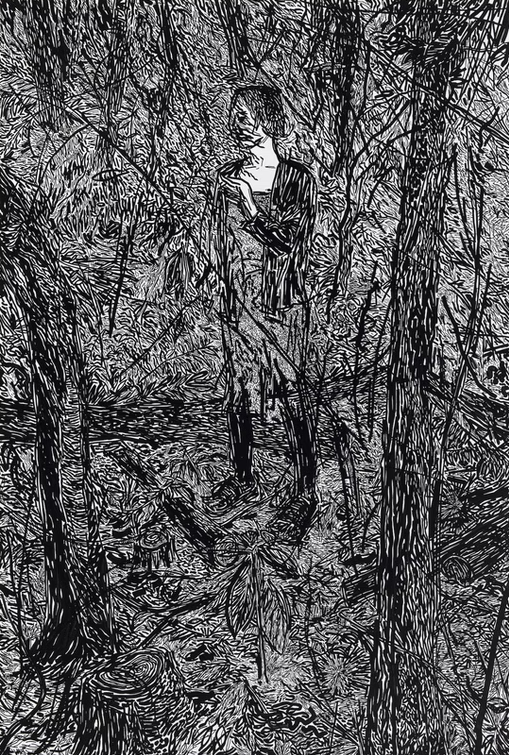
A solo exhibition by artist Park Gwangsoo, who fills the canvas
with the relationship between the one who creates and the one who is created,
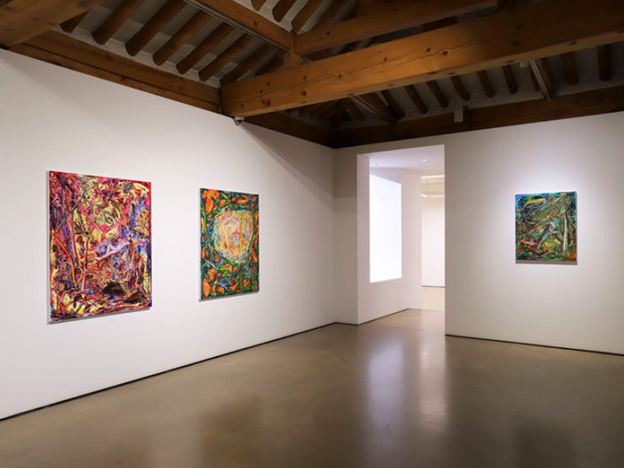
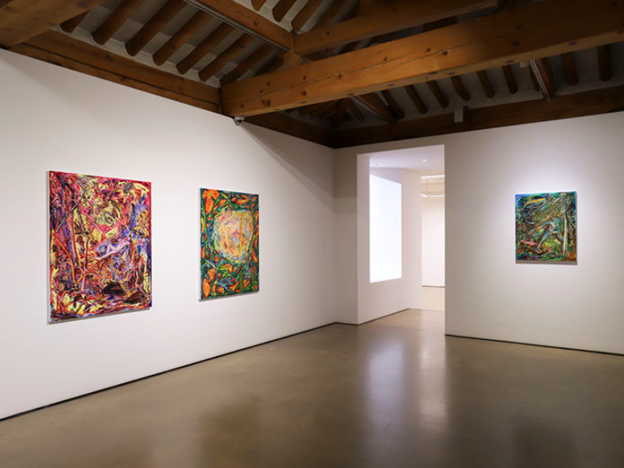
is being held. Hakgojae presents Park Gwangsoo’s solo exhibition 《Copper and Hand》 as its
final exhibition of 2023, on view at the main building of Hakgojae until
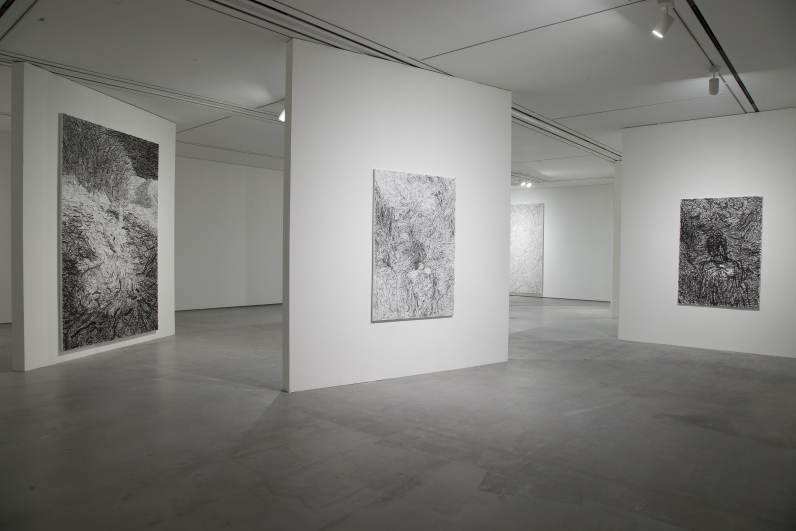
December 9. A total of 30 paintings are on display.
Park Gwangsoo was born in Cheorwon, Gangwon-do in 1984 and spent
his childhood surrounded by forests and nature. That period became the driving
force that allowed his canvases to be filled with forests. At the press
conference held on the 8th following the exhibition opening, one journalist
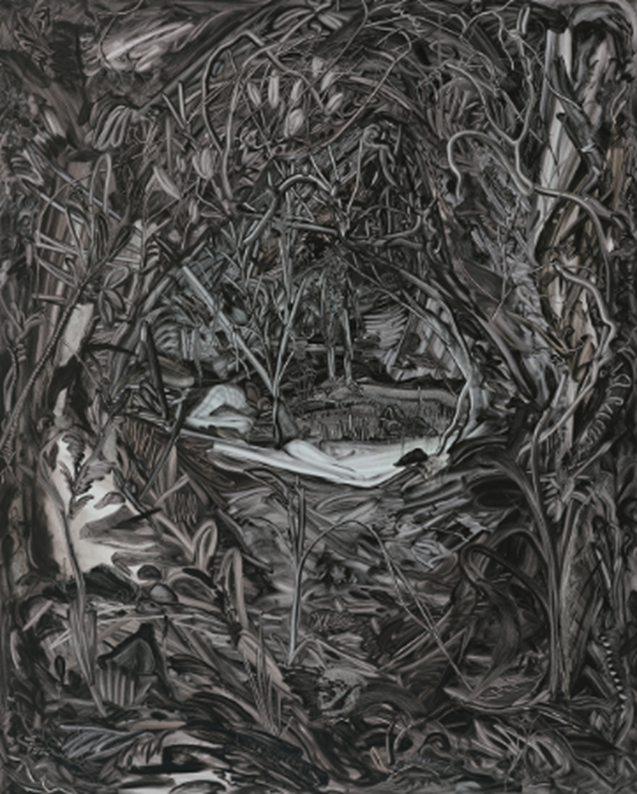
remarked, “It looks like a mad painting.” The overwhelming density of the
canvas, filled without empty space, seemed to evoke a sensibility that cannot
be easily handled within the realm of the “ordinary.”
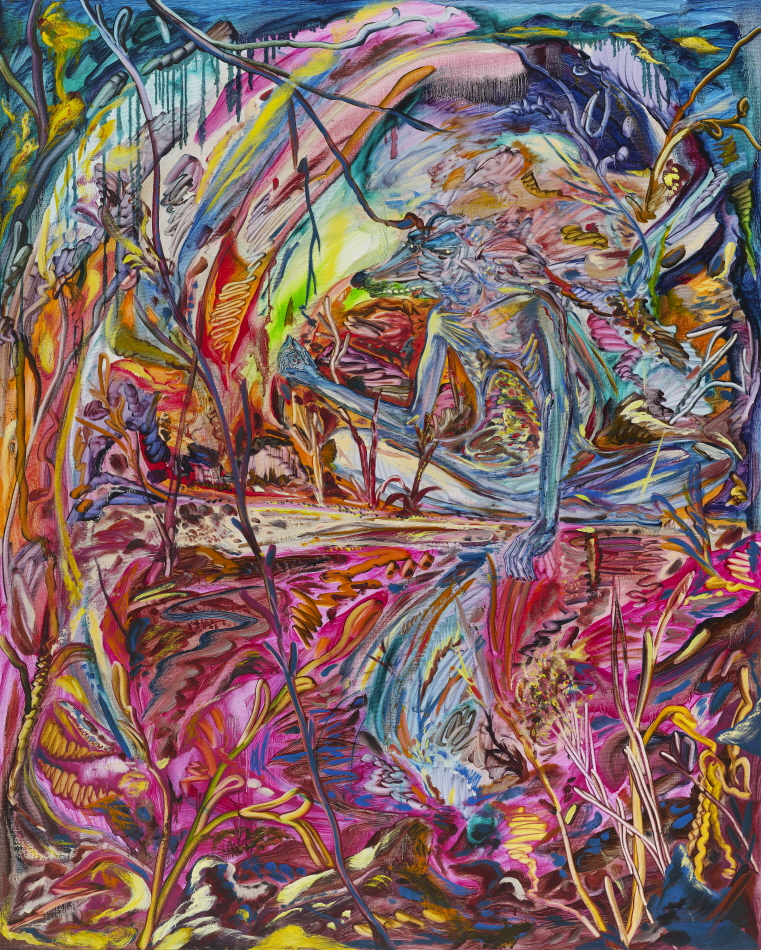
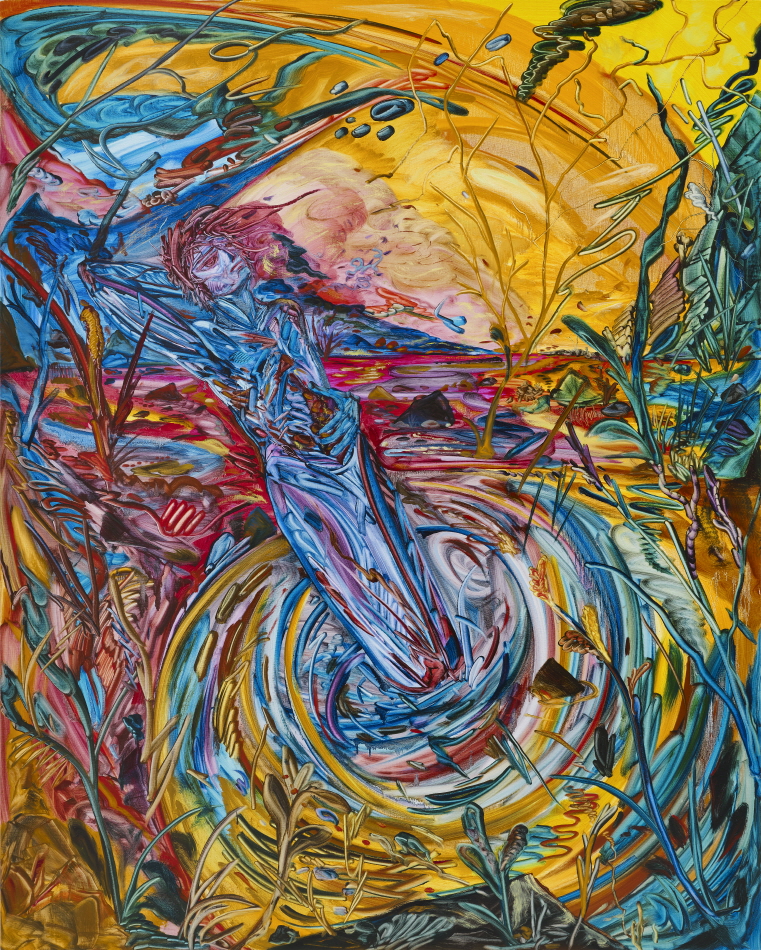
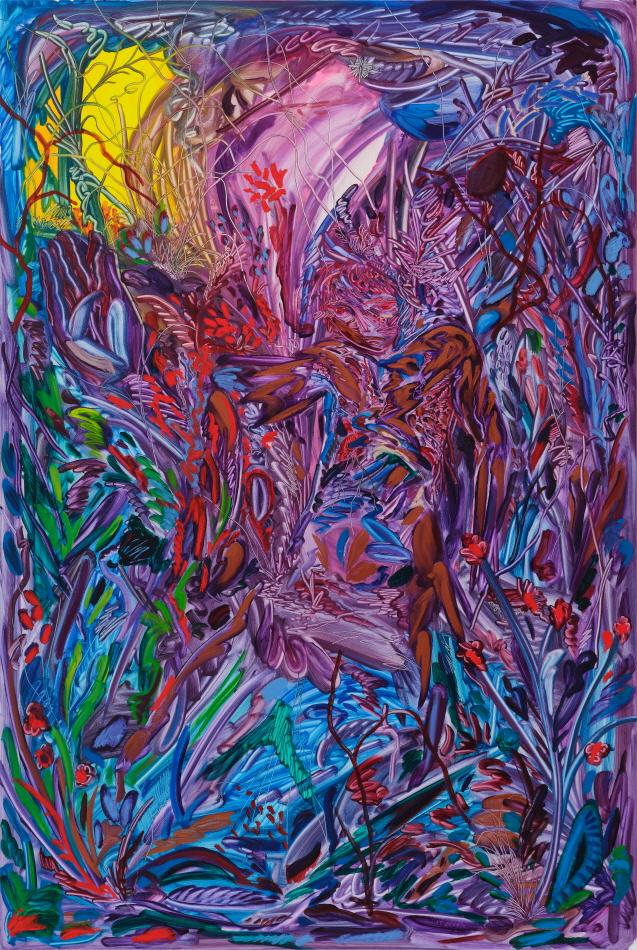
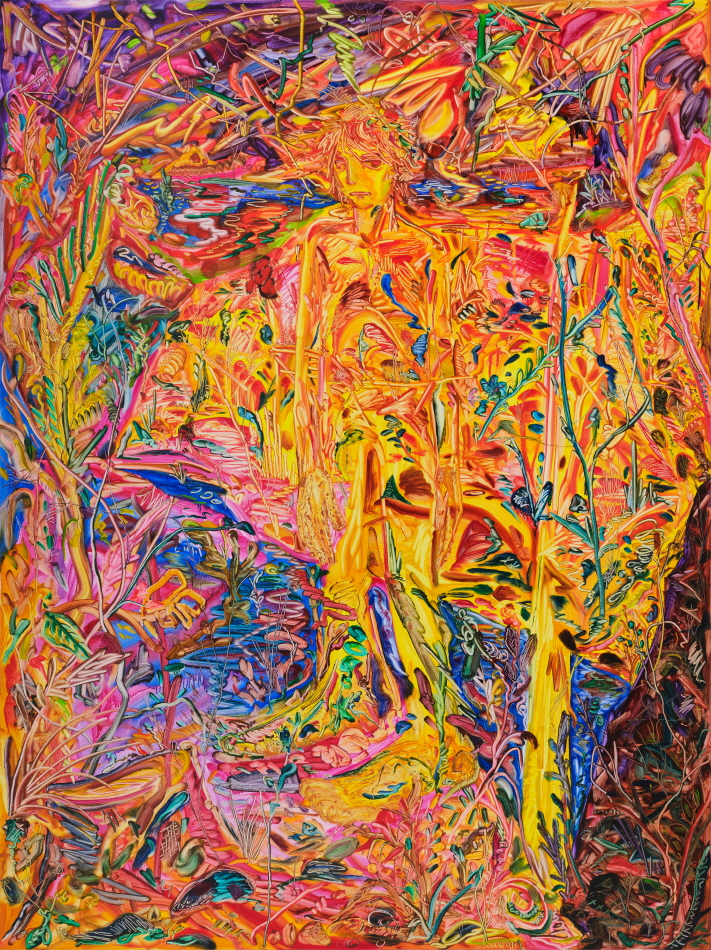
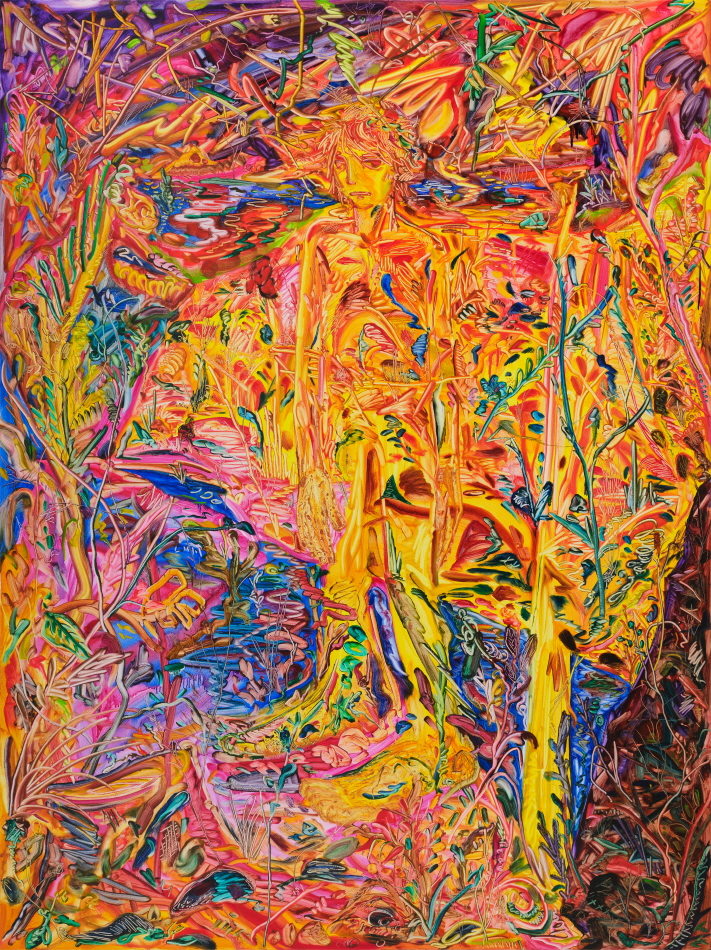
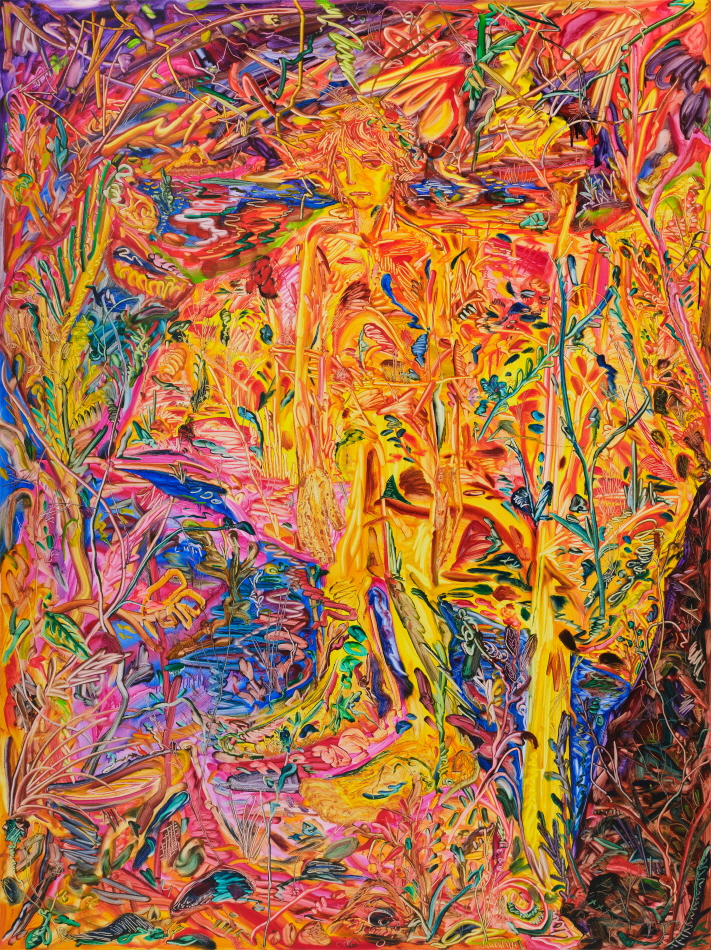
On the canvas, numerous colors clash with one another. The artist
stated, “Rather than having the colors harmonize, I want them to collide and
not fit together,” adding, “I wanted the surface to feel more writhing, like a
prehistoric state, and to appear as a space where something is sprouting.” Park
Gwangsoo composes color and placement within the canvas in an improvisational
manner. Oil painting, which allows forms to be broken down and new colors to be
combined, is a technique that brings out his strengths.
Although it is difficult to summarize Park Gwangsoo’s artistic
world in a single phrase, Hakgojae, which organized this exhibition, presents
three key aspects. First, through painting, Park Gwangsoo seeks to clearly
reveal the difference between science and scientism. Second, the world consists
of datum and factum. Datum, as the etymology of “deity,” refers to nature and
the principles of nature given by a divine force. Factum, the root of
“factory,” refers to everything produced by humans using nature. The artist’s
overarching theme is that the perfect harmony and balance between datum and
factum constitute the highest form of civilization (culture), and that we must
never turn away from datum, that is, nature.
Third, humans are not beings separated from nature (ek-sist), but
beings connected as one with nature (in-sist). Furthermore, humans are not
independent of one another; rather, all are interconnected through
relationships and inevitability.
The exhibition title 《Copper and Hand》 can be understood as a
metaphor for the origin and process of civilization. Copper marked the
beginning of human civilization from around 2,500 BCE, and it was realized
through human hands. What, then, are Park Gwangsoo’s works—summarized as
“copper and hand”—attempting to convey?
In response to a question from the press about what he wanted to
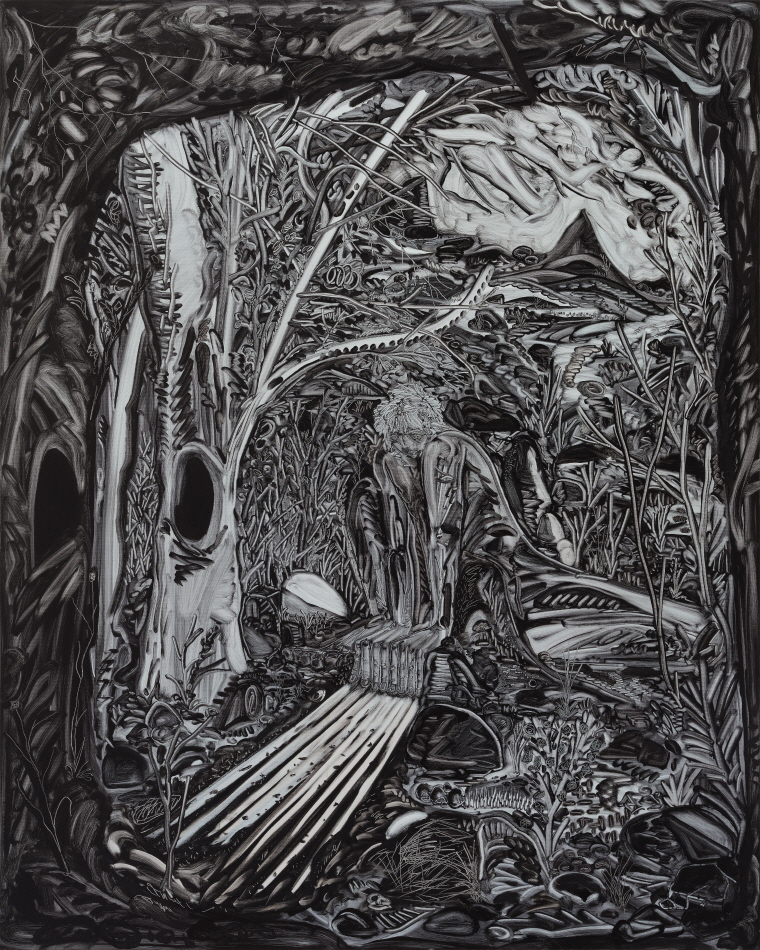
depict through paintings featuring writhing, unidentifiable forests and a boy
whose presence seems uncertain at their center, the artist answered that he
expressed “the relationship between the one who makes and the one who is made.”
The longer one gazes at Park Gwangsoo’s canvases, the more hidden
layers within them become visible. While the densely packed colors and lines
first overwhelm the viewer, what follows are the small plants within the image
and the recurring figure of a boy appearing in every scene. These elements lead
the viewer to perceive the world within the canvas as if it truly exists,
allowing them to imagine the depth beyond the surface. In fact, the boy within
the canvas is sometimes contemplating creation, sometimes in despair, and at
other times expressing a sense of liberation. The layers surrounding him cannot
be defined by a single term.
At the press conference, philosophy PhD Lee Jinmyung, who
introduced the exhibition, suggested focusing on the depiction of nature in
Park Gwangsoo’s work. He explained, “Although Park Gwangsoo’s work is
figurative painting in contemporary art, it shows compositions reminiscent of
traditional landscape painting, and approaches a form in which objects and
environment become unified with the protagonist, as seen in the paintings of
William Blake (1757–1827).
Unlike Western linear perspective calculated through
geometry and mathematics, traditional landscape painting depicts the vivid,
lived experience of a painter moving through mountains with the entire body.
Park Gwangsoo’s paintings extract the essence of both Eastern and Western
painting, synthesizing them while advancing to a higher level.”
During the press conference, Park described himself as “a vague
person.” Now in his late thirties, he is an actively working young artist in
the contemporary art scene. The term “young” implies both energy and the
potential for further development. Whether “ambiguity” will remain his defining
characteristic, or whether an entirely new world of Park Gwangsoo will unfold,
remains something to look forward to.