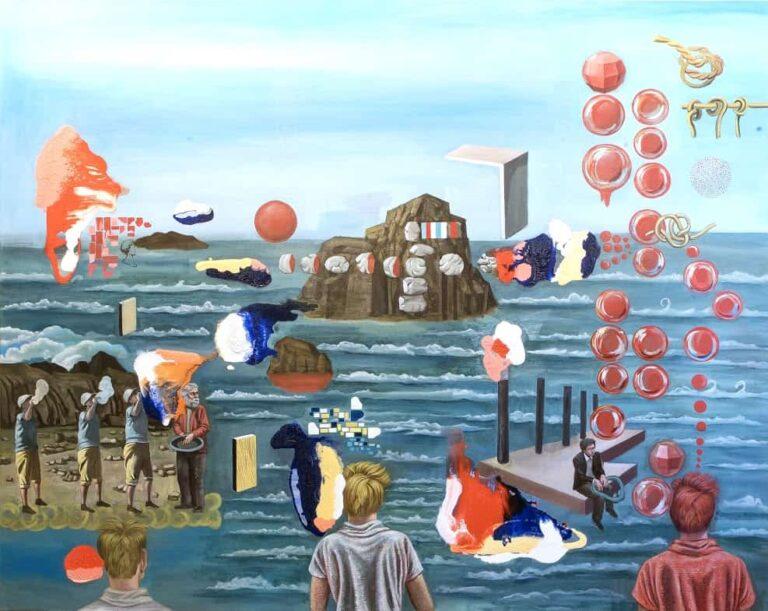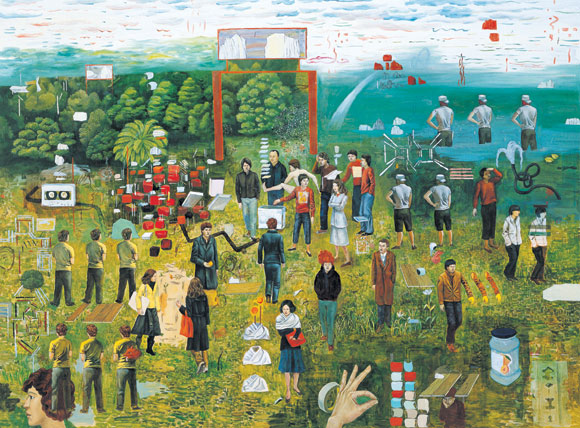


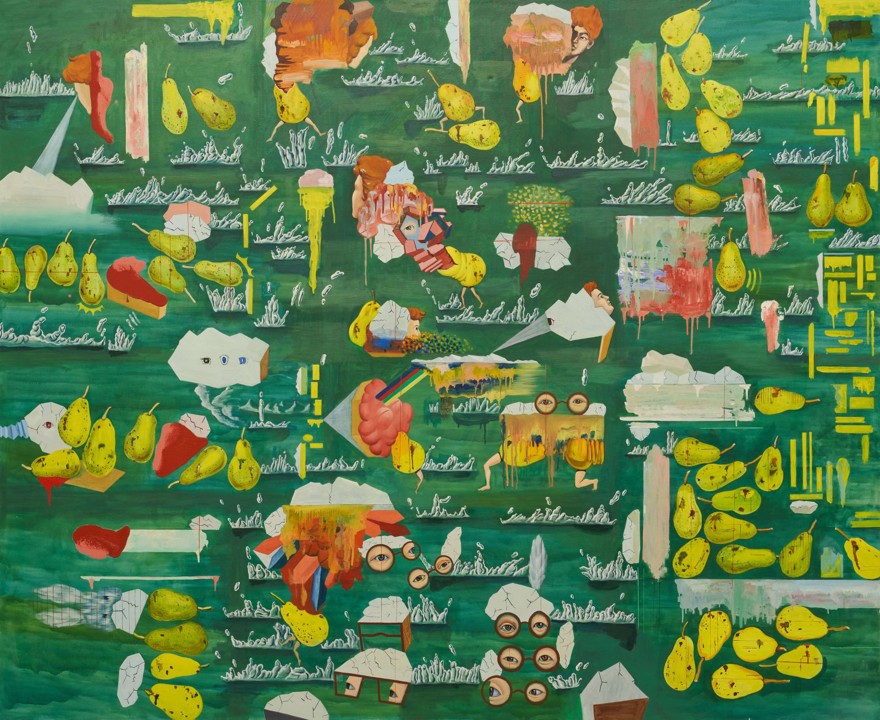
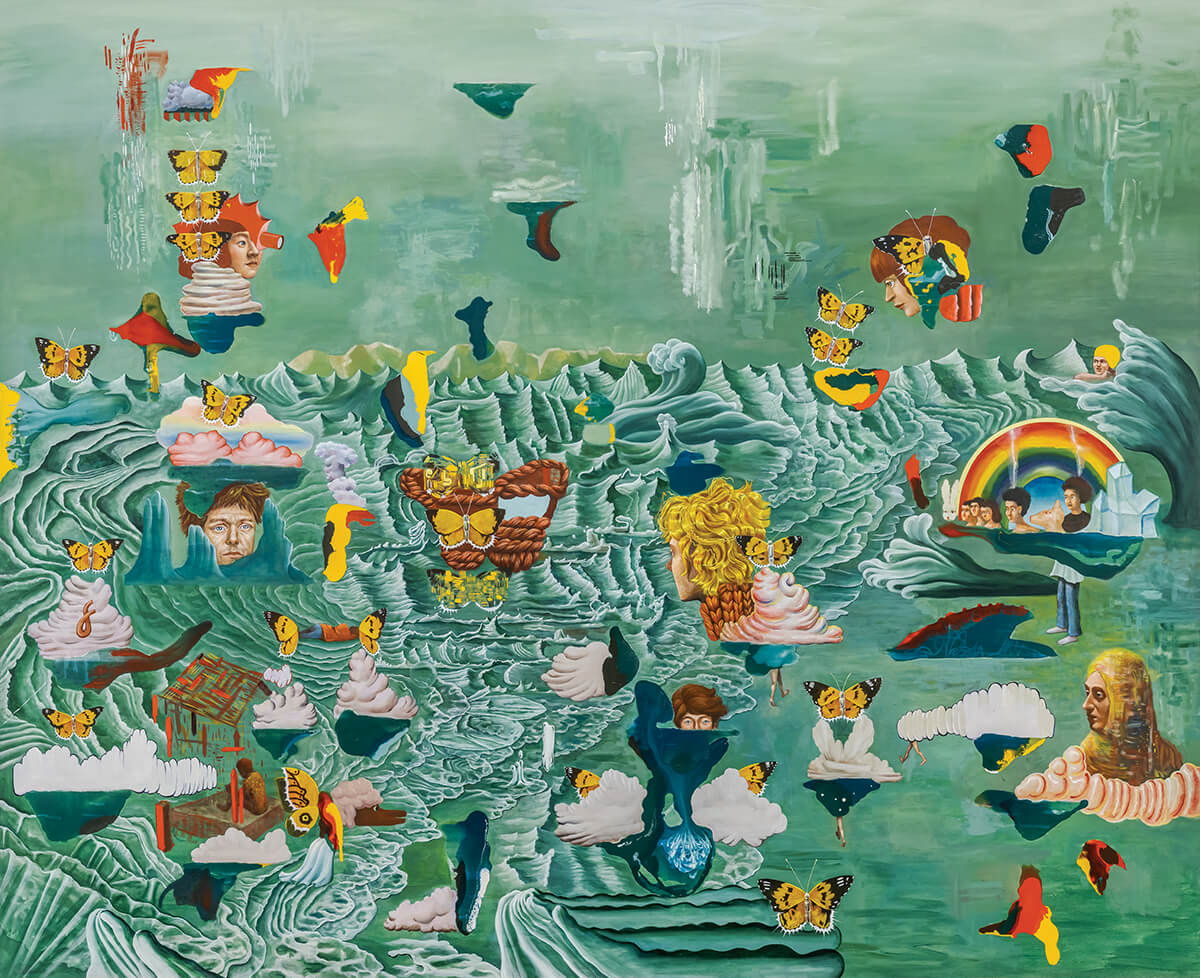
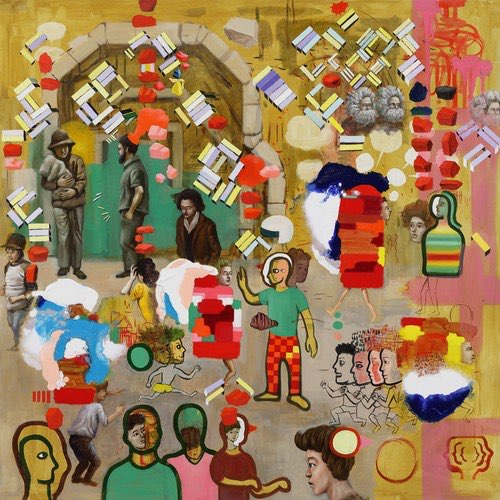
Suejin Chung, People in landscape, 2007, Oil on canvas, 150x200cm © Suejin Chung

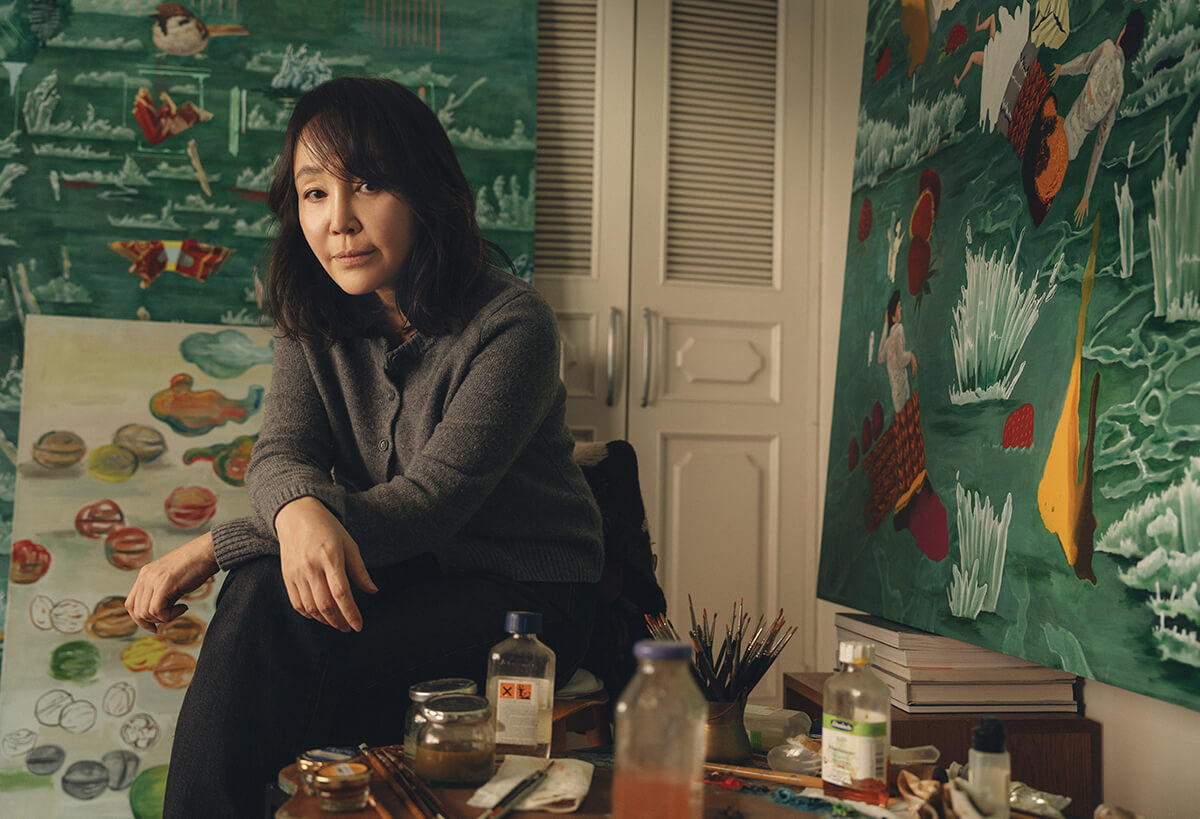
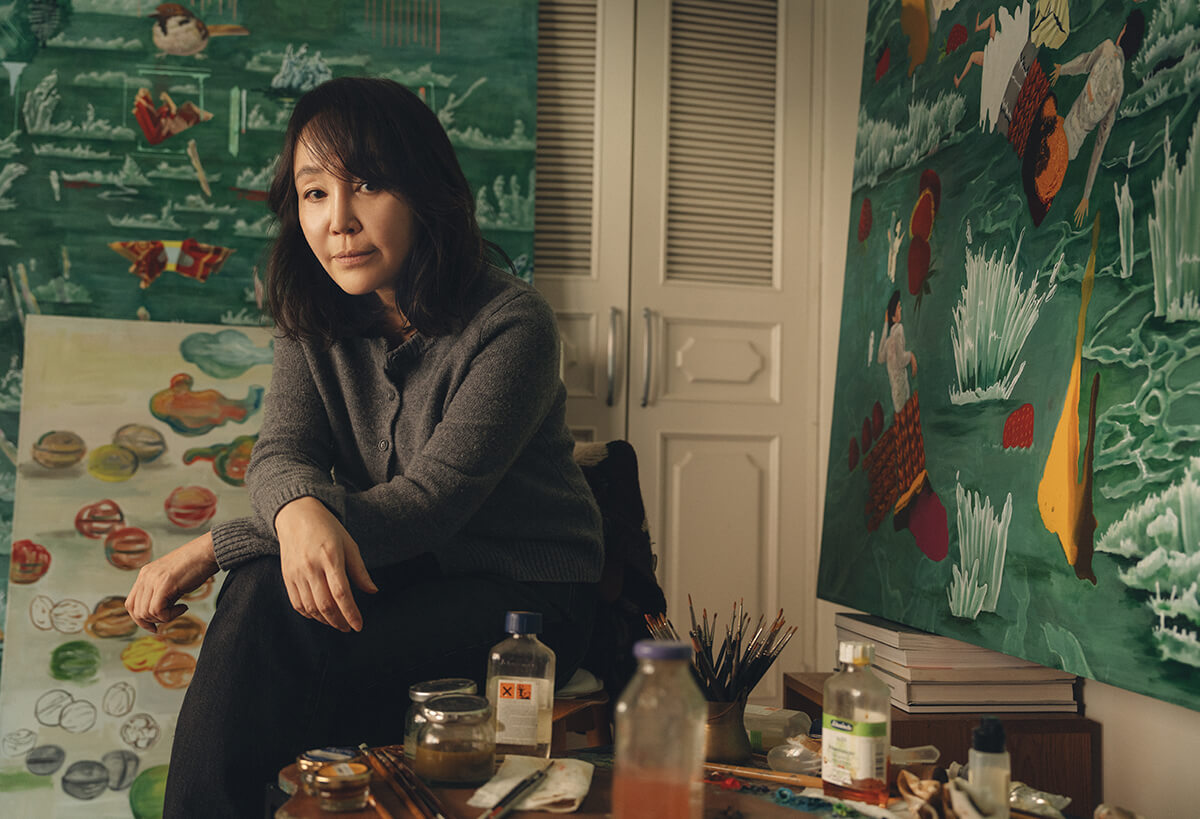
Suejin Chung is a person of intense charisma. Like a sparkling glass bead, she is someone who contains a complete world within herself. She seems to feel little need to explain herself to the world. She is fully supported as an exclusive artist of a gallery that many would envy. There are always people waiting for her work—not only collectors who purchase her pieces, but also discerning figures in the critical sphere who admire her work.

That is her current position, and above all, she appears to be someone who acts rather than plans or explains. Her studio, located on the sixth floor of a building in an alley lined with bars and cafés near Hongdae, was filled with the energy of her moving busily from one canvas to another. Painting itself is her—something that no longer requires explanation.
 
Her profile is simple. She says there is no better profession than painting. She studied fine art at Hongik University, studied abroad in the United States, and exhibited her work. With the exhibition 《The Brain Ocean》 at Sarubia Dabang in 2000, she entered the ranks of noteworthy young artists. In 2005, she was selected as an exclusive artist by Arario Gallery and held a solo exhibition in 2006. She has never strayed from painting into other pursuits.
 
As a painter and creator of her own work, she exercises the greatest freedom and authority on the canvas. Some of the art movements that brilliantly defined early 20th-century art history—such as Cubism, Fauvism, and Dadaism—ultimately led to the emergence of abstraction. Artists like Kandinsky and Malevich established the principles of abstraction through new experiments. Now, more than a century after abstraction emerged, painters have gained a broader field of activity. Gerhard Richter, for instance, has traversed between figuration and abstraction, raising and resolving fundamental questions of painting.
 
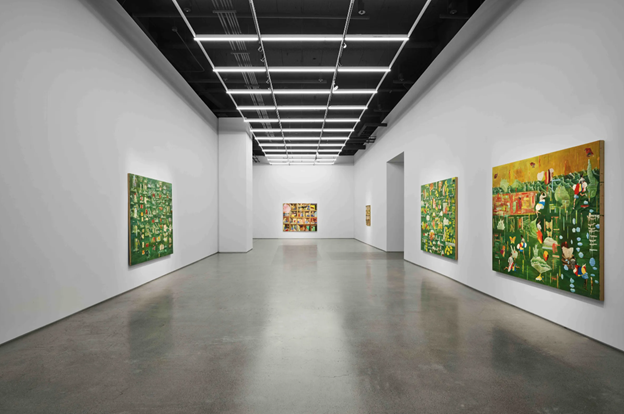
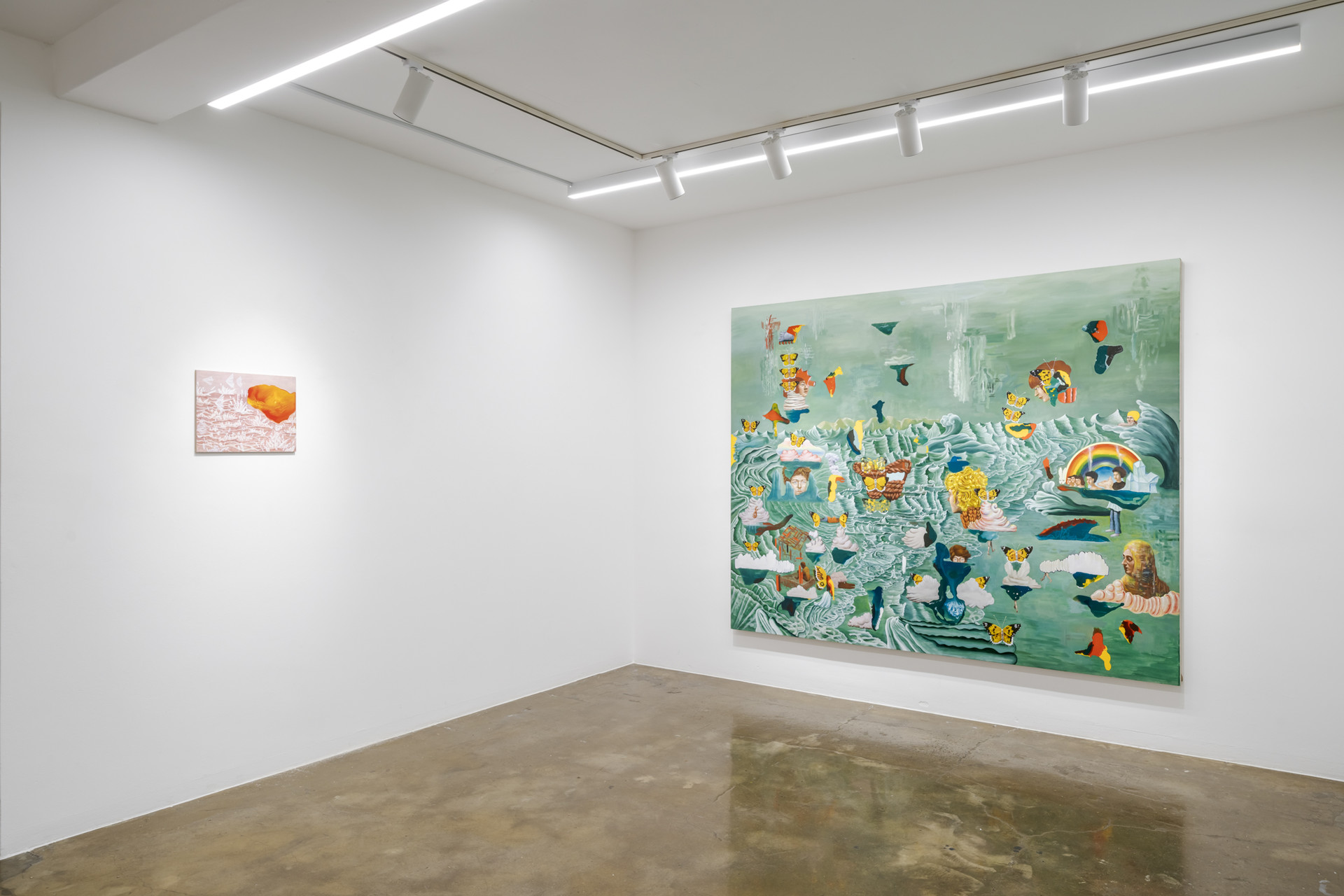
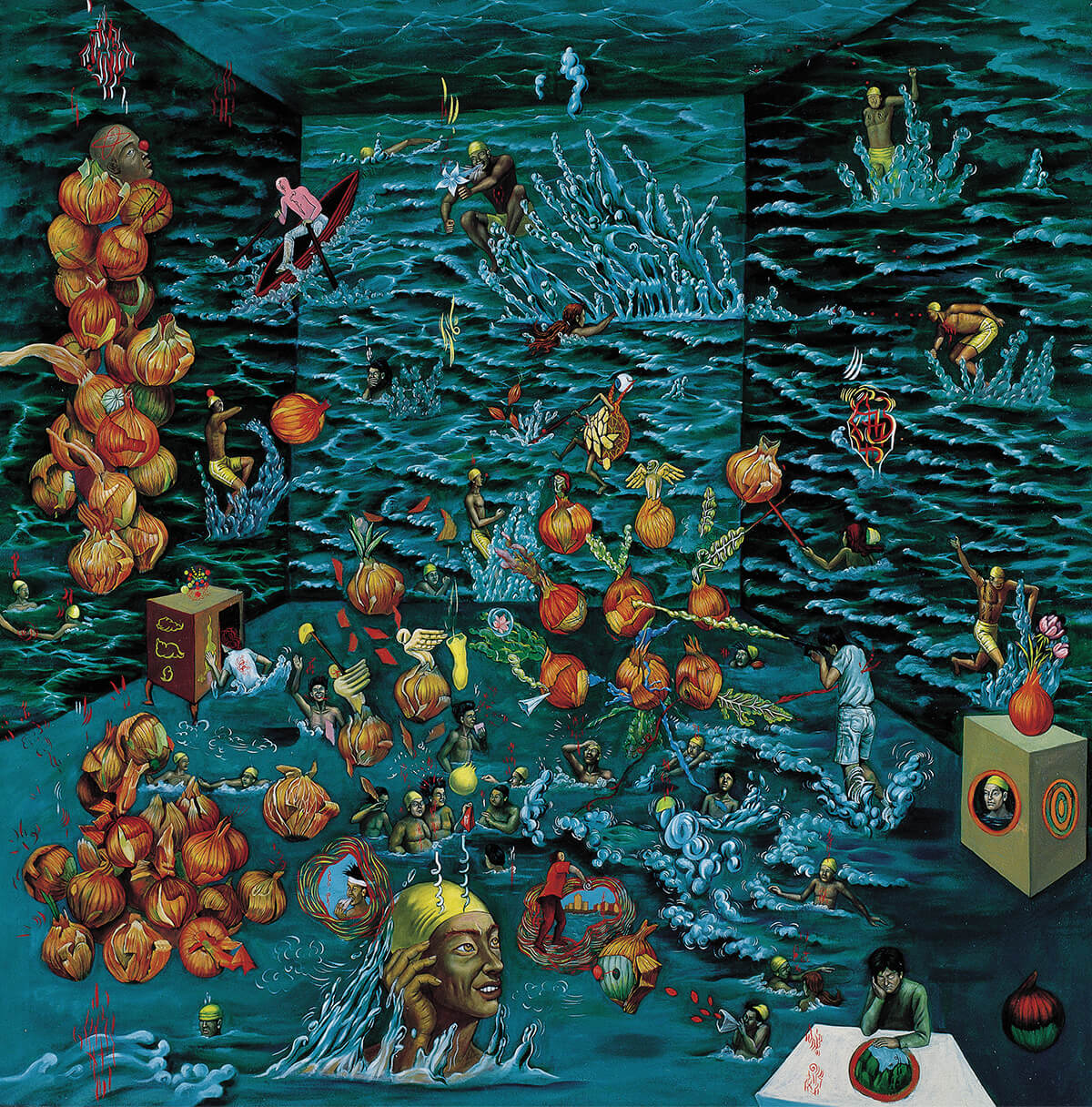
Suejin Chung’s work is also made possible by such developments in art history. In People in landscape(2007), figures are placed within a wide outdoor landscape featuring the sea. However, the composition deliberately disrupts the basic principles of realism, such as perspective and the internal necessity between figures. Although figures appear, she shows little interest in expressing their individual personalities. The same figure is repeated multiple times—sometimes twice, sometimes even five times.

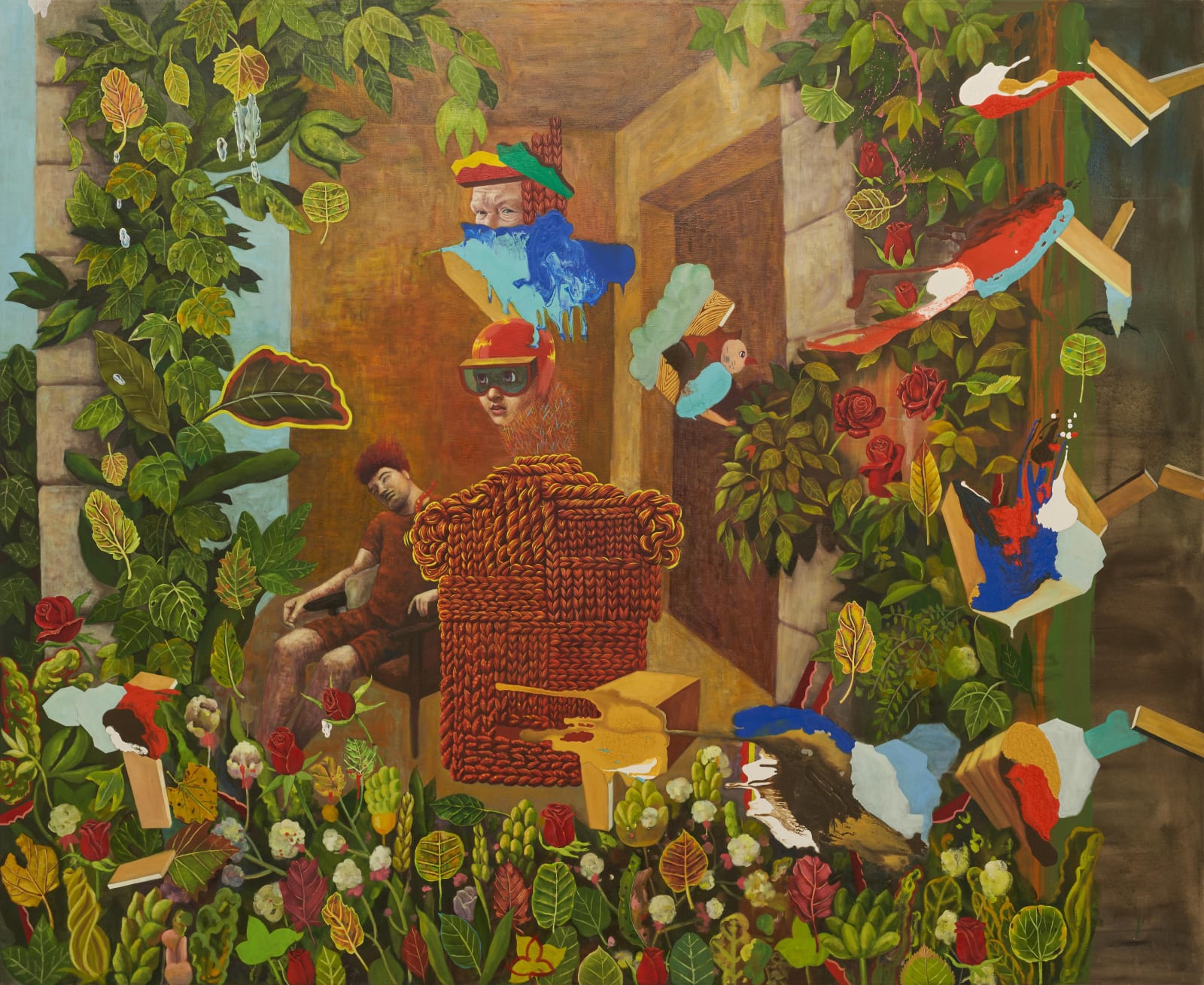
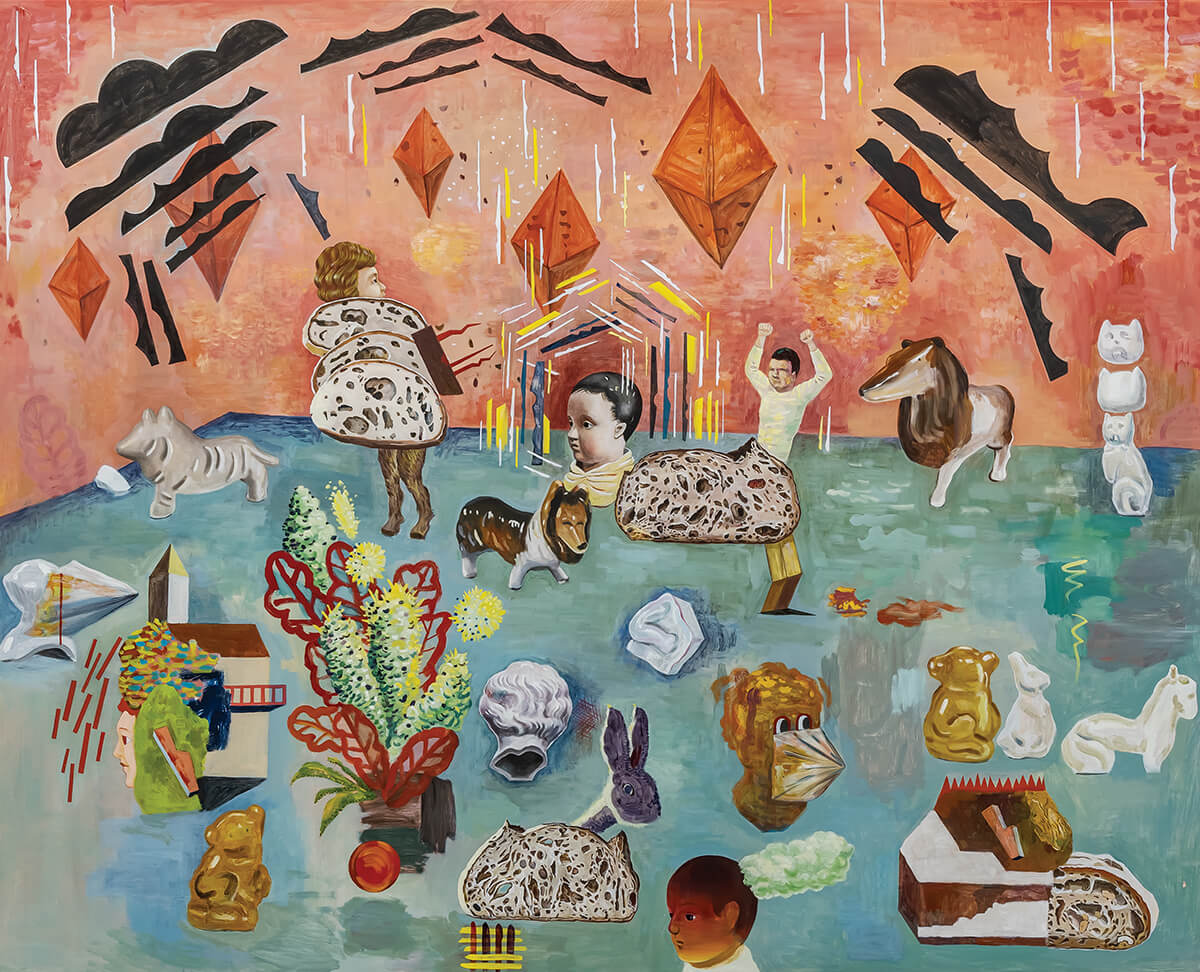
In some cases, a single arm appears repeatedly, or the white shawl of a woman holding a red bag at the center is painted three times. At times, completely incomprehensible elements are included. Not only in this work but also in others, walnuts, onions, bread, and rabbit heads appear. These elements reveal that she fully enjoys the process of painting.


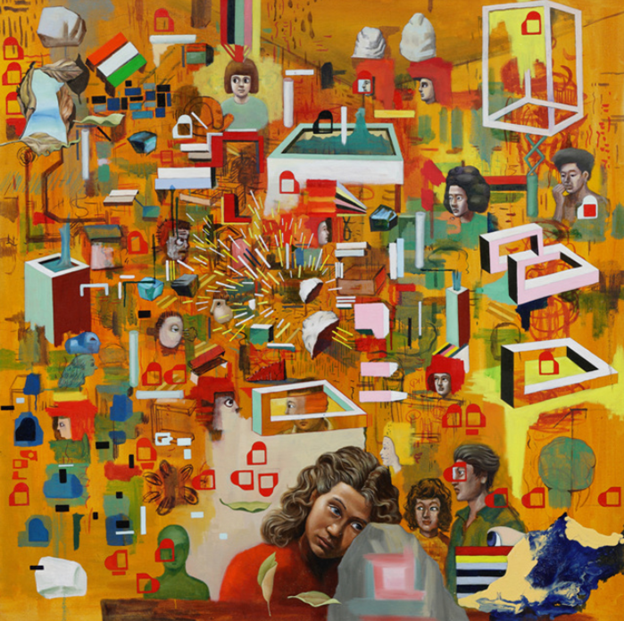
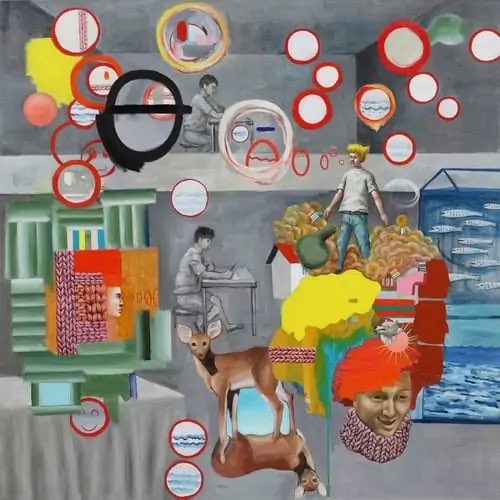
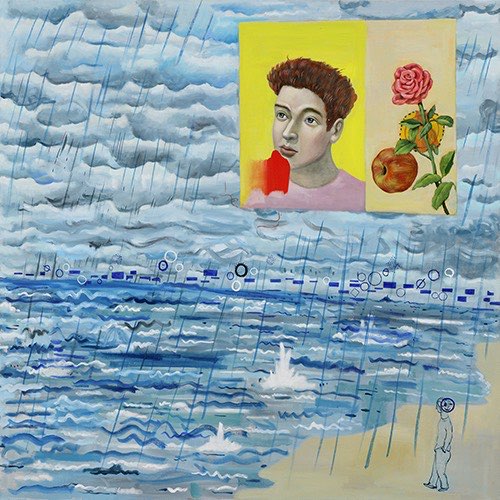
Suejin Chung, Room, 2006, Oil on canvas, 92x104.5cm © Suejin Chung

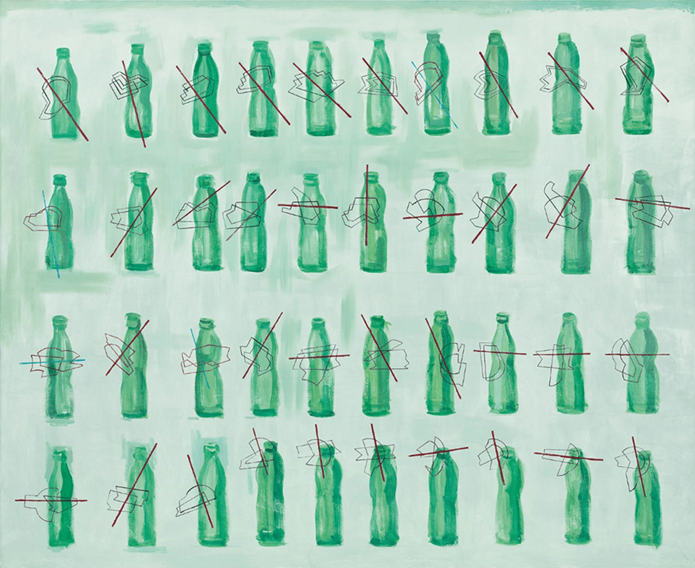
“All that I paint is an image composed of combinations of color and form. My work is about unfolding those combinations. I am fascinated by the combination of color and form that each shape possesses. Because I work purely with visual images, it can be said that my work leans more toward abstraction,” she explains.

In other words, the figures that appear in her paintings are nothing more than combinations of color and form with different clothing and gestures. Even if countless figures appear in her paintings, there is no narrative among them, nor any individuality. She insists that attempting to read a story from her paintings is a clear mistake. Her stance is: “Don’t read, just look.”
 
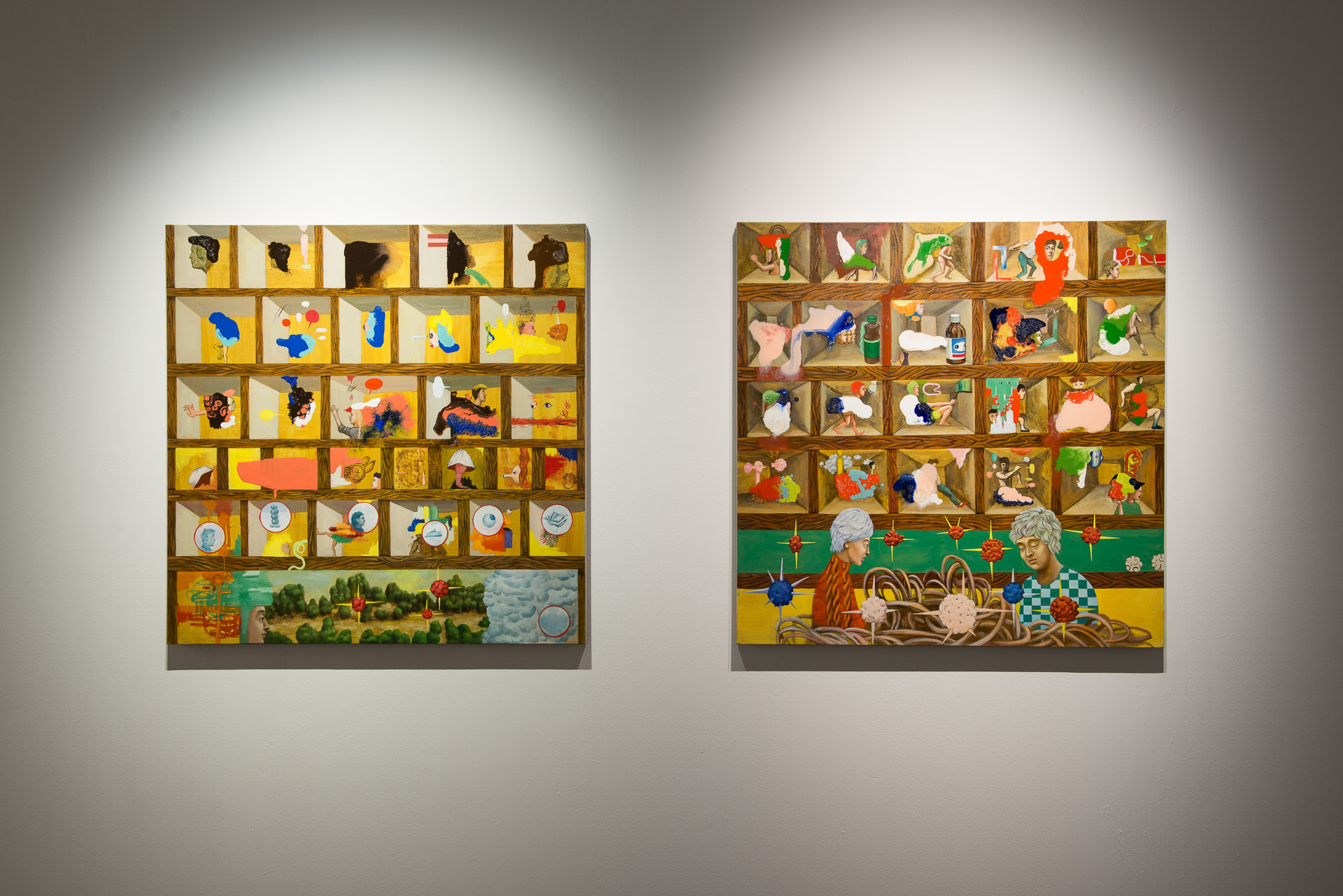
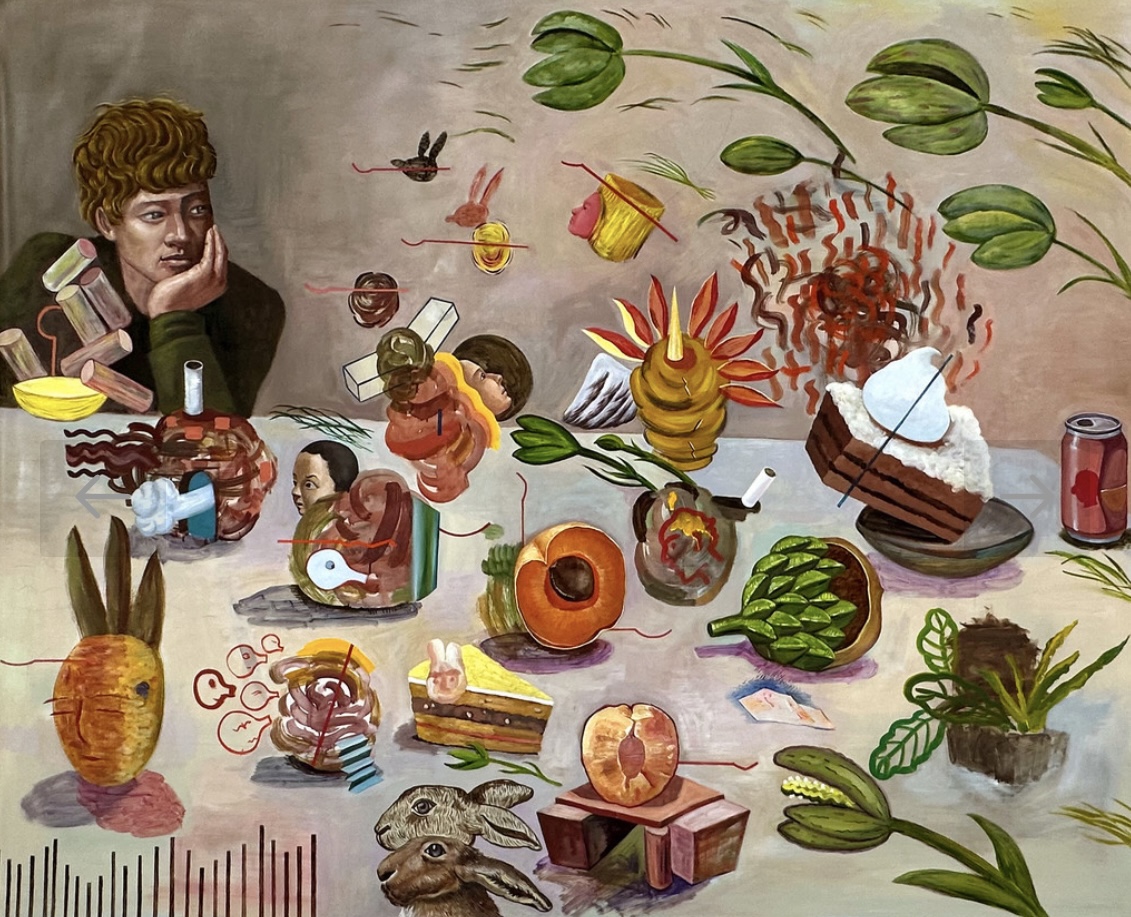
In the striking work Room(2006), figures appear to be seated around a table, but there is no internal necessity linking them. While the figures, drinks, and bread seem carefully rendered, a streak of pink paint suddenly drips over their heads. It gives the impression that the artist has deliberately ruined a carefully painted image.

The pleasure she must have felt in betraying and twisting the fundamental principles of figurative painting—such as three-dimensional composition and realistic depiction—creates a sense of thrill for the viewer. Furthermore, the impulse toward abstraction created by the dripping paint is replaced by the act of painting the drip itself, thereby betraying even the principles of abstraction. The pleasure of viewing the painting is doubled.


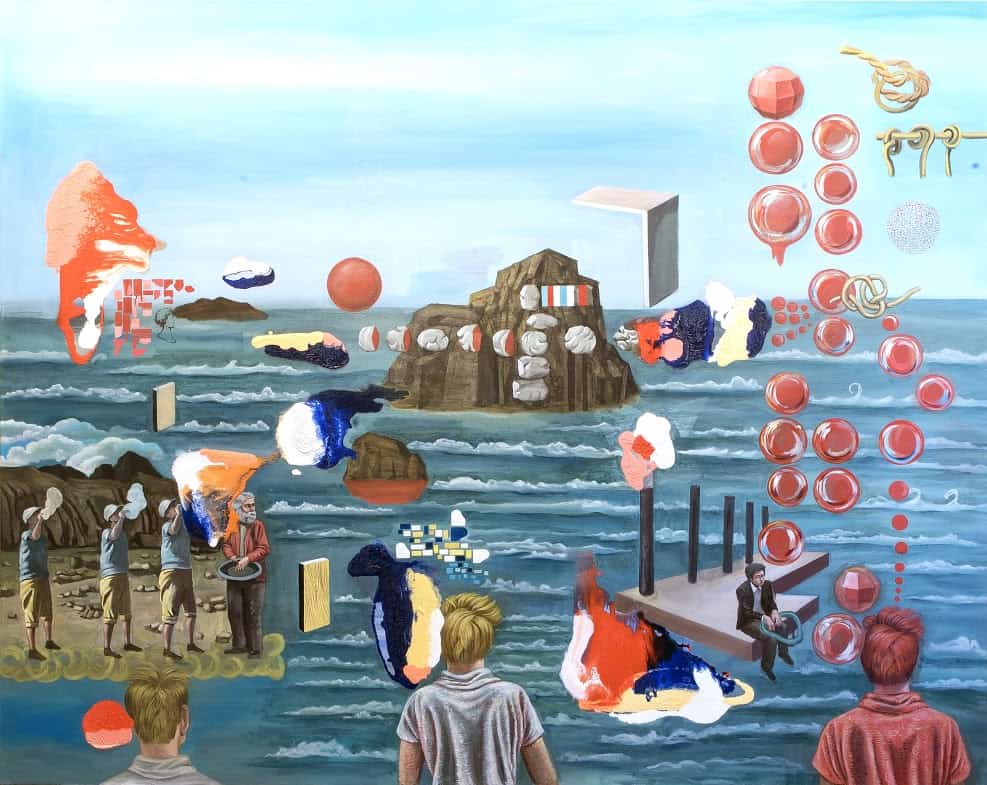
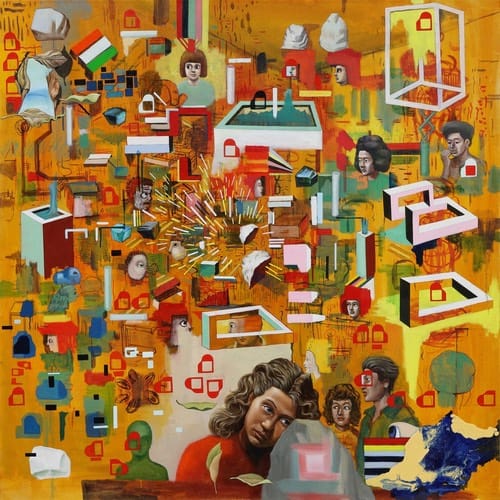
Suejin Chung, Dinner, 2006, Oil on canvas, 150x200cm © Suejin Chung

A painting that moves between abstraction and figuration

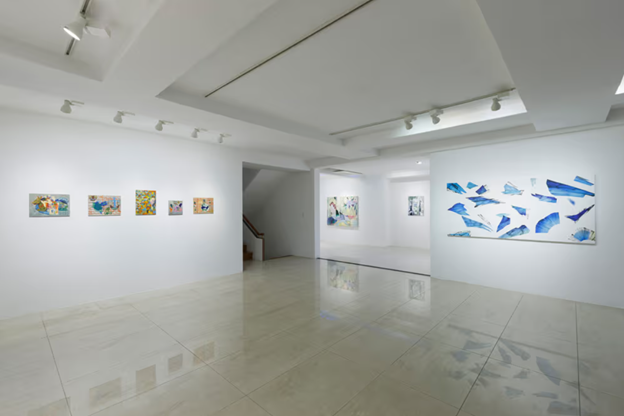
She creates paintings that move beyond the distinction between abstraction and figuration, drawing elements that capture her interest. Sometimes she begins with purely painterly elements such as brushstrokes—abstract elements—and moves toward realism; at other times, she starts with realistic elements and transitions into abstraction.
 
“A work begins with a vague emotion triggered by a certain image. I don’t know what it will become, but it ends at a satisfying point where everything aligns.”
 
Her work has neither a predetermined beginning nor end. There have been times when she continued painting even after the exhibition catalog was completed and the works were already installed in the gallery. Willem de Kooning, a master of Abstract Expressionism, did the same, as did Mikhail Vrubel. They continuously revised and repainted their works until reaching a point of harmony.
 
While she freely moves between abstraction and figuration, she believes that there exists a “universal system with certain answers” and a “fundamental structure underlying painting.” Though it may sound cliché, she insists that these are essential issues that must be addressed. In both painting and life, what she ultimately seeks is a perfect structure and harmony.


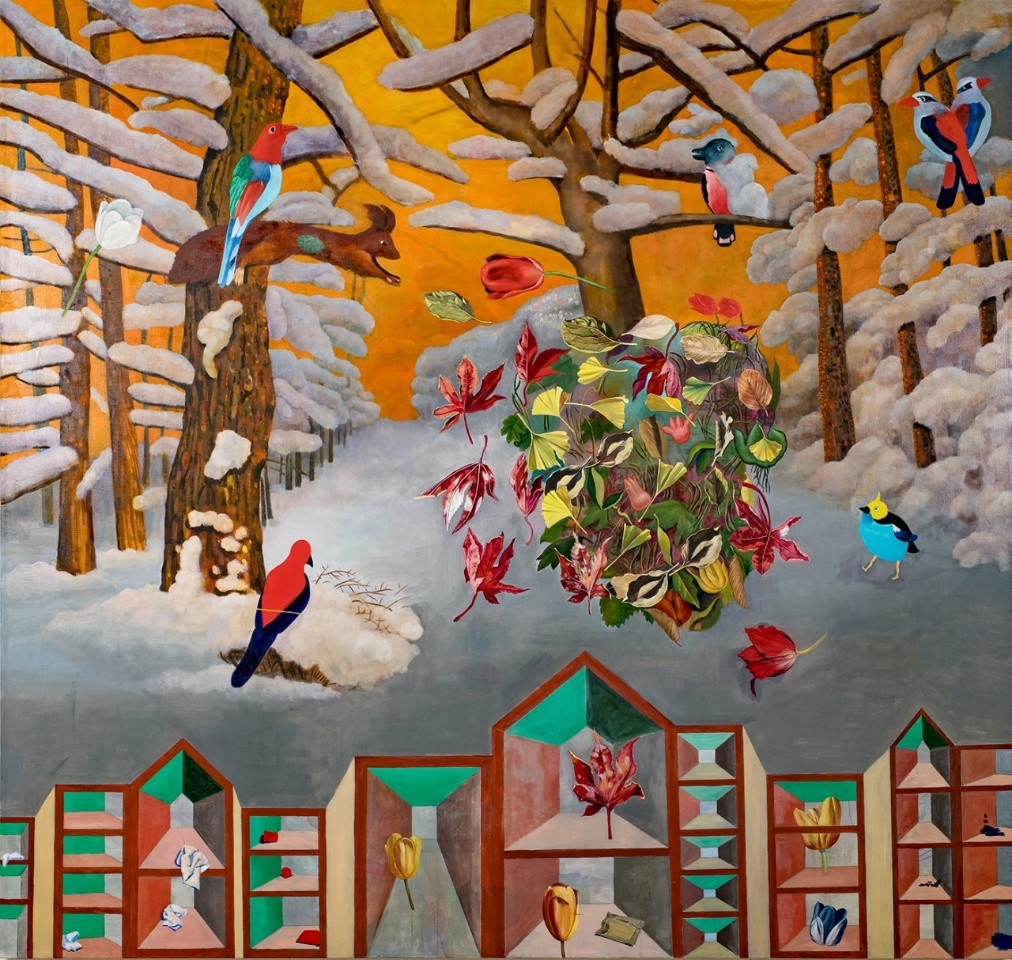
Suejin Chung, Pink Falls, 2006, Oil on canvas, 180x200cm © Suejin Chung

“I believe there is a perfect structure in which not just one problem is solved, but multiple problems are resolved simultaneously—a structure that is entirely equal while allowing individual freedom to be fully realized,” she says.
 
The area around Hongdae, where her studio is located, suits dreamers who envision such a perfect social structure. In her studio, filled with music from towering speakers and overflowing light, works prepared for an upcoming exhibition of ten Korean artists organized by Louis Vuitton in September were completed.

Though she was selected alongside artists such as Do Ho Suh, Lee Bul, Kim Hae-ryun, and Ham Jin, her attitude remains calm. She even asks, “Is it really such an important exhibition?” Everything outside of painting seems to be of little interest to her. Just as a glass bead reflects the surrounding world without being stained by it, nothing is more important to her than the act of painting itself.

References