The place where I stand. That place, and the things beside me or those that stand on the ground with me. A place that warmly embraces humans, yet also forms an inaccessible sense of otherness. A place that shapes an environment through grouping or solitude, rooted in human emotion. Among the words that ceaselessly move between such ‘places’ and ‘things,’ there is architecture. The wooden joints that connect one ground to another are architecture, and the sharply rising mass of concrete is also architecture.
Architecture is both the background of human life and something that reveals the life of the mediator who engages with it. The recipients of architecture, too, reveal the foundation of their lives through acts of convergence and selection. Architecture, then, is an organic system that has continuously engaged with human needs, fulfillment, and aspirations, repeating cycles of creation and disappearance.
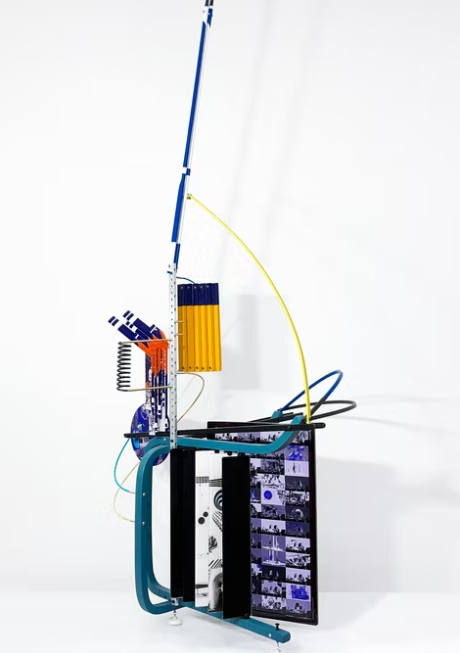
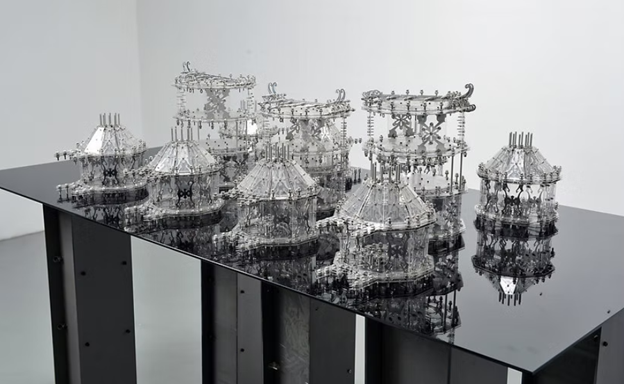
The artist constructs architecture. The beginning was the ‘Permeate’ series, which took the form of modules. For the artist, the repetition of constructive acts from childhood and their concretization into modules continue today as processes of deepening and expansion. Within the module—at once a part of a whole yet a distinct entity—these processes are embedded. The accumulation of experiences from the past to the present, along with the will directed toward the future, manifests as the identity of the artist.
Within what he considers an ordinary yet somewhat mixed set of experiences, he reconstructs unfamiliar spaces rather than familiar ones, forming new spatial configurations. However, this is not merely about identifying the characteristics of specific architecture or expanding experience and perspective. Rather, he traces the unfamiliar and strange sensations that have naturally permeated his lived experiences, translating them into three-dimensional forms. Instead of adopting a receptive mode of perception that follows the flow of time, he revisits the past, seeking points of connection with the present through the stance of a mediator.
Past dwelling experiences and the environments that constituted them function as modules of identity that reflect the artist in the present. By retracing his living environments, the artist heightens his awareness and continues to shape his identity. Modules gather to form compositions, and compositions become systems—markers that assemble the architecture of the present. The environments the artist has passed through likewise move beyond fragments to become configurations that inform his sculptural language.
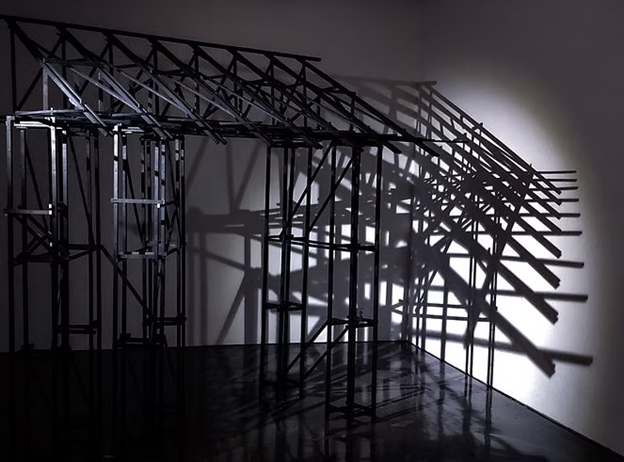
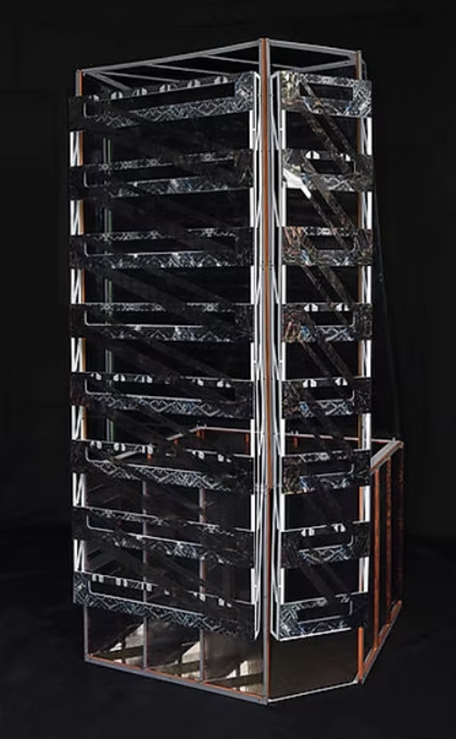
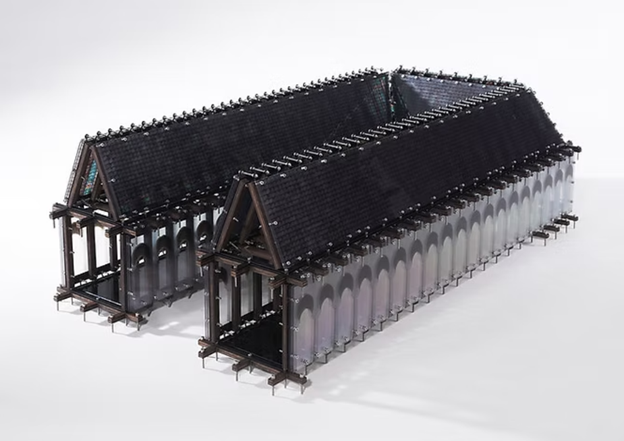
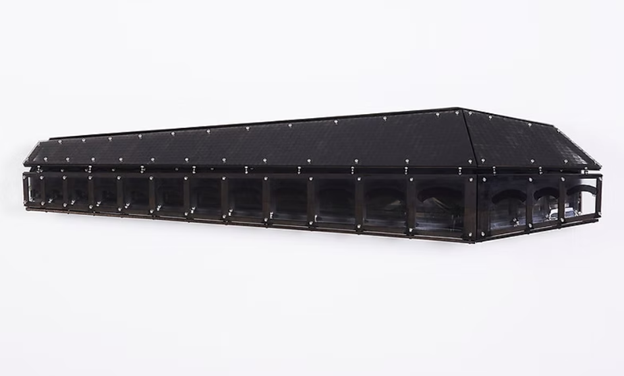
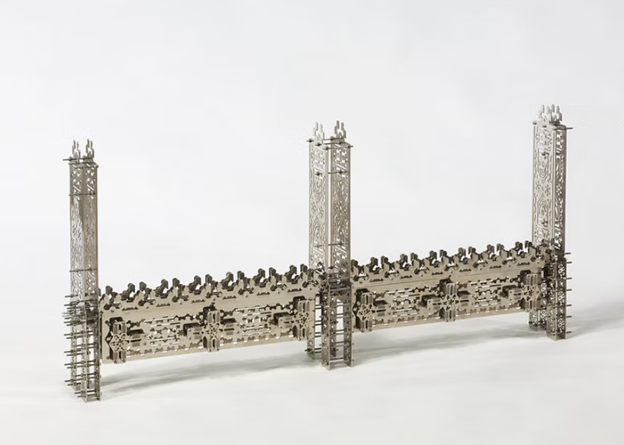
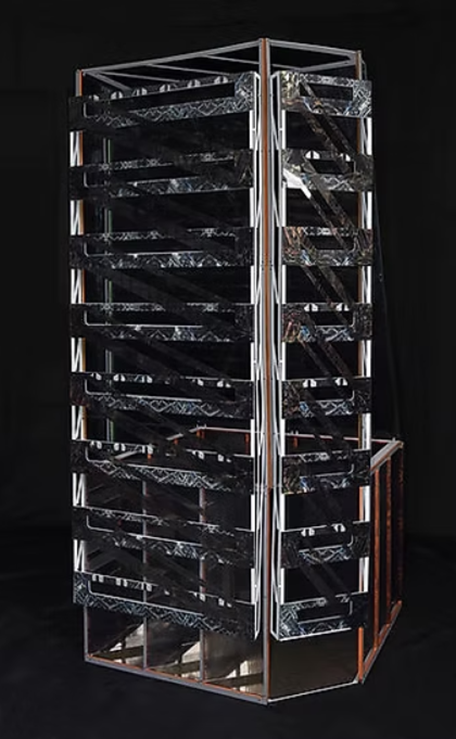
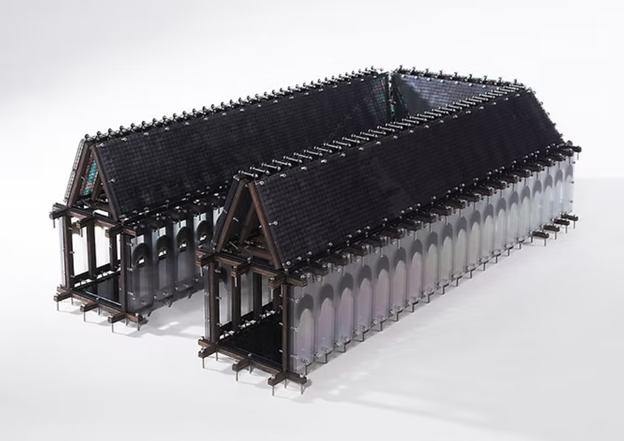
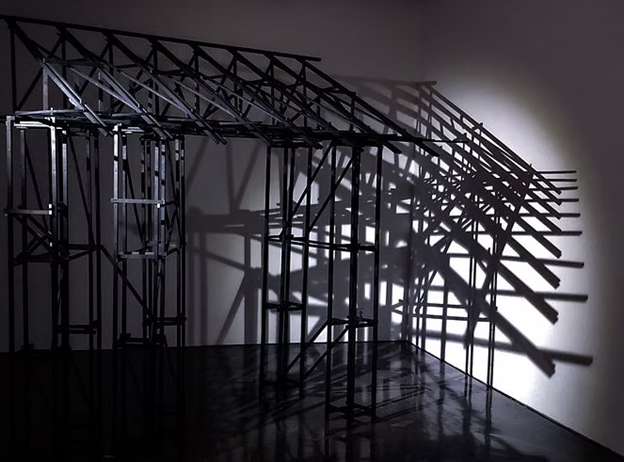
The ‘Drift Grid’ series presented by the artist exists as both relief and a three-dimensional drawing prior to full architectural realization. The grid, highly systematized and subdivided for human convenience, constitutes a framework of identification codes, administrative districts, and addresses—textualized representations of spatial organization. Within these grids lie similarly constructed buildings and the elements that define them, forming what may be called a ‘social grid.’ If earlier works materialized unfamiliar sensations collected from past time, the artist now expands his perceptual horizon by experiencing and investigating the social grid based on the ground he currently stands upon.
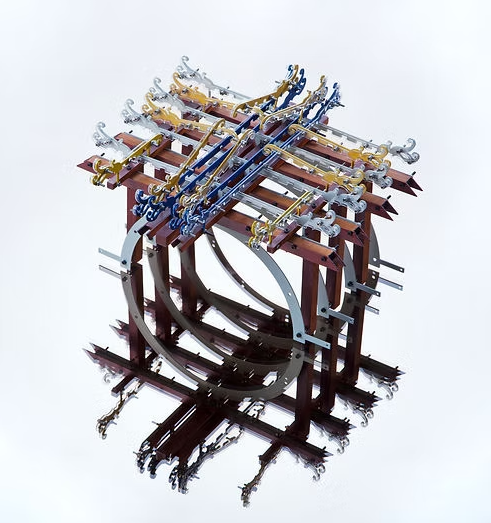
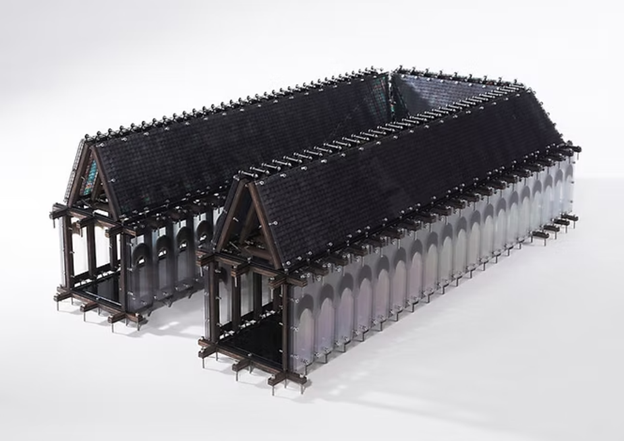
Collected modules become expanded modules through the artist’s composition, transforming into architectural forms of differing character. All of these are assembled through the manual act of tightening screws. As a method of combining mediating elements that contain distinct orders and cultures, the artist has chosen manual craftsmanship. This is because it allows him to perceive and control minute differences in the most direct and sensitive manner. Careful preparation and precise execution are not only part of the artist’s process, but also attitudes essential for those who seek to move from one culture into another. It is a navigational skill to be pursued in order to avoid becoming stranded, rather than drifting voluntarily within the grid.
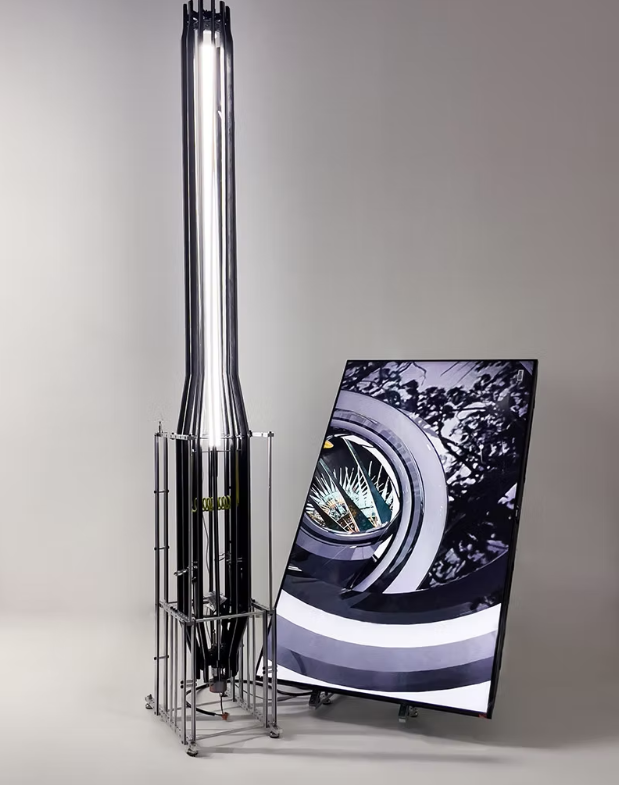
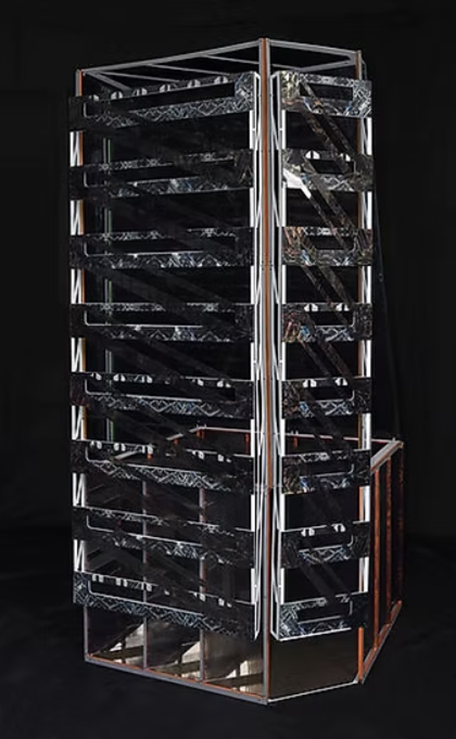
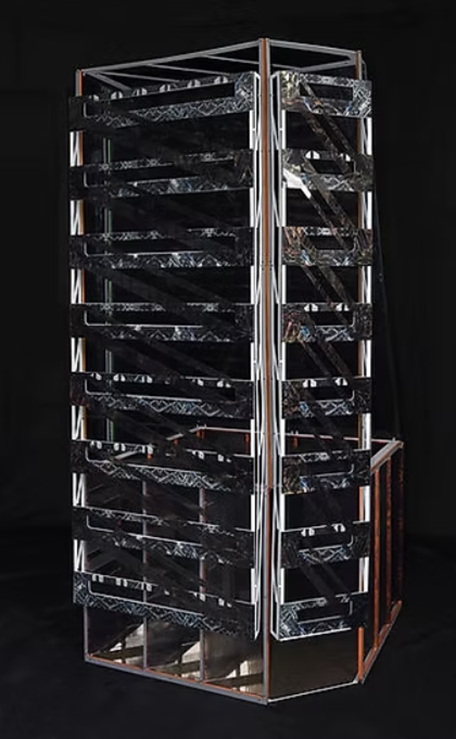
In the case of Drift grid-scene 867, one may infer the identity of the structure as commercial, residential, or mixed-use. However, within its composition, structures, materials, and architectural characteristics that assert different identities are intermingled. The upper and lower structures differ, while a repetitive arrangement on one side suggests a building suited to a particular function. Yet distortions on the reverse side, sharply sloping planes, and further repetitions of different structures disrupt such assumptions. Moreover, the interior space is reflected through mirrors, causing overlapping internal structures that induce a drifting gaze.
The artist’s architecture, in which processes of construction, extension, and renovation are interwoven, establishes its own present within the pre-existing spatiotemporal framework of the social grid. The resulting space moves between harmony and disharmony, allowing for infinite misreadings of identity. It may therefore be difficult to regard it as something aligned with established purposes or familiar to the majority.
However, by forming an in-between space that lies between the familiar and the unfamiliar, it becomes a grid that embodies the artist’s multisensory architectural individuality. The artist undergoes a process of drifting within the social grid, discovering and accepting the folds of what has already been constructed. This is both a process of concretizing his previously abstract architectural identity and of constructing the most recent and present grid.
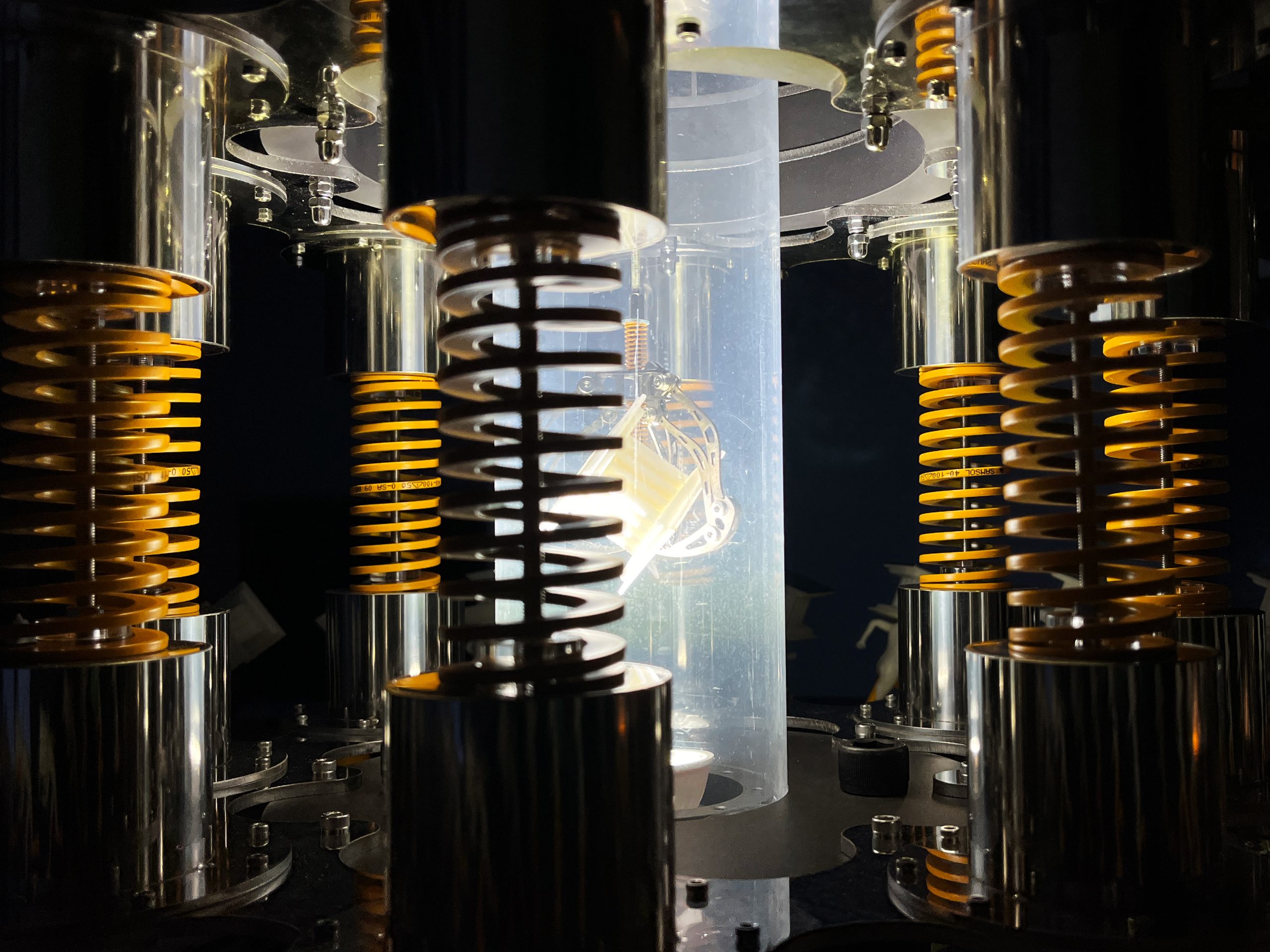
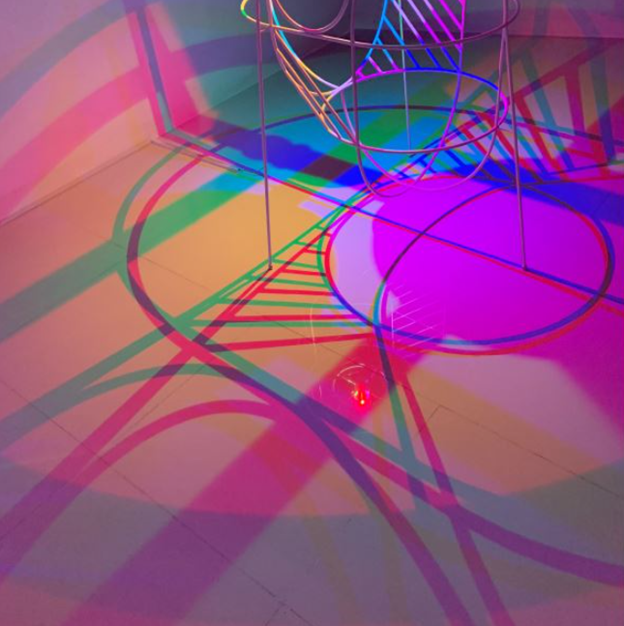
The intersecting bands of color visible on the surface of Drift grid-scene Sogyeok 153, along with the permeating and reflecting forms and light of the constructed structure, are results achieved through the expansion of material properties. If what passes through without settling on the surface is permeability, and what is not absorbed but reflected back due to the heterogeneity of mirror and steel is reflection, then these phenomena may also correspond to the artist’s relationship with the social grids he has encountered across multiple places. The artist’s primary materials—steel, transparent polycarbonate, bolts, and nuts—remain consistent.
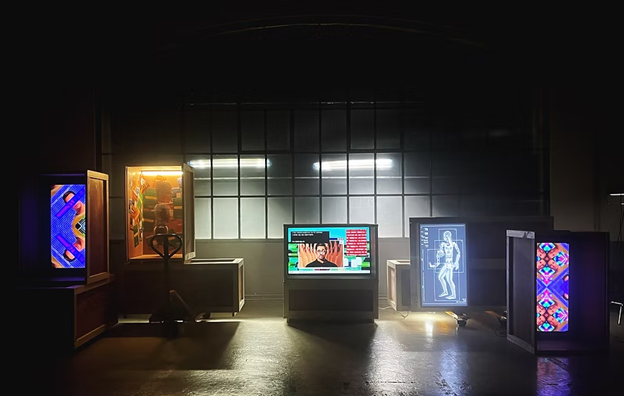
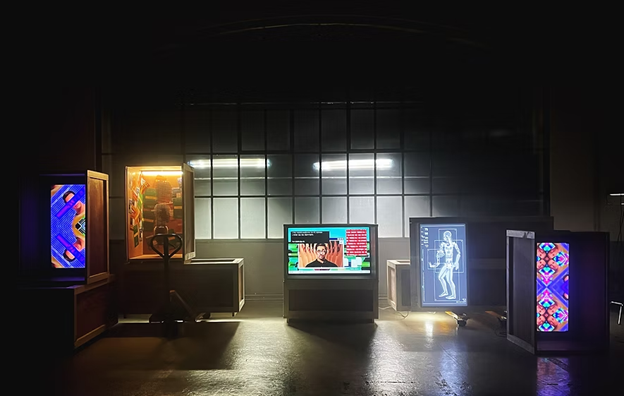
Previously, his use of materials emphasized their artificial properties, enhancing tactile sensation. More recently, however, he has introduced variations by transferring images onto materials, adding narrative to the structures. Through the reflective effects of steel and mirrors, more images appear across the architectural surfaces. If the identity found in these images is not specific but rather something like ‘Orientalism,’ it may be grounded in the artist’s hybrid cultural experiences.
For the artist, what were once heterogeneous ‘places’ and ‘things’ have now become hybrid. The present, as a hybrid ground, is no longer rejected as something foreign but is instead naturally accepted, in an era where those who drift from one grid to another become mediators. Contemporary life often involves temporary stays rather than permanent settlement—pausing briefly before moving on again. The artist, too, continues his trajectory as a mediator rather than a passive recipient of fragmented culture and architecture, by proposing new spatial structures. What awaits on the other side of the social grid may be a human and emotional grid.
The state in which such elements intermingle and achieve harmony is what we have long called culture. Those who have departed from hybrid cultures are now drifting toward new ones. Perhaps the ‘Oriental’ transcribed as a hybrid onto the artist’s architecture represents us, living in the present.