Living through the deterritorialization of a true minority
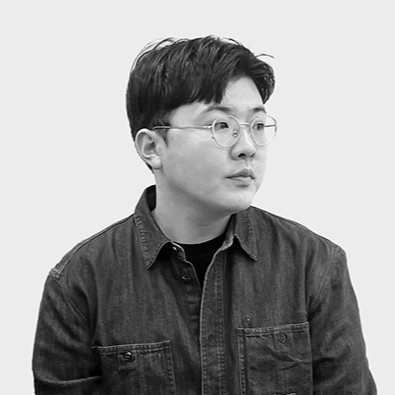
Today is an era in which those who seek the path of becoming something they have never been before are searching for that very path. Across the globe, nomadic wanderers dream of an adventurous deterritorialization while raising the question of what it means to be a true minority. At times it remains a dream, yet at other times it becomes reality. Among those who actualize the deterritorialization of the true minority lives the artist Minkyoo Choi.
Let us imagine a promised future in which space travel for Earth’s inhabitants becomes freely accessible. In that time, travelers would embark on journeys unrestrained by nationality, culture, gender, economic power, or various vested interests. If so, people of that future would no longer be minorities on other planets. Those without constraints cannot be defined by the conditions of minority. A world without minorities! It is an old future long dreamed of by humanity, yet one that has never truly existed.
Thus, rather than a world without minorities, those who seek the path of becoming a true minority are far more human. The artist Minkyoo Choi once lived in Kuwait. For Koreans, who have traditionally been familiar with Buddhism and have grown closer to Christianity in modern times, Islam remains an unfamiliar culture.
There, mosques are abundant, and the architectural forms and patterns embedded within them dominate the visual order of that world. For Korean eyes accustomed to traditional temples or Korean-style churches, the unfamiliar aesthetics of the mosque evoke not only visual but also psychological tension. It is within this tension that the artist’s artistic sensibility draws closer to that of the minority.
The process of the birth of precisely penetrating architectural sculpture
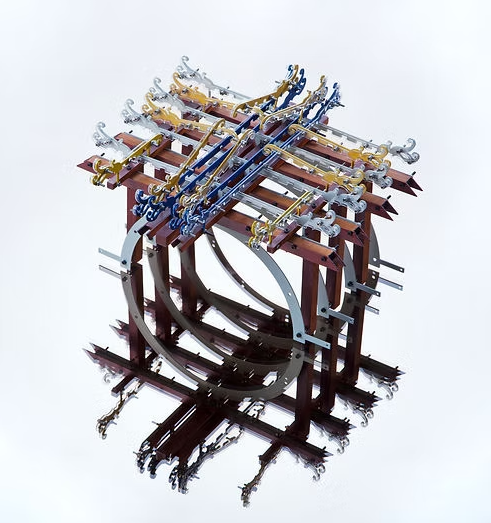
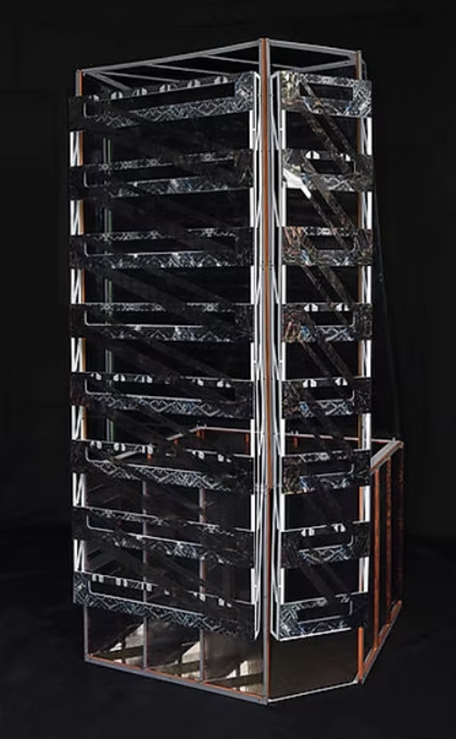
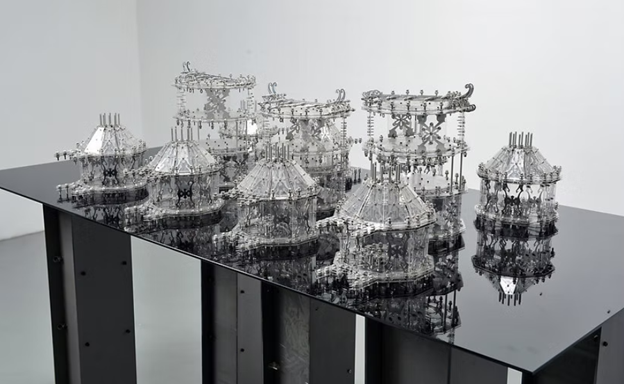
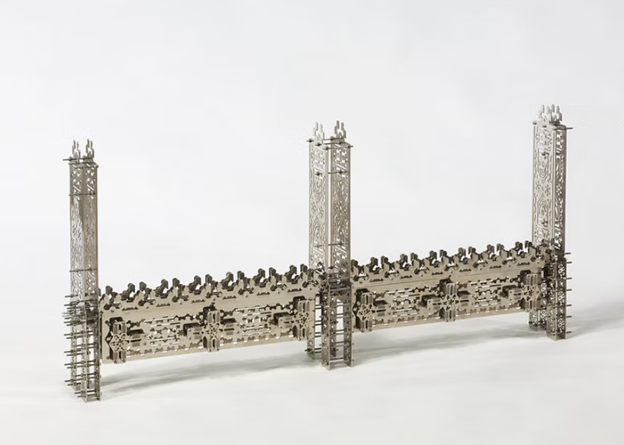
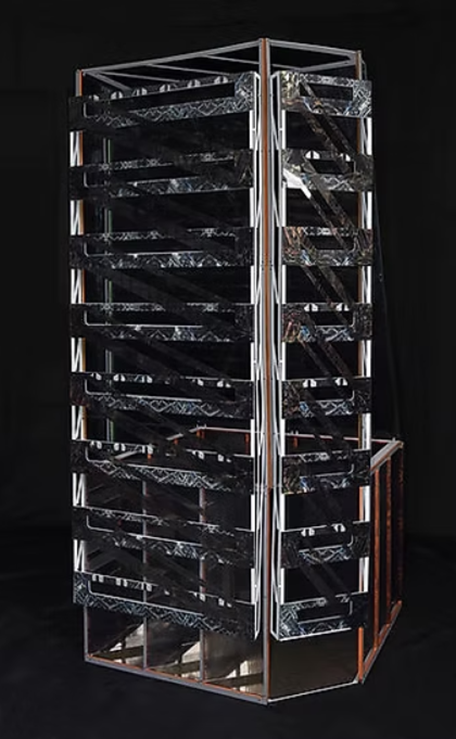
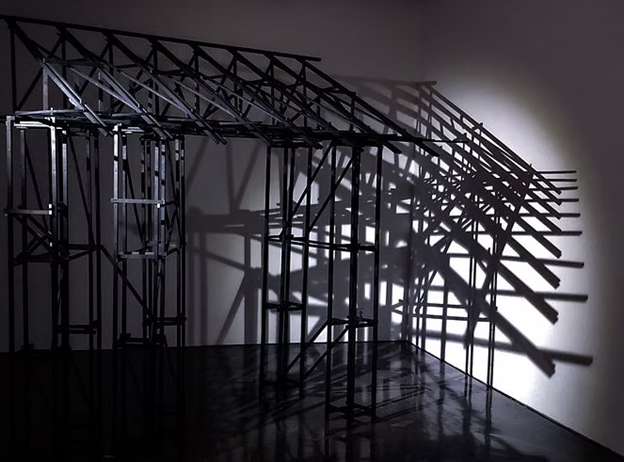
The precise yet peculiar sculptural works of Minkyoo Choi are products of his experiences in the Middle East. His architectural sculptures, which combine the architectural patterns of mosques with the tiles and decorative motifs of Korean hanok, construct a carefully balanced and precisely refined overall form. This hybrid style is supported by a rigorous capacity for spatial division, from the initial design to the final stage of assembly.
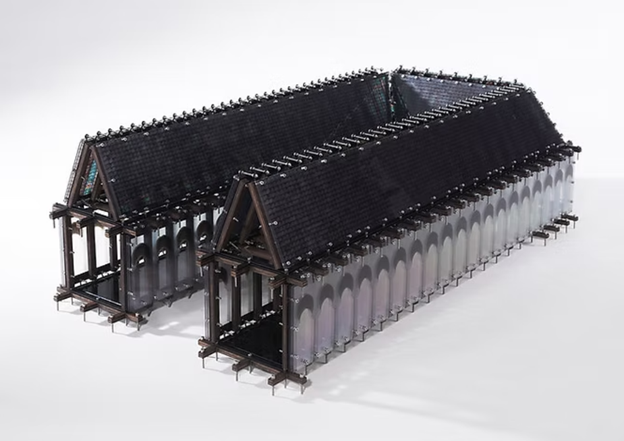
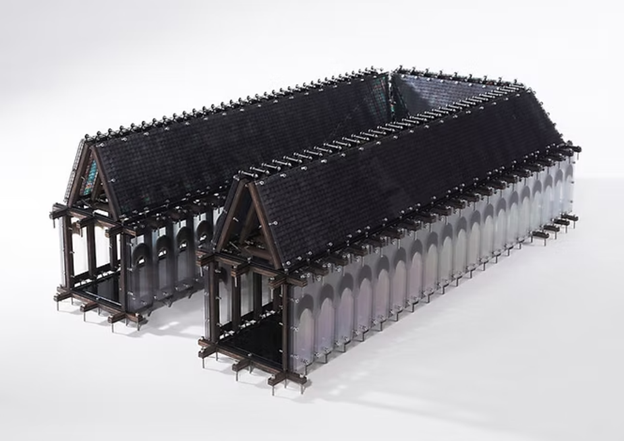
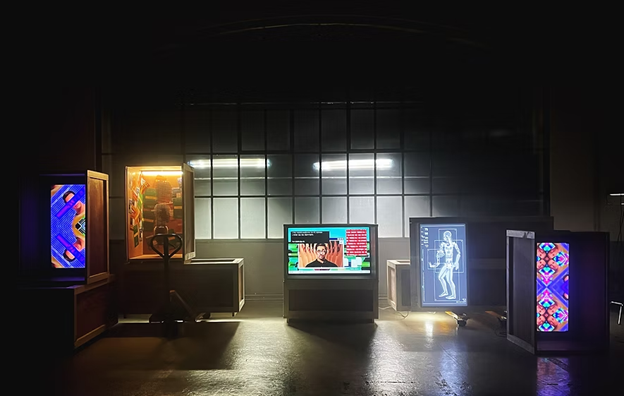
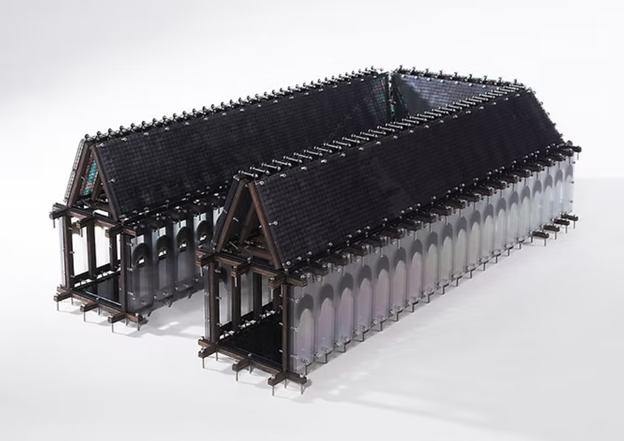
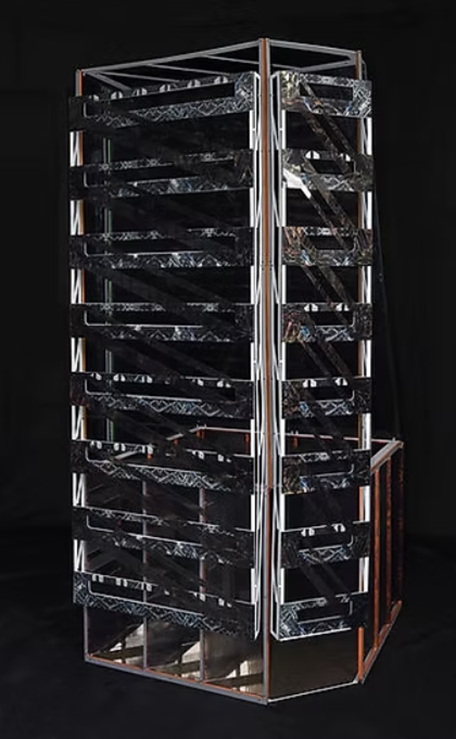
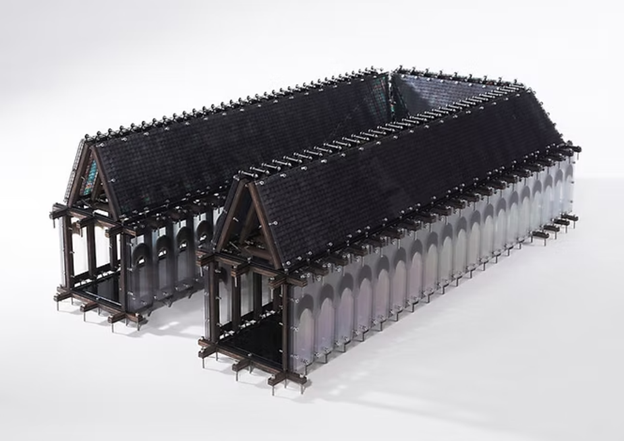
The exhibition 《Permeate-ing》 presents a more intensified and productive direction for architectural sculpture, extending from the artist’s ongoing meticulous process. As the exhibition title suggests, it emphasizes the current state of “permeation.” Through the production process of the representative work Permeate Structure Ⅰ(2015), one can engage in a labyrinth-like tracing of the artist’s detailed working process.
First, the artist conceives ideas for form and concept, sketches the architectural sculpture to be created, and determines the overall dimensions of the work (1000 × 500 × 250 mm). For each of the 24 surfaces that compose the sculpture, he directly photographs or selects from online sources images of mosque columns and walls, as well as hanok roofs and dancheong patterns, and reconstructs them using Photoshop. At this stage, the artist carefully calculates that the Photoshop images are 2–3 mm larger than the actual production size.
Afterward, he produces a model through 3D program work to examine potential structural flaws in the actual production. Possible errors at this stage include imbalances in assembling the basic steel frame or distortions caused by the length of bolts and the thickness of nuts. After addressing these issues, he proceeds to CAD work to quantify the design, finalizing the exact dimensions, as well as the number and placement of bolts and nuts. The finalized design, after passing through this meticulous and irreversible CAD planning stage, is then sent to a laser cutting and CNC fabrication company.
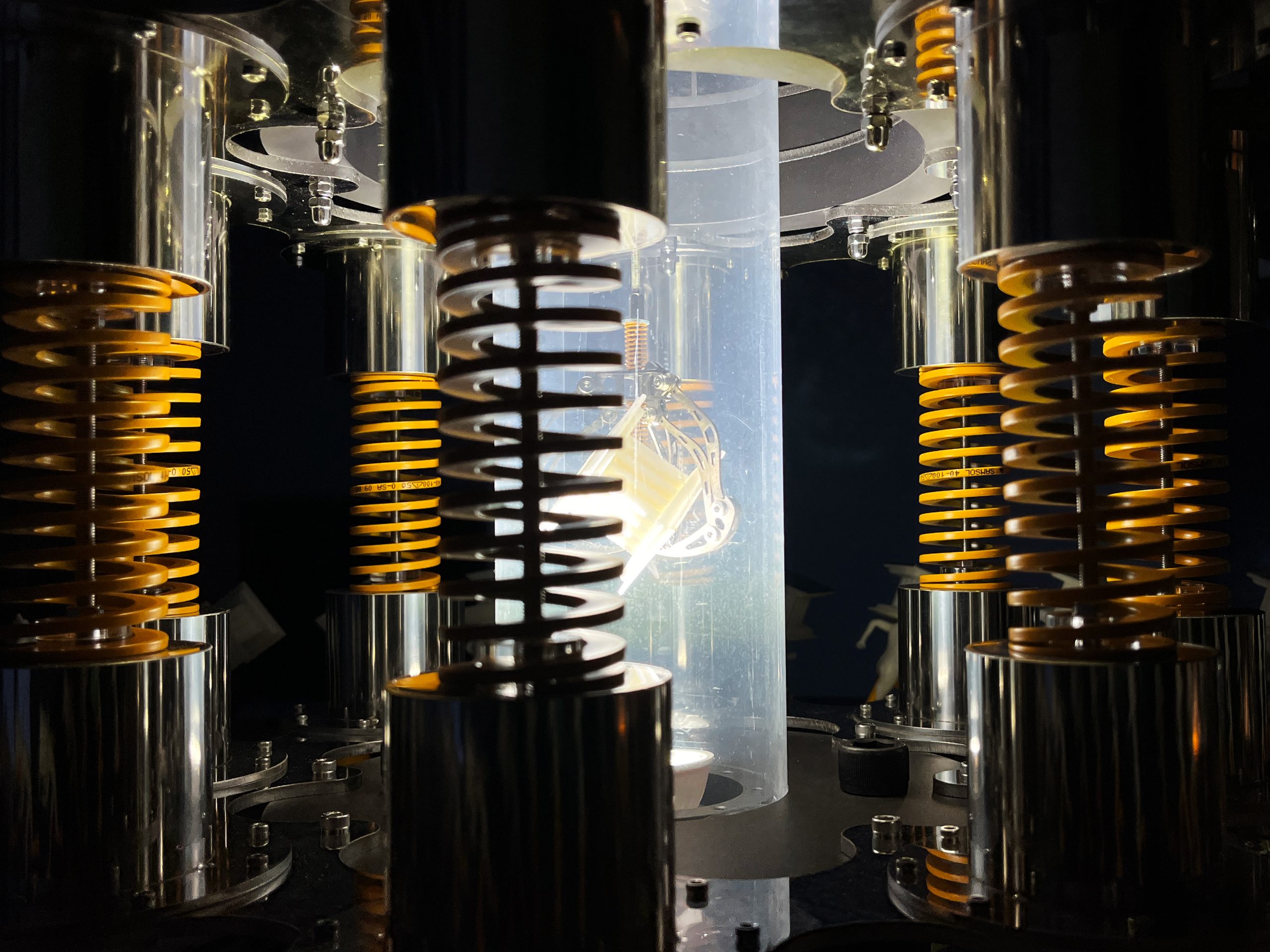
Through this process, 15 steel plates and 24 polycarbonate panels with transferred images are prepared, along with powder-coated steel plates, wood frames finished with wood stain, and black mirrors for the base. The assembly stage then begins. The artist constructs the frame with steel plates, lays a black mirror on the base, attaches the polycarbonate walls, and installs the roof in a sequential process. This balanced modular architectural sculpture is the result of construction tools such as hex wrenches, nippers, and long-nose pliers being skillfully handled by the artist. The process of creating Permeate Structure Ⅰ is thus a labor-intensive procedure grounded in meticulous calculation.
The taste for assembly transferred from the vanished blocks
The taste for assembly forms the aesthetic foundation of Minkyoo Choi’s architectural sculptures. The childhood experience of building Lego blocks has become a powerful artistic nourishment internalized by the artist. Freud once explained that through a child’s play with a spool—known as the “fort-da” (there–gone) game—the child gradually learns to separate from the mother with whom they had identified. When the spool rolls away and disappears, the child initially feels fear, but when it is pulled back, it reappears, alleviating that fear.
In this way, through the union with and separation from objects we love, we come to understand the world and develop our sense of self. Minkyoo Choi recalls that he greatly enjoyed building Lego blocks in his early childhood. The process of fitting together scattered blocks one by one must have been both the greatest joy and challenge for him as a young child. One day, however, the Lego blocks disappeared, and he could no longer immerse himself in that play.
As time passed, the child became a sculptor, assembling once again. Perhaps it is to recreate that lost paradise of play. The artist takes pleasure in the demanding process of designing and assembling works with his own hands. The trauma of the lost Lego blocks has been transformed into a deep-seated aesthetic inclination within his artistic practice. Artists create productive sculptures through transformed sources of inspiration.
They continuously filter their ingrained habits, generating new ones through processes of self-overcoming and regeneration. Minkyoo Choi is no exception. He has explored his deeply embedded inclination for assembly and transformed it into a self-defining act of practice. The joy of the process thus forms an alliance with the artist’s inner taste.
Sculptural consideration toward the minority
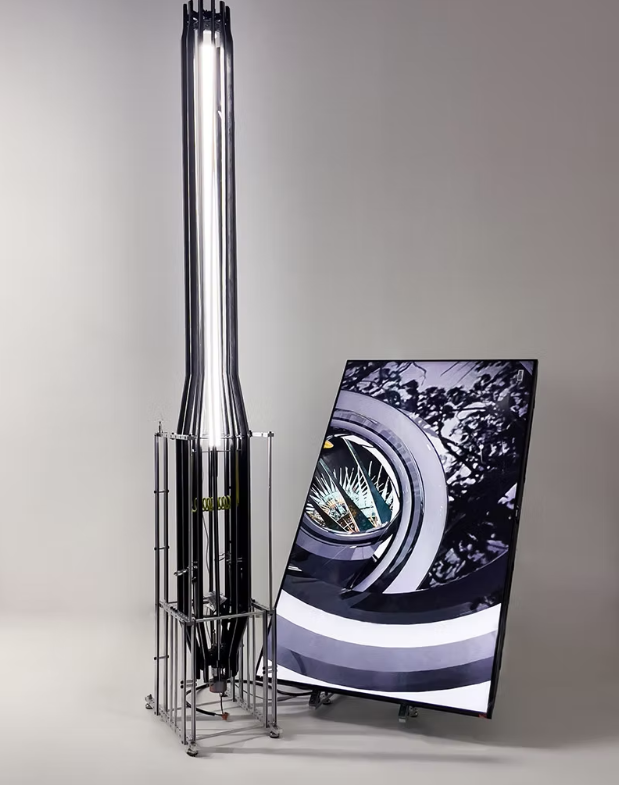
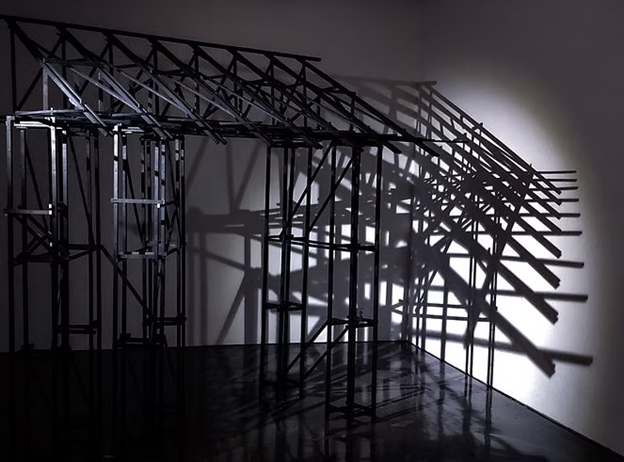
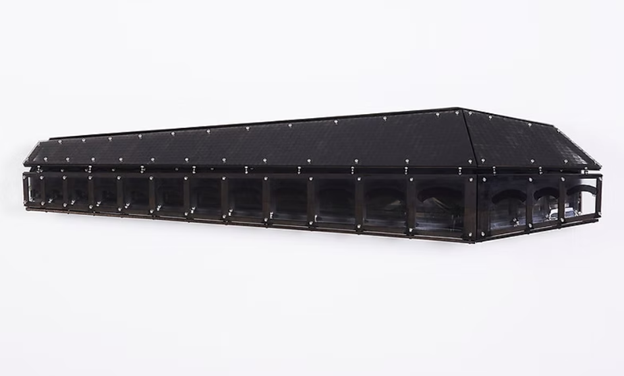
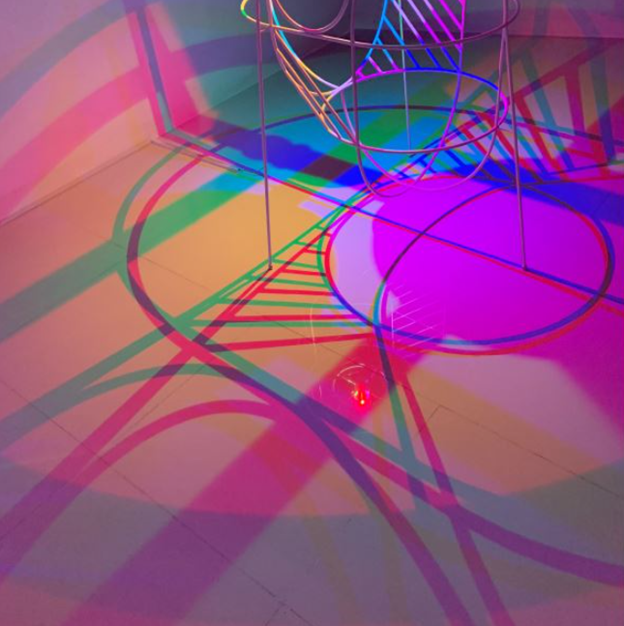
The overall form of Permeate Structure Ⅰ or Permeate Structure Ⅱ contains the afterimage of existing architecture. It evokes images that seem familiar, as though they have been seen somewhere before, rather than entirely unprecedented structures. The walls, where mosque architecture and hanok motifs stand layered side by side, reveal a new world at the very moment the viewer’s casual gaze slips. As one carefully examines the work, shifting perspective according to the reflection of light, the overlapping and heterogeneous afterimages disrupt the viewer’s visual system, preventing convergence into a single image.
Though these works are sculptures approximately 100 cm in scale, when one peers into their interiors lined with black mirrors, the viewer is prompted to shift from the position of an external observer to that of an internal participant in space. Within this, one senses the presence of a mysterious, monumental temple—an environment that has never existed before.
The artist’s experience as a foreigner and minority in the Middle East is one of isolation and raw unfamiliarity. If the majority is formed through long-standing customs, the minority exists at its periphery, enduring and at times attempting to transcend its power. Thus, minorities are highly sensitive to instincts of oppression and destruction. Minkyoo Choi is in the process of transitioning from the state of being a minority to becoming a true minority. His method lies in modular architectural sculptures that combine the architectural motifs of mosques and hanok. He devotes himself to creating structurally flawless architectural sculptures, as precise as real architectural designs.
Yet this process ultimately relates to a restrained consideration for the true minority. Through the eyes of a true minority, the artist seeks to enact an artistic sensibility that has never existed before on this Earth, shaping the becoming of a true minority into a restrained formal language. It is in order to deliver a powerful message of minority existence without excess. Encountering the hybrid field where heterogeneous cultures intersect on the exterior of his architectural sculptures, and sensing within them the presence of a new minority that has never existed before—that is the role of his architectural sculpture directed toward the true minority.